The Devil at 4 O’Clock (1961) ***

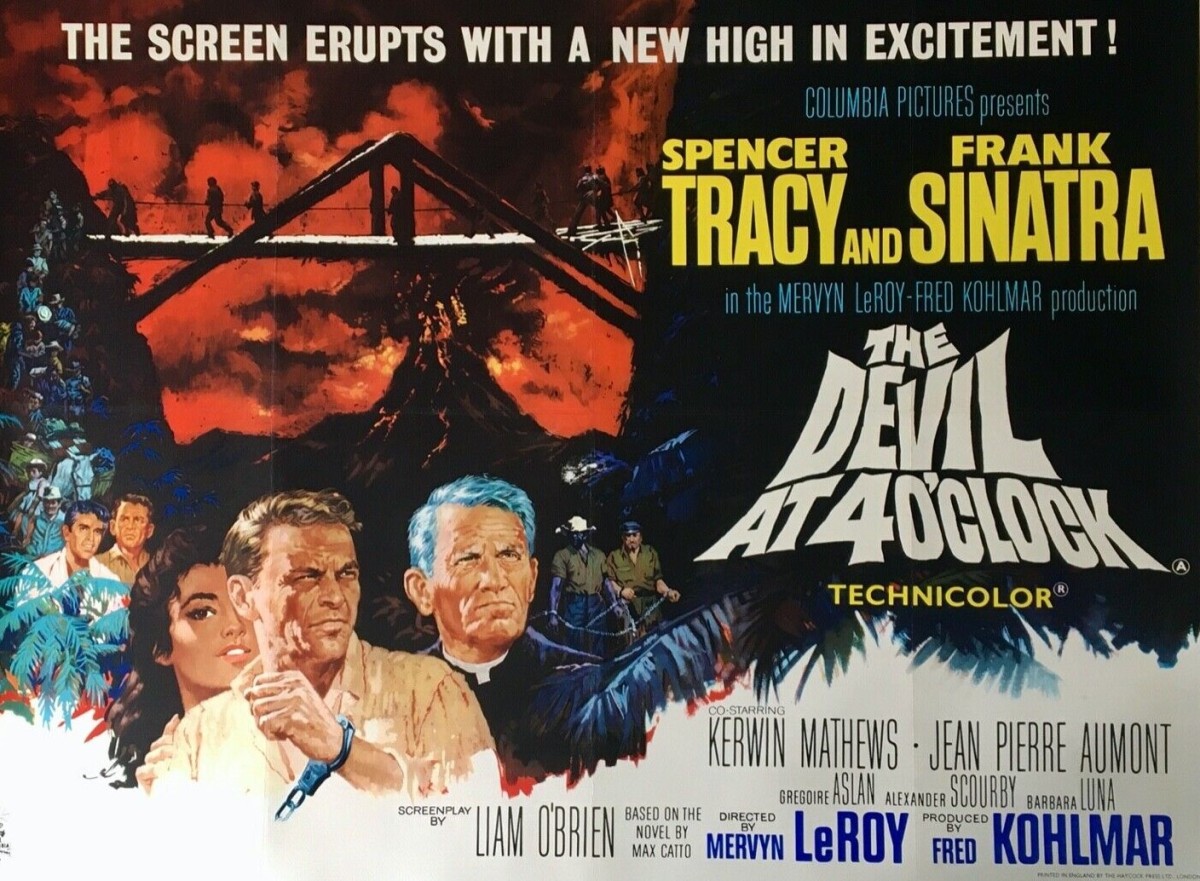
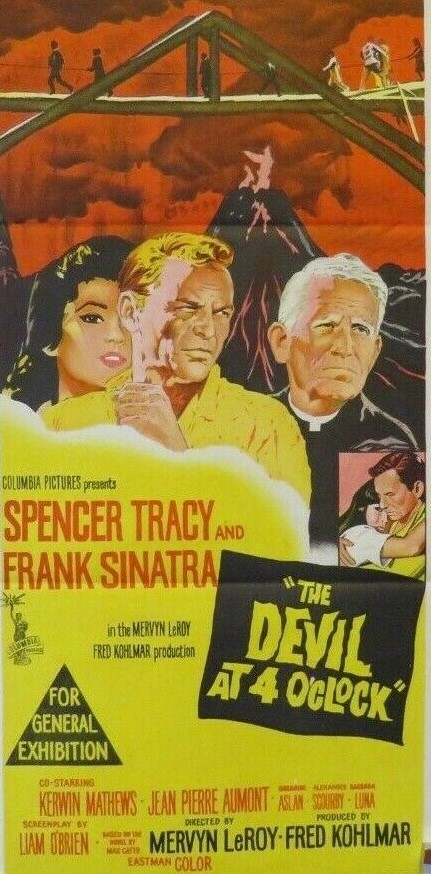
You took on Spencer Tracy (Judgment at Nuremberg, 1961) at your peril. Not even the best efforts of a volcano can wrest the screen from him. And certainly Frank Sinatra (The Detective, 1968) is put in the shade. And if you wanted to work with Tracy you had to cede, no matter how high-flying your career might be, top billing. Both names are above the title and if they were actually equally ranked they would appear in alphabetical order. And it wasn’t until a later disaster picture, The Towering Inferno (1974), that someone solved the tricky problem of designating equal billing by having Paul Newman’s name first on the left of the poster, but Steve McQueen’s name higher on the right.

Anyway, theoretically, nobody should be bothering much who is in a disaster picture when, again theoretically, the audience has come to gawk at the special effects – exceptional for the time but looking tame now. But Hollywood had learned from experience – and the same rules would apply in the disaster boom of the 1970s – that there was no point spending all that money on effects if there was not enough interest in the characters leading up to the disaster element, and also learned you needed stars to attract audiences in the first place.
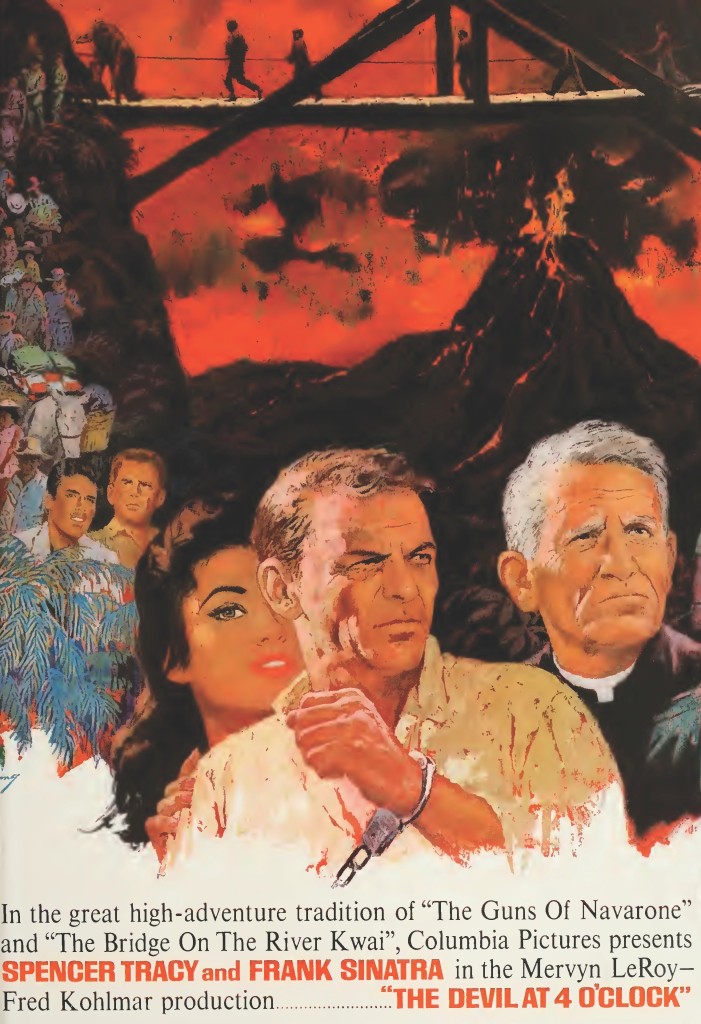
In the tradition of…previous Columbia hits. Contractual billing agreements referred to the placing of names not faces on the poster , so Columbia could stick Sinatra in the center and
there was nothing Tracy could do about it.

So this scenario has old whisky priest Fr Doonan (Spencer Tracy) getting ready to leave a Pacific island, replaced by the younger Fr Perrau (Kerwin Matthews), while three convicts, led by Harry (Frank Sinatra), on the way to long prison stretches elsewhere make an unexpected pit stop. The rule is that Fr Doonan can make use of any prison labor so he hives them up the mountain to fix the hospital housing lepers that the authorities wish to keep a secret in case it scares off the tourists. Naturally, it’s not long before Harry is making a romantic pitch for  blind nurse (Barbara Luna) but that takes second place to hatching an escape plan.

Running away is only foiled when the volcano begins erupting and as the island authorities begin the evacuation it’s up to the priest and the convicts – Harry’s romantic instinct overcoming reluctance – to fetch the kids in the leper colony. Fr Doonan could have come straight from Boys Town (1938), the kind of two-fisted man of the cloth who tells it like it is, has no compunction about upsetting anyone who gets in his way, but with right on his side generally wins the day. The Governor (Alexander Scourby) isn’t viewed as a bad guy so much by refusing to acknowledge the lepers – especially as by that time the disease was not contagious, priest and hospital workers haven’t caught it, though begging the question why  young kids still did –  as by allowing brutal treatment of the prisoners, sticking three overnight in suffocating heat in a hole in the ground intended for one.
Narrative edge is added by the obstracizing of the lepers – at the time people contracting various illnesses would be treated as lepers and anyone with a serious mental condition stuck away out of sight. But the characters don’t occupy the moral twilight of the later disaster pictures, where the unscrupulous were often offered redemption. Here, the best we’ve got is a rehabilitated sex worker acting as hospital matron and the convicts agreeing to help out.

Kind of suffers from not enough scenes between the priest and Harry, they almost occupy separate narrative threads, but then Frank Sinatra’s got enough on his plate to avoid looking creepy when making advances on a woman who can’t see him. In fact, there’s a serious scene-stealer, another convict Marcel (Gregoire Aslan), getting in the way, his jovial devil-may-care attitude lifting the gloom.

As ever, the main audience concern is who lives and who dies and here the makers throw a curveball and you could interpret the ending as both triumphant and downbeat. The special effects are still pretty good – sensational for the time if truth be told – especially for the pre-CGI era, but the earthquake aspects come in ahead of the rolling lava, which no matter which way you cut it always resembles slow thick soup, although the explosion, done for real using tons of TNT, makes a mark. Technically, the makers pull a fast one in ignoring the tidal wave that follows an eruption, thus allowing most of the islanders to escape by sea.

It being the jungle there’s always a tricky bridge to navigate – Indiana Jones encountered a similar trope decades later – but there’s no snakes or big beasts to cause a narrative diversion. Whatever it is about Spencer Tracy’s screen presence that allows him to inhabit characters with such ease he brings in spades to the priest. Sinatra looks as though he’s learning a thing or two because his Harry bears some similarities in the the down-at-heel unkempt appearance and the lack of scene stealing.

In case you’re wondering, the “four o’clock” of the title is a deadline but appears too late in the picture to create the required tension. Hollywood veteran Mervyn LeRoy (Moment to Moment, 1966) is at helm. Screenplay by Liam O’Brian (The Great Imposter, 1960), in his last movie, from the bestseller by Max Catto (Seven Thieves, 1960).

Worth it for Tracy and Sinatra and Aslan and to see how they managed sfx in ye olden days.

The Big Day (1960) ****

Marvellous little drama.  Succession the old-fashioned way when promotion was determined by interview, the process not clogged up by internecine family warfare. Doesn’t, either, go for the easy target of the English class system, instead exploring the universality of office politics, the quite different attitudes taken by individuals to superiors and inferiors, the determination to find someone who is not your equal, and the ways of dodging responsibility or simply indulging in dodgy behaviour.

It’s lit up by four superb performances, Donald Pleasance (Soldier Blue, 1970) as the dull accountant, Colin Gordon (Subterfuge, 1968) – usually a comedy foil – as the Machiavellian boss, Harry H. Corbett (pre-Steptoe and Son) as a weaselling manager and Andree Melly (The Brides of Dracula, 1960) as a secretary skirting scandal. The narrative is simple. Prior to the interview we dip into the lives of the three candidates – Victor (Donald Pleasance), high-flying sales manager Selkirk (William Franklyn) and transport manager Harry (Harry H. Corbett) who happens to be the brother-in-law of George (Colin Gordon) the boss.

Donald Pleasance and Andree Melly let fly when the jig is up.

Each has a deficiency, Selkirk inclined to show too much initiative, Harry running his department by the seat of his pants, Victor with no initiative whatsoever, a plodder. Each is caught out in an error of judgement, Selkirk striking a deal with a dodgy customer, Harry operating a driver logbook scam, Victor having an affair with his secretary Nina (Andree Melly). And a most unlikely relationship that is, the young self-possessed girl madly in love with a middle-aged man riddled with self-doubt.

When she first appears, in frankly one of the most erotic scenes capable of passing the British censor at the time, I had assumed this was a financial arrangement. That Victor would be reaching into his pocket. It’s only later we discover she’s his secretary and nourishes no ambitions for him to climb the corporate ladder, just believing that at a suitable juncture he will jettison wife and children. Mostly, what they all have to lose is pride. Hen-pecked Harry terrified of reporting failure to his domineering wife, Selkirk already planning how to spend the expected salary increase, Victor desperate to justify his existence by having his name on the letterhead.

Everyone has ideas above their station; everyone gets put in their place. Even the backroom staff jockey for position, Selkirk’s secretary Madge (Marianne Stone) tearing into Nina for her loose morals, in return being hit by bitchy comments about her spinsterhood. Both make a point of wishing the other’s boss “good luck” on the day of the interview in case they win. Madge often refuses to carry out work she considers too menial and seems always on the point of resigning over a minor issue. There is envy over the size of one’s office.

The two secretaries previously at war bond over male inhumanity. Madge (left) comments that two people should bear the consequences of an affair not one.

The best elements of the script are how plans go awry, how conversations turn as new information enters the equation and especially how the boss uses any opportunity to destabilize his staff, pitting them against each other, turning triumph into disaster, deftly fending off any threat to his position. George employs a wonderful phrase, “I’ve called you in to tell you why you’ve NOT got the job,” softening the blow by a small salary increase.

And it’s indicative of failings in his personality that he hands the job to the person least likely to challenge his authority – Victor – and that the promotion comes with the rider that the accountant get rid of Nina. And, suddenly, Victor comes into his own, the mouse roaring like a lion, although triumph is temporary. The last scene one of the saddest committed to celluloid, Victor alone, huge pile of work to get through and no solace anywhere.

It’s short, too, would have been intended as a “quota quickie,” release guaranteed by the Eady system, and should really have been lost in the slush pile. Instead, without any of the brutality of Succession, dissects the office mind-set. Donald Pleasance is the standout, but Colin Gordon and Andree Melly run him close. Support from Susan Shaw (Carry On Nurse, 1960) and Roddy McMillan (The View from Daniel Pike series, 1971-1973).

Director Peter Graham Scott (Father Came Too!, 1964) keeps his foot on the narrative pedal, focus never wavering, brooking no diversions. Bill MacIlwraith (The Anniversary, 1968) delivers a tight script bristling with terrific lines. given it only cost £22,300 (about $70,000) it’s quite astonishing.

NOTE: In the absence of a poster, the main photo is by Allan Warren.

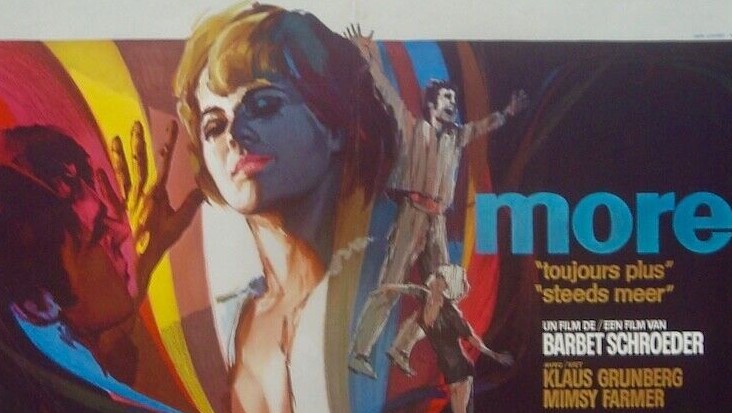
More (1969) ***

Hedonism gets a reality check but not before it’s done a pretty good job of marketing Ibiza as an idyllic setting and just the place to accommodate anyone wanting to get high on drugs. Despite being the directorial debut of French producer Barbet Schroeder (Reversal of Fortune, 1990), the movie’s better known for the soundtrack created by Pink Floyd.

Which is a shame because despite the focus on the beautiful people living in an exotic world, and plugging, it has to be said, the delights of marijuana as the drug du jour, and not wandering down any cinematic cul de sac like visually exploring in subjective fashion the effects of an LSD trip, it fairly captures the free love counter culture paradise of the time where you could chill out in the sun and you didn’t need to be a biker to do it.  

Estelle (Mimsy Farmer) is the lissom siren who hooks the far from innocent Stefan (Klaus Grunberg) – an ex-student, he has indulged in a bit of burglary – and introduces him to pot, Ibiza and heroin in that order. He finds his own way to other indulgences like a menage a trois. There’s an older drug dealer (Heinz Engelmann) in the background and some pals, Charlie (Michael Chanderli) and Cathy (Louise Wink), fleetingly hover into vision, but mostly it’s a two-hander, and there’s none of the despair and nihilism of drug addiction nor the moralistic overtones of a Hollywood picture too frightened of even the more enlightened censor to dare suggest you can have your cake and eat it.

There’s not much story, just the pair falling in love and hanging out, and Stefan wanting to experience the “more” that has made Estelle so impervious to life’s downturns. When he discovers her secret is heroin he wants to turn on in similar fashion and loving lover that she is she obliges. He can’t handle it the way she can and he’s the one that goes over the edge and dies of an overdose. But the director doesn’t resort to any moralizing at the end, this is no wake up call for Estelle, and there’s no sense of guilt, he’s just another handsome ship passing in the night.

The film’s best at exhibiting the easy living, the relaxed lifestyle, of the drug community where ownership is forbidden and life is cheap. It’s filmed as a romance, glorious settings made more glorious by the cinematography of Nestor Almendros (Days of Heaven, 1978).

Mimsy Farmer (Spencer’s Mountain, 1963) is the standout, making the jump into adult roles with ease, presenting an amoral character whose main aim in life to find the deepest sensory experiences. Klaus Grunberg, on his debut, is really just swept along like some flotsam in her attractive wake. Even when Farmer is stoned and really out of it she captures the camera, and while her character is essentially unattractive, it takes some pretty good acting to keep the audience from coming to that conclusion.

The act of shooting up was innovative for the time – and censored in some countries – but it’s not presented as anything but an extension of freedom, liberation of self a la LSD, and even Stefan’s death, the grittiest scene, comes over as mere collateral damage.

That it works is mostly due to Farmer’s performance and Schroeder’s lack of prurience. While there’s abundant nudity, and Estelle makes out with a gal and then enjoys a threesome, there’s no sense of sexploitation, which creates quite a different atmosphere to the more sensational movies of the time. Best of all, in deliberately moving away from heightened drama and turgid instincts that might focus instead on such elements like jealousy or guilt, the director allows the audience to make up its collective mind.

And if you get bored, there’s always the soundtrack and scenery.

Interesting depiction of elusive nirvana.

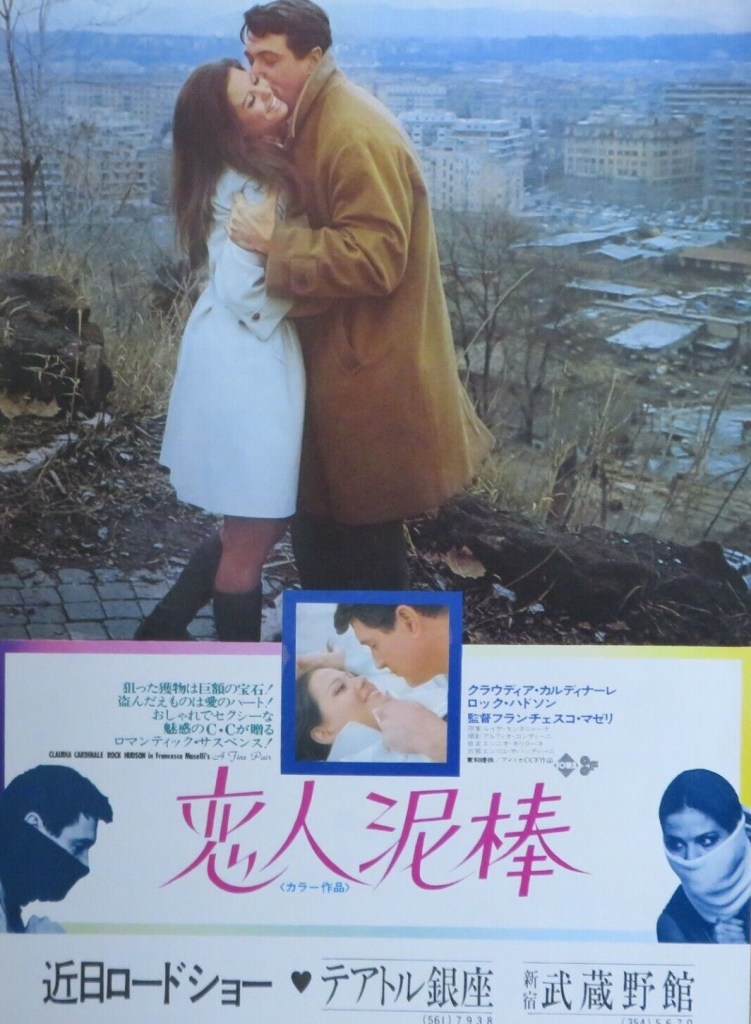
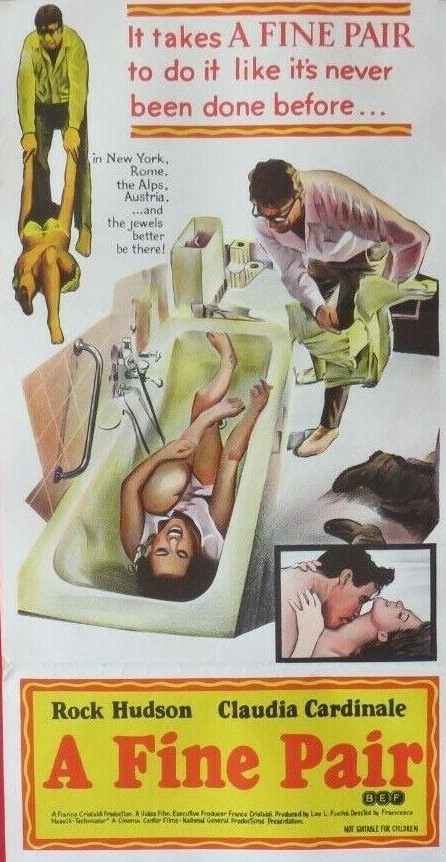
A Fine Pair (1968) ***

Essentially an Italian take on the slick glossy American thriller in the vein of Charade (1963), Arabesque (1966) and of course Blindfold (1966) which previously brought together Rock Hudson and Claudia Cardinale. Produced by Cardinale’s husband Franco Cristaldi, directed and co-written by Francesco Maselli (Time of Indifference, 1966), it is a cute variation on the heist picture. Fans accustomed to seeing the more sultry side of the Italian actress (as in The Professionals, 1966) might be surprised to see how effective she is in more playful mood apart from one scene where she strips down to bra and pants. The other major difference is that in her American-made films, Cardinale is usually the female lead, that is, not the one driving the story, but here she provides the narrative thrust virtually right up until the end.

The twist here (as in Pirates of the Caribbean nearly four decades later) is that the bad guy (in this case bad girl) wants to return treasure rather than steal it.  Esmeralda (Claudia Cardinale) arrives in New York to seek the help of Capt. Mike Harmon (Rock Hudson), an old family friend, a stuffy married American cop who even has a timer to tell him when to take his next cigarette. She has come into jewels stolen by an internationally famous thief and wishes to return them to a villa in the Alps before the owners discover the theft. The bait for Harmon is to try and apprehend the guilty party.

The audience will have guessed the twist, that she is not breaking in to return jewels, but once Harmon, through his police connections, has been shown the alarm systems, to deposit fakes and steal the real thing. So Harmon has to work out an ingenious method of beating three alarm systems, one of which is heat-sensitive, the whole place “one big safe.”

Most of the fun comes from the banter between the principals and the is-she-telling-truth element essential to these pictures. “I lied – and that’s the truth,” spouts Esmeralda at one point. I disagree with a common complaint of a lack of chemistry between Hudson and Cardinale. What the film lacks is not enough going wrong such as occurred in Man’s Favorite Sport (1962), which makes the audience warm to the otherwise rigid Hudson, or as seen in Gambit (1966) where Michael Caine played a similar stand-offish character. Cardinale is terrific in a Shirley MacLaine-type role, as the playful foil to the uptight cop, and who, like MacLaine in Gambit, knows far more than she is letting on.

What does let the film down is that it is at cross-cultural cross-purposes. As mentioned, this is an Italian film with Italian production values. The color is murky, way too many important scenes take place outside, but, more importantly, the actual heist lacks sufficient detail, and post-heist, although there a few more twists, the film takes too long to reach a conclusion. But for the first two-thirds it is a perfectly acceptable addition to the heist canon, the script has some very funny lines, Cardinale is light, charming and sexy.

The American title of this film was Steal from Your Neighbor, which is weak. A Fine Pair while colloquial enough in America has, however, an unfortunate meaning of the double-entendre kind in Britain.

Lack of films being released – these days due to the pandemic – is not new. A Fine Pair was made during a time of low production. But there was a sickening irony in the story of this film’s production. It was financed by the short-lived Cinema Center owned by the American television network CBS. When television was in its infancy, American studios had been barred by the Government from becoming involved in the new media. CBS got into movie production after studios had suffered from another governmental policy reversal.

In 1948 the Paramount Decree prohibited studios from owning cinemas, a move which led to the end of the studio system and decimated production. The most sacrosanct rule of American film regulations was that studios could not own movie houses. Everyone assumed that applied the other way until in the early 1960s cinema chain National General challenged the ruling.

By this point, production was so low that exhibitors were crying out for new product so the government relented, much to the fury of the studios. That opened the door for television networks like CBS and later ABC (Charly, 1968) to enter movie production. And now, of course, studios have re-entered the exhibition market as have, once again, television companies.

Entertaining enough and the pair have enough charisma to see it through.

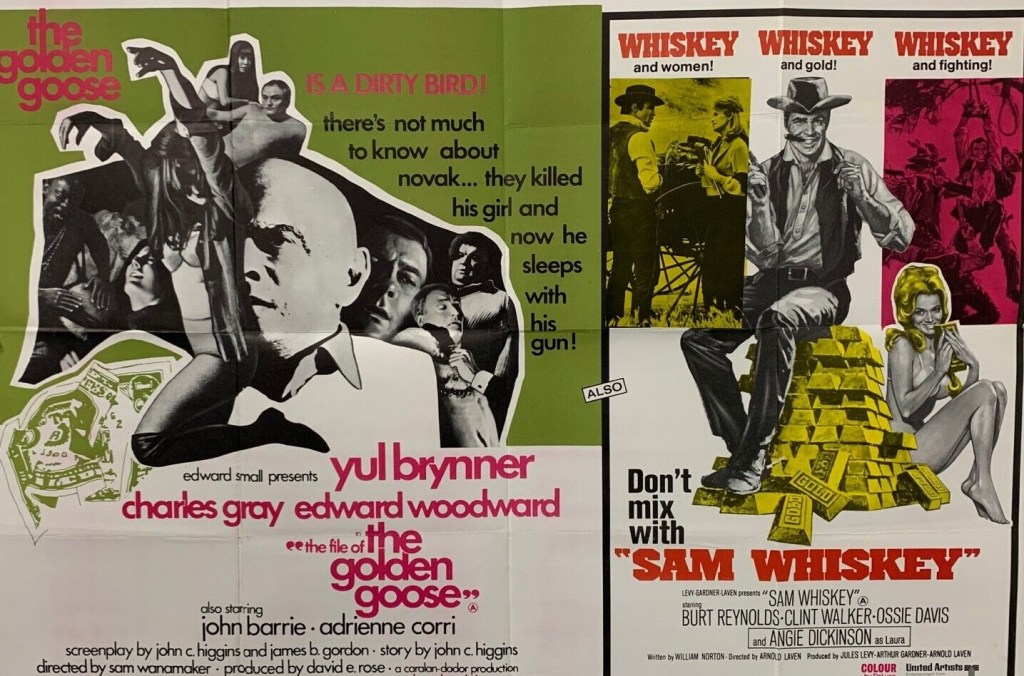
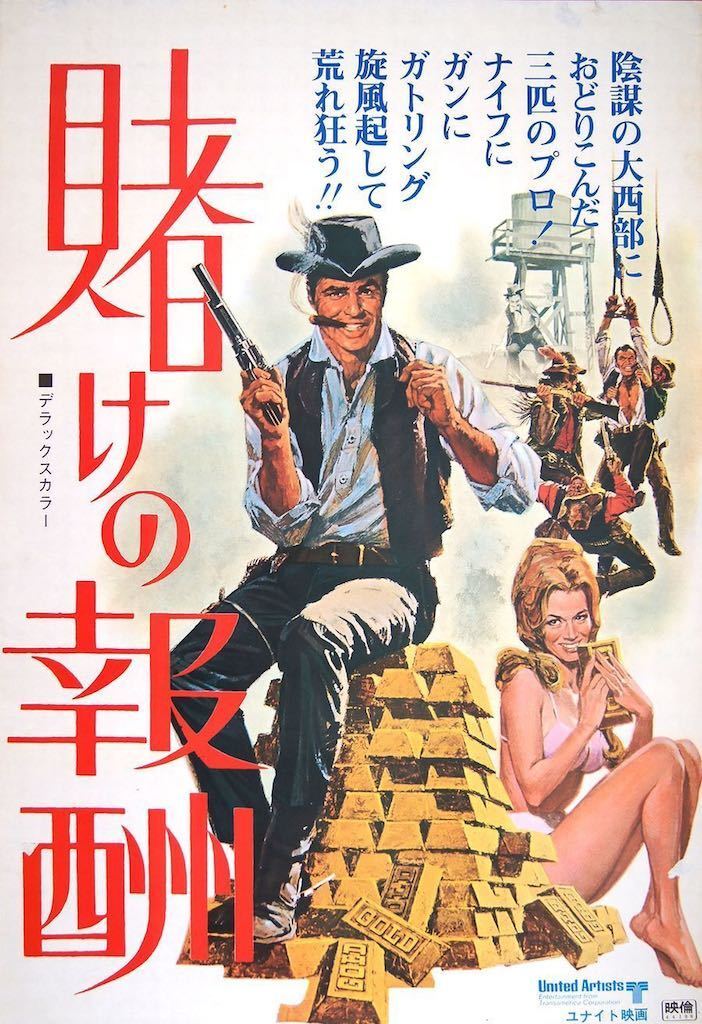
Sam Whiskey (1969) ***

You don’t realize the importance of treatment until you see an interesting story mangled. Taking the comedic approach to a heist picture is tricky. You can’t just make it happen because that’s what the script says, you’ve got to prove to an audience that whatever takes place is believeable. And frankly, asking three inexperienced dudes to smelt down a ton of gold and sneak it into a government building in the shape of a bust (the statue kind, not the other) and then smelt it back down again while inside and turn it into gold bars is a stretch too far.

This is amiable enough as far as it goes, and Burt Reynolds gives his good-ol’-boy routine a try-out, Angie Dickinson strays from her usual screen persona, and it does present some interesting screen equality – a Yaqui Indian shown as someone you would pay a debt to, Ossie Davis making a pitch for the African American acting crown.

I saw this double bill at the time of original release.

But it’s bogged down in a cumbersome plot that I guess many in the audience, like me, would have been begging for a switcheroo at the end that made more sense for the genre.

So, bear with me, Laura (Angie Dickinson) hires ex-gambler Sam Whiskey (Burt Reynolds) to retrieve $250,000 worth of gold ingots lying inside a sunken riverboat at the bottom of a river. Fair enough, you think, it’s the nineteenth century, nobody would be able to hold their breath that long to attempt to retrieve it even one gold bar at a time.

But she only wants the gold back to satisfy family honor. You see, her dead husband was in charge of transporting the gold to the local mint and to cover up his calmaity he replaced the gold with ingots made of lead. And hold on, there’s more, a Government inspector is due at the mint.

So, Sam and his buddies, blacksmith Jed (Ossie Davis) and strongman turned inventor O.W. Bandy (Clint Walker) have not just to recover the gold, and resist the temptation to simply spirit it away over the border, but find a method of getting it back inside the mint without anyone knowing and at the same time smuggle out the false ingots.

Of course, Laura has a blueprint of the plans of the mint so that’s okay then. And there’s a bust of her dead husband in the hallway of the mint and if Sam can just find the right excuse to take it away – and bearing in mind he has no obvious mold to use to re-cast it – he can re-make it in gold, return it, sneak it down into the smelting room and turn it back into gold bars.

Yes, the story is that complicated. Sam is only prevented from stealing the haul for himself by the seductive presence of Laura, who also has to act femme fatale enough to waylay the real inspector, whose identity Sam steals. I was praying that Laura, who seemed to be too good to be true what with all that family honor, was actually playing Sam for a patsy and that what was being removed from the mint was the real gold and what was being substituted was the fake.

No such luck. And this might well have worked if it had been treated seriously, if Sam was a famous robber, and if the director hadn’t interrupted proceedings every few minutes with some woeful comedy music and littered it with non-sequiturs or even provided a decent villain apart from Fat Henry (Rick Davis) and his motley crew who suspect something is up and attempt to hijack the gold before it reaches the mint.

And it’s a shame because the leading players are all an interesting watch. Burt Reynolds (Fade In, 1968), still a few years short of stardom, takes a risk in playing his character in light comedy fashion, coming off second best in his opening encounter with Jed. Angie Dickinson (Jessica, 1962) is far too genteel to play the femme fatale and it’s clear she only goes down the seduction route when Sam balks at the barminess of the idea, but it’s equally clear she’s the brains of the operation, and that’s pretty much a first in the western robbing business, and her character is so deftly acted that it’s only later, when you add everything up, you realize the depths of the character and that’s she only allowed audiences a glimpse of the surface.

Ossie Davis (The Scalphunters, 1968) doesn’t attempt the obvious either. He’s not after the Jim Brown action crown. He can look after himself with his fists, but he’s got the intelligence to avoid getting trapped by violence. And Clint Walker (The Great Bank Robbery, 1969), also primarily playing against type, is a muscular version of the crackpot inventor you usually found in a British comedy, but who is capable of coming up with an early version of  diving equipment. And he has a great line that despite endless rehearsal he muffs up, “Aha!” he proclaims, battering in a bedroom door, in best Victorian melodrama fashion, “I caught you trifling with my wife.”

So it’s worth it for the performances and if you ever hankered after the seminal shot of a squirrel overhearing a conversation or wondered how many shots in one movie a director could contrive to make through a small space then this is for you. Screenwiter William Norton (The Scalphunters) had better luck with other directors but here Arnold Laven (Rough Night in Jericho, 1967) takes a wrong turning. Amiable is not enough, certainly not for a complicated heist picture.

Angie Dickinson and Burt Reynolds completists, though, will not want to miss this.

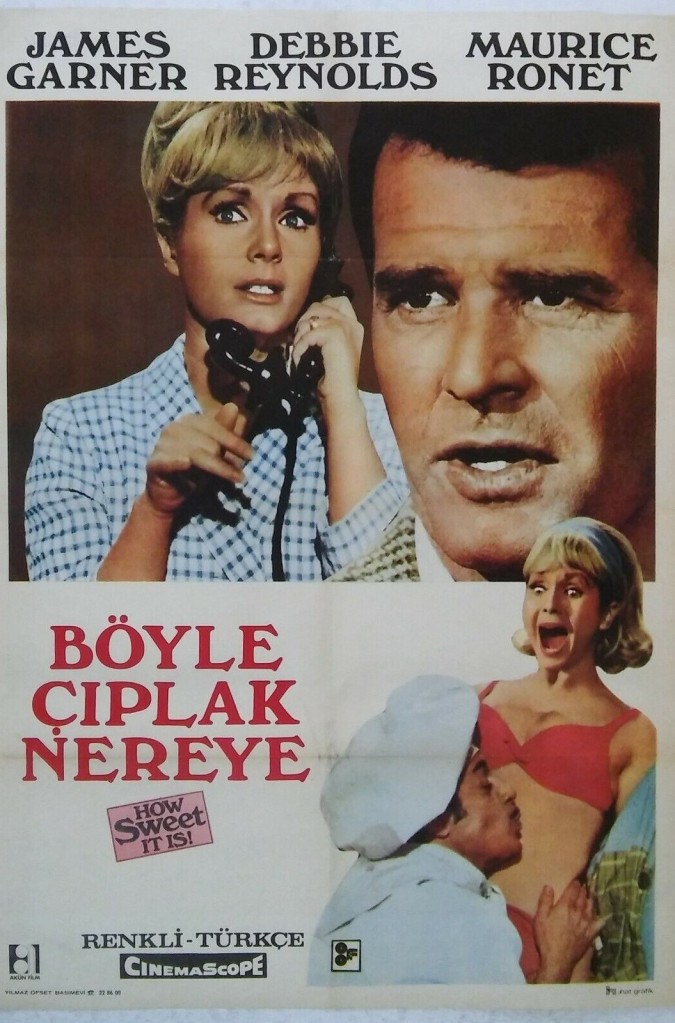
How Sweet It Is (1968) ***

You’d have thought by now leading men would be running shy of Debbie Reynolds, aware just how easily she would steal the picture out from under the top-billed star (witness Goodbye Charlie, 1964). But she had producers clamouring for the fizz she brought. Her comic skills, and willingness to entertain slapstick, were matched only by Doris Day. Especially helpful when she’s saddled with a convoluted plot that’s one-third generation gap comedy, one-third If It’s Tuesday It Must Be Belgium and one-third the kind of creative thinking that determines that somehow or other the female star must end up in a brothel. Throw in some flower power, split-screen, stills montage and slow-mo and you’ve covered all the bases.

In this hit-and-miss line-up, by far the most amusing element is that it’s the adults – photographer Grif (James Garner) and wife Jenny (Debbie Reynolds) – who are sex-obsessed, sneaking away at every opportunity for a bit of hanky-panky, trying to avoid the disapproving eyes of their virginal teenage son Davey (Donald Losby).

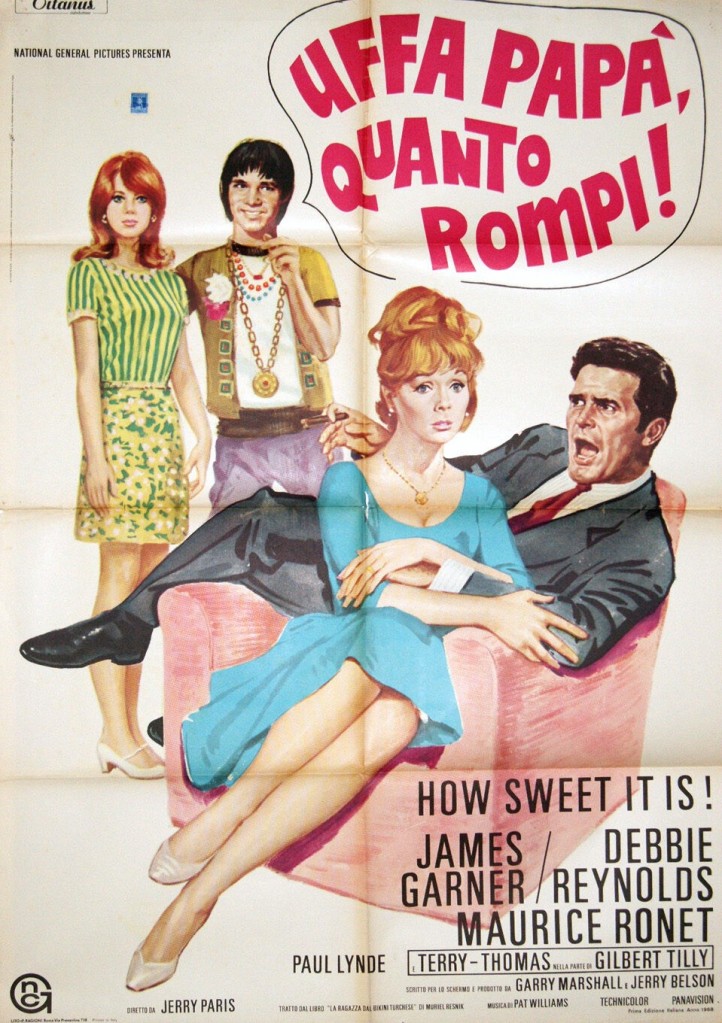
An odd example of creative license here. Poster designers had decided that red was the color no matter what. In the last section of the movie Debbie Reynolds parades in a blue – not red – bikini and the book on which it is based is called “The Girl in the Turqoise Bikini.” I’m not sure the color of the bikini is that much of a plot point unless it’s to hook readers of the original novel, but it’s mighty strange for the poster people just to change the color.

The narrative determines that Davey joins girlfriend Bootsie (Hilarie Thomson) and her lithe gal pals on a tour of Europe accompanied by Grif who has been commissioned to photograph the trip. Much to Grif’s horror, Jenny decides she’s going to follow them and hires out a swanky pad where the grown-up lovebirds can make a nest at some undetermined point.

The picture quickly loses interest in Grif and the girls, beyond an attractive tour guide making a pass at Grif and of course their bus getting stuck in the mud. Not only is the Jenny segment more intriguing – turns out she’s been conned by Gilbert Tilly (Terry-Thomas) into handing over a thousand bucks for a chalet he’s not entitled to hire out – because she gets romanced in high French style (champagne and flowers in case you’re bursting to know) by legal lothario Philippe (Maurice Ronet) and every now and then finds herself wearing little more than a bikini and sometimes nothing at all.

Takes a heck of a long time for the two stories to dovetail so that Grif can flounce off in a huff, punch the living daylights out of the Frenchman, and give the screenwriter the excuse to plonk Jenny down in a brothel (that part, I have to admit, is neatly done). There’s also some unusual class comedy at the chateau, Philippe initially being mistaken for a butler, then having to bunk down with his servant because (guess what) this mansion has only one main bedroom.

For no apparent reason there’s an odd section at the start. Instead of flying to Europe, they take the ship and for no apparent reason they’re stuck on C-deck with a lip-pursing purser (Paul Lynde) who insists males and females must sleep apart and share cabins with strangers. Slot into the miss department the opening with the old trope of the husband coming home to find his wife in bed with another man, except it’s Davey and the parental lovers are enjoying some afternoon delight, though quite how you can stretch that to Davey taking a carving knife up the stairs beats me.

James Garner is no more convincing a photographer than he was in The Pink Jungle (1968) and he hardly gives Debbie Reynolds a run for her money, as if he doesn’t know how to bring this character to life. Except for excelling at the risqué, and she a willing accomplice, he’s coming over like the straight man to her comedienne. Debbie Reynolds is superb, reactions honed to the bone, throwing herself into the part, undergoing whatever humiliation will snare a laugh.

Garner briefly resurrected his career with Support Your Local Sheriff (1969) before he hit the slide (see the previous Behind the Scenes article) and to my astonishment this signalled pretty much the end of Reynolds’ screen career, nothing for the next decades except What’s the Matter with Helen (1971) and a bit part (as herself) in The Bodyguard (1992). You can hardly blame her for screenwriters not coming up with the right material to take advantage of her supreme comedic gifts. Alexandra Hay (The Model Shop, 1969) is wasted, you might just as well have dabbed her role “the sexy blonde.”

Director Jerry Paris (Never a Dull Moment, 1968) throws everything he can at the screen without much success. Future director Garry Marshall (Pretty Woman, 1990) and producer Jerry Belson (Fun with Dick and Jane, 1977) in his movie debut formulated the screenplay from the bestseller by Muriel Resnik.

Far from the last comedy hurrah you would have wished for the actress, but all you’re going to get.  

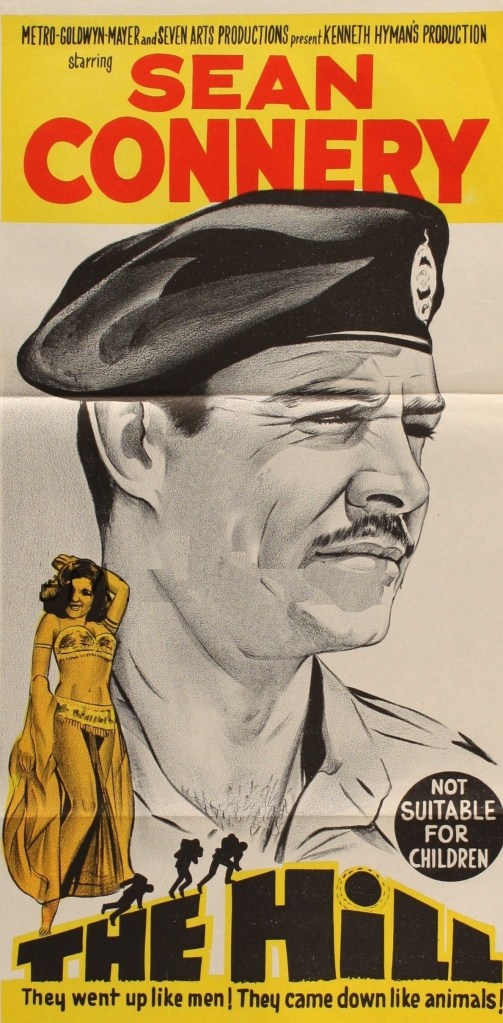
The Hill (1965) ****

Set in a British Army prison camp in North Africa during World War Two ruled by sadistic Sgt Wilson (Harry Andrews) who believes himself above the regulations he forces others to follow, The Hill is a parable about the hypocrisy of totalitarian rule. And much of what is shown would be offensive to modern sensibilities.

Although the commandant and medical officer (Michael Redgrave) are his superior officers, Wilson runs the unit by force of personality. He believes his ruthless treatment of the prisoners turns them into proper soldiers. Into his fiefdom come five new prisoners including coward Joe Roberts (Sean Connery), spiv Monty Bartlett (Roy Kinnear), African American Jacko King (Ossie Davis) – a “different colored bastard” – another Scot Jock McGrath (Jack Watson) and weakest link George Stevens (Alfred Lynch).

Most films about prisons emphasize imprisonment, most scenes taking place in cells or other places of confinement. Sidney Lumet (The Pawnbroker, 1964) directs this film as though it is a paeon to freedom with incredible shots of the vista within which the men are contained. He uses some of the most bravura camerawork you will ever see outside of David Lean.

The film opens with a two-minute crane shot credit sequence that pulls back from a prisoner collapsing on the titular hill to reveal the entire encampment and follows with a one-minute reverse tracking shot of Wilson striding through his domain. And while the camera controls what we see, our ears are constantly assailed by the constant drumbeat of other marching prisoners. 

Climbing the hill in full pack would break any man and those who collapse are roused by buckets of water. The first to crack is Stevens who is constantly tormented by homophobic jibes. Continuous racist abuse is heaped on Jacko King “you blacks don’t have brains – you got it downstairs, we got it upstairs” until driven to the point of madness he begins to behave like a gorilla which frightens the life out of his superiors.

Obeying orders, says Joe Roberts, is “like a dog picking up a bone.”  RSM Wilson is out of control, the commandant spending his nights with a prostitute, the medical officer clearly sent here as punishment for some previous misdemeanor. Of the senior staff only Harris (Ian Bannen) comes away with any dignity, constantly trying to thwart the worst bullying.

When Stevens dies suddenly, the film changes tack and becomes a battle for survival among those who could be blamed for causing his death and those who dare to point the finger.  Wilson has no problem stitching up his colleagues and blackmailing the medical officer while Roberts is beaten up for his effrontery in standing up to authority.

But the astonishing presence and self-confidence and, it has to be said, courage of Wilson lords it over everyone, and there is an extraordinary scene where he forces the entire battalion of prisoners to back down when they are on the brink of open rebellion.

Connery is superb in what is his first dramatic role in a bread-and-butter dramatic production rather than the glossier Marnie (1964) and Woman of Straw (1964) and while he has his moment of defiance he gives enough glimpses of vulnerability and fear to ensure we do not mistake him for his alter ego James Bond. Ian Bannen delivers a touching, assured, performance, far removed from the nasty sarcastic personalities he portrayed in his other desert pictures, Station Six Sahara (1963) and the Flight of the Phoenix (1965). 

Ossie Davies (The Scalphunters, 1968), as defiant as Connery, is brilliant as the man who works out a way to beat the enemy by confusing them; the scene in the commandant’s office where he treats the officer as his inferior is a tour de force.   

Although the Army is meant to run according to established regulation, where obedience to a superior is paramount, it is equally apparent that it can also become a jungle if those who are the fittest assume control. Sgt Wilson demands unquestioned discipline even as he is breaking all the rules in the book. But he retains his authority not just by bullying, but by intelligence, exploiting weakness, coolness under pressure and by welcoming confrontation, his personality as dangerous as any serial killer.   

Harrowing, superb, true.

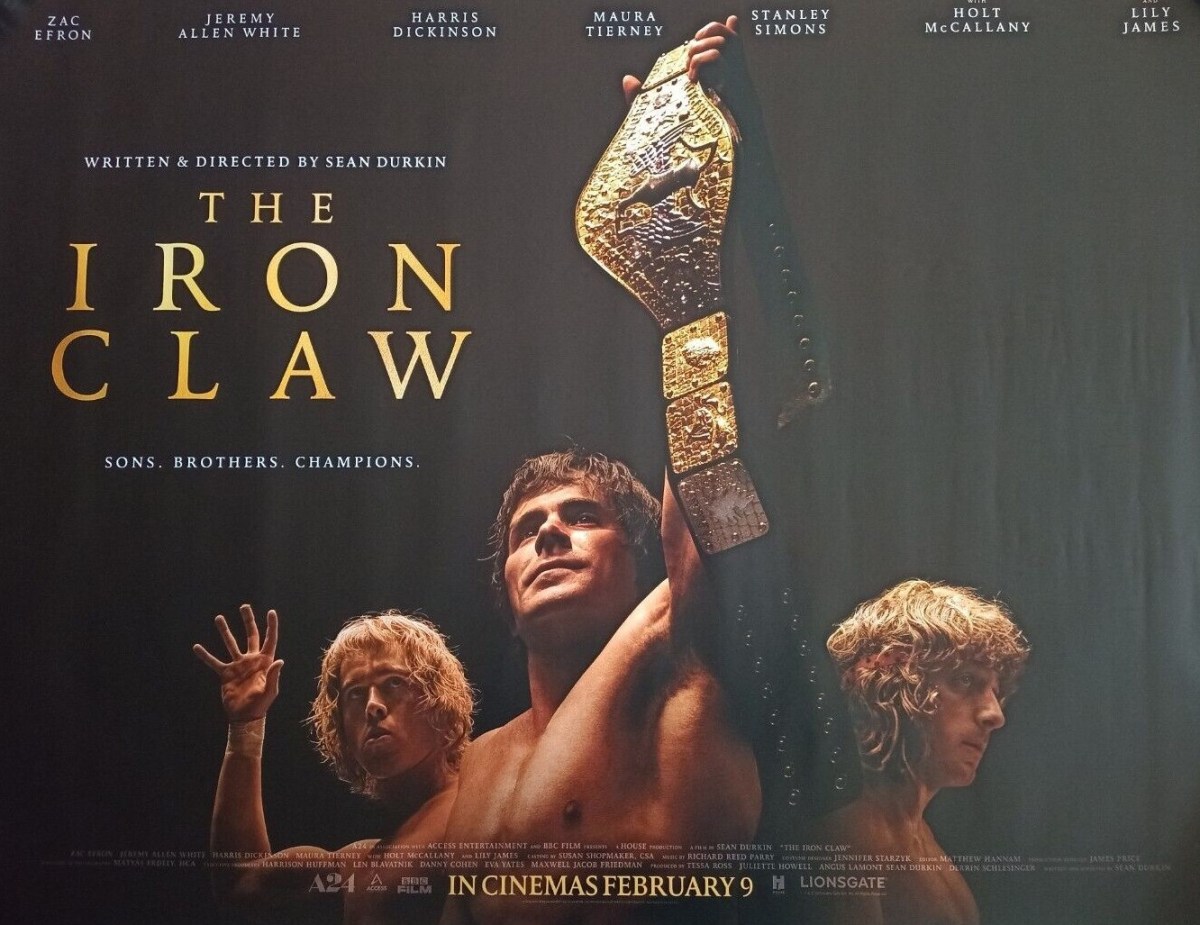
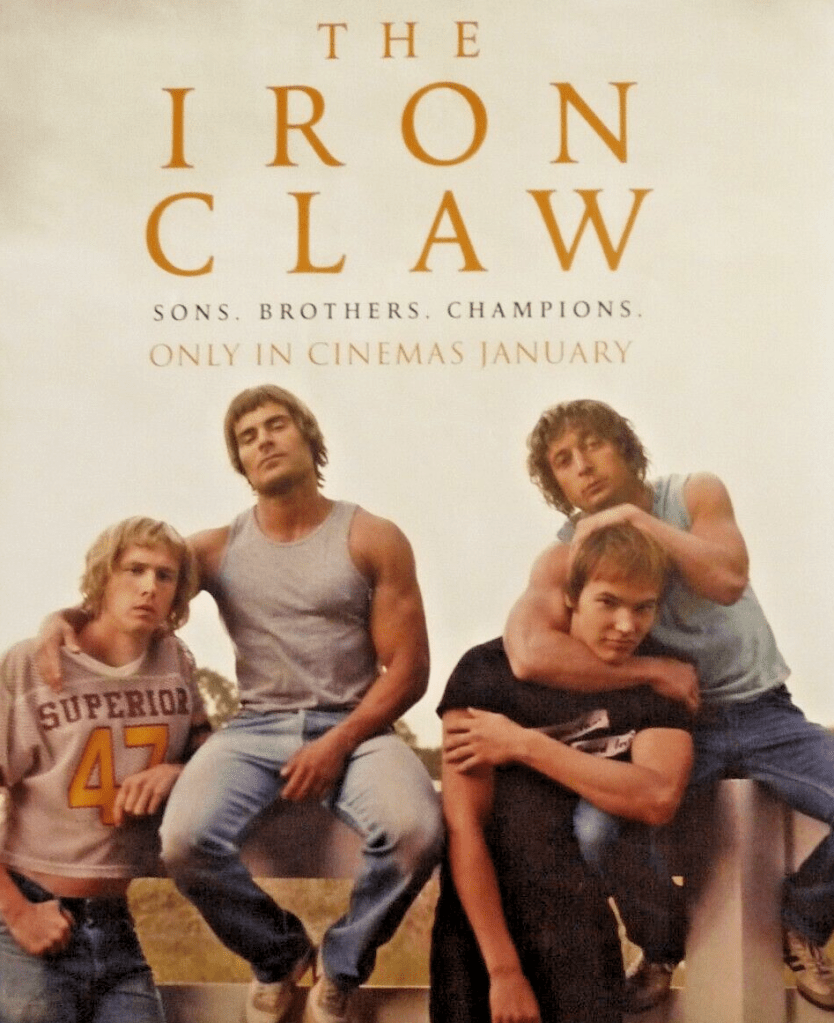
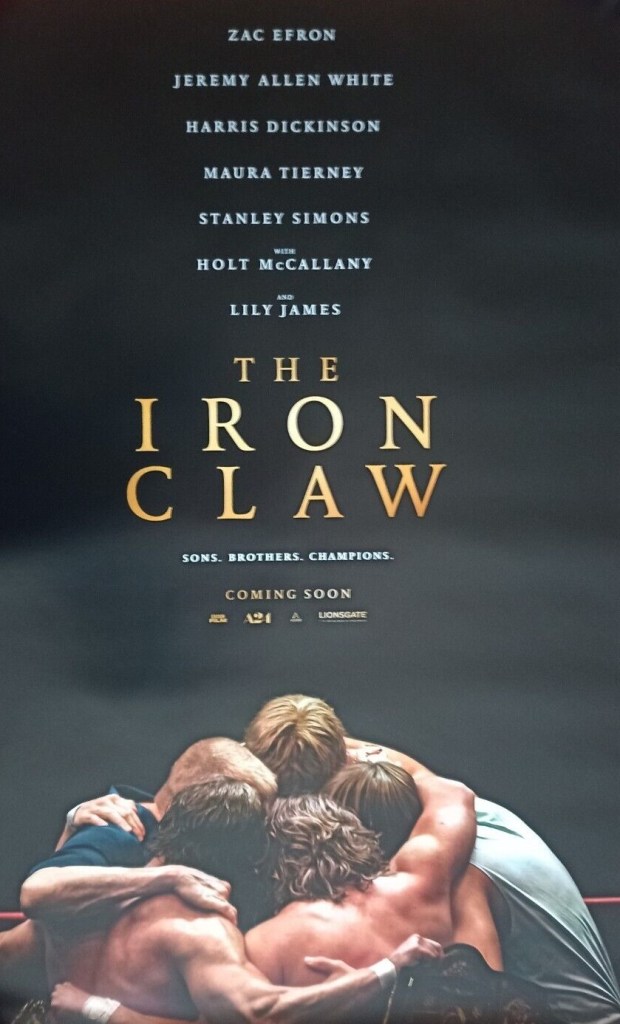
The Iron Claw (2023) *** – Seen at the Cinema

When I was growing up there was a beloved character in British comic The Valiant called The Steel Claw. After one accident he lost a hand and after another the replacement artificial hand, made of steel, if touched by electricity, rendered him invisible, apart from the claw which floated in the air like some avenging angel. He started out a villain but in the kind of character development that rarely occurs in this world turns into a crime-busting hero.

I mention this not because I made the mistake of assuming the characters here would be super-heroes (though spandex does play a role) but because character development is in serious lack. And, to be honest, I’m getting a bit fed up – stand up The Holdovers – of repressed male characters holding it all together for the sake of a director who wants to make a point about repressed males. At least in The Holdovers the main character broke out of his emotional prison once in a while. Here, all we have is emotional blackmail. And a director who in true artistic fashion shies away from any real dramatic incident so that it can be dealt with in very clever long shot or occur offscreen or in shock follow-up sequence (one of which did work very well, I admit).

“I used to be a brother,” laments Kevin (Zac Elfron) at the end of the picture in homage no doubt to Marlon Brando’s famous line in On the Waterfront, as he sheds a tear in retaliation at having to keep up a stiff upper lip for the rest of the movie. By this point, he’s the sole survivor of five siblings, but the way the boys are ruled by the iron father, not a sniffle is allowed when anyone else passes away.

This is another of those biopics that won’t mean a thing to anyone outside America. At one point (long before WWF) wrestling was huge in the U.K., ruling Saturday afternoon telly when everyone was waiting for the football/soccer results, but it was so obviously faked nobody took it seriously. So, one of the issues here is the fraudulent aspect of the “sport.” Sure, you got to be fit to fake it, unless you’re a world champion with a tub of lard for a gut.

There’s a scene where Kevin earnestly explains – he’s nothing but earnest throughout – to future wife Pam (Lily James) that there is some skill involved in wooing the crowd and by dint of performance (aka acting) if you win enough people over you get to be world champion. And even if you end up getting thumped by the current world champion, if you shout it loudly or eloquently enough the audience will be convinced you’re actually the winner.

So the meat, such as it is, isn’t the wrestling (although that does occupy too lengthy a time) but how the four sons (one is dead when the picture starts) are corralled by father Fritz (Holt McCallany), now a wrestling promoter, into following him into the sport. Some of the boys ain’t so keen – Kerry (Jeremy Allen Wright) is a junior world discus throwing champion (as was dad), Mike (Stanley Simons) shows musical promise (as did, bizarrely, dad) – but still buckle down to the training and discipline. Even if it’s all faked, the body still takes a hammering. Some need pills to get them through.

One by one they all die off, Mike and Kerry by suicide, David (Harris Dickinson) after ignoring initial signs of internal bleeding. Still, mostly they grin and bear it, until, being the only brother left standing, Kevin takes against his father and tries to strangle him. Meanwhile, in the background, Mom (Maura Tierney) is as stoical as the others, her only rebellion refusing to wear the same funeral dress twice.

It’s mostly turgid, though, all the sons showing signs of depression, yet there’s some kind “happy ending” because all Kevin’s kids and grandkids end up living together to make up, I guess, for the loss of the siblings. There’s also good old-fashioned family values and the sons appear to truly bond instead of knifing each other in the back and leaving home at the earliest opportunity. But Dad never appears to blame himself for his hard line and Mom is unwilling to intervene.

I feel sorry for Zac Elfron (17 Again, 2009), the movie equivalent of being in a boy band, who’s muscled up and set himself up for Oscar contention. But, just as Wicked Little Letters was plagued by over-acting this is riddled with the opposite and no amount of macho posturing can make up for not having a decent character for an audience to root for.

The shock scene, in case you’re wondering, concerns Kerry. Despondent, he climbs on his motorcycle. We see the road, we see the distant lights of oncoming vehicle, but the camera just pulls back and pulls back with exceeding artiness. You think he’s dead, but, no, there he is shuffling around on crutches – minus a foot.

Written and directed by Sean Durkin (The Nest, 2020).

Please, sir, can we go back to dramas that are full of drama.

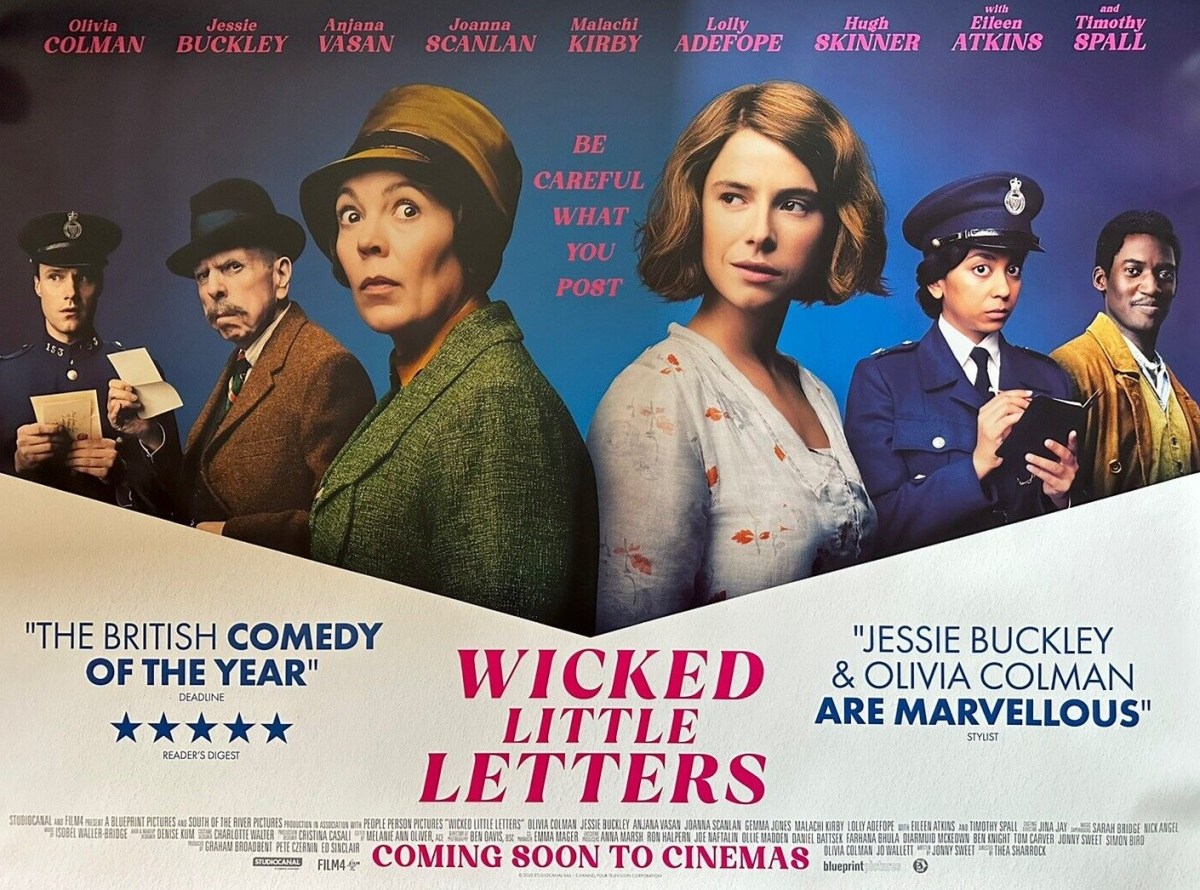
Wicked Little Letters (2023) * – Seen at the Cinema

The trailer would have won an Oscar, deftly put together, loaded with laughs, but the reality is this is set fair to be the worst picture of the year if not the decade. If it wins any marks at all it’s for showing that the Brits can match the likes of Tarantino and Scorsese in the cuss-word department and challenge The Thick of It for creative swearing. But even the Society for Ham Over-Acting would have trouble letting this mob join and you would find better detection – invisible ink, anyone? – from Enid Blyton’s Famous Five.

As it happens, I have relatives in the English south coast seaside town of Littlehampton and perhaps the entire population was so scarred by the occurrences detailed here that they never saw fit to bring up the subject or perhaps had decided it was just so preposterous it wasn’t worth mentioning.

Anyway, you can guess from the get-go that its repressed spinster Edith (Olivia Colman) who’s the culprit, sending poison pen letters to herself to get a bit of local attention. And you would be hard put even if you were dumbest of dumb cops to try and pin the blame on her next door neighbor Rose (Jessie Buckley), a war widow (it’s set after World War one) with a young daughter. Roisterous and boisterous though she is, she’d clearly rather spend what little cash she has on getting drunk than stumping up for over a hundred stamps, envelopes and writing paper.

Of course, this is a male-dominated society ruled with an iron hand by misogynists, Edith’s father Edward (Timothy Spall) top of the class in that department but closely followed by the dumb and dumber cops. Coming to Edith’s rescue in quite bizarre fashion is “woman police officer” (as is apparently her full title) Gladys (Anjana Vasen) and her coterie of amateur detectives, all members of the local whist club.

The whole thing is just too stupid for words. Roger Moore’s acting is Oscar-worthy compared to this lot who roll their eyeballs at the drop of a hat. There are attempts to ram into an already thin storyline references to feminism and racism and there may even be a rapacious priest somewhere in the mix for good measure, but the effect is of lazy moviemaing pandering to the crowd. Oh, and by the way, there’s a reminder – in case you’ve forgotten – just how much people frowned upon kids playing the guitar a century ago as if it was the kind of musical instrument devised by the Devil.

The trailer whizzes along but this moves like treacle. I’m sure actors are entitled to make a poor movie now and then, but this feels more like a director who failed to rein anyone in and as a consequence Oscar winner Oliva Colman (The Favourite, 2018), Oscar nominee Jessie Buckley (The Lost Daughter, 2021) and multiple Bafta nominee Timothy Spall (The Last Bus, 2021) are allowed to make complete fools of themselves. The only one showing restraint is Emmy award-winner Eileen Atkins (Paddington 2, 2017).

Who to blame? Director Thea Sharrock (Me Before You, 2016) for not issuing red cards to the actors, screenwriter Jonny Sweet (Greed, 2019) for dreaming up this farrago in the first place or the trailer team for providing such a misleading impression of the end result? The audience, desperate for an old-fashioned comedy along the lines of Four Weddings and a Funeral or The Full Monty?

Shambolic cartoon. Boo hiss.

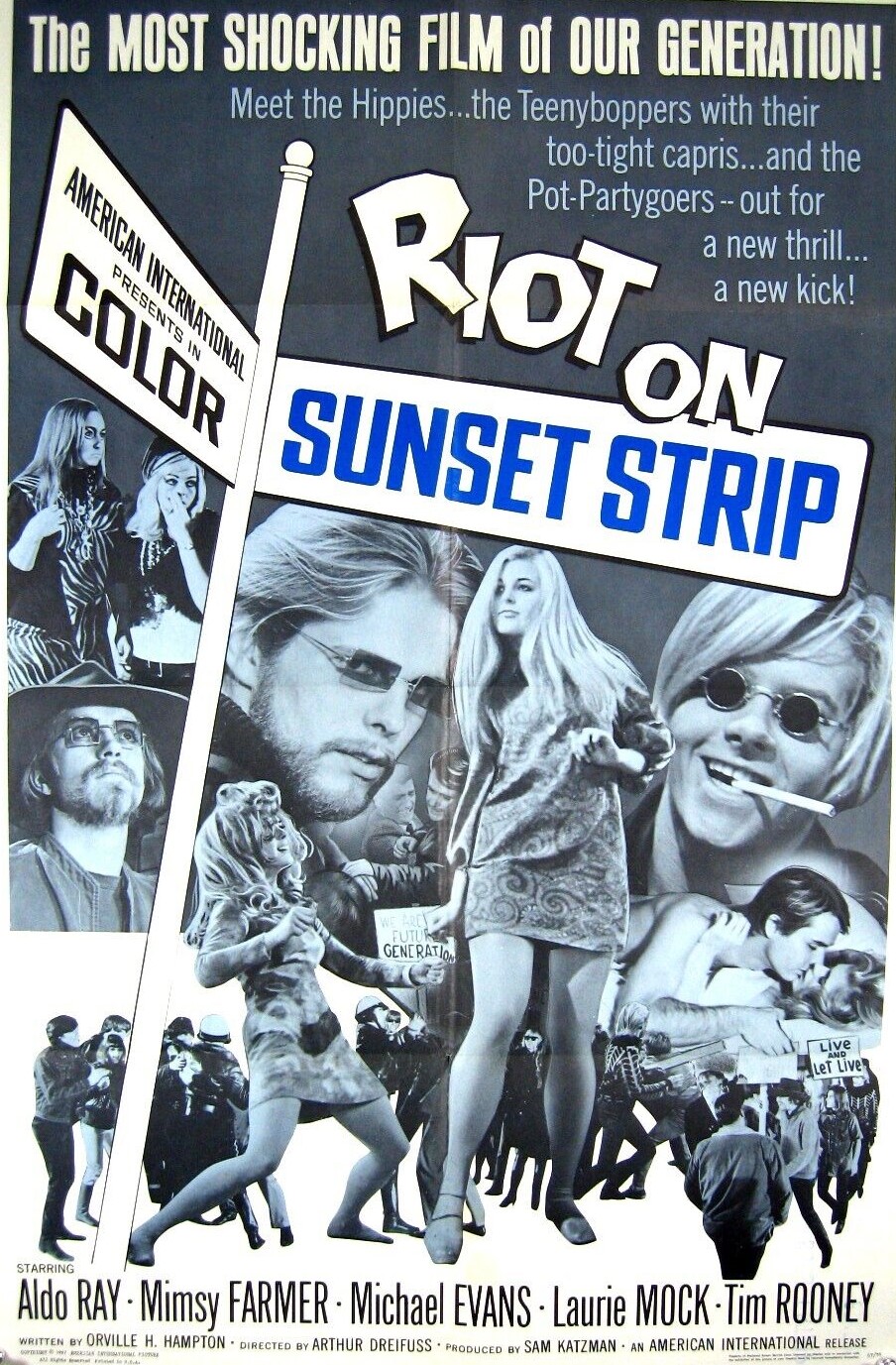
Riot on Sunset Strip (1967) ***

Catholic high school girls in trouble? Call Sam Katzman. Delinquents, crazed by music or booze or sex or drugs (maybe all four), on the rampage? Call Sam Katzman. Thugs, to quote from Johnny Cash, keen to “watch a man die?” Call Sam Katzman. The new generation threatening to swamp the old? Call Sam Katzman. Require a sensuous lass in tight clothes to perform an Ann-Margret-style number? Call Sam Katzman.

Legendary five-and-dime producer Sam Katzman, with over 200 pictures in his portfolio, had put his stamp on everything from the East Side Kids and jungle flicks to horror, westerns and sci-fi. Any new genre with rip-off potential, he’d be first in the queue. Forget knives and guns and fists, music was the most dangerous weapon, over-exciting the young.

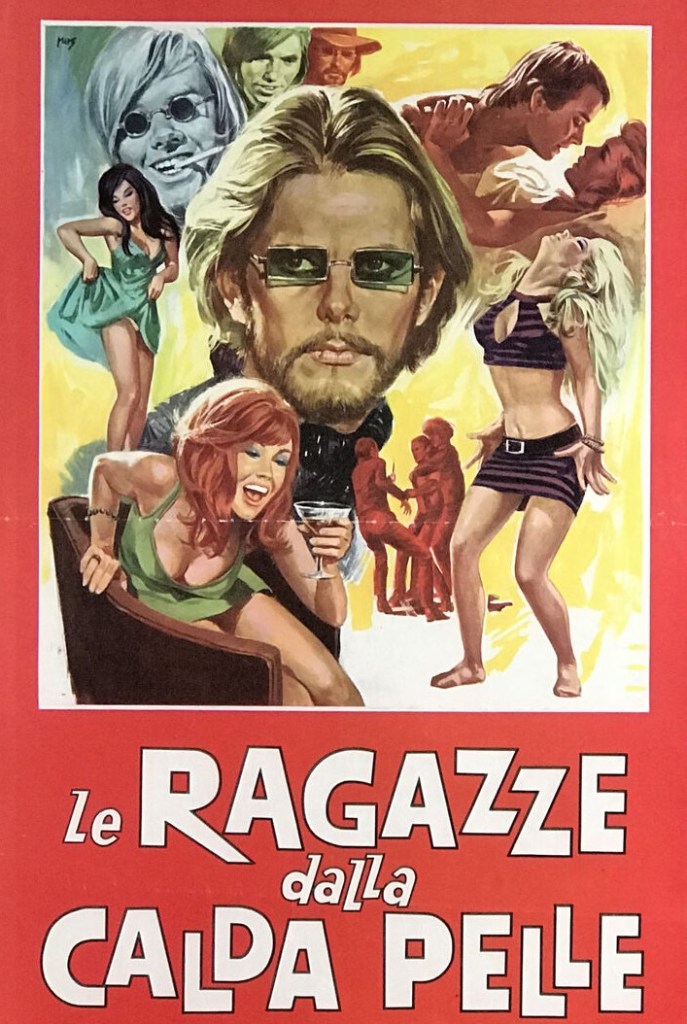
“Girls in Hot Leather” is the bait-and-switch Italian title.

So no surprise then to find the man behind Rock Around the Clock (1955) and Calypso Heat Wave (1957)  also responsible for Teenage Crime Wave (1955), New Orleans Uncensored (1955) and Hot Rods to Hell (1967). Or that he’s an exponent of the old bait-and-switch here – no riot here that I could spot.

And probably over-emphasis on earnestness for a potential exploitationer, from the occasional intrusions of a pseudo-documentary voice-over to the grown-ups debating the causes of the latest outbreak of teenage rebellion, long hair, marijuana, popping pills and energetic dancing. That said, it’s even-handed, adults blamed for the divorce plague that leaves youngsters alone and vulnerable, cops too prone to violence, greedy businessmen and characters with right-wing tendencies causing the problem or making matters worse. “They’re just kids,” spouts earnest top cop Lorrimer (Aldo Ray), “they could be your sons and daughters,” not realizing one of them is.

Away from the grown-up talk-fest, the kids sit either numb listening to loud rock bands in far from sleazy clubs or on the dance floor pounding away to the beat, in either case not having much to say to each other, and inevitably ending up out the back door smoking a quiet joint or gathering in some pretty fancy home for a tripping party

Andrea (Mimsy Farmer), a youngster from a broken home living with her drunken mother, falls in with a bunch of teenagers who hang out in these hard-wired locales. Initially, she resists joining in, and perfectly innocent when caught up in a scuffle. But when supposed cool dude Herbie (Schuyler Hayden) spikes her drink with some acid at a party she turns all Ann-Margret, and is allocated a near six-minute slot to shake her stoned booty, leading the aforesaid Herbie to take her upstairs and take advantage. Doesn’t end well for Herbie as she’s under-age.

Turns out, too, Andrea is not so much the long-lost as abandoned daughter of Lorrimer and when he goes into rescue mode she gives him both barrels. “You left me alone for four years, let’s keep it that way,” she snaps. Apprised of her situation, he sets about the youngsters with his fists.

That supposedly leads to the riot. But it’s no more than the mildest of protests as he has to endure a Walk of Shame a la Game of Thrones (though with clothes on) and, bizarrely, becomes the poster boy for both police brutality and for anti-police-brutality. Natch, there’s a tacked-on happy ending but not before the voice-over can intone in apocalyptic manner: “Half the world’s population is under 25. Where will they go? What will they do?”

I had come at this because I was intrigued to discover Mimsy Farmer as the junior minx in Spencer’s Mountain (1963) and as she was overshadowed by Ann-Margret in Bus Riley’s Back in Town (1965) wondered how her career had progressed. Presumably come to a standstill, otherwise she wouldn’t have ended up in a B-picture cul de sac. She puts in a good performance, however, miles away from the lively youngster of the Henry Fonda picture, withdrawn, anxious, not fitting in.  

A good chunk of the picture is wasted, from today’s perspective, on no-name bands and not much happening, but the talk-fest aspects prove that little has changed in the way the grown-ups misunderstand the young and much the same arguments for reining in the supposedly out-of-control teenagers are still being trotted out today. But it does point a prescient finger at marriage break-up (the fault of the grown-ups doing much of the blaming) as a root cause of teenage misbehavior and contemporary audiences will only be too familiar with predatory males spiking drinks.

Aldo Ray (Welcome to Hard Times, 1967) would be the marquee name, but you try and compete with a lithe teenager who says more in her six minutes of pent-up emotion and the resultant dancing than all the time spent on earnest debate. Laurie Mock (Hot Rods to Hell, 1967) is the wildest of the females.

Director Arthur Dreifuss was a Katzman regular but was also responsible for the movie version of Brendan Behan’s The Quare Fellow (1962). Screenwriter Orville H. Hampton had a surprising pedigree with Cage of Evil (1960) and Jack the Giant Killer (1962) and Oscar-nominated for One Potato, Two Potato (1964).

More absorbing than I expected and Mimsy Farmer’s trip a lot more interesting than Peter Fonda’s.

Discover WordPress

A daily selection of the best content published on WordPress, collected for you by humans who love to read.

The Atavist Magazine

by Brian Hannan

WordPress.com News

The latest news on WordPress.com and the WordPress community.