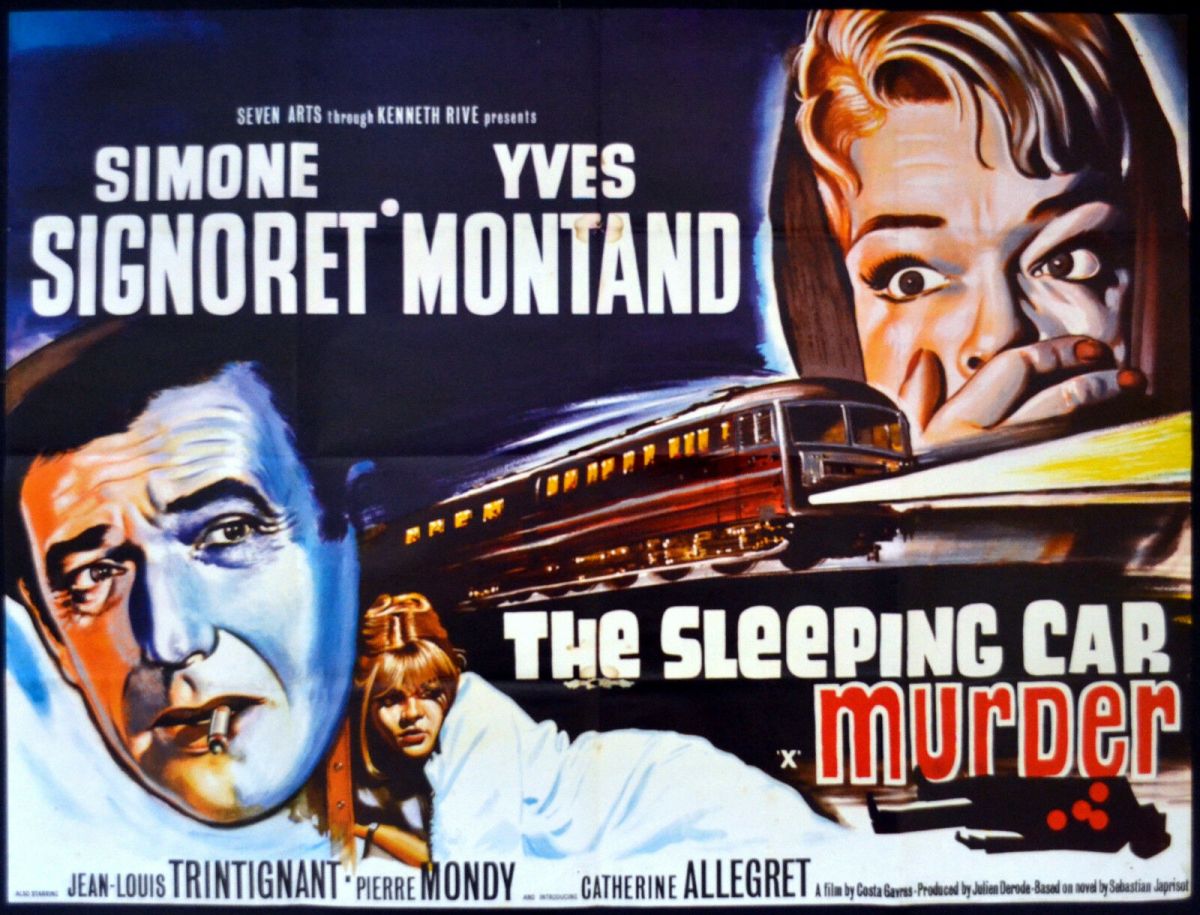
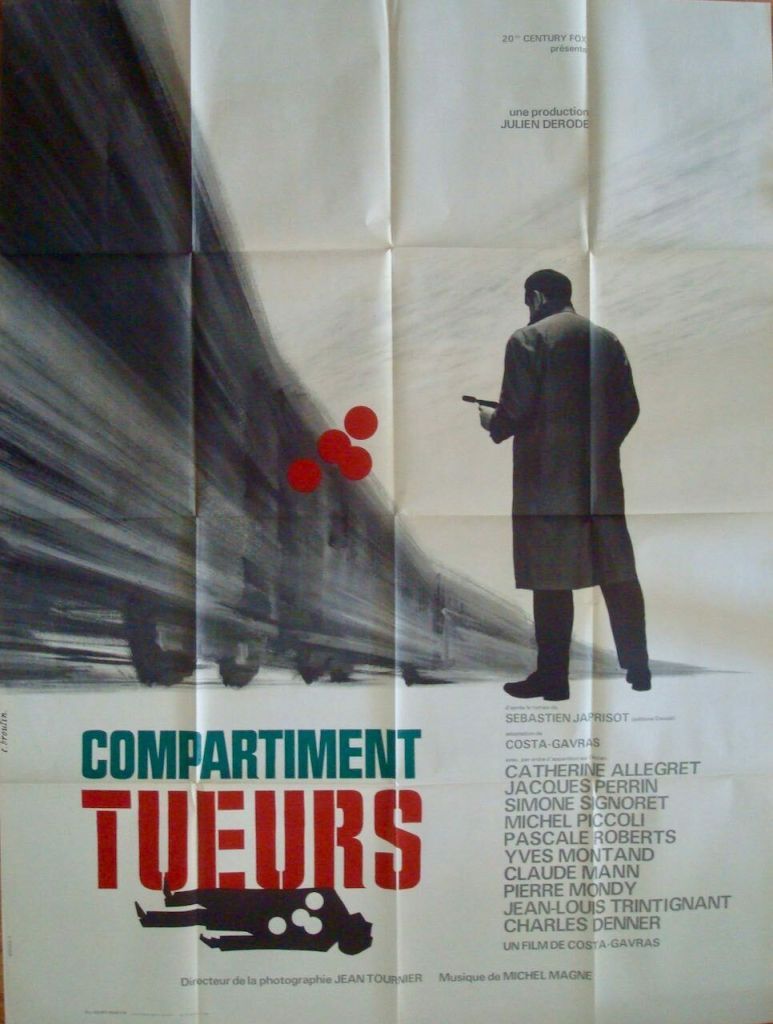
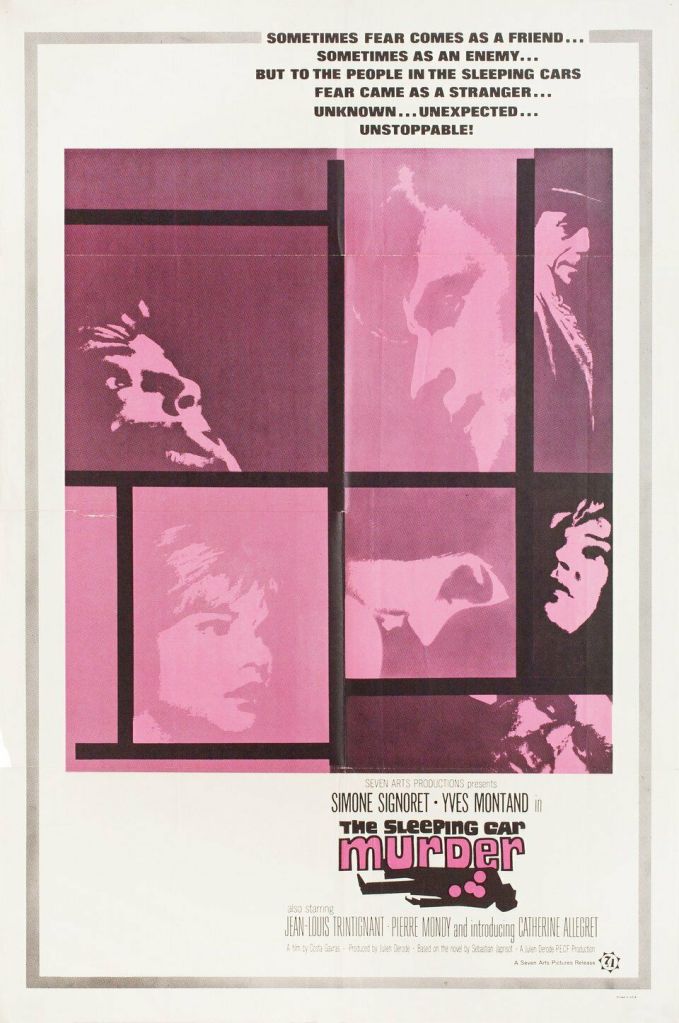
The Sleeping Car Murder (1965) ****

Absolutely brilliant thriller. Even after a half a century, still a knock out. A maniac on the loose, baffled cops, glimpses into the tattered lives of witnesses, victims and relatives, told at break-neck speed by Greek director Costa-Gavras (Z, 1969) on his debut and concluding with an astonishing car chase through the streets of Paris.  Not just an all-star French cast – Yves Montand (Grand Prix, 1966), Oscar-winner Simone Signoret (Is Paris Burning?, 1966), Jean-Louis Trintignant (Les Biches, 1968) and Michel Piccoli (Topaz, 1969) – but directed with a Georges Simenon (creator of Maigret) sensibility to the frailties of humanity.

As well as the twists and turns of the narrative, what distinguishes this thriller are the parallel perspectives. Where most whodunits present an array of suspects, inviting the audience to work out the identity of the killer, here virtually all the characters are presented both objectively and subjectively. Some are delusional, others highly self-critical, occasionally both, and we are given glimpses into their lives through the characters’ internalized voice-over and dialog.
Tiny details open up worlds – the wife of a dead man bewailing that he would not be able to wear the fleecy shoes she had just bought him to keep out the cold during his night-time job, a policeman revealing he wanted to be a dancer, a vet who wants to create a new breed of animals, a witness whose parents committed suicide. But just as many, the flotsam and jetsam of the police life, irritate the hell out of the cops: Bob Valsky (Charles Denner) constantly berates their efforts, relatives bore the pants off their interviewer, not to mention self-important police chief Tarquin (Pierre Mondy) who has an answer for everything.

A young woman Georgette (Pascale Roberts) is discovered dead in the second-class sleeper compartment of a train after it has pulled into Paris. Initial suspicion falls on the other  occupants including aging actress Eliane (Simone Signoret) in the thrall of her much younger lover Eric (Jean Louis Trintignant), impulsive blonde bombshell Bambi (Catherine Allegret), low-level office worker Rene (Michel Piccoli) and Madame Rivolani (Monique Chaumette). Weary Inspector Grazziani (Yves Montand), suffering from a cold and wanting to spend more time with his family, is handed the case. But before he can interview the suspects, they start getting knocked off.
So convinced are the police of their own theories that they ignore the testimony of Eliane and instantly home in on fantasist Rene, treated with contempt, a dishevelled lecherer who on the one hand misinterprets signals from women and on the other realizes that no one in their right mind would ever date him. Eliane is tormented by the prospect of being abandoned by her controlling lover.

It’s a race against time to find the passengers before the killer. In the middle of all this there is burgeoning romance between Bambi and clumsy mummy’s boy Daniel (Jacques Perrin), who may well hold the key to the murders. Their meet-cute is when he ladders her stockings.

I won’t spoil it for you by listing all the red herrings, surprises, mishaps, tense situations and explorations of psyche, but the pace never abates and it keeps you guessing to the end. And while all that keeps the viewer on tenterhooks what really makes the movie stand out is the depiction of the inner lives of the characters.

So often cast as a lover Yves Montand is outstanding as the diligent cop. Signoret captures beautifully the life of a once-beautiful woman who now enjoys the “empty gaze of men,” Trintignant essays a sleazier character than previously while Michel Piccoli who often at this stage of his career played oddballs invites sympathy for an unsympathetic character. Catherine Allegret (Last Tango in Paris, 1972) and Jacques Perrin (Blanche, 1971) charm as the young lovers. In tiny roles look out for director Claude Berri (Jean de Florette, 1986), Marcel Bozzuffi (The French Connection, 1971) and Claude Dauphin (Hard Contract, 1969),  

Costa-Gavras constantly adds depth to the story and his innovative use of multiple voice-over, forensic detail, varying points-of-view, plus his masterful camerawork and a truly astonishing (for the time) car chase points to an early masterpiece. Sebastian Japrisot (Farewell, Friend / Adieu L’Ami, 1968) wrote the screenplay based on his novel.  

Can’t remember where I got my DVD, perhaps second-hand, but there is an excellent print, taken from the 2016 restoration, available on YouTube.
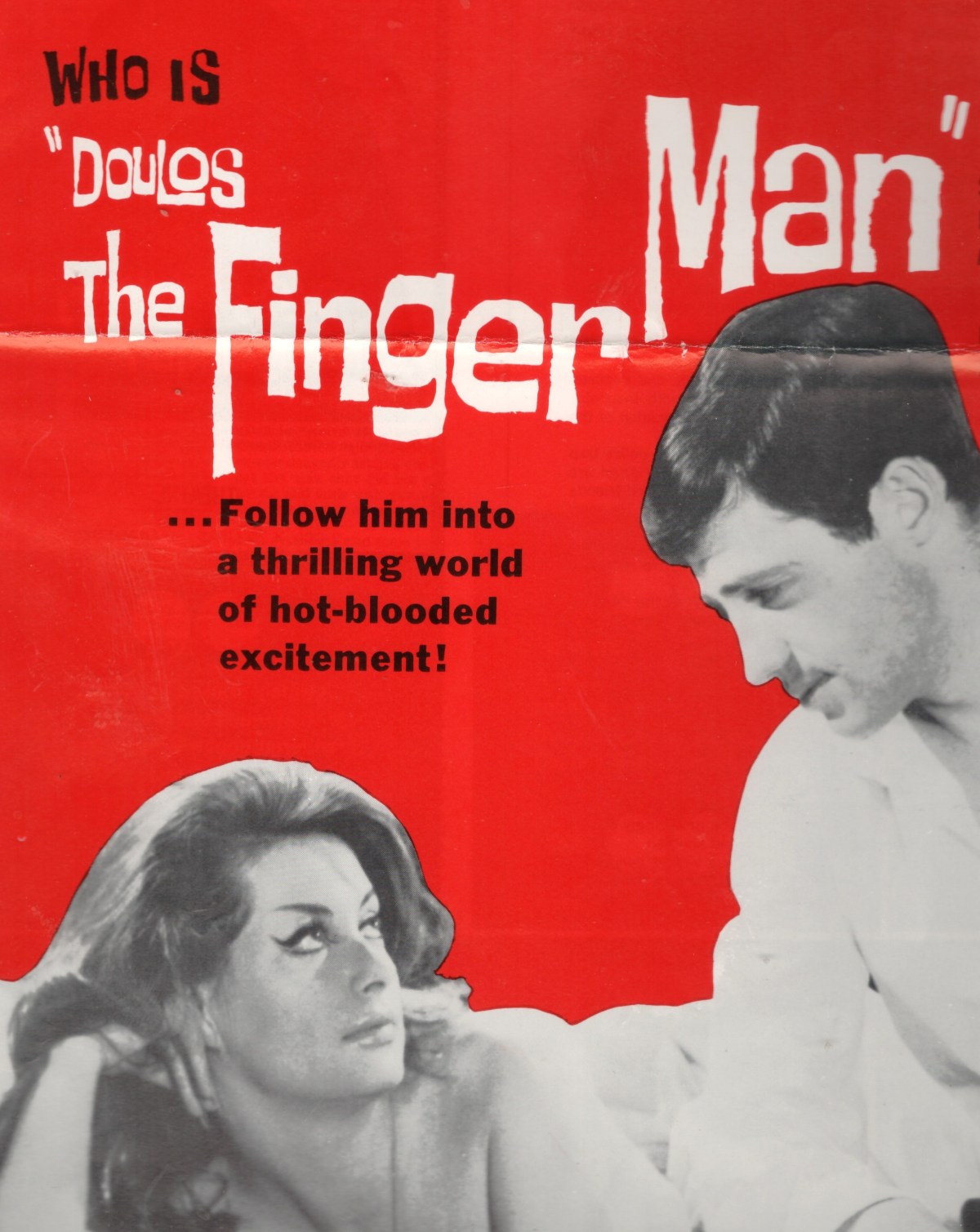
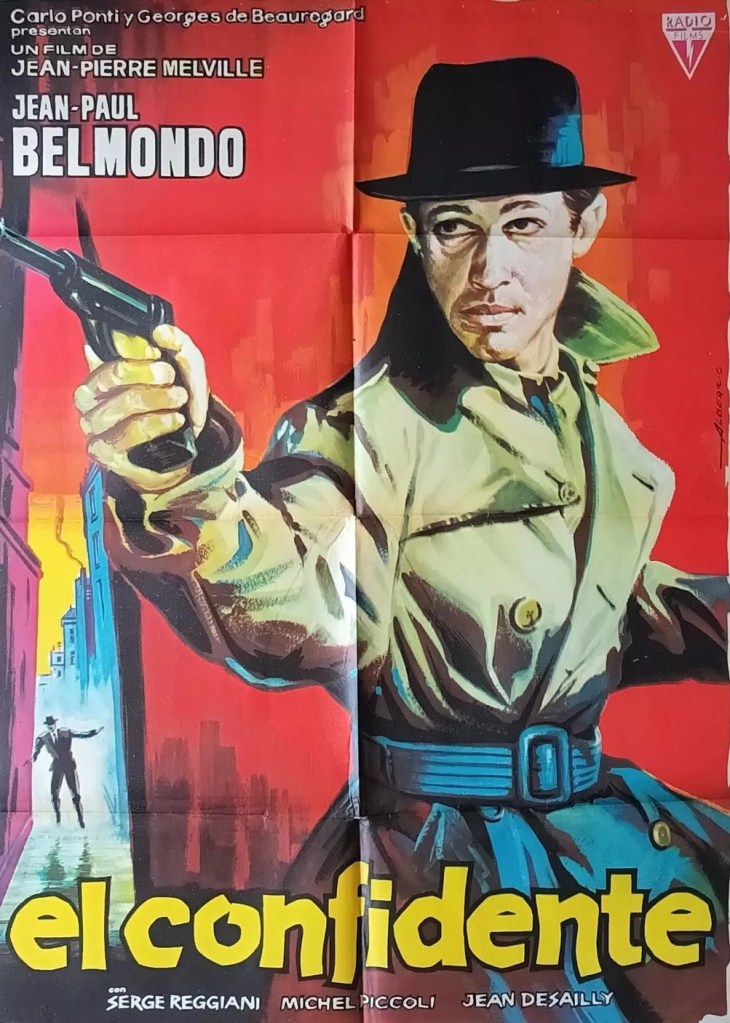
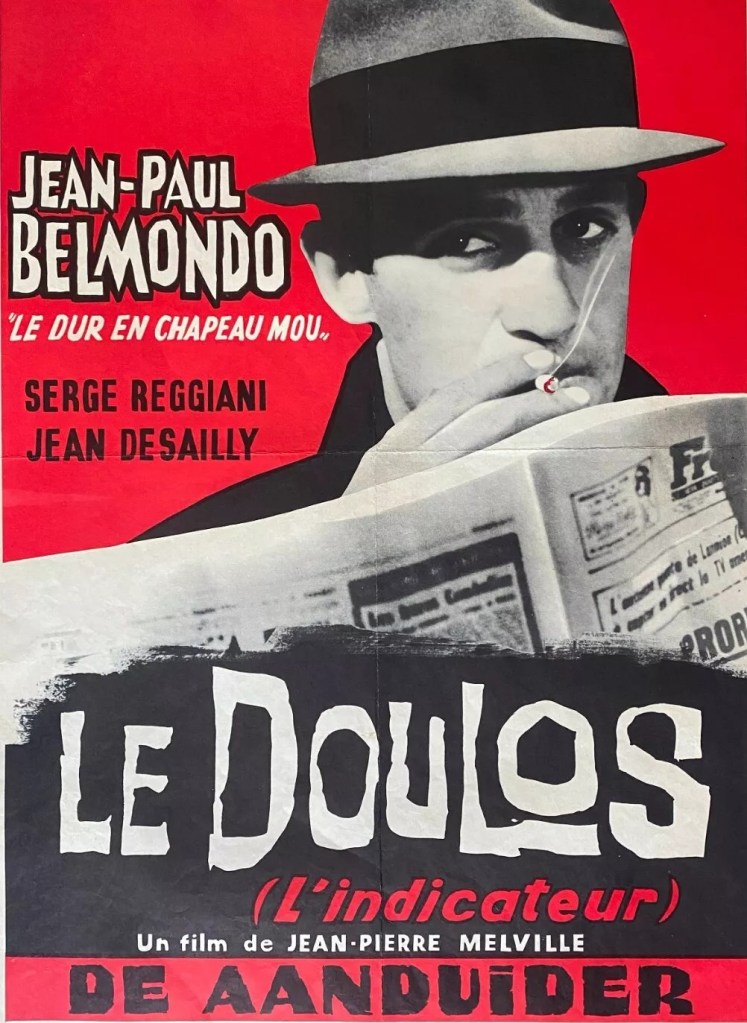
The Finger Man / Le Doulos (1962) *****

Stunning tour de force combining narrative complexity with technical audacity. Set up the template for later crime epics like Reservoir Dogs (1992) and The Usual Suspects (1995) and influenced Scorsese and Coppola. For the likes of me who revels in technical achievement, a delight, long tracking shots, two scenes over five minutes long shot in single takes, and rare use of the wipe. But technique is nothing without story. Luckily, here we are offered a  riveting tale of double crossing, honor, revenge and that rare beast, irony. There’s a veritable tsunami of twists at the end but all the way through there’s the kind of sleight-of-hand that deserves a round of applause.

Jean-Pierre Melville hadn’t named his picture The Informer for the obvious reason of it being considered, erroneously, a remake of the John Ford 1935 Oscar-winning classic or just the danger of being unfavorably compared with it. But the pre-credit titles tell us that Le Doulos is underworld slang for an informer so we’re prepared for that element of the story. What we’re not prepared for is what comes next.

Maurice (Serge Reggiani), just out of prison after serving a six-year sentence, turns up at the house of fence Gilbert (Rene Lefevre) who’s helped him get back on his feet by setting him up with a safe-cracking job. Gilbert is appraising a cache of stolen jewels. Maurice shoots him, steals the jewels and a bundle of cash, burying the loot under a lamppost.

Maurice meets up with his partner Remy (Philippe Nahon) and another gangster Silien (Jean-Paul Belmondo), previously considered untrustworthy, who supplies the tools for the planned heist. While Maurice and Remy set off to burgle a house, Silien phones a cop, Inspector Salignari (Daniel Crohem). Silien viciously beats up Maurice’s girlfriend Therese (Monique Hennessey) and kills her.

The robbery doesn’t go according to plan, the cops turning up unexpectedly. In the shoot-out, Salignari and Remy are killed, Maurice wounded. Maurice passes on details of where he buried the loot to another buddy Jean (Philippe Marche).

Silien is picked up by the police as a known associate of Maurice. The interrogation scene, which lasts five or six minutes, is a piece of cinematic bravura. Shot in a single take the camera follows chief interrogator Clain (Jean Desailly) as he paces round the room, Silien only coming into view when the cop stops in front of him and asks him a question. While refusing to rat on Maurice, Silien agrees, under pressure from the cops who threaten to expose his drug racket, to phone around the various bars where Maurice might be holing up. This triggers another virtuoso piece of filmmaking as Melville employs the wipe. Maurice is located, reading a newspaper report on Therese’s death.

There follows another colossal technical achievement, Maurice interviewed in another long single take, this time the interrogator pacing in front of the prisoner. Maurice is jailed, where he shares a cell with an assassin.

Meanwhile, Silien gets hold of the jewels and cash. He enrols old girlfriend Fabienne (Fabienne Dali), currently the unhappy squeeze of top gangster and club owner Nuttheccio (Michel Piccoli), and hatches a scheme that makes little sense to the audience. So we just have to watch. Silien breaks into Nutthecio’s club and in the guise of selling the gangster the jewels gets him to hold some of the items, thus, we quickly realize, covering them with his fingerprints.

Silien kills Nuttheccio then waits for the club-owner’s partner Armand (Jacques de Leon) to arrive, kills him and stages the scene to look like they killed each other over the jewels which he deposits in the safe. One of the jewels was found at the failed robbery so that’s enough to free Maurice.

Then we play out the revelation, the same kind of scenario repeated in The Usual Suspects, where the audience learns the truth. Therese was the snitch. That’s why she was killed. Gilbert was shot by Maurice because the dealer in stolen goods had drowned Maurice’s previous girlfriend Arletty. Even though you could argue that was justified, Maurice not being a good judge of character and not aware, as Gilbert was, that Arletty was also a police informer.

It was pure coincidence that Silien phoned Salignari on the night of the burglary. Despite being on opposite sides of the law, they were friends and the gangster was merely inviting the cop to dinner.

Silien proves to be such a straight-up guy that he hands all the stolen cash to Maurice. Silien plans to get out of the business and retire with Fabienne to a house in the country. Then we learn that Maurice has distrusted Silien after all and arranged for the assassin he met in jail to kill Silien. To try and prevent that, he races to the country house, fortuitously arriving before Silien and is, ironically, shot by the assassin. When Silien arrives shortly afterwards he, with more savage irony, is also despatched.

I watched this initially thinking what a huge risk Jean-Paul Belmondo (Borsalino, 1970) was taking in playing, as I initially believed, not just a police informer, but stealing from Maurice the buried loot and leading the police to him. It would have been a hell of a note if the narrative had continued in the same hard-nosed vein especially after Silien’s absolutely brutal treatment of Therese. The slap he administered came out of nowhere and resounded like a gunshot. He then tied her up, again venomously, and poured a bottle of whisky over her head. 

That it turned out to be a story of honor among thieves was perhaps the biggest twist of all.

Jean-Paul Belmondo is outstanding in an underplayed role, Serge Reggiani (The Leopard, 1963)  convincing as the two-timing crook.  

Deservedly recognized as one of the most influential crime pictures of all time, this is nothing short of a masterpiece by Jean-Pierre Melville (Army of Shadows, 1969). Written by the director from the novel by Pierre Lesou.

Beg, borrow or steal this one.

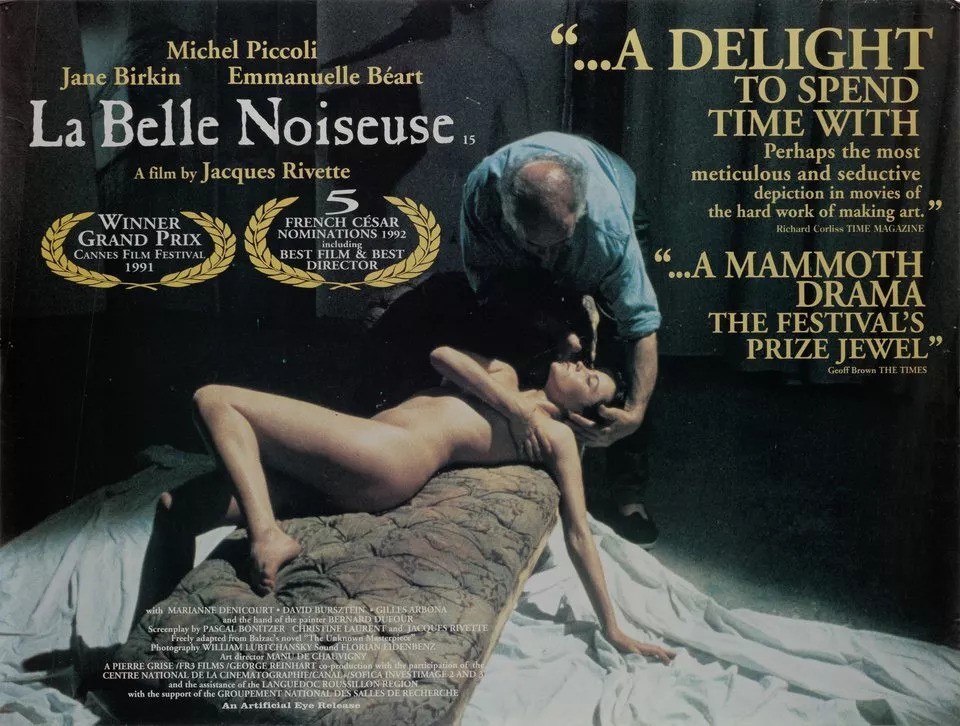
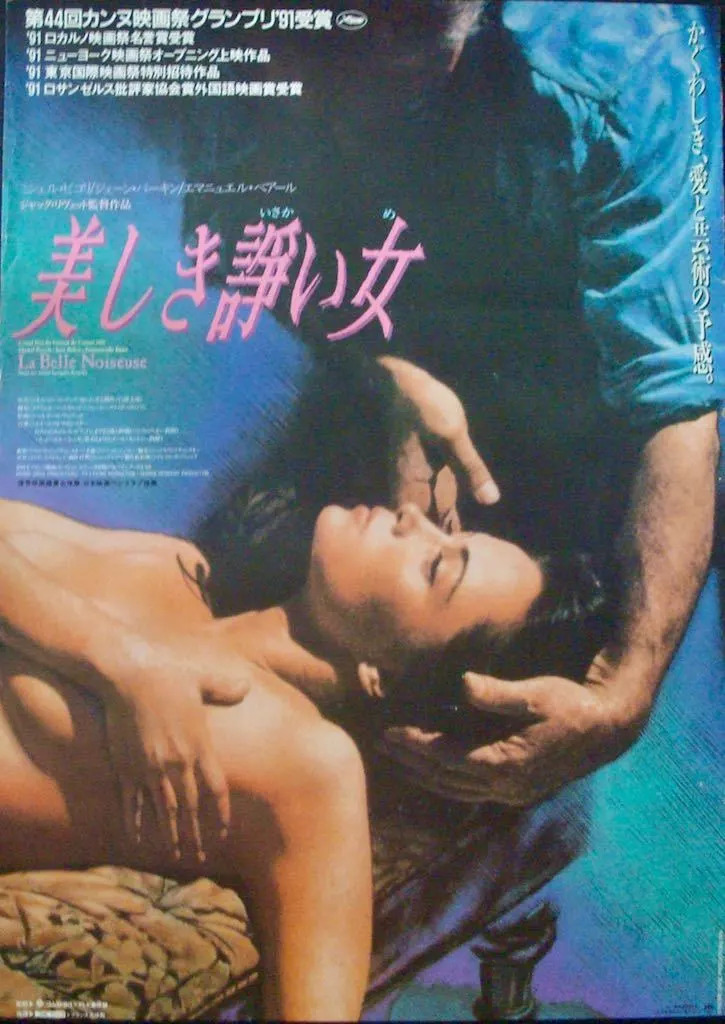
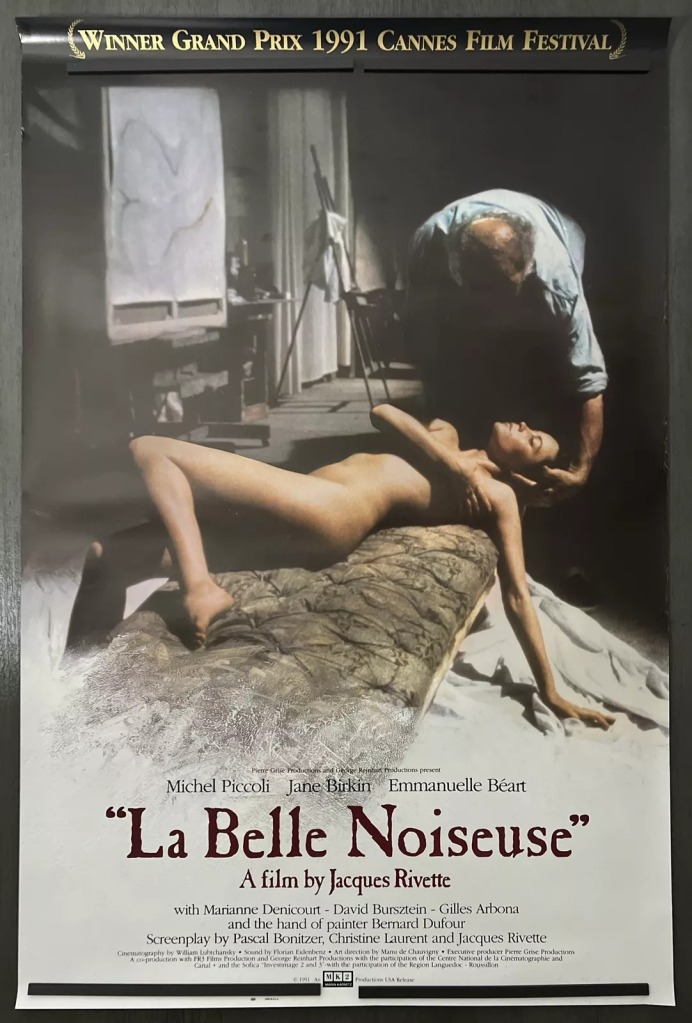
La Belle Noiseuse (1991) ****

I’m taking the Jacques Rivette test. Aka the bum-on-seat test. How easily can you sit through a four-hour intimate epic is often seen as the true test of your credentials as a critic. I have to confess I’ve failed this test once. Twice, to be truthful. I walked out – twice – of Celine and Julie Go Boating Go Boating (1974). But as I’m partial to tales of creative endeavor, a sucker for any story about an artist, this seemed more promising.

This director does something so clever you wonder why the idea wasn’t applied before. Maybe it was, but nobody fessed up. The star of this show in many ways is neither Michel Piccoli (Topaz, 1968) as artist  Frenhofer nor Emmanuelle Beart (Mission: Impossible, 1996) as model Marianne but the real-life painter Bernard Dufour. We never see Dufour’s face, only his hands. For it’s he who sketches and paints, not the actor. So we don’t have any of that nonsense where an actor purportedly spent a year preparing for the role, learning to play an instrument or whatever and then showing all too obviously that he/she is doing something by rote rather than inhabiting the skin of a true artist.

But that does also mean we don’t have to skate over a lifetime’s worth of painting or music or whatever to get to the painting or piece of music for which the character became famous and we don’t need to dwell on background or career development or any other issue that might have hindered /affected/ charged their progress.

This is, beyond a couple of introductory scenes, the story of how an artist paints and his relationship with the model and how that changes both of them. Rivette, having given himself all the time in the world, takes all the time in the world, so we go from initial sketches, ink on crackling paper, to an outline of an idea, to the false steps, wrong steps and true steps.

The awkwardness between artist and model is cleverly captured. Marianne feels she has been traded. Her boyfriend Nicolas (David Bursztein), a rising artist, hopes to win favor with the established artist by pushing her into the project without first asking her approval. Quite what makes her accept the (unpaid) job is unclear but then there are no academic studies on amateur models to provide clarification beyond a sense of excitement at being asked.

She takes in her stride the perfunctory reality that she will be naked virtually the whole time. That aspect of the film might have been viewed as somewhat prurient, but, in fact, it sheds light on just what a model does, what is asked of her, and why, and the idea is killed off right away that an artist always has a clear idea of his composition before he embarks on a painting.

Here, Frenhofer spends as much time trying to get to the heart and soul of his subject, to understand the shape and lines of her body, as he does on the actual picture. He wants to combine her characteristics with whatever he has in his head. There’s another element to the story. He tried to paint a similar picture a decade before, with his wife Liz (Jane Birkin) as the model. For reasons unstated, he abandoned the painting.

Although there’s a twist at the end, there’s not much more to the story than a painting being created from start to finish, including all the finicky bits like deciding on the pose and the size and shape of the canvas and the colors etc.

Yes, it’s incredibly long and not long in the way of Christopher Nolan or Martin Scorsese or Ridley Scott where length is the result of trying to cram in too much, characters, details, storylines, complications or visualisations a director could not resist. But it’s endlessly fascinating and for many the best movie ever made about the creative process, all the more so because although documentary in style it’s not documentary in execution.

Both actors are superb, not least for the concentration this must have taken, since development would have taken place in minute detail.

I think I passed the Rivette test. Celine and Julie….hmmm, still not so sure.

Well worth four hours of your time.

Topaz (1969) ****

Authentic, atypical, engrossing, this grittier Hitchcock mixes the realism of Psycho (1960) and Marnie (1964) with the nihilism of The Birds (1963), a major departure for a canon that previously mostly spun on innocents or the falsely accused encountering peril. The hunt for a Russian spy ring by way of the Cuban Missile Crisis of 1962 forms the story core but the director is more interested in personal consequence, so much so that even the villain suffers heart-rending loss. Betrayal is the other key theme – defection and infidelity go hand in hand.

The tradecraft of espionage is detailed – dead letter drops, film hidden in typewriting spools, an accidental collision that is actually a sweet handover. In a transcontinental tale that shifts from Copenhagen to New York to Cuba to Paris, there is still room for classic sequences of suspense – the theft of secret documents in a hotel the pick – and Hitchcock at times simply keeps the audience at bay by employing dumbshow at key moments.     

In some respects the director was at the mercy of his material. In the documentary-style Leon Uris bestseller (almost a procedural spy novel), the main character is neither the trigger for the plot nor often its chief participant and is foreign to boot. So you could see the sense of employing using a cast of unknowns, otherwise an audience would soon grow restless at long absences from the screen of a Hollywood star of the caliber of Cary Grant or Paul Newman, for example.

It is a florist (Roscoe Lee Browne) who carries out the hotel theft, a small resistance cell the spying on Russian missiles in Cuba and a French journalist who beards one of the main suspects, not the ostensible main character, French agent Andre Devereux (Frederick Stafford), not his U.S. counterpart C.I.A. operative Michael Nordstrum (John Forsythe) nor Cuban villain Rico Parra (John Vernon).

Unusual, too, is the uber-realism. The main characters are fully aware of the dangers they face and of its impact on domestic life and accept such consequence as collateral damage. It is ironic that the Russian defector is far more interested in safeguarding his family than Devereux. Devereux’s wife (Dany Robin), Cuban lover Juanita (Karin Dor) and son-in-law (Michel Subor) all suffer as a result of his commitment to his country.

And that Juanita, leader of the Cuban resistance cell, is more of a patriot than the Russian, refusing to defect when offered the opportunity. Hitchcock even acknowledges genuine politics: the reason a Frenchman is involved is because following the Bay of Pigs debacle in 1961 American diplomats were not welcome in Cuba.

I have steered clear of this film for over half a century. I saw it on initial release long before the name Hitchcock meant anything to me. But once it did I soon realized this film did not easily fit into the classic Hitchcock and had always been represented as shoddy goods. So I came to it with some trepidation and was surprised to find it so engrossing.  

Frederick Stafford (O.S.S. 117: Mission for a Killer, 1965) was excellent with an insouciance reminiscent of Cary Grant and a raised eyebrow to match that star’s wryness. John Vernon, who I mostly knew as an over-the-top villain in pictures such as Fear Is the Key (1972), was surprisingly touching as the Cuban bad-guy who realizes his lover is a traitor. And there is a host of top French talent in Michel Piccoli (La Belle Noiseuse, 1991), Philippe Noiret (Justine, 1969), Dany Robin (The Best House in London, 1969) and Karin Dor (You Only Live Twice, 1967).

As you are possibly aware, three endings were shot for this picture and I can’t tell you which without spoiling the plot. In any case, this is worth seeing more than just to complete trawl through the entire Hitchcock oeuvre, a very mature and interesting work. Based on the Leon Uris bestseller, screenplay by Samuel A. Taylor (Vertigo, 1958).

Underrated.

The Young Girls of Rocheforte / Les Damoiselles de Rochefort (1967) **** – Seen at the Cinema at Bradford Widescreen Weekend

In effervescence and color palette a close cousin to Barbie (2023) with the bonus of being able to call on one of Hollywood’s greatest hoofers, Gene Kelly, in a surprise cameo. He swoops and sways like he was Singin’ in the Sun. And he’s just the icing on the cake in this exuberant throwback to 1950s Cinemascope but with the sensibility of a 1940s musical in which dreams are delivered after a few minor setbacks.

Throw in a long-lost love, an affair that literally went south, an artist who has painted his ideal woman, a couple of literal-minded running French jokes – a woman called Madame Dame and a young sailor whose departure is immi-Nantes – and given the overall light-hearted treatment you would have to treat the presence of a sadistic murderer as being in the comedy vein.

Twins blonde Delphine (Catherine Deneuve) and brunette Solange (Francoise Dorleac) make a living running a music class. Delphine dreams of meeting the ideal man, having already rejected gallery owner Guillaume (Jacques Riberolles) and not too keen on itinerant carney (George Chakiris), while Solange wants a career as a composer, befriending music shop owner Simon (Michel Piccoli) who can put her in touch with old buddy and now renowned pianist Andy (Gene Kelly).

As you might expect the narrative is driven by misunderstandings and meetings choreographed by the minute to fail. This is the kind of film where an actor playing the role of a piano player is not expected to learn to play the piano, just stare into space as though channeling an internal muse or glancing at the sheet music.

There are songs by the dozen – possibly too many (27 singing or dancing sequences), more like a continuous ballet than a traditional musical – but none we’re still humming today, not like tunes from West Side Story (1961), The Sound of Music (1968) or Funny Girl (1968) – though “The Twins Song” probably comes closest. That’s not to put down Michel Legrand’s inventive score, but perhaps to suggest a cultural/language divide. Outside of Danielle Darrieux (Loss of Innocence / The Greengage Summer, 1961) , the singing voices were dubbed, even that of Gene Kelly who lacked the range for the material.

And probably you don’t need to worry about the quality of individual songs as you’ll be swept along by Jacques Demy’s infectious direction. Most of the dancing style reflects West Side Story but with a lighter edge. And it takes little or nothing for characters to burst into song or dance, sometimes that activity going on spontaneously in the background of another scene.

Set in the real seaside town of Rochefort in France and making use of genuine locations, the action kicks off on an unique type of bridge as the carnival comes to town. While not strictly a feminist endeavour, men are mostly put in their place, overtures rejected, marriage offers turned down and bad employers shown the door.

The appearance of Gene Kelly, who hadn’t worn his dancing shoes in more than a decade, gives this an enormous fillip as his classic style shows the others just how it’s done. But it’s the lightness of touch, as well as being able to plumb a well of emotion, that gives this film its grounding, Deneuve and Dorleac as well as Darrieux carrying the movie. George Chakiris (Diamond Head, 1962) looks more at home here than in any film other than West Side Story.

Jacques Demy and Michel Legrand had teamed up previously for The Umbrellas of Cherbourg / Les Parapluies de Cherbourg (1964). Catherine Deneuve (Mayerling, 1969) and Francoise Dorleac (Genghis Khan, 1965) were sisters. Tragically, Dorleac was killed in a road accident prior to the film opening.  

But the whole enterprise is so effortless and appealing you can’t help being drawn in.

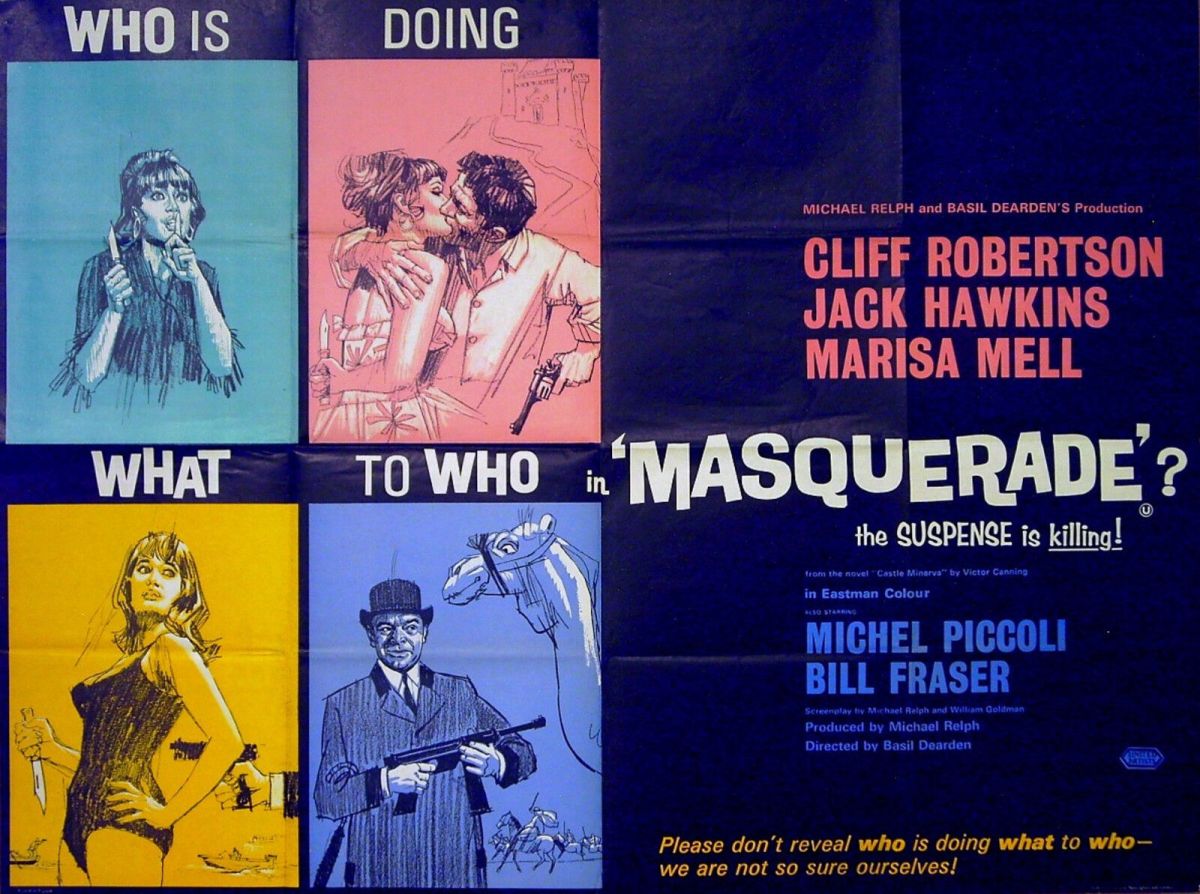
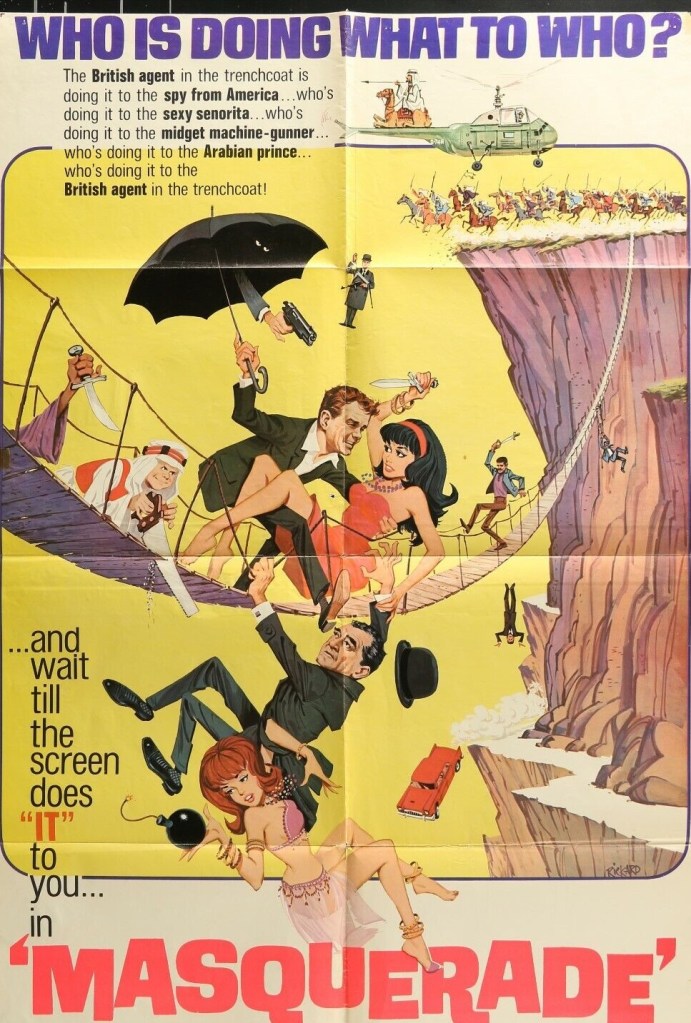
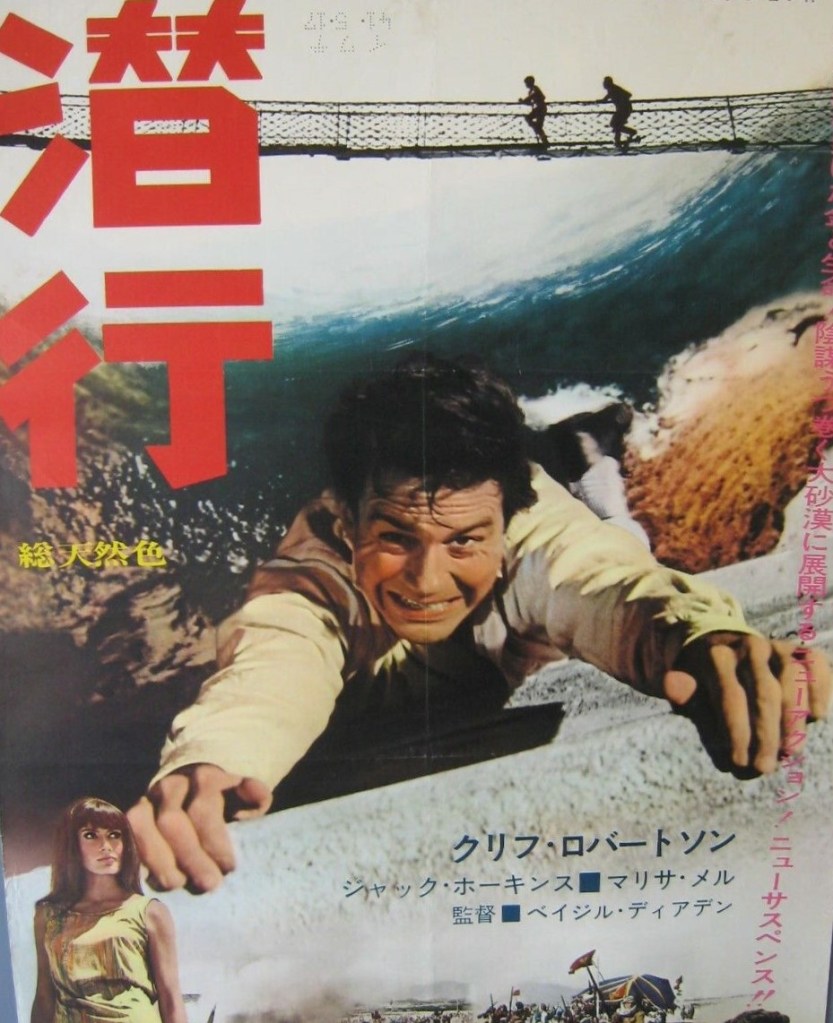
Masquerade (1965) ***

Made just before director Basil Dearden embarked on Khartoum (1965), this is probably best-known these days for being screenwriter – and ace self-publicist – William Goldman’s first credit. It’s based on Castle Minerva by Victor Canning whose previous filmed books included The Golden Salamander (1950) with Trevor Howard, The Venetian Bird (1952)  with Richard Todd, and The House of the Seven Hawks (1959) with Robert Taylor.

I’d like to say this is a self-aware thriller with spy and comedic elements but it veers awful close to either a cult film or a mess. Basic story has Frazer (Cliff Robertson) hired by former wartime commander and now British intelligence agent Col Drexel (Jack Hawkins) to look after an Arab princeling who has been kidnapped by the British (so much for Brits always being on the side of the angels) to help seal an oil concession in the Gulf.

Theoretically, the kidnapping is for the teenager’s own good, to prevent him being assassinated before he ascends to the throne…see it’s getting awfully complicated already. Anyway, it turns out he actually has been kidnapped by Drexel who has turned rogue in order to fund his retirement. The boy is held in some kind of fortress/castle in Spain and then another more sinister one.

Frazer meantime falls for the seductive charms of Sophie (Marisa Mell) who he thinks is a smuggler intent on stealing his boat but a) is part of the kidnap gang and b) in love with him enough to help him escape when he in turn is captured.

Did I mention the film also included a circus, a clown act, a gunfight on a dam, characters left dangling on a rope bridge, a lady in red, a balancing act along a perilous ledge, entrapment in a wine tanker (huh?) and an animal cage (double huh?), a vulture, men in bowler hats…

It is enlivened by visual gags – ultra-large footprints (from somebody wearing flippers). The dialogue sparkles as when the prince, with an overactive entitlement gland, says, “I am practically divine,” to which Hawkins deadpans “Your Highness, you are irresistible.” Add to that various cliché-twisting scenes – the double-dealing Sophie now overcome by love, says to Drexel: “Ask me anything you want and I will tell you the truth,” but every question he asks solicits the response, “I don’t know.” Then, imprisoned in a cage, after protracted cobbling together of lengths of bamboo to steal keys they turn out to be the wrong keys.

Throw in: British propriety  – Frazer’s  substantial fee for risking his life is reduced to a miserable sum once tax has been deducted; and a superb Arab charge on horseback with tracking cameras, either a rehearsal for Khartoum or the scene that got Dearden the gig.

Actually, the more I write about it the more fun it sounds and I wish it were, but it does not quite gel. Cliff Robertson (The Devil’s Brigade, 1968) and Marisa Mell (Danger: Diabolik, 1968) don’t convince – Robertson talks through gritted teeth without suggesting he has much inner grit – although Jack Hawkins (The Third Secret, 1964) and other British stalwarts like Charles Gray (The Devil Rides Out, 1968) and Bill Fraser (The Best House in London, 1969) and Frenchman Michel Piccoli (Danger: Diabolik) deliver the goods. It should have been a straightforward three-star job or – if qualifying as a cult – in the five-star class. It is definitely not an outright stinker. Perhaps best filed under “curiosity.”

Danger: Diabolik (1968) ****

Super-fun slick cult thriller as uber-villain Diabolik (John Philip Law) and sidekick Eva (Marisa Mell) outwit cops – and robbers – in a series of cunning heists. When not thieving they’re making love or pranking officialdom. Diabolik, hiding out in an underground cavern, out-Bonds James Bond in the fast-car and gadget department while Eva, smarter than the average Bond girl, leads the world in fashion or lack of it, her opening outfit looking as if it has either been cut to ribbons or made up of ribbons. Diabolik’s mask is cool and Eva is dressed to kill. Crime was never so fun, stylish, sexy – or lucrative.

Heist number one is the biggest shipment of dollars – $10 million – ever transported through Italy with a  massive convoy of outriders and an official plan to outwit the master thief. Already one step ahead, Diabolik, a master of the magnetic, whisks away the money in plain sight. Heist number two, an emerald necklace worn by the British ambassador’s wife high in an impregnable castle, involves Spiderman-type maneuvers. Heist number three: a 22-ton gold ingot.

A crackdown on criminal activity so endangers the Mafia that top cop Inspector Ginko (Michel Piccoli) finds a surprise recruit in the hunt to capture Diabolik – Mafia boss Ralph Valmont (Adolfo Celi). The criminal network proves more potent than the cops and Valmont hatches a plan to snare Diabolik and exact revenge. And so ensues an elaborate chess game as criminals chase criminals with cops hoping to pick up the pieces.

John Philip Law (Hurry Sundown, 1967) was the coolest villain by a mile until challenged by Steve McQueen in The Thomas Crown Affair the same year. His classic good looks are matched by a fabulous brain as he cooks up brilliant scheme after brilliant scheme. Marisa Mell (Masquerade, 1965) is sexy as hell and a worthy companion in the thieving stakes. Adolfo Celi (Thunderball, 1965) and Michel Piccoli (Belle du Jour, 1967) are clumps in comparison, even though they do their ingenious best and Celi has his own harem.

Although Mario Bava (Black Sabbath, 1963) was better known for horror, this is a cult tour-de-force that employs the outlandish to set the tone, from go-go dancers and face-painted nightclubbers to the psychelic, the uber-fashionable, gadgets decades ahead of their time and the outrageous heists. The whole picture, coated in a sheen of glamour, is irresistible. The couple make love on a bed of dollars, airplanes have trap doors, there is a parachute jump twist, suspended animation, psychedelia, radioactive tracking devices, high-speed chases and a fiendish statuesque climax. And where not bedecked in fabulous fashion or one-piece cat-suits, the pair scamper about naked or as close as.

Bava captures the spirit and the look of the comic books by Angela and Luciana Giussani that provided the film’s inspiration. But that eight names including Britain’s Tudor Gates (creator of television’s Vendetta, 1966-1968) were involved in the screenplay shows the work this required. Ennio Morricone created a superb score. All-time cult classic.

Discover WordPress

A daily selection of the best content published on WordPress, collected for you by humans who love to read.

The Atavist Magazine

by Brian Hannan

WordPress.com News

The latest news on WordPress.com and the WordPress community.