Buona Sera Mrs Campbell (1968) ****

Works a treat. And works like clockwork, the set-up so meticulous, it doesn’t put a comedic foot wrong and even allows space, at exactly the right time, for the ticking timebomb to be sorted out. Gags galore. Sight gags, sound gags and observational gags, but most, unusually, are snippy, the kind of sharp remarks that people make under tension. And, heaven help us, there’s farce, and that works, too. It rarely does in American movies because it’s usually an adaptation of a Broadway play and the movie director feels hidebound by stage conventions. Here, this is an original screenplay, so writer-director Melvin Frank (Strange Bedfellows, 1963) works to his own beat.

You’ll remember the “who’s the father” narrative ploy from Mamma Mia (2008) – though this preceded the Abba bash by four decades. Twenty years after the Yanks liberated an Italian village in World War Two they are back to commemorate the event. Amongst the soldiers, three men desperate to meet the daughter, Gia (Janet Margolin), they each think they sired with Carla (Gina Lollobrigida) and have been supporting with monthly cheques ever since. They don’t know about each other’s involvement but between them have provided an excellent upbringing for Gia who speaks perfect English, having attended American School in Geneva, with enough left over for Carla to live in a fancy house with a maid.

The guys are a disparate bunch. Justin (Peter Lawford) is a philanderer whose wife Lauren (Marian McCargo) dare not let him out of her sight. Phil (Phil Silvers) has a brood and hardly escapes emotional Shirley (Shelley Winters) without one – or all – being attached. The loudmouth exuberant Walter (Telly Savalas) has to bite his tongue when wife Fritzie (Lee Grant) constantly reminds him she hasn’t provided her with a child, when, secretly, he believes she’s the infertile one and Gia the proof.

Initially, this goes the way you expect – and then it doesn’t, confounding all audience expectations. Carla, who had planned to skip town until the celebrations are over, is forced by other circumstances to remain. She’s involved in two subplots – Gia is planning to run off with an older married man to Brazil, and Gina can’t resist the opportunity to get one over on the sniffy local Contessa (Giovanna Galletti). Actually, there’s three subplots if you include Gina trying to keep hold of handsome lover Vittorio (Phillipe Leroy), who initially fears one of the returning soldiers will sweep Carla off her feet and whisk her off to the States, but then becomes very dismissive of her taste in men.

When the secret is revealed, rather than turning on their deceitful husbands, the women are full of praise for them. But that’s only because it’s not the whole secret. They think they discover that out of the goodness of their hearts the men have been sending cash to Carla in memory of their (fictitious) colleague Eddie Campbell who died in the war. The guys, meanwhile, turn against Carla when they become aware of each other’s existence and the fact that not so much just that they have been rooked, collectively, out of $200,000 but that they have individually been helping to bring up what could be another man’s child. Gia, too, on learning of the deceit, is furious and runs away, leaving Carla distraught.

When the true secret emerges, naturally there’s one almighty bust up, with wives and husband and daughter all railing against Carla until Vittorio steps in and explains just what a wonderful mother she has been.  This neatly steps over the timebomb, just what possessed Carla to have sex with three men in ten days beyond that they pumped up her ego and brought her food and treats.

There are some brilliant scenes – the streetwalker, the hospital, the car horn that doesn’t work, the missing laundry, the mean Contessa finding a clever way to put down Carla – but mostly it’s held together with the stiffest of glues by an inspired performance by Gina Lollobrigida. Telly Savalas (The Assassination Bureau, 1969) is the pick of the others, playing against type.

Class act from Melvin Frank.
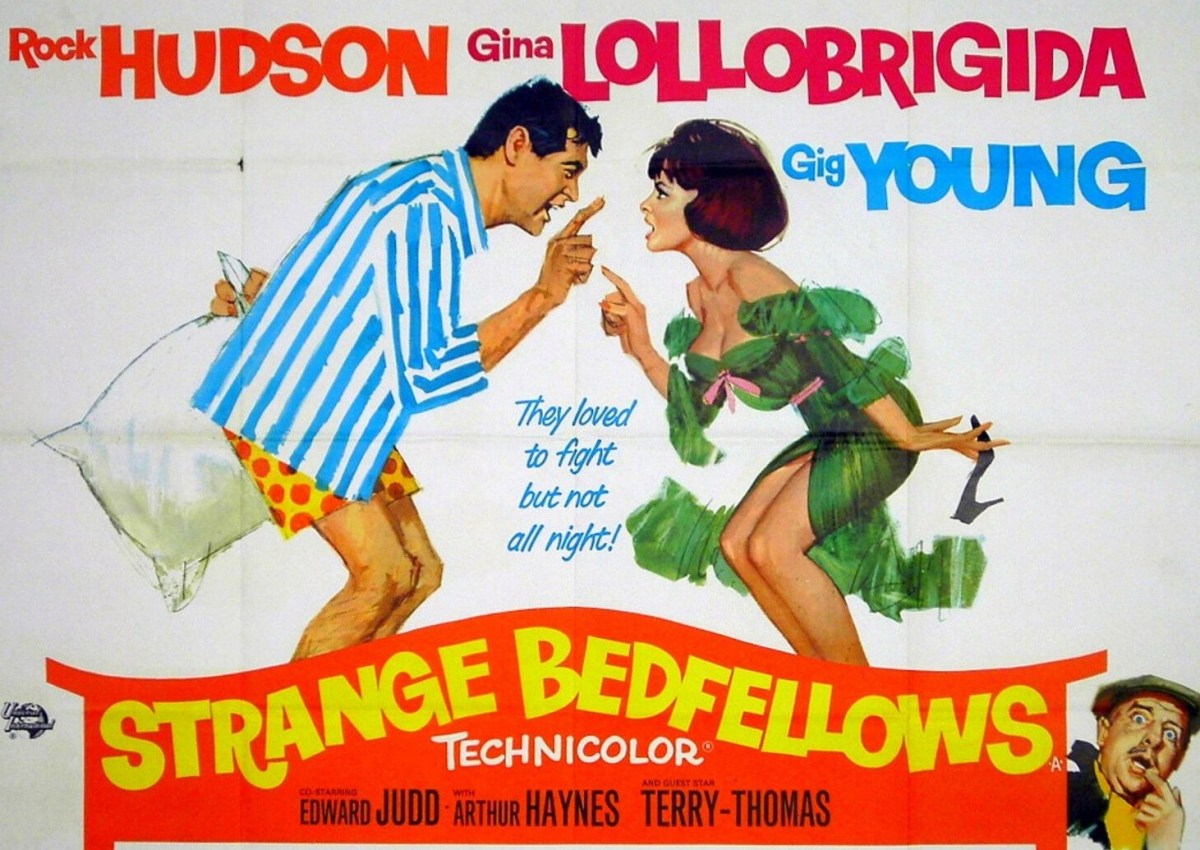
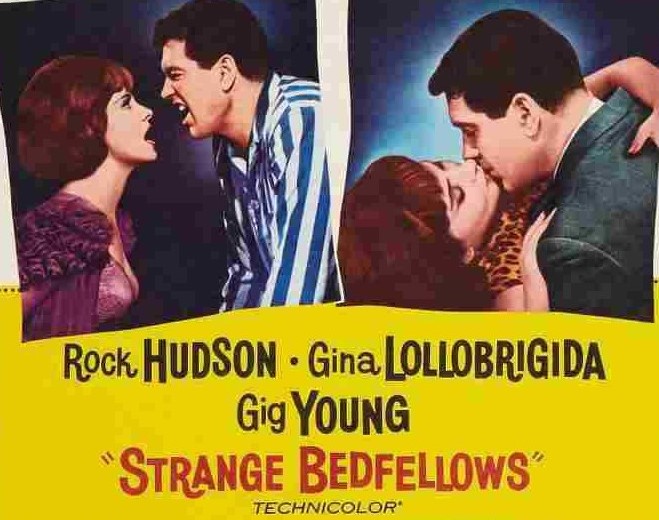
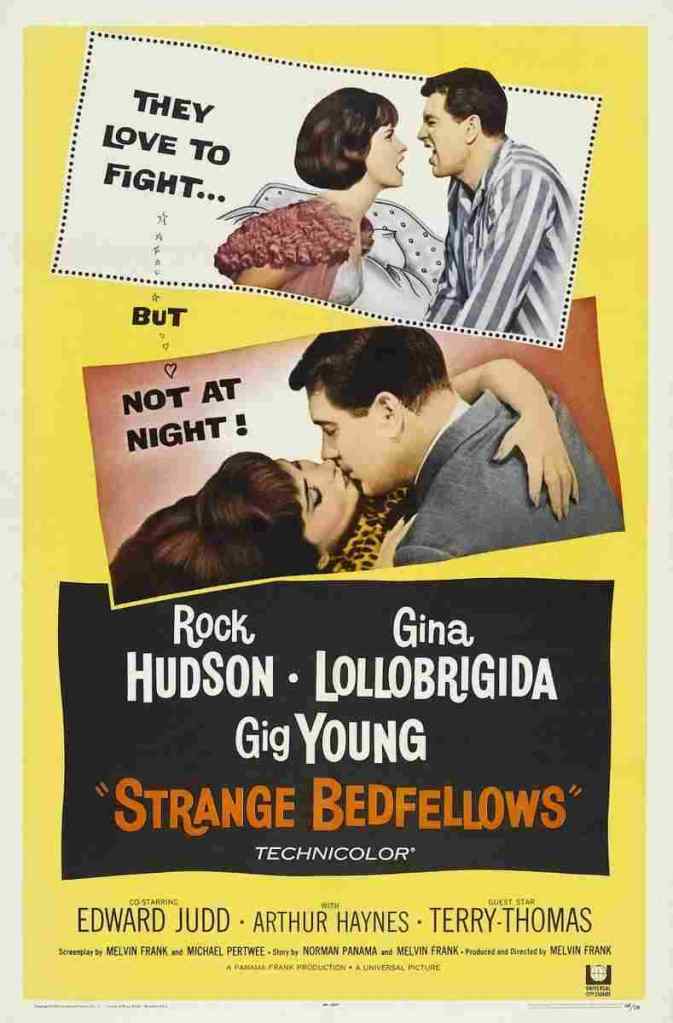
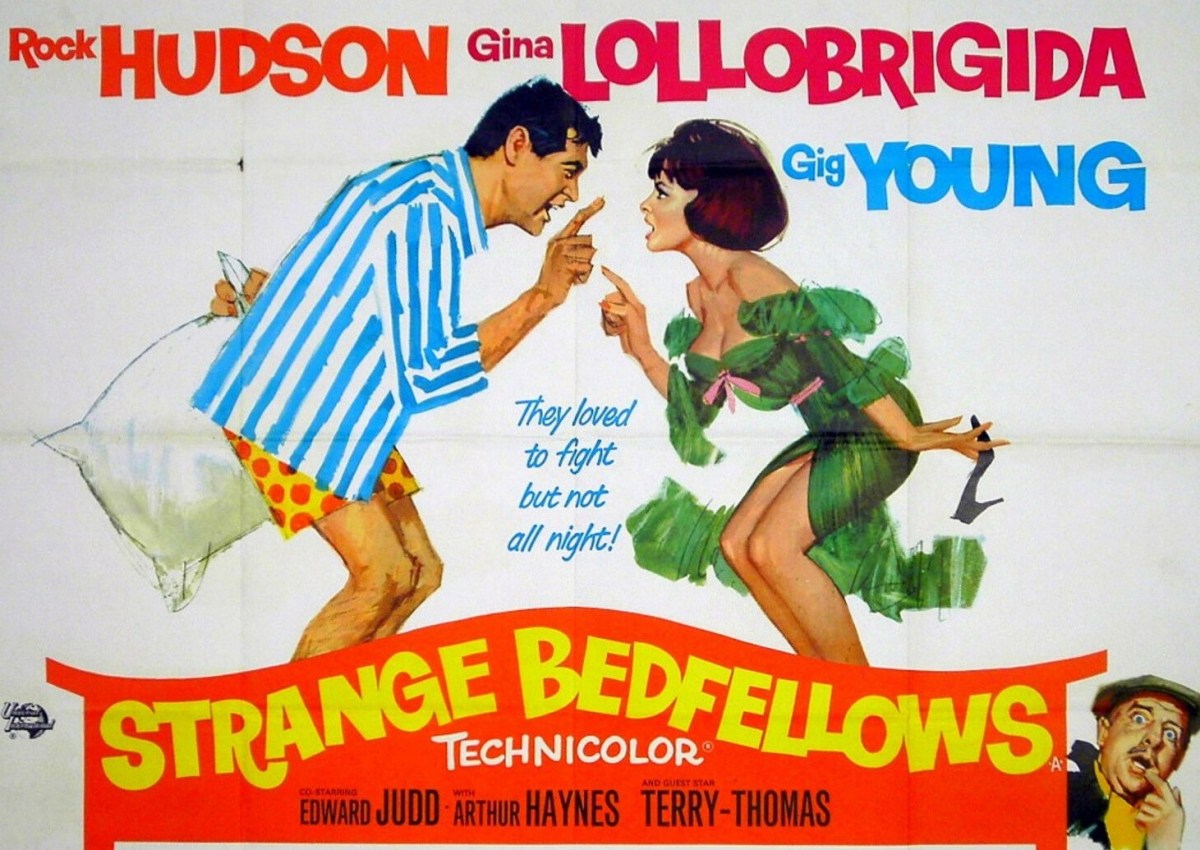
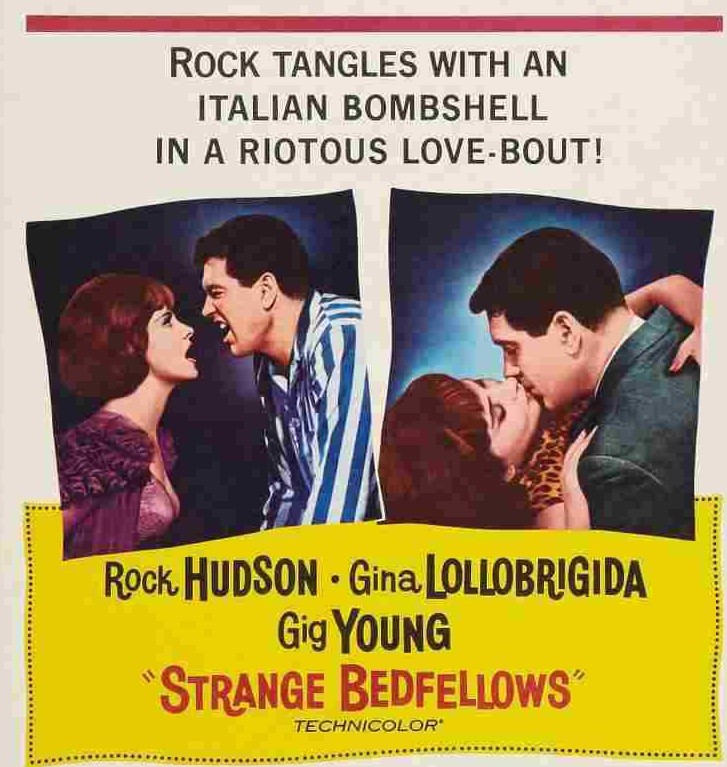
Strange Bedfellows (1963) ****

I had my first belly-laugh within seconds, a wonderful sight gag and was chortling all the way through this London-set battle-of-the-sexes comedy. Carter Harrison (Rock Hudson) is a high-flying businessman who needs to win back long-estranged wife Toni (Gina Lollobrigida) in order to gain promotion at a family-conscious oil company. Initially, Carter re-discovers the reasons he had first fallen in love with her but then, of course, only too bitterly, why they split. Hudson and La Lollo had previously teamed up for Come September (1963) and Hudson had spent most of the 1960s in romantic mishap with Doris Day so he could call on an extensive range of baffled and enraged expressions. Toni is an artist-cum-political-firebrand which sets up hilarious consequence. Richard Bramwell (Gig Young) is on hand to act as referee.

There’s some marvelous comic invention, a conversation between the two principals relayed through taxi controllers turns into a masterpiece of the misheard and misunderstood. Complications arise from Toni’s Lollobrigida’s fiancé Harry  (Edward Judd from First Men in the Moon, 1964), also an activist, but on the pompous side, and an Italian lothario. Taking advantage of the less than congenial London weather, there are jokes aplenty about umbrellas and in a nod to farce occasions for Carter to lose his trousers and share a bed with the fiancé. Smoldering sexual tension also kindles many laughs. By the time the film enters its stride it’s one comedic situation after another. It being England, naturally enough Lady Godiva is involved.

Hudson in suave mode trying to cope with the feisty Lollobrigida is an ideal comedy match. Costume designer Jean Louis has swathed the actress in a stunning array of outfits, some of which leave little to the imagination. When Doris Day got angry you tended to laugh, not quite believing this was anything more than a moderate hissy fit, but if you crossed Lollobrigida you were apt to get both barrels and it never looked like acting, she was a very convincing when she switched on the fury engine, plus, of course, whatever she threw added both to the comedy and her character’s conviction.   Both have terrific comic timing.

Writer-director Melvin Frank was something of a comedy specialist, a dab hand at suiting comedy to screen persona having previously set up Road to Hong Kong (1962) and Mr.  Blandings Builds a Dream House (1948). Terry-Thomas makes an appearance as a comic mortician and there are parts for English comedian Arthur Haynes and Dave King. Hudson and Lollobrigida exude screen charisma and while not in the class of Come September this delivers enough laughs to make you wonder why they don’t make them like that anymore.

Strange Bedfellows (1963) ****

I had my first belly-laugh within seconds, a wonderful sight gag, and was chortling all the way through this London-set battle-of-the-sexes comedy. Rock Hudson is a high-flying businessman who needs to win back long-estranged wife Gina Lollobrigida in order to gain promotion in a family-conscious oil company. Initially, Hudson re-discovers the reasons he had first fallen in love with her but then, of course, only too bitterly, why they split. Hudson and La Lollo had previously teamed up for Come September (1963) and Hudson had spent most of the early 1960s in romantic mishap with Doris Day so he could call on an extensive range of baffled and enraged expressions. Lollobrigida is an artist-cum-political-firebrand which sets up hilarious consequence. Gig Young is on hand to act as referee.

There’s some marvelous comic invention,  a conversation between the two principals relayed through taxi controllers turns into a masterpiece of the misheard and misunderstood. Complications arise from Lollobrigida’s fiance Edward Judd (First Men on the Moon, 1964), also an activist, but on the pompous side, and an Italian lothario. Taking advantage of the less than congenial London weather, there are jokes aplenty about umbrellas and in a nod to farce occasions for Hudson to lose his trousers and share a bed with the fiance. Smoldering sexual tension also kindles many laughs. By the time the film enters its stride it’s one comedic situation after another. It being England, naturally enough Lady Godiva is involved.

Hudson in suave mode trying to cope with the feisty Lollobrigida is an ideal comedy match. Costume designer Jean Louis has swathed the actress in a stunning array of outfits, some of which leave little to the imagination. When Doris Day got angry you tended to laugh, not quite believing this was anything more than a moderate hissy fit, but if you crossed Lollobrigida you were apt to get both barrels and it never looked like acting, she was a very convincing when she switched on the fury engine, plus, of course, whatever she threw added both to the comedy and her character’s conviction.   Both have terrific comic timing.

Writer-director Melvin Frank was something of a comedy specialist, a dab hand at suiting comedy to screen persona having previously set up Road to Hong Kong (1962) and Mr.  Blandings Builds a Dream House (1948). Terry-Thomas makes an appearance as a comic mortician and there are parts for English comedian Arthur Haynes and Dave King. Hudson and Lollobrigida exude screen charisma and while not in the class of Come September this delivers enough laughs to make you wonder why they don’t make them like that anymore.

You should find this in Amazon Prime.

Discover WordPress

A daily selection of the best content published on WordPress, collected for you by humans who love to read.

The Atavist Magazine

by Brian Hannan

WordPress.com News

The latest news on WordPress.com and the WordPress community.