Behind the Scenes: Edward Zwick Uncensored

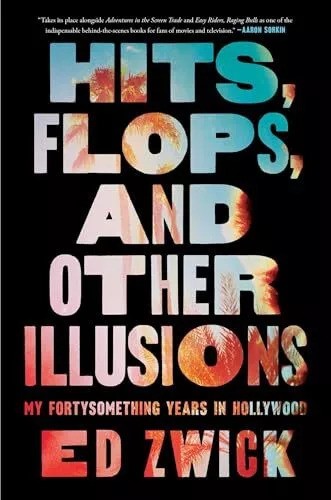
“I will never forget how casually Maria (Schneider of Last Tango in Paris fame) unbuttoned Joey’s shirt to hold her breast in one hand while eating a bagel with the other,” is just one of the memorable lines in director Ed Zwick’s (of Glory fame) memoir,  a very candid portrait of working in Hollywood. Glamor and grit ride side by side as he goes from being a celebrity-struck newcomer to dragging tears out of Harvey Weinstein, hearing all about Julia Roberts’s love life, endless battles on set with Brad Pitt, being offered a beer by Paul Newman in the star’s house and digging into the untapped emotional reservoir of Tom Cruise.

His mentor, director Sydney Pollack, allowed Zwick to observe as he prepped Out of Africa (1985). Pollack had a complicated relationship with Robert Redford. The star “was infallibly late.” Opposite personalities. Pollack was “voluble, excitable and punctilious” while Redford was “taciturn, laconic and laid-back.” Dealing with a proper star can be disconcerting. Asked what it was like to direct Barbra Streisand in A Star Is Born (1976), Frank Pierson said, “I wouldn’t know.”
Pollack offered Zwick sound advice about screenwriting. “Plot is the rotting meat the burglar throws to the dogs so he can climb over the fence and get the jewels, which are the characters.” Zwick’s first script, with writing partner Marshall Herskowitz, for Tri-Star, was a drama, Drawing Fire, about a Secret Service agent’s relationship with a corrupt cop. Dustin Hoffman wanted to play the lead. In conversation, Hoffman took “damn long to get to the point.” His involvement collapsed over his fee.

Jonathan Demme was originally slated for About Last Night (1986), an adaptation of David Mamet’s play Sexual Perversity in Chicago. When he pulled out, Zwick got the gig. If stars Rob Lowe and Demi Moore seemed very comfortable with the intimate scenes, that was because they had previously been an item. The movie did surprisingly well.

For a follow-up, Zwick passed on Thelma and Louise (1991) in favor of a different road picture, Leaving Normal (1992), originally set to star Cher and Holly Hunter. Jessica Lange entered the frame when Cher dropped out. After Hunter quit, Zwick signed up Christine Lahti and Meg Tilly. The picture bombed.

Next up was Shakespeare in Love with a script by Marc Norman and Tom Stoppard to star Julia Roberts who, as it happened, couldn’t help falling in love with her co-stars, that included by now Kiefer Sutherland, Dylan McDermott and Liam Neeson. To play William Shakespeare, she wanted Daniel Day-Lewis, sending him a card that said, “Be My Romeo,” but he was already committed to My Left Foot. Casting for her co-star was cancelled while she maintained that, actually, Day-Lewis had agreed. Only, when Zwick contacted him, that turned out to be fantasy.

With casting renewed, Zwick and Roberts saw, among others, Ralph Fiennes, Russell Crowe. Hugh Grant, Colin Firth and Sean Bean. But none clicked with the star, although oddly enough she later teamed with Grant in Notting Hill (1999). It could conceivably have gone ahead with Paul McGann. A full screen test was arranged. However, it was obvious at that point that Roberts hadn’t nailed her English accent. She quit, leaving Universal $6 million out of pocket.
The movie remained in cold storage for two years. Then Harvey Weinstein came calling. But not at the price Universal demanded. For the next few years, Zwick kept trying to interest actors with the requisite marquee heft such as Kenneth Branagh, Winona Ryder, Jude Law, even Mel Gibson and Johnny Depp. By coincidence, Ryder was best buds with Gwyneth Paltrow and showed her the script. Since Paltrow was Weinstein’s go-to actress, she convinced the producer to come back in. But the consequence of that was that Zwick was pushed out. Or so Weinstein believed, until he was sued. Which meant that when the movie was awarded Best Picture at the Oscars Zwick was on the stage.

Comments Zwick wryly, “ As I stand there…listening to Harvey’s prepared, saccharine, self-serving acceptance, it occurs to me to shove him over the edge of the stage into the orchestra pit. Faced with the choice of committing an act of violence before a worldwide audience of 100 million movie fans or false modesty, I make the wrong choice.”

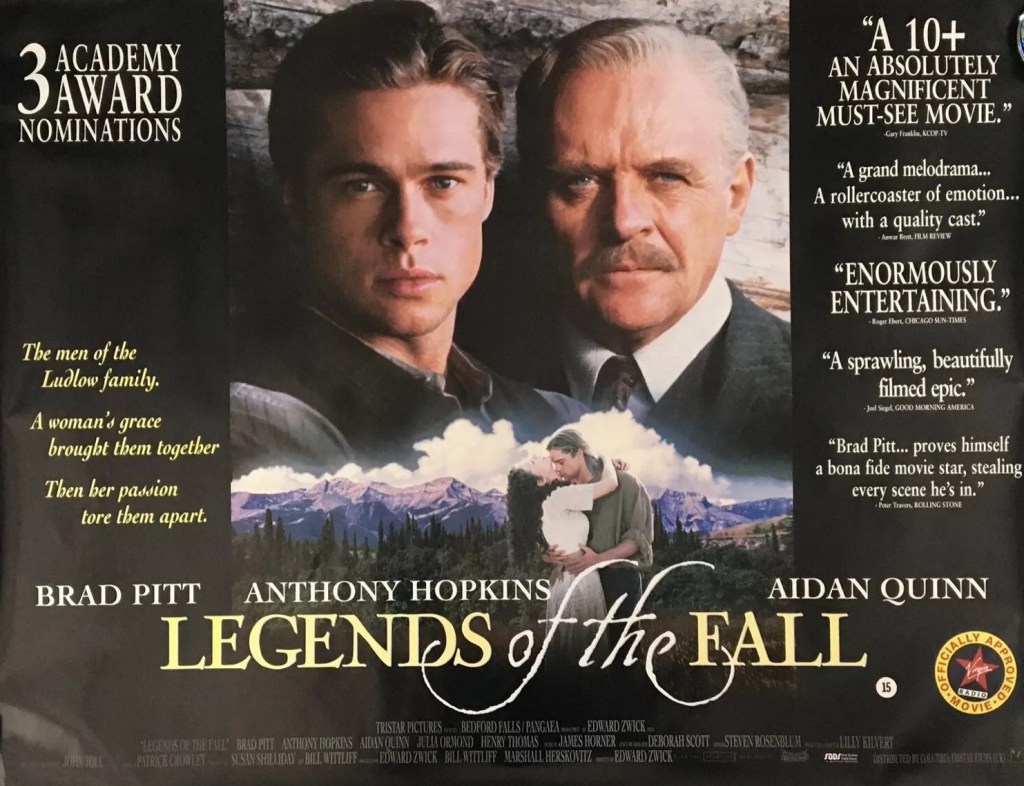
Alvin Sargent (Paper Moon, 1973) signed up for a “hefty fee” to adapt Jim Harrison’s novella Legends of the Fall (1994). Not only was he “maddeningly slow” but after a year’s work he “hadn’t been able to figure out how to do it.” William D. Wittliff (Country, 1984) was next to take a crack before Zwick called on Marshall Hershowitz’s wife Susan Shilliday – who had been story consultant and story editor on Zwick’s television show thirtysomething – to do a rewrite. Tom Cruise and Robert Duvall were briefly interested. Brad Pitt rode to the rescue.

“It’s not enough,” muses Zwick, “that a movie star be handsome; good-looking actors are a dime a dozen. And it’s not just the way the light and shadow plays on someone’s bone structure. It’s the unmistakeable thing behind their eyes, suggesting a fascinating inner life. We don’t know what’s going on inside their heads, but we definitely want to and that’s enough.”

Pre-production Tri-Star got cold feet and demanded Zwick knock $2 million off the budget. Instead, the director and Pitt halved their fees in exchange for a bigger backend. Four weeks before shooting was due to commence, they were short of a female lead, though Paltrow, among others, had read for the part, ending up with relative newcomer Julia Ormond (The Baby of Macon, 1993). Days before shooting, Pitt quit. Or tried to. He could go as long as he paid all the costs of preparation. So Pitt remained. After two weeks of shooting, Zwick was $1 million over budget, largely due to costume issues.

“There are all sorts of reasons an actor will pick a fight,” notes Zwick, and he had more than his fair share of them with Pitt. Although the movie’s resultant commercial success doubled both their salaries, they didn’t talk for a year – and never worked together again.

Denzel Washington didn’t want to do Courage under Fire (1996) until Zwick introduced the idea of Post Traumatic Stress Disorder, a new idea at the time. Matt Damon really did almost fall out of a helicopter. As Washington and Damon did a scene together “it was as if a spell had been cast over the set,” all watching the birth of new screen great. Screen improvisation isn’t all about fashioning new lines. It’s about an actor finding “emotion in an authentic way.” For the scene where Washington returns home, Zwick placed a bike along the walkway. Washington’s reaction to this unexpected obstacle was to pick it up and set it upright.

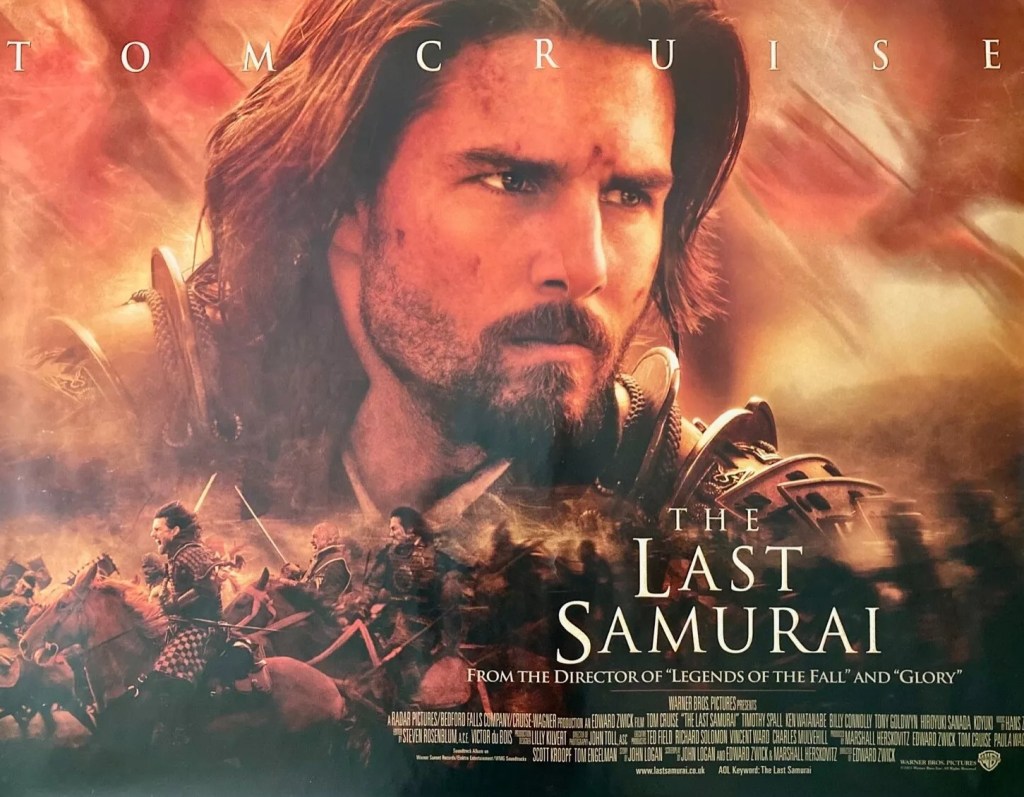
Tom Cruise originally passed on the John Logan script for The Last Samurai (2003) that Zwick felt was “still uncooked.” Uncooked or not, Russell Crowe, incidentally, was interested  in the Japanese lead. Zwick did a rewrite. Cruise liked the rewrite. “What struck me most as I got to know him was his insatiable appetite to keep improving.” Cruise was one of the actors whose involvement was an automatic green light for a studio. After completing another draft with  Hershowitz, Zwick got a call to go see Robert Towne (Chinatown, 1973). He went in dread. Towne “had an informal arrangement with Tom whereby he sometimes quietly rewrote his movies.” Instead of confrontation, Towne was encouraging. “Apparently, he just wanted to take my measure.”

There’s an animatronic horse – costing a million bucks – that appears for a few seconds in The Last Samurai in order for it to appear to the audience that in fact a horse was falling on Tom Cruise for a scene that would not have been possible, in the days before CGI, just with a stuntman. Zwick’s biggest problem on the picture was how to puncture Cruise’s self-assurance, get him to the “right emotional place…to touch some vulnerable part in him.” Zwick realized that simply asking the actor to go deeper wouldn’t work. It would look forced.

So just before shooting the critical scene, Zwick asked Cruise about his eight-year-old son, Connor. “I watched as he looked inward, and a window seemed to open and his eyes softened.” Zwick gently nudged him into position. “Go.”

Movie fans often wonder how a director gets into the movies. Usually, each tale is as odd as the last, a lucky break, meeting the right studio executive at the right time, coming across a studio hungry for your type of picture just at the ideal moment. Zwick has an odd an introduction. Living in Paris on a fellowship to observe experimental theater, he managed to creep onto the set of Love and Death (1975) and pepper Woody Allen with questions and he had a sneak preview of the Annie Hall (1977) script.

On returning to the U.S., he was accepted onto the American Film Institute’s director program. There were 26 pupils in the class, Zwick was one of six invited back for a second year. There, he struck up a lifelong friendship with Marshall Hershowitz. While studying, he read 10 scripts a week for United Artists, fell in with a merry band of more experienced Hollywood hands including Paul Schrader, Michael and Julia Phillips and Oliver Stone. After an improbable series of coincidences, he got  was employed as story editor for the tv series Family (1976-1980). Still aiming for a movie slot, he watched in horror as David Puttnam (Chariots of Fire, 1981) lasted for only six minutes of a private screening of Zwick’s 30-minute student film.

There’s not one of Zwick’s movies where he doesn’t regale you with an interesting anecdote about a star. More importantly, he provides insights into how movies are made, often touching on details that would not be obvious to anyone outside the business.

Ed Zwick, Hits, Flops and Other Illusions, My Fortysomething Years in Hollywood (Gallery Books) is available in print and kindle.
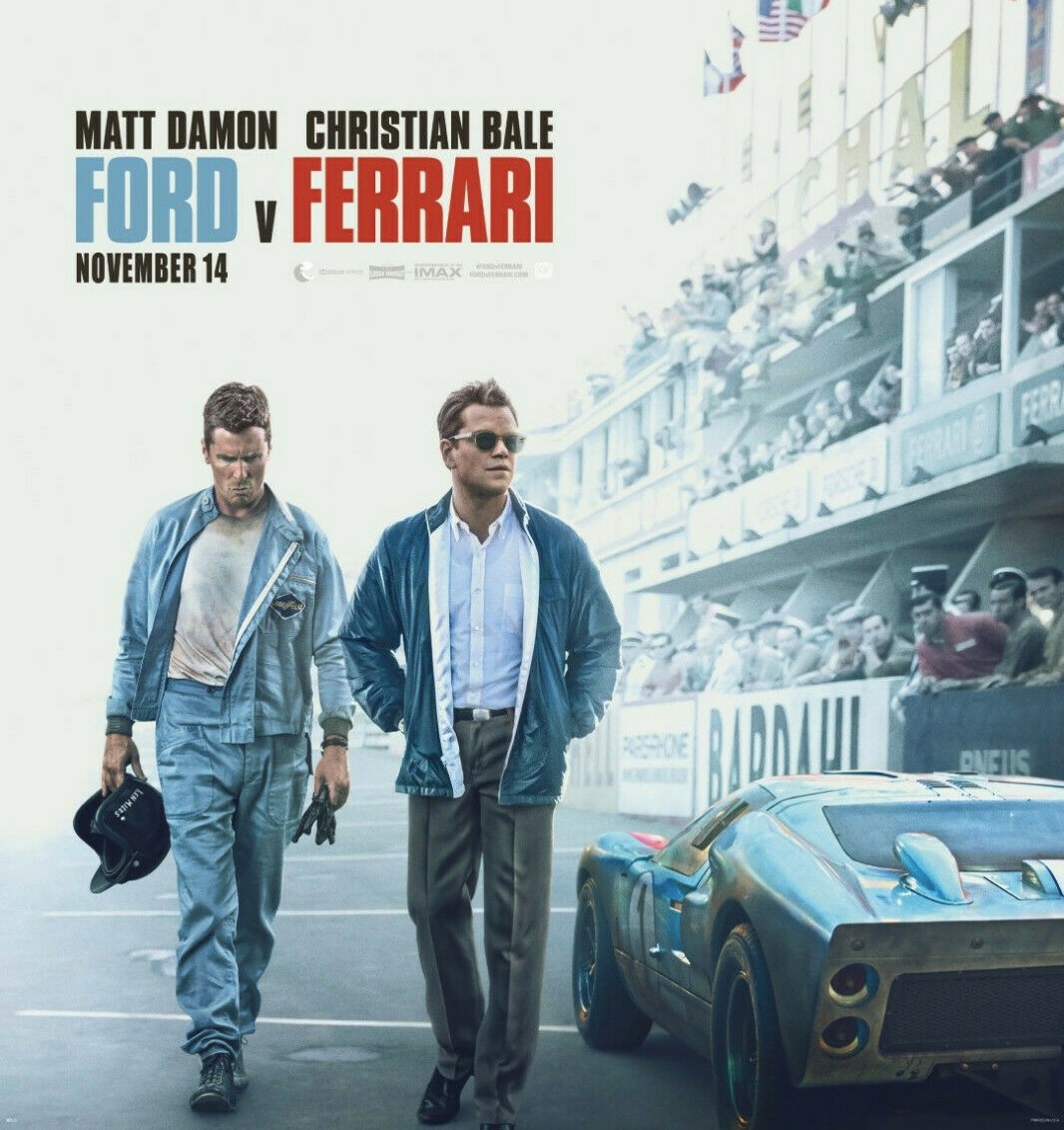
Ford vs. Ferrari / Le Mans ’66 (2019) *****

So good that immediately on finishing a screening I pressed the re-watch button. But then this proved such compulsive viewing on original release that I saw it at the cinema four times in as many weeks. High-octane pedal-to-the-metal drama that easily takes the chequered flag from such illustrious predecessors as Grand Prix (1966), Le Mans (1971) and Rush (2103).

Astonishing racing footage is matched by a gripping narrative of ambition and revenge played out at the highest level by a quartet of terrific performances. Henry Ford II (Tracy Letts), humiliated by competitors in the domestic market and thwarted by his plan to take over Ferrari, decides to steal the Italian giant’s crown at Le Mans, the 24-hour race considered then the pinnacle of motor racing achievement rather than Grand Prix.

He hires Carroll Shelby (Matt Damon), the only American winner of Le Mans, who now runs a sports racing construction business and in turn he recruits maverick English driver Ken Miles (Christian Bale). Putting a spanner in the works at every possibly opportunity is oily Ford top executive Leo Beebe (Josh Lucas) who constantly shifts the goalposts because he’s just mean that way or to win commercial advantage. Driven as much by personality conflict as anything else,  the narrative pivots on Shelby shouldering the job of placating both big business and his maniac driver while outmanoeuvring all in sight to achieve his goals.

Jargon overload should be the kiss of death but that bold decision to involve the viewer in the minor and major technicalities of motor sport – proven and unproven techniques such as applying strips of paper to a car or battering the car boot with a hammer to increase its capacity and so comply with an arcane rule – pays off big time so that the picture can actually cover in greater depth the reality of running a racing team. Winning can be a matter of millimetres, tiny alterations amounting to massive differences during a race.

And it helps the narrative thrust that Le Mans is a single race rather Grand Prix or Nascar where over a season inevitably attention and excitement will sag. Other races are easily accommodated because they are vital to the end result, either in personal or technical terms. This is the ultimate battle against the odds, not just novice Americans taking on the big boys  of Italy, but the ageing driver needing to prove himself again and again and the constructor sometimes giving in, sometimes not, to big business.

It’s pretty difficult to retain audience involvement with the competitors masked up but (as Top Gun: Maverick would later prove) little works better than having your half-hidden driver (or pilot) reveal his emotions by talking to the machine, providing a commentary on the action, though Miles’s favoured expression of “giddy-up” may not qualify as a technical term.

Interestingly enough, the principals are all indifferent, not to say occasionally shady, businessmen, Henry Ford II laboring in the shadow of his father, the repair shop run by Miles shut down by the taxman, Shelby selling the same car over and over to multiple buyers. But this is a richness of character rarely seen in action films, flaws usually restricted to sexual or alcoholic peccadilloes. Nor is there any sign of the old trope of wife/lover unable to watch drivers race, and marriages/relationships buckling under that pressure. Instead Miles’ wife Mollie (Catriona Balfe) rejoices in his skills while Henry Ford II clearly has a string of lovers.

The contrast between the romance and the reality of speed is no better expressed than when Ford is taken for a spin by Shelby or between the devil-may-care and the safe than when Shelby takes control of an aeroplane.

So many internal obstacles, Beebe’s manoeuvrings for a start, remain to be overcome never mind complications on the track that it is pretty much one twist after another with one awful ironic twist left for the climax of the race.

Christian Bale (Thor: Love and Thunder, 2022)  picked up most of the acting plaudits, nominated for a Golden Globe, but I thought Matt Damon, Tracy Letts and Josh Lucas ran him close. Damon (The Last Duel, 2021) delivers a restrained performance that occasionally cuts loose to reveal the carefully camouflaged daredevil. Letts (Lady Bird, 2017), better known to me as a playwright, brings the right mixture of arrogance and power. One-time matinee idol Josh Lucas (A Beautiful Mind, 2001) eases back on the shit-eating grin and is one of the most self-righteous business bad guys you could encounter.

Sterling turns also from Jon Bernthal (Those Who Wish Me Dead, 2021) as Lee Iacocca (who later wrote a book about brilliant he was, although there’s little evidence of that here); Catriona Balfe (Belfast, 2021) and Noah Jupe (A Quiet Place, 2018) as her son. Special mentions for Ray Mackinnon (News of the World, 2020) as Shelby’s number two and Remo Girone (The Right to Happiness, 2021) as Enzo Ferrari.

Distinguished career as director James Mangold has enjoyed  – from Walk the Line (2005) and 3.10 to Yuma (2007) to Logan (2007) – this has to be the peak, brilliantly bringing the human side into a movie that could easily have concentrated on the machines. He drew on an equally brilliant screenplay by Jez Butterworth (Spectre, 2015), John-Henry Butterworth (Edge of Tomorrow, 2014) and Jason Keller (Escape Plan, 2013).

Thor (2022) **** – Seen at the Cinema

It was time someone took the piss out of the MCU. Just as well Marvel decided to do it for themselves. The result is a hoot.

Finding gainful employment for the universe’s dumbest superhero is no joke, but in a welter of visual and verbal gags the studio celebrates his stupidity. I was laughing from the outset and I didn’t stop and from the mad recaps to the giant goats, Thor (Chris Hemsworth) treating his weapons as if they had the power to upset him, his ignorance of the devastation he wreaks, and non-PC references to orgies and the size of his manhood, the inevitable Marvel save-the-world plot takes second place to humor.

Asgard has been turned into a tourist attraction, terrible actors perform sagas in tacky productions to entertain visitors, until Gorr (Christian Bale) the god-killer, having been allocated in normal mysterious fashion and in Excalibur-style the Necrosword, comes calling, kidnapping children, packing them off to the Shadow Realm as a means of luring Thor. Fortunately, lost love Jane Foster (Natalie Portman), unfortunately dying of cancer, reappears in his life, though, on the debit side, she steals his hammer, causing him to turn to his axe. There’s hammer hocus-pocus, the usual lengthy daft exposition, but that’s offset by Thor, sensitive soul that he is, feeling he has to woo the discarded axe.

Also recruited are Asgard king Valkyrie (Tessa Thompson) and stone-man Korg. First port of call, naturally, is Omnipotence City where all the top gods hang out, including Zeus (Russell Crowe), the top god of all. Unwilling to help them out when there are delectable maidens hanging on his every word and orgies to enjoy, Zeus foolishly picks a fight and loses his lightning bolt.

But that’s enough of the madcap fun. Now it gets serious in the usual annoying way, redemption and its alter-ego sacrifice required at every turn, as you try to keep up with the new ideas suddenly introduced, the Bifrost and Eternity, and have to remind yourself of the rules regarding the axe and sword and the various pitfalls awaiting the characters. But the first half has given the movie sufficient energy to woosh you through the second half.

I’m not sure of The Avengers recruitment policy and how Thor ever fitted in and it’s just as well his cohorts in this adventure, part of the way at least, are the equally demented Guardians of the Galaxy phalanx led by the vain and vainglorious Star Lord (Chris Pratt). I always felt the rest of the MCU mob, albeit they occasionally deliver a good quip or two, were just too serious a bunch, what with all the saving-the-universe-and-beyond malarkey whereas Thor and Star Lord are blood brothers, daft specimens, useless at romance and anything serious, good for nothing except a good scrap.

There are a whole bunch of stand-out comic scenes – Thor looking to Star Lord of all people for advice on matters of the heart, the goats leading the space craft crash-landing into a planet. Admittedly, excepting the serious bits at the end, this is far more light-hearted than anything else in the MCU and thankfully sticking to the one universe rather than the multi-universe departures of late.

Chris Hemsworth (Thor: Ragnarok, 2017) as usual is superb, just the right bombast and imbecility coupled with vulnerability and sweetness, his clipped delivery at odds with his befuddlement, his eve-of-battle speeches would have Churchill turning in his grave. But Russell Crowe (Unhinged, 2020), with his mangled Greek accent, matches him in the dumb stakes. Natalie Portman (Lucy in the Sky, 2019) makes a welcome return and Tessa Thompson (Passing, 2021) proves a good side-kick to both. Christian Bale (Ford vs. Ferrari, 2019) bring his malevolent A-game as a memorable villain. Watch out for cameos from Matt Damon (The Last Duel, 2021), Melissa McCarthy (Superintelligence, 2020), Luke Hemsworth (Death of Me, 2020) and Sam Neill (Jurassic World: Dominion, 2022).

Director Taika Waitiki (Thor: Ragnarok , who also voices Korg, does a quite brilliant job of combining action and comedy. He also takes credit for the screenplay along with Jennifer Kaytin Robinson (Unpregnant, 2020).

The Last Duel (2021) **** – Seen at the Cinema

A surprisingly contemporary core, bolstered by a quartet of excellent performances, drives Ridley Scott’s bold Rashomon-style historical tale. Despite its length it’s less of a historical epic in the style of Gladiator (1999) and more of an intimate and intricate exploration of power – and its lack. Each of the main characters, including and especially the women, while exerting some kind of power nonetheless are in thrall to a superior being whose word is absolute law. Challenging that authority could result in instant death. It’s a slow-burn for sure but exerts a tenacious grip as the story unfolds from three points-of-view to a double climax, both riveting for different reasons.   

And it’s far from typical Ridley Scott except in attention to historical detail. The battle scenes are almost perfunctory – in fact few end in victory – and except to demonstrate bravery do not follow the usual heroic template. There’s none of the trademark Scott cinematic sweep although the duel itself is exceptional.

Scarred to the point of facial disfigurement Damon has never played a character like this before.

In 14th century France Marguerite (Jodie Comer), wife of Sir Jean de Carrouges (Matt Damon), accuses Jacques Le Gris (Adam Driver) of rape, the accusation finally settled by duel to the death. All three characters are given the chance to give their version of the story and this is where it becomes fascinating as shades of personality are filled in.

At the outset Jean comes across as brave, impulsive, marrying Marguerite to save her honour (her father is a traitor), and when wronged willing to challenge authority. But as other perspectives unfold he is revealed as blustering, ambitious, more interested in his wife’s sizeable dowry than her honour, over-proud, and a poor manager of his estate. While brave, educated and charming Le Gris turns out to be a greedy, conniving bed-hopper. Initially presented as a grateful wife and little more than an adornment Marguerite is revealed as the most courageous of all, an able estate manager, challenging the King, accepting the prospect of death rather than, as was apparently the custom of the times, allowing the rape to go unremarked.

Comer is a revelation and you could argue she steals the picture from her more experienced colleagues. There is an astonishing scene where she realises that, her husband’s bravery notwithstanding, he has condemned her to a terrible death should he lose the duel.

The sexual mores of the era are examined in depth, the worst examples of male prerogative sometimes just touched upon in passing, for example, since a wife is her husband’s property, in law he is the one besmirched not her. In taking sexual power as his central theme rather than the triumphs and woes of the men, Scott takes a huge risk in alienating a following expecting more action and cinematic bravura, but the bold story-telling pays off and although starting with Alien (1979) the director has a record of strong female characters this has more in common with Thelma and Louise (1991) where wronged women are backed up into a cul de sac.

Rejecting the heroism route allows Scott to present far more rounded characters. None of the four principals conforms to type. Damon is neither the common man nor the action hero, but a boor. Driver is neither charming seducer nor outright villain but somewhere in between, living on his wits. Comer cannot rely on female machismo or cleverness but must remain stout in the face of an onslaught of humiliation. And mention must be made of Ben Affleck as Pierre d’Alencon, employer of Le Gris and master of Carrouges, who is cocky, immoral, amoral, greedy, shifty and cunning. Other standout performances feature Alex Lawther (The Imitation Game, 2014) as a gleeful king and Harriet Walter (Atonement, 2007) as a loathsome and cruel mother-in-law. I just hope Oscar voters recognise at least some of these perfomances.

A blond and goateed Affleck as you have never seen him before, cockiness running riot, with a mean streak a mile wide, the epitome of Middle Ages entitlement.

It’s worth paying attention to the screenplay by Nicole Holofcener (Oscar-nominated for Can You Ever Forgive Me, 2018) and Damon and Affleck (their first joint effort since Good Will Hunting, 1997) and note how the language the characters employ changes according to the perspective. Words that we imagine in one section that appear to be spoken by one character in another section are delivered by someone else entirely.

I am a huge fan of Ridley Scott and while I came looking for adventure in the style of Gladiator (2000) or his other historical masterpiece Kingdom of Heaven (2005) I came away more than satisfied in the way he altered his style to suit the story almost in the same manner as he had done with American Gangster (2007), another picture about power.

You will probably be aware by now that this has been a colossal box office bomb and although the film has enormous merit you can see why audiences looked the other way. Oddly enough, I think it will acquire a bigger audience through small-screen streaming since it is really a drama.  I would still recommend catching it at the cinema but there’s fair chance it will not last for its full 45-day window.

I tend to judge directors not by critical acclaim but by a more rudimentary measure – how often I watch their pictures. I have seen Alien, Blade Runner (1982), Thelma and Louise, Gladiator, Kingdom of Heaven, American Gangster, the Martian (2015)  and even the flawed Prometheus (2012) and Black Hawk Down (2001) more than half a dozen times each – often three or four times at the cinema – and I have a notion that The Last Duel will comfortably fit into this elite.

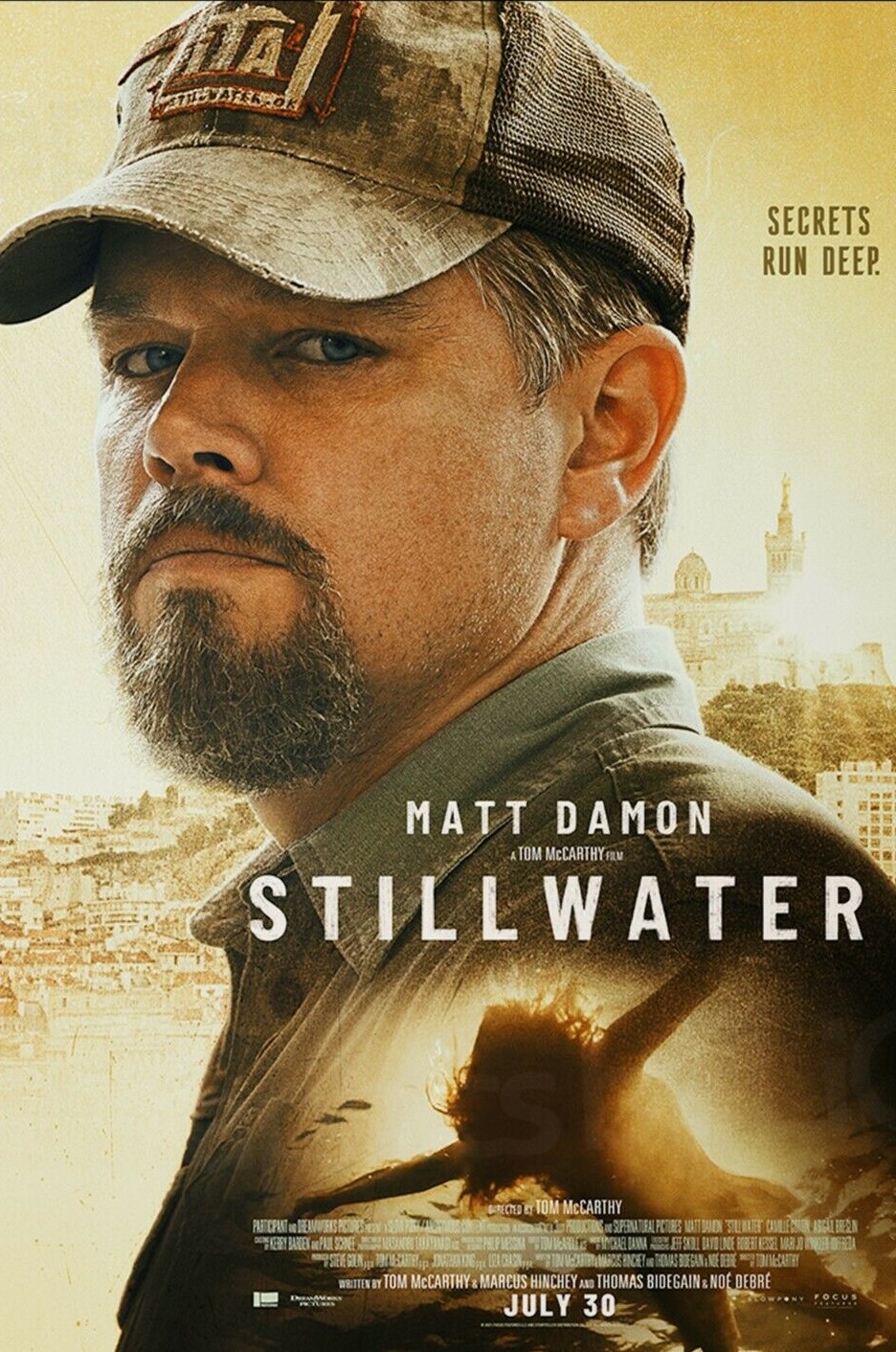
Stillwater (2021) *** – Seen at the Cinema

A towering central performance from Matt Damon as a redneck American adrift in Marseilles just about saves this from being a total train wreck. Oscar-nominated director Tom McCarthy (Spotlight, 2015) doesn’t just go off-kilter but dangerously off-piste in a truly bizarre third act that sabotages the entire picture, which already is within touching distance of the jump-the-shark record.

But let’s concentrate on the good stuff. Bill Baker (Matt Damon) is an oil rig worker in Marseilles trying to clear gay daughter Allison (Abigail Breslin) from a murder charge – she has served four years of a ten-year sentence. Normally, he only remains in France for two weeks but this time, frustrated by the French judicial system, attempts his own investigation. He strikes up a relationship with single mother Virginie (Camille Cottin), becoming very attached to her daughter Maya (Lilou Siauvaud).

He becomes a surrogate father to Maya, collecting her after school, taking on babysitting duties to allow Virginie to continue her acting career. He moves in, initially in platonic fashion, but soon they become lovers. Considering he has been a lousy dad to Allison, who still, for good reason, distrusts him, he makes up for it with Maya and soon Virginie, sensing the decent qualities beneath the typical angry American, takes him into her bed.

These relationships are all terrifically well done and it’s almost Bill’s first stab at parenthood since he was absent for most of Allison’s childhood, either away working on oil rigs or out of his skull on drink or drugs. The character exhibits considerable self-awareness and the gradual transformation from bull in a china shop (not exactly how you would describe tough Marseilles, but still) to father and lover is incredibly well done.  

So the film could have gone one of two ways. He could have remained in France, working as a general laborer, contributing to the household, watching Maya grow up, perhaps (God forbid!) actually learning some French, and waiting to be reunited with his daughter once freed – she is allowed one day a month out of prison so their relationship is being strengthened in incremental stages.

***SPOILER ALERT***

Or, the director having succumbed to brain fever, Bill could decide to throw all that away by capturing the suspect he has been hunting, slicing off a hunk of hair for DNA purposes, and keeping the prisoner in his basement until the results of such testing comes through. And in the process discovering that his daughter is in fact guilty. It’s as if Damon had realized he was in the wrong picture and slipped into his Jason Bourne alter ego or had been watching too many Taken films.

It would be entirely in character that he hides this unsavory fact from the French police, only confronting his daughter with it once she is safely back home, but it might have been a different, and more satisfying, picture altogether if he had uncovered this evidence in another, simpler, manner and then had to deal with the consequences.

I am making it sound as if the whole picture comes apart in the final section but in truth it is perilously off the rails from the get-go. McCarthy’s contribution to an outdated sub-genre that includes Missing (1982) and Not Without My Daughter (1991) falls into the unacceptable trap of tapping foreign judicial systems as incompetent at best and corrupt at worst. Bill Baker exhibits the worst characteristics of dumb American colonialism as he charges around Marseilles baffled that none of the inhabitants can speak English. It is a truly awful directorial conceit where the eight-year-old Maya is expected to have a better grasp of English than Bill of French. He surely cannot be so dumb that he can’t say “Je t’aime” instead of letting loose an emotional barrage in English to the poor child.

Then there is the very uncomfortable treatment of the locals. Sure, parts of France are certainly racist, and although Bill Baker is comfortable with racists, since he has worked alongside them and he might well have been a Trump supporter had he been allowed to vote instead of being barred due to his criminal record, director McCarthy feels it is his duty as a brave American director shining a spotlight on the country’s nether regions to highlight this aspect of French culture.

Shooting yourself in the foot was never easier than here. The movie bears strong and quite unnecessary similarities to the Amanda Knox case, especially since Allison’s experience with her gay lover comes so close to the facts of the Knox situation.

And that’s not counting the improbabilities. Guess where Bill spots the suspect Akim (Idir Azougli) he has been chasing all his time? Yep, you’ve guessed it. In a crowd of 60,000 people. At a football match. It could only happen in Hollywood. He only needs a sample of the guy’s DNA, a snippet of hair would do, to prove he was present at the scene of the crime and cast sufficient reasonable doubt on his daughter’s conviction. Instead, having floored the guy in the street to get the few strands of hair required, he then locks him up in his cellar – for a week! – until the results of the DNA test comes through.

But someone tips off the cops. But lo and behold when they arrive there is not only no body in the cellar but no evidence that anyone has ever been there because the quick-thinking but very skinny Virginie has improbably managed to untie him and move him to some other unspecified hidden location.

And so we come to the mysterious title. Stillwater is a nondescript backwater in Oklahoma where Allison lived. But for some reason it’s the type of place where not even with a touch of irony canny manufacturers believe its name attached to a necklace would be an unbelievably attractive purchase in a retail outlet at an airport. And that it was worthy not just of being a mere bauble but of being made of gold, and sufficiently valuable that it would be acceptable as part payment to Akim for carrying out a bad deed.

Tom McCarthy has been incredibly lucky to receive a performance of a lifetime by Matt Damon, so sure-footed that there is not even an inkling of his trademark shy smile. Camille Cottin is also excellent. I’m not sure whether Abigail Breslin is meant to be this unlikeable, in which case blame the director, or whether her whiny behavior is a pointer to her guilt. Either way, she is over the top.

However, this is one of those rare instances where if you swallow your disbelief at the plotting, you will uncover a pure gem of a performance.

I saw this at the cinema as part of my Monday night outing. It’s available on Amazon Prime and not the type of picture where the visuals are so outstanding that I would urge you only to watch it on the big screen.

Discover WordPress

A daily selection of the best content published on WordPress, collected for you by humans who love to read.

The Atavist Magazine

by Brian Hannan

WordPress.com News

The latest news on WordPress.com and the WordPress community.