Can-Can (1960) ***

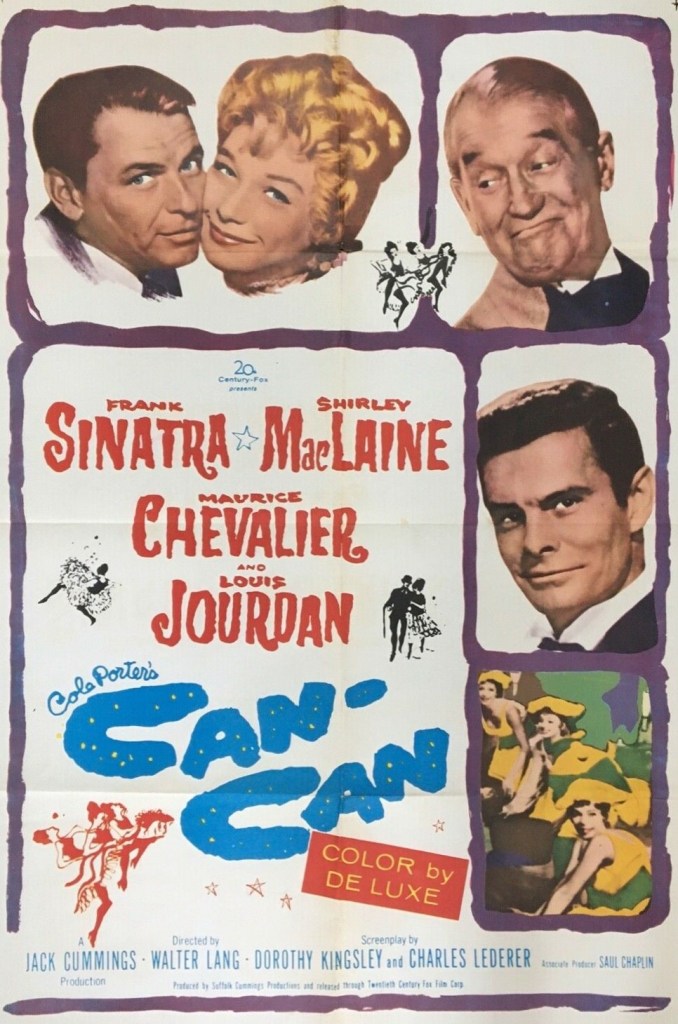
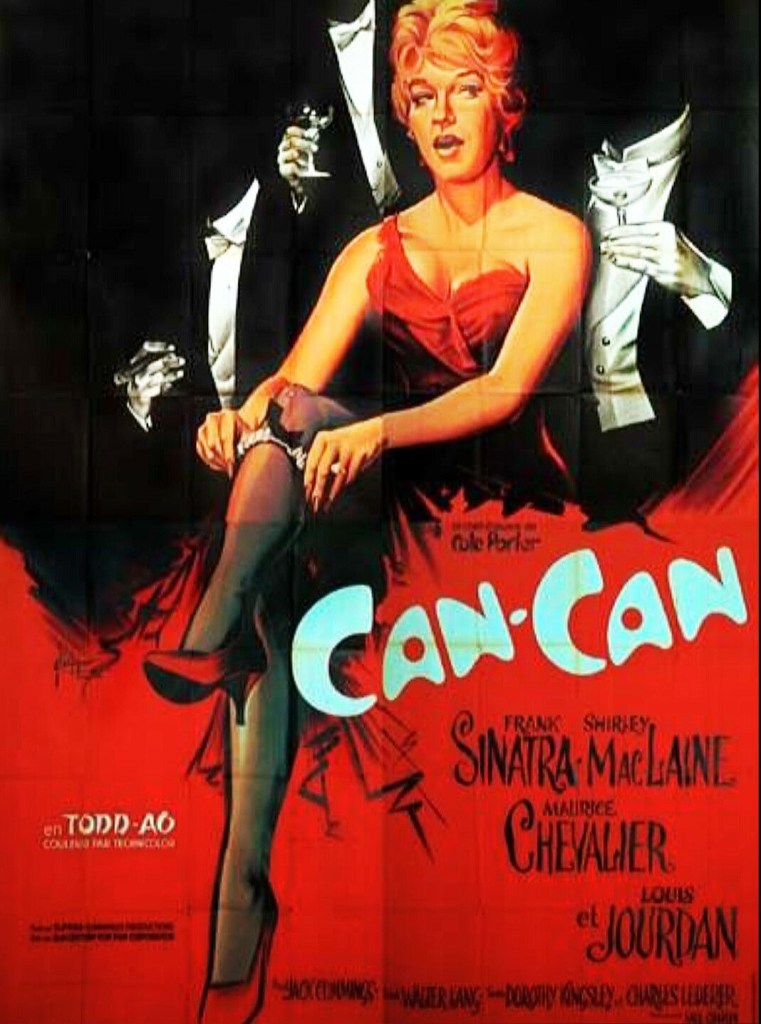
A sterling cast does justice to some great Cole Porter songs in an entertaining musical typical of the period. Apart from appropriating some stock footage, nobody was going to bother to head out on location when a Hollywood-ized version of Paris could be recreated on the set. While the film is ahead of its time in several ways – Simone (Shirley Maclaine) owns the nightclub and the women in the title dance are meant to be minus their panties, hence attempts by authorities to shut it down – the plot features an old-fashioned love triangle.

While the chief magistrate (Maurice Chevalier) turns a blind eye to the lewd dance, his younger colleague Phillippe (Louis Jourdan) does not and ensures Simone is arrested. Complications arise when Philippe falls in love with Simone who already has a lover, the lawyer Francois (Frank Sinatra) who is averse to committing to marriage. The four stars are all very charming and there is gentle comedy and effortless acting as the romantic knots are tightened and then unpicked. Hypocrisy is tested and found wanting. The courtroom scenes are amusing and most of the story focus is on how Phillippe can get round his principles and legal obligations to successfully woo Simone.
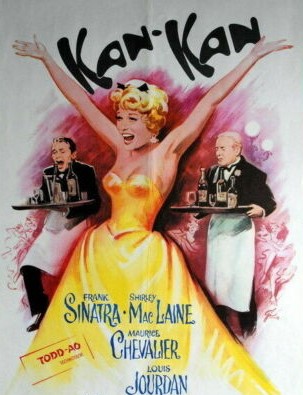
But in reality, the audience is here for the music, and to hear classic Porter songs interpreted by Sinatra and Chevalier. While the songs are top-drawer, what captured my imagination most was the “Garden of Eden” ballet with a stunning design and superb dancing by Simone and Claudine (Juliet Prowse).  The “Apache Dance” also boasts some singular choreography but otherwise while the “Can-Can” itself is rousing and well-done this is for obvious reasons a censored version.

The Cole Porter contribution includes: “I Love Paris,” “C’Est Magnifique,” “It’s Allright With Me,” “Let’s Do It,” and “Just One of Those Things.”
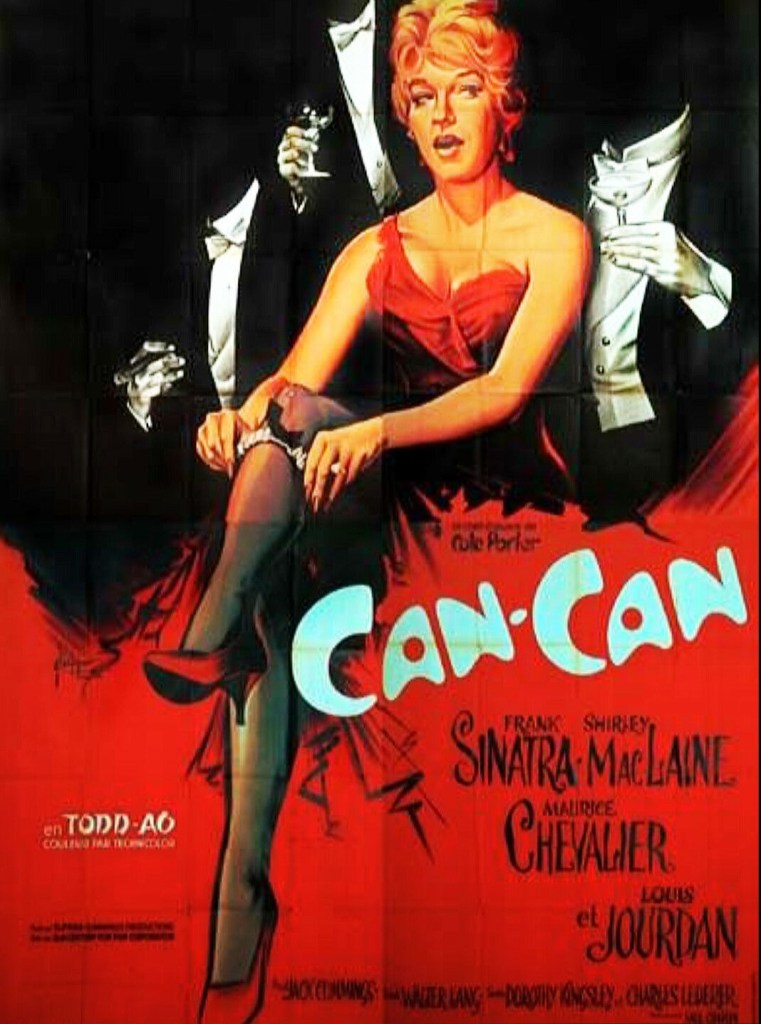
Walter Lang was a safe pair of hands in this genre having helmed Call Me Madam (1953), There’s No Business Like Show Business (1954) and Oscar-nominated for The King and I (1956). The screenplay was a harder slog. The original Broadway musical was a romance between the judge and the nightclub owner. Adding the lawyer Francois to the mix necessitated major changes to the story. But Dorothy Kingsley also had form, having been responsible for the screenplays of  Kiss Me, Kate (1953), Seven Brides for Seven Brothers (1954) and Pal Joey (1957). Co-writer Charles Lederer, although involved in Kismet (1955), had a better grasp of comedy, as seen in Gentlemen Prefer Blondes (1953) and It Started with a Kiss (1960).

Although not universally admired by the critics, it won two Oscars – color costume design for  Irene Sharaff and best music for Nelson Riddle. It didn’t hit a home run at the box office either and the finger was pointed at Twentieth Century Fox for committing the mortal sin of inflating revenue figures on its initial launch.

While not one of the all-time great musicals and put in the shade when compared to West Side Story (1961) and The Sound of Music (1965), it’s an enjoyable confection.

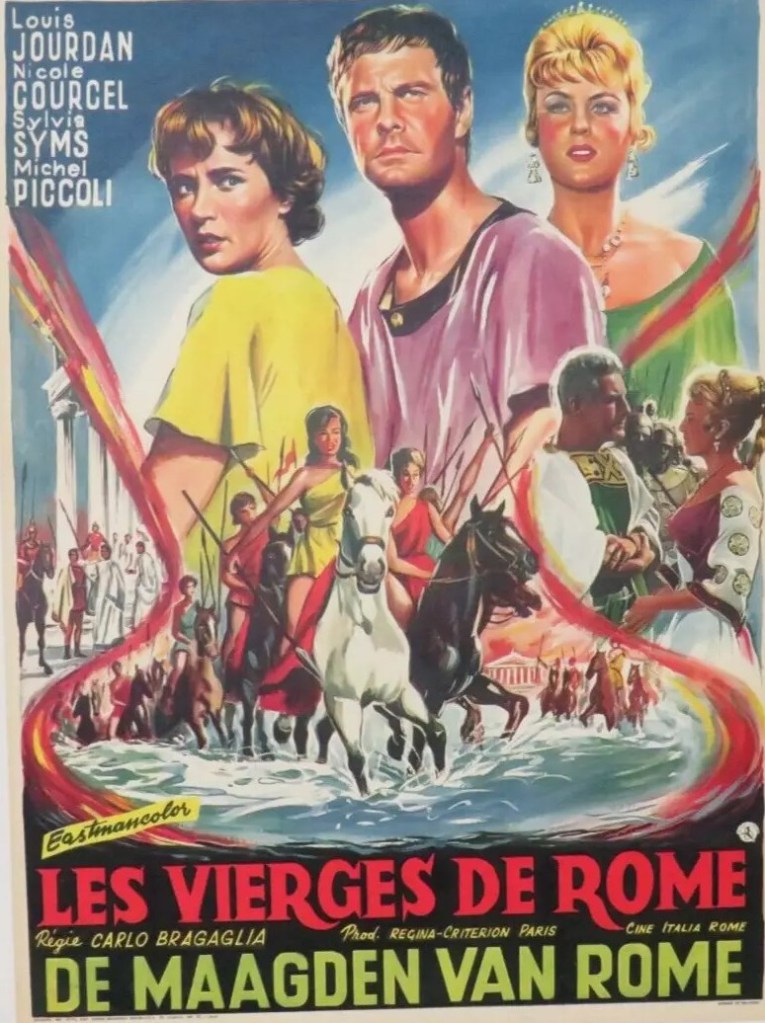
Amazons of Rome / Virgins of Rome (1961) ****

Starting with the cast  and the intelligence of the narrative a pretty unusual addition to the peplum subgenre. While there was no shortage of foreign stars hoping to find marquee redemption in Italy, I was frankly astonished to find leads of the caliber of Frenchman Louis Jourdan, fresh from Twentieth Century Fox big budget musical Can Can (1960), and rising English star Sylvia Syms coming off her biggest Hollywood role to date albeit as second female lead in The World of Suzie Wong (1960).

At the time of release, Jourdan did not seem a good fit for a genre that relied more on musclemen than the kind of suave charmer that he essays here. Syms equally seemed an odd choice, better known for prim Englishwomen than action. In fact, you’d have been hard put to find any American or British actress who would sign up for such a role. Although Sophia Loren in El Cid and Jean Simmons in Spartacus had significant roles in historical mocvies, they weren’t called upon to buckle a sword.

Given they start out as sworn enemies, Drusco (Louis Jourdan),  a barbarian laying siege to Rome, Cloelia (Sylvia Syms)  a besieged inhabitant, it was going to take some considerable narrative sleight of hand to contrive a happy ending. How it’s done is entirely believable, pivoting on ideals of honor that are initially foreign to this vicious war full of scores to be settled, unbridled ambition, deviousness and ruthlessness.

The civilized Etruscans backed by a barbarian horde headed up by Drusco have dealt a killer blow to the Roman armies led by one-eyed Horatio (Ettore Mani). Never mind the lack of obvious muscle Drusco isn’t anyone’s idea of a warrior leader. We are introduced to him munching on a watermelon and then chomping down on an apple on the edge of the battlefield. While other Etruscans, namely Stavros (Renaud Mary), want to raze Rome to the ground Etruscan leader Porcena (Jean Chevrier) wants peace. But it comes at a price – tons of gold in tribute and a thousand hostages. But since Rome is short of able-bodied men to fulfill that part of the deal, the Etruscans make up the numbers with a battalion of untested female warriors led by Cloellia.

Adding spice to the mix is Lucilla (Nicole Courcel), now an aristocratic Roman married to a noble, but originally an Etruscan captive, married to Porcena, who wants revenge on the Romans for her original harsh treatment at their hands. She finds a willing ally in the devious Stavros. 

initially merely amused by Cloelia and her warriors, impounded in a stockade outside the Etruscan camp, Drusco responds to their smarts. Devoid of weapons, the women find clever ways of stealing swords from their captors and secreting them in the stockade. However, when the scam is discovered, Cloelia volunteers to take whatever punishment is meted out. Porcena cedes choice of punishment to Lucilla who wants Cloelia to endure the same humiliation as was once handed out to her – to be whipped and then stripped naked in public.

But she hasn’t counted on Drusco’s cleverness. The minute one lash is administered, Drusco steps in, and pretty much on a technicality, announces that a “whipping” – number of strokes not specified – is complete. When Lucilla starts to strip Cloelia, he musters his soldiers to conceal this from the slavering Etruscans.

Cue some flirting but of course they are still on opposite sides. And in any case Lucilla puts paid to nascent romance, ensuring Drusco is chucked out of the camp for defying her. Infuriated, she sides with Stavros who has decided that mass rape will put the captives in their place. 

His scheme is thwarted by Cloelia who sets fire to the compound, escaping with her army after bullocks stampede. Pursued by Etruscan cavalry, they are saved by the intercession of Drusco. Embarassed by their escape, Porcena is now persuaded to restart the war. Back in Rome, Cloelia disobeys orders not to get involved and leads her army out through the sewers to attack the Etruscan rearguard. Porcena, realizing he has been used, calls for a truce. Lucilla is reunited with her Roman husband and Drusco, made a freeman of Rome, is able to marry the enemy.

Porcena comes over as an enlightened ruler. An early advocate of the zero sum game, his guiding rule for peace is “no victor, no vanquished” and he draws the line at the kind of ruthlessness espoused by his cohorts and although still attracted to Lucilla finds her attitudes distasteful and arranges for her to bury the hatchet with her Roman husband rather than continuing to foment her anger. There’s a lot more interesting dialog  than you’d expect in a picture like this.

But Louis Jourdan is what makes it special. His light comedic touches not only make his character much more human and attractive than the normal musclebound jerk, but also serve to underline his humanity. And since he’s so good anyway on the seductive side, the romantic elements catch fire rather than just limping along as was more normal in the genre. The only downside is he challenges George Hamilton in the over-tanned department.

Sylvia Syms, too, makes it all work. There’s no slacking in the action department and clearly no stand-in for the horse-riding, crossing of a river and a sewer on horseback. And without resorting to the athleticism of a Wonder Woman, the most recent example of the Amazon variety, and perhaps precisely because there’s no kowtowing to that, she is a believable heroine. No feminine wiles are required, either, just genuineness. 

Lucilla’s deviousness reminded me of Ian Bannen in Suspect, that spirit trapped by humiliation, revenge the only release. And though Nicole Carcel isn’t in Bannen’s league, she manages to essay the dark side of her nature with ease.

There are plenty narrative plot holes – how do the women emerging soaking from the river manage to burn the Etrucan battering ram being the pick – but the spirit of the picture more than compensates. 

The elements that made it stand out for all the wrong reasons back in the day are the very elements that make it so appealing to a contemporary audience. 

Highly enjoyable.

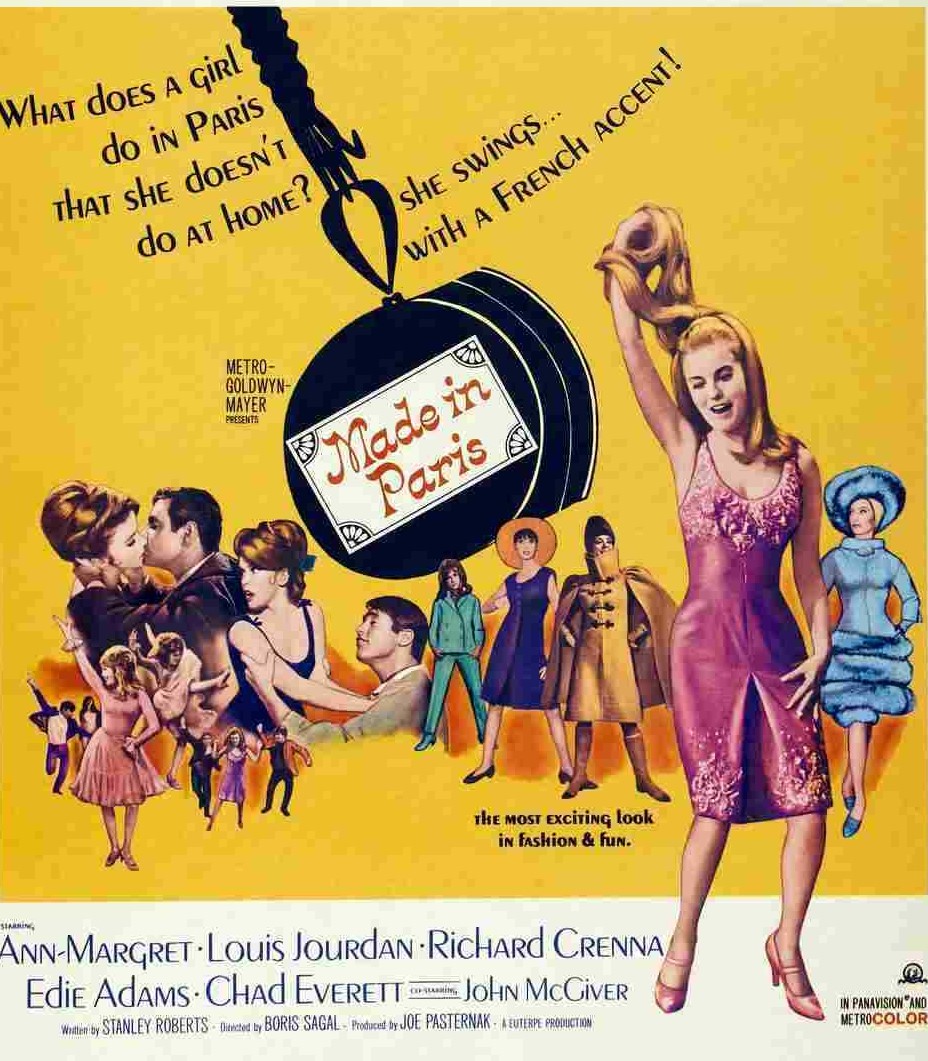
Made in Paris (1966) ***

She sings, she dances, she shakes her booty. What else would you expect from Ann-Margret in light comedic mode (i.e. The Swinger, 1966) rather than serious drama (i.e. Stagecoach, 1966). While appearing as free-and-easy as in The Swinger, she’s actually a dedicated virgin, as was par for the course before the Swinging Sixties kicked in. But the way she lets it all hang out, you’d be forgiven (if you were a predatory male) for guessing the opposite.

Maggie (Ann-Margret) is a career girl, assistant fashion buyer in a New York store, having come up the hard way, small-town-girl then model then salesperson. When the Paris buyer Irene (Edie Adams) quits her job to get married, Maggie is shipped out as her replacement, not as a reward for all her hard work but as punishment because she refuses to sleep with the boss’s cocky son Ted (Chad Everett). The idea is she’ll be so out of her depth, she’ll return humiliated and only too happy to jump into bed.

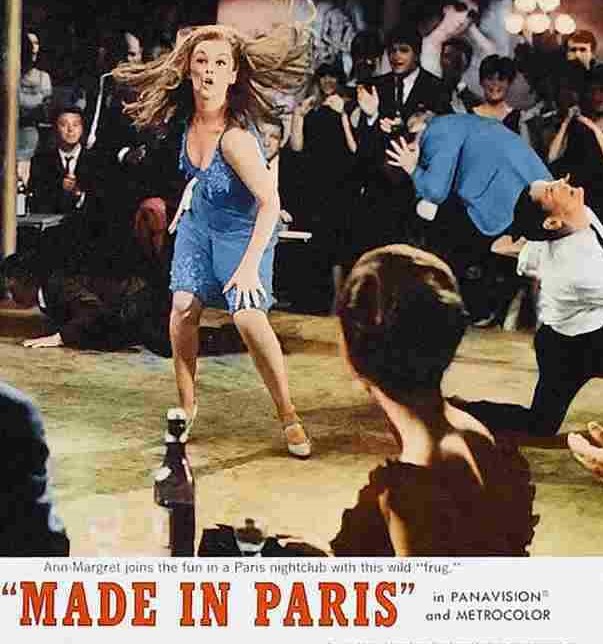
What do poster designes have against certain colors?
In the movie Ann-Margret dances in blue. In the poster, the dress turns red.

Turns out Irene quit so fast she didn’t have time to tell her Parisian boyfriend and fashion designer Marc (Louis Jourdan) so on Maggie’s first night in the company’s luxurious apartment he turns up. Naturally, he expects a bit of the old-fashioned quid pro quo, je ne sais quoi, whatever they call sex when they are being coy about it, and when she refuses to play ball he cables New York to demand her dismissal. Even when the New York boss (John McGiver) relents, she is banned from Marc’s fashion shows, meaning she can’t buy clothes she is forbidden to view.

Enter Ted’s buddy Herb (Richard Crenna), from the same lothario mold. Just to even things up or add further complication, Ted realizes he is actually in love with a girl who said no after a thousand boring girls who said yes. Trying to win her way back into Marc’s good books, with Herb as her guide she tracks the designer through the night clubs, eventually putting on the kind of sexy wild impromptu dance exhibition that the more staid Maggie could only have achieved if she’d taken lessons from Ann-Margret.

That does the trick and they share an impromptu number (“Paris Lullaby”) on the banks of the Seine although Marc still insists she shed her inhibitions before marriage if she wants to be considered a true Parisienne. The arrival of Mark and then Irene, abandoning her husband on their honeymoon when called in to retrieve the situation, adds fuel to the fire and then it’s one mishap after another, especially when Maggie discovers the pleasures of absinthe and ends up in Herb’s bed (yep, she has a hell of a time wondering not just how she got there but if, Heavens to Murgatroyd as Snagglepuss would say, she committed the terrible deed).

Unbelievably, and just as well perhaps from the narrative perspective, Herb isn’t a love rival. Maggie isn’t his type, its transpires. Shoot that man on sight – doesn’t fancy Ann-Margret?  Lock him up!

You won’t be surprised to learn that it all sorts itself out in the end but you might be a bit taken aback how quickly a dedicated career girl throws away her career once a marriage proposal comes her way.

You might have expected from the title that Maggie would be a model, the best excuse you could find for the actress to cavort in a series of skimpy costumes, as she does in the pre-credit sequence, an exquisite dialogue-free montage with a clever pay-off  that makes you think this is going to be much more stylish – excluding the fashion show of course – than it is.

Ann-Margret has such a dazzling screen persona she makes light work of even the lightest of confections. She does all that her most fervent fans would want but it’s not her fault she’s been cast in a Doris Day comedy that ensures she can only properly express her character by acts of exhibition. Louis Jourdan (Can-Can, 1960) keeps creepy entitlement at bay with lashings of Gallic charm. Despite his character’s playboy tag, Chad Everett (The Impossible Years, 1968) is the squarest of squares.

Richard Crenna (The Midas Run, 1969) spins his normal hard-ass screen persona into something a bit more sympathetic. Edie Adams (The Honey Pot, 1967) and John McGiver (Fitzwilly/Fitzwilly Strikes Back, 1967) add a bit of dash in support.

You’d never guess the director was Boris Sagal of The Omega Man (1971) fame. Stanley Roberts (Come September, 1961) wrote the screenplay.

Ann-Margret at her zingiest. What more could you ask?

Can-Can (1960) ****

A sterling cast does justice to some great Cole Porter songs in an entertaining musical typical of the period. Apart from appropriating some stock footage, nobody was going to bother to head out on location when a Hollywood-ized version of Paris could be recreated on the set. While the film is ahead of its time in several ways – Simone (Shirley Maclaine) owns the nightclub and the women in the title dance are meant to be minus their panties, hence attempts by authorities to shut it down – the plot features an old-fashioned love triangle.

While the chief magistrate (Maurice Chevalier) turns a blind eye to the lewd dance, his younger colleague Phillippe (Louis Jourdan) does not and ensures Simone is arrested. Complications arise when Philippe falls in love with Simone who already has a lover, the lawyer Francois (Frank Sinatra) who is averse to committing to marriage. The four stars are all very charming and there is gentle comedy and effortless acting as the romantic knots are tightened and then unpicked. Hypocrisy is tested and found wanting. The courtroom scenes are amusing and most of the story focus is on how Phillippe can get round his principles and legal obligations to successfully woo Simone.

But in reality, the audience is here for the music, and to hear classic Porter songs interpreted by Sinatra and Chevalier. While the songs are top-drawer, what captured my imagination most was the “Garden of Eden” ballet with a stunning design and superb dancing by Simone and Claudine (Juliet Prowse).  The “Apache Dance” also boasts some singular choreography but otherwise while the “Can-Can” itself is rousing and well-done this is for obvious reasons a censored version.

The Cole Porter contribution includes: “I Love Paris,” “C’Est Magnifique,” “It’s Allright With Me,” “Let’s Do It,” and “Just One of Those Things.”

Walter Lang was a safe pair of hands in this genre having helmed Call Me Madam (1953), There’s No Business Like Show Business (1954) and Oscar-nominated for The King and I (1956). The screenplay was a harder slog. The original Broadway musical was a romance between the judge and the nightclub owner. Adding the lawyer Francois to the mix necessitated major changes to the story. But Dorothy Kingsley also had form, having been responsible for the screenplays of  Kiss Me, Kate (1953), Seven Brides for Seven Brothers (1954) and Pal Joey (1957). Co-writer Charles Lederer, although involved in Kismet (1955), had a better grasp of comedy, as seen in Gentlemen Prefer Blondes (1953) and It Started with a Kiss (1960).

Although not universally admired by the critics, it won two Oscars – color costume design for  Irene Sharaff and best music for Nelson Riddle. It didn’t hit a home run at the box office either and the finger was pointed at Twentieth Century Fox for committing the mortal sin of inflating revenue figures on its initial launch.

While not one of the all-time great musicals and put in the shade when compared to West Side Story (1961) and The Sound of Music (1965), it’s an enjoyable confection, the easy screen charisma of Sinatra, Chevalier, Jourdan and MacLaine holding it all together.

Discover WordPress

A daily selection of the best content published on WordPress, collected for you by humans who love to read.

The Atavist Magazine

by Brian Hannan

WordPress.com News

The latest news on WordPress.com and the WordPress community.