The Sicilian Clan / Le Clan des Siciliens (1969) *****

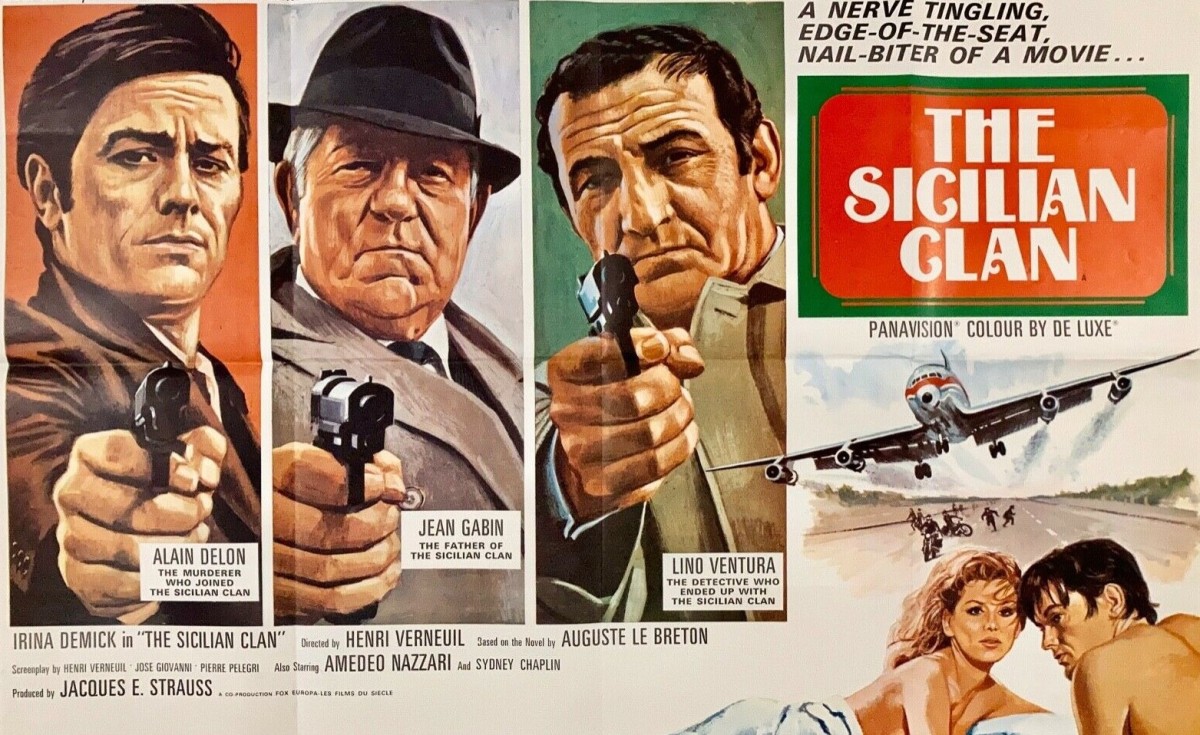
Absolutely cracking, brilliantly structured, gangster thriller featuring two fabulous heists and three legendary French stars in Jean Gabin, Alain Delon and Lino Ventura. Roger Sartet (Delon) is a trigger-happy robber whose terrific prison escape is organized for a hefty fee by French-based Mafia chieftain Vittorio Manalese (Gabin). Le Goff (Ventura) is the rugged cop hunting down the escapee which brings him into the orbit of Manalese, about whose existence he is completely unaware, the gangster having kept an extremely low profile, never engaging in violence, hiding behind the legitimate front of a pinball machine business.  Veteran French director Henri Verneuil (Guns for San Sebastian, 1968) dukes between the twin storylines with ease.
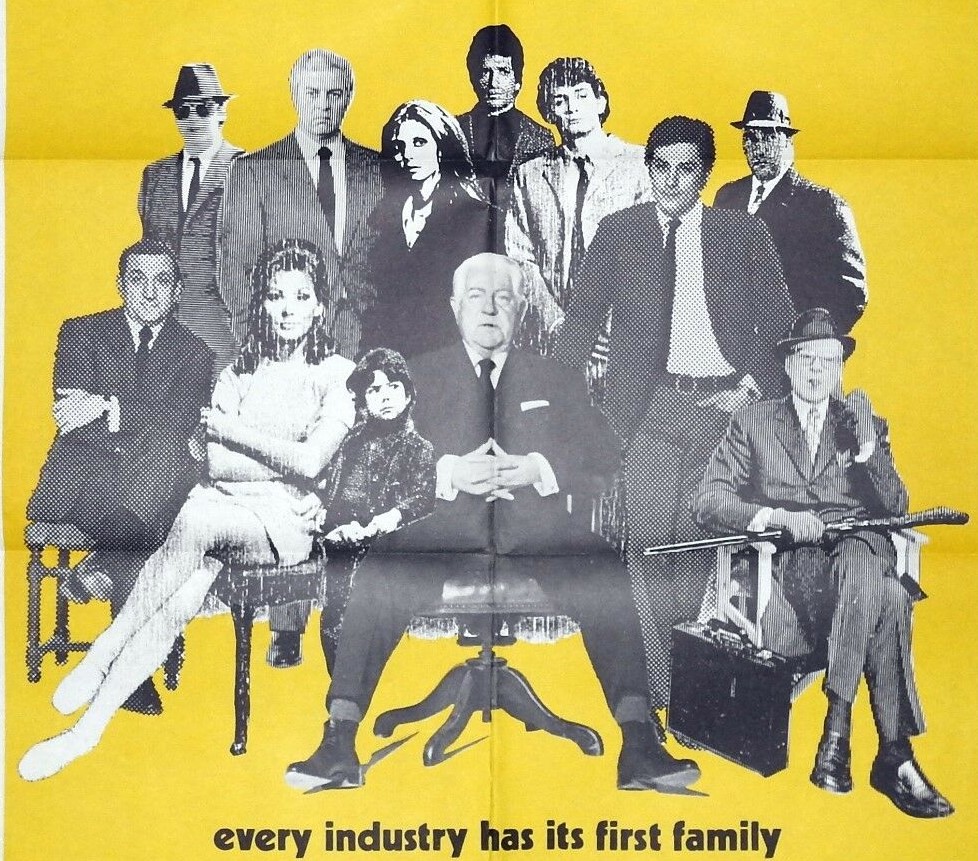
Sartet brings Manalese the opportunity to pull off the most audacious jewel robbery in history, even though the older man despises Sartet’s penchant for violence and sex. We often see Manalese at family gatherings, head of the dinner table, the family watching television together, frowning on one son’s liking for alcohol, playing with his grandson. He is not just a calm and clever businessman, but very quick-thinking, his sharp mind in a couple of instances preventing disaster. Sartet, on the other hand, will happily endanger his life and freedom by consorting with prostitutes and breaking an unspoken code of honor in an affair with Manalese’s son’s wife (Irina Demick).

The result combines dogged detective work by Le Goff and the inspired planning and execution of the jewel robbery until the two worlds collide. The investigation alone would have made this an outstanding picture. Le Goff, always seen with an unlit cigarette in his mouth although he is trying to give up smoking, concentrating initially on Sartet, sets up surveillance on the thief’s innocent sister and begins an involved – and engrossing – process of tracking down every potential lead and when at last he has Sartet in his sights it brings him up close to Manalese.

Le Goff’s professionalism is matched by that of Manalese and the picture develops into an absorbing battle of wits and the latter’s family values and moral compass puts him at odds with loner Sartet. There is some brilliant invention, the sacrificial watch, for example, and the unexpected appearance of a faithful British wife, although you do guess just how long Le Goff will go before lighting his ever-tempting cigarette. 

The ultra-cool Alain Delon (Once a Thief, 1965) excels in this kind of amoral part, but Jean Gabin (Any Number Can Win, 1963) and Lino Ventura (Army of Shadows, 1969) as old-style gangster and cop, respectively, steal the show. Irina Demick (Prudence and the Pill, 1968) thrives as the bored wife of a dull gangster who is attracted by the violent Delon, at one point deliberately putting herself in the line of his potential fire for the thrill. Actually, it’s the jewel heist that steals the show. Unlike other heist pictures where you have fair idea in advance of the details of the theft, here the audience is kept completely in the dark. Just as important in any heist is that the thieves get away with their plunder and the plan in this instance is breath-taking.

As proved by The Burglars (1971) director Henri Verneuil has the nose for a heist, but this tops that for sheer audacity and elan. Verneuil, Delon and Gabin had worked together on Any Number Can Play. Written by Verneuil and Jose Giovanni (Rififi in Tokyo, 1963) from the novel by Auguste Le Breton (Rififi, 1965).

Preceding The Godfather (1972) in its exploration of family and Mafia code of conduct, it offers plenty in the humanity department while dazzling with ingenuity in the criminality stakes.

Unmissable.
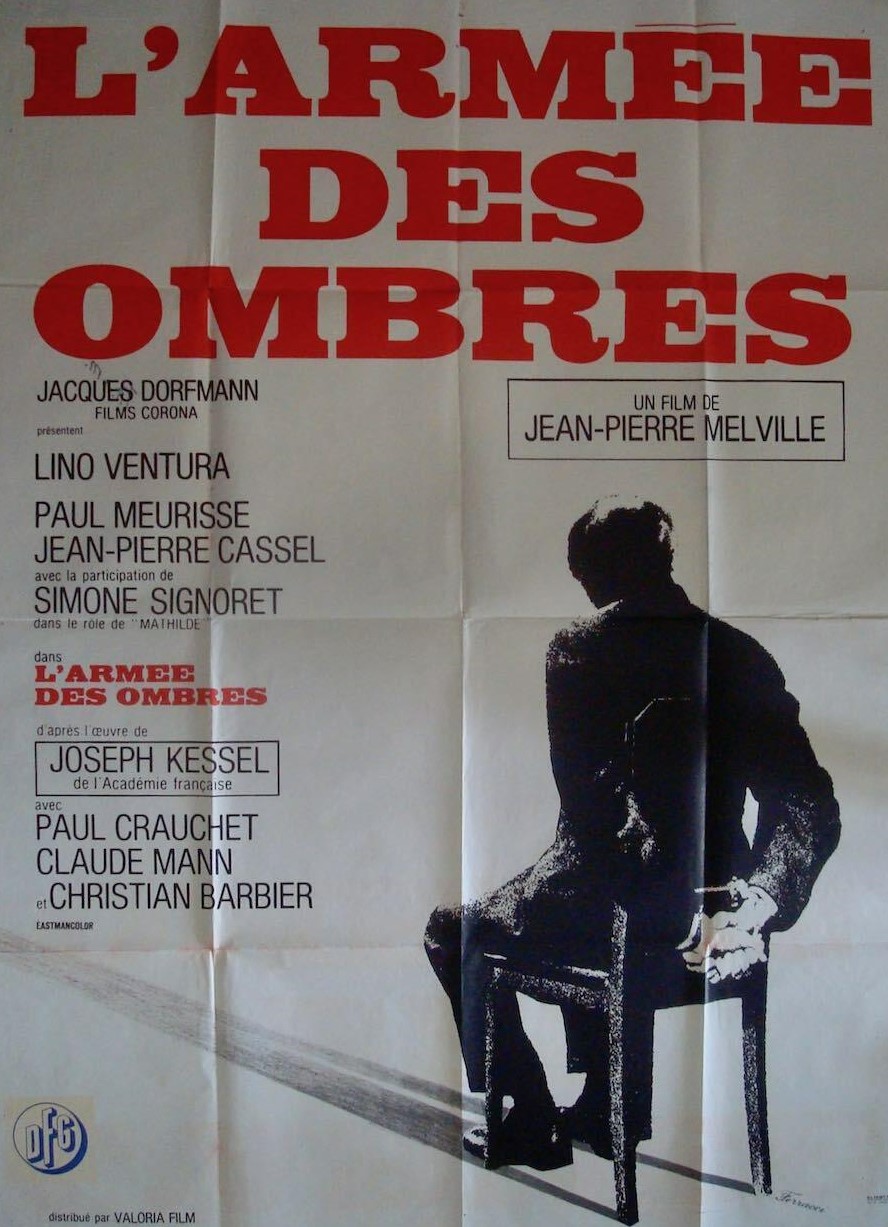
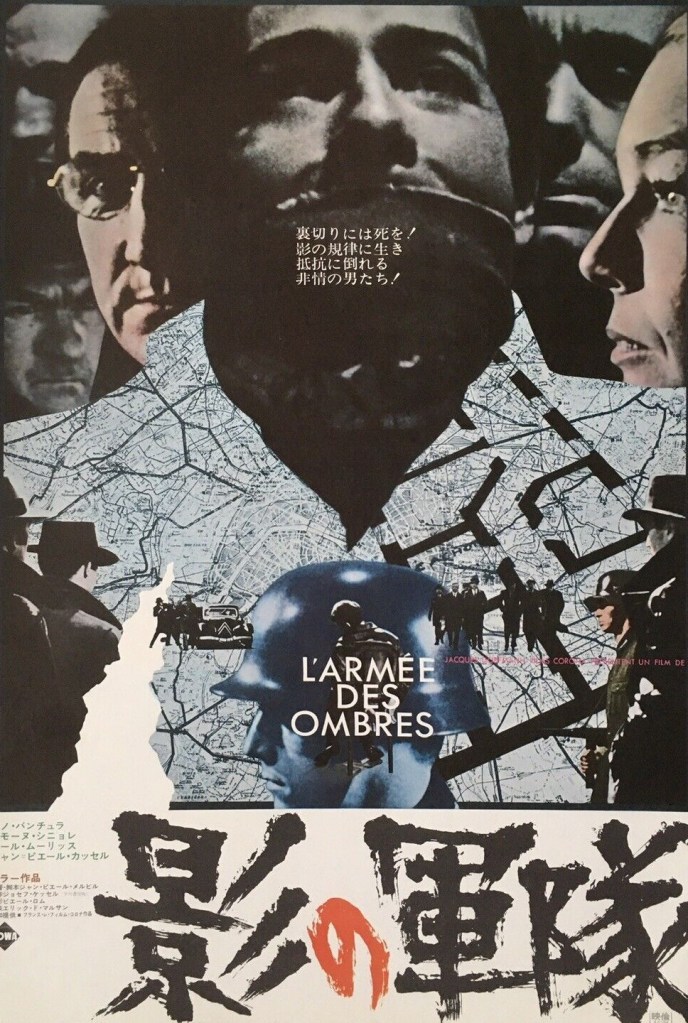
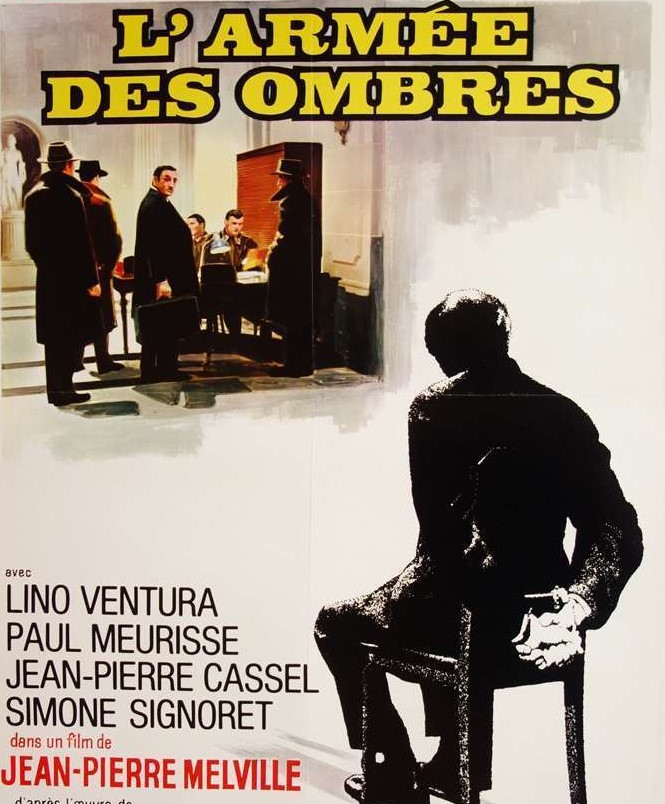
Army of Shadows/ Les Armees des Ombres (1969) ****

The antidote to the gung-ho World War Two picture. Scarcely any action and certainly none of the French Resistance swagger of The Train (1964) or the popular uprising of Is Paris Burning? (1965). Instead, sombre realism as Resistance leader Gerbier (Lino Ventura) dodges capture in a country pitted with collaborators. Nor is the underground portrayed in heroic fashion, their methods of revenge every bit as pitiless as the occupying forces.

Told in documentary style and based on the real-life exploits of characters taking the battle to the enemy, it’s backroom stuff, Gerbier organising his Resistance cell, meeting with other leaders. But his life is fraught with tension, as he attempts to dodge capture, with little success, it has to be said.

The film opens with Gerbier in captivity, an internment camp, where he is betrayed by an informer. While being transported to Paris, he escapes. His first action, revenge. With three colleagues, in an ordinary Marseille house where use of a gun will give them away, they strangle to death an informer. It’s not pretty.

Some join up for the risk like Jardie (Jean-Pierre Cassel), others maintain a more orderly, outwardly uninvolved, almost philosophic, lifestyle, like his older brother Luc (Paul Meurisse) who turns out to be the “Big Boss” of the Resistance, prominent enough to be transported by submarine to London to meet French leader-in-exile De Gaulle.   

Little of what they organise works out. Betrayal a constant, not just from collaborators, but from a fellow member who could be compromised by having a vulnerable child or parent. When one of the Marseille stranglers, Felix (Paul Crauchet) is captured, and likely to crack under torture, Mathilde (Simone Signoret), Gerbier’s assistant, comes up with a daring plan involving Jardie giving himself up so he will be imprisoned with Felix and, at the pessimistic end of expectations, can provide him with a cyanide pill, while the most optimistic outcome is three members disguised as Germans infiltrating the jail and sneaking him away.

The plan fails and Gerbier is subsequently arrested, imprisoned, his execution only denied by a daring rescue attempt – the only kind of typical war picture action. But then Mathilde becomes a liability and is executed.

It’s a cold-blooded kind of film and depicts with far greater realism the endeavors – failure outweighing success  of an underground operation during the Occupation. They don’t have the training for the job and their effectiveness is always open to question. Although British and American films might be filled with characters volunteering for dangerous missions, those are activities in isolation, not a commitment to a lifestyle that most likely would end in torture and death, endanger family and friends and leave you living in a sewer of suspicion. This presents an unvarnished truth. Not only are you expecting at any moment the Germans will pounce, there is a constant dread that the Resistance will be undone by their own actions, a plan too ambitious, someone cracking up, firing squad the most likely result. There’s nary a sniff of glory.

The big budget roadshow – The Longest Day (1962), Battle of the Bulge (1965), The Battle of Britain (1969) et al – while covering in some aspects the dangers of war were for the most part fist-pumping patriotic achievements, not this sneaking around, undercover stuff where missions were low-key, and the protagonists rarely in charge of their own destinies.

As far as French critics were concerned, the release timing was off, the film arriving in the wake of the 1968 riots and with De Gaulle in political trouble due to the Algerian situation. So it flopped with critics and audiences alike, and although it found a receptive audience in the U.K. in the late 1970s, it was denied release in the U.S. until 2006, by which point politics could not cloud opinion, and it earned rave reviews.

Lino Ventura (The Sicilian Clan, 1969) on top form is run close by Simone Signoret (The Deadly Affair, 1967). Jean-Pierre Cassell (Is Paris Burning?) comes closest to comic book heroics but even that is eventually reined in.

Everyone is helped by a screenplay by Joseph Kessel (The Night of the Generals, 1967), himself a member of the Resistance,  that is light on melodrama and overwrought dialog and concentrates on getting done the job in hand, no matter how unsavory. Equally notable is the lack of grandstanding, of glorious finish, of the Hollywood convention of redemption.

Director Jean-Pierre Melville (Le Samourai, 1967) , also a Resistance fighter and with a hand in the screenplay, brings to bear film noir sensibilities and the cold-bloodedness that informed a previous oeuvre tending towards gangster pictures.

A very bold undertaking of the most dour kind that deserves appreciation.

The Sicilian Clan (1969) *****

Absolutely cracking, brilliantly structured, gangster thriller featuring two fabulous heists and three legendary French stars in Jean Gabin, Alain Delon and Lino Ventura. Roger Sartet (Delon) is a trigger-happy robber whose prison escape is organized for a hefty fee by French-based Mafia chieftain Vittorio Manalese (Gabin). Le Goff (Ventura) is the rugged cop hunting down the escapee which brings him into the orbit of Manalese, about whose existence he is completely unaware, the gangster having kept an extremely low profile, never engaging in violence, hiding behind the legitimate front of a pinball machine business.  Veteran French director Henri Verneuil (Guns for San Sebastian, 1968) dukes between the twin storylines with ease.

Jean Gabin was easily the most famous French actor of the time with a career spanning four decades from Pepe Le Moko (1937) and La Grande Illusion (1937) to Holy Year (1976) . To many he was the best Inspector Maigret (1958). Generally ignored by the French New Wave directors, this picture showed what they were missing.

Sartet brings Manalese the opportunity to pull off the most audacious jewel robbery in history, even though the older man despises Sartet’s penchant for violence and sex. We often see Manalese at family gatherings, head of the dinner table, the family watching television together, frowning at one son’s liking for alcohol, playing with his grandson. He is not just a calm and clever businessman, but very quick-thinking, his sharp mind in a couple of instances preventing disaster. Sartet, on the other hand, will happily endanger his life and freedom by consorting with prostitutes and breaking an unspoken code of honor in an affair with Manalese’s daughter-in-law (Irina Demick).

The result combines dogged detective work by Le Goff and the inspired planning and execution of the jewel robbery until the two worlds collide. The investigation alone would have made this an outstanding picture. Le Goff, always seen with an unlit cigarette in his mouth although he is trying to give up smoking, concentrating initially on Sartet, sets up surveillance on the thief’s innocent sister and begins an involved – and engrossing – process of tracking down every potential lead and when at last he has Sartet in his sights it brings him up close to Manalese.

Le Goff’s professionalism is matched by that of Manalese and the picture develops into an absorbing battle of wits and the latter’s family values and moral compass puts him at odds with loner Sartet. There is some brilliant invention, the sacrificial watch, for example, and the unexpected appearance of a faithful British wife, although you do guess just how long Le Goff will go before lighting his ever-tempting cigarette.  

The ultra-cool Delon excels in this kind of amoral part, but Gabin and Ventura as old-style gangster and cop, respectively, steal the show. Demick thrives as the bored wife of a dull gangster who is attracted by the violent Delon, at one point deliberately putting herself in the line of his potential fire for the thrill. Actually, it’s the jewel heist that steals the show. Unlike other heist pictures where you have fair idea in advance of the details of the theft, here the audience is kept completely in the dark. Just as important in any heist is that the thieves get away with their plunder and the plan in this instance is breath-taking.

Catch it on Amazon Prime.

Discover WordPress

A daily selection of the best content published on WordPress, collected for you by humans who love to read.

The Atavist Magazine

by Brian Hannan

WordPress.com News

The latest news on WordPress.com and the WordPress community.