One Battle after Another (2025) **

Sorry to be a party-pooper but I didn’t take to this critically-acclaimed shaggy dog story heavy on the satire. It’s partly redeemed by the performances – Sean Penn, in particular – but there’s not much to say that hasn’t already been said, and far more succinctly, about immigration and the rising right-wing influence in America. I’m sure Leonardo DiCaprio’s $20-$30 million standard remuneration fee might account for a good chunk of the $130 million budget but unless rates for extras have soared I can’t see where the rest of the money has gone.

Perhaps Warner Bros, having lost out on cult box office hotshot Christopher Oppenheimer, was hoping to replace him with Paul Thomas Anderson, who while generally a critical darling, has none of Oppenheimer’s box office clout. Though let’s not forget Anderson’s highly rated by his peers, otherwise how to explain his three Oscar nominations for direction and four for writing. He should be a good fit for the wild unwieldy sprawling works of Thomas Pynchon, another cult darling, and his previous effort Inherent Vice (2014) made a reasonable stab at capturing, albeit on a smaller scale, the author’s idiosyncrasy, though the writer as often took the blunderbuss approach to his subject.

The only element of directorial bravura that I detected here was the Cinerama effect of mounting and falling down hills in the car chase.

The tale is just lame. Revolutionaries grow old or turn snitch to save their skin. White old guys belong to some secret racist organisation going by the name of the Santa Claus Club or some such. Black gals get to kill people and rattle off machine guns. The nuns, as you might guess, are  another secret organisation. The main element of the narrative appears to be whether racist Col Slackjaw – I mean Lockjaw (Sean Penn) – but I mean, who cares, when you give the bad guy such an improbable name you’re stating from the outset that he’s a joke and not the threat he’s meant to be

Anyway, improbable as it sounds, the avowed racist has a thing for dominant Black women – check out his erection at first sight of gun-toting Perfidia (Teyana Taylor) and his predilection for being anally probed by her. She’s sometime revolutionary, sometime aforementioned snitch, sometime boyfriend of revolutionary-cum-hophead Bob (Leonardo DiCaprio), and definitely not maternal material given she walks out on new-born Deandra (Regina Hall) leaving the hophead to bring her up.

The Santa Claus Club gets wind of the fact that Lockjaw might not be as racist as he pretends so that sets it at odds with its very own top racist as he embarks on a scorched-earth quest to find out if he should have a paternal bone in his body.

All sorts of chases ensue, mostly revolving around one-dimensional characters though Benicio del Toro makes a fair stab at humanizing his revolutionary.

It just went on and on, like a latter-day Anora (2023), making same point over and over again, albeit that presumably it is aimed at the intelligent section of the cinematic audience who shouldn’t need to be battered over the head with the message. This is the kind of picture which complains about the treatment of people by the Santa Claus Club but then expects audiences to burst into a round of applause when the club meets out punishment to one of its own.

File under major disappointment.

Leonardo DiCaprio (Killers of the Flower Moon, 2023) is good, but there’s not much for him to get his teeth into, we’ve seen this deadbeat character so many times before, even ones that form emotional ties with their children.
Behind the Scenes: Dear Mr Scorsese…or Mr Nolan

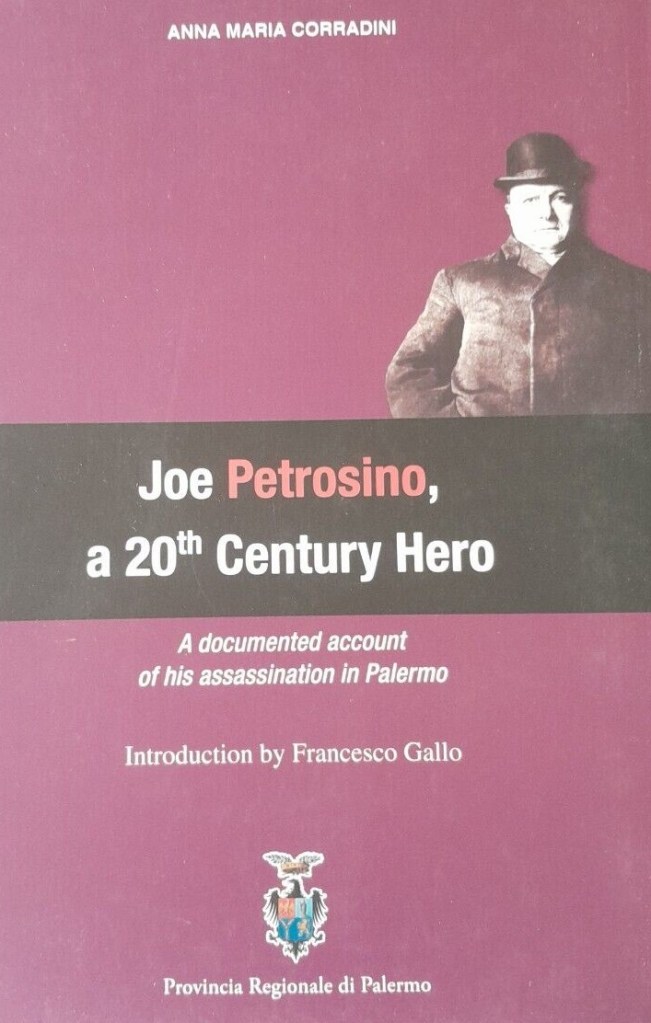
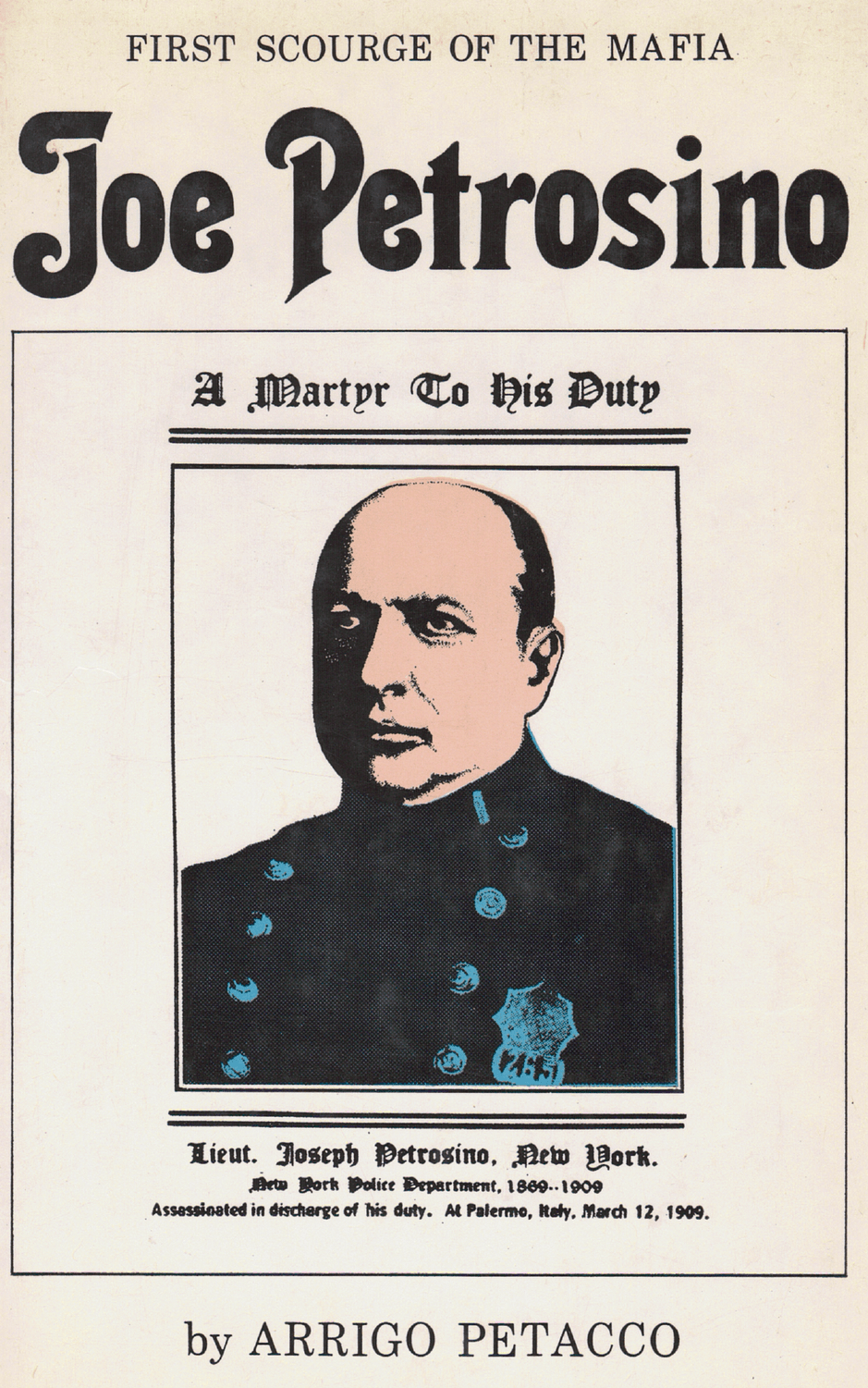
Should you be in the mood for atonement after a lifetime of deifying gangsters, Mr Scorses, you might wish to consider a biopic of the greatest cop, outside of Elliott Ness and Serpico, in American history. I’m sure Leonardo DiCaprio, who was at one time attached to a filmization of the bestseller The Black Hand (2017) by Stephen Talty, has brought the subject matter to your attention. Although Pay or Die (1960) covered similar territory, its budget and restrictions of length denied it the opportunity to properly explore the historical depth and social comment, for which in Killers of the Flower Moon (2023) you now seem more at home.

After the success of Oppenheimer (2023) audiences might be receptive to a true story about a cop who took on the Mafia a.k.a. the Syndicate a.k.a. the Cosa Nostra before it was known by any of those names and there is, to boot, a heart-rending romance that the Ernest Borgnine picture barely touched upon.

I’ve even dreamed up an opening.

A horse pulls a wagon laden with oranges and apples through a congested New York street circa 1883. As the driver pauses to make a delivery, a child, Claudia, watches from the window of her father’s shop – F. Fellini Jeweller. The horse collapses. The fruit scatters. Malnourished kids race to scoop up the merchandise. Claudia races out and strokes the horse’s mane.

We cut to a man in brown overalls striding towards the camera armed with a cleaver. The crowd parts. The child clings to her father in terror. The man raises the cleaver high over his head and slams it into the horse’s haunch. The child screams. The jeweller remonstrates with the man. The man removes his cleaver and says, “Not dead enough.”

As the credits roll, we see Claudia chasing away the flies that gather over the corpse, being pushed away by a man chiselling out the horse’s hoof, another sawing off its tail. Some days later as she is trying to pick off wriggling maggots, the man returns, this time driving a wagon. She hides behind her father.

His cleaver flashes in the sun as he hacks away at the horse. By now decomposition is so bad that the legs easily part from the body and the man is able to drag the horse bit-by-bit onto the back of his cart. Claudia watches as he leaves with the steaming carcass. We follow the wagon through the streets down to the river. A boat is waiting. The man heaves the meat onto the boat. The boat sets sail. Far out in the channels, the man begins chucking the meat overboard.

Back on dry land, the man cleans his cleaver and removes his brown overalls. Underneath he is wearing the uniform of a cop.

This is Joe Petrosino.

In those days cops also ran the Sanitary Dept in New York. Removing dead horses – they were too heavy to lift manually so you had to wait till the meat rotted sufficiently to fall from the bones – was a job for new recruits.

When Petrosino reaches the police precinct you’ll notice two things about him. He is short, well below the standard police requirement, and all the accents except his are Irish. In fact, he’s the only Italian cop on the force and only recruited because he can speak Italian and get information from all those immigrants who still can’t speak a word of English.

But he’s also very unusual especially to a contemporary audience because we’ve all been acclimatized to thinking that all Italians of this and successive generations accepted the Mafia rather than as Petrosino hating them and all they stood for. So this is effectively the tale of a silent majority who came from the same locale as the Mafia, understood their position in society in the home country, but loathed the fact that they had been allowed to infiltrate American society in part at least because they spoke a secret language (Italian) that few Americans understood or made an effort to understand with all the underlying racism that suggested.

But Petrosino’s not like a contemporary cop, forced to work within the tight constraints of the law and he’s not even like the cops of the 1930s-1960s who might have lawyers breathing down their necks and in the later decades accused by the media of breaching civil liberties. Petrosino was a good old-fashioned two-fisted cop, think James Cagney or Lee Marvin or Clint Eastwood but on the side of law and order. He thought nothing of beating up hoods, humiliating them in public as a way of showing that society was not going to stand by and let them terrorize the public.

Eventually, Petrosino was able to set up a specialist Italian-speaking squad to tackle The Black Hand/Mafia.

But he was also a superb detective. The Black Hand’s main line of business was kidnapping – little Claudia would come back into the story as a victim. Don’t pay the ransom and your business or your house would be blown up, the kidnappee killed. You may remember from old kidnapping movies that the kidnappers always cut out words from newspapers to write their demands.

Well, the only reason they ended up doing that was because of Petrosino. Prior to that, they just wrote out their demands in pen and ink. But he started to round up suspects by the hundreds and find an excuse to get samples of their handwriting. And then using the samples on file, whenever a new demand appeared he would scout the files to match the samples and go an arrest an astonished hood. So the gangsters wised up and started using newspapers.

He was also the guy who worked out that immigrants didn’t suddenly take up crime on arriving in America but they may well have criminal records back home and therefore could be extradited.

On top of that was the heart-rending love story. Petrosino had fallen for the daughter, Adelina, of a restaurant owner. Every night he dined in the restaurant. But she had been married before. She was a widow. Her husband had died young and she couldn’t contemplate marrying again to someone who was in such constant peril. So it took years of wooing, nightly meals, before she agreed to marry. The marriage lasted a year, ended by his death. He was assassinated while going into the lion’s den, the Mafia strongholds of Italy.

And all this is before you deal with the social issues of immigrant integration, of racism, of finding the new world as guilty of betrayal of trust as the old, of those complicit in murderous actions of the Mafia by turning a blind eye.

I’m suggesting Martin Scorsese because he’s covered this ground before but on second thoughts this might appeal more to the likes of Christopher Nolan who is comfortable with complexity and constantly seeks a wider perspective and who, whether through the Batman chronicles or Oppenheimer, is happy for his principal character to be in the main an upholder of justice.

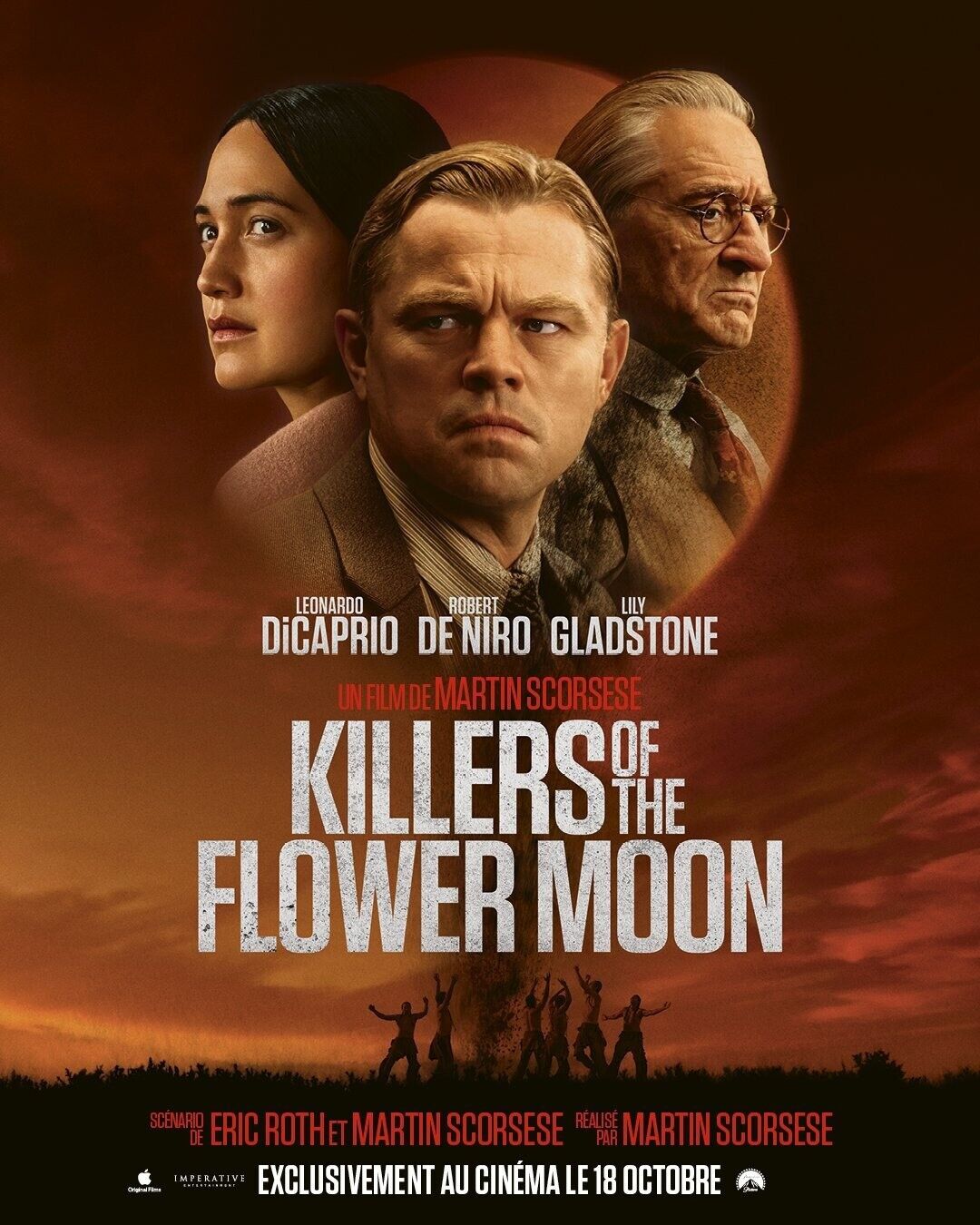
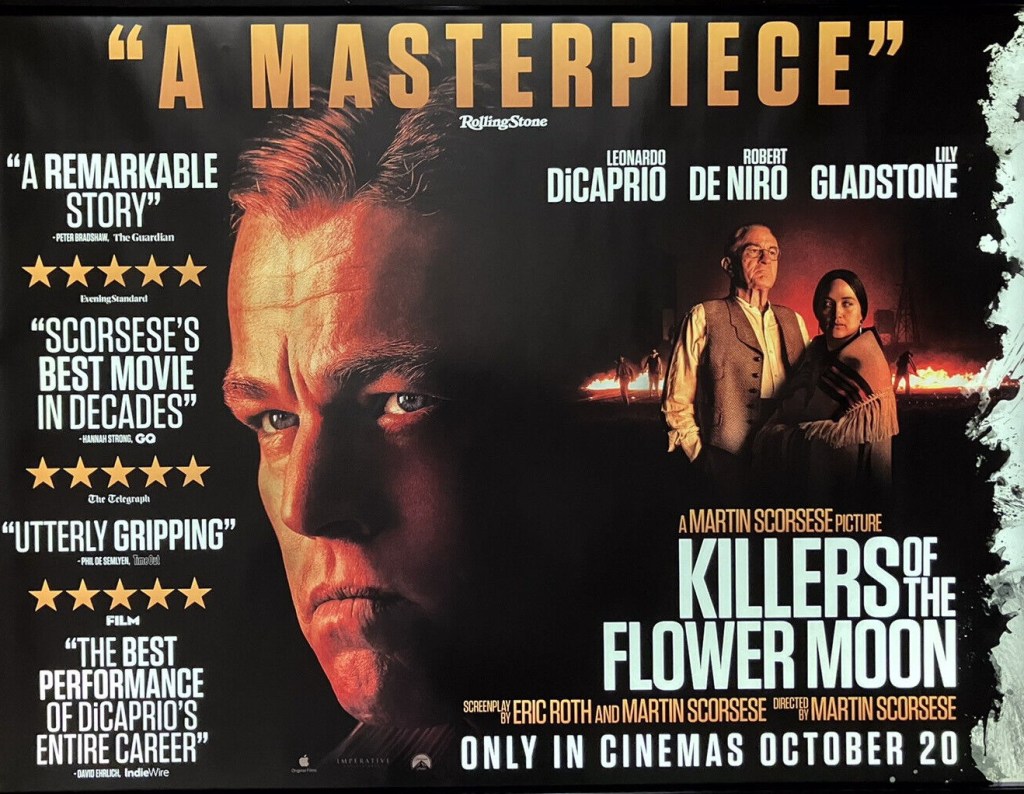
Killers of the Flower Moon (2023) *****

Let me stop you right there. This isn’t a review of this particular movie, you’re probably sick to death of those already, and it’s not some kind of Scorsese retrospective, but an expression of what it’s like to live through the transformation of one of the greatest directors Hollywood has ever produced. That zipping excitement when you first encounter a new Hollywood animal and when he charges down a different track or seems to lose control.

Catching up on a director’s life work via a carefully-curated retrospective hasn’t got an ounce of the flavor of living through it, from the days when film festival break-outs were not the carefully-orchestrated distribution and publicity machines they are now.

I first encountered Scorsese before a clever journalist had coined the rather derisory notion of a  Brat Pack, when the director was just another new voice clamoring for attention in a world of considerably more cinematic noise than exists today, when MCU and streaming didn’t exist, and audiences could find massive variety every time they attended the cinema.

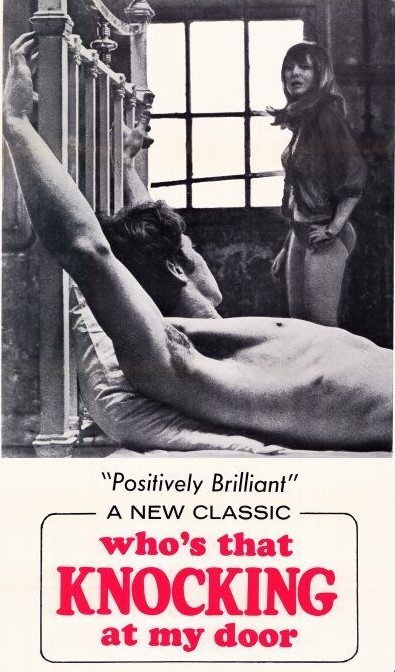
Who’s That Knocking at My Door slipped through the arthouse cracks in 1967 – the year of The Graduate, Guess Who’s Coming to Dinner, In the Heat of the Night, The Dirty Dozen and El Dorado. I didn’t see it then. I would be surprised if anyone did. Nobody was ready for that brash style with its insistent use of pop/rock music. I caught up with a few years later when the Scorsese we know now was still in embryo form.

Sure, Mean Streets (1973) gave strong indication of the gangster path towards which Scorsese was inclined, but it wasn’t so obvious then that he would make that genre his own, not when he interspersed that with a tale of Depression-era hobos, Boxcar Bertha (1972), and Alice Doesn’t Live Here (1974), a proto-feminist narrative whose stunning tracking opening set out his technical directorial credentials. And it was anybody’s guess which way he’d go from here. 

And I doubt if anyone expected Taxi Driver (1976), the moody glimpse of the New York underbelly with a psychopath hero, and certainly after that exploded at the box office and had critics purring, nobody would guess his career would take a musical turn, New York, New York and The Last Waltz in consecutive years. You might consider Raging Bull (1980), prototypical Scorsese. But the truth is, he was never typical. He jumped from project to project in a manner that only appeared to make sense to himself.

Some choices were so atypical you wondered if there had been any through-thread – what possibly connected King of Comedy (1982) to The Age of Innocence (1993) and Hugo two decades later. Certainly, when he imbibed a deep spiritual draft, you could make a thematic connection between The Last Temptation of Christ (1988), Kundun (1997), and Silence (2016).

But by this point he had achieved Hollywood nirvana, the mixture of critical adulation that put him top of the hitlist of those studios with one eye on the Oscars and bouts of box office glory that kept the same studios sweet. If he ever felt the need to revive a fading career he could churn out the likes of apparently mainstream but dark-tinged Cape Fear (1991), The Aviator (2004), Shutter Island (2010) and The Wolf of Wall Street (2103). And at the back of your mind, as a fan, was the question of how long would it take him to return to the gangsters. If you had Goodfellas (1990) forever etched on your mind, Casino (1995), Gangs of New York (2002), The Departed (2006) and The Irishman (2019) seemed almost always within reach.

Of course, he can hardly be separated from Robert DeNiro, his go-to star, ten teamings in all including the current number. And for a DeNiro substitute, Scorsese didn’t go far wrong with Leonardo DiCaprio, six including the new one. Stars with an edgy side were attracted to Scorsese and vice-versa.

It’s perhaps no coincidence that DeNiro and DiCaprio play murderous relatives in Killer of the Flower Moon, but the performances both deliver are so subtle, so far removed from what Scorsese’s asked of them before, as to point them both in the direction of the Oscar.

You think you kind-of know what you’re going to get with Scorsese, but, more than any other director, he whips the ground out from under you. Killers of the Flower Moon is bereft of the Scorsese trademarks, voice-over, exuberant violence, thumping soundtrack.

So when you’ve been watching his movies for over half a century, you look on him as you might a favored son, delighted in his achievement. But you don’t want him to stop, you want him to keep going. There must be one more film in him. Like Ridley Scott, he’s more bankable than ever, especially if the streamers are looking for a short-cut to hooking up with the best talent available.

Like Oppenheimer, this one is unmissable.

https://amzn.to/3MeEe9U

https://amzn.to/3Q6Lw0p

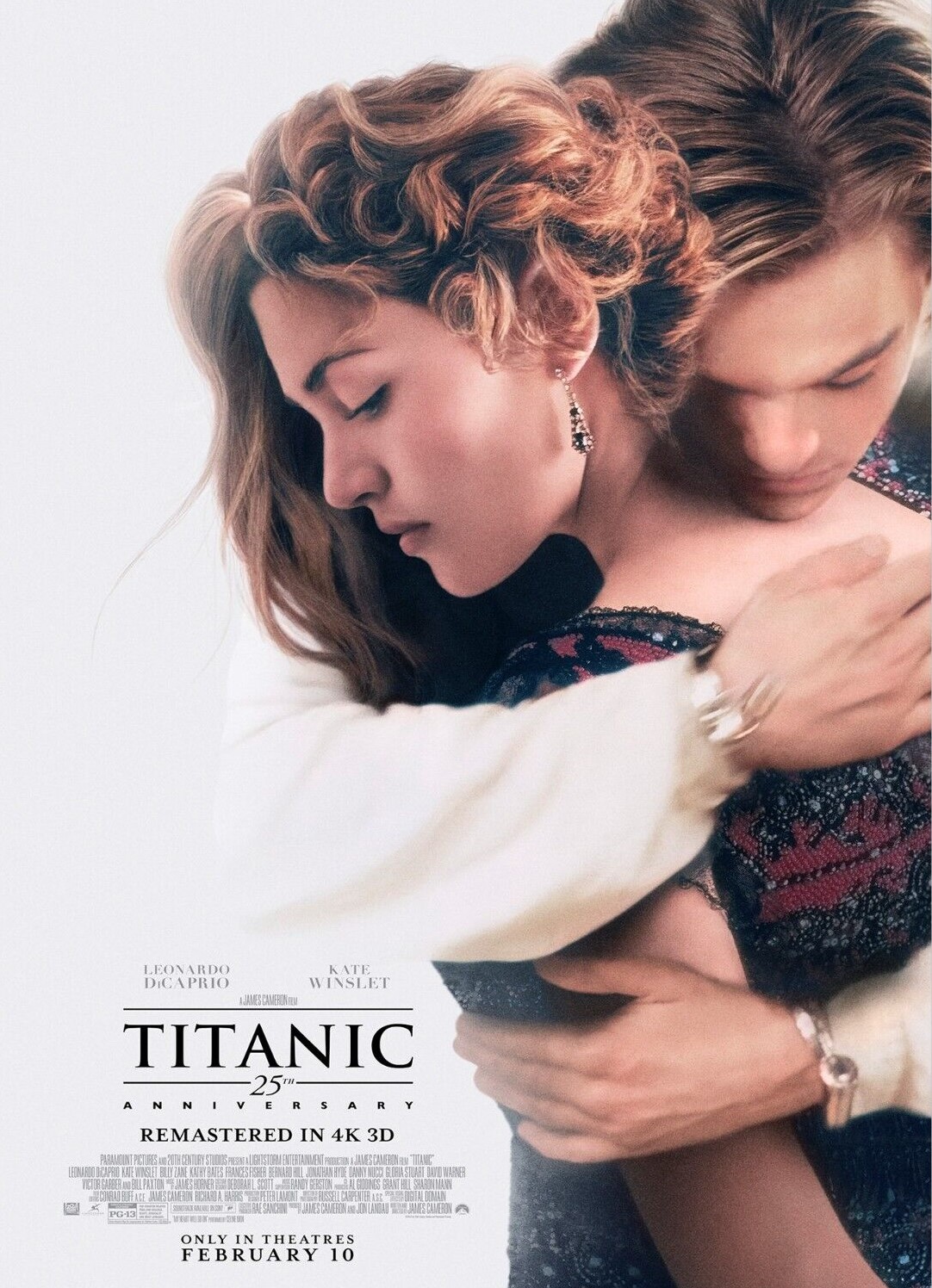
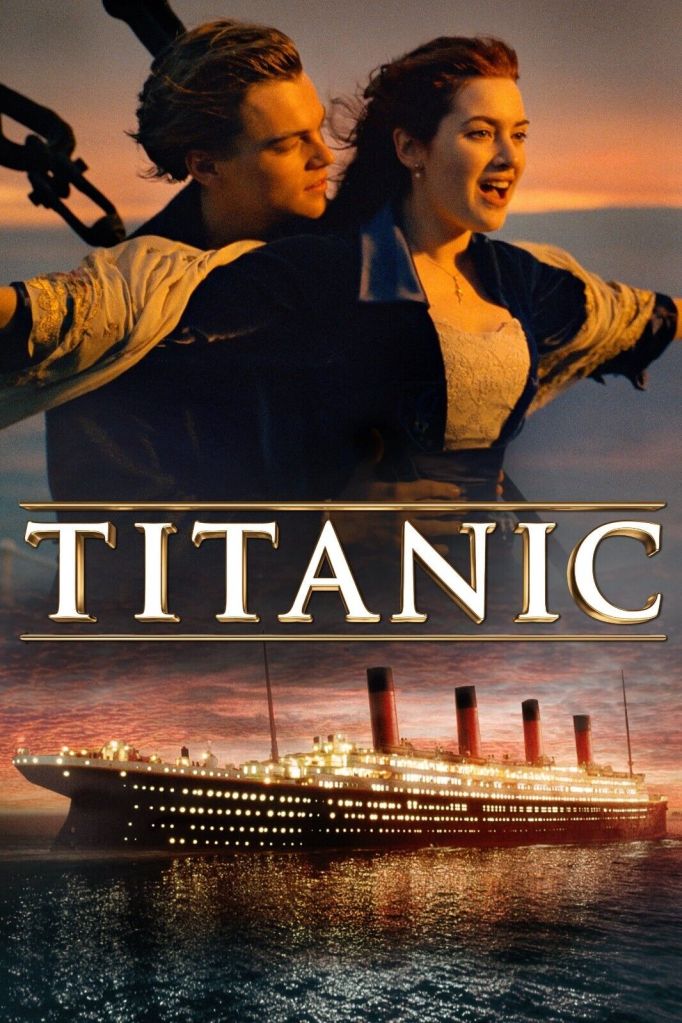
Titanic (1997) ***** – Seen at the Cinema in 3D Imax

You might have thought it the height of Hollywood hubris for James Cameron to assume Titanic could steal the Valentine’s Day crown from Humphrey Bogart-Ingrid Bergman World War Two lovelorn Casablanca (1942). But bear in mind Casablanca had replaced Doctor Zhivago (1965) as the movie’s greatest love story and that, in turn, had superseded Gone with the Wind (1939).

Each followed a similar recipe – cataclysmic event, except Casablanca epic in scope, except Gone with the Wind memorable song,  except Clark Gable introducing relative newcomers, perhaps most of all fabulous screen charisma between the male and female leads. Titanic, of course, has a late twentieth century vibe, more action than drama as the lovers, often pursued, hurtle from one potential disaster to another, and are within a lifejacket and a large enough piece of flotsam of a happy ending.

But where Rhett Butler (Clark Gable) and Rick Blaine (Humphrey Bogart) exhibited world-weary cynicism and Zhivago (Omar Sharif), though his occupation, achieved maturity, Rose (Kate Winslet) and Jack (Leonardo DiCaprio) are little more than blossoms blown on the wind, as innocent as a fresh coat of paint. Jack grows up fast, fast enough to hold his own among the upper class, strong enough to whisk Rose away from a life of servitude to a male ideal.

In some respects, to use the modern idiom, she is the ultimate Final Girl. On several occasions, she rescues him, plunging through the rising torrent to find him and cleave his handcuffs with an axe. She risks far more than he. Vengeful fiancé Cal (Billy Zane) and his ruthless henchman (David Warner) would easily chuck Jack overboard given the chance.

In essence, the story is light. Spoiled brat saved from a half-hearted suicide attempt, Jack embraced by Cal as a means of humiliating him, various attempts to smear Jack, Rose finding a freedom below stairs she never expected, shown a world of opportunity beyond her ken, taking the lead in sexual matters, lightly mocking Jack for blushing at her nudity even as she shamelessly and confidently strips.

And told against the backdrop of a ruthless caste system, where only the “better” people can survive and millionaires see “winning” as the embodiment of entitlement. Cameron holds up a mirror to the supposedly classless America and a world of enterprise where lifeboats are viewed as an obstacle to beautiful design. The two outsiders, Rose’s mother (Frances Fisher) and Molly Brown (Kathy Bates) are opposites, the latter, by dint of inheritance pushing her way brusquely into society, the former meekly trading her daughter for a life of privilege.

And the romance is given a twist when cold-blooded Cal proves to be as obsessed by Rose as Jack, the several times offered safe passage turning it down to pursue her, and not in the end as an object to be collected but as the subject of his restrained passion.

But you would need extraordinary acting to keep you glued to the screen when there were so many other astonishing visuals and even at the distance of a quarter of a century the power of DiCaprio and Winslet just blows you away. Sure, there is a bit of will she-won’t she, but once we’re past that it’s romance as a breath of fresh air, DiCaprio mixes devil-may-care with adoration, Winslet bristles, succumbs and then takes the lead, the sheer exhilaration of it all the bulwark against the drama of the slowly sinking ship.

It’s a fabulous scenario, Cameron careful to allow other elements to float into place, the officers assuming sacrificial stance, the hunt for the mythical jewel that kicks off the tale and provides meaningful coda.

I’m sure it helped that DiCaprio and Winslet were mere rising stars, otherwise I doubt if someone with more box office clout would have stood for the endless hours/days/weeks in freezing cold water (I don’t think you could heat it up even in a studio setting) and without their genuine travails it would not have worked so well.

It’s worth noting that DiCaprio went on to become – along with Brad Pitt – the last of the genuine stars and that he forsook the easy route of romantic lead for more interesting and complex characters and embraced an association with Martin Scorsese that took him to darker places than the likes of Paul Newman or Harrison Ford ever dreamed. Winslet, too, has enjoyed a memorable career, perhaps entranced too often by the arthouse, but you can hardly argue with one Oscar and six nominations.

On a personal note, I realised I had passing acquaintance with two of the actors. When I worked backstage at the Citizens Theatre in Glasgow, I would often come across Jonathan Hyde (the arrogant Ismay). One role he played quite astonished me. Not so much the role (and I can’t remember what it was) but, if you like, the preamble. When audiences entered the theatre they were faced with the sight of Hyde sitting on stage in full costume and in character, as if this was Method Acting taken to an extreme, waiting for the play to begin.

I was at university with Ron Donachie (the master at arms). We both studied Drama at Glasgow University. This course was never intended to produce actors, and mostly it set students on a path to theatre management and the like, including a friend Anne Bonnar who went on to head up Creative Scotland. But, of course, it was always a route into acting if that was your ambition. Ron Donachie and another friend Duncan Bell (British television series Heartbeat) took the opportunity. Needless to say, my stint at the Edinburgh Festival Fringe was enough to convince me that acting was not my forte.  

Discover WordPress

A daily selection of the best content published on WordPress, collected for you by humans who love to read.

The Atavist Magazine

by Brian Hannan

WordPress.com News

The latest news on WordPress.com and the WordPress community.