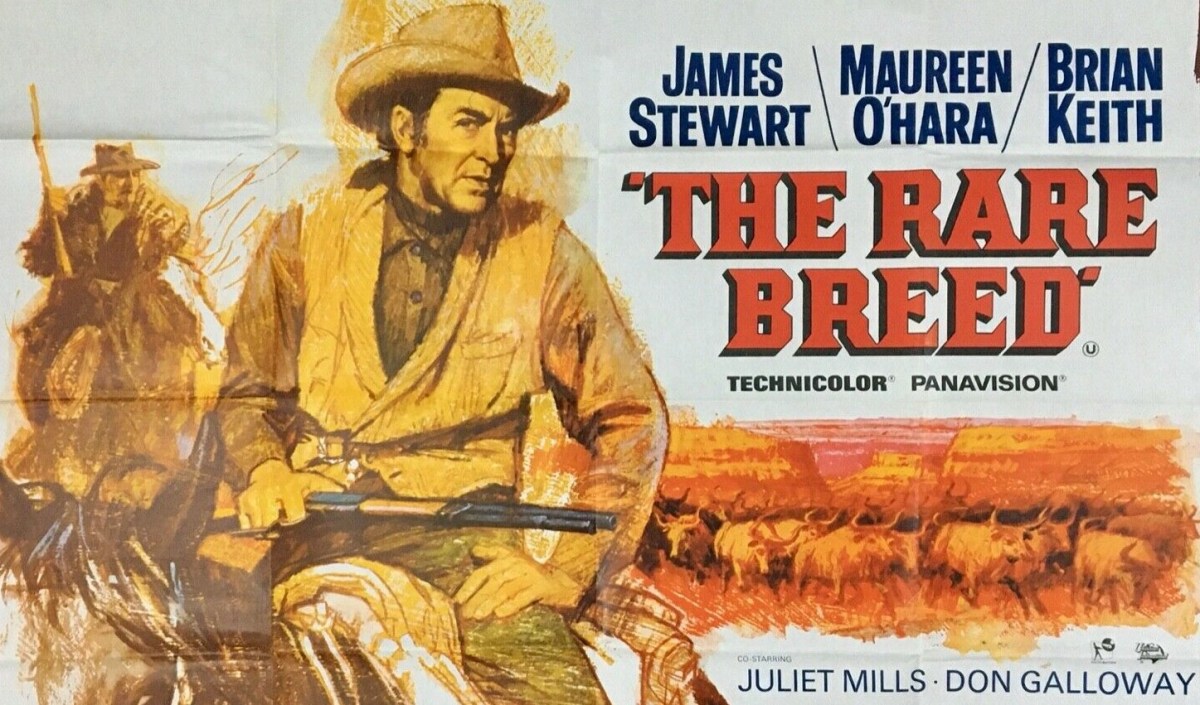
The Rare Breed (1966) ****

Classic themes of hope, resilience and redemption influence director Andrew V. McLaglen’s follow-up to Shenandoah (1965). Add in a battle against widespread misogyny, thieves falling out, a brilliant stampede and a forlorn hunt that has echoes in the decade-old The Searchers. But other more serious issues are explored. At the film’s core is the question of how a nation built on innovation refuses to countenance change, in other words a country where hierarchy (inevitably male) has begun to impose its preference and how those who suggest alternatives must not just buckle to that collective will but admit they are wrong, a problem that in the half century since the film was made has not gone away.

Widow Martha (Maureen O’Hara) and daughter Hilary (Juliet Mills) bring to auction her white-face Hereford bull, a British institution, the first of its kind to be imported (for breeding purposes, you understand) to America where hardy longhorn cattle are the dominant species. Despite being insulted for her temerity in challenging the existing order, Martha is astonished to receive a winning bid of $2,000, only to realize this comes with conditions attached, the buyer assuming his largesse will also win her, a sharp elbow to the ribs dissuading him of this notion.

Determined to see the bull delivered to the Texan ranch, Martha decides to accompany the animal on its journey. Wrangler Sam (James Stewart), hired to transport it instead plans to steal it and to keep the dupe sweet until the time is ripe encourages her to develop romantic ideas towards him. When another cowboy, Simons (Jack Elam), with eyes on the same four-legged prize causes confrontation the game is up, though Sam sees the trip through.

Rancher Bowen (Brian Keith) belittles the Hereford bull although viewing Martha as a better proposition, but the only way to discover whether the beast can survive in the territory is to let it loose on the open range where it was likely to encounter blizzards (not so rare in Texas as you might think). Once the bull is set free, the movie shifts onto a question of endurance, not just of the animal, but of the mindset of Martha and Sam. Her faith in her insane idea is tested to the limit and, almost in compensation, a woman needing security/protection et al, she comes to appreciate the attentions of a less wild Bowen.

Both central characters have much to lose and much to face up to. Martha, in accepting she was wrong and letting Bowen into her life, will almost certainly be surrendering her independence (she can still be feisty but that’s not the same thing). It’s a testament to her acting that you can see that faith wilting. Sam, a conniving thief whichever way you cut it (although the storyline gives him something of a free pass), has to face up to the fact that he was planning to con a woman out of the precious possession on which her precarious future was built.

The scenes between Martha and Sam are superb, especially when he is grooming what he thinks will be an easy dupe. Sam, in a purgatory of his own making, almost certainly an outcast were the truth more widely broadcast, attempts to expiate his guilt.  
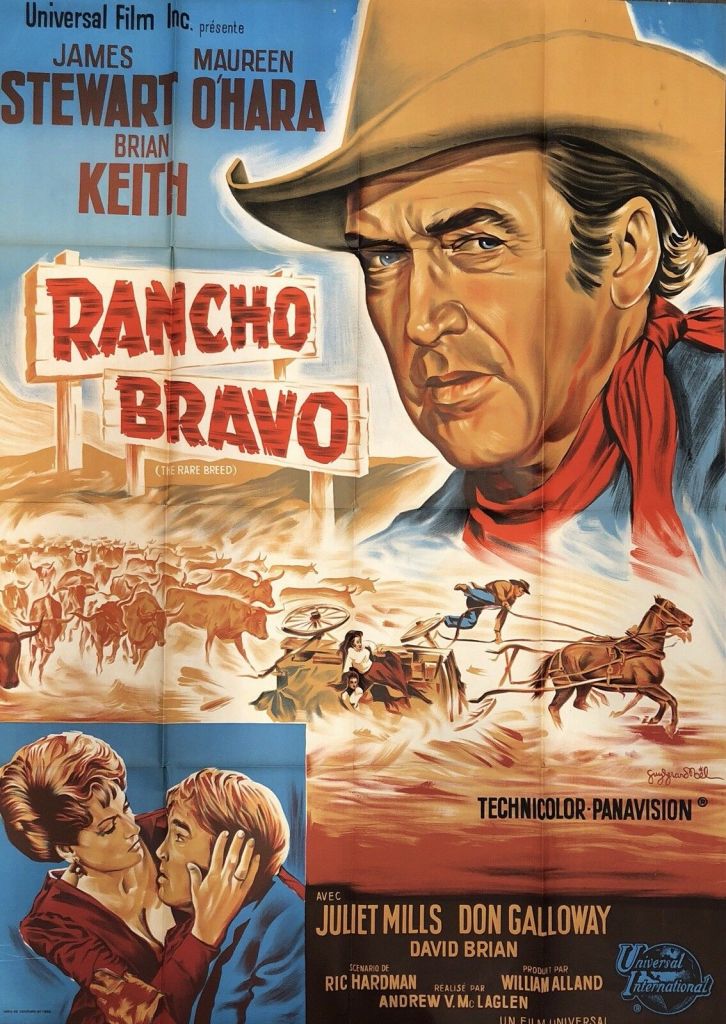
James Stewart and Maureen O’Hara had worked together in Mr Hobbs Takes a Vacation (1962) and there is no denying their screen chemistry. But there’s an innocence that O’Hara rarely displays, the woman in love suppressing those emotions not denying them as perhaps in The Quiet Man (1952). She’s both independent and, if the right man comes along, happy to accept his protection (from the male predators of the West), while at the same time keeping him on the right track and sorting out his world of misshapen priorities. There are some brilliant scenes where something else is going on story-wise and O’Hara is internalizing some deeper emotion entirely. It’s an acting coup for an actress like Maureen O’Hara who would never give up to convey so well a character on the verge of surrender.

This is one of James Stewart’s best roles, far removed from the principled hero of Shenandoah (1965) and returning him closer to the shifty character of Vertigo (1958) adept at self-justification. In the scene where he is found out by O’Hara he is outstanding. It’s not a given that the character will find a way to turn things round and his efforts to redeem himself make the latter part of the picture emotionally involving, especially as this is countered by O’Hara’s own internal battle.

It’s worth pointing out that although the narrative mainly concerns the two main characters, the background is filled with ruthlessness. Not only does Sam feel no compunction about stealing a bull worth $2,000, we first encounter Bowen’s son Jamie (Don Galloway) when he is making off with a herd of his father’s longhorns. The cattle barons use their wealth to “buy” a classy woman and cheat cowboys. And there is further murder along the way.

I was going to mark this picture down for the comedy which seems to amount to endless brawls but I wondered if modern audiences, reared on the never-ending fistfights and wanton destruction that usually indicated the finale of a superhero picture, would accept it quite happily, perhaps even welcome it. While Brian Keith (The Deadly Companions, 1961) stands accused not only of one of the worst Scottish accents committed to the screen – and these days of cultural appropriation – that does not take away from a character who, behind the beard, transitions from loathsome father to something more approaching humanity, in other words wild man who realizes the benefits of civilization.  

In fact, the broad comedy serves to obscure a film full of brilliant, cutting, funny lines, generally delivered in scathing tones by the woman.  O’Hara to Stewart: “You may bulldog a steer but you can’t bulldog me.” Stewart to O’Hara: “Can I help you with that” and her response “No, they’re clean and I’d like to keep them that way.” And that’s not forgetting the sight of the cowboys whistling British national anthem “God Save the Queen” in order to bring the bull to heel.

I forgot to mention the romantic subplot involving Hilary – in case you were wondering what role she had in all this – and Bowen’s estranged son, Jamie. Juliet Mills (Avanti!, 1970), older sister of child star Hayley, is excellent as the sassy daughter of a feisty woman, Don Galloway (Rough Night in Jericho, 1967) less of a stand-out in his debut, in part because he has to subsume his rage against his father.

Jack Elam (Once Upon a Time in the West, 1968) is good as always and you will spot in smaller parts Ben Johnson (The Undefeated, 1969), Harry Carey Jr. (The Undefeated), Barbara Werle (Krakatoa, East of Java, 1968) and David Brian (Castle of Evil, 1966). John Williams, masquerading as Johnny Williams, wrote the score.

Setting the comedy aside, this is a more intimate film from director Andrew V. McLaglen compared to the widescreen glory of The Undefeated and the intensity of Shenandoah and for that reason tends to be underrated. There are some wonderful images, not least Sam carrying the injured Jamie in the style of Michelangelo’s La Pieta – an idea stolen by Oliver Stone for Platoon (1986) – but mostly McLaglen concentrates on the actors.
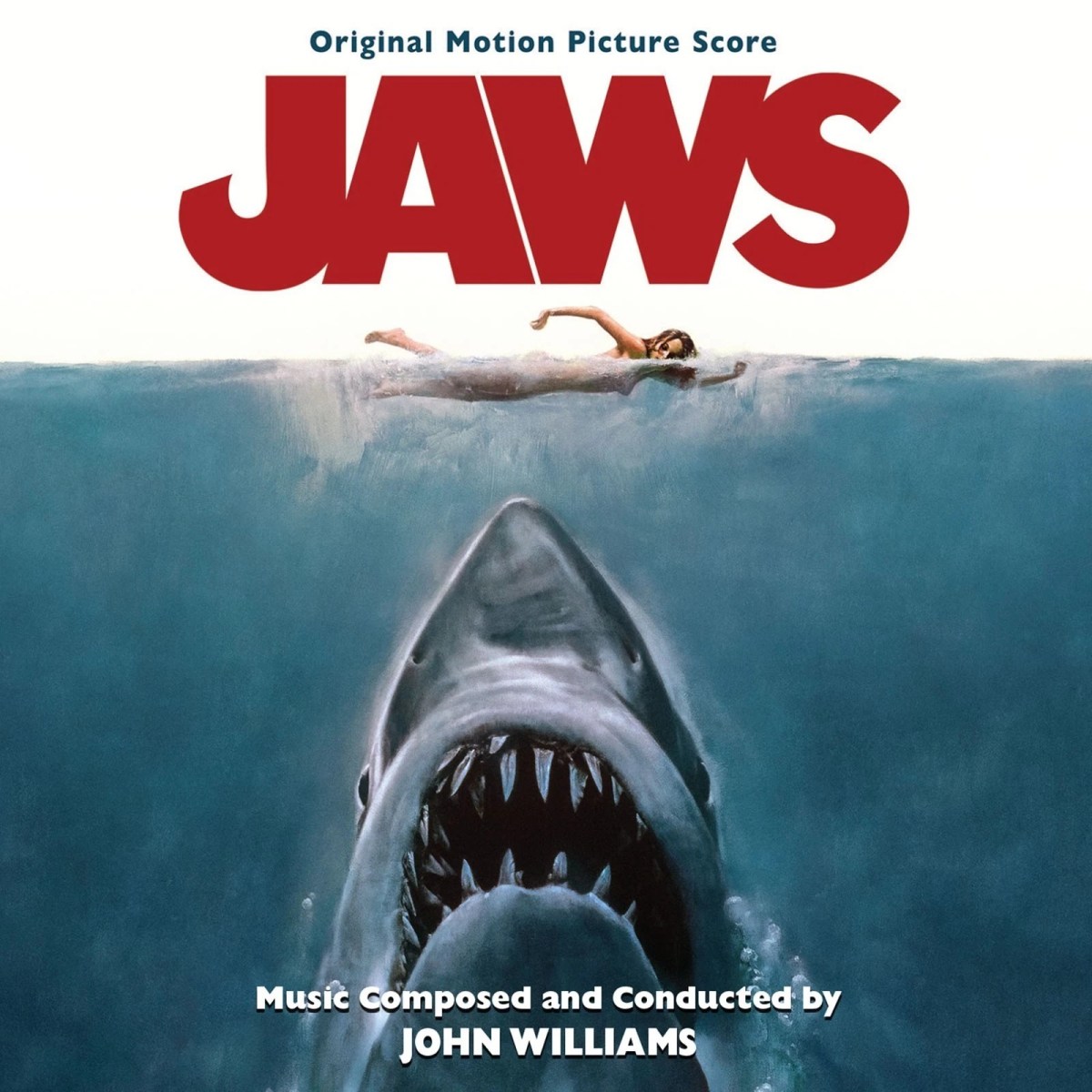
Behind the Scenes: John Williams and the Two Notes That Changed Movie History

I hadn’t planned on a Jaws triple-bill but the new biography of John Williams popped through my door yesterday and I dug in.

I was astonished to discover first of all that movie music was in his blood. His grandfather had been involved in accompanying silent music films and then, dipping his foot in Hollywood, had snagged a gig with Shirley Temple. His father went one better – he had been instrumental in the radio revolution and eventually moved to Hollywood to become a session musician in movie studios recording film scores.

Film composers don’t lend themselves that easily to biography – I still have a treasured copy of the book on John Barry – and what has appeared hasn’t been on the same scale as, say, a major account of the career of John Ford or Clint Eastwood and certainly nothing approaching the 200,000 words Tim Greiving has amassed. I’d never heard of this author although it shouldn’t have surprised me that there was a university course on movie music run by him and that he describes himself as a “film music evangelist.”

By the time Jaws (1975) came around, Williams was a Hollywood veteran, 10 Oscar nominations to his name and, having made his debut in 1958 with Downbeat, had already composed over 30 scores including The Rare Breed (1966) and The Towering Inferno (1974). But you wouldn’t call him a household name. While his name would be familiar to the aficionados, the general public did not go around whistling his tunes the way they might with the James Bond theme.

And although movie music was his bread-and-butter, Williams had a hankering for Broadway, where composers were top of the bill not way down the credits. So since 1973 he had been working on a musical about the relationship between King Henry II and Becket, which had been  the subject of plays by T.S. Eliot and Jean Anouilh and the film Becket (1964) starring Richard Burton and Peter O’Toole. He already had musical experience, though of the movie variety, and uncredited, having worked on Goodbye Mr Chips (1969). 

In fact, Thomas and the King was scheduled for the British equivalent, London’s West End, to open in October 16, 1975 at the 1200-seat Her Majesty’s Theatre and starring Australian Jim Smillie and former Bulldog Drummond Richard Johnson. The critics weren’t impressed. One described it as the kind of show where you came out “humming the costumes.” It folded after 27 performances in a mere two weeks.

Luckily, salvation in the form of a certain shark was at hand. Williams had scored Steven Spielberg’s 1973 debut Sugarland Express (Duel, though released theatrically abroad, was strictly a made-for-tv number Stateside). The director had in mind “avant-garde horror music” along the lines of the “freaky cerebral score” Williams had composed for Robert Altman’s Images (1973). 

Williams had enough confidence in himself to tell the director that approach was wrong. He went instead for something that was “all instinct.” Explained Williams, “meaning something that could be very repetitious, very visceral, and grab you in your gut not your brain.” Since the movie itself was a masterclass in suggestiveness – the shark remains largely unseen for the first part of the picture – the music was able to infer its presence.

The two notes – a bass ostinato – could be played softly to suggest the shark was far away. “You can keep playing it louder and louder,” said Williams, “there’s no shark there but you can feel it. It can be deafening – it can accelerate as it comes towards you…You can paint a whole choreography without seeing anything.”

Spielberg wasn’t convinced. He thought it “too primitive”, favoring something “more melodic” for the shark. In due course, the director succumbed. Williams was integral to the movie in another way – deciding when the music should appear, “spotting” being the technical term. “The art of film composition,” said Spielberg “is the placement of that composition.”

And while Jaws set a new template not just for box office but for scaring the pants off moviegoers, the impact of those two notes went far beyond the movie business. Hans Zimmer summed it up, “The scary thing about Jaws is those two notes.” The soundtrack reached No 32 in the Billboard chart and Williams won the Oscar. In Time magazine he was named the most influential composer of the 20th century. American conductor Leonard Slatkin said, “In classical music if you say I can name that tune in four notes” everybody knows Beethoven’s Fifth, “but with John he had it with two notes. There’s somebody whose legacy is assured.”

I have to confess this isn’t a proper book review in the sense that I’ve read it from beginning to end. I didn’t want to rush it just for the sake of a book review. But I’ve dipped in and out enough to be knocked out.

John Williams, A Composer’s Life, by Tim Greiving is published by Oxford University Press.

“Penelope” (1966) ***

Comedic twist on the heist movie with Natalie Wood (This Property Is Condemned, 1966) as a kleptomaniac. Given its origins in a tight little thriller by E.V. Cunningham, pseudonym of Howard Fast (Mirage, 1965), it’s an awful loose construction that seems to run around with little idea of where it wants to go. Wood, of course, is a delightfully kooky heroine who takes revenge on anyone who has ignored or slighted her by stealing their possessions.

The picture begins with her boldest coup. Cleverly disguised as an old woman, she robs the newest Park Avenue bank owned by overbearing husband James (Ian Bannen). This prompts the best comedy in the movie, a man with a violin case (Lewis Charles) being apprehended by police, the doors automatically locking after a clerk falls on the alarm button, James trapped in the revolving doors losing his trousers in the process.

In flashback, we learn that she turned to thievery after a rape attempt by Professor Klobb (Jonathan Winter), her college tutor, and while half-naked managed to make off with his watch fob. She stole a set of earrings from Mildred (Norma Crane) after suspecting she is having an affair with James. “Stealing makes me cheerful,” she tells her psychiatrist, Dr Mannix (Dick Shawn) and while admitting to dishonesty denies being a compulsive thief. After the bank robbery she even manages to relieve investigating officer Lt Bixby (Peter Falk) of his wallet.

Nobody suspects her, certainly not her husband who could not conceive of his wife having the brains to carry out such an audacious plan. Bixby is a bit more on the ball, but not much. Clues that would have snared her in seconds if seen by any half-decent cop are missed by this bunch. And generally that is the problem, the outcome is so weighted in Penelope’s favor. The plot then goes all around the houses to include as many oddballs as possible – boutique owners Sadaba (Lila Kedrova) and Ducky (Lou Jacobi), Major Higgins (Arthur Malet) and suspect Honeysuckle Rose (Arlene Golonka). Naturally, when she does confess – to save the innocent Honeysuckle – nobody believes her in part because everyone has fallen in love with her. Bixby, just as smitten, nonetheless makes a decent stab at the investigation.

Howard Fast under the pseudonym of E.V. Cunningham wrote a series of thrillers with a woman’s name as the title. He was on a roll in the 1960s providing the source material for Spartacus (1960), The Man in the Middle (1964), Cheyenne Autumn (1964), Sylvia (1965), Mirage (1965) and Jigsaw (1968).

Taken as pure confection it has its attractions. It’s certainly frothy at the edges and there are a number of funny lines especially with her psychiatrist and the slapstick approach does hit the target every now and then. The icing on the cake is top class while the cake itself has little of substance. It strikes a satirical note on occasion especially with the Greenwich Village cellar sequence. It doesn’t go anywhere near what might be driving this woman towards such potential calamity – that she gets away with it is only down to her charm. There has probably never been such a pair of rose-tinted spectacles as worn by Penelope, even though her every action is driven by revenge.

Without Natalie Wood it would have sunk without trace but her vivacious screen persona is imminently watchable and the constant wardrobe changes (courtesy of Edith Head) and glossy treatment gets it over the finishing line. It’s one of those star-driven vehicles at which Golden Age Hollywood was once so adept but which fails to translate so well to a later era. Ian Bannen (Station Six Sahara, 1963) is in his element as a grumpy husband, though you would wonder what initially she saw in him, and Peter Falk (Robin and the 7 Hoods, 1965) delivers another memorable performance.  Dick Shawn (A Very Special Favor, 1965) is the pick of the supporting cast though screen personalities like Lila Kedrova (Torn Curtain, 1966), Jonathan Winters (The Loved One, 1965) and Lou Jacobi (Irma la Douce, 1963) are not easily ignored.  Johnny Williams a.k.a John Williams wrote the score.

Arthur Hiller (Tobruk, 1967) delivers as much of the goods as are possible within the zany framework. Veteran Oscar-winner George Wells (Three Bites of the Apple, 1967) wrote the screenplay and it’s a far cry from the far more interesting source material and I would have to wonder what kind of sensibility – even at that time – could invent a comedy rape (not in the book, I hasten to add).

Discover WordPress

A daily selection of the best content published on WordPress, collected for you by humans who love to read.

The Atavist Magazine

by Brian Hannan

WordPress.com News

The latest news on WordPress.com and the WordPress community.