Audiences weaned on glossy spies surrounded by pretty girls and generally their own country taking a straight moral path turned up their noses at this more realistic portrayal of the espionage business where dirty infighting was the stock in trade. The Spy Who Came in from the Cold (1965) was saintly by comparison.
Complaints about a complicated plot were led by critics who rarely had had to work their way through a tricky narrative, unless it was from the likes of Alfred Hitchcock who was apt to add twists to his stories. The fact that the bulk of the characters went by strange monikers – The Highwayman, Sweet Alice, The Warlock etc – also seemed to upset critics. (In the book by Noel Behn, the author points out that these spies were constantly adopting new identities, it made it easier for others to keep tabs on them if they were always referred to by nicknames which were constant.)
A contemporary audience, accustomed to things never being what they seem and all sorts of double-dealing, would be more at home here.
None of the characters, even the supposed good guys/gals, get off lightly. Personal unsavory sacrifice is unavoidable. Charles Rone (Patrick O’Neal) and B.A. (Barbara Parkins), who have fallen in love with each other, both have to prostitute themselves for the cause. And when the going gets too tough, suicide is the only way out. There’s hefty financial reward for those who survive the mission, but the substantial pot will be split between the survivors and not the dependents of those who don’t come home.
At the crux of the story is recovering a letter which promises that the USA and Russia will conspire against China and destroy its atomic weaponry. Espionage expert The Highwayman (Dean Jagger) recruits a team to infiltrate Moscow consisting of Rone, burglar and safe cracker B.A., drug dealer The Whore (Nigel Green), Ward (Richard Boone) and ageing homosexual The Warlock (George Sanders) who is a dab hand at knitting.
More than a few have a dodgy past, Ward an art dealer of ill repute, The Whore a pimp, even Col Kosnov (Max von Sydow), the target of the US operation, betraying his own countrymen. B.A. has to learn how to use sex to trap the enemy and, to get past the starting gate, loses her virginity to the obliging Rone.
The Whore sets up in the brothel business with Madame Sophie (Lila Kedrova), keeping the sex workers docile by filling them up with heroin, which he imports. As instructed, B.A. shares out her favors with the enemy while Rone seduces the wife, Erika (Bibi Andersson), of Col Kosnov.
You always go into a spy picture expecting double cross and this is no different. B.A., The Whore and The Warlock have their covers blown, the latter committing suicide, the girl failing to do so but paralyzed as a result. Ward kills Kosnov. But his motive seems odd – blaming the Russian for betraying his countrymen – and his action only becomes clear at the climactic double cross when Ward is revealed as a double agent in the pay of the enemy. For which, it has to be said, he doesn’t suffer. If anything, with B.A. in his hands, he has Rone over a barrel.
While this was never going to be a by-the-book espionage number, it’s elevated by exploring the emotional price that has to be paid, both in hiding some feelings and feigning others.
While possibly it made sense to present the stars in alphabetical order, suggesting nobody took precedence in the billing, most have the opportunity to play against type. Barbara Parkins (Valley of the Dolls, 1967) is excellent as the girl embarking on a career for which she has, emotionally, little aptitude. Bibi Andersson (Duel at Diablo, 1966), usually cast in repressed roles, has a ball as woman giving in to impulse. Tough guy Patrick O’Neal (Stiletto, 1969) must knowingly betray his true love. Richard Boone (The Night of the Following Day, 1969) is already playing a secret role and effortlessly dupes his colleagues.
There’s not much of the John Huston (Sinful Davey, 1969) visual magic but he makes up for that by allowing the actors to delve deeper into their characters. But he doesn’t attempt to spin a happy ending and the downbeat climax suggests that the USA lost this battle. The one memorable image is a ball of red wool rolling across the ground, indicating that The Warlock is dead. Written by Huston and Gladys Hill (The Man Who Would Be King, 1975) from the bestseller by Noel Behn (The Brink’s Job, 1978).
While the themes didn’t appeal then, they resound now.
Variation on the director’s earlier The Treasure of the Sierra Madre as a pair of British ex-military cheekie chappies whose reach exceeds their grasp come unstuck when confronted by powerful religious elements. Enticingly presents a marvellously ironic puzzle – you can have everything your heart desires except anything that would make you human. And elevated less by John Huston’s cinematic achievement than by terrific performances by the two stalwarts of the British film industry at the time, Sean Connery and Michael Caine, the former taking the acting kudos by a nose as the less intelligent of the duo. Given Connery’s standing at the time, this was somewhat playing against type. Yes, he exudes screen charisma and is a macho as ever, but nonetheless not quite as quick on the uptake as the more calculating Caine.
Story is told in flashback after a maimed Peachy Carnehan (Michael Caine) turns up as the offices of journalist Rudyard Kipling (Christopher Plummer). They originally met when Peachy had stolen the writer’s watch, returning it on realizing they were fellow freemasons. With buddy Daniel Dravot (Sean Connery), they attempt to enlist Kipling in a blackmail scheme and in due course the soldiers set off to make their fortunes in the forbidding land of Kafiristan, at the top of the Indian sub-continent, where no white man has set foot since Alexander the Great.
Their scheme is simple – to hire themselves out as mercenaries to various tribes, bringing modern warfare skills and weaponry to primitive society and ascending the ranks of power. When Daniel appears unhurt after plucking an arrow out of his chest, the natives confer on him the status of god, and so he is elevated to kingshippery and all the gold he could want. But in this Garden of Eden there is a humdinger of a Catch 22, the apple he must not touch.
He can’t take a wife.
You can see the logic. As a god you should be above base earthly desires. A god could not possibly wish such intimacy with a human. Otherwise he would lose his otherworldly sensibilities, not to mention that the chosen woman would expect to physically explode. While the more sensible Peachy has been all the time calculating just how he’s going make a getaway with as much gold as he can carry, Daniel becomes trapped in the notion that he can have his cake and eat it.
The religious hierarchy says otherwise and it doesn’t end well.
Audiences may well have been disappointed at the lack of action. There’s only one battle and it’s over in a minute, albeit that there’s a timeout to make the point about the power of religion. And although our boys endure a momentous trek it’s fairly standard stuff and Huston lacks the vision of a David Lean to turn the journey into anything more dramatically or visually memorable. A whole bunch of indigenous background material – including the ancient version of polo where the ball is a human head – doesn’t make up.
What does transform this relatively slight tale is the playing. Connery and Caine are a delight, the kind of top-of-the-range double act on a par with the cinemagical pairing of Paul Newman and Robert Redford in Butch Cassidy and the Sundance Kid (1969) and The Sting (1973). They spark each other off just a treat. Caine, surprisingly, is the one in charge, Connery adrift in matters of arithmetic, strategy and, when it comes down to it, common sense even though when called up to judge on civil matters proves himself relatively astute and fair.
The writing, too, seems to understand implicitly how to get the best out of the characters. When they fall out, it is so subtle you would hardly notice. Caine scarcely bristles when Connery explains that Caine really should be falling in line with the rest of his subjects and bowing his head, but if you are astute reader of an acting face you can see the chasm that has opened up in their relationship.
To employ a Scottish phrase, Connery gives it “laldy” – acts with gusto – when playing the part of a madman, whirling around like a demented dervish, but mostly reins it in.
The intricacies of freemasonry would wait a few decades before called to the cinematic altar in The Da Vinci Code (2006) but here the mumbo-jumbo proves less important than, as with the Dan Brown epic, a symbol, and, again with the lightest of narrative strokes, we are left considering its mystic origins.
John Huston (Sinful Davey, 1969) back on top form but he’s more than helped by exceptional acting by Sean Connery (The Hill, 1965) and Michael Caine (Play Dirty, 1968) with Christopher Plummer (Nobody Runs Forever / The High Commissioner, 1968) in unusually subtle form as well. Gladys Hill (Reflections in a Golden Eye, 1967) and Huston were Oscar-nominated for the the screenplay based on the Kipling short story.
Impressed by this performance I should warn you I feel a Sean Connery binge coming on.
Major disappointment from a director of the caliber of John Huston. Granted, the quality of his output during the decade had been variable but this marked a new low and the suspicion lingers that he only took on the gig to spend time in Ireland – the movie was filmed there – where he had set up a home in the grand manner of a country squire. Equally odd is James Webb as screenwriter. Having chronicled the American West via How the West Was Won (1962) and Cheyenne Autumn (1964), Webb had turned his attention to British history, beginning with Alfred theGreat (1968).
But where that had at least historical reality to guide the narrative, here Webb relies on the dubious autobiography of the titular subject, resulting in an episodic, picaresque, sub-Tom Jones (1963) and even sub-Where’s Jack? (1969) tale set in the Scottish Highlands. And much as John Hurt later achieved considerable recognition for his acting, the role, as played, could have been handled just as easily by any number of rising male stars, since, beyond being able to affect two accents – broad Scots and upper-class English – little is required.
In fact, the director clearly couldn’t distinguish between the Irish and the Scottish accent as among the joblot of accents, none more than serviceable, there is many an Irish lilt. As if to make the point that he couldn’t care less, you will also discern on the soundtrack a refrain from “Danny Boy.”
Beyond that it made a good scene, quite why Davey Haggart (John Hurt) decided to announce his desertion from the British Army in such ostentatious manner is difficult to understand. He’s a drummer, marching along, banging said drum, when he takes it into his head to jump off the nearest bridge into the nearest river, complete with drum, only to find himself headed for a mill. In possibly the best line in the script, seeing the mill wheel blocking his escape, he mutters, “Who put that there?”
From here on it’s a tale of pursuit – two actually. Lawman Richardson (Nigel Davenport) leads the merry chase but he’s also got childhood sweetheart Annie (Pamela Franklin) on his tail to ease him out of scrapes in the hope that he’ll reform. Beginning as a pickpocket, he switches to highway robbery and piracy, rarely with particular success. Loaded down with booty on the carriage he has stolen, for example, he loses control of the horses and is left at the side of the road, as poor as when he started.
He’s certainly inventive but contemporary audiences will recoil from the notion of using the head a height-challenged man aloft another’s shoulders to test the rotting rafters inside a jail, leading not to escape but to a home-made pleasure parlor, since it provides entry to the female jail above where our hero establishes himself as a pimp.
But that’s as inventive as this picture gets and in the manner of Cat Ballou and Where’s Jack? you know that whenever a hero heads towards the gallows you can be sure the hanging will be thwarted. The period setting – the 1820s – offers little assistance, as the picture could be set any time before the invention of steam, and could as easily have taken place in a galaxy far far away long long ago called Brigadoon for all the period authenticity shown.
This didn’t lead to instant stardom for John Hurt and possibly just as well as he’d have been wasted in a series of ingenue roles. Pamela Franklin (And Soon the Darkness, 1970) doesn’t have much to do beyond trying to master a Scottish accent. Nigel Davenport (Play Dirty, 1968) was in his element playing yet another frosty authoritarian figure.
John Huston (Night of the Iguana, 1964) did prove one thing – that he lacked the knack for comedy.
Ode to the male gaze. Once a cult vehicle, this will struggle to find favor these days what with its backward attitudes. Virtually impossible to excuse the rampant self-undulgence. The sexually exploited naïve Ewa Aulin in the title role didn’t even have the benefit of being turned into a star. The satire is executed with all the finesse of a blunderbuss. And while, theoretically, picking off a wild range of targets, if this movie has anything to say it’s to point out how easy it is for men to deify themselves at the slightest opportunity.
Not much of a narrative more a series of sketches slung together with the slightest connecting thread. Most its appeal lies in watching huge marquee names make fools of themselves. Or, if you’re that way inclined, seeing how much nudity will be imposed on the star, intimacy rarely consensual, clothes usually whipped off her.
Teenager Candy (Ewa Aulin) has father issues, daddy (Jack Austin) being a dumb angst-ridden teacher. Randy poet McPhisto (Richard Burton) drives a class of schoolgirls into a frenzy with his lusty reading, inveigles Candy into his chauffeur-driven car, ends up in her basement drunkenly humping a mannequin while Mexican gardener (Ringo Starr) with an accent as coruscating as that of Manuel from Fawlty Towers assaults her on pool table. Scandalized father packs her off to his twin brother in New York, that notoriously safe haven for nymphettes, while on the way to the airport they are almost driven off the road by the gardener’s vengeful biker sisters (Florinda Balkan et al).
For no apparent reason she is hitching a lift on a military plane commanded by randy Brigadier Smight (Walter Matthau) who, on the grounds that he hasn’t had sex for six years, commands her to remove her clothes for the good of the nation. In the Big Apple, rock star surgeon Dr Krankheir (James Coburn), entering the operating theater to the same kind of waves of acclaim as McPhisto, finds an excuse to have her undress and submit to him, this just after she’s managed to avoid the attentions of her randy uncle. It should come as no surprise that Krankheit treats women as his personal property to the extent of branding them like cattle.
In due course, she encounters a gang of mobsters, an underground movie director and a hunchback (Charles Aznavour) who, in return for her showing pity for his condition, proceeds to rape her. She is arrested. Guess who wants to frisk her. Naturally, when she escapes she runs into a bunch of drag queens.
Then she finds sanctuary in a semi-trailer truck, home to guru Grindl (Marlon Brando). He’d be convincing enough as a mystic except he, too, finds an excuse to rip her clothes off. There are more cops to contend with and another guru, facial features obscured by white clay. If they’re going to have sex then naturally it must be in a Hindu temple. Turns out the latest person to take advantage of her is her father but he’s been handed a get-out-of-jail-free card because by now he’s brain damaged.
This might all be a dream/nightmare. Candy might even be an alien. It’s dressed up in enough psychedelia to sink a battleship and its highly likely that any lass as gullible as Candy will find herself at the mercy of any man, so in that context it carries a powerful message. I’m sure many beautiful young girls will attest to the truth that men feel they have the right to paw anyone who comes their way without asking permission. And the other message is just as powerful – how many young actresses have been seduced by thoughts of fame to disport themselves in this fashion only to find that all the industry wants is their nudity not their acting talent.
You might say that the target is so obvious it hardly needs pointing out but the MeToo campaign will beg to differ and you would hope that Hollywood has wised up. It’s just a shame that the satire is so heavy-handed. The military and the medical profession are sorely in need to answering tough questions. Unfortunately, this picture doesn’t ask any. It’s like an endless casting couch.
Directed by Christian Marquand (Of Flesh and Blood, 1963) in, thankfully, his final picture, from a screenplay by Buck Henry (The Graduate, 1967) and Terry Southern (Dr Strangelove, 1962) based on the novel by Southern and Mason Hoffenberg. Nobody comes out of this well and it’s rammed full of cameos from the likes of Elsa Martinelli (The Belle Starr Story, 1968), John Huston (Myra Breckenridge, 1970), Anita Pallenberg (Performance, 1970), Marilu Tolo (Bluebeard, 1972) and boxer Sugar Ray Robinson.
Ewa Aulin (Start the Revolution Without Me, 1971) isn’t given much of chance, her character whimsical, pallid and submissive and she didn’t become a major marquee name.
Proof that time can be kind to even the unholiest of unholy messes. Previously only appreciated/mocked for its camp values, the thin story this has to tell suddenly carries contemporary weight. Not so much the transgender elements but now revealed as the first picture to bring the MeToo agenda to light.
While it’s still terrible, with a tendency towards the really really obvious and, when that doesn’t work, bombard the audience with a That’s Entertainment smorgasbord of sexual innuendo. In fairness, even in those more feminist-awakening times, you probably still had to batter the viewer over the head to get them to accept any of the points being made.
Candy-striped oufit pure invention of the poster designer.
The first, while theoretically in a theoretical twist tranposed to the female, was the sexual predator, closely followed by the notion that every woman wanted “it”, regardless of them expressing otherwise. Even the dumbest cinemagoer could not have failed to see that putting an exclusively male casting couch at the disposal of Hollywood agent Leticia (Mae West) was actually a clever way of showing just how the movie business at its worst worked, though in reverse, the females queuing up (apparently) for the kind of sexual transaction that could give them a shot at stardom.
That it’s Myra (Raquel Welch) herself who spends most of the movie degrading men (anal rape anyone?), and women indiscriminately (I’m surprised the posters didn’t scream “Raquel Goes Lesbian”), it’s again just a play on what went on in the virtually exclusive male enclave of Hollywood. Just as pointedly it points the finger at the way Hollywood has destroyed the American Dream, snaring thousands of hopefuls who spend fortunes, whittle away their lives and prostitute themselves (and still do) in the vain hope that taking acting lessons for an eternity will somehow provide them with a talent they weren’t born with.
The narrative – what narrative? – concerns Myron (Rex Reed) having a sex-change operation to become the aforesaid Myra and then claiming an inheritance, on exceptionally spurious grounds, from her kinky uncle Buck (John Huston). And trying to part hunk wannabe Rusty (Roger Herren) from his wannabe girlfriend (Farrah Fawcett, the Major came later). You might argue that the continuous loitering presence of Myron is a distraction but occasionally it’s welcome as the movie runs out of punchbags.
And in case you didn’t get the message in what passes for dialog, Myra takes to just delivering straightforward lectures on the male-dominant Hollywood that posited the notion that women were there for the taking if you were just male enough to take them and that any women who showed the slightest ounce of onscreen intelligence and the ability to swat away predatory males was just a predatory male in disguise.
Nobody comes out of this with any dignity and though it destroyed the career of director Michael Sarne (Joanna, 1969) and Roger Herren, John Huston (The Cardinal, 1963) was inclined to self-indulgence on-screen if not restrained by a strong director, while Farrah Fawcett and, in a bit part, Tom Selleck survived to become television legends. The less said about wooden Rex Reed the better.
Quite where this left Raquel Welch is anyone’s guess. While she held the narrative together in convincing fashion, as an actress she wasn’t provided with enough material beyond the sensational to convince as a dramatic actress of anything more than middling caliber. Yet, it was an incredibly brave career decision. The contemporary likes of Joanne Woodward, Jane Fonda, Maggie Smith et al would have balked at the thinness of the material, and would have run a mile from expressing themselves in such sexual terms, despite probably recognizing what the movie was attempting to achieve.
It needed someone larger than life to play the part and, possibly with higher expectations than seemed plausible, the bold Raquel stepped up to plate. Perhaps the element that appeared most to her was that she took revenge on Rusty because (shock, horror) he didn’t fancy her at a time when she was presented as the most fanciable woman on the planet.
So discretion left at the door, blunderbuss in full operational mode, but even now it’s that approach that is wakening the industry up to the sexual misbehavior of many of its to male personnel. What was once top of the so-bad-it’s-good tree is now revealed as not too bad after all, if you swap the phantasmagoria for the stinking reality underneath.
My discovery that Hayley Mills’ career could have taken an entirely different turn had either Deep Freeze Girls or When I Grow Rich entered production in 1965/1966 and therefore prevented the star returning to Britain for The Family Way (1966) – and, as it transpired, love and marriage – made me look again at the huge volume of movies that were either never made at the time initially announced or never made at all.
I’d covered a couple of classic examples previously, 40 Days of Musa Dagh for example taking nearly half a century from initial proposal to some kind of fruition. And, of course, the financial collapse of studios at the end of the 1960s put an end to the prospects of such big budget movies as Man’s Fate, to be directed by Fred Zinnemann.
But sometimes as many as half the movies announced by a studio or independent for their forthcoming schedule never made it to the big screen. Others such as This Property Is Condemned (1966), initially to star Elizabeth Taylor and directed by John Huston, still got over the line but with new players, Natalie Wood as star and Robert Mulligan in the hot seat. On the other hand, of the quartet of movies – Lie Down in Darkness, Guardians, Grass Lovers, and Linda – that producer William Frye (The Trouble with Angels) thought would make his name, none were made.
Everyone knows moviemaking is a dicey business, but you don’t realize just how tricky it is unless you count up just how many pictures, often trumpeted with big stars signed up, just don’t make it to the cinema screen. Not that Hollywood was unwilling to gamble. Studios snapped up anything – novel, Broadway play – that appeared a decent prospect.
In the early 1960s talent agency Famous Artists earned for its clients a grand total of $850,000 (equivalent to $8.5 million now) for a disparate bunch of properties. King Rat by James Clavell went for $160,000 plus a percentage and was made in double quick time. As was Lilith by J.R. Salamaca, costing $100,000, and Sylvia ($20,000 purchase price) by E.V. Cunningham (aka Howard Fast). Ken Kesey’s One Flew Over the Cuckoo’s Nest went for $85,000 to Kirk Douglas’s Bryna outfit, which explained why, a decade later, it ended up being produced by his son, Michael.
But Broadway play The Perfect Set-Up by Jack Sher, sold to Hollywood for $400,000 and with Angie Dickinson signed up for the lead, was never made. You might recall George Peppard in a TV movie Guilty or Innocent: The Sam Sheppard Murder Case (1975) but that wasn’t based on The Sheppard Murder Case by Paul Holmes that someone shelled out $25,000 for in 1962.
Director Paul Wendkos had planned to follow up Gidget Goes to Rome (1963) with Native Stone, an architectural drama in the vein of The Fountainhead based on the Edwin Gilbert book that cost him $10,000 but that hit the buffers. Two novels by thriller writer John D. MacDonald, hot after Cape Fear (1962) – the aforementioned Linda costing $15,000 and A Child Is Crying $5,000 – were not made either. Nor, out of this batch, were Indian Paint by Glenn Balch or Fish Story by Robert Carson.
Even as powerful a producer as Ross Hunter (Midnight Lace, 1960), couldn’t get onto the starting grid The Public Eye as a vehicle for Julie Andrews, Laurence Olivier and director Mike Nichols (it would have been his movie debut) – when made in 1972 starring Mia Farrow and Topol it was under the aegis of Hal Wallis. Hunter also spent $350,000 on Dark Angel to star Rock Hudson but that fell at the first hurdle as did Broadway play A Very Rich Woman to star Katharine Hepburn.
Tony Curtis was down for a remake of Casablanca (1942) called The Fifth Coin and relocated in Hong Kong and to co-star Nancy Kwan. Shooting on the Seven Arts production had a start date: November 15, 1965. But never went in front of the cameras. Kwan was particularly unlucky. The aforementioned Deep Freeze Girls also had a budget ($1.5 million) and a start date (October 1965) but it didn’t get off the ground either.
And of course Seven Arts had become enmeshed in the long-running John Huston saga of The Man Who Would Be King. This version, to star Richard Burton, had been set a $4 million budget and was due to start in April 1966. No go. At least The Owl and the Pussycat, budgeted then at $1.6 million and due to start on Dec 1965, was worth waiting five years for – when it was eventually filmed, though by Rastar not Seven Arts, it starred Barbra Streisand and George Segal.
In 1964 Columbia had 77 movies on the stocks. Richard Brooks was setting up Catch 22, Peter Sellers was being lined up for the musical Oliver!, and Carl Foreman was prepping Young Churchill. All these projects dropped off the roster, only to pop back up several years later with different stars (Ron Moody in Oliver!) or directors (Mike Nichols for Catch 22) or even studios (Paramount for Catch 22).
But others were simply shunted aside. Whatever happened to The Gay Place to team James Garner and Jean Seberg? Or The Fabulous Showman to be directed by Blake Edwards? Or another long-running saga, Andersonville with Stanley Kramer at the helm? Or Stephen Boyd as Richard the Lionheart? Even though The Ipcress File (1965) proved a big hit the same author’s Horse Under Water stalled at the starting gate, as did Robert Rossen’s Cocoa Beach and Ann-Margret in Strange Story.
When Robert Evans ushered in a new era at Paramount he placed his faith in writers. He doubled production and had over 40 writers working on projects. Some had little or no experience of movies but were big literary names. John Fowles, the adaptation of whose The Magus (1968) was an expensive flop, was hired to write Dr Cook’s Garden, but it was never made. Edna O’Brien had Three into Two Won’t Go on the stocks at Universal so she was set to write Homo Faber. Another casualty.
Oscar-winning screenwriter Edward Anhalt (Becket, 1964) was to make his directorial debut with We Only Kill Each Other. It didn’t happen. Nobody had ever managed to film Thomas Wolfe’s epic novel Look, Homeward Angel, so Paramount took a tilt at that without success. Escape from Colditz went into cold storage and an adaptation of Harold Robbins bestseller 79 Park Avenue ended up as a television mini series in 1977 and at a rival company, Universal.
It’s still standard operating procedure for Hollywood to snap up any big bestseller or Broadway hit without ever knowing whether it will ever see the light of day but willing to take the risk.
SOURCES: “Famous Artists,” Variety, August 8, 1962, p5; “Sanford and Frye of TV To Make Theatrical Films,” Box Office, January 7, 1963, p10; “Col-Frye TV Pact,” Box Office, August 19, 1963, p10; “Columbia Policy,” Variety, May 6, 1964, p13; “Seven Arts Pix Multiply,” Variety, March 31, 1965, p4; “Ross Hunter’s Crowded Future,” Variety, May 12, 1965, p7; “Bob Evans Pays Chip Service To Writer As Star,” Variety, May 1, 1968, p19.
Your leading man is an alcoholic drug-addled star with substantially impaired sight. Your leading lady, in her first major role, decides she knows more about acting than the very experienced director. But in the world of victimhood, who gets the blame? Not of course Montgomery Clift (The Defector, 1964) or Susannah York (Sands of the Kalahari, 1965), but director John Huston (The Night of the Iguana, 1964).
Huston had been trying to put together a movie about the flawed god of psychiatry, Sigmund Freud, for 13 years. In 1949, with a screenplay by Charles Kaufman and backed by Twentieth Century Fox, it was going to be called Dr Freud. That version was still on the stocks a couple of years later. It wasn’t the first attempt to put the Viennese genius’s life on film, in 1940 Warner Brothers announced Edward G. Robinson in The Life of Freud with a script by Gary Endore.
Huston began serious work on the movie in 1956, but it was only greenlit two years later, after he signed a five-picture $20 million deal with new production unit Seven Arts, set up by Ray Stark and Eliot Hyman, future kingpins at Columbia and Warner Bros, respectively. It was to follow The Man Who Would Be King (not finally made until 1975), for which Huston was scouting locations in Afghanistan. At that point Freud was scheduled for 1959. Then it was Unforgiven (1960) and The Misfits (1961) that came first.
Mostly, the delay was caused by the screenplay. Huston had handed the task to celebrated French philosopher and playwright, who with what amounts to contempt for Hollywood, had written a 300-page script. His next attempt was 780-pages. Read that and weep, Christoper Nolan and Martin Scorsese, this was a 10-hour movie. When questioned, Sartre retorted “so make a 10-hour film.” Huston contemplated turning the script into two unrelated movies, perhaps in the vein of Young Tom Edison and Edison, the Man (both 1940).
Sartre spent two weeks at Huston’s home in Ireland, with Reinhardt on hand as well, trying to condense the material. But he spoke so rapidly that Huston confessed “I could barely follow even his basic thought processes….sometimes I’d leave the room in desperation, on the verge of exhaustion from trying to follow what he was saying.” Huston could not fault Sartre’s diligence. The playwright rose at 5am and would have 20-25 pages ready for discussion five hours later.
Sartre was paid $40,000 for his screenplay. Kaufman was brought back on board but his work didn’t gel with Huston’s vision. Wolfgang Reinhardt, whose name also appeared as producer, was more involved on the script. His relationship with Huston went back to Juarez (1939) on which they were co-writers and Dr Ehrlich’s MagicBullet (1940), for which Huston was credited with one-third of the script and Reinhardt was producer. But Reinhardt hadn’t received a screenplay credit since Juarez and his last Hollywood picture as a producer was Caught (1953). More recently, he had found work in Germany on The Trapp Family (1956). According to Huston, he was “misunderstood, distrusted and ill-used in Hollywood.”
Eliot Hyman questioned Reinhardt’s contribution. In addition to snagging $30,000-$35,000 and a 7.5 per cent profit share for his producer duties, Reinhardt was being paid $300 a week plus expenses for screenwriting, fees Hyman considered “out of line.”
Huston was determined that “Freud’s descent into the unconscious should be as terrifying as Dante’s descent into Hell.” Sartre was viewed as having not just objectivity but as someone who knew Freud’s work intimately. But clearly major work was required to trim the Sartre script. It took six months to reduce the material into a workable script. Naturally, Sartre objected to the reworking and wanted his name removed.
Eventually, with the project at an impasse, Huston turned to leading British psychiatrist Dr David Stafford-Clark to provide clarification. Clift, who as a patient had considerable experience of psychiatrists, insisted on joining their discussions, but “his presence served only to delay and confuse.” When asked to leave, he stood outside the door and cried, then “drank himself unconscious.”
That should have been warning enough. Having worked with an equally addled Montgomery Clift on The Misfits (1961), Huston might have thought twice about going back into the lion’s den. But, while not covered in box office glory, The Misfits was superlative, with all three principles turning in excellent performances. And in any case, Clift was the go-to actor for the tortured character.
Eva Marie Saint (The Stalking Moon, 1969) was first choice for the role of troubled teenager Cecily and after she turned it down Huston approached Marilyn Monroe whose psychiatrist advised against it. So, it went to 22-year-old English actress Susannah York, who had attracted Hollywood’s attention after two British films – Tunes of Glory (1960) and Loss of Innocence / The Greengage Summer. Unusually, this was not a romantic part, treatment of this patient critical to Freud’s analytical breakthrough. Karl Malden (Pollyanna, 1960) was offered the second male lead, but due to his unavailability it provided a comeback for Larry Parks (The Jolson Story, 1946) who hadn’t worked in Hollywood since 1954.
Huston recalled, “He had deteriorated to a shocking degree… I should have dropped Monty…but I didn’t. I thought that when we got on the set and he had lines he would be all right.”
Clift continually tried to rewrite the movie. He had got hold of previous copies of the script and produced his own indecipherable version and spoke the lines in an infantile manner. “Finally, I realized this was primarily a stall for time,” said Huston. “Monty was having difficulty memorizing the lines. I was surprized at this because he had done so well during The Misfits.” But those lines were simple compared to the long, complicated speeches of Freud.
“I’m sure Monty had almost no conception of what he said in the picture – yet he had the ability to make you believe what he did.” Eventually, his lines were written on boards, on the labels of bottles, door frames and other places on the set. Added Huston, “There was a mist between him and the rest of the world that you simply couldn’t penetrate.”
Huston also encountered problems with York. “Susannah was the personification of the uninformed arrogance of youth. Shortly, under Monty’s influence, she became convinced she was entitled to scientific opinions regarding a subject of which she was woefully ignorant.”
She and Monty would collaborate to rewrite their scenes. York refused to do a scene as originally written until a call to her agent changed her tune.
It took all Huston’s experience to hold onto his temper but a confrontation with Clift in his dressing-room resulted in a door slammed so hard it shattered a mirror. That was later conflated into Huston smashing furniture and tearing the couch apart. Huston was also blamed for Clift receiving rope burns during the climbing sequence. In fact, the shots were arranged so that after just holding on to the rope for the short period required, the actor could let go and land a few feet down on a pile of mattresses. Instead, he slid down the rope, holding on with his hands.
“My reputation for cruelty appears to stem directly from this one scene,” complained Huston, convinced the rope burns were Clift “for his own reasons beating himself up.”
Cinematographer Douglas Slocombe developed a technique of three-plane camerawork to help audiences distinguish between reality, dreams and memory. Scenes where characters recalled memories were shot through a small clear-glass plate mounted on the lens matte box. Dreams acquired an extreme black-and-white effect with chalky faces and other details standing out as luminous in tunnels of darkness. This was achieved through a combination of dramatic contrast in photography, stock and lab work.
The production spent five weeks at the Bavaria Studios in Munich before shifting to Vienna, which included 10 days of night shooting.
Universal underwrote the movie, and with To Kill a Mockingbird (1962) also on its roster, intended to celebrate its golden anniversary in fine style with “record rentals” from a raft of movies appealing to the public and the critics.
Freud’s daughter Anna and son Ernest didn’t take kindly to Hollywood’s interpretation of their father’s life and disassociated themselves from the movie and the Viennese hierarchy objected to the film’s louche elements.
Filming began in August 21, 1961, including three weeks on location in Vienna, and was due to wrap on December 5. That it took another two months to complete, (final shooting date was February 10, 1962) inflating the budget, was laid at the foot of Clift. Never mind the drink and drugs he was consuming in mighty proportions, he had cataract problems and could hardly see.
Universal sued Clift for $686,000 for not acknowledging his cataract problems prior to filming, an issue that prevented him memorizing his lines. Clift counter-sued for the remaining $150,000 owed from his $200,000 fee, claiming the problems had developed during filming. “I refuse to accede to the defendant’s demand that this condition…was responsible for delays to the picture.” Firemen’s Fund Insurance, whose policy covered the actor for a year from April 1, 1961, with the proviso the movie finished by December 5, 961, denied liability.
Universal was concerned that the title would mean little to the general public and pre-release toyed with changing the title to Freud: The Dark Passion but agreed, in the end, not to “tamper” with it. However, exhibitors disagreed. And once Minneapolis second-run and neighborhood cinema owners refused to book it under the existing title, it was changed to The Secret Passion, which at least got it through the door with bookers even if the public remained wary. On posters, The Secret Passion part of the title grew bigger and bigger until the Freud element almost disappeared. The film was cut after initial release but the DVD shows the full version.
Despite critical approval and a 12-week run in New York and some decent runs in smaller houses in the country’s bigger cities, it was a flop, not managing the $1 million in rentals required to earn a spot on Variety’s annual box office chart.
SOURCES: John Huston, An Open Book (Columbus books, 1988) p294-305; “Memo from Eliot Hyman,” July 15, 1959, United Artists Archive, University of Wisconsin, Box 7, Folder 7; “Endore for Freud,” Hollywood Reporter, February 24, 1940, p2; “Robinson As Freud,” Box Office, March 2, 1940, p2”; “Dr Freud Bio On Fox Docket,” Box Office, September 17, 1949, p19; “20th Lead with Five in Biopic Sweepstakes,” Variety, January 24, 1951, p5; “Freud Biopic 1st Hyman 7-Arter,” Variety, July 30, 1958, p3; “John Huston’s Next Spot – Afghanistan,” Variety, October 15, 1958, p19; “Huston Seeks Saint,” Hollywood Reporter, November 10, 1958, p2; “Universal Unchained,” Variety, August 19, 1959, p5; “Huston in on Freud Biography,” Variety, October 28, 1959, p11; “Sartre Script on Freud: 780 Pages,” Variety, June 29, p3; “Freud Rolls August 21,” Variety, July 26, 1961, p5; “Freud Moves Location,” Hollywood Reporter, October 12, 1961, p6; “Freud on Night Shift,” Hollywood Reporter, October 24, 1961, p3; “Freud Film Not To Liking of Kin,” Variety, November 1, 1961, p2; “Three-Plane Photography Developed for Freud,” Hollywood Reporter, December 19, 1961, p11; “Huston’s Freud Ends Photo Phase,” February 14, 1962, p4; “Universal Sues for $600,000,” Hollywood Reporter, April 30, 1962, p3 “Montgomery Clift’s Eye Trouble,” Variety, June 5, 1963, p5; “U’s Insurance Claim on Monty Clift,” Variety, June 27, 1962, p7; “It’s Plain Freud, U Won’t Tamper,” Variety, October 3, 1962, p3; “Never Heard of Freud,” Variety, October 9, 1963, p5; ’“Top Rental Films of 1963,” Variety, January 8, 1964, p37.
Would appear resolutely old-fashioned except for Forrest Gump (1994) adopting same premise of the main character present at major events. Here it’s issues affecting the Catholic Church between last century’s two world wars and the protagonist is an American priest, Father Stephen Fermoyle (Tom Tryon) of Irish stock, who rises to the position of Cardinal.
So we move at a relatively stately pace through abortion, inter-denominational marriage, racism, a miracle, challenging church philosophy, and Hitler’s annexation of Austria on the eve of the Second World War, in which the church played an inglorious part. Along the way Fr Fermoyle is afflicted so badly by doubt that he takes a sabbatical only for his flesh to be sorely tempted.
Astonishingly, I saw this on YouTube (it’s still there) in a beautiful 70mm print preserved by the National Film and Television Archive. The roadshow print, to be exact, which begins with a marvellous five-minute overture. Oddly enough there’s something very settling about sitting in the darkness with the curtains drawn watching a blank (black) screen and listening to the majestic score by Jerome Moross (The Big Country, 1958).
And then it’s another few minutes of a stunning credit sequence, all sunlight and shadow, before the movie begins. The movie itself is over three hours long, so if you are put off by this kind of epic now’s the time to check out. But if you do, you will miss something genuinely to be savored.
For Otto Preminger (Hurry Sundown, 1967) certainly knows how to tell a story, even one as sweeping as this. For all its pomp, he manages to retain intimacy.
Immediately after his ordination just as America enters the First World War, Fr Fermoyle faces a crisis. His sister Mona (Carol Lynley) wants to marry a Jewish dentist (John Saxon) who refuses to convert to Catholicism. Fermoyle’s advice, in keeping with the church’s stringent rules: give him up.
A noted intellectual, Fermoyle is astonished to be sent by the worldly piano-playing cigar-chomping Archbishop Glennon (John Huston) to an impoverished parish to learn humility. There, he encounters the blind faith of parishioners and a pastor, Fr Halley (Burgess Meredith), so inclined to put others first that he will not seek help for a debilitating disease.
Meanwhile Mona, now a dancer and drinker, has become pregnant, and not by the dentist. But complications arise and she is forced to choose between herself and the unborn child. According to Church doctrine, as Fermoyle, advises, abortion being illegal, the mother must die to save the baby. Mona, not the sacrificial kind, does the opposite. Fermoyle, racked with guilt, wants to quit the church. Instead, he is promoted to Monsignor, and given a two-year timeout which he spends lecturing in Vienna.
There he falls in love with Annemarie (Romy Scheider). In the nick of time, he is recalled to the States and sent to the Deep South to help the black Fr Gillis (Ossie Davis) who is being harassed by the Ku Klux Klan. In standing by his colleague, Fermoyle undergoes a brutal whipping. Promoted to bishop, he is despatched to Austria “to instruct the princes of the church in the realities of the modern world.” Unfortunately, the clergy, siding with the Nazis, presides over the marriage of Germany and Austria.
Meanwhile, he is reacquainted with Annemarie, who has married a Jewish banker, and witnesses at first-hand Nazi treatment of the Jews, her husband so fearful of his future he jumps out a window. When a mob ransacks a church, Fermoyle isn’t so intent on facing up to them and instead, with Annemarie, manages to escape.
At its best and its worst by the narrative being forced through the prism of an individual. His reactions to issues are regulated by his employers, the Church, which exerts as much control over personal thought as the Communist Party, so, in effect, it becomes a tale of a person initially bristling against authority until, it turns out, the Church shares the same antipathy to the worst of the century’s scandals, the Ku Klux Klan and the Nazis.
Father Fermoyle hardly seems suited to high office, given he is so often inclined to temptation, either in a sexual sense, or in taking the opposite view of the Church. And it’s almost as though the splendid backdrop as represented by the immense wealth of the Church has only been achieving by subjugation of the individual. That the worldly Glennon appears as the poster boy for the Church hierarchy is almost Preminger playing with the audience.
It might be sumptuously mounted, but once again Preminger takes no prisoners, showing up an institution that while purportedly set up for the benefit of mankind so often sabotages noble endeavor.
Tom Tryon (In Harm’s Way, 1965) is excellent in the leading role, personal conviction getting in the way of the easy path to the top. But the pick of the performers are the supporting stars, especially John Huston, more famous as a director (The Night of the Iguana, 1964) and here making his acting debut, and Romy Scheider (Triple Cross, 1966). Look out for Carol Lynley (Bunny Lake Is Missing, 1965), silent film star Dorothy Gish in her final movie appearance, Maggie McNamara (The Moon Is Blue, 1953) in her first picture in eight years, and John Saxon (The Appaloosa, 1966) before he was typecast as a heavy.
Otto Preminger (In Harm’s Way) directs in stately fashion from a screenplay by Robert Dozier (The Big Bounce, 1969) and Ring Lardner Jr. (The Cincinnati Kid, 1965).
The eponymous reptile is a rather obvious metaphor for characters trapped by quixotic decisions. Regardless of the Rev Dr. T Lawrence Shannon (Richard Burton) being a defrocked priest, he was always going to lead a dissolute life, alcohol the least of his temptations. This heady drama begins with comedy about a man with ideas above his station ending up as an incompetent tourist guide.
And if his behaviour is not scandalous enough for current coach party, middle-aged Baptist ladies, he leads them to a hotel in Mexico run by former lover Maxine (Ava Gardner) who has two younger lovers on the go. And as is the way with author Tennessee Williams there’s a posse of fascinating characters, led by spinster Hannah (Deborah Kerr) who ekes out an itinerant living selling paintings while her aged grandfather (Cyril Devalanti) recites poetry. Raising the moral stakes is under-age Charlotte (Sue Lyon) who has taken a fancy to Shannon, partly in rebellion against her frosty chaperone Judith (Grayson Hall).
For a movie with no great narrative drive, there’s no shortage of drama, whether it’s the Reverend under constant attack from his charges, Charlotte making advances, Shannon succumbing or trying to fight his addictions, Maxine succumbing then rejecting his advances, and Hannah on the sidelines trying to work out why her entire life has been lived in the shadows.
A simple dramatic fuse has been lit, disparate group with secrets set to explode, and you just sit back and enjoy the ride. Exceptionally daring, even if in discreet fashion, for the time, not just the Lolita-style Charlotte, but the middle-aged Maxine cavorting with not one but two men young enough to be her sons, so effectively a Cougar (before the term was invented) in a threesome, a woman in full command on her sex life not at the whim of a male. There’s as overt a gay woman as you would find in this era. And that’s before we come to Hannah, one of whose two sexual experiences involved averting her eyes while her male companion masturbated on a piece of her clothing. That was taking it way beyond the limits of acceptable on-screen behaviour of the day.
Characters are either engulfed by their passions or weaknesses or trying to come to terms with them, sometimes both. Over everything hangs poignancy at the self-deception practised, redemption scarcely a possibility, communication a minefield, acceptance the best anyone can hope for. Quality acting prevents this disappearing down a sinkhole of self-pity.
Richard Burton (Becket, 1964) was on a roll, one brilliant performance after another either with or without Elizabeth Taylor, essaying a wide range of characters. This is one of his best. You should despise the sham he has become, relying on charm to dig himself out of a hole, relying far too much on the kindness of strangers whose sympathy is exhausted. Yet the loss of the only position, a clergyman, for which he was possibly suited, thrown out for committing unforgiveable sin while preaching sanctity, makes him a very relatable human being. This isn’t Days of Wine and Roses reborn, but someone trying to win the pinch of oxygen required to keep his soul alive, and stir the energy inside. And he would be furious if you ever made the mistake of feeling sorry for him.
Ava Gardner (Mayerling, 1968) is superb, staring age in the face, unrepentant, sex an acceptable substitute for love, underlying sadness admirably restrained. But Deborah Kerr (The Chalk Garden, 1964), brings a refreshing dash to her introspective character, a woman with practical solutions except to her own emotional emptiness. Sue Lyon (Lolita, 1962) is only briefly scandalous and the movie’s conclusion suggests she is capable of settling down and not giving into the base desires that afflict all the others.
Just as with The Misfits (1961), director John Huston allows his characters to breathe. It would have been very easy to allow Shannon to have a more heroic or stoic stature, instead of someone stumbling around. Tinges of comedy and wit lighten the load. Huston and Anthony Veiller (The List of Adrian Messenger, 1963) wrote the screenplay from the Tennessee Williams play.
Arthur Miller, author of arguably the greatest play of the 20th century, Death of a Salesman, had gone to Reno to get a divorce so he could marry Marilyn Monroe. While there, he befriended some cowboys who took him with them while they caught horses. He turned the experience into a short story The Mustangs, published in Esquire (October 1957 issue). It provided the basis for the screenplay The Misfits. While the character of Roslyn, played by Monroe, was based on another woman, Miller explained, “I had written it to make Marilyn feel good.”
In July 1958 he sent it off to director John Huston, not just on account of a body of work that included The Big Sleep (1946) and The Treasure of the Sierra Madre (1948), but because he had nursed Monroe through her debut on The Asphalt Jungle (1952) calming her nerves by telling her “if you’re not nervous you might as well give up.” Miller felt Huston would “present Marilyn with the bracing challenge, her fighting her problems through to a fine performance.”
Huston was enthusiastic – he saw the story as representative of a “dog-eat-horse-society” – and called the writer over to his house in Ireland where they spent two weeks putting the finishing touches to the screenplay, except for the last 15 minutes. Originally, it was a lengthy piece, almost an epic, production executives timing it at two hours 47 minutes, too unwieldy for a standard drama, so inevitably compromise would be required.
For tax reasons, Huston wanted to film in Mexico but relented and agreed to shooting it in Nevada. Talent agency MCA, which represented Huston, effectively put the film together as a package. Although Robert Mitchum was initial first choice, when he didn’t respond the screenplay went to Clark Gable, another MCA client, who accepted immediately. Eli Wallach was next on board. At this point, with only six films under his belt and better known for his work on Broadway, Wallach would not have expected to see his name above the title. But he was told that his name would be second to appear on the credits, after Gable.
But as the weeks went by and first Monroe then Montgomery Clift – both MCA clients – signed up his name slipped further down the credits. He consoled himself that his name would be “first position under the title” as that billing position was technically known. That proved an illusion. Thelma Ritter, apparently, boasted greater box office wattage so in the final credit rankings he placed fifth.
Although Monroe was viewed as the most mentally fragile, Clift and Gable also had issues to overcome. Due to the injuries suffered in a car crash and his well-known dependency on drugs, nobody would insure Clift but eventually an agreement was reached. Gable failed the medical, having gained 35lb while filming It Happened in Naples (1960) in Italy, ballooning his weight to 230lb. But two weeks later he was cleared.
The producer for such a heavyweight production was an industry lightweight. Frank E. Taylor’s main claim to fame was that he had been Miller’s publisher before he achieved fame as a playwright, working for the small company that published the author’s non-fiction work Situation Normal (1944) and the novel Focus (1945). Taylor had some Hollywood experience, but after four years employed there managed only one credit, John Sturges’ film noir Mystery Street (1950).
The original plan to start filming in September 1959 was scuppered by the incompletion of It Happened in Naples so it was shelved until the next spring. The next start date – March 3, 1960 – was an unexpected casualty of the Actors Strike which had delaying shooting on Monroe-starrer Let’s Make Love by five weeks. So when that film finished on July 1, there was little of a break for Monroe what with costume and wig fittings and test photographs before reporting on July 18, 1960, for what was expected to be a 50-day shoot, for The Misfits.
The budget was set at $3.5 million – a substantial amount for a black-and-white picture – with $1.6 million going to the principals. Clark Gable was down for $750,000, Marilyn Monroe and John Huston $300,000 apiece – although a generous profit participation scheme could see the actress earn as much as Gable – and Arthur Miller on $225,000. It was shot mainly on location in Nevada at Reno, Dayton and Pyramid Lake (a misnomer because it was all dried out) with a couple of weeks’ studio work at the end. Unusually, it was being filmed in chronological order to assist Monroe achieve her characterization.
Taylor had achieved a publicity coup by convincing famed photographic cooperative Magnum to cover the shoot in depth. Photographers of the calibre of Henri Cartier-Bresson, Inge Morath and Eve Arnold worked in teams of two, each for a 15-day stint. Bresson would say of Monroe’s ethereal beauty: “I was struck as by an apparition in a fairy tale.”
Before a foot of film was exposed, the movie was in crisis. The script had been refused approval by the Production Code, the self-censorship system to which all studios subscribed. Code head honcho Geoffrey Shurlock complained that “the illicit relationship involving Roslyn and Gay seems to lack effective compensating moral values…(with the) difficulty that your story readily accepts illicit sex rather than condemning it.”
While there was publicity value to be gained from a tussle with the Production Code, it would not sit well with the distributors. The lack of a rating would inhibit many cinemas from risking a booking, despite the box office appeal of the cast.
Everyone had known going into production that getting Monroe on the set at all never mind in a condition to work would be a considerable achievement. Aware of her inability to rise early, Huston had shifted the daily start time by an hour to 10am. Sometimes shooting was restricted to only a couple of hours per day and since she was in most scenes there was a limit to how much the director could shoot around her.
Among the cast nobody knew her better than Eli Wallach. He had met the actress several years before when she had popped backstage after his performance in Teahouse of the August Moon on Broadway. He recalled: “She looked nothing like the movie star I’d seen onscreen; she wore a simple dress and had short blond hair. She was pale, shy, and wore no lipstick.” They became friends and would go out dancing. He introduced her, gradually, to The Actors Studio where she met Lee Strasberg, husband to Paula who became her acting coach.
“By the time we began to work on The Misfits in 1960,” said Wallach, “she seemed to have become a different Marilyn than the one I had known in New York, and the action that happened off-screen during the making of the film seemed to rival what was happening onscreen.”
Even so, the early part of the shoot went well. Commented Wallach, “Her mood waned and she began to lose her self-confidence.” For one scene where she was to do nothing more difficult than cross the road, she kept stopping halfway through. She had forgotten her motivation. Huston advised, “Your motivation comes from your need to cross the street without getting hit by any of the cars.” The next take was perfect.
But the signs of trouble were there from the outset. The evening before her first scene a nervous Monroe nearly took an overdose of Nembutal. Her unpredictability meant that on some days she only managed an hour or two, other days nothing at all. On August 27 she collapsed and was sent to Westside Hospital in Los Angeles for treatment, where she could be weaned off her addiction to barbiturates under the care of her analyst, not returning until September 6. On September 12, 13 and 19, she was indisposed and didn’t turn up for work.
If this was a case of life imitating art – her marriage to Miller was falling apart – she seemed to react to some lines as if the words were intended for Marilyn and not the character she was playing. In one scene Gable says, “You’re the saddest girl I ever met. What makes you so sad?” Monroe burst into tears. Wallach surmised, “Marilyn seemed to feel that the camera could detect her innermost thoughts.” In another scene, where Monroe and Wallach dance she “seemed upset and unhappy.”
Apart from casting her in The Asphalt Jungle, Huston had “saved her from the casting couch” by prior to that film setting up a proper screen test for her opposite John Garfield, providing her with a calling card that would reduce the requirement for her to jump into bed with a producer to get a part. But even on The Asphalt Jungle, she seemed dependent on her acting coach, at this point Natasha Lytess. “At the end of a take,” recalled Huston, “Marilyn would look to her for approval. The coach would nod her head.”
Monroe was taking pills to go to sleep and pills to wake up in the morning. The doctor on location eventually refused to give her any more, but of course she found them elsewhere. After visiting her in hospital, Huston was convinced the worst was over. But her renewed effervescence didn’t last.
“Marilyn returned to her old ways as though she’d never had a break,” recollected Huston. “One Sunday afternoon I visited her in her suite to get an idea of what to expect in the week ahead. She greeted me euphorically – then went into a kind of trance. She was the worst I’d ever seen her. Her hair was a tangle; her hands and feet were grubby; she was wearing only a short nightgown which wasn’t any cleaner than the rest of her.”
Despite her personal problems, Monroe was an extremely skilled actress. Observed Huston, “She could be marvelously effective. She wasn’t acting – I mean she was not pretending to an emotion. It was the real thing. She would go deep down within herself and find it and bring it up into consciousness.”
Huston, not necessarily known for accommodating actors, turned on the charm, always agreeing to another take if Monroe or Paula Strasberg (paid $3,000 a week) asked for it. Although most people disparaged Paula’s presence on the set or, more correctly, Monroe’s dependence on her, Huston acknowledged that without her his job would have been more difficult and he called a halt to crewmen nicknaming her Black Bart after her choice of clothing, habitually a black sack dress and black hat. So integral was Strasberg to Monroe’s life that the actress later moved from a hotel room shared with her husband to Strasberg’s apartment.
When even Strasberg failed to control her client, her husband Lee, the inventor of the Method School of acting which had revolutionised American drama, was flown in from New York. He had a different take on the situation. The problem wasn’t with Monroe but Huston. The director’s – refusing to deal directly with Paula. Raged Lee: “I will not tolerate this treatment of her, she is an artist,” threatening remove his wife from the picture.
Miller saw it differently: “Coach (Strasberg) was a little crazy, she was an opportunist I thought and not competent to help.” However, there was a very real issue to be addressed. Monroe had never come to terms with her fame and could not cope with the pressure of being the screen character with whom the world was infatuated.
Monroe’s technique was very individual. “I don’t want to discuss the Method. I don’t believe I have the experience. I try to use Method to the best of my ability. It makes working more possible…The writer has done the words then it’s up to the actor…I can’t work unprepared, I’d shoot myself. I can’t memorize words by themselves. I have to memorize the feeling.”
Clark Gable was on a career high, at least in terms of remuneration, earning $750,000 a picture, on a par with John Wayne and William Holden, the highest-earning stars at the time. Gable had the privilege of being paired with some of the top female stars – But Not For Me (1959) with Carroll Baker, Doris Day in Teacher’s Pet (1958) and Sophia Loren on It Happened in Naples, the title a twist on his star-making picture It Happened One Night (1934), and more than holding his own against Burt Lancaster in war picture Run Silent, Run Deep (1958).
Despite his commercial appeal he held to a particular ethos when choosing a role. “If I hadn’t liked this story I wouldn’t have done it no matter how much money they offered me,” he said. “I have to like the story or I won’t do it…I never select a part for the part itself. I always look at the overall story first.” Of his character, Gable observed: “He’s the same man but the world has changed. Then he was noble. Now he is ignoble.”
The press was salivating over the prospect of The King falling for The Blonde Bombshell. But regardless of her physical attractions, Gable was put off the actress by her untidiness and her lack of personal hygiene. But he was not perturbed by her behavior. “I’m just unhappy about her problems, her fears, her personal life, but if I were to chastise or criticize her it would only deepen her despair,” he said. When, largely thanks to Monroe’s hospitalization, shooting continued past the original completion date he was compensated to the tune of an extra $48,000.
With the male actors, Gable had a tendency to get off on the wrong foot. Initially annoyed with Montgomery Clift for fluffing lines, they became good friends after trading insults. But it took John Huston to end an unexpected rift between Gable and Eli Wallach.
Prior to their first day working together, Eli Wallach was surprised to answer a knock on his hotel room door to find Gable’s assistant Bama Davis who asked him to read to the visitor the scene they would perform the next day. Somewhat puzzled by this behavior and worried this approach was indicative of the actor, Wallach did not speak to Gable when they first met. It fell to Huston to break the ice by handing both actors a shot of Jack Daniels.
Gable was more sensitive to his own performance than you might imagine. He asked Huston to reshoot the scene where he wakens up Monroe because he “didn’t think he showed the love that was necessary.” He refused a stunt double for the scene where Gable, Wallach and Clift try to throw the mustang. In the film the mare dragged Gable and Wallach around the lake floor. In reality, in long shot it was stunt double Tom Palen being dragged by an actual horse. For close-ups of Gable while there were no horses in sight, the star was still dragged at 35mph for 400ft behind a truck. It took 28 cuts of Gable for the stallion fight to be matched with second unit footage.
Gable was angry at the way the second unit treated Tom Palen. After the stuntman had already endured two injuries Gable drew the line on hearing that he was called upon to be smashed on the face by hooves.
Gable was immensely proud of his work. “I have two things to be proud of in my career – Gone with the Wind and this one.” He later amended that to, “This is the best thing I did in my life.”
John Huston and Reno, where the film crew were housed, were a match made in heaven. The director was an inveterate gambler. He lost $25,000 one night but won it back the next and some. Overall, he left with less than when he arrived.
But he had an artist’s instinct when it came to film. He was not one for giving much direction. Huston expected “actors to be themselves, he didn’t interfere very much with their interpretation.” He prided himself on telling an actor as little as possible. “When I have to step in, I feel defeated.”
But he knew what he wanted and how, technically, to get the best out of an actor. At first Wallach played his drunk scene with rage until Huston pointed out that drunks always try to pretend they’re sober. And Huston knew what he didn’t want. Which was unwanted advice from an actor. For one scene with Monroe, Wallach expected a close up and committed the cardinal error of pointing this out to the director. “Never,” growled Huston, “never tell a director where to set up the camera.”
For Montgomery Clift’s first scene where he is seen talking to his mother in a callbox, Huston wrapped it after the first take, ignoring Clift’s pleas for another shot. ‘You’ll never do it better,’ said Huston, ensuring he did not fall prey to Clift’s lack of self-confidence either.
Monroe seemed to instinctively understand – and approve of – Huston’s technique. “He watches for the reality of a situation and he leaves it alone and he waits until he needs more or less before he comes in.”
Monroe wasn’t the only one whose illness shut down the set. Shooting on October 3 was cancelled because Huston came down with a recurrence of bronchitis due to the alkali dust on the dry lake. He was missing again the following day.
But if the actors in general appreciated Huston’s technique, Arthur Miller did not. It was unusual for a screenwriter to be present during the entirety of a shoot. For all that he brought certain extra intensity to scenes he re-wrote and his improvisation resulted in at least one great scene – Monroe’s paddle-boarding was not originally in the script but incorporated after watching her play with the toy between takes – Miller was generally a pain in the butt.
With no experience of moviemaking he clearly regarded himself as something of an authority and failed to recognise the distinction between the production of a play – where the writer was top dog – and a movie, where he was not.
Miller complained to Huston and Taylor about the lack of atmosphere, calling for more long shots “to constantly remind us how isolated these people are.” He had the temerity to criticize Gable’s performance. For one scene he observed that the actor had not “shown sufficient expression in his eyes.” Gable patiently explained that actions had to be minimized because they would be magnified a hundred times on the screen. “He turned out to be right,” conceded Miller, “he had simply intensified an affectionate look that was undetectable a few feet away.”
“I learnt from John,” said Miller, “ that he would pack the lens with material and let the camera choose…he put a lot of elements in front of the camera and let it find its way. So there’s not a lot of cutting from one face to the other ion conversation.” (In fact, this was old-school filmmaking where characters were grouped together rather than filmed apart). But he complained vociferously about the director’s positioning of Monroe fifty yards from the camera for her “Murderers! Murderers!” scene.
Miller thought such distance would ensure she wouldn’t be heard. But when Miller saw the rushes he realised the director was right. Huston wanted to portray Monroe at this point “as if she were a voice lost in the wilderness.”
Miller also wanted one scene which fades to darkness. Huston had to explain the practicalities. “You can only have one light in any given scene. In plays you can dim the light through a scene but not in a motion picture. You’re asking for values that aren’t there.”
His presence certainly wasn’t doing his wife any good. It might have been better if he had been absent, since the marriage appeared to disintegrate under their noses. He was being prophetic when he said of her first scene: “I couldn’t help feeling her disappointment not only in her character’s marriage but in her own…I had sensed something withdrawn in her, not merely in the character she was playing.”
He was prone to rewriting, in part with what he believed were better ideas, but also to emphasize developments he perceived in the characters as their screen personalities unfolded. By October 6 Gable had enough of the constant script changes and refused to film anything that had been written after September 20. Luckily, he relented and agreed to shoot the much-revised final scene. But even Miller received his come-uppance on a personal level. One day on location miles into the desert, Huston came upon a stranded Miller, abandoned by Monroe and her entourage.
Four-time Oscar nominee Montgomery Clift had an extraordinary success rate in pictures. Up till now he had appeared in only thirteen pictures but at least half were gems – Red River (1948), A Place in the Sun (1951), I Confess (1953), From Here to Eternity (1953), Raintree County (1957), The Young Lions (1958) and Suddenly, Last Summer (1959). But a bad car accident in 1956 exacerbated his drug and sexuality issues and he was considered an unexploded grenade. “He’s the only person I know who’s in worse shape than me,” said Monroe.
In fact, perhaps encumbered with helping nurse Monroe, he was able to put his own problems to one side. Apart from the early tiff with Gable, his most difficult point was when he received rope burns during his part in the mustang chase. He had forgotten to put on gloves at the start of the scene and he couldn’t suddenly appear with them on when he had to haul on the rope.
The longest scene lasting all of five minutes. The longest Huston had ever shot and one of the longest ever committed to camera was shot “day for night,” the effect achieved by a red lens opening and using red and green filters. The shooting area was covered by a black tarpaulin to kill the direct rays of the sun. Big 10k lights were hauled in to give the effect of moonlight on Monroe and Clift. Second unit director Tom Shaw was on standby with insect spray to keep insects off the actors.
But the long stretches of dialog defeated the actors and finally to save film on wasted takes Huston sent them off to rehearse by themselves. After several takes they completed the scene without missing a line. But there had been a problem with Clift’s bandage so the scene required reshooting. First Clift fluffed a line, then Monroe, then Huston interrupted, objecting to the camera position, “that’s a most unflattering angle.” After Clift fluffed a line once again, it was done.
For another scene at the lake also shot “day for night,” the cowboys did not actually build a camp fire, that was artificial, lit underground using gas, while trees and bushes were planted for the occasion.
If you ever wondered how movie crews get the bashes in bashed cars, the answer is they put them there. Monroe’s new Cadillac was battered by sledgehammers to represent a vehicle dented by admirers wanting to attract Monroe’s character’s attention by bumping into her.
It wasn’t just Monroe who caused problems. Two forest fires on August 20 saw Reno covered in black smoke with 200 firemen attending the blazes. Within a day the fire had consumed 35,000 acres and caused $200 million in damages and cut the power lines to Reno. However, the crew reacted by bringing a lighting truck and generator from Dayton.
On October 24, the crew was shipped back to Hollywood for scenes and footage requiring back projection. Landscape scenes of Pyramid Lake, for example, were screened behind the aeroplane and for scenes taking place in cars. Huston had commissioned 360-degree stereopticon shots of the lake so that single head shots could be used with rear projection.
Among the reshoots was the dance sequence at the Stix house “to show more joy and abandon” and the scene on the truck bed between Gable and Monroe in which Miller had complained “there was a lack of interaction between the two players.”
The scene where Gable was trampled by the horse was reshot with artificial hooves. Buckets of actual alkali from the lake were spread on a wooden platform, the artificial legs in the end manipulated by Huston. The last scene shot was a retake of Gable and Monroe in the station wagon. “For the first and last time on the picture,” observed journalist James Goode, “Huston didn’t ask for another take.”
Final scene was shot on November 4 – 40 days behind schedule and $500,00 over budget. One week later, Miller and Monroe announced their separation. Twelve days after shooting ended Clark Gable was dead.
Although the general impression given was that Taylor was a competent producer, in fact he saw his role in a different light. “I have this absurd Machiavellian function…the screenplay here has been a vindictive instrument which Arthur and John are using to attack each other.” He noted: “All the energy is going downhill when it should be going up,” adding, “the writer is blaming the director and the director is blaming the writer.”
Taylor was enthusiastic about the completed film. He told his Max Youngstein of United Artists, “It’s like an express train. It has a pace, a speed you don’t see in the screenplay itself. The script will get an Academy Award and Clark…this is a major-size hero we have on our hands.” But Youngstein was disappointed, concerned it lacked the Huston touch.
In post-production the Production Code situation was exacerbated by the fact that the completed film could, conceivably, contain a scene where Marilyn Monroe showed her right breast. This appeared to have come about by accident.
Nudity was certainly not in the script as no mainstream studio at that time would greenlight a film showing naked breasts. For the bedroom scene on September 21, as Monroe rises from the bed to put on her bathrobe, nine takes in all were filmed. In Take 7 she revealed her right breast. That was the one originally printed.
There were arguments that the nude scene should be included at least for the overseas market where censorship was seen to be less onerous. But Frank Taylor argued that Take 7 should be included for the domestic market. Since the movie was on course anyway to be denied the Seal of Approval from the Production Code there seemed little to lose by including the nudity.
Although Arthur Miller was undecided, Marilyn Monroe was happy enough. “Gradually, they’ll let down censorship” and she suggested that nudity was one way of pulling viewers away from television. Max Youngstein of United Artists was enthusiastic. It was Huston who nixed it, commenting, dryly, “I have always known girls have breasts.” And finally Taylor gave ground after realising that the film would be forever remembered as the one where Monroe revealed a breast rather than for its artistic merit.
The distribution approach was risky. Usually, at that time, big films went out slowly, launched in one or two cinemas in the major cities, and held over there for weeks at a time until ready to slip down the food chain. Instead, UA planned to make available 1,000 prints simultaneously, a distribution technique known then as “saturation” – what today we would term “wide release.” But that was traditionally reserved for low-budget offerings of the here-today-gone-tomorrow variety where the movie had vanished before bad word of mouth could spread. UA had precedent for taking this route. It had used saturation for The Magnificent Seven (1960). But that had been a flop. In the end The Misfits did decent enough business, though not at the level you would have expected from the cast.
In writing this article I delved deeply into the James Goode book, which I can highly recommend, on the making of the film, especially as he goes in for the kind of detail normally excluded from “making-of” books.
For example, he provides a complete breakdown of costs. Apart from the $1.6 million already mentioned, other costs include $200,000 for production, $85,000 for sets, $45,000 for lighting, $39,000 for sound, $150,000 for transportation, $32,000 for negative film (200,000 feet at 0.454 cents a foot), and $25,000 for positive prints. There was $750 per week to rent the generator, $225 per week for the small camera dolly, $400 per week for the motorized camera crane, $200 per week for folding chairs and $200 per month for Monroe’s trailer.
Hiring Boots the stunt horse cost $150 a week against a 10-week guarantee. There was a $10,000 bill to build the rodeo ground, $500 to rent the saloon, $15,000 went on renting the Stix house and $1,000 for use of the lake. The production paid for 17,570 lunches at $2.75 a head. There was $6,000 for hotel accommodation and $2,000 for the Dodge truck used in the lake scenes.
As many as 1,500 extras were called up and paid immediately. Stunt doubles, whether on contract or salary, were paid a base sum plus a bonus according to how much work they did on a given day. Sometimes the media was given a daily meal allowance, but other times not, the same being true for accommodation.
The final cost of the picture was $3.995 million. I found that a fascinating figure. Sure, it was nearly $500,000 over budget. But the film shot for 90 days instead of 50. In other words, shooting the extra 40 days cost proportionately little. Yes, Clark Gable accounted for another $48,000 in overtime but did this really mean that contracts were so tight that it effectively ensured that everyone, once signed up, could not leave until the movie was finished and not receive compensation on a pro-rate basis?
SOURCES: James Goode, The Story of The Misfits (Bobbs Merrill, 1963); Arthur Miller, Timebends, A Life (Grove Press, 1987); Eli Wallach, The Good, the Bad and Me (Houghton Mifflin Harcourt, 2005); David Bret, Clark Gable, Tormented Star (JR Books, 2010); Arthur Miller, Serge Toubiana, The Misfits (Phaidon, 1963); John Huston, An Open Book (Macmillan, 1981); Arthur Miller, “Monroe Miller Magnificent Misfits,” Washington Post, December 13, 1987.
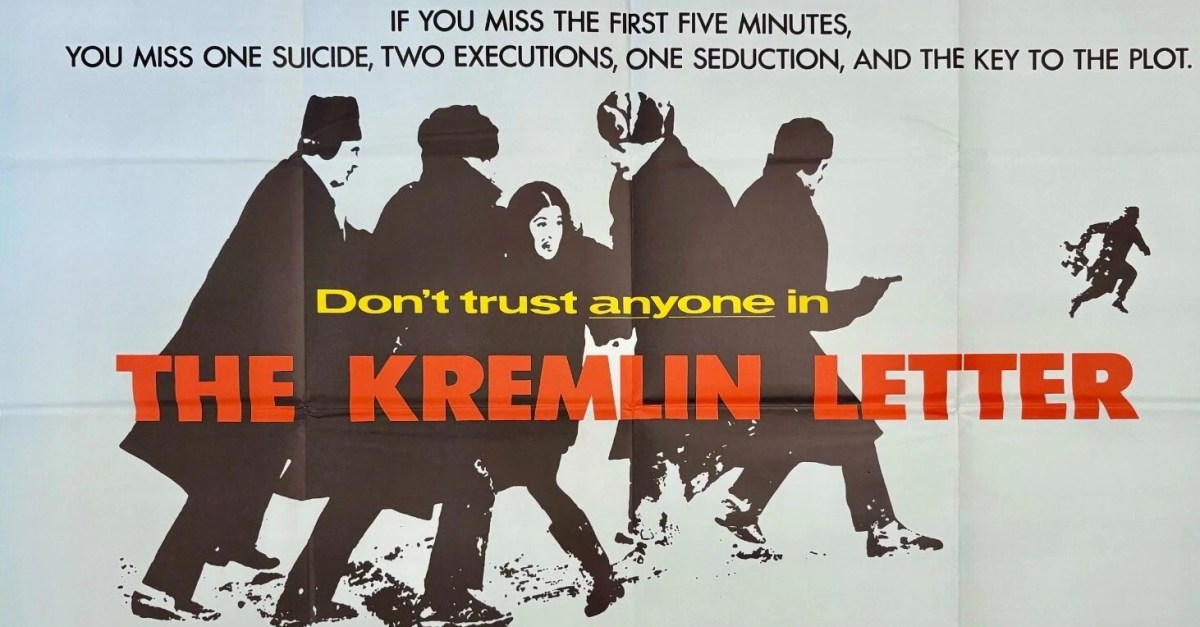
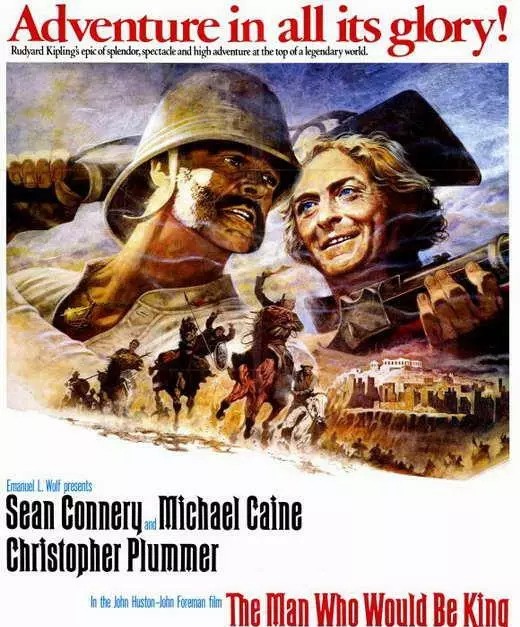


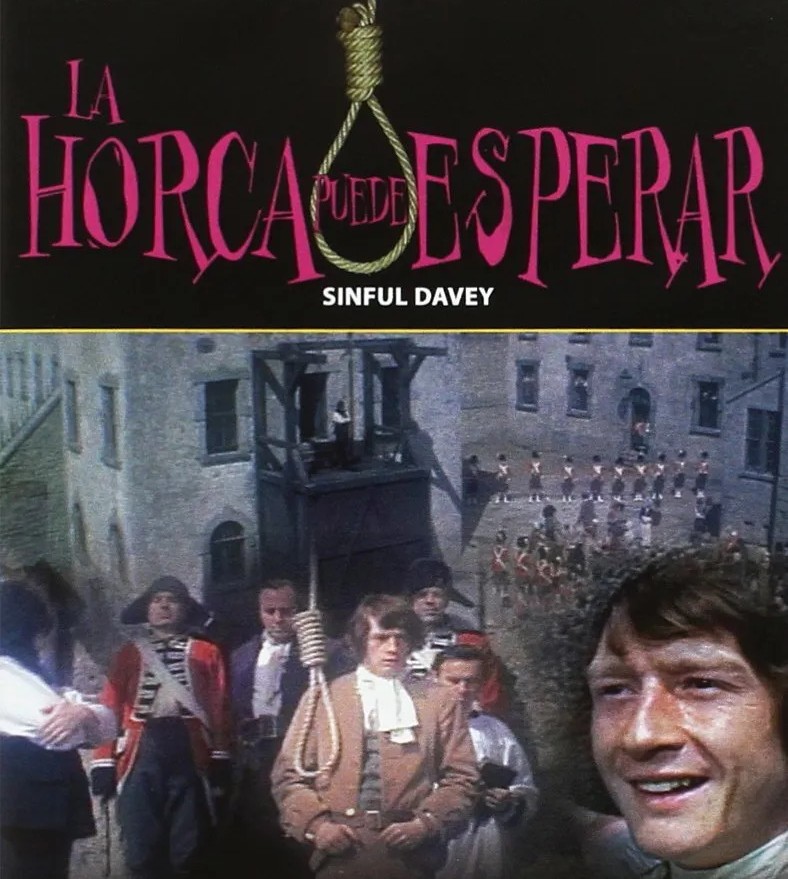
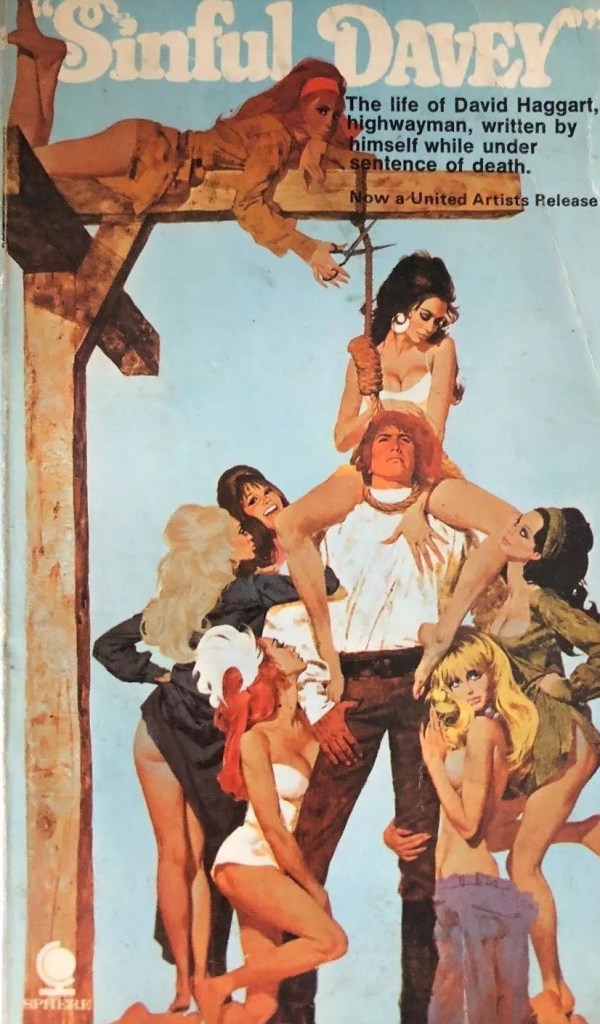


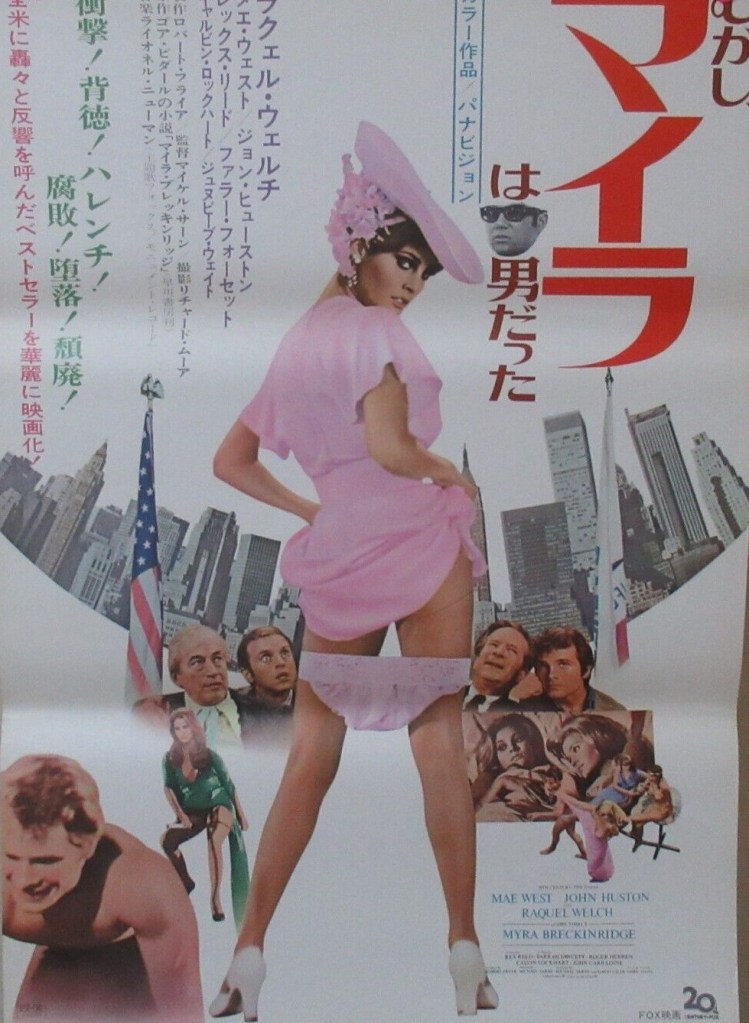



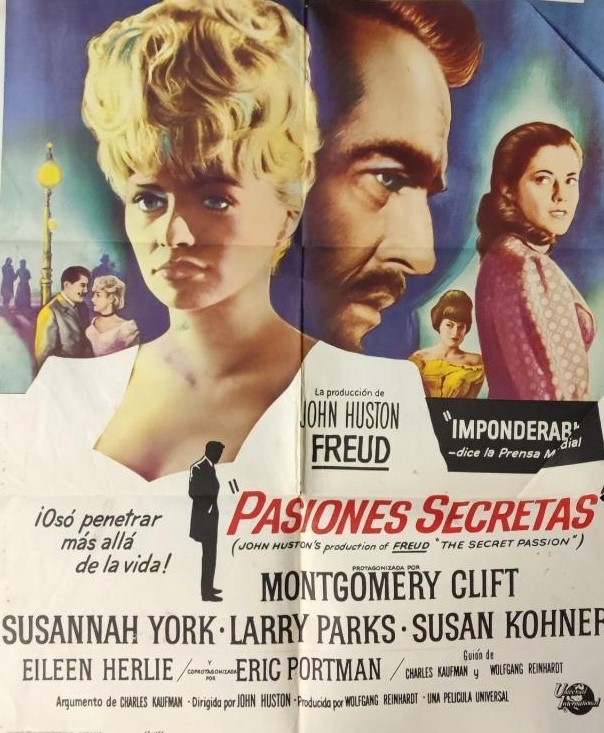
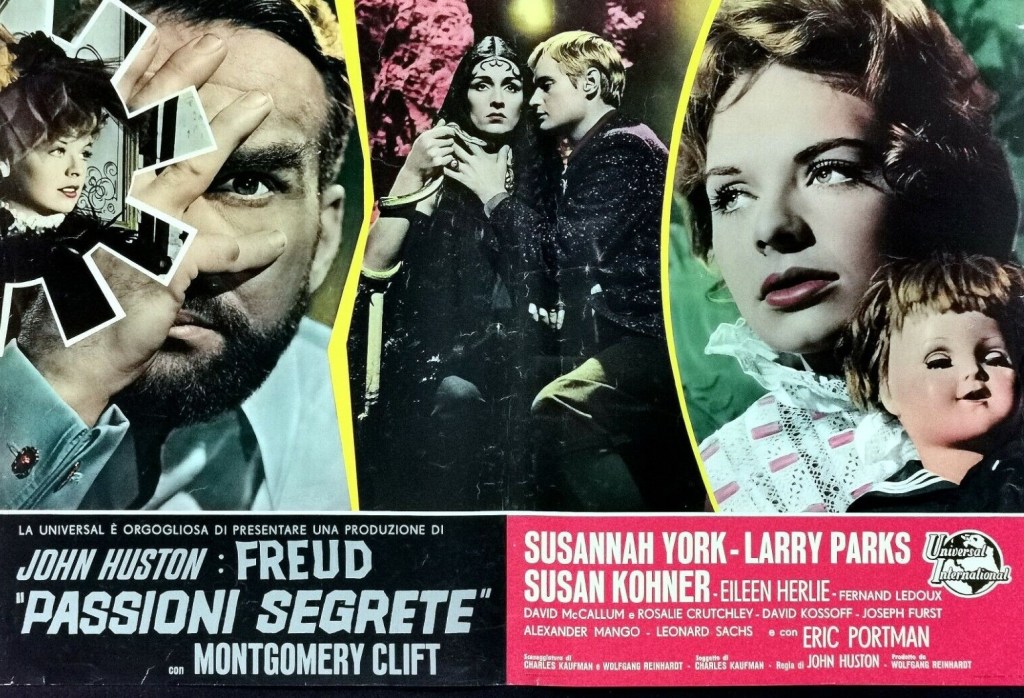

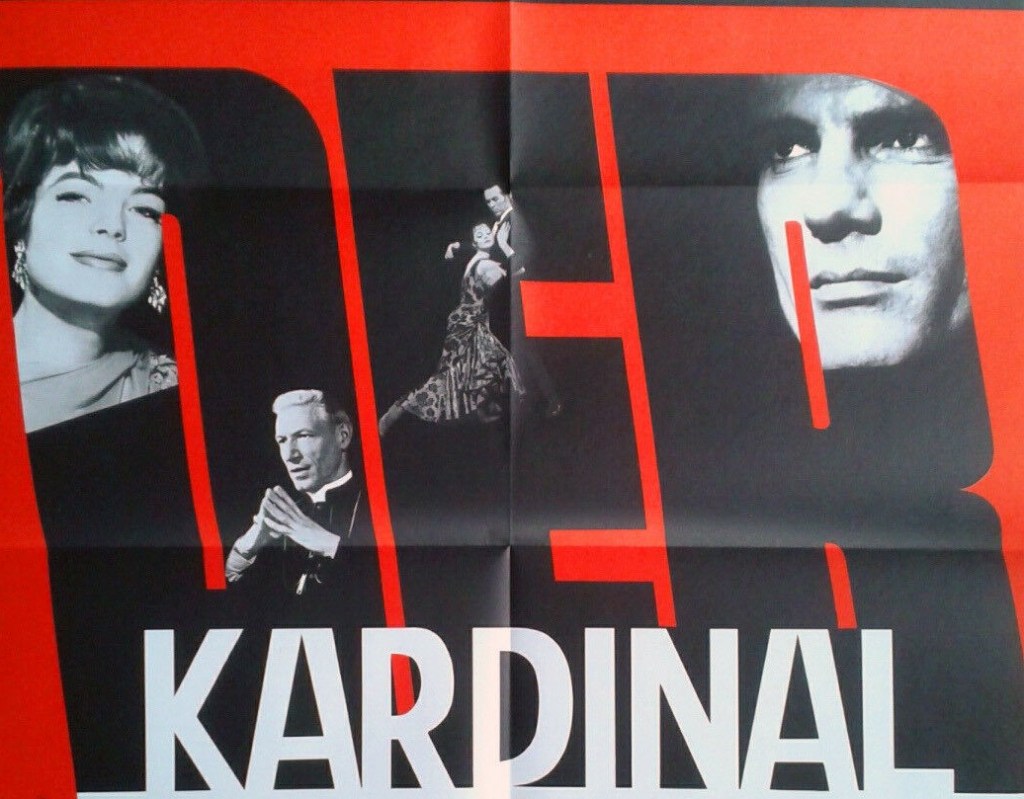

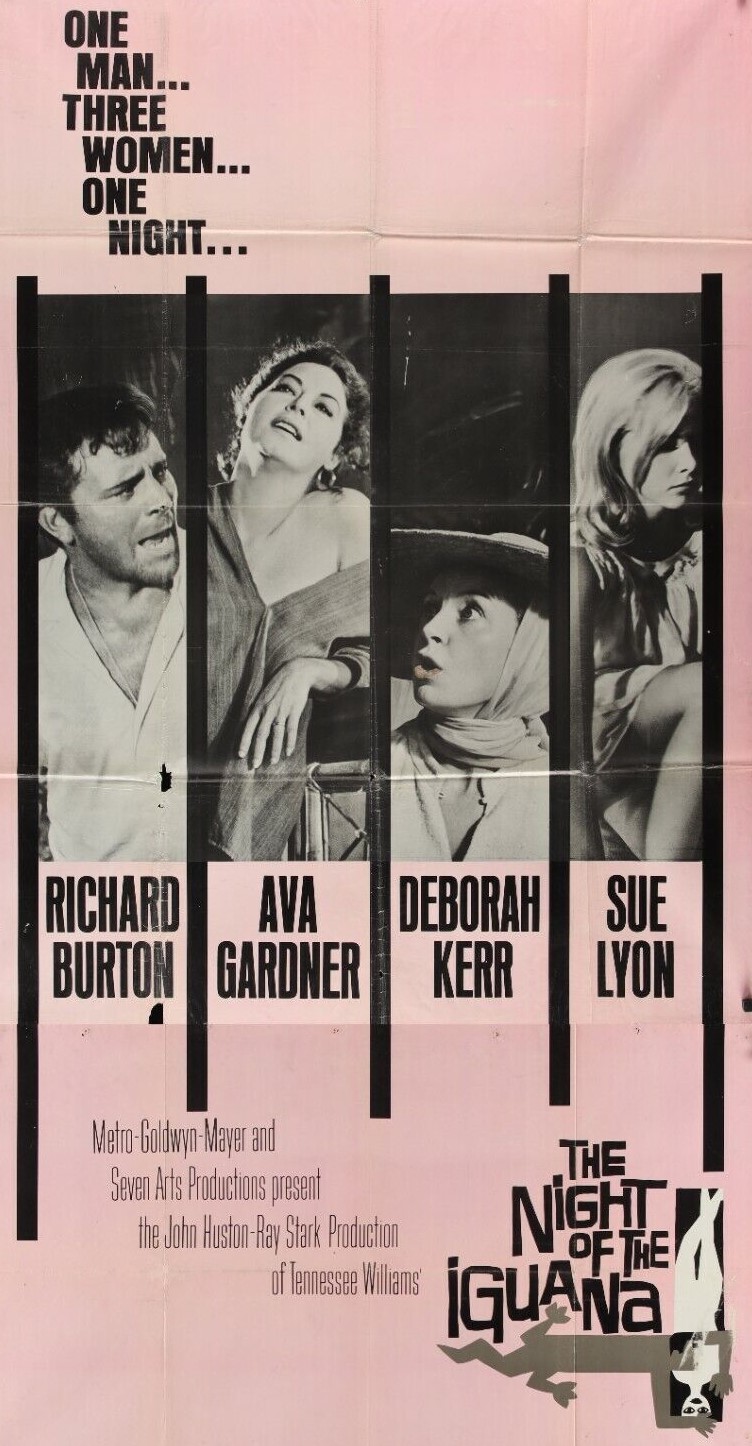
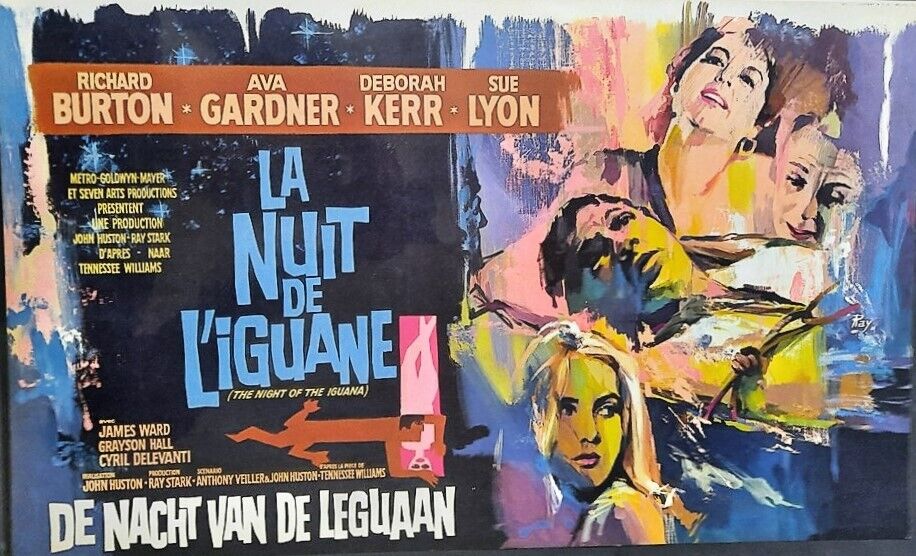

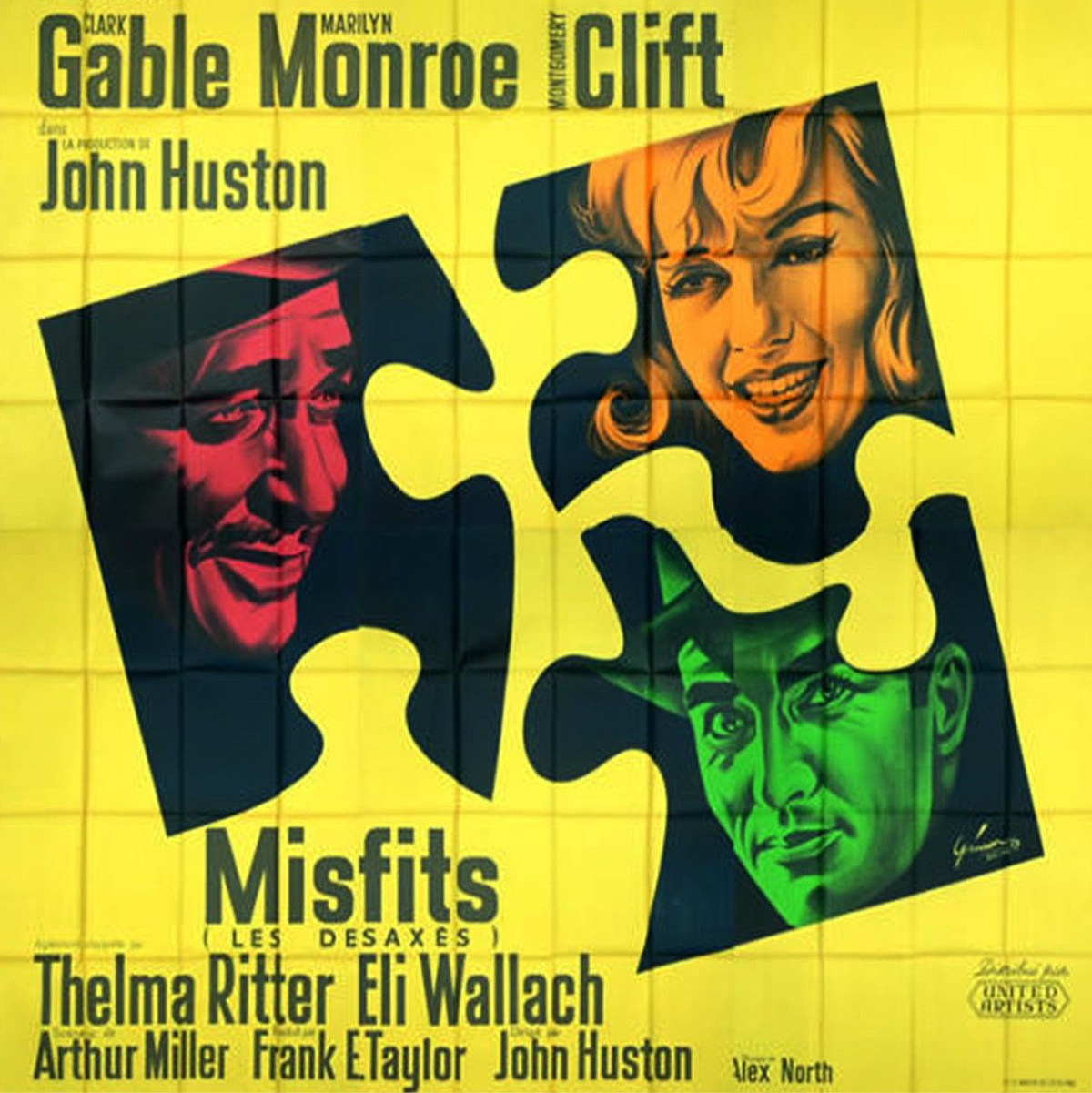
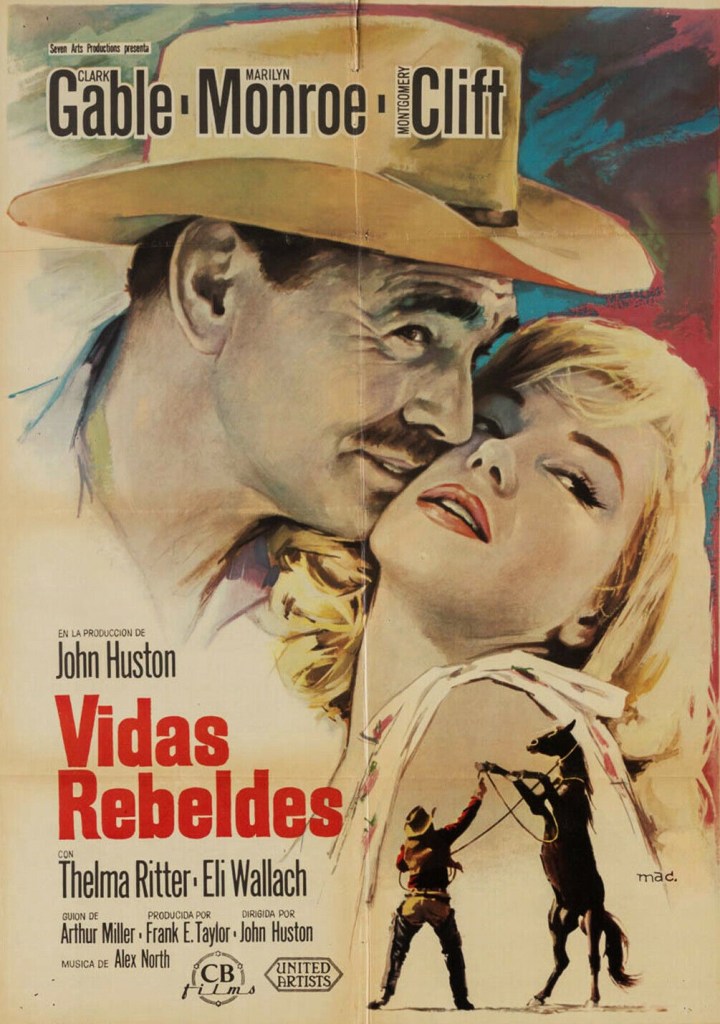
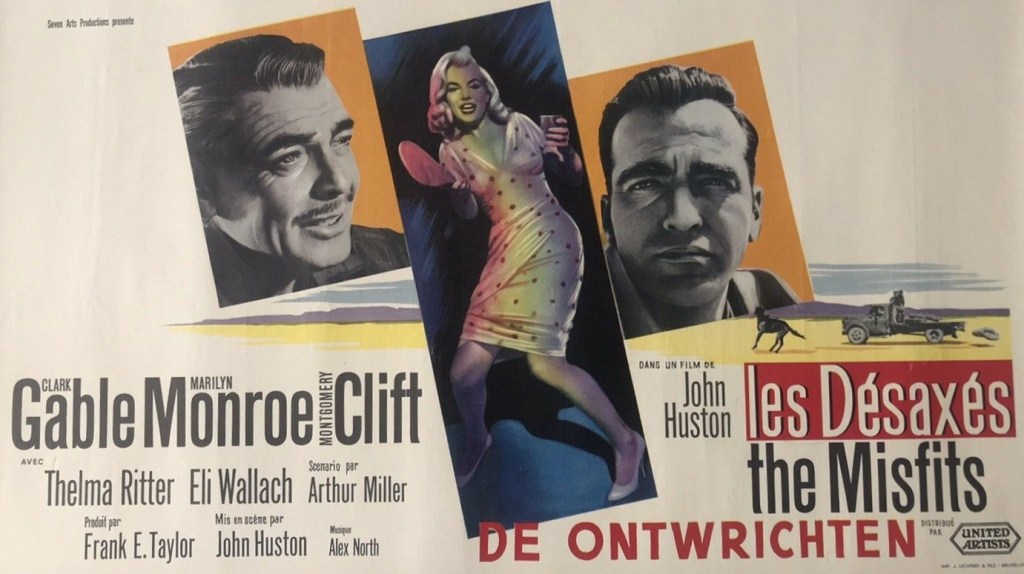
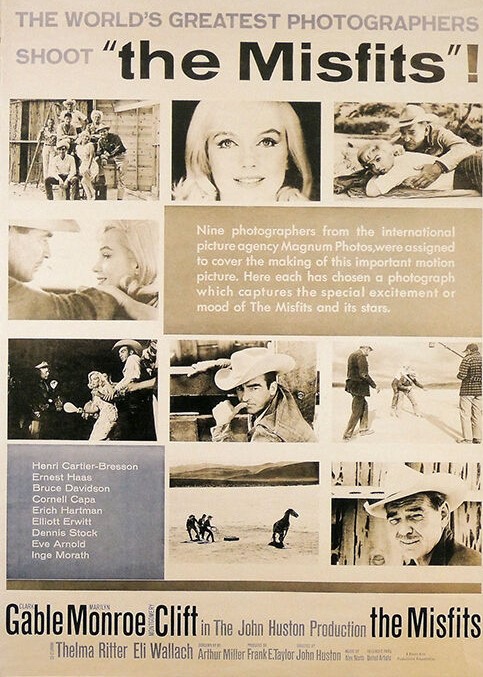
 The Magnificent 60s