Topaz (1969) ****

Authentic, atypical, engrossing, this grittier Hitchcock mixes the realism of Psycho (1960) and Marnie (1964) with the nihilism of The Birds (1963), a major departure for a canon that previously mostly spun on innocents or the falsely accused encountering peril. The hunt for a Russian spy ring by way of the Cuban Missile Crisis of 1962 forms the story core but the director is more interested in personal consequence, so much so that even the villain suffers heart-rending loss. Betrayal is the other key theme – defection and infidelity go hand in hand.

The tradecraft of espionage is detailed – dead letter drops, film hidden in typewriting spools, an accidental collision that is actually a sweet handover. In a transcontinental tale that shifts from Copenhagen to New York to Cuba to Paris, there is still room for classic sequences of suspense – the theft of secret documents in a hotel the pick – and Hitchcock at times simply keeps the audience at bay by employing dumbshow at key moments.     

In some respects the director was at the mercy of his material. In the documentary-style Leon Uris bestseller (almost a procedural spy novel), the main character is neither the trigger for the plot nor often its chief participant and is foreign to boot. So you could see the sense of employing using a cast of unknowns, otherwise an audience would soon grow restless at long absences from the screen of a Hollywood star of the caliber of Cary Grant or Paul Newman, for example.

It is a florist (Roscoe Lee Browne) who carries out the hotel theft, a small resistance cell the spying on Russian missiles in Cuba and a French journalist who beards one of the main suspects, not the ostensible main character, French agent Andre Devereux (Frederick Stafford), not his U.S. counterpart C.I.A. operative Michael Nordstrum (John Forsythe) nor Cuban villain Rico Parra (John Vernon).

Unusual, too, is the uber-realism. The main characters are fully aware of the dangers they face and of its impact on domestic life and accept such consequence as collateral damage. It is ironic that the Russian defector is far more interested in safeguarding his family than Devereux. Devereux’s wife (Dany Robin), Cuban lover Juanita (Karin Dor) and son-in-law (Michel Subor) all suffer as a result of his commitment to his country.

And that Juanita, leader of the Cuban resistance cell, is more of a patriot than the Russian, refusing to defect when offered the opportunity. Hitchcock even acknowledges genuine politics: the reason a Frenchman is involved is because following the Bay of Pigs debacle in 1961 American diplomats were not welcome in Cuba.

I have steered clear of this film for over half a century. I saw it on initial release long before the name Hitchcock meant anything to me. But once it did I soon realized this film did not easily fit into the classic Hitchcock and had always been represented as shoddy goods. So I came to it with some trepidation and was surprised to find it so engrossing.  

Frederick Stafford (O.S.S. 117: Mission for a Killer, 1965) was excellent with an insouciance reminiscent of Cary Grant and a raised eyebrow to match that star’s wryness. John Vernon, who I mostly knew as an over-the-top villain in pictures such as Fear Is the Key (1972), was surprisingly touching as the Cuban bad-guy who realizes his lover is a traitor. And there is a host of top French talent in Michel Piccoli (La Belle Noiseuse, 1991), Philippe Noiret (Justine, 1969), Dany Robin (The Best House in London, 1969) and Karin Dor (You Only Live Twice, 1967).

As you are possibly aware, three endings were shot for this picture and I can’t tell you which without spoiling the plot. In any case, this is worth seeing more than just to complete trawl through the entire Hitchcock oeuvre, a very mature and interesting work. Based on the Leon Uris bestseller, screenplay by Samuel A. Taylor (Vertigo, 1958).

Underrated.
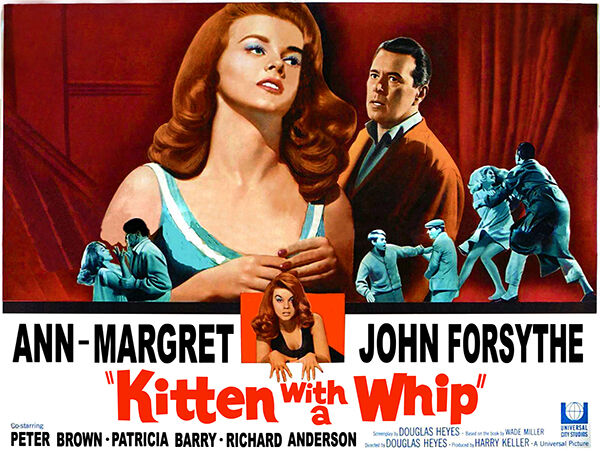
Kitten with a Whip (1964) ****

I’ll let you down gently. Ain’t no whip. What you have instead is one of the most under-rated, unseen and maligned mini-masterpieces you will ever come across marching to the film noir beat. Bewildering femme fatale and the kind of disenchanted anti-authority teenagers who would drive the “youthquake” that almost destroyed the industry half a decade later. And within this, one of the great tragedies of Hollywood, the performance of her career from Ann-Margret, buried because it wasn’t what the public, the critics or the industry expected from the young star.

Edgy score with soulful sax underwrites a picture brimfull of surprises and plays constantly with your expectations, the picture shifting gear so often you’d think you were in a tumble dryer. The doorbell plays like a loaded gun, every interruption racking up tension.

Stylish credits that hint of Hitchcock precede a brilliant opening as in full noir fashion a band of light catches the eyes in the darkness of a blonde (Ann-Margret) dressed in a nightgown cresting a hill.

She tries to jump on a moving goods wagon, eventually makes her way to a deserted house, untouched wrapped newspapers littering the lawn, clambering into a bed, clutching a teddy bear for comfort. You want mystery? This is just the start. In one of the best neat cuts, we jump from the eyes of a teddy bear to headlights. Owner returning home is budding politician David (John Forsythe), wife away due to marital issues.

Come morning, he discovers his guest, Jody. She recites a sad tale of fleeing sex abuse. But soon he realizes she’s got a story to fit every occasion and can turn the emotions on like a tap. Manipulation is in her DNA. But she’s a tough little number. “Hands off, buster,” she snaps at one point as she tries to physically hustle her out.

It’s unspoken that the idea of being caught, regardless of whether he’s entirely innocent, in illicit dalliance would mean  the end of his political ambitions, but she’s happy to spell it out. If the cops work her over, who knows what would spill out.

He buys her clothes, gives her money. Sayonara, baby! Except it’s not. He discovers she’s on the run from juvie, where she torched the home and stabbed the matron. Worse, she’s not left after all, but returned, the house filled with the noise of television cartoons, floor littered with teenager mess.

It’s unclear what exactly she wants. But she knows if she screams rape that’s curtains for him. And if Freud (1962) used a length of rope to show how a psychiatrist can’t escape his client, Jody’s version is a length of telephone cable, dragging her quarry to the floor when he’s talking to his wife.

And before you know it, it turns into home invasion. She’s called up some pals, younger  versions of the creeps in The Penthouse (1967) but with a similar set of philosophic ramblings (“the meanings of the meaningless”) from thug Ron (Peter Brown), not averse to sharing buddy’s docile girlfriend Vera (Patricia Barry). And now it’s blackmail. And violence, a cutthroat razor the weapon of choice, though thug Buck (Skip Ward) is handy with his fists, too.

The kids, drug peddlers, want driven over the border. So now we’re racing off in the dark. David is savvy enough to leave Buck entangled in barbed wire, manages to drop the wounded Ron off at a doctor’s surgery and now desperately tries to escape Jody, though, as you might expect she has other plans.

So the movie spins all the time on the twin axis of discovery that could end David’s career and the demonic damsel. While it steers clear of any sexual attraction by David for the young glamor girl, his interest is initially more paternal, and consequence-aware. Quite what she does want is unclear, beyond some kind of freedom, power even, “I call the shots, not you,” the upper hand over the males, marking him with her nails in the way she has been scarred.

But it races along, it’s impossible not to be dragged into the quandary, half the time you hoping that somehow she will escape her demons, while fully aware that she’s on the fast track to Hell and will take people with her.

This is Ann-Margret (The Swinger, 1966) as you’ve never seen her. It’s not that the sexiness is hidden, it’s a heck more subtle than that, and when she parades in some flimsy item it’s clearly more for approval than arousal. At one point she dances in a jokingly sensuous manner, but otherwise there’s no trademark singing and dancing. She’s a junior version of the more fully-fledged femme fatales of noir who’ve hooked some sap into crime. This gal hasn’t got that kind of criminal brain – or maybe not yet – she’s a victim of circumstance and, let’s face it, the powerful male.

There’s a terrific moment when Vera accepts that she means little more to her boyfriend than that she has a car, exhibiting the kind of impotence that came with the territory for young women of the era lacking confidence or a decent role model. Jody’s the opposite. She’s confident enough, but no idea what to do with it, beyond ensuring no man gets the better of her.

You’ve heard enough of Jody’s sob stories not to believe a word she says but still the power of Ann-Margret’s performance is that you feel the deeper, hidden, pain.

Writer-director Douglas Heyes (Beau Geste, 1966) directs with tremendous verve, keeping his foot down on the tension pedal. That the movie was generally seen as a low-point in the career of Heyes and Ann-Margret is one of those Hollywood anomalies, or ironies if you will, probably dumped on because it was perceived as flying too close to the Lolita (1962)/Baby Doll (1958) template, although in reality the character avoids going down the simpering child route except as a means of extracting sympathy.

John Forsythe (Topaz, 1969) begins on the rack and never gets free.

Nothing like would you expect – and certainly not from the title – and deserves full reassessment and all the critical accolades going especially from those who appreciate the noir canon.

Massive disservice to Ann-Margret, whose performance here should have opened up a career of more serious movies.

B-movie noir masterpiece.

https://amzn.to/3FP3WxL

https://amzn.to/46Xr0q4

The Happy Ending (1969) ****

Vastly under-rated, critically dismissed at the time, this early reflection on feminism has now come into its own. Yet it starts out as a completely different picture. At first it appears as ruthless a depiction of the self-destructive alcoholic as the later Leaving Las Vegas (1995). In passing, skewering the conventions of marriage in an era or strata of society where divorce was not a convenient option. And a time when women, chained to the home but craving attention, might risk the humiliation of being turned away by a secretary on visiting their  husband at the office.

When love had turned into transactional sex. Where women hid out in beauty parlors, sanctuaries which men would dare not invade, to drink and play cards in peace. Or, indulging in the working aspect of such places, underwent breast augmentation or brutal hair removal or other procedures with a view to holding on to their men, seen as daily riding a wave of temptation in the Mad Men world of cocktails and expense account living. For this class of men the word “inappropriate” has never been invented as they paw at any female within reach.

From snow-kissed romance and champagne to….

A largely redundant and lengthy (eight minutes, for goodness sake) montage (including credits and a post-credits – what! – theme song) serves to emphasize the part Hollywood played in reinforcing the celluloid image of initial romance being the mere prelude to happy ever after. The reality was a much whiter shade of pale.

Facing up to their sixteenth wedding anniversary – their marriage, topically, spanning the birth of Prince Charles and his anointing as Prince of Wales, seen via cinema newsreel and television news – alcoholic middle-aged housewife Mary (Jean Simmons) re-evaluates her stultifying life. Lawyer husband Fred (John Forsythe) jokingly refers to himself as “the F.B.I.” but the surveillance he undertakes to ensure his wife has not fallen off the wagon would have earned him a gold star in that particular organization. He has housemaid Agnes (Nanette Fabray) snoop on his wife, goes through all her drawers and clothes until he finds the mercifully unopened bottle of vodka hidden in a boot, checks up on her movements at the hairdresser and even knows which bar she is likely to frequent.

Although managing to refrain from drinking anything alcoholic, Mary’s behavior take her perilously close. She drinks tomato juice from a champagne glass, buys a fellow alcoholic a whisky in a bar just to savor him drinking it. And for all her husband’s attempts to keep her away from the stuff gets pretty loaded himself at times and the catering table at a previous anniversary party fairly groaning with booze has proved a temptation too far. She’s been an extreme player – her stomach pumped out in flashback.

…anything that comes in a glass or a bottle. She even has booze secreted in a bottle of perfume.

Husband’s control extends to finance. She is denied credit card, cheque book and ready cash. Even her mother (Teresa Wright) refuses to lend her money. Unable to go through with putting another good face on their marriage via the anniversary party she pawns a necklace and jaunts off to the Bahamas. On the plane she meets old buddy Flo (Shirley Jones) who is enjoying a clandestine affair with a married man. Mary dips her toe in those illicit waters but her flight has sobered her up enough to face up to her dilemma and not cover all the wounds with alcohol.

I’m not planning to spoil the story by telling you the ending but the ending is the whole point. While the movie’s title is initially perceived as an ironic tilt at the state of marriage – the traditional movie “happy ending” – in reality the ending Mary chooses for herself is the feminist one of self-determination, independent of a man, her self-worth not tied up in his appreciation of her, and she takes the extremely bold decision to quit the marriage, not for another man as might have been de rigeur and in some ways more acceptable within society, but to find herself.

This was a terrible flop, the worst in director Richard Brooks’ career which at the time had reached the commercial and critical peaks of The Professionals (1966) and In Cold Blood (1967), for which he was Oscar-nominated. Audiences failed to respond despite Jean Simmons (Rough Night in Jericho, 1967) receiving her second Oscar nomination.

And you can see why it sank. If people didn’t walk out during the interminable montage sequence, then for the most part it was interminably depressing. The only thing worse than watching an alcoholic getting drunk is watching an alcoholic desperate to get drunk, holding back from indulging as if standing on the edge of a precipice, almost willing themselves to fall over for the sheer relief of oblivion.

And yet it is extremely watchable as the couple play out their marital game, Fred, the ostensible loving husband, protecting his wife from herself, Mary blaming her drinking for their marital problems rather than the other way round.

Jean Simmons is a compelling watch. This is really a tremendous performance and a shame she lost out to the more showy acting of Maggie Smith in The Prime of Miss Jean Brodie. As good as that was, it was pretty much all surface, Smith playing a character who was pure invention, for the most part sashaying through life by force of her incredible personality, not a woman grasping at straws from the outset, damned by all in sight who were only too aware of her affliction, unable to come to terms with herself, denied all that was casually tossed to often worthless men.

John Forsythe (Topaz, 1969), who grits his teeth so much they appear likely to puncture his cheeks, is as good as I’ve ever seen him in a whale of a part that calls upon him to play two roles effectively, the dutiful husband restrained by having to watch over his errant wife, and a man who, out of her sight, can still enjoy himself, and, it is hinted, has been illicit himself with colleague’s wife Helen (Tina Louise).

Structurally, it’s very cleverly done, and Richard Brooks continues with the façade of the happy marriage and the wife’s drinking being the root cause of their dual unhappiness before letting rip late on with the incipient feminism.

A tremendous movie and well worth seeing.

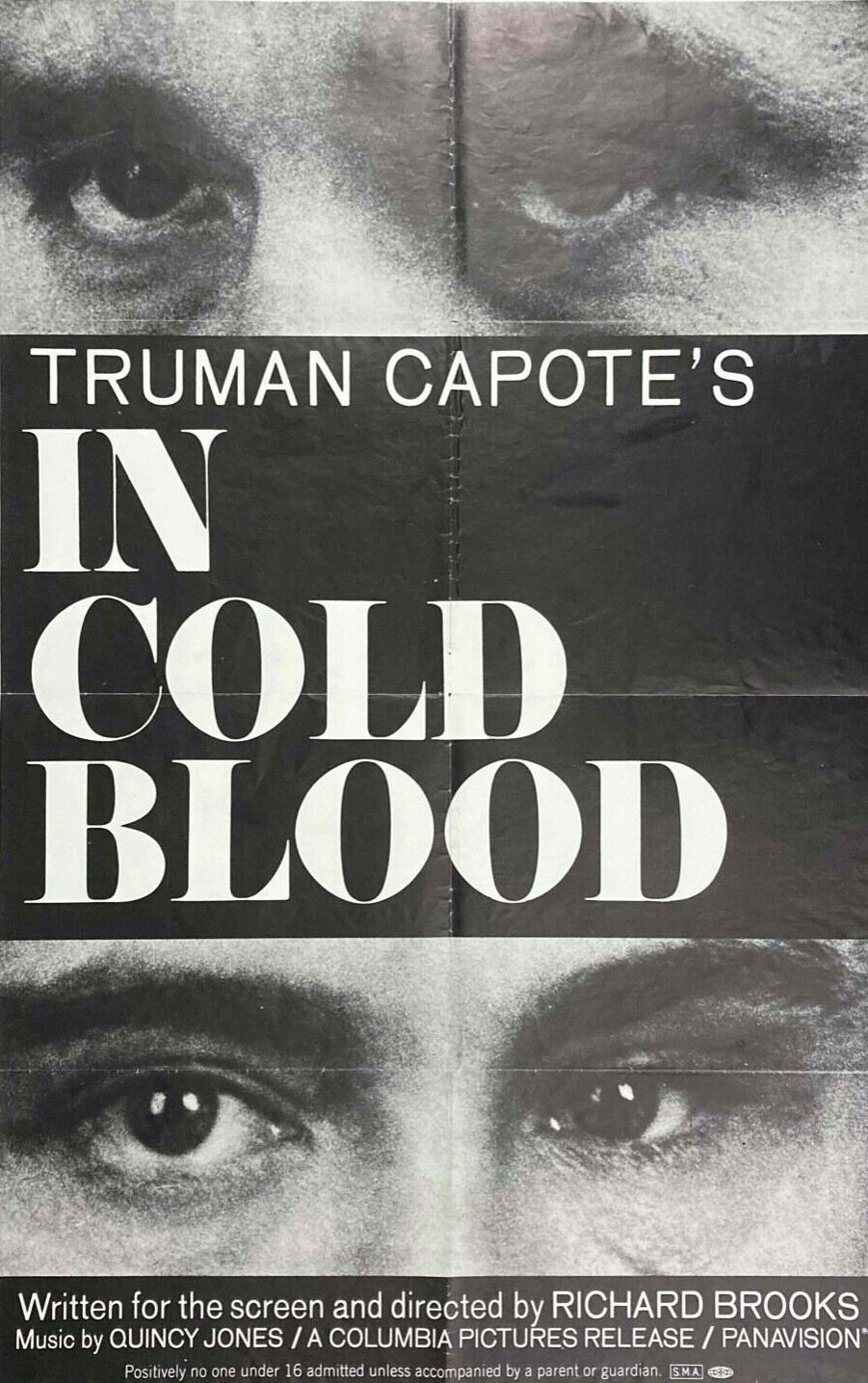
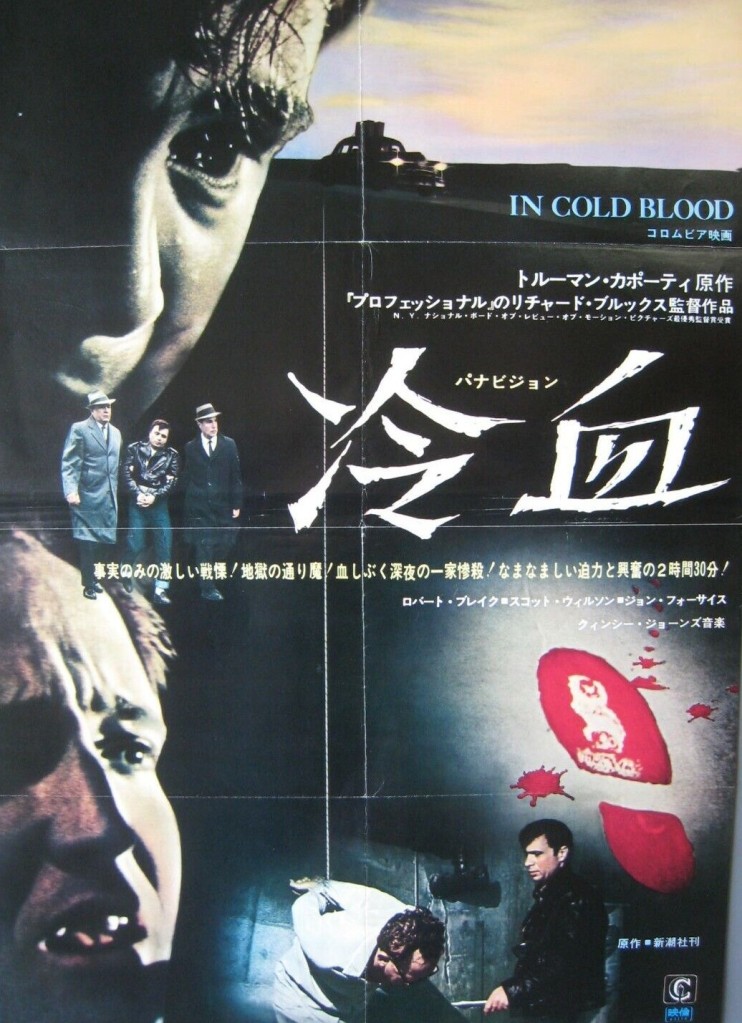
In Cold Blood (1967) *****

Unfairly overlooked in favor of the Coppola/Scorsese grandiose perspective on gangsters, this changed the shape of the crime picture as much as the best-selling book altered the way readers regarded murderers. Neither whodunit, whydunit nor film noir, nonetheless it invites us into the world of the senseless crime, providing an extremely human portrayal of two men if not natural born killers then their pitiful lives always going to lead them in the wrong direction.

Although Perry Smith (Robert Blake) is a fantasist, dreaming of becoming a singing star in Las Vegas, determined to find the lost treasure of Cortez, and convinced a giant bird protected him from vicious nuns in an orphanage, his life did already verge on the fantastical. His mother, a Cherokee, was a star rodeo performer, his father a gold prospector in Alaska, but the mother, an alcoholic, choked to death on her own vomit and the father (Charles McGraw), a hobo in all but name, is astonished that the child he brought up, so he believes, to recognise right from wrong, would stoop to crime. As a child Perry and siblings watched his mother have sex with clients and his father viciously beat her with a belt. Perry is addicted to aspirin to minimize pain from a leg injury, and you can’t help but feel sorry for this otherwise fit young man massaging the massive disfiguring scar, the result of a motorbike accident.

Dick Hickock (Scott Wilson) is a very charming cocky personable con man, leaving a trail of bad checks behind him as he masquerades as a best man who has come out without enough cash to buy a wedding outfit for his buddy and, with his convincing patter, hoodwinking store clerks not just into accepting a check for the goods, later to be sold, but also cashing a personal check. His father, too, is stunned to hear his son had criminal tendencies.

Fatherhood is represented as a holy grail. Hickock enjoyed being a parent until he was caught with another girl and had to do “the decent thing” i.e. abandon existing wife and child. The parents of both boys have wonderful, emotion-filled, memories of loving and being loved by their children.

From another prisoner, Hickock has been told of the “perfect score,” a rich farmer called Clutter in Kansas with $10,000 in his safe. The plan, to which Smith has only momentary objection, is to leave no witnesses. Even muttered in grandiose manner, this phrase surely, in anybody’s mind, conjures up slaughter, Smith’s only saving grace that he prevents Hickock raping the daughter Nancy (Benda C. Currin). Their haul amounting to $43 and a radio, you could imagine the thieves wiping out the family in a fit of fury. But that’s not the case, it’s just cold-blooded thinking, an element of leaving no trace behind.

And that’s just what they do, committing an almost perfect crime, no fingerprints, just the mark of the sole of a shoe imprinted in blood. There’s a red herring – old man Clutter had just signed off on an insurance policy worth $80,000. But detective Alvin Dewey (John Forsythe) has to solve the crime the old-fashioned way, with inter-state cooperation and months (years in reality) of footslogging. Dewey could have been straight out of film noir with his nippy one-liners and epigrams.

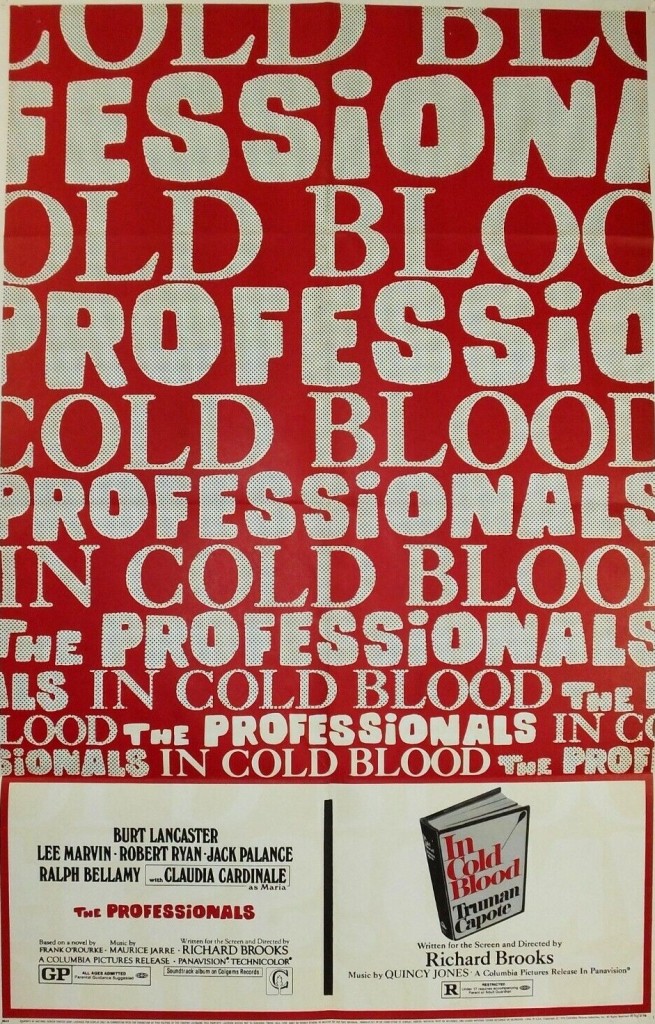
Other than Alfred Hitchcock, it was unusual for a reissue double bill to comprise
two films by the same director.

Unlike the novel which concentrated as much on the aftermath among the shocked townspeople, the film focuses on the manhunt and Dewey’s deft way with newspapermen and colleagues. The four murders occur off-camera, but by that point we already know the outcome. There’s a virtue-signalling coda that shows the inhumane conditions in which murders were kept on Death Row, but that is countered by a marvellous speech by Dewey on the inequities of being a cop: hounded by media and public for letting someone get away with heinous crime, generally getting a tough time over police methods, lambasted after catching them for not doing it quickly enough, and then having to stand by while media and public launch an outcry to prevent the killers being executed.

All shade, the documentary style achieves the contradiction of appearing sparingly told yet with a wealth of character detail (location and time are ignored) and none of the grandeur and faux community spirit invested in gangsterdom by the likes of Coppola and Scorsese. Smith and Hickock would never pass the entry test for the Mafia given that at least required discipline and the ability to follow orders. Minus the killing spree, these characters might have survived a little longer in the underclass before ending up inside again.

All three principals are brilliant in the understated manner demanded. Robert Blake (Tell Them Willie Boy Is Here, 1969) is the pick, tormented by future dreams and past nightmares, but Scott Wilson (In the Heat of the Night, 1967) has the stand-out scene, gulling store salesmen with his finely worked con, and there is a sense of the big brother in the way he looks after his friend. This might well be the best work by John Forsythe (Topaz, 1969).

And it certainly is one of the finest movies made by writer-director Richard Brooks (The Professionals, 1966) who handles a very difficult subject with at times such delicacy it is almost a complete departure in style.

Topaz (1969) ****

Authentic, atypical, engrossing, this grittier Hitchcock mixes the realism of Psycho (1960) and Marnie (1964) with the nihilism of The Birds (1963), a major departure for a canon that previously mostly spun on innocents or the falsely accused encountering peril. The hunt for a Russian spy ring by way of the Cuban missile crisis forms the story core but the director is more interested in personal consequence and even the villain suffers heart-rending loss. Betrayal is the other key theme – defection and infidelity go hand in hand.

The tradecraft of espionage is detailed – dead letter drops, film hidden in typewriting spools, an accidental collision that is actually a sweet handover. In a transcontinental tale that shifts from Copenhagen to New York to Cuba to Paris, there is still room for classic sequences of suspense – the theft of secret documents in a hotel the pick – and Hitchcock at times simply keeps the audience at bay by employing dumbshow at key moments.    

In some respects the director was at the mercy of his material. In the documentary-style Leon Uris bestseller (almost a procedural spy novel), the main character is neither the trigger for the plot nor often its chief participant and is foreign to boot. So you could see the sense of employing a cast of relative unknowns, otherwise an audience would soon grow restless at long absences from the screen of a Hollywood star of the caliber of a Cary Grant or Paul Newman. It is a florist (Roscoe Lee Browne) who carries out the hotel theft, a small resistance cell the spying on Russian missiles in Cuba, a French journalist who beards one of the main suspects, not the ostensible main character, French agent Andre Devereux (Frederick Stafford), not his U.S. counterpart C.I.A. operative Michael Nordstrum (John Forsythe) nor Cuban villain Rico Parra (John Vernon).

Unusual, too, is the uber-realism. The main characters are fully aware of the dangers they face and of its impact on domestic life and accept such consequence as collateral damage. It is ironic that the Russian defector is far more interested in safeguarding his family than Devereux. Devereux’s wife (Dany Robin), Cuban lover Juanita (Karin Dor) and son-in-law (Michel Subor) all suffer as a result of his commitment to his country. And that Juanita (Karin Dor), leader of the Cuban resistance cell, is more of a patriot than the Russian, refusing to defect when offered the opportunity. Hitchcock even acknowledges genuine politics: the reason a Frenchman is involved is because following the Bay of Pigs debacle in 1961 American diplomats were not welcome in Cuba.

In terms of bravura Hitchcock, the pick of the scenes are the hotel theft and the death of one of the principals, filmed from above.

I have steered clear of this film for over half a century. I saw it on initial release long before the name Hitchcock meant anything to me. But once it did I soon realized this film did not easily fit into the classic Hitchcock and the critics on whom I relied had always represented it as shoddy goods. So I came to it with some trepidation and was surprised to find it so engrossing.  

Frederick Stafford (O.S.S. 117: Mission for a Killer, 1965) was excellent with an insouciance reminiscent of Cary Grant and a raised eyebrow to match that star’s wryness. John Vernon, who I mostly knew as an over-the-top villain in pictures such as Fear Is the Key (1972), was surprisingly touching as the Cuban bad-guy who realizes his lover is a traitor. And there is a host of top French talent in Michel Piccoli (Belle de Jour, 1967), Philippe Noiret (Justine, 1969) Dany Robin (The Best House in London, 1969) and Karin Dor (You Only Live Twice, 1967).

As you are possibly aware, three endings were shot for this picture and I can’t tell you which I saw without spoiling the plot. If you want to know, read tomorrow’s Blog.

In any case, this is worth seeing more than just to complete a trawl through the entire Hitchcock oeuvre, a very mature and interesting work.

Discover WordPress

A daily selection of the best content published on WordPress, collected for you by humans who love to read.

The Atavist Magazine

by Brian Hannan

WordPress.com News

The latest news on WordPress.com and the WordPress community.