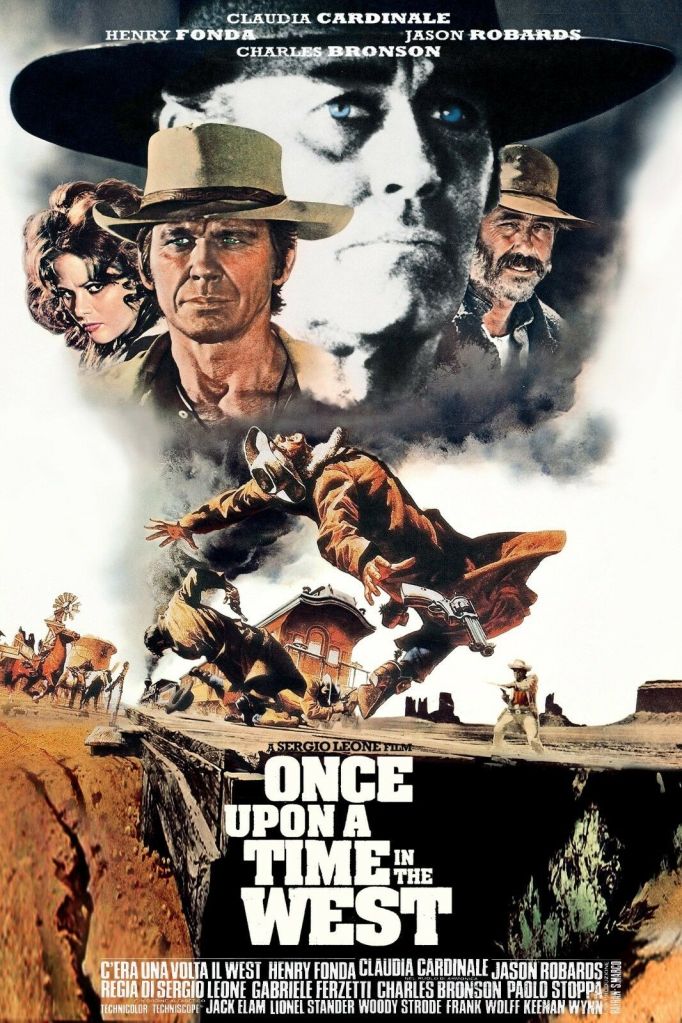
Behind the Scenes: “Once Upon a Time in the West” (1969)

“Tedium in tumbleweed,” was the verdict of Time’s magazine’s critic. That was hardly the intention of Sergio Leone, Dario Argento (then just a critic) and Bernardo Bertolucci (Before the Revolution, 1964) after they met just before Xmas 1966 in a projection booth for a screening of The Good, the Bad and the Ugly and decided to try and write the quintessential western. This was a strange notion given that a) Leone had already revolutionized the western and b) on the completion of the last of the “Dollars” trilogy, had avowed to give up westerns and in consequence turned down Hang ‘Em High (1968).

When their six-month collaboration only produced 80 pages of script, Leone turned to Sergio Donati who finished it off in 25 days, adding such essential elements as the fly tormenting Jack Elam at the railway station, turning Morton into a cripple and giving him the motif of the ocean, and many others. Donati claimed, “The best thing I did was give a meaning to the story…This railroad which unites one ocean to the other is the end of the frontier, the end of adventure.” The completed screenplay drew on such influences as Johnny Guitar (1954), John Ford’s The Iron Horse (1924), The Searchers (1956) and The Man Who Shot Liberty Valance (1962), John Sturges’ The Magnificent Seven (1960), George Stevens’ Shane (1953) and a dozen pictures besides.
With a budget of $5 million, equally shared between Euro-International – flush from being the Italian distributor of German sex education film and box office smash Helga (1967) –  and Paramount at the height of its European investment cycle, it would be the most expensive movie made in Italy since Dino de Laurentiis greenlit The Bible (1966). Twelve times as expensive as Leone’s debut western A Fistful of Dollars (1964) – the set of Flagstone alone cost more than that film’s entire budget –  it would be shot at Cinecitta in Rome as well as on location in Almeria, Spain, and the iconic Monument Valley.

“Creative geography” had been utilized to find a connection between the famed Western landmark and the new town of Sweetwater. Prior to filming, Leone had undertaken a guided tour of Monument Valley and returned able to pinpoint exactly where Ford had made use of the location in the ten westerns he had shot there. Leone was the highest-remunerated, picking up $750,000 and 10 per cent of the profits with Claudia Cardinale on $500,000, but the others nowhere near such salaries.

It was Bertolucci who had persuaded the director to give Jill (Claudia Cardinale) the pivotal role. In Leone’s previous films, women were side-lined. But now Jill would run the gamut of all the roles typically allocated to different women in westerns from the reformed whore, submissive woman, object of lust and chattel to the spitfire and woman who took charge. More, she represented, “the promise of the West.” She was central to the plot and sole survivor at the end after Harmonica (Charles Bronson) departed with Frank (Henry Fonda), Cheyenne (Jason Robards) and Morton (Gabriele Ferzetti) all dead.

When Leone wooed her for the role, he acted out the entire film in her presence, using the music to give her an insight into her character. “While I listened,” she recalled, “I understood every moment of the film shot by shot.” During filming of her scenes, Leone replayed her theme music. “This helped me concentrate, remove myself from the world.”

Although Leone and Clint Eastwood had fallen out during the shooting of The Good, the Bad and the Ugly, the actor agreed to meet to discuss the role of Harmonica, but in the end Eastwood rejected the part, perhaps because the monosyllabic character was too close to The Man With No Name. Other names in the frame were James Coburn (The Magnificent Seven), Terence Stamp (The Collector, 1963), Rock Hudson and Warren Beatty (Kaleidoscope, 1966). The last actor Paramount was interested in was Charles Bronson who was regarded as nothing more than a steady supporting actor. Leone’s insistence was because the actor had a “face made of marble.” He would not be required to act much, just represent an immoveable object, capable of expressing the sadder side of his character through his harmonica.  

Henry Fonda was Leone’s first choice for the “ignoble assassin” but the actor prove hard to recruit, the director thwarted first of all by the star’s agent, then put off by the original script and only persuaded by old friend Eli Wallach that this might represent opportunity. However, when the actor came prepared he came prepared for the wrong picture, sporting the moustache traditionally worn by the villain, and, worse, concealing the baby blue eyes which the director coveted with dark lenses.

Although accepting the exceptional stage talents of Jason Robards whose only foray into the genre at that point had been box office flop A Big Hand for the Little Lady (1966), Donati believed he had the kind of presence that did not “translate to the big screen,” especially lacking the kind of eyes the director required for close-up. Leone disagreed, believing he was tailor-made for the role of Cheyenne. The first interview was not a success, the alcoholic actor arriving drunk. Only warnings of financial consequence ensured the star remained sober during filming.

Shooting was scheduled for April-June 1968. The first scene on the agenda was the love scene between Cardinale and Robards, which accounted for two days shooting. Paramount’s eager marketing team promoted these as the first sex scenes the director had filmed, ignoring the fact that sequences showing Eastwood in bed with a woman had been shot for For a Few Dollars More and The Good, the Bad and the Ugly, although they had not made it into the final cut. It took four days to film the shoot-out at Cattle Corner, three hours alone devoted to capturing the drip of water onto Woody Strode’s head and hat. Composer Ennio Morricone had already written a theme to cover the period of the gunmen waiting, but instead opted for the exaggerated sounds such as chalk scraping on a blackboard and the insistent fly. A jar of flies were kept for this purpose but in the end only one sufficed.

Although length became an issue outside of Italy and Parisian fist-run cinemas, Paramount was already planning for a 150-minute picture. In the end the 168-minute Italian cut was shaved by 24 minutes for the U.S. release, outside of a roadshow the longest western sent into general release, and therefore a risky prospect. The idea that Paramount got cold feet over the American release does not stand up. It was part of a major promotion on a huge sign above Times Square that promoted four of the studio’s upcoming offerings – the others being Goodbye, Columbus, True Grit and Those Dangerous Young Men in their Jaunty Jalopies.  It was launched in New York on Memorial Day (not as big a box office day then as now but still a major U.S. holiday) in first run cinemas two weeks ahead of the rest of the country.  

In fact, its first week’s box office there ranked it the western of the year so far, beating The Stalking Moon, 100 Rifles and Support Your Local Sheriff. The New York figures were actually the best results for a western for the entire year with the exception Butch Cassidy and the Sundance Kid and True Grit, outgrossing the likes of the more critically-successful The Wild Bunch and more marketing-friendly Mackenna’s Gold. However, its initial New York audience appreciation was rarely not matched elsewhere, Boston being one exception.  Some cinemas found it difficult to market, the Berlin Drive-In in Hartford, for example, tying-in with country-and-western music on a local radio station. While some smaller cinemas called for another 30 minutes in cuts, others proclaimed “this is what the public wants.” Once upon a Time in the West  finished tenth for the year among westerns and a disappointing 47th overall in Variety’s annual rentals chart.

While it also flopped in Britain and, given the budget, proved a disappointment in Italy, not on a par with The Good, the Bad and the Ugly, it posted 14.8 million admissions in France, making it the seventh-best performing picture of all time. By 1984 it ranked eleventh on the all-time German rental champs list, above Star Wars and The Empire Strikes Back. In Switzerland in 1987 it came eighth on the all-time chart, easily the oldest title on the list. It was a video “blockbuster” in German homevideo setting a new sales record in 1984.

However, for such a commercial and critical failure, reassessment in the U.S. was not long in coming. In 1973, the Beverly Canon in Los Angeles launched its new “Classics At Midnight” programme with Once Upon a Time in the West, Harold and Maude and Repulsion. The prospect of the first showing in the U.S. of the full-length version captured all the headlines at the 1980 New York Film Festival. There were occasional revivals: in Toronto at Easter 1973 and Washington and New York among others in 1984, and Washington in 1985.  

It was named the best western ever made by British newspaper The Guardian newspaper and film magazine Empire. In the Sight and Sound once-in-a-decade Critics Poll in 2012 it placed third in the western category behind The Searchers and Howard Hawks’ Rio Bravo (1959). With the results of a new poll out this year I wonder if it will ascend to the top spot.

SOURCES: Brian Hannan, The Gunslingers of ’69: Western Movies’ Greatest Year (McFarland, 2019); Christopher Frayling, Sergio Leone: Something To Do with Death (Faber and Faber, 2000); Christopher Frayling: Once Upon a Time in Italy (Thames & Hudson, 2005); Christopher Frayling, Once upon a Time in the West: Shooting a Masterpiece (Reel Art Press, 2019); “Huge Sign on Times Square Plugs Paramount Product,” Box Office, May 5, 1969, pA2; “West Tie Up With WEXT,” Box Office, June 16, 1969, pNE2;  “Box Office Barometer,” Box Office, July 14, 1969, pA4; “The Big Rental Films of 1969,” Variety, January 7, 1970, p15; “The Exhibitor Has His Say,” Box Office, July 6, 1970, pA3; “Beverly Canon To Offer Midnight Classics,” Box Office, April 13, 1973, pW1; “Scorsese Speaks on Saving Prints,” Variety, October 8, 1980, p6;  “CIC Video Preps Low-Ticket Bow for Raiders,” Variety, March 21, 1984, p47; “All-Time German Rental Champs,” Variety, March 7, 1984, p336; “With Plenty of Film Buffs, NYC Is Reissue Heaven,” Variety, December 12, 1984, p74; “Box Office Barometer,” Box Office, October 1, 1985, p43-44; “All-Time Swiss Top Ten,” Variety, October 21, 1987, p498.

Once Upon a Time in the West (1969) ***** – Seen at the Cinema

A masterpiece to savor. The greatest western ever made. Sergio Leone’s movie out-Fords John Ford in thematic energy, imagery and believable characters and although it takes in the iconic Monument Valley it dispenses with marauding Native Americans and the wrecking of saloons. That the backdrop is the New West of civilisation and enterprise is somewhat surprising for a movie that appears to concentrate on the violence implicit in the Old West. But that is only the surface. Dreams, fresh starts are the driving force. It made a star out of Charles Bronson (Farewell, Friend, 1968), turned the Henry Fonda (Advise and Consent, 1961) persona on its head and provided Claudia Cardinale (Blindfold, 1965) with the role of a lifetime. And there was another star – composer Ennio Morricone (The Sicilian Clan, 1969)

New Orleans courtesan Jill (Claudia Cardinale) heads west to fulfil a dream of living in the country and bringing up a family. Gunslinger Frank (Henry Fonda), like Michael in The Godfather, has visions of going straight, turning legitimate through railroad ownership. Harmonica (Charles Bronson) has been dreaming of the freedom that will come through achieving revenge, the crippled crooked railroad baron Morton (Gabriele Ferzetti) dreams of seeing the ocean and even Cheyenne (Jason Robards) would prefer a spell out of captivity.

The beginnings of the railroad triggers a sea-change in the West, displacing the sometimes lawless pioneers, creating a mythic tale about the ending of a myth, a formidable fable about the twilight and resurgence of the American West. In essence, Leone exploits five stereotypes – the lone avenger (Harmonica), the outlaw Frank who wants to go straight, the idealistic outlaw in Cheyenne, Jill the whore and outwardly respectable businessman Morton whose only aim is monopoly. All these characters converge on new town Flagstone where their narratives intersect.

That Leone takes such stereotypes and fashions them into a movie of the highest order is down to style. This is slow in the way opera is slow. Enormous thought has gone into each sequence to extract the maximum in each sequence. In so doing creating the most stylish western ever made. The build-up to violence is gradual, the violence itself over in the blink of an eye.

Unusually for a western – except oddities like Five Card Stud (1968) – the driving force is mystery. Generally, the western is the most direct of genres, characters establishing from the outset who they are and what they want by action and dialogue. But Jill, Harmonica and Cheyenne are, on initial appearances, mysterious. Leone takes the conventions of the western and turns them upside down, not just in the reversals and plot twists but in the slow unfolding tale where motivation and action constantly change, alliances formed among the most unlikely allies, Harmonica and Cheyenne, Harmonica and Frank, and where a mooted  alliance, in the romantic sense, between Jill and Harmonica fails to take root.

There’s no doubt another director would have made shorter work of the opening sequence in Cattle Corner, all creaky scratchy noise, in a decrepit railroad station that represents the Old West, but that would be like asking David Lean to cut back Omar Sharif emerging from the horizon in Lawrence of Arabia (1962) or Alfred Hitchcock to trim the hypnotic scenes of James Stewart following Kim Novak in Vertigo (1958). Instead, Leone sets out his stall. This movie is going to be made his way, a nod to the operatic an imperative. But the movie turns full circle. If we begin with the kind of lawless ambush prevalent in the older days, we end with a shootout at the Sweetwater ranch that is almost a sideshow to progress as the railroad sweeps ever onward.

No character performs more against audience expectation than Jill. Women in westerns rarely take center stage, unless they exhibit a masculine skill with the gun. There has rarely been a more fully-rounded character in the movies never mind this genre. When we are introduced to her, she is the innocent, first time out west, eyes full of wonder, heart full of romance. Then we realize she is a tad more mercenary and that her previous occupation belies her presentation. Then she succumbs to Frank. Then she wants to give up. Then she doesn’t. Not just to stay but to become the earth mother for all the men working on the railroad.

Another director would have given her a ton of dialogue to express her feelings. Instead, Leone does it with the eyes. The look of awe as she arrives in Flagstone, the despair as she approaches the corpses, the surrender to the voracious Frank, the understanding of the role she must now play. And when it comes to close-ups don’t forget our first glimpse of Frank, those baby blue eyes, and the shock registering on his face in the final shoot-out, one of the most incredible pieces of acting I have ever seen.

And you can’t ignore the contribution of the music. Ennio Morricone’s score for Once Upon a Time in the West has made a greater cultural impact than even the venerated John Williams’ themes for Star Wars (1977) and Jaws (1975) with rock gods like Bruce Springsteen and Metallica among those spreading the word to successive generations and I wonder in fact how people were drawn to this big-screen showing by the opportunity to hear the score in six-track Dolby sound. There’s an argument to be made that the original soundtrack sold more copies than the film sold tickets.

The other element with the music which was driven home to me is how loud it was here compared to, for example, Thunderball (1965), which as it happens I also saw on the big screen on the same day. Although I’ve listened to certain tracks from the Bond film on a CD where the context is only the listener and not the rest of the picture, I was surprised how muted the music was for Thunderball especially in the action sequences. Today’s soundtracks are often loud to the point of being obstreperous, but rarely add anything to character or image.

One final point, Once Upon a Time in the West was reissued not as some kind of retrospective for the director but in memory of the composer.  

Behind the Scenes – “Hour of the Gun” (1967)

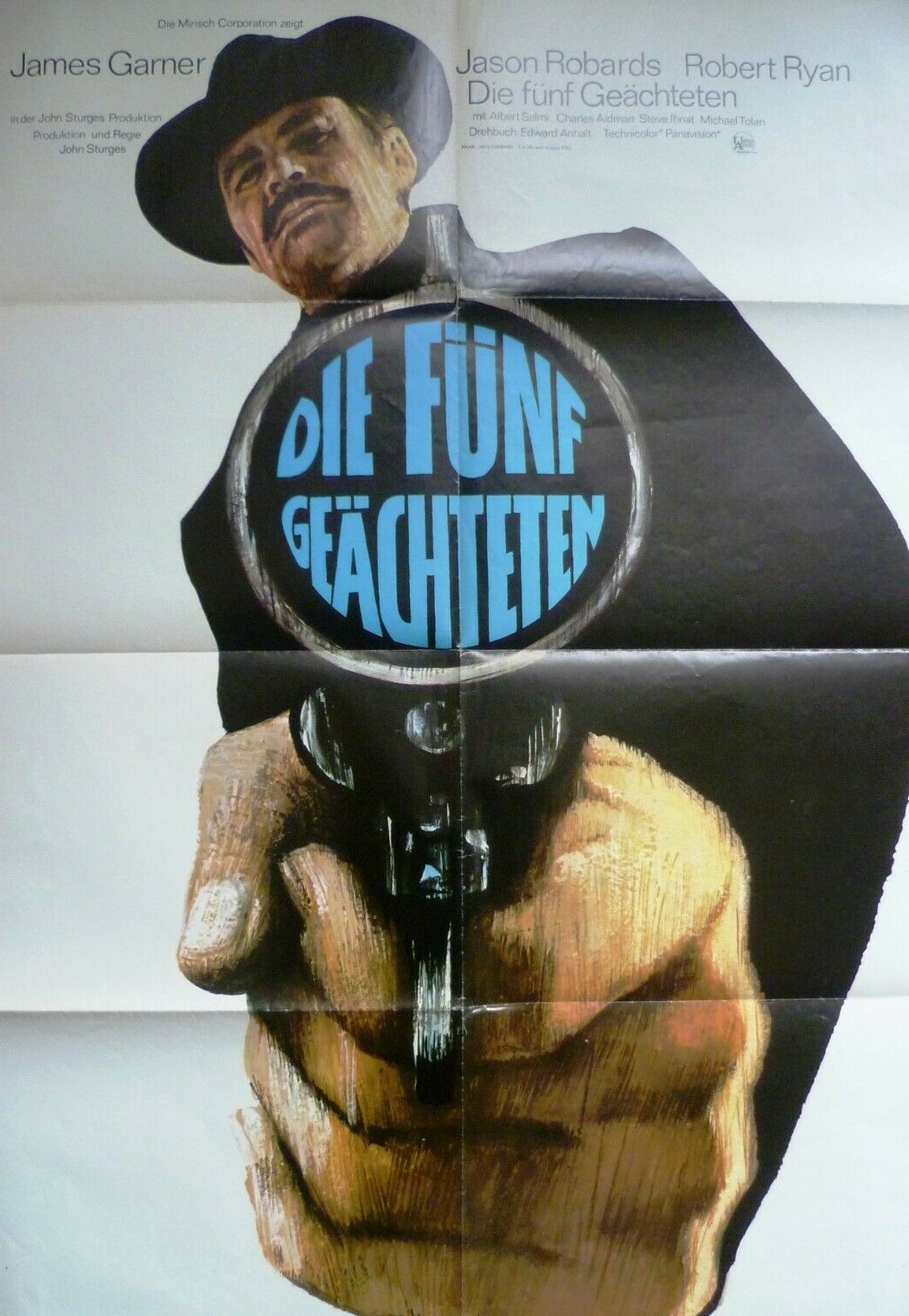
Blame Robert Wise for falling behind on The Sand Pebbles (1966), otherwise John Sturges  would have pressed ahead with Steve McQueen pet project Day of the Champion (later resurrected as Le Mans, 1970, though minus Sturges). Needing another hit after the consecutive box office failures of The Satan Bug (1965) and The Hallelujah Trail (1965), Sturges fell back on an equally favoured project, The Law and Tombstone, a revisionist and darker look at the Wyatt Earp legend, with “a few liberties taken so it doesn’t become a documentary.” Despite the failings of the last two films, Mirisch had just re-signed Sturges, expanding his current deal from two to four pictures.

“It seemed like a first-rate idea,” recalled producer Walter Mirisch, who had worked with Sturges on The Magnificent Seven (1960) and The Great Escape (1963). In his memoir he said, “If there was still a market for Western pictures, John Sturges was certainly the ideal director to test it.” (Mirisch’s memory is a bit hazy here regarding the commercial prospects for westerns – 1966 had seen box office success for El Dorado, Nevada Smith, The Professionals and The Rare Breed while 1967 would usher in The War Wagon and Hombre among others). The initial idea was to re-team Burt Lancaster and Kirk Douglas from Gunfight at the O.K. Corral, to which this was a sequel, but Paramount, which had made the original picture, nixed the notion.

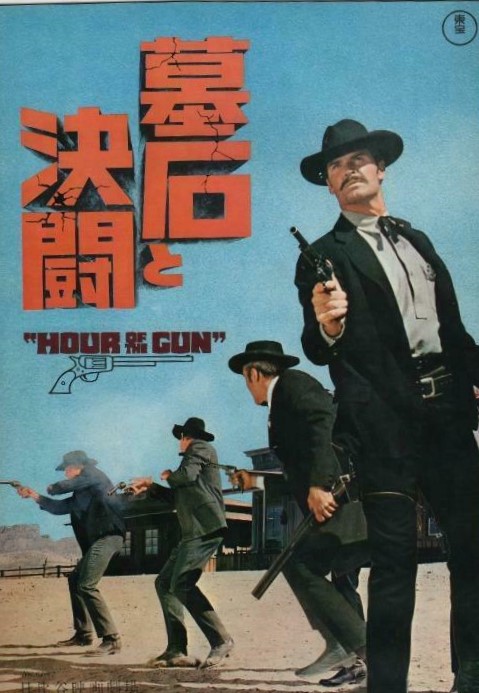
The image for the Japanese poster was taken from the initial shootout at the O.K. Corral that opened the picture.

James Garner came on board in the main because he still owed Mirisch, marking a decade in the business, a picture. He had originally worked for Mirisch in The Children’s Hour (1961). He was hired for “not much,” a straight salary, but credited Mirisch with kick-starting his career after his battle with Warner Brothers. Mirisch had also funded By Love Possessed (1962) in which Sturges had directed Jason Robards, “a brilliant actor though one with problems” (something of an understatement).

There was some surprise in Hollywood when Sturges returned to Mexico after the difficulties – censorship, threats to boycott the film, union issues – he had encountered shooting The Magnificent Seven there. Having vowed “never to make another picture” in that country, “one of the reasons we’re back here is because they’ve eased up on regulations.” Having expected to import most of the cast from Hollywood, the producers were delighted that “six of the ten other featured parts” went to Mexicans, as a result of extensive auditions. Although Lucien Ballard (The Wild Bunch, 1969) remained director of cinematography, a Mexican camera crew was hired with Jorge Stahl in charge.

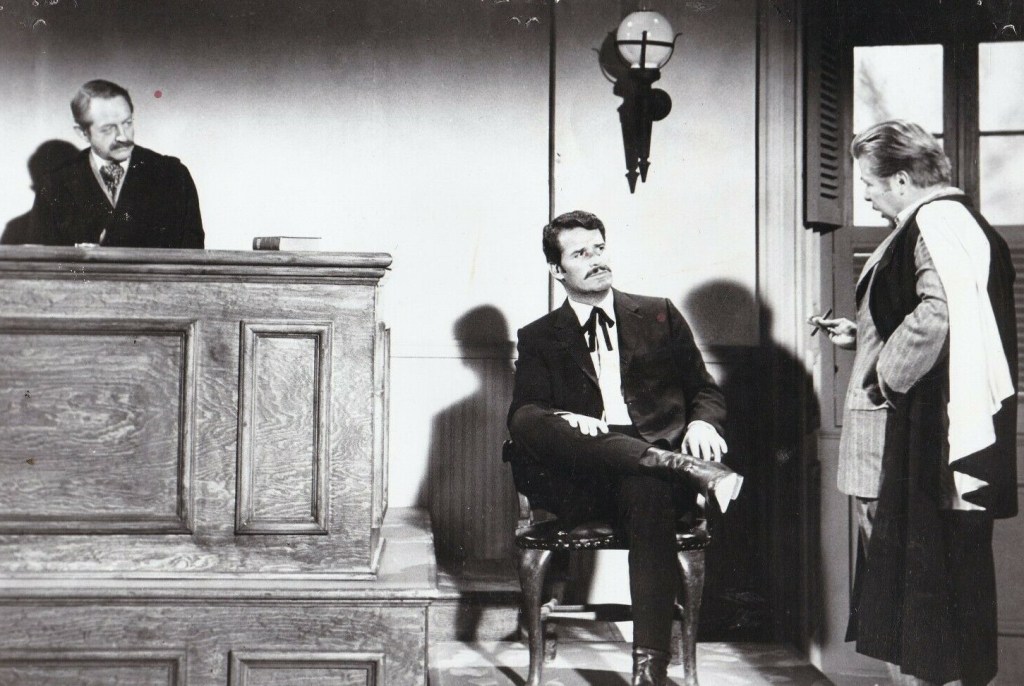
James Garner takes the stand in court defending himself against allegations of murder.

Shooting began on November 9, 1966, at Torreon, “a quiet little agricultural town with a single hotel and bar,” where a fake town had been built at a cost of $100,000. Filming shifted to Churusbusco Studios in Mexico City on December 20 and four weeks later production wrapped after exteriors at a hacienda near San Miguel de Allende for the face-off with Ike Clanton (Robert Ryan in the film).

James Garner (The Great Escape, 1963) was keen to be reunited with Sturges. “I was happy to play the character,” reminisced Garner, “because John always knew what he was doing. He would take five, six, seven factions in a story and bring them together.” Garner saw Earp as “a guy taken with his own power, who nobody could defy.” 

Jason Robards, as Doc Holliday, with a well-known wild side, was difficult to manage. Assistant directors were dispatched every morning to find out where, bar or brothel,  the actor had ended up the night before. Sturges rounded on him when Robards turned up at lunch for a scheduled 8am start. He was perfect after that. Unusually, Sturges would invite the cast to watch the dailies. Producers Mirisch were not happy with the title which was eventually changed to Hour of the Gun.

“My mistake,” rued Sturges, “was that I thought people would be fascinated by the real story about the quarrel between the Earps and the Clantons. You didn’t just shoot people, there were trials, lawyers, citizens’ committees…I got preview cards that said of all the stories told about Earp and Holliday this was the dullest. They (the audience) considered them fictional characters. They couldn’t have cared less that that’s the way it really was.”

As Variety pointed out in its review: “Probing too deeply into the character of folk heroes reveals them to be fallible human beings – which they are of course – but to mass audiences …such exposition is unsettling.”

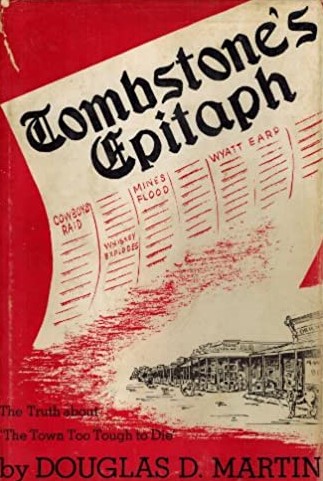
Edward Anhalt’s screenplay was based on this book published in the late 1950s.

There were clearly reservations about the project. Mirisch announced it was “ready for release” at the end of March 1967 but it did not see the light of day for another seven  months. Although the film was budgeted at just over $3 million – $1 million more than In the Heat of the Night (1967), another Mirisch project – and received tremendous support from the industry-wide “Fall Film Fair” promotional campaign (“commended…for excellence in entertainment”) it was a huge flop in the U.S. bringing in a miserable $900,000 in rentals (the amount studios receive once the cinemas have taken their share of the gross). It did better abroad with $1.5 million but the total was nowhere near enough to recoup the costs.

“Also playing a large role in the reaction to the picture was the continued loss of interest by audiences in Western pictures,” said Mirisch. “I was again guilty of thinking that this trend would reverse and that Westerns, led by a hit picture, would return to favour stronger than ever. I was wrong. As a new generation arose, their interest in westers had been satiated, probably by television, and they now embraced the so-called Easy Rider era of movie-making.”

This is another piece of faulty memory. The year after the release of Hour of the Gun   commercial success was enjoyed by Bandolero!, Hang ‘Em High and The Scalphunters to name a few and Will Penny and The Stalking Moon, both revisionist westerns, won critical favour. And, apologies for harping on about it, but, as I showed in my book The Gunslingers of ’69, that year proved a box office bonanza for westerns despite Easy Rider.

SOURCES: Glenn Lovell, Escape Artist (University of Wisconsin Press, 2008) p257-262; Walter Mirisch, I Thought We Were Making Movies, Not History (University of Wisconsin Press, 2008), p259-260; United Artists Archive, Appendix II, University of Wisconsin; “Mirisch, Sturges Revamp Pact for Two More Films,” Box Office, July 25, 1966, W-1; “James Garner Moves from Actor To Future Producer Status,” Variety,  October 5, 1966, 5; “Director John E. Sturges Returns to Mexico for Law and Tombstone,” Box Office, November 7, 1966, pW-2; “Mirisch Schedules Five Major Films,” Box Office, March 13, 1967, p10; “Film Title Changes,” Box Office, April 24, 1967, p18; Advert, Box Office, Aug 28, 1967, p4-5; Review, Variety, October 4, 1967, p16.

Selling Dick Van Dyke – The Pressbook for “Divorce American Style”

There was a curious dichotomy at the heart of promotional efforts for this picture. On the one hand, theater managers were encouraged to make contact with those affected by divorce, on the other to make a great play of weddings and marriage.

So theater managers were told to contact groups such as Parents without Partners, Children of Divorce, Divorce Reform Groups, Alimony Payers and Family Counsellors. Divorce Parties and Divorce Breakfasts were suggested as other sources of publicity. Free screenings were aimed at couples who could prove they were divorced – presumably, that is, if they could still stand the sight of each other.

“Wedding rings can make a very positive contribution” to a promotional campaign was the other side of efforts to sell the movie. That meant possibly offering a wedding ring as a prize in a competition for divorced couples planning to re-marry…”re-marriage might take place at your theater…but it is not mandatory.” Free tickets could be given to jewelers to hand out to anyone buying an engagement or wedding ring. Another idea was a newspaper article on what divorced women did with their wedding rings after they had split from their partner.

Dick Van Dyke had been named “Screen Father of the Year” by the National Father’s Day committee and he had made a national tour in support of the picture meeting the media in New York, Chicago, Miami, Atlanta, New Orleans. Oklahoma City, Rochester, Washington, Syracuse, Boston and Philadelphia so journalists in those localities were already primed to support the efforts of cinemas. In Dallas, he was met by 1,000 people and later presented with a plaque from the Domestic Relations Court because “the ideals of the film serve as a deterrent to divorce.”

Unusually, the fashion boost this time focused on the male. Jason Robards had turned himself into a male model for Ratner California Clothes with advertisements appearing in Gentlemen’s Quarterly. Equally unusual was a suggestion to tie up with a local hypnotist – a scene in the picture involves Pat Collins’ nightclub act.

Van Johnson played a used car dealer in the film so they were also targeted for joint promotions or car parades. Bowling alleys, too, since that form of leisure activity featured in the film. On a more straightforward note Popular Library had produced a novelization and United Artists the original soundtrack album by Dave Grusin.

Divorce American Style (1967) ***

Not so much a comedy about a failing marriage as a guide to the American divorce laws,  a cynical hard-boiled and frightening shape of things to come in a world where the everyman is represented not by the likes of James Stewart or at a stretch Glenn Ford but Dick Van Dyke. It’s possibly only the fact that Van Dyke lacks dramatic chops without the innate vitriol of a Rod Steiger or Lee Marvin that keeps the movie from drifting into devastating black comedy. That, or the filmmakers’ determination to find a happy ending.

When the ever-squabbling Harmons, Richard (Dick Van Dyke) and Barbara (Debbie Reynolds), break up after 17 years and two kids, the chips seem to fall heavily against the husband, the wife walking off with all assets, the husband landed with all the bills and little more than 80 bucks a week to get by on. Such is the supposed injustice of the American divorce laws at a time when most wives did not go out to work and so relied on their husband, married or otherwise, for support.

The only way out of this unhappy financial state for Richard is for his wife to get married again, so a second husband can pick up the tab for her upkeep.  Another divorced couple, the Downes, Nelson (Jason Robards) and Nancy (Jean Simmons), are in the same pickle so Nelson spends his time acting as some kind of pimp for his ex-wife, serving up potential suitors, such as Richard, on a platter. But since Richard is impoverished a helping hand is needed to even things up, so Nelson arranges for Barbara to fall into the arms of rich and single used car dealer Al Yearling (Van Johnson).

There is a big male-female divide, for the most part the guys concentrating on material things like money and what money can buy, the gals leaning more towards emotion, conversation, genuine intimacy.  Richard has given his wife everything she wants, so why can’t he have a few things his own way. Or as Barbara succinctly puts it, it’s a case of supply and demand, the women are in good supply while the men demand. Even after separation, while from the Richard and Nelson perspective the wives are living in the lap of luxury and the men understanding the meaning of penury, female thoughts turn to questions of loneliness, commitment and (not again!) emotion.

While there are moments of observational comedy – an excellent montage of Richard and Barbara opening and closing all sorts of doors while preparing for bed, cleaning out bank accounts before the other can get to them, the problems of accommodating the blended/hybrid family that divorce or multiple divorce can entail – there are not many laugh-out-loud moments.

And probably just as well because without the drama-lite presences of Van Dyke (who still can’t shake off those double takes and involuntary limb functions) and Reynolds, it would have been a much tougher watch. Reynolds is capable of expressing her feelings verbally because, as a female, she is used to expressing feelings verbally, so we know that Al Yearling does not quite hit the spot. But Van Dyke, without resort to the verbal, has his best scenes of emotional loss when he takes his kids to the ball game only to discover that his wife’s new suitor has more treats to offer.

Van Dyke (Lt. Robin Crusoe, U.S.N.) and Reynolds (The Singing Nun, 1966) do a decent job without plumbing any dramatic depths, but Robards (Any Wednesday, 1966) and Simmons (Spartacus, 1960) have more to offer as the conspiring couple, while one-time MGM golden boy Van Johnson (Battleground, 1949) proves that his four-year absence from pictures was premature Hollywood retirement. More a cautionary tale than an outright laffer, this Norman Lear (Come Blow Your Horn, 1963) screenplay without missing many targets provides a more palatable dissection of modern marriage than something as full-blooded and expletive-ridden as the previous year’s Who’s Afraid of Virginia Woolf.  Director Bud Yorkin (Come Blow Your Horn, also) shows a nice grasp of building up situations until they go out of  control.

While, certainly, many of the attitudes are out of date you can be sure that male self-pity is not one of them.

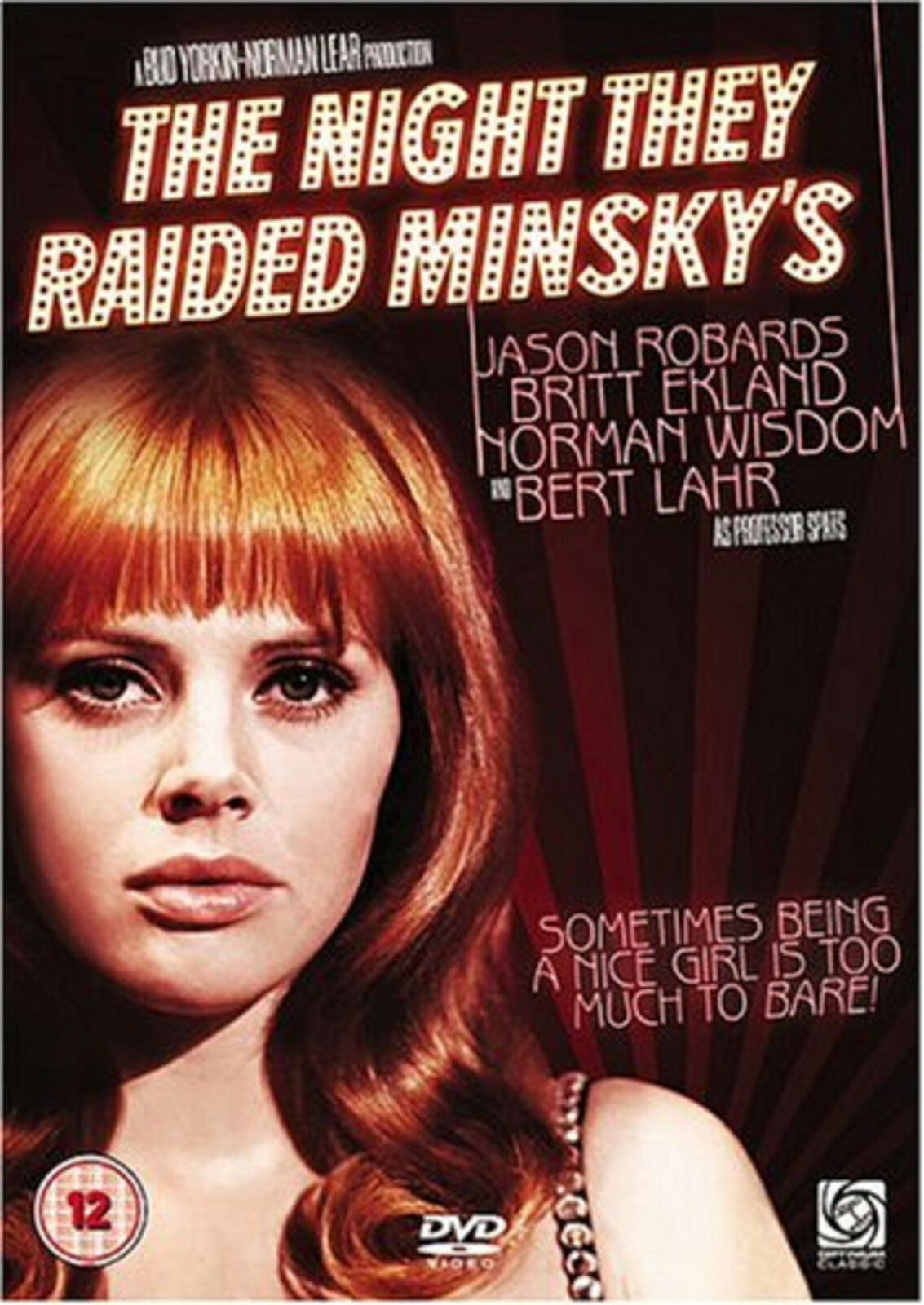
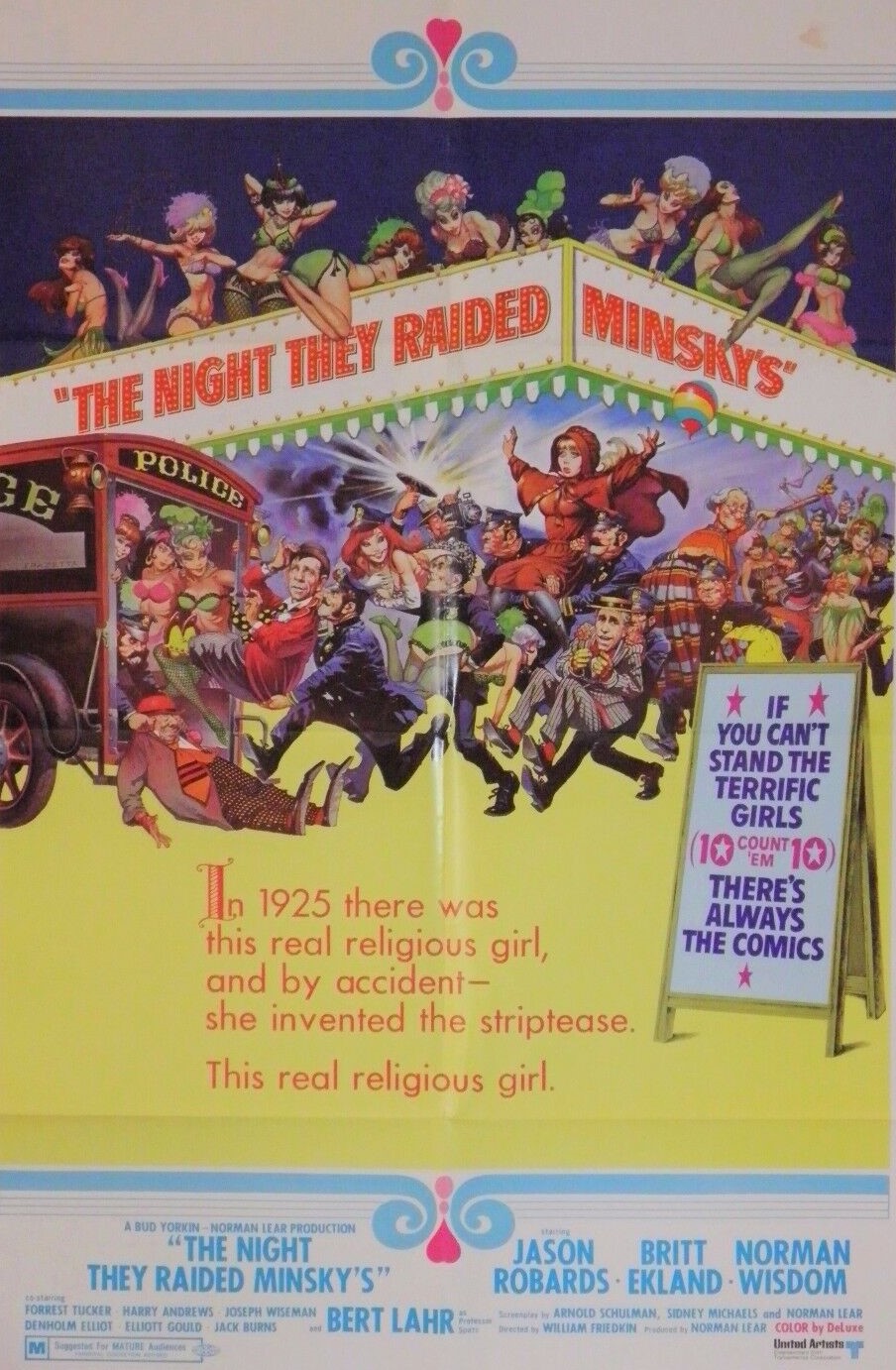
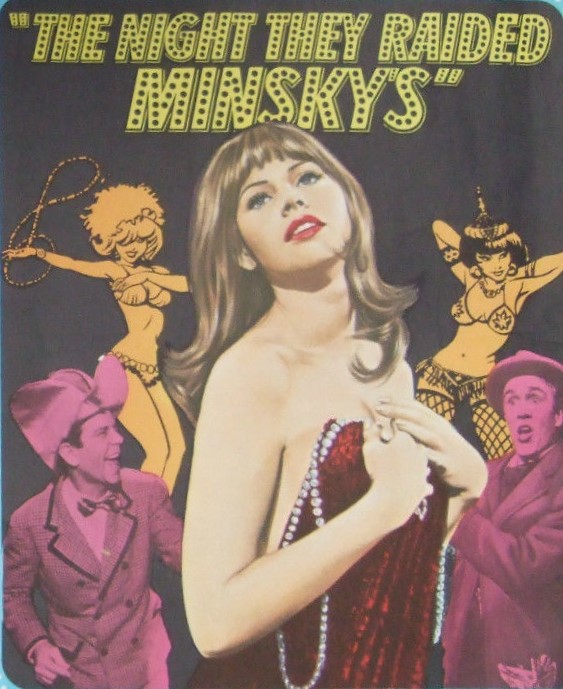
Behind the Scenes: “The Night They Raided Minsky’s” (1968)

Why films are flops is sometimes more interesting than why they become hits. That’s assuming no one’s memory plays them tricks. Originally, according to Tony Curtis, he was going to produce The Night They Raided Minsky’s and at that point it was more focused on the strippers working there. “Each stripper thought she was going to end up being a star like Gypsy Rose Lee” he wrote in his autobiography. However, in the star’s memory this film was going to be made after the completion of You Can’t Win ‘Em All (1970) and Suppose They Gave a War and Nobody Came (1970) when he was a dead duck Hollywood-wise – he did not appear in another picture until Lepke in 1975. The fact that The Night They Raided Minsky’s was made in 1968, two years before You Can’t Win ‘Em All, appears to have escaped his attention or that of the book’s editors and publishers and, strangely enough, also of Michael Munn whose later biography of the actor Nobody’s Perfect equally oddly attributed his involvement in Minsky’s to after You Can’t Win ‘Em All.

Director William Friedkin has a better recollection, but, also strangely enough, nothing like as detailed as that for the film that made his name The French Connection (1971). He had met Bud Yorkin at a private screening at the house of producer David L. Wolper (The Devil’s Brigade, 1968). Yorkin and partner Norman Lear had a two-picture deal at United Artists. (In his autobiography Friedkin called United Artists “newly-formed” which was a hell of a miscalculation since that studio had been on the go since 1919 and even the modernized UA had come into being in 1951 – he was probably referring to the takeover of the studio in 1967 by Transamerica). Even though at that point Friedkin’s only picture had been the Sonny and Cher flop Good Times (1967) he was offered $100,000 to direct on the grounds that he could “bring something original and contemporary to an older subject.” He was honest enough to admit the fee probably swayed him since he found the script “thin, superficial, not funny.”

Friedkin makes no mention of Tony Curtis potentially being involved on the production side. The first actor to be approached, Curtis agreed to do the film if the script was rewritten. According to Friedkin, Curtis was “at the peak of his popularity.”  That was wishful thinking. According to Variety, Curtis was one of the least successful stars in the business, his last four pictures averaging a lamentable $1.77 million in U.S. rentals. Curtis did not like the rewrite. He complained that between the two drafts, his role had “shriveled” and quit the production “due to differences in the concept of the male star role.” Or it could have been that he dropped out in favor of The Boston Strangler (1968).  

For a while it seemed his departure might benefit the planned production. Two rising Broadway stars – Alan Alda and Joel Grey – showed interest. Alda was in The Apple Tree directed by wunderkind Mike Nichols and Grey was attracting fabulous notices for his performance in the stage version of Cabaret. “It was a real coup to land those guys,” purred Friedkin. But it was a coup too soon – they could not get out of their stage contracts. “Unbelievably,” commented producer Norman Lear, whose job presumably it was to read the fine print, “nobody read the fine print.”

All roads then led to Jason Robards (“my first choice anyway” according to Lear) third-billed in Yorkin and Lear’s Divorce American Style (1967). Although Norman Wisdom had primarily a British moviegoing following, he had just finished a run in the Broadway comedy Walking Happy, so he was not entirely unknown. Bert Lahr fell ill a third of the way through production and died within a week so the pivotal role he was to play, “as a kind of tour guide to burlesque…left a hole in the film’s emotional center.” To try and minimize his loss, the producers “included every frame of Lahr including test footage.”

Worse, according to the director, Robards and female lead Britt Ekland proved a mismatch and had “no chemistry as lovers.” Danny Daniels took over the staging of the burlesque routines and Friedkin came close to being fired.

At least Friedkin was honest about the film’s failings. The biggest problem, he admitted, “was my own ineptitude…I was in over my head….Each time I set up a shot or talked to an actor about a scene I was filled with uncertainty….much as I’d like to absolve myself of blame for the film, I see my handiwork all over it, especially in the documentary approach to many of the scenes.” He didn’t help matters by almost sabotaging the release when he told a late-night talk show host that the picture was “terrible” and advised viewers not to “bother to see it.”

But for all Friedkin’s later downplaying of the picture, at the time he was giving it big licks, anticipating some kind of artistic breakthrough in part through innovative use of the hand-held camera. He aimed to achieve a “Brechtian flavor of casual seediness.” It was the biggest production ever filmed in New York with a budget in the $3 million-$4 million region. Friedkin had rejected the New York streets available on Hollywood studio lots in favor of the real thing. The producers found a block on the Lower East Side scheduled for demolition that fitted exactly the art director’s exterior design and successfully campaigned Mayor Lindsay to postpone demolition until shooting was completed. Friedkin confidently boasted to Variety that the Lower East Side so closely resembled what it was like half a century before that “all you have to do is rip out the parking meters and conceal the air conditioning” and line the streets with vintage cars.  

Cameraman Andrew Laszlo had developed a special camera that permitted much steadier handheld photography than before which would facilitate “Friedkin’s improvisational directorial style.”  Friedkin called it “the most expensive movie ever made with a hand-held camera.”

The picture finished shooting at the end of 1967 but that it did not appear in theaters until the tail end of the following year indicated the problems facing the producers. You might think Xmas an odd time to launch a movie about what was effectively a tawdry subject no matter how affectionately filmed. In a bid to shine a light on the more successful aspects of burlesque, United Artists publicists gave a major push to Dexter Maitland, a 40-year veteran of the business who had a small part in the picture.

SOURCES: Tony Curtis with Peter Golenbock, American Prince: My Autobiography (Virgin Books – paperback, 2009) p279 ; Michael Munn, Tony Curtis, Nobody’s Perfect (JR Books, 2011) p214; William Friedkin, The Friedkin Connection, A Memoir (Harper Perennial, 2014) p115-120; Lee Beaupre, “Rising Skepticism on Stars,” Variety, May 15, 1968, p1; “Tony Curtis, Britt Ekland To Co-Star in Minsky’s,” Box Office, June 26, 1967, p12; “A Minsky Burlecue Theme Needs N.Y.,” Variety, August 2, 1967, 18; “Tony Curtis Withdraws from Minsky’s Pic,” Box Office, August 7, 1967, pW-2; “Wreckers Refrain,” Variety, September 27, 1967, p28; Lee Beaupre, “Costliest Ever on Hand Held Camera; UA’s Calculated Risks As To Minsky’s,” Variety, December 6, 1967, 3; “Norman Lear Digs ABC,” Variety, December 4, 1968, p22); “Dexter Maitland Is Alive and Real,” Variety, December 11, 1968, 4.

William Friedkin’s autobiography pictured below is immensely informative of the director’s somewhat controversial career.

The Night They Raided Minsky’s (1968) **

This affectionate homage to 1920s vaudeville goes awfully astray under the heavy-handed direction of William Friedkin. Never mind the sexist approach, there’s an epidemic of over-acting apart from a delightful turn from Britt Ekland as the innocent star-struck Amish who accidentally invents striptease and former British music hall star Norman Wisdom who knows what he’s doing on the stage. The plot is minimal – burlesque theater manager (Elliott Gould) needs to save theater from going bust in a few days’ time. That’s it – honest!

The rest of the story looks tacked on – the overbearing leering other half (Jason Robards) of the Norman Wisdom double act tries to bed anything that moves, Amish father (Harry Andrews) in pursuit of his daughter, vice squad official (Denholm Elliott) determined to shut the theater down.

The saving grace of this debacle is Ekland’s performance which carries off a difficult part. Could anyone really be so dumb? She is endearing in a murky world but still capable of interpreting the Bible to her own ends (there is dance in the Good Book, for example) and she has confidence that the Lord will give her the go-ahead to have sex. Her innocence appears to transcend reality and since she doesn’t know a showbiz shark when she sees one she carries on as if life is just wonderful. Somehow this should never work but Ekland is so convincing that it does.

What might have been another saving grace is the documentary feel of much of the background, black-and-white pictures of the epoch transmuting into color, but too often the movie simply cuts to that without any real purpose. Equally, the various song-and-dance acts, chorus lines and comic turns provide an insight into burlesque reality but, again, all too often, that goes nowhere. There are plenty of people trying to be funny without much in the way of decent laughs. There’s altogether too much of everything else and not enough of the ingredients you might have considered essential.

This scarcely sounds like William Friedkin material given that although this preceded The French Connection and The Exorcist, by this point he had already made his mark with an adaptation of Harold Pinter play The Birthday Party (1968). In fact, his original cut was re-edited once he had departed the picture. Might it have worked better with Tony Curtis in the Jason Robards role as originally planned – he certainly had more charm than the jaundiced Robards. Regardless of who was cast what it needed most was a better story and less in the way of stock characters. And since in American theater folklore Minsky’s is synonymous with the invention of the striptease it meant that quite a few of the audience were there just to see how much skin would be revealed – which is not really the basis for a good mainstream picture.

Behind the Scenes: Isadora (1968)

“Only Vanessa Redgrave could portray the full range of emotions in the tour de force title role performance of Isadora,” runs the opening line to the sumptuous 52-page program (cover shown above) that accompanied the film.

Programs like this were part of the package for a movie intended for roadshow. I’ve no idea how many Universal printed but most were shredded since after an initial launch in Los Angeles, the movie was not shown in roadshow in America (though it was overseas). It was also drastically cut from 168 minutes to 138 minutes.

Redgrave had been on the cusp of major stardom after an Oscar nomination for Morgan!(1966) and box office breakout Blow Up (1966) but under-performing Warner Brothers’ musical roadshow Camelot (1967) and flops Charge of the Light Brigade (1968) and A Quiet Place in the Country (1968) had put a dent in her surge to the top of the Hollywood tree.

Directed by Karel Reisz (Saturday Night and Sunday Morning, 1960, and Morgan!), the movie was filmed entirely on location – 72 of them – for six months. Main locations in Britain were Oldway Mansion in Devon and the British Museum.

Different rooms and aspects of South Lodge mansion in London, once owned by the Royces of Rolls-Royce fame, provided backdrops for scenes set in Moscow, Berlin, New York, Chicago and Boston. Yugloslavia doubled up for France and Russia, the Berlin Opera house represented by National Theatre in Rijeka, and the resort of Opatija on the Adriatic standing in for Nice.

The film was produced by the Hakim brothers, better known for arthouse picture like Purple Noon (1960) and Belle de Jour (1967). Jason Robards, on the first of two European excursions that year (the other being Once upon a Time in the West), played one of her many lovers. According to Robards, the art of acting “is an intuitive process; any actor can prepare only so much for any given part and the rest must come from a deep resource within him.” Although Redgrave received an Oscar nomination, the movie made a huge loss.

Discover WordPress

A daily selection of the best content published on WordPress, collected for you by humans who love to read.

The Atavist Magazine

by Brian Hannan

WordPress.com News

The latest news on WordPress.com and the WordPress community.