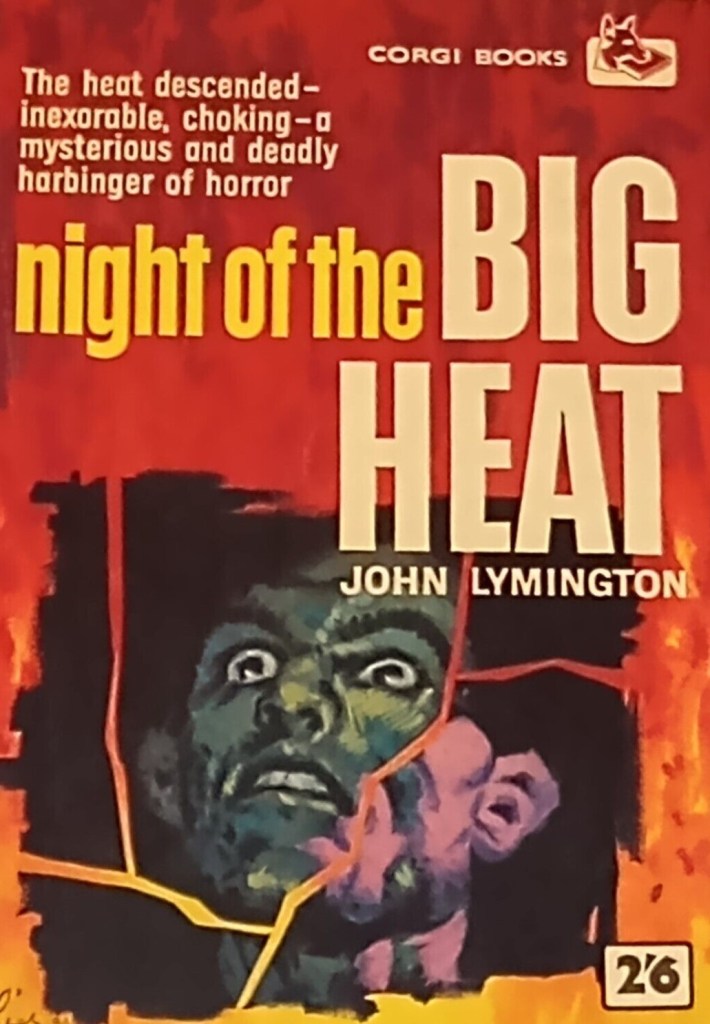
Night of the Big Heat/ Island of the Burning Damned (1967) ***

The Day the Earth Caught Fire (1961) meets War of the Worlds with a nod in the direction of Star Trek.  In the absence of a decent budget director Terence Fisher (Dracula Prince of Darkness, 1966) loads the movie with decent actors and relies of suspense rather than revelation. Ignoring the obvious opportunities for beefcake, partially embraces cheesecake.

While you might anticipate a horde of sweat-soaked men you will be taken by surprise by that most un-English of scenes – delight in a downpour. This is more sensibly located on a remote island rather than a big city and dials down on the preachy stuff, nothing to do with  atomic bombs, but still alien invasion.

Instead of The Old Dark House it’s a very hot English pub in winter – a time when the rest of the country is freezing – where all the characters congregate. We’ve got author Jeff (Patrick Allen), wife and pub landlady Frankie (Sarah Lawson),  local doctor Vernon (Peter Cushing), mysterious guest Godfrey (Christopher Lee), mechanic Tinker (Kenneth Cope) and newly-arrived secretary Angela (Jane Merrow) who has been having an affair with Jeff. 

It’s so hot Angela has to cool off with a lager and lime. The women appear to withstand the heat better than the men who are all in shirtsleeves and soaked through with sweat. Angela’s got the right idea, nipping down to the sea in her bikini, cooling her neck (and cleavage as it happens) with an ice cube.

As well as the unseasonable weather there’s a high-pitched eerie noise that especially afflicts automobile drivers, forcing them off the road. Various characters are despatched before disclosure. There’s a surprisingly vivid slice of sexual competition between the two women for Jeff’s attentions. In an excellent scene the wife works out what’s going by Jeff’s attitude towards Angela.

Naturally, Jeff has little idea how to retrieve the situation and maybe it’s just the acceptable misogyny of the period or maybe Frankie is just a bit dim, but I doubt if many women would be happy to hear husband describe lover as a “common slut” without wondering how often he attracted to such. Luckily, the crisis is much bigger than a marriage being potentially wrecked.

The sight of the eventually sweat-soaked Angela is too much for Tinker resulting in a brutal scene of attempted rape. While the males, except for being overcome by the noise, tended to remain cool, Angela turns hysterical, threatening suicide and murder in turn, but in the context of being shunned by Jeff and attacked by Tinker it’s hardly surprising she’s at the end of her tether.

Turns out the aliens have taken a leaf out of the Star Trek playbook and can beam themselves to Earth and dematerialize and that the endless human search for life among the universe has prodded an alternative life form into action. Seeing Earth as one giant platter of energy, they have landed and started sating their appetites.

It’s a fairly standard premise and exposition is left to Christopher Lee (The Devil Rides Out, 1968) rather than the more obvious choice of Peter Cushing (The Skull, 1965). Audiences expecting Lee and Cushing to be on opposite sides, with the former cast as villain, will be disappointed. Lee takes on the role of scientist that would normally fall to Cushing. He makes a good boffin, snappy, abrupt, remote and luckily without the slightest interest in any of the disporting damsels.

Patrick Allen (Puppet on a Chain, 1970) who spent most of the decade in television, the movies generally only interested in utilising his voice for narration duties (Carry On Up the Khyber, The File on the Golden Goose etc) takes the opportunity to grab the dramatic center, the character who has to work out what’s going on, while given a pair of conflicting love interests to increase the tension.

Jane Merrow (The System/The Girl Getters, 1964) is the surprise. Provided with the only genuine character arc in the picture, she goes from cool, confident, teasing chick to all-get-out-hysterical, but still with several ounces of sense, able to beat off her attacker, and willing to embrace the suicide option rather than being burned alive by invaders. The aliens, you won’t be surprised to learn, are not, despite the build-up, in the slightest bit scary.

But Fisher does a good job and the reason is a watchable low-budget sci-fi shocker.

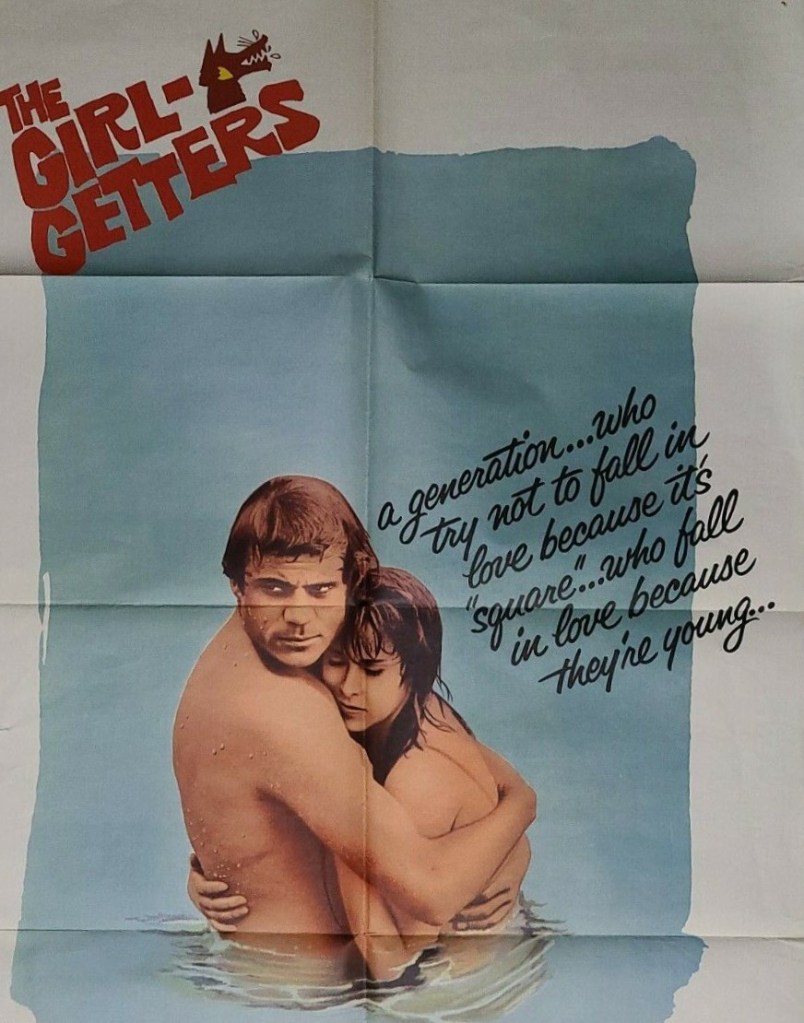
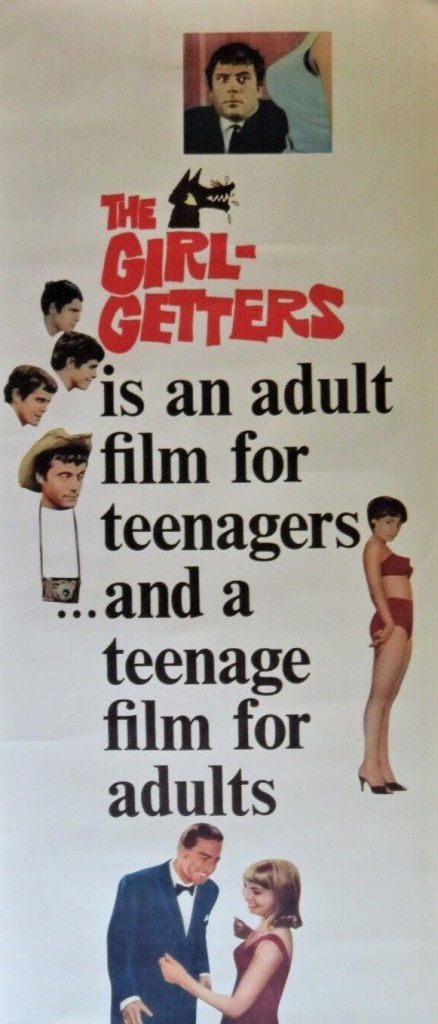
The System / The Girl-Getters (1964) ***

Surprisingly subtle performance from Oliver Reed (Hannibal Brooks, 1968), eschewing the trademark quick inhalation of breath and steely glare, as leader of a gang seducing impressionable young girls during the summer season in an English seaside town.  Surprisingly artistic touches – swipes, montage, a meet-cute involved blowing bubbles – from the more usually heavy-handed director Michael Winner (Hannibal Brooks). Surprising amount of rising talent including cinematographer Nicolas Roeg (Don’t Look Now, 1971).

And unlike the previous The Damned / Those Are the Damned (1963), the impromptu gang headed by Tinker (Oliver Reed) is not hell-bent on violence and destruction, and the various seducers, thankfully, could hardly be described as sexual predators. Young girls away on their own for the first time, disappointed not to find the love of their lives,  are still happy to settle for a holiday affair.

The American title is more appropriate and only an overbearing parent would dream of marketing it – effectively from the male perspective – as girls entering perilous territory rather than with the lightness of tourist romance a la The Pleasure Seekers out the same year. The “system,” a misnomer if ever there was one, involves the guys finding various ways of getting tourists’ addresses – Tinker as a beach photographer has the advantage here – in order to seduce them.

Sometimes the plan goes wrong and a girl gets pregnant leaving Nidge (John Alderton) not only abandoning the frolics but doing the decent thing by proposing. Oddly, there’s no sense of the guys competing with each other for the biggest tally of notches on a bed-post; in fact they’re a democratic bunch, dividing up the potential prospects equally.  Equally oddly, I guess, none of the women come across as virgins, no first-timer angst.

Tinker, who spends most of his time avoiding telling compliant girls what they are desperate to hear, i.e that he is in love with them and that the holiday affair might turn into something more permanent, falls for posh model Nicola (Jane Merrow).

There is some, for the time, risqué material, a view in very long shot of a nude woman, a girl in bra and panties (getting dressed after sex, so perhaps where Roeg got the idea from for the famed montage in Don’t Look Now), a brutal fight between rival photographers, camera smashing on the stairs. But there’s also Tinker’s humiliation by the jet set as he tries to fit in, thumped at tennis, and dumped by the married lover he ignores during the season. There’s surprising inventiveness, a demonic parade where effigies of bride and groom are burned on a pyre, a soulful scene of a bubble salesman blowing bubbles on a deserted beach at night.

The twist is of course that some girls come to the seaside town to find boys from whom they want no commitment, instead just the enjoyment of a casual fling. Should a man like Tinker happy to fall in love, more fool he.

Naturally, with a film aimed at the young crowd, there are snatches of pop performers – the Rockin’ Berries the most prominent – and a rock arrangement of Khachaturyan’s Sabre Dance that would four years later become, for someone else, a hit single.

Oliver Reed proves very engaging, especially when in playful mode, benefitting from lengthy screen time rather than being forced into a supporting actor’s scene-stealing. Jane Merrow (The Lion in Winter, 1968), excellent as the self-aware boy-getter, heads a raft of rising talent that includes David Hemmings (Blow-Up, 1966), almost unrecognisable with a side parting rather than the trademark mop of hair, and really a bystander here. John Alderton (Hannibal Brooks) is also permitted more artistic leeway, and takes it, rather than the comedic gurning of later years.

Look out for Julia Foster (Half a Sixpence, 1967), Barbara Ferris (Interlude, 1968), and Ann Lynn (Baby Love, 1969). Even Harry Andrews (The Hill, 1965) tones down his usual screen persona.

Considerably more thoughtful and visually interesting – and occasionally playful, for goodness sake – than anything else Winner produced during the decade. A good script by Peter Draper on his screen debut makes its points without either being too clever or too forceful.   

The Woman Who Wouldn’t Die/Catacombs (1965) ***

Gordon Hessler (The Oblong Box, 1969) makes his directorial debut with this neat horror thriller. It starts with a twist exceptional for the times.  Ellen (Georgina Cookson) is the shrewd and shrewish millionaire businesswoman, her husband Raymond (Gary Merrill), from whom she demands frequent sex, the eye candy, a kept man. “I married a lover, not a businessman,” she retorts when, bored out of his mind, he asks for the opportunity to play a  role in her business. In a further twist on the norm of the damsels decorating 1960s movies by displaying cleavage or disporting themselves in bikinis, Raymond is often seen with his chest bared in all its hirsuteness. In a further gender twist her secretary is also male, Dick  (Neil MacCallum), a former, unknown to her, jailbird.

Tall, beautiful, dominant and domineering Ellen appears to have occult power, able to read minds, which keeps the larcenous-minded Dick in check, and has command of her own physical frailty – she walks with a stick – and can put herself in a trance to overcome occasional pain from her injured hip.

Conspiracy of fear: Raymond (Gary Merrill) and Alice (Jane Merrow).

But when Raymond falls for Ellen’s niece Alice (Jane Merrow), an artist returned from a year in Paris, he puts into action a plan that had clearly only been a pipe-dream, blackmailing Dick into participating. It’s quite clever as murderous plans go. He hires an actress to impersonate Ellen, known to go off to Italy on her own for spa treatments and with a knack for reckless driving, various driving charges over the years. Meanwhile, he strangles Ellen, allows Alice at a distance from an airport viewing terrace, to see her aunt, complete with walking stick, climbing up the steps of a plane. Faked cables and postcards arrive from Italy purportedly showing Ellen enjoying herself, even visiting the famous catacombs. In Italy Dick fakes a car accident to kill the actress.

However, twist number one comes at the reading of the will. Raymond and Alice split the million-pound bounty but while the latter is given custody of the big house the former is condemned to live for life, on pain of forfeiting the inheritance, in the cottage, in whose potting shed Ellen’s body lies. Further twists naturally follow. The maid (Rachel Thomas) doesn’t quite so much smell a rat but adds to the killer’s incipient discomfort by proclaiming that with her hip problem and claustrophobia that Ellen would never descend into the catacombs.

Entitled “Catacombs” in the U.K. after the novel by Jay Bennett on which it was based, it was retitled
“The Woman Who Wouldn’t Die” for the U.S. market.

And Raymond might have lived happily ever after with Alice except for his guilt. Several creepy incidents, knocking, tapping, door handles turning, shadows, a depression the shape of a body in a bed, cigarettes smoking in ashtrays, lights going on and off indicate to the already nervous Raymond and the visibly frightened Alice that Ellen may not be dead after all. Virtually the entire third act is the pair of them reacting to real or imagined fears. Alice has a good line in looking scared witless. But Raymond, while trying to contain his inner demons, is equally rattled.

As you might expect there are further excellent twists to come. In fact, they are soon piling up and even at the very end the screen freezes on a final twist.

Georgina Cookson (The Picasso Summer, 1969) steals the show as the imperious businesswoman, with everyone cowering under her glare and not above stating the obvious, “I bought you body and soul,” she reminds Raymond. I’m not sure Gary Merill (The Power, 1968) is quite as good in the second half as he is in the first. Initially, he exudes charm, physical prowess, and, while under his wife’s thumb, still emotes a certain measure of confidence. He doesn’t appear to me to quite frightened enough in the second half as his plans go awry. Jane Merrow (The Lion in Winter, 1968) is excellent as the young woman caught in a mental trap and Neil MacCallum (The Lost Continent, 1968) is surprisingly effective.

But this is a low-budget B-picture that was destined for the lower half of a double bill so there was no particular reason why it should be as good as it is. Except for the Italian sequence, the action takes place on just two sets and for most of the time it’s a three-hander. But Hessler has a keen eye for composition and in a number of critical scenes makes bold choices. For Ellen’s murder, he concentrates on Raymond’s face rather than the victim’s, only showing her feet. There’s one super-shocker with a mirror. But mostly he is content to built up the tension, either by the various noises or by the reactions of Raymond and Alice. An old-fashioned gem of a picture.

Available on DVD from Network.

Discover WordPress

A daily selection of the best content published on WordPress, collected for you by humans who love to read.

The Atavist Magazine

by Brian Hannan

WordPress.com News

The latest news on WordPress.com and the WordPress community.