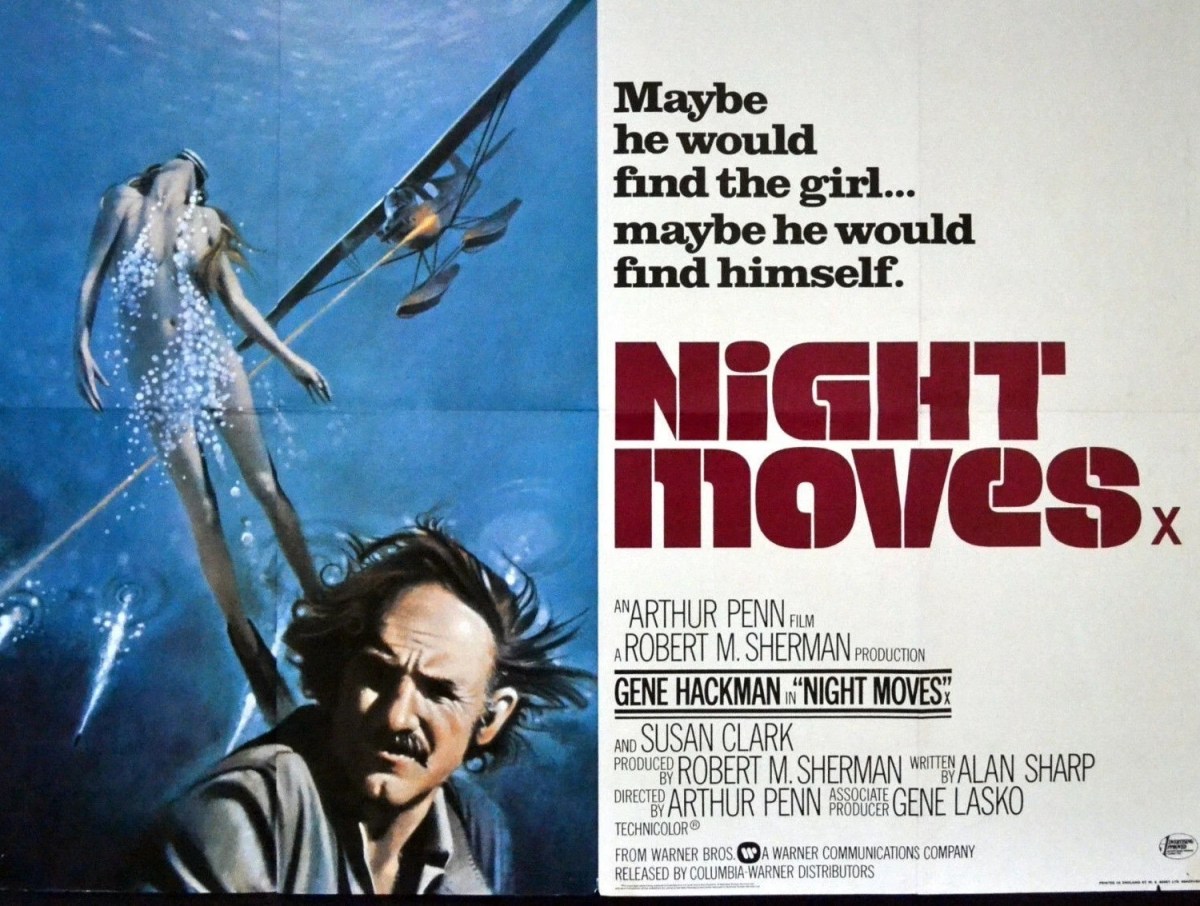
You want to know what screenplays are all about, it’s rarely dialog. It’s something registering the eyes. It’s very rare for a movie’s tone to change in a heartbeat. Or in this case in the blink of an eye. Planning to surprise his wife Ellen (Susan Clark) coming out of a movie theater, private eye Harry Moseby (Gene Hackman) sees her snuggle into the arms of another man (Harris Yulin).. The look on his face is pure shock. And from here on in, Moseby’s life turns upside down. He goes from macho man, ex-football jock with a swagger, to someone who’s duped by everyone around him.
Scottish screenwriter Alan Sharp was, for half a decade, an anomaly – though in the best possible way. Few screenwriters have achieved general fame – maybe Robert Towne (Chinatown, 1974), William Goldman (Butch Cassidy and the Sundance Kid, 1969) or John Milius (Magnum Force, 1973) – recognized for their writing style and creating identifiable characters. This was the final film in a short-lived golden era for Sharp, an award-winning novelist, who hooked Hollywood with his fresh takes on two of Hollywood most important genres, crime and the western. Beginning with The Last Run (1971) starring George C. Scott, he followed up with elegiac western The Hired Hand (1971), directed and starring Peter Fonda, Robert Aldrich’s tough Ulzana’s Raid (1972) with Burt Lancaster and Billy Two Hats (1974) topbilling Gregory Peck.
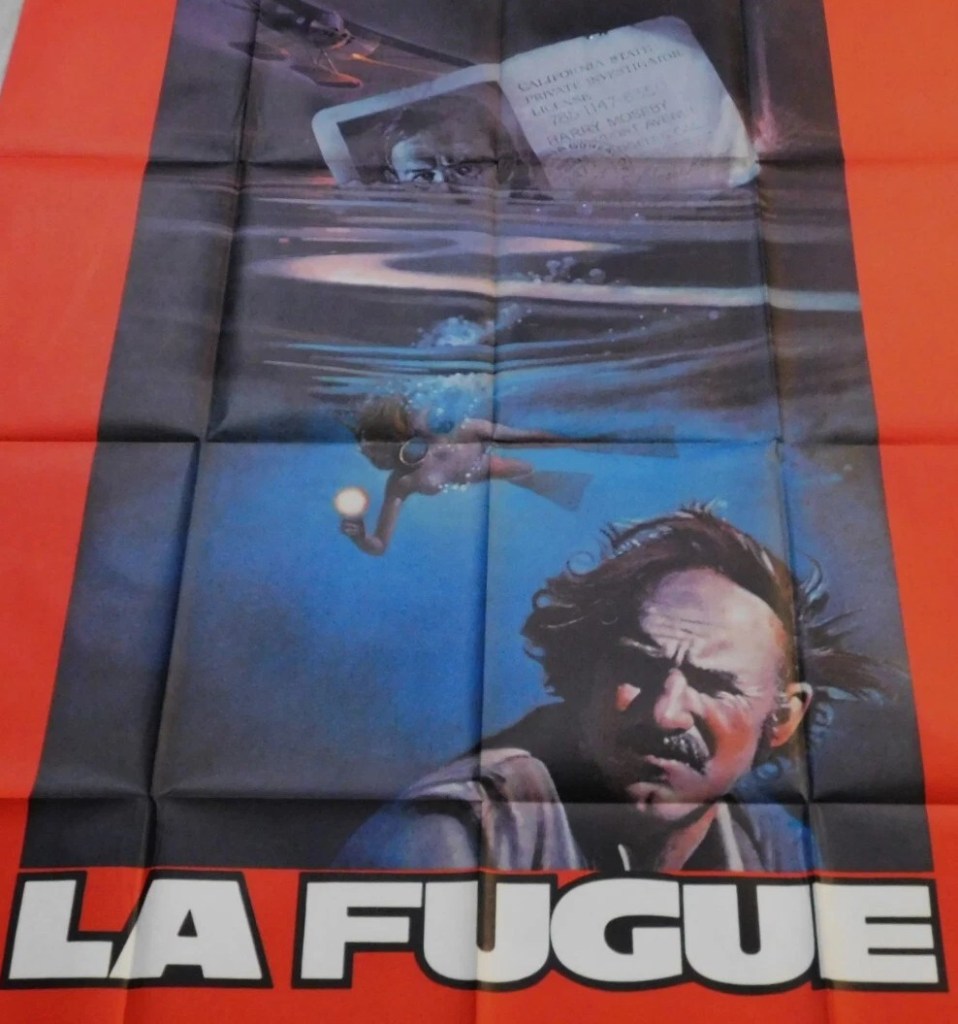
In a decade majoring on disillusion, Night Moves set a new template. Previously, the private eye, no matter how cynical, remained a hero, walking the mean streets, always coming out on top. Even Jack Nicholson in Chinatown won the day, exposing corruption, and Elliott Gould was as cool as the cats he preferred in The Long Goodbye (1973).
Moseby isn’t that good at his job. Little detection is required to track down missing Delly Grastner (Melanie Griffith), whose alcoholic mother Arlene (Janet Ward) requires her returned so she can claim an alimony check. This takes Moseby to old buddy, stunt coordinator man Joey (Edward Binns), making a film in which Delly is an extra and her sometime boyfriend Quentin (James Woods) a mechanic. And then onto the Floridsa Keys where the girl is hiding out with her stepfather Tom (John Crawford) and his younger sensuous ex-stripper girlfriend Paula (Jennifer Warren).
As the body count climbs – none of it Moseby’s doing, he’s not in the pistol-packing Dirty Harry league – and a boat wreck is found by Delly while snorkelling, the mystery deepens. But unlike most movies in the genre where the private dick is single or divorced, Moseby is (or was) a happily married man. And where in most movies in the genre, the personal life is left behind once the sleuth is on a case, here Moseby’s head remains filled with betrayal. His wife hasn’t even swapped him for a romantic hunk, instead his rival is smaller and walks with a limp.
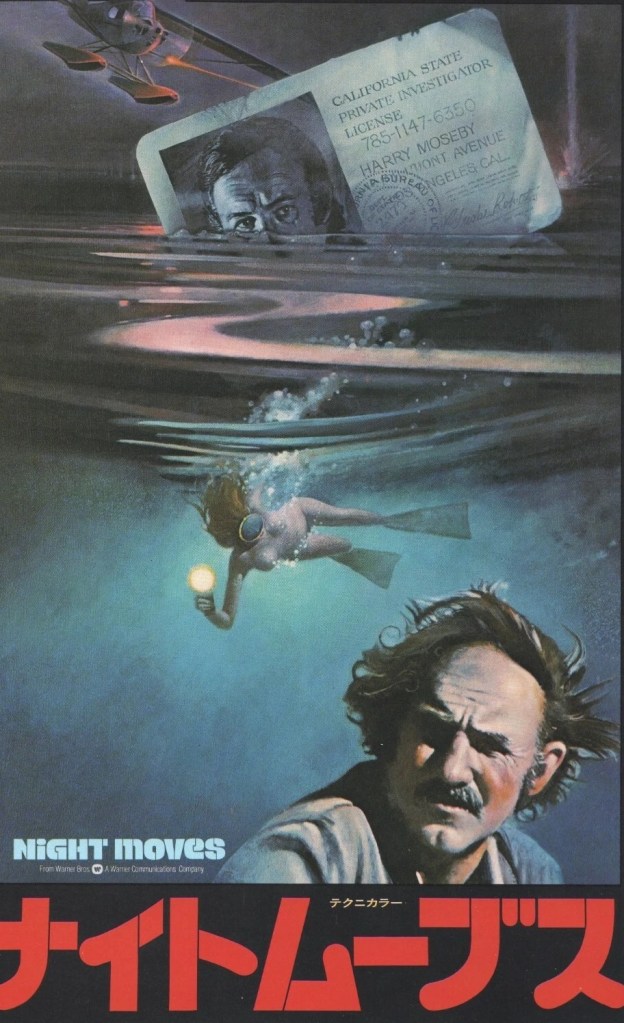
Instead of Ellen taking the blame for the situation, Moseby is forced to confront his shortcomings which, of course, include not being able to talk about his early life or his feelings. Which means he’s primed to fall for Paula. Being the macho man, he thinks he’s making the running but in fact she’s using him as a patsy. And soon, just as he’s not spotted signs that this wife was being unfaithful, so, too, his misreads everything about the set-up at the Florida Keys and only discovers, when it’s too late, that he’s been played for a fool.
Usually, the protagonist in these pictures gets away with a quip or is disinclined to take commitment seriously, bed-hopping like James Bond. But Moseby is uxorious and finds it impossible to come to terms with his wife’s deceit. Once in a while he’s able to verbally let go, but mostly Hackman hardly needs dialog to convey his inner feelings to the audience. It’s an acting master class.
And it’s a very bold downbeat ending, the metaphor of a boat going round in circles is easily indicative of Moseby. You’re not going to get a more complicated character in the entire genre than Moseby and this is Gene Hackman (The Gypsy Moths, 1969) at his very best even though his peers didn’t notice, no Oscar acclamation forthcoming. The female roles are distinctive, Melanie Griffith (Working Girl, 1988) theoretically the most auspicious but all the women deceive, Jennifer Warren (Sam’s Song, 1969) slinky about it, while Susan Clark (Coogan’s Bluff, 1968) turns the situation back on her husband.
Arthur Penn’s (The Chase, 1966) career was already on the slide after the critical and commercial success of Bonnie and Clyde (1967) and revisionist western Little Big Man (1970). Warner Brothers didn’t like the finished result and neither did critics nor moviegoers, so in general it’s fallen away in public esteem.
Demands re-evaluation.
 The Magnificent 60s