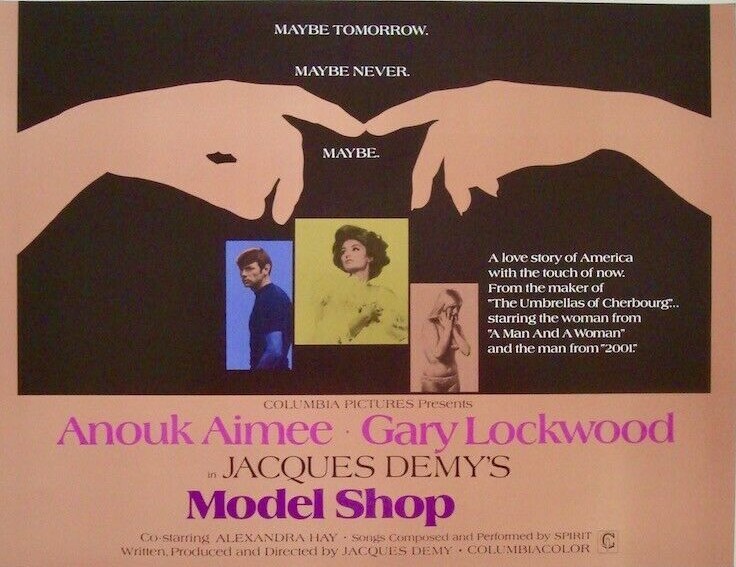
Surprising number of similarities to The Appointment (1969), including the aura of seediness, but lacking that film’s inherent tension or style. Lola (Anouk Aimee) is another model pursued by a another man who catches a glimpse of her in the street as in the Lumet affair. But it turns out a “model shop” is a tacky dive where men pay to take photographs of semi-naked women rather than anything to do with haute couture.
Lola is as depressed as Carla in The Appointment and for the same reason, abandoned by her boyfriend, who has gone off to gamble in Las Vegas. But new lover George (Gary Lockwood) is the antithesis of the successful Omar Sharif. You are inclined to give him a free pass because he’s got the draft hanging over him.
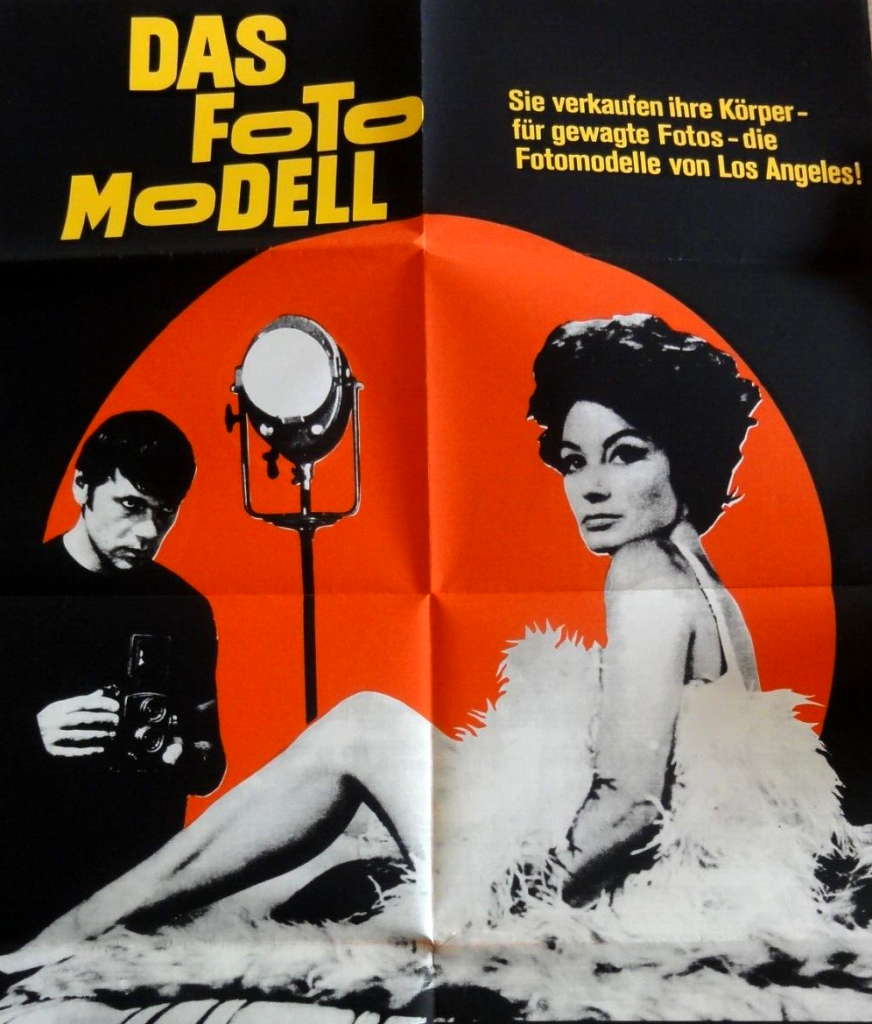
If he was disaffected, that could explain it. But he’s just bone idle, sponging off everyone in sight, musician friends and more ambitious girlfriend Gloria (Alexandra Hay), an actual model, though more in the commercial line than high fashion, but bringing in enough to pay his bills.
You might feel sorry for him that “the man” is trying to repossess his car until you see it’s an MG coupe that an unemployed guy could not afford and that when he does get enough cash to pay the outstanding payment he comes up with another excuse rather than parting with the money. He studied architecture but hasn’t the gumption to make his way in the adult world whereas Gloria accepts she might have to sit in a bathtub naked for a potential client if she wants to get on.
He won’t marry Gloria or give her a child so she’s full of empty threats to leave him but doesn’t carry that out until she discovers photos of Lola that he’s left lying around. There’s not much going on. It’s certainly a downmarket world. George and Gloria lived in a rundown suburb of Los Angeles with a pumpjack drilling for oil outside their front door.
A good chunk of time is spent on the road, not “out along the highway looking for adventure” as in Easy Rider (1969) and not in the great outdoors, but mindless drifting, or tailing Lola, around L.A.. There’s some kind of deadline on their romance – she’s headed home to France, his call-up is immediately imminent so unless there’s some expose of the seedier side of the city going on there’s not much else, just two people who lost their way finding brief solace in each other.
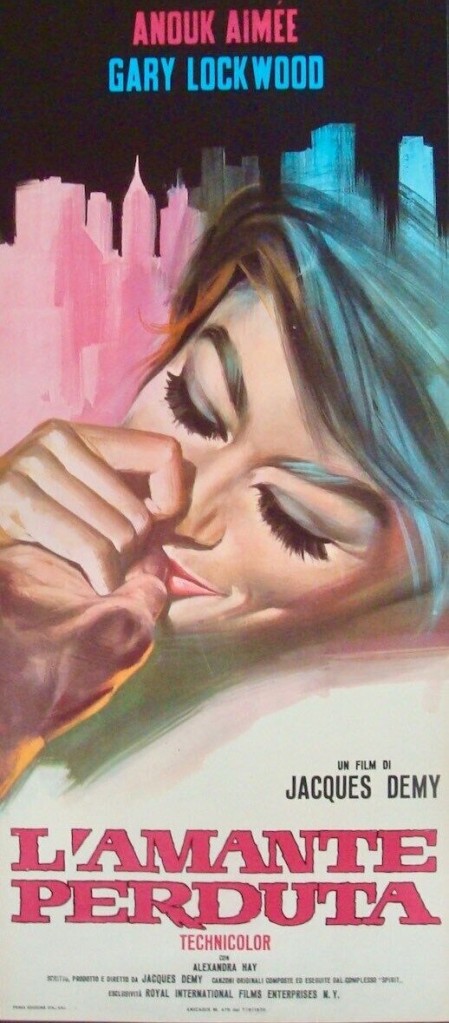
Anyone attracted by Anouk Aimee’s top billing is going to be disappointed, not in her performance, which reveals a markedly vulnerable gal beneath the glam (though she does dress haute couture). But Gary Lockwood (They Came to Rob Las Vegas, 1968) is front and central; she doesn’t turn up until about a third of the way through and only has a handful of scenes thereafter. So it’s that kind of slice-of-life movie, what the British used to term a “kitchen sink” picture, and takes place over a short time-span.
Gary Lockwood is excellent but he’s not asked to do very much, and you kind of get the impression he’s just being his charming self. Aimee seems to have cornered the market in playing “degrading” women, accused of being a sex worker in The Appointment and loaned out to high-class friends of her husband in Justine (1969). In some senses, bringing out the character behind the tawdry image appears her forte. Alexandra Hay (Skidoo, 1968) is equally good, the grit behind the glam, not just a pretty face.
But just nothing happens. The background – the draft, potential Vietnam peace talks, the occasional joint – is scarcely a visceral snapshot of America at the time. European director looks at America and doesn’t much like what he sees, but less obviously a commentary on society along the lines of Antonioni’s Zabriskie Point the following year or even the home-grown Medium Cool (1969).
And lacking the style of Demy’s previous outing, the exuberant musical The Young Girls of Rochefort (1967) and you keep on expecting – hoping – the characters are going to burst into song. Oddly enough, it suffers from an unexpected culture clash. Relocate the same characters and the same story to Paris, speaking French with subtitles, and it would have worked better no matter how slight the story because it would automatically be infected by Gallic charm and even the poorer streets there would be interesting.
Carole Eastman (Five Easy Pieces, 1970) a.k.a. Adrien Joyce contributed to Demy’s screenplay. Members of rock band Spirit appear in the film and provide several tracks but there was no soundtrack album to take advantage of their involvement.
You might be interested to know that Harrison Ford was at one time up to play the lead. Hay was a starlet under contract to Columbia who financed the film. Equally oddly, it was not sufficiently arthouse to appeal to the cognoscenti and it was little surprise that the studio eventually chose to promote the seedier aspects in the marketing.


 The Magnificent 60s