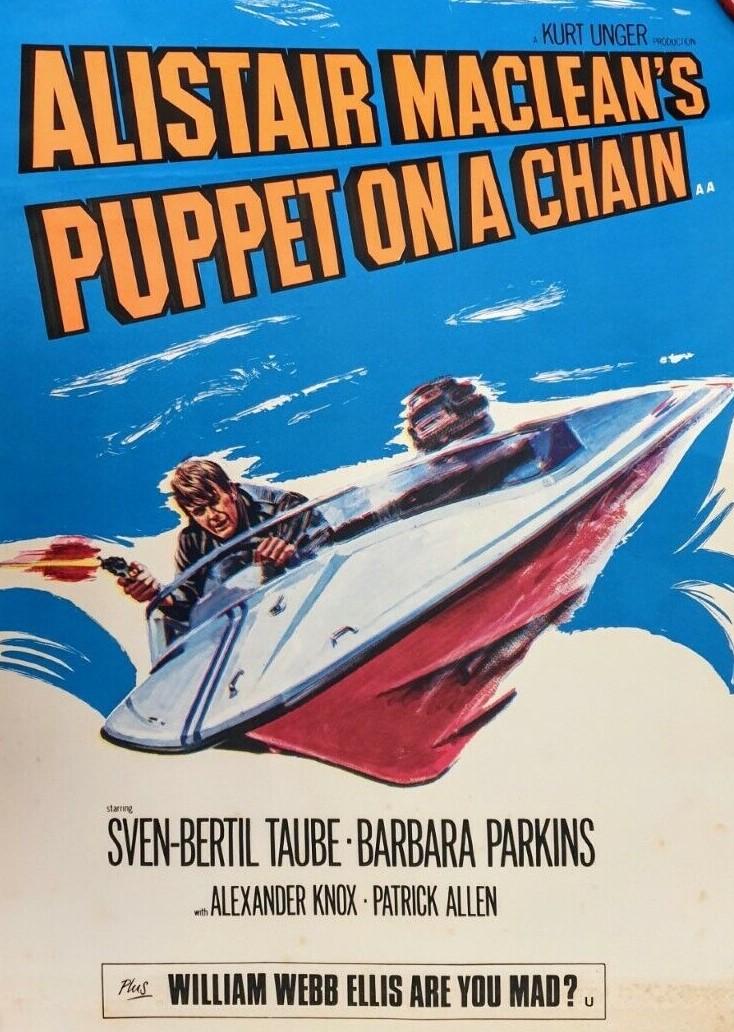
Behind the Scenes – “Puppet on a Chain” (1970)

There was always money involved. For an author whose string of bestsellers made him a fortune, Alistair MacLean found it particularly hard, in part due to poor investment and advice, to hold on to his millions. Victimhood was his default position for he tended to view himself as underpaid, not to mention ripped-off, by filmmakers, especially when the likes of The Guns of Navarone (1961) and Where Eagles Dare (1968) scored so highly at the box office.

That Puppet on a Chain arrived in cinemas the way it did was the result of the financial complications inherent in the novelist’s life. He had been too busy to write a screenplay for  When Eight Bells Toll (1971) mostly because he was consumed with unravelling his finances and setting up a more lucrative template for his movie ventures.
He planned to form a partnership whose sole aim was the production and exploitation of his books as vehicles for films. To this end, MacLean alighted on budding director Geoffrey Reeve, then merely a highly sought-after helmer of commercials and promotional films for industry.

You might accuse Reeve of a bit of double-dealing himself since at the time he met MacLean he was working for the author’s nemesis Carl Foreman, producer of The Guns of Navarone. Foreman had adapted that book for the screen, considerably altering the source material in the process. Excluding MacLean from the party, Foreman had his eyes set on a sequel with the dull and very un-MacLean title of After Navarone

But the instigator of the Reeve-MacLean partnership came from an unusual source, London wine merchant Lewis Jenkins, who in alliance with the other two formed the equally un-MacLean-named Trio Productions.

Jenkins was more than a wine seller. He was a high-flier who moved with a grace the grumpy Scotsman envied in the kind of classy circles that were, despite his fame, closed off to a mere novelist. He had come across details in a trade paper of MacLean’s deal for Ice Station Zebra (1968) and felt the author was being underpaid and, in a letter, he said so.
You couldn’t get MacLean’s attention more easily than plugging into his sense of victimhood. But it wasn’t movie talk that first made Jenkins indispensable. Horrified at the state of the author’s financial affairs, Jenkins put MacLean in touch with international tax lawyer Dr John Heyting who in turn handed him over to David Bishop, one of whose first tasks was to upbraid Foreman about his temerity on jumping the gun on Navarone and excluding the author.

While the triumvirate’s first notion was of approaching Columbia to fund a sequel, soon they  were dealing with a much bigger fish. As unlikely as it sounds,  David Lean (Doctor Zhivago, 1965) had expressed considerable interest in turning the threesome into a foursome. But the tantalizing possibility of a Lean-MacLean movie fell at the first hurdle as the director was tied up in developing Ryan’s Daughter (1970)..

It cost MacLean £100,000 to extricate himself from a financial muddle in which his advisers raked in more money than the man they supposedly represented. But it wasn’t just money that was wreaking havoc with his life. Though married, MacLean had a complicated love life and was a very heavy drinker, so it was testament to his discipline that he got any writing done at all.

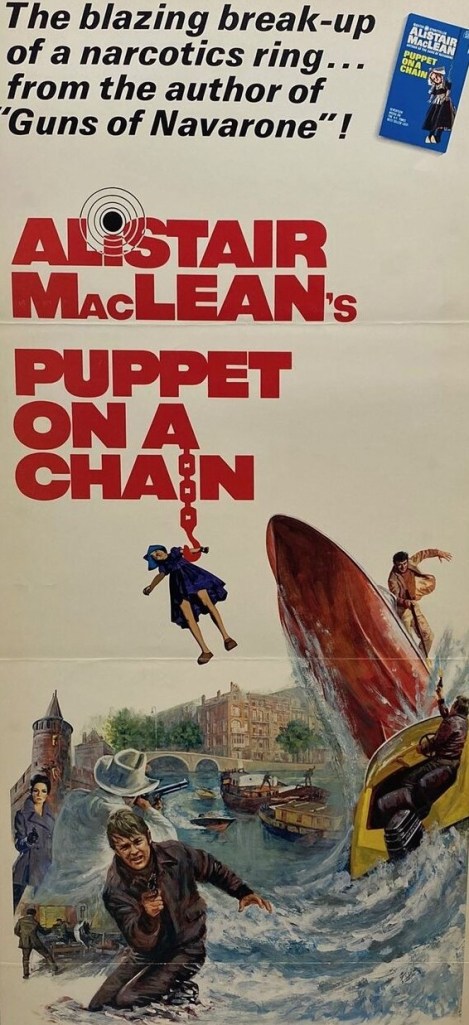
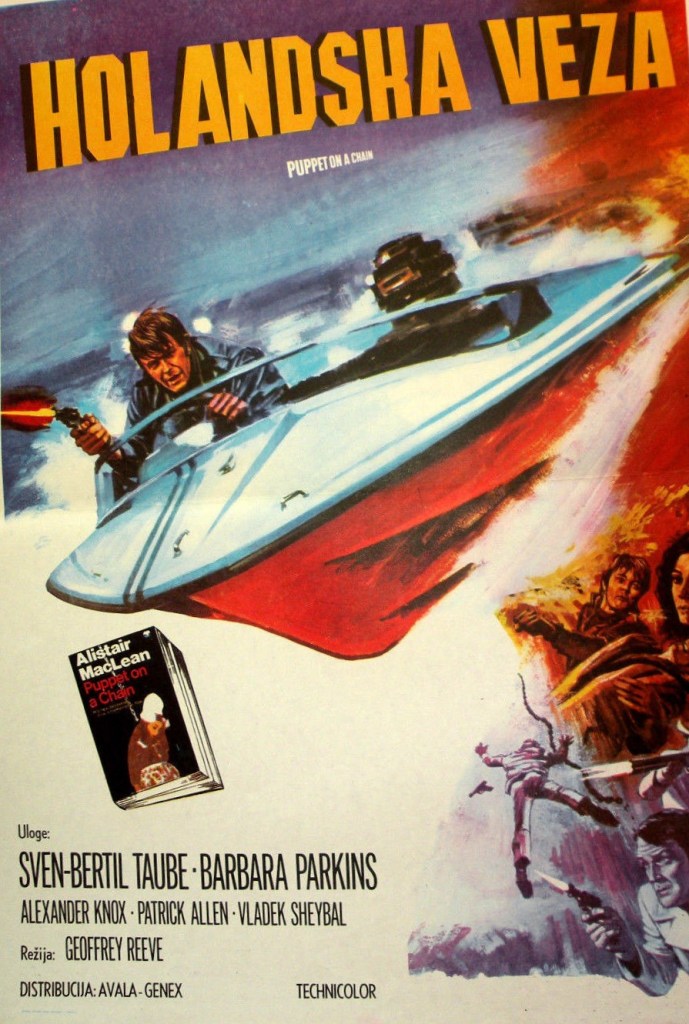
The idea for Puppet on a Chain originated from a trip to Amsterdam with Reeve, who had mooted the notion of a thriller with a drugs background, during which by chance MacLean alighted on the image that sparked the title. What the author saw was harmless enough, a puppet dangling like a toy from a warehouse in the docks, its purpose probably nothing more than advertising the goods inside. It took an imagination like MacLean’s to turn it into something more sinister.

Once MacLean had written Puppet on a Chain, published in 1969 to commercial and critical  acclaim, he handed the rights over to Reeve to negotiate a deal with a major studio. And it says something for the solidity of their partnership that it hit the screens one year later, quicker than When Eight Bells Toll, published in 1966, which took five years to be turned into a film.

Although critics tended to argue that little altered from one book to another, most failed to comprehend that Puppet on a Chain represented a subtle evolution. “It was a change of style from the earlier books. If I went on writing the same stuff, I’d be guying myself,” he said.

But the New York Times noticed and in a lengthy review elevated him to stand comparison with Graham Greene and Eric Ambler, the doyens of the literary thriller. “It’s a top-drawer effort,” commented critic Thomas Lask “If you have any red corpuscles in your blood, you will find your heart pumping triple time…The writing is as crisp as a sunny winter morning and MacLean has provided a travelog for a part of Amsterdam the ordinary tourist is not likely to go.”

But to his intense disappointment, the author discovered that his name alone, while it opened doors, did not unlock sources of funding. One of the two top British studios, ABC, its film arm trading as the Associated British Picture Corporation, which also owned the country’s largest cinema circuit (a state of affairs outlawed in the U.S, since 1948), was interested.  ABPC wasn’t entirely avowed of MacLean’s potential, having purchased his debut novel H.M.S. Ulysses but left the project on the shelf.  

MacLean was so keen to get the green light he sold the project, including the screenplay and Reeve’s fee, for $60,000, a substantial drop from the $100,000 (plus significant profit share) he received for screenplay alone for Where Eagles Dare. There was a caveat. If the rushes didn’t appeal, ABPC could replace Reeve.

Since advertising scarcely qualified as filmmaking at all, the number of directors who made the jump from making commercials (itself in its infancy) to making movies was virtually nil. This was long before the Scott Brothers, Ridley (Blade Runner, 1982) and Tony (Top Gun, 1986), and Adrian Lyne (Fatal Attraction, 1987) established commercials as a feeder route for Hollywood,

Having purchased the script for a bargain basement price, ABPC’s Robert Clark sought to offset the costs by involving an American partner. After softening up MGM’s Maurice Silverstein over lunch about the prospects of a joint production, Clark sent him a rough script of Puppet on a Chain. Silverstein was not impressed. The plot was too familiar. “Thanks ever so much for letting us have a look at the script,” wrote Silverstein. But that was as far as he went. No enthusiasm, no money.

But the MacLean name was sufficient to interest independents. Israeli Kurt Unger, former United Artists European production chief, whose father had been a distinguished producer, was in the market for a prestigious production, having cut his teeth on Judith (1966) starring Sophia Loren and Jack Hawkins. His sophomore effort was less successful, The Best House in London (1969) starring David Hemmings, a feminist comedy set in a brothel.

But he set up the picture, albeit with a good bit less funding than had been available for Where Eagles Dare and unlikely to even approach the $1.85 million it cost to make When Eight Bells Toll.

Lack of finance limited the talent available. There was no question of approaching a Richard Burton, much less a Clint Eastwood. And it’s more likely that Swede Sven Bertil-Taube was approved as a name with European appeal and following The Buttercup Chain (1970) could easily be sold as the next big thing in America, bearing in mind that espionage had paved the way in the previous decade for stars like Sean Connery and James Coburn.

Barbara Parkins (Valley of the Dolls, 1967) would also help guarantee media attention in the U.S.  You might be surprised to learn rising British star Suzanna Leigh (The Lost Continent, 1968) was also on board. Her part was cut from the final film. Supposedly, she played a villain, but it’s more likely she was hired for the role of Belinda, one of the hero’s sidekicks in the book.

While hardly a big name, Brit Patrick Allen (The Devil Rides Out, 1968) brought dependable support and was well-known enough in the home market. Pole Vladek Sheybal (Women in Love, 1969) was always good copy, having twice escaped concentration camps in World War Two. Another Pole, Ania Larson, was making her movie debut and is still working – you might have caught her in The Witcher (2021) mini-series. A maiden movie outing for Greek actress Penny Casdagli was also her last.  

One of the names in the aforementioned David Bishop’s contact book was Piet Cleverings, Amsterdam’s police chief, so permission for use of locales and, more importantly, the city’s extensive canals, was readily granted. Unusually, and presumably due to his backing of the partnership, MacLean intended to spend time in Amsterdam observing the filming. He brought over quite a party including his brother and wife and publisher Ian Chapman and wife plus Bishop.

But any sense of triumph at his role in putting the picture together was dashed by the news that his protégé Reeve had been replaced. “It was Geoff  Reeve’s first film on this scale,” reported Unger, “and there some things not right. We brought in Don Sharp as a second unit director responsible for such scenes as the motor-boat chases.”

Unger had already taken steps to re-shape the script, calling on television writer Paul Wheeler and Sharp to add an extra dimension. In the producer’s view, MacLean “was a good writer but he was not a screenwriter. And what he wrote as a screenplay for Puppet on a Chain, I’m afraid, had to be rewritten.”

Understandably, MacLean was incandescent with rage at this “rubbishy travesty of what I wrote.” You could almost feel his spleen dripping onto the page as he wrote to Unger, complaining about Wheeler’s involvement. “If he can improve on practically everything I write and is clearly of the opinion that he is so much the better writer, why is it I’ve never heard of him?”

He went on: “I feel like a doctor who has been called in after a group of myopic first-year medical students with hacksaws have completely misdiagnosed and performed major surgery on a previously healthy patient.”

It was a poor introduction to the role of co-producer, although clearly MacLean didn’t think he had to protect his screenplay in the way that someone like Foreman would. If surrendering the rights for a low price furnished him with any power, he didn’t know how to use it.

Sharp was an unusual addition. Rather than being a go-to second unit director he was an experienced director in his own right, a favorite of Hammer and independent producer Harry Alan Towers, for whom he had helmed such films as, respectively, The Devil-Ship Pirates (1964) and Our Man in Marrakesh / Bang! Bang! You’re Dead (1966).

Unfortunately, his movie career had turned turtle, film work drying up after The Violent Enemy (1967) – television (episodes of The Avengers and Champion in 1968) paid the bills – and again after the lackluster Taste of Excitement (1969). In fact, aside from Puppet on a Chain, he remained in movie limbo for another four years.

Sharp argued that the script for the boat chase was “not good enough,” especially if it was to be the highlight of the film. “I chose the location,” recalled Sharp, “I talked to the police, got the boats and worked with a wonderful bloke there called Wim Wagenaar, who ran a restaurant.” As well as driving one of the boats, Wagenaar orchestrated jumping the boats in the canal.

“We sketched out a whole sequence, and some of the things, other boatmen said you can’t do this. I wanted his boat to run up on to the back of another boat and push it along. They said it won’t… I said, all right, let’s try it. And it did work. And we ran into bridges and came spinning round the corner.

“One time we had to wait for a little while because I had broken, I think it was, four boat hulls and smashed about eight Mercury engines. And they couldn’t get another one, they had to fly them in from Canada. It got a bit expensive.”

Part of what made the chase so thrilling was the unusual manner in which it was shot. Rather than shooting it in small sections and then editing it all together, Sharp took the advice of his camera operator Skeets Kelly. “(He) said to me, don’t cut it into pieces if you can do it all in one. . . . I had considered doing it in a couple of cuts, and Skeets talked me out of it. He said no, there’s so much more impact if you don’t  because the audiences are very intelligent these days, so au fait with cinema, that they will know . . . But to go and do it in the one [shot], it’s  absolutely for real.

Four weeks had been allocated for the boat chase and once it was complete Sharp received another call from Unger who was dissatisfied with the Reeve version. Sharp met with Unger and Lenny Lane, who had provided American funding. His opinion was: “bit of a mess.” Unger was a bit more forthright. “We’ve either got to spend more money and fix it or we’ve got to cut our losses and not release it.”

Sharp’s response was: “It’s a great shame because the boat chase is good and there are some good things in it. So I said, first of all, give me a couple of days in the cutting room with it, to look at it and make some notes, then I’ll tell you whether I think you can save it.”

After spending time in the cutting room, Sharp drew up a list of amendments. Unger talked to the financiers, sorted out the extra cash and commissioned Sharp to reshoot certain sequences, alter the plot and change the ending. Working with a Moviola of the original footage, Sharp could ensure new footage matched whatever was in the can.

He noted that Reeve “didn’t have a story sense then, as a director…and each set-up…looked like part of a television commercial and wasn’t there for the drama of it or just to let the audience know what was going on.”

For example, Sharp had to re-edit and re-film parts of the nightclub sequence. “Seventy-five per cent of it was fine…I did have to go and reshoot it because to shoot a couple of really good, important, dialog lines to do with the plot (were shown) in a shot between the legs of a dancer… done for a visual effect” rather than to tell a story.

MacLean went off in the huff to the extent that he failed to show up for a press conference in Amsterdam only to be later found to be so inebriated that addressing the world’s media would have proved an embarrassment.

MacLean, however, had the last laugh. The movie was a huge hit in Britain on initial release, “making a mint of money,” an automatic candidate in 1973 for a reissue double bill with When Eight Bells Toll.

You couldn’t get higher praise that a James Bond producer finding inspiration in your picture. Added Sharp, “The funny thing was that, when it came out, Harry Saltzman and Cubby Broccoli, who knew Kurt Unger, said, how did you do that boat chase? Because they’d never thought of one, and from that they did Live and Let Die. And they spent on the boat chase in Live and Let Die more than we spent on the whole film, both units and the reshoot, on Puppet. They did it marvellously, there’s  no doubt about it, but cut, cut, cut . . .”

SOURCES: Jack Webster, Alistair MacLean, A Life (Chapmans Publishers, paperback, 1992) p142-145, 152-157; Dean Brierley, “The Espionage Films of Alistair MacLean Part 2,” Cinema Retro, Issue 14, p36-38; Thomas Lask, “End Papers,” New York Times, November 4, 1969, p43; Barry Norman, “Alistair MacLean, Occupation: Storyteller,” Daily Mail, April 27, 1970; Eddy Darvas and Eddie Lawson, Don Sharp, The London History Project, November 1993; John Exshaw, “Don Sharp, Director, An Appreciation,” Cinema Retro, Issue 20.

Behind the Scenes – “Play Dirty” (1969)

Hungarian Andre de Toth’s somewhat cavalier career had become ultra-cavalier during the 1960s. Best known for westerns such as Ramrod (1947) with Joel McCrea, Springfield Rifle (1952) starring Gary Cooper and The Indian Fighter (1955) headlined by Kirk Douglas plus House of Wax (1953), he was not, you might have imagined, riding high in the critical stakes. Hollywood considered him a journeyman. Esteemed French magazine Cahiers du Cinema, which had championed Hitchcock in the face of mainstream indifference, believed otherwise and interviewed him for a 1967 issue.

He might have been the name of everyone’s lips for more hard-won commercial reasons had attempts in the late 1950s come to fruition of filming the Ian Fleming portfolio beginning with Dr No. Instead, he was deemed a spent force and during the ensuing decade limited to only four films:  Man on a String (1960) and the Italian-funded Morgan The Pirate (1960), The Mongols (1961) and Gold for the Caesars (1963).

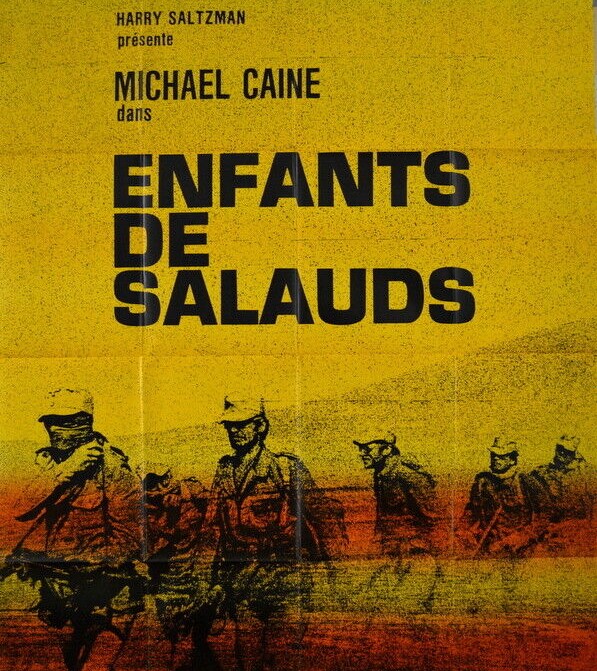
The Fleming enterprise had put him into the orbit of Harry Saltzman which led to a producing gig on Billion Dollar Brain (1966). Saltzman was also involved in The Deadly Patrol – the basis of Play Dirty – with French director Rene Clement (Rider on the Rain, 1970). According to de Toth, Saltzman wanted to elevate himself in movie circles. He “looked down on the Bond pictures” and wanted to make more serious movies.

And the pair clashed on style. “Genteel Rene wanted to make ‘a poetry of war.’ Harry wanted blazing guns and roaring tanks.” Saltzman feared Clement’s version  “was going to be some kind of art movie.”

Play Dirty was originally set to be shot in Israel – even though insurance was impossible – as a favor to Arthur Krim, head honcho at United Artists which was providing the finance. In the end filming was switched to Spain, even though neither Saltzman nor Clement was familiar with the terrain of Almeria, and the reality fell far short of the Lawrence of Arabia landscape both envisaged.

De Toth, by now part of the Saltzman entourage, was again assigned production duties with a new script to be written by de Toth, John McGrath (Billion Dollar Brain) and Melvyn Bragg (Isadora, 1968) as long as the credits made room for Lotte Colin, Saltzman’s mother-in-law. Shuttling pages to Saltzman, de Toth had little conviction the revised screenplay was being passed on to the Frenchman.

Michael Caine, already contractually committed, was keen to make a movie “good, bad or indifferent” with Clement. Richard Harris, on a salary of £150,000, pulled out of the role of Capt Leach after script rewrites eliminated four of his major scenes. “I wasn’t going to play second fiddle to Caine,” raged Harris. (Nigel Davenport, originally in a supporting role, was upgraded to take his place). Caine didn’t like the script. But it was either go ahead or Saltzman lose out on all the money already spent. Sets were built with still no guarantee from Clement that he would actually turn up.  

The inducement of receiving the final chunk of his salary, payable on completion of the picture, did the trick. At first Clement appeared fully committed, altering the script, and “observant and meticulous about details.” But soon mere tinkering escalated into demanding to “revamp the set, find new locations maybe in North Africa; in short, shoot another film.” When de Toth turned up on set, Clement vanished. Then the director went sick but refused to admit a doctor to his hotel room. A three-day enforced hiatus ended after De Toth was subjected to a barrage of abuse down the telephone by Saltzman and then instructed to get on the set and start shooting.

“It was a strange way to get the directorial assignment,” noted de Toth. “I would have been a hypocrite to deny I wasn’t happy. I had wanted to do a story like Play Dirty since I had wallowed in the blood of futility in Poland.” But that combat experience came in handy. “I had learned in Poland how to crawl under barbed wire with fishhooks dangling on it and if you were caught and the tin cans rattled you had no chance to start your last prayer.” De Toth’s acquaintance with the realities of war inform the film. Location manager Andrew Birkin, brother of actress Jane Birkin, described de Toth as “more of a sergeant-major and he made the picture that way which was probably the right way to do it.”

“Michael Caine was probably more disappointed than I and I understood him and his resentment of the film. He felt uncomfortable, insecure, in the film without Clement, which made his portrayal in Play Dirty so remarkable, considered by many one of his very best…My respect for his professionalism grew as we drilled.”

Unexpectedly in the desert, rain came to the aid of the already hard-pressed production. The downpour turned the sand into a flower garden. Shooting was postponed for two weeks allowing the cast and crew to bond and iron out the script.

Since the beginning of the decade Almeria, decidedly smaller than it usually appeared, was a an in-demand location, favored by King of Kings (1961), El Cid (1962), Lawrence of Arabia (1962), Cleopatra (1963) and, following the success of A Fistful of Dollars (1964) hugely popular for westerns. The local authorities had regulations in place regarding usage, limiting employing of the sand dunes made famous by Lawrence of Arabia. “You got them for two weeks because another picture was coming in.” Even so, competing movies often got in each other’s way.

Michael Caine recalled  that one scene requiring German tanks to advance over the desert sands were “confronted round one of the dunes by a horde of American Indians in full battle cry in pursuit of a nineteenth-century stagecoach” for the western Shalako (1968). The noise of the tanks made the horses rear up, throwing off their riders, and the war picture production was delayed while all evidence of the western, including, of course, mounds of horseshit, were cleared away.

Caine remembered the experience more for the opportunity to meet Brigitte Bardot, the female lead on Shalako. One afternoon his peace was disturbed by the arrival of Bardot who uttered the immortal words, “I have been looking for you everywhere.” Caine leapt to his feet, knocking over a table of drinks.” Caine’s assumption that the French sex goddess had her eyes on him was wide of the mark. Instead, it was Bardot’s assistant, Gloria who was keen to make Caine’s acquaintance, the actor falling far short of Bardot’s taste in men, extremely young and very dark.

Despite disgruntlement about not working with Clement and over the picture in general, there was a happy ending for Caine. For his 35th birthday present, Saltzman presented him with an envlope containing his contract torn up into small pieces.” From being beholden to Saltzman, albeit his salary on a seven-year contract signed in 1965 was incrementally increased on an annual basis – the fee for The Ipcress File was just £6,000), Caine was now a free man.

Lotte Colin hated the end result and tried convincing Saltzman to shelve it – unlikely given the millions involved and the commitment to a distributor and not least because Caine’s name attached guaranteed audience interest . But she did succeed in removing elements of the Michel Legrand score. And she did replace de Toth on the screenplay credits.

Play Dirty disappointed at the U.S, box office bringing in a miserly $650,000 in rentals (the amount returned to studios once cinemas have taken their cut of the gorss). It did better overseas with $2 million in rentals. but since it cost $3 million it incurred a loss.

“Play Dirty” managed to offset some of its losses by being a regular on the reissue scene – though it would probably have been hired for a fixed fee rather than a percentage. It later showed up as the support to “Beach of the War Gods” (1973).

This proved to be de Toth’s last directorial assignment. But it might not have been. The bosses of new production shingle National General were ardent pacifists and wooed de Toth. Offered the choice of producing or directing western El Condor (1970) he chose the latter.

Nowadays de Toth is best described as a director’s director, an “unsung hero,” by the likes of Martin Scorsese who confesses to being “fascinated” by the “underlying anger and determination” that often makes the director’s movies “very disturbing.” 

“Take Play Dirty for instance,” he observes. “The characters have no redeeming social value; they don’t think, they just act. They have a job to do and they’re going to do it. The nihilism, the pragmatism – it’s at least unsettling. Disguise becomes a way to survive that brings doom at the end.”

SOURCES: Andre de Toth, Fragments: Portraits from the Inside (Faber and Faber, 1996) p390-391, 399, 416,433-447; Michael Caine, What’s It All About? (Century, 1992) p247, 256; Michael Caine, From Elephant to Hollywood, The Autobiography ( Hodder and Stoughton, 2010) p142-144; Robert Sellers, When Harry Met Cubby, The Story of the James Bond Producers (The History Press, 2019) p182-184; De Toth on de Toth (Faber and Faber, 1997) p151, 158; “United Artists Corporation and Subsidiaries, Motion Picture Negative Costs for Pictures Released in the Year Ended January 3, 1970” (University of Wisconsin).  

Behind the Scenes: “The Ipcress File” (1965)

Producer Joseph E. Levine (The Graduate, 1967) would be cancelled these days for his treatment of Michael Caine back in 1964. Levine had stumped up (along with Paramount) the $1.7 million budget for what was assumed to be the actor’s breakout picture, Zulu (1964), and signed him up to a seven-year contract. Caine would receive $75,000 – his fee for Zulu had been just $10,000 – in his first year, with increments every following year.* But before the film was released Levine rescinded the contract on the basis that Caine “looked like a queer on screen.”

While Zulu was a box office smash in Britain, in the United States  it was a big flop despite the marketing dollars thrown at it by Levine. And nobody needed a younger version of the British stiff- upper-lip. And despite the buzz before the film opened, producers were not clamouring at Caine’s door, the only options on the table a small part in a television production of Hamlet at Elsinore (1964) and the leading role in The Other Man (1964), a television drama about Britain succumbing to the Nazis in 1940. 

That is, until Bond producer Harry Saltzman summoned him to his table in a restaurant and in a conversation that lasted all of two minutes offered him The Ipcress File and a seven-year contract. Aged 32 at this point, Caine was mature enough to be ranked a proper rising star, the casualty rate among the twenty-somethings accorded that status alarmingly high mostly due to their screen immaturity.

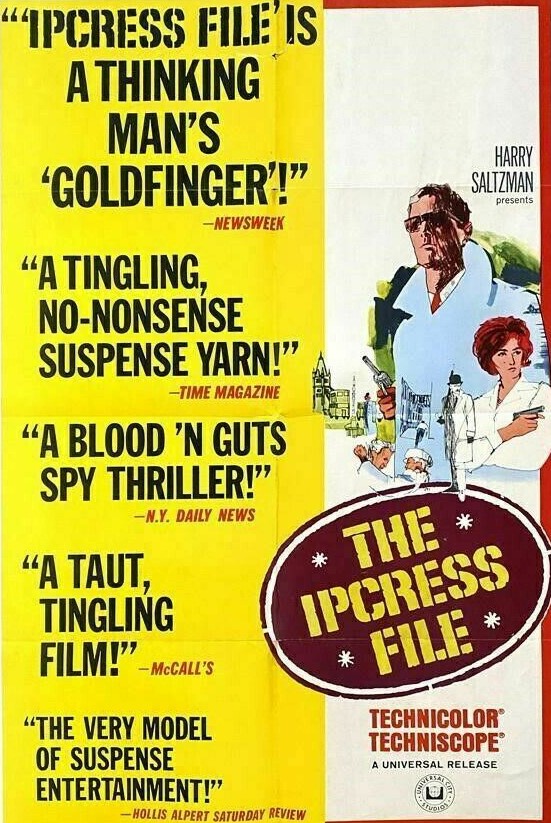
However, Saltzman owed his involvement in the picture to another chance meeting. He had been in the United Artists offices in New York when hair product entrepreneur Charles D. Kasher arrived to pitch Len Deighton’s novel The Ipcress File as a potential movie. Saltzman was looking for an alternative to James Bond that would appeal to international audiences with the emphasis on low-cost. He put together the picture on a budget of only $460,000. But the project looked dead in the water when original Hollywood backers Columbia pulled out shorlty before shooting was due to star. Universal saved the day.

Hammer director Jimmy Sangster recommended Canadian director Sidney J. Furie (Wonderful Life/Swingers’ Paradise, 1964) who had just turned down A Hard Day’s Night (1964) and just signed up to do indie horror movie Devil Doll (1964) before managing to ease himself out of that contract. 

Caine was far from first choice. Christopher Plummer had chosen The Sound of Music (1965) instead and Richard Harris, a bigger name in Hollywood after MGM roadshow Mutiny on the Bounty (1962) and a critical success after This Sporting Life (1963) turned it down in favour of Sam Peckinpah western Major Dundee (1965). In a bid to give the character the ordinariness he required Harry H. Corbett (Rattle of a Simple Man, 1964) was also considered. Caine had been sharing a flat with Terence Stamp (The Collector, 1963) but when Stamp decamped to America moved in with composer John Barry and was thus the first to hear the music Barry had dreamed up for Goldfinger (1964).

Aware  how easily contracts could be dissolved Caine “stuck to him (Saltzman) like a drowning man to a straw.” Thus, he was present when discussions arose over naming  the spy – anonymous in the book which was written in the first person. It was decided the character should have a dull name. “Harry” was chosen before everyone present realized the producer might just take offence. However, Saltzman’s real first name was Herschel, so he laughed it off.

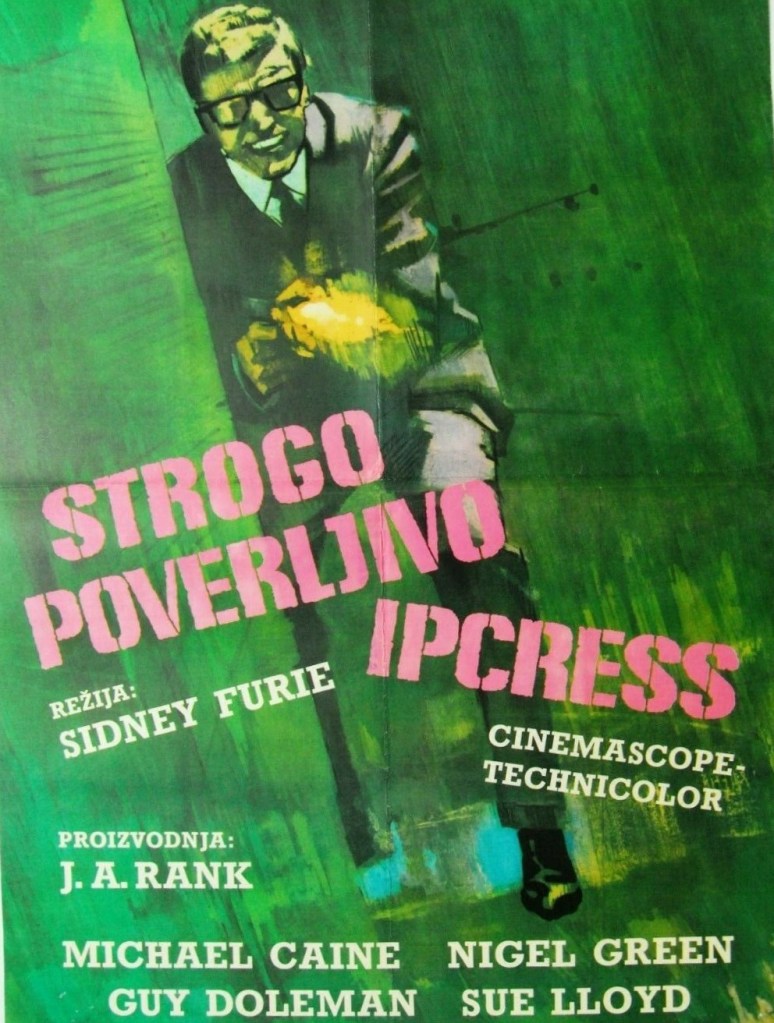
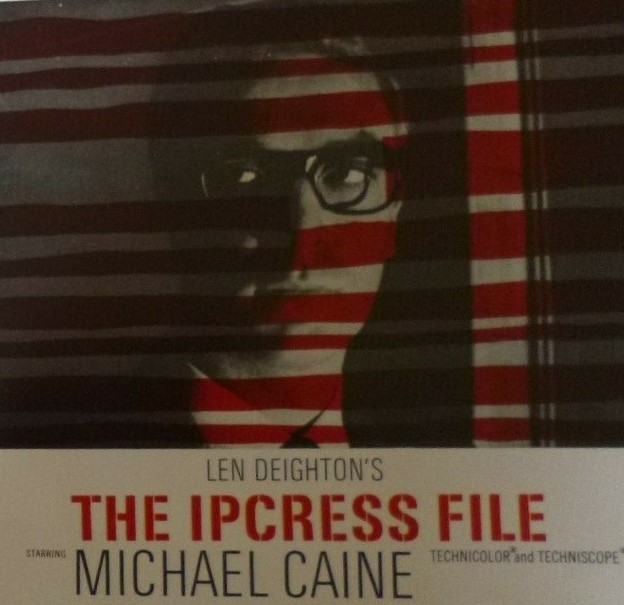
Saltzman also came up with idea of the character wearing glasses to make him look more ordinary. Caine was short-sighted in real life and always wore glasses and Saltzman noticed how comfortable he was with them, knowing how to handle them properly, unlike clear-sighted actors given spectacles for roles without having any idea what to do with them. It was surprising how fragile the spectacles were, though, Caine getting through the allocated three pairs and new supplies having to be commandeered. Saltzman took the ordinariness too far, suggesting a duel with supermarket trolleys as one of the big fight scenes.

Even though Furie had never met Caine, he disliked him, having come across the actor and his friend Terence Stamp at the White Elephant Club in London.  “I’d see Terence Stamp always there with this other blonde guy who wore glasses,” recollected Furie, “and they were rather chummy and always had these pretty girls at their table, and they were always laughing. And I sort of hated him at the time. Sometimes, I would get a bit drunk and tell whomever I was with, ‘I want to punch that guy in the face.’ I guess I was jealous.”

Joan Collins, completely out of favour in Hollywood and with no roles since The Road to Hong Kong (1962), auditioned – as did the unknown Carol White (Poor Cow, 1967) – for the part of Jean that went to Sue Lyons, in her first featured role. Otherwise, the main roles went to established British character actors including Nigel Green (Zulu), Gordon Jackson (The Great Escape, 1963) and Guy Doleman (Thunderball, 1965)

Interestingly, laughable though it is now, a character who cooked was considered to be gay, even though Palmer clearly used his cooking skills for female seduction. Unfortunately, no great cook himself, Caine was unable to crack two eggs with one hand and the movie used the hands of author Len Deighton, so excellent a cook he had written a cookbook. That explains why the hands that picked up the eggs on screen had blond hairs but the hands that cracked them had black hairs. The cooking scene remained the cause of macho concern, with one U.S. studio executive demanding the scene be re-shot with the woman cooking the meal. 

Director Sidney J. Furie (Wonderful Life/Swingers’ Paradise, 1964) hated the script and demonstrated his loathing by gathering cast and crew together on the first morning of filming and burning the script on the studio floor. While sticking to the basis of the screenplay, characters were encouraged to improvise. The poor script – Kasher had called it “garbage” – was the reason for introducing this kind of style, the script being rewritten as production proceeded.

Furie recalled, “All day there were two writers writing our scenes for the next day…We knew where we had to get to because Harry Saltzman, the producer, had ordered the set for the climax built, so we were stuck with it.” If the pages didn’t turn up, Furie found ways to instigate delay, getting the cameramen spending an inordinate amount of time lighting a scene. Furie sipped whisky in his Scotch all day, not enough to be inebriated but “it would help me go with my gut.”  The full complement of  writers involved in the script were James Doran and W. H. Canaway plus uncredited contributions from Lukas Heller (The Dirty Dozen, 1967) , Lionel Davidson (source author for Agent 8 ¾, 1964) , Ken Hughes (The Trials of Oscar Wilde, 1960) and Johanna Harwood (Dr No, 1962). 

Furie’s style on The Ipcress File was very distinctive – “scenes where you had someone’s shoulder blocking the screen and you could only see three quarters of the screen…If you try to use the screen the way a painter uses a canvas, somehow it’s not considered acceptable.”

Furie and Saltzman did not get on, the producer loathing what he saw as the director’s stylistic excesses and was convinced he required editor Peter Hunt to rescue the project once shooting was complete. For his part, Furie’s definition of producers was “the people who tried to wreck the movie.” Explained the director, “I was very depressed always when we started shooting, thinking that it was going to be really lousy and I didn’t know what to do, so I told myself I would come up with a style of shooting that is different. I put shoulders across the screen, I shot up at things, I shot down, just to make it different, to give it ambiance. It was done out of insecurity.”

At one point the director quit the set, resulting in a chase through London with the producer’s Rolls Royce in pursuit of the London bus on which the director had escaped. However, Furie  conceded, “The movie would not have gotten made without him (Saltzman) and his devotion to seeing it through, considering the problems with Universal, no matter how much I fought with him during the making of it.

To Saltzman’s astonishment when Peter Hunt arrived and examined the dailies he told the producer “this is the most brilliant footage I’ve ever seen” In order to convince the producer that it was all going to work, Hunt edited together the sequence where, with a marching band in the background, Nigel Green marches in step to the tempo followed by “dialogue between Green and Guy Doleman, carefully intercut with their closed umbrellas stepping with them in motion…Once I assured him (Saltzman) it would be a good film, he started getting confident.”

While British critics lauded the picture, its reception Stateside was mixed, “though the public weighed in heavily with its money”  – Variety noting not just that it was “short on thrills,” over-stylised, and could do with being a “a trifle more lively,” the overall verdict being that it was “so soft-pedalled that the audience will be screaming for more kicks” of the Bond kind.

*NOTE: In his autobiography Caine stated his $75,000 annual salary would double every year. That doesn’t sound right. A second year of $150,000 and even a third of $300,000 might be acceptable for a rising star. But if you were looking at $600,000 for his fourth year and $1.2 million for his fifth up to $4.8 million for the final year, that would make him by the end of the decade easily the highest-paid star in Hollywood. Caine would need to be working like a Trojan, four or five films a year, to come anywhere close to earning such sums and his movies would all have to be big hits. Of course, to cover his costs, Levine could farm him out to other studios, but even so, it was a disproportionate amount for any actor to earn. Even John Wayne and Steve McQueen would not pull in such a salary by 1971. 

SOURCES: Daniel J. Kremer, Sidney J. Furie: Life and Films (University of Kentucky Press, 2015), p74-84; Michael Caine, What’s It All About? (Arrow Books, 1993) p189-190, 195-210; Michael Caine, The Elephant to Hollywood (Hodder and Stoughton, 2010), p85-90; Paul Rowlands, Interview with Sidney J. Furie, Money into Light website, 2017.

The Bond They Couldn’t Sell – “Dr No” (1962)

United Artists almost had to give away this picture in the United States in order to gain bookings. Astonishingly, it was the picture the studio felt it could not sell. And for good reason – the studio hated it. “To them it was a B-picture,” recalled producer Harry Saltzman. “They said Hammer made the same kind of picture for one-third of the price.”

Dr No, produced on a miserly budget of $840,000 – $40,000 over budget –  had triumphed in London after snagging an opening run in 1962 at the Leicester Square Theatre primarily because the cinema needed to fulfil its quota of showing British pictures. Although it set a London box office record that would stand for more than a decade and proved a huge draw throughout Britain, U.S. studio United Artists had been burned once too often by British films that did well at home only to flop spectacularly in America.

Since box office statistics began to be gathered in earnest in the 1930s only a handful of British pictures mustered the $1 million in rentals required for entry into the annual list of box office champions. The bulk of the Ealing comedies had not made the grade, nor had such diverse successes as Doctor in the House (1954), Reach for the Sky (1956), Room at the Top (1959) and Saturday Night and Sunday Morning (1960). American audiences rejected British films as too slow, technically backward, and with accents it was often impossible to understand. Putting together an advertising, public relations and marketing package for them could easily cost as much as the film itself.

“When we had an answer print ready there were about eight people from United Artists including (chairman) Arthur Krim who came to see it,” Saltzman told Variety a quarter of a century later. “We started the film at 10am and when it was over a few minutes before twelve the lights came up and nobody said anything except a man who was head of the European operation and he said, ‘the only good thing about the picture is that we can only lose $840,000.’ Cubby (Broccoli) and I were just shattered,” confessed Saltzman.

That didn’t stop Saltzman and Broccoli embarking on their own campaign to raise awareness. They went right to the heart of the American exhibition community, taking space at the annual Show-a-Rama event in Kansas City in March, bringing along Sean Connery and models to represent the Bond girls. In addition, around the same time UA held a sneak preview in New York attended by the likes of Johnny Carson, Zsa Zsa Gabor and Rudy Vallee i.e. not that high-falutin’ an audience but at least the festivities were filmed and broadcast on NBC Monitor and Armed Forces Radio. Sean Connery also featured in a 12-minute segment in the middle of ABC Sunday Night at the Movies.

The Bond promotional bandwagon set up shop for a couple of days each in New York, Chicago and Los Angeles between March 7 and March 15 and pulled in journalists from the surrounding areas. There was also a touring show comprising 150 stills. And the marketeers had some success in targeting exhibitors through the trade magazines although the two-page article featuring in Box Office attempted to interest exhibitors on the basis of a marketing campaign in Connery’s native Scotland, which hardly seemed to be ideally suited. Nor did the marketing team really care what tricks exhibitors pulled to bring in the customers – for no particular reason one cinema employed a safe-cracking stunt even though the film’s story did not lend itself to that.

Dr No’s biggest marketing tools were photos of Ursula Andress in a bikini and copies of the Ian Fleming novels which since 1961 had the endorsement of President John F. Kennedy. Cheap paperbacks sold in drug stores and newsstands had created greater awareness of the character as well as acting as unpaid advertising for the forthcoming film.

But, basically, that was as much – or as little – as the film had going for it. In effect, no great marketing energy.

As it happened, exhibitors were beginning to organise their own marketing programs – “box office building campaigns” – and the Bond team were able to convince exhibitors in the Midwest and Southwest to kick off the idea with Dr No.

That meant shifting away from the conventional release pattern where a film opened in one cinema in a big city and then fanned out week-by-week to smaller venues and towns. Instead it was everywhere all at once which meant it cannibalized its own audience since it could not be held over in any cinema for a further week because the prints were already scheduled elsewhere.

Although most historians pinpoint New York as the launch pad for Dr No, United Artists did not want to risk the picture potentially flopping in that territory.  According to Harry Saltzman the first commercial showing, effectively a trial run, was in Atlanta, Georgia, where it ran for eleven weeks and was considered a success. But not enough for UA to consider shifting its release strategy. A movie that launched anywhere other than New York was considered a dodgy proposition.

From May 8 it was launched in 450 cinemas in the Midwest and southwest. This was the same release strategy as had been employed on another film about which UA had its commercial doubts – The Magnificent Seven (1960) – and that had turned into a flop. It opened in New York in June in 18 cinemas including two in the city centre, the Astor and the Murray Hill, both arthouses.

But here’s the kicker.

In order to get the bookings, United Artists had to dramatically lower its asking price.

Normally new pictures were sold to exhibitors on a 50/50 basis – meaning the studio received 50 per cent of the gross. “The funny things is,” recalled Saltzman, “they booked it for 30 percent. The theaters took it at first because they got it for 30 per cent.” That meant UA sold Dr No to cinemas on the basis that any exhibitor booking the picture would retain 70 per cent of the gross.

This was not unheard-of. In fact, it was often the standard deal for foreign movies going into arthouses. But arthouse pictures with the occasional exception of a La Dolce Vita were usually hard sells to a very finite audience. James Bond was anything but.

As a result of this approach, the movie did not register particularly well on the annual box office rankings. In fact, it placed 42nd. Not a disaster, but not a particularly brilliant showing. However, that did not represent the film’s true appeal. Had it been sold on a 50/50 basis, the rentals would have been high enough to pitch it just outside the Top 20, which would been seen as a genuine success. On the other hand, if UA had not been so generous in handing the exhibitors the bigger share of the box office, perhaps it might have elicited far fewer bookings and the James Bond story might have been completely different.

SOURCES: “United Artists Sell Campaign in Its Dr No Film,” Box Office, February 25, 1963, p10;  “Festivities Mark Dr No Sneak Preview in New York,” Box Office, March 11, 1963, pE-2; “450 Situations Play Dr No at Opening,” Variety, April 3, 1963, 19; “Producer Saltzman Faces Big Decision on 2nd James Bond Thriller,” Variety, April 25, 1962, p13; “Feature Reviews,” Box Office, April 1, 1953 pA-11; “Showmandiser: Premiere Showmen Say Yes to Dr No, Ticket Buyers Too,” Box Office, April 29, 1963, pA1; “Harry Saltzman Recalls Early Coolness to Bond Features,” Variety, May 13, 1987, p57; “Dr No in 17 Theatres,” Box Office, May 27, 1963, pE-8; “Picture Grosses,” Variety, June 5, 1963, p10; “Smash Business General for 4-Day Holiday,” Box Office, June 10, 1963, pE-2; “Box Office Barometer,” Box Office, June 17, 1963, pA3; “Safe Crackers Invited,” Box Office, June 24, 1963, pA3.

Discover WordPress

A daily selection of the best content published on WordPress, collected for you by humans who love to read.

The Atavist Magazine

by Brian Hannan

WordPress.com News

The latest news on WordPress.com and the WordPress community.