Blood and Black Lace (1964) ****

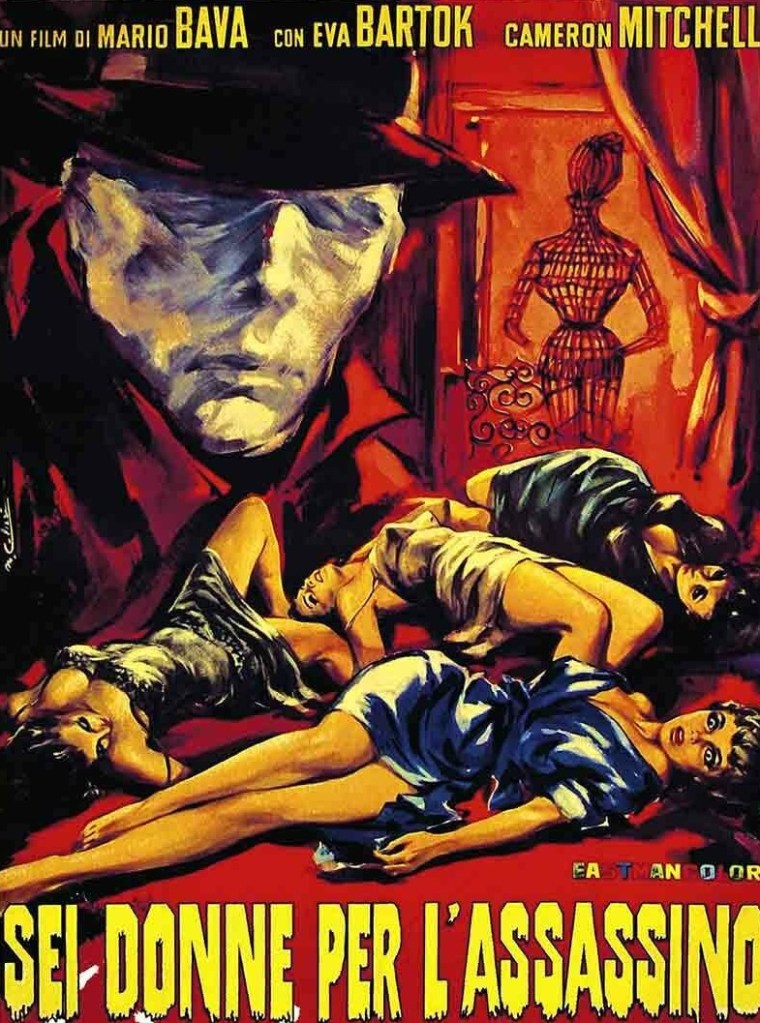
Director Mario Bava channels his inner Douglas Sirk in a rich color palette for this early version of giallo. About as surprisingly rich is the camerawork, which, for a low-budget picture is exceptionally accomplished, tracking, drifting, bobbing between characters. This early in the 1960s, nudity was not so prevalent but setting a movie in a fashion house – ensuring the beauty quotient is remarkably high – provided sufficient opportunity for ladies to be seen (within a work context naturally) in a certain amount of undress and you can be sure the killer leaves them half-naked. And it’s not the usual giallo sex maniac at work either but, despite the volume of murders, a killer driven by a desire to conceal shame.

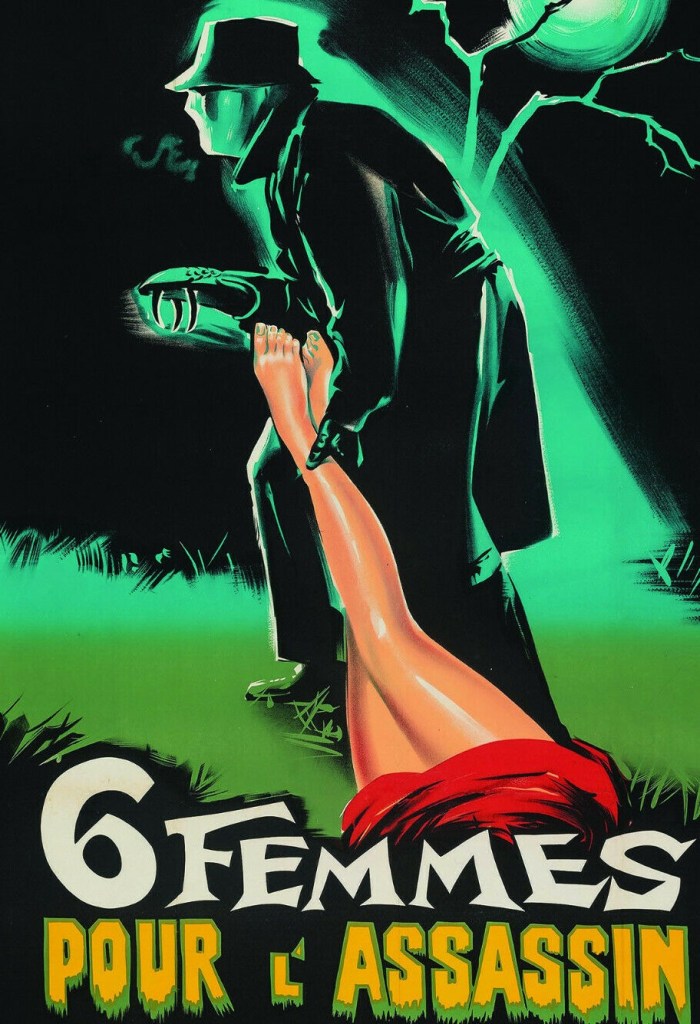
Blackmail, theft, abortion, cocaine addiction, pregnancy, impotence and illicit affairs are among the secrets the protagonists wish to keep hidden, all risking exposure by a diary kept by the first victim Isabella (Francesco Ungaro). So rather than a whodunit, it’s a whydunit. The killer is particularly creepy, face concealed behind white gauze like an Egyptian mummy. As the Italian title explains, six women are intended for the chop, so that kind of rules out a great deal of tension as you spend your time counting. Are we nearly there yet? And as we run out of obvious potential victims, who the heck is there left to kill? Of course, by that time, we are into twist territory and that element is certainly neatly done.
The main candidates for the murderer are: Franco (Dante DiPaolo), Riccardo (Franco Ressel), Cesare (Luciano Piggozi). Massimo (Cameron Mitchell)  and Marco (Massimo Righi). These are the official ones, rounded up by Inspector Silvestri (Thomas Reiner). But that still leaves housekeeper Clarice (Harriet Medin) in her black leather coat. And a fashion house being a festering wound of jealousy, sex, status and privilege you wouldn’t discount any of the models either nor an owner Cristiana (Eva Bartok) who is such a slave-driver she denies her seamstresses time to mourn.

Emotions would be running high in this establishment never mind with a killer on the loose. Relationships are so fraught that even when this is the worst possible time to be alone in a house, certain of the models refuse to offer sanctuary to others and one, Tao-Li (Claude Dantes), just plans to head for the hills (Paris, in other words) and abandon the others. Add to that a high degree of stupidity. When Greta (Lea Lander) discovers the disfigured corpse of Nicole (Arianna Gorini) in the trunk of her car, rather than calling the police, she drags the body into the house and hides it under the stairs while her butler is about to serve tea. Except it’s not out of folly, it’s because Greta, like all the women here, wishes to protect a male, passion reigning supreme to the extent that the thought of losing a lover even if he is a murderer is too much to bear.

The inspector’s task would be made easy if the killer had a distinctive modus operandi. Death occurs through strangulation, suffocation, drowning (though with cut wrists to make it look like suicide), falling from a great height and Nicole’s face thrust into a stove. If victims take a long time to die, it’s not from the killer’s sadism but his/her incompetence. Virtually none are speedily dispatched, murder not as easy as you might imagine, an idea that Hitchcock purloined in Torn Curtain (1966)

For most of the time the way the camera moves you would wouldn’t think you were watching a film about a serial killer (in those days as rare in reality as in fiction) but a dense emotional tale as spun by the likes of Luchino Visconti (The Leopard, 1963) amidst a backdrop of wealth and beauty. Setting aside the murders, there is a feast of intrigue, and a rich seam of characters, though the central theme seems to be (not surprising for the era) that money and beauty are not as fulfilling as love, something that women will commit various crimes (though stopping short of murder) to achieve.   
I would imagine it was just such intricate camerawork that put audiences off the picture on initial release, a big flop in Italy and, if screened anywhere else (as in Britain) the lower part of a double bill. Not quite as intense as Bava’s previous The Whip and the Body (1963) nor so stylistically driven as Danger : Diabolik (1968) and some way short of horror masterpieces like Black Sabbath (1963), this is still an interesting watch, something of a template for future giallo and from a pure directorial perspective glorious to watch.

The number of characters featured and the time spent on the various deaths limit the opportunities for any one star to dominate but Hungarian Eva Bartok (Operation Amsterdam, 1960) leads the line on the female side while American transplant Cameron Mitchell (Minnesota Clay, 1964) and Dante DiPaulo (Sweet Charity, 1969) vie for male acting honors. The screenplay was a joint effort by Marcello Fondato, Giuseppe Barilla and Bava.

YouTube has this for free though be warned it comes with ads and for the sumptuous photography alone you may want in any case to splash out.
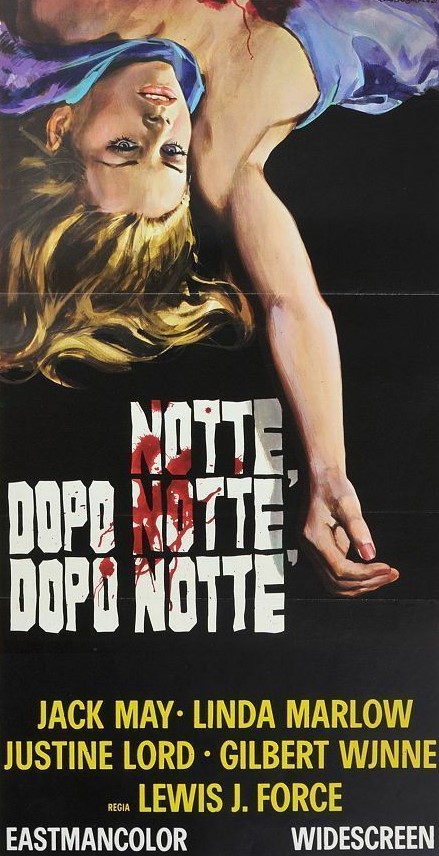
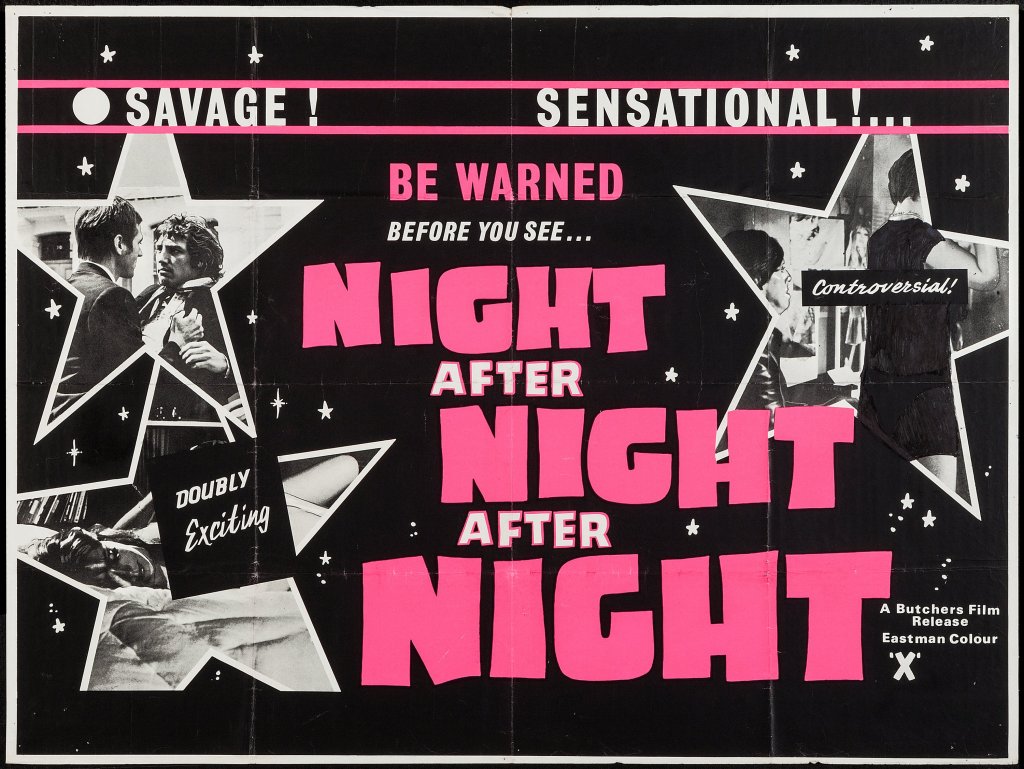
Night, After Night, After Night (1969) ***

British giallo sets tough London cop Bill Rowan (Gilbert Wynne) hunting a Jack-the-Ripper type serial killer who has slaughtered his wife (Linda Marlowe). Chief suspect is leering cocky jack-the-lad Pete (Donald Sumpter) of the wham-bam-thank-you-ma’am school of seduction. In an era when pornography and “perversion” were beginning to shake off the shackles of comformity and strippers, prostitutes, voyeurs and transvestites condemned as evils to be stamped out, this skirts the boundaries between sexploitation and heavy moralising.

Chief among those embarking on a moral crusade is hypocritical puritan Judge Lomax (Jack May) who spurns his attractive wife (Justine Lord) while indulging in cross-dressing. Needless to say, his clerk, ostensibly another upholder of the moral fabric, is a porn addict. As the body count grows, Pete manages to needle Rowan sufficiently for the cop to consider any nefarious means to put him behind bars.

Knives flash in the dark, the killer wears black leather, victims writhe on the ground as they are slashed to pieces, and coupled with the unusually high nudity quotient it is surprising that this picture passed the British censor. The movie never drags and there is enough incidental sleaze to keep the viewer interested. As a historical document, it details the point at which the country hovered between reined-in respectability and full-on sexual freedom.

Operating here under the pseudonym Lewis J. Force, Canadian director Lindsay Shonteff (The Million Eyes of Sumuru, 1967) conjures up a darker vision of a London so often presented in glorious tourist tones with nastiness seeping into every corner of society. Veteran Jack Lord (A Twist of Sand, 1968) captures well the double life of a decent man undone by what is perceived to be indecency and his later scenes are quite moving. Donald Sumpter (The Black Panther, 1977) is excellent as the taunting petty criminal while Gilbert Wynne makes a decent debut as a leading man. In small roles are Justine Lord (Deadlier than the Male, 1967) and Linda Marlowe (Big Zapper,1973 – directed by Shonteff).

Jack the Ripper was such an ingrained element of British culture that any movie featuring a similar villain gave audiences the creeps. British television cops were beginning to move out of the shadow of Dixon of Dock Green and into the new age of The Sweeney and while giallo did not catch on  among home-grown filmmakers there was considerably more focus on hardened criminals such as Get Carter (1971) and Villain (1971).

While the British B-film was moving increasingly towards sex comedy, this fits more succinctly into the Pete Walker sex’n’violence pictures of the 1970s which have attracted retrospective critical interest and for all its flaws, which can mostly be attributed to a low-budget, this is surprisingly impressive in places.

Possessor (2020) *****

This Brandon Cronenberg (son of you-know-who) rumination on identity is heavily disguised as a gory and occasionally sexy dystopian thriller. What appears at first glance a homage to giallo – toplining on shock, flesh and blood – soon reveals deeper layers of something more insistently disturbing. Focusing on an identity thief whose victim turns the tables into a who-owns-who, the films asks questions about the nature of identity and the effect of memory loss or memory accrual on individual personality. An early scene, part-debrief/part-interrogation, sees identity mind-robber Andrea Riseborough interviewed by boss Jennifer Jason Leigh to determine her own memory status, picking her way through a box of items carrying emotional connection, but it later becomes clear that Leigh has more sinister concerns: is the Riseborough returned from her latest adventure the same one as was sent out or has she been infiltrated by another?

Riseborough borrows identities in order to perpetrate a series of assassinations for an unseen corporation. Such murders are gorier than her employers would expect, invariably involving sharp implements, and setting the viewer to wonder whether the source for such brutality comes from a deeper part of the woman’s psyche. How much she is who she says she is is also questionable; before turning up on her ex’s doorstep, she rehearses what she wants to say. So there is mental and emotional dislocation at play, though whether that is the result of the experiments she appears to willingly undertake or whether from an existing characteristic is hard to say. So Cronenberg always has us at a disadvantage, and he keeps us that way, one step removed from what is going on, and may have occurred in the past, and only the determined assurance that nothing is going to turn out as it should.

One of the elements that places this picture in the top-notch category is that Cronenberg’s future does not fully work, components appear constantly out of place, as if a gear is always slipping. When Riseborough impersonates a man it is clear she has not quite grasped his full personality. When she possesses the identity of Christopher Abbott, a lowly drone partnering boss’s daughter Tuppence Middleton, he/she appears to be sleepwalking, parts of his personality eluding her, the disconnect so obvious that Middleton continues to ask what’s wrong and Abbott seems to forget that he is having an affair or has a friend at work. Again, it’s not clear whether this is Riseborough’s skillset drifting, or an extreme example of the dangers of identity theft. Instead of this whole concept being a scientific marvel, he/she is always one step behind. (Nothing to do with the plot but the previous butter-wouldn’t-melt-in-her-mouth English actress Middleton has also gone through a screen persona transformation, searching out her inner raunch for hot action with Abbott).

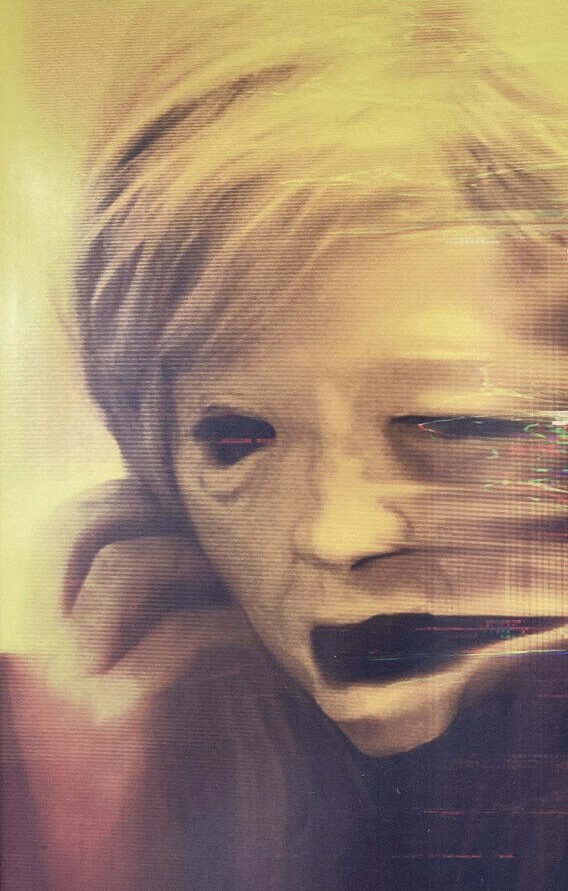
When Abbott begins to imagine inhabiting Riseborough’s face, the ghastly apparition seen on the poster, and in one of the movie’s most compelling scenes, the story takes a different turn, as if a Terminator is now on her tail.

The world depicted is an invasive one. Riseborough can infect the brain and take over the body, while Abbott’s day-job appears voyeuristic, as if the internet eye had become all-encompassing. To complete the dystopian feel, streets are always deserted and although that may be the result of budget restriction it fits the overall tone, this concrete jungle in sharp contract with murder in marble halls (a cameo by Sean Bean).

Riseborough is at her haunted best, Leigh steely as her boss, Abbott a revelation as the disturbed stolen property. Nod to Jim Williams for a brilliant score. While Cronenberg tags Blade Runner, Brazil, Blue Thunder and Terminator, the movie is an original. With enough drive and mystery to keep the thriller aspects at full tilt and while following in father David Cronenberg’s footsteps in his thirst for gore, the thrust of the picture is quite different, the concept so good it could have gone any number of different ways: the burglar trapped between two identities: the identities at war: or the personalities trying to make up what has been removed. You are left wondering what else could be going on in the world of Cronenberg’s imagination and not so much begging for a sequel but another parallel adventure in this particular universe. When a movie is still preying on your mind several days later, that’s when you know you have uncovered something special.

Discover WordPress

A daily selection of the best content published on WordPress, collected for you by humans who love to read.

The Atavist Magazine

by Brian Hannan

WordPress.com News

The latest news on WordPress.com and the WordPress community.