I Aim at the Stars (1960) ***

Could not be more controversial or contentious. But we’ve been here far more recently than six decades ago. Oppenheimer (2023) covered similar ground in terms of a scientist harnessing his brain to create a weapon of awesome destructive power. J. Robert  Oppenheimer was also condemned as a traitor and though he did not switch allegiance he was excluded from the nuclear community after the Second World War.

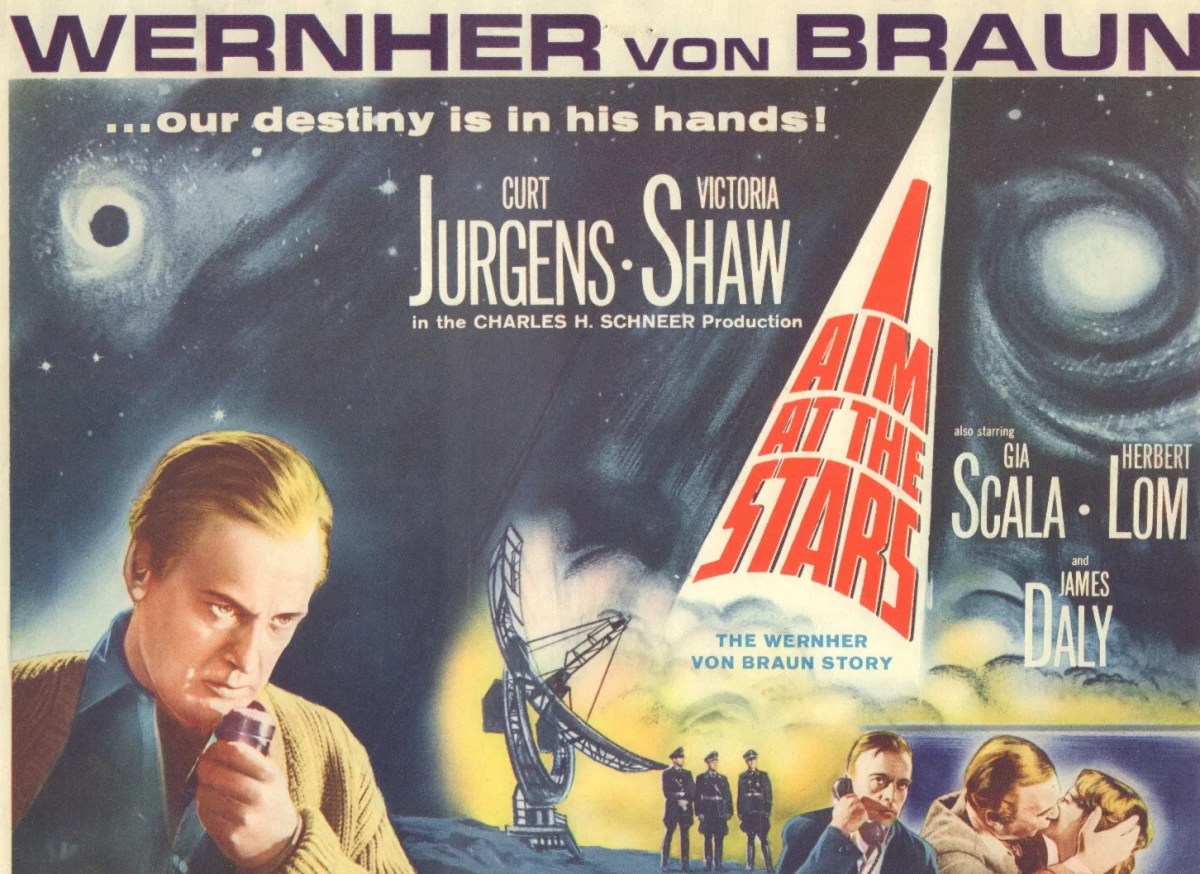
Director J. Lee Thompson (The Guns of Navarone, 1961) sets out to achieve the impossible – create a valid biopic while trying to deal with the central issue that while German Werner von Braun (Curd Jurgens) directed the U.S. operation to put an unmanned rocket into orbit around the Earth he was also responsible for the V1 and V2 rockets that devasted London towards the end of the Second World War.
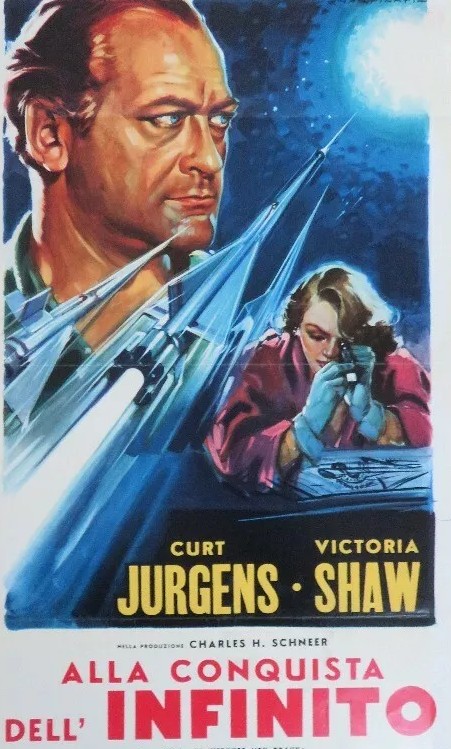
The first half of the movie is straightforward biopic, genius scientist overcomes obstacles to reach his achievement. Von Braun was “addicted to rockets” from a very early age and when the Nazi Government sought to use his skills to create a missile, he didn’t show much opposition. Although occasionally indiscreet about Hitler and the Nazi Party, he was able to overlook their shortcomings in the interests of science.

What could have been a dry biopic is filled out with romance. Von Braun eventually finds time to marry Maria (Victoria Shaw) who occasionally has reservations about his aims. His assistant Anton (Herbert Lom) has a more interesting relationship with the widowed Elizabeth (Gia Scala), Von Braun’s secretary. While refusing to marry him, she does carry on a longish affair (whether sex was involved is unclear) with him and you are given the general impression that she is more in love with her boss.

But that turns out to be a clever piece of sleight-of-hand. The reason she spends so much time with Von Braun is that she’s a British spy, copying blueprints with an ingenious miniature camera disguised as a working lipstick. And when she is caught by Anton, he is too much in love to expose her, though her reason for the espionage is that the Germans by mistake killed her husband.
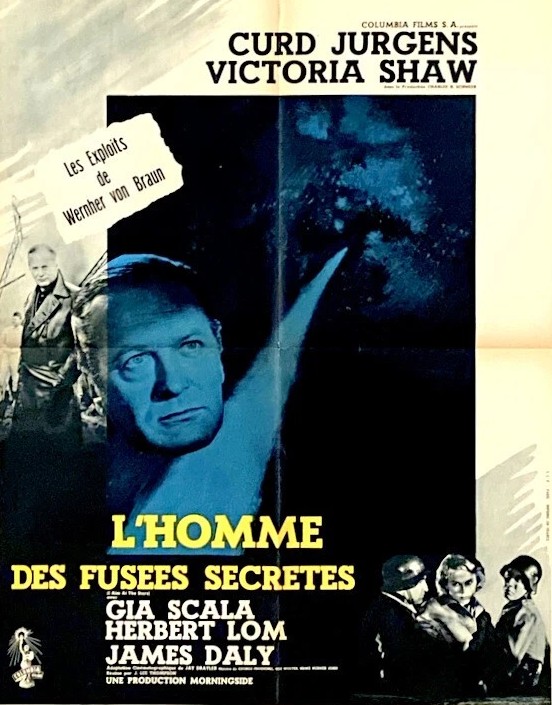
At the end of the war, Anton is the only one among the top scientists who refuses to desert his country. The others decide to become traitors, choosing to defect to the Americans rather than the Russians. And at this point Von Braun comes face to face with his “conscience” in the shape of U.S. Major Taggart (James Daly) who initially is determined to try Von Braun as a war criminal. When higher-ups in the U.S. Government intervene and send the scientists to America to continue their rocket research, Taggart continues his verbal assault on the German.

The spy also turns up and clearly her regard for Von Braun outweighs her conscience, although she enters, eventually, into a relationship with Taggart (who goes back to his former profession of journalist), and attempts to soften his attitude.

Von Braun refuses to take personal responsibility for the thousands of Londoners who died as the result of his invention. He represents the idea of invention without repercussion or personal consequence. But it’s fair to say that all the arguments against the man are given a good airing.

However, there’s a serious omission in the narrative. The conscience of the higher-ups never comes into it. Nobody in a senior position in Government explains why Von Braun deserved a get-out-of-jail-free card and never entering the discussion – not even in the sense of realpolitik – is the issue of how the British must have felt when their ally appropriated the skills of one of their most dangerous enemies.

Ultimately, the picture leaves too many questions unanswered with the American people seemingly eventually worshipping the man who put an American craft into space. The British shunned the picture on release.

Technically, it looks pretty good. I couldn’t really tell from seeing it on the small screen whether the rocket footage was taken from newsreel or academic footage or whether it was shot specifically for the movie.

As played by Curd Jurgens (Psyche 59, 1964) Von Braun is not an easy character to like. Though billed higher, Victoria Shaw (Alvarez Kelly, 1966) makes less of an impact than Gia Scala (The Guns of Navarone), who has the best role in the picture, while Herbert Lom (Bang! Bang! You’re Dead!, 1966) does good work as the patsy and loyalist. James Daly (The Big Bounce, 1969) is mostly the mouthpiece for all the accusations you’d like to fling at someone like Von Braun.

J. Lee Thompson does as well as you might expect within the restrictions of the material. Written by Jay Dratler (Laura, 1944) in his final screenplay.

Flawed but interesting.
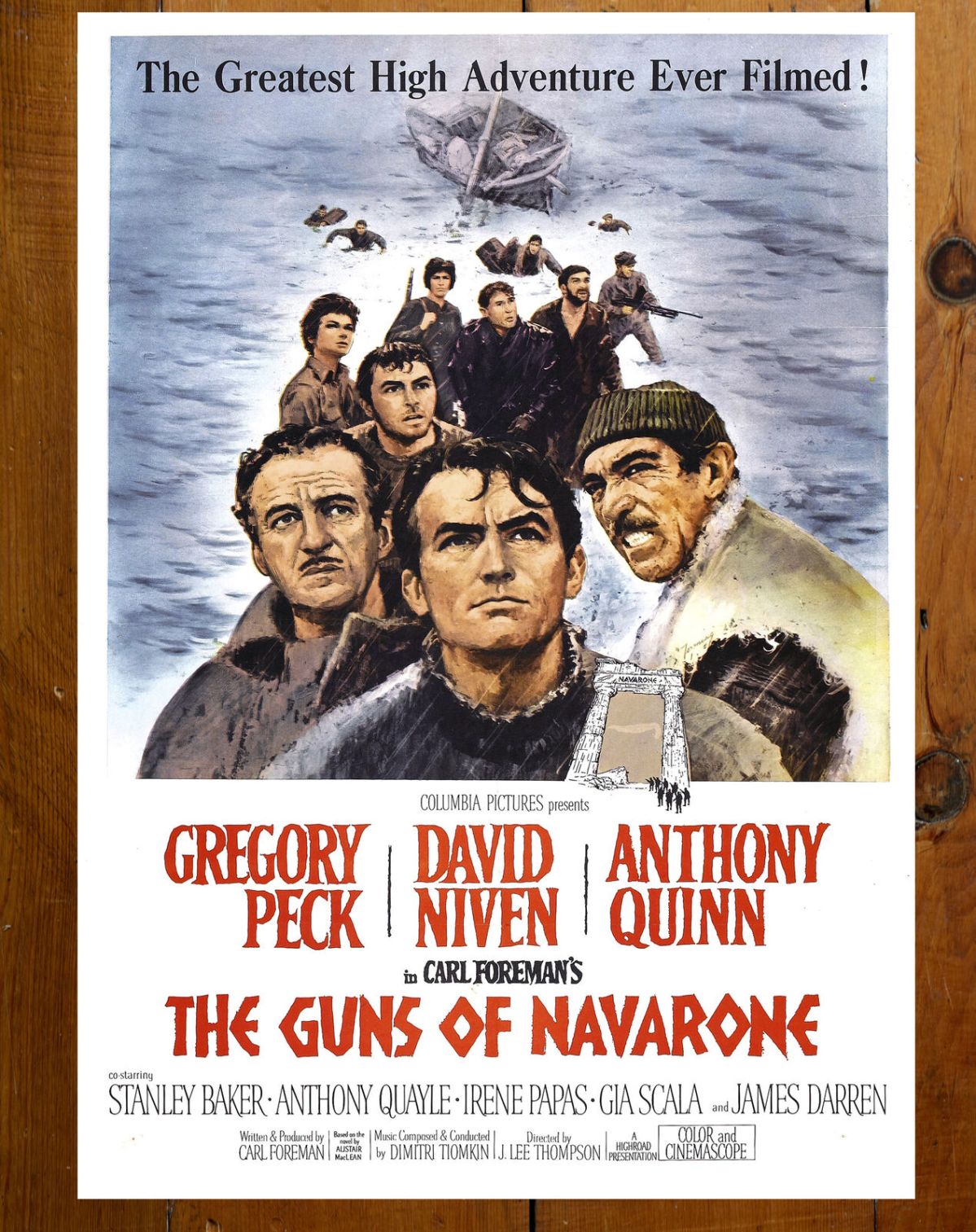
Behind the Scenes: “The Guns of Navarone” (1961)

It’s time to celebrate the 60th anniversary of The Guns of Navarone – world premiere on April 27, 1961, in London and New York opening on June 22, 1961. Although the picture set a new benchmark in high-octane entertainment, a fast-moving war thriller packed with twists and a genuine all-star cast, it was far – very far – from the sure thing it appears in retrospect.

Box office smash in Britain.

For a start, U.S producer Carl Foreman, a victim of the McCarthy anti-communist witch-hunt of the early 1950s, was unable to assemble any of the talent he had set his heart on. He lost his preferred male cast of William Holden and Cary Grant and original scriptwriter Eric Ambler, the thriller writer famed for The Mask of Dimitrios and other novels.

He had a registered a major publicity coup by engineering the screen debut of opera diva Maria Callas, one of the most famous people in the world, but she also dropped out as did his other initial choice for leading lady. On top of that, once filming began he lost his director, Alexander Mackendrick, who had not only achieved a critical and commercial success with the British Ealing comedy The Ladykillers (1951) but also crossed the Atlantic to make the acclaimed The Sweet Smell of Success (1957) starring Burt Lancaster and Tony Curtis, to prove he could handle big Hollywood stars.

On top of that David Niven nearly lost his life during production and by the time the picture appeared Gregory Peck had suffered so many box office flops that he was a potential liability. And Foreman’s own marriage was in trouble.

Building the massive guns set.

It was a wonder it was made at all for Foreman was nobody’s idea of a sure thing. Although he had made his name as a screenwriter with three Oscar nominations for Champion (1949), The Men (1950) and High Noon (1952), his career was in ruins after being slung out of America for his supposed communist sympathies. He set up in London where he wrote screenplays under pseudonyms. But in 1956 won a four-picture production deal with Columbia at a time when that studio was investing heavily in making films in Britain to take advantage of the government’s Eady Levy (effectively, a tax rebate) and cheaper costs. But his first film, The Key (1958) with William Holden and Sophia Loren flopped in the U.S. Columbia persevered, seeing Foreman as the man to tackle its biggest-ever European production.

The Guns of Navarone almost fell at the first hurdle. Foreman’s first choice of location was Cyprus which was threatening to erupt into a civil war. At the last minute, he changed his mind and shifted production to Rhodes. Foreman, who also acted as screenwriter, made considerable changes to the book by British bestselling thriller writer Alistair Maclean, not least of which was introducing female characters to a story that had been resolutely all-male.

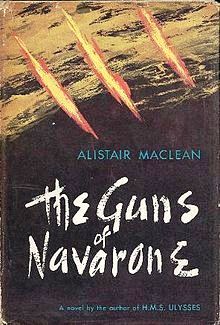
Original hardback book cover.

There was tension on set – four-time Oscar nominee Gregory Peck was annoyed at sharing the screen with two winners David Niven (Best Actor for Separate Tables, 1958) and Anthony Quinn (twice Best Supporting Actor for Viva Zapata, 1952, and Lust for Life, 1956). Replacement director J. Lee Thompson (Ice Cold in Alex, 1958) managed to sink a ship on loan from the Greek navy.  The Actor’s Strike in Hollywood nearly forced the departure of the two younger stars.

The set for the titular guns was the largest ever built, costing £100,000, and even though that proved a design miracle, that, too, was not exempt from disaster, having to be rebuilt after a thunderstorm destroyed part of the set. The injury to David Niven was so severe he nearly died, putting the production in jeopardy. Even when the film approached completion there were other obstacles in the way, composer Dmitri Tiomkin (The Alamo, 1960), for example, demanding a record fee and Foreman locking horns with Columbia over his insistence on launching the picture as a roadshow, request which was ultimately denied, and one of the reasons for the film’ release delay,

I’ve written a book about The Making of The Guns of Navarone. Originally published in 2013, it has been revised with over 30 illustrations added for a new edition to tie in with the 60th anniversary – available both in print and Kindle versions. Needless to say, it would also make an ideal present for Father’s Day.

If you’re interested in this kind of book, you might like to know that I’ve also written The Making of The Magnificent Seven.

The Guns of Navarone (1961) *****

Stone-cold action classic that blazed a trail for the big-budget men-on-a-mission war picture like The Dirty Dozen (1967) and Where Eagles Dare (1968). Brilliantly structured, written and directed,  and featuring a sea battle, storm, shipwreck, mountaineering, chase, interrogation scenes, infiltration of an impregnable fortress, a pair of romances, two traitors, and an awe-inspiring climax make this a candidate for one of the greatest war pictures ever made.

The set-up is simple. Knock out the gigantic guns at Navarone or two thousand men will perish. It’s mission impossible and the clock is ticking. You don’t know who to trust and the enemy is ruthless.

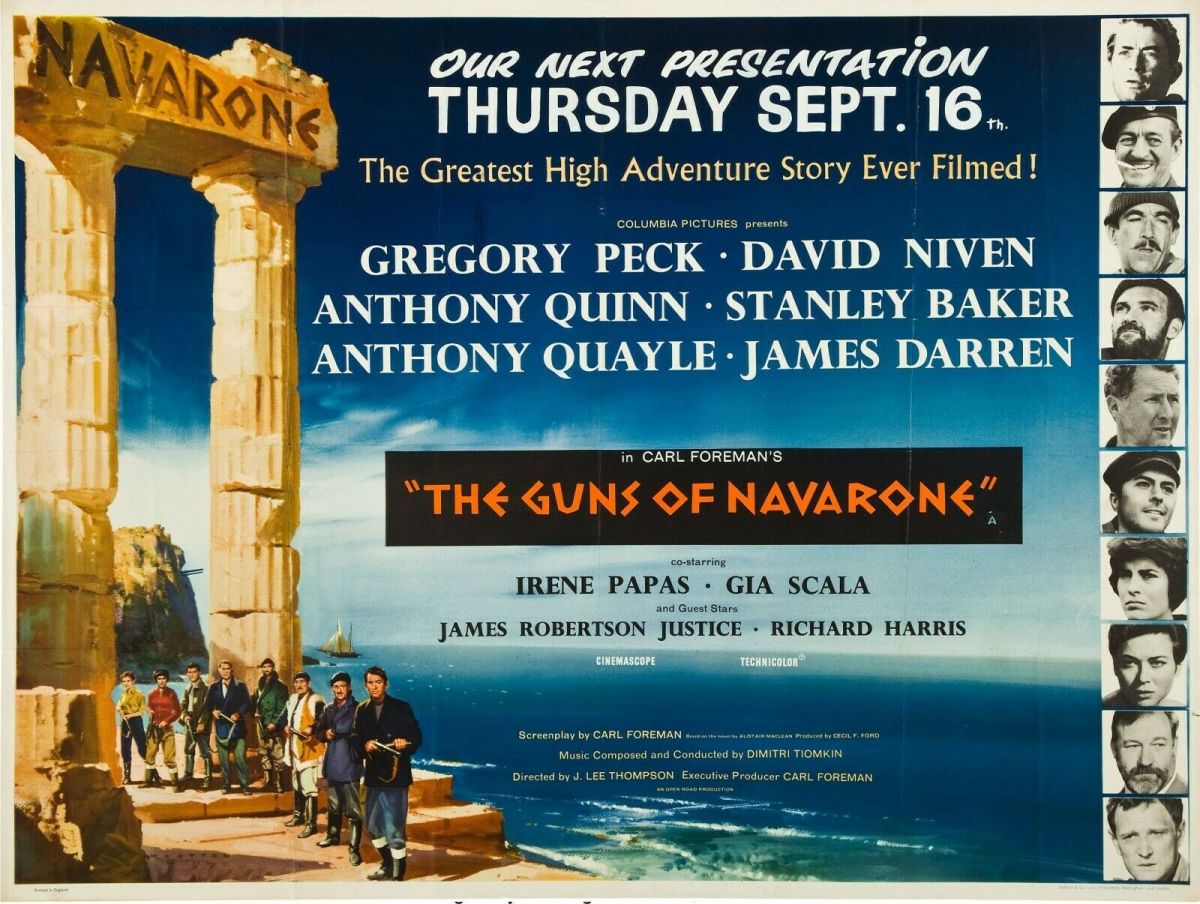
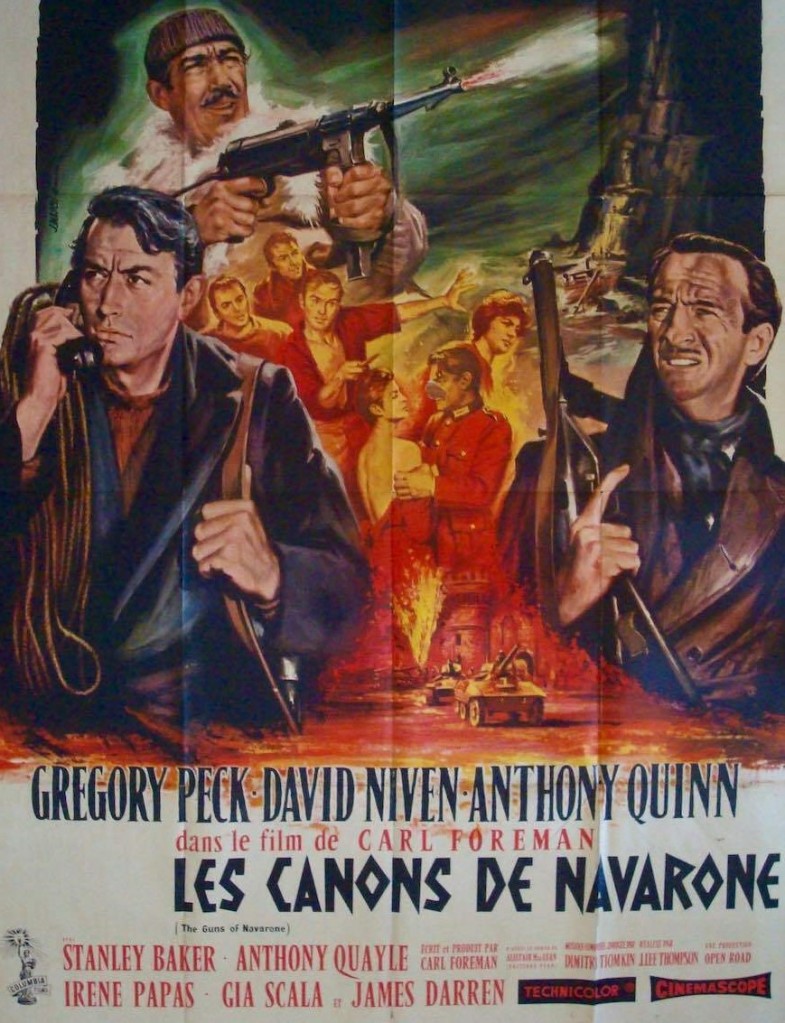
In the early days of the all-star-cast, producer Carl Foreman rounded up an astonishing line-up, bulking out the bestseller by Scottish thriller maestro Alistair Maclean (The Secret Ways, 1961) with three top stars in five-time Oscar nominee Gregory Peck (The Big Country, 1958), double Oscar-winner Anthony Quinn (Heller in Pink Tights, 1960) and Oscar-winner David Niven (Please Don’t Eat the Daisies, 1960). Add in British household names Anthony Quayle (Ice Cold in Alex, 1958), Stanley Baker (The Concrete Jungle, 1960) and James Robertson Justice (Doctor in Love, 1960), a sprinkling of rising stars in James Darren (Let No Man Write My Epitaph, 1960), Gia Scala (I Aim at the Stars, 1960) and Richard Harris (The Night Fighters, 1960) and renowned Greek actress Irene Papas (Antigone, 1961).

Each man is a specialist. Capt. Mallory (Gregory Peck) the mountaineer whose climbing skills are essential to completing the fist part of the mission, explosives expert Corporal Miller (David Niven), mechanic ‘Butcher’ Brown (Stanley Baker), Greek patriot Stavrou (Anthony Quinn) and the ruthless killer Pappadimos (James Darren) who has the contact with the Greek resistance. The stakes are ramped up when we learn both Mallory and Stavrou have bounties on their heads, not to mention the fact they are sworn enemies, and that before the mission even gets under way, spies are discovered in the camp. The ostensible leader of the group Major Franklin (Anthony Quayle) is wounded early on, turning him into a liability and making Mallory the de facto leader.

The stakes are ramped up further – this time through relationships. Their Greek contact turns out to be a woman, Maria (Irene Papas), brother of Pappadimos. She brings with her a mute girl Anna (Gia Scala) for whom Mallory develops romantic feelings while Stavrou has eyes for Maria. Mallory is also torn about Franklin, his best friend.

And from there it pitches into one disaster after another. They are too easily hunted by the Germans. They are shelled with mortars and attacked by dive bombers as they race across open mountains and through caves to reach their destination. They have to shoot their way out of traps and finagle their way into the fortress. There are twists and turns all the way, the clock ticking in almost James-Bond-style as the deadline for the destruction of the troops approaches.

And although this is clearly a war picture it is also as obviously an anti-war one, no end to the killing in sight, people dying pointlessly.

Although the acting was ignored come Oscar time, each of the stars delivers and it is a communal tour de force. Director J. Lee Thompson (Ice Cold in Alex) ensures that in visual terms none of the stars dominates, each given equal screen time while the strong supporting cast each has their own narrative arc. With over two-and-half-hours’ running time, Thompson has both the bonus of time to allow each element to be fully played out and the problem of keeping the picture taut and he succeeds brilliantly in both aims. It is a masterpiece of suspense. And it looked fabulous, the guns themselves, by which the picture might succeed or fail, were awesome.

Thompson was Oscar-nominated as was producer Carl Foreman for both Best Picture and the screenplay, Dmitri Tiomkin for the score (one of the longest-ever), John Cox for sound, Alan Osbiston for editing. Bill Warrington who did the visual special effects and Chris Greenham who did the sound effects were the only winners on the night.

It was a commercial smash, top picture of the year in the U.S., the biggest  picture of all time at the British box office and breaking records all over the world.

COMPETITION: Win a Signed Copy of “The Making of The Guns of Navarone”

To celebrate the 60th anniversary of the opening of The Guns of Navarone I am offering a copy of my book “The Making of The Guns of Navarone.” This is a revised and enlarged edition – the first time with illustrations (over 30 of them) – of the original version which was published in 2013.

The Royal World Premiere of the film took place at the Odeon Leicester Square, London, on April 27, 1961. But it was not released in the U.S. until June, opening at the Criterion and Murray Hill cinemas in New York. At all three cinemas it broke the box office record.

All you have to do to enter is guess from all the films reviewed in the Blog in April which five proved the most popular (judged from the number of views).

Put the five you have chosen in ascending order.

Email your answers to me at bhkhannan@aol.com

The person who gets the most right in the proper order will be declared the winner.

The book will be posted free of charge anywhere in the world and, being the author, I can arrange for it to be signed. The closing date is Monday, May 17.

Feel free to let your friends know.

Good luck.

Discover WordPress

A daily selection of the best content published on WordPress, collected for you by humans who love to read.

The Atavist Magazine

by Brian Hannan

WordPress.com News

The latest news on WordPress.com and the WordPress community.