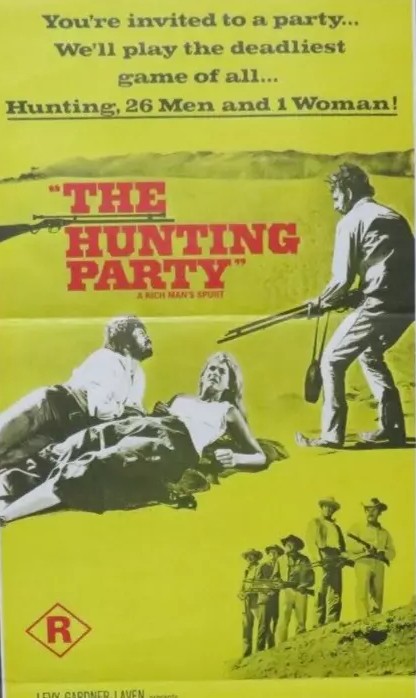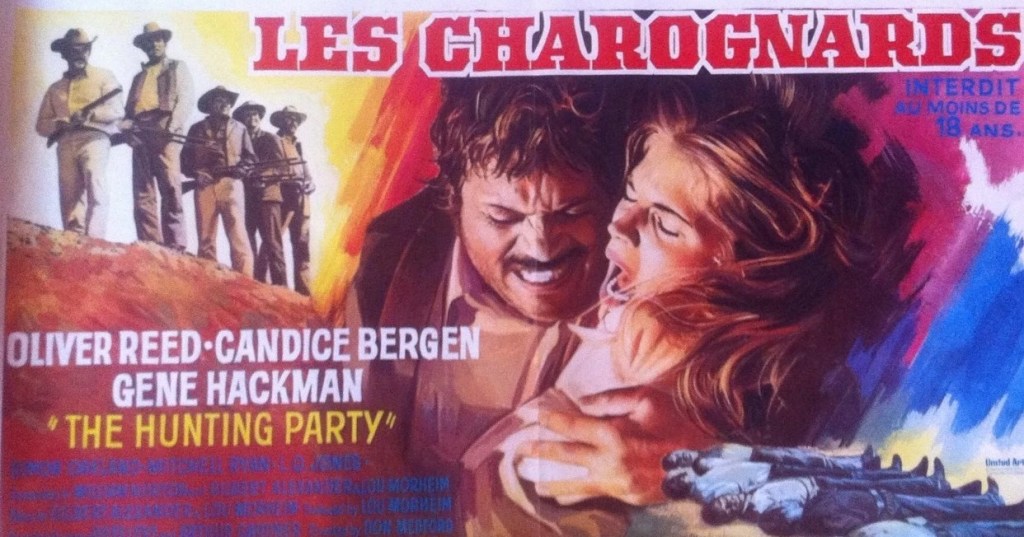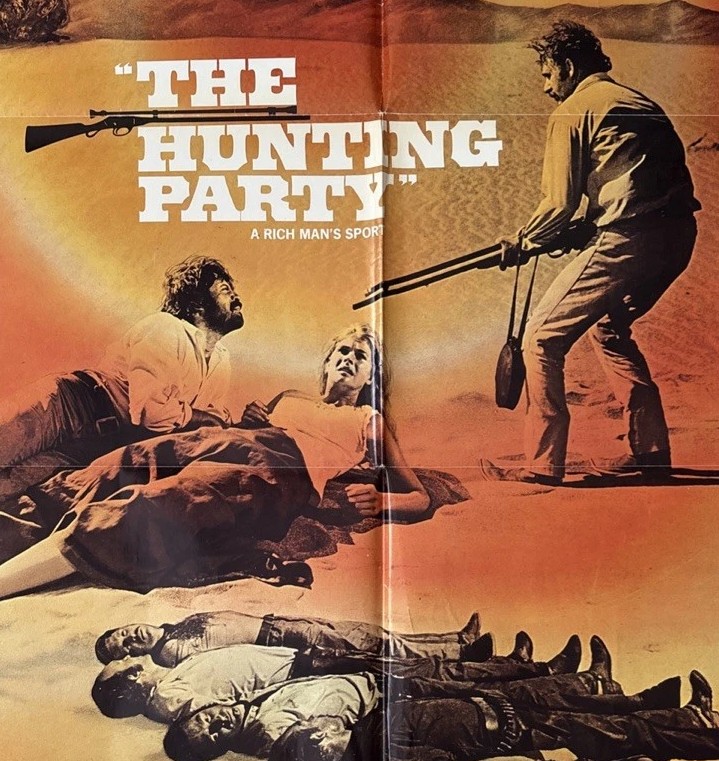
The Hunting Party (1971) **

Colossal flop and deservedly so. One of the most repellant pictures of a down’n’dirty decade.

It’s not just that rape takes center stage – two completed both supposedly by men in love with her and two attempts by more obvious scum – but that cattle baron’s wife Melissa (Candice Bergen) has to choose between murdering rapist husband Brandt (Gene Hackman) and murdering rapist outlaw Frank (Oliver Reed).

There was an unwelcome trend for consensualizing rape – Straw Dogs (1971) took the  same approach – that a woman in a state of some terror would nevertheless warm to her molester. This is the worst kind of male fantasy fulfilment and that taking a women by force will nonetheless make her fall in love with you.  

Just how keen Melissa is on her rapist is shown by her various attempts to knife him and escape. Which, of course, Frank dismisses in a version of that old trope, “you’re beautiful when you’re angry” in that he likes a spirited woman.

The otherwise cold-blooded Lee Marvin character in Prime Cut (1972) proved likeable because he had an honor code and didn’t take advantage of a vulnerable woman. It’s impossible to feel any sympathy for Frank especially as Melissa, a teacher, has been kidnapped not for ransom but for the sole purpose of teaching Frank to read. Presumably, being an outlaw who robs banks, he can already count. Maybe he needs help writing ransom notes.

Frank should have been taught to read in childhood, we discover in a twist at the end, because his father could read, which suggests he had a different upbringing to the rest of his gang, but, on account of being determined to annoy his old man, he refused to learn. So although he has a yearning to educate himself he’s not educated enough to work out that learning and kidnapping and rape don’t exactly go hand-in-hand.

The only way any attempt at romance is going to work, even theoretically, is if what awaits Melissa when rescued is worse. Husband Brandt is a venal individual. The movie opens with him raping his wife. Compared to his treatment of sex workers, she gets off lightly. And he balks at paying any supposed ransom on the grounds that his wife will most likely have been raped and return with an unwanted bastard son and he’s not going to pay $50,000 for that privilege. Ever since A Fistful of Dollars western heroes have been every amoral shade of grey but Brandt must be the darkest shade ever.

Plus he’s just taken delivery of rifles with telescopic sights that have a firing range of about half a mile so he’s up for a little sport, and with four other rich buddies sets out to hunt humans. The rifle is the equivalent to the Gatling Gun in The Wild Bunch (1969), a weapon of awesome power, and every time it hits home the camera focuses on the gory outcome. The 26 men in the outlaw bunch are soon whittled down.

This might have worked if the narrative had followed a different arc. Had Frank turned out to be Melissa’s protector rather than the most successful of her molesters. If the whole gang had show signs of seeking something maternal rather than just sexual in a woman or were all queuing up for a bit of education. And Frank’s treatment of her from the outset had been protective and she had shared with him her fear of her husband.

The best you can say about Frank is he’s a gentler kind of rapist. But he’s still a rapist and taking advantage when Melissa is at her most terrified, soaking wet from falling into a river while trying to escape. If he had continued just trying to soothe her and comfort her that might have taken the tale in a more acceptable direction, but, no, he decides a bit of rape is in order.

Frank’s too dumb to see that his men are going to turn against him if he doesn’t share out his captive and once he’s aware exactly who she is he should at least, in the eyes of the men, either demand a ransom or hand her back.

Although the long-range rifles tilt the odds heavily in favor of the pursuers, one of them is killed, and two, once they have decimated the outlaws, decide the hunt has gone far enough. Another, later on, takes the same view. But Brandt, determined on revenge, pursues the “lovebirds” into the desert where he kills both.

This was intended to launch British actor Oliver Reed (Hannibal Brooks, 1969) into the Hollywood mainstream but he’s miscast. Candice Bergen (Soldier Blue, 1970) can do little with a role that makes no coherent sense – unlike Michele Carey in The Animals (1971) she shows no sign of accepting an unwelcome protector just to survive. Had it not been for The French Connection (1971) and, taken in conjunction with Prime Cut (1972), Gene Hackman’s career might have spun off into playing a succession of villains.

One other notable turns up on the credits. This is produced by Lou Morheim who originally owned the remake rights to Seven Samurai (1954) and failed to finesse that into a significant credit on The Magnificent Seven (1960).

Discounting To Trap a Spy (1964), a movie combining two episodes of The Man from U.N.C.L.E series, this marked the debut of director Don Medford. Lou Morheim (The Beast from 20,000 Fathoms, 1953), Gilbert Ralston (Willard, 1971) and Bill Norton (The Scalphunters, 1968). contributed to the screenplay.

The bizarre premise set a low bar. Every shade of ugh.

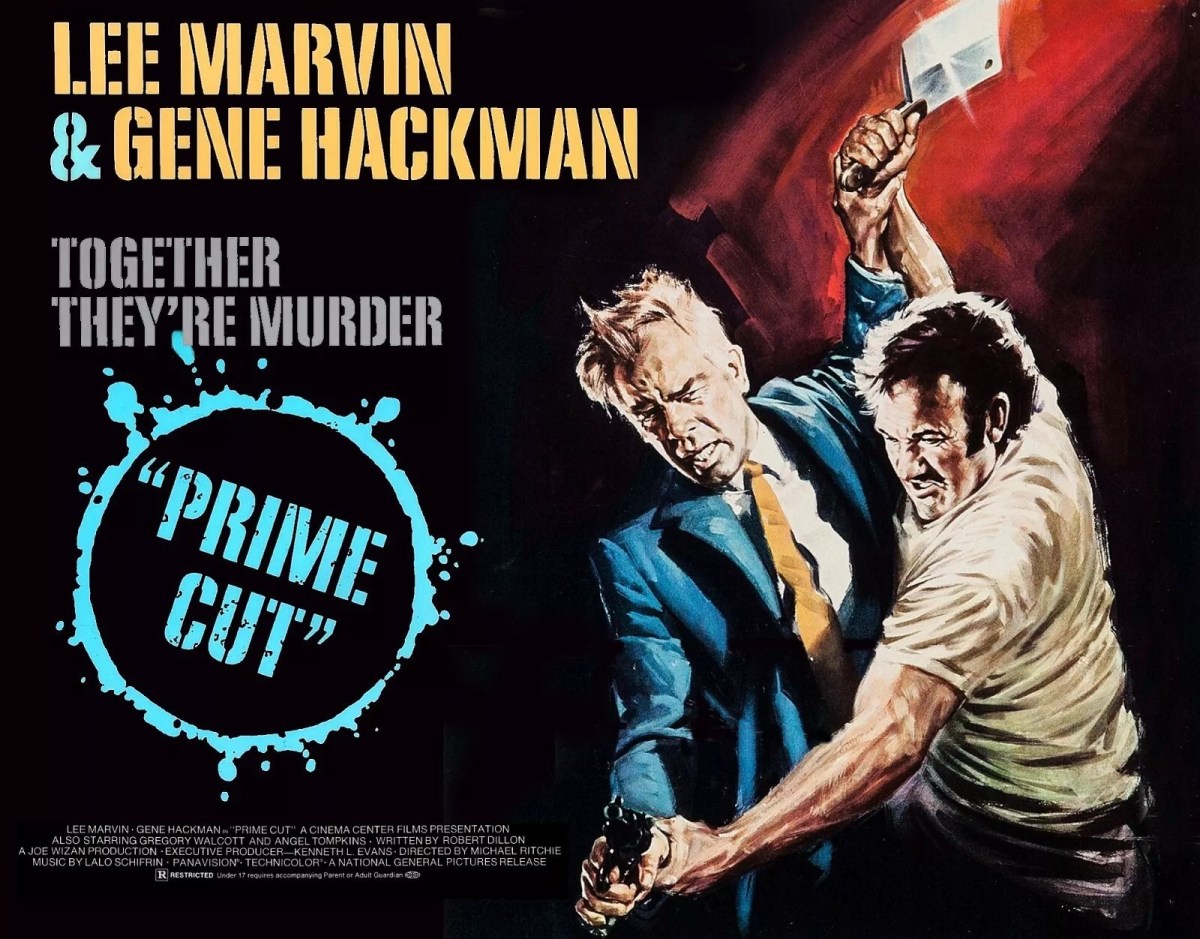
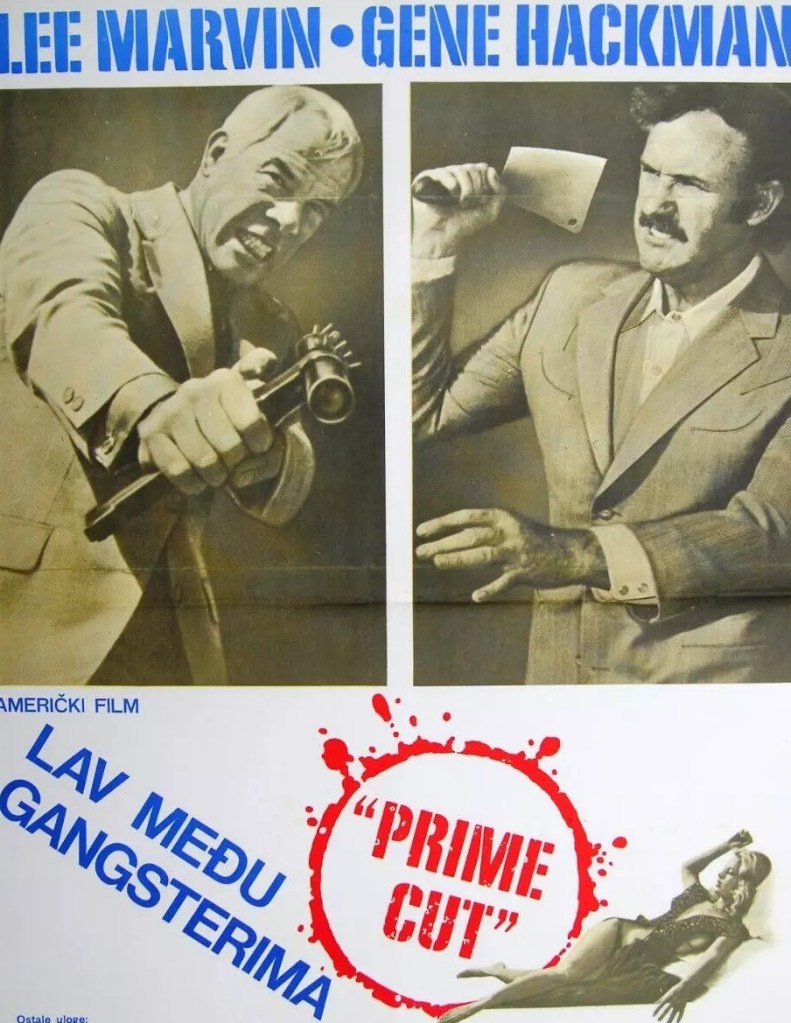
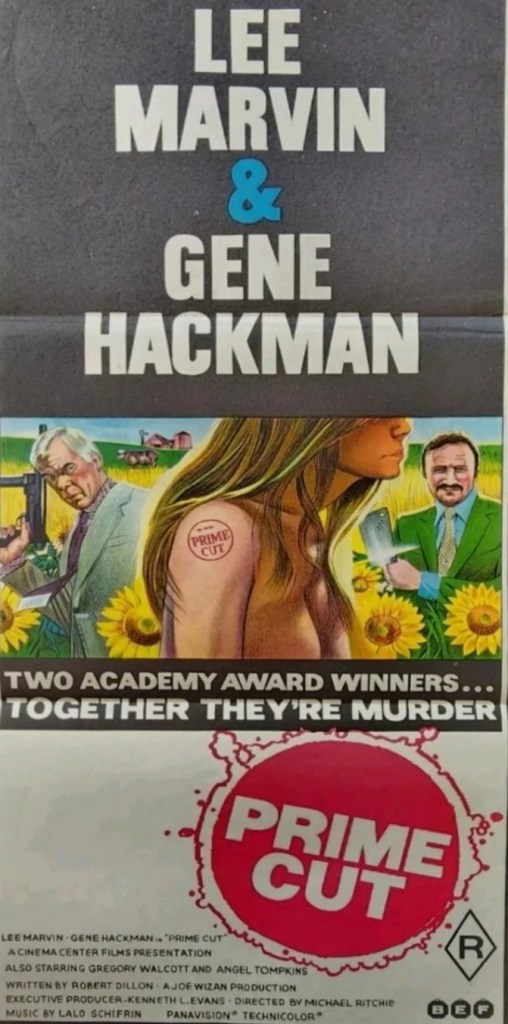
Prime Cut (1972) ****

Unusually nuanced thriller. Unusually lean, too, barely passing the 90-minute mark. There’s a Hitchcockian appreciation of the danger lurking in wide open spaces. And the background is the Middle America of annual fairs, marching bands, pie-eating competitions, rural pride in farming and marksmanship.

But there’s an undercurrent that will strike a contemporary audience. The contempt of big business for its customers. The sex trafficking, too, will sound an all-too-common note especially as the young women come from an orphanage set in the heart of homespun America in what appears to be a streamlined service.

In the actual screen credits, Hackman was not above the title.

We shouldn’t at all take to hitman Nick (Lee Marvin) except that he’s got a code of honor and sparing with words. He’s been sent from Chicago to Kansas to sort out with what would later be termed “extreme prejudice” Mafia boss and meat-packer Mary Ann (Gene Hackman) who’s been skimming off the top. As back-up Nick is handed a trio of young gunslingers anxious to prove themselves while his faithful chauffeur owes Nick his life.

Mary Ann doesn’t just have a factory, he has a fort, a posse of shotgun-wielding henchman standing guard. So Nick has to plunge right in and confront the miscreant. As well as dealing with animal flesh, Mary Ann has a side hustle in sex trafficking, displaying naked women in the same straw-covered pens as his beef.

Responding to a whispered “help me” by Poppy (Sissy Spacek) Nick buys her freedom, but Mary Ann isn’t for knuckling down to the high-ups in Chicago and since he’s already despatched a handful of other hoods sent on a similar mission as Nick he’s intent on turning the tables.

The action, when it comes, is remarkably low-key and all the more effective for it. Swap a crop duster for a combine harvester and the head-high prairie corn for the usual city back streets and you realize someone has dreamed up a quite original twist on the standard thriller. No need for a car chase here to elevate tension, it’s already a quite efficient slow burn.

By the time this came out Hackman had won an Oscar for “The French Connection” (1971), Marvin already in that exalted league thanks to “Cat Ballou” (1965)

This could be an ode to machinery. The entire credit sequence is devoted to the way machines chew up cow flesh and turn it into strings of sausages and the like. The combine harvester chews up and spits out an entire automobile, grinding the metal through its maw. And then there’s the machinery of business, the ability, at whatever cost, to give the public what it wants, in whatever kind of flesh takes its fancy.

You’ll remember the combine harvester sequence and the shootout in the cornfields, but you will come away with much more than that. Remember I mentioned nuance. Sure Mary Ann is an arrogant gangster and you’d think with hardly an ounce of humanity, but that’s until you witness his relationship with his simple-minded brother Weenie (Gregory Walcott). That could as easily have fallen into the trap of cliché sentimentality. Instead, there’s roughhouse play between the pair and it’s all the more touching for being realistic.

There’s a tiny scene where one of the young hoods asks Nick to meet his mother, in the way of a young employee wanting to show off that he was working for a top man. And Nick also goes out of his way to praise what’s on offer at the fair from a couple of women anxious for praise.

One of the tests of a good actor is what they do when they enter an unfamiliar room. Your instinct and mine, like ordinary people, would be to look around not just lock eyes on the person you’ve come to meet. So when Poppy wakes up in a luxurious hotel room she doesn’t go into all that eye-rubbing nonsense, but instead marvels at her surroundings. And although she hangs on his every word – and his arm – Nick isn’t in the seduction business, instead spoiling the young woman with expensive clothes.

There are several other scenes elevated just by touches. The credit sequence ends with a shoe appearing among the meat being processed – Mary Ann’s victims don’t sleep with the fishes but with the sausages. Poppy recalls a childhood spent in a rural wonderland, squirrels, rabbits, the splendors of nature, and reveals a lesbian relationship with another orphan Violet that is the most innocent description of love and sexual exploration you’ll ever hear.

Violet is the victim of multiple rapists. Weenie has passed her onto a bunch of down-and-outs for the price of a nickel. When Nick unclenches her clenched fist you’ll be horrified to see how many nickels tumble out.

Lee Marvin (Point Blank, 1967) is at his laconic best and Sissy Spacek (Carrie, 1976) makes a notable debut but Gene Hackman (Downhill Racer, 1969) overplays his hand.

Director Michael Ritchie (Downhill Racer) was on a roll, following this with The Candidate (1972), Smile (1975), The Bad News Bears (1976) and Semi-Tough (1977) before the execrable The Island (1980) badly damaged his career.

Written by Robert Dillon (The French Connection II, 1975).

Well worth a look.

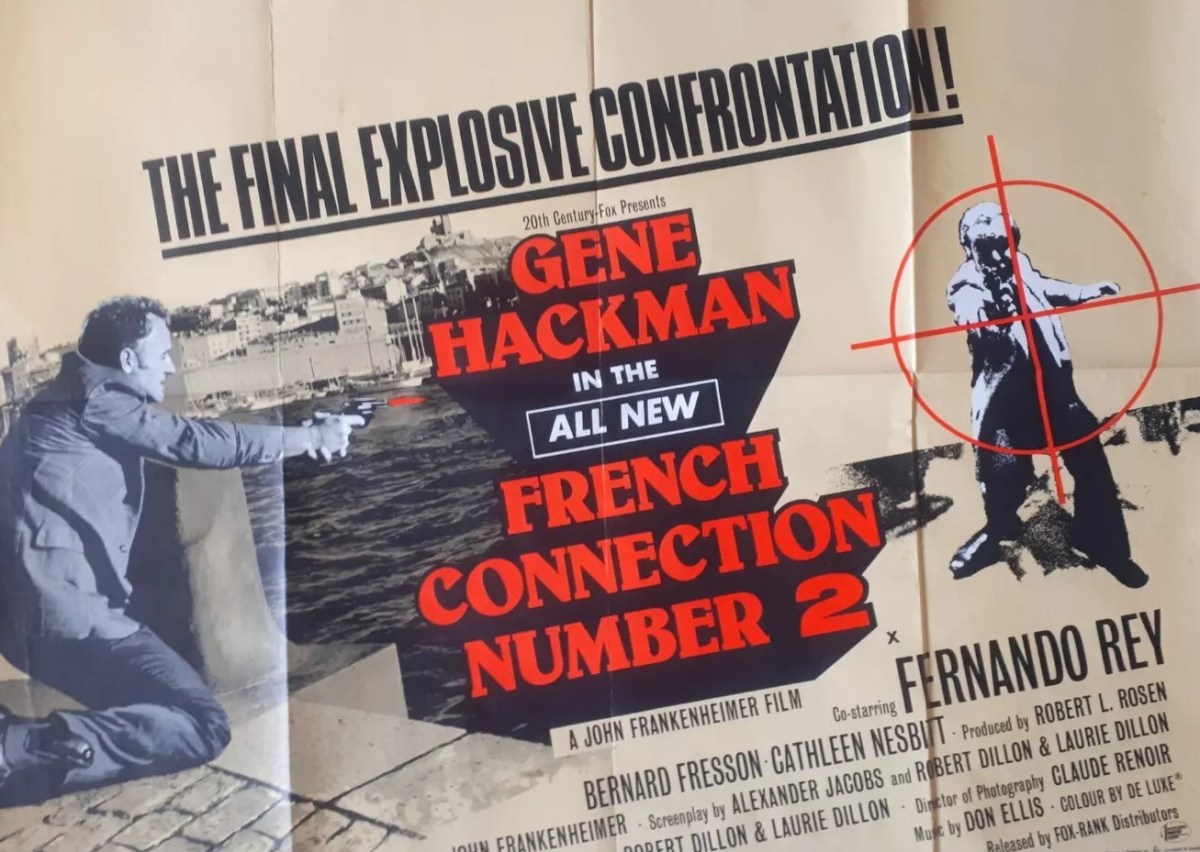
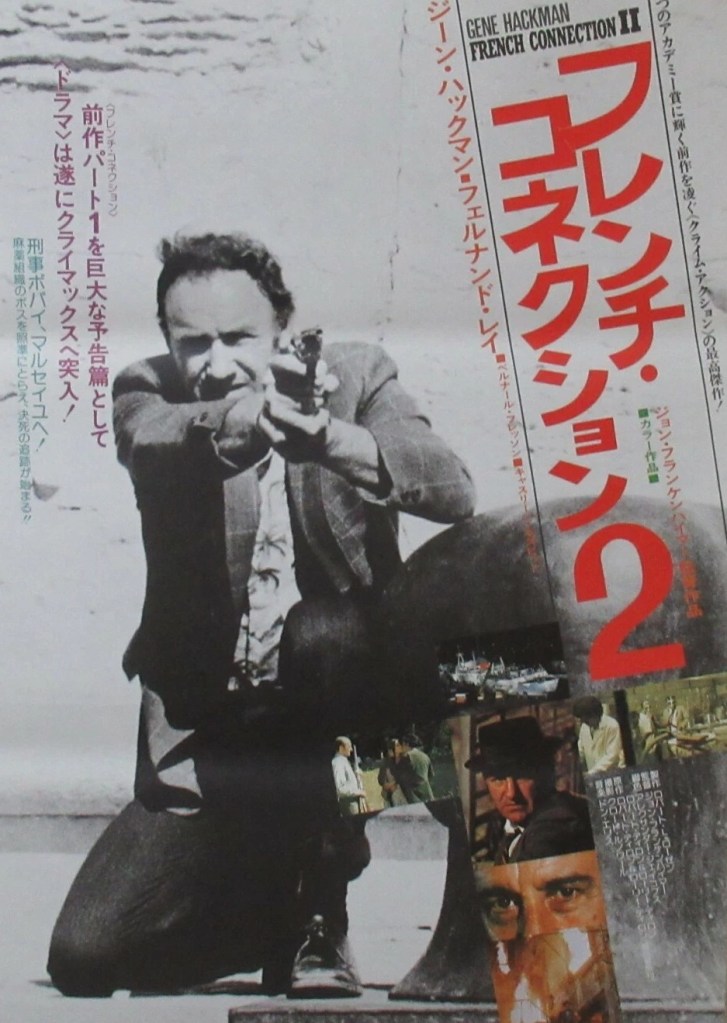
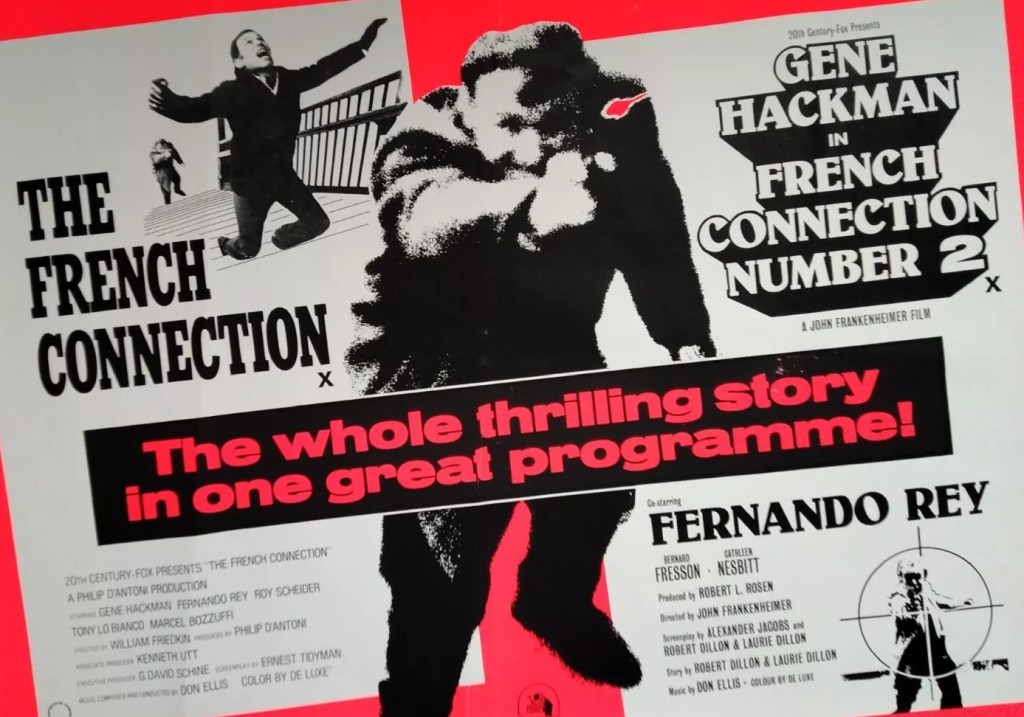
The French Connection 2 (1975) ***

Back to Marseilles four decades on from Borsalino (1970) and a preposterous plot that virtually sinks this fictional sequel to the factual original. For a start, French drugs kingpin Alain Charnier (Fernando Rey) has a very distinctive face, and it could hardly been beyond a cop, accustomed to issuing identikits, to provide the French police and Interpol for that matter with a mugshot, thus eliminating the contention that New York cop Popeye Doyle (Gene Hackman) is the only one who can identify him.

Throw in the fact that, unlike other U.S. exports like Jason Bourne who is fluent in several languages, Doyle is instantly at a disadvantage because, blow me down, the ordinary French citizen doesn’t speak English, ensuring that the cop comes across as one of these witless foreigners who thinks shouting louder in English makes him any more intelligible. And his sole method of detection is to simply wander the streets of a city with a population of 1.3 million hoping to catch sight of his quarry.

Doyle, being a natural rule-buster, soon causes the death of a local cop to add to the five people he’s killed (including two cops) in his home country. The bull-in-a-china-shop is so ham-fisted that it’s embarrassing rather than comedic. And the get-out-of-jail-free card is just as preposterous. Turns out Popeye is bait – this was a trope of 1960s low-budget crime or espionage movies though usually a woman was either the willing or unknowing lure – sent to Marseilles by his own bosses, in the hope that his presence will lure Charnier out of hiding, when, in fact, the Frenchman hides in very plain sight, on his very fancy yacht or dining in very fancy restaurants.

You’d have thought it would be an incredibly simple matter to feed the Charnier’s face into the police system and come up with a match which would then just involve either breaking down doors or taking the more discreet approach of catching him in the act.

What saves this, and only just, is Gene Hackman’s performance, not as the aforementioned bull, but as a junkie going cold turkey. And that in itself is reduced to only a handful of outstanding scenes, when his opposite number Barthelemy (Bernard Fresson) has to listen to his meanderings about baseball and his childhood. The action finale, the equivalent of a dam burst, where the two cops are flooded in a dry dock is good too. But, devoid of the racing automobiles, the climax drags, as Doyle sets up a later action trope of the endless footslog (which Liam Neeson probably thought he had trademarked). This doesn’t even involve any leaping or running across rooftops just a canter along busy streets, down alleys and then along the marina hoping to catch Charnier before he escapes by yacht.

It’s slim on atmosphere, too. Where the original had a down’n’dirty lived-in feel, this comes over as a tourist version of Marseilles if a tourist fancied a stroll down some mean streets. There’s a really dumb scene where Popeye, hoping to scare out the crooks in the hotel where he was imprisoned, sets fire to the place. But he goes upstairs with a jerrycan of petrol, rather than starting at the top and working is way down, no guarantee that when he reaches the roof there’s going to be any avenue of escape left open to him.

Sure, a sequel was always going to be in the works after the success of the original. But why not concentrate on the obvious follow-up, how a cache of heroin with a street value of $32 million seized by Popeye and Co managed to vanish from a police property office.   

Director John Frankenheimer (The Gypsy Moths, 1969, also featuring Hackman) hadn’t had a hit in a decade. This didn’t match the original at the box office. Written by Alexander Jacobs (Point Blank, 1967) and Robert Dillon (Bikini Beach, 1964) and Laurie Dillon, their only screen work.

Disappointing.

Behind the Scenes: “Deliverance” (1972)

You couldn’t make it like that now, so the ill-informed tale goes. Actors doing their own paddling in canoes, climbing a cliff. But anyone who has watched Leonard DiCaprio and Kate Winslet half-drowning in Titanic (1997) is well aware that it’s just not always possible to use a stand-in for key sequences. Or, for that matter, William Holden breaking in a horse in Wild Rovers (1971).

For a start, there actually were four stunt men on Deliverance, one who was star Jon Voigt’s stunt double. None were credited in the picture, not so unusual in those days, and anyone who knows anything about filming climbing scenes, not least the one where actors are actually crawling across a floor, or where there are, out of sight of cameras, safety facilities underneath, will know that the actors here, though it might get a tad tough, were not risking life and limb. Greater injuries were endured by the stars during the storm scenes of The Guns of Navarone (1961). That said, the movie does benefit from sufficient shots of the actors braving the waters and Ned Beatty nearly drowned and Burt Reynolds cracked his tailbone.

But, of course, danger in moviemaking is relative. There’s scarcely any equivalent to the numbers of deaths that occur in other professions, mining, for example, or industry, and I’m always suprised how easily the Hollywood PR machine is so easily accepted by the public when the peril mentioned is rarely actually perilous at all.

For the scene where the canoe broke, director John Boorman had found a more serene location on a river which was dammed, so he was able to close the sluice gates and lay a rail on the river bed. However, in the event, the sluice gates were opened too soon and the actors engulfed in an avalanche of water.

Should any of the actors show temerity, Boorman would leap into a canoe himself, and paddle downriver over and around various obstacles to show how easy it was.

Deliverance was an unexpected bestseller in 1970, the author an unlikely candidate to hit the commercial jackpot or even to pen such a tale. Ex-adman James Dickey was known for his poetry. Warner Bros bought the book pre-publication about “four decent fellows killing to survive” for $200,000 and more for Dickey to pen the screenplay without working out how it could be filmed. The studio was going through a major transition. In 1970 only three releases had cleared $1 million in rentals; in 1971 the number tripled and the studio was high on a release slate that included Death in Venice, A Clockwork Orange, Summer of ’42, Klute, The Devils, Dirty Harry and Billy Jack.

The studio alighted on John Boorman because he had made Hell in the Pacific (1968) starring Lee Marvin and Toshiro Mifune, that, while a certified flop, was made under arduous physical conditions in the western Pacific.

After the surprise success of Point Blank, British director Boorman had helmed two flops, Leo the Last (1970) being the other, so he was in the market for the kind of hard-nosed project with which he had made his name. Warner “felt I was the man to take it on,” explained Boorman.

At one point, Warner Brothers planned to team up Jack Nicholson (hot after Easy Rider, 1969, and Carnal Knowledge, 1971) and Marlon Brando, still largely in the pre-The Godfather wilderness. The studio tried to tempt Charlton Heston, who turned it down (“I probably won’t have time to do it”) but consoled himself that WB considered him “employable.” Donald Sutherland also gave it a pass. Dickey agitated for Sam Peckinpah to direct and Gene Hackman to star while Boorman was keen to work a third time with Lee Marvin. Theoretically, Robert Redford, Henry Fonda, George C. Scott and Warren Beatty were considered, but such big names would hardly be compatible with the lean budget.

The final budget was a mere $2 million, not sufficient to attract big name – or even to pay for a score. WB had reservations about a picture without any women in lead roles. Jon Voigt was not a proven marquee name, despite the success of Midnight Cowboy (1969). He only had a bit part in Catch 22 (1970) and his other films, Out of It (1969) and The Revolutionary (1970) had performed dismally while The All-American Boy was sitting on the WB shelf, only winning a release to cash in on Deliverance.

Despite a less than buoyant career, Voigt was reluctant to commit. He resisted making the movie till the last minute. Even after trying to convince himself about the film’s worth by reading out the entire screenplay to his girlfriend Marcheline Bertrand (Angelina Jolie’s mother), it took a telephone call from the director and Boorman demanding a decision before he counted to ten before Voigt signed up. Voigt viewed the film as about how men “lose part of their manhood by hiding, coddling themselves into thinking we’re safe.”

Burt Reynolds was treading water in action B-films like Skullduggery (1970), as the second male lead in bigger films like 100 Rifles (1969) and in television (Dan August, 1970-1971). In his favor, he had the lead in offbeat cop picture Fuzz (1972). But it looks like Voigt and Reynolds took casting to the wire. Both were announced for the film a few weeks before it began shooting on May 17, 1971.

Whether it boosted his career is open to question, but Burt Reynolds’ name achieve notoriety in April 1972, a few months before Deliverance opened, by becoming the first male centerspread in Cosmopolitan.  Billy Redden, as the banjo player, was hired for his physical appearance, clever use of the camera disguising the fact that there was a genuine banjo player concealed behind him doing all the playing. Boorman used snatches of the banjo music instead of coughing up for a proper score. While the credits claimed the “Dueling Banjos” number had been devised by Eric Weissberg and Steve Mandel, Arthur Smith, writer of “Feudin’ Banjos” in 1955, took the studio to court and won a landmark copyright ruling. The tune had received a gold record for sales.

Setting aside any inherent danger in the water, the shore could just be as perilous. A script altercation between Dickey and Boorman ended with the director losing four teeth. Cinematographer Vilmos Zsigmond got into a spat with his union and was slapped on the wrists for operating the camera too often. Filming of the rape scene was uncomfortable for all concerned, even observers. When Reynolds complained the director let the sequence last too long, Boorman countered that he let it run till he reckoned Reynolds, in his character, would intervene.

Despite WB including it in a promotion to its international partners in May 1971 Deliverance, filmed between May 17 – a week later than originally envisaged – and August 1971, sat on the shelf for nearly a year before being premiered at the Atlanta Film Festival in July 1972 with Playboy picking up the tab for flying Reynolds to the event.

These days it would be called a platform release. Deliverance opened in one small house in New York – the 558-seat Loews Tower East – at the end of July and except for Los Angeles didn’t go any wider until early October. Reviews were good, four faves out of five in New York. But it was the box office that caught the eye. An opening day record and an eye-popping $45,000 for the first week took the industry by surprise. It remained at Loews until December. Chicago led the applause in October with a “brawny” $49,000. Everywhere it was hot – “lusty” $26,000 in Washington DC, “socko” $21,000 in Philadelphia were typical examples of the public response.

In what these days would be called counter-programming it went into the New York showcases at Xmas – making off with a huge $589,000 from 46 the first week and $500,000 the second. WB had predicted it might hit $15 million in rentals. The studio was wrong. It scrambled up $21 million. The 1973 tally made it the second best at the box office that year.

SOURCES: Phil Hoad, “How We Made Deliverance,” The Guardian, May 29, 2017; Oliver Lyttleton, “5 Things You Might Not Know about Deliverance, Released 40 Years Ago,” IndieWire, July 30, 2012; Charlton Heston, The Actor’s Life (Penguin, 1980); “Bow and Arrow Party,” Variety, May 20, 1970, p30; “Dickey Ga-Bound,” Variety, January 21, 1971, p4; “Reps of 45 Flags,” Variety, April 14, 1971, p5; “Voigt in Deliverance,” Variety, May 12, 1971, p14; “Runaway Robert Altman,” Variety, December 15, 1971, p4; Advert, Variety, August 9, 1972, p23; “Big Rental Films of 1972,” Variety, Janaury 3, 1973, p7; “Big Rental Films of 1973,” Variety, January 9, 1974, p19. Box office figures from Variety October 11, 1972.

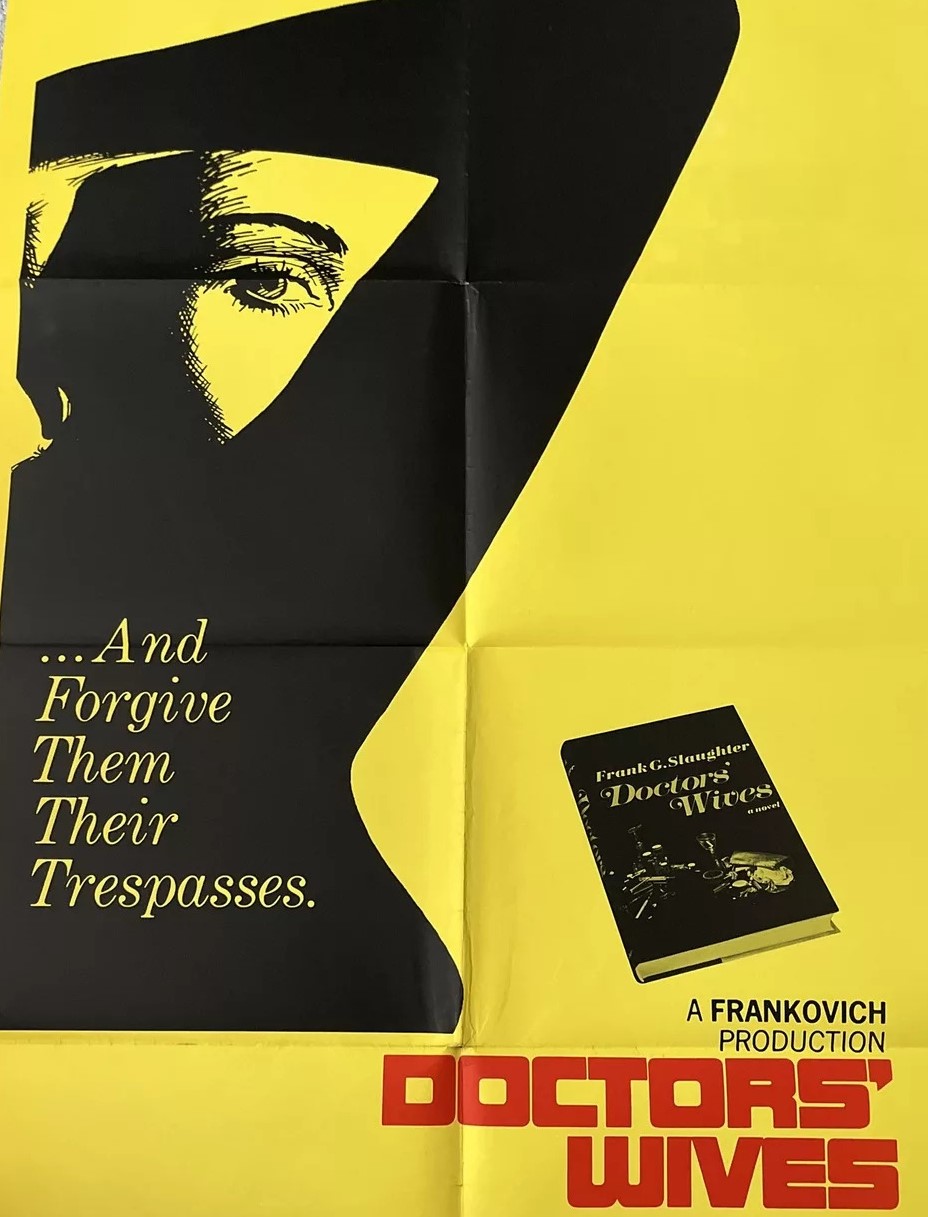
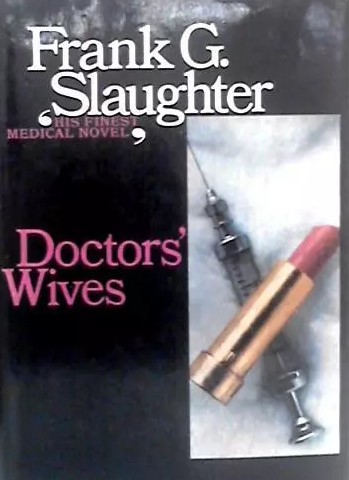
Doctors Wives (1971) ***

Five-star so-bad-it’s-good. Every now and then, especially approaching the annual touting of earnest films for Oscar consideration, we need reminded of just how good Hollywood is at producing hugely enjoyable baloney. Excepting the proliferation of recent MCU disasters, cinematic train wrecks don’t come along nearly often enough. Such botched jobs are always better if they are stuffed full of the worthy – Oscar recipients or nominees. Gene Hackman, Dyan Cannon, Rachel Roberts, Ralph Bellamy and screenwriter Daniel Taradash fulfil that requirement here.

A cross between Sex and the City and ER, with a third act that takes off like a rabbit desperately seizing on any convenient narrative hole. And a first act that pulls the old Psycho number of killing off the star before the picture really gets going. That old murder MacGuffin works every time.

“I’m horny” is about the third line in the movie, announced by sex-mad Lorrie (Dyan Cannon) to a tableful of over-refreshed doctors wives playing sedate poker in a country club at one table while at another table where you would expect the doctor husbands to be telling dirty jokes and whispering inuendoes they are boring each other with shop talk.

Unable to get the others to engage in revealing snippets about their sex lives, Lorrie rounds off the evening by informing the ladies that she plans to have sex with all their husbands to tell them where they are all going wrong, meanwhile gaily proclaiming she’s halfway there already. Which, of course, sets off a round of suspicion and accusations from wives to husbands.

Just to keep you straight on the who’s who: Lorrie is married to Dr Mort Dellman (John Colicos), Dr Peter Brennan (Richard Crenna) to Amy (Janice Rule), Dr Dave Randolph (Gene Hackman) to Della (Rachel Roberts), and Dr Paul McGill (George Gaymes) to Elaine (Marian McCargo) while Dr Joe Gray (Carroll O’Connor) and his ex- Maggie (Cara Williams) still hang around with the group.

As you might expect, every marriage is already in trouble, except, apparently, Lorrie’s because her husband, equally sex-mad Mort, appears to indulge his wife’s whims. Except, he’s not so easy-going, given he puts a bullet in her back when he discovers her making love to one of his colleagues.

Exactly which one remains a mystery for just long enough for the wives to rack up the suspicion level, and all the audience has to go on is the naked arm waving limply trapped under the naked dead weight of the corpse.

You might think, what with Dyan Cannon’s name being top-billed and she quite the rising star after an Oscar nomination for Bob & Carol & Ted & Alice (1969), that we’re going to flip into a series of flashbacks to accord her more screen time. But, no, all we get is that opening risqué scene and her naked corpse.

Before ER’s creator Michael Crichton came calling a couple of decades later, the surgical profession was mostly represented in formulaic soap opera of the Dr Kildare small screen or The Interns (1962) big screen variety. But author Frank G. Slaughter, himself a practising physician,  had made his name with a series of bestsellers that went into the intricacies of surgery and involved genuine medical jargon. So, before the identity of the illicit lover can be revealed, his life has got to be saved – after all he’s got a bullet in his heart. Cue even bloodier surgical shenanigans than kept fans of Mash (1970) hooked.  

By the time we discover the victim was Dr McGill any chance of his wife stomping around in a huff at his infidelity is already off the menu because she’s been dallying with an intern.

I won’t go into all the all-round marital strife – triggered by alcoholism, drug addiction, infertility, ambition – that allows Oscar winners and nominees to try and act their way out of trouble because this picture has another absolute zinger to throw at you.

The murderer blackmails all four doctor pals for having a fling with his wife. To that cool $100,000 he adds quarter of a million from Lorrie’s wealthy dad Jake (Ralph Bellamy) for agreeing to make no claim on his wife’s estate. You kind of wonder what the heck use is all this dosh going to be in the slammer or Death Row. But that’s before you consider the zinger.

Mort’s a specialist and there happens to be a young patient desperate for his surgical skills. Young lad is son to head operating nurse Helen (Diana Sands) who is having an affair with Dr Brennan. So, a deal is done – you can’t wait for this humdinger, can you – wherein the D.A. is agreeable to release Mort from custody so he can perform this emergency operation while Dr Brennan and Jake – wait for it – agree to help him escape abroad.

As everyone knows you can’t tell one masked surgeon from another, so the first part of the plans works and while the cops keep a close eye on the fake Mort as he emerges from the operating theater the real Mort escapes in a parked car with the keys in the ignition. Except Jake isn’t quite a dumb or gullible as Dr Brennan and removes the keys so the killer can’t escape. Which was a shame because this picture could have gone on for another bonkers 20 minutes or so watching Mort outwit the cops.

As it is, there’s more than enough to fill in the time. Amy, something of a clothes horse with an extraordinary array of clothes and especially hats, goes all slinky in what looks like day-glo leggings to perform a bizarre seduction on her husband. Which elicits the movie’s best line, Nurse Helen complaining, “I don’t appreciate you sleeping with your wife.”

Unbeknownst to her, Lorrie has a female disciple who seduces every male in sight for research purposes, tape-recording every moment of the activity, so her victims are pretty much always in the coitus interruptus position.

And I can’t let you go without mentioning that Lorrie was also bisexual and counted among her conquests Della.

Except for the unlikely success of The French Connection later in the year which offered a different route in top-billing, Gene Hackman, had he continued taking on roles like this,  might have ended up a perennial third potato. Bear in mind he already had two best supporting actor nominations in the bank when, third-billed, he took this on. Maybe he never read the whole script. Maybe this was the best offer going.

He’s not even the best thing in it. Too earnest for a start. Husband-and-wife murderer-victim tag team John Colicos (Anne of the Thousand Days, 1969) and Dyan Cannon take the honors. Directed by George Schaefer (Pendulum, 1969) and scripted by Daniel Taradash (Castle Keep, 1969). .

An absolute hoot.

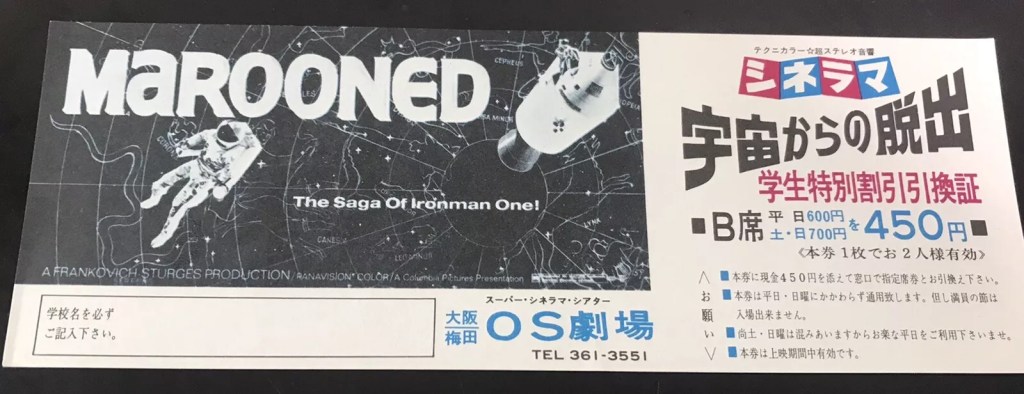
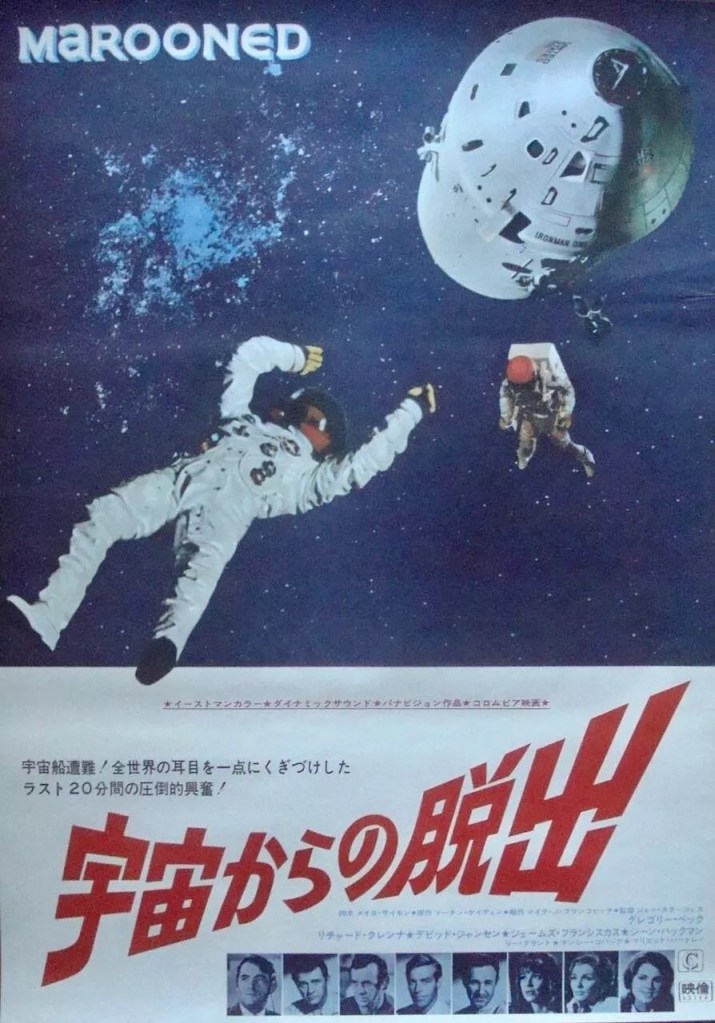
Behind the Scenes: Selling Jeopardy in Space – Pressbook for “Marooned” (1969)

You could come away from the Pressbook/Exhibitors Manual wondering if some of the actors were in the wrong profession, given the number of accomplished pilots on the roster.  James Franciscus held a commercial license for multi-engine planes and had logged three thousand flying hours in three years. Gene Hackman not only had a private flying license but was in the process of building his own biplane.

Producer Mike Frankovich had flown with the US Air Force during World War Two, clocking up 7,000 hours flying time and ending up a colonel. Technical expert George Smith had ejected at 6,000 feet from a plane flying at 800 mph.

Another less well-known fact, Natalie Wood (who was appearing in producer Mike Frankovich’s Bob and Carol and Ted and Alice, 1969) was fluent in Russian and was brought in to translate for a showing of the movie to visiting Russian spacemen. Nancy Kovack, by the way, was equally talented, speaking Persian and other languages.

As much as the main function of the Pressbook was to provide exhibitors with a range of adverts in every conceivable size that they could cut out and take along to their local newspaper, its secondary function was to provide cinema owners with promotional ideas and to provide snippets and articles that could be passed on to a local friendly reporter.  But pickings were slim for jouranlists. Not surprisingly, Gregory Peck didn’t have much say, since whatever he did have to say he’d said already as promotion work for the two other features preceding Marooned this year. And nobody’s spilling the beans on the special effects.

Due to the bulkiness of their space suits, the three actors playing astronauts couldn’t sit down between takes and instead the production employed “the slanted boards usually leaned against by elaborately-gowned female stars to protect their costumes.” (You learn something new about the business every day!). Never mind the bulkiness, the actors spent a chunk of their time in the air and the one day James Franciscus expected to meet acting hero Gregory Peck (they had no scenes together) it proved impossible as when the star visited the capsule set Franciscus was 60 ft in the air.

Richard Crenna got a better response from his young son, who had little concept of what an actor did. But after seeing his dad floating around in space high above him, he reckoned his father was actually a hero

For such a male-oriented picture, Columbia made a big play for the female audience. “The Ladies Love Marooned,” boasted one advert in the 16-page A2 Pressbook/Campaign Manual aimed at exhibitors. Pulling on quotes from critics nobody had really heard of, it managed to present the notion that the picture was as exciting, fascinating, “ingeniously-devised,” and suspenseful for women as much as men, at the same time as focusing on the feminine aspects of the movie – “Lee Grant is a knockout.”

The Pressbook itself allocated editorial space to the three female stars. For Lee Grant the slant was that her talent had been recognized by a host of awards – Emmy, Obie, Best Actress at Cannes plus an Oscar nomination (she would later win an Oscar for Shampoo, 1975). But you have to wonder how an actress would respond to be called, in print, “an egg-head with sex” as was the case with Nancy Kovack. In between turning out such pictures as Tarzan and the Valley of Gold (1966) and this, Kovack had been resident in Iran where she made Diamond 33 (1967) and Night of the Angels (1968). By comparison, Mariette Hartley got off lightly, thanks to her Shakespearian training.

A separate 4-page A2 insert promoted the three Oscar nominations for cinematography, sound and visual effects. “Nominated for 3 Academy Awards,” was the slug accompanying the ads. Never mind the reviews from female critics, much bigger space was devoted here to a rave review form Rex Reed, one of the most famous critics of the day (and star, if that’s the right word, of Myra Breckenridge, 1970), who claimed Marooned was “as exciting, spirited and suspenseful as any spy movie or any cops-and-robbers movie ever made.”

As you might expect, the bulk of the promotional ideas were science-based. Exhibitors were told to target the country’s 2,500 science clubs, the armed forces, the industries that supported the space program and, of course, schools and colleges. Tie-ins had been achieved with 4,500 A&P stores, Jane Parker Donuts, and Philco-Ford dealers.

From a contemporary marketing standpoint, the surprising tie-in was with Omega watches, tagged “the first watch on the moon,” the company’s Speedmaster brand not just worn by the astronauts who did land on the moon in July 1969 but seen in the picture on the wrists of Gregory Peck, Richard Crenna, David Janssen, Gene Hackman and James Franciscus. Over 4,000 dealers were backing the movie.

Model kit manufacturer Revell was offering space suits as prizes in a competition. It distributed more than 42,000 standees and posters and printed five million entry forms. Bantam books was promoting the original novel by Martin Caidin.  That exhibitors would be eager to equip a staff member with an astronaut’s garb and have him/her parade through the streets went without saying. Using lift-off sound effects in a cinema lobby was another idea or turning the entire lobby into a space set.

Rather disconcertingly, the marketing bigwigs thought it would be a clever idea to propose a discussion program on radio or local television on the subject of what would happen if spacemen were marooned, a rather tetchy subject when that became reality.

Unusually, but not surprisingly, the posters stuck with the one tag line: “Three marooned astronauts. And only 55 minutes left to rescue them. While the whole world watches and waits…” and buttressed by some thumbs-up quotes from the likes of reviewers from the New York Times, Redbook, Los Angeles Times and Los Angeles Herald Examiner. In fact, the advertising department took such a shine to Charles Champlin of the LA Times that they cut up his review and stuck snippets of it in three separate ads.

You’ll have seen from the variety of adverts I’ve used to support the review and the Behind the Scenes article earlier in the Blog, that there was a wider range, initially, of adverts, some showing the capsule stuck out in the middle of space. By the time it came to printing this Pressbook, the one for the picture’s general release, all of those were jettisoned in favor of the insipid “thumbs-up” poster with faces to the foreground and the launch in the background, attendant quotes and the “3 Academy award Nominations” slug.

Marooned (1969) ****

The forgotten one. Left out in the cold by audiences and critics alike in the late 60s sci fi boom by the more audacious 2001: A Space Odyssey (1968), Barbarella (1968) and Planet of the Apes (1968). And that’s a shame because it’s by far the most realistic (to the nth degree) of the space movies. Audiences growing up with astronauts saving their own skins with ingenious maneuver – sling shot and whatnot – in Apollo 13 (1995) and The Martian (2015)  might be shocked by the harsh reality of space travel as evidenced here. Astronauts are little more than helpless creatures in a tiny box with ground control in obsessive control. It’s salutary that escape was the audience mindset even after the Challenger Space Shuttle disaster of 1986.

Nobody thought to tell audiences to buckle up because they were in for a hell of a ruthless ride back in the day, but this one really should come with a warning.

Casting makes this work – when it shouldn’t. It’s full of those kind of actors who scarcely move their lips and rarely engage in extraneous facial movement. You can hear director John Sturges issuing instructions: to Gregory Peck, keep those brows knitted; to David Janssen, keep your head lowered and keep with the muttering; to Richard Crenna, don’t move a muscle; to Gene Hackman, limit that trademark chuckle to just once. Why this shouldn’t work is because the big star isn’t in the goldfish bowl of the shuttle cockpit, and since there’s none of the get-to-know-the-crew backstory of The Right Stuff (1983) or Apollo 13 there’s nobody to really root for, especially as the crew is just siting there, doing (by instruction) nothing and awaiting their fate. Which, by the way, which is constantly spelled out, is to suffocate from lack of oxygen.

But there’s a reason Gregory Peck’s on the ground and not in space. Because he’s the one making the life-and-death decisions.

This is by far Gregory Peck’s toughest role. He pulled out of Ice Station Zebra (1968) because he didn’t like the slant of the character, and since then he’d been in typical upstanding heroic mode in The Stalking Moon (1968), Mackenna’s Gold (1969) and The Chairman (1969). Here he’s the king of data management and crisis control, the most ruthless, heartless sonofa you’d ever encounter, not willing to take a risk on greenlighting a rescue mission because the computer says no. The weaselling PR-speak that’s all about saving the space program and making allowance for collateral damage is nothing compared to his terrible delivery of news to one of the wives that her husband is dead. She collapses with emotion, he puts the phone down.

If you’re geek-minded, you’ll give this five stars because there’s information overload. “Go” and “Mark” are the most commonly used words. And in case you can’t judge from the visuals what’s going on, there’s usually some television commentator voice-over to help you out.

So, the Ironman One mission hits trouble when its retro rockets refuse to ignite for return to Earth after several months in space. They’ve got 40 hours or so to effect a rescue before the oxygen runs out for crew members Jim Pruett (Richard Crenna), Buzz Lloyd (Gene Hackman) and Clayton Stone (James Franciscus). The crew are forbidden to try any stunts themselves because any exertion will use up valuable oxygen.

Plan by chief astronaut Ted Dougherty (David Janssen) to mount a rescue operation via an untried spaceship XRV (smaller than a helicopter, by the way) is vetoed as too risky by NASA boss Charles Keith (Gregory Peck) until the President, terrified of public reaction, overrules him. With time running out the impending launch is hindered by an approaching hurricane. But then, in the only nod to ingenuity, someone suggests taking off in the eye of the hurricane, when wind force will be zero.

Meanwhile, up in space, the three stalwarts are slowly coming apart. Buzz, the toughest-looking of the trio, is worst affected, screaming his head off as the prospect of dying looms. Then they are faced with a terrible decision. With the rescue delayed, there’s not enough oxygen to see them through, so one has to sacrifice himself.

I told you it was brutal stuff. About the last 30 minutes are not about whether they can be saved, but who will die and how, the impact of asphyxia on the brain spelled out by resident boffin Clayton. By this point anything they do will almost certain sabotage any rescue and they’re in cloud cuckoo land as Keith tries to keep them in line.

While there’s certainly information overload and a few questionable scientific decisions (can you really open a hatch straight into space?), the reality of the drama more than holds the enterprise together. The realpolitik, the callous use of the wives to go along with the company line as they watch their husbands suffer before their very eyes, the management of potentially bad news, was perhaps a shock for audiences back in the day but would be accepted more easily by contemporary moviegoers.

The acting is first class. Gregory Peck never attempts to lighten his load, to make his character less unattractive and appease his following. David Janssen (Warning Shot, 1966) is as solid as ever. Gene Hackman (The Gypsy Moths, 1969) is the pick of the crew but Richard Crenna’s (Midas Run, 1969) less showy disintegration packs a punch. Lee Grant (The Big Bounce, 1969) is the standout among the wives.

Much as Sturges lets the computerspeak run away with itself, he doesn’t flinch when it comes to the really tough scenes. Written by Mayo Simon (I Could Go On Singing, 1963) from the Matt Caidin source novel.

Under-rated. Worth a look.

Behind the Scenes: The Box Office Bump Part Two – Foreign Saves the Day

In previous decades, box office outside of the U.S., while a growing part of the ancillary equation, only in very rare circumstances outscored domestic. The general expectation, in part due to tougher competition for screens and extra distribution costs, was on average studios could expect to earn about half of domestic revenues.

There was one obvious exemption to this rule. James Bond overseas blew all the competition out of the water. And so it proved in the early 1970s from an examination of United Artists books for the period. Live and Let Die (1973) was the standout performer, knocking up $27 million in rentals (the studio share of the overall box office gross) from foreign cinemas compared to $16.4 million at home. Diamonds Are Forever (1971) did equally well – $22 million abroad, $20 million domestic.

James Bond was such a cash cow that surprised no one. Last Tango in Paris (1973) was considered an anomaly, controversy stoked by UA four-walling the picture when it couldn’t find enough screens. It came in third in the foreign market league, adding $16 million to domestic $21 million.

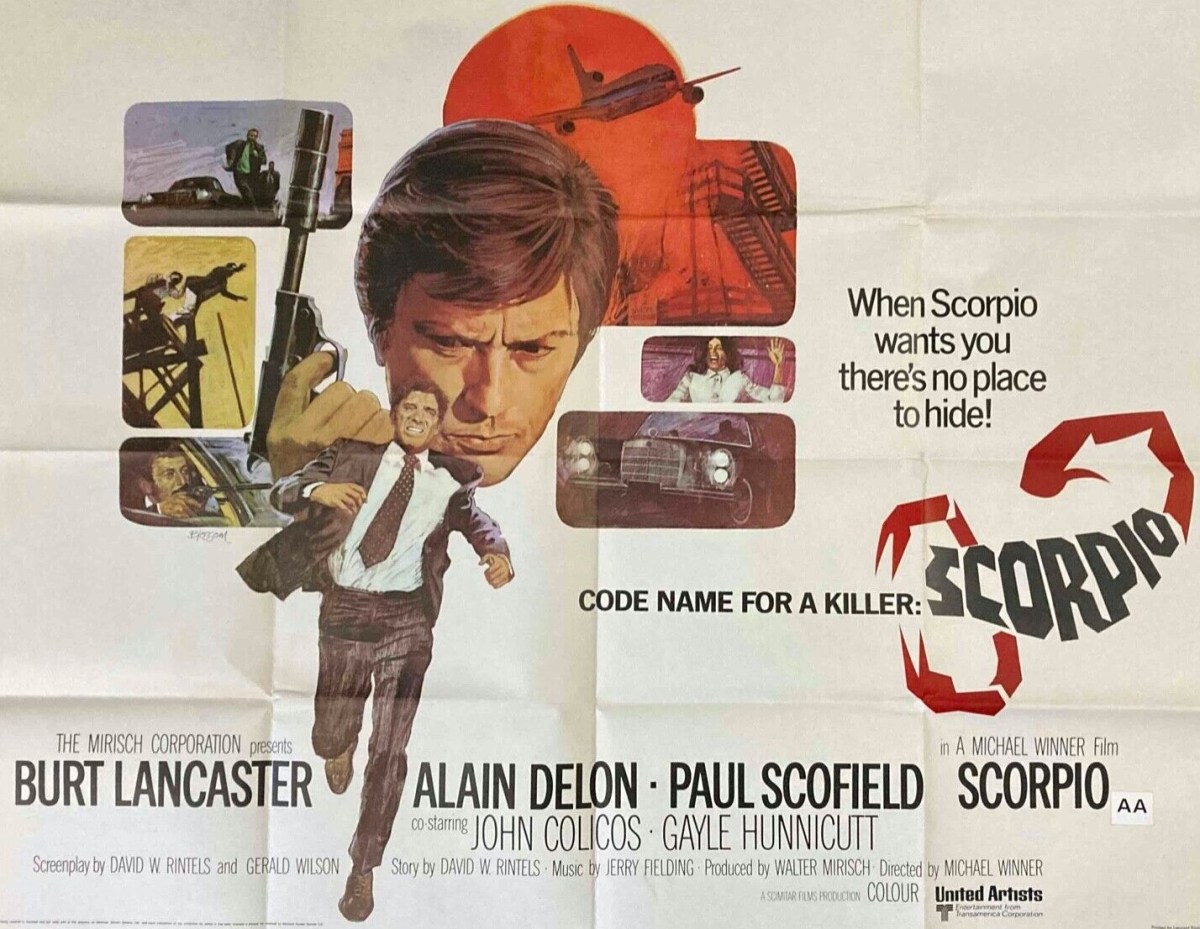
What did take Hollywood’s breath away was how often under-performers – flops even – at the U.S. ticket wickets did gangbusters elsewhere. The biggest winner was the aptly-named Michael Winner, director of westerns Lawman (1971) and Chato’s Land (1972), hitman thriller The Mechanic (1972) and spy drama Scorpio (1973). Total American rentals a shade over $7 million, total foreign rentals three times as much a colossal $21.8 million.

There was hardly a greater example of the disparity between American audience tastes and the rest of the world. And it made Hollywood studios more adventurous when it came to choosing subject matter, and in backing stars, aware that they could make their investment back – and more – from foreign markets.

It was probably astonishing to any studio executive that Burt Lancaster – for over two decades a high-flying marquee name from action-oriented fare like The Crimson Pirate (1952) and controversial drama From Here to Eternity (1953) to his Oscar-winning turn as Elmer Gantry (1960) and hardnosed western The Professionals (1966) – had lost his domestic audience especially after he had fronted up disaster movie smash Airport (1970).

But Lancaster could only scrape up $1.35 million at home for Scorpio, $2.1 million for Lawman and $2.8 million for another western Valdez Is Coming. Scorpio was the biggest hit abroad, with a massive $7 million, over five times domestic, while Lawman shot up $3.2 million (50 per cent above domestic) and Valdez Is Coming $2.65 million.

Charles Bronson was another beneficiary of foreign largesse. The Mechanic, too, targeted $7 million abroad, nearly three times the domestic tally of $2.6 million. Chato’s Land (1972) only delivered $1.27 million in the U.S. but $4.6 million abroad.

Westerns were a mixed bag. Oliver Reed-Candice Bergen-Gene Hackman number The Hunting Party (1971) was an almighty flop at home, just $800,000 in the kitty, but rallied somewhat abroad, not enough to turn profit but at least add a sheen of respectability, with $2.4 million elsewhere, three times domestic. The Magnificent Seven Ride! (1972), proof the sequels had outstayed their welcome, brought in just $750,000 domestically but again did triple the business abroad with $2.15 million and given the paltry budget enough to sit in the black.

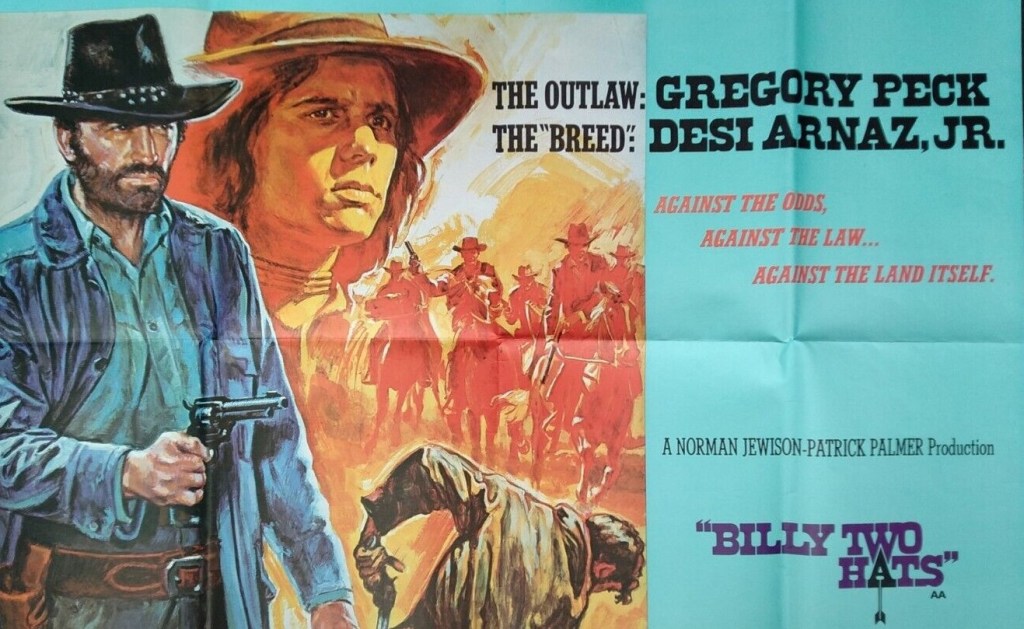
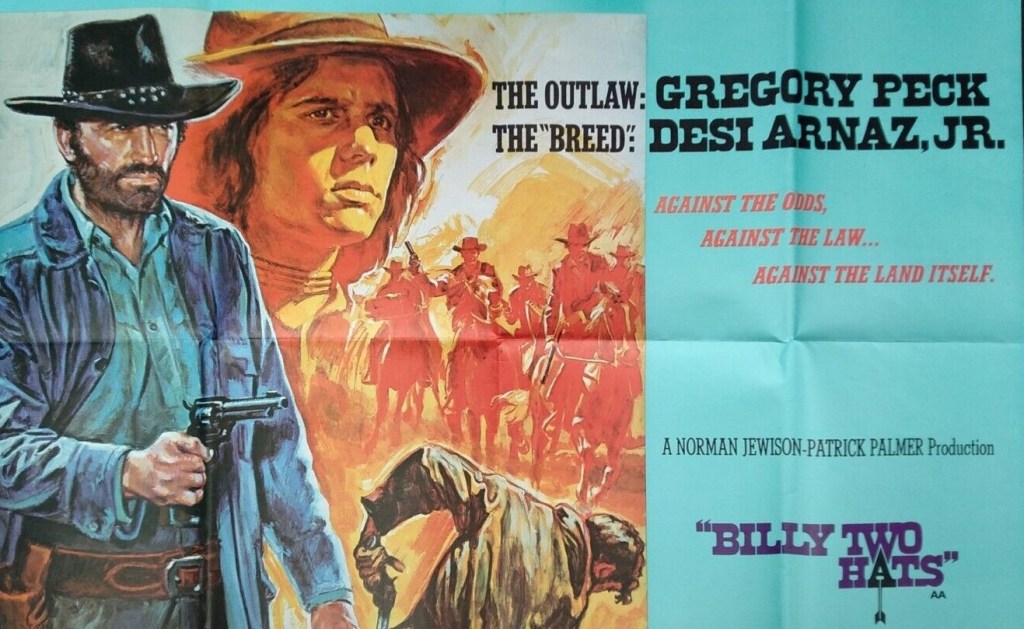
Revisionist effort Billy Two Hats (1974) starring Gregory Peck added $900,000 abroad to a miserable $440,000 at home – foreign revenues not enough to save it from flop. But foreign couldn’t save the second remake of the Gunfight at the OK Corral legend, Doc (1971) with Stacy Keach and Faye Dunaway which moseyed along to $1.35 million abroad to add to $1.8 million domestic. And another western sequel Support Your Local Gunfighter (1971) notched up just $970,000 abroad compared to $2.1 million. Modern western The Honkers (1972) with James Coburn managed just $550,000 abroad and $1 million at home.

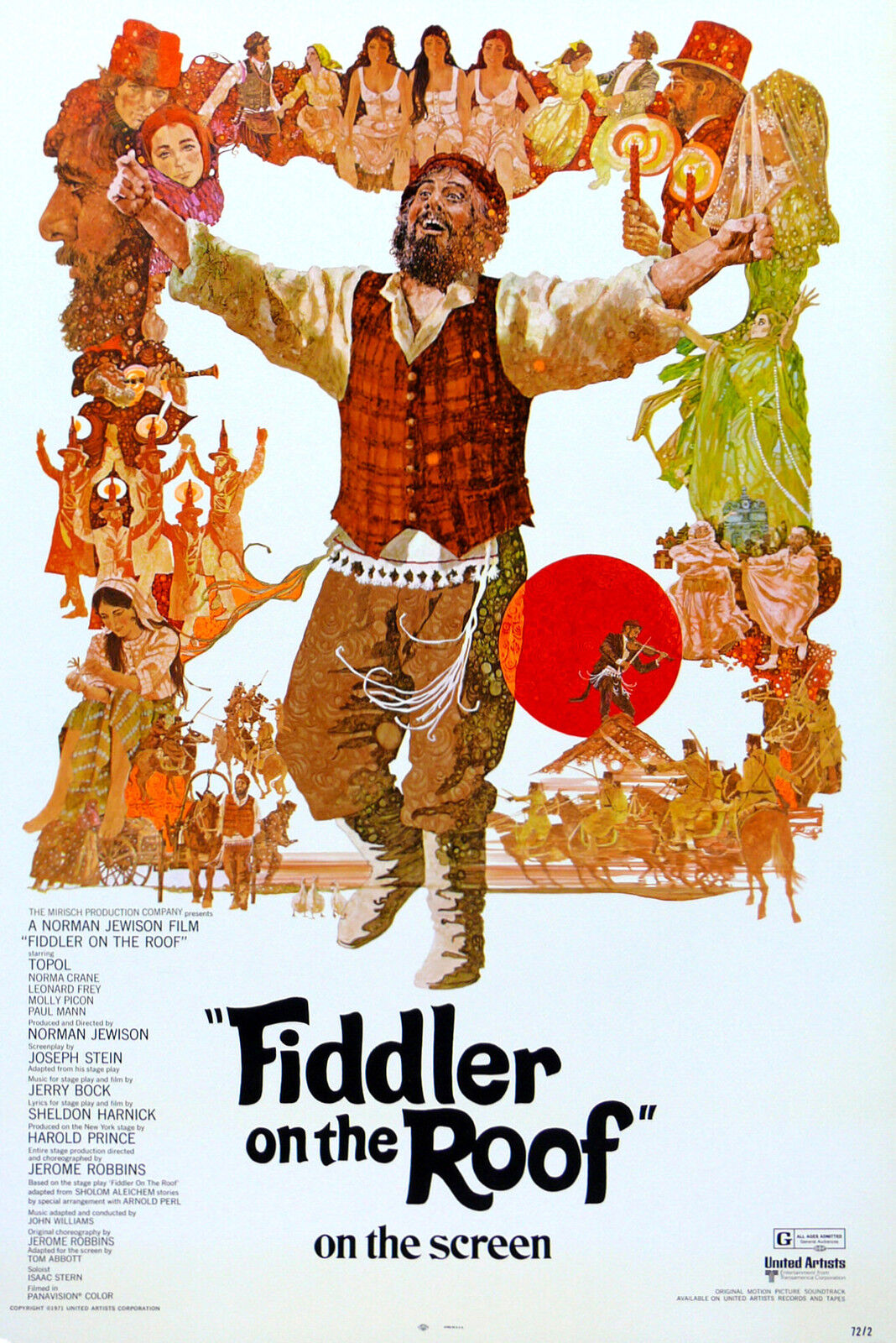
It didn’t really matter that Michael Caine comedy thriller Pulp (1972) did better abroad, figures everywhere nothing to write home about, $600,000 in total, five-sixths of that abroad. Fiddler on the Roof (1970), for other reasons, underwhelmed but nobody was going to complain too much when foreign audiences stuck $10 million in till, about a quarter of domestic.

There were some conundrums in the foreign-domestic share-out. Typically, American comedies didn’t travel. But Billy Wilder’s Avanti! (1972) starring Jack Lemmon, perhaps because of the Italian setting, did better abroad – $2.5 million to $1.6 million. Glenda Jackson British-made menage a trois Sunday, Bloody Sunday (1970) not surprisingly did better abroad, but only just, $1.8 million to $1.77 million.

Sidney Poitier in second sequel The Organization (1971) tapped into $2.9 million abroad and $2.45 million at home but generally too-specifically-American features struggled overseas, The Hospital (1971) snaring only $1.9 million compared to $9 million, White Lightning (1973) snagging $1.8 million compared to $6.9 million, Fuzz (1972) holstering $1.7 million against $3.1 million.

Behind the Scenes: The Box Office Bump

Ancillary – the famed “long tail” – has all but disappeared. Used to be movie studios could count on up to 90 per cent of a picture’s overall earnings coming after it had completed its initial run in the cinemas. Until streaming cut off ancillary at the pass,  that long tail consisted of an extraordinary number of revenue streams. Once a film was out of the cinemas, and assuming it wasn’t going to return in a steady reissue pattern like the James Bond or Disney movies or blockbusters such as Star Wars, its ancillary journey would begin with VHS/DVD (of which there were several sub-streams), then television (again, sub-divided into network, cable, syndication, and specialist operations like Turner) and then you could still be talking remake. Plus, you could bunch up an entire library of old pictures and sell them on again. The beauty of the system was that when movies hit whatever ancillary segment, there was rarely any such thing as an outright buy. Movies were leased. That meant every three or four years they could be sold all over again.

The forerunner of ancillary was network television. Television had begun mopping up old movies by the bucketload in the 1950s, and in such quantities that the attraction of old movies on the small screen prevented audiences seeking out new movies on the big screen and in part accounted for the steady decline of the moviegoing habit. By the 1960s, networks were beginning to fork out big bucks for individual pictures – Cleopatra (1963) going for several million.  

By the 1970s, the income from a television showing of a movie could exceed what it had made at the cinema. For United Artists, in the period 1970-1972 (this covers the dates films were made not when released), television sales, calculated on an overall annual basis, brought in at least an extra 24 per cent on top of revenue from cinema release. That figure came from 1970, but in 1971 that shot up to 38 per cent and the following year dipped slightly to 37 per cent. And that was just for the United States. Although other countries tended to pay a lot less for movies, they still paid something and in total might bring in half as much again.

The ancillary gold mine had started to pay off big time. In the 1960s, the amounts networks ponied up for television rights depended very much on initial box office, the assumption being there was some obvious correlation between the numbers who would go to see a particular movie at the cinema and the size of the subsequent television audience. And while it was true the biggest cinematic blockbusters tended to attract the biggest television audiences, it was soon equally clear that television audiences were as segmented as much as cinema ones and therefore the amounts paid by networks for individual movies began to show sharp  divergence.

There was no doubting that James Bond ruled the television roost as far as UA was concerned in 1970-1972. Diamonds Are Forever and Live and Let Die, regardless of U.S. box office – the former earning $20 million in rentals (the studio’s share of the box office), the latter $16.2 million – were each sold to American television for the same, princely, sum of $5.2 million, by far and away the most any movie pulled in.

Not far behind was Fiddler on the Roof which netted $5.12 million. But here’s the kicker – the musical earned more than both Bonds put together, a colossal $37 million in rentals. but in terms of attracting a television audience was considered a weaker proposition than both. But musicals were believed to be somehting of a golden goose for television, otherwise how to acocunt for Tom Sawyer which cost networks $2.76 million. Comparatively speaking, that made no logical sense because it had only taken in $5 million in rentals. But family-friendly fare was so rare it had networks duking it out for the rights. A third musical Man of La Mancha went to television for $1.7 million having racked up just$3.7 million at the cinema.

Conversely, networks weren’t remotely interested in films with a sex theme, no matter how well they had done at the box office. Last Tango in Paris had harnessed a colossal $16 million in rentals but was worth only $120,000 (yes, that’s right, $120,000) to any television station willing to show it (heavily cut of course). It didn’t even matter if you took a comedic approach to sex. Woody Allen’s Everything You Wanted To Know About Sex hauled in $8.2 million at the cinema but only $130,000 from television. But maybe Woody Allen was the problem. Bananas, with a highly-profitable $3.3 million at the box office, could only manage less than half a million from television, the comedian perhaps considered an acquired taste which not enough of the public had acquired.

But television, rather than being viewed as the perennial enemy, was often seen as salvation for under-performing movies, maybe not recouping the entire negative costs but going some way to stem the flow of red ink. And perhaps the more interesting statistics relate to those pictures which earned more from television than they did in their entire U.S. cinema run.

Michael Winner espionage thriller Scorpio headlined by Burt Lancaster and Alain Delon notched up $1.35 million at the cinema but $1.56 million from television. Similarly, Robert Altman’s critically-acclaimed The Long Goodbye with Elliott Gould as the iconic private eye picked up a mere $1 million at the U.S. cinema compared to $1.51 million from a network. Another private eye caper, Hickey and Boggs, teaming Robert Culp (who also directed) and Bill Cosby from a Walter Hill script, had snapped up just $900,000 from cinemas but $1.2 million from television. Cops and Robbers hoisted $1.32 million in small screen larceny as against $1.2 million elsewhere.

Westerns The Magnificent Seven Ride, the fourth in the series, and Ted Kotcheff’s Billy Two Hats starring Gregory Peck and with a script from Scotsman Alan Sharp, both did better financially from television than cinema. The former’s small screen take was $1.16 million compared to $750,000 from the cinema, the latter $1.15 million compared to $440,000. But for The Hunting Party with a top-line cast of Gene Hackman, Candice Bergen and Oliver Reed it went the other way, the $460,000 from television going hardly any way to offset the paltry $800,000 from cinemas.

It’s possible that star power, and weighted towards veterans, counted more in television. As well as Scorpio, Lancaster westerns Valdez Is Coming and Lawman tucked away $1.47 million and $1.5 million, respectively, from their television outings.

SOURCE: “Results of Distribution of Released Pictures (by production year),” MCHC 82, Box 1, Folder 8, The United Artists Archive, University of Wisconsin.

Riot (1969) ***

Stand-Off might be a more apt title but that’s not going to sell many tickets. After taking over the wing of a prison, not a great deal happens except for character development. As it turns out the threat of a riot is intended merely as a ruse to cover an attempted break-out.

Inmate Cully (Jim Brown) is the first to point out to escape mastermind Red (Gene Hackman) the deficiencies of his plan. For a start, they are in the middle of the desert and without transportation and food, neither of which is handy or arranged, they are likely to find the wilderness a worse prison. Secondly, there’s a hell of a lot of digging to do, a tunnel long enough to allow them to emerge on the other side of the walls.

And thirdly, and most presciently, most of the prisoners don’t give a fig about organizing a break-out. They are simpler souls, wanting to enjoy a brief moment, even if still incarcerated, of freedom, happy to glug down gallons of home-made brew, watch drag acts for entertainment and slit the throats of the guards taken hostage.

It’s ironic that Cully and Red begin acting like prison warders, defending the hostages against the most vicious of the inmates, guarding them as they take a walk of shame to a hideout, and chucking into solitary the most depraved of the prisoners. The prison break, when it finally comes, is exceptionally well done by director Buzz Kulik (Villa Rides, 1968) .

A small hole in the sun-parched earth becomes bigger until a furry head like a groundhog appears and the outside of the prison walls is viewed from the perspective of a potential escapee.

The ultimate sex’n’violence double bill.

But, mostly, it’s a long haul of tension. Red holds the officials at bay with not just the hostages but a set of demands for better treatment, triggering a bout of negotiation and talking to the media. As in female-starved male-dominated pictures like The Flight of the Phoenix (1965) and The Dirty Dozen (1967), women are shunted in by devious means, in the former via a mirage, in the latter through the sex workers smuggled in prior to the mission. Here, Cully dreams of landing by helicopter beside a pool of beautiful bikini-clad women who rush to worship him.

Although Cully and Red don’t exactly see eye-to-eye and for the picture to work of course must bury their differences and work together, the pair don’t rack up the confrontation required for this movie to zing. Cully is somewhat laid-back and Red uses his fingers rather than his fists or loud voice to make points. You kind of wished there was more sign of imminent explosion.

Sure, there are setbacks, and having to change plan and improvise on the spot. The stakes are only really raised when the vacationing prison governor returns and dumps the softly-softly approach of his stand-in, telling the prisoners in no uncertain terms that he will happily murder ten prisoners for each hostage killed, storm the wing and gas them all. The end shows exactly what level of brutality he is capable of.

But, meanwhile, we are left dancing around a bunch of fairly cliché characters, the prisoners in for short terms who don’t want to participate, the lifers wanting brief respite, the killers denied the opportunity to kill, the men who hide their sexual desires under the more acceptable cross-dressing.

Rioting is actually thin on the ground. In fact, Red has to do the opposite. Prevent everyone getting out of line because that will precipitate assault by the prison guards. Keeping everyone happily penned up for the time it takes to complete the tunnel is more Red’s plan than letting the prisoners loose to run riot.

That said, both Jim Brown (100 Rifles, 1969) and Gene Hackman (The Gypsy Moths. 1969) are impressive. Brown reins in the tough-guy act, holding sway in soft-spoken manner, while Hackman brings out more elements of the screen persona that would win him an Oscar a couple of years later for The French Connection.  Naturally, Hackman, in retrospect, attracts the kudos but in reality I think this is a step-up for Brown and he is not acted off the screen. (The pair had appeared together in The Split, 1968).

One of the flaws, I would hazard, is that this kind of picture should have been the break-out vehicle for rising stars – as with The Magnificent Seven (1960), The Great Escape (1963), and The Dirty Dozen – but in that department it’s sorely lacking and I think the picture overall suffers as a result.

Given he knows more than the audience where the story is headed Buzz Kulik (The Warning Shot, 1967) does well to concentrate on the friction between Brown and Hackman. James Poe  (The Bedford Incident, 1965) wrote the screenplay from the Frank Elli book.

Men under pressure are not under enough pressure to make it zing.

https://amzn.to/3tjAHAG

Discover WordPress

A daily selection of the best content published on WordPress, collected for you by humans who love to read.

The Atavist Magazine

by Brian Hannan

WordPress.com News

The latest news on WordPress.com and the WordPress community.