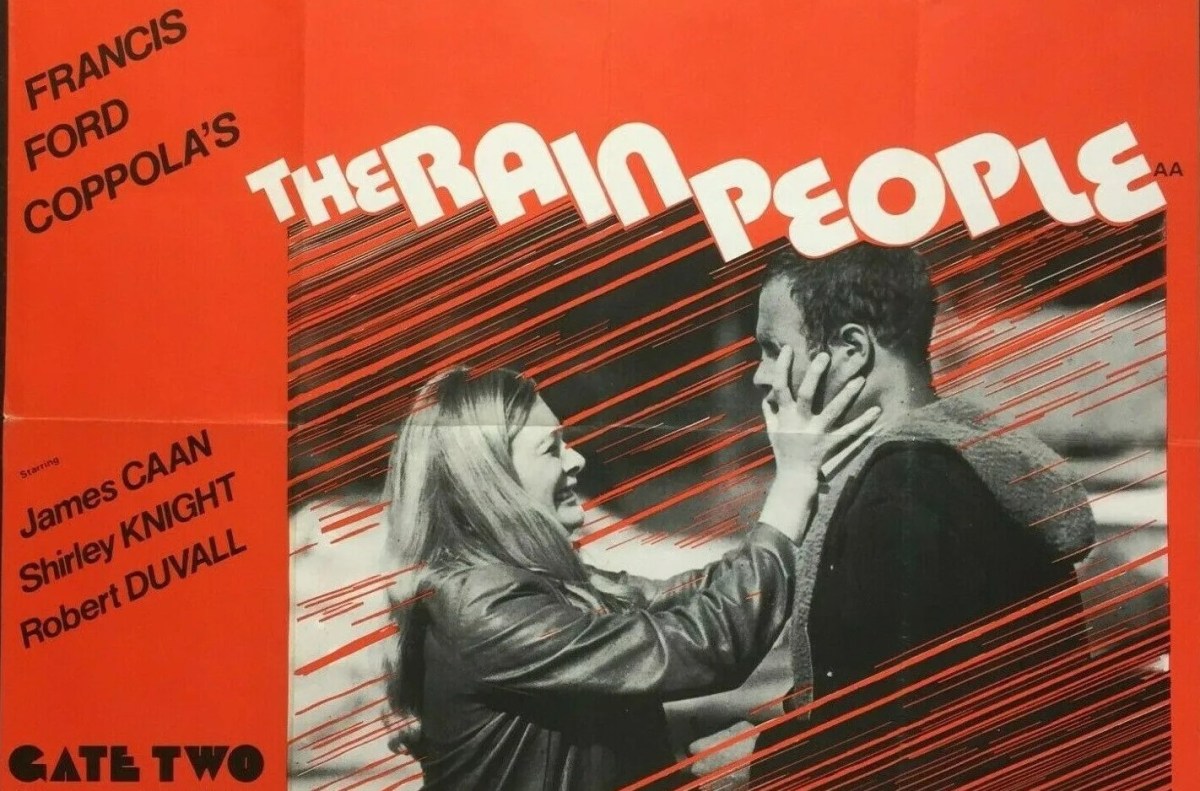
You could argue that grandiose ambition sucked the life out of Francis Ford Coppola. That if he had continued along the more intimate trajectory suggested here there might have been a more consistent output, perhaps on an even higher plane. Even if grounded in American life, this has a distinct European sensibility and while you won’t find a single memorable image you will definitely find characters of substantial depth drowning in agonizing circumstance.
That’s not to say you won’t find outstanding sequences. I defy you to find a more cruel and character-defining scene than the one where our heroine Natalie (Shirley Knight), running away from the chains of domesticity, takes dominance to a new extreme by demanding that muscular ex-college footballer Jimmy (James Caan) crawl round on the floor beneath her feet.
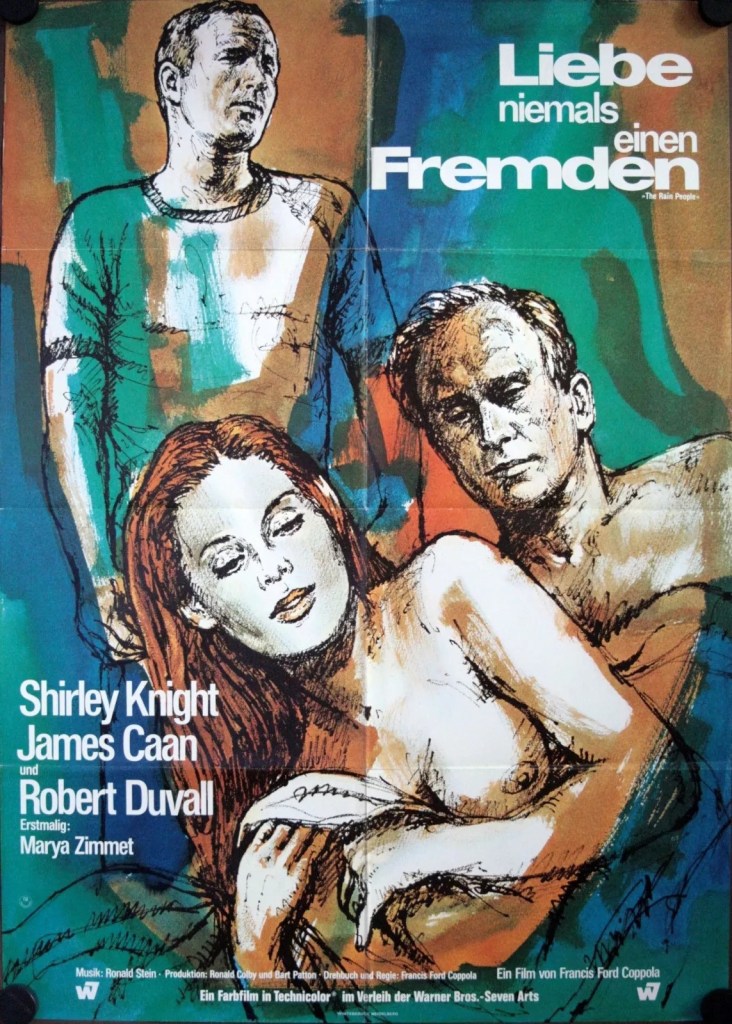
There’s no excuse for such behavior except that she wants some kind of revenge on her husband, whom she accuses of trapping her into said domesticity by the old-fashioned route of making her pregnant. This is before she discovers that Jimmy is simple-minded as the result of brain damage following an American football injury, and that it’s easier now for him to obey people rather than as before argue and stand his ground.
F. Scott Fitzgerald once famously said there were no second acts in American acts. What he failed to mention was that some people barely got to the end of the first act. Jimmy is an outcast, nobody willing to take responsibilty for him, everyone dodging such commitment. Because American scoiety has no place for losers, they fall through the cracks and stay there.
As a result of his injury Jimmy was given a thousand bucks and “told to leave.” So, he went. He’s got a destination in mind, salvation of some kind, I guess, heading towards a drive-in where he has been promised a job by the father, previously a huge fan, of his ex-girlfriend Ellen (Laura Crews).
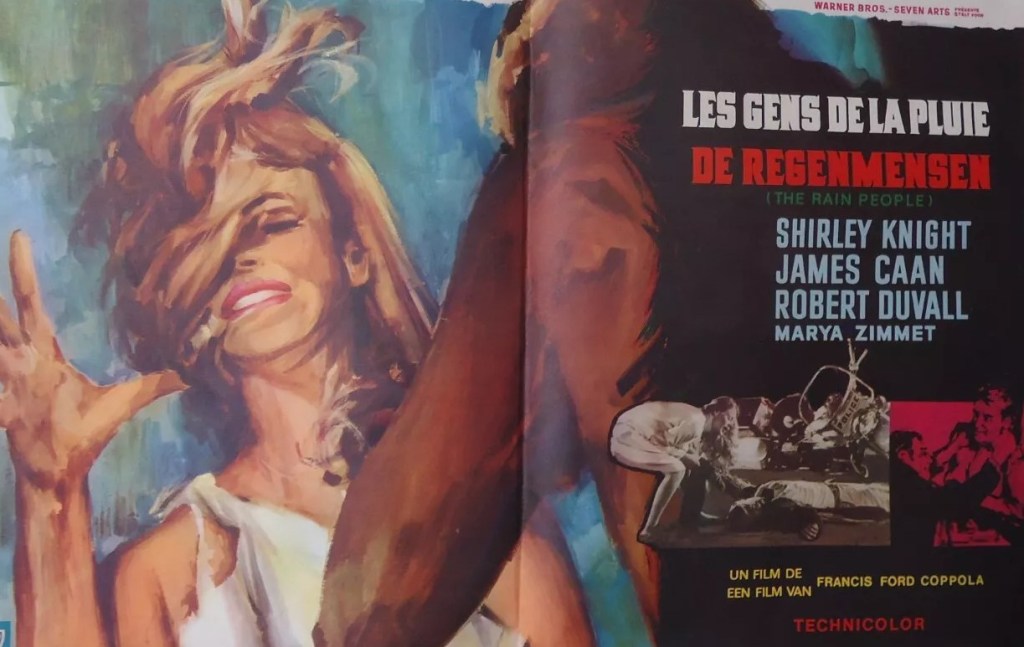
Natalie is on a road trip to find herself, firstly at the very least just to escape, secondly requiring the seclusion to decide if she wants to keep the baby, but also to have fun, pick up other men for sex. That’s how she happens upon Jimmy. But there’s no sex, not with the shame she feels after humiliating him and realizing just how dumb he now is.
But the alpha horse-riding girlfriend doesn’t want him, she’s humiliated that anyone would associate her with this shambling hulk, and the promised job flies out the window. Natalie dumps him at a reptile zoo where the duplicitous owner appropriates his thousand bucks, leaving Natalie so delighted to be rid of him she races off and is pulled over for speeding by lovelorn cop Gordon (Robert Duvall). Circumstance forces a return to the zoo where Jimmy has caused chaos by freeing all the livestock.
But she’s taken enough by Gordon and desperate for the sense of freedom that illicit sex brings that she ends up in his trailer. Only his rebellious young daughter doesn’t take kindly to him bringing home his conquests and while he’s trying to bed Natalie, initially very complicit despite the awkward presence of the awkward child, causes a ruckus outside. Natalie would still be up for it except she takes umbrage that Gordon’s unable in his lovemaking to forget his dead wife, killed along with his son in a house fire.
The scene turns ugly and she’s rescued by Jimmy who proceeds to put his football playbook moves on Gordon, picking him up and throwing him to the ground and ramming him in the stomach, none of your standard fisticuffs here. But given Gordon’s a cop, there’s a gun on the loose and the daughter picks it up and shoots Jimmy stone dead.
That last scene comes out of nowhere and stops the audience as dead as it does Jimmy and in a bitter ironic twist wraps up a scenario where the lost never find what they’re looking for. You might find similar in, despite their power, later characters such as Michael in The Godfather (1972) and Col Kurtz in Apocalypse Now (1979).
Compare the Caan and Duvall of The Godfather and you’ll think they’ve swapped their personalities from here, Caan adopting the firmness and overt masculinity of Gordon and Duvall the soft-spoken tones of Jimmy.
I mispoke when I said there were no memorable images. There are, but their meaning comes later. We see Jimmy sweeping up leaves in playful fashion and only later discover that’s all he’s fit for. We see Natalie as trapped in a phone booth as in her marriage trying to talk her way out of returning to her husband, whose tone changes from angry to whining and desperate, and all we get of him is his voice. There are a few of those lingering shots of rainwater and drab early morning scenery that you would get in an arthouse picture but this quickly grows out of them and into the meat of the situation.
James Caan is particularly superb, completely altering is screen persona. Shirley Knight (The Group, 1966) delivers on previous promise and Robert Duvall demonstrates his range. Original screneplay also by Coppola.
Lost in the acclaim for Coppola’s more grandioise efforts but well worth digging out.
 The Magnificent 60s