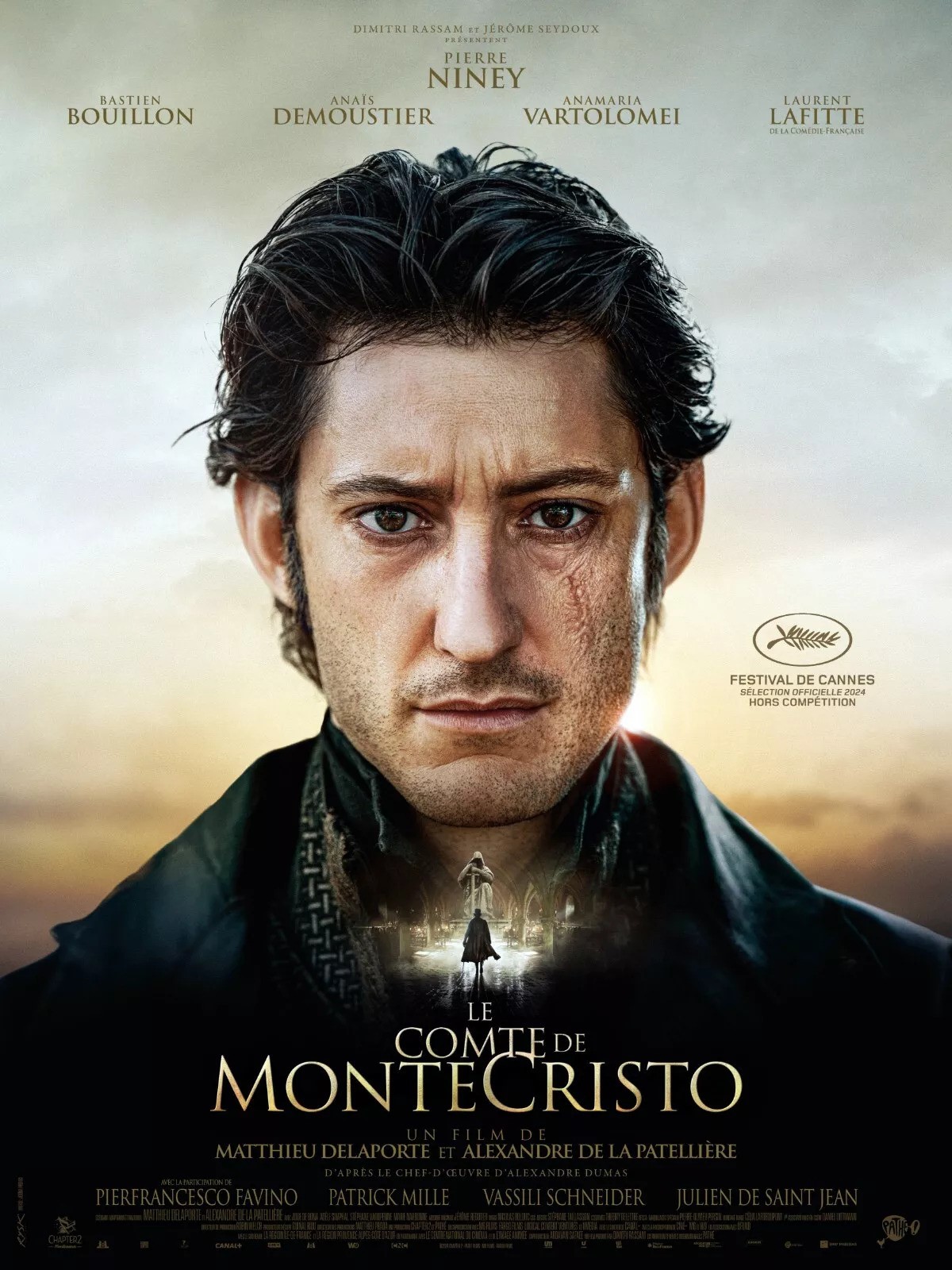
The Count of Monte Cristo (2024) **** – Seen at the Cinema – Twice

Napoleon, shipwreck, false imprisonment, baby buried alive, corruption, audacious jailbreak, the Knights Templar, hidden treasure: enough for a pulsating soap opera for sure but lifted way out of that genre by the driving revenge narrative, and the personal price paid for such unmitigated ruthlessness. I confess I’m not familiar with the Alexandre Dumas classic and I’m not sure I’ve even seen any earlier screen versions, but I did come to this expecting swashbuckling in the manner of  the recent The Three Musketeers. Whether it’s the 2023 double bill, or the versions from 2011, 1993 or 1973, those movies were swordplay heavy. So I was somewhat surprised to find this was lean on the old swash and buckle.

In fact, it’s better described as The Godfather of period adventure, three hours long, where the aspiring sea captain, much in the way of the gangster Michael, transforms from idealistic to  classy ruthless killer, with the idea in his head than his rampage is justified because, as with the Coppola classic, he is fighting corruption in high places. And it’s a three-act picture, coming perilously close to tragedy, for sure, and thoroughly engrossing.

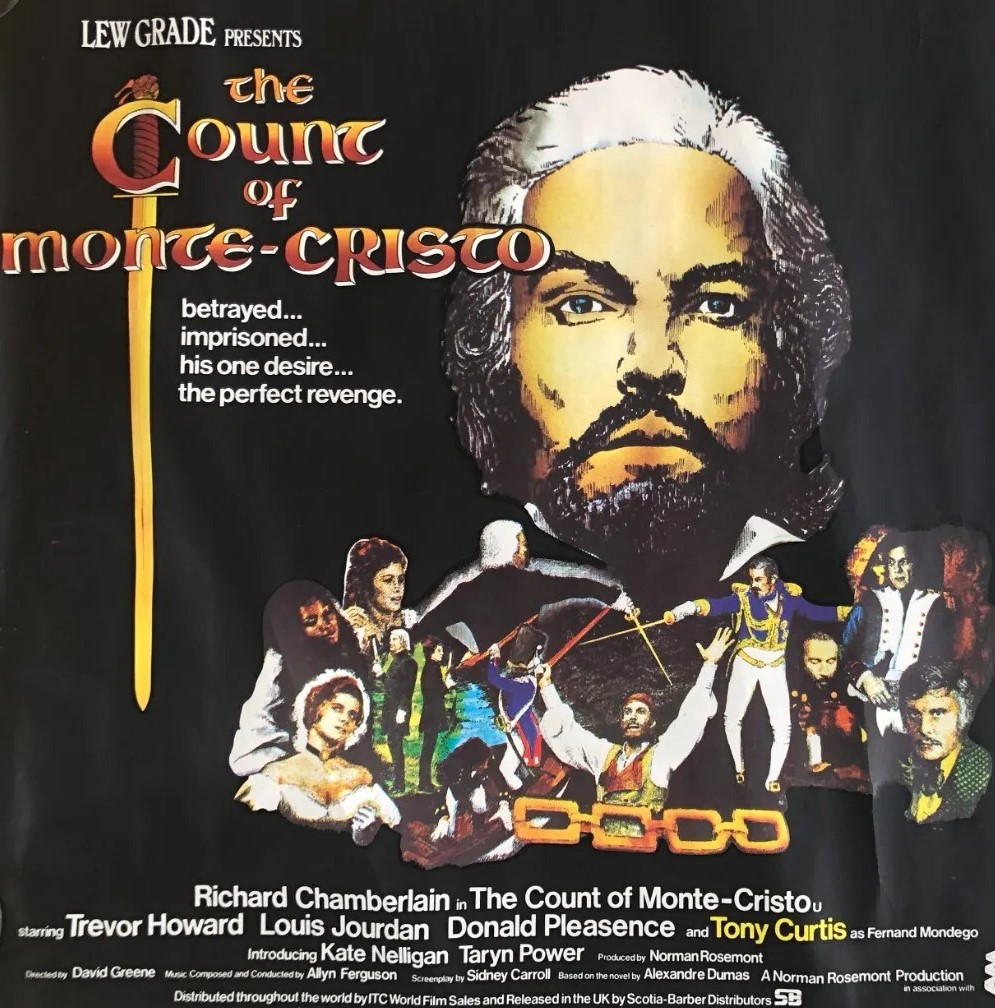
There were over 30 previous versions – this one starring Richard Chamberlain.

Seaman Edmond Danton (Pierre Niney) saves a young woman, Angele (Adele Simphal) from drowning only to discover she is a spy for Napoleon, just entering exile. Back home, this discovery prevents him from marrying his lover Mercedes (Anais Demouster) and with the connivance of ship’s captain Danglars (Patrick Mille), love rival Count de Morcef (Bastien Bouillon) and prosecutor Gerard de Villefort (Lauren Lafitte) he is arrested on his wedding day and sent to the notorious Chateau d’If  prison where everyone is in solitary. During his long confinement he befriends Abbe Faria (Pierfrancesco Favino), who turns out to have secreted a horde of treasure.

Using the clever ruse of pretending to be a corpse, Danton escapes, finds the gold, and returns to Paris as the Count of Monte Cristo to take his revenge on the three men. To that end he recruits a younger generation – Andrea (Julian De Saint Jean), bastard son of Villefort, and Turkish lass Haydee (Anamaria Vsrtolomei) whose father was betrayed by Morcef. The vengeance is all very clever stuff, ruses involving false news, stock market manipulation, and infiltration of emotion. Danton is dab hand with disguises, too, best of all his spluttering Englishman. Audience manipulation, too, reaches a high bar. Naturally, we are behind Danton in his quest for vengeance, we want to see the bullies brought to heel, and so we are sucked in to believing that, like The Godfather, any means is acceptable. And it’s only as we come to the end that Danton is brought up short by the realization of how badly he has infected the innocent with his malice.

I’ve not read the book so I’ve no idea how faithful it is to the Dumas. I’m more inclined to suspect previous versions slashed away at the story to concentrate on the incarceration and the swashbuckling. Given critical obsession with length – an odd preoccupation given that most people will happily binge on three or four episodes of a television series at one sitting – it seems that here it’s justified, each section given due space to develop, Danton shifting from elation to despair and then, supposing erroneously that revenge will return him to a rapturous state, takes most of the third act to work out that it won’t and also that, even when opportunity arises, he cannot replicate the original true love, allowing for a realistic ending.

All the acting is top-notch because the characters are so well-drawn in the first place. And the actors age. in the opening section, they all display the brio of youth. Two decades on, that has dissipated and they are more covert creatures, the prosecutor in particular has a suspicious eye. And they all face emotional reprisal, the narrative so well worked that every character has a high point. Some of the set pieces are just terrific – the telling of a ghost story at dinner, the trial.

Directors Alexandre de la Pateliere and Mathieu Delaporte are well established in this milieu, having written the screenplay for both parts of the recent The Three Musketeers. But if that was a dress rehearsal, they have certainly learned a lesson in how to ground a movie, depending more on genuine drama and character development than flashing blade and conspiracy. Some interesting camerawork, too, long tracking shots reversing back or moving in close.

I enjoyed it so much I went out and bought the book – all 1200 pages of it.

Update: it’s on the shortlist to be considered as the French entry for the Best Foreign Picture category at the Oscars.

Thoroughly absorbing.

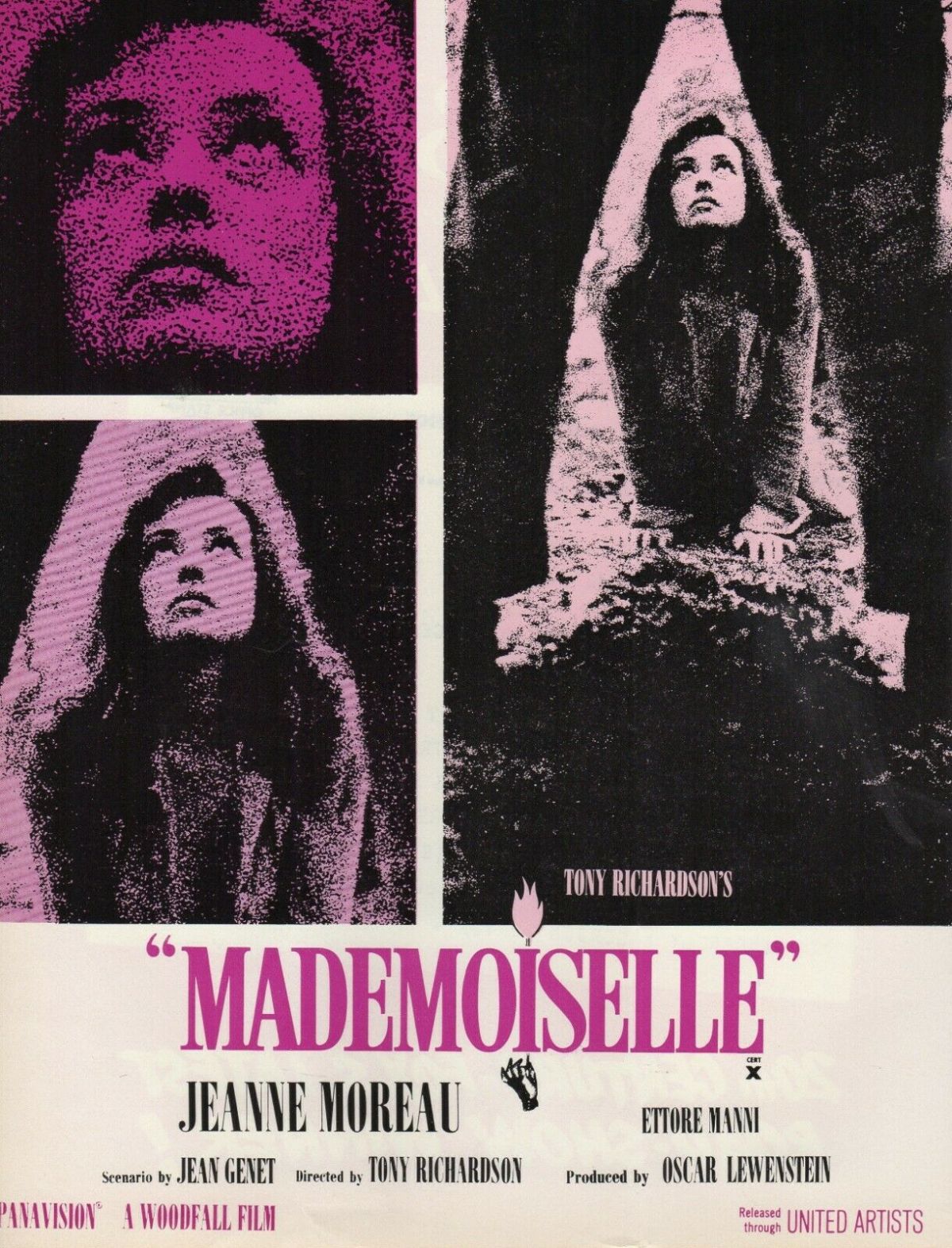
Mademoiselle (1966) ****

Arthouse noir? Cross between an Ingmar Bergman movie, except that the protagonist acts on her repression, and a Claude Chabrol with a character harboring festering desire. Certainly a bold choice for star Jeanne Moreau, excepting Brigitte Bardot France’s biggest female star, to play someone so malignant with scarcely a redeeming feature. Bold, too, in the setting, not the picturesque French village peppered with bright boulangeries and patisseries and with restaurant gatherings knocking back the wine. This is the reality of country life, ruled by religion and officialdom, little sign of ooh-la-la, and distinctly xenophobic – the minute anything goes wrong, blame the foreigner, in this case an itinerant Italian woodcutter.

It’s a distinctly arthouse notion to let the audience know straight off who the villain is while the villagers themselves are left in the dark about who caused two recent fires, their suspicions landing on Manou (Ettori Manni), the forester who arrives once a year so not quite an unknown entity, and too keen on seducing the local women.

We don’t know who the arsonist is, yet, either, but we might get a good idea from the opening sequence where some annual religious pageant, involving blessing fish caught in the river, is disrupted after a woman in high heels and black lace gloves opens a dyke, allowing a torrent of water to flood a farmyard, nearly drowning the animals, only the priest and a few boys left to continue the parade once the adults have raced back to the farm to save the livestock.

The woman is careful to wipe her high heels clear of grass as she places them in a wardrobe on a high shelf that contains other high-heeled shoes. We soon learn she is not just the schoolteacher but also volunteers her typing skills to the police, therefore keeping fully abreast of any investigation, and that she is held in such high esteem in the village that she goes by the name of Mademoiselle (Jeanne Moreau). While she defends Manou against accusations thrown around by the police, she victimises Manou’s son Bruno (Keith Skinner), ridiculing his clothing, making him stand in the corner or against a tree in the playground.

Turns out she’s the fire-raiser and in a small farming village there’s no shortage of houses with adjacent barns stacked full of straw that it only takes a match and a spill of flaming paper to set aflame. Foreigner Manou doesn’t act like an outsider, but dives in to help, at one point needing to leap to safety himself from a burning building. He doesn’t give his son much leeway either, ridiculing him and belting him across the face.

Only the camera catches Mademoiselle’s brooding intensity, the villagers intent on seeing only the upstanding part of her nature, judging her by the job that in an impoverished ill-educated area elevates her to a position of some standing in local society. Nobody dares come a-wooing. Maybe there’s a local squire somewhere around who might fit the bill. And certainly, she won’t lower herself like certain of the younger village females to make the first move.

As the fires grow more common, greater suspicion falls on Manou whom she secretly desires. Contrary to expectation, given the real power she wields in the classroom, and the secret power she wields over the community, her sexual hankerings run in the opposite direction. She wants to be debased, kissing the shoes of Manou when at last she makes her feelings known, howling like a dog, submitting to his domination which includes being spat upon and her clothes torn. You get the impression this might just be her playing out a fantasy except when she returns to the village with her clothes ripped and the women presume she has been raped she points the finger at Manou.

There’s no climax. We don’t see Manou being chased by a baying mob or being arrested as the film ends with her being driven away in a taxi, presumably to move onto the next village where she can continue her life of crime.

So, very much a character study. It’s hard to know when it’s set, but then raw village life hardly changes from one century to the next. Director Tony Richardson (The Loved One, 1965) makes no attempt to evoke sympathy for her. A few decades on when audiences took a liking to serial killers played by terrific actors (Silence of the Lambs, 1991, for example), moviegoers would have been more rapt by her exploits, almost willing her on, but this decade followed a different morality, filmgoers expecting villains of either gender to be punished.

Those sullen sulky features that Moreau previously used as part of her undeniable sexuality now seem turned-in, as defining of incipient evil as deformity was back in the early days of Hollywood.

Sensational performance by Jeanne Moreau (Viva Maria!, 1965) and also by Ettore Manni (The Battle of the Villa Florita, 1965) who proves far more sadistic than your run-of-the-mill seducer with attitudes to women that wouldn’t be out of place in the later giallo genre.

You might feel short-changed that there’s no resolution and that, in a sense, just like Bitter Harvest (1963), the director has skipped the third act and that there’s no real detection of her crimes, no cat-and-mouse between sleuth and villain. But it’s all the better for leaving out those elements. Written by Jean Genet (The Balcony, 1963).  

Brooding and pitiless.  

Bedtime Story (1964) ***

Con men at opposite ends of the grifter divide face off in a duel over territoriality in the French Riviera. Freddy Benson (Marlon Brando) is a low-level scam artist who is happy to scrounge a meal or talk his way into an innocent damsel’s bed. Lawrence Jameson (David Niven) is his polar opposite, posing as an impoverished aristocrat to relieve gullible women of their wealth, seduction an added extra.

Initially, Jameson gets the better of their encounters until Benson realizes just what a killing the Englishman is making. Initially, too, Benson is happy to pair up with Jameson, although that involves demeaning himself as a supposed mad brother kept in a dungeon, until the Englishman dupes him out of his share. Eventually, they agree a winner-take-all battle – whoever can swindle heiress Janet Walker (Shirley Jones) out of $25,000 shall inherit the shyster kingdom.

Benson takes the sympathy route to the woman’s heart, turning up in a wheelchair, while James adopts a psychological approach, persuading Ms Walker that Benson’s illness is psychosomatic for which he has the cure for the small consideration of $25,000. And then it’s one devious twist after another as the pair attempt to out-maneuver, out-think and generally embarrass the other. Both have a despicable attitude towards women, whom they view as dupes, but it is woman who proves their undoing.

Most comedies rely on familiar tropes and you can usually see the twists coming, but this is in a different imaginative league and once the pair are in their stride I defy you to work out what they will come up with next. It is full of clever quips and small dashes of slapstick and because neither actor chases the laughs but plays their roles straight it is a very effective and entertaining morsel.

Director Ralph Levy in his movie debut knows more than where to just point a camera since he had decades of experience extracting laughs in television with top comedians like Jack Benny and Bob Newhart. Brando (The Chase, 1966) free of the shackles of the angst he normally incorporates into his dramatic performances, looks as if he is having a ball and while teetering occasionally on the edge of mugging never quite overplays his hand.

David Niven (Prudence and the Pill, 1968) was born with a stiff upper lip in his mouth and while this kind of aristocratic character is a doddle for an actor of his stature the portrayal here is much more like the sharpest tool in the box. While oozing charm, Niven exhibits deadly spite.

Screenwriters Stanley Shapiro and Paul Henning had previously collaborated on Lover Come Back (1961) and Shapiro particularly made his bones on the Doris Day-Cary Grant-Rock Hudson axis so it is interesting to see him shift away from the romantic comedy cocoon into something that is a good deal sharper.

Enjoyable and original with excellent performances from the two principles and great support from Shirley Jones (The Music Man, 1962) as the mark and Egyptian Aram Stephan (55 Days at Peking, 1963) as an only too congenial French policeman.

Good fun, stars in top form.

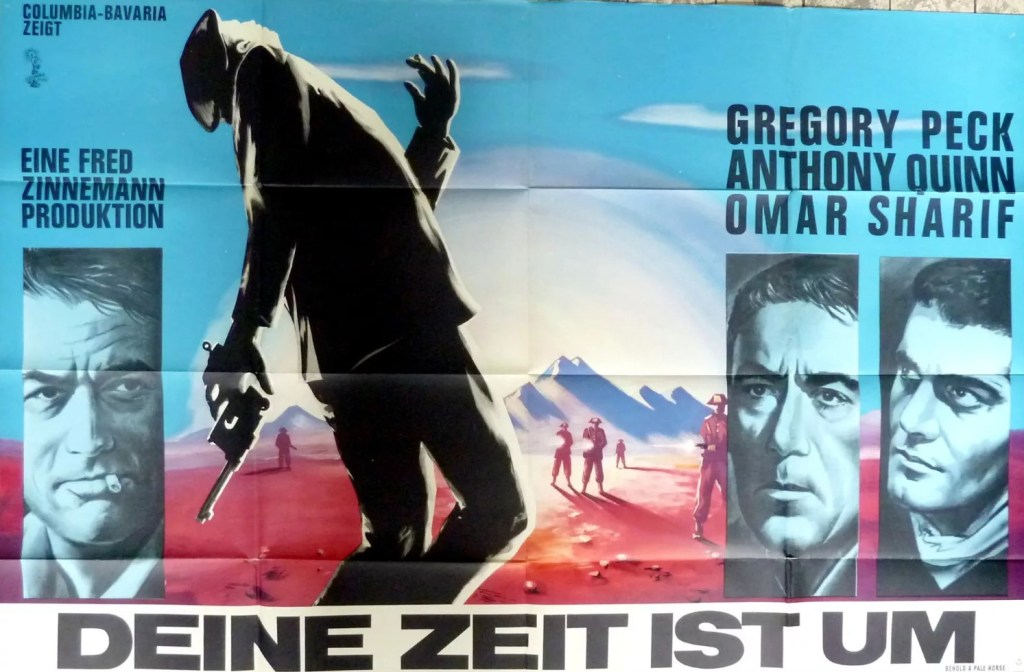
Behold a Pale Horse (1964) ***

Old causes never die but they do go out of fashion and interest from movie audiences in the issues surrounding the Spanish Civil War had fallen from the peak when they attracted artists of the caliber of Ernest Hemingway and Pablo Picasso. But passions surrounding the conflict remained high even 20 years after its conclusion as indicated in this Fred Zinnemann (The Sundowners, 1960) drama.

Manuel Artiquez (Gregory Peck) plays a disillusioned guerilla living in exile in France, who has ceased raiding the Spanish border town under the thrall of corrupt Captain Vinolas (Anthony Quinn). Artiguez has two compelling reasons to return home – a young boy Paco asks him to revenge the death of his father at the hands of Vinolas and his mother is dying. But Artiquez is disinclined to do either. Heroism has lost its luster. He has grown more fearful and prefers to live out his life drinking wine and casting lustful glances at young women.

In France he enjoys a freedom he would be denied in Spain. He is not hidden. Ask anybody in the street where he lives and they will tell you. This is a crusty old soldier, unshaven, long past finding refuge in memories, but not destroyed either by regret. There is a fair bit of plot, some of it stretching incredulity. The action sequence at the end, conducted in complete silence, is very well done, but mostly this is a character piece.

This is not the upstanding Gregory Peck of his Oscar-winning To Kill a Mockingbird. He is a considerably less attractive character, burnt-out, shabby, grizzled, lazy, easily duped, unwilling to risk his life to see his mother. We have seen aspects of the Anthony Quinn character before but he brings a certain humanity to his villain, bombastic to hide his own failings, coarse but occasionally charming, suitably embarrassed when caught by his wife visiting his mistress and praying earnestly to God to deliver Artiquez into his hands. Omar Sharif has the most conflicted character, forced by conscience to help an enemy of the Church.

However, two elements in the picture don’t make much sense. Paco tears up a letter (critical to the plot) to Artiquez which I just cannot see a young boy doing, not in an era when children respected and feared their elders. And I am also wondering what was it about Spain that stopped directors filming it in color. This is the third Spain-set picture I have reviewed in this blog after The Happy Thieves and The Angel Wore Red. For the first two I can see perhaps budget restrictions being the cause, but given the stars involved – Rex Harrison and Rita Hayworth in the first and Ava Gardner and Dirk Bogarde in the second – hardly facing the production dilemmas of a genuine B-picture.

But Behold a Pale Horse was a big-budget effort from Columbia and while black-and-white camerawork may achieve an artistic  darkness of tone it feels artificial. This was never going to be the colorful Spain of fiestas and tourist vistas but it would have perhaps been more inviting to audiences had it taken more advantage of ordinary scenery.

J.P. Miller (Days of Wine and Roses, 1962) adapted the film from the novel Killing a Mouse on Sunday by Emeric Pressburger who in tandem with Michael Powell had made films like Black Narcissus (1947) and The Red Shoes (1948). The film caused calamity for Columbia in Spain, the depiction of Vinolas with a mistress and taking bribes so upset the authorities that all the studio’s movies were banned.   

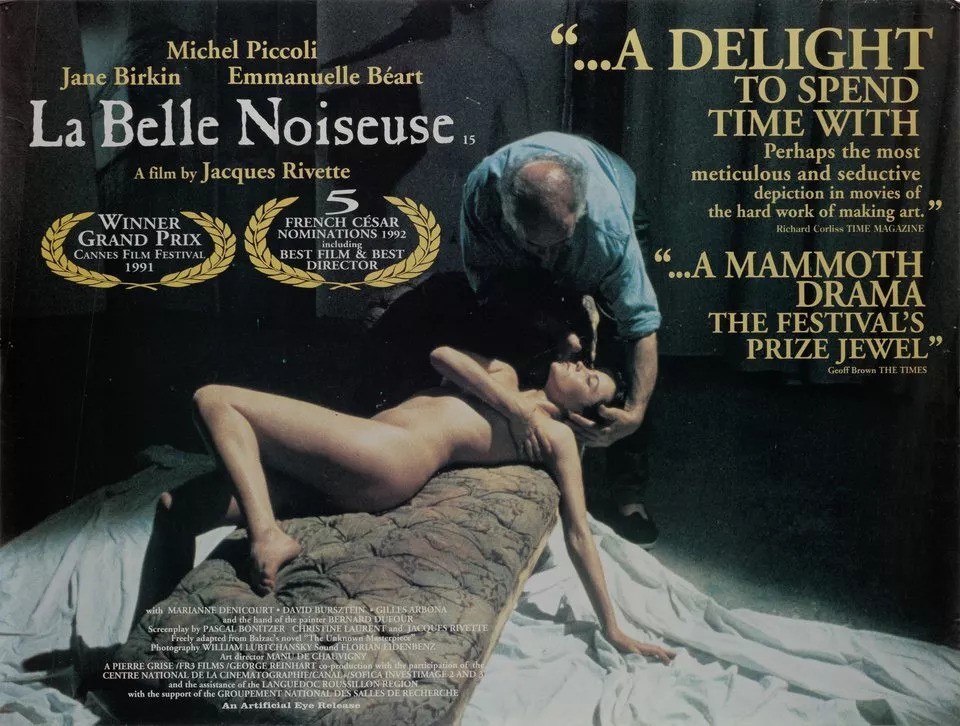
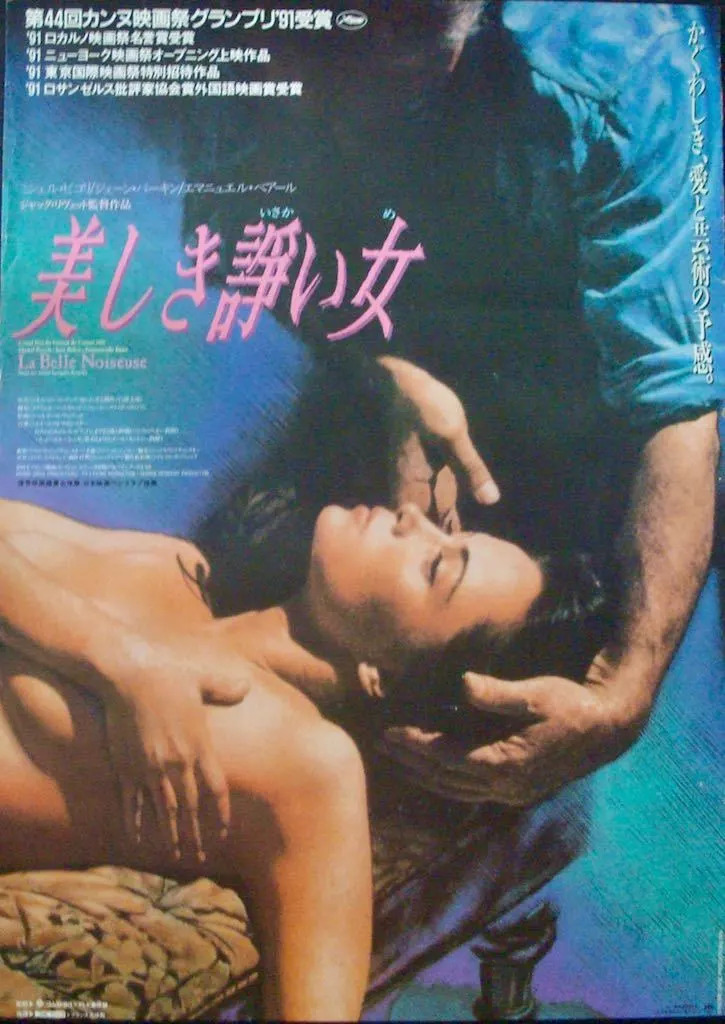
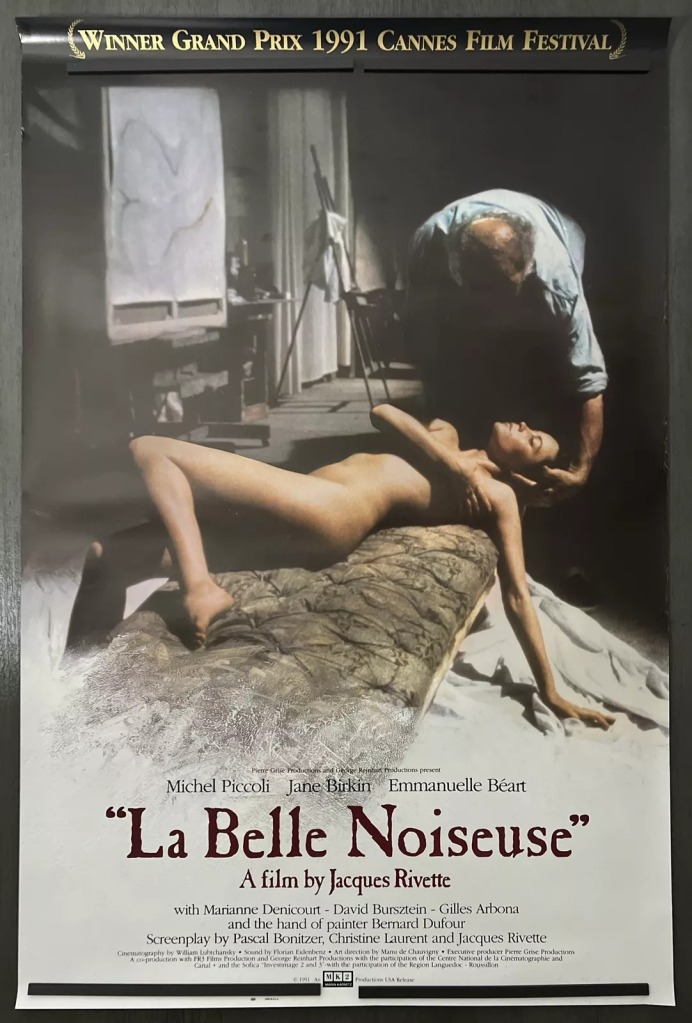
La Belle Noiseuse (1991) ****

I’m taking the Jacques Rivette test. Aka the bum-on-seat test. How easily can you sit through a four-hour intimate epic is often seen as the true test of your credentials as a critic. I have to confess I’ve failed this test once. Twice, to be truthful. I walked out – twice – of Celine and Julie Go Boating Go Boating (1974). But as I’m partial to tales of creative endeavor, a sucker for any story about an artist, this seemed more promising.

This director does something so clever you wonder why the idea wasn’t applied before. Maybe it was, but nobody fessed up. The star of this show in many ways is neither Michel Piccoli (Topaz, 1968) as artist  Frenhofer nor Emmanuelle Beart (Mission: Impossible, 1996) as model Marianne but the real-life painter Bernard Dufour. We never see Dufour’s face, only his hands. For it’s he who sketches and paints, not the actor. So we don’t have any of that nonsense where an actor purportedly spent a year preparing for the role, learning to play an instrument or whatever and then showing all too obviously that he/she is doing something by rote rather than inhabiting the skin of a true artist.

But that does also mean we don’t have to skate over a lifetime’s worth of painting or music or whatever to get to the painting or piece of music for which the character became famous and we don’t need to dwell on background or career development or any other issue that might have hindered /affected/ charged their progress.

This is, beyond a couple of introductory scenes, the story of how an artist paints and his relationship with the model and how that changes both of them. Rivette, having given himself all the time in the world, takes all the time in the world, so we go from initial sketches, ink on crackling paper, to an outline of an idea, to the false steps, wrong steps and true steps.

The awkwardness between artist and model is cleverly captured. Marianne feels she has been traded. Her boyfriend Nicolas (David Bursztein), a rising artist, hopes to win favor with the established artist by pushing her into the project without first asking her approval. Quite what makes her accept the (unpaid) job is unclear but then there are no academic studies on amateur models to provide clarification beyond a sense of excitement at being asked.

She takes in her stride the perfunctory reality that she will be naked virtually the whole time. That aspect of the film might have been viewed as somewhat prurient, but, in fact, it sheds light on just what a model does, what is asked of her, and why, and the idea is killed off right away that an artist always has a clear idea of his composition before he embarks on a painting.

Here, Frenhofer spends as much time trying to get to the heart and soul of his subject, to understand the shape and lines of her body, as he does on the actual picture. He wants to combine her characteristics with whatever he has in his head. There’s another element to the story. He tried to paint a similar picture a decade before, with his wife Liz (Jane Birkin) as the model. For reasons unstated, he abandoned the painting.

Although there’s a twist at the end, there’s not much more to the story than a painting being created from start to finish, including all the finicky bits like deciding on the pose and the size and shape of the canvas and the colors etc.

Yes, it’s incredibly long and not long in the way of Christopher Nolan or Martin Scorsese or Ridley Scott where length is the result of trying to cram in too much, characters, details, storylines, complications or visualisations a director could not resist. But it’s endlessly fascinating and for many the best movie ever made about the creative process, all the more so because although documentary in style it’s not documentary in execution.

Both actors are superb, not least for the concentration this must have taken, since development would have taken place in minute detail.

I think I passed the Rivette test. Celine and Julie….hmmm, still not so sure.

Well worth four hours of your time.

Topaz (1969) ****

Authentic, atypical, engrossing, this grittier Hitchcock mixes the realism of Psycho (1960) and Marnie (1964) with the nihilism of The Birds (1963), a major departure for a canon that previously mostly spun on innocents or the falsely accused encountering peril. The hunt for a Russian spy ring by way of the Cuban Missile Crisis of 1962 forms the story core but the director is more interested in personal consequence, so much so that even the villain suffers heart-rending loss. Betrayal is the other key theme – defection and infidelity go hand in hand.

The tradecraft of espionage is detailed – dead letter drops, film hidden in typewriting spools, an accidental collision that is actually a sweet handover. In a transcontinental tale that shifts from Copenhagen to New York to Cuba to Paris, there is still room for classic sequences of suspense – the theft of secret documents in a hotel the pick – and Hitchcock at times simply keeps the audience at bay by employing dumbshow at key moments.     

In some respects the director was at the mercy of his material. In the documentary-style Leon Uris bestseller (almost a procedural spy novel), the main character is neither the trigger for the plot nor often its chief participant and is foreign to boot. So you could see the sense of employing using a cast of unknowns, otherwise an audience would soon grow restless at long absences from the screen of a Hollywood star of the caliber of Cary Grant or Paul Newman, for example.

It is a florist (Roscoe Lee Browne) who carries out the hotel theft, a small resistance cell the spying on Russian missiles in Cuba and a French journalist who beards one of the main suspects, not the ostensible main character, French agent Andre Devereux (Frederick Stafford), not his U.S. counterpart C.I.A. operative Michael Nordstrum (John Forsythe) nor Cuban villain Rico Parra (John Vernon).

Unusual, too, is the uber-realism. The main characters are fully aware of the dangers they face and of its impact on domestic life and accept such consequence as collateral damage. It is ironic that the Russian defector is far more interested in safeguarding his family than Devereux. Devereux’s wife (Dany Robin), Cuban lover Juanita (Karin Dor) and son-in-law (Michel Subor) all suffer as a result of his commitment to his country.

And that Juanita, leader of the Cuban resistance cell, is more of a patriot than the Russian, refusing to defect when offered the opportunity. Hitchcock even acknowledges genuine politics: the reason a Frenchman is involved is because following the Bay of Pigs debacle in 1961 American diplomats were not welcome in Cuba.

I have steered clear of this film for over half a century. I saw it on initial release long before the name Hitchcock meant anything to me. But once it did I soon realized this film did not easily fit into the classic Hitchcock and had always been represented as shoddy goods. So I came to it with some trepidation and was surprised to find it so engrossing.  

Frederick Stafford (O.S.S. 117: Mission for a Killer, 1965) was excellent with an insouciance reminiscent of Cary Grant and a raised eyebrow to match that star’s wryness. John Vernon, who I mostly knew as an over-the-top villain in pictures such as Fear Is the Key (1972), was surprisingly touching as the Cuban bad-guy who realizes his lover is a traitor. And there is a host of top French talent in Michel Piccoli (La Belle Noiseuse, 1991), Philippe Noiret (Justine, 1969), Dany Robin (The Best House in London, 1969) and Karin Dor (You Only Live Twice, 1967).

As you are possibly aware, three endings were shot for this picture and I can’t tell you which without spoiling the plot. In any case, this is worth seeing more than just to complete trawl through the entire Hitchcock oeuvre, a very mature and interesting work. Based on the Leon Uris bestseller, screenplay by Samuel A. Taylor (Vertigo, 1958).

Underrated.

Two Weeks in September (1967) ***

Soubriquets were not common currency in Hollywood. Names might be shortened to a Christian name or a surname, as in Marilyn or Garbo, and occasionally a reporter might suggest an unlikely familiarity by referring to a star as “Coop” and for sure Bogie must have been desperate for people to call him anything other than Humphrey, hardly a name that spun off the tongue for a supposedly hardbitten hero eschewing his middle-class origins. But the world swung on its axis when simple use of the star’s initials were enough to guarantee universal acceptance.

BB was born on a wave of controversy. After And God Created Woman (1956) broke box office records all over the world, a star was born. But one who seemed to live as much on the pages of newspapers as on the screen. She could forever be guaranteed to provide a revealing photograph to spice up the more puritan newspapers.

But BB’s global fame didn’t translate into worldwide box office in part because her movies were mostly X-certificate in the U.K. and, being made generally by foreign companies, slipping past the Production Code in the U.S. and therefore into arthouses or shady emporiums in both countries rather than mainstream houses.

This isn’t the best introduction to her canon, but in many senses it’s pretty typical. The camera adores BB and shuns anyone else in her presence. There’s not much story here – bored wife dashes off to a model assignment in London and has an affair and can’t decide whether he’s ready for divorce.

To fill in the time we get plenty Carnaby St fashion shoots, certainly put into the shade by the likes of Blow-Up (1966), but of the kind that used to be so common, beautiful women in outlandish clothes against backdrops like zoo animals or suits of armor and all the while flirting with photographers and being chatted up in night clubs by all and sundry. As you might expec, red buses and mini cars are common, though the chances of a cop on horseback at night seems to stretch it a bit.

Cecile (Brigitte Bardot) seems too lively for staid husband Philippe (Jean Rochefort) and burdens him with ensuring her happiness. But he seems, I guess unusually for the time for such a wealthy character, to be happy for her to continue in her profession. She’s never been unfaithful unlike model buddy Patricia (Georgina Ward). But all this cavorting brings out the lech in photographer Dickinson (Mike Sarne) and while she flirts with him she fancies for no apparent reason the doe-eyed Vincent (Laurent Terzieff) although his doe-eyed dog is livelier.

Anyway, off they go to Scotland for a romantic idyll since every filmmaker in the world has been duped by Scottish Tourist Board fantasies of sunshine, tartan, heather and miles of unspoiled beaches (unaware they are empty because the natives have more sense than to go diving into icy water in freezing temperatures). Mostly, what they get is damp streets and grey skies, though if you have BB romping  in the water then nobody’s really going to notice the awful weather. And, naturally, the highways and byways are filled with tartan-clad gents so Brigadoon rides again.

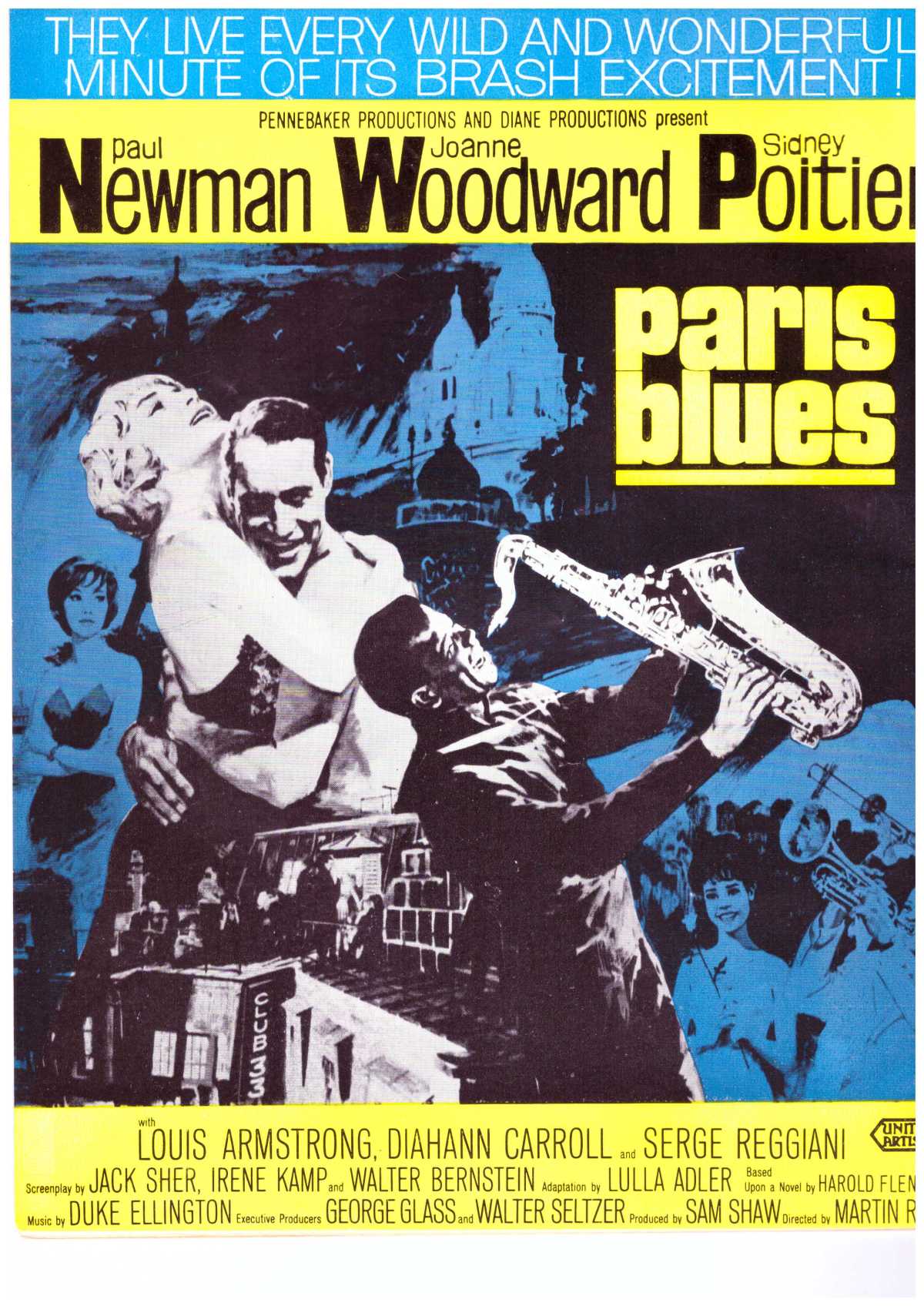
Not quite sure how “To Their Heart’s Content” – clumsy in translation as it is –
is turned into the dull “Two Weeks in September.” Though she hardly seems happy in the poster.

In any case, by the time September comes round, the sun has already packed up for the winter in Scotland, so there’s your get-out-of-jail-card in the title. Not much happens in Scotland either, mostly soulful camera work, soulful BB and dull-as-ditchwater Vincent. There’s a contrived ending.

What impresses most is how little BB you need to make a picture work, even one as patchy as this. It is almost the same template as an Elvis picture minus the songs. Just like BB, Elvis scarcely required a working script, just any excuse to get him on screen. Some stars possess screen charisman that it’s impossible to shift. Shame it was left to Serge Bourguignon (The Picasso Summer, 1969) to get more out of the faint storyline because he  was never that bothered with narrative and inclined just to get by on close-ups and scenery. With BB she was as much scenery as audiences ever seemed to require.

Hardly falls into the recommended bracket but nonetheless an interesting example of how Bardot could get away with the mildest of trifles.

Eight for Silver / The Cursed (2021) ****

Restraint in a horror picture? Nary a scream? Scarcely a close up? More bloodletting in surgery than in the woods? Use of candlelight evocative of Stanley Kubrick? The classical composition of John Ford, long shot beloved of Henry Hathaway, in camera (minus the juddering cuts) treatment favored by Christopher Nolan? Where has this little gem been hiding?

Set in rural France in the nineteenth century, positing a Biblical reimagining of the werewolf legend, every scene so carefully measured by British director Sean Ellis (Anthropoid, 2016) that you would think this is a master sprung to life. Even more tantalizing, given the genre, is the ensemble acting. This isn’t one of those horror efforts where you’re trying to work out (or hope) who’s going to be bumped off next.

Marketing team do this picture a disservice with this poster which more or less gives the game away, even though this forms a tiny fraction of a classy film.

And you think – although the participants remain baffled – that you know what’s going on, so you let down your guard, until the feet are swept out beneath you by the late twist, that, too, with Biblical connotation. The first Biblical allusion seems far-fetched, I have to admit, linking Judas Iscariot’s 30 pieces of silver to the silver bullet traditionally used to kill werewolves, vampires and the like. But then it twists into left field, both thematically and intellectually, covering such wider ground as betrayal and confession. The second Biblical reference we are all familiar with – reaping what you sow.

Technically, the narrative revolves around a gypsy curse. Nothing unusual in that you might think. Gypsies – and teenagers for that matter – are known for handing out curses for any minor breach or discrepancy. In this case, you wonder how the curse was set, given every single gypsy within the vicinity has been slaughtered, buried alive or, hands and feet chopped off, turned into a human scarecrow.

But the gypsies, suspecting imminent malevolence, have fashioned from their horde of silver coins (maybe thirty, we are not told), a pair of silver false teeth, which are buried, but then found by the local children, directed to them by dream/nightmare. These aren’t of the distinct vampiric molar kind, but seemingly more akin to those employed by wolves for savaging purposes. It’s the children who are turned into werewolves or, as here, that rarer mythical entity shamans (though not in the strict understanding of the word).

Stuck for another poster – which shows how little of an initial release “Eight for Silver / The Cursed” received – I’ve taken the easy way and added the movie with which Kelly Reilly first attracted attention.

Victims appear chosen at random, and not for illicit sexual behaviour as was once the norm, and  gradually a more apparent truth emerges. Eventually pathologist McBride (Boyd Holbrook) takes center stage, but that’s a slow time coming, and mostly what we have is nobody taking center stage, or focus shifting around a variety of characters, landowner Seamus (a traditional French name, don’t you know) Laurent (Alistair Petrie), submissive wife Isabelle (Kelly Reilly), their daughter Charlotte (Amelia Church) and a variety of young teenagers including Timmy (Tommy Rodger) and servants.

But, as I said, restraint is the watchword, and there are three just outstanding scenes. The movie opens – didn’t I mention this – in World War One, a field surgeon extracting bullets from a wounded soldier. The bullets don’t even, as would be the usual cliché, clang when tossed into a metal bowl. The surgeon finds two. The third is unusual. It’s much bigger for a start than your normal machine gun ammunition. And it’s silver.

And here’s the genius. Nobody exclaims, oh my goodness, a silver bullet, whatever can that mean, it just sits there dripping with blood from the operation, and the image filters down into the audience brain. Then we’re into flashback and gypsies making such a nuisance of themselves claiming ancient ownership of land that good old Seamus decides to call in the mercenaries. And that entire scene, of terrible slaughter, people shot and skewered and burned alive, is shown in extreme long shot, the camera never moving.

Third terrific scene. The Laurent’s son Edward is missing. Father, mother and daughter sit at the kind of long table you get in mansions, mother at one end father at the other. Mother is weeping scopiously, father is silently eating his dinner. Long shot again, no cuts, just the measured camera.

Virtually the only color in most scenes is a candle or a torch, and you would have to say a less showy and more effective treatment of light than in Kubrick’s Barry Lyndon (1975).  And in audio terms it’s the same, scarcely a raised voice. And when McBride’s family tragedy is revealed, it’s done so visually and discreetly, though for the dumber audience member the ground is covered with dialog later on.

No showboating required from the actors so in that sense it’s the very best type of acting, as if everyone had learned from Anthony Hopkins how little you had to do to be effective. So top marks to Boyd Holbrook (Indiana Jones and the Dial of Destiny, 2023), Kelly Reilly (Yellowstone, 2018-2022) and Alistair Petrie (Rogue One, 2016). Sean Ellis didn’t just write and direct this but he handled the cinematography too. Had this been an arthouse number, Ellis would be praised to the skies.

If you require jump-out-of-your-seat moments and copious gore, then this isn’t one for you, but if you want to appreciate a story superbly told by a director in command of his craft, then seek this out. Strangest of all it’s turned up on Netflix, not known for harvesting little gems, and probably scarcely aware of what it has uncovered.

A marvellous surprise.

The Burglars (1971) ****

First half pure Walter Hill of The Driver vintage – virtually silent heist, blistering car chase – second half rachets up tension with corrupt cop, femme fatale, getaway stymied and a payoff you won’t see coming.

French jewel thieves led by Azad (Jean-Paul Belmondo) using electronic wizardry crack open a safe in Athens full of emeralds while the owner is away. Passing cop Abel (Omar Sharif) happens by but after conversing with Azad, who claims his car has broken down, seems to be satisfied nothing untoward is going on inside the house. But getaway plans are momentarily foiled when the ship they are due to leave on is unexpectedly berthed for repairs, leaving them with five days on their hands.

Azed’s disappointed girlfriend Helene (Nicole Coffen), who acts as watch for the gang, lolling about a swimming pool with too much time on her hands, attracts unwanted male gaze. Azad, followed by the cop, decides to outrun him, fast car style, and soon they are hurtling through the streets of Athens. Thinking that he’s shaken off his pursuer, and seeking a bit of relaxation himself, Azad chats up glamor model and night-club stripper Lena (Dyan Cannon) without realizing she is in cahoots with Abel.  The cop wants in on the action and is willing to trade by letting Azad off scot-free while dumping the crime onto his confederate Ralph (Robert Hosein).

So, mostly, it’s cat-and-mouse stuff between Azad and Abel, as the latter closes the doors, and the former is unaware of just how cunning a corrupt cop can be. There’s some hair-raising action as Azad has to jump between two buses, and a pursuit in a fairground, Abel naturally on horseback, and as if this was one of those cheap films that always had a shoot-out in a quarry, Azad ends up in one, though, thankfully, not for climactic reasons. The climax takes place in a wheat warehouse (I guess the makers of the later Witness, 1985, took a few clues from this.)

Mostly, it’s the character interplay. Two big stars in one film often results in scenes involving  both kept to a minimum – think Paul Newman and Steve McQueen in The Towering Inferno (1974) or Robert De Niro and Al Pacino in Heat (1995) –  but here’s it’s the opposite and watching Belmondo and Sharif dancing around each other, one or other always in the ascendancy or with a neat trick in the back pocket or a get-out-of-jail-free card for later, works a treat.

Sharif, especially, had widened his scope, running away from the matinee idol tag and this came at the end of an impressive stint that included the villain in Mackenna’s Gold (1969), The Appointment (1969), The Last Valley (1971) and The Horsemen (1971). As shabby as Columbo, but with a bit more chic, he knows he’s got to keep one step ahead of Azad, though he could indulge in a few smirks, since he’s so far ahead of the criminal, Abel won’t know what hit him when he realizes he’s been played for a dupe by Lena.

Dyan Cannon (Bob and Carol and Ted and Alice, 1969) plays her role to perfection, hints of sadness that her life is not as glamorous as she might want, possibly considering betraying her real partner, but as seductive as all-get-out. This was a bold career choice, because she had mostly been allotted wife/girlfriend parts rather than, as here, central to the machinations.

Jean-Paul Belmondo (Breathless, 1960) never appealed as much to the American audience as countryman Alain Delon, mostly because he refused to take the Hollywood coin, preferring to do his own thing in France, but he is excellent here and he would have been ideal in plenty mainstream U.S. pictures.

Hats off once again to Henri Verneuil (Guns for San Sebastian, 1968). The heist is deftly done, running a full 24 minutes, give or take a few moments for tense  conversation with the nosey cop. The second unit filmed the chase, of course, but Verneuil is a master at this particular tune. He co-wrote the script with Vahe Katcha (Two Weeks in September, 1967) from the novel by David Goodis (Shoot the Piano Player, 1960). Bonus of an Ennio Morricone score.

Sizzling set pieces, cracking characters.

Lost Command (1966) ***

Derring-do and heroism were the 1960s war movie default with enemies clearly signposted in black-and-white. This one doesn’t fall into that category, in fact doesn’t fall into any category, being more concerned with the military and political machinations pervasive on both sides in war. Movies about revolutions generally succeed if they are filmed from the perspective of the insurrectionists. When they take the side of the oppressor, almost automatically they lose the sympathy vote, The Green Berets (1968) in this decade being a typical example, although the sheer directorial skill of Francis Coppola turned that notion on its head with Apocalypse Now (1979) when slaughter was accompanied by majesty. 

In the 1950s-1960s the French had come off worse in two uprisings, Vietnam and Algiers. This movie covers the tail end of the former and the middle of the latter and it’s a curious hybrid, part Dirty Dozen, part John Wayne, part dirty tricks on either side, with a few ounces of romance thrown in.

Col Raspeguy (Anthony Quinn, in unlikely athletic mode – that’s him leaping in the poster) is the officer of a paratroop regiment who sees out the debacle of the final battle of the French war in Vietnam, loses his commission, and then, reprieved, is posted to Algeria, where the fight for independence is in full swing, with a ragbag of rejects plus some faithful comrades from his previous command. In any spare moment, the colonel can be seen keeping fit, doing handstands, swinging his arms, puffing out his chest, and a fair bit of running (presumably to avoid the contention that Quinn was too old for this part). Sidekick Capt Esclavier (Alain Delon) is a bit too moralistic for the dangerous business of war, plays his sidekick. The colonel is an ideal anti-hero for a hero, an officer who ignores, challenges or just plain overrides authority, adored by his men, hated by the enemy, ruthless when it matters.

The brutal realism, which sometimes makes you quail, is nonetheless the best thing about the picture, no holds barred here when it comes to portraying the ugly side of battle. The training in The Dirty Dozen is a doddle compared to here, soldiers who don’t move fast enough are actually shot, rather than just threatened with live ammunition, and there’s no second chance for the incompetent – at the passing out ceremony several are summarily dismissed. The only kind of Dirty Dozen-type humor is a soldier who fills his canteen with wine. Otherwise, this is a full-on war.

Battles are fought guerilla style, the enemy as smart as the Vietnamese, catching out the French in ambushes, using infiltrators sympathetic to the cause and terrorism. Unlike Apocalypse Now where the infantry appeared as dumb as they come, relying on strength in numbers and superior weaponry, Lost Command at least has an officer who understands strategy and most of what ensues involves clever thinking. The battles, played out in the mountains, usually see the French having to escape tricky situations rather than blasting through the enemy like cavalry, although having sneakily pinched a mayor’s helicopter gives Raspeguy’s team the opportunity to strafe the enemy on the rare occasions when they can actually be found, their camouflage professionally done.

Arab rebel chief Lt Mahidi (George Segal, unrecognizable under a slab of make-up apart from his flashing white teeth), matches the French in terms of tactics and brutality, shooting one of his own men for disobeying orders. His sister Aicha (Claudia Cardinale) is the femme fatale making a play for Esclavier, though he’d have to be a lot dumber than the audience to fall for her obvious ploys (guess what, he is dumber). With both sides determined to win at all costs, atrocities are merely viewed as collateral damage, so in that respect it’s an unflinching take on war.

The picture could have done with another 15 minutes or so to allow characters to breathe and develop some of the supporting cast. The movie did well in France but sank in the States where my guess is few of the audience would even know where Algeria was. Gilles Pontecorvo’s The Battle of Algiers, out the same year, gave the revolutionaries the leading role.

For the most part Anthony Quinn (Guns for San Sebastian, 1968) is in bull-in-a-china-shop form but his character is more rounded in a romantic interlude with a countess (Michele Morgan), his ability to outsmart his superior officers, his camaraderie with his own soldiers and, perhaps more surprisingly, the ongoing exercise routines which reveal, rather than a keep-fit fanatic, an ageing soldier worried about running out of steam. Alain Delon (Texas Across the River, 1967) is entrusted with the morally ambivalent role. George Segal (The Quiller Memorandum, 1966) presumably didn’t realize how culturally inappropriate he would be.

Mark Robson (The Prize, 1963) lets worthy get in the way of action. Screenwriter Nelson Gidding (Nine Hours to Rama, 1963) had the same problem.

Set the politics aside and it becomes much more interesting.

Discover WordPress

A daily selection of the best content published on WordPress, collected for you by humans who love to read.

The Atavist Magazine

by Brian Hannan

WordPress.com News

The latest news on WordPress.com and the WordPress community.