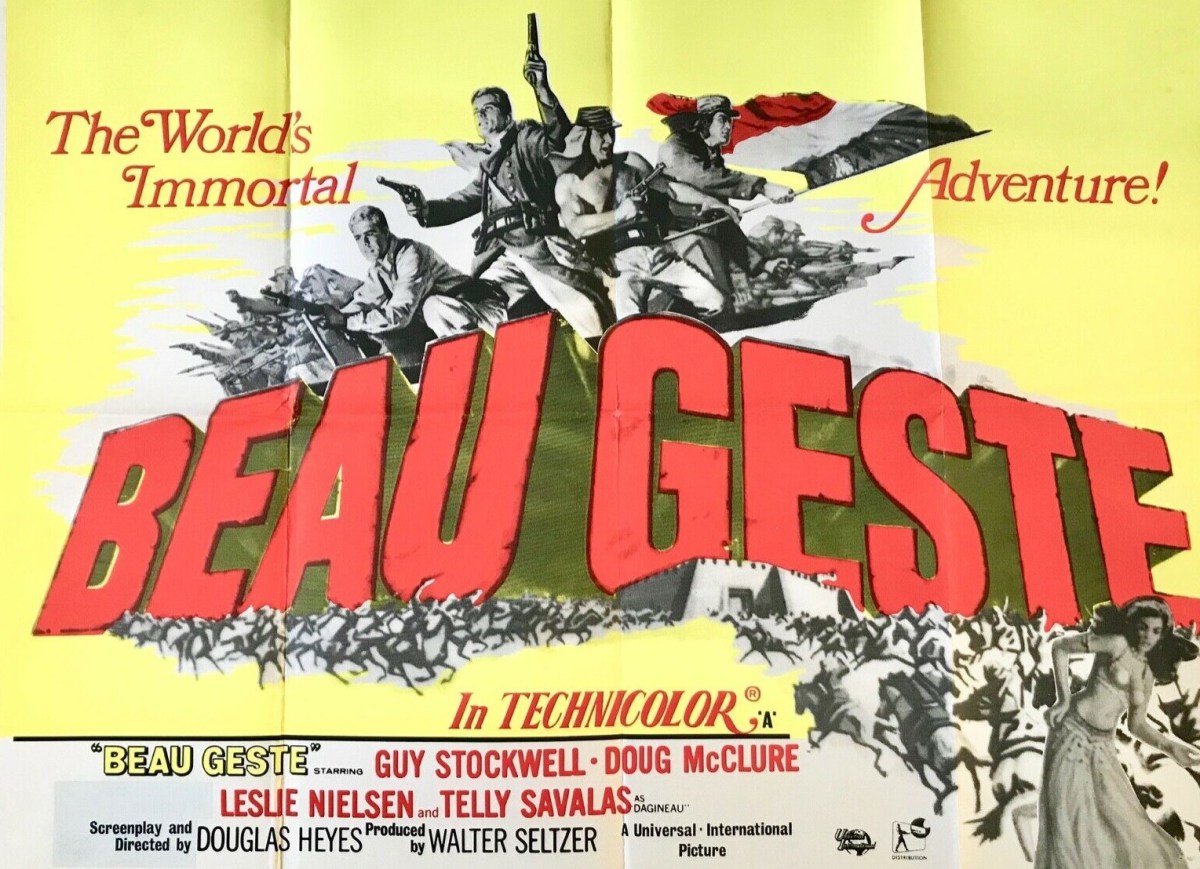
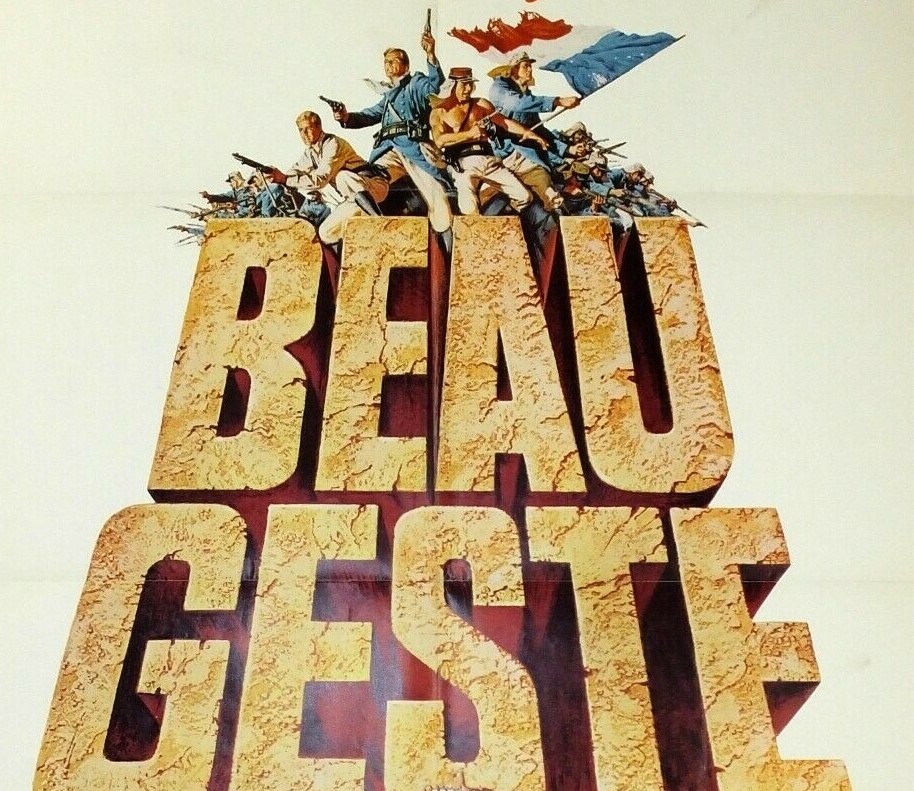
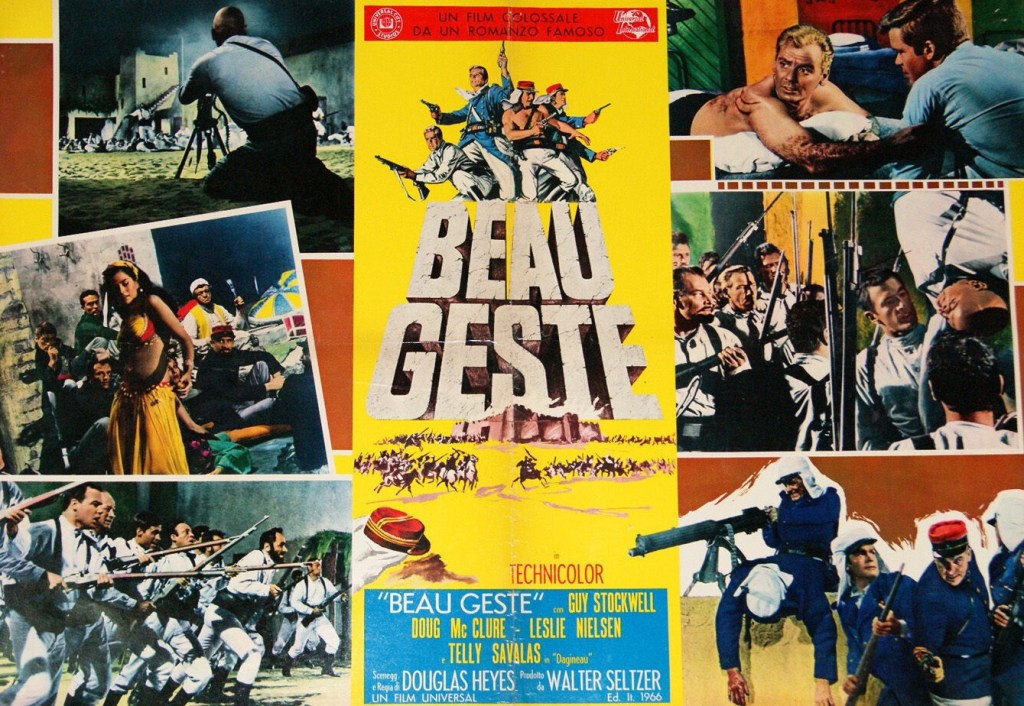
Two brothers battle inhospitable terrain, warring tribes and a sadistic sergeant major in a remake of the classic tale. The title translates as “noble and generous gesture” and is a pun on the name of hero Michael Geste (Guy Stockwell), an American hiding out in the French Foreign Legion in shame for being involved, innocently as it happens, in embezzlement. His attitude is markedly different to the “scum of the earth” who make up the battalion and his quick wit and refusal to kowtow make him a target for Sgt Major Dagineau (Telly Savalas), a former officer busted to the ranks.
Dagineau delights in imposing hardship and devising mental torture, making some recruits including Geste walk around blindfold at the top of a cliff. Geste’s resistance to his superior is almost suicidal and he even volunteers to take a whipping on behalf of his comrades. “It’s me he wants,” says Geste, “if not now the next time.” At another point he is buried up to his neck in the blazing sun.
Joined by his brother John (Doug McClure), the battalion sets out as a relief force for a remote fort but when commanding officer Lt De Ruse (Leslie Nielsen) is seriously wounded, the sergeant-major takes charge. Under siege from the Tuareg tribe, honor, treachery, mutiny, fighting skills and courage all come into play in a final section.
The action and the various episodes and confrontations are strong enough and Geste has a good line in witty retort, but blame the casting for the fact that it turns into Saturday afternoon matinee material. It was always going to be a stretch to match Gary Cooper, Ray Milland and Susan Hayward from the 1939 hit version.
Stagecoach, remade the same year, was able to rustle up a bona fide box office star in Ann-Margret (Viva Las Vegas, 1964) and a host of supporting players with considerable marquee appeal including Bing Crosby (Robin and the 7 Hoods, 1964), Robert Cummings (Promise Her Anything, 1965) and Van Heflin (Cry of Battle, 1963). Nobody in the cast of Beau Geste could compare. Apart from the Spanish-made Sword of Zorro (1963), Guy Stockwell usually came second or third in the credits, as did Doug McClure (Shenandoah, 1965) while Telly Savalas, despite or because of an Oscar nomination for The Birdman of Alcatraz (1962), was viewed as a character actor.
But that was the point. Universal gambled on turning the latest graduates from its talent school into major box office commodities. The set pieces and the action are well handled and while there are excellent lines especially in the verbal duels between hero and villain, it’s not helped by the most interesting character being Dagineau, who, despite his failings, accepted his fall from grace, worked his way back up the career ladder, believing brutality the only way to control the soldiers, and in the end out of the two is the one who has the greater sense of honor, refusing to allow a lie to befoul the truth, rejecting the notion of when the legend becomes fact print the legend, And it’s a shame that the movie has to present his character in more black-and-white terms rather than invest more time in his background or accept his version of reality.
Telly Savalas (The Scalphunters, 1968) steals the show with a performance of considerable subtlety. Guy Stockwell (Tobruk, 1967) is little more than a stalwart, the heroic hero, with little sense of the irony of his situation. Doug McClure (The King’s Pirate, 1967) presents as straighforward a matinee idol. If you only know Leslie Neilsen from his later spoof comedies like Airplane! (1980) you will be surprised to see him deliver a dramatic performance as the drunken commander who still insists, in an echo of El Cid, in rising from his sick bed to lead his troops. Normally this kind of macho movie – The Magnificent Seven (1960) and The Dirty Dozen (1967) prime examples – throws up burgeoning talent who go on to make it big. It’s one of the disappointments here that this does not occur.
This was the second and final movie of Douglas Heyes (Kitten with a Whip, 1964).
Ann-Margret was a late arrival on the scene. The voluptuous Mamie van Doren (3 Nuts in Search of a Bolt, 1964) had bought the rights to the novel by Wade Miller in September 1959 before selling them on the Universal a couple of months later, possibly in exchange for the starring role.
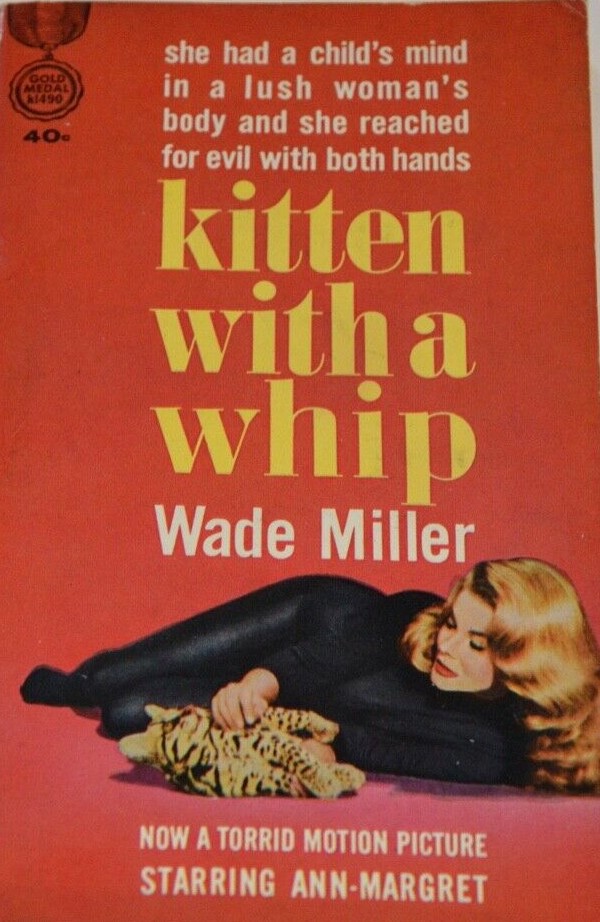
Wade Miller was the pseudonym of writing team Robert Wade and H. Bill Miller, who had teamed up at the age of 12, and wrote screenplays under another pseudonym, Whit Masterson. Together they had turned out 30 novels, and hundreds of short stories and their work had been the basis for, most famously, A Touch of Evil (1958). The later Yellow Canary (1963) and Warning Shot (1966) were based on their novels. The moment Hollywood came calling Fawcett publishing, through its Gold Medal paperback division. rushed out a movie tie-in edition, adding another when the film was due for release.
The second movie tie-in edition.
Laszlo Gorog (Too Soon to Love, 1960) was initially allocated the screenplay, but was quickly replaced by Alfred Benner (Key Witness, 1960). Nancy Kwan (Tamahine, 1963) and Steve Forrest (Yellow Canary) entered the frame when Richard Rush (Too Soon To Love) was being tipped to direct. Brigitte Bardot turned it down. And it languished in limbo for a couple of years before being handed to television director Douglas Heyes – a journeyman known for episodes of Laramie, Cheyenne, The Twilight Zone, TheVirginian, et al.
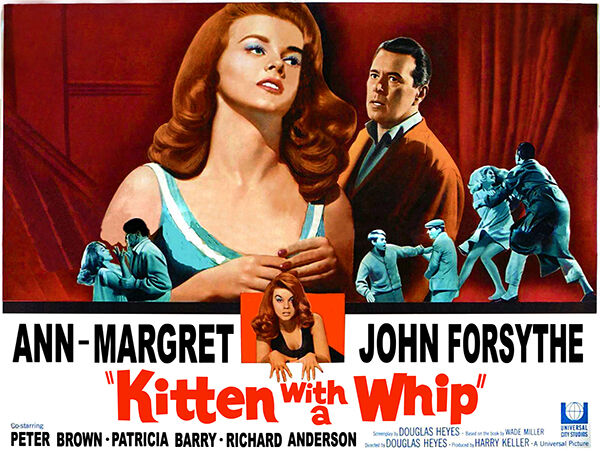
It wasn’t meant to be his debut feature. That was intended to be If One Is To Die from his own original screenplay, announced in 1961. But that was for Twentieth Century Fox. When that failed to materialize, and after a short spell back in television, he did double duty – writer and director, a role he had carried out countless times for television – for Kitten with a Whip
It was the last of the 11 movies scheduled by Universal for production in 1963, shooting beginning on December 27. The studio, at the forefront of developing new talent, put new recruit Patrica Barry (Send Me No Flowers, 1964) in the secondary female role.
That this got into the mix for Ann-Margret must have taken some determined wheeling and dealing for by 1963 the actress was in phenomenal demand, especially for someone with so little experience. She had contracts for over a dozen pictures. In part, she was the most exciting addition to a growing pool of new talent that included Michael Callan (The Interns, 1962), Alex Cord (Stagecoach, 1966), George Segal (The Quiller Mmorandum, 1966) and Peter Fonda (Lilith, 1964), but the fact that she could sing and perform made her doubly attractive since Hollywood had now worked out that hit singles and live performances were “the fastest route to the showbiz area…and the springboard to…film fields.”
Film adaptations of hit musicals, benefitting from the “broader pull of Hollywood productions” and “wider audience exposure,” boosted sales not just of the original soundtrack but also the original Broadway cast recording. Columbia’s Bye, Bye Birdie (1963) sold two million copies of the movie soundtrack and album and 1.5 million of the Broadway version.
There was a three-picture deal with Frank Sinatra’s Essex Productions that should have included Marriage on the Rocks (at that time known as Community Property, its original Broadway title) delayed until 1965 when the original director pulled out. Columbia was owed three movies, Twentieth Century Fox five. Every time she signed a new contract her price went up. She was the object of a bidding war. MGM appeared to be in the lead when it raised her going rate, ponying up $275,000 plus a percentage for two movies – Viva Las Vegas (1964) and Say it with Music (shelved). But Universal trumped that, $250,000 per picture for six movies, the first being Kitten with a Whip.
Her arrival in showbiz had triggered whirlwind of promotion. She snaffled her first headline in December 1960, at the age of 19, when Jack Benny added her to his nightclub act in las Vegas. Four months later her face adorned a full-page ad in Hollywood Reporter that announced her television debut on the Jack Benny Show on CBS April 2, 1961. By then Twentieth Century Fox was sniffing around and she landed a $1,000 a week contract. The studio set her as female lead in State Fair (1962) but she was abruptly dropped and when reinstated it was as second female lead.
At this stage, publicity focusing around her voice. Signed to RCA Victor, she quickly became a top-selling artist. In return for delivering 12-24 singles and a number of albums over three years, the label committed to spending $50,000 a year in promotion. Columbia assigned George Sidney, director of Bye, Bye Birdie, to make an eight-minute promotional film.
After well-received turns in A Pocketful of Miracles (1962), Bye, Bye Birdie and female lead to Elvis Presley in Viva Las Vegas, Kitten with a Whip represented departure, her first dramatic role. Although some observers later criticized her management team, in retrospect it’s clear that a sensible strategy was in operation, alternating lighter fare where she could sing and dance with more serious works (Once a Thief and The Cincinnati Kid, 1965, and Stagecoach the following year) where she did neither.
Exhibitors were so convinced she was the real deal that she was the youngest-ever winner of their Star of the Year Award, previous holders of the trophy including the more established likes of John Wayne, Gregory Peck, William Holden, Deborah Kerr and Doris Day, but only after they had been in the business for several years with umpteen box office hits to prove their worth.
Male lead John Forsythe, after years on television in Bachelor Father (1957-1962), was making a movie comeback. But he had signed an unusual contract with Universal, suggesting nobody was confident he was as genuine a prospect. The studio offered him a deal for two pictures a year, but one that also included television work for its television arm Revue.
Reviews were better than the actress might have expected. Eugene Archer, the second-string critic on the New York Times said “she demonstrated enough untrained talent to suggest interesting dramatic possibilities in better films.” Box Office opined that Ann-Margret delivered “a realistic and surprisingly effective characterization” but pleaded for studios to “let her return to lighter fare.” Variety was dismissive: “display of over-acting.”
Exhibitors took a negative view. “Does this popular star a great deal of harm,” was typical of the response. Others were more forthright, describing the movie as a “glaring example of the type of show that shouldn’t be made.” Overall, it was not what anybody – critics, audiences, cinema managers – expected and not in a good way. The St Paul Evening Dispatch took the MPAA’s Production Code to task for passing a picture of “sheer sadism, depravity without redeeming reason.”
In some first run situations, it was the solo feature. Other cinemas paired with Lolita (1962), a somewhat obvious choice, or Lilith (1964) or British film Young and Willing (1962), Faces in the Dark (1960) with Mai Zetterling and Audie Murphy western Bullet for a Badman (1964). In some cities, it bypassed first run and went straight into the drive-ins. In smaller locales it went out on the lower half of a double bill.
Only in Pittsburgh did it score at the box office, “lofty” the assessment. It was deemed “sluggish” Washington, “slow” in Chicago and Los Angeles, and “slim” in Columbus, Ohio. Of 21 movies released in the Winter Quarter, it was ranked lowest where it mattered most, at the ticket wickets, according to Box Office. It didn’t rake in $1 million in rentals, the amount required to earn a place on Variety’s annual box office chart.
Kitten with a Whip didn’t appear to harm the star’s career. Critics praised her work on Once A Thief and The Cincinnati Kid. But as her career first prospered and later crashed and burned it was considered something better not mentioned. John Forsythe fared less well. Outside of television, he only made five movies in five years.
Heyes’ movie career stuttered. He had been due to write and direct The 12th of Never, based on his own novel, to star Sandra Dee, one of Universal’s top marquee names, in June 1964, but when that was cancelled returned to television until called back to direct Beau Geste (1966).
There might have been reassessment of the value of the original film when Gus Van Sant announced he planned a remake in 2007. On the other hand, that it was Lindsay Lohan’s favorite picture didn’t do it much good.
I’ll let you down gently. Ain’t no whip. What you have instead is one of the most under-rated, unseen and maligned mini-masterpieces you will ever come across marching to the film noir beat. Bewildering femme fatale and the kind of disenchanted anti-authority teenagers who would drive the “youthquake” that almost destroyed the industry half a decade later. And within this, one of the great tragedies of Hollywood, the performance of her career from Ann-Margret, buried because it wasn’t what the public, the critics or the industry expected from the young star.
Edgy score with soulful sax underwrites a picture brimfull of surprises and plays constantly with your expectations, the picture shifting gear so often you’d think you were in a tumble dryer. The doorbell plays like a loaded gun, every interruption racking up tension.
Stylish credits that hint of Hitchcock precede a brilliant opening as in full noir fashion a band of light catches the eyes in the darkness of a blonde (Ann-Margret) dressed in a nightgown cresting a hill.
She tries to jump on a moving goods wagon, eventually makes her way to a deserted house, untouched wrapped newspapers littering the lawn, clambering into a bed, clutching a teddy bear for comfort. You want mystery? This is just the start. In one of the best neat cuts, we jump from the eyes of a teddy bear to headlights. Owner returning home is budding politician David (John Forsythe), wife away due to marital issues.
Come morning, he discovers his guest, Jody. She recites a sad tale of fleeing sex abuse. But soon he realizes she’s got a story to fit every occasion and can turn the emotions on like a tap. Manipulation is in her DNA. But she’s a tough little number. “Hands off, buster,” she snaps at one point as she tries to physically hustle her out.
It’s unspoken that the idea of being caught, regardless of whether he’s entirely innocent, in illicit dalliance would mean the end of his political ambitions, but she’s happy to spell it out. If the cops work her over, who knows what would spill out.
He buys her clothes, gives her money. Sayonara, baby! Except it’s not. He discovers she’s on the run from juvie, where she torched the home and stabbed the matron. Worse, she’s not left after all, but returned, the house filled with the noise of television cartoons, floor littered with teenager mess.
It’s unclear what exactly she wants. But she knows if she screams rape that’s curtains for him. And if Freud (1962) used a length of rope to show how a psychiatrist can’t escape his client, Jody’s version is a length of telephone cable, dragging her quarry to the floor when he’s talking to his wife.
And before you know it, it turns into home invasion. She’s called up some pals, younger versions of the creeps in The Penthouse (1967) but with a similar set of philosophic ramblings (“the meanings of the meaningless”) from thug Ron (Peter Brown), not averse to sharing buddy’s docile girlfriend Vera (Patricia Barry). And now it’s blackmail. And violence, a cutthroat razor the weapon of choice, though thug Buck (Skip Ward) is handy with his fists, too.
The kids, drug peddlers, want driven over the border. So now we’re racing off in the dark. David is savvy enough to leave Buck entangled in barbed wire, manages to drop the wounded Ron off at a doctor’s surgery and now desperately tries to escape Jody, though, as you might expect she has other plans.
So the movie spins all the time on the twin axis of discovery that could end David’s career and the demonic damsel. While it steers clear of any sexual attraction by David for the young glamor girl, his interest is initially more paternal, and consequence-aware. Quite what she does want is unclear, beyond some kind of freedom, power even, “I call the shots, not you,” the upper hand over the males, marking him with her nails in the way she has been scarred.
But it races along, it’s impossible not to be dragged into the quandary, half the time you hoping that somehow she will escape her demons, while fully aware that she’s on the fast track to Hell and will take people with her.
This is Ann-Margret (The Swinger, 1966) as you’ve never seen her. It’s not that the sexiness is hidden, it’s a heck more subtle than that, and when she parades in some flimsy item it’s clearly more for approval than arousal. At one point she dances in a jokingly sensuous manner, but otherwise there’s no trademark singing and dancing. She’s a junior version of the more fully-fledged femme fatales of noir who’ve hooked some sap into crime. This gal hasn’t got that kind of criminal brain – or maybe not yet – she’s a victim of circumstance and, let’s face it, the powerful male.
There’s a terrific moment when Vera accepts that she means little more to her boyfriend than that she has a car, exhibiting the kind of impotence that came with the territory for young women of the era lacking confidence or a decent role model. Jody’s the opposite. She’s confident enough, but no idea what to do with it, beyond ensuring no man gets the better of her.
You’ve heard enough of Jody’s sob stories not to believe a word she says but still the power of Ann-Margret’s performance is that you feel the deeper, hidden, pain.
Writer-director Douglas Heyes (Beau Geste, 1966) directs with tremendous verve, keeping his foot down on the tension pedal. That the movie was generally seen as a low-point in the career of Heyes and Ann-Margret is one of those Hollywood anomalies, or ironies if you will, probably dumped on because it was perceived as flying too close to the Lolita (1962)/Baby Doll (1958) template, although in reality the character avoids going down the simpering child route except as a means of extracting sympathy.
John Forsythe (Topaz, 1969) begins on the rack and never gets free.
Nothing like would you expect – and certainly not from the title – and deserves full reassessment and all the critical accolades going especially from those who appreciate the noir canon.
Massive disservice to Ann-Margret, whose performance here should have opened up a career of more serious movies.
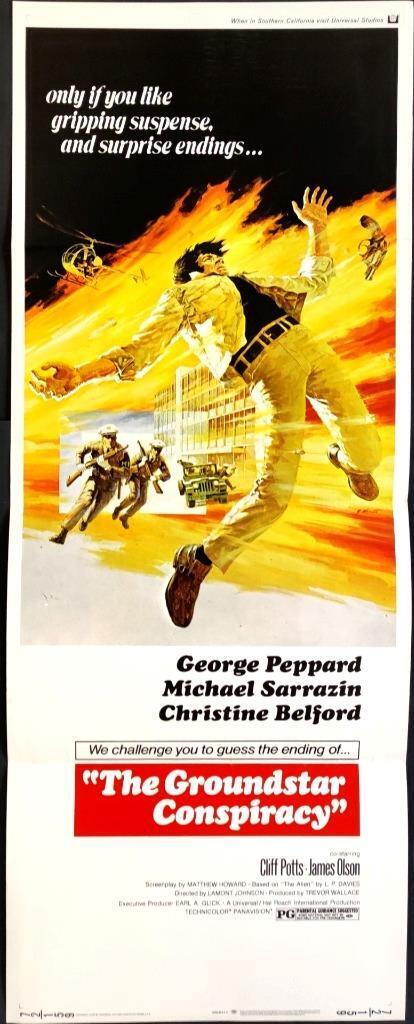
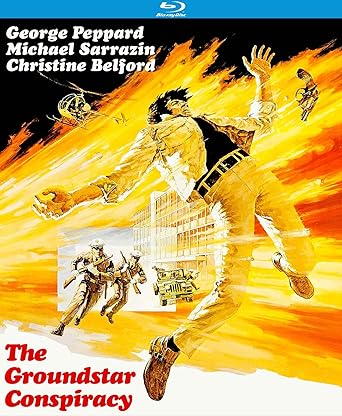
Gripping thriller that set up the template for the decade’s later conspiracy mini-genre exemplified by The Conversation (1974), The Parallax View (1974) and Three Days of the Condor (1975). Under-rated compared to that trio, and considerably less cinematically self-conscious, it nods in the direction of The Manchurian Candidate (1962), The Mind Benders (1963) and Seconds (1966) while clearly influencing Memento (2000), The Bourne Identity (2002) and Inception (2010).
Touches on themes of surveillance, brainwashing, amnesia, invasion of privacy and government control, and for good measure may even have invented water boarding. Brilliantly structured with superb twists right to the end and peppered with red herrings. Audiences these days will be more easily misled than back in the day by references to an alien. Innovative and extensive aerial footage, and like Figures in a Landscape (1970) helicopters play a major part in pursuit.
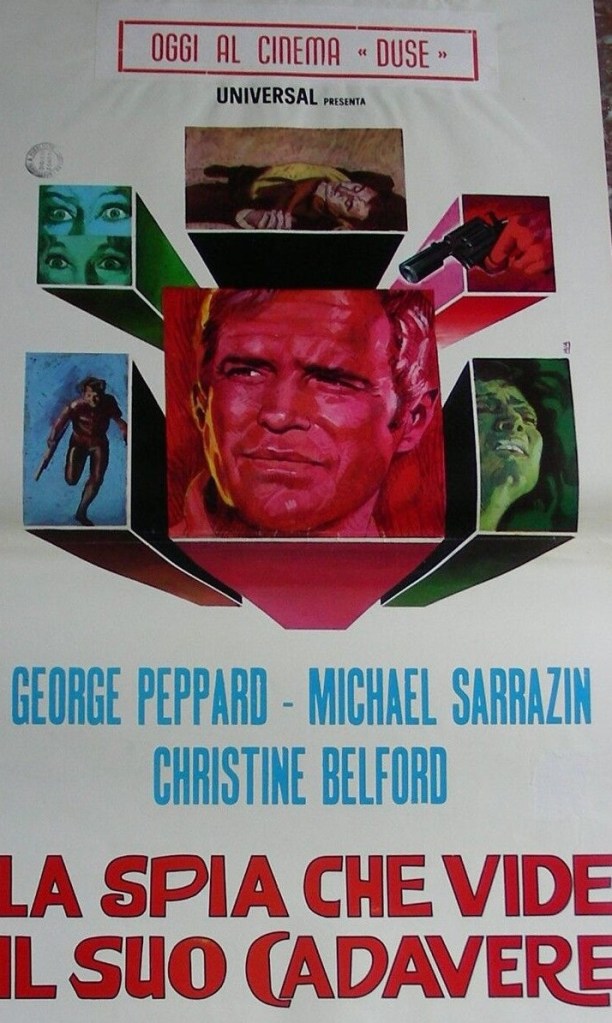
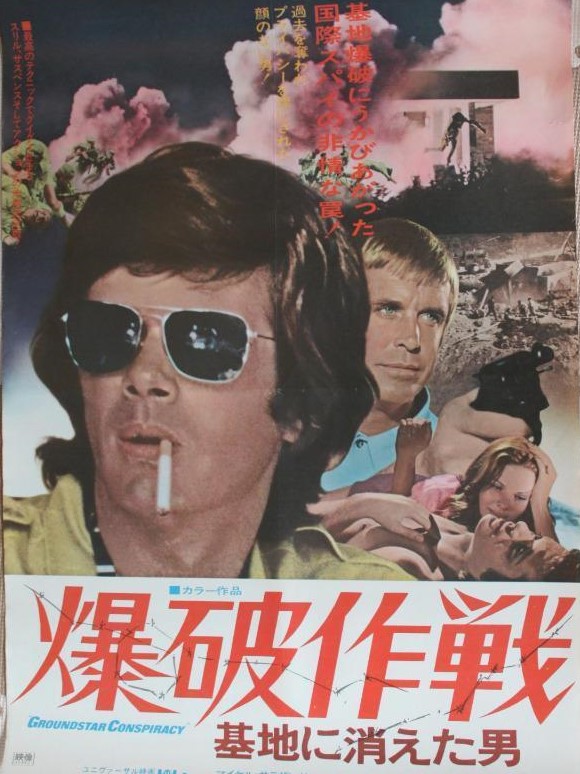
A series of explosions at a secret government facility kills six men. One other, Welles (Michael Sarrazin), badly disfigured, escapes, potentially with vital secrets. Security chief Tuxan (George Peppard) leads the investigation. From the off the case is shrouded in mystery, not least because Tuxan refuses government high-ups access to the site and the ongoing probe, instead relying on government PR man Carl (Cliff Potts) as a conduit.
Of course, if Welles was innocent he’d hand himself in rather than running away to the house of Nicole (Christine Belford). Naturally, although she calls an ambulance, she is deemed guilty, too, for providing just too handy a hideout. Under extreme interrogation, Welles, claiming complete amnesia, refuses to talk.
Without the benefit of a trial Welles is shipped out to a maximum-security unit but the transportation is driven off the road and he escapes, returning to Nicole. Passion ensues, but even she, conceivably from the audience perspective a government plant, fails to elicit much information from him beyond that he speaks Greek and had some unnamed life-changing experience in that country, possibly involving water.
Turns out Welles is bait. Tuxan has arranged the escape. Nicole’s house is bugged – for sight and sound and nobody has the decency to cringe when watching the couple make love. Tuxan reckons that at some point Welles’ co-conspirators will surface. But when they do, they are a good bit smarter than Tuxan anticipates. The plot thickens when, even to them, Welles sticks to his story of being an amnesiac.
And the plot continues to twist and turn right to the very end which contains a just fantastic twist, two actually. Audiences these days more accustomed to the clever climax might guess the twist, but I really doubt it.
By this stage both George Peppard (Rough Night in Jericho, 1967) and Michael Sarrazin (The Sweet Ride, 1968) were finding a perch at the top of the Hollywood tree hard to hold onto, the fact that the movie, not notably highly budgeted, featured two supposed top stars proof of that. But it wouldn’t work unless Welles was played by an actor whose screen persona would make an audience both question his innocence and guilt. Sarrazin wouldn’t be the first actor to play on audience expectation to portray a bad guy.
In fact, both are excellent. Sarrazin is able to drop the fey aspect of his character and the narrative helps enormously, puzzlement and confusion an ingenious assist, to depict him as a person of more depth. The disfiguring of a handsome movie idol shifts audience expectation from the off.
I’ve become a bigger fan of George Peppard than I ever imagined after watching a series of quite different portrayals that tossed around his screen persona from The Third Day (1965) through The Blue Max (1966) and the unsettling mystery trilogy of P.J / New Face in Hell (1967), House of Cards (1968) and Pendulum (1968).
Directed with considerable assurance and occasional elan by Lamont Johnson (A Covenant with Death, 1967), this avoids the cinematic indulgence of The Conversation (1974), The Parallax View (1974) and like Three Days of the Condor (1975) sticks more to narrative. Water, more normally associated with tranquility, takes on a disturbing quality. Sometime writer-director Douglas Heyes (Beau Geste, 1966) discarded half that hyphenate to turn in a slick screenplay based on the bestseller by Leslie P. Davies.
Director John Sturges was not flying quite as high as when he had greenlit The Satan Bug. Since then two films had flopped – big-budget 70mm western The Hallelujah Trail (1965) and Hour of the Gun (1967). Two others had been shelved – Steve McQueen motor racing epic Day of the Champion and The Yards of Essendorf. But his mastery of the action picture made him first choice for Ice Station Zebra.
Independent producer Martin Ransohoff (The Cincinnati Kid, 1965) had snapped up the rights in 1964, initially scheduling production to begin the following spring. He financed a screenplay by Paddy Chayefsky (The Americanization of Emily, 1964). Judging by later reports MacLean appeared happy with the screenwriter’s approach, especially after being so annoyed with the way Carl Foreman had appropriated The Guns of Navarone. Ransohoff put together a stellar cast – The Guns of Navarone (1961) alumni Gregory Peck and David Niven plus George Segal (The Quiller Memorandum, 1966). But each wanted to act against type. Peck, having played a submarine commander in On the Beach (1959), wished the role of an American secret agent, Niven to play his British equivalent with Segal left to pick up the role of skipper. Then Peck objected to the way his character was portrayed.
Sturges, paid a whopping $500,000 to direct, was unhappy with the Chayefsky script commissioned by the producer so he hired Harry Julian Fink (Major Dundee, 1965) and W.R. Burnett (The Great Escape, 1963). But he hated the results so much he suggested MGM drop the entire project. That was hardly what Ransohoff, after forking out $650,000 on screenplays and $1.7 million on special effects, needed to hear. As a last resort, Sturges turned to Douglas Heyes (Beau Geste, 1966) who beefed up the Alistair MacLean story, completely changing the ending, introducing the U.S. vs U.S.S.R. race to the Arctic, and a bunch of new characters including those played by Jim Brown and Ernest Borgnine, who had previously worked together on The Dirty Dozen (1967).
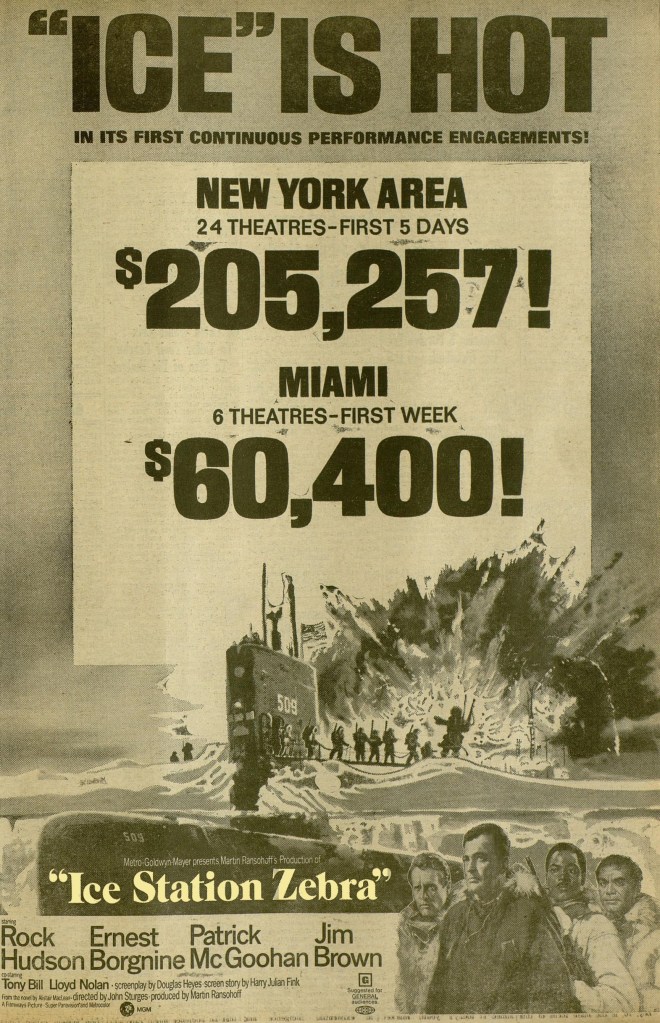
Six months after its roadshow engagement in New York, the picture went into general release in continuous performance.
After a string of flops, Hudson, celebrating his 20th year in the business, chased after the role of sub commander. Although it has been reported that Laurence Harvey briefly came into the frame for the part that went to Borgnine, I could find no record of that. Confusion may have arisen because in 1964 Harvey was prepping another MacLean picture, The Golden Rendezvous, which he planned to direct in the Bahamas. Having landed the major supporting role in Who’s Afraid of Virginia Woolf (1966), Segal was the casting coup before he, too, jumped ship.
British star Patrick McGoohan (Dr Syn, 1963) who had not made a movie in five years, was an unlikely candidate for the second lead. Sturges saw him as the next Steve McQueen. But his inclusion only came about because of the sharp increase in his popularity Stateside after fans had bombarded the networks to bring back the Danger Man (1964-1967) television series (renamed Secret Agent for American consumption) after it had initially underwhelmed. Increased public demand for the “old-fashioned hero with morals” became a feature of an advertising campaign. McGoohan received the accolade of a write-up in the New York Times. It seemed a cinch to have a denoted television secret agent star to play another spy in the film.
The all-male cast prompted the director to consider adding a hallucinogenic dream sequence involving women. Despite his penchant for action pictures, Sturges was a gadget nut and particularly interested in the space race, tracking by ham radio the launch of the Russian Sputnik 1, concerned that the Americans had been beaten. While moon landings remained some way off, the next battle for supremacy was nuclear submarines, of which Sturges was in awe.
Principal photography began in mid-June, 1967 and finished 19 weeks later. The $8 million budget topped out at $10 million. The non-nuclear U.S.S. Ronquil stood in for the book’s sub with U.S.S. Blackfin doubling in other shots. The vessel’s interiors dominated MGM’s soundstages with a 16ft superstructure as the centerpiece with hydraulics creating the tilting and rocking effects. Art director Addison Hehr’s commitment to authenticity saw his team buying real submarine effects from junk yards to fit out the interiors. The conning tower was almost as tall as a five-storey building and the submarine, built in sections, measured 600ft. The Polar landscape was created by draining the MGM tank, at the time the largest in Hollywood, of three million gallons of water and then mounted with snow and rocks and the burnt-out weather station.
While aerial shots of Greenland ice floes and fjords doubled for Siberia, to capture the wild ocean Sturges and cameraman John Stephens took a helicopter ride 30 miles out from the coast of Oahu where a 45-knot wind created “monumental” seas. A 10ft miniature in a tank permitted shots underwater and cameras attached to the Tronquil’s deck and conning tower achieved the unique sub’s-eye-view. The unconvincing Arctic landscape was shot on a sound stage.
Early trade double-page advertisement (hence the lines in the middle).
Not only did screenwriter Douglas Heyes alter the original ending, but Sturges claimed improvisation was often the order of the day. “We made it up as we went along,” he said, “adding a whole bunch of gimmicks – the homing device, the capsule in the ice, the blowtorch…I don’t think it had any political significance. It just dealt with an existing phenomenon in an interesting way.” (Note: the homing device was in the original novel.)
A major hitch hit the planned roadshow opening in New York, essential to building up the brand. MGM proved reluctant to whisk 2001: A Space Odyssey out of the Pacific East Cinerama theater while the Stanley Kubrick opus was still doing so well. So it opened in the Big Apple on December 20, over two months after its world premiere at the Cinerama Dome in Los Angeles, where MGM had decked out the lobby with a submarine measuring 20ft long and 12 ft high. From the publicity point-of-view the delay was a drawback since New York critics – who attracted the biggest cinematic readership in the country – would not review the film until it had opened and should they take a positive slant their quotes would come too late for the national advertising campaign.
SOURCES: Glenn Lovell, Escape Artist, The Life and Films of John Sturges (The University of Wisconsin Press, 2008) p262-268; “Film in Focus, Ice Station Zebra,” Cinema Retro, Vol 17, Issue 51, 2021, p18-27; “Harvey Huddles with Maugham on Bondage,” Variety, May 15, 1963, p25; “New York Sound Track,” Variety, April 29, 1964, p18; “Ransohoff-Metro Prep Zebra Via Chayefsky,” Variety, January 20, 1965, p4; “Novelist, Producer Meet On Ice Station Zebra,” Box Office, April5, 1965, pNE2;“George Segal,” Variety, April 28, 1965, p17; Advertisement, Variety, April 20, 1966, p44-45; William Kirtz, “Out To Beat Bond,” New York Times, Jun 23, 1966, p109; “Ponti Seeks David Niven,” Variety, October 26, 1966, p3; “Cinerama Process for Metro’s Zebra,” Variety, May 17, 1967, p24; Advertisement, Variety, June 21, 1967, p8-9;“26 Probable Roadshows Due in Next Two Years,” Variety, January 17, 1968, p7; “Poor Ratings But Film Plums Going To Pat McGoohan,” Variety, July 3, 1968, p3.”Premiere Display Built for Ice Station Zebra,” Box Office, October 14, 1968, pW2; “Ice Station Zebra Frozen, No N.Y. Cinerama Booking,” Variety, October 23, 1968, p12; “Ice Station Zebra in World Premiere,” Box Office, Oct 28, 1968, pW1; “No Zebra Shootout in N.Y. , Gets 2001 Niche, Latter Grinds,” Variety, October 30, 1968, p3; “Filmways Stake in Ten Features for $55m,” Variety, November 20, 1968, p7.




 The Magnificent 60s