Behind the Scenes: Coming Soon, Maybe! – Exhibitor Woes

The global release is a relatively recent phenomenon. Back in the 1960s nobody would dream of letting loose a film on 7,000 screens worldwide all at once. In those days release patterns were a moveable feast. You could guarantee that a big new movie would open on a scheduled date in first run in a major city like New York, London or Paris, but after that it was anybody’s guess how long it might take to arrive at your local neighbourhood cinema. Especially, if a movie was part of the roadshow equation, it could occupy one cinema for months, maybe even years, and as long as it was screening there could go no further afield.

But even I was astonished, once I dug around in the files, to see just how long it took a movie to shift from world premiere to turning up at the last booking stations on the route, those tiny cinemas that appeared to litter small-town America. Towns with populations under 2,000 could still support a cinema. And it fell to the exhibitor to ensure a movie did not outstay its welcome. In Britain, cinemas in the 1960s screened films six days a week (Sunday films were subject to different regulations and were often one-off showings of old horror pictures hired on a fixed rental basis). Films ran for six days or the week was split into two, one program running Mon-Wed, the other Thu-Sat, the latter being allocated the movies with the better box office prospects.

It seemed, from an objective perspective, a fairly straightforward system. But in Britain a cinema with a catchment area of just a couple of thousand people would have gone to the wall a good time previously. All cinemas, even independent ones, fitted into some kind of release pattern, and might get the fifth or sixth or seven run of a movie after its big city first appearance, but, excepting roadshow, once it had made that vital first appearance you could rest assured it would take no more than six months or so to travel down the pipeline.

That did not hold true for small-town America. In 1967, for example, a picture could 18 months or more to reach towns such as St Leonard (pop 1900) in New Brunswick; Pittsfield (pop 2300) in New Hampshire; New Town (pop 1200) and Washburn (pop 968) in North Dakota; Lansing (pop 1328) in Iowa; St Johnsbury (pop 6000) in Vermont; England (pop 2136) in Arkansas; Flomaton (pop 1480) in Alabama; Oshkosh (pop 1100) in Nebraska; Grace (pop 775) in Idaho and Miltonvale (pop 911) in Kansas.

Weeks here appeared to be divided into three: Sun-Mon (or Sun-Tues); Tues-Wed (or Tue-Thu); and Wed-Sat (or Thu-Sat or Fri-Sat); and possibly into four if the exhibitor reckoned he had a bunch of stiffs. Certainly, minimal population counted against a small town being favored with a release ahead of a larger town. In addition, this type of exhibitor might well hold back until the rental terms were lower.

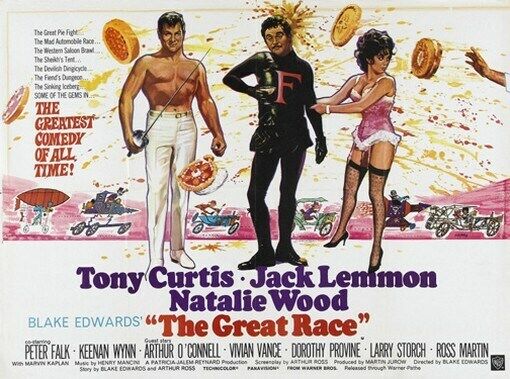
Tobruk was the fastest movie out of the blocks as far as these towns were concerned, just four  months passed from its launch in February 1967 until showing up in one of these aforementioned towns. Murderers Row was not far behind, six months after its December 1966 release. But these were rarities. It took nearly two years for The Great Race, a roadshow release in1965, to gain a booking while The Sound of Music, another 1965 roadshow, was only available on condition it was hired for two weeks rather than the usual maximum four days.

And it was nine or ten months from first run to last run for Raquel Welch vehicle Fantastic Voyage, Jack Lemmon-Walter Matthau comedy The Fortune Cookie and Rock Hudson sci-fi Seconds. It took a full year for World War One epic The Blue Max, Cary Grant comedy Walk, Don’t Run and the Oscar-laden Who’s Afraid of Virginia Woolf to show. There was an even longer wait for Marlon Brando drama The Chase (sixteen months) and Sophia Loren starrer Judith (eighteen months).

Assuming that any movie showing on a Saturday was considered the best risk, the following films were perceived by exhibitors to offer the best prospects: Disney family comedy That Darn Cat (booked for two  days), western spoof Cat Ballou (three), British spy picture Deadlier than the Male (three), William Holden Civil War western Alvarez Kelly (three), a revival of Hammer horror The Brides of Dracula (two), Lee Marvin-Burt Lancaster western The Professionals (three), Glenn Ford in Rage (three), British epic Khartoum (two), The War Wagon (four days in once cinema, only two in another), El Dorado (four days, running Fri-Mon), The Blue Max (four), Tobruk (two) and crime thriller Warning Shot (three).

Programs beginning on a Sunday I would reckon to have the next best chance of collaring an audience. Among these bookings were: The Great Race (three days), The Fortune Cookie (three), Fantastic Voyage (three), Paul Newman private eye thriller Harper (two), The Russians Are Coming, The Russians Are Coming (two), In Like Flint (two), Paul Newman western Hombre (two), Night of the Generals (three), Walk, Don’t Run (just one), The Quiller Memorandum (two), western remake Stagecoach (three) and Lost Command (two).

That sometimes left a two-day program in the middle of the week as a bonus in a good week or make-and-break in a bad one. Clearly, exhibitors took greater risks on pictures slotted in then. Sometimes the gamble paid off. Raquel Welch in Swingin’ Summer (two days), booked on the back of expectations for Fantastic Voyage, did surprisingly well. So did Wild Angels and a revival of Tom Jones.

Exhibitors were not slow in venting anger at a poor performer. Box Office magazine’s fortnightly feature “The Exhibitor Has His Say” – from which all this information is drawn – allowed the cinema owner to mouth off and warn fellow exhibitors. Terry Axley of the New Theatre in England was among the most vociferous. “Never been able to do much business on Ann-Margret,” was his view on Made in Paris. There was “no dice” for The Russians Are Coming, The Russians Are Coming. Despite Sean Connery, A Fine Madness did only “average business.” Fantastic Voyage “flopped here entirely.”

The Quiller Memorandum provided an all-time low for S.T. Jackson of the Jackson Theater in Flomaton. Walk, Don’t Run was a “real disappointment” at the Arcadia Theater in St Leonard. A Man Could Get Killed was pulled “after the poorest Sunday ever” at the Roxy in Washburn. Arabesque held “no appeal” for the audiences at the Scenic Theater in Pittsfield, where Stagecoach “didn’t seem to have much draw.”

But exhibitors were equally good at pointing to pictures that had exceeded expectations: Laurel and Hardy’s Laugh InBorn Free, Henry Fonda western A Big Hand for a Little Lady, Tony Curtis comedy Not with My Wife You Don’t, Dean Martin comedy western Texas Across the River, espionage spoof Bang! Bang! You’re Dead and a revival of Ma and Pa Kettle Back on the Farm from 1951.

What it showed was that one man’s turkey could prove another man’s golden goose. And while on the lowest rung of the distribution ladder that there was an inbuilt camaraderie that attempted to prevent fellow exhibitors from picking the wrong horse while hoping to pin their faith on an outsider romping home.

SOURCE: “The Exhibitor Has His Day,” Box Office, various issues, 1967.
Behind the Scenes: The Circuit Breaker Busts the Release System

Every country followed a similar system. Unlike nowadays, new movies would first be released on the biggest cinemas in the biggest cities. Only after the hullabaloo of premieres and publicity in national newspapers did the films move into the bread-and-butter of the release pattern, appearing for a given week on the circuits. Britain had two main circuits, ABC and Odeon, both of whom, unlike their counterparts in the USA, were permitted not just to exhibit movies but to make and distribute them.

In the UK at the start of the 1960s, regardless of how well new movies had done in their opening salvos at the super-cinemas, they were allocated just one week on the circuit. In retrospect, it seemed a weird notion that a big-budget Hollywood movie would be given the same amount of time to sell tickets as a cheaper home-grown product. Even more basic, that demand was automatically limited. Unlike now, a cinema could not hold onto a hit film for as long as it wanted, because the print was already assigned another cinema in another locale. And there was no way of bringing back a hit for a second go-round until years later.

The release system began to change with the introduction of the roadshow, when 70mm movies showing twice a day at increased prices would run for at least a “season” (13 weeks) and could respond to demand by playing for much longer. Following their roadshow run, such films would be fed, at a later date, into the circuit system.

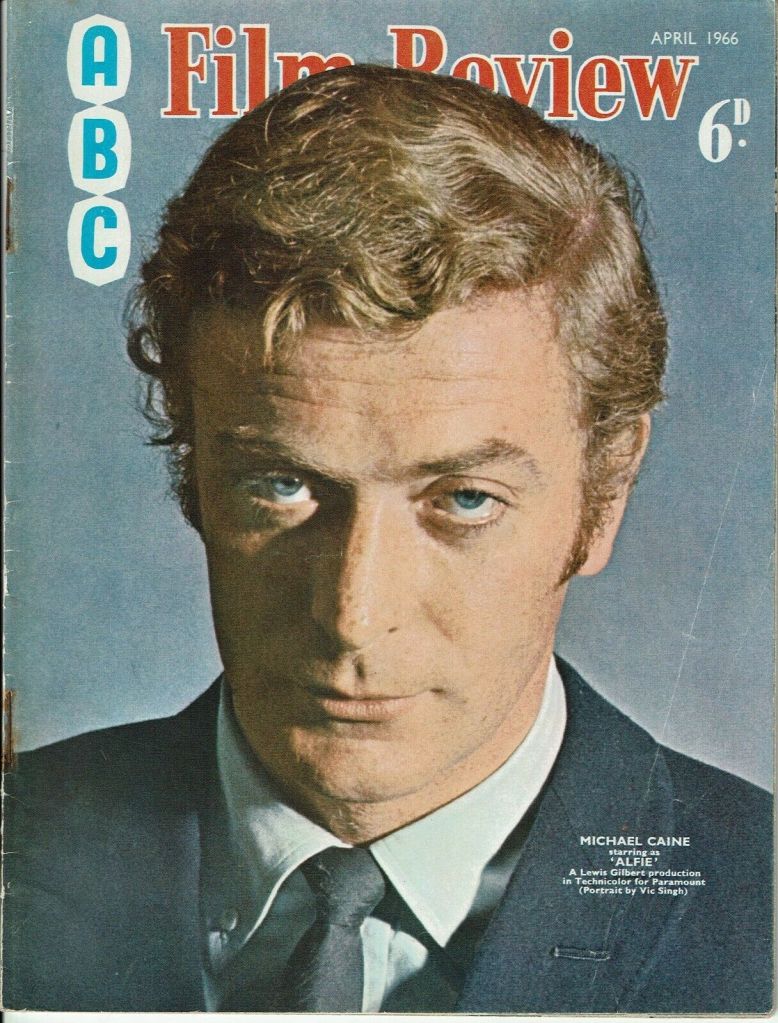
But in 1964, there was the beginnings of a shift on the ABC circuit. Towards the end of the year, instead of the traditional one-week circuit run, The Carpetbaggers, not a contender for roadshow despite its 150-minute running time, was shown for two weeks.  But that proved an isolated incident. It was another two years before ABC repeated the experiment, courtesy of  Alfie starring Michael Caine.

The following year the first two months saw four films go down the same route, Oscar-winning musical My Fair Lady which had been road-shown a couple of years before, Hayley Mills drama The Family Way, The Dirty Dozen, also a roadshow hit, and Bonnie and Clyde (a flop in the USA).

In addition, the circuit had learned to re-evaluate earlier hits. At that point a revival/reissue only made a second showing in the UK about 7-10 years after initial release. But in 1967, just three years after it proved to be a colossal box office success in the UK (it flopped in the USA despite an immense marketing campaign), Zulu was given another week on the circuit, this innovation adding a new dimension to the circuit release system.

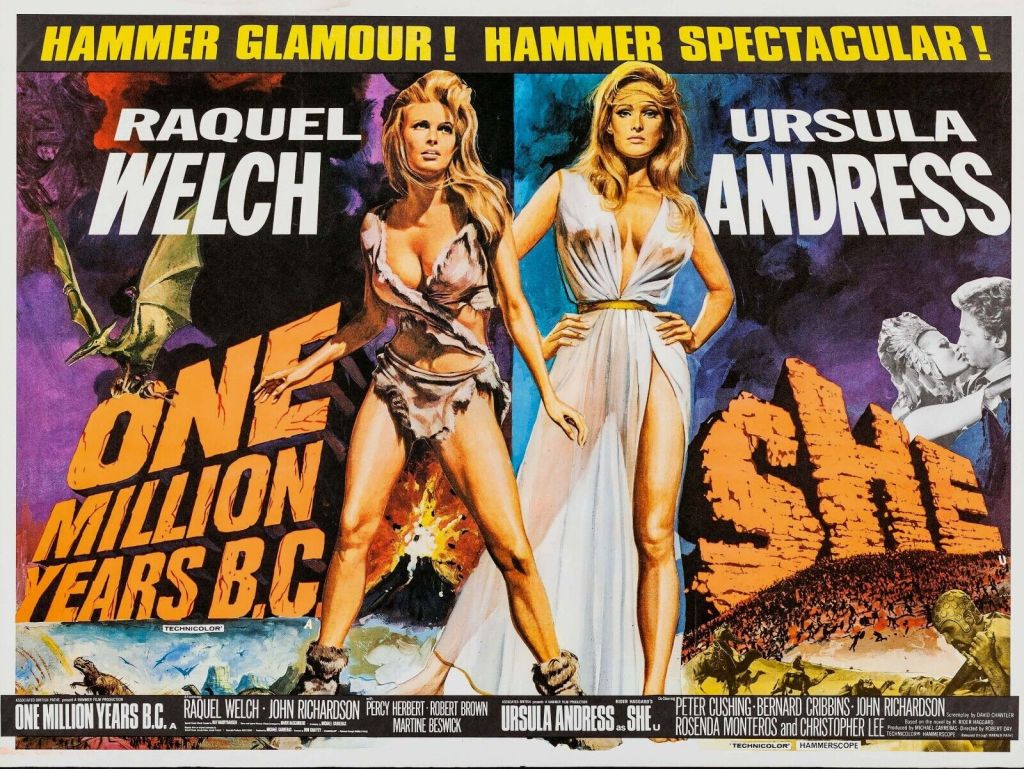
In fact, The Dirty Dozen was afforded yet another week on the circuit in 1968 – in effect, counting the roadshow and the initial circuit release, the public was accorded three opportunities in a very short space of time, The following year One Million Years B.C. (1966) starring Raquel Welch and She (1966) starring Ursula Andress were double-billed in a reissue.

But whether the two-week window had proved a complete success was open to doubt because such clear-cut hits as Bullitt and The Italian Job were only granted one week to make an impact on the circuit box office. In 1969, the circuit had so misjudged the box office potential of Till Death Us Do Part, a movie version of the popular British television comedy series, that it was initially scheduled for a one-week run. But it was such a blockbusting success that ABC tore up its release calendar and slotted it in for a further week two weeks later.

Growth of the multiplex meant big films could be retained for much longer on the biggest houses, switching between two or three or four individual cinemas until demand was deemed fully drained. No longer did a circuit release mean that release dates for the suburban part of the release were set in stone, an approach guaranteed to force the main city center cinemas to remove from its screens a movie that still had pulling power and at higher prices.

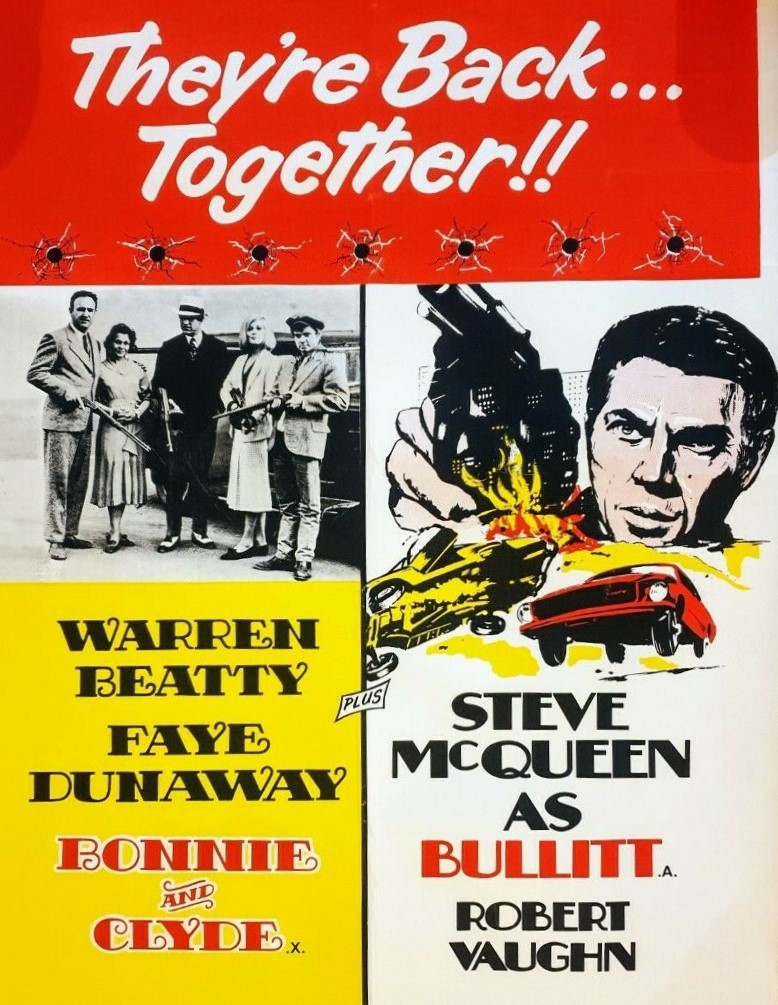
But any kind of change to the circuit release system remained minimal. In 1970, only two movies, Where Eagles Dare, a monumental success when road-shown (a release option denied in the USA), and the home-grown Women in Love were provided with a two-week circuit platform though Bullitt doubled with Bonnie and Clyde made a speedy return as a reissue.

In 1971, a pair of British comedies Percy and Up Pompeii, both made by EMI which had taken over the ABC circuit, were given the two-week treatment. But like Till Death Us Do Part, revisionist western Little Big Man was allocated another week over a month after its initial showing. The Dirty Dozen returned yet again.

In 1972, the circuit introduced unveiled another release strategy called variously a “selective release” or a “pre-release.” This meant, in effect, that in major suburban cinemas, the biggest new pictures would be given two bites of the cherry. A Clockwork Orange and The Godfather were both deemed worthy of a one-week “selective” release with a second week factored in for the following year in what was deemed a “full release.”  A version of roadshow was already in place for both these movies and in the main cinemas in big cities these were retained for a considerable amount of time.

In 1972 there were also re-runs for There’s a Girl in My Soup, Zulu and Paint Your Wagon (a bigger roadshow success in the UK than the USA). But the following year saw a whole wave of reissues beginning with The Ten Commandments (1956) followed by Dirty Harry/Klute (both 1971), The Wild Bunch (1969), Love Story (1970), Coogan’s Bluff (1968)/ Play Misty for Me (1971) while Gunfight at the OK Corral (1957) supported the new Friends of Eddie Coyle.

In 1974, The Sting and Airport 1975 went down the new “selective” plus normal release pattern, enjoying one week in each phase, while Blazing Saddles and The Exorcist received a two-week send-off from the start, Fear Is the Key (1972) was revived to support another television spin-off Holiday on the Buses.

Towering Inferno in 1975 ran for three weeks, the first qualifying as “selective” system but the others two weeks shortly after. But there was another development with Jaws which went out first as “selective”, then a week in “pre-release”  and its third appearance on the circuit deemed a “full release” turned into an extended run. But the “selective”/”full release” of Death Wish, Mandingo,  and Murder on the Orient Express comprised only two weeks. Lisztomania looked set to join the exclusive club but instead of going out on the full release some weeks later it was restricted to a single “selective” week, suggesting it had not fulfilled expectations first time round.  The Godfather Part II also managed two weeks but not sequential, the second week deemed a “re-run” six weeks later. Where Eagles Dare and David Essex duo That’ll Be the Day (1973)/Stardust (1974) were reissued while Uptown Saturday Night (1974) was revived in support of Inside Out. Gone with the Wind (1939) enjoyed another reissue in 1976 as did Zulu and Freebie and the Bean (1974)

In 1977 “pre-release” replaced “selective” as the preferred jargon and was applied to King Kong, Airport 77 and Rollercoaster but in these instances amounted to a total of two weeks counting the later full release. By contrast, When the North Wind Blows and The Eagle Has Landed  enjoyed a straight two-week release.  Ben-Hur (1959) was reissued as were Jaws (1975), The Sting (1973), The Godfather (1972), Clint Eastwood double bill The Outlaw Josey Wales (1976)/Magnum Force (1973) and television spin-off duo All Creatures Great and Small (1977)/It Shouldn’t Happen to a Vet (1976).

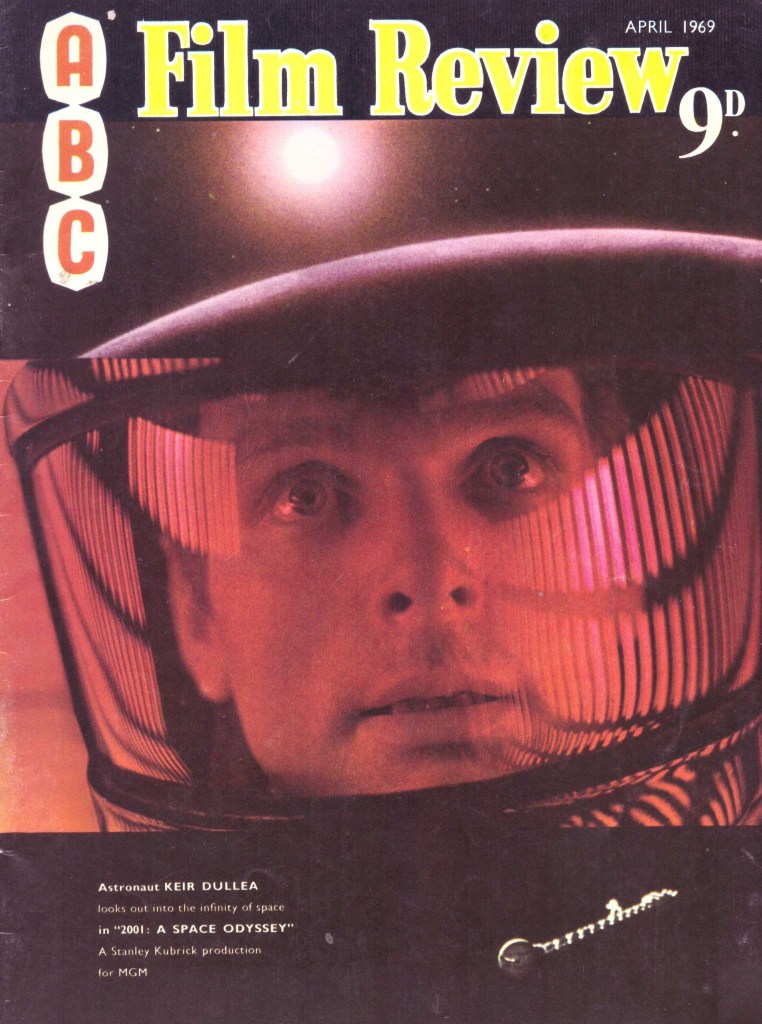
In 1978, 2001: A Space Odyssey (1968) and Jesus Christ Superstar (1973) entered the reissue market along with  revivals of Enter the Dragon (1973)/Death Race 2000 (1975). Charles Bronson western Breakheart Pass (1976) returned  in  support to Michael Caine thriller The Silver Bears, The Car (1977) to Full Circle, Paper Moon (1973) to House Calls and the ribald Adventures of a Taxi Driver (1976) to The Other Cinderella.

However, by this time, the big city center cinemas had begun holding on to major releases for such inordinate lengths of time that they were virtually played out by the time they reached the suburban circuit houses so there was little reason to insist on those cinemas retaining them for two or three weeks. None of the ABC chain’s top hits of the year – including the likes of Saturday Night Fever, Grease and Watership Down – played more than one week when they entered the circuit release.

By 1979 the “selective” and “pre-release” idea and the two-week booking was gone. But the following previous hits were re-cycled: Superman: The Movie (1978), The Goodbye Girl (1977), The Getaway (1972),  The Towering Inferno (1974), the inspired pairings of Blazing Saddles (1974)/Monty Python and the Holy Grail (1975) and Convoy (1978)/Sweeney 2 (1978). More obvious was the dualing of Peter Cushing duo The Ghoul (1975) and Legend of the Werewolf (1975).  Clint Eastwood was back on support duty, The Enforcer (1976) helping out new Boulevard Nights, The Eiger Sanction (1975) bolstering John Travolta romance Moment to Moment while The Land That Time Forgot (1974) boosted to The Brink’s Job.

But by the start of the new decade,  there was little differentiation between a major cinema in a city center and the rest, a new movie, in order to take advantage of advertising, either running for months in the one locale, and sucking the commercial meat out of a movie, or going much wider from the off rather than settling down in any one place for an exclusive run. Though the saturation that’s common today was still a long way off, movies still inclined to be released in regional bursts to save on prints, the circuit business had come a long way in two decades.  

New York Showcase: 1969 Box Office Race

In the days before computerised box office figures and the internet permitting easy access, fans of the sport had to make do with the weekly tallies in the “New York Showcase” section run every week in Variety. The “Showcase” was an early version of the wide release but instead of the 3,000-4,000 cinemas involved today in an opening week launch, movies would hit the Big Apple in 23-60 theaters. No matter the low theater count, it was still considered the most accurate prediction of how a movie would fare nationwide.

Some films opened straight into the showcase format, others ran day-and-date with a glossy opening on Broadway or a prestigious arthouse, and for a few this was the first step in general release after a roadshow run.

The same rules applied as today. A movie was retained for a further week only if the picture hit the target. Long runs were rare, two weeks the standard. As we shall see, some were movies making their 1969 debut while others were going wide after opening the previous year, the delay accounted for by holdover success in first run or Oscar recognition.

Just over 200 theaters took part in the showcase splurge, divided into five main strands generally through circuit or distributor affiliation plus one that brought together suburban arthouses. Not all the streams were in full-time operation, some weeks saw four new releases others six. Movies could count on losing theaters after the first week.

And, as with now, while overall receipts were the main factor, the per-theater gross could also offer up some indication of future performance.

The best single week’s take in 1969 was achieved by Dustin Hoffman comedy The Graduate which took $760,000 from 43 houses (per-theater average: $17, 674) followed very closely by Ali McGraw debut Goodbye, Columbus  with $757,000 from 44 ($17, 204 per theatre). Steve McQueen thrill-ride Bullitt nabbed $684,000 from 45 ($15,200). In fact all three pictures placed twice in the single-week top ten.

Others flying high, at least for one week, were: Whatever Happened to Aunt Alice ($540,000 from 48), True Grit ($531,000 from 49), Joanne Woodward in Rachel, Rachel ($522,000 from 42), psychedelic outing The Trip ($520,000 from 49), sexploitationer Fanny Hill ($506,000  from 42), The Boston Strangler ($481,000 from 38) and I Am Curious Yellow ($480,000 from 40).

By contrast, at the other end of the heap, Marlon Brando in Night of the Following Day could only manage $125,000 from 31, The Assassination Bureau scraped up $82,000 from 22, Elliott Gould in Ingmar Bergman’s The Touch hit $48,000 from 26 while Michael Caine performed abysmally, Play Dirty knocking up just $91,000 from 24, The Magus $80,000 from 20, The Battle of Britain tumbling stratospherically from $366,000 from 32 one week to $101,000 from 27 the next.

But the showcase system also breathed life into arthouse hits attempting to break out into a wider marketplace. John Cassavettes’ Faces rocked up $469,000 in three weeks, Luis Bunuel’s Belle de Jour $329,000 over the same period, Brian De Palma’s Greetings $263,000 in a fortnight while one week of Robert Downer Snr.’s Putney Swope registered $205,000.

Reissues were also prime fodder to stoke up a distribution system creaking at the seams due to lack of new product. Gone with the Wind (1939) was the plum, $658,000 in three weeks. Disney’s Swiss Family Robinson (1960) chopped down  $418,000 in two and Clint Eastwood pair A Fistful of Dollars/For a Few Dollars More – both released Stateside in 1967 – $279,000 in a fortnight. More usually, reissues lasted just a week, filling a gap in the annual program.

Even so, they could pull in some decent numbers: Peter Pan (1953) grossing $300,000, Sidney Poitier double bill Guess Who’s Coming to Dinner (1967)/To Sir, With Love (1967) $272,000, perennial favorite The Sound of Music $230,000, Rosemary’s Baby (1968)/The Odd Couple (1968) $215,000, James Bond dualer Goldfinger (1964)/Dr No (1962) $162,000, another Eastwood pair The Good, The Bad and the Ugly (1967)/Hang ‘Em High (1968) $155,000 and a lengthy coupling of Planet of the Apes (1968)/ Those Magnificent Men in their Flying Machines (1965) $115,000.

The overall winner in the annual New York Showcase stakes was The Graduate which over a five-week run grossed $2.24 million. Bullitt was the runner-up with $1.99 million over six weeks, though the last sally was in a double bill with Bonnie and Clyde. Goodbye, Columbus came third with $1.95 million over four weeks. Romeo and Juliet lasted a record eight weeks to pocket  $1.69 million. Fifth was Swedish sensation I Am Curious Yellow on $1.28 million after five weeks.

After playing first run for the best part of six months Rachel, Rachel hit the showcases following an Oscar nomination for Joanne Woodward, bringing in $1.08 million over three weeks. Another anomaly was I Love You, Alice B. Toklas, such a flop the previous year it was ranked 78th in the annual box office race, but now emerging as a showcase front-runner with $1.03 million over five weeks.

Eighth spot went to The Boston Strangler ($932,000 in three weeks) followed by Charly – Oscar win for Cliff Robertson – on $910,000 for six weeks. Butch Cassidy and the Sundance Kid was tenth with $900,000 in two weeks – the western had launched at the tail end of the year and did so well it ran for another five weeks in 1970 to capture an extra $1.5 million.

Filling out the top twenty were, in order, Easy Rider, Ice Station Zebra, The Night They Raided Minsky’s, The Wild Bunch, Popi, On Her Majesty’s Secret Service, True Grit, Oliver!, Whatever Happened to Aunt Alice and Fanny Hill.

In general terms, New Yorkers response to showcase releases was mirrored throughout the country.  The majority of the high-flying films mentioned ending up in the annual box office top 20. But there were some anomalies. Rachel, Rachel had finished the previous year in 37th place in the annual chart, hardly suggesting it was prime candidate for an exceptional showcase run. The Night They Raided Minsky’s came only 32nd in the 1969 chart. Whatever Happened to Aunt Alice did not earn enough around the country to qualify for inclusion on the annual chart. And, frankly, I’m mystified as to why I Love You, Alice B. Toklas did so well.

By contrast Paul Newman racing picture Winning performed so indifferently in the New York showcase that for the final two weeks of its three-week run it was bolstered by John Wayne oil adventure The Hellfighters, yet it ran out 16th for the year. Three in the Attic (18th in 1969) and Support Your Local Sheriff (20th) failed to match expectations in New York.

What a Product Shortage Really Meant

The product shortage is nothing new, ask the exhibitors who survived the turbulent 1960s, a decade bookended by studio financial turmoil. Already suffering from a downturn in production thanks to audiences preferring television, the business was hit by the double whammy in 1960 of the Actors Strike and the Writers Strike, which forced an unwanted hiatus on movies already in production, cut short some shooting schedules and removed others not yet in front of the cameras. For exhibitors it rendered the “shortage more acute than before.”

That resulted in the biggest cinemas in the biggest cities holding on to the biggest movies for longer. Smaller cinemas, starved of product, had no such easy fall-back. Since studios were often at war with cinemas anyway, any crisis involving production raised tempers, each blaming the other.

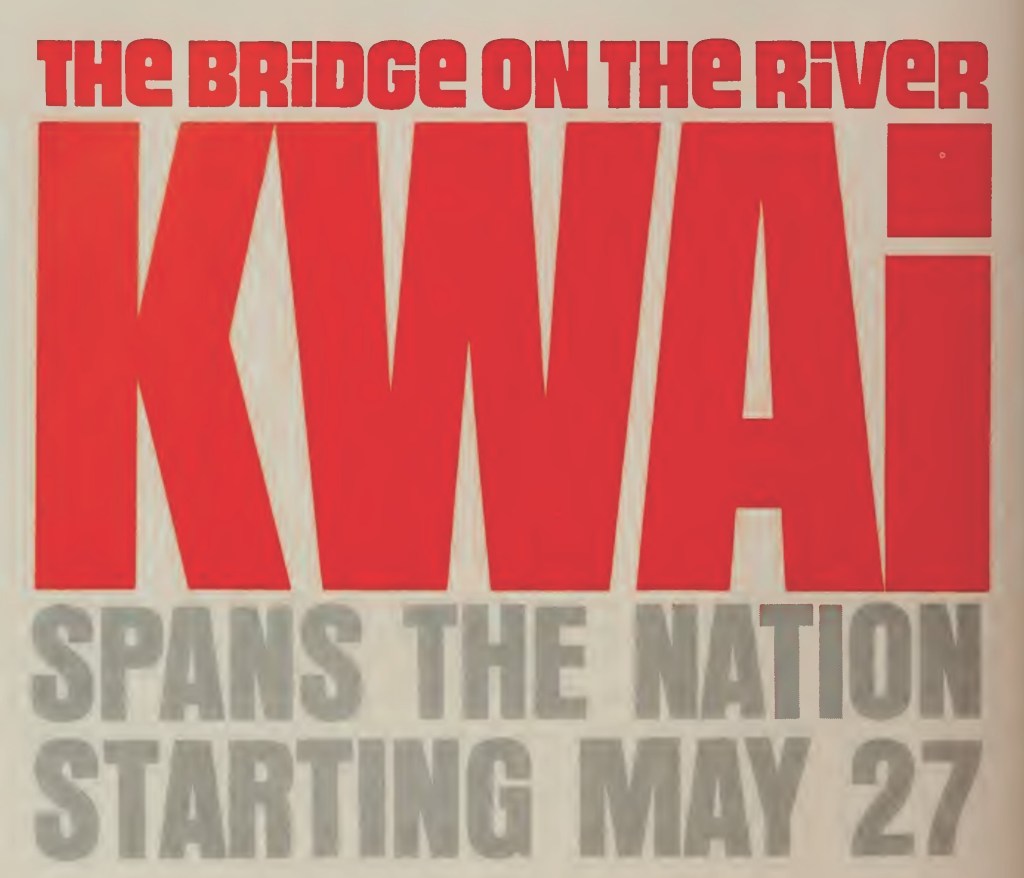
Spans the nation “again” this ad fails to mention.

Exhibitors claimed the shortage would be eased considerably if studios made more prints available of popular movies, rather than rationing their distribution, making cinemas wait longer in order to squeeze more money out of every layer of the food chain. Distributors (i.e. the studios) retaliated that cinemas themselves were to blame for the logjam that stifled the opening of new movies and therefore created a shortage further down the line. By retaining  pictures for months, they prevented new movies entering the distribution system. “Theaters aren’t available for top product at a time when film companies are looking for outlets.”

Reissues which might have offered a solution were not considered the guaranteed source of income they would be after the James Bond revival bonanza kicked in mid-decade after Dr No/From Russia with Love. Richard Lederer of Warner Bros blamed cinemas – “refusing to yield additional coin” – for old movies ending up on television in the first place.

Others argued that television screening was incidental. RCIP Corp took a lease on films already shown on television, such as Republic oldies Wake of the Red Witch (1948), Rio Grande (1950), and The Quiet Man (1952) and positioned them to play a role in filling in, tacked on as the support to a new film, presented as matinees or occasionally topping a bill at the start of the week. Using oldies in this fashion allowed cinemas to retain the traditional twice-weekly change, and some cinemas just went the whole hog and put together an entire month’s program of reissues.

Hot box office in its first few weeks of a revival at the Warner in London’s Leicester Square.

Whoever was to blame, it put both sides under greater pressure with exhibitors increasingly turning to foreign product to fill the gap, a move that could in the long term inhibit U.S. production.

In Britain, where the two biggest chains Odeon and ABC controlled the most lucrative cinemas, reissues were a last resort, the former circuit rarely taking that option.

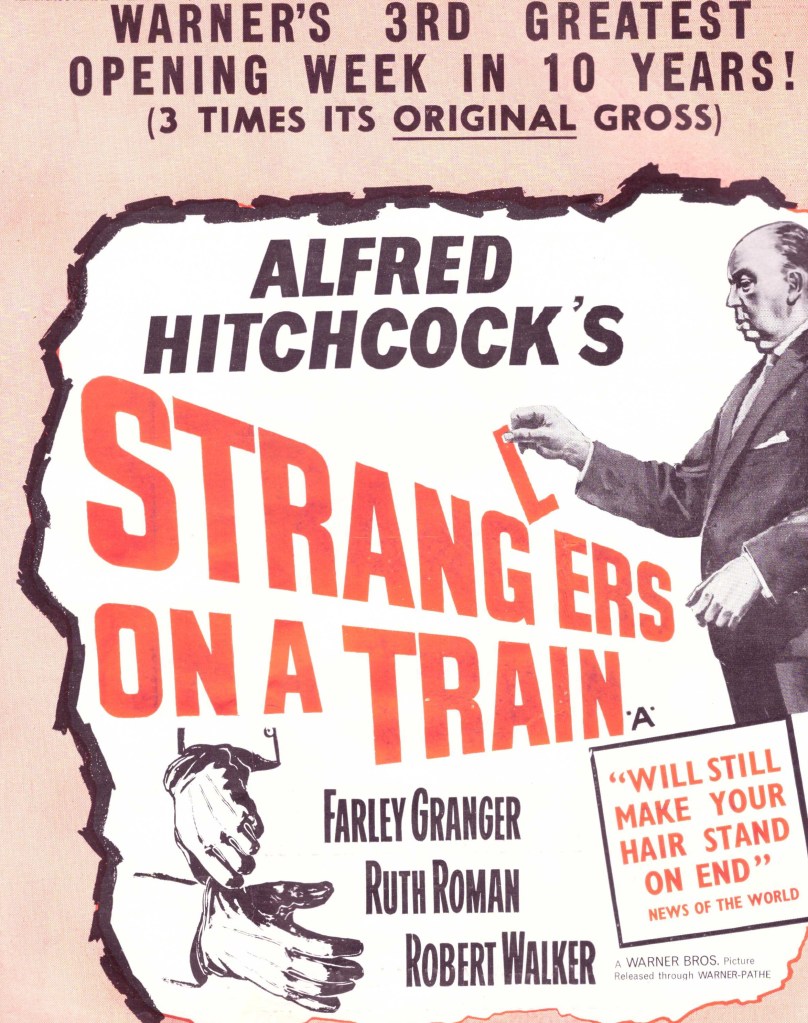
Between 1958 and 1963, ABC screened only two revivals – Strangers on a Train (1951) and East of Eden (1955) – whereas during the same period Odeon got through 75. In the 1950s Odeon used revivals as the support to prop up a weaker main feature, but by the 1960s the older pictures were the main attraction. The number of revivals presented as the top draw went from five in 1961 to 13 in 1962 and 11 in 1963 (i.e. 20 per cwent of the annual output), with others pulled in as the supporting feature.

Among the movies accorded a second outing were On the Waterfront (1954), The Jolson Story (1946), The Vikings (1958), Three Coins in the Fountain (1954), Trapeze (1956), Bridge on the River Kwai (1957), Red River (1948) and Witness for the Prosecution (1957). Odeon also took advantage of the product gap to bring back relatively recent top performers, Swiss Family Robinson (1961), Sodom and Gomorrah (1962), Psycho (1960) and Saturday Night and Sunday Morning (1960) within a year or so of their original release.

Although there was no sharp increase in movie production during the 1960s and to some extent successful double bill revivals and the retention of hit films like The Family Way (1966) and The Dirty Dozen (1967) for an extra week alleviated any shortfalls, by the end of the decade it was the circuits who came down heavy on the studios.

Films that looked as if they would do poorly on their circuit release were unceremoniously yanked off screens at the start of the week (movies at that time ran from Monday to Saturday) and replaced with something else.

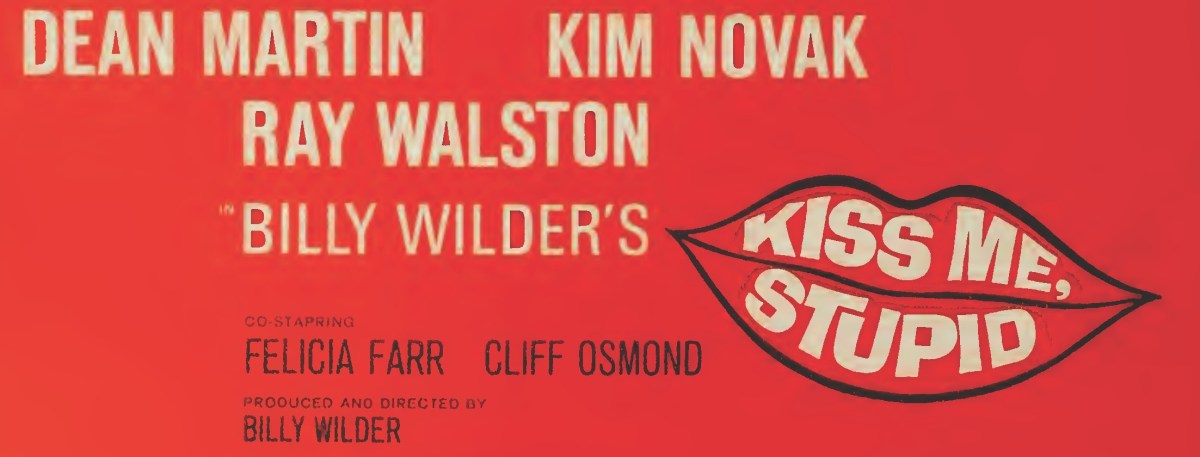
Films that failed to cut the box office ice on the circuits included: Billy Wilder’s Kiss Me, Stupid (1964) with Dean Martin and Kim Novak, Disney’s Monkeys Go Home (1967) starring Maurice Chevalier, thriller Games (1967) starring James Caan and Katharine Ross, Maureen O’Hara in romantic Italian-set drama The Battle of the Villa Fiorita (1965), thriller Brainstorm (1965) with Jeffrey Hunter, Rod Taylor in the adaptation of the Arthur Hailey bestseller Hotel (1967) and British television comedian Charlie Drake in Mister Ten Per Cent (1967).

SOURCES: “Strike Worsened Shortage Beef,” Variety, March 16, 1960, p15; “Flood of Dubs If Shortage Worsens,” Variety, March 23, 1960, p14; “Product Shortage Ends Twice-Weekly Changing,” Variety, May 11, 1960, p7; “Product Shortage Prompts Theatermen Renting of TV-Exposed Features,” Variety, May 18, 1960, p17; “Print Shortage Not Product,” Variety, September 7, 1960, p5; “How Come So Resistive To Reissues While Hollering Shortage?” Variety, February 20, 1963, p15; Gene Arneel, “Distribs: Theater Shortage,” Variety, March 6, 1963, p7; Allen Eyles, ABC The First Name in Entertainment (CTA, 1993) p121-125; Allen Eyles, Odeon Cinemas 2 (CTA, 2005) p204-214.

The Box Office Equalizer: Part Four

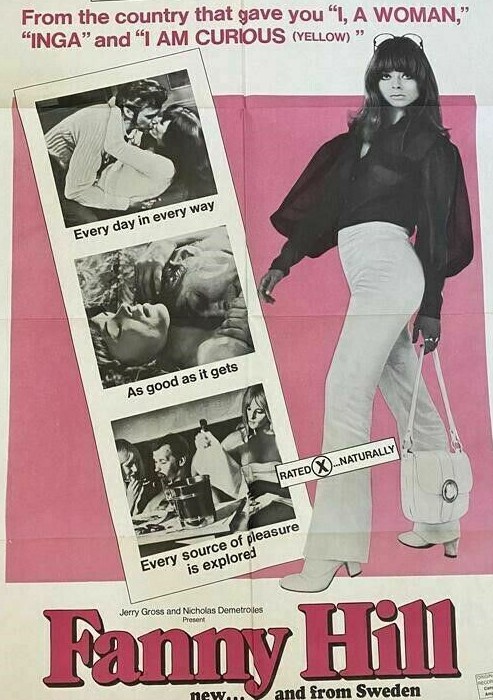
For three weeks at the end of November 1969 through to mid-December, the top films on the Variety weekly box office Top 50 chart were sexploitation films. The Swedish Fanny Hill (1968) was the first to hit the top and I Am Curious, Yellow, also from Sweden, took the top place for the next fortnight.  

This was something of a slap of cold reality in the face of Hollywood which had assumed that by and large its product was sufficient to meet the needs of exhibitors nationwide. The slump in production due to the financial issues facing the top studios led the industry to expect that the traditional low-budget pictures that would make up the shortfall would come from the usual sources – westerns, crime, horror. Few would have bet on sexploitation taking up the slack.

The new Variety system of collating box office was in part to blame for the influx of sexploitation films being so transparent. Until the magazine instituted its weekly Top 50 grossing pictures in April 1969 and widened the net for gathering in those figures, box office was reported from just 200-300 first run houses in the major cities. This now expanded substantially to five times as many cinemas and included smaller houses in a greater number of cities as well as cinemas that belonged to a Showcase (wide release) circuit.

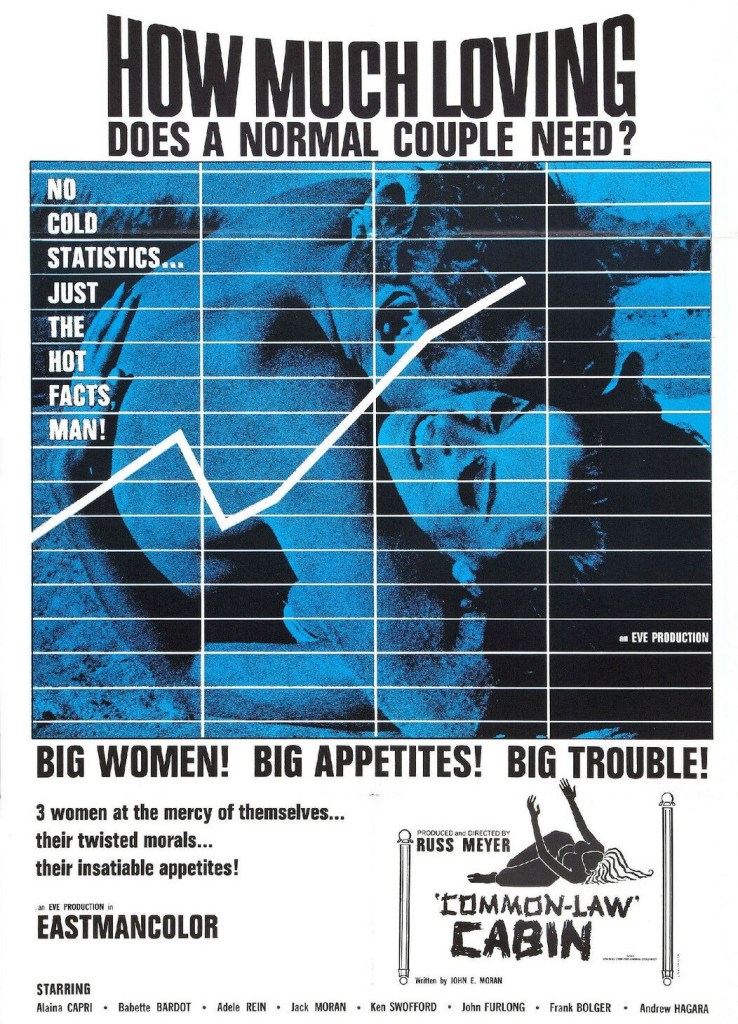
That resulted in a greater breadth of films being reported. Except on first run arthouses, where some art films with greater sexual content could be shown, it was rare for a sexploitation picture to feature in a big city first run. Russ Meyer was the acceptable face of sexploitation, especially since his films contained humor. Even so, eyebrows were raised when the exploits of Common Law Cabin (1967) made headlines in Variety (“Sexploitation pair: $22,000 at Fox”) at Detroit’s biggest cinema, the 5,100-seater Fox, a major first run venue. That film found slots in first run in Chicago at the Center and the Fine Arts in Portland. Another Meyer opus Finders Keepers found a berth at the Randolph in Philadelphia (“Russ Meyer’s Nude Pic Into Philly’s Classy First Run”). But that was the extent of its invasion of first run for that year. And that was pretty much how the industry expected things to stay, a rare sexploitation making a few headlines, but not much more.  

So when Fanny Hill grossed $625,000 – equivalent to $4.7 million today – from 49 houses to hit the top spot it sent the industry reeling in shock. I Am Curious Yellow hit the top spot in successive weeks with $594,000 from 52 houses followed by $454,000 from 90. In some respects it should not have come as any great surprise. I Am Curious, Yellow had already had already featured several times in the weekly top ten, fifth with $213,000 from 16 houses, sixth with $137,000 from 14 and again with $$237,000 from 18.

Sexploitation distribution was handled in much the same way as any other picture. Probably it came closer to replicating an arthouse release, where prints, due to their cost, were in short supply and cinemas undertook to hold onto a movie for several weeks, if not months. But when a movie was clearly pulling in the crowds, the distributors switched to a more mainstream system, combining Showcase with first run.  The big danger when films went wide was that grosses plummeted. But that was clearly not the case here. Yes, the earlier per-screen averages were higher but the later ones certainly did not fall off a cliff.

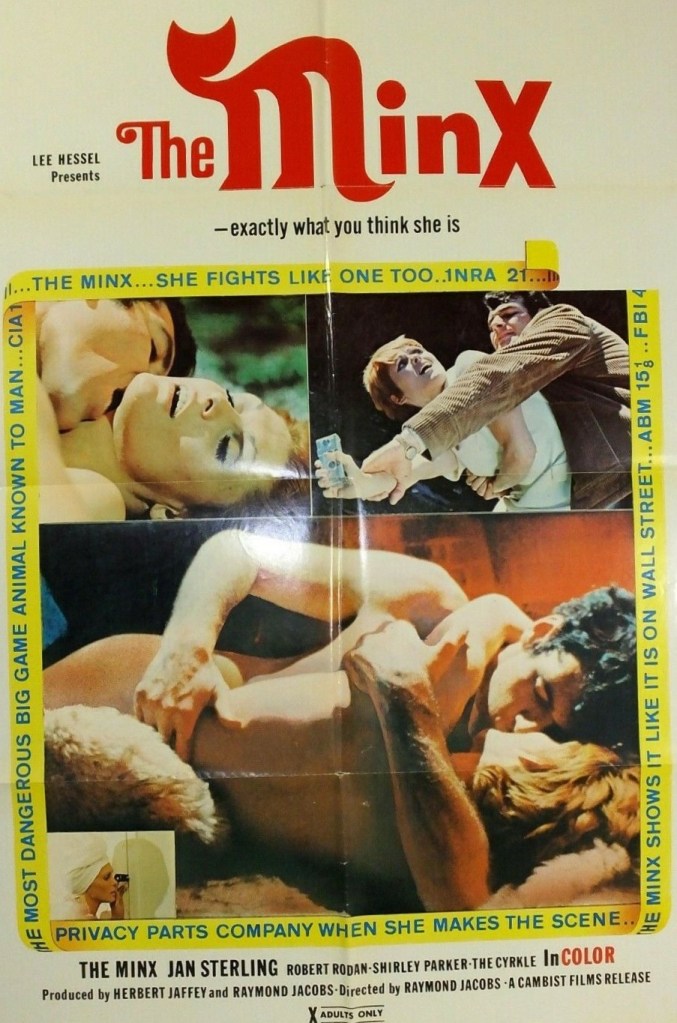
Outside of these two pictures, other sexploitationers had been making an impact on the weekly chart. The Libertine (1968) had placed 11th with $184,000 from 56, Naked Angels (1969) came 17th one week with $148,000 from 11 and lower down the chart The Minx (1969) had showed potential with $52,000 from three while Camille 2000 (1969) had earned $32,000 from two. Sexploitationers absorbed lessons learned from more mainstream distributors in how to use the Top 50 as a promotional tool. A movie that was not only taking in big bucks, but placed high in the chart and had a great per-screen average was inevitably going to attract attention.

Perhaps the oddest part of the sexploitation breakout was that so few had seen it coming. If so, they had not been reading the trade papers. This side of the business had grown so fast in a couple of years that those involved had formed their own association. It turned out a war had broken out between the suppliers of cheaply-made sexploitationers and those willing to increase their budgets in order to entice audiences with better production values.

But this was at the hard-core end of the business, the number of outlets tripling from 300 theaters three years before to 800 in 1969, and operating obviously outside the restrictions of the Production Code or the new censorship system. Initially, movies costing $8,000-$15,000 could have been put together in a weekend. Now up to 100 movies budgeted at at a maximum of $45,000 were being made every year with a potential profit of $125,000-$300,000 each. About half a dozen companies had annual million-dollar turnovers.

But this business had also filtered down to the more easily exhibited soft-core, which fitted into the “X” category under the new censorship rules. The 100 cheap soft-core efforts financed by individual theaters or small chains which filled a supporting spot on a double bill produced meagre returns so it made more sense to edit down a hard-core feature to suit a soft-core audience. The demand for hard-core, most prominently seen in Detroit, where hard-core pictures often outgrossed first run, was filtering down into soft-core, hence the growth in bookings for the likes of Fanny Hill and I Am Curious, Yellow.

The other reason for moving into the soft-core market was that the hard-core end was saturated resulting in lower rentals and consequently lower profits which inhibited production. Theaters struggling to cover overheads from the thin stream of movies emanating from the major studios or finding there was little juice left in blockbusters by the time they drifted down the exhibition food chain increasingly turned to soft porn.

SOURCES: “Sexploitation Filmmakers, Showmen Form Adult Motion Picture Ass’n,” Box Office, January 20, 1969, p8; “Over-Seated for Sex,” Variety, July 2, 1969, p1; “Sexpix of $25,000-$45,000 Negative Cost See Bright, Not Clouded, Future,” Variety, July 16, 1969, p17. Results for the “Top 50 Chart” in Variety were taken from the following issues in 1969: Jun 4, Jul 2, Jul 9, Jul 23, Sep 24, Oct 1, Oct 15, Nov 5, Nov 26, Dec 3, Dec 10, Dec 17, Dec 24.  

The Bond They Couldn’t Sell – “Dr No” (1962)

United Artists almost had to give away this picture in the United States in order to gain bookings. Astonishingly, it was the picture the studio felt it could not sell. And for good reason – the studio hated it. “To them it was a B-picture,” recalled producer Harry Saltzman. “They said Hammer made the same kind of picture for one-third of the price.”

Dr No, produced on a miserly budget of $840,000 – $40,000 over budget –  had triumphed in London after snagging an opening run in 1962 at the Leicester Square Theatre primarily because the cinema needed to fulfil its quota of showing British pictures. Although it set a London box office record that would stand for more than a decade and proved a huge draw throughout Britain, U.S. studio United Artists had been burned once too often by British films that did well at home only to flop spectacularly in America.

Since box office statistics began to be gathered in earnest in the 1930s only a handful of British pictures mustered the $1 million in rentals required for entry into the annual list of box office champions. The bulk of the Ealing comedies had not made the grade, nor had such diverse successes as Doctor in the House (1954), Reach for the Sky (1956), Room at the Top (1959) and Saturday Night and Sunday Morning (1960). American audiences rejected British films as too slow, technically backward, and with accents it was often impossible to understand. Putting together an advertising, public relations and marketing package for them could easily cost as much as the film itself.

“When we had an answer print ready there were about eight people from United Artists including (chairman) Arthur Krim who came to see it,” Saltzman told Variety a quarter of a century later. “We started the film at 10am and when it was over a few minutes before twelve the lights came up and nobody said anything except a man who was head of the European operation and he said, ‘the only good thing about the picture is that we can only lose $840,000.’ Cubby (Broccoli) and I were just shattered,” confessed Saltzman.

That didn’t stop Saltzman and Broccoli embarking on their own campaign to raise awareness. They went right to the heart of the American exhibition community, taking space at the annual Show-a-Rama event in Kansas City in March, bringing along Sean Connery and models to represent the Bond girls. In addition, around the same time UA held a sneak preview in New York attended by the likes of Johnny Carson, Zsa Zsa Gabor and Rudy Vallee i.e. not that high-falutin’ an audience but at least the festivities were filmed and broadcast on NBC Monitor and Armed Forces Radio. Sean Connery also featured in a 12-minute segment in the middle of ABC Sunday Night at the Movies.

The Bond promotional bandwagon set up shop for a couple of days each in New York, Chicago and Los Angeles between March 7 and March 15 and pulled in journalists from the surrounding areas. There was also a touring show comprising 150 stills. And the marketeers had some success in targeting exhibitors through the trade magazines although the two-page article featuring in Box Office attempted to interest exhibitors on the basis of a marketing campaign in Connery’s native Scotland, which hardly seemed to be ideally suited. Nor did the marketing team really care what tricks exhibitors pulled to bring in the customers – for no particular reason one cinema employed a safe-cracking stunt even though the film’s story did not lend itself to that.

Dr No’s biggest marketing tools were photos of Ursula Andress in a bikini and copies of the Ian Fleming novels which since 1961 had the endorsement of President John F. Kennedy. Cheap paperbacks sold in drug stores and newsstands had created greater awareness of the character as well as acting as unpaid advertising for the forthcoming film.

But, basically, that was as much – or as little – as the film had going for it. In effect, no great marketing energy.

As it happened, exhibitors were beginning to organise their own marketing programs – “box office building campaigns” – and the Bond team were able to convince exhibitors in the Midwest and Southwest to kick off the idea with Dr No.

That meant shifting away from the conventional release pattern where a film opened in one cinema in a big city and then fanned out week-by-week to smaller venues and towns. Instead it was everywhere all at once which meant it cannibalized its own audience since it could not be held over in any cinema for a further week because the prints were already scheduled elsewhere.

Although most historians pinpoint New York as the launch pad for Dr No, United Artists did not want to risk the picture potentially flopping in that territory.  According to Harry Saltzman the first commercial showing, effectively a trial run, was in Atlanta, Georgia, where it ran for eleven weeks and was considered a success. But not enough for UA to consider shifting its release strategy. A movie that launched anywhere other than New York was considered a dodgy proposition.

From May 8 it was launched in 450 cinemas in the Midwest and southwest. This was the same release strategy as had been employed on another film about which UA had its commercial doubts – The Magnificent Seven (1960) – and that had turned into a flop. It opened in New York in June in 18 cinemas including two in the city centre, the Astor and the Murray Hill, both arthouses.

But here’s the kicker.

In order to get the bookings, United Artists had to dramatically lower its asking price.

Normally new pictures were sold to exhibitors on a 50/50 basis – meaning the studio received 50 per cent of the gross. “The funny things is,” recalled Saltzman, “they booked it for 30 percent. The theaters took it at first because they got it for 30 per cent.” That meant UA sold Dr No to cinemas on the basis that any exhibitor booking the picture would retain 70 per cent of the gross.

This was not unheard-of. In fact, it was often the standard deal for foreign movies going into arthouses. But arthouse pictures with the occasional exception of a La Dolce Vita were usually hard sells to a very finite audience. James Bond was anything but.

As a result of this approach, the movie did not register particularly well on the annual box office rankings. In fact, it placed 42nd. Not a disaster, but not a particularly brilliant showing. However, that did not represent the film’s true appeal. Had it been sold on a 50/50 basis, the rentals would have been high enough to pitch it just outside the Top 20, which would been seen as a genuine success. On the other hand, if UA had not been so generous in handing the exhibitors the bigger share of the box office, perhaps it might have elicited far fewer bookings and the James Bond story might have been completely different.

SOURCES: “United Artists Sell Campaign in Its Dr No Film,” Box Office, February 25, 1963, p10;  “Festivities Mark Dr No Sneak Preview in New York,” Box Office, March 11, 1963, pE-2; “450 Situations Play Dr No at Opening,” Variety, April 3, 1963, 19; “Producer Saltzman Faces Big Decision on 2nd James Bond Thriller,” Variety, April 25, 1962, p13; “Feature Reviews,” Box Office, April 1, 1953 pA-11; “Showmandiser: Premiere Showmen Say Yes to Dr No, Ticket Buyers Too,” Box Office, April 29, 1963, pA1; “Harry Saltzman Recalls Early Coolness to Bond Features,” Variety, May 13, 1987, p57; “Dr No in 17 Theatres,” Box Office, May 27, 1963, pE-8; “Picture Grosses,” Variety, June 5, 1963, p10; “Smash Business General for 4-Day Holiday,” Box Office, June 10, 1963, pE-2; “Box Office Barometer,” Box Office, June 17, 1963, pA3; “Safe Crackers Invited,” Box Office, June 24, 1963, pA3.

Discover WordPress

A daily selection of the best content published on WordPress, collected for you by humans who love to read.

The Atavist Magazine

by Brian Hannan

WordPress.com News

The latest news on WordPress.com and the WordPress community.