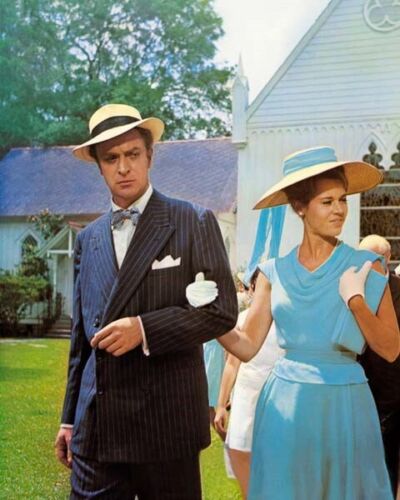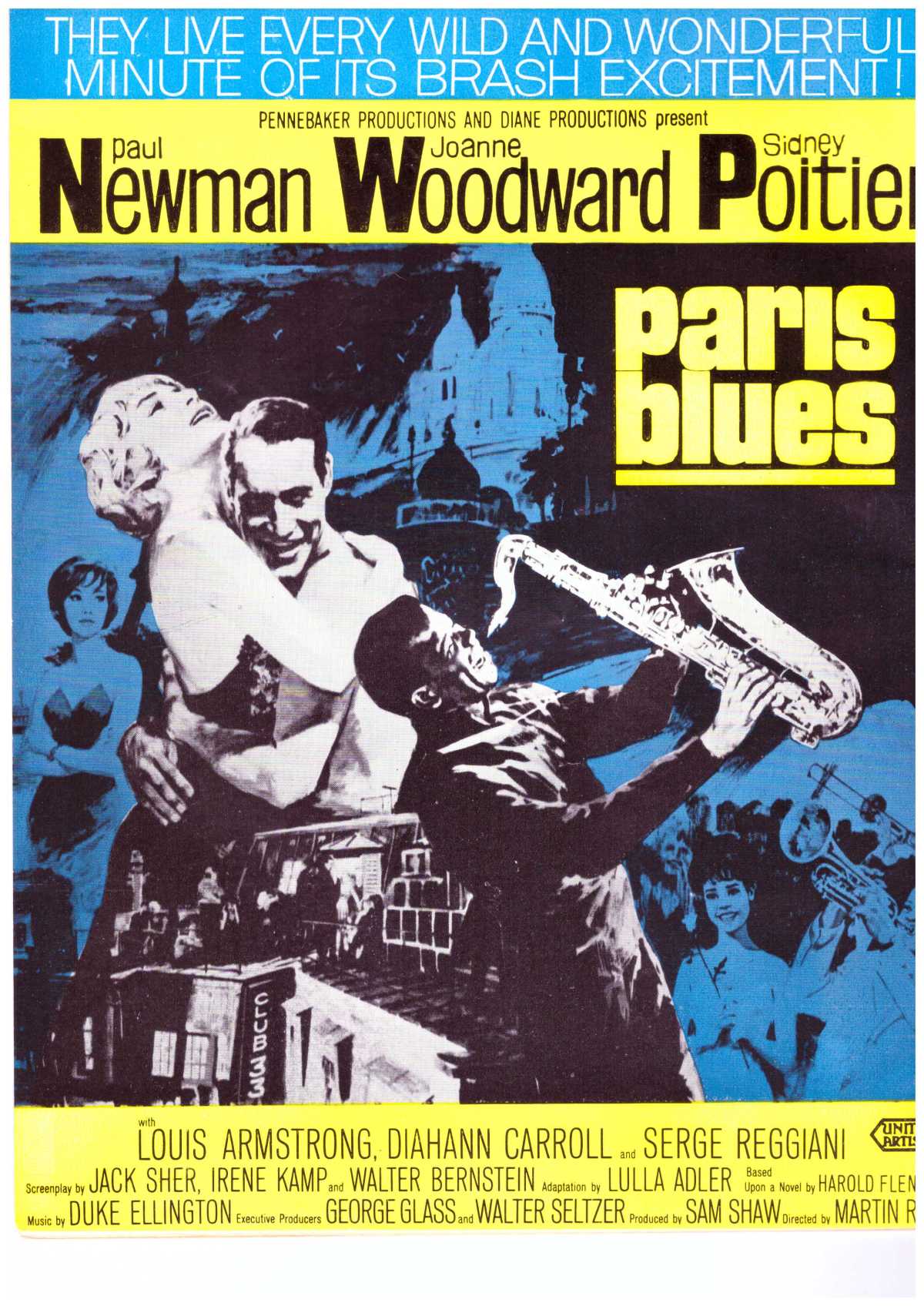
Paris Blues (1961) ****

Sometimes the stars just do align. Issue-driven drama played out against scenic Paris and host of jazz greats in support. The Walter Newman script gets quickly to the nub of a drama that focuses squarely on racism and creativity.

Jazz trombonist Ram (Paul Newman) lives for his music and fancies himself a composer as well as a player and expects women to fall in with his creative lifestyle until he comes across single mother tourist Lillian (Joanne Woodward) who ups the romantic ante by hopping into bed right away. Ram’s buddy, saxophonist Eddie (Sidney Poitier), falls for Lillian’s pal Connie (Diahann Carroll) but not only is she less promiscuous but a civil rights activist who rails against him for abandoning the cause and hiving off to Paris.
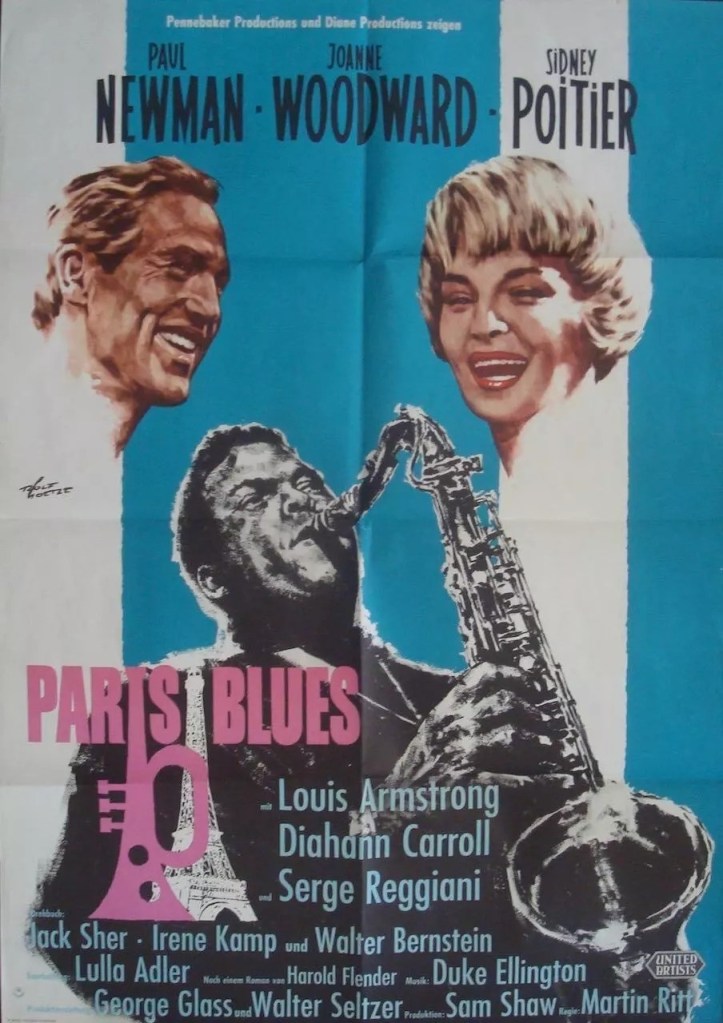
There’s a good twist on the will-she-won’t-she trope as this time around it’s the men (no surprises there) who have trouble committing. While the guys are both smitten, and at various times ready to throw up their Parisian lives and head for home, it doesn’t work out that way, so mostly what we get is argument, making up, repeat. But that’s not to suggest this falls into any kind of trap.

While Lillian uses seduction to try and winkle Ram out of his refuge, Connie, on the other hand, depends on guilt. Although Eddie’s able to verbalize the benefits for a black musician playing in Paris, he hardly needs to point it out, it’s plain to see that the innate racism he suffers at home is entirely absent in his adopted city.

If you’re a jazz enthusiast you’ll probably be more aware of the central musical conflict, the older-fashioned New Orleans style versus the modern be-pop. There’s no shortage of jazz. Duke Ellington was Oscar-nominated for the score, Louis Armstrong turns up, mobbed at the train station by fans, and every time the movie’s not cutting away to a Parisian backdrop it’s indulging in some great jazz tunes in the traditional smoky night club.

What’s really attractive here is the assured acting. Paul Newman was in the middle of a hot spurt, both at the box office and from the critics, successive Oscar noms on the way for The Hustler (1961) and Hud (1962) and endorsing his marquee credentials with From the Terrace (1960) and Exodus (1960). This is a lively performance, one in which he doesn’t have to carry the weight of the world on his shoulders or the deadweight of expectation. He’s not a snarling rebel, he doesn’t need to be, not with nightly improvisation, recognition from his peers, and a toehold on the next stage of creativity, composition. If he’s tussling with anybody it’s himself and his spats with Lillian are little more than arguments with himself about the road to take and the sacrifices that might be essential along the way.
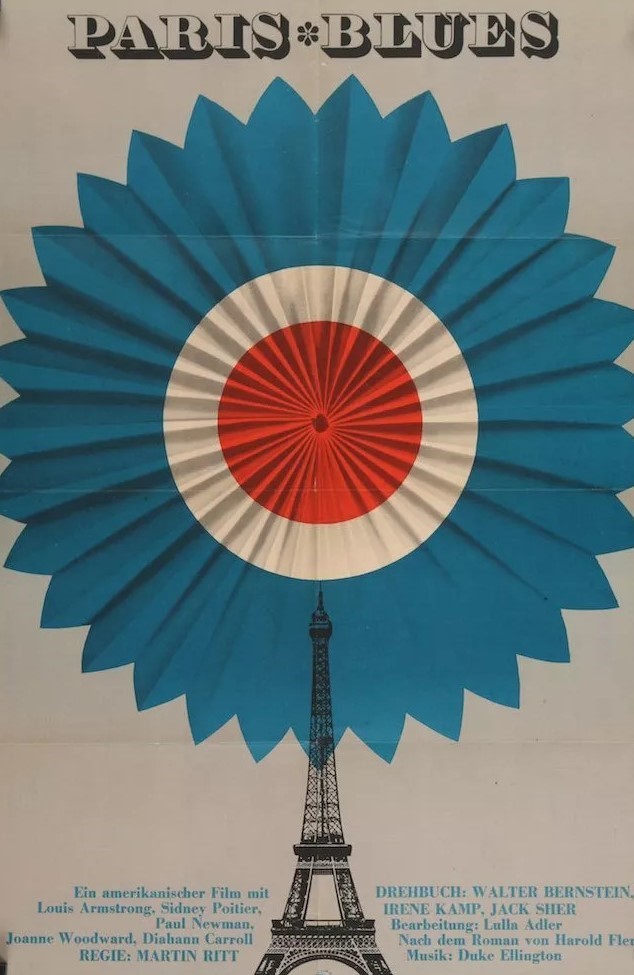
Sidney Poitier (The Long Ships, 1964) snags a great career break, like Newman deprived of heavy duty, able to display his great charisma and charm with such a light touch. Joanne Woodward (Big Hand for a Little Lady, 1966) as ever brings a wide range to her role, sassy at times, pragmatic, not inclined to the lovelorn. Diahann Carroll has the hardest part, since she’s the evangelist for modern America, one where equality is going to be a given, so her scenes with Poitier end up mostly being argument rather than pure romance.

This would have been a lot edgier had it gone down the originally planned route of Ram falling for Connie, and that’s hinted at when they first meet, but I guess Hollywood wasn’t ready for that.

This was the second (of five) of director Martin Ritt’s collaborations with Paul Newman – they had formed a production company – and shows the pair’s preference for movies bearing social comment. Ritt (The Spy Who Came in from the Cold, 1965) marries all the various elements to produce an entertaining picture on a serious subject.

Walter Bernstein (The Money Trap, 1965), Jack Sher (Move Over, Darling, 1963) and Irene Kemp (The Lion, 1962) collaborated on the screenplay from the novel by Harold Flender.

Thought-provoking.
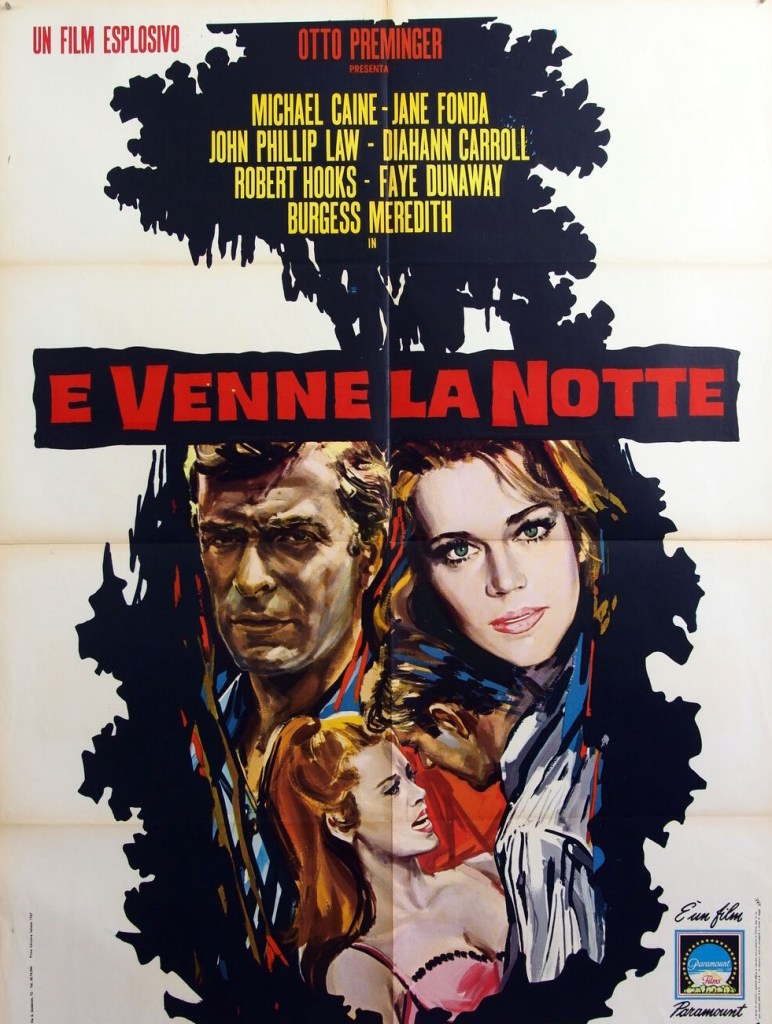
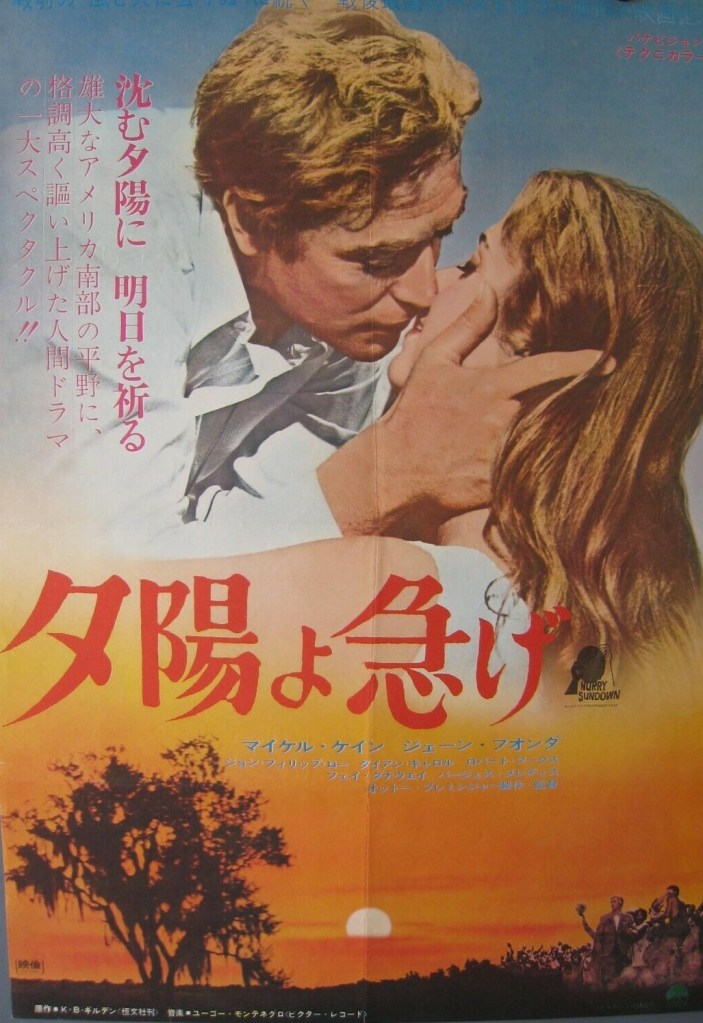
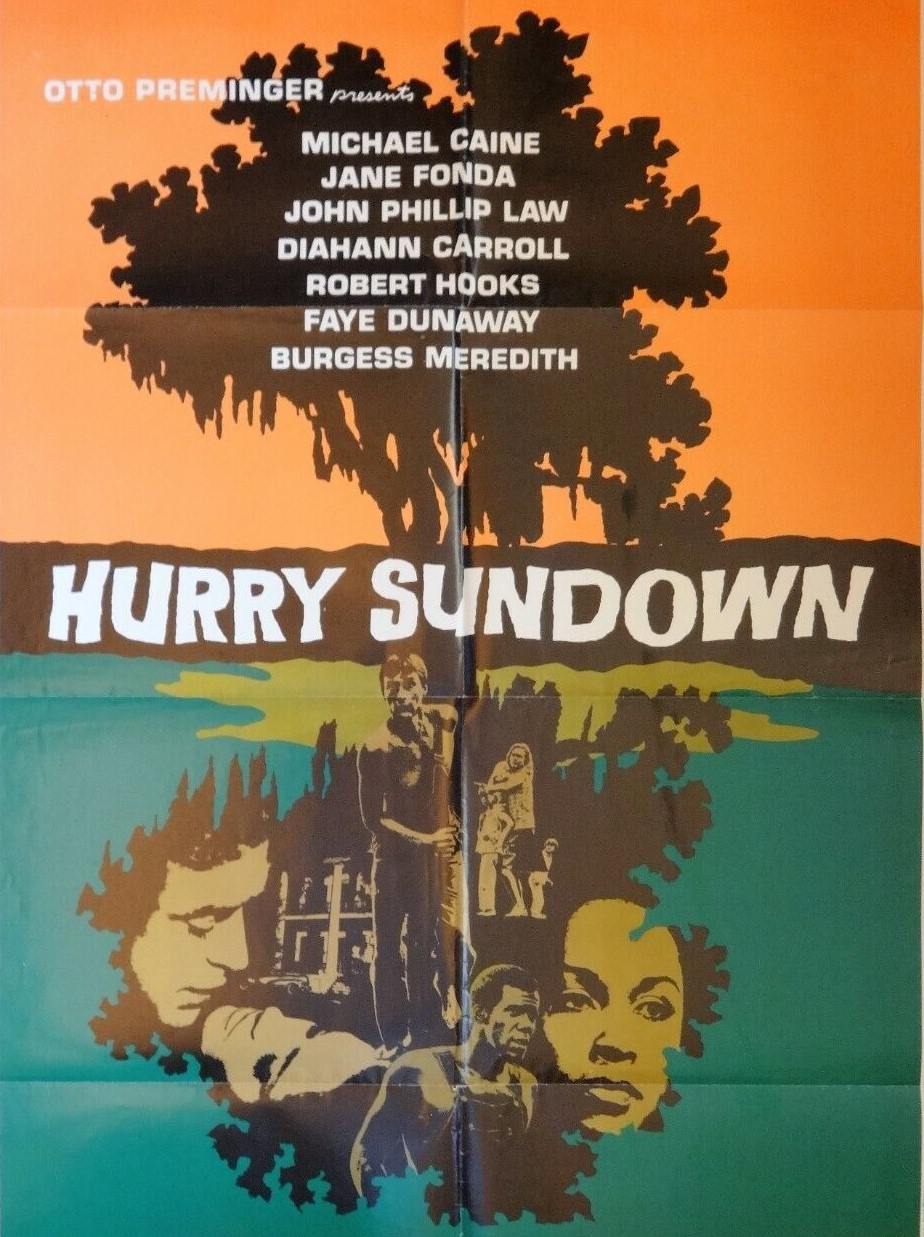
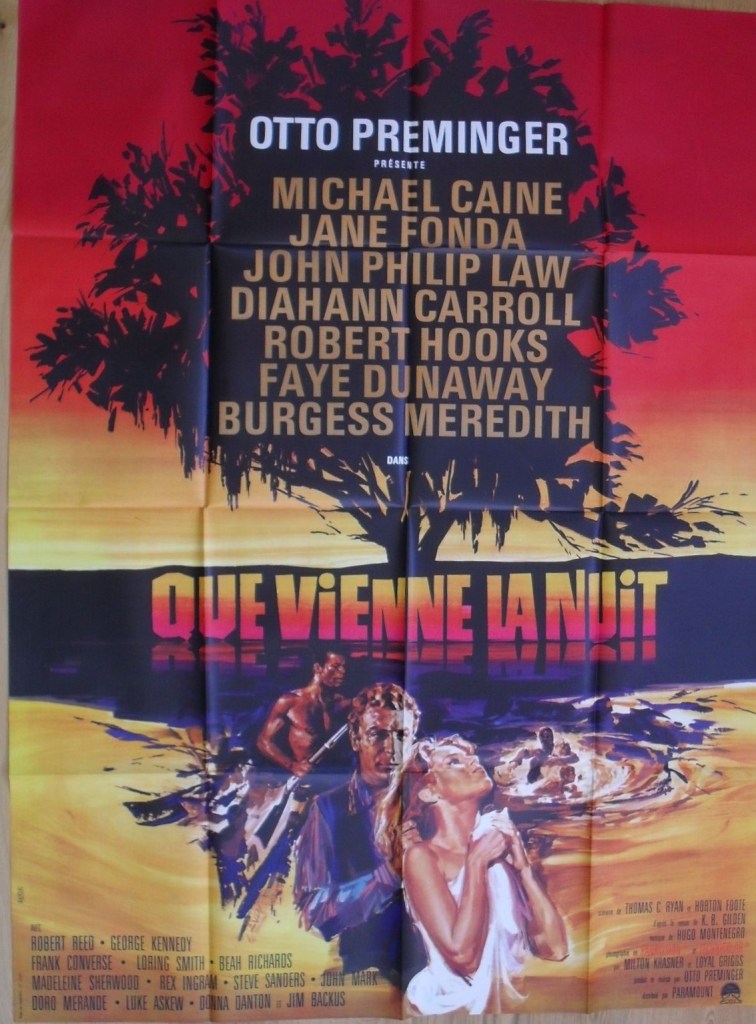
Behind the Scenes: “Hurry Sundown” (1967)

It was rare for Otto Preminger to make a miscalculation on the business aspects of moviemaking.  But when in 1964, in the middle of shooting In Harm’s Way (1965), he purchased for $100,000, pre-publication, the rights to K.D. Gilden’s epic novel (1046 pages) he anticipated filming a bestseller of Gone With the Wind proportions. Buoyed by the projection of book sales in the millions, he anticipated making the longest-ever commercial movie, running, in roadshow, for an unprecedented 270 minutes, with admission prices set at a record high.

That notion was scuppered when sales scarcely broached 300,000, the alternative, non-roadshow, was a slimmer picture that would come in at under 150 minutes. If you were going to make a picture set in the Deep South the obvious choice for screenwriter was Horton Foote, Oscar-winner for To Kill a Mockingbird.

The writer spent his months on the project, breaking down the unwieldy novel into manageable basic plot and structure. Although describing Preminger as “wonderful,” Foote’s vision clashed with the director’s and he was replaced by the less-experienced Thomas C. Ryan (The Pad and How To Use It, 1965).

The husband-and-wife principals were initially cast as Michael Caine – enjoying a golden period at the U.S. box office as explained in a previous article When Caine Was King – and Candice Bergen (Soldier Blue, 1967). When the latter dropped out, Jane Fonda (The Chase, 1966) was her replacement. Faye Dunaway was signed to a six-picture deal after Preminger saw her on Broadway in Hogan’s Goat and gave her a screen test. He also signed up, to a three-picture deal, John Philip Law (The Russians Are Coming, The Russians Are Coming, 1966). After  Sidney Poitier turned down the role of Reeve, he was replaced by Robert Hooks. The rest of the casting was relatively plain sailing, Burgess Meredith as a bigot, Diahann Carroll as a teacher.

Initially, Preminger planned to shoot in Georgia but, put off by union demands, switched to an area around Baton Rouge, Louisiana. As production designer Gene Callahan hailed from that town his local knowledge and connections helped overcome other obstacles. The house inhabited by Caine and Fonda was an actual Baton Rouge residence while the farms shown in the picture were on land rented from the state prison farm at St Gabriel. St Francisville provided the courthouse, hardware store, and various other locations.

Shooting began on June 6, 1966. For the first third of the shoot, Oscar-winning Loyal Griggs (In Harm’s Way) was director of photography, thereafter it was Milton Krasner (The Venetian Affair, 1966). The New York Times ran a story that Griggs had been fired, but was forced to print a rebuttal to the effect that he had asked to be taken off the picture following a back injury.

This being a Preminger production there was no shortage of tension, the director tending to weigh in on the less experienced or weaker actors. Michael Caine (Gambit, 1966) had accepted the role without reading the script because he was “so flattered and excited” to be asked. He learned to speak with a Southern accent. He received a tip from Vivien Leigh, who told him she recited the phrase “four door Ford”  until it came out as “Foah Doah Fohd.”

Aware of Preminger’s reputation, Caine, at the outset, told Preminger that he was very shy and “if anybody ever shouted at me, I would burst into tears and go into my dressing room and not come out for the rest of the day.” Whether Preminger took this seriously, or understood the actor’s little joke, is unknown, but the director responded gently with, “I would never shout at Alfie.”

Others were not so lucky. John Philip Law received “merciless” treatment. This was in spite of the actor liking the director and believing the feeling was mutual, based on the notion that Law “was interested in European culture and other film-makers.” Nonetheless, the actor made few overtures. “He was intimidating enough that he wasn’t a guy I would seek out for a conversation.” Even so, Law appreciated his direction, often minor technical tips like not moving so fast or not to bend down.

In one scene Preminger turned on Law, “tearing him apart and the words were stinging.” Not content with that, he brought wrath to bear on the hapless hairdresser. When Dunaway raced to his defence, “Otto turned on me like a mad dog…I didn’t say anything, I just watched him…it was the only time I’ve really looked into the face at somebody’s who’s just gone into that sort of complete state of rage…I just froze.”

Her kissing scene with Law went to 16 takes, the director only getting the passion he required by literally banging their faces together, resulting in the actress receiving a fat lip. “She just went berserk,” said Law, “I was livid too (but) just gritting my teeth because if you added fuel to the fire he’d just blow.”

Enraged, Dunaway complained that she never wanted to work with him if he was going to behave like this, he muttered that was all right with him, words that she clung onto and sued as the basis for a court suit to end her contract.

But the numerous takes demanded were not confined to Dunaway. The kissing scene between Carroll and Hooks took longer – 20 takes. A scene in the judge’s house required 23 takes, and the scene in the diner a further six. (Though sometimes, the faulty takes were the result of actors not giving the correct line reading rather than Preminger’s imperiousness.)  

But there was an overt tension that could not dismissed as the result of a director inclined to bullying. The racism the crew experienced was not an undercurrent. “You can cut the hostility here with a knife,” noted Diahann Carroll. “Down here the terror has killed my taste for going anywhere.” Robert Hooks observed, “You can feel the eyes watching you behind lace curtains…like they could cut your heart out.

Matters were not helped by the cast, ignoring the traditional perspective, jumping into the swimming pool at the motel. That an African American had deigned to join in resulted, according to Jane Fonda, in “reverberations all the way to New Orleans.”  Preminger rented out the entire motel to minimize upsetting the locals. Even so, a bomb exploded one night in the pool and trailers were shot at.

Other incidents brought out the notorious Preminger temper. When the soundman switched off the air conditioning during a scene shot in a real hospital the sprinklers drenched the entire cast. Recalled Caine, “I have near seen anyone so near apoplexy. His eyes bulged out of his head.”

For Faye Dunaway, the role of a dirt farmer’s wife waiting for her husband to return from war, resonating too strongly. Her mother had done exactly the same. Dunaway felt “caught in this time warp from my past.”

The last day of shooting was August 13. The critics, almost in revenge for Preminger’s treatment of his actors, were venomous and he received some of the worst notices of his career.

SOURCES: Chris Fujiwara, The World and Its Double, The Life and Work of Otto Preminger (Faber and Faber, 2008), p342-349; Foster Hirsch, Otto, the Man Who Would Be King (Alfred A Knopf, 2007) p410-424; , Michael Caine, What’s It All About? (Arrow Books, 2010), p269-280; Faye Dunaway with Betsy Sharkey, Looking for Gatsby, My Life (Simon and Schuster, 1995) p28, 109, 113-114; Thomas Kiernan, Jane (GP Putnam and Sons, 1973) p200;  “Preminger buys Sundown novel,” Film Daily, November 18, 1964, p3; “Conversations with Horton Foote,” On Writing 15, May 2002, p3.

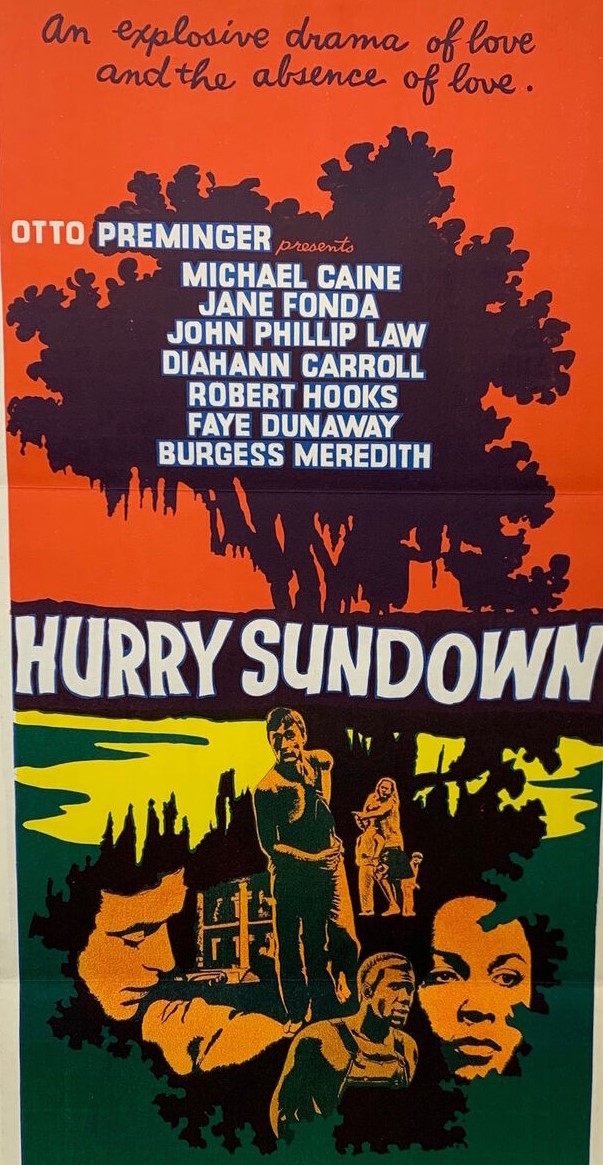
Hurry Sundown (1967) *****

Otto Preminger’s drama was the first of a trio of heavyweight films in 1967 – the others being In the Heat of the Night and Guess Who’s Coming to Dinner – that took African American issues seriously. In post-war Georgia land-grabbing by ambitious Henry Warren (Michael Caine) pits him against World War Two vet Rod (John Philip Law) and African American farmer Reeve (Robert Hooks) who team up. Throw in a quintet of feisty women – Henry’s wife Julie Ann (Jane Fonda), Rod’s wife Lou (Faye Dunaway), schoolteacher Vivian (Diahann Carroll) – Reeve’s love interest – Henry’s lover Sukie (Donnie Banton) and Rod’s mother (Beah Richards) – and emotional confrontation comes thick and fast.

Preminger had spent most of the decade making films about big subjects – Exodus (1960), the politics behind the formation of Israel; Advise and Consent (1962), just politics; The Cardinal (1963), politics within the Roman Catholic Church; and In Harm’s Way (1965), Army politics and bluster around Pearl Harbor

Preminger is both economic and elegant. From opening dialogue to climactic court scene, the picture races along, and continuous use of tracking shots ensures the movie never gets bogged down. While there is no lynching, racist abuse, whether direct or indirect (through patronizing attitude) is never far from the surface. Corrupt Judge Purcell (Burgess Meredith) is by far the most vicious, his unrestrained language making you wince. But even those with more measured approaches have to play the game, Reeve gives a lift to Rod but has to let him off before they reach town in case anyone spots this, Rod forbidden, for example, to buy dynamite.

But the racists do not get it all their own way. Julie Ann stands up to the judge and her position in the community is so strong that others boycott the judge’s daughter’s wedding leading to the judge receiving a tongue-lashing from his wife. Weak Sheriff Coombs (George Kennedy) coming to arrest Rod is bamboozled by his female relatives while  Vivian charms her way past the judge.

The women are uniformly strong. Julia Ann goes from seductive wife to distraught mother, but in between capable of defrauding Rod’s mother, her childhood nanny, out of her inheritance. Lou resents her husband’s return after in his absence taking on a full-time job while running the farm and now resisting the idea of selling up to Henry. Rod’s mother, beholden to white men all her life, now turns against them. The judge’s daughter (Donnie Banton) makes no bones about the fact that she is marrying her “dull” fiancé for his money. This is no spoiler because you will have guessed some similar outcome but at the end it is Vivian who takes the initiative in her relationship with Rod and  marches into his house with her baggage, declaring she has come to stay.

Caine and Fonda.

And although the ruthless Henry is the bad guy, he, too, is afforded insight, soothing himself by playing a musical instrument, a man with talent who had “distracted” himself by pursuit of money. And there is another touching moment when he takes in a runaway child. Acting-wise, Michael Caine (Gambit, 1966) is a revelation. Gone is the trademark drawl and the laid- back physical characteristics. Here he talks snappily – and no quibbles with his Southern accent either – and strides quickly. That we can believe he is brutal, gentle, remorseful and ruthless is testament to his performance.

Similarly, this is a massive step forward in Jane Fonda’s (Cat Ballou, 1965) career, away from Hollywood comedies and sexed-up French dramas, and her internal conflict springs from being forced to choose between husband and son, between her innate sexiness that oozes out in every intimate scene and maternal longing to comfort her disturbed child. Her usual shrill delivery is tempered somewhat by the deeper emotions she is forced to bear. While her attempt to defraud Rod’s mother comes from a desire to keep her husband, her eyes tell you she knows that is no excuse.

What’s perhaps most surprising of all is the tenderness. There are wonderful, gentle love scenes between Caine and Fonda and Law and Dunaway.

Children, too, also unusually, play a central role. Henry’s callousness is no better demonstrated than in his earlier treatment of his son. Reeve’s eldest son also resents his father’s return and, viewing Henry as a more suitable adult, betrays his father. The Judge is obliged to drop one of the worst aspects of his racism in order to appease his daughter.  

The acting throughout is uniformly good. Dunaway’s debut won her a six-picture contract with Preminger. Singer Diahann Carroll’s role as a confident young woman led to a television series. Robert Hooks would also enjoy small-screen fame. The surprisingly effective John Philip Law would partner Fonda in sci-fi Barbarella (1968) and link up with Preminger again in the ill-fated Skidoo (1969). Horton Foote (To Kill a Mockingbird, 1962) and Thomas C. Ryan (The Heart Is A Lonely Hunter, 1968) wrote the screenplay based on the bestseller by K.B. Gilden.

Unfairly overlooked by Oscar votes, who preferred the other Poitier films, Hurry Sundown, despite the rawness of the language and the innate brutality meted out to African-Americans, has been vastly under-rated. It is worth another look because at its core is not just racism but big business which scarcely cares about the color of those it exploits. It is as much about the power shift in relationships and ambition.  

The Split (1968) ***

You could not have a more explosive start. In the wake of the seismic slap Sidney Poitier delivered to an arrogant white man in In the Heat of the Night (1967) heist mastermind McClain (Jim Brown) bursts out of the traps by: picking a down-and-dirty knuckle-duster of a fight with hardman Bert (Ernest Borgnine); ramming a limo driven by Harry (Jack Klugman); locking technical wizard Marty (Warren Oates) in an electronic cell; and bracing marksman Dave (Donald Sutherland). It turns out these are all auditions for a $500,000 robbery from the Los Angeles Coliseum during a football match. Nonetheless, the point is made. Despite explanation for the ferocity it scarcely masks the fact that here was a hero unwilling to take any crap from anybody.

The Split follows the classic three acts of such a major crime: recruitment, theft, fall-out. Gladys (Julie Harris) sets up the daring snatch, entrusting a down-on-his-luck McClain –   attempting reconciliation with divorced wife Ellie (Diahann Carroll) – with pulling together a gang with particular sets of skills. The clever heist goes smoothly, the cache smuggled out in a gurney into a stolen ambulance, itself hidden in a truck, and spirited away to Ellie’s apartment until the ruckus dies down.

But someone else has a different plan. The stolen money is stolen again. McClain, responsible for its safekeeping, is blamed for its loss, while he suspects all the others. Adding to the complications is a corrupt cop (Gene Hackman). So it’s cat-and-mouse from here on in, McClain dodging bullets as he attempts to clear up the mess, find the loot and evade the cops.  

British release in a double bill with “Woman without a Face
originally released in the U.S. as “Mister Buddwing.”

The title refers to the way the way the money is intended to be shared out but it could as easily point to a film of two halves – recruitment/robbery and fall-out. The first section has several stand-out moments – a split-screen credit sequence, Marty’s desperate strip inside the cell to prevent the electronic door closing, an asthma attack mid-robbery, the beat-the-clock element of the heist, Dave’s targeting of tires to create the massive gridlock that facilitates escape. Thereafter, the tension grows more taut, as the thieves fall out with murderous intent.

One of the joys of the picture is watching a bunch of actors on the cusp. Jim Brown (The Dirty Dozen, 1967) was in the throes of achieving a stardom that would soon follow for Hackman (Bonnie and Clyde, 1967), Sutherland (also The Dirty Dozen) and Oates (Return of the Seven, 1966). Brown is tough and cynical in the Bogart mold, a loner with lashings of violence in his locker. Of the supporting cast, Sutherland’s funny maniac, complete with mordant wit, is the pick and he has the movie’s best line (“The last man I killed for $5,000. For $85,000 I’d kill you seventeen times.”) Hackman reveals an intensity that would be better showcased in The French Connection (1971) and Borgnine, Oscar-winner for Marty (1955) reverts to his tough guy persona. Having said that, you only get glimpses of what they are capable of.

Making the biggest step-up is Scottish director Gordon Flemyng whose last two pictures were Dr Who and the Daleks (1965) and Daleks’ Invasion Earth A.D. 2150 (1966). He helms the picture with polish and confidence, allowing the young bucks their screen moments while wasting little time in getting to the action and pulling off a mean car chase.

Crime writer Richard Stark’s (pseudonym of Donald E. Westlake) was careful to sell the rights to his books one-by-one so that no single studio could acquire his iconic thief Parker. That accounted for him being renamed Walker in Point Blank (1967), Edgar in Pillaged (1967) and McClain in The Split, which was based on Stark’s The Seventh (that fraction being the character’s share of the loot).

Discover WordPress

A daily selection of the best content published on WordPress, collected for you by humans who love to read.

The Atavist Magazine

by Brian Hannan

WordPress.com News

The latest news on WordPress.com and the WordPress community.