Victim (1961) ****

Blackmail remains an odious and, unfortunately, booming area of criminal activity, especially targeting youngsters for perceived sexually inappropriate behavior. Politicians still fall into honey traps and I’m sure there are  Hollywood stars who dare not risk coming out for fear of jeopardising their careers. Too often, people pay up or commit suicide rather than endure what they view as a shameful transgression. Seventy years ago, it was a crime in Britain to be a homosexual so anyone with that particular inclination was open to blackmail.

This picture tied the British censor in knots just for daring to use the word “homosexual” never mind “queer” (in the old slang). The Americans were less sympathetic, refusing to allow it to be shown.

It remains surprisingly powerful, not just for the dealing with a subject that had ruined as brilliant career as that of Oscar Wilde over half a century before and had the power to continue to do so. While the wealthy might be able to hush up such criminal acts, the less well-off endured spells in prison.

It’s structured as a triple-edged thriller. Top London barrister Farr (Dirk Bogarde), a fast rising star, determines to root out a vicious blackmailer, while keeping from wife Laura (Sylvia Syms) his own submerged inclinations,  and all the time paying the price in emotional terms for denying his true feelings.

The police are surprisingly sympathetic so this isn’t full of tough cops beating up poor gay men but a community turned inside out trying to retain its sanity. The movie makes various open pleas to the British government to change its mind, but such agitation for change takes place within the context of an enthralling narrative.

It opens like a conventional thriller. A man on the run, Barratt (Peter McEnery), one step ahead of the law, seeking help from a variety of acquaintances, one of whom is Farr. We don’t know what this chap has done except he lugs around a precious suitcase. Not filled, it transpires, with compromising photos, as you might expect, but with a scrapbook.

Eventually, we find out Barratt has embezzled a large stash of cash in order to pay off blackmailers. When caught, he refuses to fess up, instead taking the suicidal way out. Farr, feeling guilty, decides to hunt down the blackmailers. This takes him through a gay underground, populated by characters who are being similarly fleeced: upmarket hairdresser Henry (Charles Lloyd-Pack), upmarket car salesman Phip (Nigel Stock), West End actor Calloway (Dennis Price). Some victims are not only complicit but implicate others (exactly as happened recently in Britain when a Tory MP was blackmailed). Eventually, the trailer leads to the vicious Sandy (Derren Nesbitt) and vile accomplice Madge (Mavis Villiers).

That it avoids falling into the exploitation sector is thanks to a story that focuses on human torment rather than pointing the finger. Prior to his marriage, Farr himself has owned up to a previous indiscretion and promised never to go astray. He can allow himself to fall in love, as with Barratt, but take it no further than giving the young man a lift home. Laura, meanwhile, refuses to just be his alibi, his “lifebelt,” her belief that she is in a proper marriage torn asunder by her husband’s admission that his career is under threat.

Inadvertently, Farr has wrecked other lives, small, dumpy bookseller Doe (Norman Bird) rejected by Barratt for unrequited love with the handsome lawyer. Laura’s brother cuts ties with her over the stain such a scandal would cast over the family. Friendship with Farr throws  suspicion onto married friend Eddy (Donald Churchill). Not everyone can hide their sexuality, Henry having endured four prison sentences for being caught.

And as with your normal thriller, there are red herrings, a newcomer to a pub possibly being in league with the blackmailer, and audience suspicion is directed to the camp pair whispering in the pub. As with the best red herrings, these are transformed into different narrative pegs.

Farr is far from your usual detective, what with his upper class lifestyle, and the danger – physical, marital and emotional – he puts himself in, but he is dogged and principled and in the end gets his man, knowing full well that he will pay a price. Eliminating stereotypes helps. Nobody minces around and there’s no vicious gossip or sarcastic observer on the sidelines.

I’d already been very impressed by the work of the underrated Basil Dearden whose portfolio includes lean thrillers The Secret Partner (1961) and The Man Who Haunted Himself (1970), grander affairs such as Khartoum (1966) and The Assassination Bureau (1964), and fistfuls of sub-Hitchcockian twisted complication in The Mind Benders (1963), Woman of Straw (1964), Masquerade (1965) and Only When I Larf (1968). This sits high on his list. But he is very much aided by a superb screenplay by Janet Green (The Clouded Yellow, 1950) and John McCormick (Seven Women, 1965).

Excellent performance by Dirk Bogarde (Our Mother’s House, 1967) and a very rounded one by Sylvia Sims (East of Sudan, 1964). A shout out for Derren Nesbitt (The Blue Max, 1966) as the creepy smug villain and John Cairney (Jason and the Argonauts, 1963), who recently died, and was a relation of my mother.

Recommended. Blackmail has an ominous contemporary ring.  
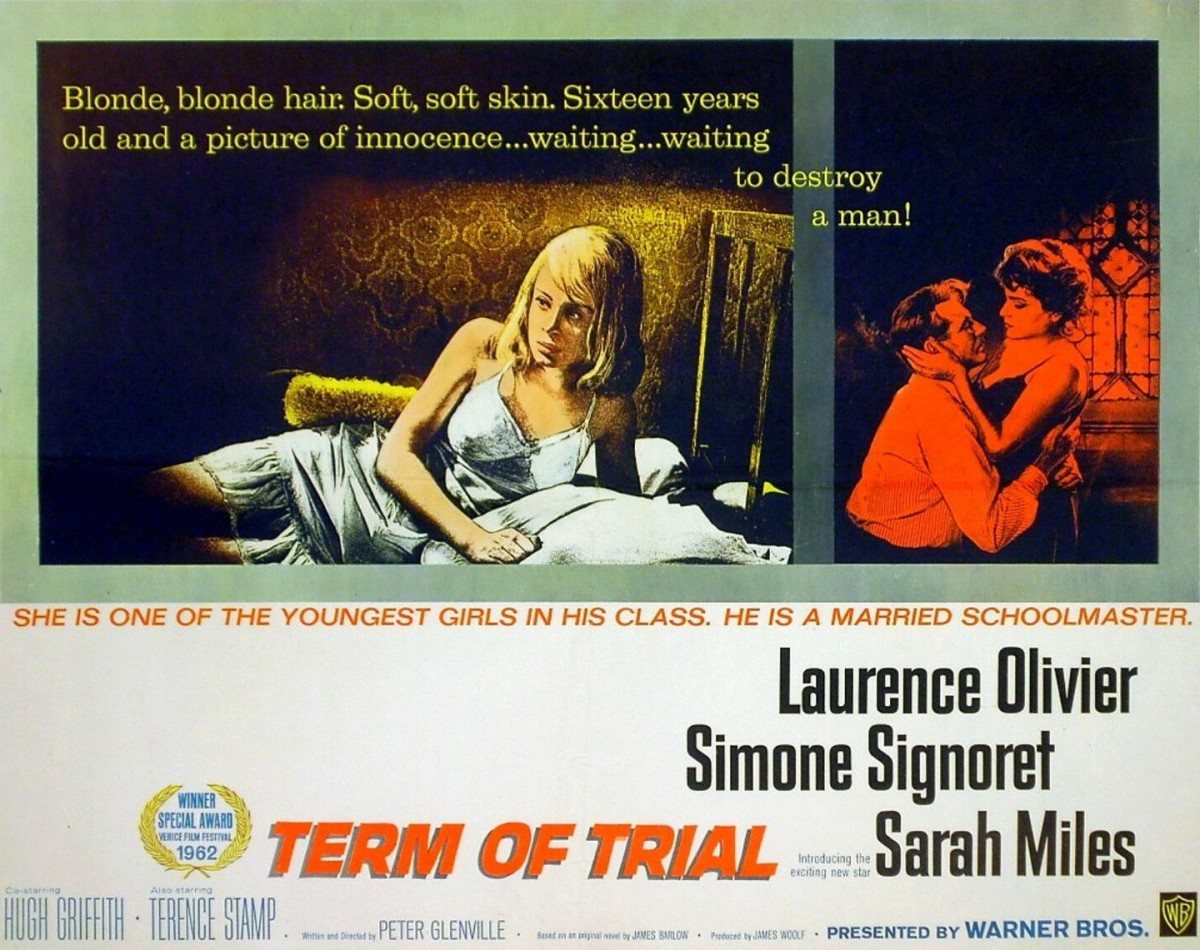
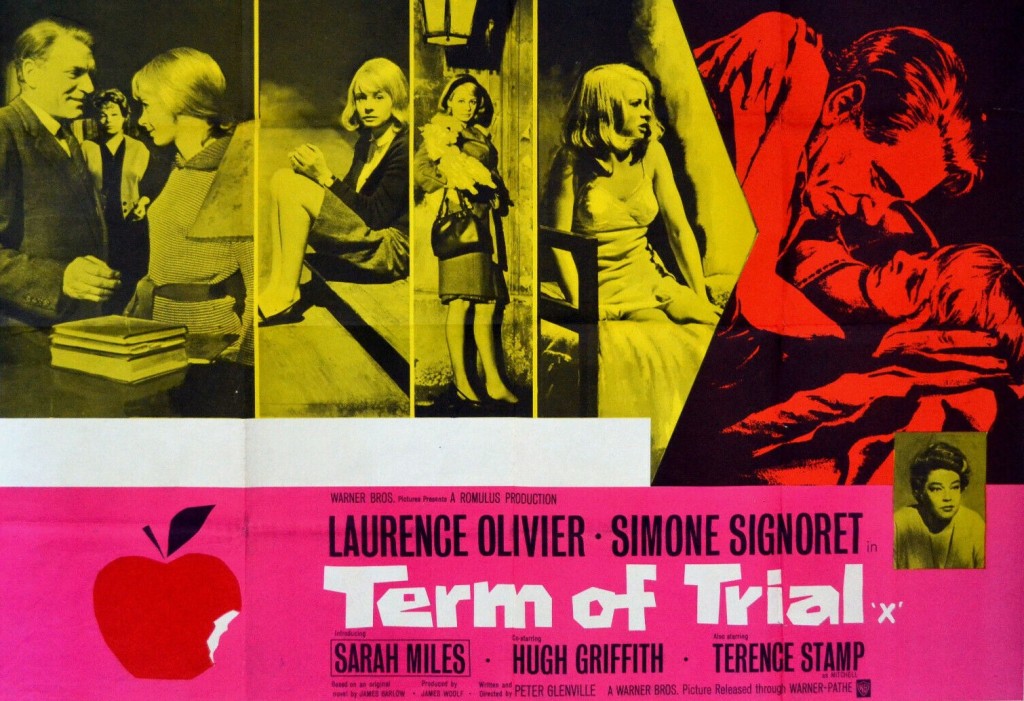
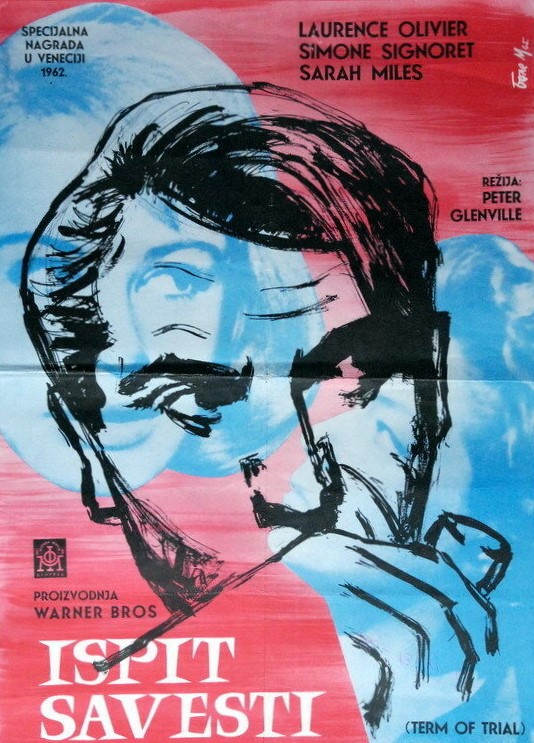
Term of Trial (1962) ***

Notable for the debuts of Sarah Miles (Ryan’s Daughter, 1970) and Terence Stamp (The Collector, 1963) and an ending that even in those misogynistic times was wince-inducing. The halcyon era of dull English schoolteachers being celebrated (Goodbye, Mr Chips, 1939) or finding redemption or even just managing to overcome pupil hostility (The Browning Version, 1951) were long gone, replaced by a more realistic view of the casual warfare endemic in education establishments, not quite in The Blackboard Jungle (1956) vein but running it close, with bullying, sexual abuse and ridicule running riot.

Self-pitying Graham Weir (Laurence Olivier) has failed to achieve his ambitions in part due to alcoholism, in part to antipathy to his conscientious objection during World War Two. And although he has a sexy French wife Anna (Simone Signoret) in the days when any Frenchwoman was deemed a goddess, she is embittered that the future he promised has not materialized. Like To Sir, with Love (1967) his classroom is filled with no-hopers so that he responds to the meek and innocent wishing for educational betterment.  

Weir’s only defence against endless indignity is a stiff upper lip and slugs of whisky. His lack of character contrasts with a young lad who takes revenge against constantly being chucked out of his house by his mother’s lover (Derren Nesbitt) by blowing up the man’s sports car.  

Spanning the twin cultures of religion and the razor, one falling out of favor, the other holding violent sway, opportunity to rise above kitchen-sink England lies with the self-confident such as thug Mitchell (Terence Stamp) who smokes in class, gives the teachers lip, takes photographs of girls in their underwear in the toilets, physically threatens classmates and when his target is bigger gets older men to give him a good thumping.  

A somewhat unlikely development is an end-of-term trip to Paris where the infatuated Shirley (Sarah Miles), who the good-hearted Weir has been giving free private tuition, ends up in the teacher’s bedroom and later accuses him of abuse. The impending court case and threat of imprisonment scupper Weir’s chances of promotion, make him consider suicide, and Anna to leave him.

The court scenes allow a number of famous character actors a moment of acting glory. Laurence Olivier (Bunny Lake Is Missing, 1965) must in part have been attracted to the role by a terrific court monologue. The movie is very downbeat in a country universally known never to enjoy an ounce of sunshine justifying the black-and-white movie rendition. If there is liveliness in the streets, cinemas, shops, it never translates into any of the main adult characters, all determined to uphold ancient values and endure constricted lives.

Exploiting audience expectation for verbal fireworks, the tension in Laurence Olivier’s finely judged performance comes from his untypical, unshowy delivery. You can almost hear him grinding his teeth. Simone Signoret (The Sleeping Car Murder, 1965) also acts against the grain, battening down her inherent sexuality, and her very presence speaks of lost hope, the fact that she was once attracted to Weir indicating he was once a very different prospect.

Sarah Miles excels as the wannabe seducer, that hesitant voice that would become her hallmark, struggling here to turn innocence into lure, expressing her adoration in heart-breaking simplicity, and yet aware that to catch Weir would require more than just the submission a guy like Mitchell requires. While hers is a stunning debut, I’m at a loss to see what marked out Terence Stamp’s typical surly teenager for speedier stardom.     

Oscar-winner Hugh Griffiths (The Counterfeit Traitor, 1962) is the pick of the supporting roles. A remarkable scene-stealer, a shift of his head, a flicker of his eyelashes is all he needs while sitting in the background to attract the camera from another character in the foreground. Look out for Barbara Ferris (Interlude, 1968), Derren Nesbit (Where Eagles Dare, 1968), Allan Cuthbertson (The 7th Dawn, 1964), Roland Culver (Thunderball, 1965) and Thora Hird (television’s Last of the Summer Wine, 1986-2003).  

Surprisingly un-stagey direction from Peter Glenville (Becket, 1964) who was far better known as a theater director in London and Broadway. Probably in those days if you were setting a movie outside sophisticated London you had to present a gloomy version of Britain so you can’t really blame him for that and Olivier was hardly a major box office attraction so a budget trimmed of color would be a requisite. Although the older characters display grim determination, the younger ones have not had the spirit knocked out of them in the Saturday Night and Sunday Morning (1960) manner and the location shots reveal a buzzy atmosphere.

Glenville also wrote the screenplay based on the bestseller by James Barlow.

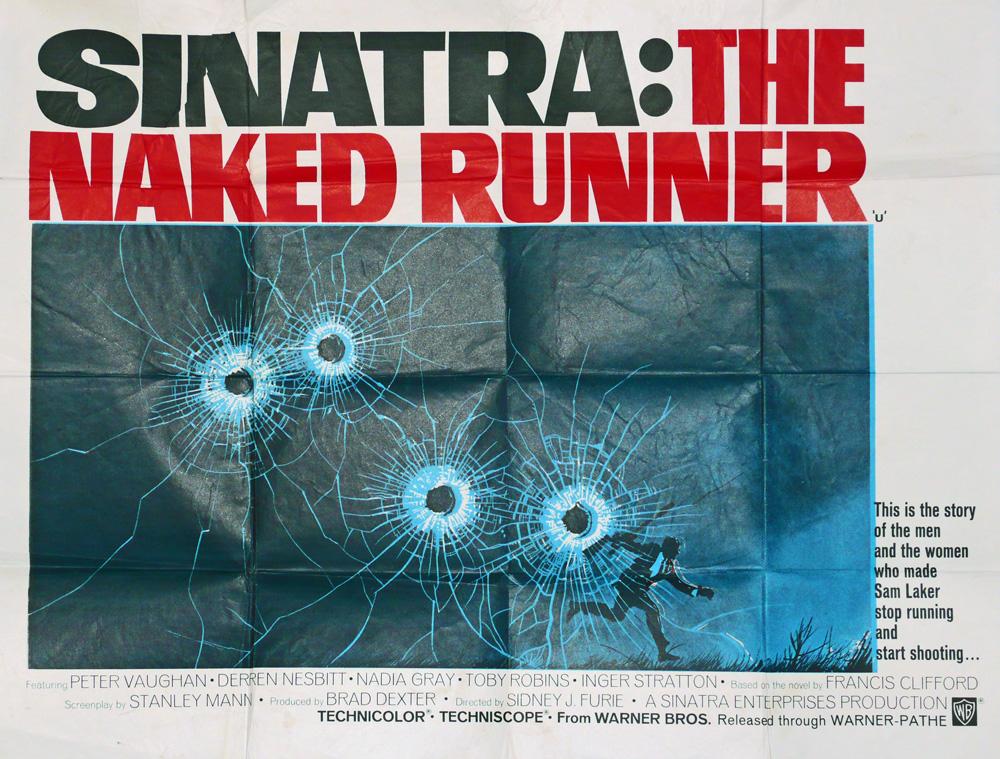
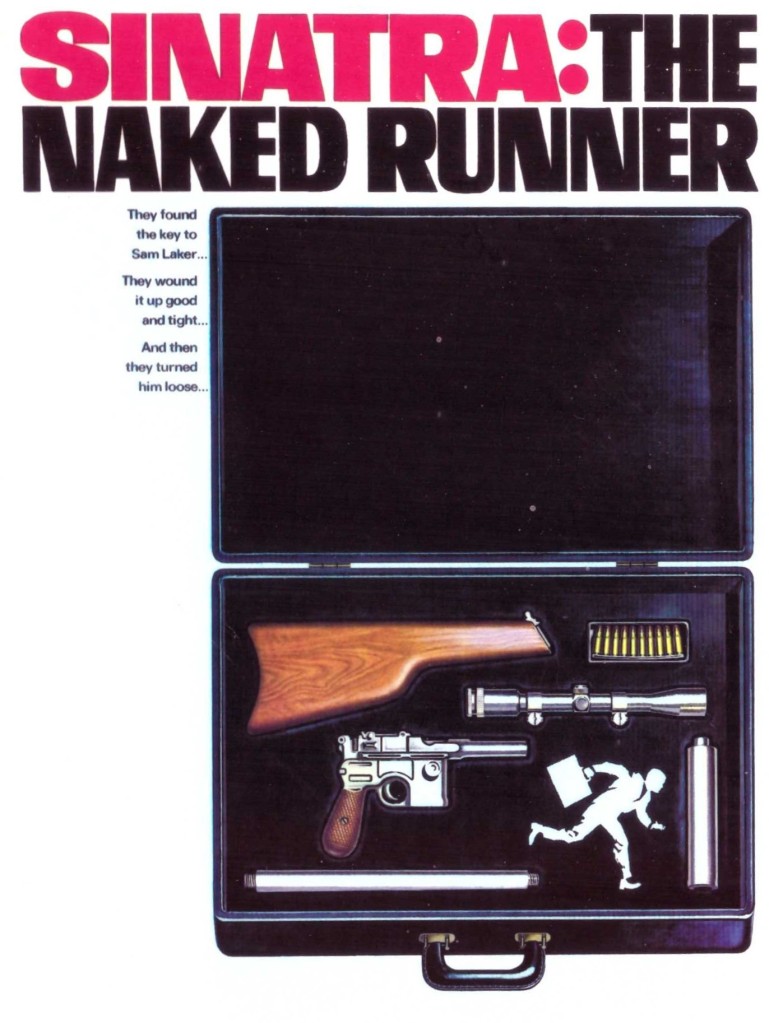
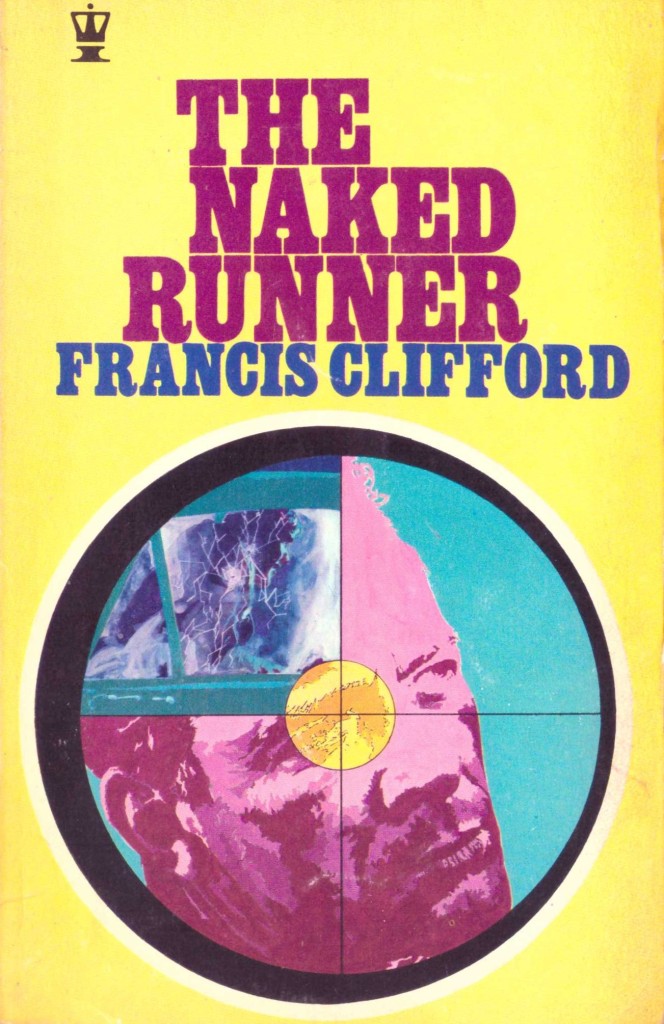
The Naked Runner (1967)***

We always knew the spy world was filled with the worst kind of legal renegade, the type who can get away with murder in the name of King and Country, with little regard for collateral damage, claiming the Cold War justifies any action. British espionage chiefs, wishing to assassinate an escaped spy before he can reach the Russian border, recruit against his will widowed businessman Sam Laker (Frank Sinatra). The spy top brass don’t care what methods of persuasion are used, “blackmail or drugs,” and eventually they decide that kidnapping his only son will make Laker toe the line.

Spy chief and wartime colleague Martin Slattery (Peter Vaughan) is a cold-blooded killer aiming to turn an ordinary man, albeit with a distinguished war record, into a cold-blooded killer.  Laker is duped into delivering a message while on a business trip to Leipzeig in East Germany. When his son disappears it is at the behest of the equally ruthless East German secret police boss Colonel Hartmann (Derren Nesbitt) and thus begins a game of cat-and-mouse between Sinatra and the two spymasters competing for his services especially when it transpires he is a crack marksman. He is shifted to Copenhagen to assassinate the fugitive.

Naturally, the web is soon even more tangled. Laker becoming even more tense, with his son’s life hanging in the balance questions of morality are void. It’s edge-of-the-seat stuff because the audience is as much in the dark as Laker about what is actually going on. Fans of the sophisticated spy thriller will not be surprised that there is a surprise ending.

The main departure from the book by Francis Clifford (also author of the source novel for “Guns of Darkness,” 1962) is the movie overview. The book follows the hero from start to finish. Only at the end is explanation offered. In the book the assassin’s target is a defector not an escaped spy. However, opening the book up to involve Slattery discussing his methods and providing an overview of the espionage world is a bit like tacking on an unnecessary message to an otherwise straightforward thriller. Straying from Laker’s point-of-view lessens rather than increases tension. Sinatra Enterprises produced the picture so presumably screenwriter Stanley Mann’s change of emphasis had the actor’s blessing.

Director Sidney J. Furie has some form in this murky world, having helmed the ground-breaking The Ipcress File (1965) whose spies are lot less glamorous than their James Bond counterpart. Even so, Michael Caine was a jaunty hero. Sinatra is the polar opposite. A more dour individual you could not meet. Sinatra is excellent in a role that asks him to bury a normal screen persona that oozes self-confidence. Furie is obsessed with odd camera angles and extreme long shots and extreme close-ups which has probably the intended disconcerting effect, concentrating the viewer on characters rather than surroundings.

While this approach worked in The Ipcress File and The Appaloosa it is less effective here, largely I think because Sinatra cannot brood with Brando’s intensity nor is his face as open and inviting as Caine’s. Although Sinatra is good in the role it does not suit the director’s intent which was surely to portray a man about to crack. Whereas the director’s impulse for the unusual made The Ipcress File a stylish film, here the camera angles get in the way of what is otherwise a taut story of a man driven to the limit. In fairness, the abundance of close-ups may not have been Furie’s fault. Sinatra disappeared for several days when the shoot moved to Copenhagen forcing Furie to shoot around him and inserting previous filmed close-ups.

Edward Fox (Day of the Jackal, 1973) has a small role as a diplomat and Romanian Nadia Gray (Two for the Road, 1967) appears as Laker’s initial contact in Leipzig.

Discover WordPress

A daily selection of the best content published on WordPress, collected for you by humans who love to read.

The Atavist Magazine

by Brian Hannan

WordPress.com News

The latest news on WordPress.com and the WordPress community.