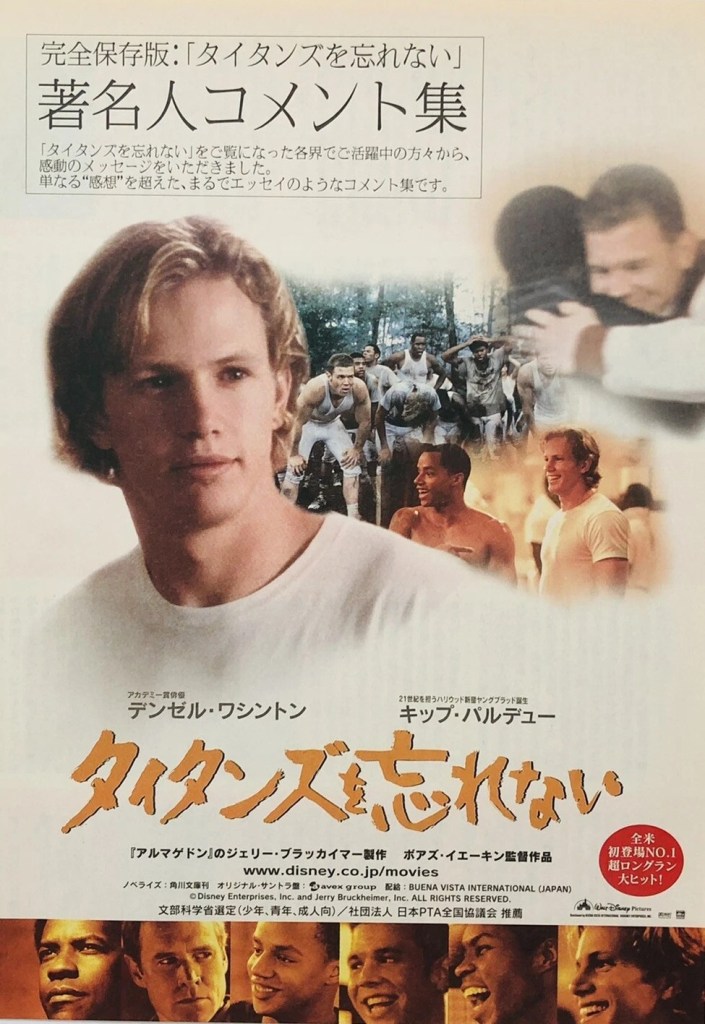
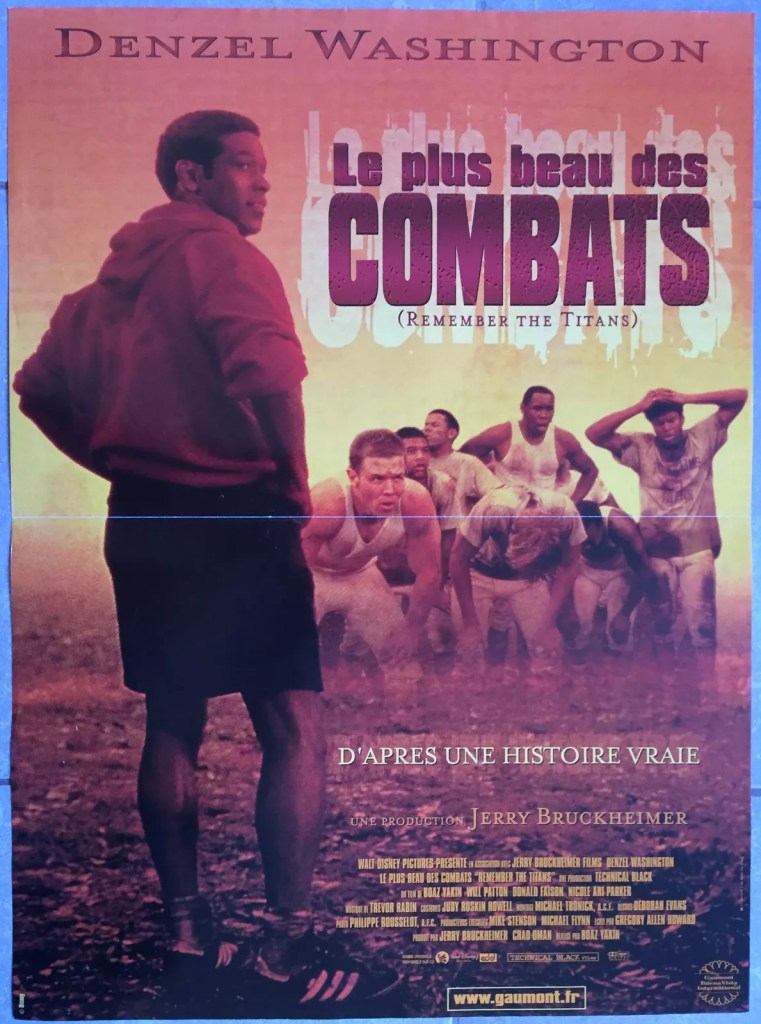
Denzel Washington’s breakout movie. An odd statement given he had already appeared in such box office hits as The Pelican Brief (1993), Philadelphia (1993), and Crimson Tide (1995). But in the first two he was second banana to, respectively, Tom Hanks and Julia Roberts. And only the first topped the magical $100 million mark – though only just – the other two reaping $77 million and $91 million, respectively. But all three had considerable juice – Julia Roberts well into her stride as a box office phenomenon, the AIDs drama courting Oscars, uber-director Tony Scott helming the nuke sub drama – and backed with big marketing dollars
Apart from Washington, Remember the Titans had nothing going for it. Nobody else with any box office marquee. And covering a sport that had little traction in the U.S. and zilch in the global market. North Dallas Forty (1979) with Nick Nolte had hauled in just $26 million, The Program (1993) pairing James Caan and Halle Berry just $23 million, biopic Rudy (1994) $22 million and even the heavyweight Any Given Sunday (1999) helmed by Oscar-winning Oliver Stone and featuring Oscar-winning Al Pacino and a roster of top names could only climb to $75 million.
Remember the Titans hit $115 million, the biggest movie of Washington’s career, the biggest sports movie of all time. And here’s the kicker. None of the characters were instantly likeable. You had a ruthless hardass coach who refuses to listen to advice, the jocks are all spoiled and entitled, even the kids are likely to turn you off. But where recent pictures like Roofman (2025), Marty Supreme (2025) and After the Hunt (2025) leave you with no liking for the characters at the end, here the opposite is true.
Each character has a rival. Incoming college coach Herman Boone (Denzel Washington) has little time for the man he replaced, Bill Yoast (Will Patton). Incoming Sunshine Bass (Kip Pardue) nettles team captain Gerry Bertier (Ryan Hurst) who in turn clashes with newcomer Julius Campbell (Wood Harris). Even Yoast’s daughter refuses to play nice with Boone’s daughter.
All this plays out against a background of racism. In 1971 T.C. Williams High School in Alexandria, Virginia, has been integrated, a notion largely opposed by the existing white authorities and residents, including Bertier’s mother and girlfriend (Emma) Kate Bosworth who refuses to shake a black hand. Like his daughter, Boone isn’t about to play nice and he proves to be the worst kind of driven coach, pushing his players to more demanding physical levels and punishing them when they don’t grasp his plays.
But he does understand how a team works, that it won’t function as a collection of individuals, no matter how brilliant – and the better the players like Bertier, the only All-American on the field, expect to be treated differently. Bonding, in this instance, forces black and white players to learn about each other’s lives.
And you could say the same about victory. Nothing brings a team together like winning. A successful team crosses all racial boundaries.
So we get the usual last-minute touchdowns, the individuals finding redemption on the field, the cheating and off-field maneuvers, and the “coming together” that was such a big part of Al Pacino’s team in Any Given Sunday.
Music plays a big part, as white players begin to enjoy what they initially view as black music, and as the team take music as their very own bonding exercise, dreaming up a theme song and entering the field of play with an original song-and-dance number.
Denzel Washington is the driving force and the fact that he’s not a do-gooder and is just trying do his job rather than undertaking any wider virtue-signalling remit is what propels the picture. Will Patton (Entrapment, 1999) is solid. Wood Harris (The Wire, 2002-2008) and Donald Faison (Scrubs, 2001-2010) catch the eye. Kip Pardue (Driven, 2001) was the breakout youngster and current box office behemoth Ryan Gosling has a small part.
Under the direction of Boaz Yakin (Safe, 2012), it fairly rolls along as the rivalries develop or are resolved. Written by Gregory Allan Howard (Ali, 2001).
Not a critical hit at the time and still pretty much written off by the media, but picked up a strong head of steam among audiences at the time and since.
The most tension-filled thriller this side of The Day of the Jackal (1973). Stone-cold classic in my book. Admittedly not a big box office success in its day nor critically acclaimed, but this nod to film noir with cop taking a stroll for his own convenience down the wrong mean streets and an old-fashioned femme-fatale male-dupe scenario coupled with witty dialog and terrific set pieces suggests to me this is long overdue for reappraisal.
This was really the start of Denzel Washington as action hero – Crimson Tide (1995) was more a straightforward drama albeit with characters facing the ultimate consequence – and it probably helps that I’m looking back at this through the prism of more than two decades of the actor whizzing along in the derring-do department especially in his turn as The Equalizer (2014) – and sequels – where he demolishes opponents in seconds. Apart from the occasional side hustle as a bad guy, he’s generally been a good guy, the sort of dependable hunk that Tom Hanks would aspire to if he wanted to add brawn to his guy-next-door persona.
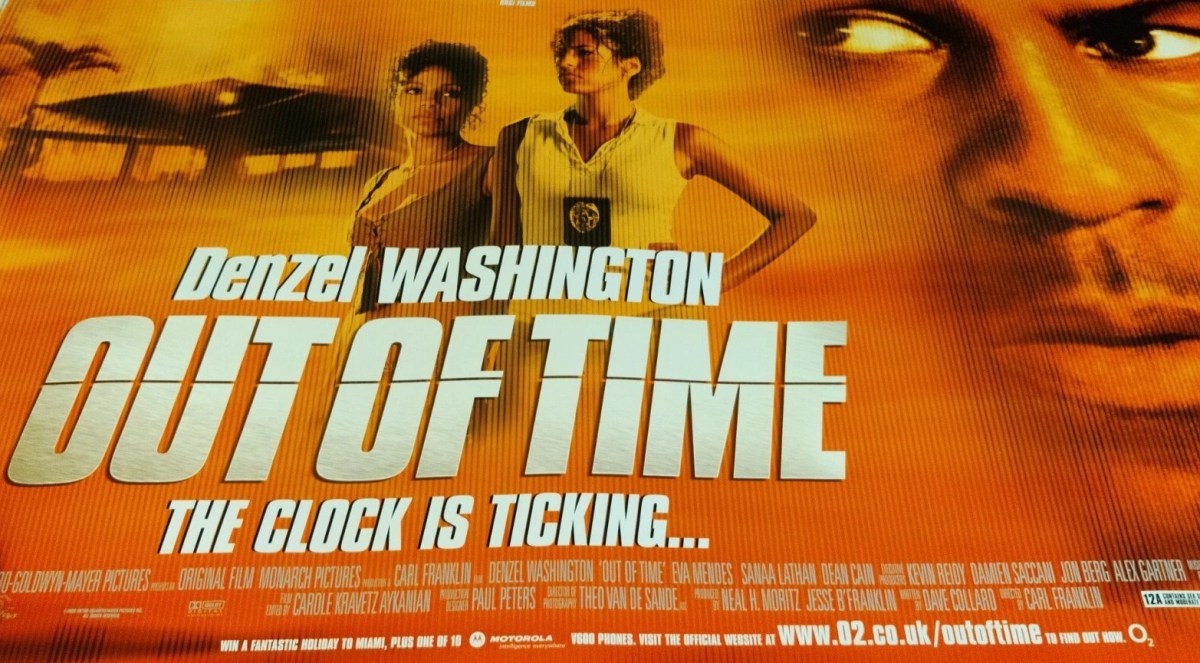
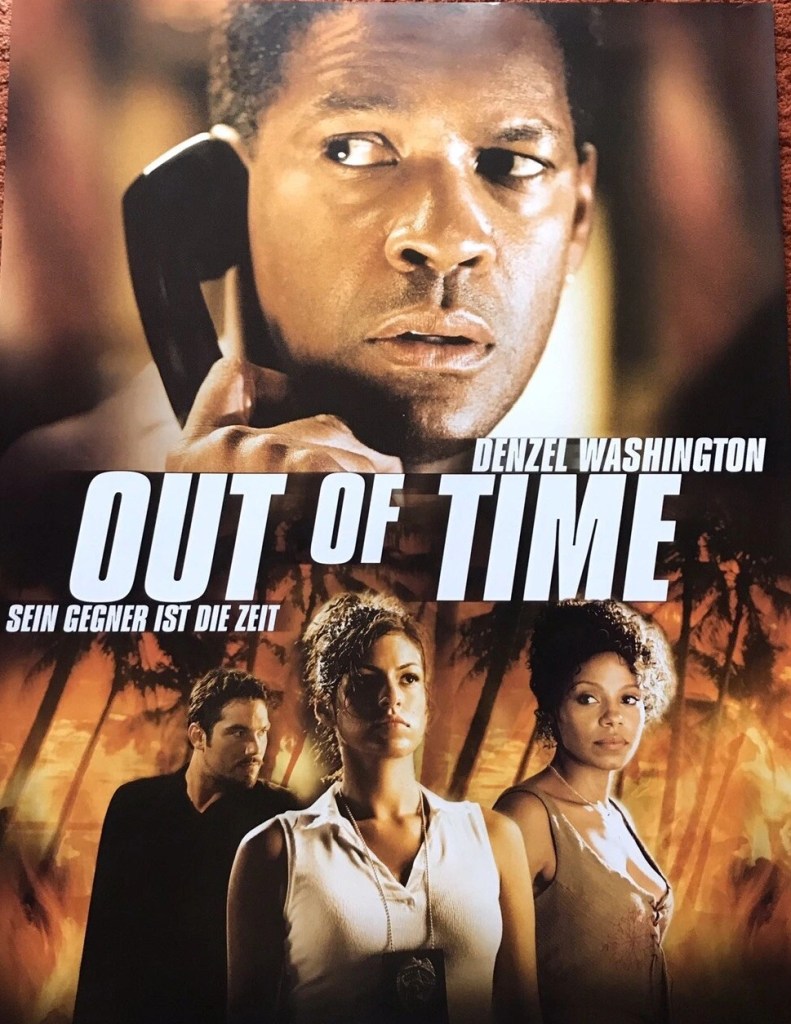
Matt Whitlock is the top law enforcement officer in a Florida slumber town (pop 1300) but he’s not as clean-cut as he looks given his affair with married Ann Harrison (Sanaa Latham) who bursts his romantic bubble by announcing she has just six months to live thanks to a cancer so advanced that only some new-fangled treatment could save her. I smelled a rat, I have to confess, the minute she decided she was going to make him the beneficiary of her million-dollar insurance policy.
So what’s a decent guy to do but steal the $500,000 drugs money he’s holding in his police safe, that’s liable to sit untouched for years to come, in order to fund her treatment on the assumption that the insurance policy acts as his insurance. How dumb can you be?
So when Ann and husband Chris (Dean Cain) die in a horrific fire, his world unravels, especially as detective soon-to-be-ex-wife Alex (Eva Mendes) is in charge of the murder investigation and the Feds arrive out of the blue looking for the drugs cash. So basically he’s an old-fashioned “running man”, diving from one hole to the next, barely keeping ahead of the cops and the FBI, fingered twice by witnesses, discovering that the specialist who diagnosed the cancer is an imposter, and not just being made to look the biggest fool who ever fell in love with the wrong woman but liable to pay for his error with a lengthy jail sentence.
Alex begins to suspect he knows more than he’s letting on, he’s desperate to trace the bogus doctor, all the while, in a nod to No Way Out (1987), desperately trying to stop a tsunami of telephone evidence – arriving via fax and computer – that links him to the supposed dead woman.
There are verbal confrontations galore and a couple of physical ones, a chase through a hotel culminating in a brawl on a balcony, and possibly a second murder charge.
It’s not just a terrific tale, mostly consisting of twists and narrow escapes, I counted half a dozen twists in the last ten minutes alone, but offers some terrific dialog. In a diner, the relationship between Matt and Chris is spelled out in style: Matt recommends the crab, Chris points out he’s allergic to crab. “I know,” retorts Matt. The movie opens with some decidedly salty goings-on between Matt and his lover and the verbal duel between Matt and Alex has the underlying Tracy-Hepburn classic squabbling.
For all that Matt is smart enough to chase down the missing cash and hold the Feds at arm’s length long enough, he’s still, when you come down to it, only going from dumb to dumber and the shock when he realizes just how well he’s been duped is a cracker.
So, obviously, the key is that the audience wants him, guilty though he is of theft and stupidity, to get away with it or at least be thrown a get-out-of-jail-free card and that’s part of the hook, and that element is brilliantly done. I had no idea how he was going to get off with it, as one avenue of escape after another was rigorously shut down, until the very end.
There’s a whole stew of those reversals that screenwriters throw at audiences who think they are one step ahead of the game.
It’s a great cast. Denzel Washington is superb, Eva Mendes (Training Day, 2001) is an excellent sparring partner, Sanaa Latham (AVP: Alien vs Predator, 2004) as slinky as femme fatale as you’ll find. Look out for television’s Superman Dean Cain and especially character actor John Billingsley.
Director Carl Franklin (Devil in a Blue Dress, 1995) piles on the tension and kudos to screenwriter Dave Collard (Annapolis, 2006) for creating the blueprint.
I caught this on Amazon Prime but be quick about it because it’s in the section that the streamer calls “leaving in 30 days.”
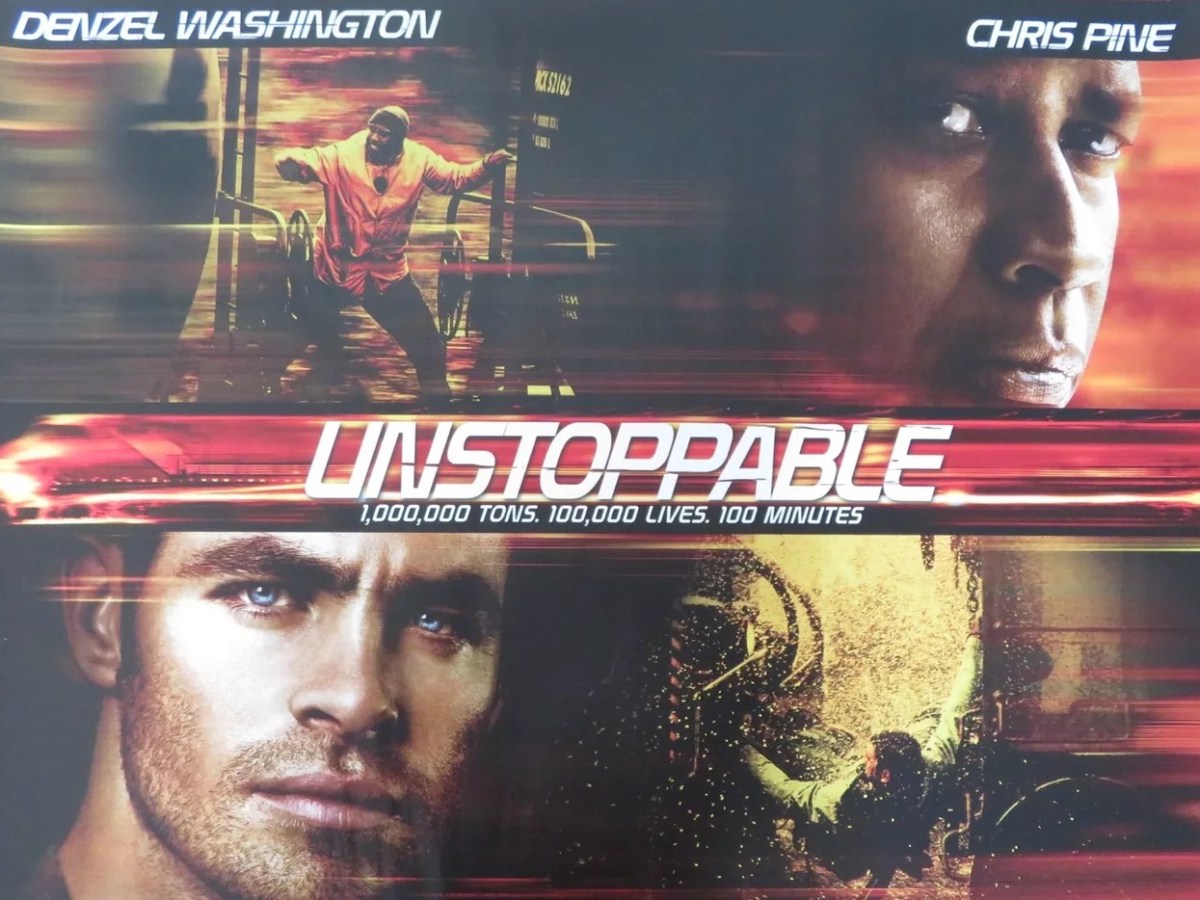
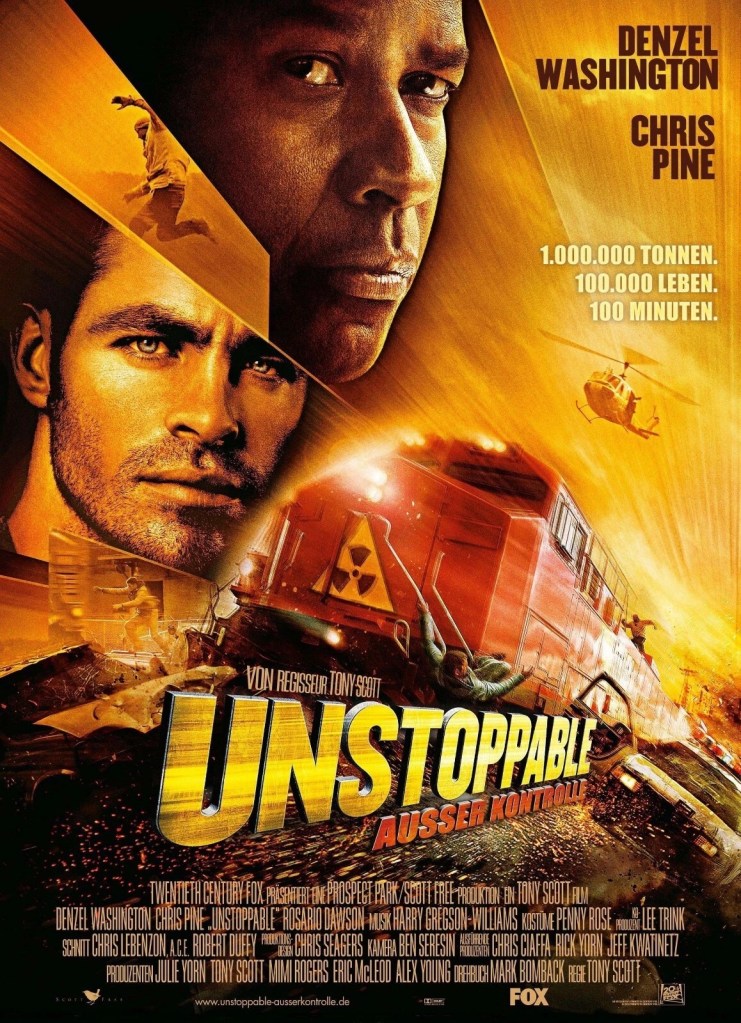
Fitting swansong for director Tony Scott (The Hunger, 1983). Throwback to the disaster movie of the 1970s when something enormous is going to be decimated, and lives, in this case three-quarters of a million citizens, are put at deadly risk. Distant cousin to Speed (1994), which bears no comparison in the potential mayhem department, since an ordinary bus carries a fraction of the power of a train with 30-odd train cars (carriages to the English) filled with deadly toxic cargo barreling along at 60mph. Basically, “a missile.” And while other trains can be sidelined to get out of its way, it’s headed for an unavoidable obstacle, a piece of raised track in a major city which bends so sharply it can only be safely negotiated at 20mph or thereabouts.
And while said train is a wrecking ball when it comes to anything that happens to be on the track at the same time, the tail end of another train for example or a horse-box, it runs not so much on action as character. The various explosions are just there to remind us how dangerous the damn thing is and to raise tension by perilous degrees.
On board are two opposites, veteran driver Frank (Denzel Washington) and entitled surly know-it-all rookie Will (Chris Pine), who’s the train conductor and technically, I guess, in charge. Not quite open hostility but not far off it.
Frank’s a widower with two daughters who work, as he shamefacedly admits, in Hooters (look it up) while Will has been slapped with a restraining order from his wife and lucky not to be facing a jail sentence for pulling a gun on a cop. On top of that, in a money-saving ploy, Will’s the kind of employee recruited by the company to replace Frank, who, it turns out, is only three weeks away from enforced retirement. So that’s a twist on the gangster trope of the character planning one last big job.
I should point out that thanks to a lazy employee, this is a runaway train, no driver on board, air brakes unconnected, other safety elements unharnessed, nothing to stop it picking up speed and heading straight to hell. Luckily, it’s not full of passengers. I’m being a bit cynical here because a trainload of shrieking passengers and back stories to take account of would have dissipated, rather than increased, the tension.
But there’s also in the back office boss Connie (Rosario Dawson) trying to do her job in the face of the corporate greed, money-grabbing chief executive Galvin (Kevin Dunn) more concerned about the $100 million the company will lose if this goes belly-up, not to mention the catastrophic effect on the share price, so he’s full-on in on barmy schemes to stop the train, including parachuting someone onto the train and trying to bring it to a halt in a much smaller town which can be more easily evacuated than one with a 750,000 population.
Needless to say, none of these dumb ideas work, but it’s fun to watch the high-ups get egg on their faces and watch the cost of the collateral damage escalate. All the while, this being Tony Scott, we’ve got helicopters whizzing around, a huge flotilla of cop cars on blue light duty, uniforms everywhere, and that amazing technical trick that Scott has mastered of having the camera racing past characters who are stock still.
Frank and Will operate like a tag team when it comes to saving the day, Frank hopping from car roof to car roof having come up with the great wheeze of applying the brakes on each individual train car (carriage to you English) and Will at a lower level engaged on similar hazardous enterprise and then not just leaping from a train doing 60mph to a vehicle racing alongside doing 60mph but leaping back onto the train from said car going at an even higher speed.
Denzel Washington (Gladiator II, 2024) – who had been train bound the year before in Scott’s remake of The Taking of Pelham 123 (2009) – and Chris Pine (Don’t Worry, Darling, 2022) are on top form. As too is Rosario Dawson (Trance, 2013), for once given a decent role rather than just as a sidekick/love interest/femme fatale.
Written by Mark Bomback (Dawn of the Planet of the Apes, 2014). It’s worth noting that actors looking for career longevity could do worse than follow the example of Denzel Washington who, since he became a top-billed star, has worked consistently with three directors, Tony Scott, Ridley Scott and Antoine Fuqua.
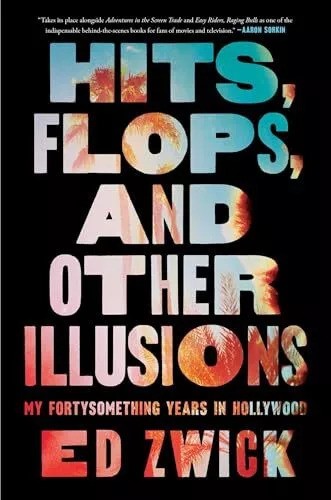
“I will never forget how casually Maria (Schneider of Last Tango in Paris fame) unbuttoned Joey’s shirt to hold her breast in one hand while eating a bagel with the other,” is just one of the memorable lines in director Ed Zwick’s (of Glory fame) memoir, a very candid portrait of working in Hollywood. Glamor and grit ride side by side as he goes from being a celebrity-struck newcomer to dragging tears out of Harvey Weinstein, hearing all about Julia Roberts’s love life, endless battles on set with Brad Pitt, being offered a beer by Paul Newman in the star’s house and digging into the untapped emotional reservoir of Tom Cruise.
His mentor, director Sydney Pollack, allowed Zwick to observe as he prepped Out of Africa (1985). Pollack had a complicated relationship with Robert Redford. The star “was infallibly late.” Opposite personalities. Pollack was “voluble, excitable and punctilious” while Redford was “taciturn, laconic and laid-back.” Dealing with a proper star can be disconcerting. Asked what it was like to direct Barbra Streisand in A Star Is Born (1976), Frank Pierson said, “I wouldn’t know.”
Pollack offered Zwick sound advice about screenwriting. “Plot is the rotting meat the burglar throws to the dogs so he can climb over the fence and get the jewels, which are the characters.” Zwick’s first script, with writing partner Marshall Herskowitz, for Tri-Star, was a drama, Drawing Fire, about a Secret Service agent’s relationship with a corrupt cop. Dustin Hoffman wanted to play the lead. In conversation, Hoffman took “damn long to get to the point.” His involvement collapsed over his fee.
Jonathan Demme was originally slated for About Last Night (1986), an adaptation of David Mamet’s play Sexual Perversity in Chicago. When he pulled out, Zwick got the gig. If stars Rob Lowe and Demi Moore seemed very comfortable with the intimate scenes, that was because they had previously been an item. The movie did surprisingly well.
For a follow-up, Zwick passed on Thelma and Louise (1991) in favor of a different road picture, Leaving Normal (1992), originally set to star Cher and Holly Hunter. Jessica Lange entered the frame when Cher dropped out. After Hunter quit, Zwick signed up Christine Lahti and Meg Tilly. The picture bombed.
Next up was Shakespeare in Love with a script by Marc Norman and Tom Stoppard to star Julia Roberts who, as it happened, couldn’t help falling in love with her co-stars, that included by now Kiefer Sutherland, Dylan McDermott and Liam Neeson. To play William Shakespeare, she wanted Daniel Day-Lewis, sending him a card that said, “Be My Romeo,” but he was already committed to My Left Foot. Casting for her co-star was cancelled while she maintained that, actually, Day-Lewis had agreed. Only, when Zwick contacted him, that turned out to be fantasy.
With casting renewed, Zwick and Roberts saw, among others, Ralph Fiennes, Russell Crowe. Hugh Grant, Colin Firth and Sean Bean. But none clicked with the star, although oddly enough she later teamed with Grant in Notting Hill (1999). It could conceivably have gone ahead with Paul McGann. A full screen test was arranged. However, it was obvious at that point that Roberts hadn’t nailed her English accent. She quit, leaving Universal $6 million out of pocket.
The movie remained in cold storage for two years. Then Harvey Weinstein came calling. But not at the price Universal demanded. For the next few years, Zwick kept trying to interest actors with the requisite marquee heft such as Kenneth Branagh, Winona Ryder, Jude Law, even Mel Gibson and Johnny Depp. By coincidence, Ryder was best buds with Gwyneth Paltrow and showed her the script. Since Paltrow was Weinstein’s go-to actress, she convinced the producer to come back in. But the consequence of that was that Zwick was pushed out. Or so Weinstein believed, until he was sued. Which meant that when the movie was awarded Best Picture at the Oscars Zwick was on the stage.
Comments Zwick wryly, “ As I stand there…listening to Harvey’s prepared, saccharine, self-serving acceptance, it occurs to me to shove him over the edge of the stage into the orchestra pit. Faced with the choice of committing an act of violence before a worldwide audience of 100 million movie fans or false modesty, I make the wrong choice.”
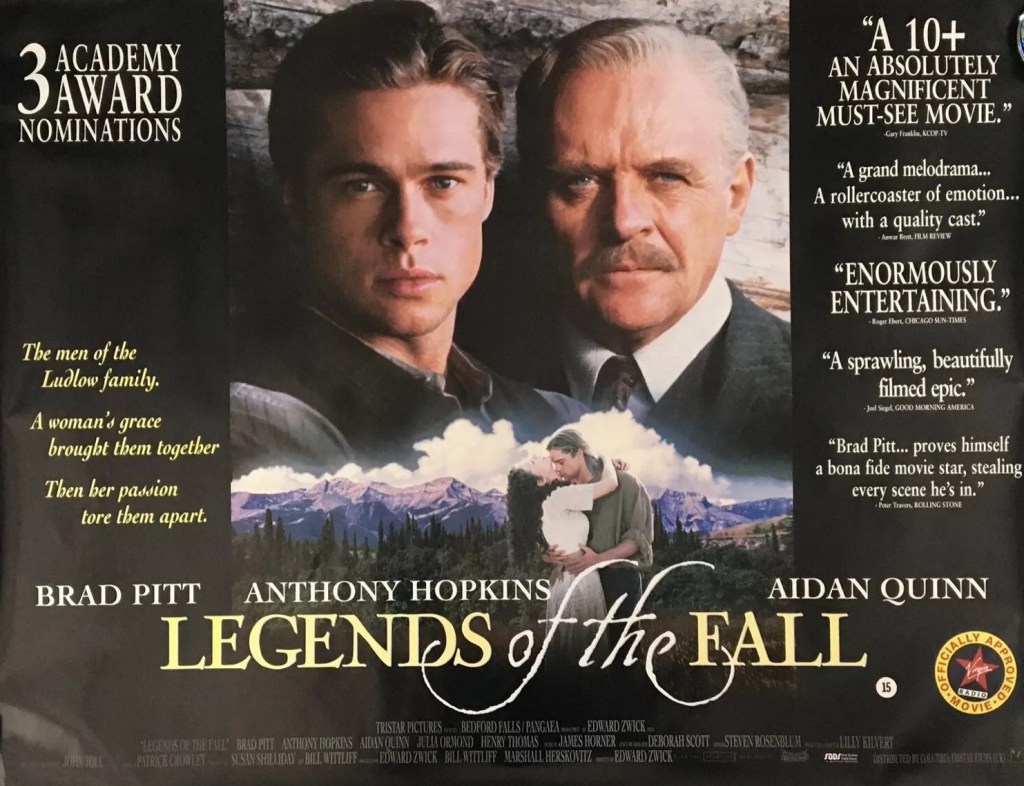
Alvin Sargent (Paper Moon, 1973) signed up for a “hefty fee” to adapt Jim Harrison’s novella Legends of the Fall (1994). Not only was he “maddeningly slow” but after a year’s work he “hadn’t been able to figure out how to do it.” William D. Wittliff (Country, 1984) was next to take a crack before Zwick called on Marshall Hershowitz’s wife Susan Shilliday – who had been story consultant and story editor on Zwick’s television show thirtysomething – to do a rewrite. Tom Cruise and Robert Duvall were briefly interested. Brad Pitt rode to the rescue.
“It’s not enough,” muses Zwick, “that a movie star be handsome; good-looking actors are a dime a dozen. And it’s not just the way the light and shadow plays on someone’s bone structure. It’s the unmistakeable thing behind their eyes, suggesting a fascinating inner life. We don’t know what’s going on inside their heads, but we definitely want to and that’s enough.”
Pre-production Tri-Star got cold feet and demanded Zwick knock $2 million off the budget. Instead, the director and Pitt halved their fees in exchange for a bigger backend. Four weeks before shooting was due to commence, they were short of a female lead, though Paltrow, among others, had read for the part, ending up with relative newcomer Julia Ormond (The Baby of Macon, 1993). Days before shooting, Pitt quit. Or tried to. He could go as long as he paid all the costs of preparation. So Pitt remained. After two weeks of shooting, Zwick was $1 million over budget, largely due to costume issues.
“There are all sorts of reasons an actor will pick a fight,” notes Zwick, and he had more than his fair share of them with Pitt. Although the movie’s resultant commercial success doubled both their salaries, they didn’t talk for a year – and never worked together again.
Denzel Washington didn’t want to do Courage under Fire (1996) until Zwick introduced the idea of Post Traumatic Stress Disorder, a new idea at the time. Matt Damon really did almost fall out of a helicopter. As Washington and Damon did a scene together “it was as if a spell had been cast over the set,” all watching the birth of new screen great. Screen improvisation isn’t all about fashioning new lines. It’s about an actor finding “emotion in an authentic way.” For the scene where Washington returns home, Zwick placed a bike along the walkway. Washington’s reaction to this unexpected obstacle was to pick it up and set it upright.
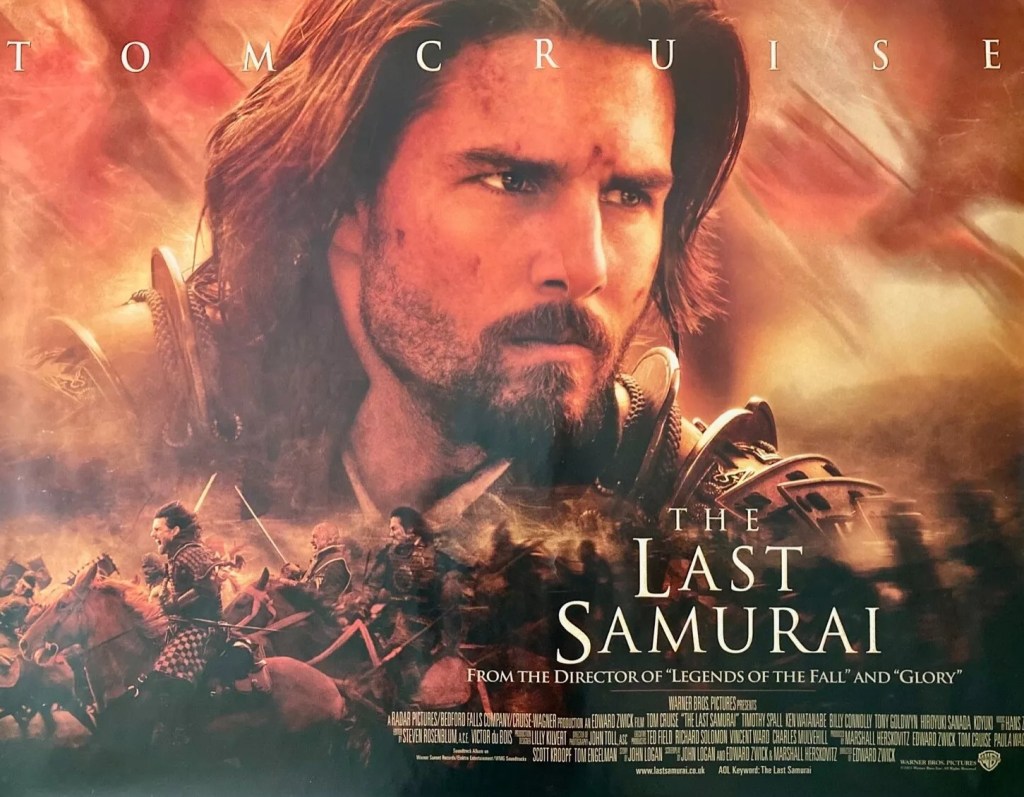
Tom Cruise originally passed on the John Logan script for The Last Samurai (2003) that Zwick felt was “still uncooked.” Uncooked or not, Russell Crowe, incidentally, was interested in the Japanese lead. Zwick did a rewrite. Cruise liked the rewrite. “What struck me most as I got to know him was his insatiable appetite to keep improving.” Cruise was one of the actors whose involvement was an automatic green light for a studio. After completing another draft with Hershowitz, Zwick got a call to go see Robert Towne (Chinatown, 1973). He went in dread. Towne “had an informal arrangement with Tom whereby he sometimes quietly rewrote his movies.” Instead of confrontation, Towne was encouraging. “Apparently, he just wanted to take my measure.”
There’s an animatronic horse – costing a million bucks – that appears for a few seconds in The Last Samurai in order for it to appear to the audience that in fact a horse was falling on Tom Cruise for a scene that would not have been possible, in the days before CGI, just with a stuntman. Zwick’s biggest problem on the picture was how to puncture Cruise’s self-assurance, get him to the “right emotional place…to touch some vulnerable part in him.” Zwick realized that simply asking the actor to go deeper wouldn’t work. It would look forced.
So just before shooting the critical scene, Zwick asked Cruise about his eight-year-old son, Connor. “I watched as he looked inward, and a window seemed to open and his eyes softened.” Zwick gently nudged him into position. “Go.”
Movie fans often wonder how a director gets into the movies. Usually, each tale is as odd as the last, a lucky break, meeting the right studio executive at the right time, coming across a studio hungry for your type of picture just at the ideal moment. Zwick has an odd an introduction. Living in Paris on a fellowship to observe experimental theater, he managed to creep onto the set of Love and Death (1975) and pepper Woody Allen with questions and he had a sneak preview of the Annie Hall (1977) script.
On returning to the U.S., he was accepted onto the American Film Institute’s director program. There were 26 pupils in the class, Zwick was one of six invited back for a second year. There, he struck up a lifelong friendship with Marshall Hershowitz. While studying, he read 10 scripts a week for United Artists, fell in with a merry band of more experienced Hollywood hands including Paul Schrader, Michael and Julia Phillips and Oliver Stone. After an improbable series of coincidences, he got was employed as story editor for the tv series Family (1976-1980). Still aiming for a movie slot, he watched in horror as David Puttnam (Chariots of Fire, 1981) lasted for only six minutes of a private screening of Zwick’s 30-minute student film.
There’s not one of Zwick’s movies where he doesn’t regale you with an interesting anecdote about a star. More importantly, he provides insights into how movies are made, often touching on details that would not be obvious to anyone outside the business.
Ed Zwick, Hits, Flops and Other Illusions, My Fortysomething Years in Hollywood (Gallery Books) is available in print and kindle.
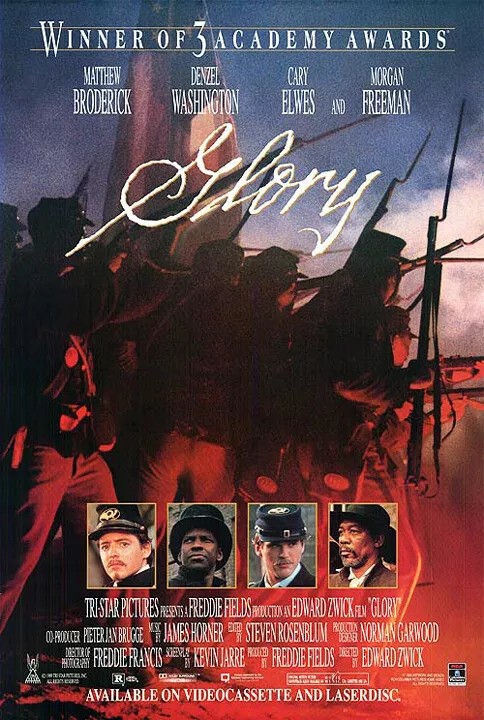
Want to hire Matthew Broderick? Then you better be prepared for his mother. Worse, there was no get-out clause. Tri-Star Pictures, an offshoot of Columbia, was only making the movie because of Broderick, whose marquee value was based solely on a completely different type of picture, namely Ferris Bueller’s Day Off (1986). Yes, he had won a Tony aged 21, and this was his sixth picture, of which only War Games (1983) hit the box office mark.
But the actor had a great deal to contend with in his personal life, grief and guilt as a result of driving his car into the wrong lane, crashing into an oncoming vehicle, killing two and seriously injuring himself and his passenger Jennifer Grey. His mother had been seriously ill, also. Glory proved another ordeal. “Nothing I might have done could possibly rival Matthew’s role in the theater of cruelty that was about to begin,” wrote director Ed Zwick in his memoir, Hits, Flops and Other Illusions (2024).
The same accusation of being a lightweight could as easily been levelled at Zwick, his only movie being About Last Night (1986), which though with serious undertones, was basically a modernized rom-com. He was best known for television, as writer-producer on thirtysomething (1987-1991), that “despite its success was an intimate, whiny talkfest.”
Broderick’s mother, Patsy, made her presence felt almost immediately. Before shooting commenced, the actor quit. Patsy didn’t like the script. By this point, Zwick hadn’t even met Broderick. Zwick received the news while on holiday in a cabin in the mountains. Communication was primitive, virtually walkie-talkie style. Eventually, Zwick agreed to look at the actor’s notes on the screenplay.
The script issues should have warned Zwick what he was taking on. At that time the film was called Lay This Laurel, the title of a monograph by Lincoln Kirstein, about the assault on Morris Island by the 54th Massachusetts Regiment, the project initially on the slate of Bruce Beresford, Oscar nominated director of Tender Mercies (1983). Kevin Jarre, with just a ‘story by’ screen credit, for Rambo: First Blood Part II (1985), to his name, had written the screenplay. “The script is perfect,” averred Jarre when Zwick demanded a rewrite. Beyond a slight polish and a shifting around of some scenes, Jarre wouldn’t budge. So Zwick took on the rewrite.
Broderick’s notes were within the realm of expectation, mostly to do with his character. But then he sent the script to Horton Foote (To Kill a Mockingbird, 1962), whose daughter he was dating. Then to Bo Goldman (One Flew over the Cuckoo’s Nest, 1975). Neither writer took on the script and Goldman assured Zwick the script was fine. Then, the final bombshell. At her son’s insistence, Patsy was to work on the script. “I’m sure she was capable of warmth,” noted Zwick, “but I was never treated to that side of her, from the moment we met,” going through the script page by page, “she was contemptuous, demeaning and volatile,” her son sitting in silence. Amendments suggested by Patsy were readings from Ralph Waldo Emerson and Harriet Beecher Stowe, and a scene where Broderick’s character was persuaded to take command of the regiment by his screen mother, to be played by his real mother.
As it happened, long before Broderick turned up, Zwick had been shooting footage from the 125th anniversary of the Battle of Gettysburg where 20,000 men in full uniform and weapons re-enacted the conflict. On a $25,000 budget, Zwick shot 30,000 feet including a cavalry charge, and created what was known in Hollywood parlance as a “sizzle reel.” Many of the re-enactors turned up as extras.
Cary Elwes (The Princess Bride, 1987) took a salary cut for his role. Zwick had been impressed by Denzel Washington in A Soldier’s Story (1984) and Cry Freedom (1987) but couldn’t afford him until producer Freddie Fields chipped in some of his fee. Morgan Freeman’s career was on an upward turn after an Oscar nomination for Street Smart (1987). Zwick found acting chemistry between this pair and Jihmi Kennedy and Andre Braugher. The actors “were hearing music I couldn’t even imagine,” wrote Zwick, “yet during each session, a transcendent moment, usually unwritten, could occur.”
Initially, however, Zwick felt he was making a disaster, “the lighting was too bright, the costumes were too new, and Matthew (Broderick) seemed uncomfortable in his role.” Luckily, a storm intervened. Not to provide rest or for Zwick to regroup. A mere storm wasn’t sufficient cause to postpone the scene of the regiment’s arrival in Readville. In the attendant fog, they were bedraggled, ankle-deep in mud, shoulders hunched against the lashing rain. Zwick realized that was the look he was after. He approached cinematographer Freddie Francis to shoot “without lights” in order to capture a similar mood. “Why didn’t you say so, dear boy?” was Francis’s encouraging response.
The next day, the first tent scene, provided another surprise. “I stared open-mouthed at the utter transformation that had taken place. Overnight he (Denzel Washington) has become Trip. Volatile. Funny. Mesmeric…it was impossible to take your eyes off Denzel…I had been in the presence of greatness. I’d never seen an actor command the focus by doing so little.”
Andre Braugher, in his debut, was also a revelation, after he’d mastered the art of hitting his marks. Once, during rehearsal for a scene, Zwick noticed that Morgan Freeman never looked Broderick in the eye. “Just as I was just about to move the camera to catch his look, I realized he was making a point of not looking at him…as a black man who had lived a lifetime wary of being punished.” Despite the traumas over the script, Broderick’s performance was “pitch perfect.”
The most emotionally powerful scene is the whipping. Twice, Zwick filmed Washington receiving three lashes. “But there was something more to be mined.” Making an excuse, Zwick asked Washington to re-do the scene, but then told John Finn, applying the whip, not to stop until Zwick called “cut.” Finn had delivered eight strokes before Zwick found what he was looking for. “The shame and mortification were real now… and in the magic of movies…a single tear appeared, catching the light at the perfect moment.”
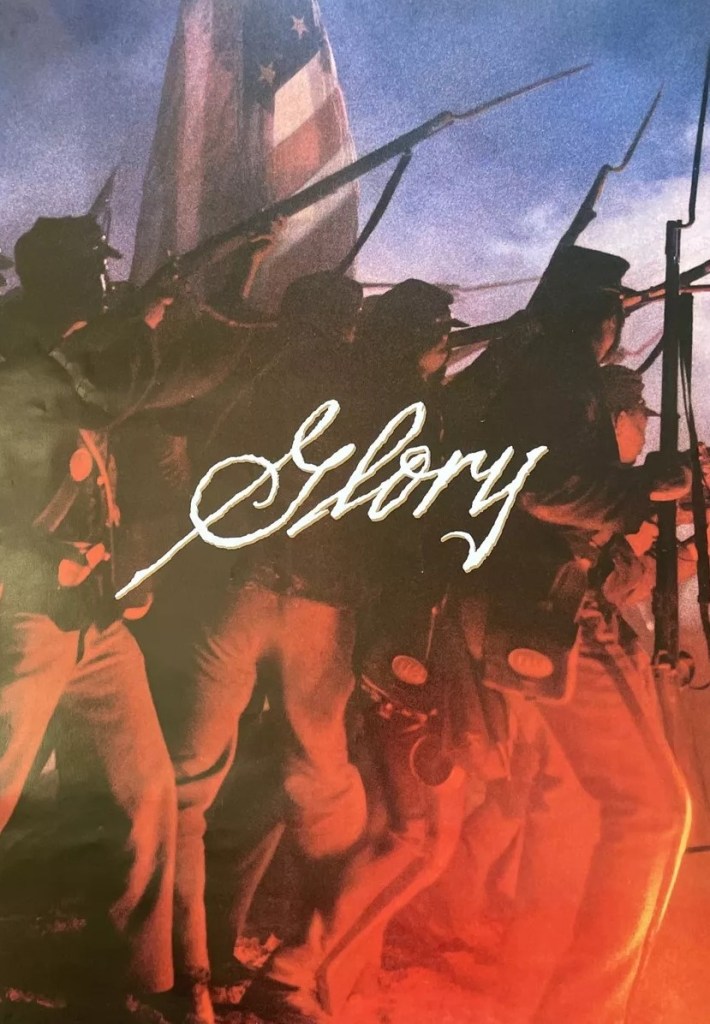
Directorial sleight of hand in the battle scene compensated for limited budget and insufficient extras. Taking note of Kurosawa’s Ran (1985), Zwick filmed one “big image of each significant moment of the battle using the entire contingent.” The trick was to go back and shoot it all over again with a smaller group but each time filling the frame top to bottom with soldiers fighting. “When it’s cut together, the larger image stays in the audience’s mind as long as they’re never allowed to see blank space at the peripheries of the frame.”
To add to the battle, they let loose rockets and explosions on the night sky, almost losing a $300,000 camera car in the process. Much of the exposition, including the Patsy Broderick scenes, ended up on the cutting room floor. While Kevin Jarre had become a “cheerleader” for the film, Broderick and his mother walked out of a preview with the actor demanding to do his own cut of the movie. Zwick refused.
Released in December 1985, Glory was nominated for four Oscars including best director. Washington won Best Supporting Actor, Freddie Francis for Cinematography and Donald O. Mitchell, Greg Rudloff, Elliot Tyson and Russell Williams II for sound. Tri-Star refused to advertize in Black media. Zwick considered any “pushback” of Broderick’s character being perceived as a “white-savior narrative” as a “left-wing canard.”
SOURCE: Ed Zwick, Hits, Flops and Other Illusions, My Fortysomething Years inHollywood (Gallery Books) 2024, pp69-105.
The mania for anniversary reissue seems to have passed this one by and, in the light of other campaigns such as Black Lives Matter, seems odd that nobody could take advantage of the 35th anni opportunity, not least Columbia, on a revival bandwagon, under whose aegis it was made. Equally, nor does it appear to have struck a chord among those studio executives keen on remakes.
Certainly, if re-done it would rectify the nagging flaw of a picture about the black experience viewed primarily through the white prism. The passing of years would have made Denzel Washington ideal for the part of the older man while his son John David Washington might have collected sufficient marquee approval to qualify for the showier part of the younger man. Remade from the perspective of the freed black slaves, with the white contingent as subsidiary, surely it would carry even more power than the original especially over the issues raised, not just slavery but, as important, the institutional racism that saw the black man, even when freed, as inferior.
The initial crux of this tale of the 54th Massachusetts Infantry Regiment formed in the American Civil War comprising freed slaves was that it was originally little more than a PR exercise, the black soldiers kept destitute of footwear, uniforms and weaponry on the assumption that they would make poor soldiers. The other important factor was whether freedom would make any difference post-war if the black soldiers, having risked their lives, did not return to an improved situation in society.
This isn’t the kind of army picture where the raw recruits come to greatly admire, however grudgingly, their superiors along the lines of Sands of Iwo Jima (1949) and The Dirty Dozen (1967). It is much more complex than that. The white man (in this case Matthew Broderick) remains top-billed over Denzel Washington (then a rising star) and Morgan Freeman (whose career zoomed thereafter). And promotion, as with every Army of the period, was synonymous with wealth and/or status.
So relatively inexperienced Capt. Shaw (Matthew Broderick) is promoted to Colonel and given command of the black regiment, aided by the more obviously self-serving Major Forbes (Cary Elwes). Much of the early sections revolve around Shaw establishing his credentials, stamping his authority on his own officers, in particular Forbes who treats him as a buddy rather than a superior, and later having the confidence to challenge (and blackmail) the corrupt vested interests denying his troops the equipment they need and insisting they receive the same wage as their white compatriots.
Tucked in around that narrative are the freed slaves, the younger Pvt Trip (Denzel Washington), who refuses to kowtow and rejects the offer of carrying the regimental flag into battle, and the older grizzled Rawlins (Morgan Freeman) who is promoted to Sgt Major, gaining respect and revelling, eventually, in his authority. But there’s also the already free Searles (Andre Braugher), educated and literate, who joins up out of solidarity only to discover he has little aptitude for soldiering and no amount of appeal to former pal Shaw can spare him from the attentions of the brutal white Sgt Maj Mulcahy.
The training stretches Shaw’s innate benevolence to the extreme, having experienced battle himself, aware of how tough his men need to become to endure warfare.
The battle scenes are tremendous, the scenes of desperate hand-to-hand fighting, the slaughter from cannons and serried musketry, highlighting the courage it takes to stand and not turn and run. The first battle brings victory but the second is infinitely more dangerous, an assault doomed to result in mass casualties and little glory.
Although Matthew Broderick is certainly overshadowed by Denzel Washington and Morgan Freeman, I don’t fall into the camp that’s critical of his performance. In a sense it’s obvious he’s trying to shy away from the bravado exuded in Ferris Bueller’s Day Off (1986) but my guess is that his character’s diffidence, fear of command, awareness that he lacks the personal authority were true of a man raised way above his station for all the wrong reasons. Denzel Washington (Cry Freedom, 1987) won the Best Supporting Actor Oscar, but, surprisingly, Morgan Freeman wasn’t nominated.
Director Ed Zwick (About Last Night, 1986) had to content himself with a Golden Globe nomination, though he’d reunite with Washington twice more and his handling of the battle scenes was recommendation enough for later big-budget pictures like The Last Samurai (2003). Screenplay by Kevin Jarre (Tombstone, 1993).
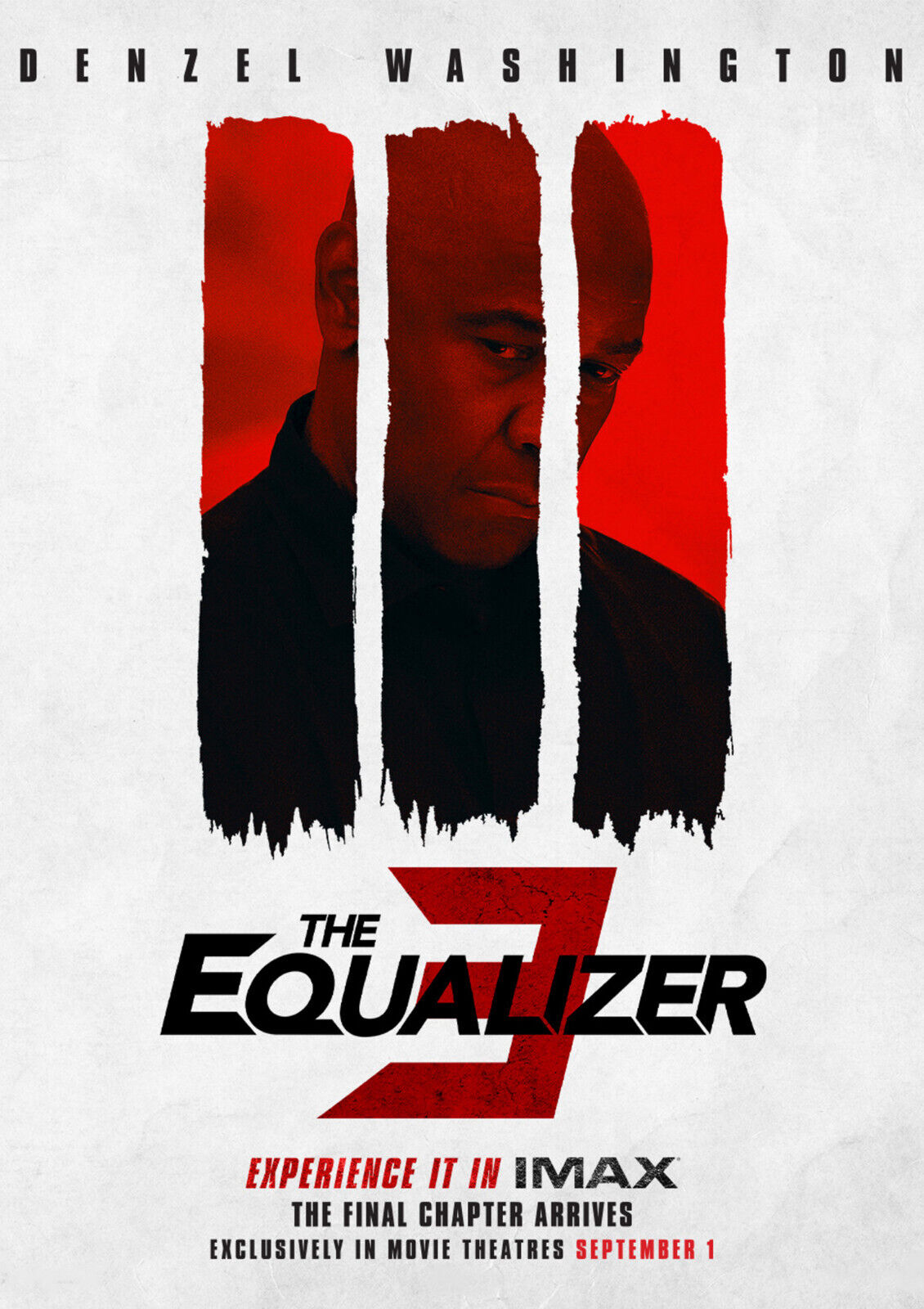
Stylish, triumphant, conclusion to a vigilante series that stands comparison with John Wick as the best of the new century. Oddly enough, the pair share some motifs, not least a mountainous stairway to a medieval church. And there are nods to The Godfather, killings against the backdrop of a religious procession and fruit spilling onto a corpse, a dagger pinning a hand to a table. And you might find shades of Apocalypse Now in the brooding remorseful figure of Robert McCall (Denzel Washington) convalescing in a remote fishing village in southern Italy. And it’s fully contemporary with a nod to the power of the mobile phone in depicting live events.
For an actioner it’s chockful of mystery. To begin with, you think we’re at the end, the aftermath of some gun battle, but, in fact, it’s just the start. Quite why McCall has ended up in a Mafia fiefdom in Sicily is held back till the end as is explanation regarding helping young C.I.A. agent Emma (Dakota Fanning) track down Mafia drug dealers, both narrative hooks adding to the subtlety and nuance that filters through this reflective actioner. Sure, there’s brutality, when is there not with McCall around, but there’s also reality, marvellously evocative scenes of village life, the vigilante sipping his trademark tea in a café, buying fresh-caught fish, joining exuberant locals celebrating a famous win at soccer.
Assisted by local physician Enzo (Remo Arisio) and local cop Gio (Eugenio Mastandrea) in recovering from a life-threatening bullet-wound, it’s all McCall can do to hobble down the steps with the aid of a walking stick. No Rocky-style reinvention dynamics here, no weight-training or running regime, no taking to the target range. When McCall struggles up a flight of steps your heart is in your mouth.
Meanwhile, a story unfolds of a power grab, legitimate and illegitimate, by Mafia chief Vincent (Andrea Scarduzio). But when the gangster’s younger brother Marco (Andrea Dodero) pushes his weight around once too often in McCall’s presence the rumbling volcano starts to erupt. But in temperate fashion to begin with, McCall relying on being able to locate a particular nerve (a physical one) enough to send the young thug scarpering.
Worth noting that the movie avoids two obvious traps. Agent Emma isn’t fighting a gender war, she’s no feminist battling for approval from male counterparts; in fact, if anything, she’s accorded full praise for her work and makes sure that she never acknowledges McCall’s input to her superiors, which seems even more realistic.
You might expect by now that widower McCall would be ripe for romance but though waitress Aminah (Gaia Scodellaro) takes a shine to him that goes little further than a pleasant walk along the beach sampling local delicacies. So you might also expect that, sticking to the core, this would be just a lean rip-off sequel. Instead, it’s rich in composition and detail. Many scenes play out in what appears to be atmospheric black-and-white. While not in the operatic league of John Wick 4, it’s a joy to watch.
Plenty bang for your buck but an interesting storyline that meshes drugs, terrorism and the Mafia. Deceptively subtle performance from Denzel Washington (The Magnificent Seven, 2016). He could have coasted home with his brooding persona. Instead, he walks like a man half-dead, reacts as if bewildered to still be alive, and finds he is no longer an outsider. Dakota Fanning (Once Upon a Time in Hollywood, 2019) plays down her role, there are no dramatic fireworks, she’s a confident individual, not giving an inch in her quiet duel with McCall, but no histrionics either.
Long-lasting director-actor teamings generally bring richer rewards as the partnership grows. This is the fifth film for Washington and Antoine Fuqua, beginning with Training Day (2001) and incorporating The Magnificent Seven and the two previous Equalizer outings. It has the feel of a famous partnership along the lines of John Wayne-John Ford, James Stewart-Anthony Mann and Gregory Peck-Henry King.
Nod to Richard Wenk, third time in the writer’s chair, for the screenplay and espcially to Marcelo Zarvos (Emancipation, 2022) for a score that combines haunting theme tune and screeching guitar for the action.
I was so taken with this I’ve already seen it three times. Might well head back a fourth time next week for more nuance – and more bang.









 The Magnificent 60s