I Thank a Fool (1962) ***

One of those bonkers pictures whose nuttiness is initially irritating but ends up being thoroughly enjoyable once you give in to the barmy plot and overheated melodrama. Murder, suicide, madness, illicit sex, blackmail – and that’s just the start of this farrago of nonsense. And set in Liverpool before The Beatles made it famous.

Christine (Susan Hayward), a doctor, is jailed when she kills her married seriously ill lover in a mercy killing. She’s not convicted of the murder but of the lesser crime of medical malpractice, but after serving an 18-month sentence finds she is unemployable, even in more lowly professions where her prison stretch counts against her.

When she is hired by the attorney Stephen (Peter Finch) who prosecuted her to look after his mentally ill wife Liane (Diane Cilento), the audience will already smell a rat given that Christine has changed her name and therefore the lawyer must have made considerable effort to track her down. His argument is that since she is no longer a qualified practitioner, she cannot advocate to have his wife committed to a mental institute, as a proper doctor would be required to, since Liane is clearly a danger to herself and other people. Your immediate suspicion is that Christine has been hired to take the rap once Liane is bumped off.

And it doesn’t take long for Christine to work out that not everything adds up. Liane is given enough rope to hang herself, access to a car to cause an accident, access to a horse which could easily bolt or fall.

Liane has been told her Irish father died in an accident where she was driving, the incident that triggered her madness. But when we discover the father, Captain Ferris (Cyril Cusack), is very much alive that’s the cue for a slew of unlikely events. When Liane finds her father, he’s not in the least a candidate for canonization, but an alcoholic. That triggers further mental trauma. And another accident, self-inflicted. After Christine administers pills, the young woman is found dead.

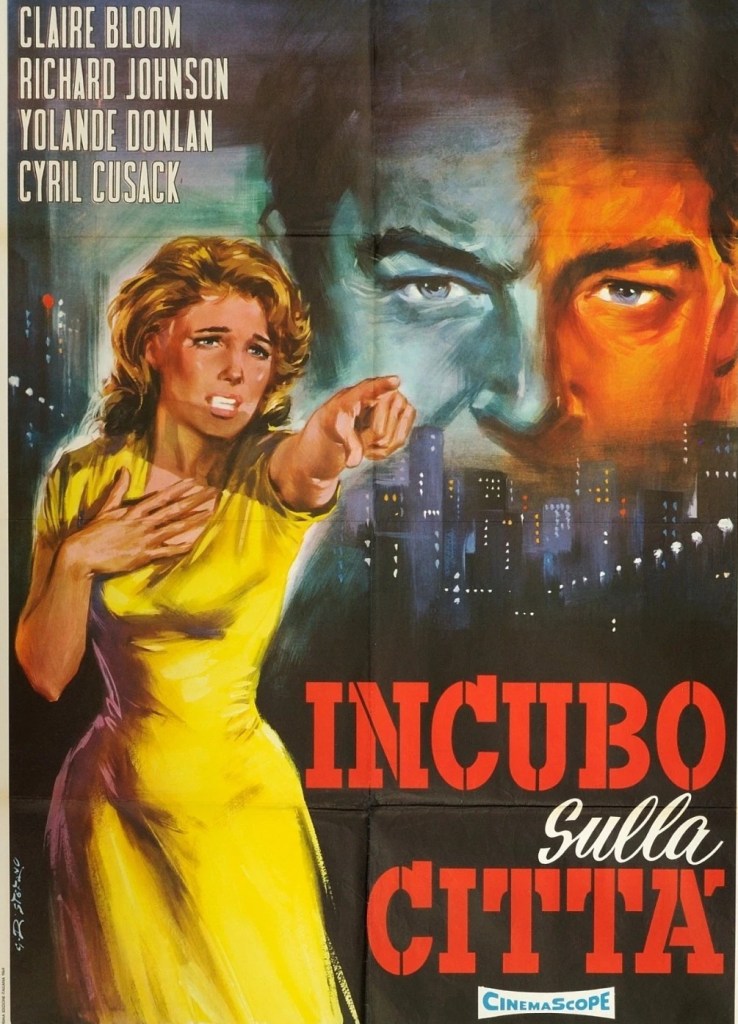
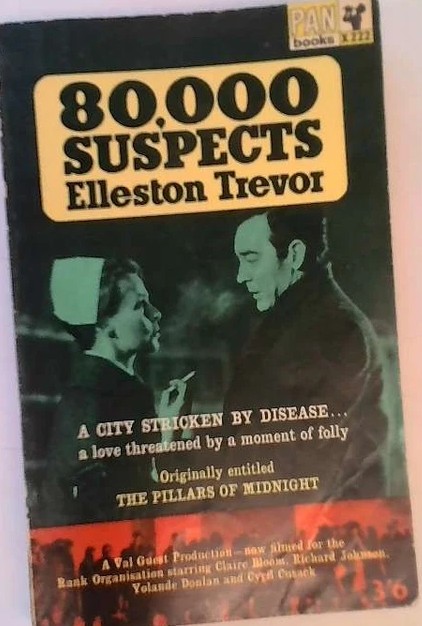
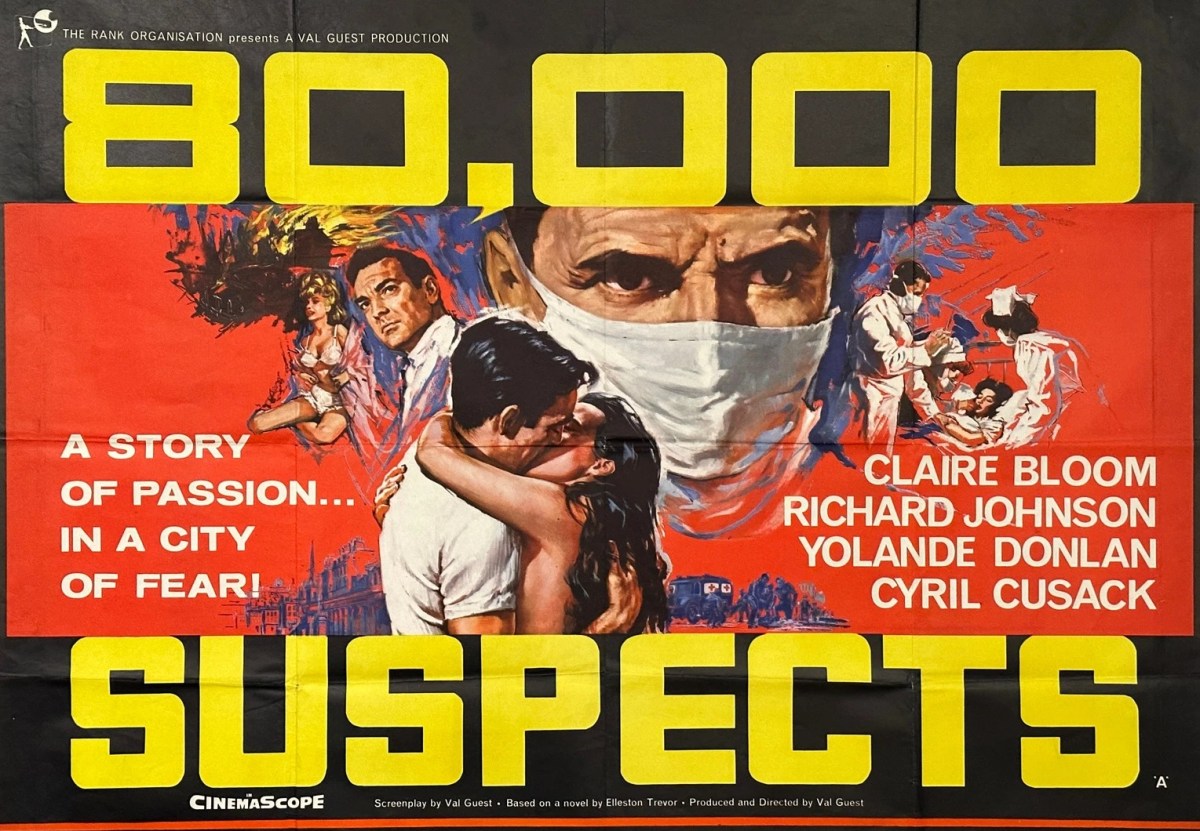
Bit of a stretch to compare it to the movies
mentioned in this poster.

Naturally, an inquest brings up Christine’s past and suspicion falls on her. And that would be par for the course, and it would be up to the condemned woman to find a way to prove her innocence. But that takes us into even murkier depths.

There’s bad blood between Capt Ferris and Stephen and the inference that this was only resolved by the father offering his underage daughter to the lawyer to be followed by the unscrupulous father blackmailing Stephen. Then it turns out there’s no case to answer and that Christine is innocent because, blow me down, Liane committed suicide.

But what should have been a straightforward, if unlikely, murder plot comes unstuck because it can’t make up its mind what it wants to be. Too many ingredients are thrown into the pot and the result is a mess.

Even the queen of melodrama Susan Hayward (Stolen Hours, 1963) can’t rescue this. And the pairing with Peter Finch (Accident, 1966) doesn’t produce the necessary sparks. Despite a variable Irish accent, Diane Cilento (Hombre, 1967) comes off best as the wayward deluded young woman.

Robert Stevens (In the Cool of the Day, 1963) directs from a screenplay by Oscar-nominated  Karl Tunberg (The 7th Dawn, 1964) adapting the bestseller by Audrey Erskine-Lindop.

Had every opportunity to be a star attraction in the So Bad It’s Good sub-genre but fails miserably. Still, if you enter into the swing of things, remarkably tolerable.

Day of the Jackal (1973) *****

The original – and unlikely ever to be topped no matter the best intentions of Sky’s current remake. Possibly the greatest thriller of all time, certainly in the top two or three, and broke every rule going. No music, excepting the first few minutes, for a start. Could easily have been packed with the easily-recognizable all-star-cast found in roadshows, a few British acting knights thrown in for good measure, but instead has a no-name cast.

You would have had to be particularly vigilant as a moviegoer to have even heard of Edward Fox, too old (aged 36) at this point to be considered a rising star, and without the portfolio (outside of a Bafta supporting actor nomination for The Go-Between, 1971) to suggest he had ever particularly shone.   

Didn’t realize there was a 70mm version.

Apart from their job, every character, especially the chameleon-like Jackal (Edward Fox), is anonymous, virtually nothing of home life intrudes in the sharply-drawn story. The brilliant script by Kenneth Ross (The Odessa File, 1974) jettisons every unnecessary detail, and the even better editing pares every scene down to the bone.

That there is even an iota of tension given we know the outcome is quite extraordinary, but, as with the book, it is wound up taut. Not will he-won’t he, but how, when, where? Every time the police get a lead, they discover he is one step ahead.

What director Fred Zinnemann (A Man for All Seasons, 1966) has the good sense to retain is much of the fascinating detail that author Frederick Forsyth packed into his runaway bestseller. How to create a false identity, how a nibble of cordite can make you look old, where to conceal a rifle in the chassis of your car, and my favourite, how to wind a rope round a tree to ensure your shooting arm is steady.

And, except for the gunman and the rebels he represents, not a maverick in sight. None of this Dirty Harry, Madigan, nonsense, nobody railing against authority, but still the dead weight of bureaucracy, the high-ups only too happy when the moment comes they can dismiss an underling who might steal a sniff of glory.

This shouldn’t work at all, there’s far too much of the dogged detective, cops on both sides of the Channel tearing through reams of paperwork, hundreds of hotel registration cards, lost passport forms, birth certificates, death certificates. Cops stopping every blonde male of a certain height. Most of the minions you never see again, regardless of the vital tasks they fulfil. Virtually the only way characters are permitted emotion is to take a longer drag on their cigarette.

The only feeling permitted is the reaction of the would-be femme fatale Denise (Olga Georges-Picot) when her superior burns the love letters and photographs of her French soldier boyfriend killed in action. The late twist to that element of the story, when one of the politicians is discovered to have fallen into her honey-trap, comes when the cabal of politicians realises that French detective Lebel (Michael Lonsdale) has tapped all their phones.

There’s a constant sense of peak and trough, every breakthrough a dead end, yet endless accumulation of tiny detail allows for maneuver at the end, when we discover that the Jackal is not, as we have been led to believe, an Englishman going by the name of Charles Calthorp.

Given the intensity, there’s still space for nuance. The other murders the Jackal commits are visually discreet. None of the extended hand-to-hand combat of Jason Bourne and John Wick. A karate chop for one victim, another ushered out of view, the hand of a compromised lover grows limp. The torture scene is visually classic. The tortured man, seen from behind, tries to duck away from the glaring light and when he succeeds that light glares in the face of the audience leaving backroom staff to glean his tape-recorded words in between his screams

The money Zinnemann saved on star turns probably went on achieving French cooperation which minimized outlay on building on a set to show the parades and all the military razzamatazz that went with a realistic depiction of Liberation Day, a major French event. The assassin’s target, French President De Gaulle, was dead by the time the movie was made, so could not object, and since the assassination failed in part due to the brilliance of the French police perhaps it was felt this was one movie worthy of such collaboration.

Edward Fox is superb at the chilling bisexual assassin but the support cast is excellent – Cyril Cusack (Fahrenheit 451, 1966) as a gunsmith, Michael Lonsdale (Caravan to Vaccares,1974), a young Derek Jacobi (Gladiator, 1999), Barrie Ingham (A Challenge for Robin Hood, 1967), Alan Badel (Arabesque, 1966) as a snooty minister, Olga-Georges Picot (Farewell, Friend / Adieu L’Ami, 1968) and Delphine Seyrig (Accident, 1967).

Based on his Oscar-heavy record – two wins, four nominations – you wouldn’t have picked Fred Zinnemann for such populist fare. Unless you recalled that he followed From Here to Eternity (1953) with musical Oklahoma! (1956). He had never made a thriller before, but he instinctively knows how to make the material sing.

Hollywood went down the remake route once before with indifferent results despite a top-class cast of Bruce Willis, Richard Gere and Sidney Poitier in The Jackal (1997). The current television series is getting a good vibe but it will have to go some, even with around eight hours to play with, to match this.

Masterpiece.

Discover WordPress

A daily selection of the best content published on WordPress, collected for you by humans who love to read.

The Atavist Magazine

by Brian Hannan

WordPress.com News

The latest news on WordPress.com and the WordPress community.