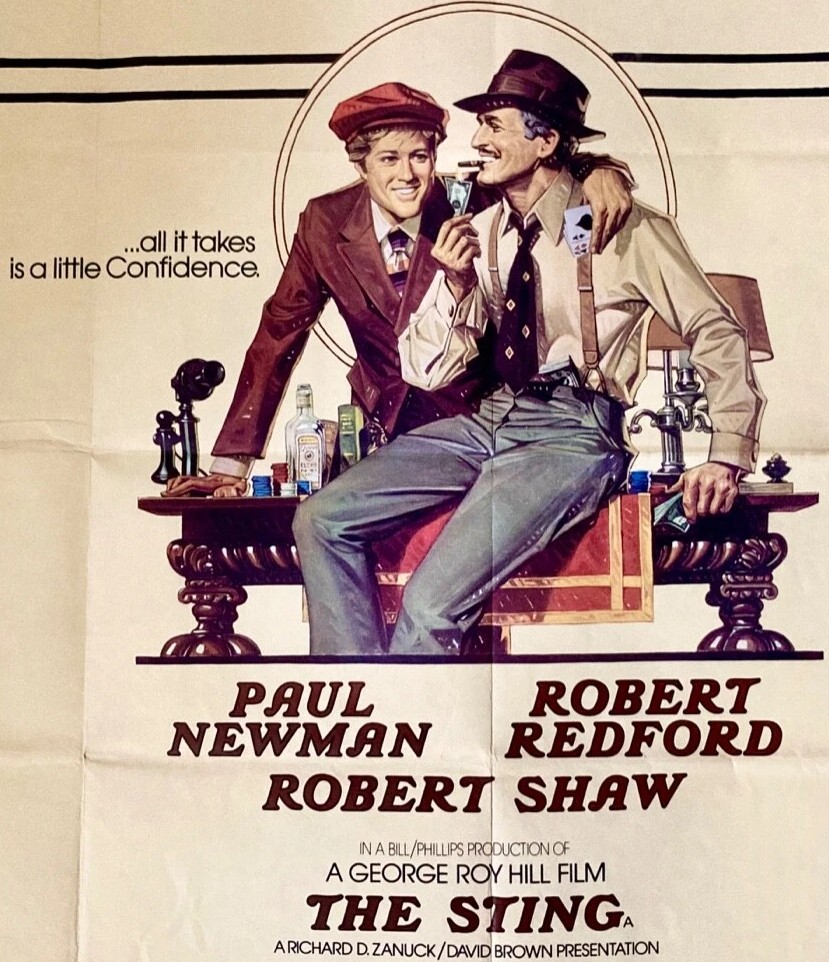
There was a time when movies had charm. An easy grace. A fluidity. The ability to hold an audience in the palm of their hands with the simplest of narratives. Sadly, that time is long gone. I doubt if any Hollywood director – so raddled now by self-indulgence and self-importance – would even know how to make this kind of souffle.
I haven’t watched this movie in decades. And I fully expected to dismiss it as having aged badly. Instead, I just adored it. In part that is due to what is surely the greatest male screen partnership ever. It wasn’t uncommon then and now for two top stars to be paired together, but usually the narrative had them in conflict. That’s not the case here. There’s a reason why Paul Newman and Robert Redford were credited in Butch Cassidy and the Sundance Kid (1969) with inventing the buddy movie. Their screen personas just dovetail and they appear so comfortable with each other.
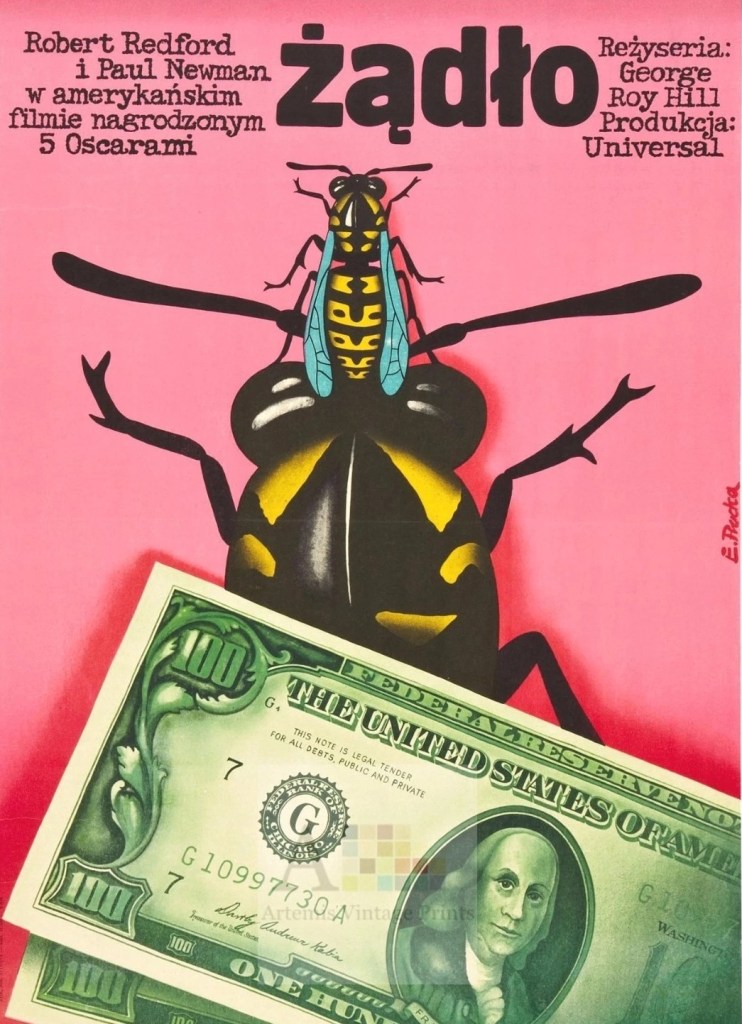
Sure, the story is a cracker, and the direction is impeccable, what with using long-gone techniques like the wipe, and the chapter headings, and, of course, the adaptation of the Scott Joplin music and audience exposure to the techniques of pulling the “big con” and the secret nose-stroking by which fraudsters identified each other. But while this premise would surely have worked with another duo, it would not have worked half as well.
This was Robert Redford’s annus mirabilis. It’s impossible these days to comprehend his impact, for the simple reason that stars rarely release two movies in the one year. Following Butch Cassidy and the Sundance Kid, Redford had been there or thereabouts without quite taking the final step required to become a box office sensation, indulging himself in worthy pictures like The Candidate (1972) and Jeremiah Johnson (1972), but the latter was decidedly under-performing until Warner Bros sent it long after initial release down the “four-wall” route that would prove pivotal to The Exorcist (1973), whereby a studio hired theaters to show a movie, paying a flat fee that covered an exhibitor’s costs and some profit rather than splitting the proceeds on a percentage basis.
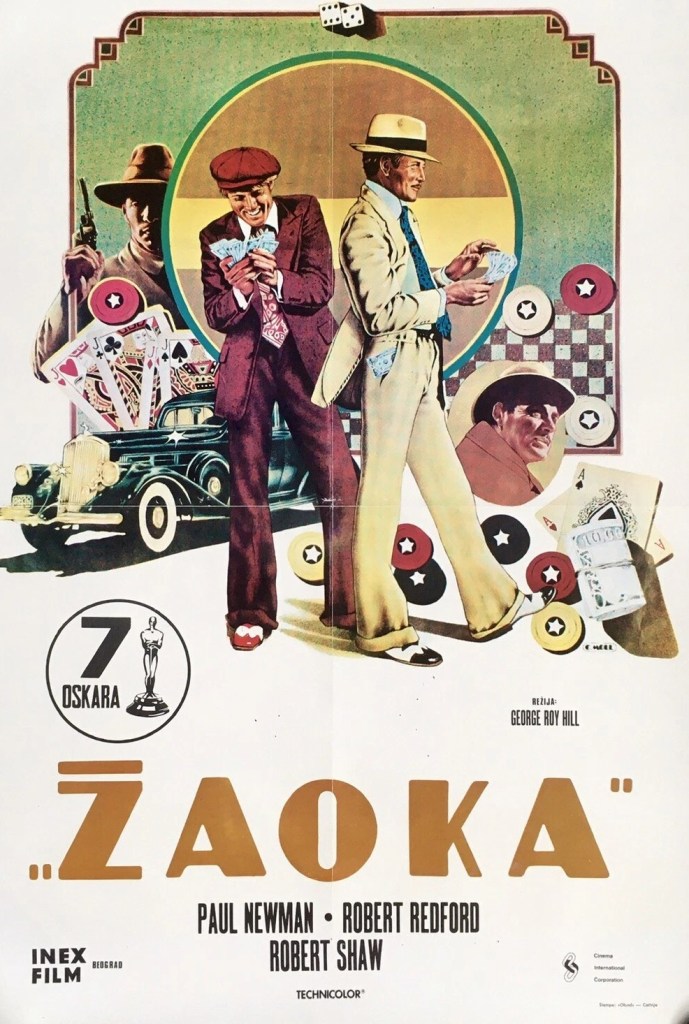
But the double whammy of The Way We Were (1973) and The Sting sent Redford’s marquee value into the stratosphere. And he’s not the big romantic lead that he was in the Streisand picture, if anything he comes up short in the romantic department, dumb enough to seduce a female assassin. He’s always one way or another needing to be rescued from a self-induced calamity rather than the confident gunslinger of Butch Cassidy and the Sundance Kid with an adoring woman hanging on his every word.
There are a couple of other memorable pieces of acting that I’d like to draw to your attention. The first is Reford’s thumbs, which always seem to stick out, the reason for which is never explained and possibly they’ve been beaten by previous malfeasance into that position. The second isn’t Robert Shaw’s pronounced limp, but his menacing catchphrase “You follow?” which must be the toughest two words outside of swearing ever spoken by a gangster.
Seeking revenge on underworld kingpin Doyle Lonnegan (Robert Shaw), on-the-run con man Johnny Hooker (Robert Redford) teams up with the more experienced Henry Gondorff (Paul Newman). The plan is to rook Lonnegan of half a million dollars. They’re going to do it with a racing scam, where they know the results of a race before anyone else.
But first Gondorff needs to find finance and needle Lonnegan enough to bait the hook. He achieves both by stealing Lonnegan’s wallet before using that cash for his wagers and cheating better than Lonnegan at poker.
Then Hooker has to pretend that he’s fallen out with Gondorff and willing to work with Lonnegan to screw two million bucks out of Gondorff. Meanwhile, to spice up the plot, maverick cop Snyder (Charles Durning) is on the trail of Hooker and the FBI are on the trail of Gondorff.
The payoff is so brilliant that audiences at the time reputedly cheered and I have to say I felt like doing so myself.
Robert Redford was nominated for an Oscar but I think the acting honors were even with Newman. The movie won the Best Film Oscar and Best Director for George Roy Hill (Hawaii, 1966) and usually when you come to re-evaluate Oscars you tend to mark down many of the choices because they don’t really hold up. This was up against The Exorcist, American Graffiti, Ingmar Bergman’s Cries and Whispers and the comedy A Touch of Class, so it wasn’t as though there was another better contender.
I like to think it won for bravura. Elan. In every department. Fresh and innovative, oozing charm and with the greatest double act in American cinema.
Director George Roy Hill (Hawaii, 1966) was on a roll and the screenplay by David S. Ward (Steelyard Blues, 1973) hit a home run.
There’s hardly been a more enjoyable Oscar-winner.


 The Magnificent 60s