The Chapman Report (1962) ***

In the 1950s new talent was largely bloodied via small parts in big movies. In the 1960s, the easier route was to first build them up as television stars. This picture represents the nadir of that plan – female roles filled with established talent, males roles with actors who had made their names in television. And, boy, does it show, to the overall detriment of the picture.

Warner Bros even had the temerity to top-bill Efrem Zimbalist Jr (hauled in from 77 Sunset Strip, 1958-1964) over more famous actresses. Zimbalist Jr at least had some marquee value after starring in low-budget A Fever in the Blood (1961) and second male lead in the classier By Love Possessed (1961) and Ray Danton (The Alaskans, 1959-1960) had played the title role in B-picture The George Raft Story (1961), but Ty Hardin was unknown beyond Bronco (1958-1962) and Chad Everett drafted in from The Dakotas (1962-1963).

Little surprise, therefore, that director George Cukor (Justine, 1969) concentrated his efforts on the females in the cast. But it was curious to find Cukor taking on this sensationalist project based on the surveys of sexuality that had taken the country by storm. Had it been made by a less important studio than Warner Bros it would have been classed as exploitation.

The bestseller by Irving Wallace on which it was based was a take on the Kinsey Report a decade before and others of the species and, theoretically at least, opened up the dry material of the more scientific reports into how men and women behaved behind closed doors.

Amazing that this was passed by the Production Code since dialog and action are pretty ripe. Interviewed women are asked about “heavy petting” and how often they have sex and if they find the act gratifying. One interviewer crosses the line and has an affair; these days that would be viewed as taking advantage of a vulnerable woman. And there’s a gang rape.

Given the movie’s source Cukor takes the portmanteau approach, four women undergoing different experiences. The problem with this picture is that there’s little psychological exploration. Women are presented by their actions not by their thought patterns or by their treatment by their husband.

In what, in movie terms, is the standout section, Naomi (Claire Bloom), an alcoholic nymphomaniac, is so desperate for attention she throws herself at the delivery boy (Chad Everett), then at a married jazz musician (Corey Allen), with devastating effect, as he hands her over to his buddies, causing sufficient degradation that she commits suicide. Since we first come across her crying in bed, sure signs of depression, these days you would expect more exploration of her psychiatric state.

Similarly, the widowed Kathleen (Jane Fonda) has been tabbed frigid by her husband and nobody thinks to call into question his inadequacies as a sex partner rather than hers. Here it’s put down to daddy issues and growing up in a household heavy with morality.

Kathleen is taken aback by the researcher even asking her about sex, “physical love” the technical term, rather than a purer kind but her consternation at the questions being posed in very cold-hearted manner by an anonymous voice – researcher hidden behind a wall – does reveal how ill-equipped some people are to even talk about sex. Her story develops into some kind of happy ending, despite the fact that her interviewer Radford (Efrem Zimblist Jr) would be busted these days for taking advantage.

Teresa (Glynis Johns) is convinced by the interviewer’s tone that the simple normality of her own marriage must be abnormal and so, determined to fit in, embarks on a clumsy attempt to  seduce footballer Ed (Ty Hardin), coming to her senses when it comes to the clinch.

The interview also has a major impact on the adulteress Sarah (Shelley Winters). After confessing her affair to husband Frank (Harold J. Stone) she rushes off to lover, theater director Fred (Ray Danton), only to find, to her astonishment, that he’s a married man. Her husband accepts her back.

To keep you straight, the “good” women are dressed in white, the “bad” ones in black. The filming is distinctly odd. The man behind the wall is filmed with no ostentation, but the style completely changes when the director turns to the women who often end up in floods of tears.

Claire Bloom (Two into Three Won’t Go, 1969) and Jane Fonda (Barbarella, 1968) are the standouts because they have the most emotion to play around with. Oscar-nominated Glynis Johns (The Cabinet of Caligari, 1962) is the comic turn. Over-eager over-confident Oscar-winner Shelley Winters (A House Is Not a Home, 1964) gets her come-uppance. None of the men make any impact.

The book took some knocking into shape. Perhaps because, of the four names on the credits only one had signal screenwriting experience, Don Mankiewicz (I Want to Live, 1958). For the others, better known for different occupations in the business, this was their only screenwriting credit. Wyatt Cooper was an actor married to Gloria Vanderbilt, Gene Allen art director on many Cukor pictures and production designer on this, and Grant Stuart was a boom operator though not on this picture.

Best viewed through a time capsule.
Made in Paris (1966) ***

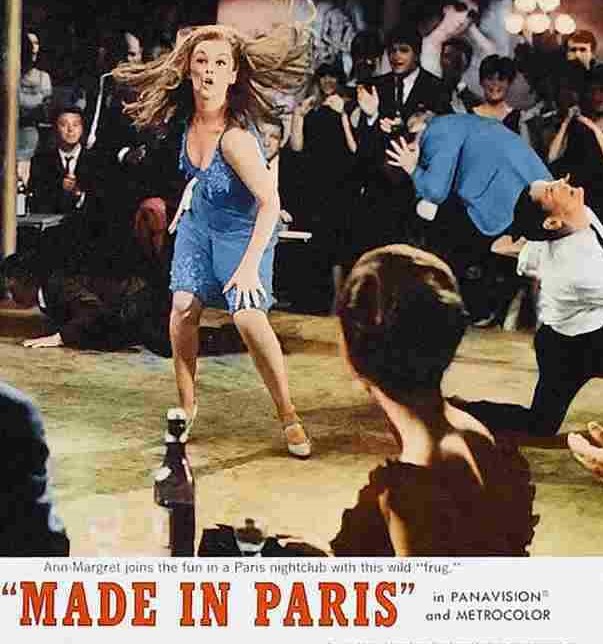
She sings, she dances, she shakes her booty. What else would you expect from Ann-Margret in light comedic mode (i.e. The Swinger, 1966) rather than serious drama (i.e. Stagecoach, 1966). While appearing as free-and-easy as in The Swinger, she’s actually a dedicated virgin, as was par for the course before the Swinging Sixties kicked in. But the way she lets it all hang out, you’d be forgiven (if you were a predatory male) for guessing the opposite.

Maggie (Ann-Margret) is a career girl, assistant fashion buyer in a New York store, having come up the hard way, small-town-girl then model then salesperson. When the Paris buyer Irene (Edie Adams) quits her job to get married, Maggie is shipped out as her replacement, not as a reward for all her hard work but as punishment because she refuses to sleep with the boss’s cocky son Ted (Chad Everett). The idea is she’ll be so out of her depth, she’ll return humiliated and only too happy to jump into bed.

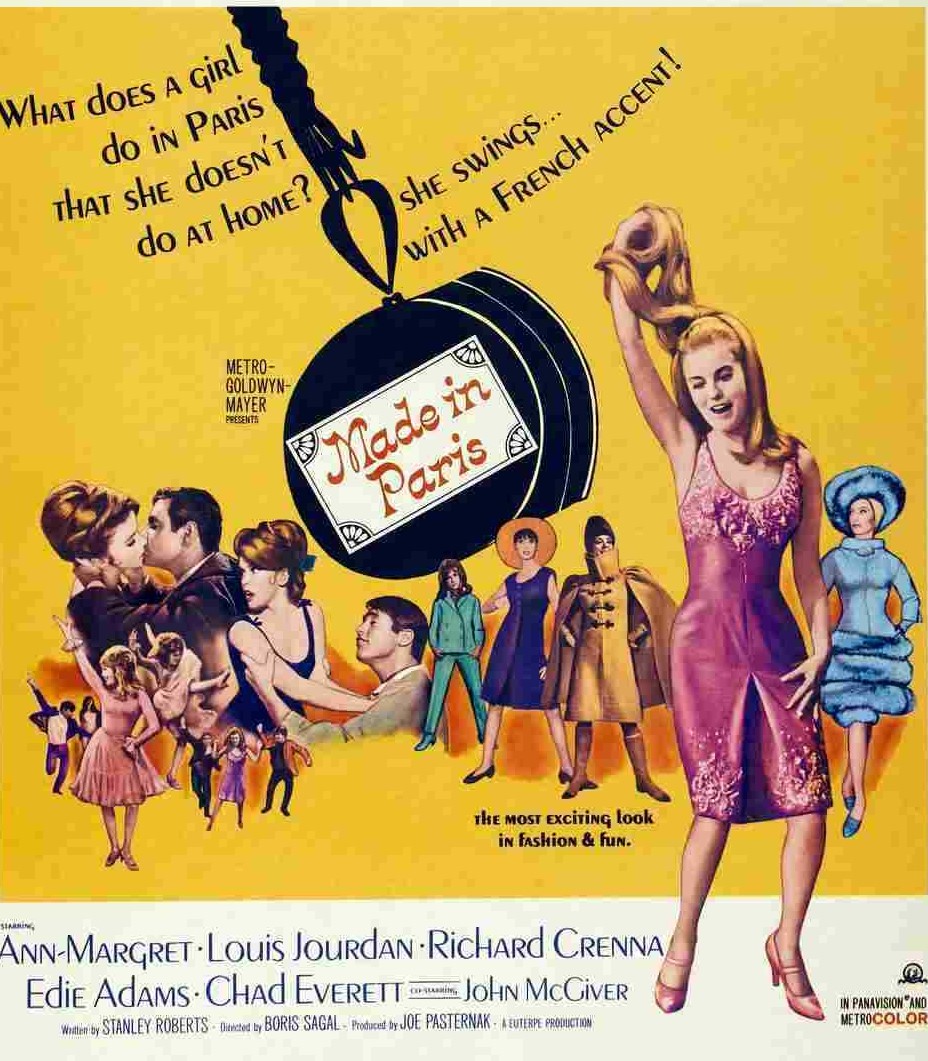
What do poster designes have against certain colors?
In the movie Ann-Margret dances in blue. In the poster, the dress turns red.

Turns out Irene quit so fast she didn’t have time to tell her Parisian boyfriend and fashion designer Marc (Louis Jourdan) so on Maggie’s first night in the company’s luxurious apartment he turns up. Naturally, he expects a bit of the old-fashioned quid pro quo, je ne sais quoi, whatever they call sex when they are being coy about it, and when she refuses to play ball he cables New York to demand her dismissal. Even when the New York boss (John McGiver) relents, she is banned from Marc’s fashion shows, meaning she can’t buy clothes she is forbidden to view.

Enter Ted’s buddy Herb (Richard Crenna), from the same lothario mold. Just to even things up or add further complication, Ted realizes he is actually in love with a girl who said no after a thousand boring girls who said yes. Trying to win her way back into Marc’s good books, with Herb as her guide she tracks the designer through the night clubs, eventually putting on the kind of sexy wild impromptu dance exhibition that the more staid Maggie could only have achieved if she’d taken lessons from Ann-Margret.

That does the trick and they share an impromptu number (“Paris Lullaby”) on the banks of the Seine although Marc still insists she shed her inhibitions before marriage if she wants to be considered a true Parisienne. The arrival of Mark and then Irene, abandoning her husband on their honeymoon when called in to retrieve the situation, adds fuel to the fire and then it’s one mishap after another, especially when Maggie discovers the pleasures of absinthe and ends up in Herb’s bed (yep, she has a hell of a time wondering not just how she got there but if, Heavens to Murgatroyd as Snagglepuss would say, she committed the terrible deed).

Unbelievably, and just as well perhaps from the narrative perspective, Herb isn’t a love rival. Maggie isn’t his type, its transpires. Shoot that man on sight – doesn’t fancy Ann-Margret?  Lock him up!

You won’t be surprised to learn that it all sorts itself out in the end but you might be a bit taken aback how quickly a dedicated career girl throws away her career once a marriage proposal comes her way.

You might have expected from the title that Maggie would be a model, the best excuse you could find for the actress to cavort in a series of skimpy costumes, as she does in the pre-credit sequence, an exquisite dialogue-free montage with a clever pay-off  that makes you think this is going to be much more stylish – excluding the fashion show of course – than it is.

Ann-Margret has such a dazzling screen persona she makes light work of even the lightest of confections. She does all that her most fervent fans would want but it’s not her fault she’s been cast in a Doris Day comedy that ensures she can only properly express her character by acts of exhibition. Louis Jourdan (Can-Can, 1960) keeps creepy entitlement at bay with lashings of Gallic charm. Despite his character’s playboy tag, Chad Everett (The Impossible Years, 1968) is the squarest of squares.

Richard Crenna (The Midas Run, 1969) spins his normal hard-ass screen persona into something a bit more sympathetic. Edie Adams (The Honey Pot, 1967) and John McGiver (Fitzwilly/Fitzwilly Strikes Back, 1967) add a bit of dash in support.

You’d never guess the director was Boris Sagal of The Omega Man (1971) fame. Stanley Roberts (Come September, 1961) wrote the screenplay.

Ann-Margret at her zingiest. What more could you ask?

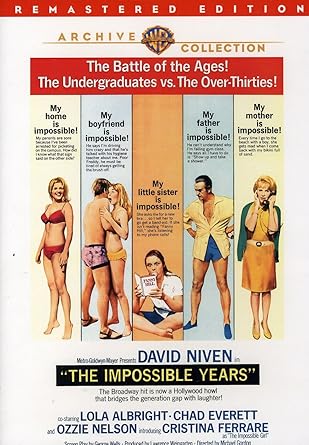
The Impossible Years (1968) ***

Generation gap comedy driven by unmentionables and the prospect of perplexed father getting more pop-eyed by the minute. By default, probably the last bastion of morality before censorship walls – the U.S. Production Code eliminated the following year – came tumbling down and Hollywood was engulfed in an anything goes mentality. Denial enters its final phase, quite astonishing the mileage achieved by not letting the audience in on what’s actually going on.  

Psychiatrist lecturer Jonathan (David Niven) finds his chances of promotion potentially scuppered after lissom teenage daughter Linda (Christine Ferrare) is arrested at a demonstration carrying a banner bearing an unmentionable word. That brings to the boil the notion that Linda may not be quite so sweet as she appears, Jonathan previously willing to overlook minor misdemeanors like smoking and speeding. But it turns out Linda may also have lost her virginity, that word also verboten, and may even be, worse, illegally married.

So the question, beyond just how manic her parents can be driven, is which male is her lover: the main candidates being a trumpet-blowing teenage neighbor and let) or laid-back artist hippie who has painted her in the nude.

Innuendo used to be the copyright of the Brits, in the endlessly smutty Carry On, series, but here the number of words or phrases that can be substituted for “sex” or “virgin” must be approaching a world record, but delivered with gentle obfuscation far removed from the leering approach of the Brits.

It’s a shame this movie appeared in the wake of bolder The Graduate (1967) because it was certainly set in a gentler period and its tone has more in common with Father of the Bride (1950). Setting aside that most of the adults, for fear of offending each other, can’t ever say what they mean, the actual business of a young woman growing up and demanding freedom without ostracising her parents is well done, Linda stuck in the quandary of either being too young or too old to move on in her life.

The scenes where that issue is confronted provide more dramatic and comedic meat than those where everyone is grasping, or gasping like fish, for words that mean the same as the other words they refuse to utter.

Parental issues are complicated in that Jonathan has set himself up as an expert on dealing with the problems growing children present. He views himself as hip when, as you can imagine, to  younger eyes, he’s actually square. And he’s also worried his younger daughter Abbey (Darlene Carr) will start to emulate her sibling.

Compared to today, of course, it’s all very innocent and I’m sure contemporary older viewers might pine for those more carefree times. It doesn’t work as social commentary either, given the rebellion that was in the air although it probably does accurately reflect how adults felt at confronted by children growing up too fast in a more liberal age.

David Niven (Prudence and the Pill, 1968) brings a high degree of polish to a movie that would otherwise splutter. He’s playing the equivalent of the stuffy Rock Hudson/Cary Grant role in the Doris Day comedies who always get their comeuppance from the flighty, feisty female. That fact that it’s father-and-daughter rather than mismatched lovers only adds to the fun. And there were few top-ranked Hollywood actors, outside perhaps of Spencer Tracy (Guess Who’s Coming to Dinner, 1967) who audiences would be interested in seeing play a father.

The unmentionable conceit wears thin at times but Niven and Cristina Ferrare (later better known as the wife of John DeLorean) do nudge it towards a truthful relationship. Former movie hellion Lola Albright (A Cold Wind in August, 1961) is considerably more demure as the Jonathan’s wife. Chad Everett (Claudelle Inglish, 1961) breezes in and out.

Although at times giving off a “beach party” vibe, it manages to examine the mores of the  time.

Director Michael Gordon has moved from outwitted controlling mother (For Love or Money, 1963) to undone controlling father without dropping the ball. It’s based on the Broadway play of the same name by Robert Fisher and Arthur Marx.

Lightweight for sure but worth it for David Niven and the sultry Ferrare.

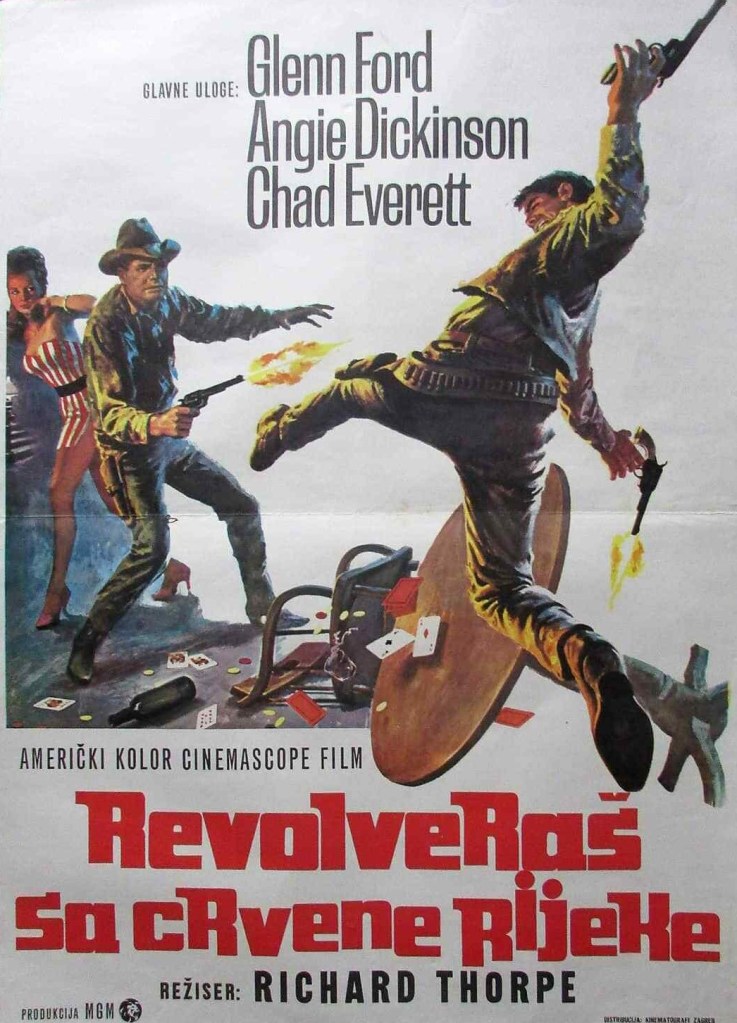
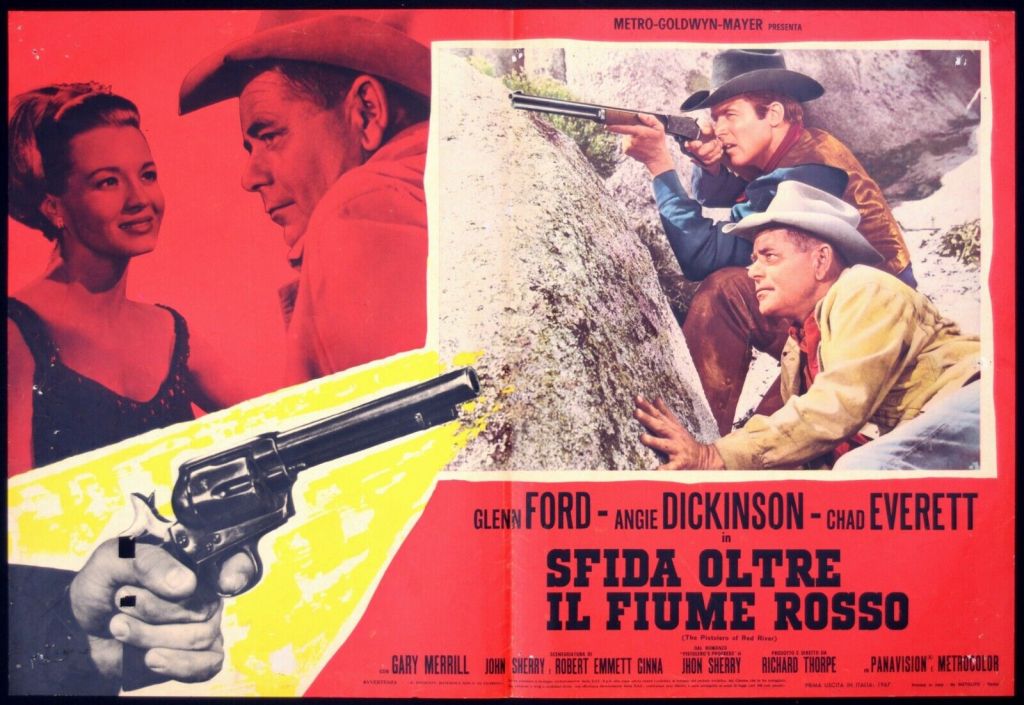
The Pistolero of Red River / The Last Challenge (1967) ****

A little gem. Mature, thoughtful, cleverly structured. Plays with expectations. Another assured performance from Glenn Ford (Rage, 1966) with Angie Dickinson (Jessica, 1962) permitted a character of considerably more complexity than normal.

Quite an unusual set-up. Marshal Blaine (Glenn Ford) is an ex-convict, his paramour Lisa (Angie Dickinson) is the local madam. Both are pretty much accepted in this small western town. Some hypocrisy comes Lisa’s way – her money acceptable to a storekeeper who out of earshot refers to her as white trash – but generally the townspeople are happy with an ex-gunslinger as lawman.

But he’s not your standard lawman. He’s very easy-going, not spending all is time upholding the law or out hunting varmints, and she’s not your typical madam either, mothers her employees, keeps unwanted men at a distance, and has made enough money for a fine rig and fancy clothes.

Blaine is sensible but ruthless, taking tough action to prevent a young kid getting into trouble with a dangerous gunman, but having no compunction about shooting the gunslinger. He’s not out for an easy life, but my he does enjoy it, though on a slack day finds fishing more fun than rolling in the hay with Lisa. She knows she has made a good catch, her friend still getting knocked about by her husband, and although Blaine doesn’t seem the marrying kind she has notions of having a baby.

But out fishing Blaine frees a villain Ernest (Jack Elam) who has upset the local Indians. Since they shared a cell way back, Ernest sees Blaine as an easy touch and when told where to go on that score fingers to blackmail Lisa. Meanwhile, this turns out to be an eventful fishing trip. Blaine buddies up with a stranger, Lot (Chad Everett), they fish, cook and drink whisky together until the newcomer reveals he’s on a mission to kill the lawman and take his title of fastest gunman in the southwest.

So you can see where this is headed. Except it doesn’t take that route. Because Lisa, worried that the youngster might well be faster on the draw, hires Ernest to kill him. And when that backfires, it’s only a matter of time before Blaine finds out and you wonder what that’s going to do to their relationship.

There’s some standard stuff, a poker cheat for example, but there’s a lot more going on. Blaine’s young deputy, mostly left to do the chores, tries to throw his weight around with the gunman only to end up with egg on his face. There’s an Native American in jail who we never see and a subplot involving his colleagues that looks like it’s headed in the direction of standard western confrontation until that notion is cleverly nipped away from under the audience’s feet.

Given credence by the worried Lisa is the idea that Blaine is coming to the end of the trail and it’s a testament to the direction that the tension lasts as long as it does. The promotional material gives out that the youngster is a tearaway threatening to shoot up the town, but that’s far from the truth, Blaine trying to talk him out of such rashness while at the same time seeing the boy as a reflection of his younger self.

There’s some brilliant dialog. “Of all the people ain’t worth saving,” Blaine tells Ernest, “you’re the first that comes to mind.” At their first meeting, Lot asks Blaine, “Where’s your tin star?” Retorts Blaine, “You better never see it on me.” As they part, Lot says, “We’ll be meeting again.” Replies Blaine, without aggression, “If that’s the way you want it.”

But there’s quite a lot that’s missed out. There’s no scene of Lisa hiring Ernest, just that he ambushes Lot. The jailed Native American is, as I mentioned, off-camera. There’s none of the usual massive build-up towards a showdown. And even as the shootout approaches, Lisa still doesn’t trust in Blaine’s skill and plans to shoot Lot herself.

That betrayal comes as a helluva shock. When has any lawman’s moll lacked such faith? As for Lot, gunslinging is all that he lives for, the measure of himself, and there’s a purity about him as he rejects countless offers of whisky and women even as he knows he’s making a terrible bed to lie in.

This was very much ahead of its time, especially in thwarting audience expectation not just in the representation of character but in the narrative. It proved a fine last hurrah for veteran Hollywood director Richard Thorpe (The Truth about Spring, 1965). Robert Emmett Gina (Before Winter Comes, 1968) wrote the screenplay based on the John Sherry novel.

As it happened, I watched this back-to-back with Rage so ended with an even better appreciation of Glenn Ford’s talent but was also very taken with Angie Dickinson for the way her character twisted and turned as she attempted to create the outcome she desired. Definitely worth a watch.

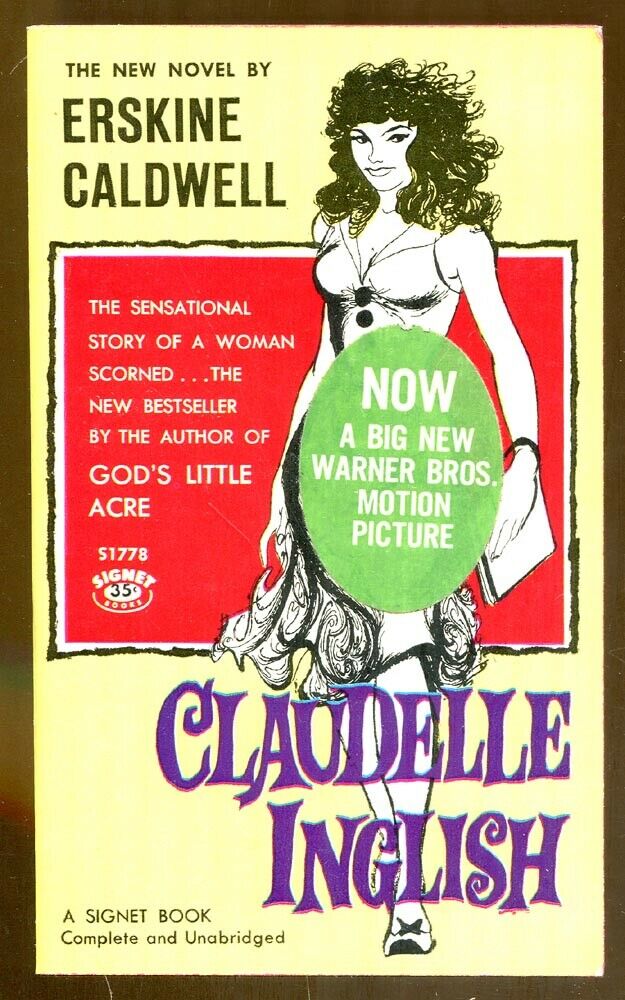
Claudelle Inglish (1961) ****

Simple small-town morality tale, brilliantly told, with a quiet nod to The Blue Angel and Citizen Kane. Shy dirt-poor farmer’s daughter Claudelle Inglish (Diane McBain) after falling for the handsome Linn Varner (Chad Everett) expects to be married when he returns from his Army stint until she receives a “Dear John” letter. Initially devastated, keeping all his letters and the dancing doll she had won with him at a fair, she decides that lying in bed all day and staring at the ceiling is not going to work. So she smartens up her frumpish look with lipstick and turns her simple wedding dress into a more attractive outfit.

She discovers that the boys are so desperate to come calling on this new-look creature that they will bring presents to every date, ranging from the biggest box of candy in the shop to a pair of red shoes. Encouraging her determined manhunt, dissatisfied mother Jessie (Constance Ford), who has endured twenty years of broken promises throughout marriage to hardworking Clyde (Arthur Kennedy),  beseeches her to go after a rich man. Luckily, there is one in the vicinity, the widowed S.T. Crawford (Claude Akins) who happens to be their landlord. Crawford tries to bribe Clyde with free rent and other benefits to put in a good word, but to no avail, the father believing that true love cannot be bought and, furthermore, will alleviate abject poverty.

Advertisement to the trade encouraging exhibitors to book for one
of the key dates on the U.S. release calendar.

Claudelle bluntly rejects Crawford as “too old and too fat” but takes his present anyway and, under pressure, agrees to go for a ride with him without allowing him to stop the car. Dennis Peasley (Will Hutchins), elder son of a store owner, believes he is the front runner, deluging her with gifts, naively believing she is his sweetheart until he realizes he is in competition with a horde of other local boys, including his younger brother, and outsider Rip (Robert Colbert). Jessie, seeing the prospect of a rich husband slip away, embarks on an affair with Crawford. Soon, Claudelle has the entire male population in the palm of her hand, piling up presents galore. However, tragedy, in the way these things go, is just round the corner.

What struck me first was the subtlety. Nothing here to bother the censor, beyond the immorality on show and despite Hitchcock breaking all sorts of sexual taboos with Psycho the year before. This isn’t an all-hot-and-bothered essay like the previously reviewed A Cold Wind in August or a picture that pivots on twists-and-turns like A Fever in the Blood, both out the same year. It is so delicately handled that took me a while to work out that Claudelle was actually having sex with all these guys.

Erskine Caldwell was America’s bestselling author at the time with over 40 million books sold and most famous, of course, for God’s Little Acre, filmed in 1958, and Tobacco Road (1941).

The initial shy girl blossoming under the first blush of love is done very well, a gentle romance ensuing, Claudelle still withdrawn in company, agreeing to an engagement even though Linn cannot afford a ring, waiting anxiously for his letters, adoring the dancing doll,  paying off a few cents at a time material for a wedding dress. It’s only after she receives a Dear John (Dear Jane?) letter that it becomes clear, though not crystal clear, that sex has been involved because that word is never spoken and that action never glimpsed. Only gradually do we realise that present-givers are being rewarded, and as her self-confidence grows she is soon able to pick her own presents.  One look is generally all it takes to have men falling all over themselves to give her what she wants, which is, essentially, a life where promises are not broken. But the closest she gets to showing how much she is changed from her original innocent incarnation is still by implication, telling a young buck she is “pretty all over.”

I was also very taken with the black-and-white cinematography by Ralph Woolsey. The compositions are all very clear, but in the shadows Claudelle’s eyes become glittering pinpoints. The costumes by Howard Shoup won an unexpected Oscar nomination, his third in three years. Veteran director Gordon Douglas (Them!, 1954) does an excellent job of keeping the story simple and fluent, resisting all temptations to pander to the lowest common denominator while extracting surprisingly good performances from the cast, many drawn from Warner Brothers’ new talent roster.

Diane McBain (Parrish, 1961) handles very well the transition from innocence to depravity (a woman playing the field in those days would be tagged fallen rather than independent) and holds onto her anguish in an understated manner. In some senses Arthur Kennedy (Elmer Gantry,1960) was a coup for such a low-budget production, but this could well have been a part he was born to play, since in his movie career he knew only too well the pain of promise, nominated five times for Best Supporting Actor (some kind of record, surely) without that nudging him further up the billing ladder. His performance is heartbreaking, working his socks off without ever keeping head above water, repairs getting in the way of promises made to wife and daughter, kept going through adoration for his wife.

Constance Ford (Home from the Hill, 1960) is heartbreaking in a different way, scorning her loving husband and dressing like her daughter in a bid to hook Crawford.  Television regular Claude Akins is the surprise turn. In a role that looked like a cliché from the off – i.e. older powerful man determined by whatever means to win the object of his desires – he plays it like he was auditioning for The Blue Angel, hanging on every word, being twisted round her little finger, demeaning himself as he is made to wait, sitting downcast outside the Inglish house like an rejected schoolboy. Of the younger cast, Will Hutchins was Sugarfoot (1957-1961), Chad Everett was making his movie debut, and Robert Overton had appeared in A Fever in the Blood (1961). Leonard Freeman (Hang ‘Em High, 1968) wrote the screenplay based on the Erskine Caldwell bestseller.

And where does Citizen Kane come into all this? The dancing doll Claudelle won at a fair when dating Linn is something of a motif, never discarded, as if a symbol of her innocence, and in close-up in the last shot of the film.

Discover WordPress

A daily selection of the best content published on WordPress, collected for you by humans who love to read.

The Atavist Magazine

by Brian Hannan

WordPress.com News

The latest news on WordPress.com and the WordPress community.