The Born Losers (1967) ***

The indie movement wasn’t embraced back in the day the way it is now. Occasionally an indie auteur would find favor – John Cassavetes (Shadows, 1958), for example – although it was another decade before he made another movie that carried his particular stamp. With such an abundance of movies arriving from Sweden, Italy and France, critics didn’t have to go far to find material from outside the limited Hollywood prism that they could pump up and make themselves feel important.

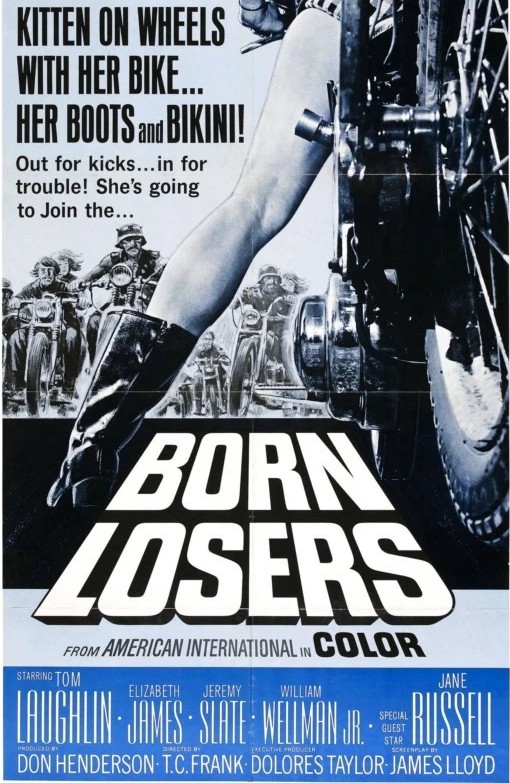
So indie writer-producer-director-actor Tom Laughlin failed to gain notice. There had been no upsurge of critical support for his first two features, The Young Sinner (1961) and The Proper Time (1962),  both of whose subject matters should have generated some coverage. In fact, they’re still ignored, not a single reviews for either on Imdb unless you count TV Guide. So when he came to his third picture, The Born Losers, he hid behind anonymity, the movie helmed by “T.C. Frank” and produced by “Don Henderson” with “James Lloyd” (in reality female lead Elizabeth James) allocated the screenwriting credit.
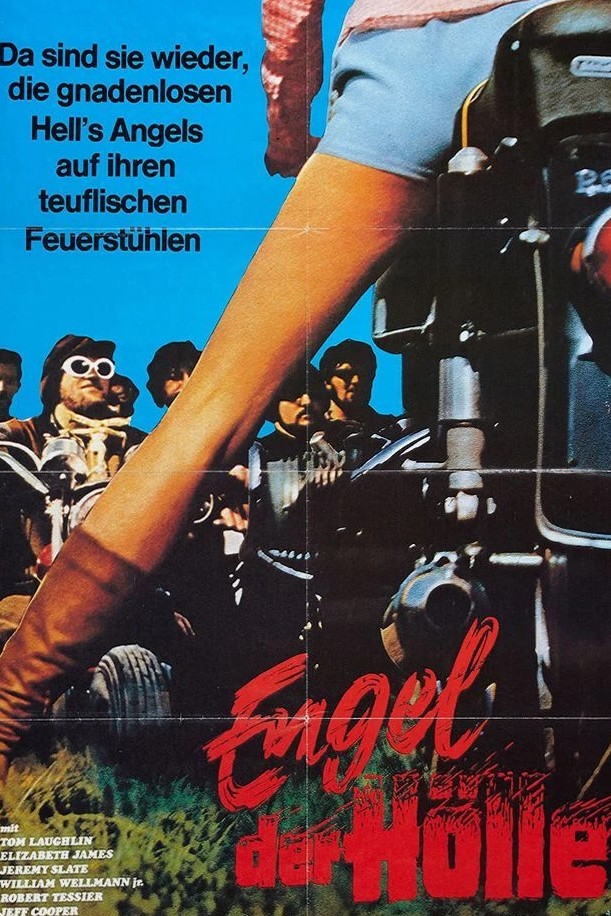
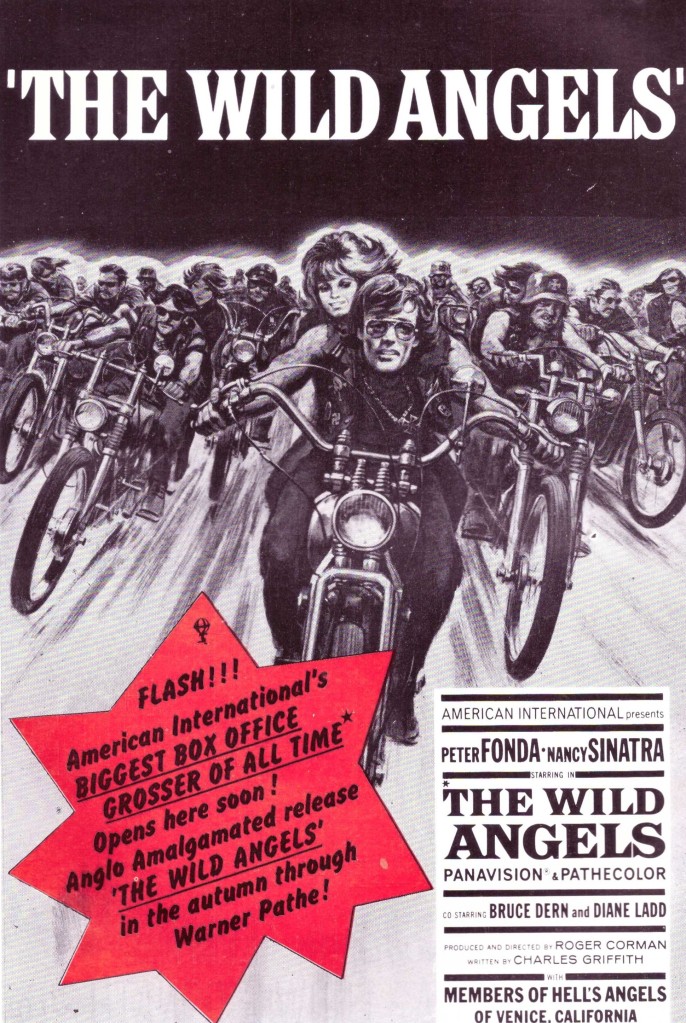
And it was, ostensibly, a biker pic, so no self-respecting critic was going to give it the time of day even though The Wild Angels – 83 critical reviews on Imdb – the previous year had attracted attention though largely through its nepo cast, Peter Fonda and Nancy Sinatra the children of Hollywood legends, in which the bikers were cast as innocent victims of authority.

So critics failed to note that The Born Losers was pretty much the first movie with an ecological theme and that it was probably only the second to deal with racism against Native Americans – Abraham Polonsky, on the other hand, got massive critical mileage for covering the same theme in Tell Them Willie Boy Is Here (1969).

And there’s nothing redemptive about these bikers, not given a free pass as in Wild Angels or deified as in Easy Rider (1969). But the picture certainly emphasizes their attraction, especially to teenage females entranced by what they view as an exciting alternative to Dullsville, USA. Girls are seduced by the image of bikers being akin to old-style cowboys, pioneers of the west enjoying a freedom few others dared even pursue. In the Californian sun girls jiggle around in bikinis, excited at the revving bikes.

Nor is Billy Jack (Tom Laughlin) the kind of two-fisted vigilante protector of the underdog as exemplified by Clint Eastwood and Charles Bronson. In fact, where Eastwood and Bronson generally dodge judgement of their maverick style, Billy Jack gets into more trouble with the law for preventing a young man being beaten to death than the bikers attempting to beat the victim to death.
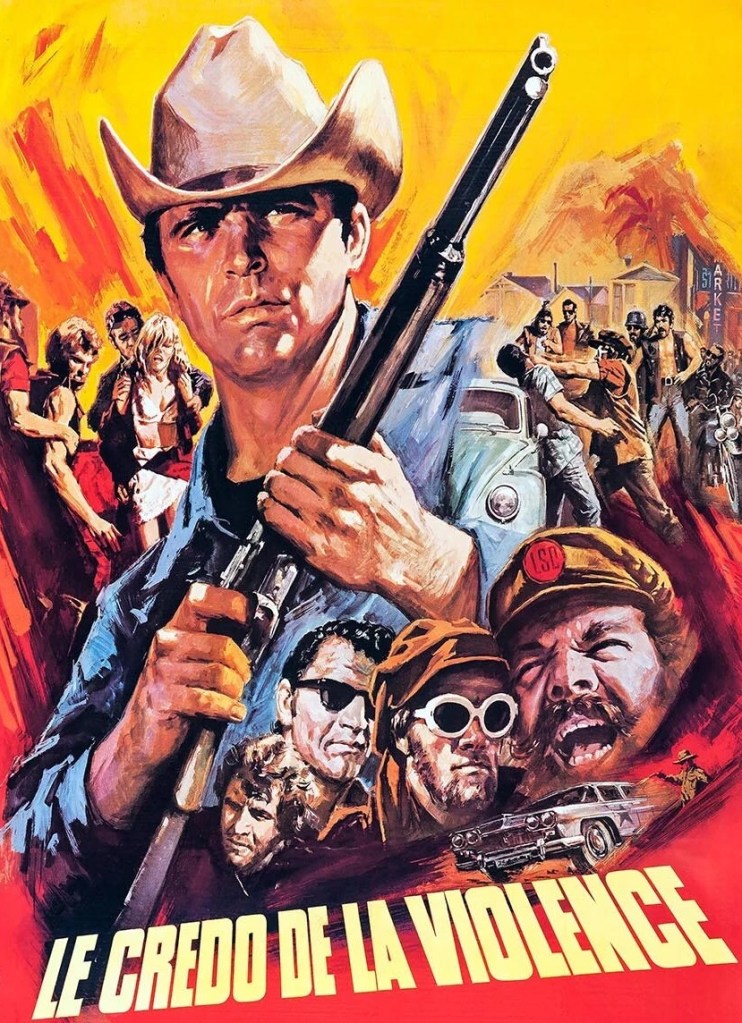
But unlike the Eastwood and Bronson vehicles, the actor Laughlin isn’t center stage all the time. And that’s primarily what makes the picture work. The director in Laughlin is very even-handed, covering the various aspects that produce a more than tolerable narrative and one that also reflected what would be a later Hollywood trope, the victims too frightened to come forward for fear of further retaliation.

There’s an unusually idyllic opening for a biker picture that telegraphs to the audience this going to be different, Billy Jack surviving with ease in the mountains and bathing under a waterfall. Likewise, Laughlin allows time to build up the two other main characters. Equally, unusually, they both have daddy issues. Wealthy Vicky (Elizabeth James) is devastated when her globe-trotting father fails to turn up for a long-promised rendezvous and biker leader Danny (Jeremy Slate) defies his bullying cop father, who spits in his son’s face. Whatever judgement you pass on the rest of Danny’s actions, he passes muster as a father, affectionately ruffling his son’s hair, and as a brother, standing up for his younger sibling.    

You might also be surprised at the fashion statements. Vicky is decked out like Audrey Hepburn with those trademark sunglasses and is apt to take to the road on her two-wheeler wearing a white bikini. Danny wears an ironic version of the Hepburn shades. Whether Vicky’s ensemble is a deliberate attempt to draw comparison with Nancy Sinatra is anybody’s guess but the white boots the college girl wears are remarkably similar to the footwear in Sinatra’s most famous hit.

Once Billy Jack heads for the town, seeking work as a horse wrangler, he hits trouble in part due to overt racism, in part because he refuses to be a bystander when the authorities and citizens fail to act.

There’s an audacious jump-cut that would be the hallmark of more critically-acclaimed directors such as Tarantino, and a scene of bikers arriving over the hill that’s reminiscent of John Ford westerns. And there’s a hint of homosexuality.

Five rapes take place offstage, but their harrowing consequence is not passed over. Mental health is damaged beyond repair, LuAnn (Julie Cohn) afraid to show her face in public, while Vicky is treated as a freak. With the town boasting its “weakest sheriff” and the girls capitulating to intimidation, it’s left to Linda Prang (Susan Foster) to agree to go to court. Luann, though under police protection, is kidnapped, and the bikers capture Vicky and Billy Jack, both girls facing further rape.

There are three stunning twists. Vicky, rather than Billy Jack, saves the day, sacrificing herself to save the Native American. Linda confesses she wasn’t raped, but had gone of her own free will with the bikers before and after the rape charge, in order to spite her mother because the bikers were “everything you hate.” And once justice is done Billy Jack is mistakenly shot by the cops.

While Billy Jack occasionally intervenes, mostly he’s outnumbered and beaten up, so he doesn’t fit the same template as Eastwood and Bronson. And that’s also to the picture’s benefit. This isn’t about the male hero, but male shortcomings and female suffering.

While there’s no great acting, the story is decently-plotted and the emotional jigsaw knits together.

Worth a look, but not if you’re expecting a typical biker picture.
The Wild Angels (1966) ***

Riders stretched out across a sun-baked valley – you could be harking back to the heyday of the John Ford cavalry western instead of the biker picture, the first in the American International series, that sent shockwaves through society and laid the groundwork for the more philosophical Easy Rider (1969) a few years later. Long tracking shots are in abundance. You might wonder had director Roger Corman spent a bit more on the soundtrack, the bikers just worn beads instead of swastikas, and been the victims rather than the perpetrators of violence how this picture would have played out critics- and box office-wise.

The Wild Angels set up a template for biker pictures, one almost slavishly followed by Easy Rider, a good 15 per cent of the screen time allocated to shots of the Harley-Davidson riders and scenery, and a slim plot. Here Heavenly Blues (Peter Fonda), trying to recover a stolen bike, leads his gang into a small town where they beat up a bunch of Mexican mechanics, are pursued by the cops, hang out and indulge in booze, drugs and sex, and then decide to rescue the badly-injured Joe (Bruce Dern) from a police station. This insane act doesn’t go well and after Joe dies they hijack a preacher for a funeral service that ends in a running battle with outraged locals and the police.

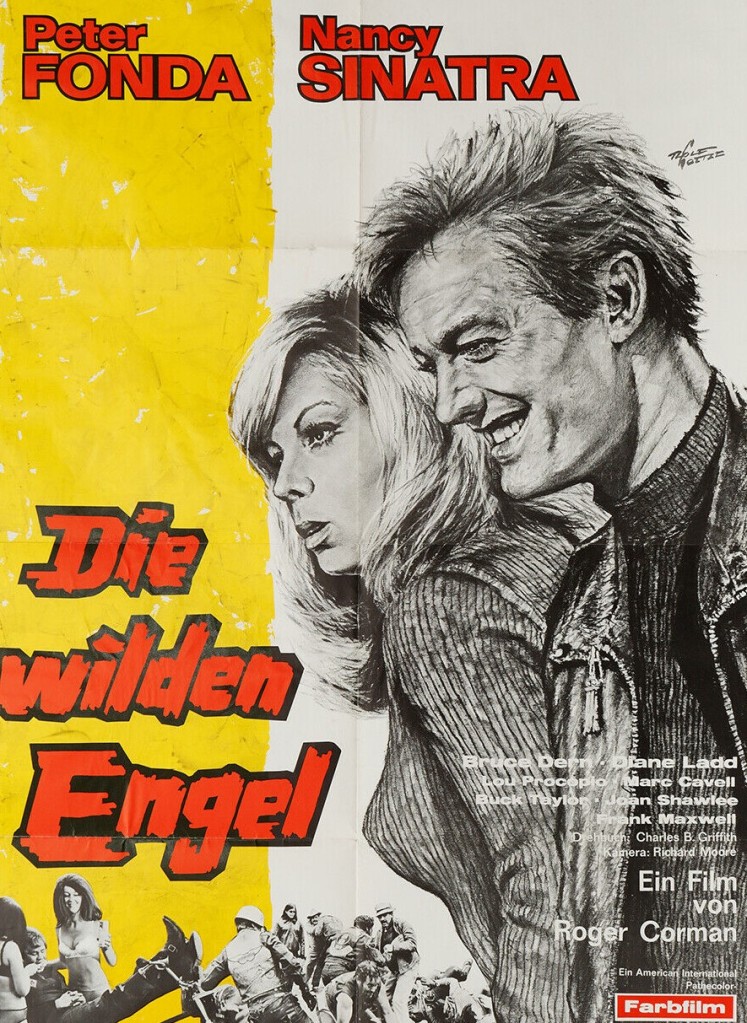
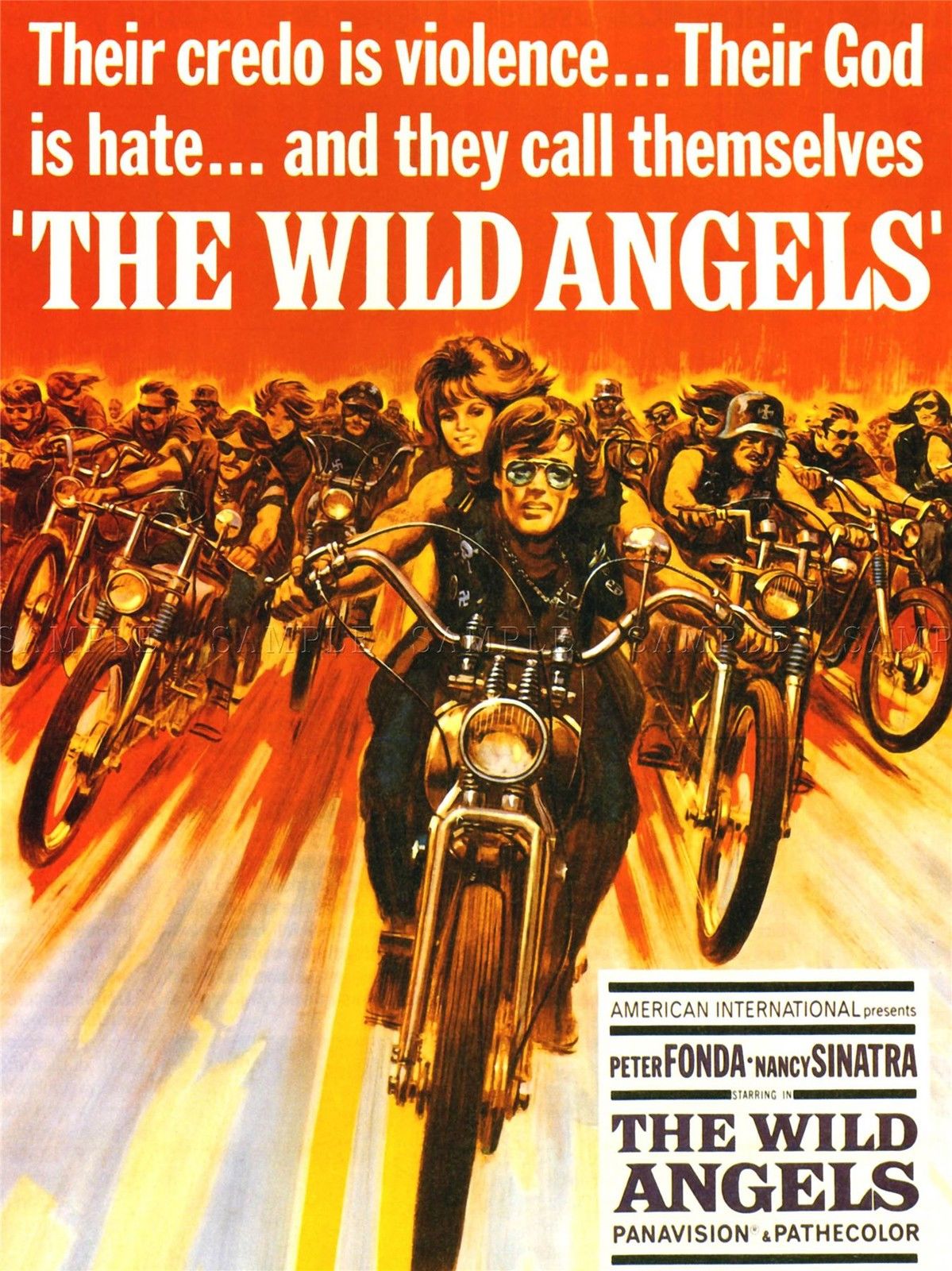
One of the weirdest posters of all time – at first sight it looks like Nancy Sinatra is holding the decapitated head of Peter Fonda in front of her.

There’s an odd subplot, given the lifestyle of freedom and independence, of Monkey (Nancy Sinatra) trying to get a romantic commitment out of Heavenly. Conversely, Heavenly, rejecting the traditional shackles of love, finds himself trapped by grief, eventually and quite rightly blaming himself for Joe’s death, and apparently turning his back on the Angels to mourn his buddy. The decline – or growing-up – of Heavenly provides a humane core to a movie that otherwise takes great pride in parading (and never questioning) excess, not just the alcohol and drugs, but rape of a nurse, gang-bang of Joe’s widow (Diane Ladd), violence, corpse abuse, and wanton destruction.

A ground-breaking film of the wrong, dangerous, kind according to censors worldwide and anyone representing traditional decency, but which appealed to a young audience desperate to find new heroes who stood against anything their parents stood for. In a decade that celebrated freedom, the bikers strangely enough represented repression, a world where women were commodities, passed from man to man, often taken without consent, and racism was prevalent.

Roger Corman (The Secret Invasion, 1964) was already moving away from the horror of his early oeuvre and directs here with some style, the story, though slim, kept moving along thanks to the obvious and latent tensions within the group. If he had set out to assault society’s sacred cows – the police, the church, funeral rites – as well as a loathing of everything Nazi, he certainly achieved those aims but still within the context of a group that epitomized some elements of the burgeoning counterculture.

In retrospect this appears an ideal fit for Peter Fonda, but that’s only if viewed through the prism of Easy Rider for, prior to this (see the “Hot Prospects” Blog) he was being groomed as a romantic leading man along the lines of The Young Lovers (1964). Bruce Dern (They Shoot Horses, Don’t They, 1969) was better suited, his screen persona possessing more of the essential edginess while Michael J. Pollard (Bonnie and Clyde, 1967) was the eternal outsider.

Rather surprising additions to the cast, either in full-out rebel mode as with Nancy Sinatra (The Ghost in the Invisible Bikini, 1966) or hoping appearance here would provide career stimulus as with movie virgins Diane Ladd (Chinatown, 1974) and Gayle Hunnicutt (P.J. / A New Face in Hell, 1968). Sinatra certainly received the bulk of the media attention, if only for the perceived outrage of papa Frank, but Hunnicutt easily stole the picture. Minus an attention-grabbing role, Hunnicutt, long hair in constant swirl, her vivid presence and especially her red top ensured she caught the camera’s attention.

Charles B. Griffiths (Creature from the Haunted Sea, 1961) is credited with a screenplay that was largely rewritten by an uncredited Peter Bogdanovich (The Last Picture Show, 1971).

The Sweet Ride (1968) ***

Unusual drama mainlining on Californian surf, sex, bikers, a mystery of Blow-Up (1966) dimensions and the best entrance since Ursula Andress in Dr No (1962). Displays a 1960s vibe with a 1950s pay-off as the “hitchhiker” of responsibility rears its ugly head.

A woman thrown out of a car narrowly escapes being run over. The cops jack in the investigation after television actress Vickie (Jacqueline Bisset) refuses to explain why she’s been badly beaten up.  And so we enter flashback mode to supposedly find out. She makes a glorious entrance, emerging from the sea, minus bikini top, into the lives of surfer Denny (Michael Sarrazin), jazz pianist Choo-Choo (Bob Denver) and ageing beach bum and tennis hustler Collie (Tony Franciosca). From the off, she’s enigmatic, gives a false address, won’t explain bruises on her arm, has something clandestine going on with television producer Caswell (Warren Stevens) and like Blow-Up we are only privy to snippets of information.

She’s half-in half-out of a relationship with Dennis, with Collie hovering on the periphery hoping to pick up the pieces to his sexual advantage. Contemporary issues clog the background, Choo-Choo tries a camp number complete with pink dog to avoid the draft, a neighbor threatens to shoot Parker for wandering around in shorts and habitually stealing his newspaper, epithets like “degenerates” are tossed around, Choo Choo’s girlfriend Thumper, while appearing in movies with titles like Suburban Lust Queen acts den mother, there’s not much actual exciting surfing, and a biker called Mr. Clean is somehow involved.

The romance plays out well, Vicky unsure, Denny convinced but without a livelihood to offer and unable to get a straight answer out of her. Choo-Choo gets the gig of his dreams in Las Vegas and there’s an rape scene, more unsettling because it’s committed by Denny with the bizarre justification of getting “just for once something on my terms.”  And there’s the equally disquieting sense that the only explanation for Vickie’s behavior is to tab her a nymphomaniac, walking out of an argument with a mysterious man in a beach house to drop her clothes for a bout of sex with Mr Clean.

I must have seen a different picture from everyone else. A good few critics at the time and reviewers since appear to think Vickie was also victim of a gangbang by the bikers, but I can’t see why. When he sees Vickie coming down from the beach house, Mr. Clean shouts “everybody split” and his buddies clear the beach. However, Mr. Clean, ironically, gives the best indication of her state of mind, explaining that Vickie “kept staring back at the house and moaning about how she wanted to die” while he enjoyed the best night of his life sex-wise.

Denny and Collie prove not to be the pussycats they appear, bearding the bikers in their den and beating up Mr. Clean while Denny goes on to deliver a hiding to Caswell. But what this film turns out to be is an examination of vulnerability, how easily those with a new sense of freedom are trapped. An examination of contemporary mores, perhaps, but in not resolving the mystery of Vickie ultimately fails to deliver, especially as it does not, from the outset, carry the kind of artistic credentials of Antonioni in Blow-Up.

Perhaps the mystery needs no resolution, it’s just same old-same old dressed up in the novelty of sexual freedom. There’s no idea of why Vickie was beaten up, and essentially abandoned on the road to become accident fodder, and no hint really of why she fell foul of someone so badly she needed disposed of, no notion that she was a threat to anyone. (Or, for that matter, no explanation of what happened to her bikini top and why, if she was so apparently free with her charms, she was so shy about being seen half-naked.) On the other hand, victim may well have been Vicky’s destiny from the get-go, that kind of innocence only waiting to be defiled.

In any 1960s contemporary picture there’s always the temptation to accept as truthful or reject as phony the lives shown. The idea that sexual freedom bestows actual freedom is usually the issue until consequence (i.e. old-fashioned Hollywood morality) comes into play. This is less heavy-handed than, for example, Easy Rider (1969) or Bob & Carol & Ted & Alice (1969). The characters make decisions to grow up or to stay locked in a world of easy sex, dope and money. There’s no grand finale, just a more realistic drifting apart, and it’s only Vickie who comes apart, although that process had begun long before she met the drifters.  

Jacqueline Bisset (The Detective, 1968), in her divinely posh British accent, comes over well as an attractive screen presence and complex character. In fact, she has a bigger part here than in Bullitt (1968) or The Detective (1968). If you wanted anyone to portray a soulful hippie you need look no further than tousle-haired Michael Sarrazin (In Search of Gregory, 1969) and normally if you required someone on the sly, despicable side, Tony Franciosca (Fathom, 1967) might well be your first port of call, but Franciosca proves the surprise here, classic wind-up merchant and predator who exhibits considerable vulnerability when he realizes he is losing the worship of the idealistic young.

Former British matinee idol Michael Wilding (A Girl Named Tamiko, 1962) and Norma Crane (Penelope, 1966) appear as Vickie’s parents.  Bob Denver (Who’s Minding the Mint, 1967) and Michele Carey (The Spy with My Face, 1965) are solid support. Director Harvey Hart (Fortune and Men’s Eyes, 1970) tries to cover too much ground and could have done with narrowing the focus. Future Bond screenwriter Tom Mankiewicz (son of Joseph L.) made his screenwriting debut adapting the book by William Murray.

The DVD is a bit on the pricey side, but if you just want to check it out, YouTube has a print.

Discover WordPress

A daily selection of the best content published on WordPress, collected for you by humans who love to read.

The Atavist Magazine

by Brian Hannan

WordPress.com News

The latest news on WordPress.com and the WordPress community.