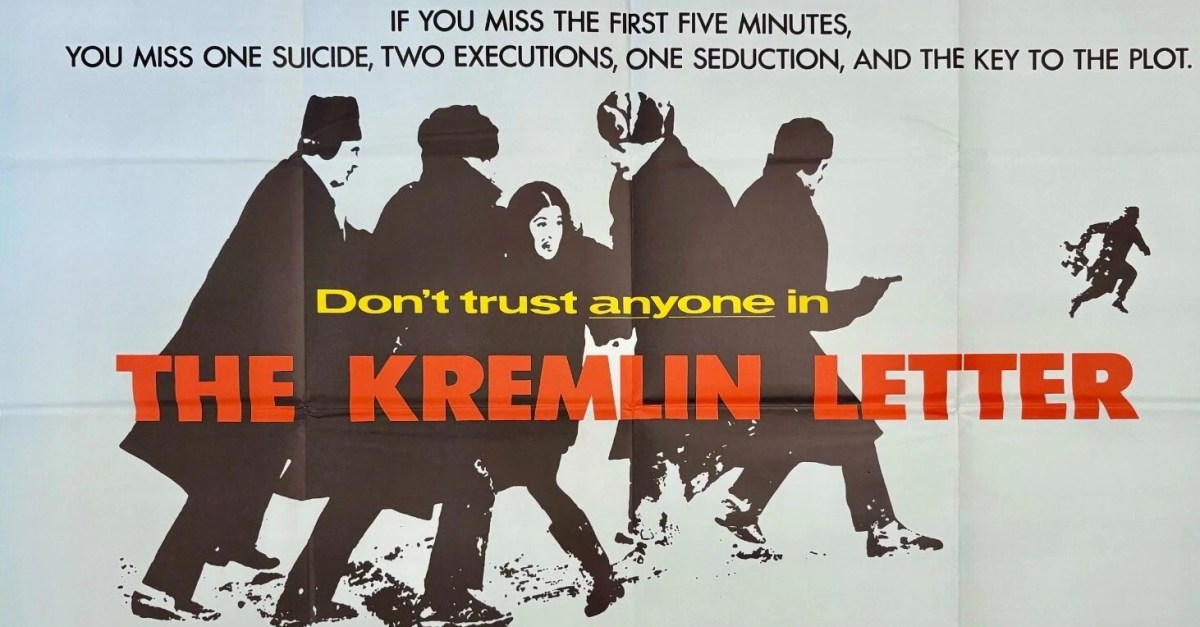
The Kremlin Letter (1970) ****

Audiences weaned on glossy spies surrounded by pretty girls and generally their own country taking a straight moral path turned up their noses at this more realistic portrayal of the espionage business where dirty infighting was the stock in trade. The Spy Who Came in from the Cold (1965) was saintly by comparison.  

Complaints about a complicated plot were led by critics who rarely had had to work their way through a tricky narrative, unless it was from the likes of Alfred Hitchcock who was apt to add twists to his stories. The fact that the bulk of the characters went by strange monikers –  The Highwayman, Sweet Alice, The Warlock etc – also seemed to upset critics. (In the book by Noel Behn, the author points out that these spies were constantly adopting new identities, it made it easier for others to keep tabs on them if they were always referred to by nicknames which were constant.)
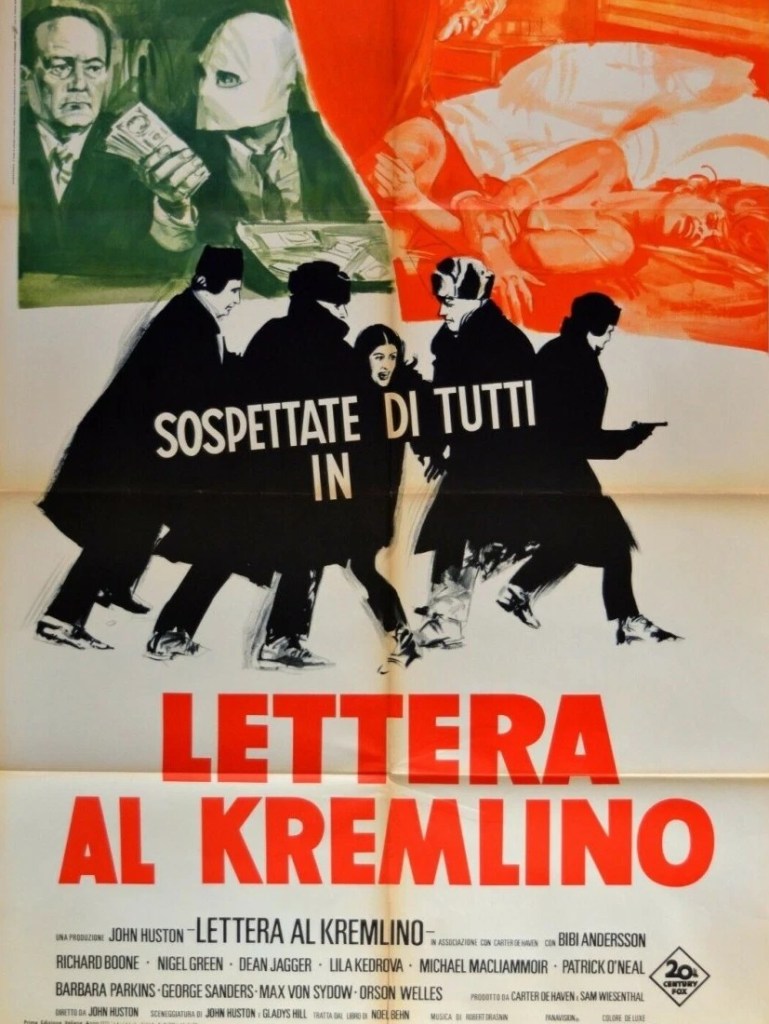
A contemporary audience, accustomed to things never being what they seem and all sorts of double-dealing, would be more at home here.

None of the characters, even the supposed good guys/gals, get off lightly. Personal unsavory sacrifice is unavoidable. Charles Rone (Patrick O’Neal) and B.A. (Barbara Parkins), who have fallen in love with each other, both have to prostitute themselves for the cause. And when the going gets too tough, suicide is the only way out. There’s hefty financial reward for those who survive the mission, but the substantial pot will be split between the survivors and not the dependents of those who don’t come home.

At the crux of the story is recovering a letter which promises that the USA and Russia will conspire against China and destroy its atomic weaponry. Espionage expert The Highwayman (Dean Jagger) recruits a team to infiltrate Moscow consisting of Rone, burglar and safe cracker B.A., drug dealer The Whore (Nigel Green), Ward (Richard Boone) and ageing homosexual The Warlock (George Sanders) who is a dab hand at knitting.

More than a few have a dodgy past, Ward an art dealer of ill repute, The Whore a pimp, even Col Kosnov (Max von Sydow), the target of the US operation, betraying his own countrymen. B.A. has to learn how to use sex to trap the enemy and, to get past the starting gate, loses her virginity to the obliging Rone.
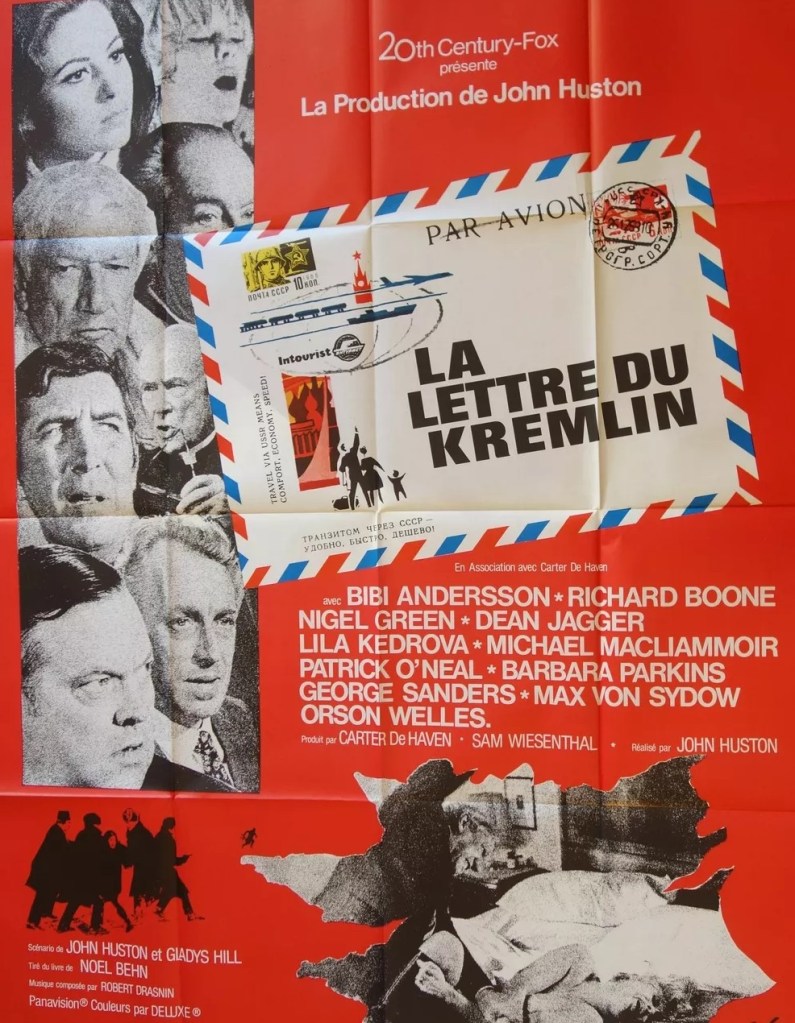
The Whore sets up in the brothel business with Madame Sophie (Lila Kedrova), keeping the sex workers docile by filling them up with heroin, which he imports. As instructed, B.A. shares out her favors with the enemy while Rone seduces the wife, Erika (Bibi Andersson), of Col Kosnov.

You always go into a spy picture expecting double cross and this is no different. B.A., The Whore and The Warlock have their covers blown, the latter committing suicide, the girl failing to do so but paralyzed as a result. Ward kills Kosnov. But his motive seems odd – blaming the Russian for betraying his countrymen – and his action only becomes clear at the climactic double cross when Ward is revealed as a double agent in the pay of the enemy. For which, it has to be said, he doesn’t suffer. If anything, with B.A. in his hands, he has Rone over a barrel.

While this was never going to be a by-the-book espionage number, it’s elevated by exploring the emotional price that has to be paid, both in hiding some feelings and feigning others.

While possibly it made sense to present the stars in alphabetical order, suggesting nobody took precedence in the billing, most have the opportunity to play against type. Barbara Parkins (Valley of the Dolls, 1967) is excellent as the girl embarking on a career for which she has, emotionally, little aptitude. Bibi Andersson (Duel at Diablo, 1966), usually cast in repressed roles, has a ball as woman giving in to impulse. Tough guy Patrick O’Neal (Stiletto, 1969) must knowingly betray his true love. Richard Boone (The Night of the Following Day, 1969) is already playing a secret role and effortlessly dupes his colleagues.

There’s not much of the John Huston (Sinful Davey, 1969) visual magic but he makes up for that by allowing the actors to delve deeper into their characters. But he doesn’t attempt to spin a happy ending and the downbeat climax suggests that the USA lost this battle. The one memorable image is a ball of red wool rolling across the ground, indicating that The Warlock is dead.  Written by Huston and Gladys Hill (The Man Who Would Be King, 1975) from the bestseller by Noel Behn (The Brink’s Job, 1978).

While the themes didn’t appeal then, they resound now.

Has aged very well.  

Behind the Scenes: Ingmar Bergman

My first cinema all-nighter, back in the early1970s, comprised five Ingmar Bergman films. You try watching back-to-back The Seventh Seal (1957), Wild Strawberries (1958), The Virgin Spring (1960), Through a Glass Darkly (1961) and Winter Light (1963) and stumble out into a cold Edinburgh morning without your brain ringing from exposure to one of the greatest filmmakers of all time.

I’m not sure how Bergman would pass muster these days, if he would verge on cancellation, given his predilection, in his private life, for infidelity, often seducing younger actresses – Bibi Andersson, Liv Ullman, Harriet Andersson et al – working on his films for the first time. He had five wives, nine children (not necessarily in wedlock) and countless lovers. He was very much an absentee father, devoting his time to theater and cinema.

The Knight plays chess with Death – iconic image from “The Seventh Seal.”

Nor was I aware that cinema accounted for barely one-quarter of his creative output. For most of his productive career he spent three-quarters of the year working in the theater, on a huge variety of plays, none of which, that being the essence of that genre, are available to posterity. And he was the first – and possibly the only – famous director to develop television as a serious medium – Scenes from a Marriage (1974) and the Oscar-winning Fanny and Alexander (1982) were truncated versions of much longer mini-series first shown on television. The former was a spectacular success, watched by half of Sweden’s population.

He was also a best-selling author. His autobiography The Magic Lantern attracted an advance of $700,000 (equivalent to $1.8 million now) and sold over 100,000 copies in hardback in Scandinavia alone. His screenplays sold in vast quantities at a time when that area of publishing attracted only minority interest.

With a director as prominent as Bergman there were many interesting what-ifs. Barbra Streisand was slated to star in The Merry Widow, but that came apart after a first meeting, when the director recoiled at her personality. Movies were mooted with Fellini and Kurosawa. Richard Harris was to have starred in The Serpent’s Egg (1977) rather than David Carradine.  

At one time he fielded offers from major studios like Paramount and Warner Bros and some of his later movies were funded by mini-majors – The Touch starring Elliott Gould (1971) by ABC and From the Life of the Marionettes (1980) by Sir Lew Grade’s ITC shingle. He was on the shortlist to direct Jesus of Nazareth, eventually made by Franco Zeffirelli.

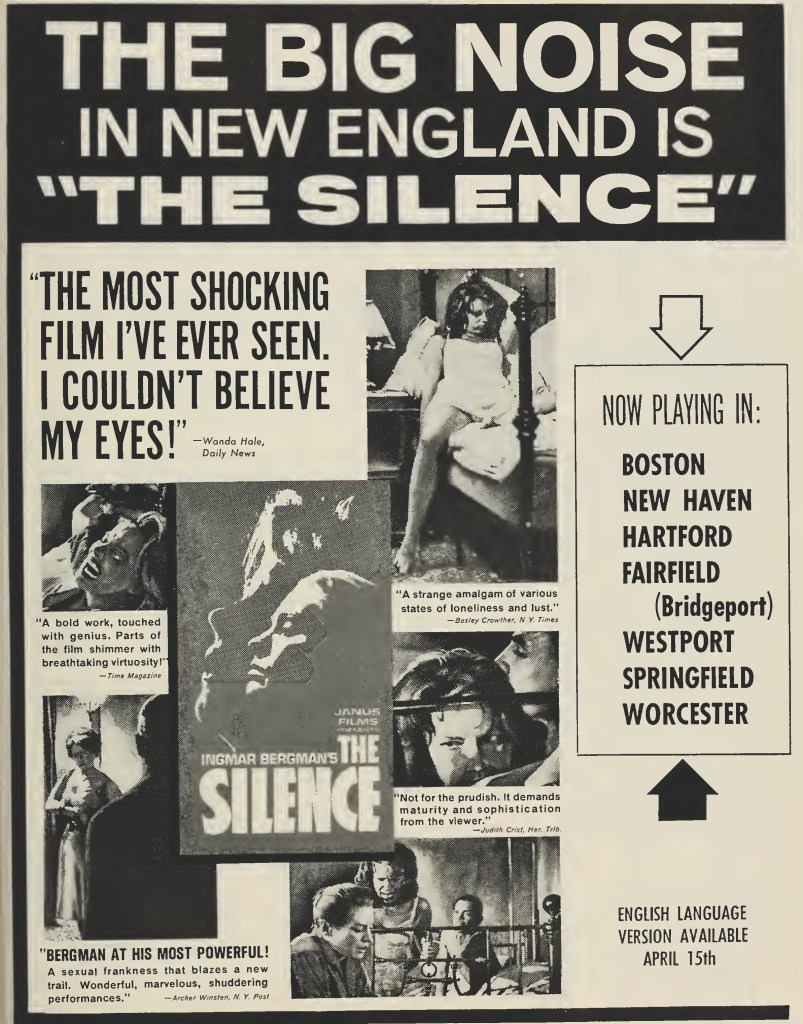
The Seventh Seal, considered his greatest film, despite critical raves, was a flop, The Silence (1963) a whopping success, the biggest box office hit in West Germany for example since the war.  

Peter Cowie’s biography, a Xmas gift which I’ve just devoured, has an apt title God and the Devil, for these were the underlying (not to say often obvious) themes of his movies, man giving in to temptation, deity not there to come to the rescue. His films showed the coruscating reality of relationships gone sour, imitating his own experience, even without his constant infidelity (or perhaps because of it) he had a fraught time of it with wives and lovers.

With so many projects – and so many lovers – on the go, his life lurched from professional triumph to personal disaster. Luckily, he could meet child support payments because he was by far the biggest earner in cinema in Sweden, and when wooed by Hollywood, even more able.

Peter Cowie, who founded and edited The International Film Guide for 40 years and ran The Tantivy Press for a quarter of a century, is to film criticism what Bergman is to the movies, someone who moves in the upper pantheon. It was he who interviewed Bergman on stage at the NFT. He claims to come from a generation whose life was changed after seeing The Seventh Seal.

Without being a no-holds-barred work, he does hold Bergman up to scrutiny, the personal life covered in as much depth as the professional. “Bergman’s childhood was clouded by a terrible fear of punishment and humiliation,” writes Cowie, which in essence could have been the template for his movies. He was beaten by his father, a pastor, and bullied by his elder brother. One time, locked in a cupboard, he feared someone was gnawing at is feet.

A cinema buff from an early age, the stage was his first calling and by 1938 had directed his first play. His first movie was Crisis (1946). By Hollywood standards all his movies until quite late in the day would be considered low-budget numbers and it was only when Swedish studios managed to attract international distribution for their films – mostly because of their perceived sexual content – that budgets increased.

While initially The Seventh Seal was considered his greatest cinematic achievement, Wild Strawberries and Persona (1966) have overtaken it in terms of critical approval. In the Sight and Sound Critics Poll of 1972 Persona was fifth and Wild Strawberries tenth. But neither film ever did so well again from the critical perspective though in the Directors Poll of 2022, Persona placed tenth.  

A fascinated read and reminder of a director who dominated the cinematic landscape for over two decades.

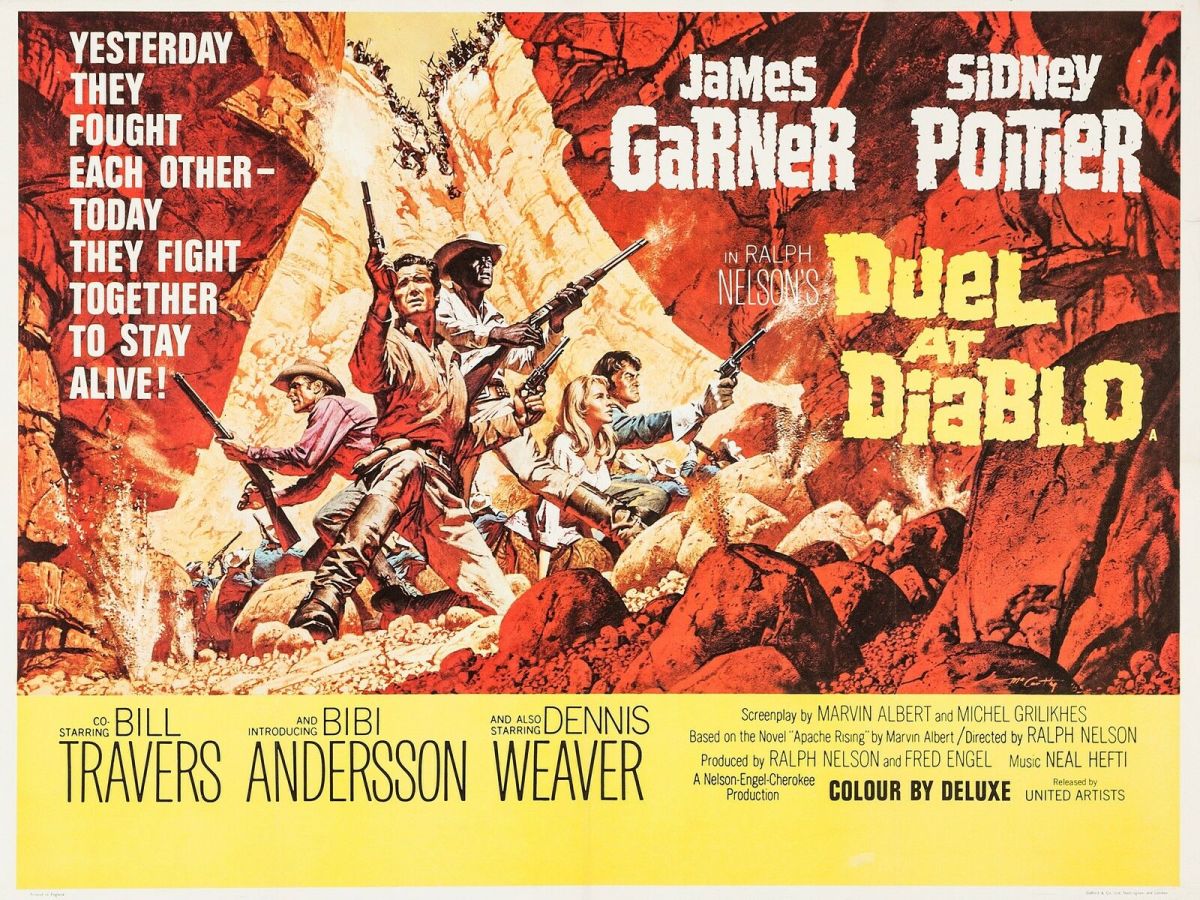
Duel at Diablo (1966) ****

Action-packed and plot-jammed revisionist western with fresh performances from James Garner and Sidney Poitier caught up in an Apache uprising. Tough-as-teak ex-cavalry scout Garner has dispensed with his glib smart-aleck persona in favor of world-weariness and Poitier is a revelation as a cocky cigar-smoking ex-cavalry sergeant horse-dealer. Racism here concerns hostility towards Indian squaw Bibi Andersson (Persona, 1966), Garner, who had married a Commanche (now dead) the only one to treat her with any decency.

Returned to “civilization,” Andersson wants nothing more than to escape, back to her baby it transpires. Her crime is staying alive after Apache capture when she should have done the “decent thing” and killed herself rather than living as a squaw. But prejudice is leavened by husband Dennis Weaver (minus trademark moustache) who retains tender feelings towards her and, eventually, her baby. Apache chief John Hoyt is equally redeemed by his care towards the baby.  

Director Ralph Nelson (Lilies of the Field, 1963) handles the action with aplomb but it is the Apaches who prove the masters of battlefield strategy, deftly maneuvering the cavalry into an ambush and cutting them to shreds. His biggest problem is delivering logical reasons for all the principals – Weaver is an arms dealer, Garner and Poitier no longer in the army – to join up with Bill Travers’ (Born Free, 1966) cavalry troop. However, rather than slowing the story down, the various complications add further tension.  

Nelson never reins in reality. The cavalry are raw recruits, hardly able to control their mounts. Garner and Poitier don’t buddy-up, there is no camaraderie, and Andersson is an outcast in both worlds. And the good guys are constantly out-smarted by the Apaches, Poitier’s mistake leading to initial ambush, the Apaches targeting water supplies to derail the enemy and resorting to bow-and-arrow in case a stray bullet ignites the ammunition wagons. But it is still a duel, Poitier, Garner and Travers each in turn coming up with brilliant ideas to retrieve what looks like a desperate position trapped in a box canyon.     

We might be more sympathetic towards the plight of the Apaches, shoved into a “hell-hole of a reservation,” had Nelson concentrated less on their brutality, the picture opening with the corpse of a mutilated man, the cavalry under siege at Diablo tortured by the screams in the night of a man being tortured, Andersson told that she will be buried alive. But when any Commanche woman can be killed and scalped just because she married a white man and Andersson viewed as fair game for rapists because she lived with Apaches, you can see how little regard the Native Americans have for their oppressors.

Garner and Poitier are superb and top marks for a rounded performance from John Hoyt, savage one minute, gentle the next. Scotsman Travers and Swede Andersson should have added to the authenticity since immigrants such as these provided the mass of settlers, but Travers seems quite out of place and Andersson never quite delivers the angst required of her situation.  William Redfield (One Flew over the Cuckoo’s Nest, 1975) can be spotted. Nelson has a cameo and if you look closely you will see a fleeting glimpse of Richard Farnsworth. Western specialist Marvin H. Albert (The Law and Jake Wade, 1958) co-wrote the screenplay from his novel.

You might be able to catch this for free on Sony Action Movies, but otherwise here’s a DVD link. You might get it on Amazon Prime but last time I posted a link for that, it didn’t work.

Discover WordPress

A daily selection of the best content published on WordPress, collected for you by humans who love to read.

The Atavist Magazine

by Brian Hannan

WordPress.com News

The latest news on WordPress.com and the WordPress community.