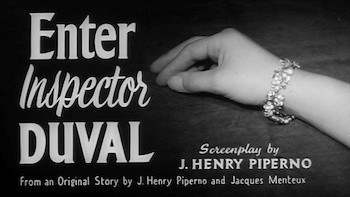
Enter Inspector Duval (1961) ***

The first piece of sleight-of-hand is the title, setting audiences up for the opener in a crime series featuring the eponymous French character. A terrific twist at the climax shows exactly why this would not be turned into a series, though one critic who clearly didn’t watch the whole picture thought otherwise. And you can see why because it’s old-fashioned enough to provide you, Agatha Christie style, with a string of suspects, adding in and leaving out enough information that it’s hard to work out who the criminal mastermind might be.

For four years, a burglar has been terrorizing Europe, stealing diamonds almost at will. The expert on his methods is French cop Duval (Anton Diffring), a debonair confident chap with a distinct Gallic charm, who happens to be in London when the thief – known only as Mr March – strikes again. Only this time, taken by surprise, he murders socialite Alice (Angela McCann). British detectives Insp Wilson (Mark Singleton) and Sgt Hastings (Patrick Bedford) are only too happy to welcome Duval’s assistance, especially as he appears to have the keener eye.
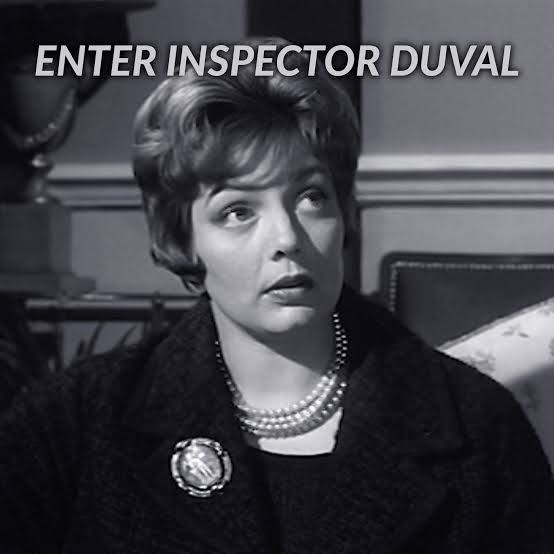
In short order we are introduced to Alice’s maid Doreen (Susan Halliman) who discovers the body. She’s recently entered into a relationship with the disreputable Charley (Charles Roberts) and may have deliberately or inadvertently given away the secret of where Alice hid her diamonds – and it wasn’t in the safe. Alice’s friend Jackie (Diane Hart) enters the equation because her boyfriend Mark (Aiden Grennell) has been trying to tempt Alice into investing in a property deal. And may have been sufficiently annoyed with the brusque way she gave him the brush-off to have killed her. Mark has an alibi for the time of the murder, which took place in the middle of the night. But it’s an odd one. He claims he chose that time of night to pay a visit to his lawyer to discuss a business deal. And his manservant Brossier (Charles Mitchell) is an odd fish.

Jackie is revealed as grasping and only too happy to do Mark’s bidding, which includes some unusual instructions. Doreen is too trusting and somewhat dim. Charley is definitely dodgy and has been paid to provide information extracted from Doreen as to the jewels’ whereabouts.

There’s another complication. Because of the murder, the diamonds are now too hot to handle and can’t be quickly shifted by a dealer in stolen goods.

You can wallow in the nostalgia, pipe-smoking cop, nothing wireless about the telephones, a couple of scenes set in a milk bar with youngsters dancing to a record. There’s even a car chase.

The initial sequence is stylish, with a strong hint in the play of light and shadow of film noir, and though it tends to stick to police procedural there are enough twists and characters with hidden agendas to keep the plot wheels turning, with Duval turning his nose up at the ineptitude of the British copper.

With his haughty features and blond hair Anton Diffring (Counterpoint, 1967) had been typecast as the arrogant Nazi or German officer – so this was something of a career break and I guess if a series had developed he might have found a different niche. This proved to be Diane Hart’s (The Crowning Touch, 1959) only movie of the decade, and Angela McCann’s sole picture.

With an abundance of red herrings and twists, director Max Varnel (A Question of Suspense, 1961) keeps the action moving at a clip. Written by J. Henry Piperno (Breath of Life, 1963).

Worth it for the suave Anton Diffring and the twists.

Catch it on British streamer Talking Pictures TV.

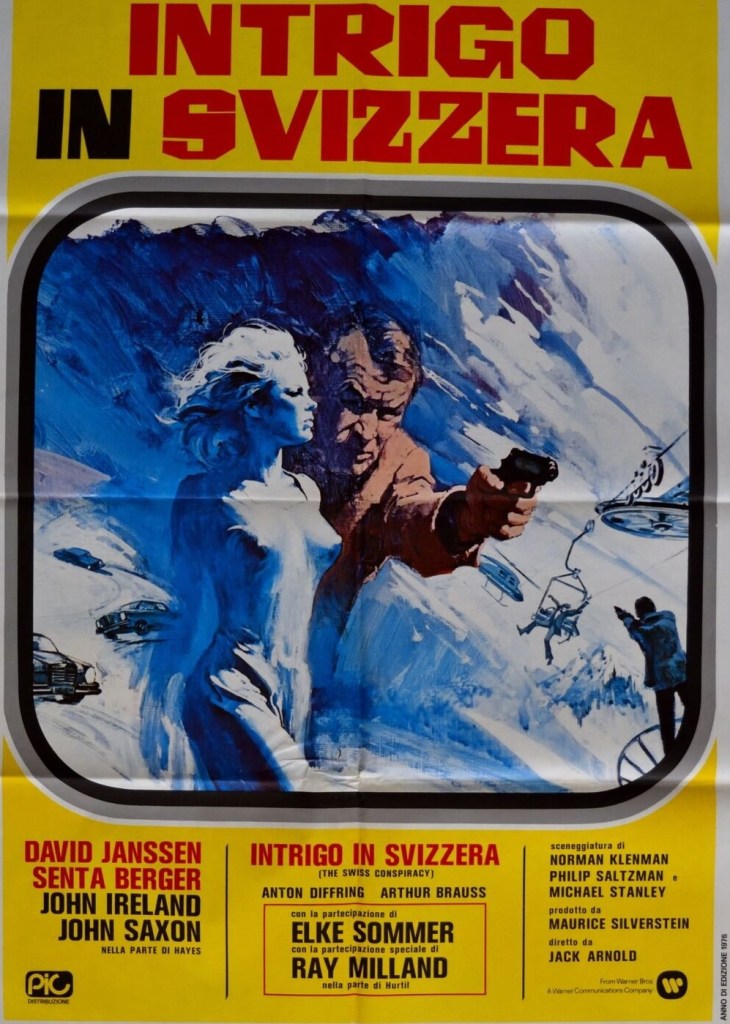
The Swiss Conspiracy (1976) ***

One of those thrillers that only makes sense at the end. Lazy critics, too annoyed to wait or not able to work it out themselves, take out their bafflement on the picture. Or they carp at what they see as overmuch tourist influence instead of admiring the clever use made of Switzerland’s scenic attractions, the twisty cobbled streets, corkscrew highways teetering over ravines, and the apparatus of skiing – the chug-chug trains and lifts.  

Attractive too for the cast. You might put me down as overly fond of leading lady Senta Berger (Bang! Bang! You’re Dead! / Our Man in Marrakesh, 1966) but I’m equally appreciative of the casual charm and realistic qualities brought to the screen by the underrated David Janssen (The Warning Shot, 1967). And that’s before we come to Elke Sommer (The Prize, 1963) and veteran Hollywood star Ray Milland (Hostile Witness, 1969), not to mention character actors John Saxon (The Appaloosa / Southwest to Sonora, 1966) and John Ireland (Faces in the Dark, 1961).

Poster designer gives himself a bit of leeway here, suggesting a lass is going to be striding around the Alps in such clingy clothing.

Former U.S. Treasury Agent David Christopher (David Janssen) is called in by Swiss bank owner Johann Hurtil (Ray Milland) to investigate a threat to expose the clients hiding behind the country’s infamous secret numbered accounts. Five clients, in particular, have been targeted including the glamorous Denise Abbott (Senta Berger), whom David first encounters in what would in other circumstances be deemed a clever meet-cute with the woman getting the upper hand.

One client is already dead, murdered in the opening sequence, as a warning. Of the others, Robert Hayes (John Saxon) is a mobster depositing illicit gains for money-laundering purposes, Dwight McGowan (John Ireland) a shady businessman on his last legs, while Kosta (Curt Lowans) equally operates in the shadows. And all is not well with the bank deputy Franz Benninger (Anton Diffring), involved in an affair with another client, Rita Jensen (Elke Sommer). On top of that, Swiss cops are on the trail of Hayes and hit men are tailing Christopher.

Christopher quickly surmises that the victims have been targeted for their undercover dealings, even the uber-glam Denise is blackmailing a former lover. But Hurtil, fearing a public and media scandal, and for whom the gangster’s demands are a mere drop in the ocean compared to the bank’s overall wealth, decides to meet their terms, which is payment of 15 million Swiss francs (equating to several million U.S. dollars, I guess) in uncut diamonds.

But before that we have a punch-up and shoot-out in a parking garage, a chase on foot on those famous narrow cobbled twisty streets with a speeding car giving the thugs unfair advantage, a race of seduction a la On Her Majesty’s Secret Service (1970) along those aforementioned treacherous mountainous roads, a literal cliffhanger in the vein of The Italian Job (1969), and one of those luscious romances beloved of the upmarket thriller (think The Thomas Crown Affair, 1968).  

While Christopher is painstakingly putting together the clues and keeping the suspicious Swiss police off his back and avoiding being killed, there’s a deadline to meet, the usual race against time, while the audience is having to fend off a surprising number of red herrings.

It’s not only glamorous, it’s short, and there’s more than enough going on, characters played by interesting actors, to keep the viewer involved. And I defy you to guess the ending. So, enough thrills, sufficient mystery, great scenery, and a female contingent (even Christopher’s secretary fits that category) with brains to match their sexiness who appear to have the upper hand in relationships with the opposite sex.

This is David Janssen at his best, that outward diffidence concealing a harder inner core, exuding a guy-next-door appeal that was never properly utilised by Hollywood, who preferred him just to reveal character by squinting. The scene where he takes in the extent of the luxury of Denise’s hotel penthouse is one of those that, while not knocking on Oscar’s door, demands true acting skills. He’s never in your face, and the camera loves him for it.

Of course, Senta Berger, what can you say, another under-rated actress never given her due in Hollywood, here finds a plum role that allows her to switch from confidence to vulnerability at the drop of a hat. John Saxon and John Ireland, as ever, are value for money. And Ray Milland keeps the show on the road.

A modern audience would be more at home with the multiplicity of plot angles and probably worked out in their own heads all that couldn’t find a place on screen, ensuring that what seemed like plot holes were anything but.

Jack Arnold (The Creature from the Black Lagoon, 1953) handles the scheming and dealing with ease. Norman Klenman (Ivy League Killers, 1959), and two television writers in their movie debuts, Michael Stanley and Philip Saltzman, wove the intricate screenplay.

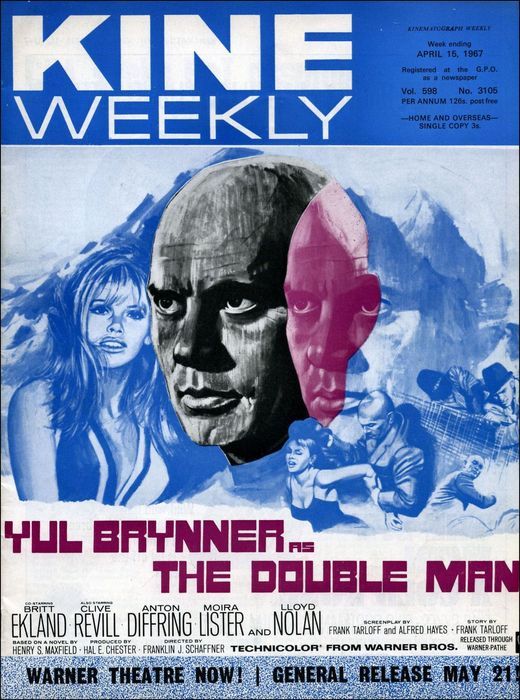
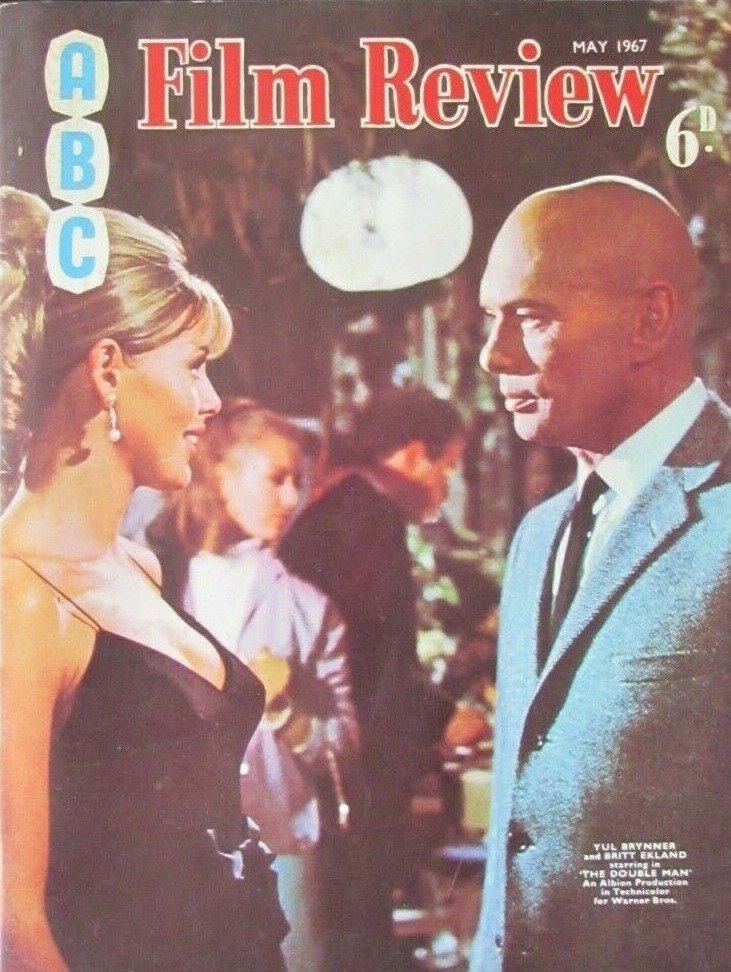
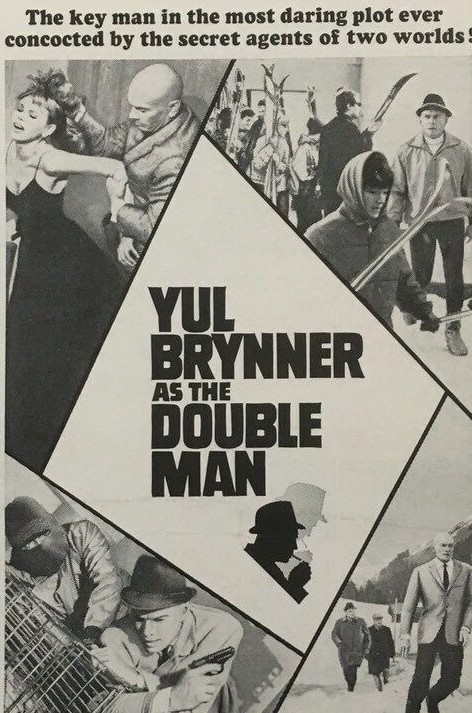
The Double Man (1967) ***

A bit more action and this could have been a John Wick-style winner because C.I.A. agent Dan Slater (Yul Brynner) is a big-time bad ass, all steely stare and resolve, and no time for anyone who gets in his way as he investigates the unexpected death of his son in the Austrian Alps.

It’s probably not this picture’s fault that any time a cable car hovers into view I expect to see Clint Eastwood or Richard Burton clambering atop all set to cause chaos, or any time a skier takes off down the slopes anticipate some James Bond malarkey. Luckily, director Franklin J. Schaffner (Planet of the Apes, 1968) avoids inviting comparison in those areas but rather too much reliance on the tourist elements of the ski world puffs out what would otherwise be a tighter storyline. And he also sets too much store by loud music to warn the audience of impending danger.

Slater is out of the ruthless espionage mold and, convinced on paltry evidence that his son has been murdered, determines to track down the perpetrators. There is a reversal of the usual plot in that those he asks for help are unwilling to give it, retired agent Frank Wheatly (Clive Revill) and chalet girl deluxe Gina (Britt Ekland) who initially views him as an older man to be fended off but turns out to have the vital information he seeks.

There’s a lot of tension but not much action and today’s modern vigilante would have beaten the information out of anybody who crossed his path rather than taking Slater’s path. Despite this, the relentless tone set by Slater ensures violent explosion is imminent. To be sure, you will probably guess early on, from the appearance at the outset of some Russians, that Slater is heading into a trap, but the reasons are kept hidden long enough.

There are some excellent touches. Slater’s boss (Lloyd Nolan) has a nice line in keeping his office underlings in check, chalet hostess (Moira Lister) is all style and snip, the Russian Col. Berthold (Anton Diffring) clipped and menacing. And the skiing sequences that relate to the picture are well done while the others are decently scenic.   

It’s a shame that Brynner is in brusque form for it gives Britt Ekland in a switch from her comedy breakthroughs not enough to do. Revill is excellent as the former agent who has had his fill of espionage and dreads being pulled back into this murky world. Producer Hal E. Chester clearly spent more on this than on The Comedy Man (1964) but with varying results, top-notch aerial photography but dodgy rear projection. And there are some screenwriting irregularities, such as why conduct the son’s funeral before the father is present.

Catch-Up: Yul Brynner performances previously reviewed in the Blog are The Magnificent Seven (1960), Escape from Zahrain (1962), Flight from Ashiya (1964), Invitation to a Gunfighter (1964), Return of the Seven (1966) and Villa Rides (1968). Britt Ekland movies already covered are: The Happy Thieves (1961), The Night They Raided Minsky’s (1968), Machine Gun McCain (1969) and Stiletto (1969).

Discover WordPress

A daily selection of the best content published on WordPress, collected for you by humans who love to read.

The Atavist Magazine

by Brian Hannan

WordPress.com News

The latest news on WordPress.com and the WordPress community.