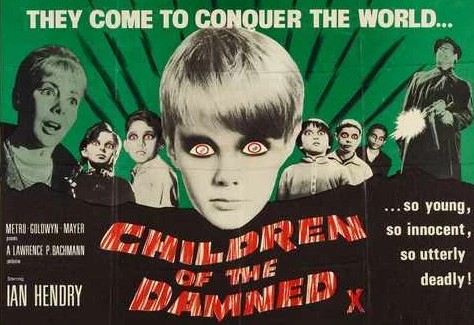
Children of the Damned (1964) ***

I wasn’t aware that celebrated sci fi author John Wyndham had written a sequel to his iconic novel The Midwich Cuckoos, filmed as Village of the Damned (1960). And it turned out he didn’t (he did make an attempt but abandoned it after a few chapters).  So he had nothing to do with the sequel. But the original had proved such a hit MGM couldn’t resist going for second helpings.

And there was nothing the writer could do about it, it being standard procedure that when you sold your novel to Hollywood the studio retained all the rights and could commission a remake, sequel, turn it into a television series, without consulting you.
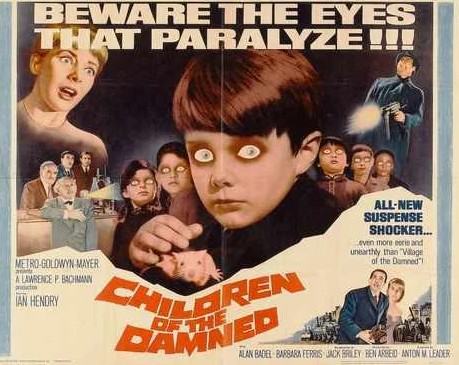
The only drawback for a potential sequel was that main adult character Professor Zellaby (George Sander) and all the kids had died in the original, though the final image of eyes flying out of the burning house might have suggested the children had actually survived. And, as we know these days, just when your main character dies it doesn’t prevent him miraculously returning to life should box office dictate.

So screenwriter John Briley (Oscar-winner for Gandhi, 1982) was handed the sequel. And what we get is a lot of atmosphere, a chunk of running around in empty London streets (the result not of mass evacuation but filming in early morning when roads are clear), a very slinky turn from Alan Badel (Bitter Harvest, 1963) showing what he can do when hero not villain, and a twist on the previous problem – how to vanquish the kids – which is whether to  weaponize them. Mostly, we are reminded of how better telekinesis was dealt with in the original picture and how poorly this compares to the likes of Brian De Palma’s later Carrie (1976) and even his The Fury (1978).
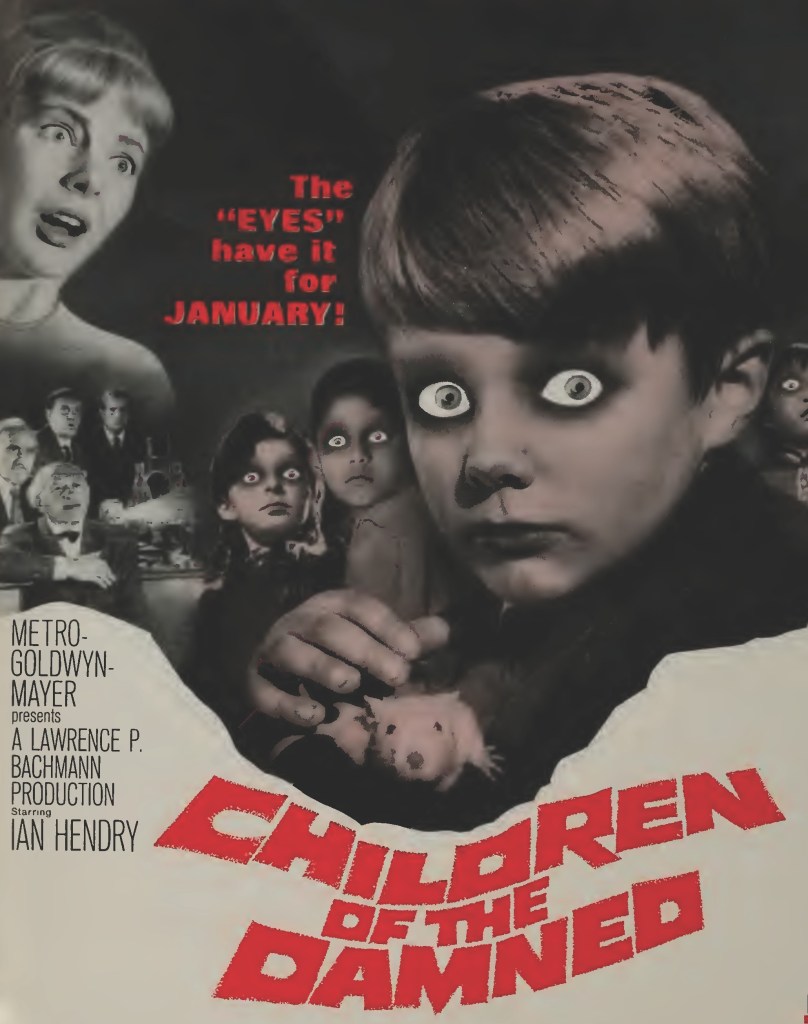
Apart from the title, there’s barely a nod to the previous incarnation, except that discerning the children’s paternity proves impossible. An United Nations project has tracked down six kids with incredible intellects. Like Professor Zellaby, British psychologist Dr Tom Llewellyn (Ian Hendry) and geneticist Dr David Neville (Alan Badel) want to study the kids while the more shadowy figure of Colin Webster (Alfred Burke) appears to have more sinister purpose in mind.

In any case none of the three achieve their goals because the kids escape and take refuge in an abandoned church, defending themselves against the authorities and the military by their brain controlling abilities and by the devising of a sonic weapon. Immediately under their thumb is the aunt, Susan (Barbara Ferris), of the young boy Paul (Clive Powell) who initially excited the interest of the British scientists.

Opinion varies as to whether the children are a genetic freak of nature, aliens or an advanced human race. The authorities can’t decide whether they are a threat or a wonder and decide to eliminate them, then change their mind, while the children decide to fight back then change their minds. The ending is quite a surprise.

Although the kids still have the fearful eyes, they are generally a lot less effective a scare than when the small gang of them stood side by side in the previous picture and stared at adults until they did the childrens’ bidding or killed themselves. There’s way too much discussion among adults. In the previous picture, those kinds of conversations had more emotional impact, since it was the villagers who were left distraught. Here, you couldn’t care less about the adults.

Interestingly enough, the standout isn’t any of the kids at all, but Alan Badel, who comes over as the libidinous sort, but very charming, and views any woman as fair game, but it’s fascinating to see how his usual screen persona here makes him a hero whereas in most other films exhibiting much the same characteristics he comes across as shifty, mean or downright villainous.

Ian Hendry (The Hill, 1965) was a rising British star but isn’t given much to get his teeth into. Barbara Ferris (Interlude, 1968) has a vital role.

Directed by television veteran Anton M. Leader (The Cockeyed Cowboys of Calico County, 1970) who makes his screen debut.

Not a patch on the original.
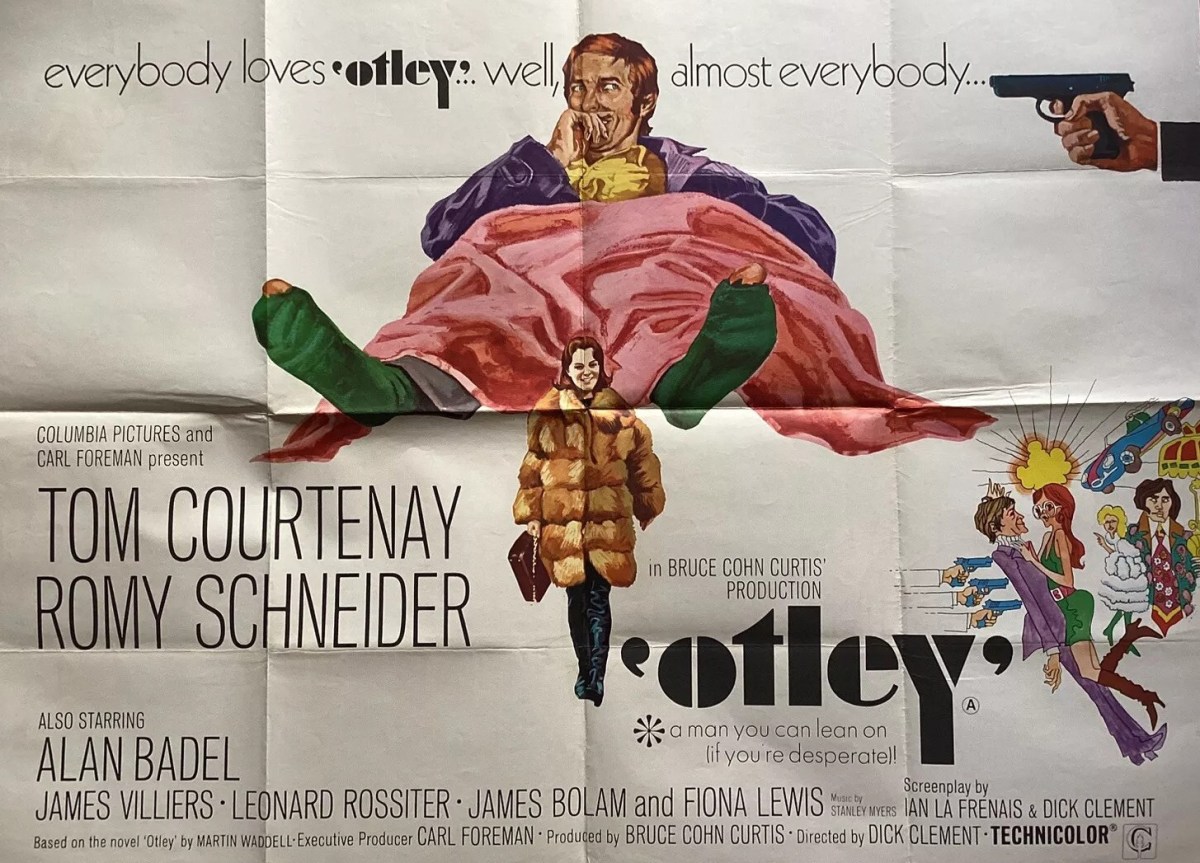
Otley (1969) **

Misguided attempt to play the innocent-caught-up-in-espionage card. And minus the angst on which he had built his screen persona, Tom Courtenay (A Dandy in Aspic, 1968) fails to elicit the spark that would turn himself into a leading man – excepting one other film, this was his last top-billed picture. And anyone hooked by the billing expecting to see a lot of female lead Romy Scheider (The Cardinal, 1963) would equally be in for a surprise.

And that’s a shame because Courtenay can act, not in the Oscar-bait sense, but just in his physical gestures and reactions to whatever else is going on in a scene. Scheider, too, especially in the scene where she more or less laughs in Courtenay’s face when he points a gun at her and in her knowing looks.

But Otley (Tom Courtenay) is such an unappealing character, the movie is on a sticky wicket from the off. Petty thief, largely homeless because of it, his propensity for slipping into his pocket anything that looks valuable in the homes of anyone stupid enough to give him a bed for the night, giving the movie its only sensible piece of narrative drive. Because the rest of the story is a farrago, a series of unconnected episodes dreamed up for their supposed humor, which wants to be pointed and sly but ends up heavy-handed and dreary.

And there’s one of those narrative sleights-of-hand where Otley wakes up on an airport runaway (security impervious to his presence, of course) having misplaced two days of his life. That’s just one of competing narratives – the other being that he’s wanted for the murder of the chap, Lambert (Edward Hardwicke), who was stupid enough to give him a bed for the night. Count in the espionage and there’s a trio of useless narrative hinges that get in each other’s way and largely introduce us to a succession of odd characters.

Pick of these is Johnston (Leonard Rossiter), an assassin who has more lucrative side hustles as a tour coach operator, double-crosser and blackmailer. The only other believable character is the landlady who’s had enough of Otley’s thieving, but only (unbelievable element lurching into view) after she’s bedded him.  

The movie just lurches from one scene to another, a car chase that ends up on a golf course, (“Are they members?” cries one outraged lady), a houseboat, various low-life dives and chunks of tourist tat thrown in, a bustling street market, Carnaby St etc.  I can’t begin to tell you what the espionage element is because that’s so far-fetched and ridiculous you won’t believe me.

This is the kind of low-budget picture that sets scenes, for no particular reason except they’re part of tourist London, in the Underground, but a completely empty Underground, not another person in sight, and not late at night either which would be a saving grace, though clearly it was filmed either late at night or early in the morning when the Underground was closed to ordinary passengers (thus saving on the budget).

Two examples of how heavy-handed the humor is: on a farm having been doused in water by Johnston, Otley remarks that he’s now deep in the proverbial only for the camera to cut to his foot sinking into a cowpat. At the airport, a couple of staff get lovey-dovey behind a counter, the male sneaking a grope, and we cut to a sign “ground handling”. Ouch and urgh!

If you manage to keep going the only reward is to see a handful of familiar names popping up: Alan Badel (Arabesque, 1966), James Villiers (Some Girls Do, 1969), Fiona Lewis (Where’s Jack?, 1969) and British sitcom legends James Bolam (The Likely Lads and sequel) and Leonard Rossiter (The Fall and Rise of Reginal Perrin, 1976-1979).

And where’s Romy Scheider in all this? Looking decidedly classy, but clearly wondering how the hell she got mixed up in it.

Screenwriter Dick Clement (Hannibal Brooks, 1969) made his movie debut on this clunker. He co-wrote the picture with regular writing chum Ian La Fresnais from the novel by Martin Waddell.

What happens when a genre cycle – in this case the espionage boom – gets out of control.

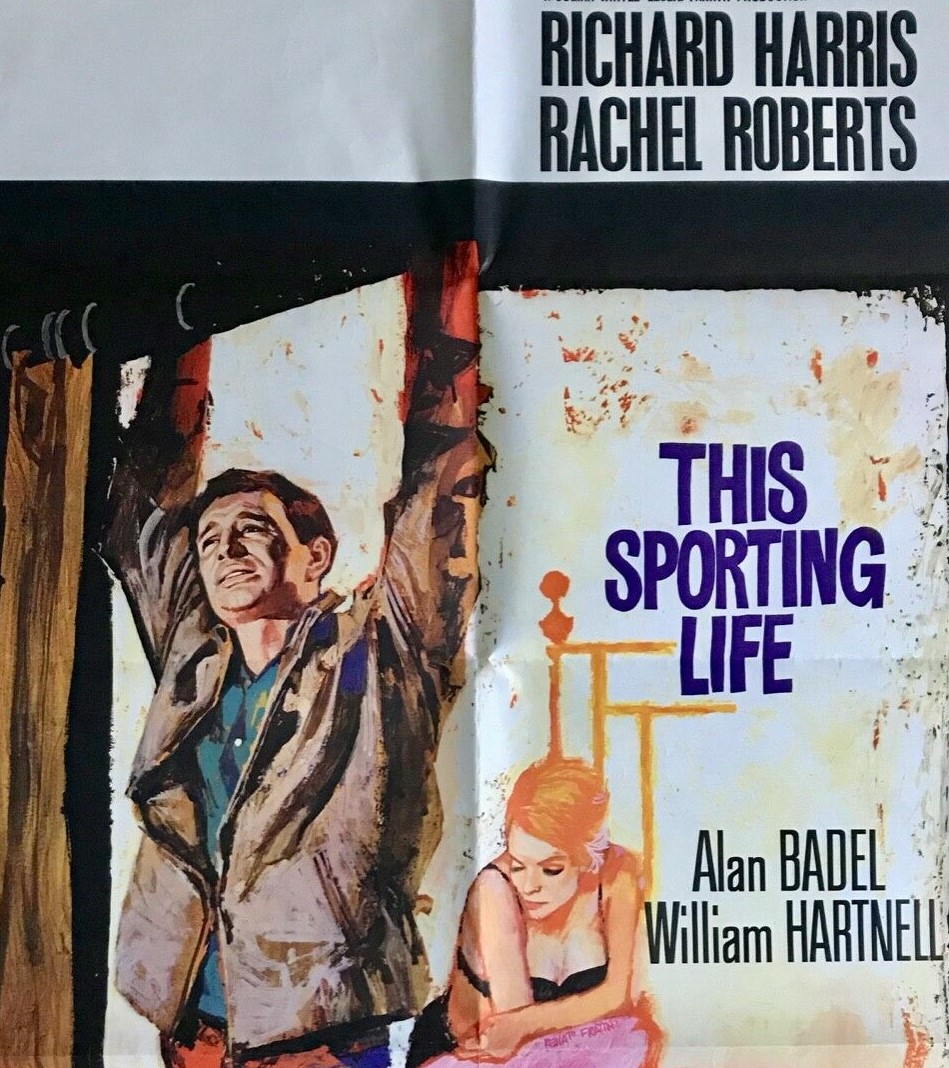
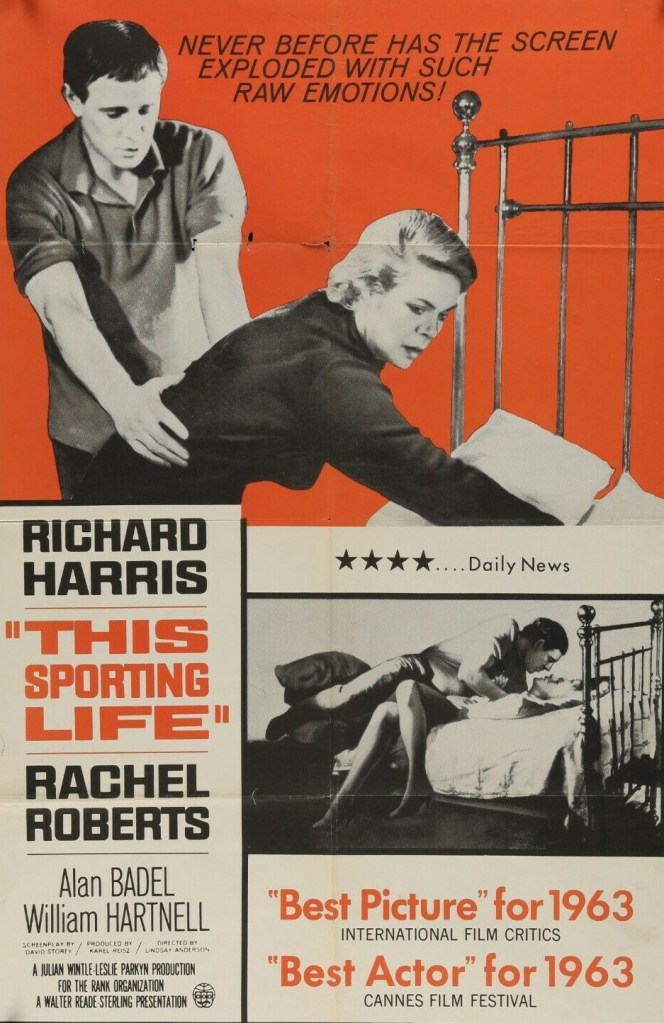
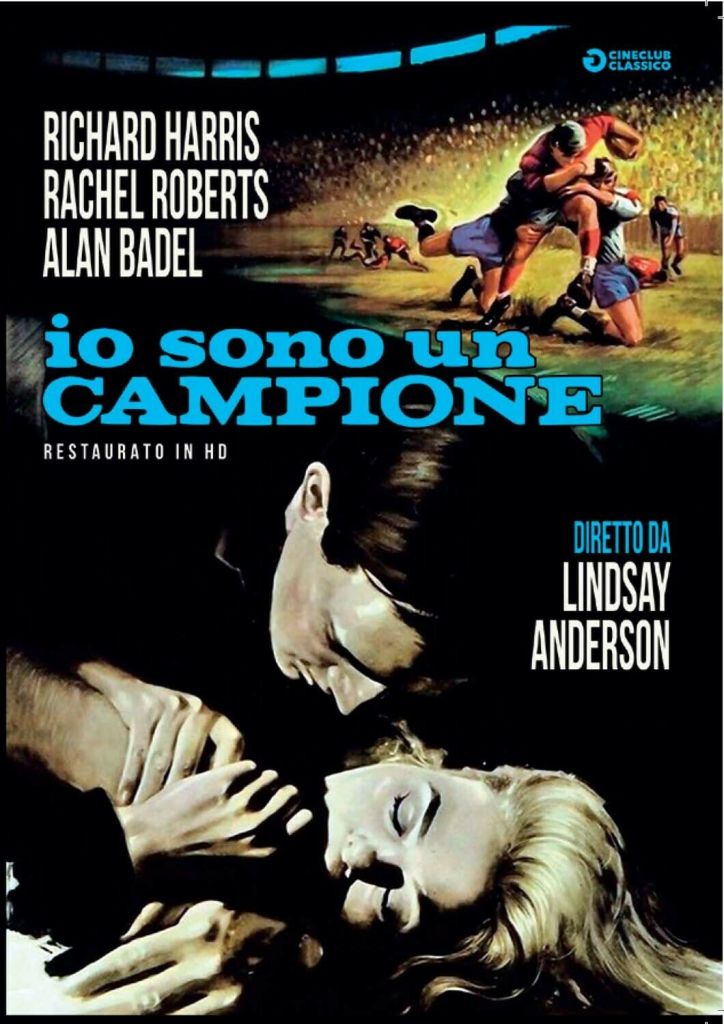
This Sporting Life (1963) ****

What began as the last gasp of the British New Wave working class kitchen sink drama has now after a six-decade gap resolved into a struggle over political and sexual ownership. Macho athlete Frank Machin (Richard Harris) jibes against his paymasters at a Yorkshire rugby league club – in similar fashion to Charlton Heston in Number One (1969) – while trying to hold sway over widowed landlady Margaret (Rachel Roberts). While documenting the class divide over which British writers and directors obsess, Lindsay Anderson’s debut takes a wry look at power.

Machin belongs to the Arthur Seaton (Saturday Night and Sunday Morning, 1960) class of loudmouth boors, determined to take as much as they can, riding roughshod over anyone who gets in their way, even attacking players of his own team. Although a fan favorite, his position at the club still requires backing from the moneyed directors, support that appears go awry when he rejects overtures from Mrs Weaver (Vanda Godsell), wife of a board director (Alan Badel). While Margaret eventually succumbs, her actions fill her with shame, the presents he buys making her feel like a kept woman.

Both Machin and Margaret are the rawest of creatures, forever appearing ready to topple into some emotional crevasse of their own making. At a time when marriage was the rock of society and women had little independence, a woman could dwindle away from the scorn of neighbors, while a man lacking emotional intelligence would crumble in the face of his own fears.

The non-linear narrative blurs some aspects of the story. There is no reference to Machin’s background save that he was once a miner and still works somewhere unspecified to supplement his footballer’s income. He rejects the paternalism of ageing scout Johnson (William Hartnell) while appearing to be seeking to resolve maternal issues, the widow with two small children at least a decade older, and although he could easily afford better accommodation refuses to move out.

His obsession with Margaret is never properly explained, except by her, who sees him as acting like an owner. Equally, Margaret is the opposite of the women in virtually every movie of the period, for whom marriage is the sole ambition. Whether she still grieves the loss of her factory worker husband, who may have committed suicide, or loathes Machin’s dominant nature is never explained. It might have been better if both had married for unhappy husbands and wives tend to give each other both barrels, emotions never concealed. Or she could be in the throes of an undiagnosed depression expressed as anger.

Machin is the other side of the British Dream – that anyone who escapes going down the pits or the mindless grind of the factory will automatically enjoy happiness. While Machin revels in his celebrity, he has no idea how to make his life happier. This is in contrast to the other footballers who either enjoy womanizing and drinking or are married or engaged and accept the unwritten rules of the game rather than fighting everyone.

There is plenty grime on show, and the football field has never been so pitiless, and as a social document it fits in well to the small sub-genre of films depicting working class life, but the picture’s thrust remains that of two opposites who will clearly never meet except in the delusional head of Machin.

Power is demonstrated in various ways. Weaver has the clout to give Machin a hefty signing-on fee against the wishes of the board, his wife takes her pick of the footballers to satisfy her sexual needs, Machin believes he is entitled to berate waiters in an upmarket restaurant, while Margaret is demeaned by accepting his present of a fur coat.

As ever with these films of the early 1960s there is a wealth of acting talent. Both Harris and Roberts were Oscar-nominated. Others making a splash in the cast were Alan Badel (Arabesque, 1966), Colin Blakely (The Vengeance of She, 1968), Jack Watson (The Hill, 1965), and if look closely you will spot double Oscar-winner Glenda Jackson (Women in Love, 1969). Future television stalwarts included William Hartnell (the first Doctor Who), Arthur Lowe (Dad’s Army, 1968-1977), Leonard Rossiter (Rising Damp, 1974-1978), Frank Windsor (Softly, Softly, 1966-1969) and George Sewell (Paul Temple, 1969-1971).

Lindsay Anderson (If… 1969) no doubt believed he was making an excoriating drama about the class struggle, but in fact has delivered a classic thwarted love story. David Storey wrote the screenplay based on his own novel.

Day of the Jackal (1973) *****

The original – and unlikely ever to be topped no matter the best intentions of Sky’s current remake. Possibly the greatest thriller of all time, certainly in the top two or three, and broke every rule going. No music, excepting the first few minutes, for a start. Could easily have been packed with the easily-recognizable all-star-cast found in roadshows, a few British acting knights thrown in for good measure, but instead has a no-name cast.

You would have had to be particularly vigilant as a moviegoer to have even heard of Edward Fox, too old (aged 36) at this point to be considered a rising star, and without the portfolio (outside of a Bafta supporting actor nomination for The Go-Between, 1971) to suggest he had ever particularly shone.   

Didn’t realize there was a 70mm version.

Apart from their job, every character, especially the chameleon-like Jackal (Edward Fox), is anonymous, virtually nothing of home life intrudes in the sharply-drawn story. The brilliant script by Kenneth Ross (The Odessa File, 1974) jettisons every unnecessary detail, and the even better editing pares every scene down to the bone.

That there is even an iota of tension given we know the outcome is quite extraordinary, but, as with the book, it is wound up taut. Not will he-won’t he, but how, when, where? Every time the police get a lead, they discover he is one step ahead.

What director Fred Zinnemann (A Man for All Seasons, 1966) has the good sense to retain is much of the fascinating detail that author Frederick Forsyth packed into his runaway bestseller. How to create a false identity, how a nibble of cordite can make you look old, where to conceal a rifle in the chassis of your car, and my favourite, how to wind a rope round a tree to ensure your shooting arm is steady.

And, except for the gunman and the rebels he represents, not a maverick in sight. None of this Dirty Harry, Madigan, nonsense, nobody railing against authority, but still the dead weight of bureaucracy, the high-ups only too happy when the moment comes they can dismiss an underling who might steal a sniff of glory.

This shouldn’t work at all, there’s far too much of the dogged detective, cops on both sides of the Channel tearing through reams of paperwork, hundreds of hotel registration cards, lost passport forms, birth certificates, death certificates. Cops stopping every blonde male of a certain height. Most of the minions you never see again, regardless of the vital tasks they fulfil. Virtually the only way characters are permitted emotion is to take a longer drag on their cigarette.

The only feeling permitted is the reaction of the would-be femme fatale Denise (Olga Georges-Picot) when her superior burns the love letters and photographs of her French soldier boyfriend killed in action. The late twist to that element of the story, when one of the politicians is discovered to have fallen into her honey-trap, comes when the cabal of politicians realises that French detective Lebel (Michael Lonsdale) has tapped all their phones.

There’s a constant sense of peak and trough, every breakthrough a dead end, yet endless accumulation of tiny detail allows for maneuver at the end, when we discover that the Jackal is not, as we have been led to believe, an Englishman going by the name of Charles Calthorp.

Given the intensity, there’s still space for nuance. The other murders the Jackal commits are visually discreet. None of the extended hand-to-hand combat of Jason Bourne and John Wick. A karate chop for one victim, another ushered out of view, the hand of a compromised lover grows limp. The torture scene is visually classic. The tortured man, seen from behind, tries to duck away from the glaring light and when he succeeds that light glares in the face of the audience leaving backroom staff to glean his tape-recorded words in between his screams

The money Zinnemann saved on star turns probably went on achieving French cooperation which minimized outlay on building on a set to show the parades and all the military razzamatazz that went with a realistic depiction of Liberation Day, a major French event. The assassin’s target, French President De Gaulle, was dead by the time the movie was made, so could not object, and since the assassination failed in part due to the brilliance of the French police perhaps it was felt this was one movie worthy of such collaboration.

Edward Fox is superb at the chilling bisexual assassin but the support cast is excellent – Cyril Cusack (Fahrenheit 451, 1966) as a gunsmith, Michael Lonsdale (Caravan to Vaccares,1974), a young Derek Jacobi (Gladiator, 1999), Barrie Ingham (A Challenge for Robin Hood, 1967), Alan Badel (Arabesque, 1966) as a snooty minister, Olga-Georges Picot (Farewell, Friend / Adieu L’Ami, 1968) and Delphine Seyrig (Accident, 1967).

Based on his Oscar-heavy record – two wins, four nominations – you wouldn’t have picked Fred Zinnemann for such populist fare. Unless you recalled that he followed From Here to Eternity (1953) with musical Oklahoma! (1956). He had never made a thriller before, but he instinctively knows how to make the material sing.

Hollywood went down the remake route once before with indifferent results despite a top-class cast of Bruce Willis, Richard Gere and Sidney Poitier in The Jackal (1997). The current television series is getting a good vibe but it will have to go some, even with around eight hours to play with, to match this.

Masterpiece.

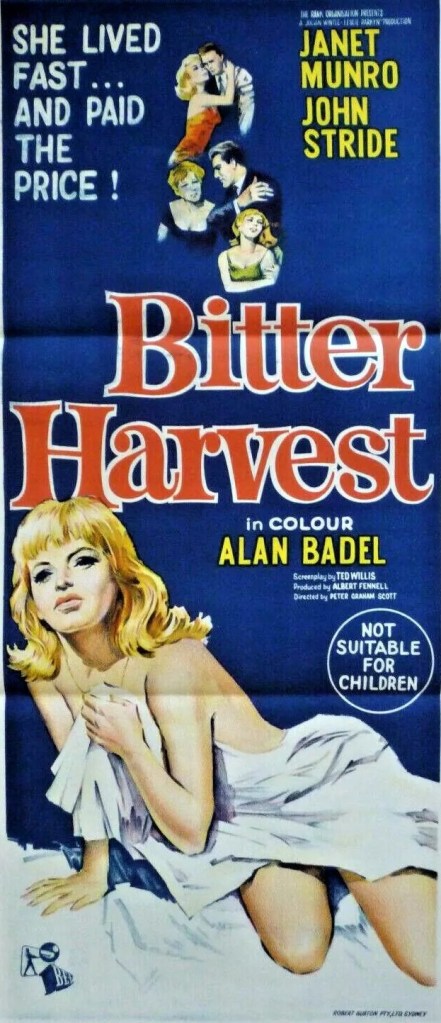
Bitter Harvest (1963) ****

Anyone claiming to be gaslighted will have unwittingly invoked the memory of an English writer who died over 60 years ago. Alfred Hitchcock paid tribute to him in adapting his fiendish play, Rope (1948). Hangover Square (1945) starring Linda Darnell was another of his novels to hit the screen. In all there have been over 50 film and television adaptations of his works.

One of his most famous publications was a trilogy focusing on a London barman and a barmaid in love with him whom he casts aside. I had read it, as I had all of Patrick Hamilton’s novels, with enormous pleasure. The trilogy was published in 1935 under the title Twenty Thousand Streets under the Sky. So it was with some trepidation that I realized Bitter Harvest was based on the middle novel of the trilogy. The DVD had sat, unwatched, in my collection for a couple of years because I was put off by the title, the no-name cast and journeyman director, assuming some routine tale with a sad ending.

Now I’m kicking myself I ignored it for so long. It’s a little gem that packs a punch, climaxing with a stylistic twist, and held together by a virtuoso performance by Janet Munro, one-time Disney ingenue in pictures like Swiss Family Robinson (1960), as she twists the audience and her lover round her little finger. And all the way through, despite the self-imposed travails, she manages to evoke sympathy.

Virgin Jennie (Janet Munro) escapes humdrum life in Wales, running a small shop in a run-down village, looking after her ungrateful father, and about to be dumped as a full-time carer onto a pair of aunts, when she meets smooth salesman Andy (Terence Alexander). He gets her drunk on champagne, whisks her back to his flat where he rapes her. Shame prevents her going home. Friendly barman Bob (John Stride) takes pity on her when she reveals she’s pregnant and lets her sleep, untouched by him, in his bed. Naturally, the relationship progresses, though she makes no move to find a job. But she wants her “share” of the good things in life and a barman isn’t going to provide them.  

Bob soon realizes she isn’t quite the docile waif delighted to be looked after. “When have I taken orders from you?” she snaps. He’s shocked when she reveals that her pregnancy was a ploy, and taken aback when she rejects his marriage proposal. Instead, she’s out on the town with actor neighbor Charles (Colin Gordon) who takes her to a showbiz bash where she wangles an introduction to impresario Karl (Alan Badel). “I’ve got something they want and they can have it and they’ll pay for it,” shows Bob which way the wind is blowing.

The movie begins with a drunken smartly dressed Jennie, long red hair cut in a more fashionable bob, returning to her upper mews apartment. She’s so sozzled she drops her handbag on the steps, only stopping to retrieve her keys before kicking the bag down the staircase. Opening the door, she tosses the key into the street. Inside, she sets about destroying the chintzy apartment, pours whisky over a photo of man later revealed as Karl, smashes bottles, upends furniture, tosses dresses out the window, scrawls something in lipstick on the mirror.

Then we’re into flashback telling the story I’ve just outlined. When she sets herself up to become Karl’s mistress, you think there’s a third act to come. But the movie cuts instead to the mews apartment and the by now dead Jennie.

What distinguishes it is the set-up. Jennie appears initially as the victim until she exerts control, using Bob, and presumably intending to work her way up. Quite how her life came to end in suicide is never revealed. But director Peter Graham Scott (Subterfuge, 1968) has the foresight to realize he doesn’t have to go into the degradation and shame, just show consequence.

And it’s framed with excellent performances. Bob, determined to improve himself, buys a book a month. Barmaid Ella (Anne Cunningham), in love with him, has to endure a scene where he tells her all about Jenny. Bob’s landlady isn’t going to get on a moral high horse about him having a woman in his room when she can rook him for increased rent. You can tell, even if Jenny ignores the obvious, what kind of life she will have as Karl’s mistress when in their first moment of intimacy he slaps her face and rips her expensive dress to make a bandage.

There’s another scene just as shocking and if it was not edited out by the censor at the time it still came as a surprise to see fleeting glimpse of a naked breast, a good year before the U.S. Production permitted similar in The Pawnbroker.  

As I said, the transition of Janet Munro (Hide and Seek, 1964) from victim to predator is exceptionally well-done, her iron fist cleverly concealed for most of the film. And it’s admirable, too, that John Stride, whose career was mostly in television, doesn’t come across as a hapless suitor, though obviously he is gullible. Alan Badel (Arabesque, 1966) only has a couple of scenes but makes a huge impact. Barbara Ferris (Interlude, 1968) has a small part.

Highlight of Peter Graham Scott’s directorial career, well-paced, measured, drawing out good performances all round, especially in the boldness of the closure. Ted Willis (Flame in the Streets, 1961) does an excellent job of updating the novel, though one flaw is that while the early section is set in Wales there’s no sign of a Welsh accent.

Recommended.

Arabesque (1966) ***

By this point in the 1960s, Gregory Peck’s career was pretty much at a standstill. Prestige had not saved Behold a Pale Horse (1964) from commercial disaster, thriller Mirage (1965) went the same way, other projects – The Martian ChroniclesIce Station Zebra – failed to get off the ground or like The Bells of Hell Go Ting-a-Ling-a-Ling were abandoned once filming began.  So, he was the main beneficiary of Cary Grant’s decision to retire.

Stanley Donen had Grant, with whom he had made the highly successful thriller Charade (1963), in mind for the role of the hieroglyphics professor caught in in a web of intrigue in Arabesque.  In some ways Peck was an adequate replacement but lacked the older actor’s gift for comedy and failed to master the art of the double-take. Arabesque was almost a counterpoint to Charade. In the earlier movie Audrey Hepburn is continually suspicious of Cary Grant. The new movie sees a gender reversal, Peck constantly puzzled as to where Sophia Loren’s loyalties lie.

The story itself is quite simple. A code has been put inside a hieroglyphic and a variety of people are trying to get hold of it either to decipher the secret within or to stop someone else finding out what it contains. When the scientist who has the code is killed, the man who ordered the killing, the sinister Beshraavi (Alan Badel), approaches Prof Pollock (Gregory Peck) to unravel the code, but is turned down. The professor is then kidnapped by Arab prime minster Hassan Jena (Carl Duering), whom he admires, to ask him to take up the job. Beshraavi’s provocatively-dressed wife Yazmin (Sophia Loren), flirting outrageously with Pollock, is also after the code. 

There follows more twists and double-crosses than you could shake a stick at, leaving the amenable Pollock mightily confused.  “What is it about you,” he asks Yazmin at one point, “that makes you so hard to believe?” It looks like director Donen is playing a variation of the famous Raymond Chandler maxim, that when a plot begins to flag, “have a man come through the door with a gun in his hand.” Sometimes, there is actually a gun or similar weapon, but mostly it’s just another twist. If Pollock doesn’t know what the hell is going on, then the audience is in the same boat.

But it is stylish, set in appealing parts of Britain (antique university, Ascot), Yazmin decked out in glamorous Dior outfits and even Pollock gets to wear a morning suit. Drop in a couple of action sequences, Hitchcock-style chases in a zoo and pursuit by a combine harvester, Pollock nearly run over by horses in a race, and the pair of them having strayed into a builder’s yard facing demolition by the British equivalent of a wrecking ball. But the standout scene is when Yazmin hides the professor in her shower (curtain drawn) while being interrogated by her suspicious husband and then steps in naked and then they play footsie with dropped soap. And she proceeds to expound, “If I was standing stark naked in front of Mr Pollock, he’d probably yawn.”

Beshraavi’s jealousy over his wife’s flirtation with Pollock adds another element of tension. Beshraavi is a very sinuous, sensuous bad guy, who can turn a harmless massage into a matter of life and death. He also has a pet falcon with a habit of ripping people’s cheeks. But even in the face of obvious threats, Pollock holds his own. In one scene as Beshraaavi  attempts to retrieve what he believes is the code from Pollock’s dinner plate, where it has fallen from the hiding place in the professor’s clothing, Pollock taps the man’s invading fingers with the sharp tines of his fork.

And there is some accomplished dialogue. When Pollock offers the falcon a date and is brusquely told the bird of prey only eats meat, he responds, “I thought he looked at it rather wistfully.” Beshraavi retorts, sharply, “It must have been your fingers.”

Donen had not made a film in the three years since Charade, so there was some critical feeling that he was a bit rusty and used experimentation – big close-ups, odd camera angles – to cover this up. He was living in London by this point and had been for nearly a decade. But there was very little that fazed him in any genre, and he had switched from musicals like Singing in’ the Rain (1952) to romantic drama (Indiscreet, 1958) and comedy (The Grass Is Greener, 1960). And though there is no question the film would have been better with Cary Grant, Peck proves a reasonable substitute.

The movie’s main drawback is the lack of romance since falling in love with someone you believe is either a traitor or a compulsive liar is a hard trick to pull off. But if you like the idea of pitting your wits against the screenwriters – Peter Stone (Charade), Julian Mitchell (Another Country, 1984) and Stanley Price (Gold, 1974), the latter pair in their movie debuts  – then this is one for you.

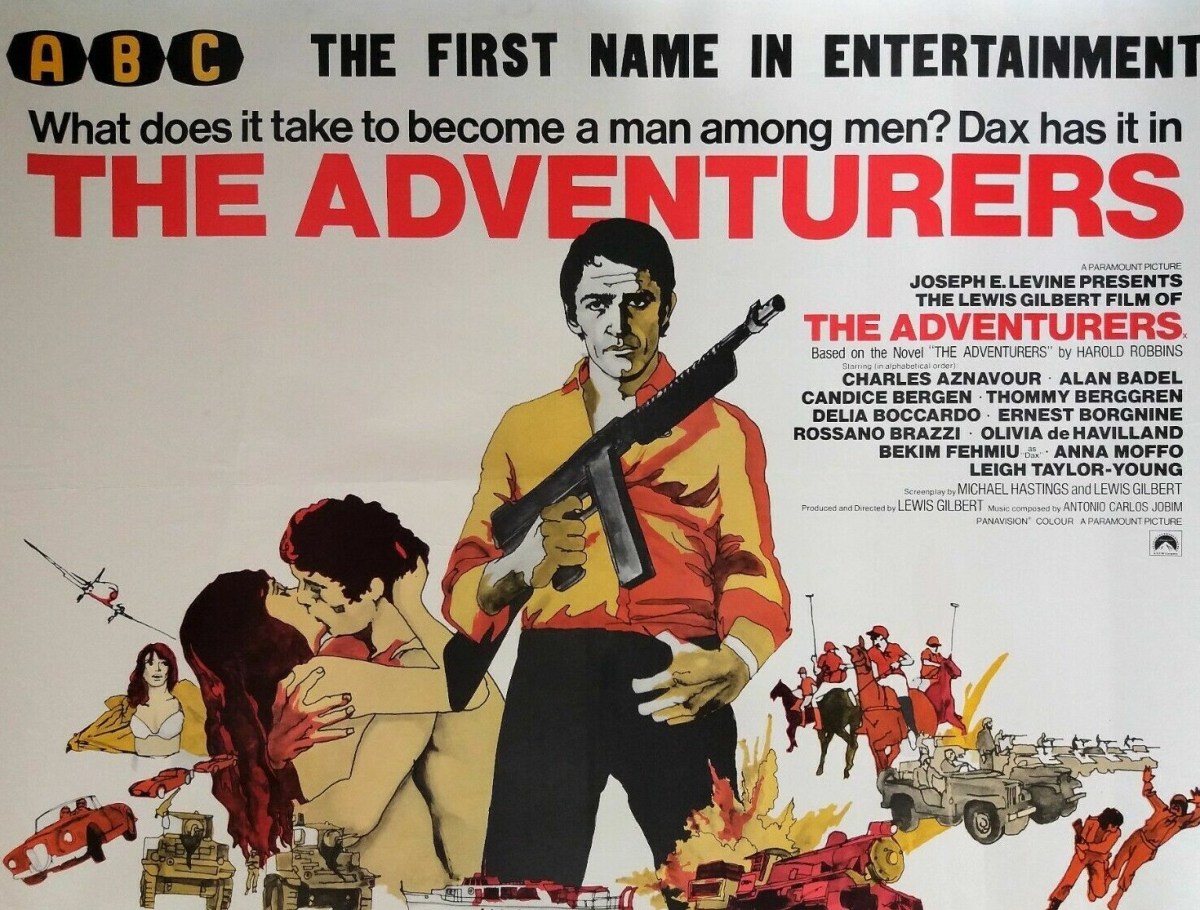
The Adventurers (1970) ***

Class A Trash. Adaptation of Harold Robbins (Nevada Smith, 1966) bestseller goes straight to the top of the heap in the So-Bad- It’s-Good category. Only Alan Badel (Arabesque, 1966) as a double-dealing revolutionary comes out of this with any honors.

The likes of Candice Bergen (Soldier Blue, 1970), Rossano Brazzi (Rome Adventure/Lovers Must Learn, 1962), double Oscar-winner Olivia de Havilland (Hush, Hush, Sweet Charlotte, 1964), Leigh Taylor-Young (The Big Bounce, 1969)  and Ernest Borgnine (The Wild Bunch, 1969) must have wondered how they were talked into this.

And director Lewis Gilbert (Loss of Innocence/The Greengage Summer, 1961) must have wondered how he talked himself into recruiting unknown Yugoslavian Bekim Fehmiu (The Deserter/The Devil’s Backbone, 1970), nobody’s idea of a suave lothario,  for the lead.

One of the taglines was “Nothing has been left out” and that’s to the movie’s detriment because it’s overloaded with sex, violence, more sex, more violence, in among a narrative that races from South American revolution (in the fictional  country of Corteguay) through the European jet set, fashion, polo, fast cars, orgies, and back again with revenge always high on the agenda. At close on three hours, it piles melodrama on top of melodrama with characters who infuriatingly fail to come to life.

Sensitivity is hardly going to be in order for Dax (Bekin Fehmiu) who, as a child after watching his family slaughtered and mother raped, makes his bones as a one-man firing squad, machine-gunning down the murderers. From there it’s a hop-skip-and-jump to life as the son of ambassador Jaime (Fernando Rey) in Rome where he belongs to an indulgent aristocracy who play polo, race cars along hairpin bends, swap girlfriends and, given the opportunity, make love at midnight beside the swimming pool.

His fortunes take a turn for the worse when his father backs the wrong horse, the rebel El Condor (Jorge Martinez de Hoyos)  in Corteguay, and is killed by the dictator Rojo (Alan Badel). In between an affair with childhood sweetheart Amparo (Leigh Taylor Young), life as a gigolo and cynical marriage to millionairess Sue Ann (Candice Bergen), Dax takes up the rebel cause, initially foolish enough to fall for Rojo’s promises which results in the death of El Condor, and then to join the rebels.

But mostly it’s blood, sex, betrayal and revenge. Anyone Dax befriends is liable to face a death sentence. He only has to look at a woman and they are stripping off. It’s a heady mess. It might have worked if the audience could rustle up some sympathy for Dax, especially as he was entitled to feel vulnerable after his childhood experiences. But he just comes across as arrogant and the film-makers as even more arrogant in assuming that because women fall at his feet that must mean he had bucketloads of charm rather than that was what it said in the script. He’s fine as the thug but not convincing as a lover.

Excepting Badel, the best performances  in a male-centric sexist movie come from women, those left in Dax’s wake, particularly Candice Bergen as the lovelorn wife and Olivia De Havilland as the wealthy older woman who funds his lifestyle, aware that at any moment he will leave her for a younger, richer, model. Lewis Gilbert is at his best when he lets female emotion take over, not necessarily wordy intense scenes, because Bergen and De Havilland can accomplish a great deal in a look.

The rest of it looks like someone has thrown millions at a B-picture and positioned every character so that they have nowhere else to go but the cliché.

By this point, Hollywood had played canny with Harold Robbins, toning down the writer’s worst excesses and employing name directors to turn dire material into solid entertainment. Edward Dmytryk (Mirage, 1965) had worked wonders with The Carpetbaggers (1964),  whose inherent salaciousness was held in check by the censor and made believable by characters played by George Peppard (Pendulum, 1969), Alan Ladd (Shane, 1953) and Caroll Baker (Station Six Sahara, 1963). Bette Davis and Susan Hayward contrived to turn Where Love Has Gone (1964) into a decent drama. Even Stiletto (1969), in low-budget fashion, managed to toe the line between action and drama.

But here it feels as if all Harold Robbins hell has been let loose. Rather than reining in the writer, it’s as if exploitation was the only perspective. Blame Lewis Gilbert, director,  and along with Michael Hastings (The Nightcomers, 1971) in his movie debut, also the screenwriter for the end result.

On the other hand, if you can leave your critical faculties at the door, you might well enjoy how utterly bad a glossy picture can be.

Discover WordPress

A daily selection of the best content published on WordPress, collected for you by humans who love to read.

The Atavist Magazine

by Brian Hannan

WordPress.com News

The latest news on WordPress.com and the WordPress community.