Quadruple Bill: Ferrari (2023) **** / Anyone But You (2023) *** / One Life (2024) *** / Next Goal Wins (2023) **

The stars aligned and with only a couple of minutes between features I was able to squeeze in a record-equalling four movies in a single day (excepting all-nighters of course) at the cinema and with one exception they were all well worth the ticket price.

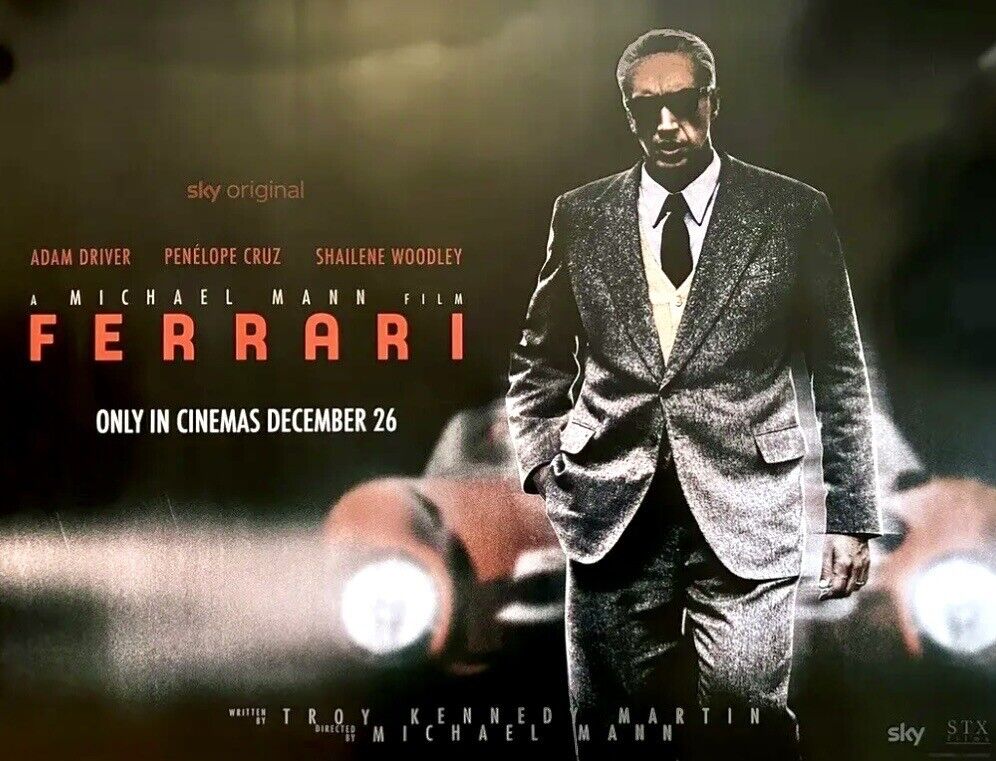
Ferrari

Not really a motor racing picture in the mold of Ford v Ferrari / Le Mans ’66 (2019) or Rush (2013) but more of a domestic drama centering around a dramatic race. The acting is plum, Penelope Cruz (The 355, 2022) taking the honors ahead of Adam Driver (House of Gucci, 2021) though Shailene Woodley (The Last Letter from Your Lover, 2021)  seems miscast. The climactic race doesn’t carry the punch of Le Mans, however, the focus more on the backseat players than the drivers. And it’s not quite prime Michael Mann (Heat, 1995)

Set about decade before Ford v Ferrari, it finds Enzo Ferrari (Adam Driver) coping with the death the year before of his only son, the potential collapse of his business, and trying to conceal long-standing mistress Lina Lardi (Shailene Woodley) from long-suffering wife Laura (Penelope Cruz).

The depth of the couple’s despair at the loss of their son can be measured in the fact that every morning they take flowers, separately, to his graveside. He has at hand an immediate substitute, having fathered a boy, now approaching ten years old, with his mistress, but rejects the chance to officially gave the boy his name.

The manufacturing side of the business was always viewed as merely a way of financing the racing, Ferrari having been a driver earlier in his life. But overspending or lack of income, such details are not specified, has pushed the business towards bankruptcy and he toys with inviting a merger with a bigger company such as Fiat or Henry Ford (which formed a central plank of Ford v Ferrari). But the easiest way out is to win Italy’s most prestigious race, the Mille Miglia, a four-day 992-mile event that ran clockwise across public roads from Brescia to Rome and back.

But I had to look that up. Unlike Le Mans, unless you are a racing aficionado, this doesn’t immediately click in the public consciousness. And there were a host of other details that seemed to skimp on information. Unlike Ford v Ferrari where you learned exactly how fast cars got faster and what it took to drive them or be driven in one (witness Henry Ford’s terrifying hurl), here you are only given some vague technical data which makes little sense. There is little background fill, Maserati pops up as Ferrari’s chief rival but its inclusion is almost incidental. In fairness, you do get more about the jiggery-pokery of running a business.

Running parallel to the racing venture is the family soap opera, will Laura find out about the mistress and child, will she jeopardize the business out of spite. Once the race starts, it’s hard to keep up. Here the distinct lack of detail hurts the most, although there is one shocking scene.

Engrossing enough but it’ll struggle to fill cinemas.
Anyone But You

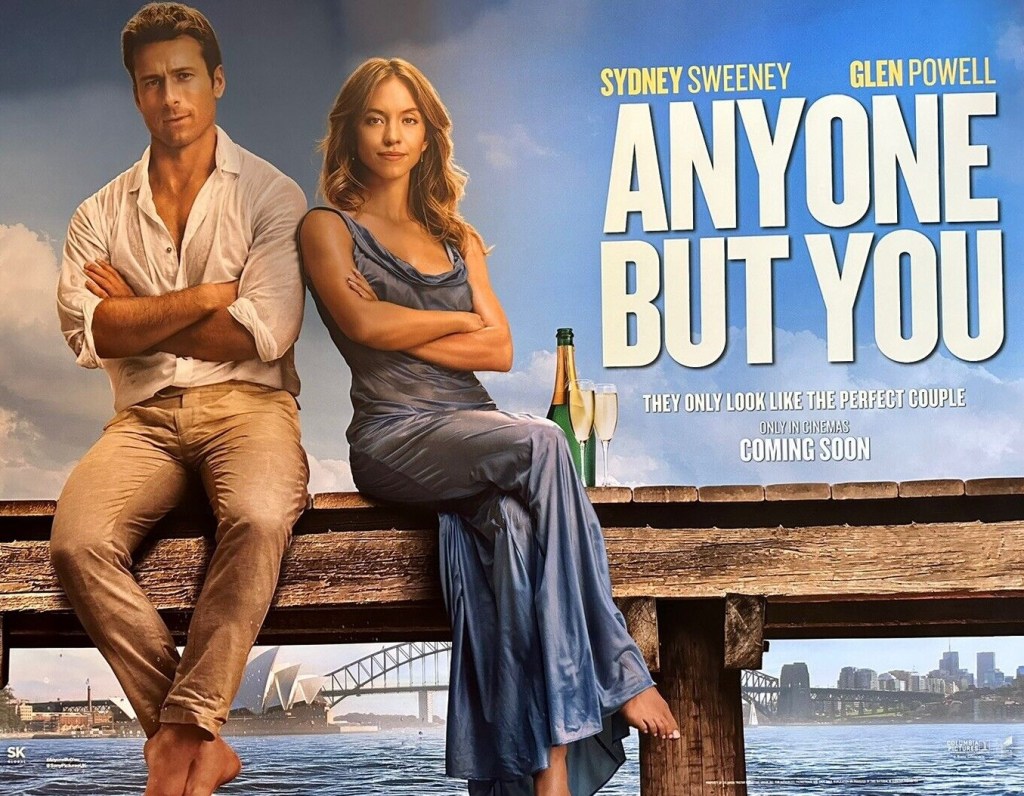
A contemporary take on the rom-com with the disgruntled participants of a one-night stand forced to pair up at a wedding where they encounter an abundance of exes and various interfering family members. Glen Powell, star in the making in Top Gun: Maverick (2022), comes good as does Sydney Sweeney (The Voyeurs, 2021). Skipping the raw rudeness of its immediate predecessors, this pivots on charm, but with a few helpings of humiliation (he strips naked to avoid a predatory spider) and slapstick thrown in, plus some old-style determinedly un-woke action from one parent in particular. He is the more vulnerable, a poor swimmer, requiring a soothing song to fly. The plot is over-plotted and occasionally it seems some incidents have come straight from Room 101, but generally it works. Probably it helps, if I’m permitted of offer such a comment, that they are  A-grade beefcake and cheesecake, respectively. Setting that aside, they appear to have mastered the lost art of the rom-com and certain drew appreciative laughter from the audience I was part of. the kind of film that in the olden days would have picked up a sizeable audience on DVD and turned into the kind of cult that guaranteed a return joust.

One Life

A film of two halves when it should have been divided into three-quarters and one-quarter or an even stiffer division. Concerning the efforts of the “British Schindler” Nicholas Winton (Johnny Flynn playing the younger version, Anthony Hopkins the older) to smuggle out of Prague over 600 Jewish children at the outbreak of World War Two. The earlier section is far more gripping and the later section that revolves apparently around an attempt to publicize the previous rescue in order to highlight the plight of later refugees falls mostly flat on its face as it seems more intent on glamorizing the actions of a man who wanted anything but public recognition. Too much time is spent pillorying a society that sanctified such inanities as the long-running That’s Life television program when I felt it would have been more sensible, and fair, to devote more attention to the work of Winton’s collaborators. While the climactic scene where Winton meets, as grown-ups, the children he saved is moving, it feels redundant compared to the actual children-saving.

Next Goal Wins

Eventually, it turns into a feel-good picture but for most of the time seems intent on making fun of Samoans carrying the tag of the world’s worst team. Nobody seems to ask why FIFA is so determined to bring football to countries where there is no interest in the game. Oddly, Michael Fassbender turns in his most accessible performance as the coach drafted in to improve the team, a big ask since he has clearly been a flop at his chosen profession. You could have pinned the movie more easily on the transgender player more accepted in Samoa than virtually any other country in the world who, by default, becomes the first transgender to play in the World Cup.
House of Gucci (2021) ***** – Seen at the Cinema

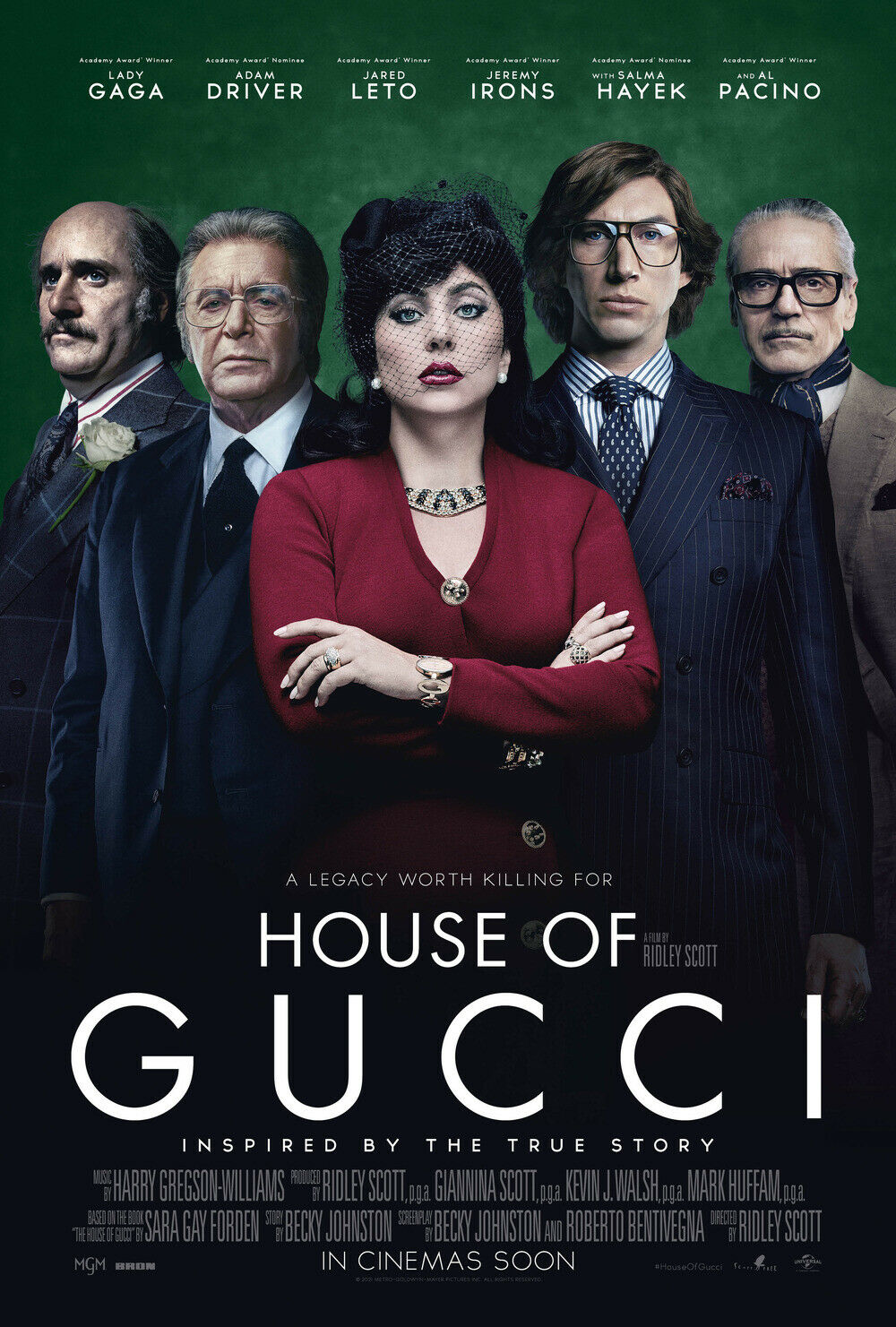
Beautifully constructed, stylish, compelling narrative about passion, betrayal and the death of a dynasty. Just as The Godfather is not just about the Mafia, this is not just about fashion; rather, both fit into the niche of movies about family. In each, there are principled fathers and both weak and strong sons. While decisions are driven by character, ambition clogs the mind and ultimately it is the clear-sighted who win.

In a beautifully-played love story outsider Patrizia (Lady Gaga) manages to snag Gucci heir Maurizio (Adam Driver), her lowly status driving a wedge between him and ill patriarch Rodolfo (Jeremy Irons), who shares control of the company with his brother Aldo (Al Pacino). Almost a geek poster-boy, Maurizio nonetheless fits easily into her world. But when Aldo draws Maurizio into the family business, it triggers conspiracy and betrayal.

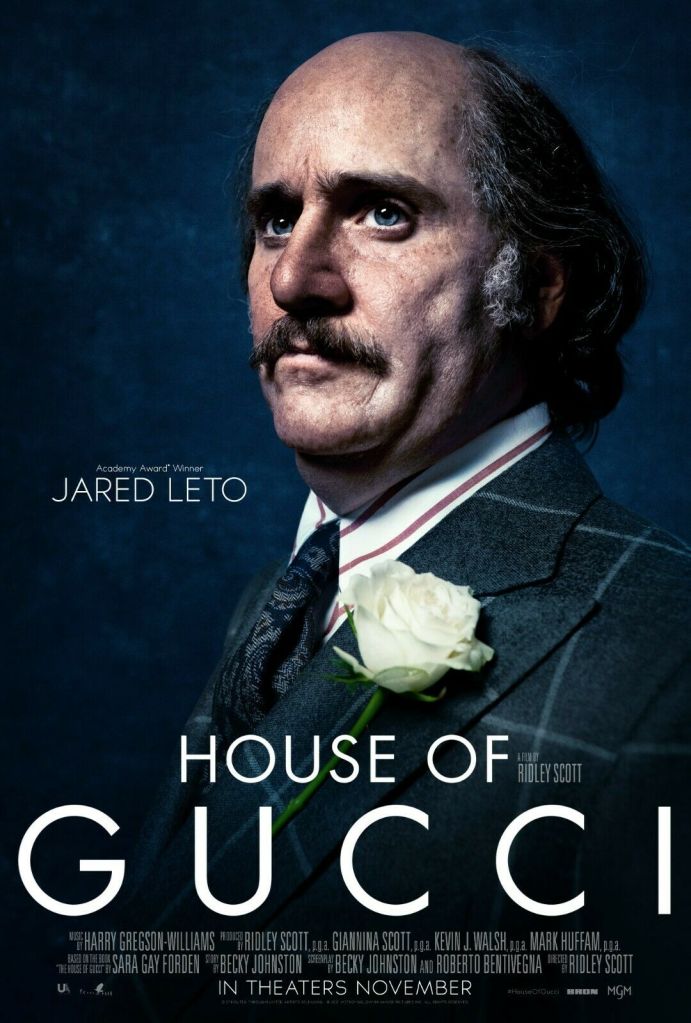
Aldo and Rodolfo are polar opposites, the former willing to dilute the brand in the race for profit, the latter seeing himself as the curator of a more sedate way of doing business. While Rodolfo pines for his dead wife in his palatial Italian sanctuary, Aldo has an eye for the ladies in New York. The weak link in the family chain is Aldo’s “idiot” son Paolo (Jared Leto) who considers himself a fashion genius. But, in reality, they are all weak, seduced by wealth and power, believing themselves untouchable despite wholesale fraud, business folly and self-delusion on a colossal scale.

The quest for power is ostensibly driven by Patrizia, but she proves no match for a flinty-eyed Maurizio. And for his all self-aggrandisement, Maurizio proves no match for the circling predators, his rampant self-indulgence a death wish in a boardroom.

Over-acting could have sent this picture off the rails but everyone is terrific and the soap-opera tag is unfair. In the best Shakespearian style, hubris accounts for tragedy.  Few characters escape humiliation. Paulo may be a figure of fun, but his mortification at the hands of Rodolfo renders him extremely human. Aldo may exalt in his business skill but in the face of betrayal is destroyed. Patrizia receives a massive put-down by Maurizio in front of his high-class friends.

Lady Gaga, who demonstrates the onscreen radiance and incandescence of a latter-day Elizabeth Taylor, is superb as the woman whose prize is snatched away. Adam Driver puts in his best performance yet, so natural, and his scenes with Gaga are electrifying. Al Pacino encompasses a massive range, man in his pomp, loving father, and in the depth of agony at betrayal. Jared Leto is a revelation, and an early Oscar favourite, as the ridiculous and ridiculed son. Jeremy Irons and Jack Huston as the conniving lawyer are excellent

There are so many brilliantly-wrought scenes – seduction on a rowing boat, a rugby match that gets out of hand, a snake-pit of a boardroom, Aldo lavishing attention on his cows, Patrizia indulging a psychic (Salma Hayek), Maurizio leaping around a room for a Vogue photo shoot. A weighty look at the corruption of power but also a fabulously entertaining picture. Better known for visual tropes, here Scott displays his mastery of narrative as we sweep in and out of unbridled egos hell bent on triumph at any cost. And it is the best film about business since Wall St (1987).

When I first watched this, I was inclined to give it a four-star rating but after seeing it a second time on the big screen that appeared niggardly for a work of such awesome majesty. (Now that I’ve seen it a third time, the five-star ranking still stands). Just like American Gangster (2005) and Thelma and Louise (1992), when Scott moves outside his self-appointed sci-fi and historical treasure trove, he does so with effortless style. This just zipped along. I hardly noticed the time at all. Second time around, I just did not want it to finish, I was so immersed. I even found myself laughing at the same jokes and situations.

What a banner year for the 83-year-old British director. The Last Duel could have bookended this piece – wronged woman proved innocent compared to wronged woman found guilty. Given Scott is synonymous more with the historic than anything approaching the contemporary, I thought I would have preferred The Last Duel, but I now consider House of Gucci the greater film.

The Last Duel (2021) **** – Seen at the Cinema

A surprisingly contemporary core, bolstered by a quartet of excellent performances, drives Ridley Scott’s bold Rashomon-style historical tale. Despite its length it’s less of a historical epic in the style of Gladiator (1999) and more of an intimate and intricate exploration of power – and its lack. Each of the main characters, including and especially the women, while exerting some kind of power nonetheless are in thrall to a superior being whose word is absolute law. Challenging that authority could result in instant death. It’s a slow-burn for sure but exerts a tenacious grip as the story unfolds from three points-of-view to a double climax, both riveting for different reasons.   

And it’s far from typical Ridley Scott except in attention to historical detail. The battle scenes are almost perfunctory – in fact few end in victory – and except to demonstrate bravery do not follow the usual heroic template. There’s none of the trademark Scott cinematic sweep although the duel itself is exceptional.

Scarred to the point of facial disfigurement Damon has never played a character like this before.

In 14th century France Marguerite (Jodie Comer), wife of Sir Jean de Carrouges (Matt Damon), accuses Jacques Le Gris (Adam Driver) of rape, the accusation finally settled by duel to the death. All three characters are given the chance to give their version of the story and this is where it becomes fascinating as shades of personality are filled in.

At the outset Jean comes across as brave, impulsive, marrying Marguerite to save her honour (her father is a traitor), and when wronged willing to challenge authority. But as other perspectives unfold he is revealed as blustering, ambitious, more interested in his wife’s sizeable dowry than her honour, over-proud, and a poor manager of his estate. While brave, educated and charming Le Gris turns out to be a greedy, conniving bed-hopper. Initially presented as a grateful wife and little more than an adornment Marguerite is revealed as the most courageous of all, an able estate manager, challenging the King, accepting the prospect of death rather than, as was apparently the custom of the times, allowing the rape to go unremarked.

Comer is a revelation and you could argue she steals the picture from her more experienced colleagues. There is an astonishing scene where she realises that, her husband’s bravery notwithstanding, he has condemned her to a terrible death should he lose the duel.

The sexual mores of the era are examined in depth, the worst examples of male prerogative sometimes just touched upon in passing, for example, since a wife is her husband’s property, in law he is the one besmirched not her. In taking sexual power as his central theme rather than the triumphs and woes of the men, Scott takes a huge risk in alienating a following expecting more action and cinematic bravura, but the bold story-telling pays off and although starting with Alien (1979) the director has a record of strong female characters this has more in common with Thelma and Louise (1991) where wronged women are backed up into a cul de sac.

Rejecting the heroism route allows Scott to present far more rounded characters. None of the four principals conforms to type. Damon is neither the common man nor the action hero, but a boor. Driver is neither charming seducer nor outright villain but somewhere in between, living on his wits. Comer cannot rely on female machismo or cleverness but must remain stout in the face of an onslaught of humiliation. And mention must be made of Ben Affleck as Pierre d’Alencon, employer of Le Gris and master of Carrouges, who is cocky, immoral, amoral, greedy, shifty and cunning. Other standout performances feature Alex Lawther (The Imitation Game, 2014) as a gleeful king and Harriet Walter (Atonement, 2007) as a loathsome and cruel mother-in-law. I just hope Oscar voters recognise at least some of these perfomances.

A blond and goateed Affleck as you have never seen him before, cockiness running riot, with a mean streak a mile wide, the epitome of Middle Ages entitlement.

It’s worth paying attention to the screenplay by Nicole Holofcener (Oscar-nominated for Can You Ever Forgive Me, 2018) and Damon and Affleck (their first joint effort since Good Will Hunting, 1997) and note how the language the characters employ changes according to the perspective. Words that we imagine in one section that appear to be spoken by one character in another section are delivered by someone else entirely.

I am a huge fan of Ridley Scott and while I came looking for adventure in the style of Gladiator (2000) or his other historical masterpiece Kingdom of Heaven (2005) I came away more than satisfied in the way he altered his style to suit the story almost in the same manner as he had done with American Gangster (2007), another picture about power.

You will probably be aware by now that this has been a colossal box office bomb and although the film has enormous merit you can see why audiences looked the other way. Oddly enough, I think it will acquire a bigger audience through small-screen streaming since it is really a drama.  I would still recommend catching it at the cinema but there’s fair chance it will not last for its full 45-day window.

I tend to judge directors not by critical acclaim but by a more rudimentary measure – how often I watch their pictures. I have seen Alien, Blade Runner (1982), Thelma and Louise, Gladiator, Kingdom of Heaven, American Gangster, the Martian (2015)  and even the flawed Prometheus (2012) and Black Hawk Down (2001) more than half a dozen times each – often three or four times at the cinema – and I have a notion that The Last Duel will comfortably fit into this elite.

Annette (2021) * – Seen at the Cinema

Contender for the weirdest film of the year and a truly bonkers misfire, this is a musical only in the sense that much of it is sung in the vein of Tommy (1975) but completely lacking in the kind of memorable songs that would make it qualify for the genre. It is the most over-ripe of conceits, actors who can’t sing, a story that doesn’t fly, characters whose characteristics are endlessly laboured, little development, and a director who clearly believes audiences will swallow anything.

World-famous soprano Ann (Marion Cotillard) marries agent provocateur stand-up comic Henry (Adam Driver). Her stage act consists of dying and bowing, his of heckling his audience. The relationship soon hits the rocks but not before she has given birth to Annette. This is where it becomes even more tricky because Annette more closely resembles an offspring of Chucky, the horror doll, rather than, as was clearly intended, Pinocchio. The story takes an odd turn, which I won’t reveal, but it fails to redeem the project.

While Driver (Star Wars: The Rise of Skywalker, 2019) is quite convincing as the bonkers comedian – especially in one skit where he has the audience believing he has killed his wife – and it is virtually impossible for Cotillard (La Vie en Rose, 2007) to be bad in anything, the film needs more than repetitive scenes of her singing and him upbraiding the audience. Cotillard actually has a reasonable voice – and has cut a few albums – but what she is given to sing here makes a mockery of her talents.

With names such as director Leos Carax (Holy Motors, 2012) and screenwriters/ composers Ron and Russell Mael of Sparks fame this was clearly always going to err on the side of cult. It might have worked if the director could have seen his way to a bit of brevity. At 90 minutes or so it might have been an interesting trifle. At 140 minutes, it outstayed it welcome.

Discover WordPress

A daily selection of the best content published on WordPress, collected for you by humans who love to read.

The Atavist Magazine

by Brian Hannan

WordPress.com News

The latest news on WordPress.com and the WordPress community.