Identity Unknown (1960) ***

The disaster picture in embryo. Well, the disaster picture without the actual disaster, but setting up the disaster narrative formula of who lives and who dies.

But before we go on to that, spot the deliberate mistake – in the poster I mean. At least I’ve realized it comes from an entirely different movie whereas imdb and Rotten Tomatoes clearly do not. But I’m using it as I guess for the same reason they did – due to the lack of a genuine poster for this picture.

Just to confuse you further, this is a lobby card from the wrong picture,
the one from 1945 not the one being reviewed.

Regarding the survival lottery, your card is somewhat marked, this being the innocent start of the 1960s and not a few decades later where screenplays adopted a more cynical – and shock-bait – approach to narrative. The minute you know that the lives of four children depend on the survival of various adults involved in a plane crash in the Swiss Alps then you can guess pretty much who will come out of the disaster scot-free.

But as would later be de rigeur for the disaster movie, the narrative concerns itself with a limited number of characters. There are only ten people on board the plane. We know from the outset only three have survived. So the question is – who?

But instead of following the survivors as they battle the crash and the snowbound mountains and fierce storms and freezing cold and whatnot, instead we focus on the back stories of the passengers and crew through John (Richard Wyler) and Jenny (Pauline Yates), seasoned and novice reporter, respectively, as they go through their door-stepping paces.

So, essentially, it’s an expanded portmanteau, ten stories, ten families’ lives in the balance.

Our cross-section of society includes a few who might benefit from someone not surviving – lawyer Jamieson (John Gabriel) hoping the main witness against his villainous client won’t be able to testify, adulterous wife Mrs Sylvester hoping her husband’s death will leave her free to marry lover Ray (John Carson). To counter those conniving characters, we have the heart-tugging tales of two child refugees from Poland awaiting the arrival of their adoptee mother Mrs Phillips, parent Ken (Vincent Ball) whose child will die if an eminent surgeon doesn’t return, and pilot’s wife Pam (Nyree Dawn Porter) in a maternity ward with a newborn baby.

Movie agent Charlie (Martin Wyldeck) takes advantage of unexpected publicity for his ageing client, praying survival will boost her fading career. But he’s cynical enough to already be imagining headlines: “Farewell Performance” if she dies, “Return Farewell Performance” if she lives.

The journalists are not as hard-bitten as they imagine. Sure, Ken does report fraudster Philbert (Peter Elliott) to the police, but he stops short of revealing the fact that her daughter is on the plane to a blind mother whose family are keeping the news from her. In theory, Jenny, is the more conscience-stricken of the journalists, but that’s only if you excuse the tape recorder hidden in her handbag.

By the time our motley crew head out to Switzerland to meet the rescuers coming down the mountain and find out if their loved ones have made it, some home truths have been spelled out. Mrs Sylvester discovers her lover only seduced her to win a job from her husband. “Think I’ve been hanging around here for the pleasure your company?” snarls Ray. “If your husband’s dead you’re no use to me.” Not one to take a put-down lying down, she chats up a smooth gangster in Switzerland. “I’ll ring you some time,” he says when they part. “You don’t know my number,” she wails.

By the time the journos and those waiting are assembled in the bar at the Swiss airport, you might have expected Hercule Poirot to waltz through the door and start interrogating them – generally the only reason for such an assembly.

By this point, John and Jenny have cosied up, at least she’s cooked him a meal, though that proves not a precursor to seduction. But the movie skips past the joy of the child-related survivors and ends on a couple of telling visuals: the welcome home cake for the daughter who won’t return and the tape unspooling from the recorder as Jenny decides being a hard-nosed journalist isn’t for her. While in some senses Mrs Sylvester gets her come-uppance, husband dead, lover fled, this is no morality tale – the villain gets off with murder.

As usual, with these trim British B-pictures, don’t expect much in the acting department, but the story is well told, sufficient and interesting variety of characters, especially when the narrative goes outside the point-of-view of the reporters and focuses on facial expression of those involved.

Pauline Yates (Darling, 1965) has more spark than Richard Wyler (The Ugly Ones, 1966) while Nyree Dawn Porter (BBC’s The Forsyte Saga, 1967) and Vincent Ball (Echo of Diana, 1963) flesh out minor roles. Valentine Dyall (The City of the Dead/ Horror Hotel, 1960) plays a grumpy newspaper editor.

Directed with occasional nifty touches by Frank Marshall (A Guy Called Caesar, 1962) from a screenplay by Brian Clemens (The Corrupt Ones / The Peking Medallion, 1967).

Another plum on Talking Pictures TV.
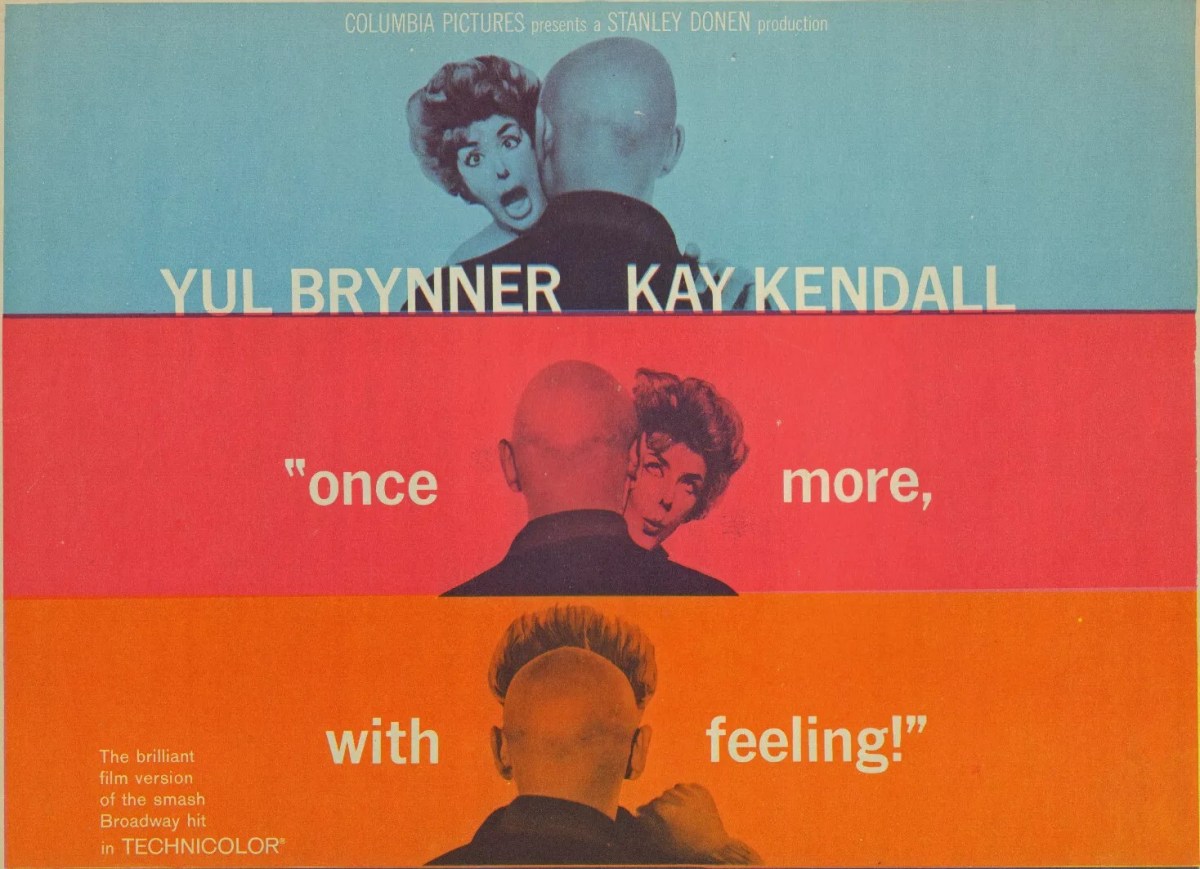
Once More With Feeling (1960) **

At the very least I had thought, given the involvement of classy director Stanley Donen (Charade, 1963) that this might go down as a glorious failure rather than just a straightforward glossy dud thanks to the woeful miscasting of Yul Brynner (The Double Man, 1967) and a bizarre plot. Am sure it must have appeared a welcome change of pace from a string of heavyweight dramas for the actor.

Adapted from the Broadway success by playwright Harry Kurnitz (Goodbye Charlie, 1964) this never escapes its stage origins, too many dramatic entrances, faked dramatic faintings, unwelcome guests ushered out. That would all have been manageable had Yul Brynner shown the slightest instinct for comedy. Bluster doesn’t compensate. Playing a tyrannical orchestra conductor would hardly take any acting for a performer who radiated intensity.

Victor Fabian (Yul Brynner), as egomaniacal and temperamental as you’d expect from a top conductor, is caught in flagrante by harpist wife Dolly (Kay Kendall) with young musician Angela (Shirley Anne Field). After she storms out, he loses his mojo. Worse, his orchestra loses its most efficient fundraiser, since Dolly is the one who keeps donors sweet.

Dolly has wasted no time acquiring a new admirer, esteemed physicist Richard (Geoffrey Toone), and wants a divorce in order to marry him. But wait, there’s a catch. Not the obvious one that Victor turns over a new leaf and determines to win her back, abandoning arrogance in favor of humble ardent wooing.

No, she can’t leave him because, wait for it, they never married. Well that’s not so jaw-dropping as the consequence. He insists that she can’t get a divorce unless she marries him and during an agreed short period together presumably that will give him time to flex his romantic muscles and win her back.

I can only assume that in the sophisitcated circles in which they run, the idea that they have been living in sin might cause her considerable embarrassment. But I’m perplexed at the notion, even for the less permissive times, that this would provoke sufficient scandal – more scandal than getting divorced in the first place? Or that they would expect nobody to notice the sudden marriage and wonder how they have managed to so openly live together? This seems nothing more than a jumbled-up head-over-heels barmy plot strand.

Anyway, she agrees, and he does his best to win her back even to the extent of playing a piece of music, beloved of a sponsor, that he detests.

The plot belongs to the golden age of the screwball comedy but the picture doesn’t play it that way. There’s more to being frenetic in pursuit of laffs than just being frenetic and this never takes off.

While Brynner is strictly one-note and never manages to bring a suggestion of genuine romance into the proceedings, the director is equally at a loss to inject any oomph or style and it looks as if he’s done little more than film a stage show with all its cinematic limitations.

Kay Kendall (Les Girls, 1957) in her final role – she died of leukemia – is equally constricted by a character who huffs and flounces and never embraces the comedy side of screwball.

This was the first of two straight comedies pairing Donen and Brynner and I’m dreading its successor Surprise Package (1960). Kurnitz adapted his own play which had been a decent success on Broadway, so the movie failure can’t all be blamed on him.

Night after Night after Night (1969) ***

British giallo sets tough London cop Bill Rowan (Gilbert Wynne) hunting a Jack-the-Ripper type serial killer who has slaughtered his wife (Linda Marlowe). Chief suspect is leering cocky jack-the-lad Pete (Donald Sumpter) of the wham-bam-thank-you-ma’am school of seduction. In an era when pornography and “perversion” were beginning to shake off the shackles – and strippers, prostitutes, voyeurs and transvestites condemned as evils to be stamped out – this skirts the boundaries between sexploitation and heavy moralizing.

Chief among those embarking on a moral crusade is hypocritical puritan Judge Lomax (Jack May) who spurns his attractive wife (Justine Lord) while indulging in cross-dressing. Needless to say, his clerk, ostensibly another upholder of the moral fabric, is a porn addict. As the body count grows, Pete manages to needle Rowan sufficiently for the cop to consider any nefarious means to put him behind bars.

Knives flash in the dark, the killer wears black leather, victims writhe on the ground as they are slashed to pieces, and coupled with the unusually high nudity quotient it is surprising that this picture passed the British censor. The movie never drags and there is enough incidental sleaze to keep the viewer interested. As a historical document, it details the point at which the country hovered between reined-in respectability and full-on sexual freedom.

Operating here under the pseudonym Lewis J. Force, Canadian director Lindsay Shonteff (The Million Eyes of Sumuru, 1967) conjures up a darker vision of a London so often presented in glorious tourist tones with nastiness seeping into every corner of society. Veteran Jack May (A Twist of Sand, 1968) captures well the double life of a decent man undone by what is perceived to be indecency and his later scenes are quite moving. Donald Sumpter (The Black Panther, 1977) is excellent as the taunting petty criminal while Gilbert Wynne makes a decent debut as a leading man. In small roles are Justine Lord (Deadlier than the Male, 1967) and Linda Marlowe (Big Zapper,1973 – directed by Shonteff). Written by Dail Ambler (Beat Girl/Wild for Kicks, 1960).

Jack the Ripper was such an ingrained element of British culture that any movie featuring a similar villain gave audiences the creeps. British television cops were beginning to move out of the shadow of Dixon of Dock Green and into the new age of The Sweeney and while giallo did not catch on  among home-grown filmmakers there was considerably more focus on hardened criminals such as Get Carter (1971) and Villain (1971).

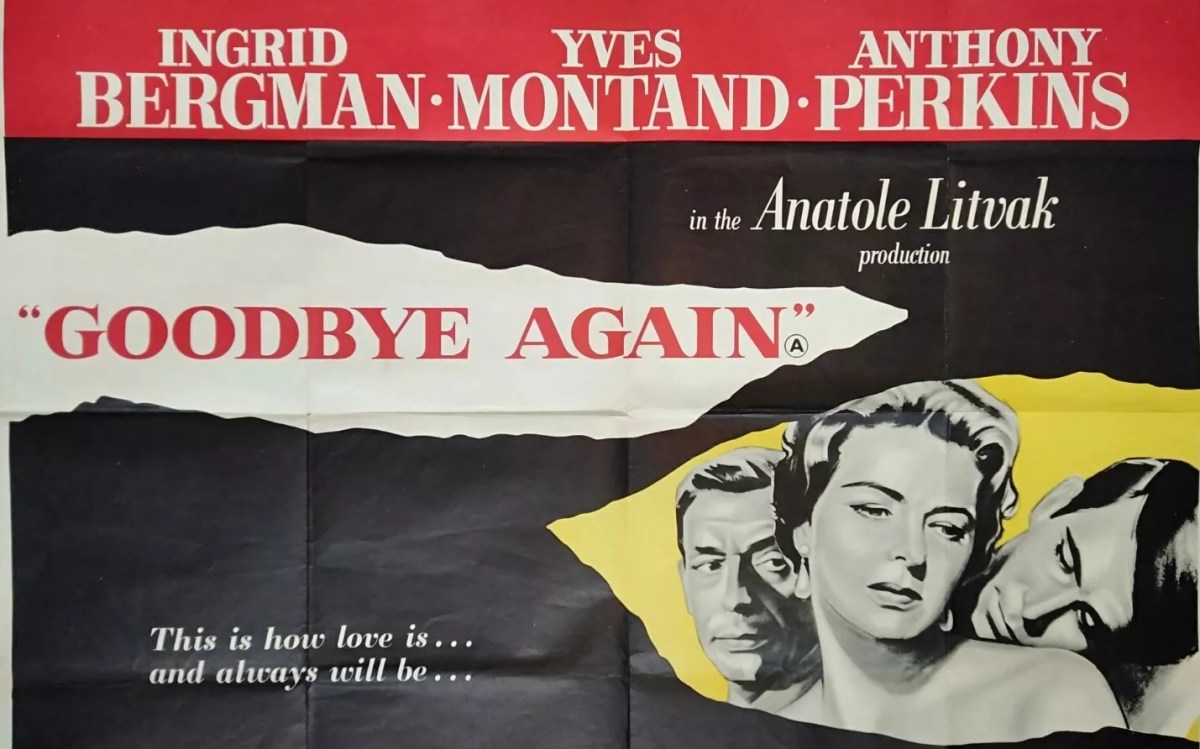
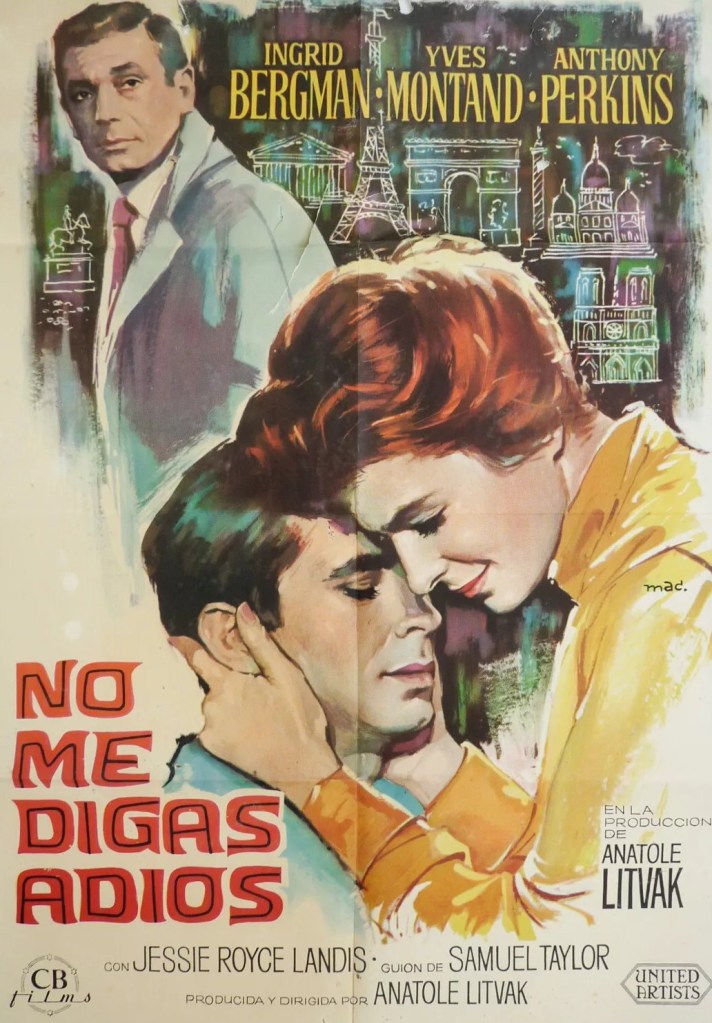
Goodbye Again / Aimez-vous Brahms (1961) ***

Something of a feminist icon with middle-aged single woman choosing her lovers. I should warn you that there’s a May-December trope, which was very common at this period, as older female stars, engaging on romance with younger males, catch up with the unchallenged notion that any ageing male star should be accorded a younger female partner regardless of the age difference.

Paula (Ingrid Bergman), a lady of independent means, is tiring of philandering lover Roger (Yves Montand). After five years, he still can’t keep his hands off any young girl – known as “Maisies” – who come within reach. Paula is pursued by a younger man Philip (Anthony Perkins) and eventually succumbs to his ardent wooing. They differ on whether their relationship has much of a future, she the more pragmatic of the two, as, I would guess, are the audience.

While he’s refreshing and energetic, the spoiled rich boy exhibits childish tendencies. There’s a clash between the independent woman and the older macho misogynist male who expects his lover to be at his beck and call, even when his disappearances are the result of assignations with other lovers.

A middle-aged woman was as much on the hook to an unfaithful lover as a married woman. While she doesn’t want to be married, she wants to enjoy the same sense of trust that marriage might bring. However, she’s not destroyed, as a married woman of the period might have been, by her partner’s infidelity. And precisely because they are not bound by legal obligation, she is perfectly within her rights to choose another lover.

Still, there is an intense melancholy that she cannot make Roger settle down with just the one woman – her – and that if their affair is to continue it must be on his unacceptable terms. Yet she is terrified of being alone and except for the appearance of Philip and her independence there is the sense that she might subdue tragic instinct and settle for the crumbs from Roger’s table.  

Glorified soap opera, no doubt, but it survives on the playing of Ingrid Bergman (The Visit, 1964) who shares with Deborah Kerr the ability to show conflict and sadness in her eyes. She brings so much depth to her character you are apt to forget you are watching a soap opera. That she remains attracted to Roger beyond the realms of logic compounds her tragedy.

Anthony Perkins (Pretty Poison, 1968) is very charming, ridding himself in the main of the jumpiness that appeared to fit his screen persona. While Perkins and Bergman make an unlikely screen couple, they are a believable one.

Yves Montand (Let’s Make Love, 1961) doesn’t have to drift much outside his screen persona of male fantasy figure, the one who has all the dames at his feet.

This is one of those very well-made Hollywood movies, full of gloss, trimmed with an edginess that soon takes center stage. Made in the 1940s it would be a classic weepie. The ending will take you by surprise.

Directed by Oscar-nominated Anatole Litvak (The Night of the Generals, 1967) in determined old-fashioned style from a screenplay by Samuel A. Taylor (Topaz, 1969) based on the Francoise Sagan bestseller.

An old-fashioned treat.

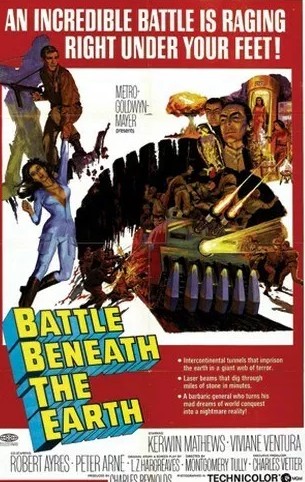
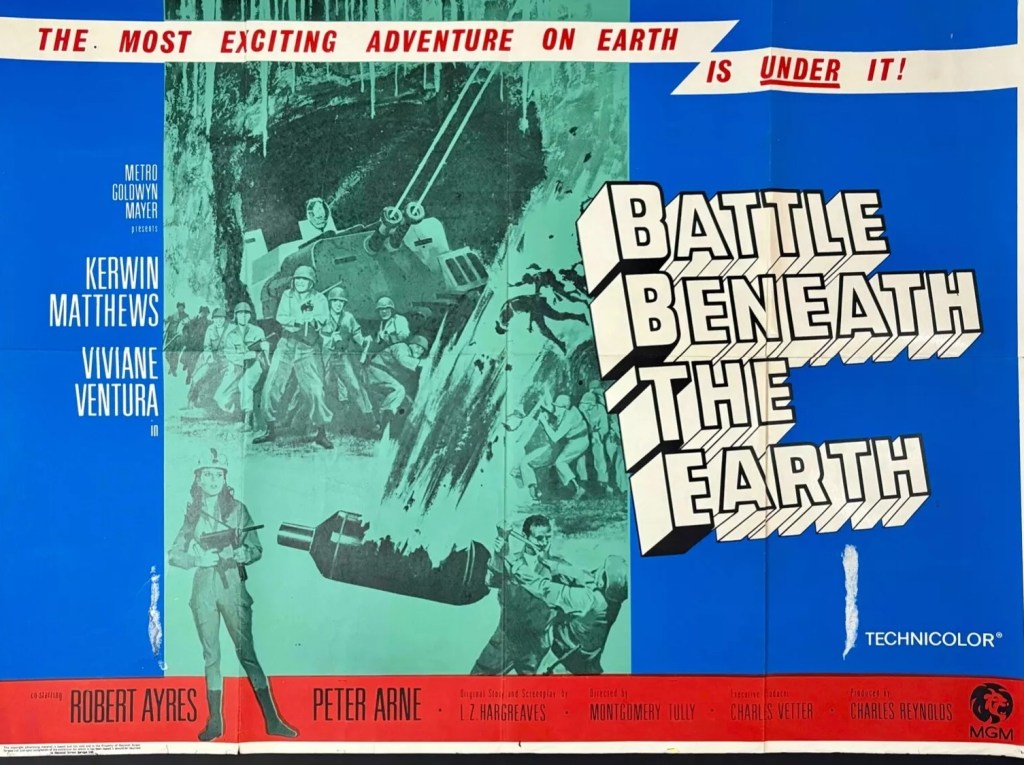
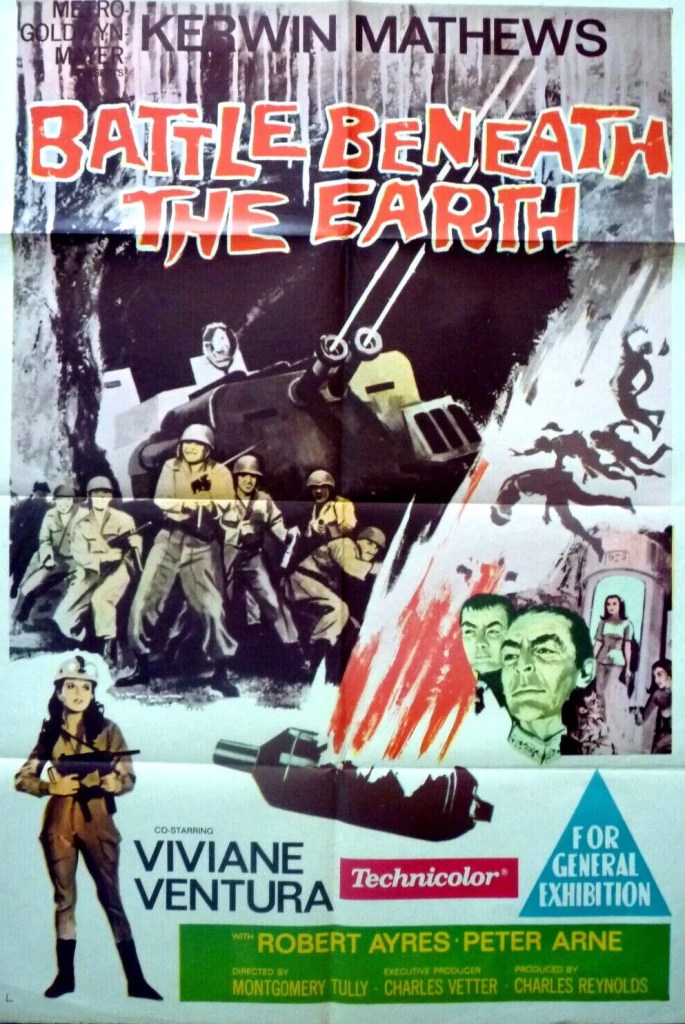
Battle Beneath the Earth (1967) ***

Aliens, would be your first guess these days should you happen upon strange disturbances emanating from underneath the earth’s surface, citing the examples of War of the Worlds or an iteration of Transformers, whereby creatures from outer space had remained dormant buried in our habitat for millions of years, like inveterate moles, waiting to spring into action. But this is the 1960s and domination of the Universe is not on the cards. Instead, it’s mere global domination. And as James Bond and others in the espionage game have persuaded us if it’s not some supervillain we’re under threat from it’s the Russians or Chinese.

Even if you detected odd goings-on there was more chance of you being stuck in a mental institution, as is the fate of seismologist Arnold Kramer (Peter Arne), who makes the mistake of causing a “listening disturbance,” arrested lying down on the streets of Las Vegas with his ear pressed to the ground.

Navy Commander Jonathan Shaw (Kerwin Mathews) is on an equally sticky wicket, his latest undersea project resulting in the death of 27 men. However, his assistant Susan (Norma West) prevails upon Shaw to take a look at her brother Arnold. But he isn’t impressed. Until he hears about a mining disaster in Oregon, the deepest mine in the USA, and recalls that Kramer had mentioned discovering unusual activity underground in Oregon.

So off Shaw goes to investigate and finds a laser-drilled tunnel and a lair with missiles. There’s a vehicle with some kind of death ray and before your mind jumps to the notion that this is alien-induced we’re in the command post of Chinese General Chan Lu (Martin Benson) who, as well as planning whatever devilish destruction he aims to visit upon the Americans, has also been in the business of mining gold and growing plants packed with vitamins.

Turns out there’s more than one tunnel – they run from China underwater across the Pacific and underground through America – and although Chan Lu’s stock of nuclear warheads is depleted after being defused by the Yanks he’s still got enough left in the tank to turn America in a desert and kill 100 million people. And there’s not much time to waste – the Chinese plan to strike in 48 hours.

Meanwhile, to buff up the story, Shaw’s team adds volcanologist Tila Yung (Viviane Ventura), providing the opportunity for extra peril and a touch of incipient romance. The Yanks plan to locate the Chinese in a tunnel under the Pacific  and detonate a 10-megaton atom bomb. But things don’t go according to plan. One of the team is hypnotized and Shaw and crew are ambushed and imprisoned.

Chan Lu is far from the lunatic villain and invites Shaw post-conflagration to team up to help to peacefully reconstruct the broken world. Being a pragmatic sort, the General is somewhat surprised to be turned down. Naturally, Shaw’s gang break out of the cell, Arnold the one with the clever idea, and sabotage the Chinese bombs, so it doesn’t end well for the villain, while our hero has the beginnings of a romance.

This was the final movie for director Montgomery Tully (The Terrornauts, 1967, Fog for a Killer, 1962, The Third Alibi, 1961) and he brings some of the pacing he demonstrated in the B-film crime thrillers to the material so it rattles along. The background is well handled and the two male leads are unusually damaged for a sci-fi romp. Audiences might have felt duped that Viviane Ventura (A High Wind in Jamaica, 1965) doesn’t appear until about halfway through. Kerwin Mathews (Maniac, 1963) leads with his chin but the movie’s not expecting much else. Written by L.Z. Hargreaves (Devil Doll, 1964) aka Charles Vetter, the film’s producer.

Decent hokum.

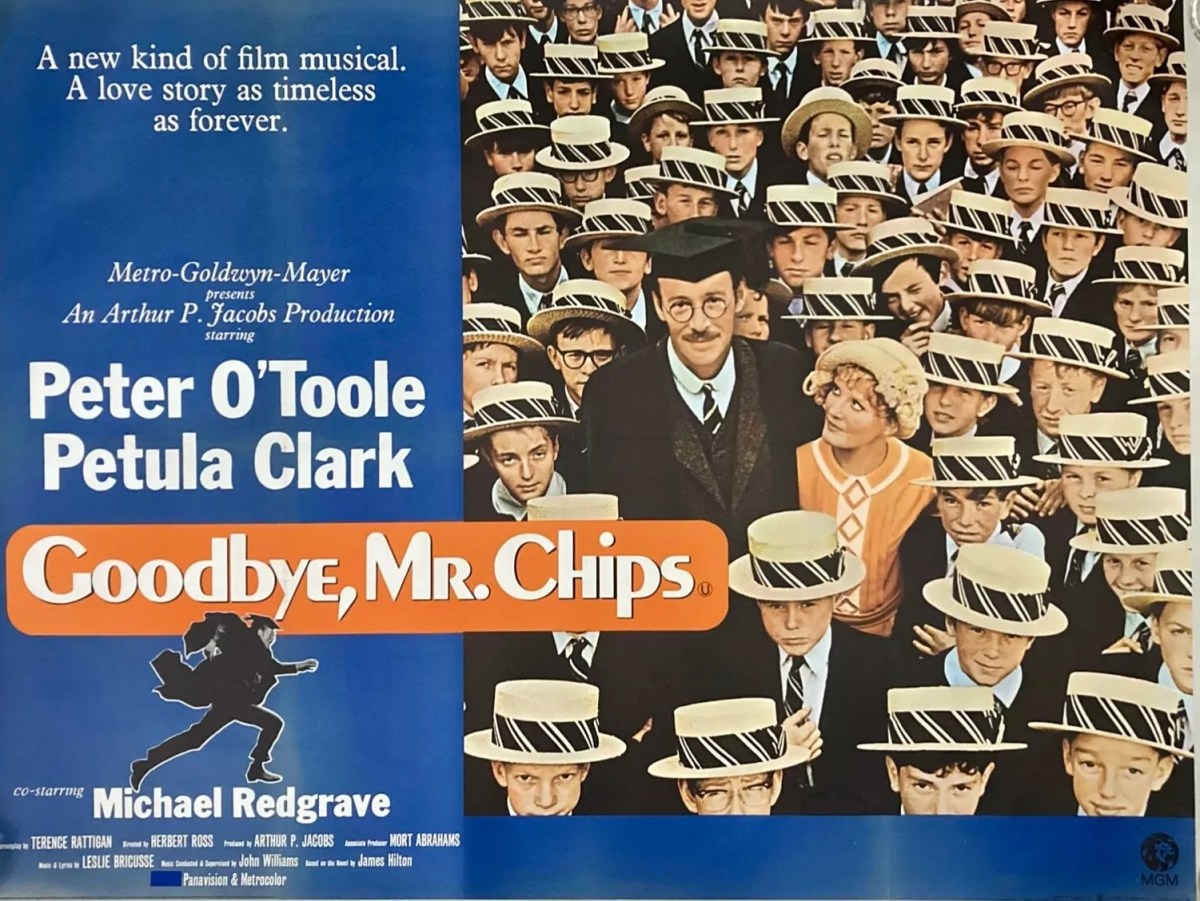
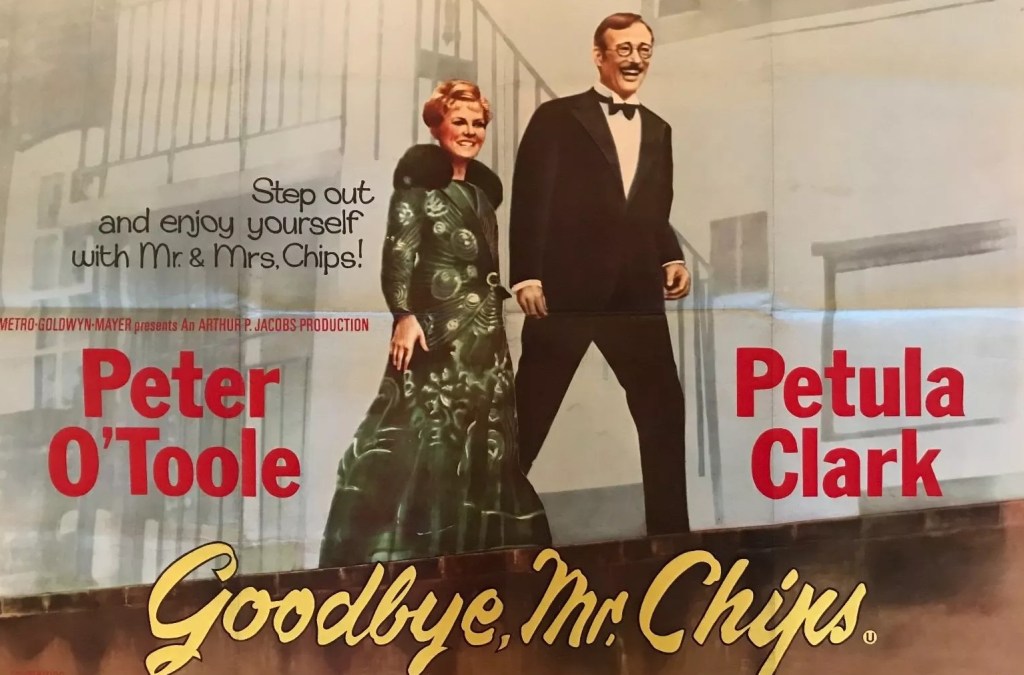
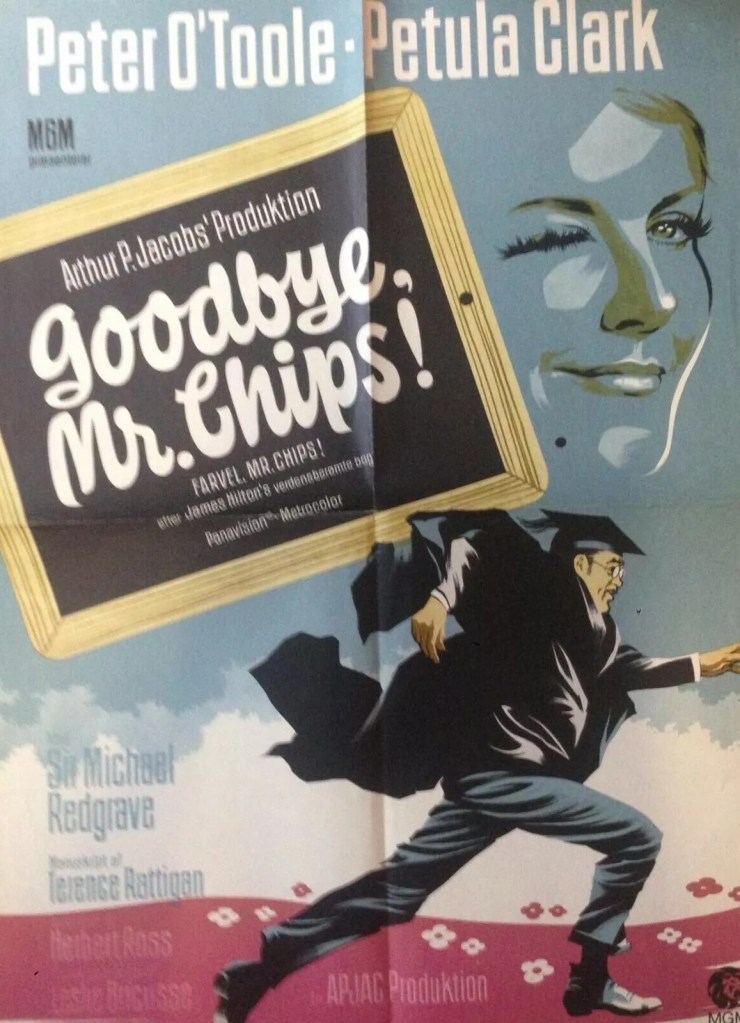
Goodbye, Mr Chips (1969) ****

Stunning revelatory performance by Peter O’Toole (The Night of the Generals, 1967) and unexpected screen chemistry with former British child star turned pop singer Petula Clark (Finian’s Rainbow, 1968) lift a relatively humdrum musical remake of the 1939 classic. Musicals entrusted with roadshow-sized budgets usually came with the proviso that they had already conquered London’s West End or Broadway – The Sound of Music (1965), Oliver! (1968) et al – and so came with an inbuilt audience. A movie musical original with little audience familiarity was always a risk.

There had been a trend away from the choreographic splendor, star exuberance and lightweight narratives that held the key to the golden era of Hollywood musicals. The movie musical had embraced both the introspective and weightier tales – Camelot (1967) the most obvious example. Male stars who couldn’t sing could simply “talk” their way through a tune following the example of Rex Harrison in My Fair Lady (1964).

The proper stretching of vocal chords is sensibly left to Petula Clark, but none of the songs by Leslie Bricusse (Doctor Dolittle, 1967) leave much of an imprint, and you might question why MGM was in such a hurry to commission a remake at all except for O’Toole’s Oscar-nominated turn. By now audiences were well aware of the actor’s screen tics and the intensity he could bring. But moviegoers might as well have been embracing a new star because everything you ever knew about O’Toole was left at the door.

In some respects the realism of his performance plays against the picture, which, effectively, save for the ending, has a lightweight narrative. There’s nothing remotely charming about his characterization of Arthur Chipping. He’s not the kind of eccentric fuddy-duddy that was a common feature of the British movie. Duty has got in the way of likeability. We are introduced to him denying a poor lad the opportunity to become a school tennis champion on the last day of term simply because the match had been scheduled to take place within teaching hours. Small surprise that he is actively disliked, although he takes that, in some respects, as a mark of his teaching prowess.

Unexpectedly, he is introduced to music hall singer Katherine (Petula Clark). What would be the standard meet-cute turns into a meet-awful as unintentionally he delivers a series of insults. Unexpectedly, they meet again, this time in the kind of surroundings that suit his mentality, a Greek amphitheater where he can demonstrate his academic skill, filling her on the acoustics and on the fact that sound travels upward so it’s easier for the person seated above to hear the person standing below than the other way round. Cinematically, this is superbly done, the best scene in the picture from a visual perspective.

Even though, initially, he has no recollection of their previous meeting, a spark is lit and catches fire so that when he returns to school it’s with a somewhat “unsuitable” bride. The best scene in the movie from an emotional perspective is driven by Katherine as she injects some verve into the stodgy school hymn so much so that she soon has the entire school singing with gusto and as though they have for the first time understood the lyrics.

It’s not long before her influence softens the harsh schoolmaster. But she is not a welcome addition in many eyes, her background not what would be expected of a schoolmaster’s wife, and a couple of sub-plots revolve around the impact of her unsuitability on her husband’s career. There’s not much more to go on beyond the sad ending and as I said the songs are treated in low-key fashion rather than full-on energy with dancing schoolboys in the background.

But you don’t really need the songs to enjoy this. Peter O’Toole’s sensational performance more than justifies the remake while the pairing with Petula Clark works surprisingly well.

Herbert Ross (Play It, Again, Sam, 1972) makes his directorial debut. Terrence Rattigan who had previously delved into the public school system to find lonely teachers with The Browning Version (1948) updates the original tale by James Hilton. This is not the performance Peter O’Toole fans would generally nudge you towards, because it’s such an oddity in his portfolio, but, truly, this deserves much wider appreciation

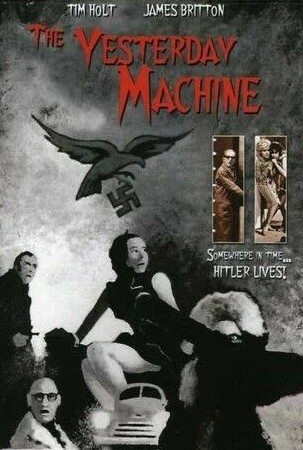
The Yesterday Machine (1965) ***

Some big-name director, especially these days, would have seen the potential, injected some action and jeopardy, a good dose of awe and maybe more of a hint of a romance. You can’t help but feel this would be exactly the kind of enterprise that might get a more favourable hearing from a contemporary audience that’s sucked up even worse baloney in the multiverse and beyond.

Despite you might thinking concentration camps should not be used for superpower fiction, they were essential to the Magneto narrative in the X-Men Files, a set-up which also involved Captain America and Wolverine. So you can’t really show revulsion at attempts by a low-budget sci-fi B-picture to shoehorn in a concentration camp element. This doesn’t have the budget to “show” and must rely simply on “tell” to get over the essential story element. But we’re also bouncing around the time universe to the extent of the American Civil War and the French Revolution.

When the car of college kids Ellison (Jay Ramsay) and drum majorette Margie (Linda Jenkins) breaks down on a dirt road on the way to a football match, they end up confronting soldiers from the Civil War. The boy is shot and taken to hospital, but the girl disappears, plain vanishing, sniffer dogs finding the trail suddenly stops.

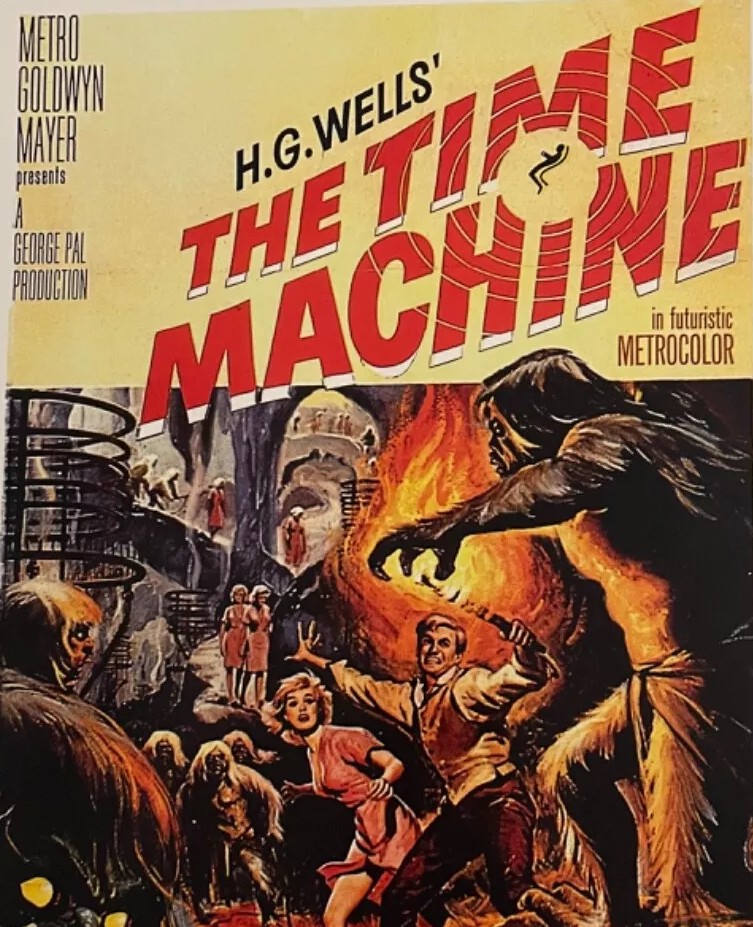
In the absence of another poster of the movie reviewed I’ve opted for something with the word “machine.” This at least concerns time travel.

Journalist Jim (James Britton), investigating, discovers the Civil War link because Ellison has been shot by a bullet from that war and the uniform of the Civil War soldiers couldn’t be mere replicas worn by historical re-enactors because the uniform manufacturer went out of business in 1869. Jim hooks up with Margie’s sister, nightclub singer Sandy (Ann Pellegrino). Soon, thanks to a cop, they are on the trail of a time machine created by Professor Von Hauser (Jack Herman) who experimented on inmates in concentration camps, ageing young people and the reverse.

Jim and Sandy fall into the time machine’s orbit and are teleported to Von Hauser’s lab. The professor, a contemporary of Einstein, aims to go back in time and prevent his hero, Adolf Hitler, from committing suicide. Jim and Sandy are imprisoned until freed by an Egyptian serving girl, also teleported from a couple of millennia back, and the professor’s heinous plan is scuppered.

Occasionally, writer-director Russ Marker (Night Fright, 1967) allows himself a bit of visual leeway, a jackboot appears in the undergrowth to stamp out a cigarette, Jim and Sandy running down a hill vanish only to reappear seconds later in a different time zone, Margie practizing her moves while the car is being fixed.

But mostly, it’s dogged detective work, Jim helped along by people who favor the odd interpretation of events, a doctor who collects Civil War memorabilia, the cop whose outfit liberated the camp with the time machine. There’s enough mystery to keep you hooked and if you imagine the likes of Tom Hanks in Da Vinci Code mode uncovering this bizarre collection of facts you’d be far more inclined to go along with the presentation rather than treating it as the kind of baloney that had “cult” written all over it.

See above but no time travel.

I’m not sure I agree with the “dreary pace” – while progress was stately to say the least, it took that length of time to establish the groundwork – and the second half is enlivened not so much by the professor defending Hitler as the look on his face when Jim delivers a coruscating critique on the Fuhrer. I’m always partial to scientists explaining their barmy notions and jargon – nobody balked at James Cameron’s “unobtainium” in Avatar (2009).

This is what comes of trawling YouTube in an idle moment.

Sure, it really is nothing more than two-star material but I enjoyed it more than I expected, and, these days, worse notions have been served up to unsuspecting audiences.

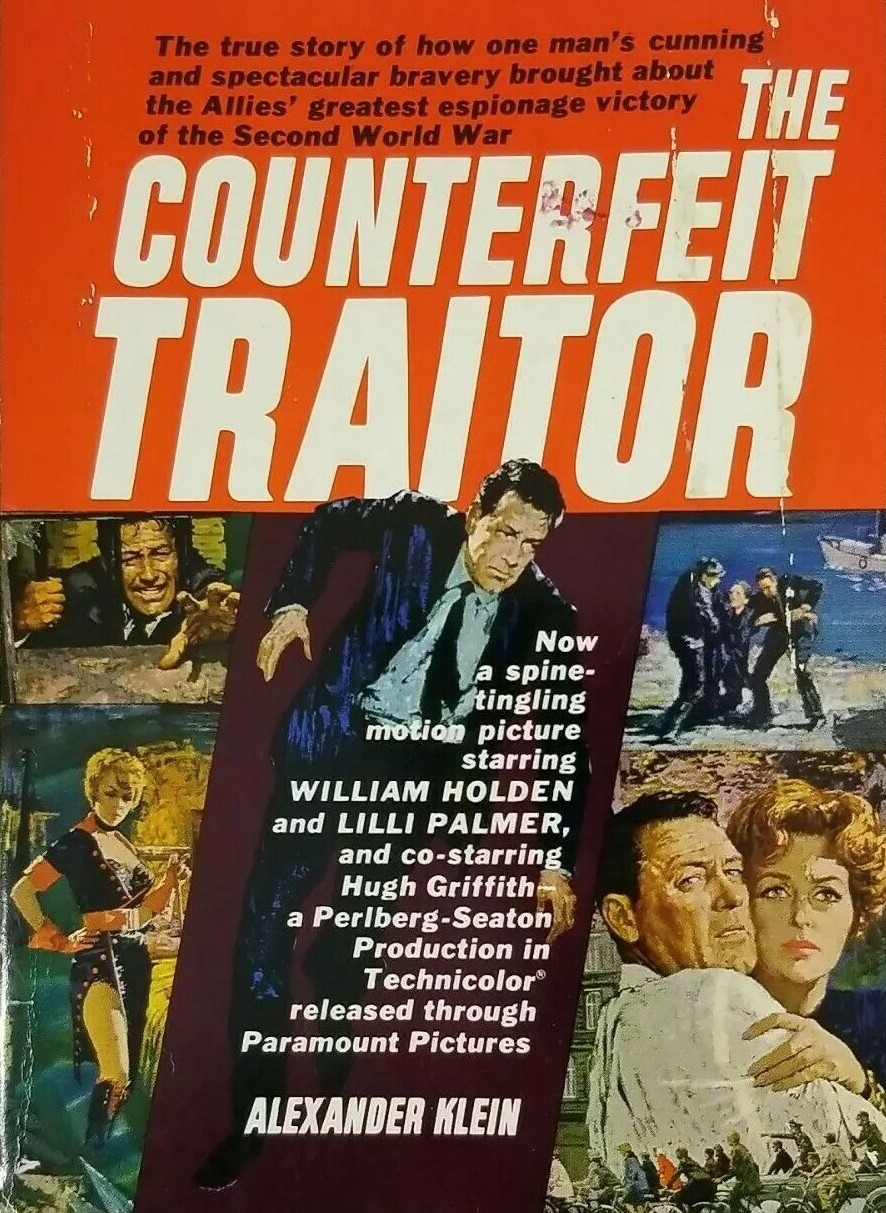
The Counterfeit Traitor (1962) ***

Cynical and opportunistic Swedish oil executive Eric Erickson (William Holden) blackmailed into World War Two espionage finds redemption after witnessing first-hand the horrors of Nazi Germany. Two extraordinary scenes lift this out of the mainstream biopic league, the first Erickson witnessing an execution, the second a betrayal. While some participants in the espionage game pay a terrible price, others like spy chief Collins (Hugh Griffiths) manage to maintain a champagne lifestyle.

Structurally, this is something of a curiosity. The first section, with over-emphasis on voice-over, concerns Holden’s recruitment and initial attempts at spying on German oil installations on the pretext of building a refinery in Sweden. Although resenting the manner in which he was recruited, Erickson had no qualms about resorting to blackmail himself to enlarge his espionage ring.

But it’s only when Marianne Mollendorf (Lili Palmer) enters the frame as his contact in Germany that the movie picks up dramatic heft. As cover for frequent meetings, they pretend to be lovers, that charade soon deepening into the real thing. While abhorring Hitler, she suffers a crisis of conscience after realizing that the information she is passing on to the Allies results in innocent deaths. The final segment involves Erickson’s thrilling escape back home.

The picture is at its best when contrasting the unscrupulous Erickson with the principled Marianne. Virtually every character is trying to hold on to way of life endangered by the war or created by the conflict and there are some interesting observations on the way Erickson manages to harness foreign dignitaries while being held to hostage in his home country. Loyalties are sparing and even families come under internal threat.

Sweden was neutral during the Second World War so in assisting the Allied cause Erickson was effectively betraying his country and once, in order to keep proposed German investors sweet, he begins to spout Nazi propaganda at home finds himself deserted by friends and, eventually, wife.  

In some respects, William Holden (The Devil’s Brigade, 1968) plays one his typical flawed personalities, easy on the charm, fluid with convention, but once he learns the true cost of his espionage a much deeper character emerges. The actor’s insistence, for tax reasons, on working abroad – this was filmed on location in Europe – would hamper his box office credibility and although not all his movie choices proved sound this was a welcome diversion. Whether American audiences were that interested in what a Swede did in the war was a moot point, as poor box office testified. And the title might have proved too sophisticated for some audiences, given there was no counterfeiting of money involved.

Lili Palmer (Sebastian, 1968) is excellent as the manipulative Marianne, betraying her country in order to save it from the depredations of Hitler, not above using her body to win favor, but paralyzed by consequence. Hugh Griffith (Exodus, 1960) provides another larger-than-life portrayal, disguising his venal core.

Werner Peters (Istanbul Express, 1968) puts in an appearance and Klaus Kinski (Five Golden Dragons, 1967) has a bit part.

Double Oscar-winner George Seaton (Airport, 1970) makes a bold attempt to embrace a wider coverage of the war than the film requires and could have done with concentrating more on the central Erickson-Mollendorf drama, especially the German woman’s dilemma, but it remains an interesting examination of duplicity in wartime. Written by the director based on the novel by Alexander Klein.

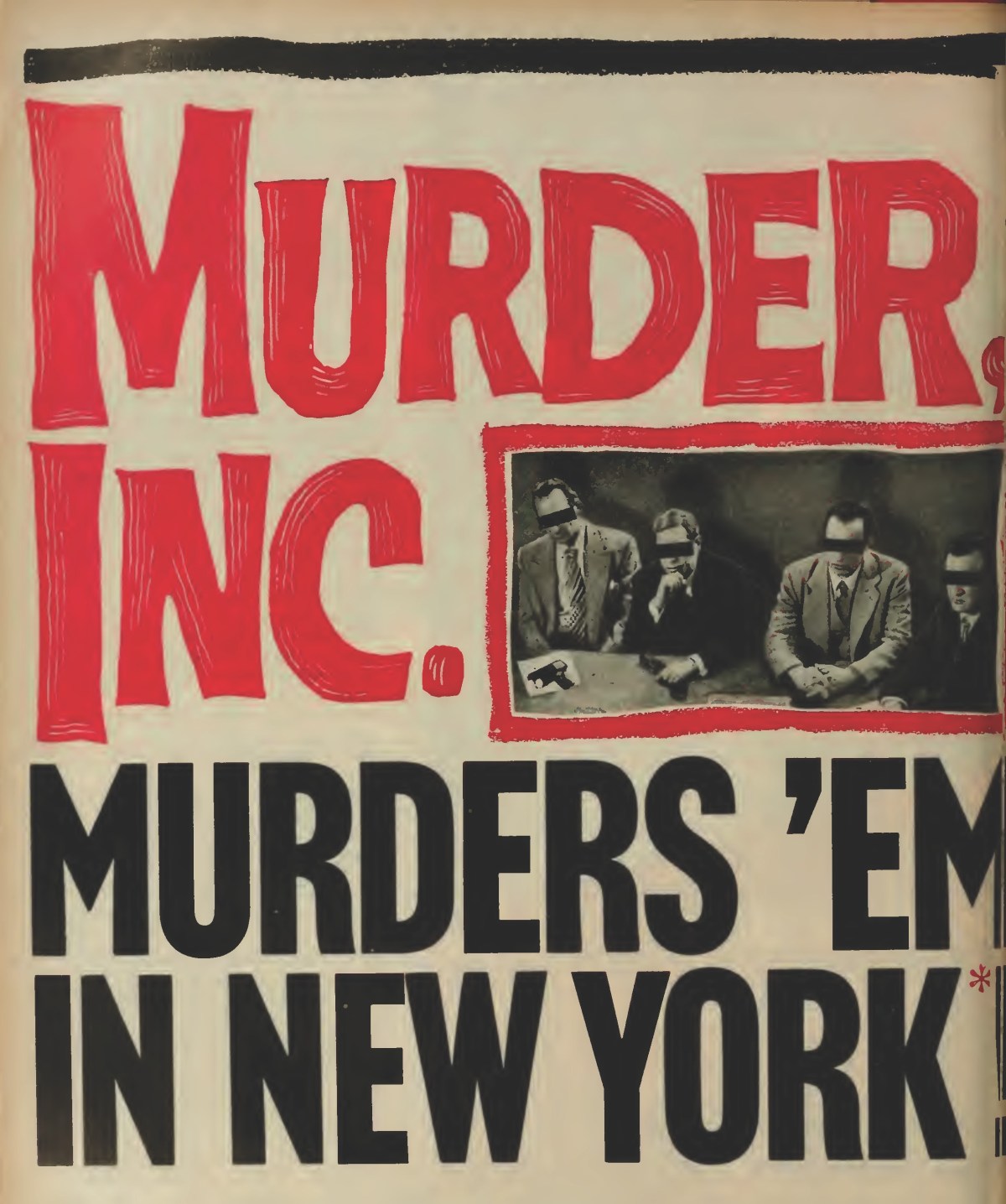
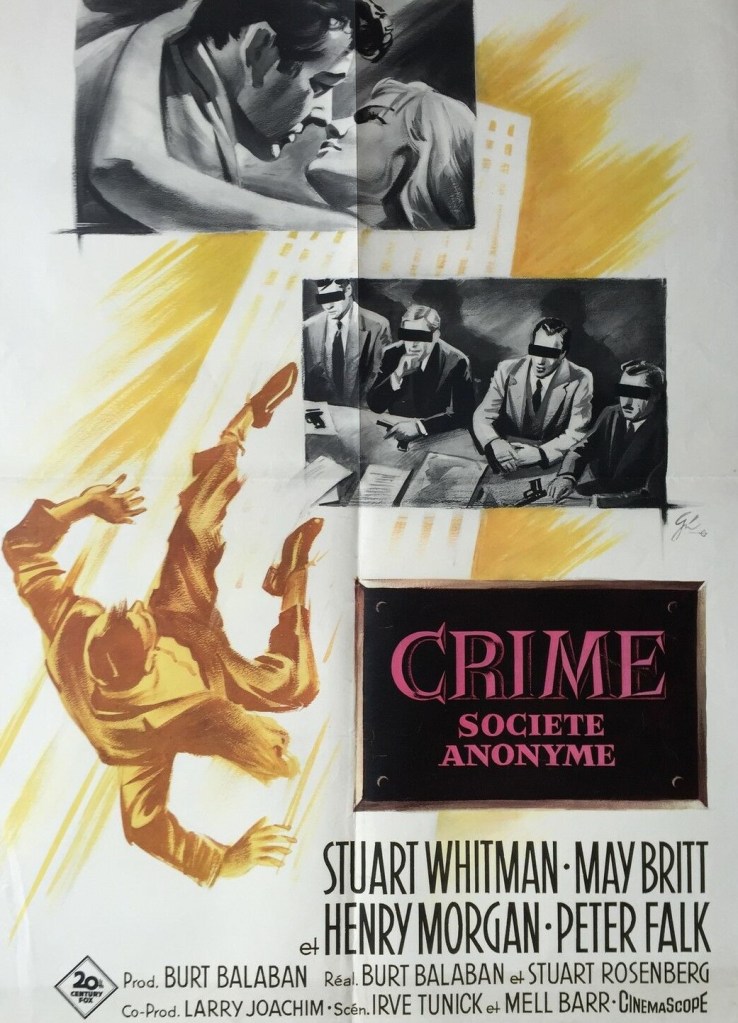
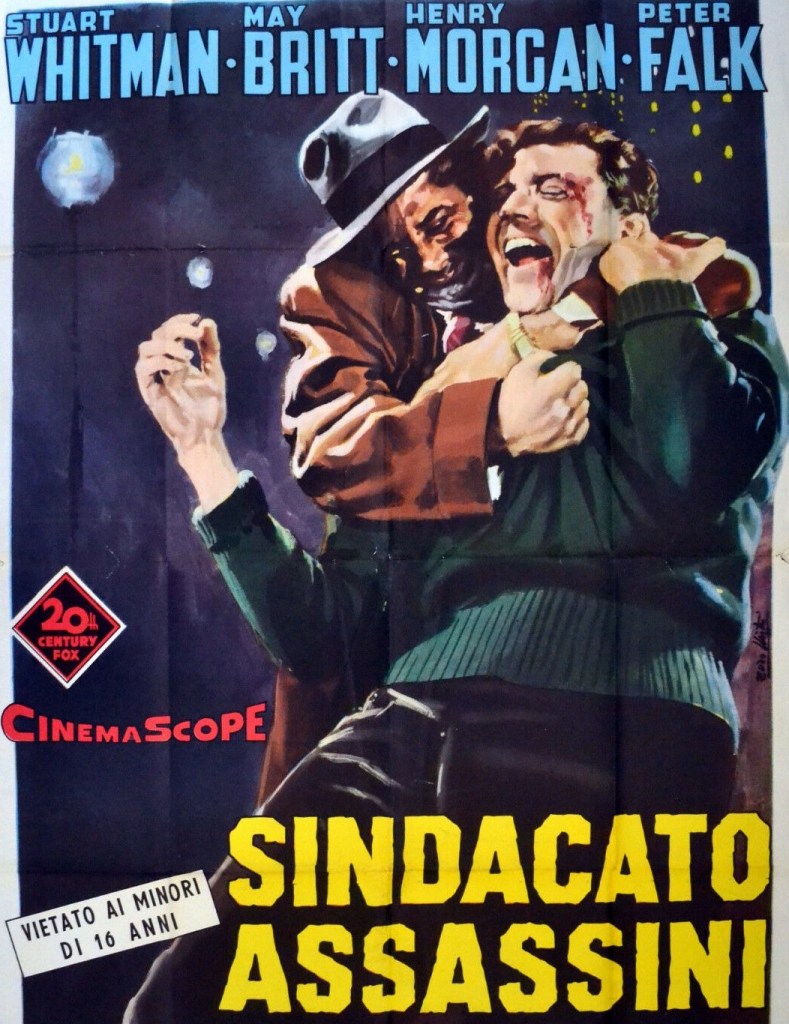
Murder Inc (1960) ***

A gangster trend hit the mean streets of Hollywood at the start of the 1960s. But in the absence of big box office hitters like James Cagney, Humphrey Bogart and Edward G. Robinson, these were all B films with unknowns or low-ranked stars in the leading roles. Whereas Little Caesar (1931), Public Enemy (1931), The Roaring Twenties (1939) and White Heat (1949) were fictionalized accounts of hoodlums, the gun-toting movie spree kicked off by Machine Gun Kelly (1958) and Al Capone (1959) was based on the real-life gangsters who had terrorized America’s big cities in the 1920s and 1930s.

By the end of 1960, moviegoers had been served up an informal history of the country’s best-known mobsters from Ma Barker’s Killer Band (1960), Pretty Boy Floyd (1960), The Rise and Fall of Legs Diamond (1960) and Murder Inc (1960). The infamy of the criminals was so comparatively recent that moviemakers assumed audiences had a wider knowledge of their exploits and the context of their crimes.

Murder Inc tells how underworld kingpin Lepke Buchalter – Tony Curtis played him in the more straightforward biopic Lepke (1975) – set up a system of killing dissenters in the ranks for the entire American Cosa Nostra (aka The Syndicate) in a way that prevented those ordering the murders being connected to those committing them, the same kind of protective cell operation used by terrorists. He created a separate organization of hitmen.

This quasi-documentary, with occasional voice-over narrative, focuses on three characters – the quiet-spoken Lepke (David J. Stewart), hitman Abe Reles (Peter Falk) and singer Joey Collins (Stuart Whitman) who becomes involved to pay off a gambling debt. Later on, the focus switches to Brooklyn assistant district attorney Burton Turkus (Henry Morgan), against a backdrop of massive police corruption, investigating the murder epidemic this deadly enterprise created. The films jumps around too much to be totally engrossing but it is certainly an interesting watch.

The two main villains could not be more different, Lepke representing the new school, a businessman, ordering killings but never participating, and for such a tough character tormented by a delicate stomach. Reles is old school, relishing opportunities to murder, and raping Collins’ honest wife Eadie (May Britt) in part because she treats him as scum. It’s hard to muster much sympathy for Joey especially as his wife takes the brunt of the violence.

In an Oscar-nominated performance Peter Falk (Castle Keep, 1969) steals the show as the chilling, venomous killer, the kind of nonentity who rises to prominence only through his penchant for homicide. Swedish star May Britt (The Blue Angel, 1959) isn’t far behind with a portrayal of a strong woman saddled with a weak husband. David J. Stewart (The Young Savages, 1961) only made three movies in the 1960s and his milk-drinking hood was as scary in his pitilessness as his more overtly violent underling.

Stuart Whitman (The Commancheros, 1961) is almost acting against type for he was later known for rugged roles. Henry Morgan (It Happened to Jane, 1959) gave his portrayal of Turkus similar characteristics to Lepke, appearing as a quiet individual, concerned with details,  except that he was incorruptible.

Simon Oakland (Bullitt, 1968) is an honest cop, Vincent Gardenia (Mad Dog Coll, 1961) is a lawyer, comedian Morey Amsterdam (The Dick Van Dyke Show, 1961-1964) plays a hotel manager, Sylvia Miles (Oscar-nominated for Midnight Cowboy, 1969) has a bit part and singer Sarah Vaughan is a singer.

For some reason, this movie starred a number of actors in leading roles who made few screen appearances. This was the only movie of the decade for May Britt, David J. Stewart made only three movies during the same period, and Henry Morgan only made three pictures in his entire career, this being the last.

The movie boasted two directors. Stuart Rosenberg (Cool Hand Luke, 1967) was replaced  by Burt Balaban (Mad Dog Coll, 1961) when the threat of strike action by actors and writers in 1960 forced the 18-day shoot to be cut by 10 days so it’s hard to say who was responsible for which scenes, although the film does boast some unusual aerial shots. Written by Irve Tunick (High Hell, 1958) and Mel Goldberg (Hang ‘Em High, 1968) from the book by Burton Turkus and Sid Field.

Killers are loose – and how!

The House in Marsh Road (1960) ***

Well-structured thriller – especially given the short running time – that allows time for the story to blossom and, given the supernatural tinge, in a somewhat unusual fashion. Worth noting, too, the gender fallibility in keeping with the time, the wife who will support her husband come what may, through his heavy drinking, philandering and deceit. The only truth is that somehow or other her husband is going to get hold of her money.

Wife Jean (Patricia Dainton) is initially complicit in her husband David’s (Tony Wright) small-time fraudulent activity, willing to scamper from short-term let to short-term let, vanishing without paying the bills, because she believes in his grandiose ambitions of rising above his lowly status as a book reviewer to become a novelist.

The too handsome to be true bad guy.

When she inherits a house from an aunt, he wants to sell it and use the £6,000 to fund his ambition, though once he meets sexy secretary Valerie (Sandra Dorne) his plans change to using the dosh to set up a new life with Valerie. Of course, that would mean eliminating his wife and inheriting the property himself. A first attempt, to push her down a life shaft, fails and he moves on to sleeping pills.

Jean is so in thrall with him that even when she catches him out in lying, theft and an affair, she still is apt to stand by him after giving him a frosty reception and a good ticking-off. It’s only when she suspects worse that she seeks help.

Unbeknownst to her she has an invisible ally, a poltergeist named Patrick, who has the habit of rearranging furniture, sighing, setting off the alarm, and, for people to whom he takes an aversion – such as David and Valerie – smashing mirrors and disrupting their desk. Given the budget and the period, the paranormal aspects are kept to the minimum, noise the most obvious evidence, while other actions occur when the camera is not present.

You sometimes wish these kind of British B-pictures would add another 30-40 minutes to explore consequence in true film noir style. There’s no doubt that Valerie would soon find a way to rook David of his inheritance and dump him, easiest way being to lead the police to him.

While Jean finds an attorney willing to take note of her suspicions, you can’t but help noting that mention of a poltergeist is not helping her case, and in the normal course of events she would be committed, leaving David free to cash in on the house and indulge his mistress.

It doesn’t get to the obvious ending, of her being disbelieved, and forced to return to the house and spend her time going mad wondering how her husband is going to bump her off. Instead, Patrick comes to her aid, starting a fire which engulfs the house in her absence. Husband and lover die in the blaze.

As ever, no great acting. Patricia Dainton (The Third Alibi, 1961) might be accused of not putting enough terror in her characterization but that would be to overlook the fact that in those days handsome husbands were implicitly trusted. Tony Wright (Faces in the Dark, 1960) is smug enough but Sandra Dorne (Devil Doll, 1964) only requires a touch of smouldering to steal the show.

Based on a story by Laurence Meynall, inventively written by Maurice J. Wilson (Fog for a Killer, 1962), especially for the undercurrent of malevolence and manipulation. Ably directed by Montgomery Tully (The Terrornauts, 1967).

Discover WordPress

A daily selection of the best content published on WordPress, collected for you by humans who love to read.

The Atavist Magazine

by Brian Hannan

WordPress.com News

The latest news on WordPress.com and the WordPress community.