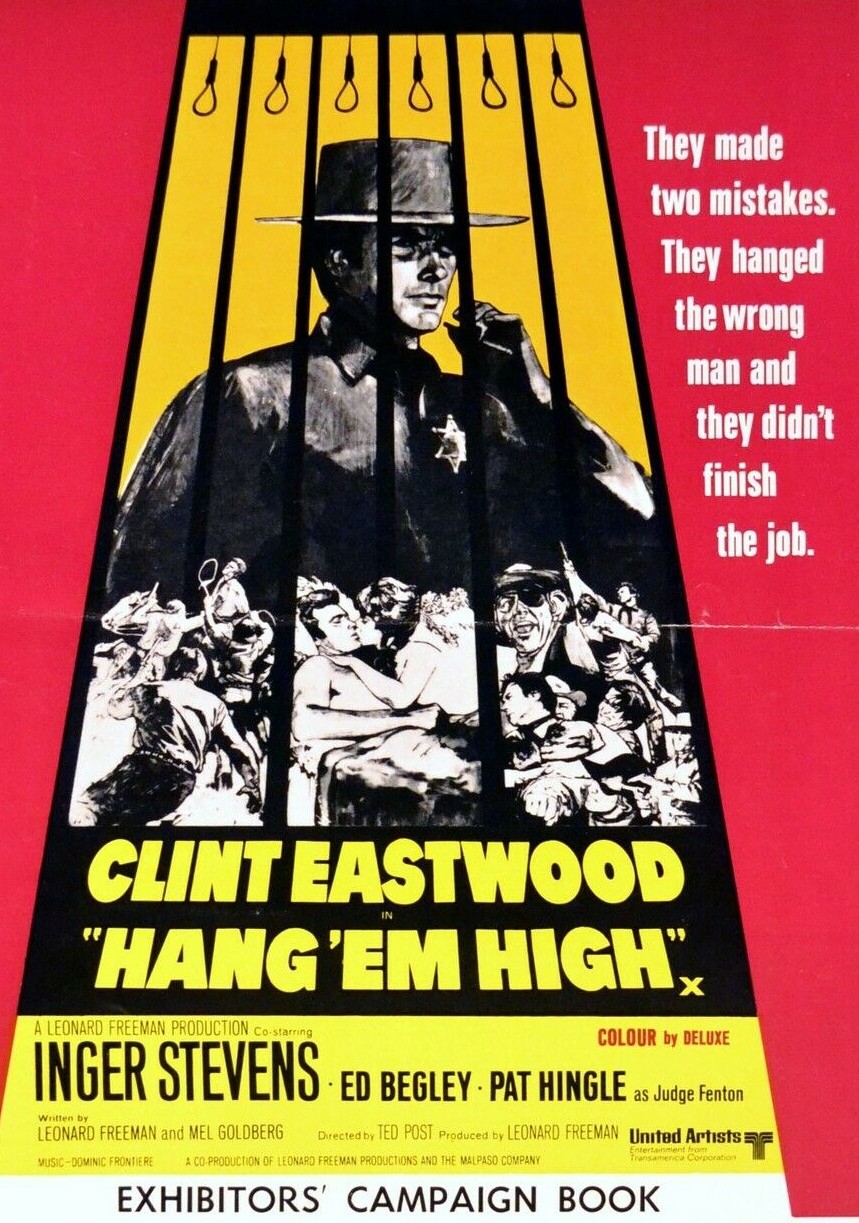
Hang ‘Em High (1968) ****

Clint Eastwood didn’t waste much time capitalizing on the unexpected success of the Dollars Trilogy. But the first was not released in the United States till 1967 and despite the success of the series across Europe was generally dismissed as a fluke, until American audiences suggested otherwise. The following year Eastwood appeared in three pictures, Hang ‘Em High, Coogan’s Bluff and Where Eagles Dare, which solidified his screen persona as portraying more with a twitch or a raised eyebrow than digging deep into the dialog.

Contrary to my expectations, Hang ‘Em High doesn’t quite fall into the trademark revenge mode of later westerns. It’s somewhat episodic, Jed (Clint Eastwood) often sent off on a tangent by Judge Fenton (Pat Hingle), allowing the lynch mob who failed to hang him in the first place a second chance at completing the job.

Following the success of the James Bond double bills,
United Artists spun out its Clint Eastwood portfolio at every opportunity.

And while the presence of the second-billed Inger Stevens (Firecreek, 1968) suggests heady romance that doesn’t kick in until the third act and it’s more tentative than anything and its purpose is more, in narrative terms, to provide Jed with a correlative with which to compare his own obsession, bringing to justice the nine men who attempted to kill him.

Just to confuse things, the middle section isn’t about revenge or romance, but about justice. Specifically, it’s about showing that justice will be done, that in the unruly West, with insufficient enforcers of law and order, that crimes will not go unpunished, a gallows on constant display to make the point.

Surprisingly, it’s Jed who argues that some of this justice is just too summarily executed. He tries in vain to prevent the execution of two young rustlers who fell in with one of his potential assassins, Miller (Bruce Dern), but who refuse to take advantage of the situation when Miller overpowers Jed while he’s bringing the trio in to face the judge. Admittedly, they don’t go to his aid either, but the fact they resist piling in allows Jed to escape. However, rustling is a hanging offence, so they cannot escape the noose, certainly not in Fenton’s town.

There’s a switch in the mentality of Jed. Before he’s co-opted by Fenton to return to his former profession of lawman, Jed is of the school of thought that decides to take the law into his own hands. Even wearing a badge, you are allowed to shoot a man stone dead if he’s trying to escape, even if such action is severely hampered by him already being badly wounded, as lawman Bliss (Ben Johnson) demonstrates. But Bliss isn’t as callous as he sounds. He’s a contradiction, too, racing to the aid of Jed dangling in a noose in a tree, freeing him so he can face justice, even if that will most likely result in hanging.

So Jed upholds the law, preventing other citizens from taking the law into their own hands, Miller a target of the family of the owners he slaughtered before making off with their cattle.  

We only see shop owner Rachel (Inger Stevens) fleetingly for most of the picture. She appears any time a new wagon load of criminals is jailed, scanning their faces for who knows what, though likely we’ve guessed it’ll be to find the killer of a loved one. Not only has her husband been killed by two strangers but while his corpse is lying on the ground beside her she’s raped. And although she eventually responds to Jed’s gentle moves, she still can’t let go of her “ghosts.”

Jed is put through the wringer. Not only an inch from death following the initial hanging but ambushed again by the same gang and nearly dying of pneumonia after being caught in a storm, the latter incidents permitting the kind of nursing that often fuels romance.

There’s an ironic ending. Captain Wilson (Ed Begley), leader of the gang, hangs himself rather than be shot by Jed.

The score by Dominic Frontiere (Number One, 1969) lurches. We go from heavy-handed villain-on-the-loose music to eminently hummable echoes of Ennio Morricone.

Clint Eastwood reinforces his marquee appeal, Inger Stevens delivers another of her wounded creatures, and Pat Hingle (The Gauntlet, 1977) is an effective foil. Bruce Dern (Castle Keep, 1969) does his best to steal every scene without realizing that over-playing never works in a movie featuring the master of under-playing.

Host of cameos include veterans Ben Johnson (The Undefeated, 1969), Charles McGraw (Pendulum, 1969) and L.Q. Jones (Major Dundee, 1965) plus two who had not lived up to their initial promise in Dennis Hopper (though he would revive his career the following year with Easy Rider) and James MacArthur (Battle of the Bulge, 1965).

Journeyman director Ted Post made a big enough impact for Eastwood to work with him again on Magnum Force (1973). Written by Leonard Freeman (Claudelle Inglish, 1961) and Mel Goldberg (Murder Inc., 1960).

More than satisfactory Hollywood debut for Eastwood and worth checking out to see that even at this early stage he had nailed down his screen persona.
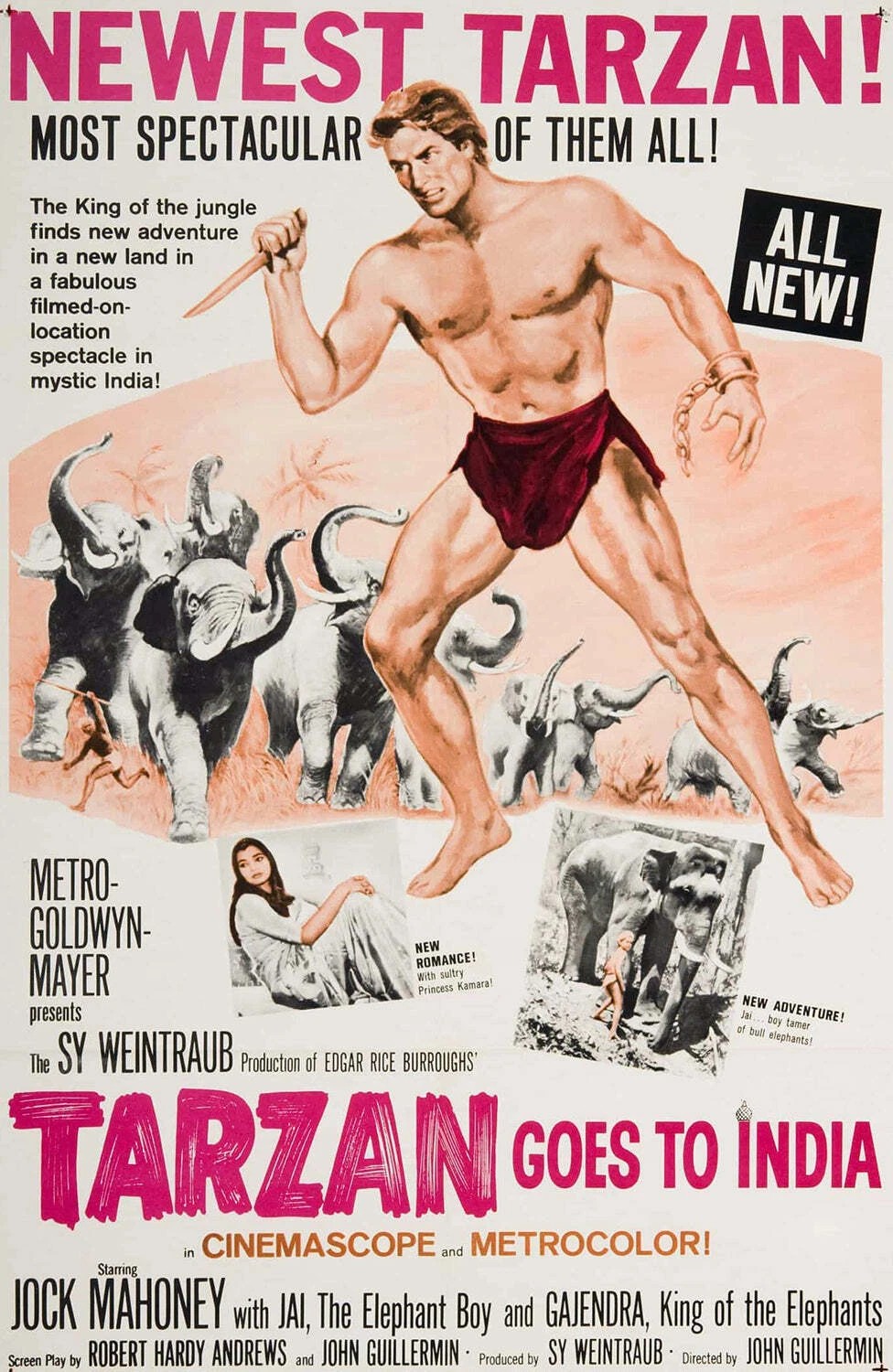
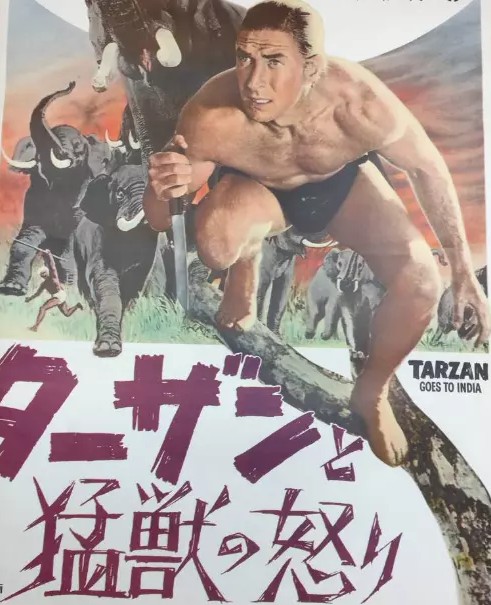
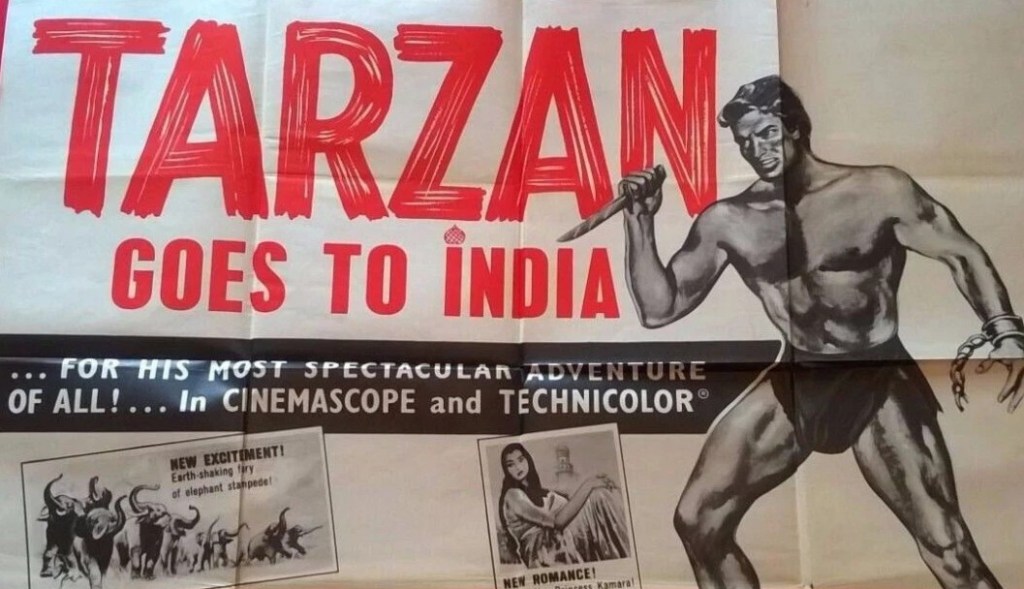
Tarzan Goes to India (1962) ***

Helluva fillip for reissue and credibility purposes to be able to point to the picture being helmed by the director – John Guillermin – of The Towering Inferno (1974), not to mention King Kong (1976) and The Blue Max (1966) – which suggested top-notch skills if not the budget to match. Guillermin, who also had a share in the screenplay, does a pretty good job of tailoring the picture to highlight issues that in others of the series are treated in more comedic fashion and making tremendous use of the location, far more than subsequent directors do with South American scenery. Elephants go mano a mano, Tarzan has a tussle with a leopard, but for sheer realism there’s little to beat a tiny mongoose putting a cobra in its place.

But what could be more timely for today’s audiences than presenting Tarzan (Jock Mahoney) as an eco-warrior. He is brought in to rescue a herd of 300 wild elephants being drowned when a much-needed hydroelectric dam is opened. Dam engineers Bryce (Leo Gordon) and O’Hara (Mark Dana), who show no compunction about the high death rate among the native laborers, are even less concerned about the fate of the elephants especially as have very tight deadline – the onset of the monsoon season  – to meet. Princess Kamara (Simi Garewal), daughter of an old friend from Tarzan’s Africa days, is trying to get villagers out of the way as well. She’s not helped by Bryce’s top engineer Raj (Jagdish Raj) who sides with Bryce.

The main problem is that elephants can’t climb hills and are led by Bala, a rogue of the species, whom Tarzan determines he’ll have to eliminate. He’s helped by a small boy Jai who rides his own elephant Gajendra. Jai’s not there for comedic purpose and Tarzan helps him grow up, their bond facilitated by Tarzan saving the ivory-tusked beast from Bryce in white hunter mode.

Baits abound. Tarzan is chained to a tree by Bryce to entice a leopard. The boy is used, again by Bryce, as lure to draw Tarzan out into the open at the climax. Raj changes sides on seeing how cheaply Bryce treats life, but there’s no time for him to get lovey-dovey with the princess. Which is just as well because Tarzan’s got a lot on his plate. His plan to put an arrow through Bala’s brain goes awry, triggering the Gajandra-Bala duel, which is very well done.

Although set in India, this feels more like the real thing than the sojourns in South America. We never see Tarzan in a suit but I don’t think anyone thought to compare his entrance, emerging from a river clad only in loin-cloth, with the other more famous screen entrance of the year, that of Ursula Andress in Dr No. Tarzan does plenty of swimming, even employing the breathing through a reed trick, and swings through the trees, and runs a lot barefoot, and gets to ride on the back of an elephant. The absence of his usual animal sidekicks is no hindrance. His scenes with the young boy are touching rather than sentimental or clumsily jokey. The kid’s pretty smart, which helps.

Kamara’s there merely to help along the subplot rather than for romantic purposes. Given the lean running time (86 minutes) that kind of palaver would only get in the way. This was shot entirely on location, and it shows, no awkward switches to studio set-ups, glorious scenery all the way.

Best of all John Guillermin, who also helmed Tarzan’s Greatest Adventure (1959), knows how to construct a scene, and how to get the best out of actors whose acting skills would not be considered their main attributes. So it looks good whichever way you cut it.

Former stunt man and athlete Jock Mahoney makes the switch from Tarzan nemesis (Tarzan the Magnificent, 1960) to Tarzan with ease. Less muscle-bound than his predecessors, he brings a more mature tone to proceedings, exuding thoughtfulness more than being gung-ho.

One of the better Tarzans of the decade.

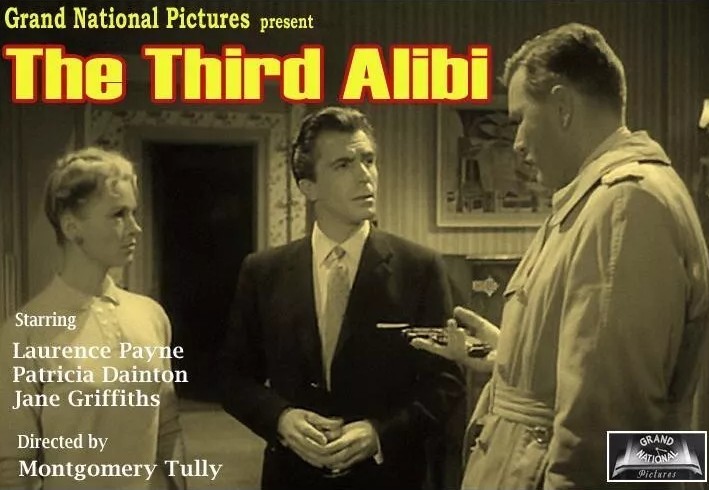
The Third Alibi (1961) ***

Sometimes there’s nothing more satisfying than a well-plotted narrative that doesn’t overstay its welcome and comes with a sting – or two – in the tail. And in the B-picture world we can accommodate all sorts of venal characters and even hope – or at least wonder if – they will get away with their nefarious plans.

We might have sympathy for stage composer Norman (Laurence Payne) stuck in a soulless marriage with Helen (Patricia Dainton). Small wonder he seeks spice through an affair with divorced sister-in-law Peggy (Jane Griffiths). After all, being a creative is hard work and we want him to enjoy showbiz success.

But that’s until driving home at night he knocks down an old man and races off without stopping. Luckily, the old fella’s not dead, otherwise it would have been in the papers. But then he’s bounced into asking his wife for a divorce since Peggy has announced she’s pregnant. But Helen isn’t agreeable, not least because of her dislike for her sister. And Helen’s very ill, a heart condition, but for reasons best known to herself, won’t confide this to her husband.

So Norman is left with no alternative but to bump her off. He comes up with a very clever plan that will allow him to pretend not be at home when he kills his wife there and also dreams up one of these clever alibis for Peggy, who’s integral to his plan, by getting her to make a nuisance of herself at the cinema, so everyone recalls her both arriving and departing, allowing her to slip out of the theater for the period of time she needs to assist Norman.

But Helen overhears the conspiracy. And when Norman goes home to shoot his wife, using an unlicensed therefore untraceable pistol provided by Peggy (war heirloom) instead of his own licensed traceable gun, he discovers the house is empty.

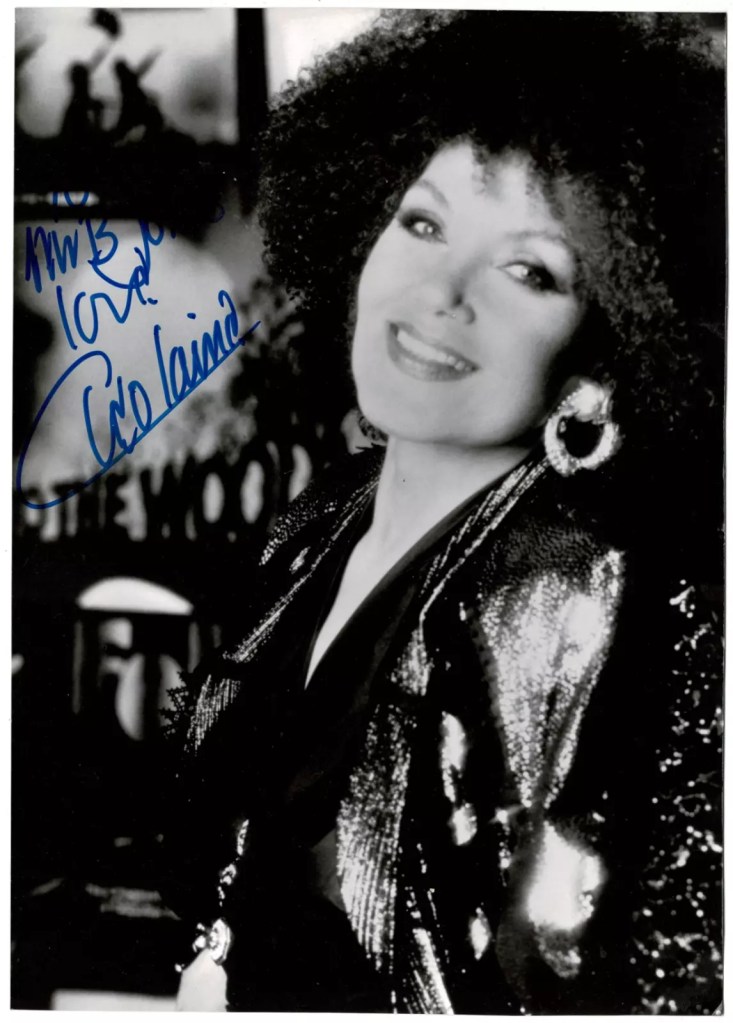
Jazz singer Cleo Laine makes a cameo appearance, as, too, does Dudley Moore.

When he returns to his lover, he finds her dead, shot through the head. As he rushes out, the police arrive. He’s only a suspect for a short time as his various alibis hold up. Helen appears to be standing by him. But then the police find his gun in the bushes outside the dead woman’s house.

When Helen confesses to the police that her husband has demanded a divorce, that puts her in the firing line. Except she’s got a perfect alibi. She stole the idea from the conspirators, making her visit to the cinema easily remembered by the staff both at the start of the movie and the end. It’s pretty much an unbreakable alibi unless any other witness can finger her.

Norman protests his innocence of course. And the irony is we know he’s innocent, but our sympathies are now with the killer, Helen, which twists around our preconceptions.

After all, not only is she the injured party in the romantic stakes, but she’s very ill, so needs all the audience sympathy she can get. So the audience, against its better judgement, is batting for her.

But, suddenly, twist number one, they don’t have to. Because the strain is all too much, and she has a heart attack and drops dead. And, surely, it won’t be long before Norman can find a way out of his predicament. And he believes he has the very thing.

There’s a nosy old neighbor who takes too close an interest in visitors to the house. So he must have seen Norman arrive there at the very time his lover was shot. The neighbor is brought in.

He’s a poor old soul. And blind. The result of being knocked over by a car a few weeks before.

What a cracking ending to a cracking tale. I always wonder why these kind of stories don’t get resurrected for some sort of portmanteau series, in the manner of Tales of the Unexpected. Although there’s little fat on them, a bit of judicious trimming would make them ideal for a one-hour television slot and this one, in particular, is little more than a three-hander, so wouldn’t cost much.

Each of the main characters is well drawn, each allowed a moment to stretch their emotional muscles. Solid, if not spectacular, acting from Laurence Payne (Crosstrap, 1962), Patricia Dainton (The House in Marsh Road, 1960), and Jane Griffiths (The Double, 1963), and impressive turn from John Arnatt (A Challenge for Robin Hood, 1967) as a doughty cop.

Written by Maurice J. Wilson (The House in Marsh Road) and director Montgomery Tully (The House in Marsh Road) from a play by Pip and Jane Baker. Tully is in fine form at the helm, wasting no time in driving this towards ironic conclusion.

I’ve been clocking up a few from the Tully portfolio in the last month or so. Astonished to find he directed another seven pictures this decade, so I might, in due course, complete the collection.

Enjoyable.

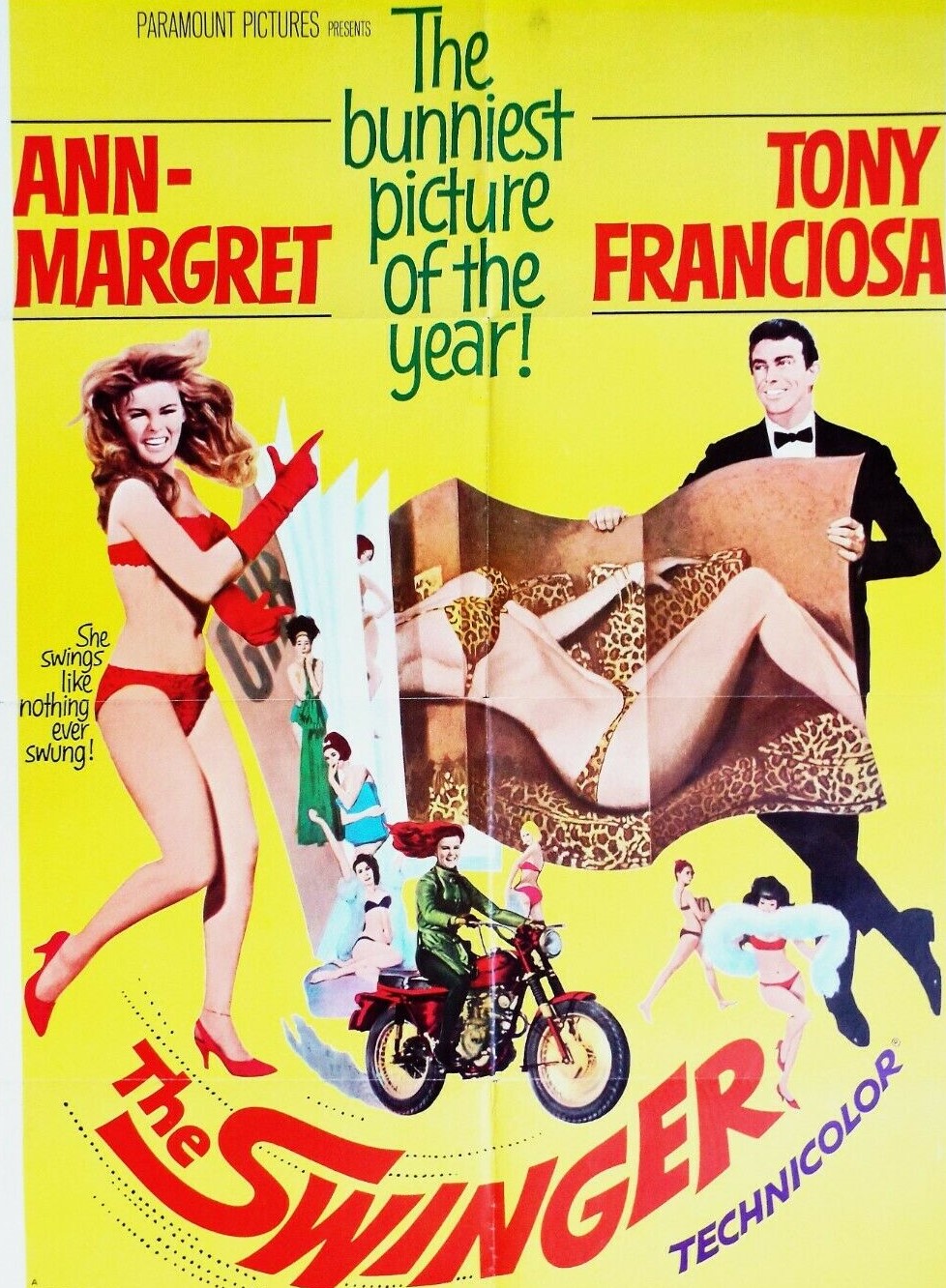
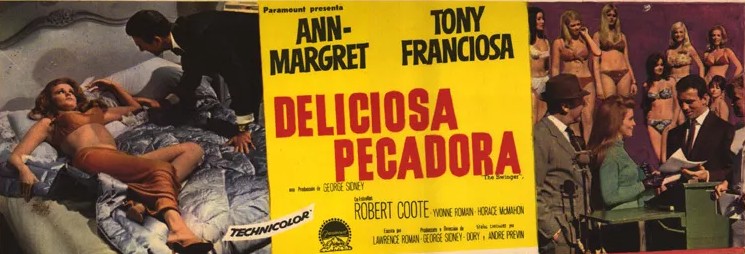
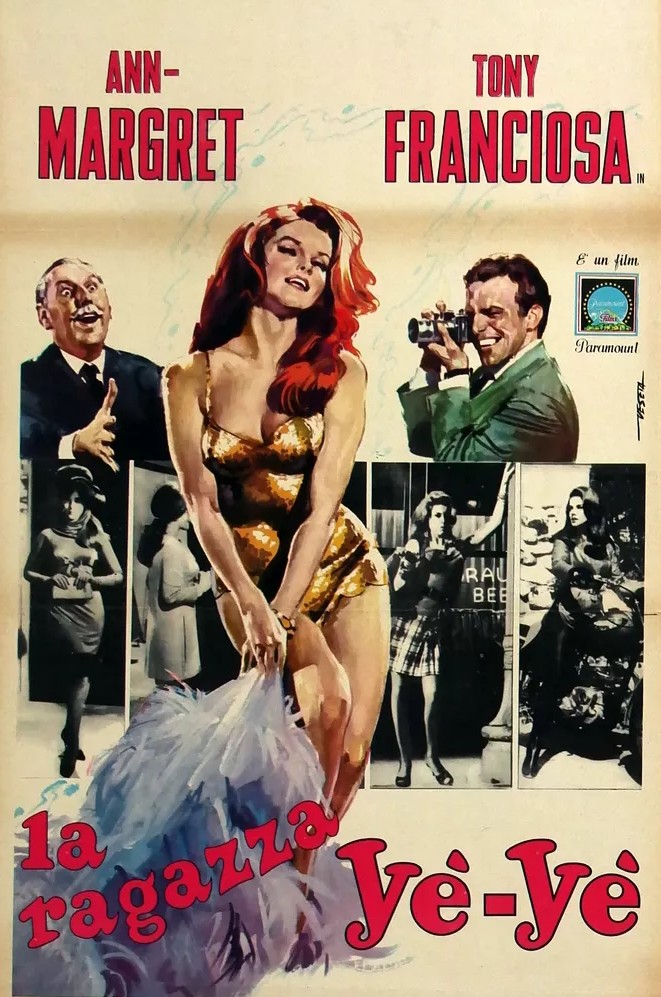
The Swinger (1966) ***

As chosen by my readers, this is the most popular movie on the Blog, so I thought I’d check back and see how it stood up. Having seen it before, of course, I knew what to expect. And despite the star’s acting abilities being better showcased in items like Once a Thief (1965) and Stagecoach (1966) I still found this effortlessly put together to deliver a movie that presented what studio and possibly the star felt was the best version (in terms of instant audience appeal) of herself. Think fun, fun, fun, if lightweight, lightweight, lightweight.

Pure confection. There was a sub-genre of romantic comedy pictures that spun on a simple plot device to throw together actors with terrific screen charisma. Doris Day, Rock Hudson and Cary Grant did little more than meet a potential new partner, fall out with them and then resolve their differences. The importance of actors of this caliber was the difference between a high class piece of froth and mere entertainment. This falls into the latter category, neither Ann-Margret nor Anthony Franciosa reaching the high standards of the likes of That Touch of Mink or Pillow Talk.

That said, this was clearly custom-made for Ann-Margret and her growing fan-base. Despite displaying unexpectedly serious acting chops in Once a Thief (1965) this plays more obviously to her strengths. She gets to sing, dance and generally throw herself around. The face, hair, smile and body combine in a sensational package.

Kelly Olsson (Ann-Margret) plays a budding writer so naïve that she tries to sell her stories to Girl-Lure, a Playboy-type magazine, owned by high-class Brit Sir Hubert Charles (Robert Coote) and run by Ric Colby (Anthony Franciosa). When her work is rejected, Olsson writes an imitation sex-novel, The Swinger, purportedly based on her own life. Sir Hubert buys the idea and Ric sets up a series of accompanying photo-shoots using Kelly as the model until he discovers her book is pure fiction.

The setting is an excuse to show an avalanche of young women in bikinis. The slight story is justification enough for Ann-Margret to strut her stuff as a singer and dancer. Since her stage show depended more on energy than singing, this effectively showcases her act.

So two-dimensional are the principals, you are not going to mistake any of these characters for actual characters. The film lacks such depth you would not be surprised if the likes of Elvis Presley or Cliff Richard popped up. The comedy is very lite, an initial attempt at satire soon dropped, the few bursts of slapstick seeming to catch the stars unawares.  

But that’s not to say it’s not enjoyable, Ann-Margret is a gloriously old-fashioned sex symbol and certainly knows how to shake her booty. The standout (for lack of a better word) scene revolves around body painting. She even gets the chance to ride a motorcycle, one of  her trademarks. Anthony Franciosa (Go Naked in the World, 1961) has little to do except smile. Yvonne Romain (The Frightened City, 1961) has a thankless role as Ric’s girlfriend.

Director George Sidney teams up with Ann-Margret for the third time after Bye Bye Birdie (1963) and Viva Las Vegas (1964). This was his penultimate outing in a 20-year Hollywood career whose highlights included Anchors Aweigh (1945), The Three Musketeers (1948), Annie Get Your Gun (1950), Showboat (1951) and Pal Joey (1957). So he certainly had the musical pedigree to ensure the songs had some pizzazz but clearly less impact on the script which was reputedly scrambled together at short notice by Lawrence Roman (McQ, 1974) to fulfil a studio commitment to the star.

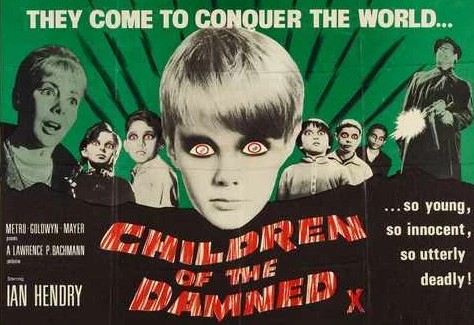
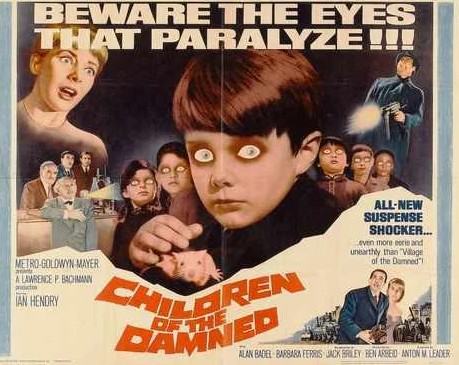
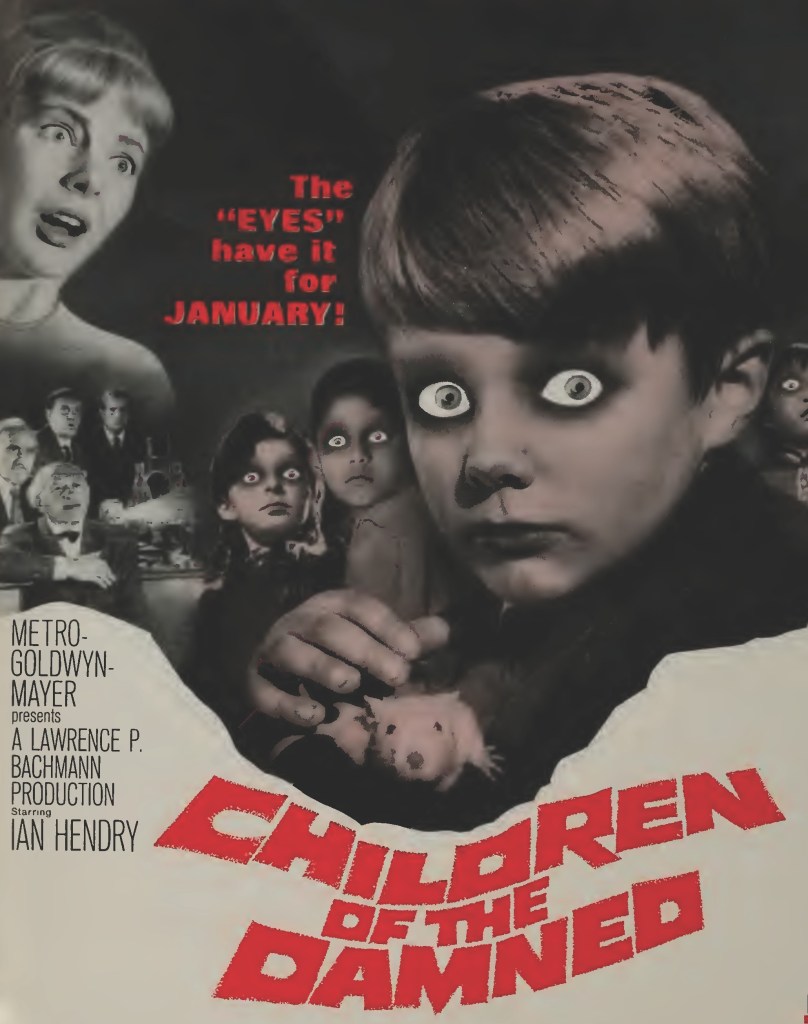
Children of the Damned (1964) ***

I wasn’t aware that celebrated sci fi author John Wyndham had written a sequel to his iconic novel The Midwich Cuckoos, filmed as Village of the Damned (1960). And it turned out he didn’t (he did make an attempt but abandoned it after a few chapters).  So he had nothing to do with the sequel. But the original had proved such a hit MGM couldn’t resist going for second helpings.

And there was nothing the writer could do about it, it being standard procedure that when you sold your novel to Hollywood the studio retained all the rights and could commission a remake, sequel, turn it into a television series, without consulting you.

The only drawback for a potential sequel was that main adult character Professor Zellaby (George Sander) and all the kids had died in the original, though the final image of eyes flying out of the burning house might have suggested the children had actually survived. And, as we know these days, just when your main character dies it doesn’t prevent him miraculously returning to life should box office dictate.

So screenwriter John Briley (Oscar-winner for Gandhi, 1982) was handed the sequel. And what we get is a lot of atmosphere, a chunk of running around in empty London streets (the result not of mass evacuation but filming in early morning when roads are clear), a very slinky turn from Alan Badel (Bitter Harvest, 1963) showing what he can do when hero not villain, and a twist on the previous problem – how to vanquish the kids – which is whether to  weaponize them. Mostly, we are reminded of how better telekinesis was dealt with in the original picture and how poorly this compares to the likes of Brian De Palma’s later Carrie (1976) and even his The Fury (1978).

Apart from the title, there’s barely a nod to the previous incarnation, except that discerning the children’s paternity proves impossible. An United Nations project has tracked down six kids with incredible intellects. Like Professor Zellaby, British psychologist Dr Tom Llewellyn (Ian Hendry) and geneticist Dr David Neville (Alan Badel) want to study the kids while the more shadowy figure of Colin Webster (Alfred Burke) appears to have more sinister purpose in mind.

In any case none of the three achieve their goals because the kids escape and take refuge in an abandoned church, defending themselves against the authorities and the military by their brain controlling abilities and by the devising of a sonic weapon. Immediately under their thumb is the aunt, Susan (Barbara Ferris), of the young boy Paul (Clive Powell) who initially excited the interest of the British scientists.

Opinion varies as to whether the children are a genetic freak of nature, aliens or an advanced human race. The authorities can’t decide whether they are a threat or a wonder and decide to eliminate them, then change their mind, while the children decide to fight back then change their minds. The ending is quite a surprise.

Although the kids still have the fearful eyes, they are generally a lot less effective a scare than when the small gang of them stood side by side in the previous picture and stared at adults until they did the childrens’ bidding or killed themselves. There’s way too much discussion among adults. In the previous picture, those kinds of conversations had more emotional impact, since it was the villagers who were left distraught. Here, you couldn’t care less about the adults.

Interestingly enough, the standout isn’t any of the kids at all, but Alan Badel, who comes over as the libidinous sort, but very charming, and views any woman as fair game, but it’s fascinating to see how his usual screen persona here makes him a hero whereas in most other films exhibiting much the same characteristics he comes across as shifty, mean or downright villainous.

Ian Hendry (The Hill, 1965) was a rising British star but isn’t given much to get his teeth into. Barbara Ferris (Interlude, 1968) has a vital role.

Directed by television veteran Anton M. Leader (The Cockeyed Cowboys of Calico County, 1970) who makes his screen debut.

Not a patch on the original.

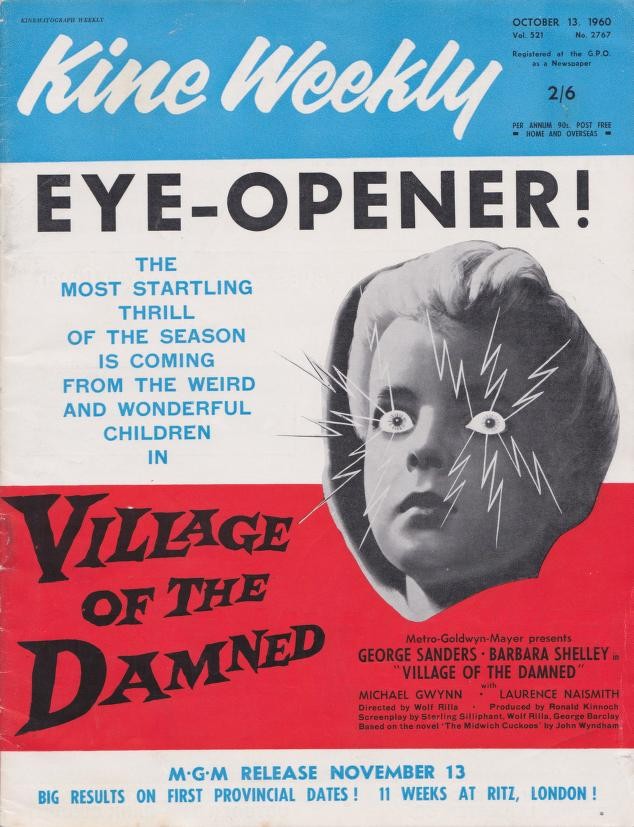
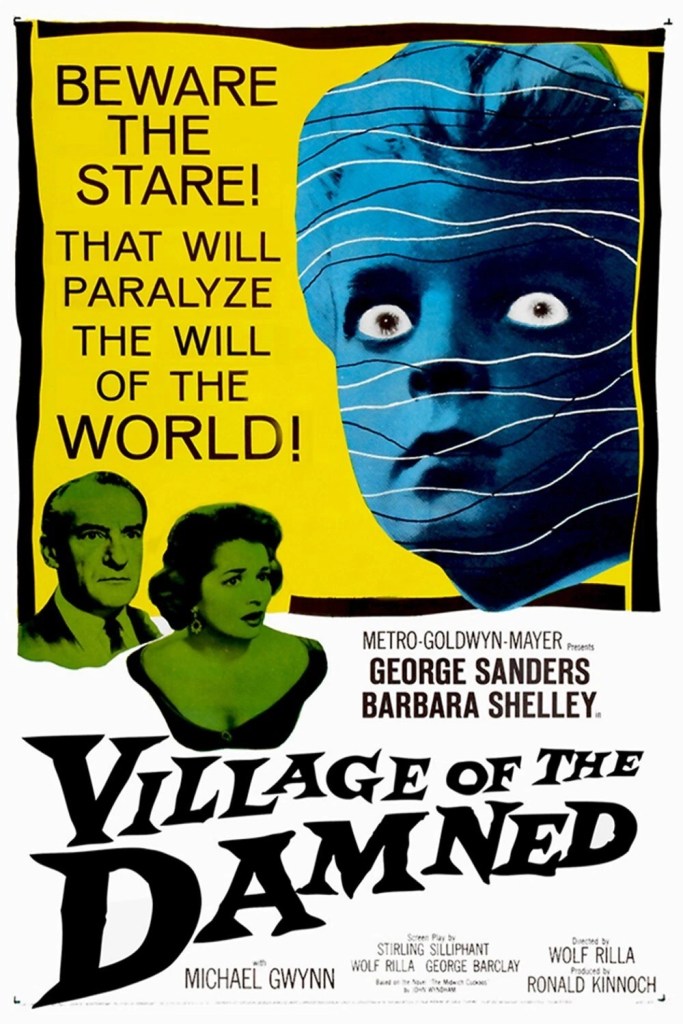
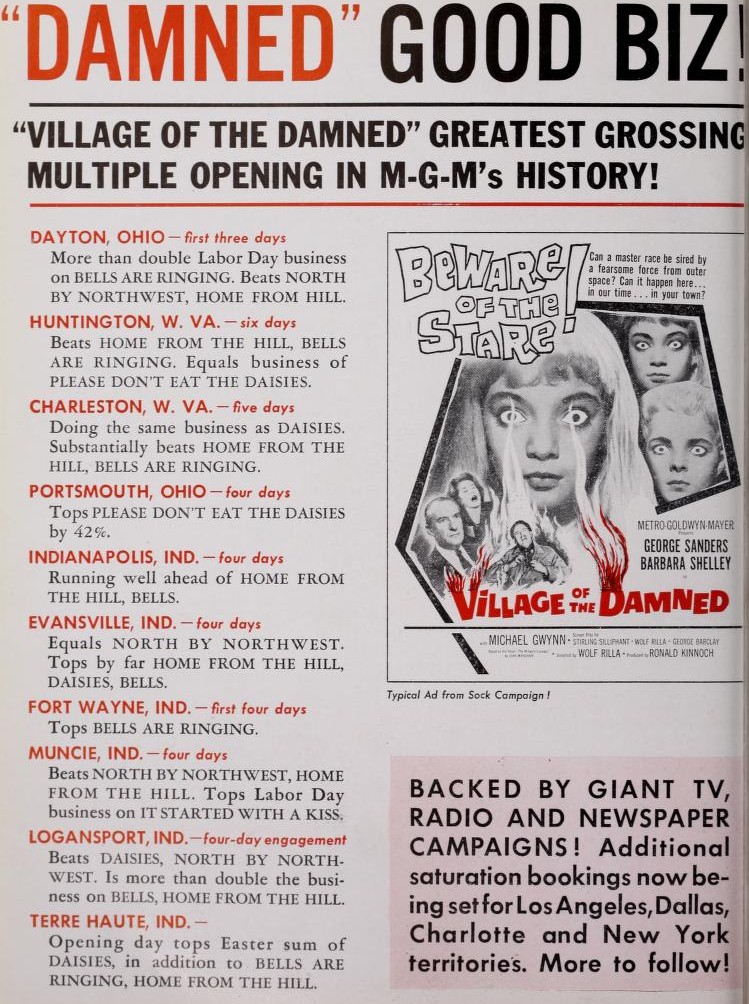
Village of the Damned (1960) ****

Superb chiller that, unusually, takes time to develop several strands over a longer time frame than is normal for a genre where the immediate takes preference. Opens a new dimension of terror, too, with the brain control sub-genre that would spill over into brainwashing. You could also, if you were of a mind, point to the genuine growing social power of the young as emphasized later in the decade with movies about hippies. It might not be too much of a stretch to point to the “Youthquake” at the end of the 1960s when pandering to a youthful audience nearly destroyed Hollywood.  

Terrific opening sequence of everyone in the small village of Midwich dropping to the ground, the immobilized driver of a bus crashing off the road, the driver of a tractor hitting a tree, taps left running, telephone calls cut off, all manner of accidents ensue. You think everyone’s dead, as do the military, called in to investigate. They cordon off the area, employ canaries and then humans to discover how far the danger spreads. But when a soldier who is dragged out unconscious from the forbidden zone wakes up, they soon realize the population is merely unconscious.

Childless couple Professor Gordon Zellaby (George Sanders) and younger wife Anthea (Barbara Shelley) are among those affected, apparently suffering no side effects for having been knocked out for around four hours. A couple of months later Anthea is delighted to report she’s pregnant. She’s not alone. But for many of the villagers what would be a cause for celebration causes untold grief. One husband returns home after a year away to find his wife is pregnant. In the days when pre-marital sex was frowned-upon, virgins, similarly affected, are shamed.

The pregnancies don’t run to the normal period either, and fully-grown children are born within a few months. What’s more, they all look as if they have inherited the same genes. Their blonde hair and striking eyes suggest they share the same father. Soon it transpires they can not only read minds but control them, causing at least two people to commit suicide.

Turns out this is a global problem, several other communities afflicted with the same condition, the Russians so concerned at the prospect that they bomb one village to oblivion, other cultures simply murdering the children.  Here, being English, where fair play still rules regardless of potential threat, the children are taken under the wing of Professor Zellaby, though the military, having sealed off the area, wait in the wings, itching to wipe out the troublemakers.

Quickly, it becomes a duel for power, the children will do anything to protect their species, Professor Zellaby at first wanting just to study the kids and understand them but soon recognizing the threat.

In between bouts of action, most of which is discreetly handled, none of the deliberately shocking scenes that might have emanated from an exploitationer, the authorities have plenty of time to ponder their existence. A leap in genetic mutation, or extraterrestrial origins, are among the options considered.

Eventually the villagers react like terrified Transylvanians confronting Dracula and attempt to set fire to the building where the children are housed but reckon without the brain control that can be exerted. In the end Professor Zellaby comes up with a self-destructive solution.

This is formidable stuff, all the more so, because in the days when most monsters grew fangs or claws or developed huge bodies and were otherwise physically frightening, the worst these kids get up to is to have a striking glow in their eyes, a startling contrast to their blonde hair, calm demeanor and neat uniform clothing.

Tremendously well done and it helps to have cast mainstream actors like George Sanders (Warning Shot, 1967) and Barbara Shelley (only later did she become a Scream Queen) and others who don’t carry the tinge of the horror genre.

Very well paced by German director Wolf Rilla (The World Ten Times Over, 1963) who resists the temptation to overplay his hand, achieving much more by leaving it to your imagination. Stirling Silliphant (The Slender Thread, 1965), George Barclay (Devil Doll, 1964) and the director adapted the groundbreaking novel The Midwich Cuckoos by John Wyndham. Horror maestro John Carpenter remade this in 1995, which only wnent to show how more successful the restraint of the original was.

Top notch.

The Innocents (1961) ***

One description of this film’s prequel The Nightcomers (1972) was that, even with the overt sex and violence, it was an arthouse picture masquerading as a horror movie. And obviously absent the sex and violence that’s how I feel about this one. I’m of the old-fashioned school when it comes to horror – once in a while I expect to jump. The biggest problem here is that fear is telegraphed in the face of governess Miss Giddens (Deborah Kerr). Instead of the audience being allowed to register terror, all the tension is sapped away by one look of her terrified face.

Atmospheric? Yes! Scary? No.

Certainly, the set-up is likely to spark the darkest imaginations. Orphans Miles (Martin Stephens) and Flora (Pamela Franklin) are abandoned by their uncle (Michael Redgrave) who wants to spent his time enjoying himself in faraway London without having to bother about the care of the minors. The governesses he installs are given carte blanche to deal with any situation that arises – as long as they don’t concern him with it. And he’s so disinterested in the children’s welfare that he hires a completely inexperienced governess in Miss Giddens despite the fact that the previous occupant of the post, Miss Jessel, had died in mysterious circumstances and a little digging would have revealed that she lived a hellish life under the thumb of valet Quint.

The kids appear somewhat telepathetic or telekinetic – Flora knows Miles is coming home before Miss Giddens does, Miles knows when the governess is standing outside his door. They’re maybe a too bit self-indulgent – Flora enjoys watching a spider munch on a butterfly and isn’t above finding out if her pet tortoise can swim, while Miles has Miss Giddens in a neck stranglehold.

But it’s unlikely the children are summoning ghosts – Quint appears to Miss Giddens at the top of a tower and again peering in through a window, Miss Jessel turns up, too, and I lost count of the number of disembodied voices. The ghosts it turns out have taken possession of the children in order to continue their relationship.

And while this is all very clever it does not chill you to the bone. The children are not as cute as they need to be to make this work. You get the impression, given half the chance, they would happily turn into little savages and experiment with all manner of cruelty. And that would occur whether there was the likes of Quint around to lead them astray because the adults in their lives are so selfish and set the wrong kinds of standards. But with the focus perennially on the trembling Miss Giddens, there’s little chance of getting inside the heads of the children.

Since jump scares are not in director Jack Clayton’s cinematic vocabulary, the best scenes are not visual, but verbal, housekeeper Mrs Grose (Meg Jenkins) filling the governess in on the unequal relationship between Quint and Miss Jessel, Flora imagining rooms getting bigger in the darkness (effectively more dark), Miles seeing a hand at the bottom of the lake.

There’s certainly an elegiac tone and the camera clearly sets out to destabilise the audience but that’s just so obvious it seems more an arthouse ploy than a horror schematic.

This was start of Deborah Kerr (Prudence and the Pill,1968) playing psychologically distorted characters. Over the previous decade she had revelled in a screen persona that saw her playing the female lead (sometimes the top-billed star) opposite the biggest male marquee names of the era – Burt Lancaster (twice), Cary Grant (twice), Yul Brynner (twice), Gregory Peck, William Holden, Robert Mitchum (three times), David Niven (twice), Gary Cooper. Now she turned fragile and that screen persona, introduced here, would see her through the next decade.

So she’s both very good and very bad here. Her character facially registers her inner thoughts but those too often get in the way of the audience. I found the kids more limited in their roles, not through acting inexperience, but through narrative restriction.

Jack Clayton (Dark of the Sun, 1968) directs from a screenplay by Truman Capote (In Cold Blood, 1967) and William Archibald (I Confess, 1953) from the celebrated Henry James story.

A bit too artificial for my taste. Probably heresy to admit it but I preferred the prequel.

Behind the Scenes: Do As You’re Told: Selling Marlon Brando in “One-Eyed Jacks (1961): The Pressbook

Pressbooks/Marketing Manuals were intended as guides for the better promotion of a picture. At best, they were viewed as suggestive, devised in the spirit of cooperation. Paramount took a different perspective for One-Eyed Jacks. It laid down the law. This was “do as you’re told” under a new guise.

In the first place, it was an uncommonly sumptuous Pressbook, the distinctive cover printed on thick paper. It was larger, too, than the standard A2.

But at the heart of the marketing was almost a command for cinemas to follow a stringent campaign of advertisements running for seven days prior to showing the picture. This was contained in an immeasurably large section, a double fold-out running to 46 inches wide by 19 inches high. In other words so huge it could not help but catch the eye.

Unusually, the campaign was a before-and-after promotion. Of the seven days delineated, five   were in advance of opening, the final two post-opening. Cinemas could choose between four sizes of campaign. Size was measured in “lines” – the unit of measurement rather than inches employed by newspapers. The more lines, the bigger the advert. Thus, Campaign AA was intended to run for 2,700-2,800 lines with the biggest advert reserved for opening day. Campaign 1 was set for 1,900-2,100 lines; Campaign 2 for 800-900 lines; and Campaign 3 for 550-650 lines. The last two campaigns were limited to three days.

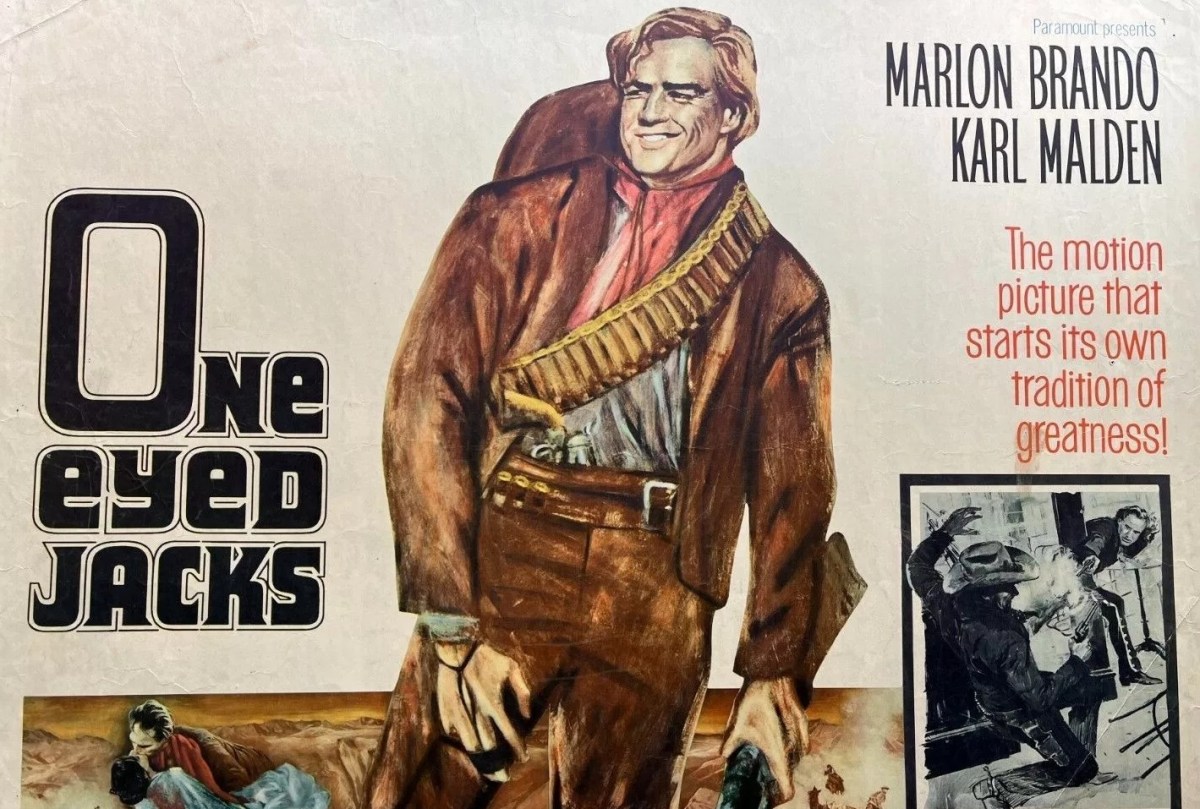
The tagline for the opening Advert ran: “The motion picture that starts its own tradition of greatness” with the subsidiary “Marlon Brando’s most brilliant performance as Johnny Rio, the wildest one-eyed jack ever flung into the game of life. Here is love and courage, sin and violence – in one of the most explosively dramatic excitement in screen  history!” In the AA campaign this was twice as wide (14 inches) as it was high.

The Second Day’s advert was much smaller – 9.5 inches wide and 4.5 inches high – and while keeping the main tagline dispensed entirely with the subsidiary.

Day Three was the opposite – the biggest advert yet – at 36 inches wide by 9 inches high. There was a new tagline: “A new experience in excitement…A new height in greatness!” and the subsidiary was just the first sentence of the original.

Day Four was bigger again – 40 inches wide by 8 inches high. The same tagline and subsidiary as Day Three with the addition of: “In vengeance he taught the enemy’s daughter the ways of love. Now the dawn would come up like gunfire.”

Opening Day (Day Five) was the biggest of them all – 57 inches wide by 9.5 inches high. Same tagline and subsidiary as Day Four but with a different addition: “His enemy’s daughter clinging to him in the night…this was just the beginning of his vengeance.”

Day Six (First Day After Opening) was remarkably small – 4 inches by 2 inches – literally just a reminder and carrying only the main tagline. The Final Day was 11 inches by 5.5 inches and with the same tagline.

Anticipating success, the marketeers had supplied adverts that announced “Held over for a 2nd big week.”

Whether cinemas signed up for such a promotional exercise they could be in no doubt about the studio’s commitment. Claiming it was the most publicized picture in recent history, Paramount pointed to articles in Life, Look, Coronet, Argosy, McCalls, Newsweek, Pageant, Glamour, Seventeen, Mademoiselle, American Weekly, Parade, Woman’s Day, This Week and the New York Times Magazine.

Music was a better cross-promotion prospect than anything else with both a soundtrack album and a single on the market. In addition, piano duo Ferrante and Teicher had recorded an instrumental. Two songs from the film were published in sheet music format.

Unusually, presumably assuming the movie had received all the editorial coverage it required – some or all of the articles run in the magazines mentioned would have been syndicated to local and national newspapers – the Pressbook was devoid of the usual run of star biography or journalistic snippets.

Behind the Scenes: “One-Eyed Jacks” (1961)

A three-hour western epic directed by Stanley Kubrick (2001: A Space Odyssey, 1968), written by Sam Peckinpah (The Wild Bunch, 1969) and The Twilight Zone’s Rod Serling and starring Spencer Tracy (Judgement at Nuremberg, 1961) and Marlon Brando. What’s not to like? That all of these major players, with the exception of Brando, had nothing to do with the final product was par for the course for a movie that didn’t reach cinema screens until two years after shooting was completed.

Marlon Brando was riding high when the project was first mooted in 1956. The box office and critical sensation of the 1950s, four Oscar nominations in successive years, winner for On the Waterfront (1954), his price was rising by the minute. And he had ambitions to take control of his career, set up his own production shingle, a trend that was beginning to gather pace.

He established Pennebaker (named after his mother) Productions in 1957 with ex-marketeer Walter Seltzer, producer of 711 Ocean Drive (1950), and George Glass, a former partner in Stanley Kramer’s independent production company. Paramount agreed to back the company. A western, A Burst of Vermilion, was intended as the company’s first offering. Soon there were five movies on the schedule including The Authentic Death of Hendry Jones by Charles Neider.

Brando had paid $150,000 for the rights to the book and a script by Sam Peckinpah. The original title was changed to Guns Up. It was going to mark the debut of the new Pennebaker outfit ahead of other projected movies like Shake Hands with the Devil to star James Cagney and Anthony Perkins (he didn’t make it to the final cast), The Raging Man and Ride, Comancheros (no relation to The Comancheros, 1961) and C’Est La Vie to be filmed in Paris.

Paramount paid through the nose, committing to an unprecedented deal. The studio would fund the entire cost of Guns Up and as well as $150,000 upfront Brando would receive 100 per cent of the profits, Paramount relying on its 27% of the gross as a distribution fee to turn a profit. Stanley Kubrick, riding high after Paths of Glory (1957), was hired to direct. While the studio preferred Spencer Tracy as co-star, Brando wanted old buddy Karl Malden who had co-starred with Brando in A Streetcar Named Desire (1951) and On the Waterfront, winning an Oscar for the former and a nomination for the latter.

And in part to reflect the Asian community in Monterey, location of the main section of the film, he also wanted current squeeze France Nuyen (A Girl Named Tamiko, 1962) to play his lover in the film, but Kubrick was aghast and instead cast Mexican debutante Pina Pellicer (Rogelia, 1962). There were roles for Katy Jurado (Barabbas, 1962) and recognizable western types like Ben Johnson (The Undefeated, 1969), Slim Pickens (Firecreek, 1968) and Elisha Cook Jr (The Great Bank Robbery, 1969).

Shooting was set for June 1958, then it shifted to September and then November. To Brando’s shock, Kubrick pulled out two weeks before production was due to begin, citing pre-production on Lolita (which, ironically, didn’t go ahead for a couple of years). To salvage the situation, Brando decided to direct. He wasn’t the first actor to go down this route, especially if you count Charlie Chaplin, Buster Keaton and Orson Welles as actors first and foremost. Laurence Olivier helmed Henry V (1944) and three others, Jose Ferrer The Cockleshell Heroes (1955), hoofer Gene Kelly Singin’ in the Rain (1951) and Charles Laughton Night of the Hunter, 1955. So he was in good company.

Cameras turned on December 2, 1958. It was an auspicious era for westerns, a total of 41 had appeared that year. Although budgeted for three months, it took six months to shoot in locations like Sonora in Mexico and Monterey in California (where the film was set) as well as Pfeiffer Beach on the Big Sur and the Warner Ranch.

Although prior to shooting commencing the title had changed to One-Eyed Jacks, scoring and editing were well in hand and Paramount announced it as one of its 17 pictures set for 1959 release. In the end Shake Hands with the Devil beat it to the punch as Pennebaker’s initial release, in 1959. But it didn’t favor so well, skipping the more lucrative but riskier Broadway first run in favour of hitting the circuits.

Meanwhile, Brando was angling for a three-hour running time. The budget kept increasing. The original $2m budget had doubled. Eventually, Paramount acknowledged it had cost $5 million though other estimates put it closer to $6 million.

Part of the problem in readying it for release was Brando’s other commitments. He was still a working actor and could hardly resist the offer of a record-setting one million bucks to star in The Fugitive Kind (1960). Even so, the bigger problem was not time, but experience and a first-time director being unable to make up his mind, having shot a colossal amount of footage and having tremendous difficulty trimming it down to workable length. Paramount still had it on the release agenda in 1960. It was going to be a “special release,” which most people took, especially given the running time, to be roadshow.

But by December 1960, the studio had waited long enough and just before Xmas the studio took over the editing and after editing out around 40 minutes from Brando’s three hour cut, Paramount scheduled it for a world premiere in New York in March 20, 1961, in a kind of semi-roadshow – moviegoers could buy in advance but the tickets did not come with reserved seats, which was the whole point of roadshow. Nor were prices hiked, which was gave roadshow its prestige.

Already deemed “Brando’s Folly” and coming in the wake of The Alamo (1960), the John Wayne-directed epic which had flopped in roadshow, commercial hopes were not high. In part, because production had been so long ago it had skipped under the journalistic radar which was concentrating on skewering The Alamo and the equally troubled The Misfits (1961). So it didn’t come trailing disaster. Still, it seemed more likely, audiences would not take to the odd tale which didn’t fit so easily into the western genre. Plus Brando’s previous effort The Fugitive Kind had been his first outright flop.

Turned out, though, Brando still was a major attraction. It snaffled a “huge” $81,000 in its opener at the 4,820-seat Capitol in New York. There was a “smasheroo” $21,000 in Detroit, a “big” $14,000 in Buffalo, a “hotsy” $15,000 in Cincinnati. “Giant” was the preferred adjective, covering $60,000 in Chicago, $32,000 in Philadelphia and $15,000 in Boston.

Rentals (what studios make after cinemas have taken their share of the gross) amounted to a very decent $4.3 million, enough to rank seventeenth for the year. And whereas those figures were considered decent enough, it did “substantially better abroad.”

So, more than likely, against all the self-destructive odds, it earned a profit.

SOURCES:  Stefan Kanfer, Somebody, The Reckless Life and Remarkable Career of Marlon Brando (Faber & Faber, 2008); “Glass, Seltzer in Brando Co Berths,” Variety, April 17, 1957, p22; “Chatter, Hollywood,” Variety, May 22, 1957, p62; “Marlon Brando Guns Up for Paramount,” Variety, April 30, 1958, p22; “Chatter, Paris,” Variety, July 30, 1958, p126; “Brando Gets 100% of Film Profit!”, Variety, August 6, 1958, p1; “Briefs from Lots,” Variety, September 24, 1958, p15; “Marlon Brando’s Own,” Variety, November 26, 1958, p5; “Shake Hands First with Circuits,” Variety, May 6, 1959, p4; “Brando’s Ugly American,” Variety, July 1, 1959, p3; “Par 17 Pix Set for Release,” Variety, July 15, 1959, p5; “Par Division Eyes Upcoming Product,” Variety, November 25, 1959, p22; “Doubt or Delay re Brando’s Jacks,Variety, August 10, 1960, p3; “Brando Jacks Editing,” Variety, December 21, 1960, p7; Advert, Variety, January 6, 1960, p32; Box Office Figures, Variety, April 5-Jul 24, 1961; “Hoss Operas in O’Seas Gallop,” Variety, August 23, 1961, p16; “1961 Rentals and Potential,” Variety, January 10, 1962, p13.

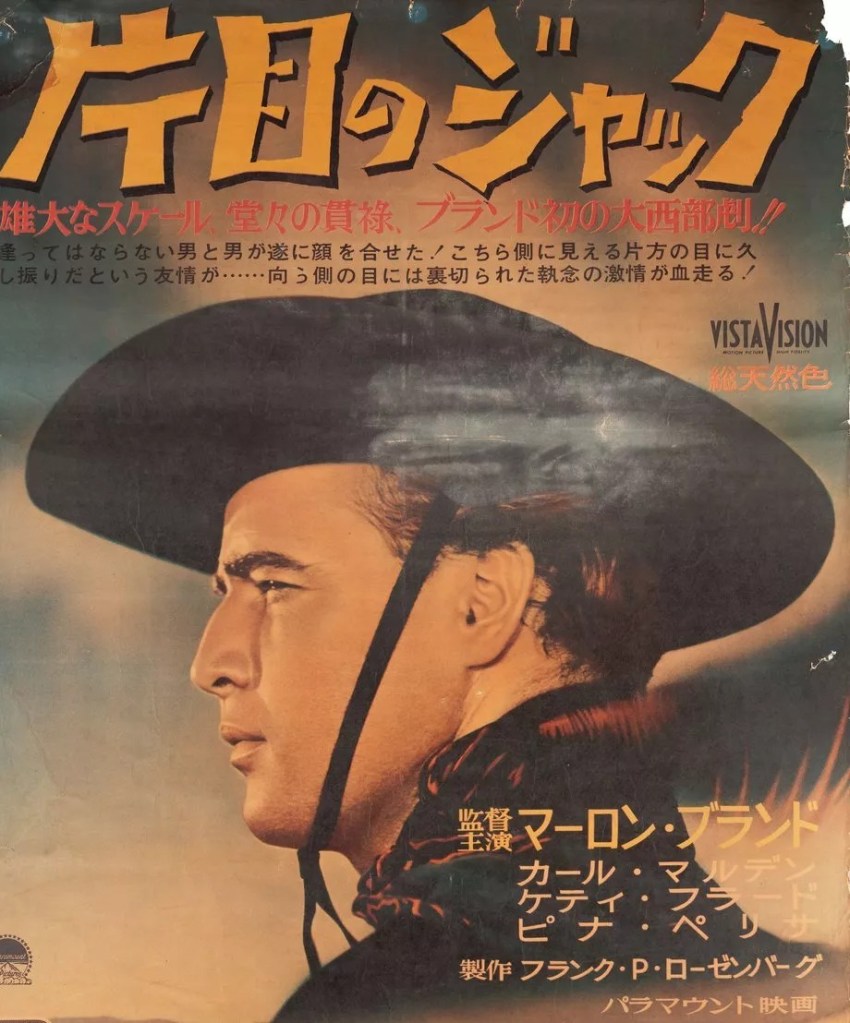
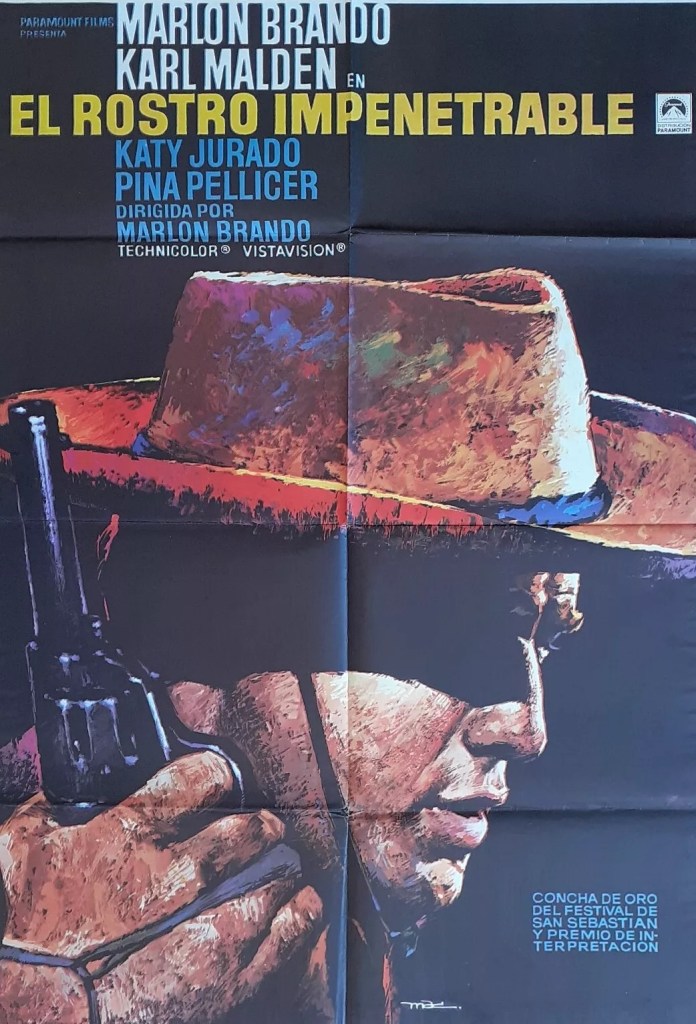
One-Eyed Jacks (1961) ****

Sets the tone for the later Sergio Leone, Sam Peckinpah and Clint Eastwood westerns in which the bad guys are the good guys and we find ourselves rooting for bounty hunters, gunslingers and bank robbers. Except this is more of a drama than a western. Shooting is kept to a minimum and instead it’s a character-driven drama about outlaws. Ostensibly, it’s a simple revenge tale and also totes around that later cliché of the honor code and principles that The Wild Bunch (1969) in particular put so much faith in.

But, in reality, it’s an in-depth look at two fascinating characters, both very human, both sly, self-indulgent, constantly attempting to reinvent themselves, cheat their way to a better life or to get what they want. There’s no sense of redemption, just obsession.

Rio (Marlon Brando) and Ben (Karl Malden) are bank robbers, the former a notorious gunslinger to boot and also partial to stealing pieces of jewellery to assist his practiced seduction routine whereby he claims a ring or necklace was a family heirloom, and he’s a good reader of the reluctant female because that tends to open the bedroom doors. Pursued after pulling off a job in Mexico, down to one exhausted horse and trapped by a posse, Ben is sent to get fresh horses but instead of coming back heads off with the loot. The captured Rio does a five-year prison stretch before escaping and seeking revenge.

Ben, meanwhile, has gone straight. He’s picked up a peach of a job as a lawman, a marshal no less, in Monterey on the California coast, where he’s made no secret of his past so he’s not prey to blackmail. He thinks Rio believes his story that he did all he could to return to aid his friend. We know different.

Rio has alighted on this town by pure accident, hooking up with a band of thieves led by Bob (Ben Johnson) who are set on robbing the bank here. Their plans are put in disarray when Ben takes revenge on Rio seducing his stepdaughter Louisa (Pina Pellicer) by subjecting him to a savage whipping and breaking his gun hand. It takes ages for the hand to heal and for Rio to even manage to whip out the gun let alone fire it with any speed or accuracy. He fesses up to Louisa that he’s not a secret Government agent, his usual cover story, but a bank robber and that the heirloom he gave her did not belong to his mother.

Bob gets fed up waiting, tries to pull off the bank job with one other accomplice, but the robbery goes wrong and a girl is killed. Ben pins the blame on Rio, arrests him and prepares to hang him. Louisa, who has initially rejected Rio after his confession and aware of his revenge plan, helps him escape.

The final shoot-out isn’t built up with the intensity of High Noon (1962) or Once Upon a Time in the West (1968) but with a resigned inevitability. Rio could have skipped out with Louisa and made a new life in Oregon. That would, in some senses, be revenge enough, stealing away the stepdaughter, one of the two main planks of Ben’s newfound respectability.

Don’t come here looking for honesty or upstanding individuals. Respectability is feigned – even Ben’s wife Maria (Katy Jurado) had a child out of wedlock. Everyone lies, even Maria – to protect Louisa from the stepdad’s wrath at losing her virginity.

In other words, a totally human cast of characters, shuffling the truth like it was a deck of cards. You wouldn’t trust any of them an inch. It doesn’t take much for cruelty to creep through the cracks, the cruel whipping, deputy Dedrick (Slim Pickens) handing out a beating to Rio in retaliation for being rejected by Louisa, Bob taking great delight in shooting dead an unarmed accomplice.  

Ben isn’t alone about lying about the impossibility of coming to Rio’s aid, Bob does it too. Wife and stepdaughter lie to Ben. Ben lies to Rio. Rio lies to Louisa. Where this fits into one of Dante’s circles of Hell is anyone’s guess.

Cinematically, there’s only really one standout scene, when Ben calls out of hiding all the men who are going to surround Rio. But there are bold visuals. I thought I was watching a dud DVD because the image was so washed out for the opening sequences then I realized it was just the glare of the white desert sand and deliberate. And the backdrop of crashing waves suggests a different sensibility.

You can see the impact of Brando’s direction – he was making his directing debut – more with the leeway he allows actors to carry out little bits of business that only another actor would appreciate. A shoeless Ben dances over the hot sands, when he picks up the coins he has dropped he remains on the ground longer sifting through the sand in case he has missed one, Rio reacts to Dederick sweeping ash in his direction.

This is Marlon Brando (The Nightcomers, 1971) still in his pomp.

Written by Calder Willingham (The Graduate, 1967) and Guy Trosper (The Spy Who Came in from the Cold, 1965) from the book by Charles Neider.

An exemplary work from a novice director.

Discover WordPress

A daily selection of the best content published on WordPress, collected for you by humans who love to read.

The Atavist Magazine

by Brian Hannan

WordPress.com News

The latest news on WordPress.com and the WordPress community.