A bit more action and this could have been a John Wick-style winner because C.I.A. agent Dan Slater (Yul Brynner) is a big-time bad ass, all steely stare and resolve, and no time for anyone who gets in his way as he investigates the unexpected death of his son in the Austrian Alps.
It’s probably not this picture’s fault that any time a cable car hovers into view I expect to see Clint Eastwood or Richard Burton clambering atop all set to cause chaos, or any time a skier takes off down the slopes anticipate some James Bond malarkey. Luckily, director Franklin J. Schaffner (Planet of the Apes, 1968) avoids inviting comparison in those areas but rather too much reliance on the tourist elements of the ski world puffs out what would otherwise be a tighter storyline. And he also sets too much store by loud music to warn the audience of impending danger.
Slater is out of the ruthless espionage mold and, convinced on paltry evidence that his son has been murdered, determines to track down the perpetrators. There is a reversal of the usual plot in that those he asks for help are unwilling to give it, retired agent Frank Wheatly (Clive Revill) and chalet girl deluxe Gina (Britt Ekland) who initially views him as an older man to be fended off but turns out to have the vital information he seeks.
There’s a lot of tension but not much action and today’s modern vigilante would have beaten the information out of anybody who crossed his path rather than taking Slater’s rather docile approach. Despite this, the relentless tone set by Slater ensures violent explosion is imminent. To be sure, you will probably guess early on, from the appearance at the outset of some Russians, that Slater is heading into a trap, but the reasons are kept hidden long enough.
There are some excellent touches. Slater’s boss (Lloyd Nolan) has a nice line in keeping his office underling in check, chalet hostess (Moira Lister) is all style and snip, the Russian Col. Berthold (Anton Diffring) clipped and menacing. And the skiing sequences that relate to the picture are well done while the others are decently scenic.
It’s a shame that Yul Brynner (Villa Rides, 1968) is in brusque form for it gives Britt Ekland (Stiletto, 1969) in a switch from her comedy breakthroughs not enough to do. Brynner mines a good bit more emotion than is normally the case. Clive Revill is excellent as the former agent who has had his fill of espionage and dreads being pulled back into this murky world.
Producer Hal E. Chester clearly spent more on this than on The Comedy Man (1964) but with varying results, top-notch aerial photography but dodgy rear projection. And there are some screenwriting irregularities, such as why conduct the son’s funeral before the father is present. Frank Tarloff (Father Goose, 1964) and Alfred Hayes (Joy in the Morning, 1965) would be the ones to question on this issue since they wrote the screenplay based on the Henry Maxfield novel.
The mysterious masked Scarecrow was creepiest character ever put on celluloid by Disney. A lot of the action takes place at dusk so it is soaked in crepuscular atmosphere. Filmed against the sky, every horse seems to thunder past. Gallows swing ominously. Coupled with a strong storyline and clever ruses by alter ago the mild-mannered clergyman Dr Syn (Patrick McGoohan), this is one for the Under-Rated Hall of Fame.
While the character has antecedents in folk-hero Robin Hood, the Scarecrow is more rooted in the brutal reality of Britain in the mid-1700s when, to fund a host of foreign wars, King George taxes already-impoverished peasants to the hilt, making smuggling essential to survival. The Scarecrow is not just the underworld kingpin but has operational skills a spy would be proud of, coded messages, secret rendezvous et al.
Ruthless General Pugh (Geoffrey Keen), sent to rid the countryside of this menace, makes no bones about putting the squeeze on the wives of villagers to force them into providing the information he requires. Outwitted from the off by Dr Syn, the infuriated general begins torching houses. Helped unwittingly by local squire and judge Thomas Banks (Michael Hordern), the general acquires an informer Joseph Ransley (Patrick Wymark).
This is not the bucolic England of Robin Hood or other historical yarns of Hollywood invention featuring glorious scenery and ample female cleavage. Here, a barmaid is likely to use a meat cleaver to defend herself. This was also the era of press gangs (see Billy Budd), where government-appointed hoodlums would raid a village and carry off young men as unwilling recruits for the Royal Navy. It was a time of imminent insurrection, the King’s subjects in the North American colonies on the point of sedition. And when money – or its lack – infected every area of society.
Although like any super-hero the Scarecrow occasionally comes to the rescue, the movie is distinguished by the fact that is more often Dr Syn who subverts the general through cunning subterfuge. Victory through force of arms is impossible since violence visited on the king’s troops would result in a multiplication of their numbers. So it is more a battle of wits. In addition, the Scarecrow faces a dilemma – how to punish a traitor with such severity his authority is never questioned while at the same time upholding the principles of Dr Syn? Just how these issues and others are resolved make for a very involving picture.
Minor subplots – a romance between the squire’s daughter and an officer, a deserter from the Navy and the presence of an American (Tony Britton) – serve the main story. So the narrative remains taut. And, interestingly, that hangs upon what characters have to lose rather than gain. It is not about greed but survival.
For a Disney picture there is considerable directorial vigor, not just the depiction of the smuggling and pounding hooves accompanying peril or escape, but two terrific trial scenes, a masterly escape conducted in the complete absence of on-screen music and, of course, the terrifying vision of the Scarecrow himself.
The acting has a sterling quality. While Michael Hordern was a stage star, the film primarily called upon actors who later achieved fame on British television programs. Patrick McGoohan headlined The Prisoner (1967-1968), George Cole was in Minder (1979-1994), Patrick Wymark and Alan Dobie in The Plane Makers (1963-1965) Geoffrey Keen in Mogul (1965-1972), and Tony Britton in Robin’s Nest (1977-1981). McGoohan had a previous television incarnation as Danger Man (1960-1961) and Cole had been a con man in the St Trinian’s films. You can also spot in small roles Kay Walsh, a former British leading lady, and a young Richard O’Sullivan, later star of Man About the House (1973-1976).
Director James Neilson was a Disney favorite, having helmed Moon Pilot (1962), Bon Voyage! (1962) and Summer Magic (1963). But these were all lightweight features and it is to his credit he met the challenge of turning Dr Syn, Alias the Scarecrow into a dramatic actioner. British writer Robert Westerby (The Square Ring, 1953), who also created the source material for Kali-Yug, Goddess of Vengeance (1963), fashioned the screenplay from the books of William Buchanan and Russell Thorndike
Although Disney had cannibalized the Davy Crockett television series in the 1950s, stitching together episodes for feature films, this was something of a reversal. As part of its The Magical Wonderful World of Disney television program the studio had shown The Scarecrow of Romney Marsh as a three-part mini-series while Dr Syn, Alias the Scarecrow was released as a movie in Britain, rare copies of the former changing hands for large sums.
Reversal of roles from Twisters, which I saw on the same day. Here it’s the gal who’s loud, locked and loaded and the fella who’s the introvert laden down with guilt. But here it’s also the female who’s top-billed. The good news is that with some reservations the pairing of Scarlett Johansson (Asteroid City, 2023) and Channing Tatum (Dog, 2022) works quite well. But any screen chemistry is killed off by the dumbest story you’ve ever heard.
I’m assuming that the only reason they’ve taken this tack, of ramming a top female star into a tale of the lunar landing lunacy, is that, consistent with gender issues of the period, no woman would be high up enough in the space industry job rankings to become a foil for the launch director. What’s really quite bizarre is that the crux of the story – faking the moon landing – has been done before in Capricorn One (1977) and that Apollo 11 must have encountered a bucket of vital issues requiring to be solved rather than one that necessitated the stealing of a television from a store on launch day.
It’s true the same guy was in charge of Apollo 1 – where the crew perished – as on Apollo 11 but it seems an awful stretch to fictionalize this character, though maybe because Gene Kranz is still alive that was essential. I doubt if he’d have lent his name to this half-assed storyline that sees ad exec Kelly (Scarlet Johansson) detailed by shady black hat Moe (Woody Harrelson) to pep up NASA PR to stop Government finance draining away and to turn the astronauts into heroes before they’ve undertaken anything heroic. Launch director Cole (Channing Tatum) gets in her way at every turn so in some senses it’s typical rom-com, irritating individual coming to be loved by the irritated one.
So, excepting that Kelly is decked out in skin-tight 1950s/early 1960s Mad Men outfits and channels her inner Marilyn Monroe – all the men here excluding Moe and Cole fall like ninepins for her obvious charms – this should have been at least an interesting duel in the way of most rom-coms. She is certainly sassy, bright, cute, clever and manipulative and in any other orbit her tangle with Channing Tatum would probably have worked, especially given he’s got form in this genre – though admittedly The Lost City (2022) was a bit of genre mash-up.
I’m no screenwriter but even I could see it would make more sense if she continually tried to spike Moe’s fake landing notion rather than be blackmailed into it because (shock horror) she was once an unconvicted grifter. It wouldn’t have taken much either to come up with a better meet-cute than this lame effort. If the best stab a screenwriter can take is to label advertising a “legal scam” then you’re in serious trouble.
Theoretically, this had a ton more star power going for it than Twisters, which just goes to show how little marquee value has to do with box office success. So, mostly, I was watching this lamenting what could have been. Two very talented actors with plenty hits in their slipstream and dovetailing well together lost in an absolute farrago of nonsense. Occasionally, given the leaden premise, the director Greg Berlanti (Love, Simon, 2018) showed touches of finesse, the way, for example, Kelly’s assistant was set up with a weedy engineer.
From today’s perspective when everything is marketable, it might have seemed logical that the Government would have sought marketing tie-ins with major corporations – except that didn’t happen. A black cat running across the set of the fake landing ruined the fake landing gig, and this tower of babel collapsed with much less.
This has done worse than summer’s other $100 million turkey, Horizon. Probably not the death knell for rom-coms after unexpected hit Anyone but You (2023) relit that moribund genre and probably won’t stop Apple flashing the cash for other ill-considered vanity projects, but this was out of most cinemas after a week and will most likely make a quicker dash to streaming than originally intended.
It’s all very well for streamers to wise up to the fact that a cinema release is a clever marketing ploy, creating more public awareness through a gazillion reviews, and to take advantage of the product shortage, but it’s self-defeating in the end as anyone tempted to switch on to the streamer version will already have read the gazillion reviews.
Really, this plot is so stupid that it deserves no more than two stars and I’m only giving it three because I thought the pairing of Johansson and Tatum did work.
On a brighter note, I saw a trailer for Megalopolis which has finally won a cinema release, and in Imax too, despite poor critical reception and I have to say the visuals looked great. Though, as we’ve seen here, visuals and stars won’t make up for a terrible story.
Should have been a joyful reunion. Director Frank Capra linking up again with Columbia for whom he had won four Oscars in the 1930s and virtually single-handed lifted the studio out of the minor league. After coming unstuck with It’s A Wonderful Life (1946) – huge flop on initial release and not by this point having found its later more appreciative audience – he had backed off from Hollywood, only five more movies, none acclaimed, the last being the distinctly lightweight A Pocketful of Miracles (1961) with Glenn Ford.
Capra might have seemed a strange candidate for a sci fi picture given the bulk of his movies had been heartfelt comedies or dramas, but he’d become something of the go-to director for science fact programs, making, for Bell Laboratories, television documentaries on the sun, cosmic rays and the circulatory system. Dealing with the intricacies of space travel would have been catnip especially as he was in the process of making an industrial short Rendezvous in Space (1964) to show at the World’s Fair in New York that started in April 1964, and would, unexpectedly, proved to be his final production.
He’d bought the rights to the Matt Caidin bestseller on publication in March 1964 and and tied up a deal with Columbia’s first vice-president of worldwide production, namely Mike Frankovich who assigned the screenplay to Walter Newman (Cat Ballou, 1965). The novel was both simpler and more complicated. There was only one astronaut, Richard Pruett, and he faced the same problem of diminishing oxygen supply with old buddy Ted Dougherty planning to launch an untried Gemini as a rescue mission. But much of the narrative was given over to flashback, test pilot and trainee astronaut plus romance, with Russians planning to steal the rescue glory.
By June Capra was back on the studio lot prepping the picture and, still under the Frankovich aegis, it was announced as going into production in early 1966. So it took a good couple of years before Frankovich decided the Capra wasn’t, after all, the right man for the job.
By the time Capra was squeezed out, Frankovich was in the process of transforming himself into one of the new breed of producers, gamekeepers-turned-poachers, who had jumped from top level studio management into independent production. He prefaced his move by commenting, “Now that I’ve turned Columbia around and we’ve all these blockbusters,” it was time to head out to pastures new with the determined aim of “making a buck I can keep.”
But Frankovich was unusual in that prior to taking an executive role at Columbia he had made his bones as a producer (from serials and B-pictures to Footsteps in the Fog, 1955) in the 1940s-1950s. Frankovich set up an initial five-picture slate with Columbia comprising Marooned, The Looking Glass War (1970), Cactus Flower (1969), There’s a Girl in My Soup (1970) and Doctor’s Wives (1971), shortly after adding Bob and Carol and Ted and Alice (1969), half these titles scoring highly at the box office.
Columbia provided 100 per cent finance. Had he greenlit these pictures while at Columbia, he would have earned far less as a high-flying executive than as an independent enjoying a straightforward production fee plus a healthy share of the profits.
You get the impression from this ad in “Variety” on December 17, 1969, that “Marooned” was somewhat incidental to the opening of the first new theater on Broadway in three decades.
But having cut loose Capra, Frankovich waited until he had taken the project under his own personal wing in his new independent production company before hiring a replacement. He knew who he wanted and was willing to wait 18 months until his target, John Sturges, became free.
And in the way of neophytes wanting to make their mark quickly he did it in the usual manner – by making salary headlines. But rather than forking out for a marquee actor he made John Sturges the highest-paid director in Hollywood on a $750,000 fee, 50 per cent more than he had received for Ice Station Zebra (1968). He earned more than star Gregory Peck (on $600,000), still recovering from a box office trough. From six movies in the same number of years he mnaged only one hit. He should have worked with Sturges before now but had pulled out of Ice Station Zebra.
In fact, Peck was the only star in the Frankovich orbit. Apart from Walter Matthau in Cactus Flower and to a lesser extent Natalie Wood in Bob and Carol and Ted and Alice and Peter Sellers for There’s a Girl in My Soup, Frankovich banked on new, inexpensive, talent. None of the crew in the capsule for Marooned had any marquee status. He turned Goldie Hawn into a star with Cactus Flower and There’s a Girl in My Soup and gave a boost to the fledgling Hollywood careers of Christopher Jones (Wild in the Streets, 1968), Pia Degermark (Elvira Madigan, 1967) and Anthony Hopkins (The Lion in Winter, 1970) in The Looking Glass War. Both the careers of Wood and Sellers were on downward spirals before Frankovich intervened. Crenna and Hackman reunited for Doctors’ Wives along with Dyan Cannon from Bob and Carol and Ted and Alice.
John Sturges was a renowned gadget freak. He loved scientific detail, couldn’t get it out of his head that the Russians had beaten the U.S. into space. He dumped the Newman screenplay, dropping the romance, and despatched screenwriter Mayo Simon to Houston to research the NASA background, interviewing astronauts, wives, programmers, and to “spend a lot of time with the Apollo playbook.” The idea of sending three astronauts into space was already being considered by NASA.
But authenticity came at a price. The reality was that space travel proved every bit as dangerous as novelist Matt Caiden had imagined. In January 1967, three crew members preparing for space travel died on the ground testing equipment. Pressure mounted on Columbia to cancel the picture. The disaster severely dented the box office prospects of the distinctly lightweight The Reluctant Astronaut (1967). Frankovich changed tack and trimmed the tale so that it focused on the astronauts setting off for home only to discover their retro rockets won’t fire “and they don’t know why.”
Sturges decided not to opt for split screen, so effective in Grand Prix (1966) in telling a complicated story from multiple angles, and combined blue screen, hydraulics and models. A full-size Ironman One was mocked up and dangled on wires. Concerned the science might overwhelm the narrative, Frankovich, “afraid it wasn’t human enough,” instructed Simon to given the women “more to do” and humanize the Peck character (whose wife is not involved) by giving him a son of college age (though a scene between them was never used).
Frankovich didn’t stint on the budget now and splurged $8 million on the project and upgraded it to a 70mm roadshow. Nor was he so hung up on Columbia that he rejected an opportunity to film on MGM’s largest soundstage where production got underway in November 1968. Production ran through till April 1969, with Peck not required until February. Where the screenwriter depicted the astronauts as “dirty and unshaven and their capsule grungy and cramped like a phone booth,” Sturges opted for a cleaner, sleeker look, and in a bigger capsule.
The designers copied the Apollo 1 capsule and the orbiting laboratory was an early version of the Skylab. North American Aviation and Philco-Ford, suppliers to NASA, helped with designing elements of the hardware. Initially opposed to the project, NASA relented to sufficiently to permit use of its logo though stopping short of allowing access to its Houston HQ yet softening its attitude later on.
Some of the problems of filming space had already been solved – by Stanley Kubrick for 2001: A Space Odyssey (1968). But Kubrick wasn’t inclined to share his trade secrets, so Sturges went the low-tech route of wires, hydraulics and back projection. “The biggest problem was making everyone look weightless,” said Sturges, “We used every trick in the book.”
Sturges didn’t feel in competition with Kubrick. “Marooned was scientific,” explained Sturges. “It was about engineering. The Kubrick film was about evolution and the rebirth of humanity. One was nuts-and-bolts, the other poetry.”
By the time the film was released, Americans had landed on the moon and the first orbiting laboratory was about to launch into space. Nor did Sturges believe that astronauts could actually end up marooned, insisting that was “a possibility, not a probability” and that, in any case, methods of effecting a rescue were available.
The movie was marginal roadshow length, but it was felt the subject matter and style was more akin in release terms to 2001: A Space Odyssey than Planet of the Apes. Some of the “original rough language” was cut to achieve a G-rating. It was the debut movie at the Ziegfield in New York, the first purpose-built movie theater in the city in decades. Box office polarized: opening to a smash $50,000 at the 1392-seater Egyptian in Los Angeles compared to a tepid $20,000 at the 1200-seat Ziegfield.
When Apollo 13 (“Houston, we have a problem”) in April 1970 looked as if it would end in tragedy, it could have spelled curtains for the movie, now well into its general release. The averting of the danger provided a box office boost but not enough and it racked up a very modest $4.1 million at the domestic box office. It won the Oscar for best visual effects.
Excepting Frankovich who signed a deal to make a further dozen movies for Columbia, nobody came out of this well. Peck only made three films in the next five years, Sturges quit Le Mans (1971) after seven weeks and only made four more pictures. Mayo Simon was given a crack at Sturges’ next project, back to World War Two, for The Yards of Essendorf, to star Warren Beatty, Jean-Paul Belmondo, Ursula Andress and a 500-ton snowplow, but that stalled on the starting grid.
SOURCES: Glenn Lovell, Escape Artist, The Life and Times of John Sturges (University of Wisconsin Press, 2008) p263, 268-271; Gary Fishgall, Gregory Peck, A Biography (Scribner, 2002), p266-268; “Hollywood Report,” Box Office, March 11, 1964; “Hollywood Report,” Box Office, June 29, 1964; “Columbia 83-Film Production Slate Biggest in History, Frankovich Says,” Box Office, January 3, 1966; “See Frankovich Going Indie Next Winter or Spring,” Variety, May 24, 1967, p3; “Mike Frankovich’s 5 for Columbia,” Variety, January 17, 1968, p3; “Flight of Exec Brains to Production,” Variety, July 24, 1968, p3; “Metro’s Stage No 27 for Columbia Film,” Variety, November 6, 1968, p24; Wanda Hale, “Producer: Chicken or Egg,” Variety, November 13, 1968, p32; Wayne Warga, “Author, Director, All Out For Space-Age Authenticity,” Los Angeles Times, April 27, 1969; “Nowadays Anything A Box Office Plus or Minus,” Variety, September 3, 1969, p6; “G for Marooned After Dialog Cut,” Variety, November 12, 1969, p3; “Picture Grosses,” Variety, December 17, p9; “Picture Grosses,” Variety, December 24, p9.
Hilariously bad. Worth a look if you are short of contenders for the Razzies. However, I do reserve the right to accept that I am wrong and that as a male of the species it’s really my own fault if I can’t get to grips with a female version (director, writers, cast) of the shark sub-genre. If you’ll recall I was recently singing the praises of Under Paris, a highly inventive and improbable ecological take on the shark picture but solidly done in which the predators showed no mercy and the director hadn’t a sentimental bone in his body. I’ve also been keen on the various iterations of The Meg. So if anyone’s going to cut a shark movie a bit of slack it would be me. But I’m right out of slack.
For those of you who thought S Club 7 ditty “Reach” would if anything act as a shark repellent I’ve got some bad news for you, although I should add the rider that maybe the problem is that Ruth (Ellouise Shakespeare-Hart) is dancing as well as singing and in shallow water. But at least though the singer was first up on the shark menu if you watch closely you’ll see the correct way to do the actions for the tune. There is a right way, you know, and this picture is full of people who know the right way to do all sorts of insignificant stuff, like the etiquette of peeing in the ocean (quite different from a swimming pool), and what’s the difference between a yacht and a boat (a class thing, apparently) and the clincher – the correct use of the ellipsis.
So five gals are somewhere in the Pacific (I guess, could be Blackpool with fake palm trees for all I know) for a wedding and they have the bright idea to temporarily maroon former lovers Kayla (Natalie Mitson) and Meg (no irony intended, I’m sure) on a tiny desert island until they make up. They had split up after being beaten up by a gang of homophobic females. Well, Meg (Hiftu Quaseem) was beaten up, and now suffers from panic attacks. Kayla was unharmed but is guilty about that.
They only hired a small boat and once they have to race for help after the shark has taken little more than an amuse bouche out of Ruth’s leg, uber-bossy bride Lizzie (Lauren Lyle) takes charge, speeds the boat and runs it over a reef which is when they discover they only have one lifebelt and (gosh) there’s no mobile phone connection. Guess who can’t swim? Lizzie, so she gets the lifebelt. Turns out they would only have needed four anyway at this juncture because Ruth soon succumbs and in the only piece of sense that anybody exhibits they dump the body in the water, hoping that will be sufficient to satisfy the shark.
And with testosterone out of the equation and only one knife between them this isn’t the time for the hapless quartet to trade survival tales or work out clever ways to avoid being eaten. Or even cover their faces against the terrible sun with the shirts they all wear over their swimsuits. Mostly what they do is point the finger of blame and once they’ve done all that they execute a perfect reversal and each starts blaming herself for causing the situation. Kayla then decides to swim for help all the way back to their holiday beach because (I’m assuming) she’s got an unerring sense of direction or an inbuilt compass and isn’t just going to swim around in circles or miss a turn and hit Australia.
A shark fin pops up from time to time to remind us we’re not in a soap opera. Given we’re several generations away from Jaws (1975), it’s hardly surprising the characters have little in the way of shark know-how. The question isn’t really how did the women find themselves in this situation but how did anyone think it would work.
There’s not much experience on show. Movie novice Hiftu Quaseem carries the greatest emotional package in a movie that’s thin on backstory and character. Natalie Mitsom had two previous bit parts, Nicole Rieko Setsuko, one, Ellouise Shakespeare-Hart one significant movie role. Lauren Lyle, the most experienced, has the worst part of bridezilla. Directorial debut for former art director Hayley Easton Street has proved, even before release, enough of a calling card that she’s got another two movies lined up. Dialog sample – “we’re all in the same boat” / “she’s like a dog with a bone” – by movie debutante Cat Clarke gives an idea of what the actresses had to put up with.
Once I check out their CVs I feel a bit mean about being so tough on such an inexperienced bunch but I’m sure they’ll weather worse than me and, should success beckon, can write it off to experience.
On the plus side it’s only about 80 minutes long, the kind of credit that include the names of welders and audit clerks padding it out a few minutes longer.
There’s something in the water all right – a turkey.
Poor casting blows a hole in this picture’s great premise and only an excellent turn by Anthony Quinn as an indignant kidnappee prevents it achieving “so-bad-it’s good” infamy. In fact for the first third of the movie you could pretty much guarantee it’s going to be a stinker so dire are the performances of the quartet of hippy kidnappers. Only when the camera cuts Quinn a bit more slack and the script skids into a clever reversal does the movie takes flight although still hovering dangerously close to the waterline.
Faye Dunaway (Sandy), all blonde hair and pouting lips, looks for the most part as though she has entered an Ann-Margret Look-A-Like Competition. Michael Parks (Sureshot) resembles a fluffy-haired James Dean. George Maharis is condemned to over-acting in the role as ringleader Taurus while Robert Walker Jr. as Herby does little more than mooch around. None shows the slightest spark and behave virtually all the time as if they are in on the joke.
For no special reason, beyond boredom, they kidnap hotel tycoon Roc (Quinn) hoping to make an easy score with the ransom. Unfortunately for Roc, none of those he is counting on to cough up the ransom – wife Monica (Martha Hyers), current business partner Fred (Milton Berle), former business partner Sam (Oscar Homolka) and offscreen mother – will play ball. In fact, Monica and Sam, enjoying an affair, would be delighted if failure to produce a ransom ended in his death.
Eventually, while the movie is almost in the death throes itself, Roc fights back, using blackmail to extort far more than the kidnappers require from his business associates and taking revenge on his wife by setting her up as his murderer. It turns out Roc is a former gangster and well-schooled in the nefarious. So then we are into the intricacies of making the scam work which turns a movie heading in too many directions for its own good into a well-honed crime picture.
Quinn is the lynchpin, and just as well since the others help not a jot. As a kidnappee only too willing to play the victim in case he endangers wife and son, he achieves a complete turnaround into a mobster with brains to outwit all his enemies. But in between he has to make a transition from a man in control to one realizing he has been duped by all he trusted.
Director Elliott Silverstein, who got away with a lot of diversionary tactics in Cat Ballou (1965) – musical interludes featuring Stubby Kaye and Nat King Cole – essays a different kind of interlude here, fast cars speeding across the screen at crazy angles, that does not work at all. Probably having worked out pretty quickly that he can’t trust any of the young actors, he mostly shoots them in a group.
Some scenes are completely out of place – a multiple car crash straight out of It’s A Mad, Mad, Mad, Mad World, for example. But occasionally he hits the mark in way that will resonate with today’s audience. Sureshot, confronted by a policeman, refuses to lower his hands in case he is shot for resisting arrest. Although drug use is implied rather than shown, Sureshot is so stoned he can’t remember if has actually made love to Sandy. And like any modern Tinderite, neither knows the other’s name after spending a night together.
The strange thing about the youngsters was that they were not first-timers. Dunaway had made her debut in Hurry Sundown (1967). George Maharis had the lead in The Satan Bug (1965) and A Covenant with Death, Michael Parks the male lead in The Idol (1966) and played Adam in The Bible (1966) and although it marked the debut of Robert Walker Jr. (Young Billy Young, 1969) he had several years in television. But, like his character, Anthony Quinn (Lost Command, 1966) takes charge and shows all these wannabes how it’s done.
Frank Pierson (Cool Hand Luke, 1967), James D Buchanan (Midas Run, 1969) and Ronald Austin (Midas Run) devised this hotchpotch. Not their fault the kids spoiled it.
Anthony Quinn proves what a star can do with indifferent material.
Satire’s a difficult game at the best of times. Of course, it usually requires a cocky writer or director blessed with the self-belief to even consider the sub-genre. The hardest part is getting all the elements to match. Not only do you require a subject that’s going to reverberate beyond the immediate, but a director who can apply stylistic muscle and actors who are in on the game but don’t tip the wink to the audience. Stanley Kubrick’s paean to nuclear nightmare Doctor Strangelove (1964) is about the only one that’s ever unquestionably pulled it off.
Other attempts fizzle out like the over-sexualized Candy (1969), reliant on rampant nudity and marquee names to pull in an audience despite hitting the target in several areas that would touch a contemporary nerve – the aggrandizement of the medical industry, literary celebrity and the fool’s gold of the new religion. Unlike the Kubrick with its settled unremitting narrative arc, Lord Love a Duck took the scattergun approach, like a series of comedy sketches, if this one doesn’t work then they’ll chortle at our next brilliant idea. At least that had the salvation, if you’d like to call it that, of aiming for some big targets.
Beach movies wouldn’t fall into that category and hardly the kind of pompous bubble that required to be pricked. So whatever kind of self-belief director George Axelrod exuded, it wasn’t one of high intelligence, picking apart contemporary mores until the heart of America lay dismembered in the dust.
In any case, the majority of the satire in Lord Love A Duck would go over the head of anyone who wasn’t American although it stands as a snapshot of a generation in which adults were in control before the “youthquake” embodied by long hair and dropping out and pot had the older citizens muttering over their cocktails.
But you try and convince a general audience of the importance of the “Cashmere Club” or wearing a guy’s pin (whatever that is). Spring break we’re just about familiar with as an American rite of passage these days from countless other movies about rampant youth but I doubt audiences in other countries would have been familiar with the concept, least of all that the censor had no problem with endless scenes filled with beefcake and cheesecake. I’ve no idea where Balboa is and why it should assume prominence in student life. But sure, old guys have always been creepy and at the sight of teenagers prancing about they become even creepier, but I’m assuming that all this male playing with pencils is incidental.
The main pot shots are, I guess, stardom, religion and beach movies. Barbara Ann (Tuesday Weld) is the young lass in the thrall to Hollywood stardom, how being known and feted would redeem her shallow life. Rather than taking the usual boring route of attending drama classes or auditioning for the college play she somehow manages to enlist the support of fellow student Alan (Roddy McDowall) whose self-appointed task is to fulfil her dreams, no matter how outlandish and despite his own shortcoming in the dream-realization business.
Poverty keeps her out of the kind of exclusive girls’ club inhabited by malicious teenagers put in their place in later years by a serial killer. With the help of the wealthy Alan, rather than as you might hope embarking on a shoplifting spree, Barbara acquires sufficient cashmere to join a particular club. And instead of ascending to Queen Bee status and ruling over all the other mean girls, she drops out and takes a job as a secretary – hardly a sure route to stardom unless you plan on hanging out in a tight-fitting cashmere sweater in a drugstore.
From here it’s a quick step to organized religion where she falls for pastor Bob (Martin West) and then, as is standard with movies that quickly run out of narrative steam, chance encounter takes over. She meets film producer T. Harrison Belmont (Martin Gabel) and realizes she won’t get far if she’s weighted down by a disapproving husband. So the movie takes another sharp turn and becomes one of those movies investigating how many ways you can kill a guy. Largely incompetent in this department, Alan only succeeds in maiming Bob. Then Axelrod provides Lindsay Anderson with the idea for the ideal climax to the more artie If… (1968) by having Alan taking out several classmates via tractor rampage. Naturally, Barbara becomes a star though I doubt if Axelrod had the foresight to work out that the beach movie was on the way out so her type of stardom would be immediately redundant.
Tuesday Weld (Bachelor Flat, 1965) isn’t sufficient compensation and Roddy McDowall (Five Card Stud, 1968) is miscast. Sure, he was fresh-faced but it was asking a lot of the cinemagoer to accept an actor approaching 40 as a student roughly half his age. Lola Albright (A Cold Wind in August, 1961) is underused.
In his directorial debut, Axelrod (The Secret Life of an American Wife, 1968) also co-wrote the movie with Larry H. Johnson from the bestseller by Al Hine.
While slight, it does, as I mentioned, cast a look at some of the issues of the era.
Unless you could afford to visit first run in big cities or grew up in the multiplex era when every cinema played the same movies, you would have noticed in 1967 a considerable difference between what was shown, both in type of movie and length of run, in different towns all over the country, whether you lived in the USA, Britain, France, Italy, Australia or the Far East. The U.S. trade magazine Box Office ran a fortnightly page devoted to reports of how various movies performed in various locales. Small town cinemas showed movies long after their first run, second run and even third run in the big cities. Sometimes they refused to pay exorbitant rentals and waited even longer. More likely, they turned down pictures they didn’t think would appeal to their clientele. So this is a snapshot of the lives of exhibitors back in the 1960s.
How to Stuff a Wild Bikini (1965) went down a storm in Lockwood, Missouri, so much so that exhibitor Charles Burton planned to bring it back for a third run. He was less keen on Born Free (1966), “a fine film” but a box office turkey because, unlike Disney, Columbia didn’t put merchandising weight behind it. Of The Chase (1966) headlining Marlon Brando, he complained “I refuse to call this a movie.” British adventure East of Sudan (1964) proved a hard sell in part due to the title at the Capitol in Rochester, New York. That Man in Istanbul (1965) was considered “better than any James Bond” at the Villa in Malta, Montana.
The owner of the Jackson Theater in Flomaton, Alabama, complained he had been duped into paying a 50 per cent rental for Lady L (1965) starring Sophia Loren and Paul Newman. “I’ll never learn,” he moaned and was equally dismissive of all-star comedy roadshow Those Magnificent Men in their Flying Machines (1965), “very disappointing in gross and entertainment value.” Paul Newman, even allied with Julie Andrews, proved no bigger a draw there in Torn Curtain (1966). “The lowest Hitchcock grosser I’ve ever played,” lamented the owner.
The manager of the Starlite Drive-In in Chipley, Florida, recommended sci fi The 10th Victim (1965), “guaranteed to hold interest,” although he conceded that Ursula Andress was the draw. Another house in the same state, the 90 Drive In in Baldwin, attributed the success of Boy, Did I Get A Wrong Number (1966) not to sexy European sex symbol Elke Sommer but to comedienne Phylllis Diller because Bob Hope “doesn’t usually draw well here” and it did the best business ever for a movie featuring the star. Leon Kidwell at the Majestic in Allen, Oklahoma, reckoned Red Line 7000 (1965), a flop most places, was “just what my crowd likes” and also recommended Arabesque (1966) “one of the best pictures to come out Pinewood (England).” But “war stories don’t work” in the Scenic in Pittsfield and Henri Verneuil’s Weekend at Dunkirk (1964) no exception despite “nice performances” from Jean-Paul Belmondo and Catherine Spaak and the in-built excuse that it was foreign.
Opinions varied on Elvis. “Poor business..(not) like they were one time (when audiences) wanted to see Elvis every few months. Old, new, rerun, they didn’t care,” but the bottom had dropped out of the market for a revival of Kid Galahad (1962) at the Main Theatre in Stonewall, Alabama, while Paradise Hawaiian Style (1966) was deemed “good enough” at the Scenic – “its Elvis and that’s a lot” commented the cinema’s Arthur K. Dame.
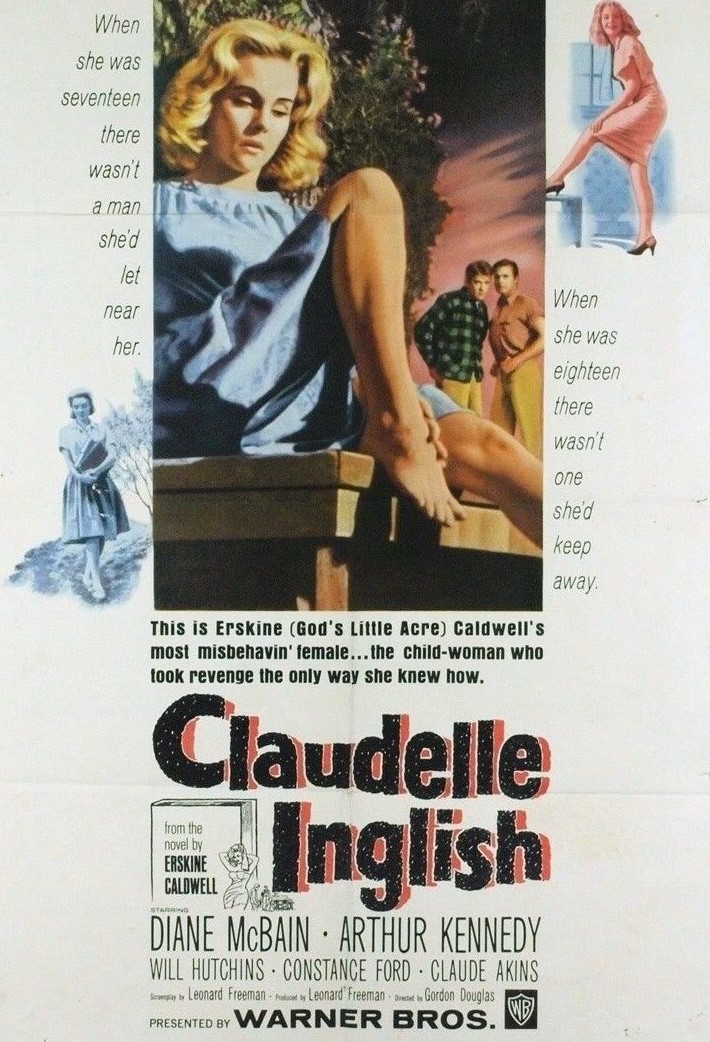
There was clearly still an audience for less controversial films, witness the remake of Smoky (1966) starring Fess Parker, hardly a marquee name, but it came off as a “very good horse story” at the Jackson and A Man Called Flintstone (1966) was a hit at the Star Drive In in St Johnsbury, Vermont. Offbeat Lord Love A Duck (1966) starring Roddy McDowell and Tuesday Weld hit a home run at the Scenic. “My small audience got a big kick out of it and went home happy,” noted Dame. A reissue of TheBrides of Dracula (1960) did well at Rochester which also had audiences clamoring for more gritty historical offerings like The War Lord (1965) featuring Charlton Heston. In light of the success of Cat Ballou (1965) and The Professionals (1966) the Jackson rescheduled Lee Marvin oldie The Killers (1964) as part of a double bill. .
The chances of such houses enjoying anything approaching a day-and-date release were remote. So when the Lans in Lansing, Iowa, had the opportunity to do so you could hardly blame the exhibitor for taking the gamble of putting more advertising bucks behind locally-made The Hostage (1967) but in retrospect the “fine suspense picture…didn’t do business.”
Of the features mentioned, Those Magnificent in their Flying Machines had the longest run, four days, probably dictated by the distributor, and the unheralded Lord Love a Duck the shortest (one day). Arabesque.Torn Curtain, The Hostage and That Man from Istanbul merited three days but for all the rest screenings were limited to two days, and not just at the start of the week, many of those showings taking place over the Saturday-Sunday period.
It’s somewhat surprising to see how towns with tiny populations could support their own cinema. Among the operations featured here, the Capitol in Rochester had the biggest catchment area, a 330,000 population, but it wouldn’t have the market to itself, an area that size would have competitors. Of the other towns mentioned, Pittsfield had a population of 2,300; Malta 1,900; Flomaton 1,480; Lansing 1,328; Allen 1,000; and Lockwood 852. Small wonder they changed programs so often
SOURCE: “The Exhibitor Has His Say,” Box Office, January 9, 1967, pA4.
Unhappily married and childless salesman Steve (Rod Steiger) begins an affair with kooky promiscuous hitchhiker Ella (Judy Geeson). A free spirit in control of her life – no VD and on the Pill – and happy to drift from mundane job to mundane job, Ella ranks her many lovers on their sexual performance. Steve has just moved into a new house on a dreary new estate, perhaps in the hope of revitalizing his staid marriage to Frances (Claire Bloom).
While Steve is away on business, Ella turns up at his home where, revealing, without implicating Steve, that she is pregnant, she convinces Frances to let her stay the night. Naturally, it is Steve’s baby, but Ella plans an abortion. Steve wants the baby and so, too, still unaware of the father, does Frances, seeing adoption as the solution to their marital woes. And so a love triangle, or more correctly a baby triangle, plays out, with a few unexpected twists.
Like most of the marital dramas of the 1960s, especially in the wake of the no-holds-barred Who’s Afraid of Virginia Woolf (1966), this is riddled with outspoken protagonists who have no idea how to find real happiness. Based on the book by Andrea Newman and adapted by Edna O’Brien, who both have previously marked out this kind of territory, the picture shifts sympathy from one character to the next. While no one is entirely culpable, none are blameless either. Yet there is an innocence about Steve and Frances in the way they fling themselves in the direction of unlikely salvation. They are not the first couple to find themselves in a marital cul de sac, nor the first to do nothing about it, hoping that somehow through a new house or job promotion things will right themselves.
Audiences, accustomed to seeing Steiger (In the Heat of the Night, 1967) in morose roles, might have been shocked to see him happy and he manages to present a more rounded character than in some previous screen incarnations. In burying herself in domesticity, Claire Bloom (Charly, 1968) essays a far from fragile character, whose resilience and pragmatic character will always find a way forward. Geeson is the surprise package, at once knowing and in charge, and at other times completely out of her depth, and to some extent enjoying the chaos she sparks. The exuberant screen personality she presents here is almost a grown-up more calculating version of the character she portrays in Hammerhead (1968).
Director Peter Hall (Work is a Four-Letter Word, 1968) generates more universal appeal by ensuring the movie is not so obviously grounded in the 1960s that it would quickly become outdated and the snatching at last-minute fantasy to avert marital disharmony will still strike a note. The performances are all excellent, including a turn by Peggy Ashcroft (Secret Ceremony, 1968) and bit parts from British character actors Paul Rogers (Stolen Hours, 1963) and Elizabeth Spriggs in her second movie.
This affectionate homage to 1920s vaudeville goes awfully astray under the heavy-handed direction of William Friedkin. There’s an epidemic of over-acting apart from a delightful turn from Britt Ekland as the innocent star-struck Amish lass who accidentally invents striptease and former British music hall star Norman Wisdom who knows what he’s doing on the stage. The plot is minimal – burlesque theater manager Billy Minsky (Elliott Gould) needs to save theater from going bust in a few days’ time. That’s it – honest!
The rest of the story looks tacked on – the overbearing leering other half Raymond Paine (Jason Robards) of the Chick Williams (Norman Wisdom) double act tries to bed anything that moves, Amish father Jacob (Harry Andrews) in pursuit of Rachel, vice squad official Vance Fowler (Denholm Elliott) determined to shut the theater down.
The saving grace of this debacle is Ekland’s performance in carrying off a difficult part. Could anyone really be so dumb? She is endearing in a murky world but still capable of interpreting the Bible to her own ends (there is dance in the Good Book, for example) and she has confidence that the Lord will give her the go-ahead to have sex. Her innocence appears to transcend reality and since she doesn’t know a showbiz shark when she sees one she carries on as if life is just wonderful. Somehow this should never work but Ekland is so convincing that it does.
What might have been another saving grace is the documentary feel of much of the background, black-and-white pictures of the epoch transmuting into color, but too often the movie simply cuts to that without any real purpose. Equally, the various song-and-dance acts, chorus lines and comic turns provide an insight into burlesque reality but, again, all too often, that goes nowhere. There are plenty of people trying to be funny without much in the way of decent laughs. There’s altogether too much of everything else and not enough of the ingredients you might have considered essential.
This scarcely sounds like William Friedkin material given that although this preceded The French Connection (1971) and The Exorcist (1973), by this point he had already made his mark with an adaptation of Harold Pinter play The Birthday Party (1968). In fact, his original cut was re-edited once he had departed the picture. Might have worked better with Tony Curtis in the Jason Robards role as originally planned – he certainly had more charm than the jaundiced Robards. Regardless of who was cast what it needed most was a better story and less in the way of stock characters. Written by Arnold Schulman (Goodbye, Columbus, 1969), Sidney Michaels (Key Witness, 1960) and Norman Lear (Come Blow Your Horn, 1963).
Comedy doesn’t stoop much lower.
NOTE: If you’re interested, there’s a behind-the-scenes on the Blog on the whole shebang.