Salt and Pepper (1968) ***

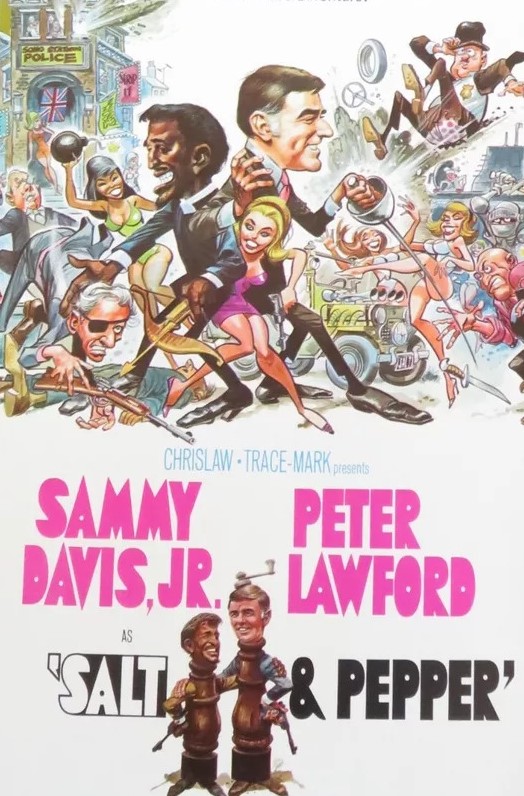
Dry run for the director Richard Donner’s later Lethal Weapon? A cautionary tale about what might have happened to the revered Rat Pack series had it spluttered on into the vestiges of the  “groovy” Sixties? An attempt to emulate the Bob Hope-Bing Crosby joker-crooner concoction? Or Morecambe and Wise, two idiots on the loose? Spy movie spoof? Stuffy Brits in the firing line?

All of the above. If you are comfortable with the sexist agenda that was almost de rigeur for the times, don’t mind the movie’s lurching tone, or the scattergun gag approach, the glib approach to violent death, and don’t cringe at the running racist jokes (making fun of racism, you understand) you might well find enough to like.

Especially as this was something or an audition. A way to check whether, in Hollywood marquee terms, stars Sammy Davis Jr. and Peter Lawford could cut it. For such a renowned celebrity, this was one of only two films where Sammy Davis Jr. was top-billed. And for Peter Lawford, an eternal supporting actor, this was the highest billing he ever achieved outside of the Italian-made The Fourth Wall (1969).

Salt (Sammy Davis Jr.) and Pepper (Peter Lawford) – that’s your first joke, right there, the names, work it out – are under investigation by the London cops for their Soho night club, which doubles as a gambling joint where the croupiers are not only, unusually, female (strike one for feminism) but topless (strike out for feminism). Both consider themselves lotharios and have a running bet on who will be the more successful (so that’s all right then).

But they’re not that bright when it comes to women (so one in the eye for those James Bond types), as neither could spot a femme fatale is she had those words branded on her forehead (the forehead the last female feature they’re interested in), and the prospect of an inert female lying on the office floor is so inviting to them that it doesn’t occur to them they’re trying to chat up a corpse.

Anyways, the dead woman Mai Ling (Jeanne Roland) is a spy and soon our boys are caught up in an espionage tale that dithers between hard-nosed Soho thugs with requisite scars (and a twitch), posh villain with piratical eye-patch, Downing St and duff British officialdom, real and fake Prime Ministers and Home Secretaries, public schools (and a gag about “fags”) and car chases in a Mini-Moke stacked with standard 007 extras like machine guns and oil-spraying devices.  

So it’s one wildly imaginative situation after another, interrupted by stage turns by Sammy Davis Jr. (presumably to remind people this was a Rat Pack rip-off), with the cream of the British character acting fraternity being permitted to go way outside the stiff-upper-lip British box.

Fits neatly into the spy spoof, or the Eurospy spoof (which tended to be overloaded one way or another). Shame about the wayward direction and outlandish script because Sammy Davis Jr. and Peter Lawford do make a fine screen comedy pair, matching each other in ineptitude, and with Davis coming top of the Swinging Sixties Fashion Faux Pas Top Ten, with the kind of outfits that only attention-seeking nutjobs or villains would consider wearing.   

Plenty of fun watching the supporting cast play around with their screen personas. John Le Mesurier (Midas Run, 1969), Michael Bates (Hammerhead, 1968), Robertson Hare (All Gas and Gaiters series, 1966-1971), Graham Stark (The Plank, 1967) and Ernest Clark (Arabesque, 1966) are getting paid to have fun. Ilona Rodgers (Snow Treasure, 1968) makes her movie debut.

You kind of get the idea that Michael Pertwee’s screenplay fell into the wrong hands. That it was intended as a vehicle for Morecambe and Wise (Pertwee wrote The Magnificent Two, 1967) and somehow ended up with American stars.

If your familiarity with the 1960s espionage genre runs only to James Bond, Matt Helm, Harry Palmer and that big-budget ilk and your idea of a spy spoof is limited to Casino Royale (1967), this will fill you in on the breadth of inanity tolerated.

Successful enough to generate a sequel, One More Time (1970).

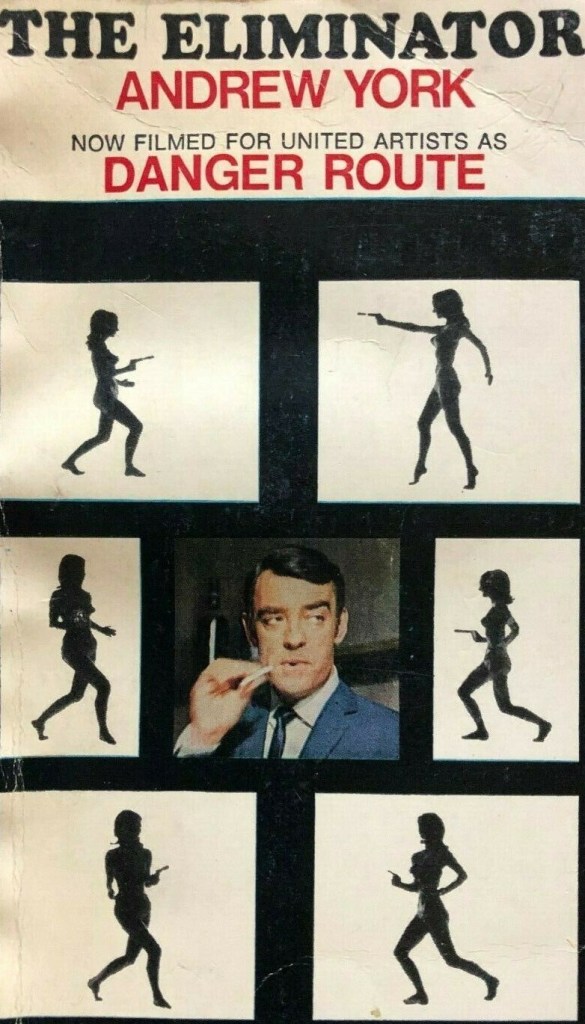
Danger Route (1967) ***

If the producers had not signalled Bond-style ambitions with a big credit sequence theme song by Anita Harris, moviegoers might have come at this with more fitting expectations in the Harry Palmer and John Le Carre vein. So although slipping into the late decade spy boom flourish don’t expect villains planning world domination, gadgets or a flotilla of bikinis.

Seth Holt’s bread-and-butter espionage thriller sets government agent Jonas Wild (Richard Johnson) – on his “last assignment” no less after eight licensed murders in five years – to kill off a defector in the far from exotic location of a Dorset country house not realizing that he is also being set up. That his liquidator will be a woman puts the mysterious Mari (Barbara Bouchet) in pole position.  

Wild gains access to the heavily-guarded mansion by seducing housekeeper Rhoda (Diana Dors) but after completing his mission is captured and tortured by Luciana – pronounced with a “k” – (Sam Wanamaker) who explains he is a patsy and that there is a mole in M.I.5. When his boss Tony Canning (Harry Andrews) disappears and another friend is murdered, Wild goes on the run with Mrs Canning (Sylvia Syms) and eventually makes his way back to his bolt-hole in Jersey to solve the mystery.

There is a decent amount of action, including a fight with a guard dog and a battle on a fog-bound yacht. Clever maneuvers abound – a bug is planted in a bandage. Treachery is always just round the corner and there is no shortage of suspects.

The film’s down-to-earth approach is somewhat refreshing after half a decade of spy thrillers and spoofs. Wild doesn’t employ anything more hi-tech than masquerading as a brush salesman to win over Rhoda. And although that relationship ends up in bed, there is no sex, Wild having drugged her to avoid that complication. Tony Canning is nagged by his wife. Wild’s girlfriend (Carol Lynley) is a sweet girl, sexy in a languid rather than overt fashion.  And Luciana takes enormous pride in telling Wild just how stupid he has been.

But that comes with a caveat. The plot doesn’t quite hang together and the movie sometimes fails to connect.

That said, Johnson (Deadlier than the Male, 1967) is excellent, quite an accomplished actor rather than a brand name. Both Barbara Bouchet (Casino Royale) and Carole Lynley (Harlow, 1965) play against type while Sylvia Sims (East of Sudan, 1964) and Harry Andrews (The Hill, 1965) present variations to their normal screen personas. Sam Wanamaker (The Warning Shot, 1967) has a peach of a role and Gordon Jackson (The Long Ships, 1964) and Maurice Denham (The Long Duel, 1967) are afforded small but critical parts. 

Seth Holt (Station Six Sahara, 1963) directs from a script by Meade Roberts (In the Cool of the Day, 1963) and Robert Banks Stewart (Never Mention Murder, 1965) based on the bestseller by Andrew York.

Competent with interesting touches.

Istanbul Express (1968) ***

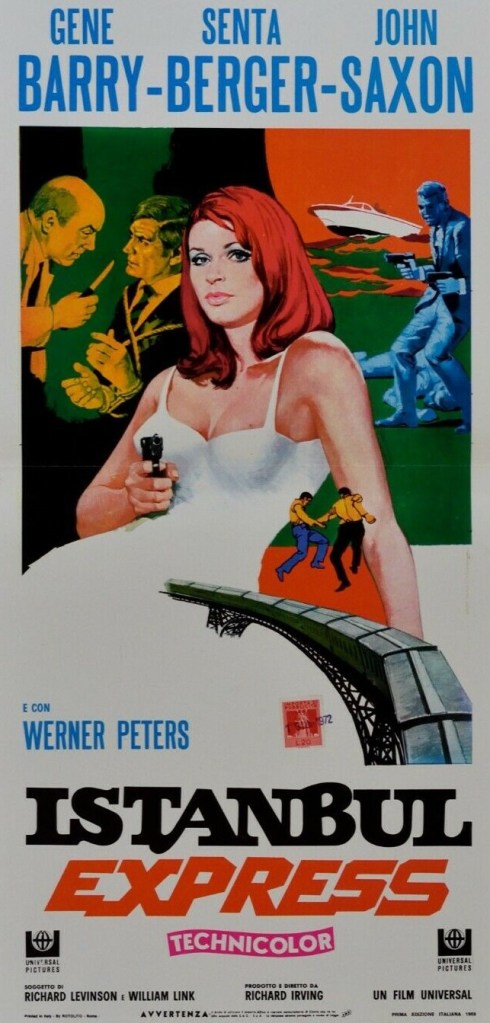
Calling this a by-the-numbers spy thriller does this movie no disservice since numbers are crucial to the complicated plot. On the one hand it’s quite a simple set up. Suave high-living art dealer-cum-spy Michael London (Gene Barry) travels from Paris to Istanbul on the Orient Express to bid for secret papers in a secret auction. The complication: he must pick up the auction money from a bank in Istanbul using a code given to him along the way, each number by a different unknown person. On his side are train security chief Cheval (John Saxon), investigative journalist Leland McCord (Tom Simcox) and colleague Peggy (Mary Ann Mobley). Out to get him are Mila Darvos (Senta Berger) and Dr Lenz (Werner Peters).

The numbers business is an interesting addition to the usual spy picture formula of scenic location – Venice and the Eastern bloc as well as the other famous cities – violence and beautiful, sometimes deadly, women. You spend a good time guessing just how the numbers will be passed on and let me warn you it is sometime by inanimate means while the numbers themselves come with a twist.

There’s also a truth serum, bomb threat, a traitor and every obstacle possible put in London’s way to prevent him completing his mission. London is about the world’s worst passenger, always missing the train as it sets off on the next leg of its journey, and requiring alternative modes of transport to catch up. But it’s as much about quick thinking as action and ends with a couple of unexpected twists. And it’s darned clever at times where the numbers are concerned.

Admittedly, the plot is a tad over-complicated but it’s fun to see London wriggle his way out of situations and for Cheval and McCord to turn up unexpectedly to provide assistance.

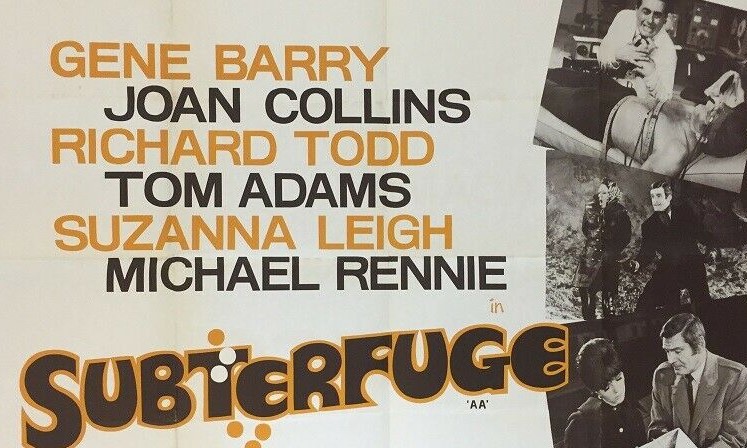
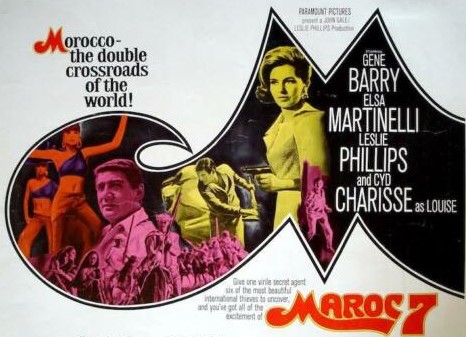
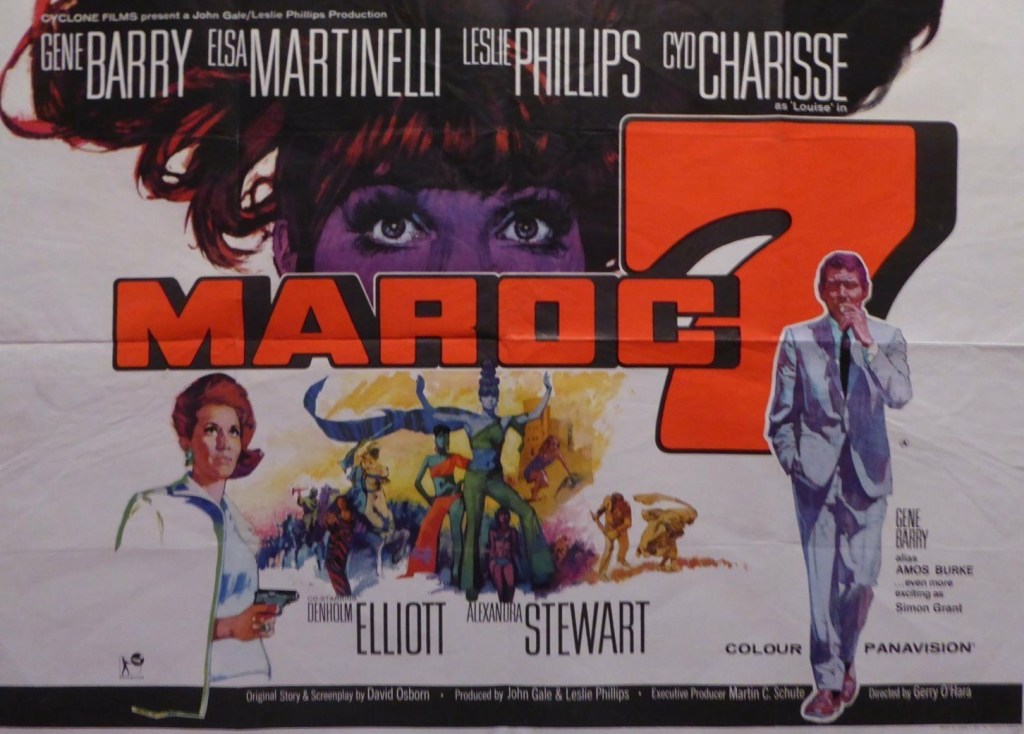
Gene Barry (Maroc 7, 1967) is little more than his television alter ego from Burke’s Law but he has an easy screen presence, never flustered, tough but charming and a winning way with the ladies. John Saxon (The Appaloosa, 1966) is the surprise turn, on the side of the angels rather than a villain, and equally commanding on screen, and certainly given one of his better roles. Senta Berger (Major Dundee, 1965) is not given as much screen time as you would like – a long way from being set up as the normal espionage femme fatale – but is certainly a convincing adversary.

This was only a movie if you saw it outside of the United States. There it was shown on television. But it had high production values for a television movie and director Richard Irving, who directed the television feature that introduced Columbo (Prescription Murder, 1968), keeps it moving at a healthy clip.  The numbers idea was probably a television device, allowing the opportunity for timed breaks in the action, Writers Richard Levinson and William Link were a class television act, creating Columbo, and prior to that the Jericho (1966-1967) and Mannix (1967-1975) television series. 

Interestingly, Senta Berger, John Saxon, Gene Barry, Levinson/Link and Richard Irving were all at various points involved in the groundbreaking U.S. television series The Name of the Game (1968-1971).

I had not realized Istanbul Express was a made-for-TV picture until I had finished watching it and in that case found it a superior piece of television and a decent-enough rift on the spy movie.

The Beckett Affair / L’Affare Beckett (1966) ***

More down’n’dirty Eurospy than the more pervasive high-gloss alternative and with some interesting directorial touches, especially in relation to POV, a narrative that leads you a merry dance but mostly down the road of grubby international politics, plus an eclectic score from Nora Orlandi. Even with actors I’d never heard of, and no idea how the DVD even ended up in my collection, it works well.

Opening Parisian sequence a standout. Gunman bursts through an office door, marches older occupant towards the exit. Outside, however, it’s the older man who emerges, climbs into a waiting car and again it’s he who comes out of that, leaving slit throats in his wake. The survivor, with a ramrod-stiff demeanor, turns out to be Col Segura (Gianni Solaro), wanted by the authorites for clandestine activites in Cuba in 1961 and for instigating too many apparent suicides.

Agent OS47 Cooper (Lang Jeffries), drafted in to track him down, does so by means of a letter supposedly written to his mistress Claire Beckett (hence the title) who is nowhere to be found. Next best thing is her secretary, blonde bombshell Helen (Nathalie Nort), who is already on Segura’s radar and is promptly kidnapped and then used to lure Cooper to a breaker’s yard where various tough guys want to beat him to death. Beckett, it transpires, ain’t going to be found unless you fancy digging graves.

The good guys are as villainous as the villains, torturing a suspect. As you might expect, there’s a heap of double-crossing, another agent as well as a cop in the pay of the opposition. Cooper’s sidekick Paulette (Krista Nell) is as tough as anyone, her beauty belying her fighting skills. The plot’s somewhat complicated and leads Cooper to being hired by Segura to assassinate a Nicaraguan leader, the notion of liberating Cuba just a front to mislead Segura’s pursuers.

Action sequences are more limited than the normal run of spy pictures, but when they come they pack a punch. The tussle in the breaker’s yard might appeal more than that in Mickey One (1965) for resisting the temptation to go down the existential or metaphorical route. Like the rest of the film it’s a down’n’dirty scrapyard. In the best action sequence, with an idea I’ve seen later stolen, the music playing that you assume to be the film’s score abruptly ends halfway through the fighters destroying an apartment, because they’ve trashed the object emitting the music. That takes a moment to digest so the sudden silence after the loud music strikes a stylistic note.

While Cooper isn’t as active sexually as James Bond, he does, like 007, get intimate with woman who might prove useful. Segura is good bit more normal than your usual espionage supervillain, with more flaws than you’d expect, especially after our introduction to him. There’s also unusual depth in subsidiary characters, Helen jealous of her boyfriend, secondary villains seeking social advancement and not always following orders, Paulette proving more than a second-potato character.

Theoretically set in France, Switzerland and South America, only the first locale appears authentic, with many outdoor shots, but not reliant on steeotypical tourist tapestry.

One of the alternative titles, The Spy Pit, better catches the tone of the picture, everyone caught in an espionage trap, and, ironically, given the constantly changing world of international politics, much of the background here has been superseded by real events. I’m putting the moodiness down as deliberate not just the state of the DVD.

Canadian Lang Jeffries (The Revolt of the Slaves, 1960) is a decent ersatz Sean Connery, Austrian Krista Nell (The Million Eyes of Sumuru, 1967) a capable sidekick, Gianni Solari (Seven Seas to Calais, 1962) comes across as efficient businessman rather than demented villain, Mali-born Nathalie Nort (Succubus, 1968) proves equal to an enlarged supporting role.

While you wouldn’t call it a directorial triumph, and it could do with some narrative clarification, Osvaldo Civirani (Return of Django) has more stylistic flourishes in his armory than you’d expect. Written by veteran Roberto Gianviti (Zorro and The Three Musketeers, 1963) who had over 100 movie credits.

Interesting take on the Eurospy subgenre.

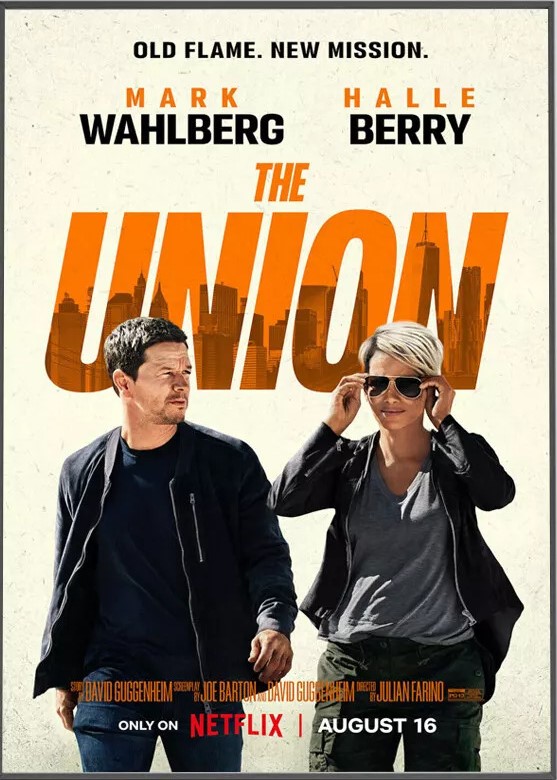
The Union (2024) ****

Wahey! At long last Netflix gets it right (almost). Admittedly, the narrative depends on a very slippery MacGuffin, the kind that would take gold at the MacGuffin Olympics and still come back for more. That aside, it’s got pretty much what audiences are looking for in a fresh take on the hoary old espionage combo. Mark Wahlberg has been long under-rated, can do action (Planet of the Apes, 2001, Uncharted, 2022), caper (The Italian Job, 2003), comedy (Ted, 2012) and drama (Father Stu, 2022). Half the time he’s the driving force behind his projects, 44 credits as producer, which means he’s pretty independent and often turns in the type of picture you think he shouldn’t do or won’t work and sometimes it does and sometimes it doesn’t.

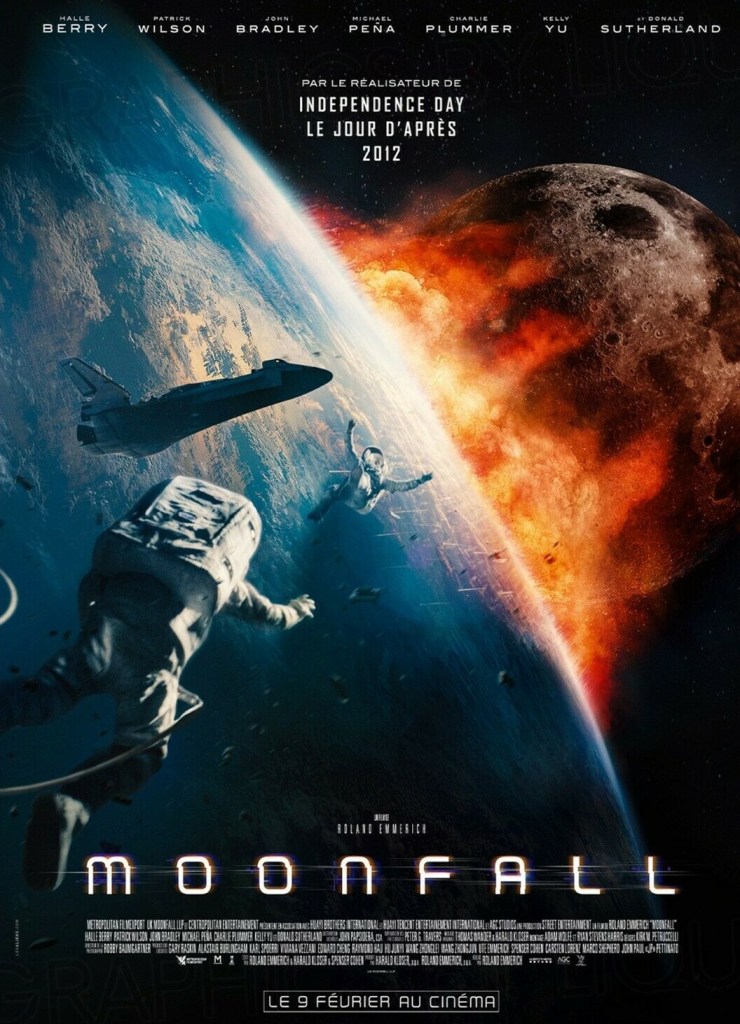
He’s wearing the producer’s jacket for this one and you’d be surprised how well it spins because this is a team effort, very much dependent on the chemistry created with Halle Berry, who you have to agree you wondered where the hell she had gone beyond the lead in the financially disastrous Moonfall (2022), supporting parts in the likes of John Wick 3: Parabellum (2019) and Kingsman: The Golden Circle (2017) and some worthy but ignored pictures.

Netflix is pretty mean when it comes to posters so here’s another with Mark Wahlberg
that I reviewed before.

Well, she’s back and yes she’s kicking ass, but that’s not what makes this movie tick any more than Mark Wahlberg punching and shooting. What makes it sizzle is their chemistry, every bit as solid as Glen Powell and Sydney Sweeney in Anyone But You (2023). And if you recall, that worked because Powell and Sweeney bickered all the way through it. Maybe this is what contemporary romance has come to: a quarrelsome couple.

It certainly keeps this pair on their toes. There’s been any number of fish-out-of-water action scenarios that have sunk like a stone (Argylle, anyone?) because the director didn’t hit the correct tone. Here, English director Julian Farino, best known for television, strikes exactly the right tone between incipient romance, action and comedy.

Middle-aged Mike (Mark Wahlberg) isn’t exactly hero material or Brad Pitt. He goes for the cougars, and we first come upon him in the bed of his Seventh Grade school teacher while his mother (Lorraine Bracco) is always one step ahead of her cocky son. We meet secret agent Roxanne (Halle Berry) in the middle of a disastrous operation of which she’s the only survivor.

You have to pass over the logic of how ultra-secret Government agency The Union comes to recruit construction worker Mike, setting aside that Roxanne once had the hots for him. Anyway – MacGuffin alert – the Government has lost the biggest MacGuffin of All Time and have to get it back by way of lots of things that don’t make much sense, but we’ll let that go as well. Anyways, Mark gets trained up in a mighty peculiar and highly entertaining fashion and becomes her sidekick as they hit the MacGuffin trail which takes them to foreign spots.  

I was one of the few people who liked “Moonfall” with Hally Berry so I don’t mind giving it another plug.

There’s supposedly a mole in the Union and the finger points at their boss Tom Brennan (J.K. Simmons) but there’s a whole bunch of other secrets and twists in the mix and not much time what with the frenetic action to work out what exactly is going on beyond said MacGuffin running riot.

But there are some terrific set pieces and Mike’s girder-balancing skills come in handy when there’s even a moment when the action stays relatively still because most of the time it’s hurtling all over the place, chase upon chase, and normally that would spell the kiss of death, as we discovered with Argylle et al, except somehow here, with the chemical interplay between the two leads and supporting characters more interesting than most – look out for Jackie Earle Haley and Jessica De Gouw – and some zingy lines, it’s just dandy.

The ending sets up a sequel so bring it on. Top marks to Mark Wahlberg in his producer’s capacity for seeing this over the line and also, as with Uncharted, not trying to hog the picture and happy to accept that even as the denoted hero he’s going to be outfought and outsmarted a good chunk of the time and better not think he’s ever going to get the better of the Halle Berry character.

Wahlberg is as good as I’ve seen him and this is Halle Berry back on top form, with a lot more to do than in previous action outings where her character got stuck in first gear. As I said, super chemistry between the pair. J.K. Simmons (Spider-Man: No Way Home, 2022) tones it down from his normal over-acting to splendid effect. Jessica De Gouw is one to watch. Joe Barton (Girl/Haji TV series, 2019) and David Guggenheim (Safe House, 2012), in places with their tongues firmly in their cheeks, knocked out the screenplay.

Highly entertaining, even if the MacGuffins are a bit rampant.

The Chairman / The Most Dangerous Man in the World (1969) ****

The sci-fi elements in this tidy paranoia thriller set in Communist China are not the only issues overlooked at the time and worthy of reconsideration now. Anyone who blasted it for supposedly political jingoism conspicuously failed to read a subtext that chimed with young left-wingers for whom Chairman Mao was not, as now, perceived as a tyrant du jour but as a political god. There’s a distinct whiff of Philip K. Dick in the implanting in a spy’s head of not just a tracking/listening device but one laced with explosive that can be remotely triggered for suicidal or murderous gain. Needless to say, the spy, ignorant of this fact, was a de facto sacrificial lamb. And a key plot thread about genetically modified crops as a means of solving world hunger came about four decades too early.  

Widowed Nobel prize winning scientist Dr Hathaway (Gregory Peck) is despatched into China via Hong Kong to contact a missing scientist with a revolutionary formula for an enzyme. A series of crisp flashbacks set up the scenario of the tracking device and a reverse echo of Marooned (1969) where Army chiefs back at base, led by one-eyed Shelby (Arthur Hill,) can listen in but are helpless to intervene – except in sinister manner. Shelby considers Hathaway “the wrong brilliant man” for the task and that they have sent in “a civilian to do a soldier’s job.”

Not able to trust the Brits to know who the title referred to, they came up with a lame alternative. The taglines reveal way too much of the plot.

The hidden transmitter allows Hathaway to keep his superiors posted but the listening device also picks up a creaking bed as Hathaway almost falls into a honey trap in Hong Kong. Amazingly, he doesn’t have to sneak into China but is welcomed with open arms and hustled along to a meeting, and a game of ping-pong (the real thing and the verbal equivalent) with Chairman Mao (Conrad Yama). While spouting some propaganda, Mao is surprisingly open about sharing the secret of the enzyme rather than blackmailing a starving world. Meanwhile, it’s the Americans who are more interested in the double cross, Shelby itching to blow up Hathaway’s head in the assumption the explosion would dispose of the Chinese leader.

Emissions from the transmitter are tangling up the airwaves, making the Chinese secret police highly suspicious of Hathaway as he heads for the secret scientific compound housing Professor Soong Li (Keye Luke), creator of the enzyme, and his daughter Chu (Francesca Tu).

Turns out Hathaway has been summoned by the professor to help find a missing link in molecular chains. Hathaway has to burgle his way to steal the formula, but fails to find it, but when the professor commits suicide and is denounced by his daughter and the Chinese secret police close in, Hathaway has to scarper and head for the Russian border, that country, oddly enough for a spy movie, being on the same side as the Yanks. Meanwhile, Shelby’s trigger finger it itching to blow his man sky high for fear he might give away details of his mission.  

The French, too, had trouble with the original title.

Turns on its head many of the spy film’s truisms: firstly that Hathaway effectively fails in his mission; secondly that patriotism doesn’t blind him to his country’s greed or folly; thirdly that’s he not in constant seduction mode.

Political argument that one point seemed to excessively delay the narrative thrust, now, at half a century’s move, seems more considered and providing an interesting balance between opposing views.

Gregory Peck (Marooned, 1969) is at his quizzical best, deeply-rooted scepticism helping to anchor his character. But if you were attracted by seeing Anne Heywood (The Fox, 1967) second-billed you’re in for a disappointment as she just tops and tails the picture. Arthur Hill (Moment to Moment, 1966) is good value as always.

But it’s testament to J. Lee Thompson (Mackenna’s Gold, 1969, also starring Peck) that his direction brings together diverse political/sci fi/spy/thriller elements in a winning formula, ignoring the obvious. Some interesting detail: someone handing out coffee on a tray to the inmates of the command station; Hathaway’s guilt at his role in the death of his wife barely touched upon, but it explains a lot; Mao’s famous Little Red Book provides a twist.

Occasional flaw: surely the Chinese would have bugged Hathaway’s room and catching him, however soft voiced, filling in his superiors. The idea that the Chinese could be technologically more advanced than the U.S. would have had John Sturges in a fit of fury, but Thompson takes it in his stride. Screenplay by Ben Maddow (The Way West, 1967) and Jay Richard Kennedy (I’ll Cry Tomorrow, 1955).

Reassessment overdue.

The Liquidator (1965) ****

Brilliant premise, brilliant execution, brilliant acting. The best send-ups are driven by their own internal logic and this is no exception: spy boss, known simply as The Chief (Wilfred Hyde White), determines in most un-British fashion to get rid of a mole in the operation by eliminating all potential suspects. Bristling Colonel Mostyn (Trevor Howard) recruits Boysie Oakes (Rod Taylor) for the job, believing Oakes showed particular gallantry during World War Two, unaware this was pure accident. Oakes is given all the perks of a super spy – fast cars, fashionable apartment – and once realizing that being a killer is outside his comfort zone delegates the dirty work to another hit man Griffen (Eric Sykes).

The sweet life begins to unravel when Oakes takes a weekend abroad with Mostyn’s secretary Iris MacIntosh (Jill St John) and is kidnapped. Forced to battle for survival, another Oakes emerges, a proper killer.  Cue the final section which involves trapping the mole.

Where films featuring Matt Helm and Derek Flint imitated the grand-scale espionage they aimed to spoof, the laughs here come from small-scale observation and attacks on bureaucracy. According to regulations, Oakes’ liaison with MacIntosh is illicit. There is endless paperwork. His kidnappers are over-enthusiastic bumbling fools. Apart from an aversion to needless killing, Oakes has terrible fear of flying. Nobody can remember code names or passwords. Oakes’ automobile numberplate is BO 1 (the letters in those days being a standard acronym for “body odor”). It is all logical lunacy. And even when the story gets serious, it follows logic, a ruse, a dupe, a climax pitting resolve against human weakness.

Best of all, the parts appear custom-made for the players. Rod Taylor (The Birds, 1963), in his first venture into comedy, displays a knack for the genre without resorting to the slapstick and double takes requisite in the Doris Day pictures to follow. And he is a definite screen charmer.

By this point in his career the screen persona of Trevor Howard (Von Ryan’s Express, 1965) had been shorn of subtlety. He was generally one choleric snort away from a heart attack. Here, while the narrative pricks his pomposity, he remains otherwise ramrod certain. The audience is in on the joke, but nonetheless his genuine ability as a spy master is not questionable.

On the other hand Jill St John (Who’s Minding the Store, 1963) is allowed considerable leeway in the subtlety department, as a demure English rose rather than the sexier roles into which she was later typecast.  In some respects British television comedian Eric Sykes is miscast. It is a particular English joke to present him as a killer since on television (in shows unlikely to be shown in America) he was hapless. And it is worth mentioning Akim Tamiroff whose villainous stock-in-trade is allowed greater depth.

Director Jack Cardiff had tried his hand at comedy before with My Geisha (1962) starring Shirley Maclaine but was better known for Oscar-nominated drama Sons and Lovers (1960) and action picture The Long Ships (1964).  John Gardner, who wrote seven books in the Boysie Oakes series, later penned James Bond novels.

It is well worth considering whether The Liquidator would have punctured the success of both Our Man Flint (1966) and The Silencers (1966) and sent spy spoofery in a different direction. It had premiered in the U.K. prior to both but litigation held up its American launch  until long after this pair had gone on to hit box office heights.

Topaz (1969) ****

Authentic, atypical, engrossing, this grittier Hitchcock mixes the realism of Psycho (1960) and Marnie (1964) with the nihilism of The Birds (1963), a major departure for a canon that previously mostly spun on innocents or the falsely accused encountering peril. The hunt for a Russian spy ring by way of the Cuban Missile Crisis of 1962 forms the story core but the director is more interested in personal consequence, so much so that even the villain suffers heart-rending loss. Betrayal is the other key theme – defection and infidelity go hand in hand.

The tradecraft of espionage is detailed – dead letter drops, film hidden in typewriting spools, an accidental collision that is actually a sweet handover. In a transcontinental tale that shifts from Copenhagen to New York to Cuba to Paris, there is still room for classic sequences of suspense – the theft of secret documents in a hotel the pick – and Hitchcock at times simply keeps the audience at bay by employing dumbshow at key moments.     

In some respects the director was at the mercy of his material. In the documentary-style Leon Uris bestseller (almost a procedural spy novel), the main character is neither the trigger for the plot nor often its chief participant and is foreign to boot. So you could see the sense of employing using a cast of unknowns, otherwise an audience would soon grow restless at long absences from the screen of a Hollywood star of the caliber of Cary Grant or Paul Newman, for example.

It is a florist (Roscoe Lee Browne) who carries out the hotel theft, a small resistance cell the spying on Russian missiles in Cuba and a French journalist who beards one of the main suspects, not the ostensible main character, French agent Andre Devereux (Frederick Stafford), not his U.S. counterpart C.I.A. operative Michael Nordstrum (John Forsythe) nor Cuban villain Rico Parra (John Vernon).

Unusual, too, is the uber-realism. The main characters are fully aware of the dangers they face and of its impact on domestic life and accept such consequence as collateral damage. It is ironic that the Russian defector is far more interested in safeguarding his family than Devereux. Devereux’s wife (Dany Robin), Cuban lover Juanita (Karin Dor) and son-in-law (Michel Subor) all suffer as a result of his commitment to his country.

And that Juanita, leader of the Cuban resistance cell, is more of a patriot than the Russian, refusing to defect when offered the opportunity. Hitchcock even acknowledges genuine politics: the reason a Frenchman is involved is because following the Bay of Pigs debacle in 1961 American diplomats were not welcome in Cuba.

I have steered clear of this film for over half a century. I saw it on initial release long before the name Hitchcock meant anything to me. But once it did I soon realized this film did not easily fit into the classic Hitchcock and had always been represented as shoddy goods. So I came to it with some trepidation and was surprised to find it so engrossing.  

Frederick Stafford (O.S.S. 117: Mission for a Killer, 1965) was excellent with an insouciance reminiscent of Cary Grant and a raised eyebrow to match that star’s wryness. John Vernon, who I mostly knew as an over-the-top villain in pictures such as Fear Is the Key (1972), was surprisingly touching as the Cuban bad-guy who realizes his lover is a traitor. And there is a host of top French talent in Michel Piccoli (La Belle Noiseuse, 1991), Philippe Noiret (Justine, 1969), Dany Robin (The Best House in London, 1969) and Karin Dor (You Only Live Twice, 1967).

As you are possibly aware, three endings were shot for this picture and I can’t tell you which without spoiling the plot. In any case, this is worth seeing more than just to complete trawl through the entire Hitchcock oeuvre, a very mature and interesting work. Based on the Leon Uris bestseller, screenplay by Samuel A. Taylor (Vertigo, 1958).

Underrated.

That Man in Istanbul / Istanbul 65 (1965) ****

Action-packed superior James Bond rip-off belonging to the Eurospy subgenre and elevated by memorable lines, wit and visual imagination. So if you recall any movie where ricochets play havoc in a room, this is where it originated. Flying through a window on a rope and then crashing through a series of rooms and not stopping, ditto. That famous line uttered by Johnny Depp in Pirates of the Carribean (2003) about “the marchandise,” yep, you’ve guessed it. Although it did steal a nice touch from Robin and the 7 Hoods (1964), the one where an illegal drinking den (illegal casino here) is remarkably transformed.

And all the promise star Horst Buchholz showed in The Magnificent Seven (1960) and kept stowed away all these years, that’s back in spades. Chases, fistfights, shootouts, saloon (well, casino, actually) brawl, competing ruffians, safe-cracking, hitmen, infiltration of secret hideout, a pair of femme fatales and the inevitable atomic scientist.

Some clever thugs including Schenk (Klaus Kinski) dupe the U.S. government out of a million bucks by only pretending to hand over a missing scientist, instead pocketing the cash and blowing up a plane with him on board. With for the time suprising use of forensics, the CIA determines the man killed in the plane wasn’t the missing scientist and work out that he might well be getting sold on to China.

Camera footage taken of the plane crash scene points to mysterious underworld figure Tony (Horst Buccholz). Against her superior’s wishes, agent Kelly (Sylva Koscina) heads off to the titular city in pursuit, tracks down Tony with no great difficulty to his illegal gambling den just in time to witness the electronic miracle of the roulette wheels disappearing into the floor when the cops turn up. The electronic scam would have worked except for a drunken customer who demands his chips be cashed and the only way to silence him being for Tony to slug him and trigger a brawl.

Under the cover of which, Kelly sneaks into Tony’s office whereupon finding no evidence of either a million bucks or a missing scientist, she asks for a job. “Strip!” he demands. But that’s not for licentious reasons it transpires, but to examine the labels on her clothing, from which he and his henchmen deduce (I won’t bore you with the details but they do match up) she’s a plant.

However, she is the one, accidentally, to trip over the Chinese conspiracy, in, of all places, a cemetery. Eventually, she persuades Tony to help her out, although that’s for financial rather than patriotic reasons. She’s got a few tricks of her own up her sleeve, and under the guise of kissing him, steals his keys.

Kelly kind of fades in and out of the picture – which is a shame because she’s good value in a feisty seductive clever way – while all the chasing of opposing sets of criminals is down to Tony. First target being the man with the steel hand (though not the steel claw that in the old British comic The Valiant allowed him to become invisible).

The non-Chinese criminals are as likely to kill their own men to stop them coughing up. But mostly, Tony and his gang are stalking the two sets of criminals, Kelly mostly waiting in a car or popping up to ask questions, with Tony being driven off a mountainside, thrown off a tower, duelling underwater and avoiding a scalding in a sauna. But we’re talking the Houdini of spies and none better than when escape involves commandeering a bulldozer and ramping up over a bunch of vehicles (that idea’s got to have appeared in a later film, too).

Kelly’s the good kind of femme fatale, the spy who has to use her wiles to snare the bad (or badd-ish) guy. But she’s a rookie compared to Elizabeth  (Perette Pradier) who leads Tony a merry dance by first of all pretending to be a victim.

But there’s style by the bucket load, clever reversals by the ton. There’s a marvellous scene where Tony knocks out a guy and then with nowhere to hide him props him up at a piano only to be undone when the fella slides over and hits the piano keys. Ever seen someone use the rolling coin distracting device. Or when the rope between two stanchions snaps mid-air casually sliding down the broken end. Or sex indicated by one person hanging their bathrobe over a door after the other person has done the same. Or the hero doing up a bikini top instead of undoing it. And a leading man who spends more time in a state of undress than any of the females. And, for good measure, a couple of times, and this very much  in the contemproary idiom, breaking the fourth wall.

Once we get going it’s the kind of non-stop action we later equated with Taken (2008) or John Wick (2014). Horst Buchholz was never better, a brilliant light touch with the lines and good deal tougher with the fists. Sylva Koscina (A Lovely Way To Die, 1968) has less to do than you’d like once the rival femme fatale appears but she shows just how capable an actress she is in displaying in non-verbal fashion and in a three-shot of all things her jealousy.

If you’re familiar with Spanish director Antonio  Isasi-Isasmendi from They Came to Rob Las Vegas (1968) stick that to one side because this is way better. Screenplay by Giovanni Simonelli (Django Shoots First, 1966), Nat Wachsberger (Starcrash, 1978) and Luis Josep Comeron (They Came to Rob Las Vegas).

Great treat.

The Venetian Affair (1966) ****

Robert Vaughn gives a terrific performance as a numbed alcoholic ex-C.I.A. journalist Bill Fenner drafted into Venice to investigate a plot involving ex-wife and Communist defector Sandra Fane (Elke Sommer). He’s the spy who lost it rather than a flashy contemporary of James Bond. This occasionally very stylish number kicks off with a terrific credit sequence that concludes with a suicide bomber blowing up a nuclear disarmament conference. Unshaven and with a Columbo cast-off overcoat, Fenner discovers Fane was key to the bombing, the bomber an otherwise distinguished diplomat with no known proclivities in the area of mass murder.

Although sold as an action picture, nobody is ripping through the canals as in a Bond film, and it is altogether a more somber, reflective, intelligent movie. Fenner’s feelings for his ex-wife are palpable when, in her apartment, he tenderly touches her clothes and smells her perfume. Far from being party to the plot, it appears Sandra has had a change of heart and wants to defect back, leaving Fenner in a perilous dilemma. Does he believe her or is she just using him? It is beginning to sound like a modern-day film noir, except he is already being used by the C.I.A., his presence in Venice a device to draw Sandra out, C.I.A chief Rosenfeld (Edward Asner) every bit as ruthless as the villains.

His investigations lead him to Dr Pierre Vaugiraud (Boris Karloff) and power broker Robert Wahl (Karl Boehm) who has a mind-altering drug that can make a man terrified of a mouse, send him into a trance and on his way to deliver savage retribution. There is death aplenty, fisticuffs and chases and Sandra, in hiding disguised as a nun, is worth waiting for.

Based on the bestseller by Scottish novelist Helen MacInnes, who challenged Alistair MacLean in her day, the project was at one point to be directed by Guy Hamilton. Coincidentally, David McCallum, Vaughn’s co-star in The Man from U.N.C.L.E. television series, was in Venice at the same time shooting Three Bites of the Apple.

Television stalwart Jerry Thorpe making his debut contributes some interesting moments. Interpreters listening in to the conference hear the magnified ticking of the bomb moments before explosion. The sequence on a train is well done and the activity surrounding the mouse is first class. Vaughn is superb in a downbeat role – shaking off his Napoleon Solo television persona- never sure if he is being duped, on the rack from falling back in love, and emerging from an alcoholic haze with a few decent ruses up his sleeve.

There’s a solid cast, Asner menacing even as a good guy, Karl Boehm a charismatic villain, Karloff memorable in his last performance in a non-horror picture, and interesting appearances by Felicia Farr as a C.I.A agent masquerading as the murderous diplomat’s unsuspecting mistress and Luciana Paluzzi as the girlfriend of an agent. Lalo Schifrin produces an outstanding score.

It was a flop first time round because audiences, partly duped by the title (all Uncle episodes incorporated the word “Affair” although the book, in fairness, was written long before the television series was envisioned) expected to pay to see Napoleon Solo, or something quite like him, on the big screen, with all the pizzazz and gimmickry of the small-screen show. Unfairly under-rated, this is a really satisfying thriller set against a murky Cold War background with Vaughn, trapped between love and redemption, the only character with a streak of morality.

Time to revive this.

Discover WordPress

A daily selection of the best content published on WordPress, collected for you by humans who love to read.

The Atavist Magazine

by Brian Hannan

WordPress.com News

The latest news on WordPress.com and the WordPress community.