The Power (1968) ***

Low budget sci-fi effort that had little chance in the box office stakes that year up against the big budget psychedelic 2001: A Space Odyssey and the visceral Planet of the Apes. Producer George Pal and director Byron Haskin, the key figures behind War of the Worlds (1953), would later become among the most exalted in the sci-fi genre, but the cult of the 1950s sci-fi movies did not exist yet. Yet if made today, we would be treating this as an origin story with a sequel already in the works and creation of its own universe on the cards.

As the budget can only accommodate a few explosions and a derisory number of tiny special effects, emphasis is placed on imagination as the source of tension. The uncanny remaining unexplained helps ensure mystery remains character-driven. Wisely, the film makers steer clear of providing any detail on the strange force.

It begins with the neat title “Tomorrow.” As part of a planned space program, a team of scientists  experimenting on the limits of human endurance discover that one of them has unusual powers. As a group they are able to make revolve a piece of paper attached to a vertical pencil without establishing who is the driving force. When Professor Hallson (Arthur O’Connell) is found dead in a centrifuge, the only clue being a scrap of paper bearing the name Adam Hart, suspicion falls on the other members. Professor Tanner (George Hamilton) is dismissed when the investigation discovers his credentials are fraudulent.   

Seeking to prove his innocence, Tanner goes on the run before establishing that the main suspects are the mysterious Adam Hart and three of the original team – military chief Nordlund (Michael Rennie), Professor Scott (Earl Holliman) and Tanner’s girlfriend Professor Lansing (Suzanne Pleshette). But he is mostly baffled by the goings-on which include being dumped in an air force target range. He could be the culprit but again so many odd occurrences take place when others are present that it would be hard to pin the blame on Tanner. As the corpses begin to pile up, the list of potential suspects naturally decreases.

A toy winks at Tanner, walls appear were there were none before, a man is convinced Tanner is someone else (not Hart), a high-flying professor’s wife lives in a trailer, characters collapse under psychic assault, a young woman trying to seduce an old man discovers she is kissing a corpse, the imagery appears inspired by Salvador Dali and Hieronymus Bosch,  and you could easily argue that Tanner’s academic records have been deliberately erased. On the more prosaic side, the cops are next to useless, there’s a car chase and a sequence in a lift shaft, but the bulging eyeballs suggested in the posters are a marketeer’s invention. There’s even a clever joke, Tanner  misreading a newspaper headline “Don’t Run” as being a message to him.

The oddities are sufficiently off-beam to appear as figments of the imagination and it certainly seems Tanner suffers from hallucinations.  And there are some deliciously off-key characters, an old woman obsessed with fly-swatting, a sultry waitress. If Hart is the superhuman then experiments may have taken place long before now. In his hometown, people still act on instructions Hart handed out a decade before and accomplices are in place such as Professor Van Zandt (Richard Carlson).

Adding to the mood are philosophic discussions about the existence (as already a fait accompli) of a superhuman: some want to clone him, others would happily submit to him.

Byron Haskin (Conquest of Space, 1955) and George Pal ( The Time Machine, 1960) have marshalled their puny resources with exceptional skill, down to hiring as leading man George Hamilton (Your Cheatin’ Heart, 1964), so far from being a big star at the time that audiences would not automatically assume he had to be the good guy, and peopling the production with names from 1950s sci-fi like Michael Rennie (The Day the Earth Stood Still, 1951) and Richard Carlson (Creature from the Black Lagoon, 1954).

George Hamilton, in the days before the perma-tan became his calling card, is surprisingly good and the supporting cast does what a good supporting cast should do. Suzanne Pleshette (Nevada Smith, 1966) convinces as the lover who could be the cool killer. Also look out for 1940s glamor puss Yvonne De Carlo and a staple of The Munsters television series (1964-1966), Aldo Ray (Johnny Nobody, 1960) and Miko Taka (Walk, Don’t Run, 1966).

Perhaps the biggest coup was the recruitment of triple Oscar-winner Miklos Rosza (Ben-Hur, 1959) who provided a memorable score.

In most sci-fi films, the danger is readily identified. Here, you might hazard a guess but whenever you come close some clever sleight-of-hand misdirects. For most of the time I was happily intrigued, enough coming out of left field to provide distraction. This is a masterclass in how extract the most from very little.

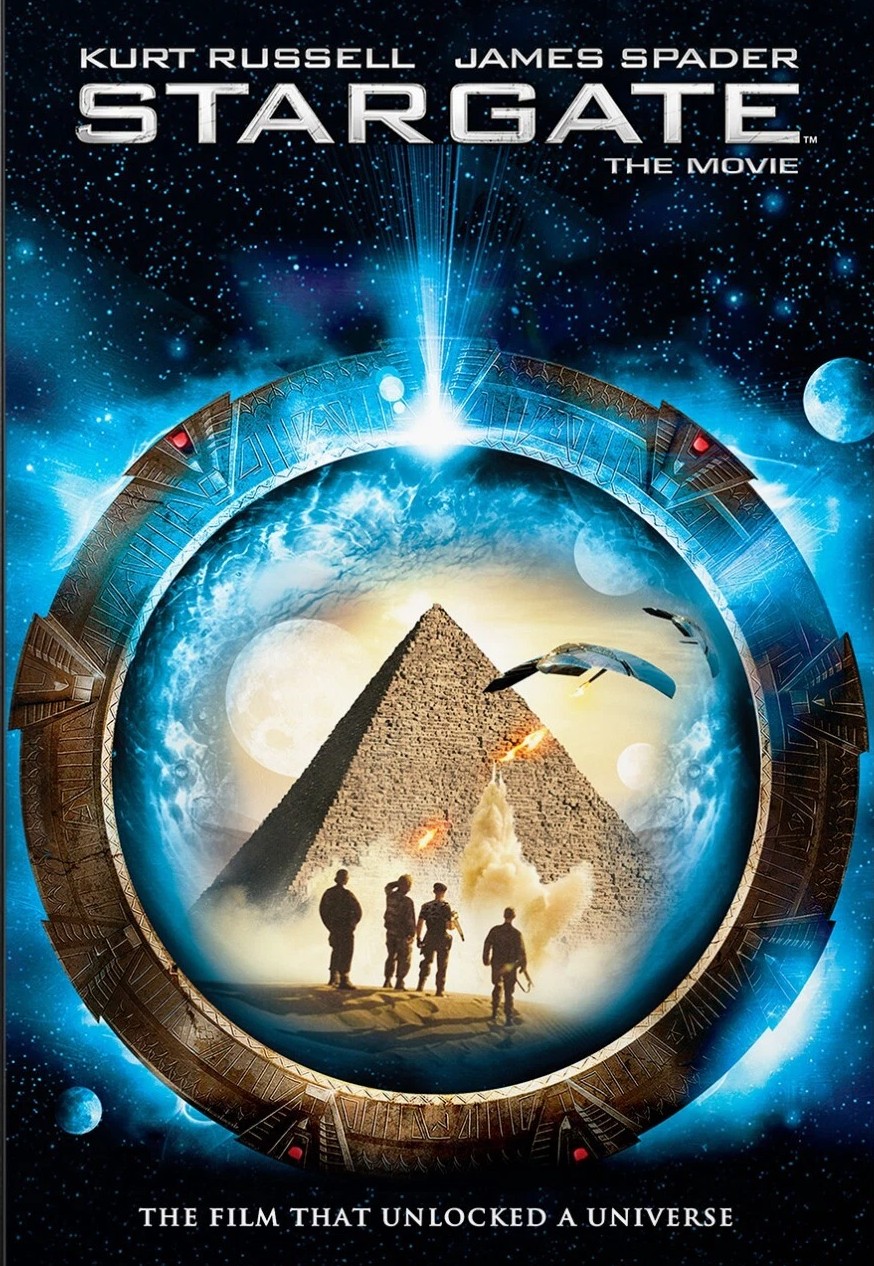
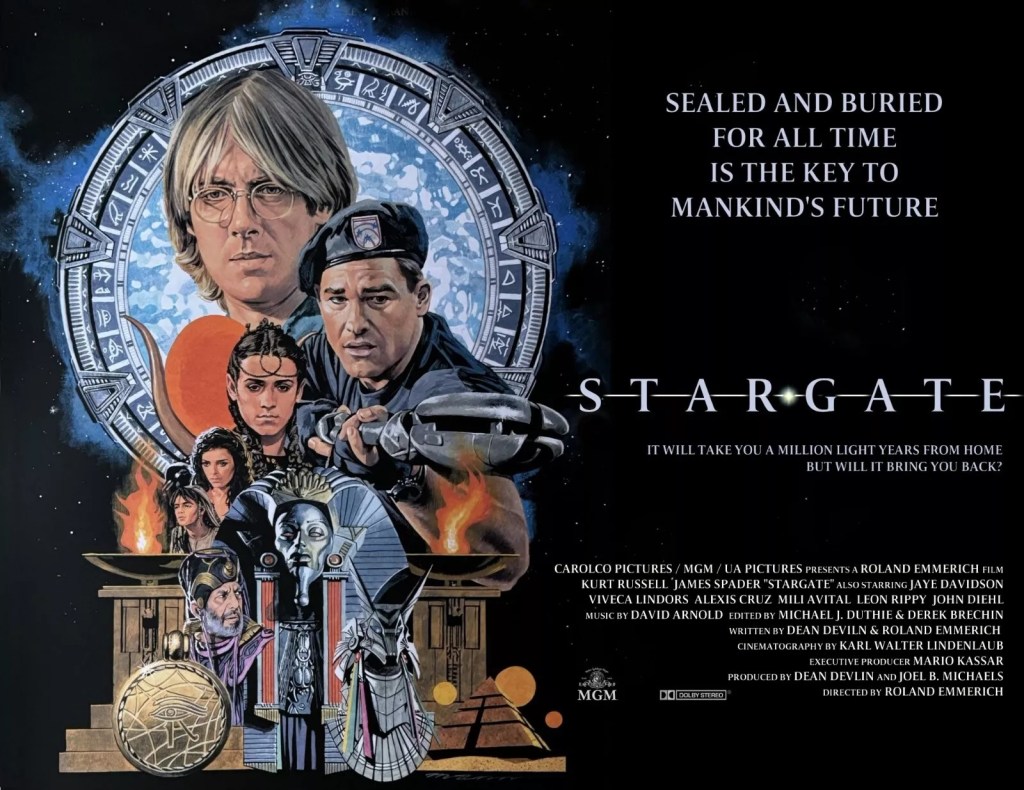
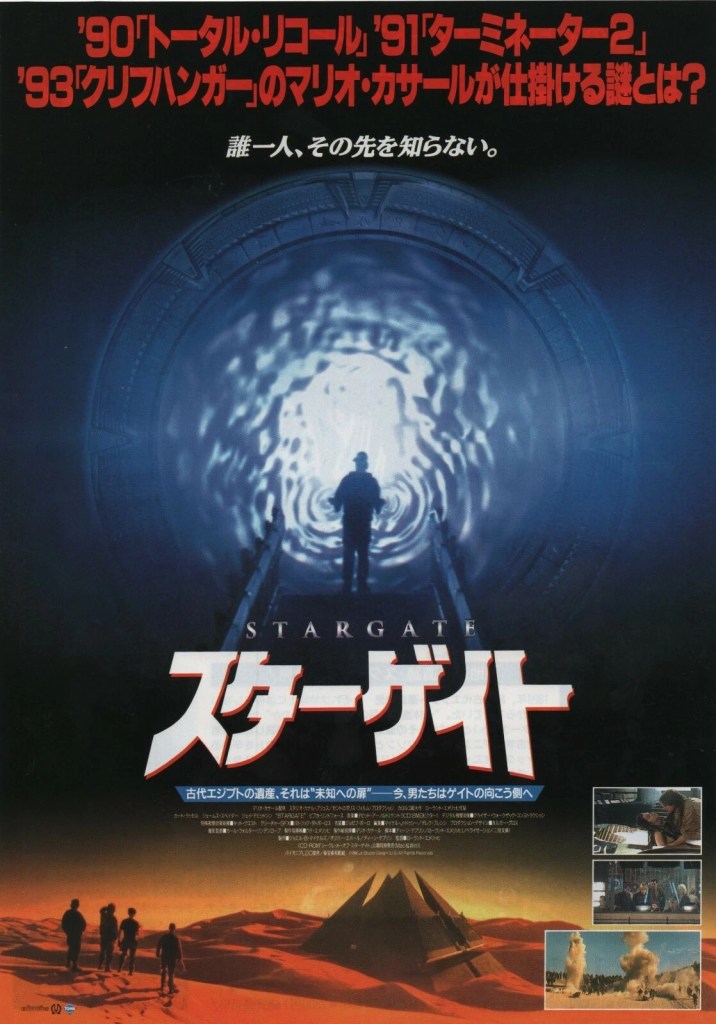
Stargate (1994) ****

Outside of James Bond, why is it that science fiction has generated the biggest franchises? Star Wars, of course, and all the cross-over cross-under twiddledeedee Marvel worlds, three iterations of Planet of the Apes, Alien, Avatar, Star Trek, Terminator and Predator immediately come to mind. I hadn’t thought of including Stargate until I realized that the initial movie has generated three DTV movies and five television series.

When it first appeared I was knocked out by the chutzpah of bumping up the basic idea behind Chariots of the Gods – that the pyramids were built by aliens –  into a big-budget heady adventure. I’ve not seen this in over a quarter of a century so came at it with some misgivings especially as the latest efforts of director Roland Emmerich such as Moonfall (2022) died at the box office, ditto writer-turned-director Dean Devlin (Geostorm, 2017).

The rather basic premise of Universal Soldier (1992) didn’t lead anyone to believe that Emmerich had a much more creative bent and would soon reinvent the invading alien subgenre. But Emmerich takes the greatest imaginings of the popular Egyptologist and produces everything that audience could ever desire, including the curious dog-faced snouts found on statues and of course flying pyramids and ancient gods with a side hustle into a futuristic version of shapeshifting.

Theoretically, Kurt Russell (The Thing, 1982), all brush-cut and snappy diction, is the star as Col O’Neil, heading up some kind of intergalactic task force. But in fact it’s meek Egyptologist Dr Jackson (James Spader), who does the heavy lifting – he even gets the girl –  and who if he’d had a bit more pizzazz about him would have been a latter-day Indiana Jones.

The plot is, of course, preposterous, but that’s the nature of the beast. In true Indiana Jones style Jackson discovers the missing piece of an archaeological jigsaw that points to some kind of wormhole, redefined here as a stargate, that can zip people light years away in the blink of an eye, and in a speeded-up version of the phantasmagorial elements of 2001: A Space Odyssey (1968). And just as in the director’s Independence Day (1996), the U.S. Government is up to some shady stuff, the kind usually designated to Area 51, and has been working on its own stargate.

Quite why Col O’Neil is taking along an atomic bomb for the ride is anyone’s guess. But once we race through the titular stargate we land on a desert planet inhabited by humans building pyramids and in thrall to Ra, who turns up every now and again to terrorize them into submission and/or steal the next body he requires to continue his journey into eternity. There’s plenty mumbo-jumbo and as many plot holes, but Emmerich has such a knack for narrative that it fair zips along. Col O’Neil has signed up for the mission because, frankly, he’s in a suicidal state of mind after his son died in a gun accident. Anyway, without the involvement of Jackson, who has no great scientific standing whatsoever, the US Government has worked out that whoever controls the other end of the stargate needs a good thumping.

Emmerich has the knack of posing verbal questions, leaving them dangling, and providing visual answers, which is all you need to propel a narrative. There’s plenty to play with here, the visuals are outstanding, especially for the time and the budget, and you are soon swept into the futuristic version of Egypt, and sinuous villain Ra (Jaye Davidson), and all the humorous misunderstandings that arise from language miscommunication. There is plenty action, either the kind of advanced aerial fighters emanating from the mothership (as occurred on a larger scale in Independence Day), or the gun-blasters, or the superhuman powers exhibited by Ra’s guards or indeed by Ra himself, not one to let mistakes go unpunished. There’s a clever twist on the regenerating device, and naturally someone has to lead a rebellion, though without spouting poetry.

Despite a few snatches at stardom, James Spader (Wolf, 1994) was still in marquee terms strictly second potato. This turns on its head his usual intense screen persona, and he’s quite a delightful little nerd, and just the guy if you need saved in the nick of time. Kurt Russell is mostly taciturn and, except for being engaged on a secret mission, has too little to do, but his presence still manages to anchor the picture.

All in all the concept works magnificently. I remember being impressed when I saw it on its release (but not so taken to subsequently trawl through the later small screen iterations) and was equally impressed now.

Go with the flow.

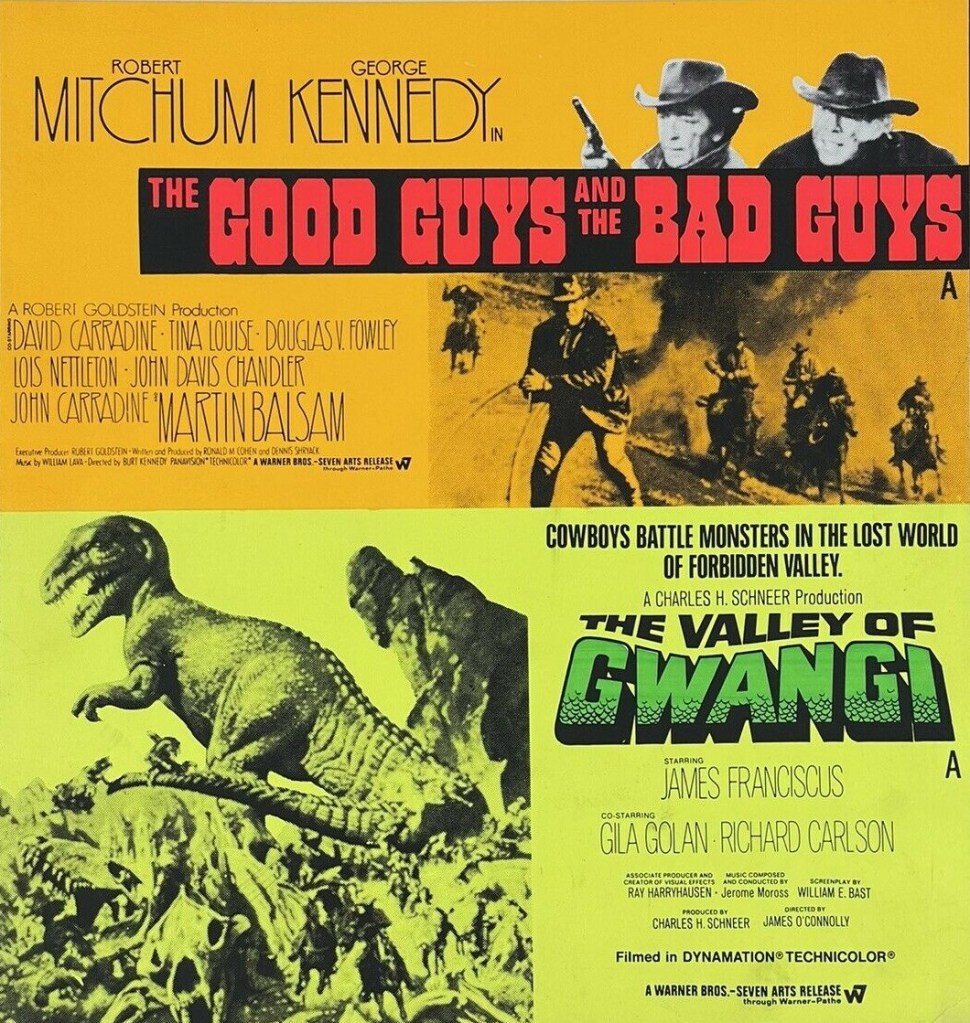
The Valley of Gwangi ****

The special effects are in the five-star range while the movie into which they fit is really worth no more than three stars so I’ve compromised, hence the four-star rating. Actually, the story and characters are interesting enough, and there are some stunning cowboy stunts,  though where is a fur-lined bikini when you need one. Although we are treated to prehistoric monsters, humans fail to have managed the transition to the hidden valley where the creatures have kept out of sight for millions of years. Instead, we are in turn-of-the-twentieth-century Mexico.

However, one specimen, a miniature horse, known as El Diablo, has been found and now resides in a rodeo, property of T. J. Breckenridge (Gila Golan) whose showstopping turn involves leaping on horseback from a high platform through a ring of fire into a pool of water.  Ex-flame and sleek salesman Tuck (James Franciscus) and archaeologist Professor Bromley (Laurence Naismith) follow gypsies who aim to return the horse to the Forbidden Valley. T.J. and a band of cowboys are in pursuit.

Widening a tiny gap into the unknown world also of course means it’s not big enough for the monsters to escape. The valley is ruled by Gwangi, an Allosaurus, which to most of the audience looks remarkably like a T. Rex. Various battles ensure. A Pteranadon swoops down from the sky and captures one of the cowboys but is killed by Carlos (Gustavo Rojo). Gwangi fights an Ornithomimus and a Styracosaurus. Even if your knowledge of prehistoric monsters  isn’t up to identifying each creature, no matter, the fights are very well done, and a step up in terms of special effects from similar tussles in Harryhausen’s previous venture in One Million Years B.C. (1966) especially as we are less distracted by females attired in fur bikinis.

Naturally, the intent is to capture Gwangi and put him on show a la King Kong (1933) and it’s equally obvious how this particular maneuver is going to work out. That the story follows this particular angle is down to the fact that this movie was the original idea of Willis O’Brien, the special effects genius to created King Kong. After considerable development, RKO shelved the project on the assumption the public was not interested in dinosaurs.

Meanwhile, back in the human tale, the previously principled T.J. lets greed get the better of her and begins resisting Tuck’s overtures. Even if you can guess the finale, it is pretty well done.

Ray Harryhausen only had a limited fanbase in the 1960s, otherwise this picture would not have done the rounds as the supporting feature to Robert Mitchum western The Good Guys and the Bad Guys (1969). You can tell it lacked the budget of One Million Years B.C. because the creatures fail to remain a consistent color. Even so, this ranks as one of the top special effects achievements and these days Harryhausen’s work is much more appreciated.

Unless you are Raquel Welch, it’s difficult for an actor to compete with prehistoric monsters. At least here, the stars had decent dialog and the tangled romance provides entertainment as do the host of stunning stunts in the rodeo and a bull running amok. Charlton Heston look-alike James Franciscus (Youngblood Hawke, 1964) is a plausible love interest who doesn’t let romance get in the way of a fast buck. The role of Gila Golan (Our Man Flint, 1966) extends to more than eye candy and there’s not a bikini in sight or disrobing of any sort. Richard Carlson (Creature from the Black Lagoon, 1954) was a sci-fi veteran and Laurence Naismith had appeared in Jason and the Argonauts (1963). British actress Freda Jackson (The Third Secret, 1964) plays a witch.

Director Jim O’Connolly (Vendetta for the Saint, 1969) keeps the human elements rolling along and once monsters join in the fun there’s scarcely time to draw breath. William Bast (Hammerhead, 1968) pulled together the human and monster elements for the screenplay.

Harryhausen fans will have a ball.

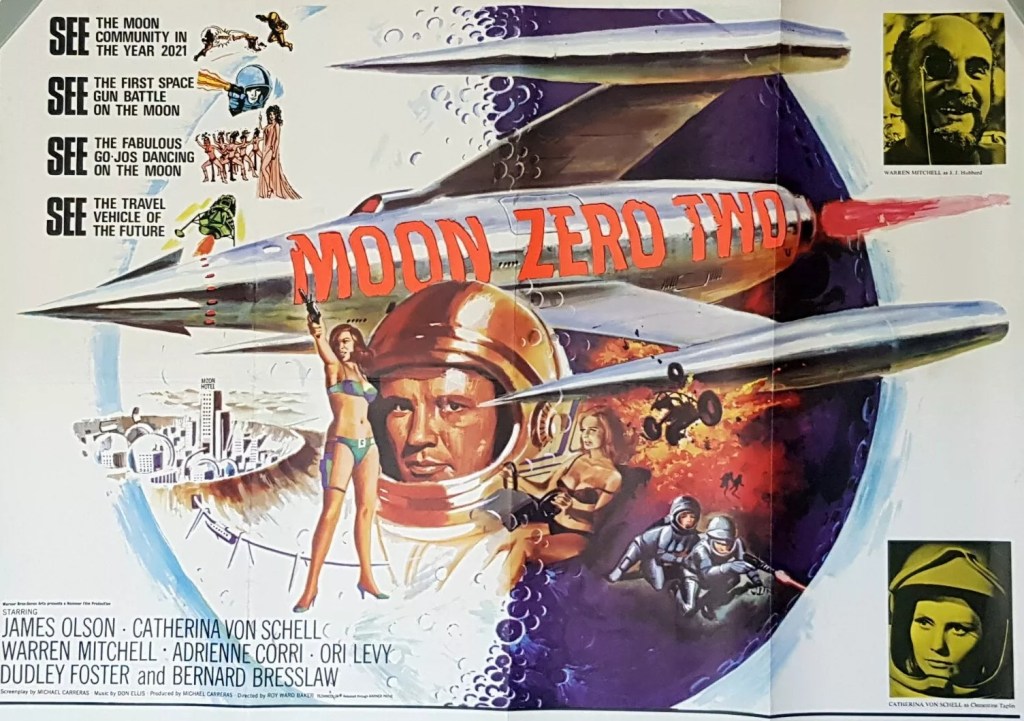
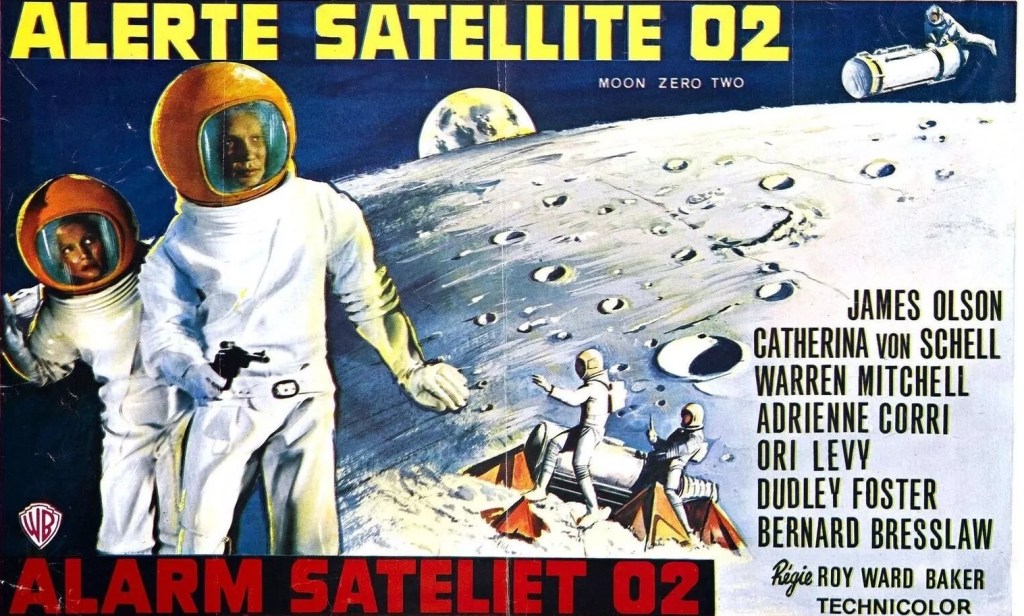
Moon Zero Two (1969) **

Not much that’s redeemable from this British sci fi effort. Maybe the idea of the “dirty universe” clogged up by waste with salvage hunters retrieving bits of old satellites and space objects. Or maybe an early version of “unobtainium,” the rare mineral that’s going to make someone very rich, in this a solid block of sapphire and some mined nickel. Or maybe the colonizing of the Moon for gain rather than the advance of science.

But that’s about it. Takes about 30 minutes for a story to emerge, the rest of the time taken up with info dumps and character background, so we know that ace pilot Bill (James Olson) was the first man on Mars and wants to repeat the same feat for Mercury, Jupiter and other distant planets and would rather become a salvager than lower himself to become a passenger pilot. His girlfriend Liz (Adrienne Corri) is an officious official and threatens him with being grounded on safety grounds.

But that kind of bureaucracy is par for the course in British sci fi which liked to clutter up the narrative with accountants (The Terronauts, 1967, et al) and various levels of officialdom. And there’s another British trope. Take a well-known comedian and turn him into an unlikely tough guy of sorts – Eric Sykes as an assassin in The Liquidator (1965) would be in pole position but Carry On regular Bernard Bresslaw runs him close here as a gun-toting bodyguard.

Or maybe the Brits just like a hybrid. Stick some comedy into sci fi. Certainly the animated credits suggest this is going to major on comedy, which turns out not to be the case unless you were laughing at how inept the whole project is.

Especially when director Roy Ward Baker simply resorts to slo-mo to suggest loss of gravity in space. And when the space outfits look as if they were run up by someone’s ancient auntie. Just to show the bad guy is a bad guy, entrepreneur J.J. Hubbard (Warren Mitchell) wears a monocle. He hires Mike to go find the sapphire asteroid and bring it back to the Moon, where it can be dumped on the “far side”, well away from any nosey parkers, to make it look as if it had landed there on its own, thus bypassing Space Law.

But Mike’s already made the acquaintance of Clem Taplin (Catherine Schell) who’s hiked up from earth to search for missing geologist brother and once Mike’s located the sapphire he heads out into the far side of the Moon to find the brother. They find him all right but by this point he’s just a skeleton though he has uncovered nickel deposits. He’s been killed by Hubbard and the couple are ambushed and have to shoot their way out (the efficacy of bullets in space in never explained) in a manner that suggests, as the posters liked to proclaim, a “space western.”

Mike gets his revenge by stranding all the bad guys he hasn’t already killed on the sapphire in space.

It would have probably been okay if any of the actors had shown any screen spark. But they’re all lumpen, although perhaps you can blame the restraints of the space costumes, or maybe even just the script. Oddly enough James Olsen would make his mark in sci fi adventure The Andromeda Strain two years later, but that had both better direction (by Robert Wise) and a more intriguing script (from Michael Crichton).

You might as well have wrapped up Catherine Schell (On Her Majesty’s Secret Service, 1969) in cotton wool for all the impact she was able to make. Warren Mitchell (The Assassination Bureau, 1969) looks as if he’s desperately trying to stifle a grin.

Hammer boss Michael Carreras (The Lost Continent, 1968) wrote the screenplay, and produced, so he should at least share the blame with Roy Ward Baker (Quatermass and the Pit, 1967).

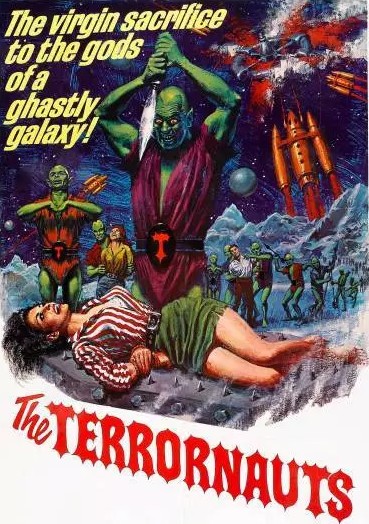
The Terrornauts (1967) ***

The easiest ways to acquire cult status are a) to be impossible to find and b) in a genre piece add in the unexpected. In this case, although originally devised as the support feature to They Came from Beyond Space (1967), in an Amicus sci fi double bill, this was denied initial release in Britain and other parts of the world and only seen fleetingly thereafter.

The genre upset is in two parts. First, we have the notion of aliens coming to the assistance of Earth. Secondly, for foreign audiences, it upends ideas of Englishness. Overseas moviegoers would have become used to the arrogant upper class characters, the bowler hats, tourist landmarks, Cockneys out for a “larf”, and probably never actually heard a genuine British accent in their lives because the diction was so incomprehensible it was usually dubbed.

Here we have two very recognizable, in British terms, types – the tea lady Mrs Jones (Patricia Hayes) always ready with down-to-earth wisdom, and bureaucracy in the shape of interfering bean-counter Joshua Yellowlees (Charles Hawtrey, taking a break from Carry On duties). They provide a supply of gentle comedy, unusual for the genre.

Along with Dr Joe Burke (Simon Oates), Ben Keller (Stanley Meadows) and Sandy Lund (Zena Marshall), working in radio telescope laboratory seeking signals from outer space, they are kidnapped by aliens. Apart from an odd-shaped robot, on the alien craft they encounter nobody but are still set intelligence tests and then step through a transporter which lands them on an alien planet but one which is strangely familiar to Burke from a childhood incident on an archaeological dig in France. These aliens of the little green men variety are not so accommodating and it would come as no surprise that they elect Sandy for sacrifice. When she’s rescued and they’re all safely back on the alien craft, a greater danger materializes. Earth is going to be obliterated by another set of aliens, deadly enemies of the ones who are so helpful, and the Earthlings have to master the alien weaponry to defeat them and save Earth.

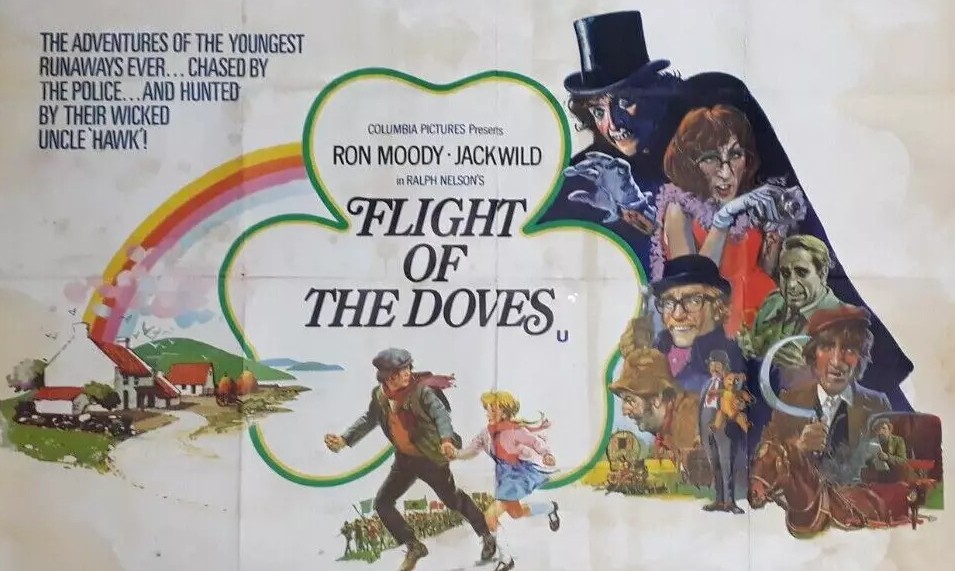
Saw “The Terrornauts” on original UK release when it was support to “Flight of the Doves.”

There are two twists at the end, one ending in speculative fashion, the other on a comedic note. The transporter returns to Earth and the same spot as Burke had his odd encounter, though nobody commenta on this. But to undercut that climax, the space travelers are arrested for trespass by a French gendarme. There’s no great acting and, in truth, it’s the oddball supporting players who steal the show, and Patricia Hayes would later achieve considerable fame as Edna, The Inebriate Woman (1971). This was the swansong for Zena Marshall (The Switch, 1963) and the penultimate picture of veteran Montgomery Tully (Fog for a Killer, 1962). Written by sci fi author John Brunner from the novel The Wailing Asteroid by Murray Leinster. Score by Elizabeth Lutyens (The Skull, 1965).

This is more thoughtful than the general run of sci fi B-movies, and the special effects, considering the tiny budget, are acceptable.  Had it enjoyed more success Amicus might well have continued down this route rather than the horror portmanteau for which they were associated, for by the time this movie was made, their efforts were split evenly between horror and sci fi and their biggest hits had been the big screen Dr Who adaptations.

Though They Came from Beyond Space was seen more widely in Britain as the support to Rank release The High Commissioner/ Nobody Runs Forever, The Terrornauts sat on the shelf. It was given a very limited release as one of three potential supports to Flight of the Doves (1971) which is how I saw it at the Gaumont first run cinema in Glasgow. And that was because Simon Oates had starred in hit BBC ecological thriller Doomwatch (1970-1972). In the United States, it had a sporadic cinema release, very little evidence of first run, but very quickly became a late-night television favorite.

If you accept the comedy and aren’t fussed to not be battling monsters, this is a very interesting diversion from the sci fi norm and well done with the budget.

Vinegar Syndrome has just brought this out on DVD.

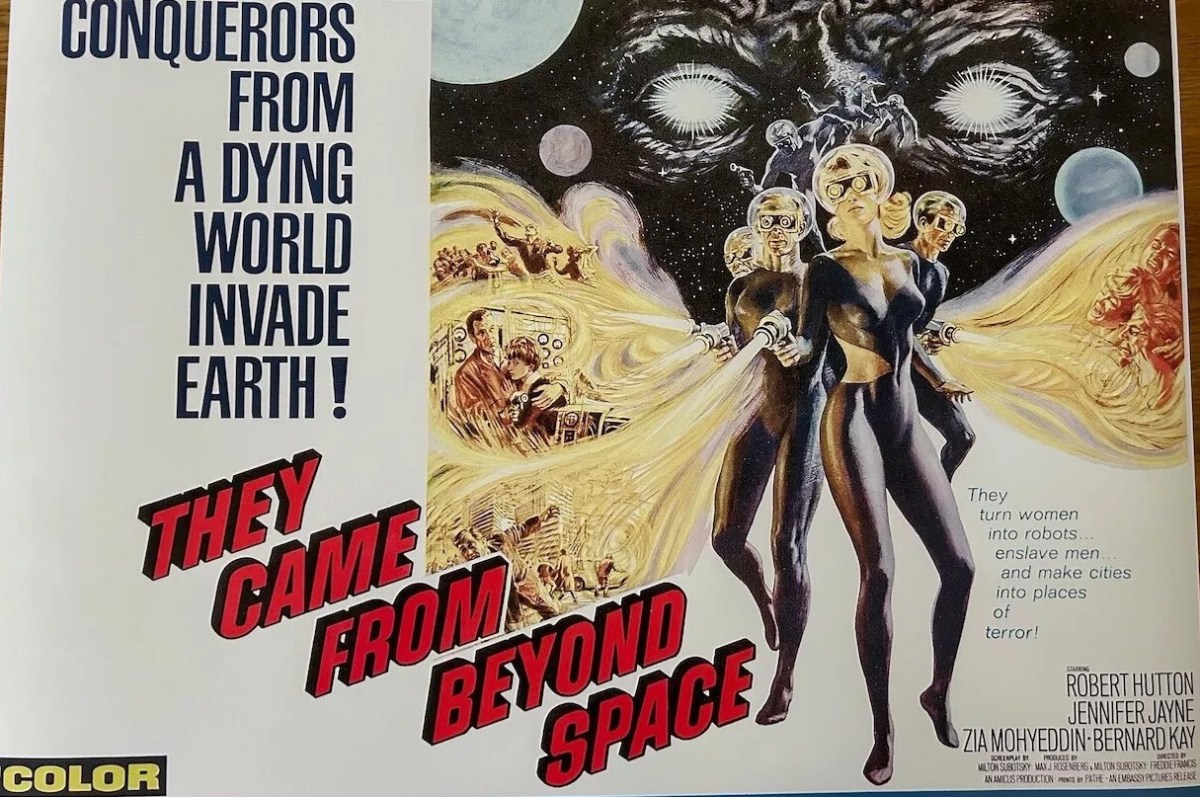
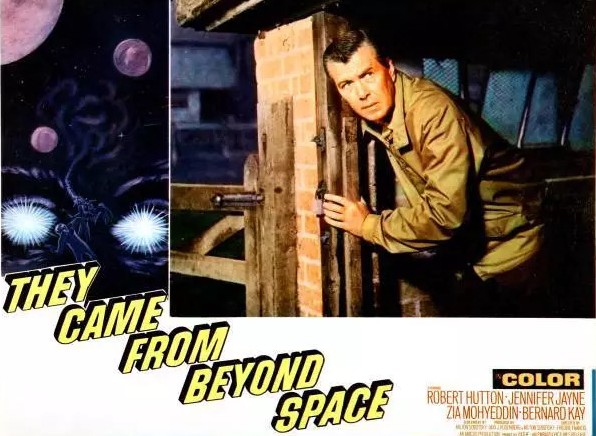
They Came from Beyond Space (1967) ***

If you’re familiar with the Amicus output from its portmanteau horror movies this excursion into sci fi might come as a surprise. On the other hand, should you be a fan of Dr Who you might well be acquainted with Amicus’s two excursions into this genre – Dr Who and the Daleks (1965) and Daleks’ Invasion Earth 2015 A.D. (1966). In fact, the outfit’s production at this point was evenly split between sci fi and horror and had They Came from Beyond Space and stablemate The Terrornauts (1967) done better the company might have persevered with the genre.

That these two were originally intended to go out as a double bill – they did in the U.S. but not in Britain – is somewhat surprising given they have similar themes of some kind of dying alien species using Earth for survival. And with a bigger budget, They Came from Beyond Space might have made a bigger dent into the box office, instead of heading beyond the realms of cult into oblivion.

There are some neat touches. Meteorites fall on Earth. Nothing odd in that, certainly not in the world of cinematic sci fi. What’s strange is how they land – in a perfect V-formation. What’s more their source is the Moon. You won’t be at all surprised to learn, however, that the aliens bear no resemblance to the amazonian-type women promoted in the poster.

Also peculiar, for the time, is that the scientists sent to investigate are led by a woman, Lee (Jennifer Jayne), her boss and lover Dr Temple (Robert Hutton) left behind because he has a silver plate in his head as the result of an automobile accident. The meteorites exert a strange power and soon Lee and her confederates are organizing some massive scientific project to send a mission to the Moon, funding procured from a million-pound loan from a hypnotized bank manager and the local community falling victim to a strange plague which renders them obedient.

Eventually, alarm raised by Lee commandeering so much expensive equipment, Dr Temple does go to investigate and is baffled by the construction of a military compound complete with armed guards and electrified fence housing a vast underground laboratory and a rocket ready for launch.

He manages to kidnap Lee, possessed by an alien force, and with buddy Farge (Zia Mohyeddin) comes up with a variation on the kind of common-cold weapon employed to defeat aliens – in this case the use of silver to block the alien rays, you always knew that silver plate in his head would have narrative purpose. Realizing her situation, Lee now pretends to be an alien and the trio sneak aboard a rocket and after a fantastically speedy journey land on the Moon where they are confronted by the Master of the Moon (Michael Gough).

Quite why female sacrifice was a common theme between this and The Terrornauts is anyone’s guess but soon enough the aliens have Lee staked out. And that silver plate has to be surgically removed from Dr Temple’s head so the aliens can get a good look at his brain.

Like The Terrornauts, there are no physical aliens, just some kind of energy source. And like E.T. some decades later they just want to go home. Farge leads the enslaved in revolt and normally that would trigger some violent finale but here, instead, there’s a curious – and welcoming – climax.

A kind of “why didn’t you say so, old chap” ending where the Earthlings agree to help the aliens return to their planet, no collateral damage necessary. This is probably the most unexpected thinking person’s twist that you could ever conceive – a variation on the idea of foes finding common cause. It certainly didn’t fit into the genre and my guess is most audiences were baffled at the outbreak of peace. It just didn’t go with the territory.

None of the acting is anything to write home about, but the picture is generally well done, the special effects more than passable given the budget, and enough in the narrative tank to keep you going.

Robert Hutton (The Vulture, 1966) was coming to the end of a B-picture career. Jennifer Jayne’s (The Liquidator, 1965) hardly really took off. Zia Mohyeddin (Deadlier Than the Male, 1967) had a decent run in supporting roles. Everyone is no more than adequate in roles that demand no depth.

Freddie Francis (The Skull, 1965) does his best with a script by producer Milton Subotsky (The Skull) adapting the novel by Joseph Millard.

Undemanding but holds the interest.
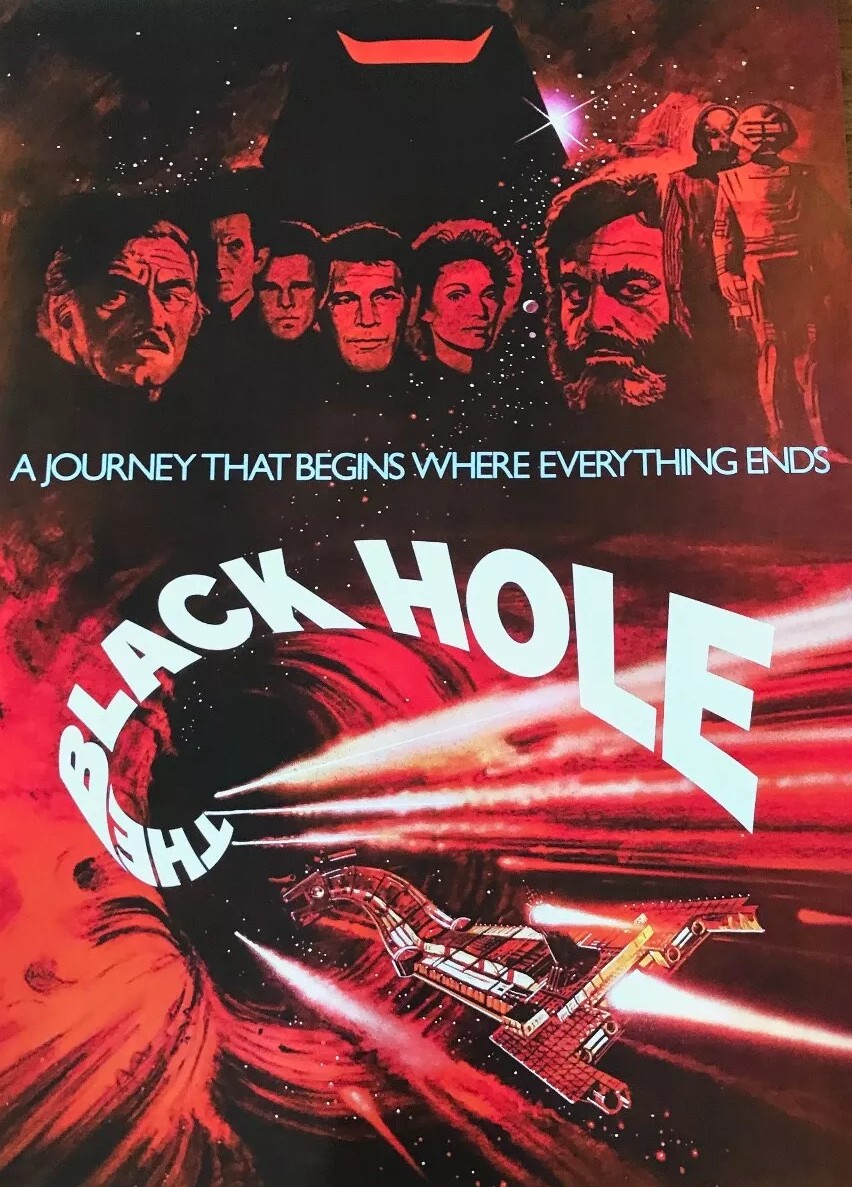
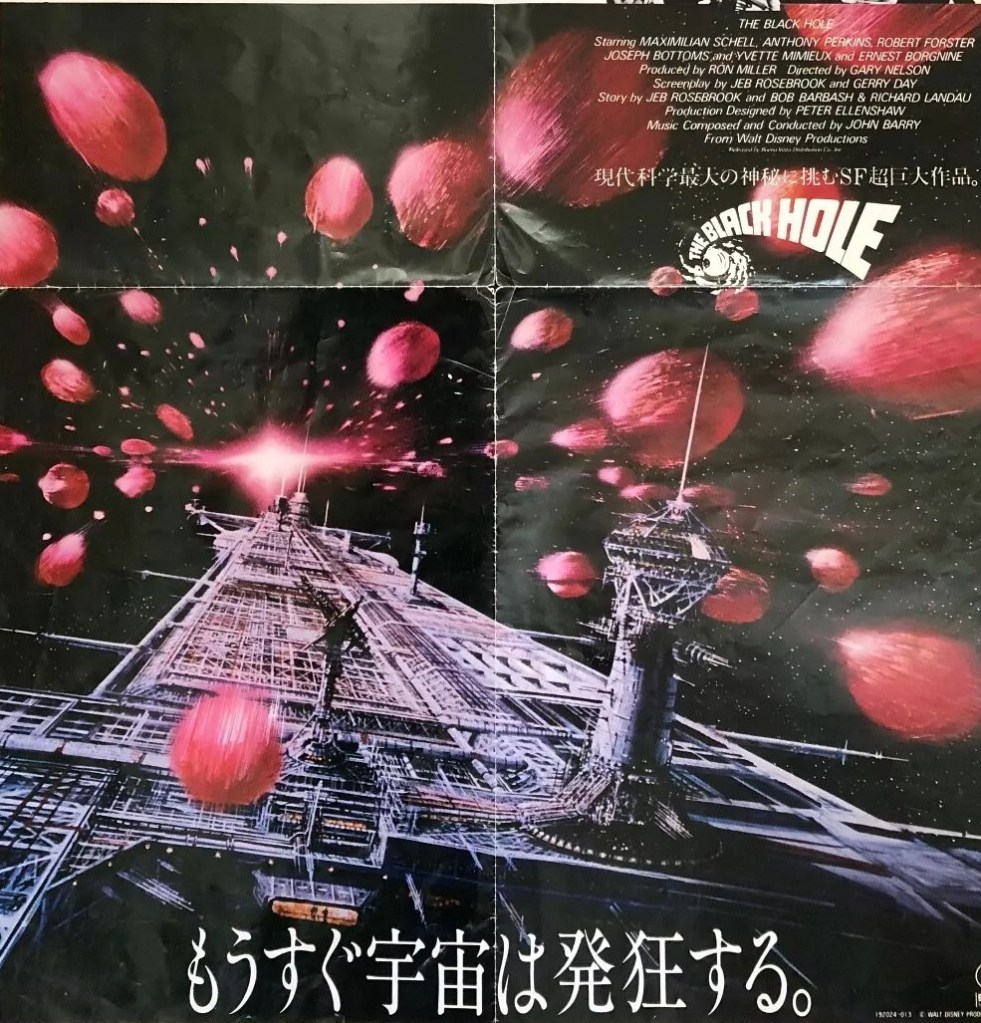
The Black Hole (1979) ***

Think of this as having been made before Star Wars (1977), Close Encounters of the Third Kind, Alien (1979), heck even Star Trek (1979), changed the sci fi world forever and imagine it’s a huge advance SFX-wise on the 1950s vanguard of sci fi pictures and you’ll probably come away very happy. A lot to admire in the matte work and some groundbreaking effects and actually the story – mad scientist lost in space – has a bit more grit than was normal for the genre.

But it’s laden down with talk and the action when it comes resembles nothing more than a first draft stab at the light sabers of  Star Wars and clunky robotic figures that come across like prehistoric Stormtroopers. A bit more light-hearted comedy than in the other three mentioned, various quips at the expense of the robots.

Scientists aboard space ship USS Palomino, a research vessel looking for life in space, is astonished to discover, hovering on the edge of a black hole, a missing spaceship USS Cygnus and are even more astonished to find out it’s not uninhabited, still on board is heavily-bearded Dr Hans Reinhardt (Maximilian Schell) and an army of robots that he has miraculously fashioned during his time lost in space.

This is a bit of an emotional blow to Dr Kate McCrae (Yvette Mimieux) whose father had been part of the crew of the Cygnus. Dr Reinhardt seems kosher enough except for his idea of, in the true spirit of space adventure, blasting off through the black hole. Although Reinhardt has been exceptionally clever in monitoring the invasion from the visitors and nullifying any threat with a blast from invisible laser, once they are on board that monitoring capability appears to vanish, allowing the visitors to search the ship where they find out that Reinhardt’s story doesn’t seem to add up.

Apart from Dr McCrae, the other personnel from the Palomino comprises Capt Dan Holland (Robert Forster), Dr Durant (Anthony Perkins) – the most inclined to follow Reinhardt into the greatest danger in the universe – quip merchant  Lt Pizer (Joseph Bottoms)  and dogsbody Harry (Ernest Borgnine). Plus there’s a cute robot Vincent (Roddy McDowall) constructed along even more rudimentary lines than R2-D2.

Vincent turns out to be a whiz at a basic version of a computer game, something between Space Invaders and Kong. But his main task is to wind up the crew with a head teacher’s supply of wisdom, spouted at the most inopportune moment. Except for the chest-bursting appearance of Alien, this might have garnered more kudos for the creepy mystery element – Reinhardt has lobotomized his crew members, turning them into these jerky robots, after they mutinied in revolt against his plan to dive into the black hole. Dr McCrae nearly joins the lobotomy brigade. And once she’s rescued it’s a firefight all the way. A stray meteor is on hand to add further jeopardy. And in the end the good guys are forced to plunge into the apparent abyss of the black hole, only to be guided by some angelic light and come out the other end unscathed, no worse for enduring the kind of phantasmagoric light show Stanley Kubrick put on in 2001: A Space Odyssey (1968).

By this point Maximilian Schell (Judgement at Nuremberg, 1961) was an accomplished bad guy, covering up inherent malignancy with charm and scientific gobbledegook. Joseph Bottoms (The Dove, 1974) is the pick of the incoming crew but that’s because he’s been dealt a stack of flippant lines. Anthony Perkins at least gets to waver from the straight-laced. But everyone else is a cipher, even Yvette Mimieux (Light in the Piazza, 1962) who might have been due more heavy-duty emotion.

This was the 1970s version of the all-star cast, all the actors at one point enjoying a spot in the Hollywood sun, but now all supporting players. Schell was variably billed in pictures like St Ives (1976), Cross of Iron (1977) and Julia (1977). Robert Forster (Medium Cool, 1969) hadn’t been in a movie in six years. Anthony Perkins was waiting for a Psycho reboot to reboot his career – only another four years to go. Yvette Mimieux had only made four previous movies during the 1970s including Jackson County Jail (1976). The most dependable of these dependables was Ernest Borgnine (The Adventurers, 1970), for whom this was the 24th movie of the decade, including such fare as Willard (1971), The Poseidon Adventure (1972) and Hustle (1975).

It didn’t prove a breakout picture for director Gary Nelson (Freaky Friday, 1976), Screenplay credits went to Jeb Rosebrook (Junior Bonner, 1972) and female television veteran Gerry Day.

Sci fi the Disney way.

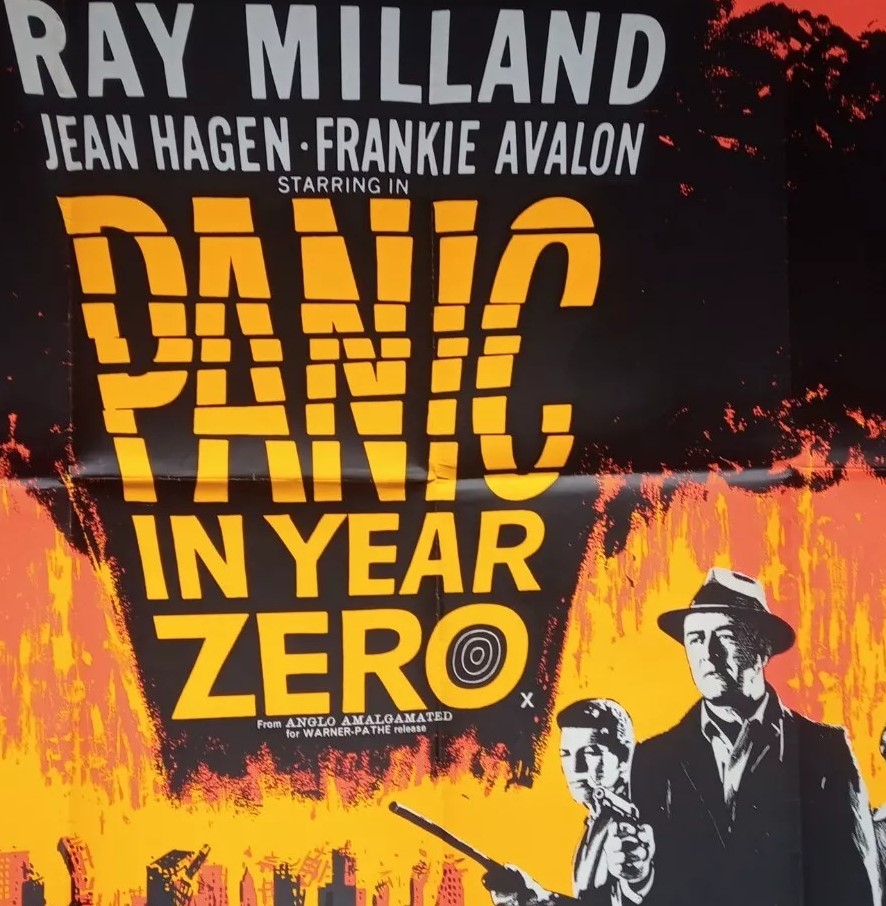
Panic in the Year Zero! (1962) ****

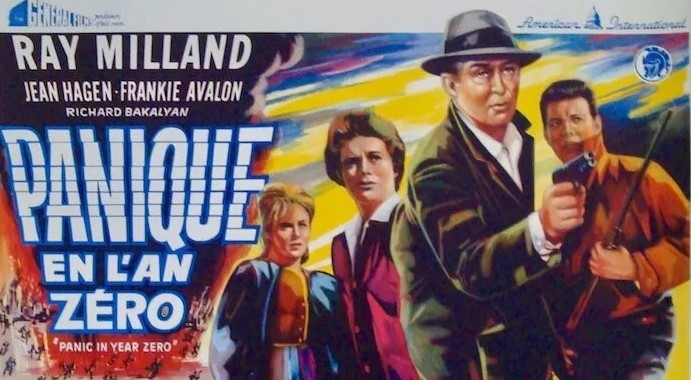
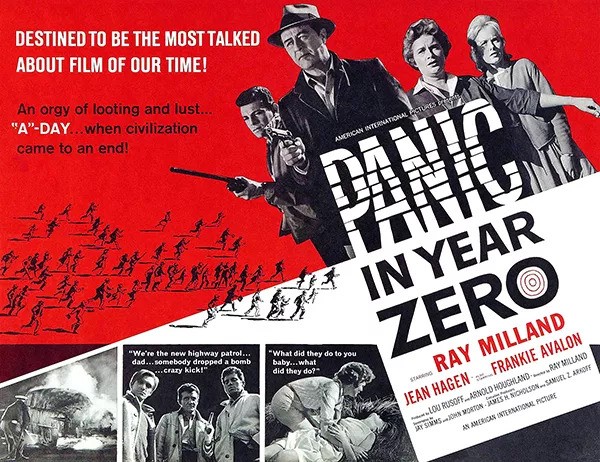
While the release of Conclave and Juror #2 augurs well for the future of movies made for the more mature audience, it’s worth remembering that such fare was commonplace six decades ago, even in the lower-budget strata. Well-structured, well-acted drama was never hard to find. Since I stack my DVDs on their sides and make my selection based on the title on the spine, I rarely glance at cover art, and just as well here, because the poster, I realized, in the process of selling the movie, gave away too much.

Beyond a vague notion that it concerned the aftermath of a nuclear holocaust I had no idea whether this would lean towards the dystopian or the survivalist. And there’s little clue at the start. We open on a typical suburban family holiday scene – husband Harry (Ray Milland) flexing his fishing rod, wife Ann (Jean Hagen) complaining of being overburdened with the loading of the trailer, teenage daughter Karen (Mary Mitchell) and son Rick (Frankie Avalon) moaning about being dragged out of their beds at an unearthly hour.

Not long into the journey they see flashes in the distance and a mushroom cloud above Los Angeles. Harry is alerted to potential danger when he observes a pump attendant being slugged by a driver over four bucks’ worth of fuel. Harry’s clearly the reserved kind of businessman, happily married, still flirting with a wife who giggles at such overt attention. But when the roads are filled with cars speeding away from the disaster area and the radio clams up and telephone lines are down, Harry’s personality undergoes a dramatic change, much to the disgust of his wife.

If this had been made these days, it would focus on the kids as they came to terms with post-apocalyptic catastrophe and some militaristic domineering governing body getting in their way or trying to control them. Or it would be some musclebound jerk only too ready to battle his way out of trouble.

Instead we have a gentleman tugging on his inner tough guy. Harry knocks around a storekeeper (Richard Garland), gets the better of a trio of thugs, charges through a roadblock, carves a route through a busy roadway by setting fire to it, destroys a bridge on a rural road to prevent being followed, and is capable of shooting anyone threatening his family. He’s not gone rogue, though, careful to keep more trigger-happy son in line, warning against civilization going to ruin.

This is so well-constructed you don’t know what’s going to happen next, nor, despite ample warning, to discover that Harry is quite the adaptable survivalist, not just stocking up on supplies, but dumping the trailer in favor of holing up in a remote cave, not quite going back to nature given the quantity of provisions to hand. But, yes, they do wash clothes in a stream, cook on a camping stove, shoot game and sleep in uncomfortable beds.

It’s not an idyll because the storekeeper and the three thugs have chosen the same locale. The hoodlums murder the storekeep’s family, kidnap young women including Marilyn (Joan Freeman) and are always on the prowl for easy pickings, which includes Karen, triggering a climactic shoot-out.

Despite the poster promising orgies of various kinds, there’s no glorifying the violence, Harry more like the frontiersman or law-abiding citizen forced to take the law into his own hands. Ann, whose maternal instinct has focused on its gentler aspects, turns into a lioness defending her cubs. It’s a brutal awakening for all, except Rick who appears to thoroughly enjoy the experience even as his father is trying to steer him clear of such thoughts.

Made by American International on a minimal budget, Ray Milland, doubling up as director, shows just what you can do with a decent script and cunning choice of locale. British-born Milland, a big star for Paramount in the 1930s-1940s and Oscar-winner to boot for The Lost Weekend (1945), read the runes right for the following decade and excepting Hitchcock’s Dial M for Murder (1954) and realizing his marquee value had tumbled, took to direction, beginning with A Man Alone (1955) and Lisbon (1956). He was top-billed in both, joined by Maureen O’Hara (The Rare Breed, 1966) for the second.

His last stab at direction was Hostile Witness (1968). But he only helmed five movies in all. While you wouldn’t say he was a natural stylist, Panic in the Year Zero! is something of a triumph, keeping audiences on edge with both narrative and character-led twists.

Apocalypse wasn’t even a sub-genre at this point, Eve (1951) the only previous example of any note. Timing didn’t help this picture, the Cuban Missile Crisis occurring a few months after its initial release.

Milland makes the most of his gritty characterization, pop star Frankie Avalon (The Million Eyes of Sumuru, 1967) surprisingly good. Written by Jay Simms (Creation of the Humanoids, 1962) and John Morton, in his debut, from source material by Ward Moore.

Rewarding.

The Red One (2024) ***

Santa Claus meets Die Hard might have worked well enough if it hadn’t been padded out with all sorts of other festive characters from the dark side of Xmas and a sludge of sentiment about an absent father reconnecting with his son. Can’t quite decide if it’s family-friendly or aiming for a queasier relationship with a Beetlejuice, Beetlejuice audience. And I suspect if Amazon had the courage of its theatrical convictions, it would made this a Xmas cinema release rather than chucking it into picture houses now and lining it up for a small-screen Xmas special.

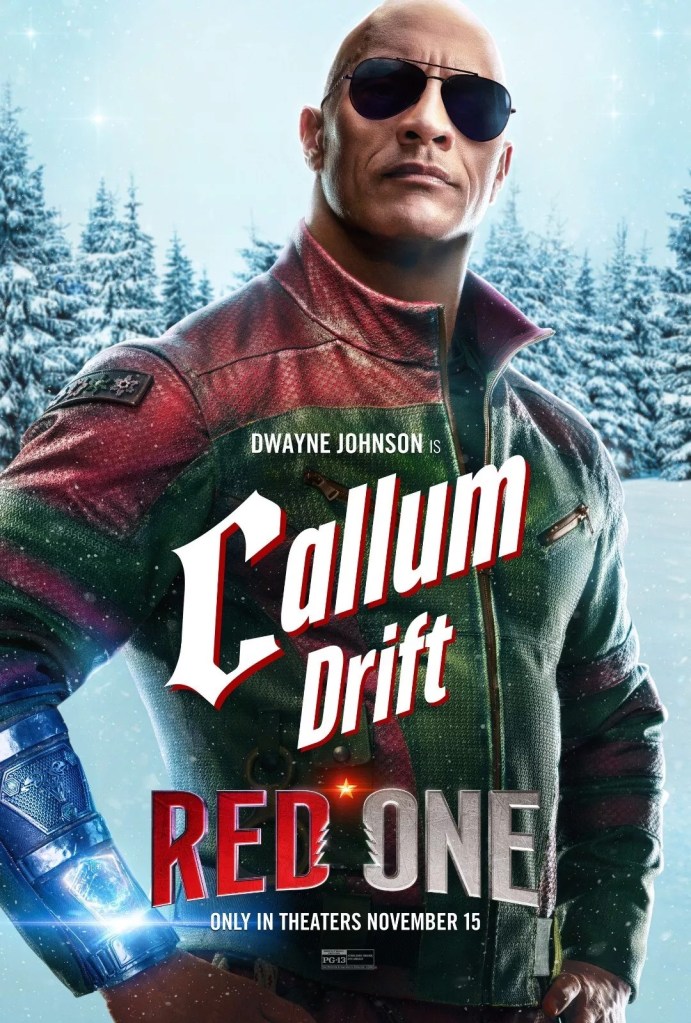
Attempts to merge James Bond-style big budget thriller with underworld shenanigans conjuring up the kind of misfits who’d have been slung out of a Star Wars cantina while at the same time as making up the rules as it goes along. There’s a mix-and-match feel to the characters – we get Gryla, a mythical Icelandic monster, Krampus, a hairy devil of Germanic extraction who has his fun the night before Xmas, but is repurposed here as a Santa’s big bad brother, as well as a bunch of gargoyles who are way too easily distracted by a hen who they, mysteriously, can’t manage to catch, and then like a throwback to Transformers we get tiny Lego style figures who turn gigantic when let loose. You can stop snowmen in their tracks by whipping off their carrot noses.

Face-slapping is reinvented, shapeshifting is the game, and as if nobody had watched  how badly Ghostbusters: Frozen Empire failed we’re back to a villain with icy superpowers. The giant polar bear featured – cousin to the armored bear in The Golden Compass (2007) – in the poster is underused. Not to mention that Xmas staple, the kids threatened with losing out on presents if they are naughty. None of this should work at all, but it does fairly well.

On the eve of said Mr Claus’s big night, he gets kidnapped. Bodyguard Callum (Dwayne Johnson), who turns out to be more than 500 years old, is on the trail and tracks down hacker Jack (Chris Evans) who’s sold Santa’s secret location to villain Gryla (Kieman Shipka), the ex- of Krampus’s (Kristofer Hivju),  who wants to trap every night child in the world inside the kind of glass snow globe that was a traditional Xmas present. She’s manufactured these in the gazillions.

Callum and Jack team up though the latter’s not much use, his contribution to the double act consisting mainly of double takes and it’s only when he doesn’t take the opportunity to escape Krampus’s lair that he becomes one of the team. Mostly, it’s one bizarre situation after another and although at just over two hours it’s already outstaying its welcome it could have done with spending some more time on outlining the background and developing the fiendish characters. It’s a world that seems surprisingly undercooked given the mega budget. On the plus side – or perhaps the minus depending on your perspective – there’s a cuteness bypass. There’s a little too much time spent on – unsuccessfully – showing how Santa manages to get himself down every single chimney in the world in the space of a night including time to gobble down some treats. Would have done better to stick to the Santa hijack than include a technologically-improved Xmas.

Xmas spirit missing in this previous red one.

This didn’t need the presence of Dwayne Johnson (Black Adam, 2022) and certainly Chris Evans (The Gray Man, 2022) is wasted but with the MCU world closing its doors on both actors, perhaps this is an attempt to set up a new series. As Mr Claus, J.K. Simmons (Juror #2, 2024) isn’t in it long enough. Jake Kasdan (Jumanji, The Next Level, 2019) directed from a script by Chris Morgan (Shazam! Fury of the Gods, 2023) and Hiram Garcia (Jumaji, The Next Level).

Not as bad as I expected.

Marooned (1969) ****

The forgotten one. Left out in the cold by audiences and critics alike in the late 60s sci fi boom by the more audacious 2001: A Space Odyssey (1968), Barbarella (1968) and Planet of the Apes (1968). And that’s a shame because it’s by far the most realistic (to the nth degree) of the space movies. Audiences growing up with astronauts saving their own skins with ingenious maneuver – sling shot and whatnot – in Apollo 13 (1995) and The Martian (2015)  might be shocked by the harsh reality of space travel as evidenced here. Astronauts are little more than helpless creatures in a tiny box with ground control in obsessive control. It’s salutary that escape was the audience mindset even after the Challenger Space Shuttle disaster of 1986.

Nobody thought to tell audiences to buckle up because they were in for a hell of a ruthless ride back in the day, but this one really should come with a warning.

Casting makes this work – when it shouldn’t. It’s full of those kind of actors who scarcely move their lips and rarely engage in extraneous facial movement. You can hear director John Sturges issuing instructions: to Gregory Peck, keep those brows knitted; to David Janssen, keep your head lowered and keep with the muttering; to Richard Crenna, don’t move a muscle; to Gene Hackman, limit that trademark chuckle to just once. Why this shouldn’t work is because the big star isn’t in the goldfish bowl of the shuttle cockpit, and since there’s none of the get-to-know-the-crew backstory of The Right Stuff (1983) or Apollo 13 there’s nobody to really root for, especially as the crew is just siting there, doing (by instruction) nothing and awaiting their fate. Which, by the way, which is constantly spelled out, is to suffocate from lack of oxygen.

But there’s a reason Gregory Peck’s on the ground and not in space. Because he’s the one making the life-and-death decisions.

This is by far Gregory Peck’s toughest role. He pulled out of Ice Station Zebra (1968) because he didn’t like the slant of the character, and since then he’d been in typical upstanding heroic mode in The Stalking Moon (1968), Mackenna’s Gold (1969) and The Chairman (1969). Here he’s the king of data management and crisis control, the most ruthless, heartless sonofa you’d ever encounter, not willing to take a risk on greenlighting a rescue mission because the computer says no. The weaselling PR-speak that’s all about saving the space program and making allowance for collateral damage is nothing compared to his terrible delivery of news to one of the wives that her husband is dead. She collapses with emotion, he puts the phone down.

If you’re geek-minded, you’ll give this five stars because there’s information overload. “Go” and “Mark” are the most commonly used words. And in case you can’t judge from the visuals what’s going on, there’s usually some television commentator voice-over to help you out.

So, the Ironman One mission hits trouble when its retro rockets refuse to ignite for return to Earth after several months in space. They’ve got 40 hours or so to effect a rescue before the oxygen runs out for crew members Jim Pruett (Richard Crenna), Buzz Lloyd (Gene Hackman) and Clayton Stone (James Franciscus). The crew are forbidden to try any stunts themselves because any exertion will use up valuable oxygen.

Plan by chief astronaut Ted Dougherty (David Janssen) to mount a rescue operation via an untried spaceship XRV (smaller than a helicopter, by the way) is vetoed as too risky by NASA boss Charles Keith (Gregory Peck) until the President, terrified of public reaction, overrules him. With time running out the impending launch is hindered by an approaching hurricane. But then, in the only nod to ingenuity, someone suggests taking off in the eye of the hurricane, when wind force will be zero.

Meanwhile, up in space, the three stalwarts are slowly coming apart. Buzz, the toughest-looking of the trio, is worst affected, screaming his head off as the prospect of dying looms. Then they are faced with a terrible decision. With the rescue delayed, there’s not enough oxygen to see them through, so one has to sacrifice himself.

I told you it was brutal stuff. About the last 30 minutes are not about whether they can be saved, but who will die and how, the impact of asphyxia on the brain spelled out by resident boffin Clayton. By this point anything they do will almost certain sabotage any rescue and they’re in cloud cuckoo land as Keith tries to keep them in line.

While there’s certainly information overload and a few questionable scientific decisions (can you really open a hatch straight into space?), the reality of the drama more than holds the enterprise together. The realpolitik, the callous use of the wives to go along with the company line as they watch their husbands suffer before their very eyes, the management of potentially bad news, was perhaps a shock for audiences back in the day but would be accepted more easily by contemporary moviegoers.

The acting is first class. Gregory Peck never attempts to lighten his load, to make his character less unattractive and appease his following. David Janssen (Warning Shot, 1966) is as solid as ever. Gene Hackman (The Gypsy Moths, 1969) is the pick of the crew but Richard Crenna’s (Midas Run, 1969) less showy disintegration packs a punch. Lee Grant (The Big Bounce, 1969) is the standout among the wives.

Much as Sturges lets the computerspeak run away with itself, he doesn’t flinch when it comes to the really tough scenes. Written by Mayo Simon (I Could Go On Singing, 1963) from the Matt Caidin source novel.

Under-rated. Worth a look.

Discover WordPress

A daily selection of the best content published on WordPress, collected for you by humans who love to read.

The Atavist Magazine

by Brian Hannan

WordPress.com News

The latest news on WordPress.com and the WordPress community.