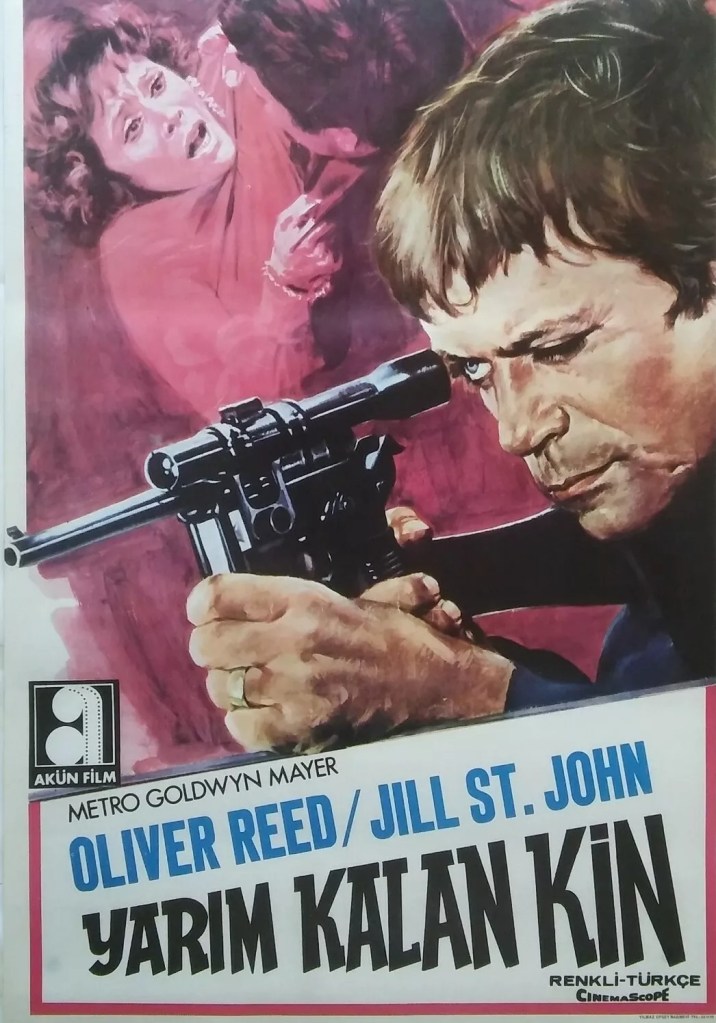
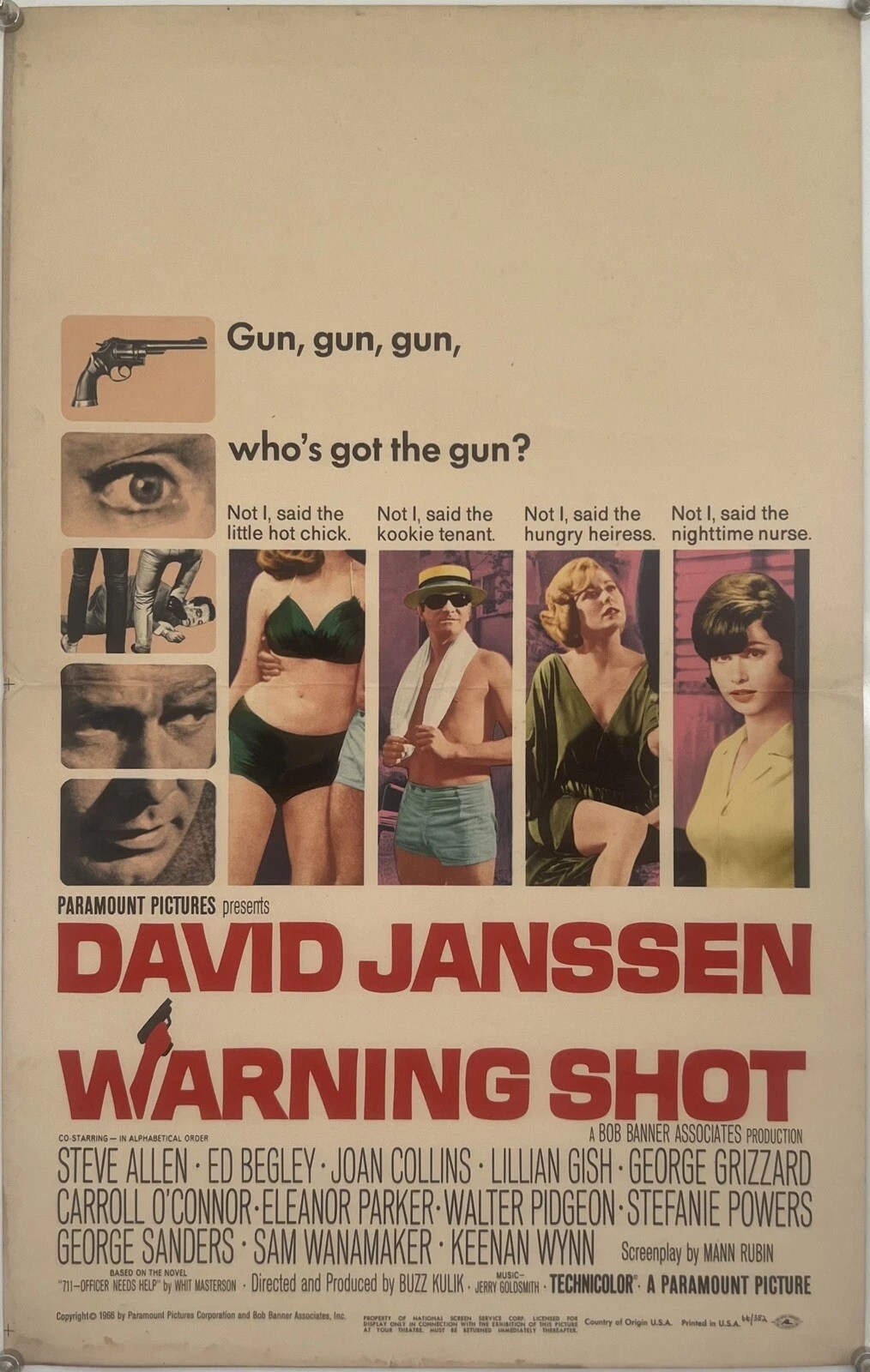
Top-class cast and occasional stylish direction get in the way of a thriller that can’t make up its mind whether it is in reality just a spoof. On the one hand we have a killer in a white suit complete with straw boater and a secret service boss who sells Turkish Delight, on the other hand a story not so much from James Bond but from Bond imitators.
Agent Robert Ford (Christian Marquand) is on the trail of black boxes that prevent missiles launching. When wife Shanny (Jean Seberg) is framed for his murder she determines to uncover the real killer, aided by Dex (Maurice Ronet), and find the maker of the boxes.
But that’s an over-simplification of an over-complicated plot so it’s best to concentrate on the highlights. For example, when customs officials stop a magician they find white rabbits and doves in his vehicle and, despite severe interrogation, he can, magically, release himself from his bonds enough to swallow a concealed cyanide pill. Instead of the usual cute children that proliferate in these kind of films, there’s a really annoying one. Shanny, imprisoned, has to make dolls. Greek Orthodox priests play a significant role.
Throw in kinky secret service boss Sharps (Michel Bouquet) who relishes being slapped for his inappropriate overtures to Shanny, a porn film starring Madame Phiphi, the heroine dangled from a crane and later lashed down to a dumper, and a villain willing to throw up is villainy for the love of a good woman.
But mostly it’s a picture in a rush. There are chases galore and nods to Hitchcock and lush Greek scenery.
It would be easy to assume that in eye-catching outfits Jean Seberg (Moment to Moment, 1966) is mostly there to provide eye candy but she does manage to outwit her pursuers from time to time although she seems equally to have a knack for being caught. Maurice Ronet (Lost Command, 1966), Christian Marquand (The Corrupt Ones, 1967) and especially Michel Bouquet (La Femme Infidele, 1969) bring an air of quality to the proceedings.
Apart from the occasional stunning image, this is not the Claude Chabrol (Les Biches, 1968) that lovers of his thrillers would expect.
Director Sidney Lumet has made more critically acclaimed crime pictures – Serpico (1973) and Dog Day Afternoon (1975) earned eight Oscar nominations between them – but none have been as thrillingly entertaining as this mash-up of the heist and surveillance subgenres. Francis Ford Coppola’s The Conversation (1974) has unfairly dominated the conversation regarding surveillance pictures, in large part down to Gene Hackman’s repressed performance, and because it made the ever-popular suggestion that Big Brother ruled the roost and there was nothing anyone could do about it.
These days The Anderson Tapes would hardly get out of the starting gate before everyone was whimpering about civil liberties and the fact that surveillance did the very job the public wanted it to do, which was to prevent crime and catch wrongdoers, would have been largely overlooked in the welter of lawsuits. A very clever device here prevents anyone getting trapped in that moral maze, so that what we’re left with is the inside gen on a superbly-organized and audacious robbery.
There’s a Thomas Crown Affair (1968) feel to this but where Norman Jewison employed split screen to get his various interlinked narratives across, here Lumet relies on speedy flash forwards intercutting the ongoing story.
The incipient danger of star Sean Connery was kept under wraps in the 007 outings, but here audiences get a blast of the full macho man, the take-charge kind of guy, and no bureaucratic buffoons getting in the way, and with no gadgets to rely upon it comes down to the sheer physicality of a magnetic screen personality.
Duke Anderson (Sean Connery) is no sooner out of prison after serving a ten-year stretch than he’s planning an audacious robbery, cleaning out an entire upmarket apartment block in the Manhattan Upper East Side, in which former girlfriend Ingrid (Dyan Cannon) lives in considerable luxury, over the Labor Day Holiday Weekend. After winning initial funding from the Mafia, he enrols, among others, camp antiques dealer Tommy (Martin Balsam), getaway driver Edward (Dick Williams), and “The Kid” (Christopher Walken), a young expert in alarms and electronics. As part of the deal he agrees to bump off another recruit, Rocco (Val Avery), who has fallen foul of the Mafia.
Everything that occurs is being recorded one way or another. Setting aside the building’s closed circuit television, Ingrid’s sugar daddy Werner (Richard B. Shull) has bugged her apartment and the cops have wiretaps on the Mafia and various others. This being a heist picture headed up by the world’s most popular star, as much as you want the criminals caught you want them to get away with it, Sean Connery having a self-justification scene at the outset to set liberal minds at rest.
So this is part docu-drama and part a whole bunch of cameos from the victims of the robbery as their, often heinous, personalities come into sharp perspective: siblings who rat each other out, the husband willing to allow his wife to be abused rather than give up a single dollar of his vast fortune. Even wealthy Werner couldn’t care less about a robbery as long as Ingrid knows her place, she’s his “property,” and has to choose him rather than Duke Anderson because, as feisty as she is, she relies on his dough for the good things in life.
But it’s driven by the hardnosed Anderson who’s not going to let the fact he’s never killed a man before get in the way of doing so now as the alternative would be the loss of the gig. Despite his macho demeanor and being able to run his gang efficiently, he’s aware he’s a small cog in the organized crime wheel.
When the cops get wind of the robbery, that triggers some superb stunt work as cops abseil across buildings.
After the disappointing box office of Shalako (1968), The Red Tent (1969) and The Molly Maguires (1970), Sean Connery roared back to form here, as the likeable hood while adding more edge to his screen persona. Martin Balsam (Hombre, 1967) is otherwise the pick of the supporting cast, though Christopher Walken, on his debut, makes his mark and you can’t ignore Dyan Cannon (Bob & Carol & Ted & Alice, 1969).
But this is just terrific stuff from Lumet, who was apt in his more critically-acclaimed pieces to drift into the overly serious, and while he makes a point – at a very early stage, please note – of the ubiquitous power of surveillance, he lets that speak for itself while he concentrates on the more thrilling and more human aspects of the story. Screenplay by Frank Pierson (Cool Hand Luke, 1967) from the best seller by Lawrence Sanders (The First Deadly Sin, 1980). As a bonus, a first class score from Quincy Jones (Bob & Carol & Ted & Alice).
The mother of all heists directed by the father of all heist pictures. Films as diverse as The Italian Job (1969), Mission Impossible (1996) and Ocean’s Eleven (1960) owe director Jules Dassin a massive debt since he pretty much invented this genre with the French-made Rififi (1955). But that involved professional criminals. Outside of masterminds Elizabeth (Melina Mercouri) and Walter (Maximilian Schell), this crew are amateurs, deliberately chosen for their lack of criminal records and with a mind to the specific tasks required. So we have acrobat Giulio (Gilles Segal), upper-class English gadget inventor Cedric (Robert Morley), strongman Hans (Jess Fisher) and driver Arthur (Peter Ustinov).
The target is the impenetrable, complete with sound-sensitive floor, Topkapi Palace in Istanbul where they plan to steal a priceless emerald-encrusted dagger. The plan is ingenious. Arthur is initially only hired to smuggle the weapons essential to the audacious heist across the border. But when he is caught and forced to cooperate with the Turkish secret police, he is enlisted as a replacement for Hans. Minus the rifles and grenades which at first appeared indispensable to the plan, the thieves come up with an even more inspired alternative involving among other things scampering across rooftops, abseiling, a parrot and slowing down the revolutions of a lighthouse.
Originally intending to betray his colleagues as soon as possible, Arthur falls under the seductive spell of Elizabeth and finds himself recruited as the replacement muscles. Elizabeth exudes such sexuality she has the entire gang in her thrall and makes the cowardly, weak acrophobic Arthur believe he can overcome all his fears. Walter engages in a cat-and-mouse game with the police, always one step ahead, with a bagful of red herrings at his disposal, eventually giving the pursuers the slip during a wrestling competition held in a massive outdoor arena.
Interestingly, too, this doesn’t have the trope of gangsters at each other’s throats, planning to double-cross one another or bearing old grudges. Nobody challenges the leader. In fact, the entire crew could not be more docile, content to sit at the feet of Elizabeth and Walter, lapping up the former’s flirtation, wondering at the latter’s skill, as if they are all honored to have been chosen.
The climactic heist, carried out with no musical soundtrack and lasting over 30 minutes, is absolutely superb, setting a very high bar for future imitators, and there is a twist ending. Dassin mixes light comedy and high tension with the sultry attractions of Elizabeth to produce an at times breathtaking picture. As well as the heist itself, the wrestling sequence is stunning and the transition of Arthur forms the acting highlight (Ustinov won the Best Supporting Actor Oscar).
But all four main stars are superb. Audiences accustomed to a more uptight Maximilian Schell (The Condemned of Altona (1962) will have been surprised by his performance. Melina Mercouri (Oscar-nominated for Never on Sunday, 1960) is the archetypal blonde bombshell, liberal with her favors but careful not to favor just one. Although Walter devises the plan, she is actually the criminal supremo, selecting the targets, and then delegating to ensure the tasks are carried out. Robert Morley is having the time of his life. Akim Tamiroff (Lord Jim, 1965) has a cameo as a chef.
A film noir star after Brute Force (1947) and The Naked City (1948) Dassin’s Hollywood career collapsed in the wake of the anti-Communist McCarthy hearings and he was blacklisted. Rififi opened few doors but even the success of Never on Sunday (1960) brought little respite. Despite returning to the mainstream with such elan through the conduit of Topkapi, albeit with a European cast, he remained on the Hollywood periphery and although Uptight (1968) – previously reviewed in the Blog – involved another heist that was primarily the wrapping for social documentary.
More at home with comedies screenwriter Monja Danischewsky (The Battle of the Sexes, 1960) draws out more humor than the source material, Light of Day by noted thriller writer Eric Ambler, would ostensibly suggest.
A delight from start to finish, the crème de la crème of the heist genre, this is unmissable. Dassin can lay claim to being the John Ford of the crime picture.
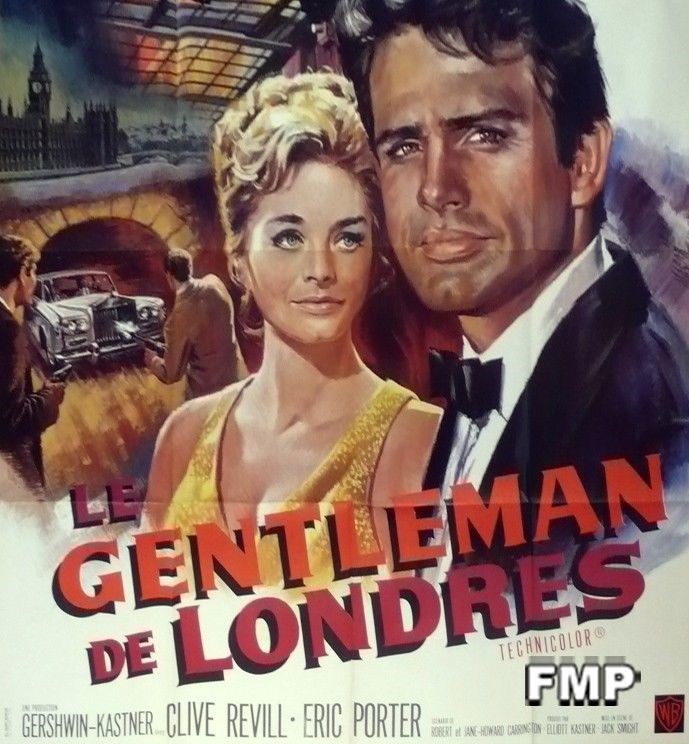
Well-worked full length British thriller that goes against the grain of presenting sympathetic hoods in the vein of Ocean’s Eleven or The League of Gentlemen both out the same year in which audiences largely align with the gangsters in part because they come across as charming and in part because their aims appear thoroughly reasonable.
Unlike the shorter efforts under the Renown umbrella this has time to develop several narrative strands, with deceit the main motivation, and spends a goodly time on the mechanics of robbery, the planning, the percentage split accorded each member, and the heist itself, which is an arduous one, involving digging through a brick wall.
Dominic (Terence Morgan) isn’t exactly a petty thief not when he can dress himself up to the nines, infiltrate a society wedding and make off with an expensive piece of jewellery, which he hides in an unusually clever fashion. But working on his own account is far more lucrative than being an employee in a watch-smuggling ring run by Joe Preedy (John Crawford) who has a classy wife Christine (Mai Zetterling) and life and has so much dough lying around that he’s easy pickings for Dominic who has a side hustle bring dupes to the gambling tables of the pukka Edward (Dennis Price).
Dominic happens to be bedding Christine but that still leaves him time to romance Fina (Yoko Tani), daughter of an ambassador, who casually reveals the embassy safe contains £100,000. She’s so helplessly in love she falls for his tale of them running off together and becomes an accomplice.
With the assistance of Edward, Dominic snookers Joe into supplying the readies to pay for the robbery set-up costs, the tools, gelignite etc. The plan involves digging a hole through the tunnels of the London Underground into the basement of the embassy.
Joe’s share of the spoils will hardly cover his debts so he’s intent on making off with the full amount. As it happens, Dominic has precisely the same idea. Christine is roped in, unknown to her husband, to act as getaway driver.
There’s a hefty dose of characterization unusual in these movies, more than just information dumps about characters. Dominic could easily fund the caper with the cash he would get from selling the stolen diamond, but he holds out for a larger amount from a fence. Joe should easily be able to afford the money, but he’s in dire financial straits because he lost a packet at the gambling tables and his own astuteness in ferreting away all he owns in his wife’s name. That puts his gains well beyond the long arm of the law but leaves him illiquid (I guess is the technical term) and he has to beg Christine to pawn her mink coats.
She’s a smooth operator, an amateur artist, happily living off Joe’s nefarious activities while running around with Dominic and planning to run away with him at robbery end. Joe’s desperate to be seen as a major player, hence his attendance at the casino, and kicking off when he doesn’t get his way, and raging against all the toffs born with a silver spoon in their mouths.
Two of the subsidiary characters are interesting studies. Safecracker the Colonel (William Hartnell) has too much of an eye for the pretty lady and too great a capacity for alcohol, but he’s been careful with his loot, spreading it around in various investments, very secure in his old age, and confident enough in his own abilities that he’s able to negotiate a higher share of the loot. But the prize supporting character is Mouse (Ann Lynn), girlfriend of Dominic’s sidekick Toddy (Charles Kay), who is considered so dumb and harmless that the crooks discuss their plans within her earshot. Except, she’s not concentrating and doesn’t quite get the hang of things and feeds Toddy the wrong information at the wrong time which nearly puts a spoke in the works.
As if the robbery required any more tension. Just how much work is involved in digging a hole through a wall is pretty clear here, should anyone in the audience have ideas of their own. You know double-crossing is also on the cards, not just the Dominic vs Joe and Christine vs Joe but the lovelorn Fina is also due her come-uppance.
And there’s a very nice touch at the end which proves that amateurs are a distinct liability. Any notion Christine has harbored that she would, if only given the chance, prove an ideal getaway driver are misplaced.
Directed by Wolf Rilla (Village of the Damned, 1960) not just with occasional style notes but with a determination to allow his characters room to move from a screenplay by Leigh Vance (Crossplot, 1969). You can catch it on Talking Pictures TV.
All in all a very entertaining little picture strong on tension with a host of interesting characters.
Bunch of incompetent crooks kidnap an impoverished Mafia boss who pays his ransom by setting up a major heist. By a stroke of casting alchemy this brings together Cesare (Vittorio De Sica), the epitome of old world Italian charm, knock-out gangster’s moll and scene-stealer-in-chief Juliana (Raquel Welch) replete with scanty knock-out outfits and criminal mastermind Professor Samuels (Edward G. Robinson). In order to acquire the funds necessary to steal $5 million of platinum ingots from a train – the plan involving a tank and an WW2 bomber – the crew, initially headed by American Harry (Robert Wagner), need to carry out smaller jobs.
Problem is, none of them are any good, not even Cesare, who has lost his flair and botches an attempt to rob an old flame of her jewels. They can’t even carry out a simple theft from a restaurant. The heist itself is pretty spectacular and innovative. And the movie is quirky, with a darker edge. While there are few belly laughs, the light tone is enough to carry the gentle humor, mostly inspired by the misplaced team, amateurs for various reasons, not necessarily outright lawbreaking, on the run. These include London Cockney mechanic Davey (Davy Kaye), chef Antonio (Francesco Mule) distracted by hunger at every turn, cowardly violinist Benny (Godfrey Cambridge) and Joe (Mickey Knox) with a helluva brood to feed.
The story does a good bit of meandering, as does the camera, much of its focus on the voluptuous charms of Juliana, but the hurt pride of Cesare and the grandiose machinations of the professor keep it on course. The Italian settings, incorporating grand villas and ruins, do no harm either. The heist is terrific and there is a final twist you may or may not see coming. The interplay of characters works best when it involves Juliana, who attempts to twist Cesare around her little finger, that tactic mutual it has to be said, who keeps the professor on his toes by dancing with him in a disco, and it soon becomes apparent that she has the upper hand over loverboy Harry.
You could be forgiven for thinking the title refers to Raquel Welch – a cinematic infant at this stage with only One Million Years B.C (1966) in her locker – especially when her cleavage and looks receive such prominence, but the caper is classy and different. As well as being obvious she is both sinuous and seductive and clearly has a mind of her own, possibly the most criminally intent of the entire outfit, with weapons the others lack. By this point, she had invented the pop-out bikini, pictures of which had flooded Europe, making her the pin-up par excellence, but those who came to simply gawp quickly realised there was talent behind the body.
De Sica (The Shoes of the Fisherman, 1968) constantly plays around with the idea of being a defunct godfather and Robinson (Grand Slam, 1967) is the antithesis of the gangster roles on which his fame relied. Robert Wagner (Banning, 1967) is less effective, miscast and out of place in such august acting company and losing out to welch in every scene.
This was a considerable change of pace for British director Ken Annakin after Those Magnificent Men in Their Flying Machines (1965) and Battle of the Bulge (1965) and he brings to this the comedy of the former coupled with the narrative complications of the latter, wrapping everything up in an easy inviting style that makes the most of his stars and the locations. Screenwriter Sy Salkowitz was a television veteran (Perry Mason, The Untouchables et al) , this marking his first venture into the big screen.
France has been particularly successful in attracting a global movie audience for its literary and real-life legends. There have been over 20 big screen versions of The Three Musketeers, six of The Hunchback of Notre Dame, over a dozen of Les Miserables, and Napoleon Bonaparte has been the object of stars like Marlon Brando and directors such as Ridley Scott. But one legendary French figure has failed to connect. Underworld thief-taker Vidocq has attracted little interest outside his homeland. Even Douglas Sirk’s Hollywood version A Scandal in Paris (1948) starring George Sanders failed to crack the international market.
The Emperor of Paris is the latest iteration. I came across it while scrolling through Amazon Prime’s small catalog and since it starred Vincent Cassel (Mesrine, 2008), inheritor of the Jean-Paul Belmondo mantle, I gave it a go.
Set in Napoleonic times, Vidocq’s fame as a criminal relied on his ability to escape from the toughest prisons. After his last escape in 1805, when everyone believed him dead, he turns legit, building up a business as a fabric retailer. But later he turns into a highly successful thief-taker, hired by the police as an unpaid detective to clean up the streets of Paris on the basis that he will be granted amnesty. The officials dangle him on a string of promise for a heck of a long time.
While the legend of Vidocq rests on him becoming known as the father of modern criminology, the founder of Surete Nationale and setting up the first detective agency, this tale focuses more on action than detection – and presumably the boring bureaucracy that entails. Much of the information about criminals comes from Vidocq’s own experience, those of his accomplices and from informants, willing or otherwise.
There’s nothing sophisticated about the French cops, little more than night watchmen or official thugs who prefer interrogation to detection, and this is filthy twisty-street Paris before Haussman got his hands on it and recreated it with boulevards and broad expanse.
Vidocq knows more than the police where the bad guys hide out though some of them, like the celebrated American mobsters of the Prohibition era, are more likely to vaunt their notoriety, as with sadistic gang leader Maillard (Denis Lavant). And as ever when a hero ventures too close, the bad guys are apt to take extreme measures to gain revenge.
The harsh tale is leavened by the introduction of petty thief and prostitute Annette (Freya Mayor) who never manages to get Vidocq, who trusts nobody, to commit to a relationship, and social climber and arch seducer Baroness Roxane (Olga Kurylenko).
Vidocq himself is something of an enigma, soft spoken, dour, a loner, penned in by all his suspicions and led a merry dance, it has to be said, by high-ranking officials determined to deny him just reward. Betrayal, unexpected alliances and cold-blooded killings keep the narrative on a constant simmer. In one of the standard tropes, Vidocq assembles his own team, of criminals. The sets are excellent and the action pretty much non-stop
The role is tailor-made for Vincent Cassel, the best of the bad boy good boys, who mostly has to look surly and dispense his own version of justice. Denis Lavant (Holy Motors, 2012) is a memorable villain and August Diehl (Bonhoeffer: Pastor, Spy, Assassin, 2024) makes meaty work of best friend turned enemy. Freya Mavor (Marie Antoinette TV series, 2025) is both crafty and romantic while Olga Kurylenko (Thunderbolts, 2025) is mainly the former.
This has the feel of a two-parter, with the more interesting part of the tale in criminology terms still to come, but so far there’s been no sign of a sequel.
Directed by Jean-Francois Richet (Mesrine) who collaborated on the screenplay with Eric Besnard (Wrath of Man, 2021).
While nowhere near as compelling as Mesrine, it’s still a fascinating tale and Cassel is always good to watch.
The first piece of sleight-of-hand is the title, setting audiences up for the opener in a crime series featuring the eponymous French character. A terrific twist at the climax shows exactly why this would not be turned into a series, though one critic who clearly didn’t watch the whole picture thought otherwise. And you can see why because it’s old-fashioned enough to provide you, Agatha Christie style, with a string of suspects, adding in and leaving out enough information that it’s hard to work out who the criminal mastermind might be.
For four years, a burglar has been terrorizing Europe, stealing diamonds almost at will. The expert on his methods is French cop Duval (Anton Diffring), a debonair confident chap with a distinct Gallic charm, who happens to be in London when the thief – known only as Mr March – strikes again. Only this time, taken by surprise, he murders socialite Alice (Angela McCann). British detectives Insp Wilson (Mark Singleton) and Sgt Hastings (Patrick Bedford) are only too happy to welcome Duval’s assistance, especially as he appears to have the keener eye.
In short order we are introduced to Alice’s maid Doreen (Susan Halliman) who discovers the body. She’s recently entered into a relationship with the disreputable Charley (Charles Roberts) and may have deliberately or inadvertently given away the secret of where Alice hid her diamonds – and it wasn’t in the safe. Alice’s friend Jackie (Diane Hart) enters the equation because her boyfriend Mark (Aiden Grennell) has been trying to tempt Alice into investing in a property deal. And may have been sufficiently annoyed with the brusque way she gave him the brush-off to have killed her. Mark has an alibi for the time of the murder, which took place in the middle of the night. But it’s an odd one. He claims he chose that time of night to pay a visit to his lawyer to discuss a business deal. And his manservant Brossier (Charles Mitchell) is an odd fish.
Jackie is revealed as grasping and only too happy to do Mark’s bidding, which includes some unusual instructions. Doreen is too trusting and somewhat dim. Charley is definitely dodgy and has been paid to provide information extracted from Doreen as to the jewels’ whereabouts.
There’s another complication. Because of the murder, the diamonds are now too hot to handle and can’t be quickly shifted by a dealer in stolen goods.
You can wallow in the nostalgia, pipe-smoking cop, nothing wireless about the telephones, a couple of scenes set in a milk bar with youngsters dancing to a record. There’s even a car chase.
The initial sequence is stylish, with a strong hint in the play of light and shadow of film noir, and though it tends to stick to police procedural there are enough twists and characters with hidden agendas to keep the plot wheels turning, with Duval turning his nose up at the ineptitude of the British copper.
With his haughty features and blond hair Anton Diffring (Counterpoint, 1967) had been typecast as the arrogant Nazi or German officer – so this was something of a career break and I guess if a series had developed he might have found a different niche. This proved to be Diane Hart’s (The Crowning Touch, 1959) only movie of the decade, and Angela McCann’s sole picture.
With an abundance of red herrings and twists, director Max Varnel (A Question of Suspense, 1961) keeps the action moving at a clip. Written by J. Henry Piperno (Breath of Life, 1963).
Worth it for the suave Anton Diffring and the twists.
Prophetic plot is the best reason to watch this more considered feature from newcomers Commonwealth United. Another movie featuring a former star on the wane in Nancy Kwan. Again, one of those neo noir films which might have made a bigger splash with an actor other than Adam West, coming off the Batman television series and 1966 film, in the lead. A fair bit of philosophizing from the supporting cast.
The Mafia trying to go legit had been tackled in Point Blank (1967) and The Brotherhood (1968) and would be key to Michael Corleone’s machinations in The Godfather Part Two (1974), but here it goes into far deeper and more dangerous territory. At this point, organized crime was still run by the Mafia, but what if that and the legitimate big businesses and financial institutions they operated were prey to foreign interests.
Most movies that involve Russian, Eastern European, Albanian or South American gangs taking over American criminal networks, usually by force, concentrate on the illegal activities rather than the legitimate and powerful businesses suborned through money laundering. Although here the plot is somewhat convoluted involving the CIA and priceless artefacts, the core asks the question – what would happen in the U.S. should the Mafia come under Far East control.
This occurs for the dumbest of reasons. One of the Mafia top hoods, part of the management committee, wants to be in sole control so he’s enlisted the help of Far Eastern bodies, not realizing that the foreigners intend it to go the other way, and that he is in their grasp.
A convoluted tale is an invitation to plot holes. Hard to imagine restaurateur Johnny Cain (Adam West) as a former top assassin when in three out of four tussles with gangsters he comes off worst. He’s tossed in the drink, chucked through a window and thrown out of a door.
And he’s only turned detective under duress. The Mafia force him to track down the killer of old-school gangster Tony Grinaldi (Steve Peck) otherwise they will take out a contract on him. His first port of call in Grinaldi’s girlfriend Revel Drue (Nancy Kwan), who had enjoyed a brief liaison with Johnny until her lover promised her a termination. Then old buddy Lt Miles Crawford (Nehemian Persoff), philosophizing cop, lends a hand. The CIA turn up the heat since someone is killing the great spies of Bermuda. The missing artefact, a solid gold statue of a Tibetan god, enters the mix. Grinaldi’s wife, drunken actress Tricia (Patricia Smith) is the secret lover of one of the top Mafia guys, Kenneth Allardice (Robert Alda).
Little chance of it being confused with the Hitchcock classic.
When one set of thugs aren’t trying to do away with Johnny, another bunch have Revel in their sights. But it turns out that the foreigners are backing Allardice, knocking off the other four members of his committee leaving him in sole control.
All the way through except clinging to Johnny and looking scared, Revel (“a small town girl who wanted a big city man”) hasn’t had much to do, so I was expecting at the very least, once she turned the romantic screws on Johnny, that she would turn out to be a femme fatale in the pay of the foreigners. Turns out the femme fatale comes from a different source. Tricia has infiltrated the organization, either on her own account or on behalf of the government (it isn’t clear which). Marrying Grinaldi then launching into an affair with Allardice who, having conveniently got rid of his rivals, leaves her in pole position to head the group.
There are some neat touches. Johnny lives on a big yacht not the usual down-at-heel houseboat occupied by a down-on-his-luck private eye, a naked leg part of a naked body warming Johnny’s bed kicks over the phone when it interrupts her bed warming activities, the Mafia headquarters are atop a snazzy department store, the academic Johnny seeks out for information on the artefact is a part-time stripper.
But we’ve also got to suffer two whole songs from cabaret artists Lucky (Buddy Greco) which slows the tempo right down.
Nancy Kwan made an instant splash as the romantic lead opposite William Holden in The World of Suzie Wong (1960), a box office smash, for which she won two Golden Globes. Her star potential was quickly recognized, either top-billed or leading lady in her next seven films. But after Lt. Robin Crusoe, U.S.N. (1966) her marquee slipped and after making up the numbers in The Wrecking Crew (1968) her career never recovered. For sure, she held onto her place in the sun for far longer than Tippi Hedren (Tiger by the Tail, 1968) who was at one point the bigger star, but Hollywood burned through stars at a heck of a pace or dropped them altogether or sent them into the exploitation/B-picture hinterland – Kwan was the star after all of Wonder Women (1974) and Fortress in the Sun (1975).
Adam West barely found a place in the sun, five films, and supporting roles/bit parts at that, over the next decade represented a poor return.
Final film of director Francis D. Lyons (Destination Inner Space, 1966), an Oscar-winning editor, from a screenplay by Charles A. Wallace (Tiger by the Tail, 1968). Became something of a cult item on television.
Ties itself up in knots with narrative complication so that by the time it comes to the dumbest of dumb climaxes you’re simply worn out. And having tied itself up in knots, it only escapes from the problem of a son coming to terms with a mother who’s a serial killer by providing him with the most unlikely of get-out-of-jail-free cards. And, actually, by the time you reach the conclusion you realize it’s really about nepo kids, one dumb as all get out and the other a chinless wonder.
Keeley Hawes as Julie the titular murderous mercenary is good value but that’s mostly because she curses like a defrocked nun and is as ratty as hell and her engagement with her estranged son Edward (Freddie Highmore) is like Lethal Weapon on speed.
Previous (female) assassins we have known.
So Julie, retired a decade and holed up in Greece, is pulled out of retirement because…she’s closest to potential victim Kayla (Shalom Brune-Franklin) …who is (it turns out) the unlikely girlfriend of unlikely journalist (of what? Rabbit Times?) Edward who is only (it turns out) interested in her because he’s been left a dodgy inheritance by his mysterious father (now deceased) and the trail of that leads to her family.
But not killing Kayla makes Julie the target of various other assassins, but rather than going about their job in discreet fashion by picking her off with a telescopic rifle they decide to barge in on a wedding and massacre everybody in sight in the hope a stray bullet hits her. Luckily though, that provides an opening for local butcher Luka (Gerald Kyd) to become her sometime companion.
Then we leap into a menagerie of subplots. Kayla’s cokehead brother Ezra (Devon Terrell) has mummy issues (she’s deceased, too, mysteriously committing suicide) which (it turns out) is the perfect way for another subplottee Marie (Gina Gershon) to enter the equation. After shagging him to pick his brains she (it turns out) is Edward’s long-lost aunt. Then there’s the mysterious letter, written on yellow notepaper (!!!) kept hidden in a safe by Kayla’s dad, billionaire tycoon Aaron (Alan Dale), which contains information so dangerous it could destroy his business.
Previous (male) assassins we have known.
But (aha!) someone knows the secret, Aaron’s tech expert Jasper (David Dencik) is blackmailing Aaron but is now on the run. Anyways, Kayla discovers the terrible secret which is that Aaron was initially funded by a dodgy arms dealer. To prevent that secret getting out, Aaron had him bumped off 30 years ago by (wait for it) Julie on her first solo killing mission.
Kayla is threatening to expose her dad’s secret though it doesn’t occur to her to just hand the exclusive to Rabbit Times chief investigative reporter Edward. Meanwhile, Ezra spends his time concocting barmy plans majoring in violence that all go south until his exasperated dad gives up all pretence of considering him as just the guy to run the business when the time comes.
Meanwhile, Marie (it turns out) isn’t Edward’s long-lost aunt after all – she’s (wait for it) his long-lost mum. And when Edward finds that hard to believe she kidnaps him and takes him to a stronghold. But (it turns out) Edward’s suspicions are correct.
There’s scarcely a minute goes by without someone bursting in with a machine gun or worse, so it’s no surprise that Julie and Luka (who’s proved himself handy with a meat cleaver) decide to invade the stronghold. And that sets up the preposterous finale.
Marie isn’t Edward’s birth mum at all but her dead husband was his father. Marie didn’t fancy all the messy things pregnancy did to a young beautiful body so they called in a surrogate. But Julie, in the way of Jason Bourne, had a conscience three decades ago when it came to kids and after knocking off Marie’s husband, in the absence of a bottle of milk or any other pacifier to soothe a crying baby, scooped up said infant (Edward).
Marie wants her revenge by having her not-son Edward kill his not-mother Julie. You couldn’t make it up. Yet someone did, presumably as the get-out-of-jail-free card so Edward didn’t have to worry about being the son of a serial killer.
And to show how grown up her is, Edward kills Marie. And as if this was Revenge of the Nepos, Ezra poisons his old man.
Kayla forgets all about exposing the nasty beginnings of her family company and Edward ignores the complications of the serial killer mum and they all (literally) sail off into the sunset.
Written by the Williams Brothers (The Missing, 2014).
The only good thing to be said about this is that it knocks Guy Ritchie off his throne as the King of the Preposterous.
I enjoy a demanding supremely-acted fluently-directed movie with possibly a hint of Oscar reward as much as the next person. But last thing at night, I often prefer something that makes no demands at all except paying attention to a twisty narrative. And that’s where Talking Pictures TV comes in, with its string of low-budget crime pictures made by British indie outfit Renown.
The twist here is an unusual one. Gangster Mr Big, Sebastian “The Duke” Dukelow (George Pastell), alerted by girlfriend Melanie (Anita West), a cabaret singer in his nightclub, to the work of journalist Jack (Conrad Philips), determined to expose the crook, decides to put him out of the action. But not in the normal way of fitting him with a cement boot and dropping him in the Thames. Instead he frames him or a robbery and Jack ends up doing two years in jail, losing his job, but not girlfriend Diana (Linda Marlowe), in the process.
In prison he bonds with cellmate Charlie (John Rees), who holds a grievance against The Duke. When he hatches his own revenge plan, it appears Charlie is all in.
Or is he? Out of jail, Charlie has gone straight with a job in a refrigeration depot. Jack, meanwhile, has no job and festers away. Any chance Jack has of getting the best in a one-to-one confrontation with The Duke is knocked on the head when he realizes how closely guarded the crook is. So Jack makes do, in the meantime, with making The Duke jealous by dancing with Melanie.
And who’s side is Charlie on? Charlie approaches The Duke with a deal. In return for some cash, he will reveal Jack’s revenge plan.
So now the twist is in. Jack is lured by Charlie into the refrigeration plant where The Duke proceeds to lock him inside one of the units where he will conveniently freeze to death.
But will he? Not when Charlie, secretly pressing an array of control buttons, sets him free and they turn the tables on The Duke, sticking him inside the freezing compartments until he signs a confession releasing Jack of any involvement in the robbery. Meanwhile, as it happens, Jack and Charlie find a way to stitch up The Duke and his gang, ensuring they will be arrested for diamond smuggling, a crime of which they are entirely innocent.
Pretty much all narrative, but with well-drawn characters. You wouldn’t expect a well-heeled highly moral reporter like Jack, even if wrongfully convicted, to turn to crime himself. Nor, now unemployable, to make a living by placing stories sympathetic to The Duke in the newspapers.
And The Duke proves exceptionally savvy. To muddy the waters, he donates £1,000 to cover Jack’s legal fees and has all manner of highly sophisticated surveillance and protection devices to keep tabs on his empire.
The women, too, are well drawn. Melanie constantly pokes fun at her scary lover, and is not above making him jealous by coming close to smooching with Jack. And Hilda (Jean Trend), the editor’s ineffectual secretary, working her romantic way through the ranks of the reporters, knows that her legs ensure she will never be out of work. On the other hand Diana has relatively little to do dramatically.
Conrad Phillips (The Switch, 1963) and George Pastell (The Long Duel, 1967) enjoy an interesting duel. Anita West (Shadow of Treason, 1964) steals the acting honors ahead of Linda Marlow (The Big Zapper, 1973).
Directed by Peter Maxwell (Serena, 1962) from a screenplay concocted by himself and the star.