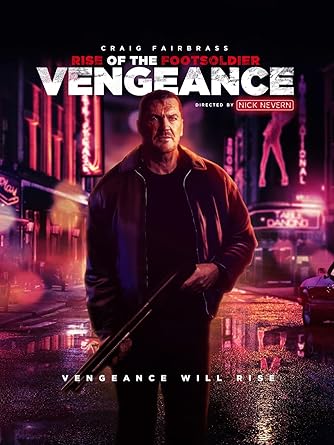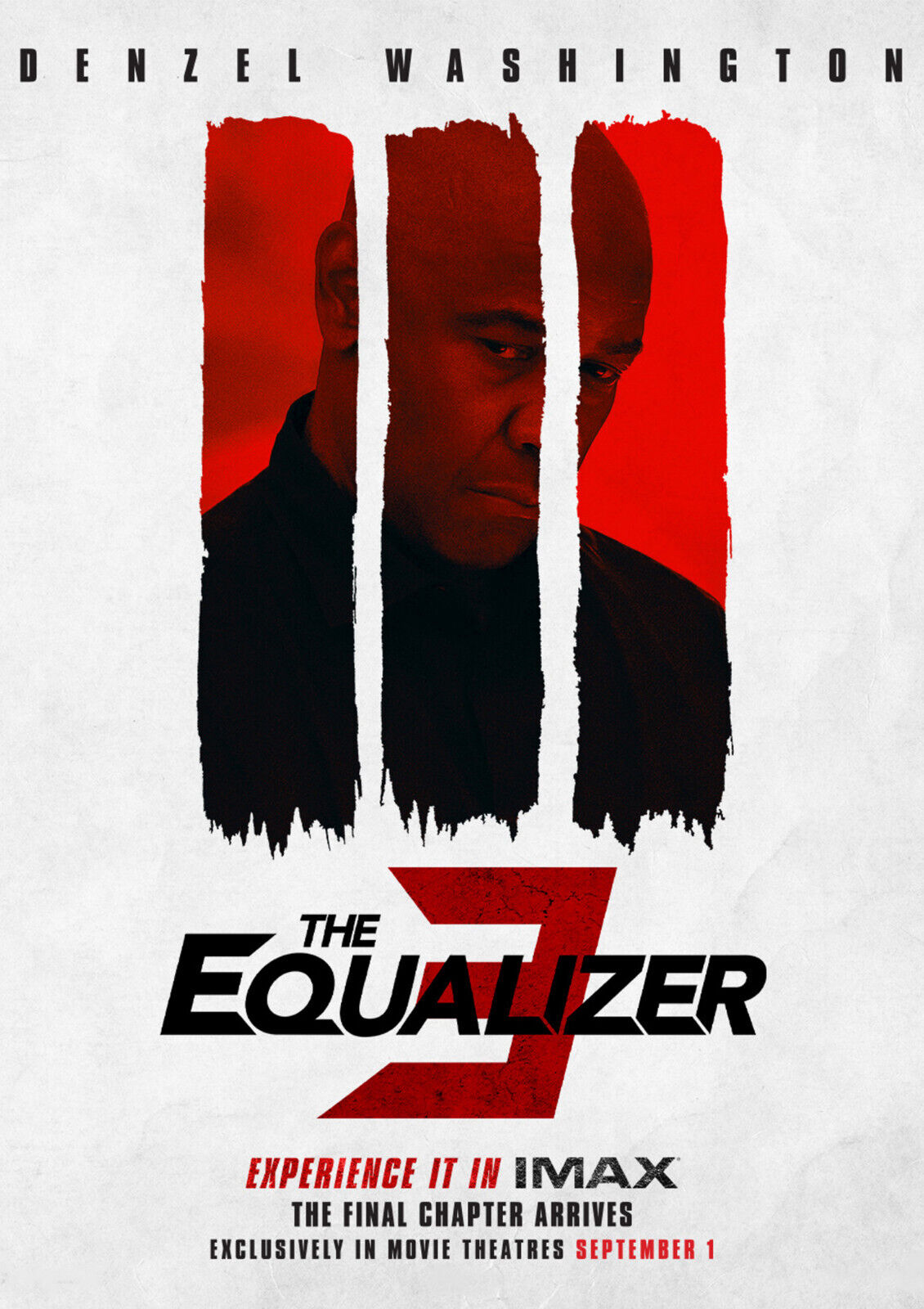
The Equalizer 3 (2023) **** – Seen at the Cinema (three times)

Stylish, triumphant, conclusion to a vigilante series that stands comparison with John Wick as the best of the new century. Oddly enough, the pair share some motifs, not least a mountainous stairway to a medieval church. And there are nods to The Godfather, killings against the backdrop of a religious procession and fruit spilling onto a corpse, a dagger pinning a hand to a table. And you might find shades of Apocalypse Now in the brooding remorseful figure of Robert McCall (Denzel Washington) convalescing in a remote fishing village in southern Italy. And it’s fully contemporary with a nod to the power of the mobile phone in depicting live events.

For an actioner it’s chockful of mystery. To begin with, you think we’re at the end, the aftermath of some gun battle, but, in fact, it’s just the start. Quite why McCall has ended up in a Mafia fiefdom in Sicily is held back till the end as is explanation regarding helping young C.I.A. agent Emma (Dakota Fanning) track down Mafia drug dealers, both narrative hooks adding to the subtlety and nuance that filters through this reflective actioner. Sure, there’s brutality, when is there not with McCall around, but there’s also reality, marvellously evocative scenes of village life, the vigilante sipping his trademark tea in a café, buying fresh-caught fish, joining exuberant locals celebrating a famous win at soccer.

Assisted by local physician Enzo (Remo Arisio) and local cop Gio (Eugenio Mastandrea) in recovering from a life-threatening bullet-wound, it’s all McCall can do to hobble down the steps with the aid of a walking stick. No Rocky-style reinvention dynamics here, no weight-training or running regime, no taking to the target range. When McCall struggles up a flight of steps your heart is in your mouth.

Meanwhile, a story unfolds of a power grab, legitimate and illegitimate, by Mafia chief Vincent (Andrea Scarduzio). But when the gangster’s younger brother Marco (Andrea Dodero) pushes his weight around once too often in McCall’s presence the rumbling volcano starts to erupt. But in temperate fashion to begin with, McCall relying on being able to locate a particular nerve (a physical one) enough to send the young thug scarpering.

Worth noting that the movie avoids two obvious traps. Agent Emma isn’t fighting a gender war, she’s no feminist battling for approval from male counterparts; in fact, if anything, she’s accorded full praise for her work and makes sure that she never acknowledges McCall’s input to her superiors, which seems even more realistic.

You might expect by now that widower McCall would be ripe for romance but though waitress Aminah (Gaia Scodellaro) takes a shine to him that goes little further than a pleasant walk along the beach sampling local delicacies. So you might also expect that, sticking to the core, this would be just a lean rip-off sequel. Instead, it’s rich in composition and detail. Many scenes play out in what appears to be atmospheric black-and-white. While not in the operatic league of John Wick 4, it’s a joy to watch.

Plenty bang for your buck but an interesting storyline that meshes drugs, terrorism and the Mafia. Deceptively subtle performance from Denzel Washington (The Magnificent Seven, 2016). He could have coasted home with his brooding persona. Instead, he walks like a man half-dead, reacts as if bewildered to still be alive, and finds he is no longer an outsider. Dakota Fanning (Once Upon a Time in Hollywood, 2019) plays down her role, there are no dramatic fireworks, she’s a confident individual, not giving an inch in her quiet duel with McCall, but no histrionics either.

Long-lasting director-actor teamings generally bring richer rewards as the partnership grows. This is the fifth film for Washington and Antoine Fuqua, beginning with Training Day  (2001) and incorporating The Magnificent Seven and the two previous Equalizer outings. It has the feel of a famous partnership along the lines of John Wayne-John Ford, James Stewart-Anthony Mann and Gregory Peck-Henry King.

Nod to Richard Wenk, third time in the writer’s chair, for the screenplay and espcially to Marcelo Zarvos (Emancipation, 2022) for a score that combines haunting theme tune and screeching guitar for the action.

I was so taken with this I’ve already seen it three times. Might well head back a fourth time next week for more nuance – and more bang.

The Frightened City (1961) ***

Sean Connery in an early role as a gangster is not the only reason for watching this brisk British thriller about a London protection racket. Primarily told from the point-of-view of the bad guys, this explores how a ruthless Mr Big builds up a criminal empire. Waldo (Herbert Lom), a bent accountant, brings together the six major gangs involved in extorting money from pubs and stores into a democratically-run syndicate.  He then moves on to demanding bigger sums from bigger enterprises such as construction businesses. However, when the gangsters fall out they go to war.  

This film is way ahead of the game in presenting gangsters as displaying any intelligence. Generally, they were depicted as brutes who ruled by force. But criminality at the top level demanded as much organization as in a legitimate business. Personalities had to be harnessed to work together rather than shoot each other on sight. Such skills had to exist in order for gangsters to operate on any scale. This picture examines how this was done.

The cops led by Det Insp Sayers (John Gregson) are almost a sub-plot and the story would have adequately run its course without their involvement. Sayers sails close to the wind in hoping to “tilt the scale of justice in our direction for a change.” Paddy (Sean Connery) doesn’t appear until about 20 minutes as a karate-expert cat-burglar turned enforcer. Paddy’s involvement with the syndicate ends when his code of honor is breached and he turns on his employers. His code is not so sacrosanct that it prevents him cheating on girlfriend Sadie (Olive McFarland). But he does display the virility to fill James Bond’s shoes.

There’s far more violence that would be expected in a British crime picture of the era. Night clubs, shops and pubs are wrecked and there’s plenty of fisticuffs and when the gangsters go head-to-head they upgrade to grenades. There’s a bit more plot than the running time can deal with so director (and producer and co-writer, along with Leigh Vance of Crossplot, 1969, fame) John Lemont occasionally resorts to cliché devices like newspaper headlines. Canadian Lemont – most famous for writing the first serial on ITV, Sixpenny Corner – was an auteur of the old-fashioned (and unheralded) kind, and previously writer-director of The Shakedown (1960). 

Top billing was a step up for Herbert Lom (Gambit, 1966) and he made the most of it, delivering a suave villain among the thugs. John Gregson (Night of the Generals, 1967) Table, 1959) was a solid British star and ideal cop material (he was later British television’s Gideon). Yvonne Romaine, as Connery’s new squeeze, a nightclub singer exploited by Lom more for her looks than her voice, was known to audiences after Curse of the Werewolf (1961). This was a sophomore outing for Scottish television actress Olive McFarland (So Evil So Young, 1961). Unusually, for a British picture at this time, the theme tune written by Norrie Paramour was covered by The Shadows and turned into a hit.

At this point in his career, Connery had already had two bites of the cherry without much success – romancing Lana Turner in Another Time, Another Place (1958) and Disney’s Darby O’Gill and the Little People (1959). He would make another three films before his breakthrough with Dr No (1962) but the Pressbook showed signs that he was headed for the heights.  Co-star Yvonne Romaine (and her distinctive body measurements) were accorded three separate stories in the Pressbook, compared to one each for Lom and Alfred Marks, at that point better known as a comedian. While no articles about Connery were featured, when it came to the advertising campaign Connery (and Romaine) outshone their co-stars.  

Producers were contractually bound in relation to the size of credits that appeared on any advertising. But there were no such regulations regarding the visuals of an advert. Although top-billed, Lom is not shown on any of the adverts. Given greatest prominence was Yvonne Romaine. There were thirteen different ads and she appeared in them all. Although Connery was third-billed and she was two rungs below in the credit stakes, he was the junior partner when it came to the artwork. While, Connery appeared in eleven in only one did he overshadow Romaine and in another they were visually-speaking accorded roughly the same status. But otherwise, she hogged the adverts.  

The Pressbook was small by American standards, consisting of six A3 pages, the bulk of which was given over to adverts. But what it lacked in pages it made up for in taglines – of which there were six main types.

The picture was not seen much in the United States, sent out in first run as the lower half of a double bill in only a handful of big cities, so there’s a fair chance it’s completely unknown except to Connery completists. It later appeared on the reissue circuit when Connery was a bigger name.

Worth a look as an example of the British crime movie trying to break out of the confines of the genre, and even more so as an early example of the Connery screen charisma.

The Killers (1964) ****

Angie Dickinson (Jessica, 1962) is the standout as the cold-blooded double-crossing femme fatale in this slick tale of a double heist. Sure, Lee Marvin (The Professionals, 1966) attracted the bulk of the critical attention as the no-nonsense hitman and John Cassavetes (Machine Gun McCain, 1969) attempts to steal the show as the dupe, but Dickinson walks away with it. Although he makes a vicious entrance, Marvin really only tops and tails the movie.

Violence wasn’t the marketable commodity it proved later in the decade, and this was initially made with television in mind, so it’s surprising how stunning the brutality remains today. In the opening sequence, set in a home for the blind, hitmen Charlie (Lee Marvin) and Lee (Clu Gulager) knock around a sightless receptionist before moving on to shooting at point-blank range their victim, ex-racing driver Johnny North (John Cassavettes). But when they get to thinking why they were paid way over the odds to shoot North, they discover he was involved in a million-dollar heist and before you can say flashback we tumble into the story of how gangster’s moll Sheila (Angie Dickinson) lured him into participating in the robbery organized by boyfriend Jack (Ronald Reagan).

There’s nothing particularly complicated about Jack’s plan – hijacking a mail truck on a remote road – but the movie takes its sweet time getting there, focusing on Johnny’s racetrack antics and on Sheila nudging Johnny into the illegal kind of pole position. She’s pretty convincing as the all het-up lover to the extent of persuading Johnny to double-cross Jack but her convictions only run one way – to whatever best suits herself.

Eventually, it appears as if the million bucks has disappeared into thin air. Jack presents himself as an honest businessman, but Sheila only holds to the party line for as long as it takes the hitmen to dangle her from a fourth-storey window. But gangsters are rarely as amenable or as dumb as the schmucks they snooker, so Jack is more than able to take care of himself and his property (counting the loot and Sheila in that category).

There might be twists a-plenty but the main narrative thrust is which way will Sheila spin? Was she ever even in love with Johnny? Or having snared Johnny and then managed to convince him to double-cross Jack did she plan to run off with the money herself? Or was she going to double-cross him all along once his usefulness was over?

And even if her heart is in the right place, then that’s plain tragic, stuck with the lout, unable to break free, perhaps playing all the alpha males off against each other her only hope of maintaining her fine lifestyle while not ending up another casualty.

A surprising chunk of time is spent on the racecourse, not just building up the romance and  endorsing Johnny’s driving skills, and as well as the tension of a specific race – and the possibility that too much loving could fatally damage the driver’s track ambitions – you are kept in some kind of narrative limbo as you keep wondering when the heck the killers are going to re-enter the equation.

Don (here credited as Donald) Siegel (Coogan’s Bluff, 1968) directs with considerable aplomb, especially as this carries a television-movie-sized budget and that he hadn’t had a stab at a decent picture since making his initial mark with Invasion of the Body Snatchers (1956). From the iconic opening shot of a pair of dark sunglasses to the sad greed-soaked finale, Siegel’s brilliant use of sound and movement plays in stark contrast to moments of stillness and silence. Throw in aerial tracking sequences, realistic race scenes, and one bold shot of a handgun being pointed at the audience (a similar shot in his Dirty Harry, 1971, ruffled more feathers and generated more critical note).   

But the director’s cleverest ploy is to introduce the hitman, then dive elsewhere, leaving audiences begging for more. So it’s just as well that Angie Dickinson delivers in spades. You need to believe she could be as conniving as she is seductive for the entire tale to work. She is the linchpin far more than Lee Marvin.

And that’s to take nothing away from his performance, a far cry from the over-the-top villains of The Commancheros (1961) and The Man Who Shot Liberty Valance (1962), setting up the template for the later quiet-spoken thug of Point Blank (1967).  

As highly watchable as this is, it wasn’t a career breakout for any concerned. Lee Marvin was just a supporting actor on Ship of Fools (1965) and far from first choice for Cat Ballou (1965), the movie that did make his name. Don Siegel wasn’t offered another movie for four years. Angie Dickinson tumbled down the credits, reduced to second female lead in The Art of Love (1965) and working in television or in movies as a supporting actor until the low-budget The Last Challenge/Pistolero of Red River (1967).

Ronald Reagan bowed out of the movies after this. Clu Gulager, who had a running role in The Virginian (1963-1968) only made three movies in the next seven years.

Gene Coon (Journey to Shiloh, 1968) adapted the short story by Ernest Hemingway which when previously filmed in 1946 marked the debut of Burt Lancaster with the sultry Ava Gardner as the femme fatale.  

Striking, tense, and a must for fans of Dickinson, Marvin and Siegel.

Five Golden Dragons (1967) ***

Producer Harry Alan Towers, himself something of a legend, had put together a quite superb cast – rising Eurostar Klaus Kinski (A Bullet for the General, 1967), Hollywood veterans Robert Cummings (Dial M for Murder, 1954), George Raft (Scarface, 1932), Dan Duryea (Black Bart, 1948) and Brian Donlevy (The Great McGinty, 1940) plus British horrormeister Christopher Lee and Rupert Davies (television’s Maigret). Throw in Margaret Lee (Secret Agent, Super Dragon, 1966) and Austrians Maria Perschy (Kiss, Kiss, Kill, Kill, 1966) and  Maria Rohm (Venus in Furs, 1969).

And all in aid of an enjoyable thriller set in Hong Kong that dances between genuine danger and spoof. I mean, what can you make of a chase involving rickshaws? Or a race over bobbing houseboats parked in a harbor? There’s a Shakespeare-quoting cop Sanders (Rupert Davies) whose sidekick Inspector Chiao (Tom Chiao) often out-quotes him. And there’s British-born Margaret Lee, a cult figure in Italian circles,  belting out the title song and just for the hell of it Japanese actress Yukari Ito in a cameo as a nightclub singer.

A newly arrived businessman is chucked off the top of a building by an associate of gangster Gert (Klaus Kinski)  but not before leaving a note that falls into the hands of the police. The note says, “Five Golden Dragons” and is addressed to playboy Bob (Robert Cummings) for no particular reason. No matter. A MacGuffin is still a MacGuffin, and probably best if left unexplained.

Bob is soon involved anyway after falling for two beautiful sisters, Ingrid (Maria Rohm) and Margret (Maria Perschy). Turns out Margret knows more about Bob than he would like, and knows too much for her own good, namely that the titular dragons are the heads of an evil syndicate, specializing in gold trafficking, meeting for the first time in Hong Kong in order to organize the handover of their empire to the Mafia for a cool $50 million  

In a nod at the spy genre, there are secret chambers opened by secret levers. There are double-crosses, chases, confrontations, not to mention a a trope of sunglasses being whipped off, voluntarily I might add.  Apart from breaks here and there for a song or two, director Jeremy Summers (Ferry Across the Mersey, 1964) keeps the whole enterprise zipping along, even if he is stuck with Cummings.

In truth, Cummings (Stagecoach, 1966) is a bit of a liability, acting-wise. While the rest of the cast takes the film seriously, he acts as if he’s a Bob Hope throwback, cracking wisecracks when confronted with danger or beautiful women, or, in fact, most of the time, which would be fine if he wasn’t a couple of decades too old (he was 57) to carry off the part of a playboy and if the jokes were funny. 

Towers (under the pseudonym Peter Welbeck responsible for the screenplay, loosely based on an Edgar Wallace story) was a maverick but prolific British producer who would graduate to the likes of Call of the Wild (1972) with Charlton Heston but at this point was churning out exotic thrillers (The Face of Fu Manchu, 1965) and mysteries (Ten Little Indians, 1965) and had a good eye for what made a movie tick. This one ticks along quite nicely never mind the bonus of a sinister George Raft and the likes of Margaret Lee and Maria Rohm (Towers’ wife).

Cult contender that doesn’t take itself too seriously.

Red (2008) ****

Not that Red. Not that Brian Cox. In fact, this slow-burn low-key character-driven revenge drama preceded both the Bruce Willis-Morgan Freeman-Helen Mirren-Brian Cox actioner and the elevation of Cox to small-screen megastar via Succession. And, of course, it was made long before everyone was selling their soul to streamers. So, it’s odd just what a perfect fit it makes for watching on television.

Don’t expect the loud-mouthed arrogant bully of Succession or the sometime scene-stealing that went with being an under-employed supporting actor for most of Cox’s career and think back to the quiet intensity of Manhunter (1986) and you get a pretty good idea of how this is pitched.

Widower Avery (Brian Cox) is enjoying a quiet spot of fishing accompanied by his dog Red when his idyll is interrupted by shotgun-toting tearaway Danny (Noel Fisher), his brother Pete (Shiloh Fernandez) and buddy Harold (Kyle Gallner). On finding the old man doesn’t have enough cash on him to fund a decent meal, Danny shoots the dog.

Now, legally, there’s not much you can do Stateside when someone murders a dog, bearing in mind this is in the days before John Wick found an illegal solution to the problem. Pinning a $100 fine or a few days jail time is as much as Avery could reasonably expect. But in Smalltown USA when the culprit’s father is well-connected unreasonable businessman McCormick (Tom Sizemore), legal recourse or even journalistic exposure is going to be hard to come by. An apology, any sign of remorse, might swing it as far as Avery is concerned but not only is McCormick disinclined to believe his son is guilty of such a misdemeanor, he’s likely to come out fighting.

Although an ex-soldier, and despite possessing a neat little armory of his own, Avery isn’t Rambo-inclined. But he can’t let the random death alone, especially because the dog was a gift – again John Wick-style – from his wife before her unexpected death. And even this would probably not trigger much more than a severe grinding of the teeth or hitting the bottle except McCormick ramps up the stakes, driving Avery off the road and burning down his business. Even then, Avery would probably settle for a smattering of  justice, not a fire-fight.

If McCormick or the kid had any idea just how diligent Avery is – he does his own detective work and proves an expert in hand-to-hand combat – he might have backed off but then that would have meant acknowledging parental responsibility and a son going awry. What’s so interesting about this picture beyond that it avoids the slam-bang approach, is the subtlety. Avery knows all about wayward children and that tragedy from his own life is seeded into the narrative without taking it over.

Similarly, it doesn’t dive down the rabbit-hole of a crusading journalist. When small-time reporter Carrie (Kim Dickens) does come into the scene, she’s not promising Pulitzer Prize glory, recognizes that McCormick will have more pull than her with her bosses, and for the most part she’s the necessary ear for the reclusive Avery to unload his pain.

Social media might well have done the narrative trick. Imagine local horror at seeing a well-to-do businessman tarred-and-feathered across social media, the do-gooders would be up in arms. But that’s not an option here. And although Carrie is more hard-bitten than Avery would like, she’s not hard-bitten enough to exploit his previous tragedy as a way of getting her story on the front pages of every newspaper in the country, even if it was only for the irony of the situation.

Nor, despite them sharing a companionable drink, and Carrie clearly liking the old buffer, is there any suggestion of budding romance, or if there is, that’s also hovering on the periphery. One glance at John Wick and you note the dramatic traps skipped over. Only one false step – the trite ending.

So, instead of full-tilt boogie action, we have a thoughtful drama presenting the various deeper shades of Brian Cox that generally remained hidden for the bulk of his career.

When  it turned up in the “new release” section of Amazon Prime, I mistakenly imagined this  was a new movie cashing in on Cox’s late-career newfound fame and imagined it was another project churned out in Streamerland. I tuned in with expectations of Cox cashing in on said fame, but was surprised to find a finely-wrought drama rather than a crime thriller.

Kim Dickens (Gone Girl, 2014) follows Cox’s low-key approach but Tom Sizemore (Breakout, 2023) can’t resist over-acting. Noel Fisher, in case you wondered, found fame in Teenage Mutant Ninja Turtles (2014 iteration).

Two directors were involved so I’m assuming Lucky McKee (The Woman, 2011), who was fired, wasn’t so much responsible for the dark-lit look as Trygve Allister Deisen, in his only movie so far. Jack Ketchum (The Woman ) and  Stephen Susco (The Grudge, 2004) worked out the screenplay.

Fascinating performance by Brian Cox in an story that takes the interesting rather than easy route.

The Money Trap (1965) ****

Film noir morality play. Highly under-rated, especially unfair since all four principals put in excellent performances, plus a nifty screenplay, and generally erratic director Burt Kennedy on very solid cinematic ground, even if he has a predilection for showing legs, and not just of the female variety.

Film noir is at its best when the plot is simple, usually good guy inveigled into taking a wrong turn through avarice, revenge or a femme fatale. This takes an unusual route. Idealistic cop Joe (Glenn Ford) worries beautiful wealthy spendthrift wife Lisa (Elke Sommer) will abandon him for a richer guy since her allowance has dried up.

Assuming she is already making her play, Joe has a one-night stand with old flame Rosalie (Rita Hayworth), a lush married to a murdered burglar. His partner Pete (Ricardo Montalban), envious of his buddy’s wealth, blackmails him into robbing the safe of Mafia doctor Van Tilden (Joseph Cotten) who, in self-defence, killed the burglar. Meanwhile, as contrast,  the pair are investigating the murder of a sex worker trying to earn extra money to shore up her husband’s miserable income.  

While it’s got all the requisite of film noir, atmospheric use of light given it’s shot in black-and-white, that unusual footage of legs, and feet, especially when Rosalie is followed by Tilden’s thug Matthews (Tom Reese), cunning villain, the unexpected twist, neither of the femmes it transpires is much of a fatale, greater backbone than you might expect.

But mostly, it focuses on decision and consequence. Will Joe accept he could lose his wife, will Lisa make the jump into a lower standard of living in order to hold onto her husband, or will Joe distrust that his wife can change and find a way to bring the loot he thinks will keep her satisfied? Lack of trust all round proves their undoing.

There’s the usual, silent, heist, though quite where Joe and Pete acquired their safecracking skills is never discussed. It is the perfect robbery, a dodgy doctor unlikely to call in the cops, especially as they might get suspicious as to just why he is such a common burglary target. Except it’s not. For what’s in the safe is too hot for any cop and Van Tilden, more streetwise than the police, is always one step ahead. Instead of it being the greedy Lisa who could ruin their otherwise stable and loving marriage, it’s Joe.

There are a handful of clever twists, not least that Joe’s dalliance with Rosalie signs her death warrant, but I won’t give those away. It’s too tightly told to spoil it. That’s part of the beauty here, it’s a neat 90 minutes, short and to the point, temptation and consequence.

If ever there was an actor under-rated during this decade it’s Glenn Ford (Rage, 1966). He was hardly ever cast in a big-budget picture except as part of an “all-star cast”, and mostly, given the extravagances elsewhere, in A-pictures whose budgets in reality turned them into B-pictures, and he ended the decade in a rut of westerns, all as under-rated as him. But he brought a tremendous intensity to every role, equally believable as romantic hero and potential heel, and in action, as here, he moves with lethal speed. He had a unusual gift as an actor – you always knew he was thinking. And was very likely to be saying one thing and thinking or meaning another.

Here he acts his socks off. You wonder just what has he got to live in such a fancy house with a rich gorgeous damsel and it doesn’t take long to find out his attraction to him, that right stuff that would rarely come an heiress’s way, more likely to trundle her way through endless marriages and affairs seeking a stability that wealth does not bring.

Elke Sommer (They Came To Rob Las Vegas, 1968) is a revelation, mostly because the script builds her a proper character, loving wife temporarily distracted by potential loss of wealth, but knowing enough about her husband to recognise she’s be better off with him than without him.

Rita Hayworth (The Happy Thieves, 1961) makes the most of her last meaningful role, not lit to shimmering glory by a black-and-white camera, but while shown at her blowsy physical worst redeemed by mental strength. Ricardo Montalban (Cheyenne Autumn, 1964) , usually relegated to a supporting role, provides not only the narrative impetus, but his character twists and turns throughout. Joseph Cotten (Petulia, 1968) has cold blood running through his veins.

This is early-promise Burt Kennedy (Dirty Dingus Magee, 1970) and with a tight script by Walter Bernstein (Fail Safe, 1964) delivers a surprisingly effective very late period film noir.

Terrific acting, by twisty plot held in check by realistic consequence.

Grand Slam (1967) *****

Stone cold classic. An absolutely riveting watch from start to twist-ridden finish. The best heist picture I have ever seen. Although throwing an occasional nod to acclaimed predecessors Rififi (1955) and Topkapi (1964), in my opinion this majestic opus tops both. And for one simple reason. There is no grandstanding, neither from director nor actors.

Although director Giuliano Montaldo (Machine Gun McCain, 1969) tosses in a few Hitchockian moments, these are never long-drawn-out in the manner of the master, because there’s never any let-up in the suspense and therefore to do otherwise would be to indulge himself.  If there is boldness it’s in the muted tone. The marquee names – Edward G. Robinson (The Biggest Bundle of Them All, 1968), Janet Leigh (The Manchurian Candidate, 1962) and Adolfo Celi (Danger: Diabolik, 1968) – are all low-key, non-intrusive.

The title “Carnival of Thieves” had already been used for another heist movie
-” The Caper of the Golden Bulls.”

The bulk of the Rio-set action is carried out against the background of the annual carnival by what appear to be a bunch of unknown supporting stars who seem honor-bound to make no attempt, except as befits character, to steal the limelight, so we are not faced with a Reservoir Dogs (1992) or The Usual Suspects (1995) where everyone is jockeying for position, expecting stardom to beckon.

Fabulous plot is matched by terrific telling, information cleverly withheld until the last moment so that it is a constant railroad of surprise. For example, a church tower plays a critical part in abseiling into the robbery locale, but what we don’t know until it suddenly rings is that there’s a massive bell that, if otherwise there had not been a carnival going on below, might have caused a few to glance up at an inopportune moment. Nor are we shown its clock until the moment when we realize the thieves are running behind schedule.

The memorable stand-alone moments are reserved for the opening. The first shot is of a cherubic choir singing farewell to their retiring schoolmaster Professor Anders (Edward G. Robinson). The next short sequence has him in New York examining in a shop window a display of expensive cigarette lighters (those, it takes us time to realize, also play a crucial role). Then he arrives at a stunning mansion where he passes through what appears to be an upmarket crowd, dinner jackets and cocktail gowns, watching a classical musical concert. You imagine the woman on stage is an opera singer. As Anders is being shown into another room she starts peeling off her clothes to the classical music.

Anders has come to meet childhood buddy Milford (Adolfo Celi), now a big-time gangster, to ask for help in recruiting a team of four experts to carry out the audacious theft of $10 million in diamonds. You might gaze in astonishment as I did at Milford’s superb filing system, a huge alphabetical bank covering every known area of criminal expertise.

Once the crew are selected Anders bows out and we don’t see him again till the end. You keep on expecting a star of Edward G. Robinson’s caliber to turn up again, but that’s part of the clever ongoing bait-and-switch. The team, recruited from European capitals, comprises English safecracker Gregg (George Rigaud), German muscle Erich (Klaus Kinski), meek Italian electronics whizz Agostino (Riccardo Cucciolla) and French playboy Jean-Paul (Robert Hoffman).

Playboy? What the? Who on earth hires a playboy for a multi-million-dollar heist? Well, his area of expertise is seduction. And the plan requires the secretary, Mary Ann (Janet Leigh), to the vault’s general manager to fall into his arms because she possesses a vital key. As per the norm, there’s a bunch of stuff that doesn’t go according to plan, most notably a newly-installed sound detection device in the vault that requires ingenious invention to beat. But what also doesn’t go according to plan is the seduction.

This is one of the cleverest devices I’ve witnessed for ratcheting up suspense, especially since time is so critical. This should be a slam-dunk for the impossibly handsome Jean-Paul, who has beauties hanging off his arm. Especially as Mary Ann is something of a plain Jane, eyes concealed behind thick spectacles, wearing unflattering clothes, a cold fish with a snippy demeanor, rebuffing his every approach. When finally Jean-Paul succeeds and manages to access her purse wherein lies the key, he finds two key-rings. Having successfully managed to filch the key, three times he is foiled getting it safely to his confederate.

Twist upon twist, oh you haven’t seen the half of it. The usual falling out among thieves is restricted to tough guy Erich instinctively taking against the lightweight playboy and there’s an unexpectedly tender scene of the mild Agostino attracting the attention of a young Brazilian Setuaka (Jussara), so poor she is reduced to squatting on an empty yacht, lack of mutual language scarcely hindering prospective romance.

A couple of times the audience reacts to unspoken tension, at one point the crew think Mary Ann has spotted them from her office window, another time you think she has made the connection between the lighters. And there’s just a stunning scene at the end when Jean-Paul leaves Mary Ann and alone in her apartment she switches off the lights. And the subsequent shock on her face as she realizes she is the patsy. And one scene where the rolling of eyes conveys enormity of reaction.

Silly me, I’ve spent so much time going on about the incidentals I’ve given almost nothing away about the heist. Just as well, I guess. The robbery is timed to take 30 minutes and that’s the screen time allocated, so you follow the team minute-by-minute inch-by-inch as their elaborately complex scheme unfolds.

The confidence of the director in dispensing with dialog and during the heist with music speaks volumes about the quality of the production.

But could you imagine either of the Oceans pictures minus stars Frank Sinatra, Dean Martin, Sammy Davis Jr, George Clooney and Brad Pitt. That’s effectively what Montaldo has set out to do here. The major stars don’t dominate. It’s left up to the workers to carry the movie and in sticking to their characters rather than showboating it all turns out splendidly.

Edward G. Robinson is at his quiet best, completely lacking in the intensity you might anticipate, the calmest criminal mastermind if all time. Janet Leigh is just superb – and I can see where her daughter Jamie Lee Curtis – gets that austere prim look from. Theoretically, Klaus Kinski (Five Golden Dragons, 1967) is the pick of the supporting cast, mainly because eventually he gets to be the Klaus Kinski we all expect, but my money is on Riccardo Cucciolla (Sacco and Vanzetti, 1971) as the unobtrusive lovelorn genius and Argentinian George Rigaud (Guns of the Magnificent Seven, 1969) for his spot-on depiction of a cool upper-class Englishman. It took eight writers to put together the screenplay and you can see why, every detail, every nuance of character, finely wrought.

In all the time I’ve been writing this Blog I have never enjoyed such an unexpectedly  enjoyable experience.

This is one film you just can’t afford to miss.

They Came To Rob Las Vegas (1968) ***

Actually, they didn’t. The thieves planned to pull off a heist of $7 million from a security truck as it travelled through the Nevada desert en route to Mexico. Las Vegas pops into the story every now and then, criminal mastermind Tony (Gary Lockwood) employed there as a croupier in order to romance the girlfriend Ann (Elke Sommer) of millionaire Steve (Lee J. Cobb) who owns the security business being targeted.

The picture’s overlong and a shade complicated but the robbery is terrific, if a bit unbelievable, while the ending is existential and almost Boorman-esque. It’s futuristic, too, with computers programming routes for security vehicles to make them harder to follow, pretty sophisticated visual communications for the era. The trucks are more like armored cars,  tough as tanks, steel so thick it’s impervious to an oxy-acetylene cutter, and with machine guns mounted on the roof.

You’ll scarcely have heard of the director, Spaniard Antonio Isasi (That Man in Istanbul, 1965) whose career only spanned eight movies. And while you might be familiar with Gary Lockwood (2001: A Space Odyssey, 1968), Elke Sommer (The Prize, 1963), Lee J. Cobb (Coogan’s Bluff, 1968), and Jack Palance (Once a Thief, 1965) who plays Douglas, an F.B.I. agent investigating Steve’s Mafia connections, you’ll struggle to keep tabs on the myriad other characters who flit in and out of what ends up as a four-way narrative.

So we start out with Tony’s brother (see, I told you it was complicated) who has bust out of jail and wants to go back to old-style heists that involve shoot-outs in the street, nostalgia getting the better of him as he winds up dead. Then we’ve got Steve who wants to quit the underworld. That seems to be a trope of the time, The Brotherhood (1968) and Stiletto (1969) going down a similar route.  When the truck is hijacked, Steve comes under suspicion from his Mafia buddies, who reckon he’s looking for an easy way to fund his retirement.

Meanwhile, as well as the $7 million in legitimate cash, the truck is also carrying millions in Mafia loot to be laundered across the border in Mexico, a notion that’s already attracted the attention of Douglas and his team.

Meanwhile, meanwhile, Tony is carrying out some low-grade casino theft, as croupier dealing Ann some very helpful cards and topping up his salary to the tune of $400-$500 a day. Ann, who could as easily be water ski-ing or living the high life in Acapulco with the married Steve, still takes time out of the mistress gig to undertake her ordinary job at the security company’s head office where she is in charge of the seemingly mindless task of feeding route cards into the computer.

While this takes quite a while to get all the wheels in motion and the various sub-plots and characters to fall into line, when finally we get to the robbery, it’s a cracker. Though you might find yourself asking who was funding the heist, with its five-man crew, helicopter, flame-thrower,  machine guns, plus what can only be described as a giant vault buried in the desert.  

At first, the heist appears patently old-fashioned. Gangsters dressed as guards replace the real guards but once in the back of the truck they have neither access to the loot nor the driver’s cabin. No matter, they know where the truck is headed, out into the desert, where they have made the road impassable with heaps of sand and just in case that didn’t work shoot out a tyre. The flame thrower finishes the job.

Thomas Crown would be impressed by their planning for they have another tyre buried in the sand to swap for the useless one and they also have metal tracks that can be laid over the sand to ease passage. They need the tracks because the truck goes off-road over the top of a dune and is lowered into the vault while the rotary blades of the whirligig serve to cover the top with a layer of sand, returning the desert to its normal pristine condition.

But we’re far from finished. We still have betrayal, underground paranoia, Steve being stalked by Douglas, the Mafia getting uppity with Steve, Steve becoming suspicious of Ann, a hapless motorist caught in the crossfire, squads of cops and goons descending on the hijack spot, and Tony still having to work out how to open the unbreakable truck.

At times, the plot comes together with devastatingly simplicity, but at other times the various strands merely serve to blow the whole thing apart. None of the principals is on their A-game, most appearing overly stiff and clichéd, while you’re still trying to work who all these other characters are.

The heist itself is splendidly done and the twist ending worthy of comment. Most of the time it’s pretty watchable but what should be a relatively seamless narrative is undone by over-plotting.

While the time was ripe for an ingenious heist, the crime thriller had taken one of those periodic leaps into new territory, what with Point Blank (1967) and The Thomas Crown Affair (1968), so it was virtually impossible to accommodate a movie with so many narrative jumps, where motive was unclear, characters diffuse and the tone widely variable.

On the other hand, as I said, the heist had me enthralled and the twist ending had me intrigued.

Nine Hours to Rama (1963) **

Double Oscar nominee Mark Robson was a highly respected commercially successful director with hits like Peyton Place (1957) and From the Terrace (1960) behind him and The Prize (1963) and Von Ryan’s Express (1965) still to come. So what went wrong here, in this tale of the assassination of Ghandi, especially as he had successfully negotiated foreign climes in The Inn of the Sixth Happiness (1958)?

You could start with the Indian equivalent of “blackface.” Apart from Ghandi himself all the major roles are played by white actors. Even cutting back on his trademark plumminess, the sight (and sound) of Robert Morley trying to talk the Indian leader out of exposing himself to possible assassination would just be hilarious if it wasn’t such a cringingly bad misstep.

Sure, Hollywood struggled to find anyone in Bollywood who had the box office marquee or critical kudos to provide the necessary confidence for Twentieth Century Fox (a problem that hasn’t really gone away – witness Gandhi and Passage to India). But rising star Horst Buchholz, in the leading role of assassin Godse, was nobody’s idea of the kind of actor with the credentials of a Ben Kingsley or Alec Guinness who might make a decent stab at playing an Indian.

And it’s a bizarre narrative mixture, dragnet film noir hunt led by Supt Das (Jose Ferrer) for a potential assassin (done so well in Day of the Jackal, for example), biopic of the assassin, and providing sufficient room for Ghandi to spread his principles of love and peace as well as plenty of scenes of tourist India.

And even with all these deficiencies it might still have worked except that, in the modern idiom of altering characters, times and places for dramatic effect, this pretty much ignores the known facts about the assassin’s life and in its place presents a barmy mishmash of thwarted ambition and romance.

Set in 1948 after India gained independence from the British and during ongoing violence that followed Partition, the dividing of the country on religious grounds into India and Pakistan, we find Ghandi being blamed for everything that has gone wrong, even though he was never the country’s prime minister and disavowed political office.

According to this version, against his father’s wishes and at a very inconvenient time (he is about to enter an arranged marriage), Godse attempts to fulfil a lifelong ambition to become a soldier but is rejected on the grounds that as a Brahmin he will find it difficult to take orders. He becomes involved with a right-wing organization one of whose stated aims is to take down Ghandi.

It’s actually not that hard to attempt to do so and the film conveniently misses out the fact that Godse had previously been fond guilty twice of trying to kill Ghandi, only being spared prison by his target’s clemency. Instead of that grimly ironic touch, we are fed a hotchpotch. It’s hardly surprising that the film skips the potential gender conflict inherent in Godse, since for superstitious reasons he was initially brought up as a girl, including having his nose pierced in the female fashion. And for “dramatic purposes” his father is a priest rather than the postal worker of real life.

He falls in love with a married woman (Valeri Gearon) and is violent to a prostitute Sheila (Diane Baker) who rips him off. Theoretically, Ghandi would not have fallen to this assassin’s bullet if Mrs Gearon had done the decent thing and run off with Godse.

Or if Gandhi had accepted the presence of an armed bodyguard, but the spiritual leader, pacifist to the end, was also a fatalist, and at approaching 80 certainly had cause, should he indulge in such pride, to believe he had made a difference.

Nobody comes out of this well.  

Tony Rome (1967) ***

Effervescent mystery punching a hole in the traditional private eye caper. Look elsewhere for film noir as Frank Sinatra (The Manchurian Candidate, 1962) reinvents his screen persona. On the one hand he’s such a cool cat, living on a boat in Miami, you half expect him to burst into song just with joy. On the other hand, you wouldn’t cross him. Corpses tend to pile up in his vicinity.

There’s a surprising self-awareness that’s dealt with through considerable subtlety, not with the usual angst of film noir where flaws not only tend to be magnified but spill over and drench the plot. Addicted to gambling, Rome steers clear of marriage and any long-term relationship, knowing such a move would be disastrous for the other party. A former cop, he is touchy though about his father, also a cop, who blew his brains out when some murky deal went wrong.

High on the glamorous side, houses the sizes of small cities, women parading in either next to nothing or with the current year’s hot fashion items. You’d be surprised there wasn’t a horse-riding scene, or one set at a hi-hat ball. But this is pretty much a procedural as the canny detective probes the low life as much as the high, bars where go-go dancing is the least of the illicit activities, jewellers who act as fences, and plumbs the life of millionaire Rudolph (Simon Oakland), tough on the business side, dumb as donuts when it comes to romance with former cocktail waitress (a profession often bracketed with quote marks) wife Rita (Gena Rowlands).

And oddly enough, romance here turns out to be touching, sex coming with responsibility rather than a free-for-all as you are initially led to believe. A lesbian scene for once is not exploitative.

Begins with one of the humdrum cases that must consume the bulk of a gumshoe’s time – the hunt for a valuable diamond brooch, lost from the dress of married drunken heiress Diana (Sue Lyon). Turns out he’s not the only one, inexplicably, looking. He takes a beating from a couple of hoods.

When his ex-partner meets his maker in a bathtub, it’s a cinch Tony Rome is next, which means he has a lot of explaining to do to his endlessly frustrated ex-colleague Lt Santini (Richard Conte). If it was a question of whiling away the time, Rome could spend it in the arms of Diana or multiple divorcee Anne (Jill St John).

As you might expect, everyone has secrets they prefer to keep hidden, and happy to do so with violence. Otherwise, they’re going to be knocked sideways by the past. There’s no shortage of suspects including the elusive Nimmo.

I’m assuming the censor enjoyed a chuckle when Mrs Schuyler (Templeton Fox) appeared rather than pursing their lips in disapproval at the way Sinatra wrapped his lips around the word “pussy.” There’s a certain amount of light-hearted sexual jousting but if you were looking for predatory behavior it’s women you’d point the finger at, though given a free pass since in Miami, apparently, men were vastly outnumbered by men and lasses who had not developed a come-hither would be left on the sidelines.

To properly appreciate the picture, you’d have to cast your mind back to a time before there was a surfeit of television detectives and when the general mystery picture (also encompassing spy movies) had gone AWOL or awry with balderdash plot and outsize villains whose only satisfaction in life was holding the world to ransom. In fact, in retrospect, it’s refreshing to find a picture where the director doesn’t pull the wool over your eyes and your hero isn’t an arrogant preening bantam.

So what you’ve got is a properly-plotted plot, clues aplenty that only our clever private eye can unravel, and, inevitably, in the Raymond Chandler tradition some heavy bursting through a door with a gun, and, in this case, also a shovel. This private dick doesn’t fall into the hard-working category of legend, often favors a Bud over the harder stuff, and though he can knock out the cynical one-liners they often come with a tinge of truth or melancholy.

And for once the MacGuffin (Maltese falcon might be a more apt reference) bears significance to the plot.

One of the interminable pot-shots critics took at Sinatra was his preference for working in a single take, the impression given that he was a lazy sod and a bit more effort would have resulted in a better performance. On the other hand, you could just be in awe of an actor who can hit the button stone dead in a single take.

Co-star Gena Rowlands, with something of a hard-boiled reputation herself, found him to be a “wonderful actor; he could do a whole complicated scene in one take…there was nothing pretentious about him, he was just awfully nice.”

Sinatra is no Bogart but for a time afterwards audience were saying of other pretenders to the shamus crown “he’s no Sinatra.” Jill St John (The King’s Pirate, 1967) makes the most of a more interesting part, including delivering the stinger in the tale. Gena Rowlands (Machine Gun McCain, 1969) reveals the little girl under the glam,  Richard Conte (The Lady in Cement, 1969) tones down his typical belligerence, Sue Lyon (Night of the Iguana, 1964) good as a young woman confused by sudden wealth.

The under-rated Gordon Douglas (Stagecoach, 1966) directed from a script by Richard L. Breen (A Man Could Get Killed, 1966) and Marvin H. Albert (Duel at Diablo, 1966), also author of the source novel.

The poster designer pulled a fat one. In typical titillating fashion, you think Sinatra is staring down at a half-naked corpse. But, in fact, no female was harmed in this picture.

Takes a little while to get going but once it hots up it’s perfect entertainment.

Discover WordPress

A daily selection of the best content published on WordPress, collected for you by humans who love to read.

The Atavist Magazine

by Brian Hannan

WordPress.com News

The latest news on WordPress.com and the WordPress community.