Reality (2023) ****

This never gained much traction on initial release but now Sydney Sweeney is a name to watch, worth checking it out.

When F.B.I. agents turn up at your door with a search warrant, surely your first instinct is to ask what the hell is going on? When that doesn’t transpire, an audience’s gut feeling is that you are hiding something. Or, this being America, it’s going to be a miscarriage of justice. Whether it is that in the end would depend on your political point of view.
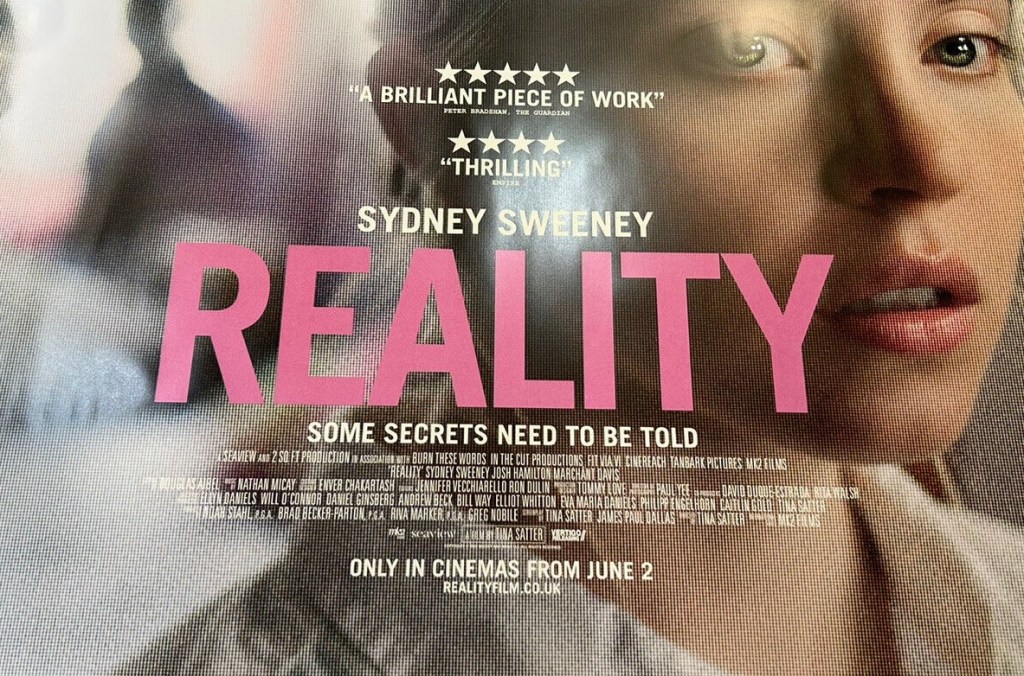
Keeping politics out of it for the moment this is a riveting piece of what used to be called cinema verité and now probably is labelled docu-drama. The title would be ironic except that this main character had the kind of parents who named her Reality (Sydney Sweeney).

Initially, it’s just two rather amiable non-threatening FBI officers, Agent Garrick (Josh Hamilton) and Agent Taylor (Marchant Davis), who turn up in 2017 at the aforesaid door. They are advance warning, if you like, for soon there’s a posse of agents tumbling out of the cliché black vehicles. There’s certainly no sense of menace though Reality is kept clear of touching her mobile phone and kept outside and possibly thinking from the continued amiable chat with Garrick that it’s all going to be a misunderstanding. But then, as luck would have it, she’s got a room in her house that could stand in for a jail cell any day of the week, no furniture, bleak, and a snail plodding along the window ledge. And it’s in this room that the interrogation takes place.

What’s superb I guess is that the dialog all comes from F.B.I. transcripts so instead of the waterboarding or good-guy-bad-guy routine or just beating up a suspect that we’ve been fed as the truth by umpteen Hollywood movies the actual interrogation is so low-key you think this has got to be a case of mistaken identity. Or that someone out of malice has pointed the finger at an innocent party.

Reality is a linguist – speaks fluent Farsi (an Iranian language) – with high-level clearance working for the National Security Agency. Oh, and she teaches yoga, competes in weightlifting competitions and if I got this right owns three guns including an automatic rifle.

So, the questioning is pretty much along the lines of the F.B.I. just wanting to clear up a few things. Did she, for example, by accident ever take out of the building something classified that should never have left the office?  Sure enough, way back, by accident she had done so. But it soon becomes clear, if ironic, that someone engaged effectively in espionage is just as open to being spied upon as the country’s adversaries.

But as the tension mounts, the tone never changes. It’s Reality who looks more and more under pressure. From standing stock still and meeting their eyes, her attention is diverted by the antics of the snail and she starts moving around and eventually slides to the floor. Occasionally, Taylor will take a turn asking questions and both are equally adept at expressing surprise, especially convincing given it’s soon evident they know her every move.

These guys could be classic courtroom lawyers, because they make no wild assertions, just gently lead her on to admitting what they know is true. They make a point of telling her they don’t think she’s a big badass spy, and that she’s just someone who made a mistake, maybe in the heat of the moment, what with so much going in the U.S. Presidential Elections of 2016.

And you’d be amazed at how the guilty party commits herself on the slightest of details, a piece of paper folded over, for example. Turns out Reality has been a whistle-blower and getting her to admit makes the consequences easier, especially when all her answers have been recorded, for the prosecution.

It’s quite obvious where debut director Tina Satter’s political views lie but that doesn’t get in the way of a stunning piece of cinema. She’s had the sense to keep it short – it barely passes the 80-minute mark – and to limit editorial outrage to the end.

As it stands, setting aside the political element, it’s an engrossing watch. Sydney Sweeney is superb as the guilty party while Garrick and Taylor are equally good at tying her up in knots. Sweeney cuts her dramatic teeth on this one, and is more impressive than in Immaculate, so counting this in with Anyone but You, studios should be throwing at her some decent dramatic as well as comedic vehicles. She doesn’t necessarily need a Glen Powell at her side,

One to watch, regardless of which end of the political divide you favor. This is the kind of movie that a Sidney Lumet – it reminded me both of the dryness of The Offence (1973) and the courtroom spectacle of The Verdict (1982) – or a John Frankenheimer would have pumped out in their prime or the fly-on-the-wall documentaries of Frederick Wiseman (Basic Training, 1971).

A must-see.

Fast Charlie (2023) ****

If you like your characters to sport monikers like Donut (“don’t call me Donut”) or Blade (not that Blade, obviously) or The Freak (“get me The Freak”) and like to see death dealt out in novel fashion – taxidermized bird beak through the eye, beer bottle through the mouth, and an update on the Magnum .357 “blow your head clean off” trope – then this one is for you. Not to mention the riffs on Quentin Tarantino and John Wick. And, here’s the kicker, a delicate meditation on old age and father-son relationships.

Your first port of marquee call, of course, should be star Pierce Brosnan. Not the Abba-magnet of Mamma Mia (2008), and far removed from James Bond, but with a hint of the clever machination of The Thomas Crown Affair remake (1999). You might regard his character as a common-or-garden retired hitman now doing business as a chauffeur to a younger generation of hitmen (step up Donut) but he tends to see himself as a “problem-solver” or even “concierge” (as though we might be talking The Continental Hotel). I suspect Brosnan was drawn to the script for the “cowboy draw” soliloquy that has echoes of the gold watch in Pulp Fiction (1994).

Add in director Philip Noyce, director of Patriot Games (1992) and Clear and Present Danger (1994), the titles heavily promoted on the poster, and also, more importantly from this picture’s perspective, Dead Calm (1989). The poster says nothing about screenwriter Richard Wenk but since he gave us The Equalizer trilogy – three of my favorite pictures – then suddenly this little movie, shoved out into streamer with none of the publicity accorded lesser movies, has got my attention.  

I started out not liking this at all but gradually warmed to it and at the end considered it a pretty good addition to the sub-genre of new-gangster-takes-over-old-gangster’s-territory-but-with-a-twist. So  Charlie (Pierce Brosnan) is driving hitman Donut (Brennan Keel Cook) to knock off low-end crim Kramer. Donut’s M.O. is the knife, but this being the kind of picture where characters swerve from the norm, he decides instead he’ll stick some explosive device in a box of donuts. That works, for sure, but it has the unfortunate by-product of blowing the guy’s head clean off – clean off as in no longer attached to the shoulders and, even if you could scrape up the bits and pieces, unrecognizable.

Therein lies the problem. To pick up his dough, Charlie needs to show an identifiable corpse. Donut is soon out of the picture, the dumb sonofa, pistol in hand while driving over bumpy road, shoots himself in the head, brings down a telegraph pole and sets the car on fire. Still Charlie isn’t known as fast for nothing (in fact, the title had no relevance whatsoever, so if you’re expecting a car chase buckle up and get frustrated) and he decides the dead man’s wife should somehow be able to identify him.

Sure enough, Marcie (Morena Baccarin), now an ex-wife but still harboring sentimental thoughts about her deadbeat now dead husband, explains he has a tattoo on his ass that she is willing to verify as belonging to the ass of said deceased. That should be that, another problem solved by our problem-solver or concierge, if you prefer.

Except, suddenly, all hell breaks loose. It’s gang war time.   Charlie’s ageing boss Stan (James Caan) is the object of the hit and, unfortunately, for the hitters, Charlie treats this old man very much like a father (hence the “cowboy draw” soliloquy) and takes agin anyone who could have been responsible for the hit, which is pretty much anyone who has crossed the screen in the early part of the picture.

These dudes will have names, for sure, but heck, they hardly appear before Charlie starts to knock ‘em off so don’t expect me to remember them all. In any case, the movie, I warned  you to expect a narrative swerve, moves in a different direction. One route is that subtle kind of May-December romance Wenk gave us in The Equalizer 3 (2023), Charlie, while trying his hand with Marcie, aware that he’s got very little chance of success, given the age gap (acknowledged at least rather than expecting younger women to jump into bed with any old guy just because they’re an ageing movie star and that’s what the audience expects), even though he’s a cultured hitman, pretty ace in the kitchen and old-style in attitude to women. Whether it’s her particular set of skills – see what she can do with a bird beak – or her lost soul that’s the attraction.

But that element is left kind of floating in the background as the story shifts up a gear as we discover why the hit was out on Kramer in the first place and why everybody else was getting rubbed out. It wouldn’t be this kind of picture without a couple of twists at the end.

Charlie is a laid-back hardman with a nice line in quips, self-possessed and self-effacing, but a regular guy when it comes to the regular things in life. His relationship to Stan is very touching and the romantic element is underdone.

So if you’re going to buckle up for his one, ignore the opening sequence, set the Tarantino vibe aside and wait until it gets into the meat-and-potatoes of relationships and of course, for the thrill-seekers out there, Charlie taking revenge.

Shows there’s more to Brosnan than a raised eyebrow, a last hurrah for James Caan (no introduction needed), and Brazilian actress Morena Baccarin (Deadpool, 2016) reveals unusual reserve in what could easily have been, in other hands, a more showy part.

Worth a look and free on Amazon Prime.

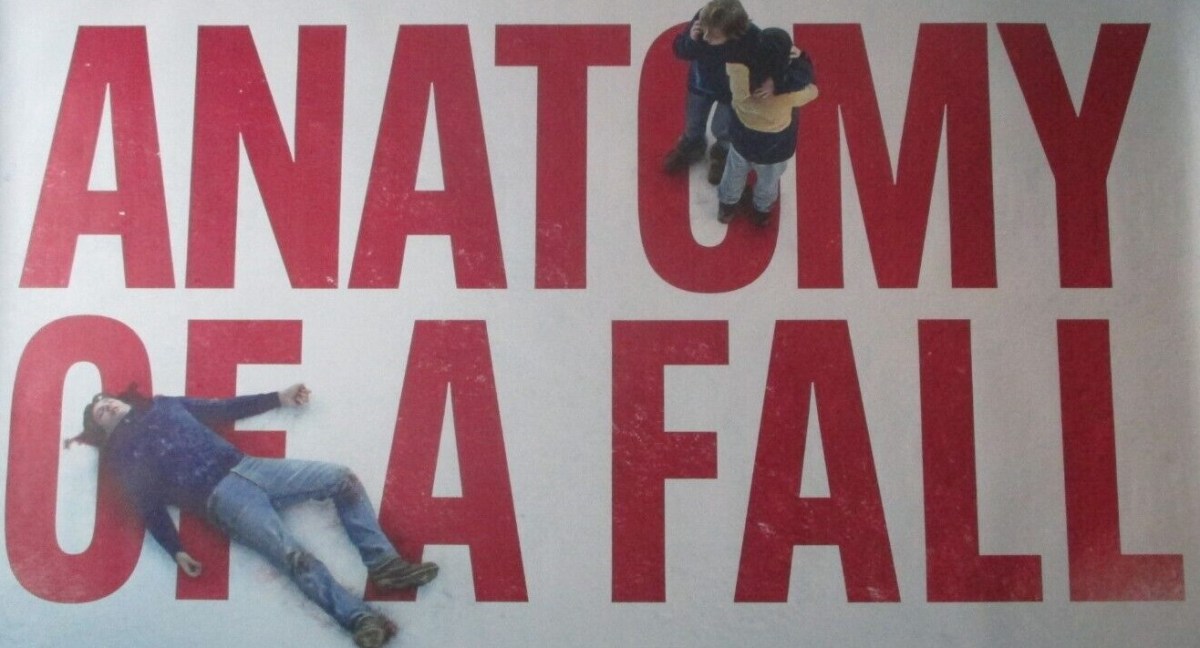
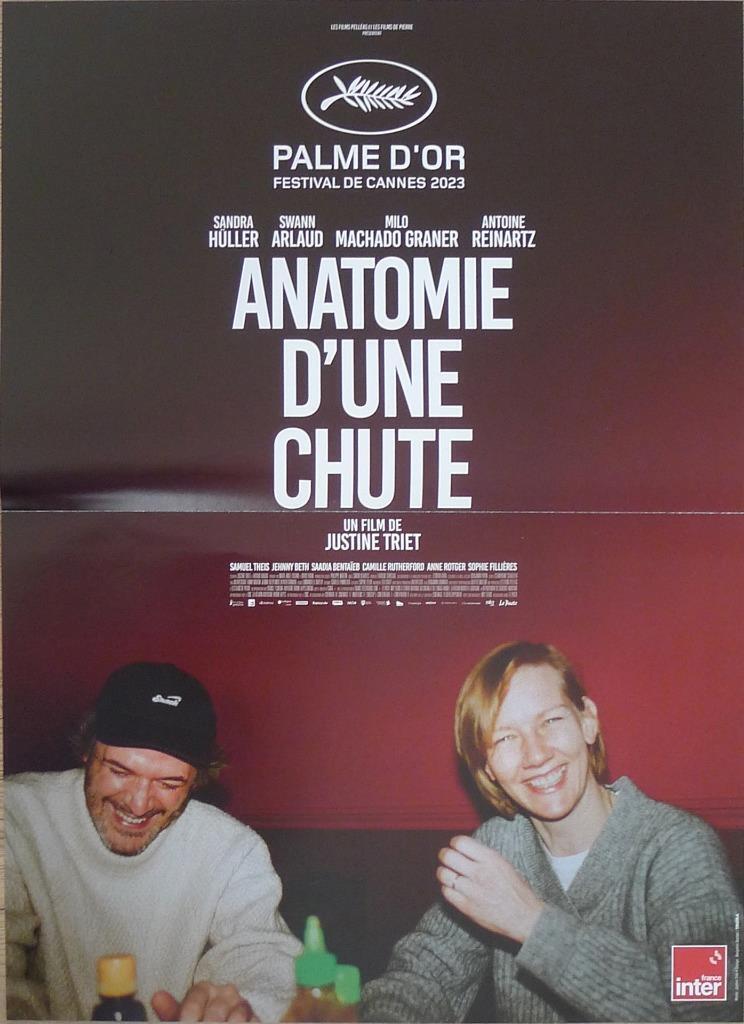
Anatomy of a Fall (2023) ***

I hate it when a mystery movie so blatantly cheats. Sure, we expect some sleight of hand, some vital piece of evidence retained, for the purposes of maintaining high tension, till the very end. Or a twist, a la Jagged Edge (1985), when a murderer, having got off scot-free, is revealed as the killer after all.

And while the central performances of accused, bisexual respected author and mother Sandra (Sandra Hueller), and accuser, smug unnamed prosecutor (Antoine Reinartz), are excellent and the exposition of the psychology of a marriage is well done, still the omission of the kind of critical forensic evidence that a modern audience would require works against the end result. Because otherwise, it plays like a 1940s courtroom drama, where the emphasis is solely on character rather than the weight of evidence.

So, here’s my complaint. The dead man has fallen from a window. Did he jump or was he pushed? Using forensics, the prosecution maintains he was hit by a heavy blow and some of the blood spatters down below were consistent with him losing blood when he was falling rather than when he hit the ground.

So we spend a great deal of time on examining how the body might fall and accounting for the blood, all of which appears to go against the accused, who is revealed as a not-so-nice person, possibly a sexual predator, possibly controlling, certainly a cheat – taking lovers while married and a heinous spot of plagiarism from her unpublished wannabe writer husband.

Only at the very end, when the half-blind child enters the loft space from which the father fell, do we realize that it would be impossible for this to be murder unless there was more evidence pointing to that eventuality. If the movie – prosecution and defence equally guilty of overlooking the obvious –  had spent a couple of minutes on the loft space both would have come to the conclusion not so much that murder could be counted out but that there would be clear evidence of it.  

The window is pretty small and an odd shape. But there was no evidence of a struggle, no scratches on the wood or glass, no tiny shred of material, and for the questionable spatters to end up where they did, the victim had to fall out backwards. So that means he needs to be pushed from the front and make no effort to save himself. The more obvious means of disposing of him – being thumped on the head from the back – was not consistent with the way he fell. And in any case, the space available for the wife to hit him with some heavy object would have meant leaving some evidence of that.

So, while it was certainly overlong, and could do with losing a good 15-30 minutes, I was happy to go along with the tale, held together as it was by the superlative performances and the usual courtoom duelling, though taking the last-minute evidence presented by the young boy as conclusive proof the father committed suicide seemed a step too far.

As a dissection of a marriage, of expectations of roles, and especially of the propensity for a failure to blame everyone else for their failings, it gets top marks. But it wears out its arthouse credentials by ignoring the forensic obvious.

I can’t also be the only one really annoyed that this Oscar-nominated performance basically skipped cinematic release. As far as I can work out, it was shown for one week in an arthouse in my neck of the woods way back last year and despite the Oscar nomination didn’t resurface except for a money-grab one-day showing two days (i.e. last night) before the Oscar ceremony. Like Maestro, it’s taken the streaming dollar and run, rather than allowed cinematic word-of-mouth to do what cinematic word-of-mouth is meant to do and build a groundswell of positive opinion prior to the awards.

So, yes, watch it for the psychology and the Oscar-worthy performance but don’t expect a contemporary approach to the mystery.

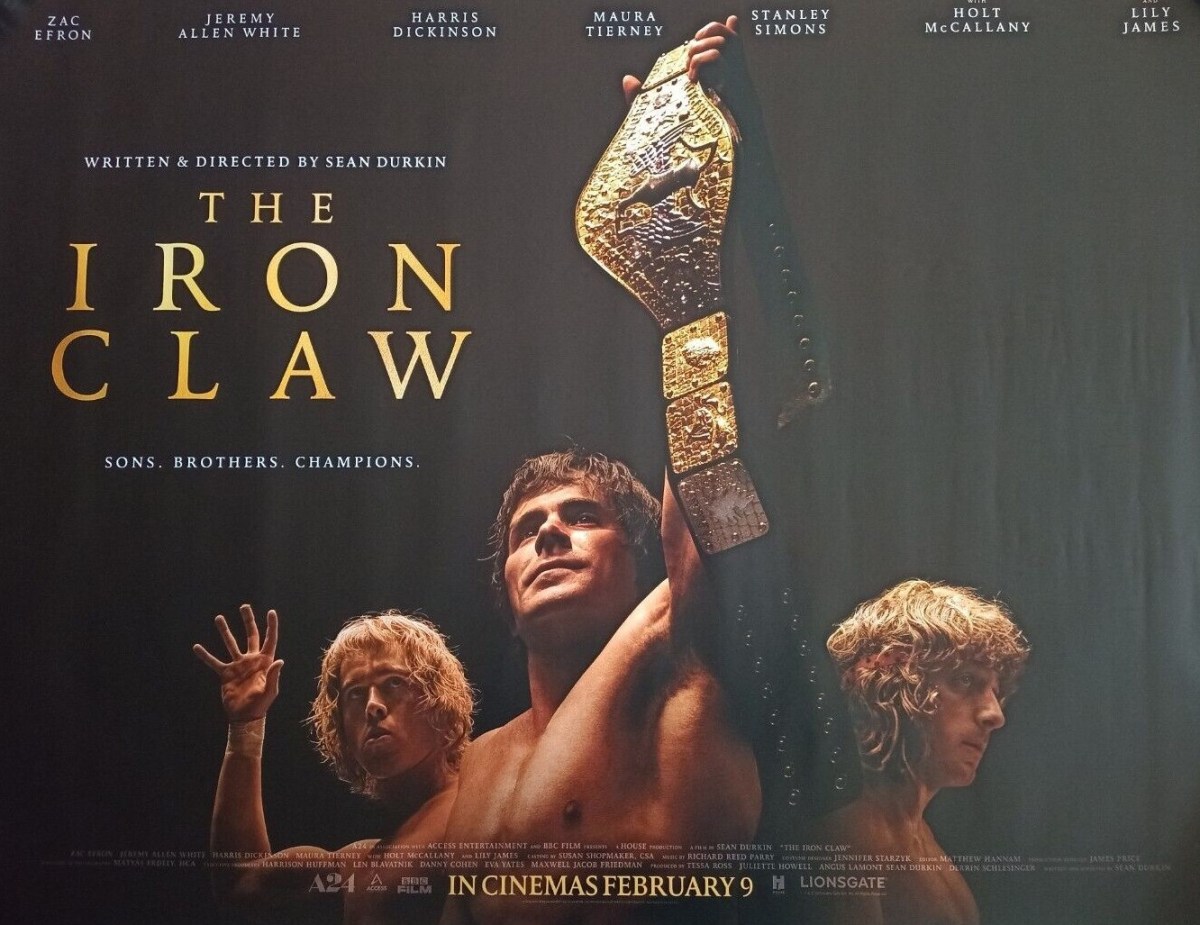
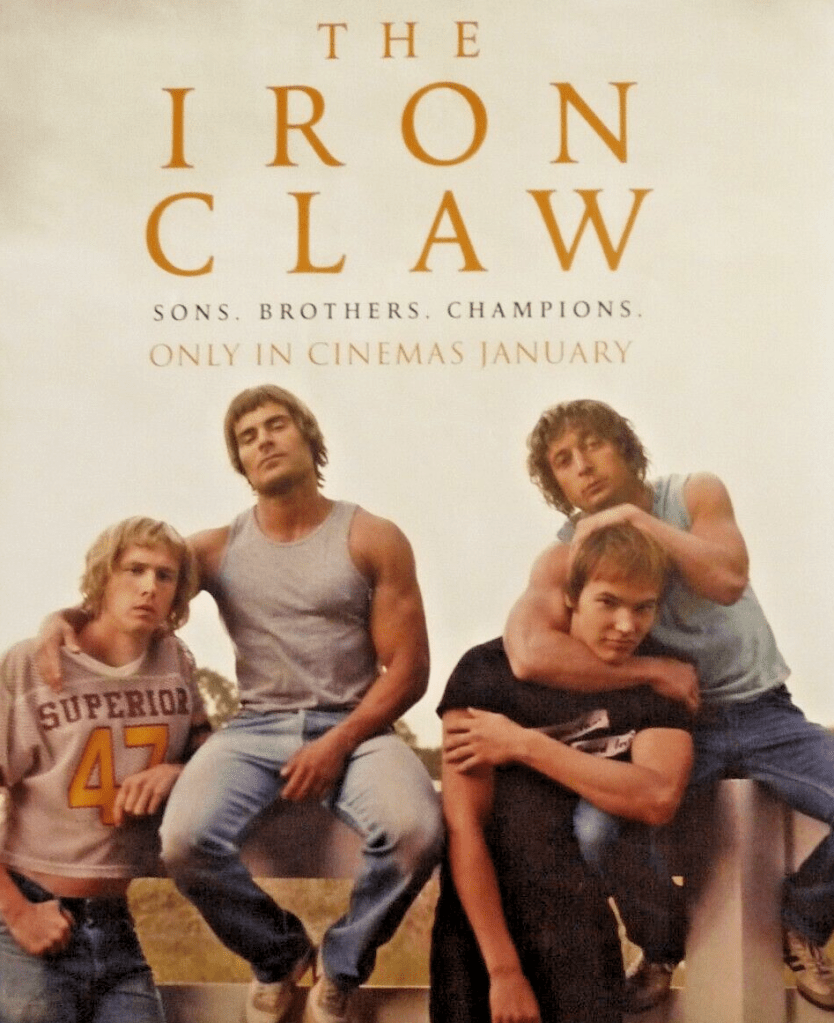
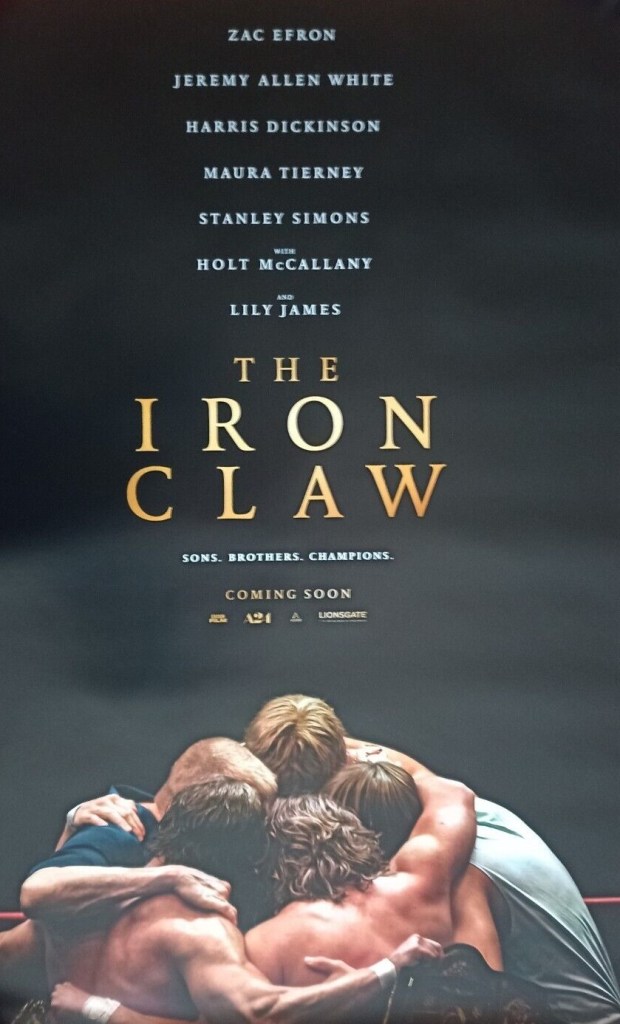
The Iron Claw (2023) *** – Seen at the Cinema

When I was growing up there was a beloved character in British comic The Valiant called The Steel Claw. After one accident he lost a hand and after another the replacement artificial hand, made of steel, if touched by electricity, rendered him invisible, apart from the claw which floated in the air like some avenging angel. He started out a villain but in the kind of character development that rarely occurs in this world turns into a crime-busting hero.

I mention this not because I made the mistake of assuming the characters here would be super-heroes (though spandex does play a role) but because character development is in serious lack. And, to be honest, I’m getting a bit fed up – stand up The Holdovers – of repressed male characters holding it all together for the sake of a director who wants to make a point about repressed males. At least in The Holdovers the main character broke out of his emotional prison once in a while. Here, all we have is emotional blackmail. And a director who in true artistic fashion shies away from any real dramatic incident so that it can be dealt with in very clever long shot or occur offscreen or in shock follow-up sequence (one of which did work very well, I admit).

“I used to be a brother,” laments Kevin (Zac Elfron) at the end of the picture in homage no doubt to Marlon Brando’s famous line in On the Waterfront, as he sheds a tear in retaliation at having to keep up a stiff upper lip for the rest of the movie. By this point, he’s the sole survivor of five siblings, but the way the boys are ruled by the iron father, not a sniffle is allowed when anyone else passes away.

This is another of those biopics that won’t mean a thing to anyone outside America. At one point (long before WWF) wrestling was huge in the U.K., ruling Saturday afternoon telly when everyone was waiting for the football/soccer results, but it was so obviously faked nobody took it seriously. So, one of the issues here is the fraudulent aspect of the “sport.” Sure, you got to be fit to fake it, unless you’re a world champion with a tub of lard for a gut.

There’s a scene where Kevin earnestly explains – he’s nothing but earnest throughout – to future wife Pam (Lily James) that there is some skill involved in wooing the crowd and by dint of performance (aka acting) if you win enough people over you get to be world champion. And even if you end up getting thumped by the current world champion, if you shout it loudly or eloquently enough the audience will be convinced you’re actually the winner.

So the meat, such as it is, isn’t the wrestling (although that does occupy too lengthy a time) but how the four sons (one is dead when the picture starts) are corralled by father Fritz (Holt McCallany), now a wrestling promoter, into following him into the sport. Some of the boys ain’t so keen – Kerry (Jeremy Allen Wright) is a junior world discus throwing champion (as was dad), Mike (Stanley Simons) shows musical promise (as did, bizarrely, dad) – but still buckle down to the training and discipline. Even if it’s all faked, the body still takes a hammering. Some need pills to get them through.

One by one they all die off, Mike and Kerry by suicide, David (Harris Dickinson) after ignoring initial signs of internal bleeding. Still, mostly they grin and bear it, until, being the only brother left standing, Kevin takes against his father and tries to strangle him. Meanwhile, in the background, Mom (Maura Tierney) is as stoical as the others, her only rebellion refusing to wear the same funeral dress twice.

It’s mostly turgid, though, all the sons showing signs of depression, yet there’s some kind “happy ending” because all Kevin’s kids and grandkids end up living together to make up, I guess, for the loss of the siblings. There’s also good old-fashioned family values and the sons appear to truly bond instead of knifing each other in the back and leaving home at the earliest opportunity. But Dad never appears to blame himself for his hard line and Mom is unwilling to intervene.

I feel sorry for Zac Elfron (17 Again, 2009), the movie equivalent of being in a boy band, who’s muscled up and set himself up for Oscar contention. But, just as Wicked Little Letters was plagued by over-acting this is riddled with the opposite and no amount of macho posturing can make up for not having a decent character for an audience to root for.

The shock scene, in case you’re wondering, concerns Kerry. Despondent, he climbs on his motorcycle. We see the road, we see the distant lights of oncoming vehicle, but the camera just pulls back and pulls back with exceeding artiness. You think he’s dead, but, no, there he is shuffling around on crutches – minus a foot.

Written and directed by Sean Durkin (The Nest, 2020).

Please, sir, can we go back to dramas that are full of drama.

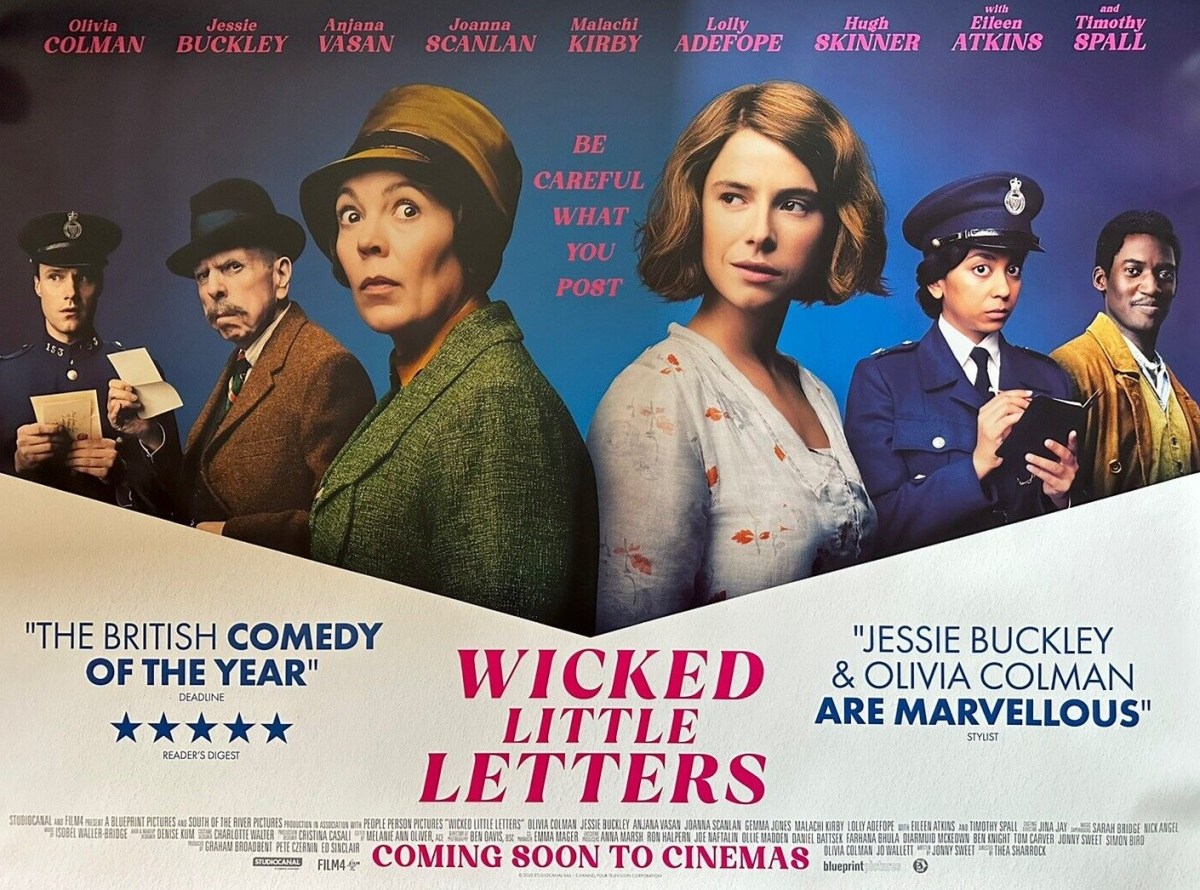
Wicked Little Letters (2023) * – Seen at the Cinema

The trailer would have won an Oscar, deftly put together, loaded with laughs, but the reality is this is set fair to be the worst picture of the year if not the decade. If it wins any marks at all it’s for showing that the Brits can match the likes of Tarantino and Scorsese in the cuss-word department and challenge The Thick of It for creative swearing. But even the Society for Ham Over-Acting would have trouble letting this mob join and you would find better detection – invisible ink, anyone? – from Enid Blyton’s Famous Five.

As it happens, I have relatives in the English south coast seaside town of Littlehampton and perhaps the entire population was so scarred by the occurrences detailed here that they never saw fit to bring up the subject or perhaps had decided it was just so preposterous it wasn’t worth mentioning.

Anyway, you can guess from the get-go that its repressed spinster Edith (Olivia Colman) who’s the culprit, sending poison pen letters to herself to get a bit of local attention. And you would be hard put even if you were dumbest of dumb cops to try and pin the blame on her next door neighbor Rose (Jessie Buckley), a war widow (it’s set after World War one) with a young daughter. Roisterous and boisterous though she is, she’d clearly rather spend what little cash she has on getting drunk than stumping up for over a hundred stamps, envelopes and writing paper.

Of course, this is a male-dominated society ruled with an iron hand by misogynists, Edith’s father Edward (Timothy Spall) top of the class in that department but closely followed by the dumb and dumber cops. Coming to Edith’s rescue in quite bizarre fashion is “woman police officer” (as is apparently her full title) Gladys (Anjana Vasen) and her coterie of amateur detectives, all members of the local whist club.

The whole thing is just too stupid for words. Roger Moore’s acting is Oscar-worthy compared to this lot who roll their eyeballs at the drop of a hat. There are attempts to ram into an already thin storyline references to feminism and racism and there may even be a rapacious priest somewhere in the mix for good measure, but the effect is of lazy moviemaing pandering to the crowd. Oh, and by the way, there’s a reminder – in case you’ve forgotten – just how much people frowned upon kids playing the guitar a century ago as if it was the kind of musical instrument devised by the Devil.

The trailer whizzes along but this moves like treacle. I’m sure actors are entitled to make a poor movie now and then, but this feels more like a director who failed to rein anyone in and as a consequence Oscar winner Oliva Colman (The Favourite, 2018), Oscar nominee Jessie Buckley (The Lost Daughter, 2021) and multiple Bafta nominee Timothy Spall (The Last Bus, 2021) are allowed to make complete fools of themselves. The only one showing restraint is Emmy award-winner Eileen Atkins (Paddington 2, 2017).

Who to blame? Director Thea Sharrock (Me Before You, 2016) for not issuing red cards to the actors, screenwriter Jonny Sweet (Greed, 2019) for dreaming up this farrago in the first place or the trailer team for providing such a misleading impression of the end result? The audience, desperate for an old-fashioned comedy along the lines of Four Weddings and a Funeral or The Full Monty?

Shambolic cartoon. Boo hiss.

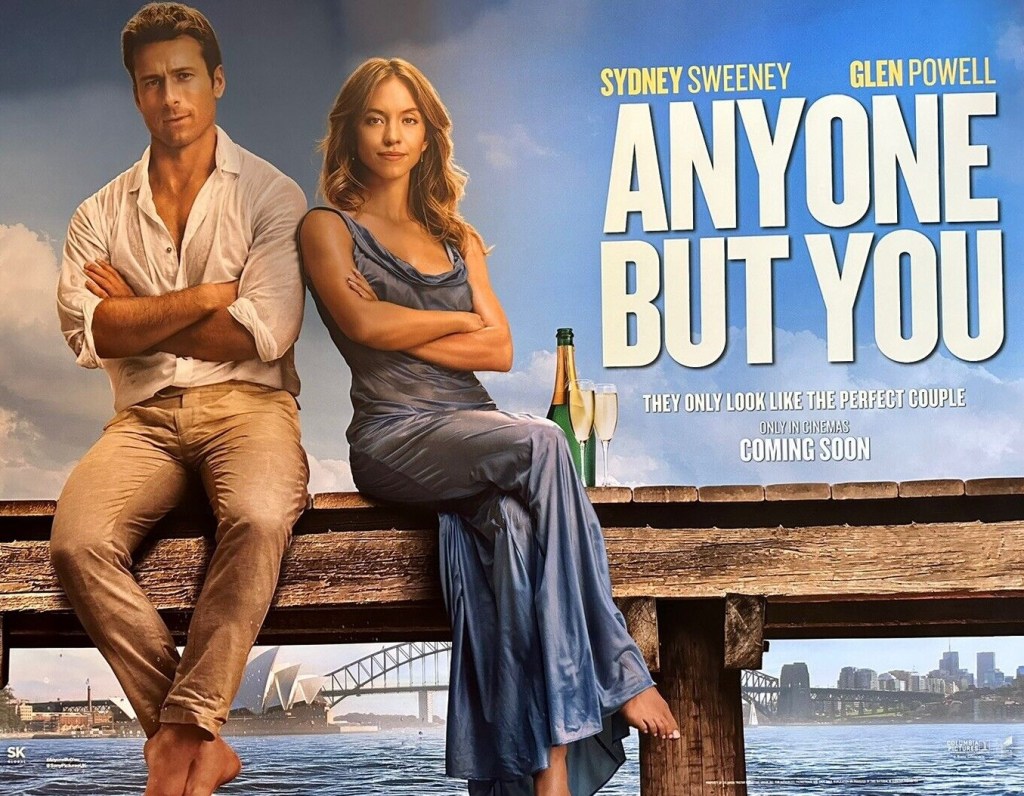
Anyone But You (2023) **** – Seen at the Cinema

Hey, I’m going back to Anyone but You because I went back to see it again. Blame Oppenheimer, or its lack thereof –  the reissue had been scheduled for showing on Monday but was pulled presumably because it was already on streamer and not enough customers showed up over the weekend – so I took a chance on this substitute. If you recall, I’ve already reviewed it and gave it three stars. But on re-view, I’m upping that to four stars. As is often the case on first viewing, you get snagged down by the narrative, but for second viewing, once you know which way it’s headed you can sit back and enjoy the other ingredients.

I’m not alone in thinking this has been under-rated – in the U.S., box office has gone up by over 11 per cent rather than down in the third weekend of release – and, in fact, the take has increased every weekend – indicating strong word-of-mouth.  

The rom-com has kind of faded away from the glory days of Tom Hanks-Meg Ryan / Richard Gere-Julia Roberts / Hugh Grant-A.N. Other  and if you find it at all these days it’s likely to be wrapped in an adventure or thriller. In truth it’s been on a sticky wicket for over five decades when studios preferred straight-out romance or straight-out comedy rather than a hybrid, but more importantly because, for it to work, you need stars of equal importance who can generate that extremely rare onscreen chemistry.

And not either male or female stars so big that nobody cares who plays the leading man or leading female opposite them. While movie pairings ain’t so unusual – think Tracy-Hepburn, Rock Hudson-Doris Day, Burton-Taylor, Bogart-Bacall, Clark Gable-Lana Turner – it’s worth remembering that it’s only the first two of these teamings that fitted the rom-com mold, the rest being more high octane dramas or thrillers.

Most comedies that have hit the contemporary button have been raunchy boozed-up affairs whose characters have been waylaid by self-destructive tendences, insecurity and body shaming. This one is a throwback to Hollywood gloss. Nobody’s out of work, even temporarily, nobody’s poor, nobody’s moaning about their bodies, nobody’s out of their mind on drink or drugs. The male members may have a predilection for displaying torso, ass and, er, members, and the gals are equally fit, prancing about as likely as not in bikinis or even just the bottom half.

It’s woke enough, it’s a gay wedding they’re attending, they all do yoga and are fit enough to undertake a hike into the wilderness, you can take a break (a la Friends) from a relationship and hook up with someone else, and the worst that can be said is that the older guys like an occasional joint while someone takes peppermint tea with sugar and the male lead, despite being buffed-up-to-hell, is scared of flying and swimming. But it’s a very nifty script, with a bucket of little character-defining cameo moments, the brides-to-be compete to place plates in the correct position on a table, one boyfriend too keen on booze, helicopter parents.

And you could say it is as contemporary as they come, pivoting on effectively tittle-tattle, what otherwise might be an indiscreet comment on social media that turns the world upside down is here just overheard. And it’s a pretty intelligent picture that puts the ability to have a decent fight in a marriage above peace and harmony, reality in other words over romantic fiction gibberish.

The basis of any rom-com is of course meet-cute followed by any number of reasons to keep the couple apart. Most of those ideas have been used up already, so the chances of digging up anything original is rare. What they come up with here is pretty fair, and plays on the necessity of a warring couple required to cosy up in order not to cause chaos at the wedding.

But a rom-com ain’t going to work unless the audience takes to the central couple. And my first question after seeing Glen Powell (Top Gun; Maverick, 2022) and  Sydney Sweeney (The Voyeurs, 2021) is when are they going to team up again? They’re far from cloying or schmaltzy, but believable human beings. Individually, they are stars in the making. Together, they are dynamite..

I’m not sure you’d go for the other Sydney (the one in Australia) as your ideal wedding venue unless Australia was helping you foot the movie production bill, and although interesting use is made of the harbor I’d not be keen on a river so shallow that boats can’t turn around in it (a plot point) but if you’re going to stage a Titanic homage (not the sinking I hasten to add but the King of the World malarkey) probably this is as good a place as any.

Anyway, the story focuses on the disgruntled participants of a one-night stand forced to pair up at a wedding where they encounter an abundance of exes and various interfering family members. While skipping the raw rudeness of its immediate predecessors, there are still a couple of slapstick moments centering on the discarding of items of clothing, but mostly the narrative follows the dictat of the will-they-won’t-they scenario, cleverly finding ways to  keep them apart just when they look set.

Apart from Powell and Sweeney, worth looking out for Hadley Robinson (The Boys in the Boat, 2023), Alexandra Shipp (Barbie, 2023), MTA Charlee Fraser in her movie debut, and old-timers Dermot Mulroney (My Best Friend’s Wedding, 1997), Rachel Griffiths (Muriel’s Wedding, 1994) and Bryan Brown (Cocktail, 1988). Directed by Will Gluck (Friends with Benefits, 2011) from a script by himself and Ilona Wolpert (High School Musical: The Musical, 2021-2023) but pretty much drawn from Shakespeare’s Much Ado about Nothing.

Has charm in abundance, and the script has plenty of bite especially when the couple are trading bitter remarks.

An updated version of the old-fashioned enjoyable rom-com.

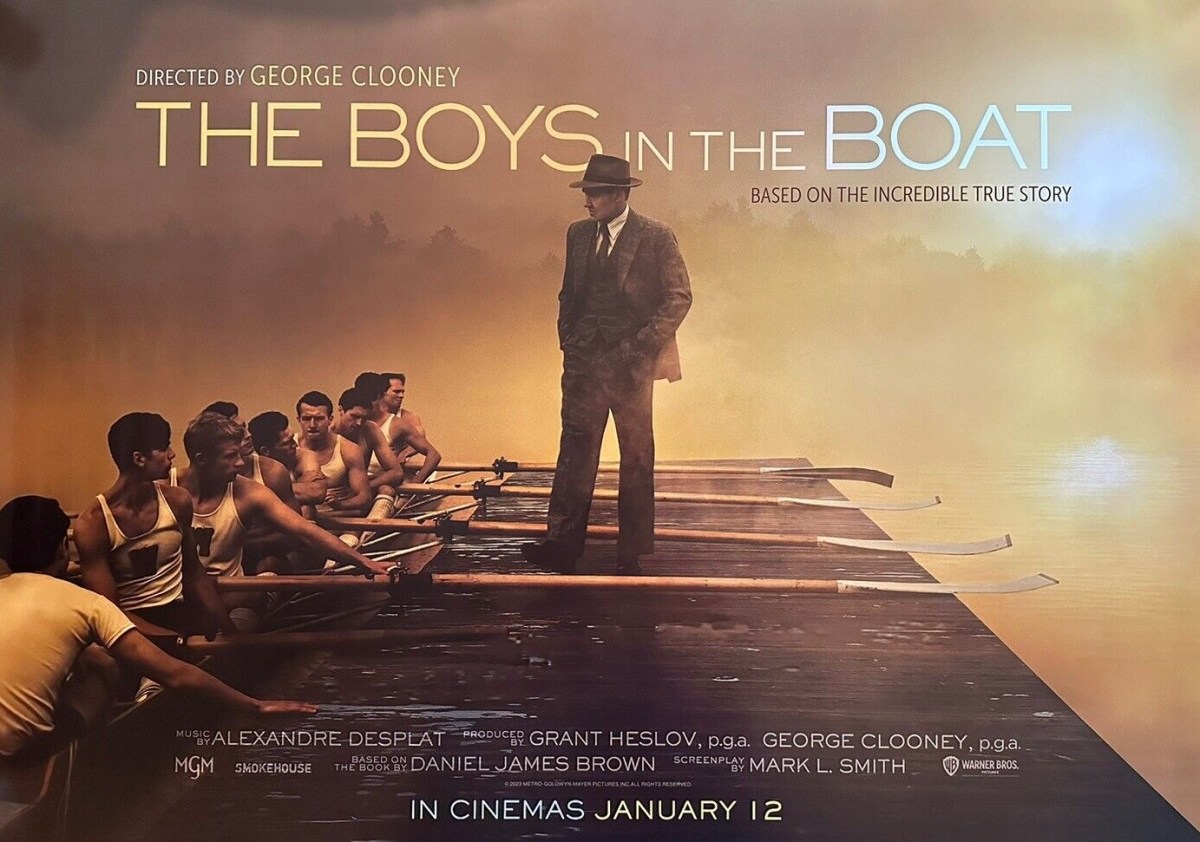
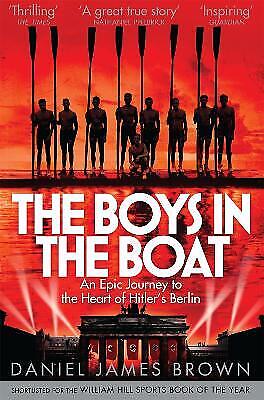
The Boys in the Boat (2023) ***** – Seen at the Cinema

Remarkable. I never thought George Clooney (Good Night and Good Luck, 2005) had it in him. His previous offerings had all been worthy but dry. Here, he conjures up a gripping drama of underdogs pitted against the rich and powerful of the USA and then the  might of Nazi Germany at the 1936 Olympics.

Rowing is generally considered an elite sport, contestants plucked from elite universities – in Britain it was always associated with the annual Oxford vs Cambridge Boat Race though from 1984 the country has won at least one gold at the Olympics and Sir Steve Redgrave, who lacked an alma mater, won five on the trot.

Except for athletics and golf, most popular sports are team games – football/soccer, American football, baseball – but the media and Hollywood tends to treat them as opportunities for individual excellence, the striker scoring the winning goal, the quarterback the winning touchdown, the baseball player the winning home run. The team aspects of these sports are rarely touched upon, even though you need a specific quantity of personnel working in tandem in order to compete.

What makes rowing so unusual is that, as one of the characters comments, you don’t have eight men in an eight-man crew you have one – in other words the guys have to be so in synch that they act as one. I probably learned more about the technicalities of sport from this one picture than any other sports-related movie I’ve ever seen and yet that information is passed out in dramatic form.

In terms of the feel-good factor, this comes closest to Chariots of Fire (1981), but in some regard exceeds that because it’s not about individuals coming good or coming from behind to win a medal, but about group dynamics. And it’s quite astonishing that with the narrative covering three key races, none much different from the other, just boats on water, that director Clooney manages to rack up so much tension.

And like Oppenheimer (2023) it’s a throwback, to those old days of men with hats. Unusual, too, that, like Moneyball (2011) or Any Given Sunday (1999) as much concerned with management as playing.

So, in the middle of the Great Depression, the young men who queue up to battle for a place on the eight-man rowing squad at the University of Washington (in Seattle not the national capital) are kids desperate to feed themselves, not those born with a silver spoon in their mouths, because making the team comes with a scholarship, a bed and meals. But qualifying is a massive attack on the human physique, not to mention psyche, as the combatants need to learn to breathe different and wear out muscles in a way no human being should.

There’s not room to showcase all the athletes so the narrative weight drops on Joe Rantz (Callum Turner), the hobo, abandoned by parents when young, living in a car wreck, skimping on food. He’s got a crush on well-to-do Joyce (Hadley Robinson) who has to do most of the running to get their romance over the line. Next in line is Don (Jack Mulhern), with a Charles Bronson haircut and taciturnity, no social skills but a handy piano player, his respiratory illness threatening to torpedo the team’s chances. In any other picture the cox Chuck (Thomas Elms) would hog the limelight because he’s the one who disobeys the coach’s commands and beats verbal hell out of the team.

Al Ulbrickson (Joel Egerton) is the coach fighting for his career, taking on the shady politics and rules-rigging and a system that wants to only reward the rich. Sidekick boatbuilder George (Peter Guinness) is the kind of backroom character who is mostly silent unless he has a pithy word of wisdom. Al manages two teams, the veterans if you like, who’ve been training together for three years and the juniors, comprising the Depression kids, but it’s the driven newcomers who impress the most and against all odds are selected to represent the university.

I had always assumed there was nothing to do in Poughkeepsie except “pick your feet.” Turns out its river is the locale for the annual rowing championships and so popular it’s not just a huge gala event but there’s even some kind of railway cars packed with passengers that runs along the side of the water so the elect can keep up with the rowers.

Most reviews of this picture have been on the niggardly side but I found it not only deftly done, but very moving, a couple of heart-tugging tear-snagging moments as it pounds its way to feel-good conclusion. The women, who are relegated to bit parts, are exceptionally good, Hadley Robinson (who I had just seen in a completely different role in Anyone But You, 2023) dances across the screen while Courtney Henngeler, as the coach’s wife, has a couple of the best lines in the entire picture. But probably the absolute zinger has to go to a blink-and-you-miss-it moment featuring Jesse Owens (Jyuddah James) when asked if he was going to “show” the Germans what he could do, replies that, no, he was going to show his countrymen back home, indicating the racial prejudice he had to overcome to win selection.  

Terrific turn from Joel Edgerton (Red Sparrow, 2018) who has been hovering around for donkeys without delivering a career-defining performance. Breakthrough, too, for Callum Turner (Divine, 2020) and Jack Mulhern (Pet Sematary: Bloodlines, 2023) though I have a sneaky feeling you’ll go away thinking British character actor Peter Guinness has stolen the picture. Top notch script by Mark L. Smith (The Revenant, 2015) from the bestseller by Daniel James Brown.

All the elements that appear essential to a contemporary sports picture, namely sex, drugs and violence, are missing and what a difference that makes, allowing the picture to streamline forward without getting bogged down. And critics, believing something critical is missing, are missing the point. At the opposite end of the pizzazz scale from Oppenheimer but with as interesting and adult-oriented tale to tell. And for once allows audiences the chance to let their hearts rule their head. And at just over two hours, doesn’t overstay its welcome. This ain’t made by a streamer so catch it in the cinema where it belongs.

Instant classic.

Quadruple Bill: Ferrari (2023) **** / Anyone But You (2023) *** / One Life (2024) *** / Next Goal Wins (2023) **

The stars aligned and with only a couple of minutes between features I was able to squeeze in a record-equalling four movies in a single day (excepting all-nighters of course) at the cinema and with one exception they were all well worth the ticket price.

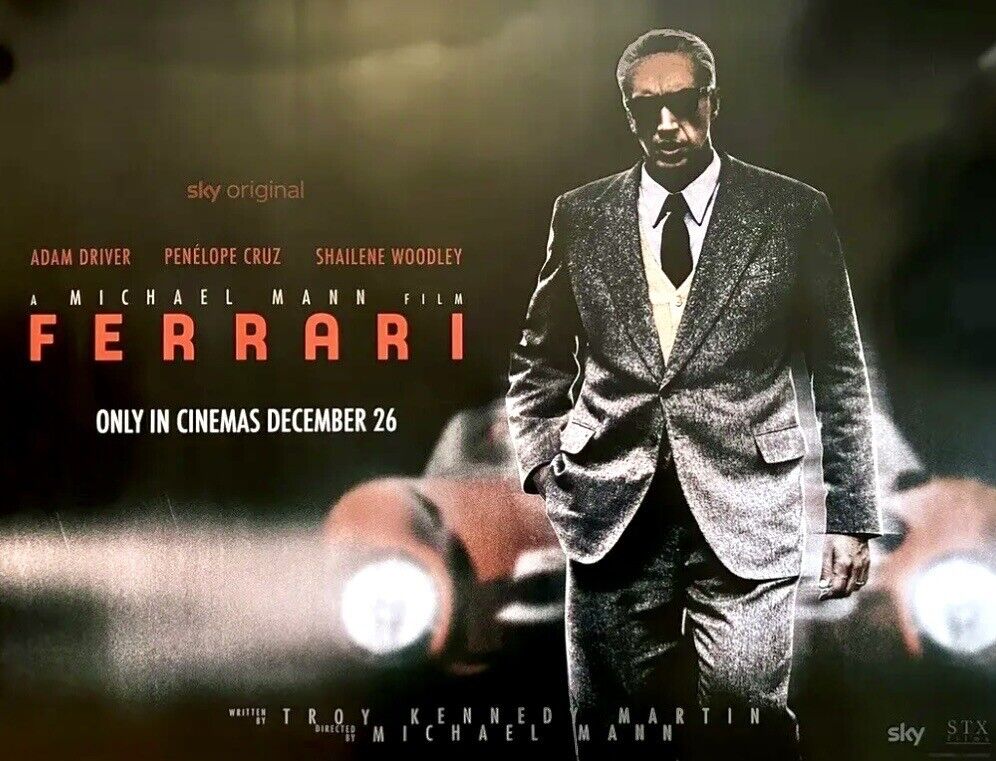
Ferrari

Not really a motor racing picture in the mold of Ford v Ferrari / Le Mans ’66 (2019) or Rush (2013) but more of a domestic drama centering around a dramatic race. The acting is plum, Penelope Cruz (The 355, 2022) taking the honors ahead of Adam Driver (House of Gucci, 2021) though Shailene Woodley (The Last Letter from Your Lover, 2021)  seems miscast. The climactic race doesn’t carry the punch of Le Mans, however, the focus more on the backseat players than the drivers. And it’s not quite prime Michael Mann (Heat, 1995)

Set about decade before Ford v Ferrari, it finds Enzo Ferrari (Adam Driver) coping with the death the year before of his only son, the potential collapse of his business, and trying to conceal long-standing mistress Lina Lardi (Shailene Woodley) from long-suffering wife Laura (Penelope Cruz).

The depth of the couple’s despair at the loss of their son can be measured in the fact that every morning they take flowers, separately, to his graveside. He has at hand an immediate substitute, having fathered a boy, now approaching ten years old, with his mistress, but rejects the chance to officially gave the boy his name.

The manufacturing side of the business was always viewed as merely a way of financing the racing, Ferrari having been a driver earlier in his life. But overspending or lack of income, such details are not specified, has pushed the business towards bankruptcy and he toys with inviting a merger with a bigger company such as Fiat or Henry Ford (which formed a central plank of Ford v Ferrari). But the easiest way out is to win Italy’s most prestigious race, the Mille Miglia, a four-day 992-mile event that ran clockwise across public roads from Brescia to Rome and back.

But I had to look that up. Unlike Le Mans, unless you are a racing aficionado, this doesn’t immediately click in the public consciousness. And there were a host of other details that seemed to skimp on information. Unlike Ford v Ferrari where you learned exactly how fast cars got faster and what it took to drive them or be driven in one (witness Henry Ford’s terrifying hurl), here you are only given some vague technical data which makes little sense. There is little background fill, Maserati pops up as Ferrari’s chief rival but its inclusion is almost incidental. In fairness, you do get more about the jiggery-pokery of running a business.

Running parallel to the racing venture is the family soap opera, will Laura find out about the mistress and child, will she jeopardize the business out of spite. Once the race starts, it’s hard to keep up. Here the distinct lack of detail hurts the most, although there is one shocking scene.

Engrossing enough but it’ll struggle to fill cinemas.

Anyone But You

A contemporary take on the rom-com with the disgruntled participants of a one-night stand forced to pair up at a wedding where they encounter an abundance of exes and various interfering family members. Glen Powell, star in the making in Top Gun: Maverick (2022), comes good as does Sydney Sweeney (The Voyeurs, 2021). Skipping the raw rudeness of its immediate predecessors, this pivots on charm, but with a few helpings of humiliation (he strips naked to avoid a predatory spider) and slapstick thrown in, plus some old-style determinedly un-woke action from one parent in particular. He is the more vulnerable, a poor swimmer, requiring a soothing song to fly. The plot is over-plotted and occasionally it seems some incidents have come straight from Room 101, but generally it works. Probably it helps, if I’m permitted of offer such a comment, that they are  A-grade beefcake and cheesecake, respectively. Setting that aside, they appear to have mastered the lost art of the rom-com and certain drew appreciative laughter from the audience I was part of. the kind of film that in the olden days would have picked up a sizeable audience on DVD and turned into the kind of cult that guaranteed a return joust.

One Life

A film of two halves when it should have been divided into three-quarters and one-quarter or an even stiffer division. Concerning the efforts of the “British Schindler” Nicholas Winton (Johnny Flynn playing the younger version, Anthony Hopkins the older) to smuggle out of Prague over 600 Jewish children at the outbreak of World War Two. The earlier section is far more gripping and the later section that revolves apparently around an attempt to publicize the previous rescue in order to highlight the plight of later refugees falls mostly flat on its face as it seems more intent on glamorizing the actions of a man who wanted anything but public recognition. Too much time is spent pillorying a society that sanctified such inanities as the long-running That’s Life television program when I felt it would have been more sensible, and fair, to devote more attention to the work of Winton’s collaborators. While the climactic scene where Winton meets, as grown-ups, the children he saved is moving, it feels redundant compared to the actual children-saving.

Next Goal Wins

Eventually, it turns into a feel-good picture but for most of the time seems intent on making fun of Samoans carrying the tag of the world’s worst team. Nobody seems to ask why FIFA is so determined to bring football to countries where there is no interest in the game. Oddly, Michael Fassbender turns in his most accessible performance as the coach drafted in to improve the team, a big ask since he has clearly been a flop at his chosen profession. You could have pinned the movie more easily on the transgender player more accepted in Samoa than virtually any other country in the world who, by default, becomes the first transgender to play in the World Cup.

Rebel Moon Part One : Child of Fire (2023) ****

Seems heck of shame Netflix didn’t deign to give this a big-screen send-off, especially as it runs only a shade over two hours (that’s if you don’t count the 12 minutes of credits) and the battle scenes will look cramped however big a small-screen you possess. This was crying out for Imax. Plus, kudos to Zack Snyder for giving a 41-year-old actress the lead in a $200 million production. Could you imagine any major Hollywood studio backing that call?

Derivative for sure – what space/fantasy epic isn’t going to be? You can spot references to everything from Lord of the Rings to Game of Thrones never mind Seven Samurai/The Magnificent Seven not to mention John Wick and for all I know Home Alone. But who cares?

It’s a blast even if the voiceover laying the groundwork is a bit turgid and the backstory complicated to say the least. So, we start in some kind of Viking-esque farming village where Admiral Noble (Ed Skrein) lands with troops, demanding tribute. He leaves behind a bunch of grunts to hold the fort till the next harvest comes in.

Kora (Sofia Boutella), a stranger taken in by the village, intends to skedaddle but is halted in her tracks by the screaming of a village lass being molested by the soldiers. She soon sets about them and having exacted revenge/justice (take your pick), realizes the Motherworld (the name of this universe/multiverse/whatever) will be back for revenge/justice so she heads off with callow villager Gunnar (Michiel Huisman) to recruit rebels.

There’s little as cosy as a Hobbit-like village from now on. And the world invented is less derivative than you might expect. Sure, the saloon they enter full of odd creatures has its origins in Star Wars and the gryphon has got to come from Game of Thrones, but even so, both sequences work out in more original fashion. But try to better the scorpion robots and you’ll come up short, and the sequence where another robot is given a crown of flowers takes some beating.

This is complex stuff. Kora’s backstory is incredibly complicated and some of her recruits show considerable empathy with creatures they encounter or are about to kill or enslave. The special effects are top class. And her gang seem worthy accomplices, down to the Han Solo type rogue Kai (Charley Hunnam), though given this is a truncated version of the four-hour edit director Zack Snyder has up his sleeve we’ll have to wait a bit longer to get a better grip of some of them, especially the Brother-Sister-Act Darrian and Devra Bloodaxe (Ray Fisher and Cleopatra Coleman) who lead the existing rebels.

Best introduction goes to swordswoman Nemesis (Donna Bae) who has to deal with a child-deprived outcast giant spider, but the long-haired muscle-bound Tarak (Staz Nair) runs her close in taming the gryphon.  A former general turned gladiator (now that has a familiar ring) Titus (Djimon Hounsou) completes the team.

Given the complexity mentioned, you shouldn’t be surprised if the plot turns out to be a tad complicated, and the double twist at the end sets up part two nicely.

I have to confess I had to check out Sofia Boutella’s portfolio but I haven’t seen anything in which she was the standout and to be honest I don’t remember her from the unmemorable The Mummy (2017). So, as far as I was concerned (mea culpa) she was an unknown. But even if I had seen those various movies/ television roles I would still have reckoned Snyder was sticking his neck out casting her in this when there are already a host of bankable female stars (many of whom have made a point of kicking ass on screen).

She’s excellent in the role. Ed Skrein, who I do remember as being memorable in Midway (2019), is of the sadistic villain variety. I was less convinced I have to say by Charley Hunnam (Pacific Rim, 2013) but the rest of the cast passed muster.

Zack Snyder’s (Wonder Woman, 2017) career has been pretty hit-or-miss, especially when his final cut veers so wildly from that of his employers, and I can’t be the only moviegoer annoyed by this notion of announcing a Director’s Cut even before the cinema release is announced. The only Director’s Cut I ever thought worth the name and the trouble was Ridley Scott’s Kingdom of Heaven (2005), which added genuine depth, and was far superior to the original.

Worth a watch. And since Xmas favorites now include the likes of Die Hard (1988), this may well join that august group.

Catch it on Netflix.

Remake Double Bill – The Three Musketeers: Milady, or Part Deux if you prefer (2023) *** / Godzilla Minus One (2023) ***

The Three Musketeers

Cherchez la femme, as they say in French. Here, because everyone is doubling up (or doubling down, I never get that right, and it is of course a sequel), the narrative has our heroes (and these being four musketeers if you include D’Artagnan and not three) chasing all over France in pursuit of two women.

If you recall from episode one (and it doesn’t matter if you don’t because this starts with a neat re-cap), D’Artagnan’s (Francois Civil) girlfriend Constance (Lyna Khoudri) has been abducted after overhearing details of a plot to kill King Louis XIII (Louis Garrel), so he’s trying to find her. Meanwhile, everyone’s after Milady (Eva Green), the double-crosser’s double-crosser. In fact, to complicate matters, the movie begins with her being rescued by D’Artagnan.

As it turns out, that’s one of the easiest complications because unless you’ve got a PhD in French history, you won’t have a clue what’s going on, what with imminent English invasion, traitors inside the palace, eternal bad guy Cardinal Richelieu (Eric Ruf) and the French laying siege to their own port of La Rochelle. I’m guessing, because it’s not exactly plain, that the background is Catholic vs Protestant enmity.

I’d forgotten of course that our heroes are called musketeers for a reason and it’s not because they are swashbucklers, though they are pretty nifty with the sword, but the name indicates a certain dexterity with muskets. So, there’s rather a lot more guns being fired and buckles being swashed.

The 1932 version.

And you could be forgiven for thinking this is some kind of riposte to Downton Abbey because everywhere our heroes go there is sure to be some fabulous chateau or castle and all kinds of pomp and circumstance. It’s a tad overladen with characters and not all stand out enough. D’Artagnan doesn’t quite command the screen and of other trio it’s lusty Porthos (Pio Marmai) who steals the show, always ready with a chat-up line or falling down unconscious from alcoholic intake.

Milady is by the far the most interesting character, tying all the males in knots, escaping every type of peril, dodging the hangman’s noose and an inferno and setting up Part III with a clever climax. Although the period wasn’t rife with feminism, she is the poster girl, not just adept with any weapon (including teeth), but detailing what it’s like to be eternally molested by men.

Constance, on the other hand, is as dumb as they come. The scene that allows D’Artagnan to wallow in pathos, you can’t help howling with laughter because the stupid girl has brought on herself a pitiless fate.

Sets quite a pace, but sometimes it’s hard to keep up with the politics and who is romancing who, and why someone who has been helpful in the past now has to be bumped off.

I hope this has earned its big budget back in France because I doubt if it will do well anywhere else.

Feels like director Martin Bourboulon (Eiffel, 2021) has bitten off more than anybody can chew.

Godzilla Minus One

Not just a remake but, as it turns out, a prequel. It’s nipped in early, ahead of the next vehicle in the recycle business Kong vs Godzilla due out next year.

In this Japanese version, made by Toho Studios which was responsible for the 1954 original, the timeline is 1945-1947. It kicks off at the end of World War Two with cowardly Japanese kamikaze pilot Skikishima (Ryonusuke Kamiki) unable to pull the trigger as the monster emerges from the depths. Fast forward to U.S. nuclear tests on the Bikini Atholl, and the creature now mutates with devastating impact on the mainland.

By this point, Skikishima has acquired an orphaned baby and takes on a job on a minesweeper (his trigger finger now put to good use) destroying the thousands of mines left behind after the war so he’s in the front line when the monster re-emerges with an atomic heat-ray in its arsenal, never find those stomping feet and destructive tail.

There’s some clever scientific ruses to destroy Godzilla involving Freon tanks (whatever they are) and some jiggery-pokery to lower the water’s buoyancy (what now?) but basically as you might expect it’s mostly our favorite monster decimating cities and taking on every warship and airplane that the country can throw at it.

It’s pretty good fun but you might find it hard to sympathize with a kamikaze pilot.

Discover WordPress

A daily selection of the best content published on WordPress, collected for you by humans who love to read.

The Atavist Magazine

by Brian Hannan

WordPress.com News

The latest news on WordPress.com and the WordPress community.