Behind the Scenes: The 20th Century Fox Box Office Conundrum, Part Two – Foreign Revenues

Assessing foreign potential was a dicey business. A decent run abroad could save a picture or at least ease the bottom line. But global box office statistics were not as easily generated or understood as now. As in the U.S., television had sapped the cinema-going habit in other countries, variations in exchange rates could cripple revenue expectation, and most countries imposed some limitation on the importation of Hollywood films.

It would have been a very bold industry analyst who predicted exactly how any film – even a big U.S. hit like The Sound of Music (1965) – would perform on foreign screens. In the previous article, I was able to assess the results for 107 movies, but the sources for overseas revenues are more limited and figures, using the Aubrey Solomon digest, are only available for 49 of those

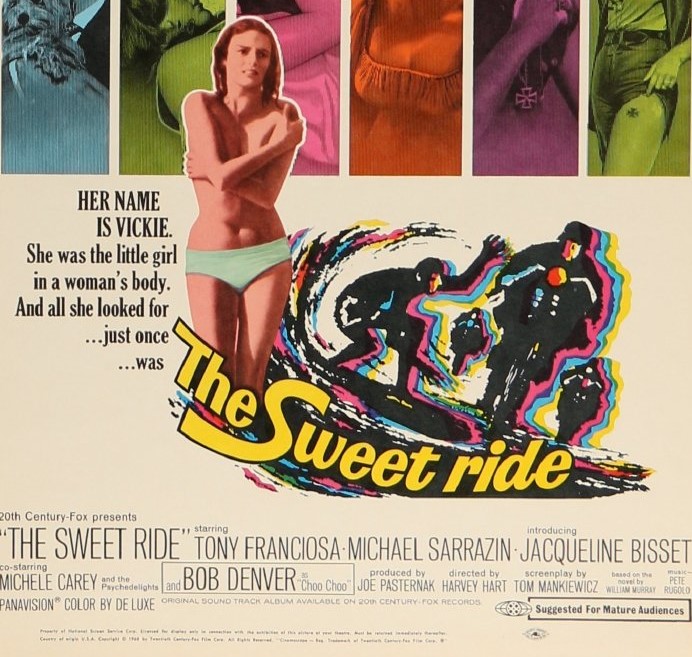
The good news, I would guess, is that 14 pictures released by Twentieth Century Fox improved on their U.S. rentals. One (The Sweet Ride, 1968) did exactly the same business abroad as at home. On the gloomier side, 34 movies did worse. For movies that had already turned a profit on home territory, any extra revenue from overseas would be viewed as icing on the cake. But for movies that had struggled or been outright flops on U.S. release, foreign distribution offered an opportunity to correct the financial imbalance.

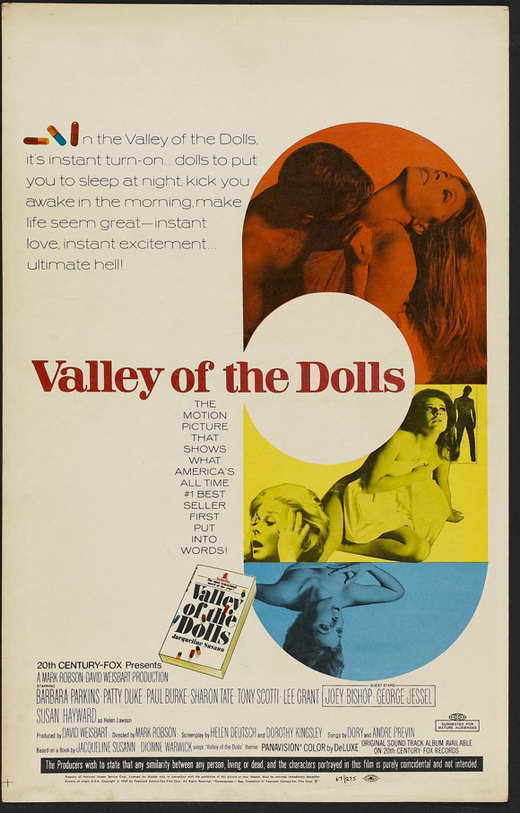
And anyone trying to forecast the outcomes would have very little chance of getting any correct. How can you come to terms with a business where Doctor Dolittle (1967) one of the biggest flops of the decade on home soil turned into one of the biggest hits of the decade in foreign cinemas. Or that one of the biggest U.S. hits of the decade, Valley of the Dolls (1967), managed to generate a fraction of the rentals received at home. In terms of failing to match up to expectation you could only categorize its overseas performance as a flop.

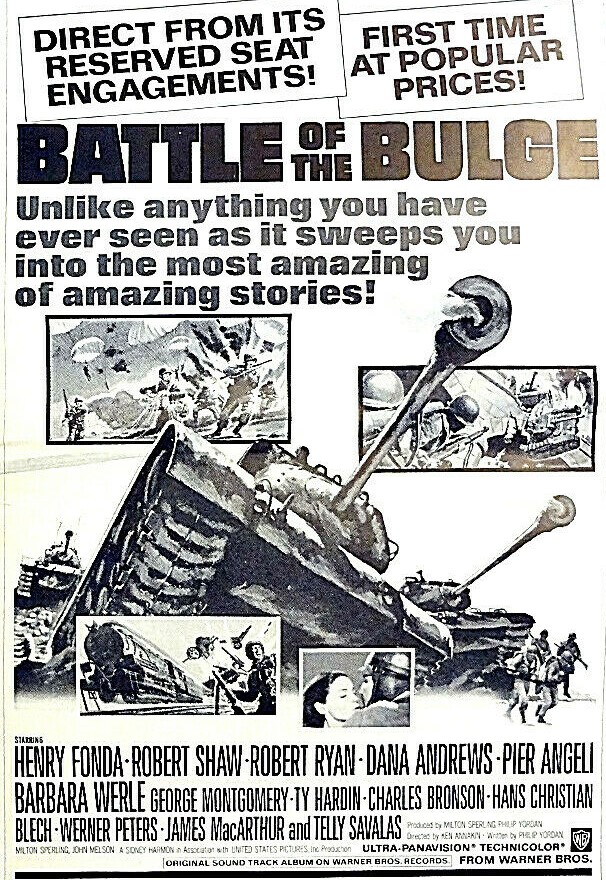
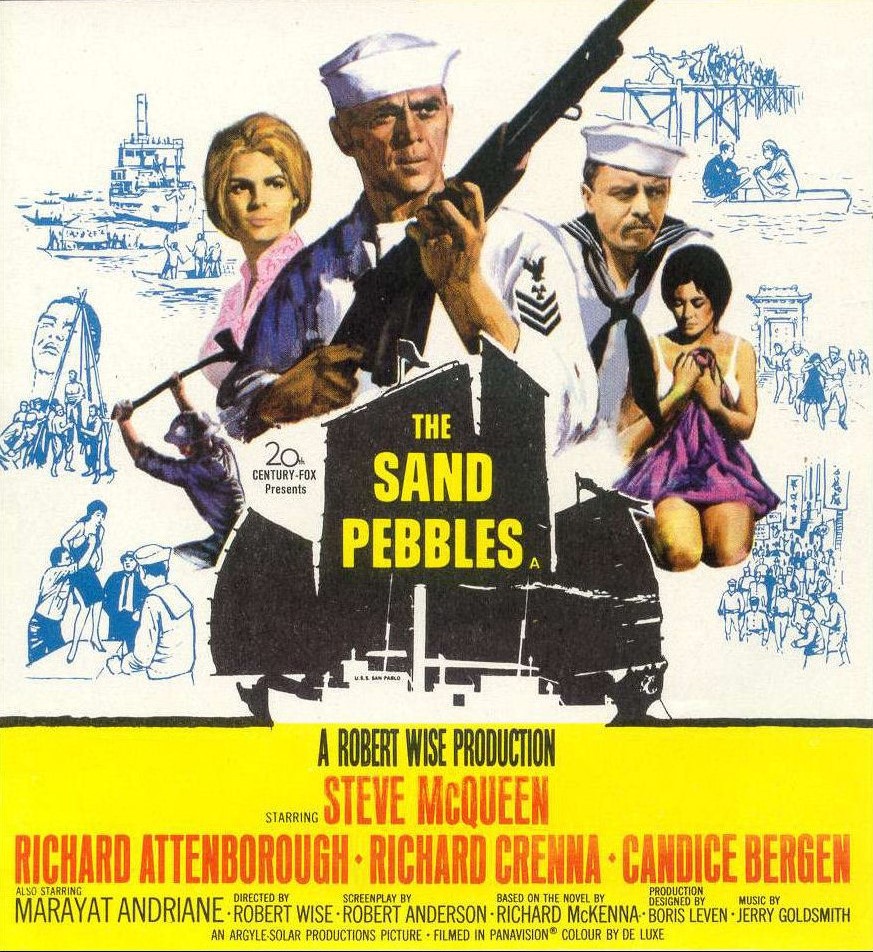
No surprises for guessing that the studio’s biggest hit overseas was The Sound of Music. What did take the industry’s breath away was that the move came nowhere near matching its U.S. results. The $37.6 million in rentals was less than a third of the amount taken at home. Valley of the Dolls, a juggernaut at home with $20 million, brought in a paltry $2.92 overseas. Other domestic big hitters to come nowhere near emulating their domestic results were: Planet of the Apes (1968), $5.8 million overseas, $15 million at home; The Sand Pebbles (1966), $7.1 million overseas, $13.5 million at home; The Bible (1966), $8.35 million overseas, $15 million at home; and The Boston Strangler (1968), $3.12 million overseas, $8 million at home.   

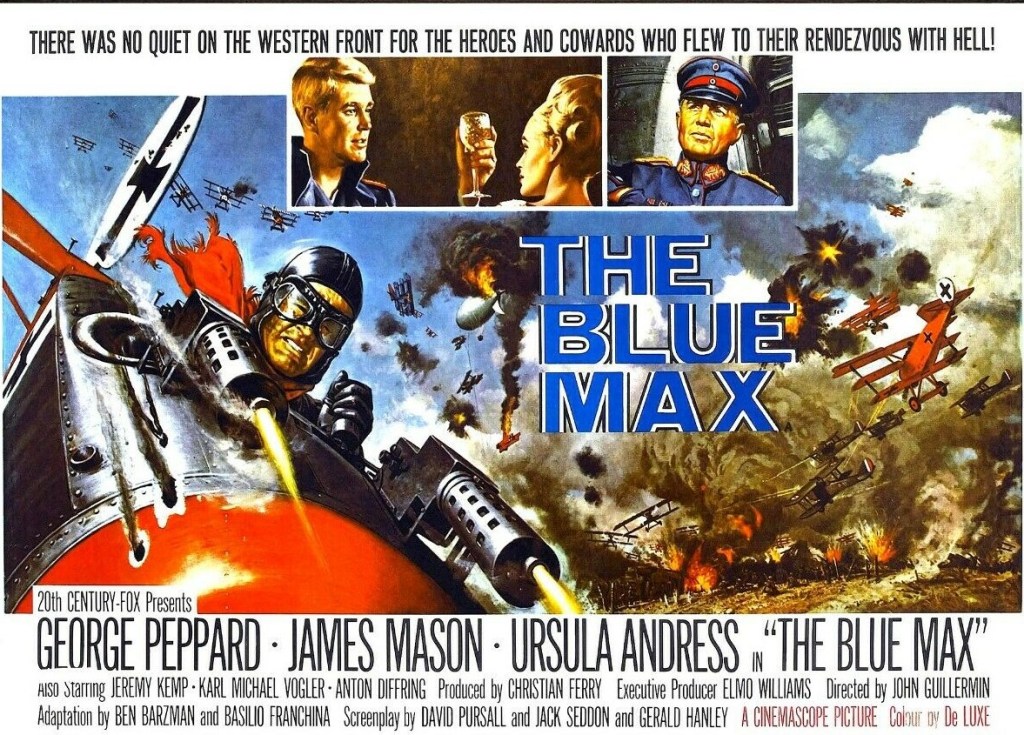
Against all expectations given the size of its failure in the U.S., just $6.2 million in rentals on a budget of $17 million, Doctor Dolittle knocked up $10.1 million abroad. World War One picture The Blue Max (1966) also astonished, $8.5 million overseas (where it often qualified as a roadshow) compared to $8.4 million at home.

By comparison another roadshow, Those Magnificent Men in Their Flying Machines (1965), improved on its U.S. figures, producing $15.9 million overseas against $14 million at home. Audrey Hepburn was a bigger star overseas than in the U.S. which went some way to correcting the disappointing rentals incurred Stateside by How to Steal a Million (1966) and Two for the Road (1967). The former took $6.05 million on foreign screens compared to $4.4 million at home and the latter $4.3 million compared to $3 million at home.

Other films for whom foreign was better than domestic included: The Prime of Miss Jean Brodie (1969) – $3.65 million vs $3 million; The Chairman / The Most Dangerous Man in the World (1969) – $2.92 million vs $2.5 million; Caprice (1967) – $2.58 million vs $2 million (conversely for Do Not Disturb, 1965, it was $1.27 million vs $4 million); The Flim Flam Man / One Born Every Minute (1967) – $2.32 million vs $1.2 million; Batman (1966) – $2.1 million vs $1.8 million; and The Magus (1968) – $1.45 million vs $1 million.

While not beating their American scores, a number of films achieved quite decent results abroad. For Our Man Flint (1966) foreign attracted rentals of $5.7 million vs $7.2 million in the U.S; In Like Flint (1967) $4.12 million vs $5 million; and The Undefeated (1969) – $4.27 million vs $4.5 million.

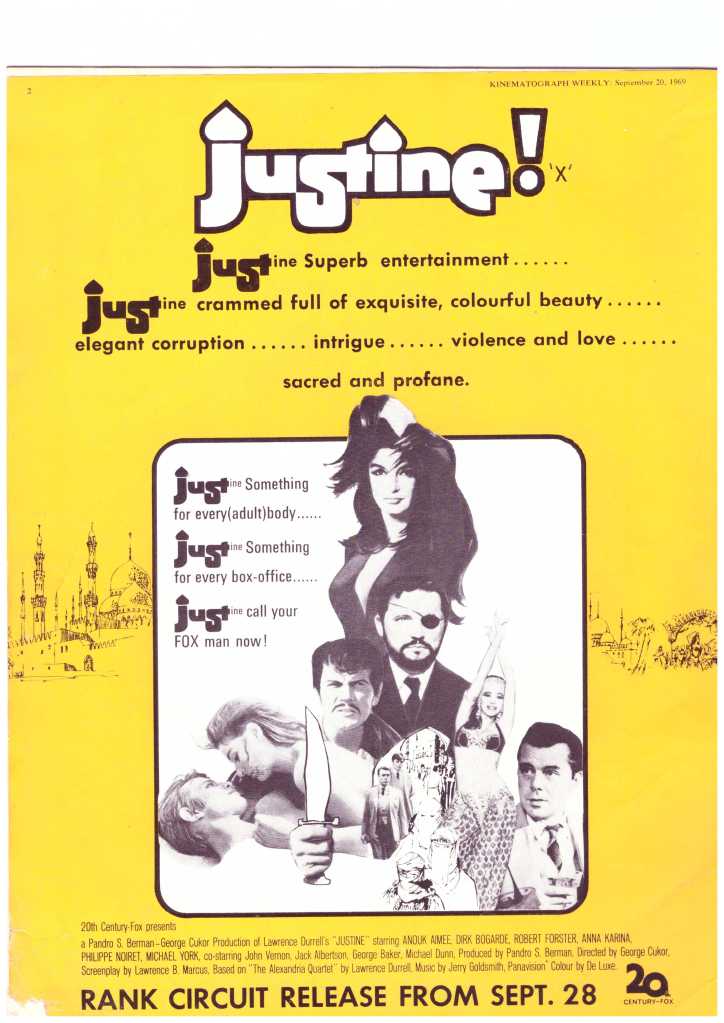
Some of the biggest flops on the U.S. domestic scene had no chance of redemption abroad. Possibly their Stateside performances put off distributors in foreign countries. Despite Richard Burton and Rex Harrison, Staircase (1969) earned only $360,000 abroad. George Cukor’s Justine (1969) managed only $570,000. James Stewart comedy Dear Brigitte picked up only $720,000. Tony Curtis-Debbie Reynolds romantic comedy Goodbye Charlie (1964) ended with $800,000. Shirley MacLaine comedy John Goldfarb, Please Come Home was limited to $880,000. Robert Aldrich’s Hush, Hush, Sweet Charlotte starring Bette Davis and Olivia De Havilland was a complete misfire – $4 million rentals at home, less than $1 million abroad.

Just as at home, Frank Sinatra was a relatively safe bet. Von Ryan’s Express (1965) brought in a further $6.27 million abroad to add to the $7.7 million coughed up in rentals by U.S. cinemas. The Detective (1968) added another $3.77 million from foreign ticket wickets compared to $6.5 million at home. Tony Rome (1967) brought in another $2.25 million to add to the existing $4 million.

Raquel Welch had more admirers abroad than at home. Foreign results for controversial western 100 Rifles (1969) nearly match domestic income, $3.4 million vs $3.5 million. Fathom (1967) out-earned domestic, $2.27 million overseas against $1 million at home. Bandolero (1968) pulled in $3.3 million vs $5.5 million. Fantastic Voyage (1966) slammed home another $3.38 million on top of $5.5 million at home. Bedazzled (1967), which only cost Fox $770,000, brought in $1.32 million abroad and $1.5 million at home.

Note: my two sources shown below, while presumably using the same figures, used them in different ways. Solomon employed only domestic rentals (and excluded I would guess pictures for which Fox acted more as the distributor than the maker) while Silverman took a global rental approach so it was down to me to subtract domestic from global to unravel foreign rentals. Any mistakes, of course, are mine.

SOURCES: Stephen M. Silverman, The Fox That Got Away, The Last Days of the Zanuck Dynasty at Twentieth Century Fox (Lyle Stuart Inc, 1988) pp323-328; Aubrey Solomon, Twentieth Century Fox, A Corporate and Financial History (The Scarecrow Press, 2002) pp 228-231, 252-256.

Behind the Scenes: The 20th Century Fox Box Office, Part One – U.S. Rentals

While I was aware that Hollywood had faced financial catastrophe at the beginning and end of the 1960s, I wasn’t so familiar with just how hard it proved for the studios to actually make a buck. If hadn’t been for the bounty of The Sound of Music (1965) and to a lesser extent Butch Cassidy and the Sundance Kid (1969), a studio as big as Twentieth Century Fox would have posted an overall loss for the decade.

Sure, audiences were in decline and production stultified but there was a fair chance those obstacles could have been overcome through the combination of roadshow, the reinvigoration of the dormant spy genre via James Bond and his imitators, the onset of more liberal material – i.e. sex and violence – thanks to changes to the Production Code and the decade-end “youthquake.”

From 1960-1969, according to the Aubrey Solomon digest of releases, which was my main source for this article, Twentieth Century Fox invested $434 million in 107 movies at an average cost of $4 million. Overall rentals – the amount returned to studios once cinemas had taken their cut of the gross – amounted to $478 million. A total profit of $44 million for the decade was probably, given the various crises, not a bad return. But once you removed The Sound of Music’s  $83 million rentals bonanza from the equation, the result was less convincing.

Break-even might have appeared a good result given the doomsayers predicting complete collapse but it says a lot for the vagaries of the business that only 42 pictures – about 40 per cent of the movies greenlit – generated a profit. You will be familiar with the big loss-makers of course: Cleopatra (1963) $16 million in the red on initial U.S. release (though most of that clawed back from overseas rentals, reissue and television sale), calamitous musical Doctor Dolittle (1967 – only $6 million in domestic rentals) and Star! (1968 – only $4 million). 

You might wonder what possessed the studio to invest $7.87 million in George Cukor’s Justine (1969). When original director Joseph Strick threw in the towel you might have imagined the studio would do the same given the stars – Dirk Bogarde, Anouk Aimee and Michael York – were hardly standout box office figures. Loss on the U.S. rentals was $5.67 million. Staircase (1969) at least had a stellar cast – Richard Burton fresh from worldwide hit Where Eagles Dare (1968) and Rex Harrison whose Oscar-winning success in My Fair Lady (1964) appeared to grant him box office immunity. But U.S. audiences only returned $1.85 million in rentals from a budget of $6.37 million.

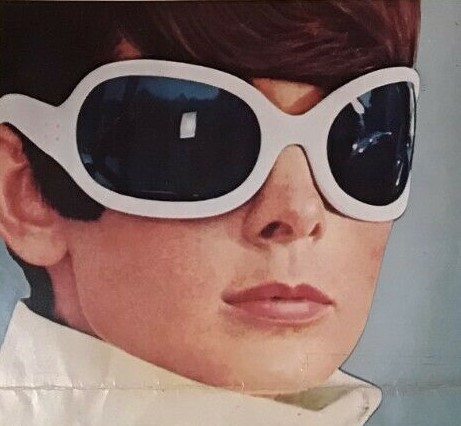
Iconic fashion accessories sported by Audrey Hepburn couldn’t save
“Two for the Road”

Another star-laden vehicle – the Paris-set caper picture How To Steal a Million (1966) teaming Audrey Hepburn (My Fair Lady) and Peter O’Toole (Becket, 1964) – came unstuck, losing $2.08 million on a budget of $6.48 million. Hepburn was at fault again the following year, losing, oddly enough, exactly the same amount for Two for the Road with Albert Finney (Tom Jones, 1963) directed by Stanley Donen (Charade, 1963) out of a budget of $5.48 million.

Other casualties were: William Holden in The Lion (1962, $3 million loss), biopic Tender Is the Night (1962 –  $2.65 million), George C. Scott as The Flim-Flam Man / One Born Every Minute (1967, also $2.65 million), Nine Hours to Rama (1963, $2.61 million), Doris Day spy comedy Caprice (1966, $2.59 million), Gregory Peck in Cold War thriller The Chairman / The Most Dangerous Man in the World (1969, $2.41 million), James Stewart in desert drama The Flight of the Phoenix (1965 – $2.33 million) and James Coburn and Lee Remick in Hard Contract (1969 – $2.32 million).

Even John Wayne stiffed. Civil War western The Undefeated (1969), on a budget of $7.1 million only brought in $4.5 million in rentals. Charlton Heston/Rex Harrison roadshow The Agony and the Ecstasy (1965), on a similar budget, lost more – $3.17 million. Michael Caine/Anthony Quinn drama The Magus (1968) barely brought in $1 million from a $3.77 million budget.

Unexpected winners included Valley of the Dolls (1967 – $15.31 million profit), Planet of the Apes (1968 – $9.2 million), Those Magnificent Men in Their Flying Machines (1965 – $7.5 million), The Boston Strangler (1968 – $3.9 million), Our Man Flint (1966 – $3.87 million) – though only $1.2 million in the black for sequel In Like Flint (1967) – and The Blue Max (1966 – $3.4 million).

Frank Sinatra proved a safe bet. The Detective (1968) turned a profit at the U.S. ticket wickets of just over £2 million and Von Ryan’s Express (1965) just under that figure although Tony Rome (1967) registered a small loss. Raquel Welch just about squeaked home – $1 million profit for Bandolero (1968), $380,000 profit for Fantastic Voyage (1966) balanced out by $420,000 loss for 100 Rifles (1969).

Of course, there was always the possibility that foreign revenues would save the day. And although occasionally the likes of United Artists’ The Magnificent Seven (1960) on initial release had earned considerably more in the overseas market than in the U.S., that was, unfortunately, rarely the case. There was no guarantee that certain genres – comedies, musicals – would travel. Hollywood studios generally received a smaller percentage from movies released abroad while facing increases in distribution costs.

Overseas business was viewed as icing on the cake rather than an essential element of the box office. There was also the problem that foreign cinema owners could check out U.S. box office figures in advance – unlike now there was no instant global release system – and should a movie falter on its U.S. debut would assume they were going to be renting a flop, therefore reduce marketing back-up and renegotiate terms.

SOURCE: Aubrey Solomon, Twentieth Century Fox, A Corporate and Financial History (The Scarecrow Press, 2002) pp 228-231, 252-256.

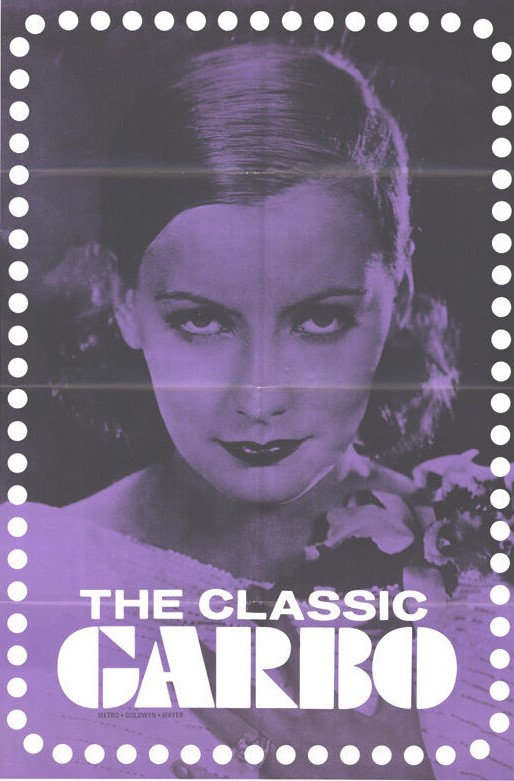
Behind the Scenes: Greta Garbo 1960s Revival Queen

More than two decades after Greta Garbo abandoned acting she was the Queen of London’s West End in one of the most astonishing comebacks in Hollywood history.

Although her Hollywood career was relatively short-lived, lasting only 15 years and ending voluntarily in 1941,  and at one point the highest-paid actor (male or female) in Hollywood, the London experience made her a big star all over again in the 1960s  – and later in the 1970s – when reissues of her most famous films filled holes in a global release system starved of product.

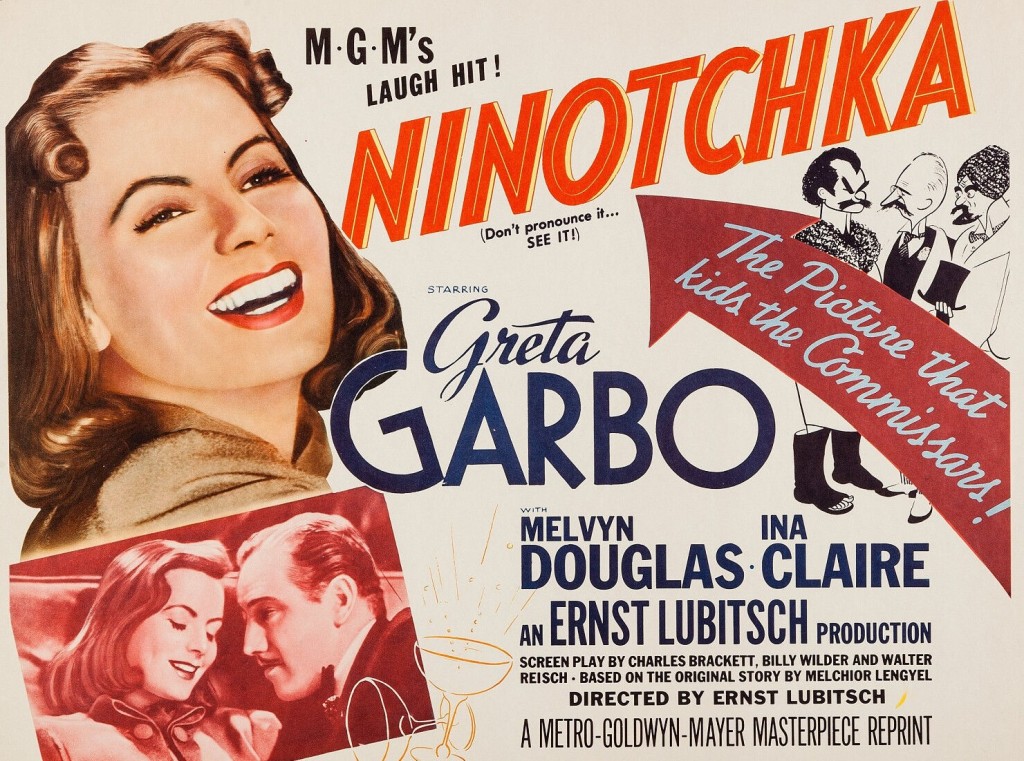
“Masterpiece Reprint” was cleaver ad-speak for getting round exhibitor phobia
regarding the words “reissue” or “revival.”
And it also suggested a new print since reissues were infamous for re-using long over-used old prints.

She’d first made an impact in the revival business in the U.S. reissue boom of 1948 in a double bill of San Francisco (1936) and Ninotchka (1939), a program so successful that shortly afterwards both were reissued again separately. The box office draw of pictures like these was such that some cinemas, for example, the State in Lubbock, Texas, re-launched themselves as “first run reissue” houses, the beginnings of the boom in repertory theaters.

But it wasn’t all gravy. Distribution didn’t just rely on old prints. Ninotchka, for example, not only had new prints but a new advertising campaign, campaign manual and accessories. However, apart from the first flush of revival, Ninotchka stumbled at the box office, too ambitious a level of release, quickly withdrawn after costing the studio $150,000.  

The impetus for the 1960s Garbo Revival came from abroad. In the U.S., Garbo films had by this point been viewed as arthouse fare, running, as in the 1950s, on a repertory basis, rented out for a flat fee, cinemas cramming in as many as a dozen films over one week. While they were available to anyone who wanted them, they came without attendant publicity. Given, they had all been screened on U.S. television they were considered a poor bet for a more commercial revival campaign.

But British television companies, of which there were only two – BBC and ITV – were more niggardly in buying Hollywood pictures so the major studios simply refuse to sell pictures, such as those starring Garbo, at what they saw as, compared to U.S. networks, cut-price rates.  

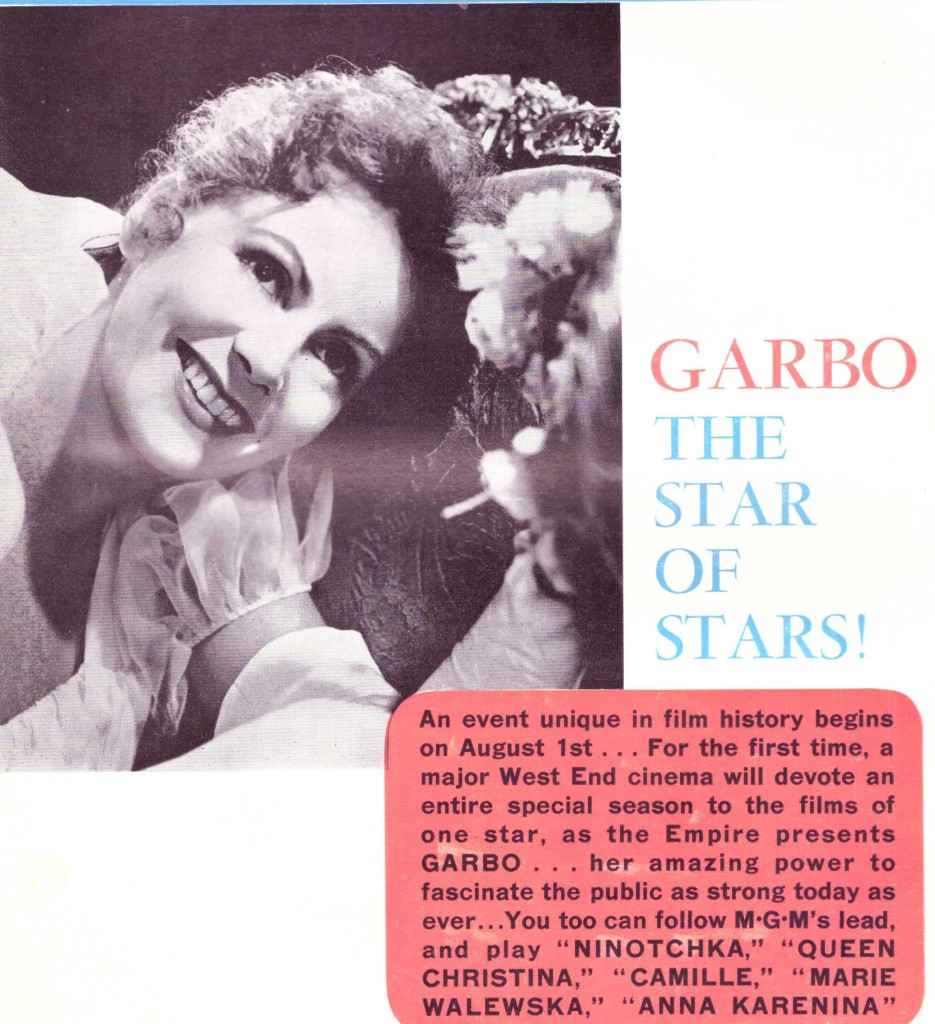
Even so, it was an act of incredible boldness for the Empire cinema in London’s West End, one of the top two theaters (the other being the Odeon Leicester Square) in Britain for movie launches, outside of roadshows,  to decide to take a gamble on reviving her movies following audience response to a brief showing at the Royalty. It was the first time a major commercial house in such a heavily-competitive environment  had devoted any time to what was in effect a retrospective, setting aside two months for a succession of Garbo pictures.

Two-Faced Woman (1941) – Garbo’s last picture – shored up $14,000 – equivalent to $140,000 now – in its first week. Queen Christina (1937) made a debut of $9,000 and Camille (1936) $11,000. In all, over this opening stint and a further season later on, the Empire screened eleven pictures – the others being Grand Hotel (1932), Anna Christie (1930), Mata Hari (1931), Ninotchka, Anna Karenina (1935), Marie Walewska (aka Conquest, 1937), As You Desire Me (1932) and The Painted Veil (1934)

And there was more to come. The Empire was the release showcase for the entire ABC circuit, so anything screening there would be rolled out in the country’s biggest chain.  Since ABC was decidedly not in the arthouse business, sending the movies out into the general mainstream seemed an even bigger risk. But such fears proved unfounded.

Garbo pictures were distributed throughout the country, and not just on the ABC circuit. In Glasgow, for example, the La Scala (owned by Caledonian Associated Cinemas) first-run house – rather than the city’s denoted arthouse the Cosmo – launched a three-week season comprising Ninochka, Queen Christina and Camille, two of the three going out as single bills.

Meanwhile, in the U.S. Garbo movies were being unfurled via the MGM Perpetual Product Plan, whereby classics (rented on a percentage basis) were screened for one day a week for a period of eight-to-ten weeks with audiences able to book a discounted ticket for the entire season. Abroad, there was more opportunity. Like Britain, countries like France revered the star and the movies were continually revived in Europe during the 1960s at commercial venues.

But by the end of the decade, the book should have been closed on Garbo. Because, in 1969, MGM, with the exception of perennials like Gone with the Wind (1939) and Doctor Zhivago (1965), pulled out of the reissue business. The studio withdrew from release its core library of around 100 vintage pictures because the operation was now losing money. Flat fee rentals of $100 (as opposed to the earlier percentage deals) for a three-day engagement failed to cover the costs of prints, distribution and advertising. The novelty of the one-day-a-week scheme had worn off.

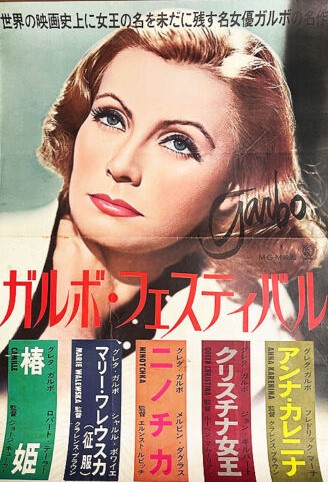
MGM intended to try out the old “creating demand” tactic by keeping its oldies out of circulation for at least four years.  But the studio was in severe financial straits at the start of the new decade and not in a position to resist an offer in 1970 from Erwin Lesser of Entertainment Events who proposed taking out a two-year lease on 65 pictures that had “made film buffs out of two generations.” Lesser drew up a package of 26 “Movie Incomparables.” Garbo was the main attraction. Included in the list were As You Desire Me, not seen for 30 years. Lesser returned to rentals based on percentages rather than a flat fee.

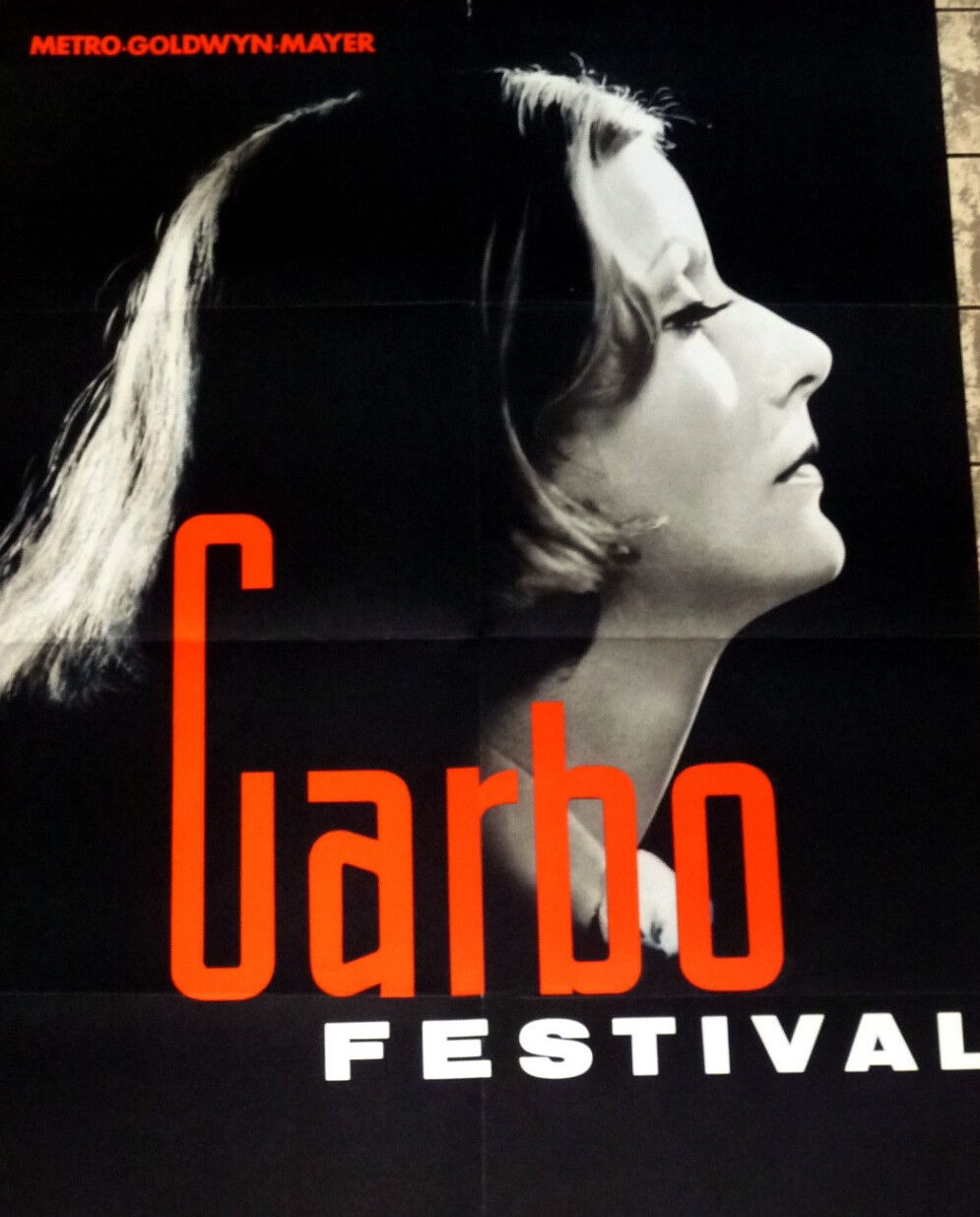
While Lesser made the movies available as single features and double bills and as support to new features, the main thrust of his marketing campaign was the “Garbo Festival,” an idea stolen from television which had taken to rewrapping old pictures as week-long events as a means of enticing viewers.

Although the Museum of Modern Arts in New York agreed to run a Garbo retrospective, that hardly produced the kind of box office juice that was required to kickstart a major revival.  So Lesser bided his time, and in the end accepted a nine-day “filler engagement” in March 1971 for the 565-seat Murray Hill arthouse in New York. A “rousing” first week delivered $15,000 – $113,000 in today’s money – while the remaining two days hit a colossal $7,800.

Garbo was back – and in some style. Two months later the Garbo package returned to Murray Hill for a socko one-week $11,000 followed by a move-over to the 533-seat Paramount. And then it was game on.

One of the major elements of the Festival was its flexibility. It became an umbrella term. Exhibitors could decide whether to create a program out of single showings or double bills that could run for consecutive weeks or for an on-off event of single weeks interspersed over a longer period with other features.

In Chicago the double bill of Grand Hotel / Anna Christie romped home at the 505-seat Cinema with $8,500 in the first week and $7,500 – an amazingly low drop-off at the box office considering 40%-50% tumbles in the second week are the norm today – followed by Mata Hari / Ninotchka also on $7,500. In the same city Camille / Anna Karenina racked up $4,800 at the 598-seat Carnegie.

In Philadelphia a four-film package hoisted $19,000 running simultaneously at the 500-seat World and the 855-seat Bryn Mawr. The second week take dropped by just $1,500. Two more packages running each for a week brought in a total of $15,000. In Pittsburgh and Detroit the seasons also ran for three weeks.

But showings were not restricted to arthouses. In Cleveland the package played the 1,500-seat Beachcliff, in Dayton the 1,000-seat  Cinema East and in Kansas City the 1,291-seat Midland.

Garbo’s name was kept alive all through the 1970s as revivals, either in one-week festivals, or shorter bookings, continued to bring in revenue across the USA and around the world, proving the continued box office potency of one of the industry’s greatest stars.  

We’re still a few years away from the centenary of her Hollywood debut in MGM’s Torrent in 1926 so expect major reassessment then. Whether she breaks out of the arthouse confines and fuels new demand in the multiplexes might not be such a long shot. Release patterns for revivals have markedly changed, many now being promoted as “one-day-only” events (miss out at your own peril) rather than running over a week or longer. A major publicity campaign and the assistance of social media could change public perception of a star whose films embraced both the silent era and Hollywood’s Golden Age and who was never short of publicity.

In my opinion it’s always worth watching a Garbo film for one technical reason – the difference between male and female close-ups. Watch a Garbo picture and a close-up  could last for minutes, the end of Queen Christina for example, as her eyes move through a variety of emotions. Male close-ups by comparison are over in a flash. With few exceptions the soul of a male actor is rarely revealed in close-up and even rarer is for expression to so dramatically change.

SOURCES: Brian Hannan, Coming Back to a Theater Near You, A History of Hollywood Reissues 1914-2014 (McFarland, 2016) pp 33, 55, 56, 58, 75, 128, 130, 133, 212, 223-225, 232 “Test Garbo Retrospective at Royalty in London,” Variety, June 23, 1963, p11; “Garbo Pic Sets London Record,” Variety, August 15, 1963, p2; “Click of Metro’s Garbo Pix in London’s Empire Cues More Runs,” Variety, August 21, 1963, p19; “British Provinces May Get Metro Garbo Films,” Variety, August 28, 1963, p23; “Metro Classic (Garbo, Marx Bros, Tuners) Withdrawn from Market,” Variety, August 27, 1969, p3; “MGM Leases 65 Pictures for Re-Releasing,” Variety, August 10, 1970, p3; “Picture Grosses,” Variety 1971 – March 31, April 7, May 11, May 25, June 9, June 23, June 30, August 18, November 22, December 8.

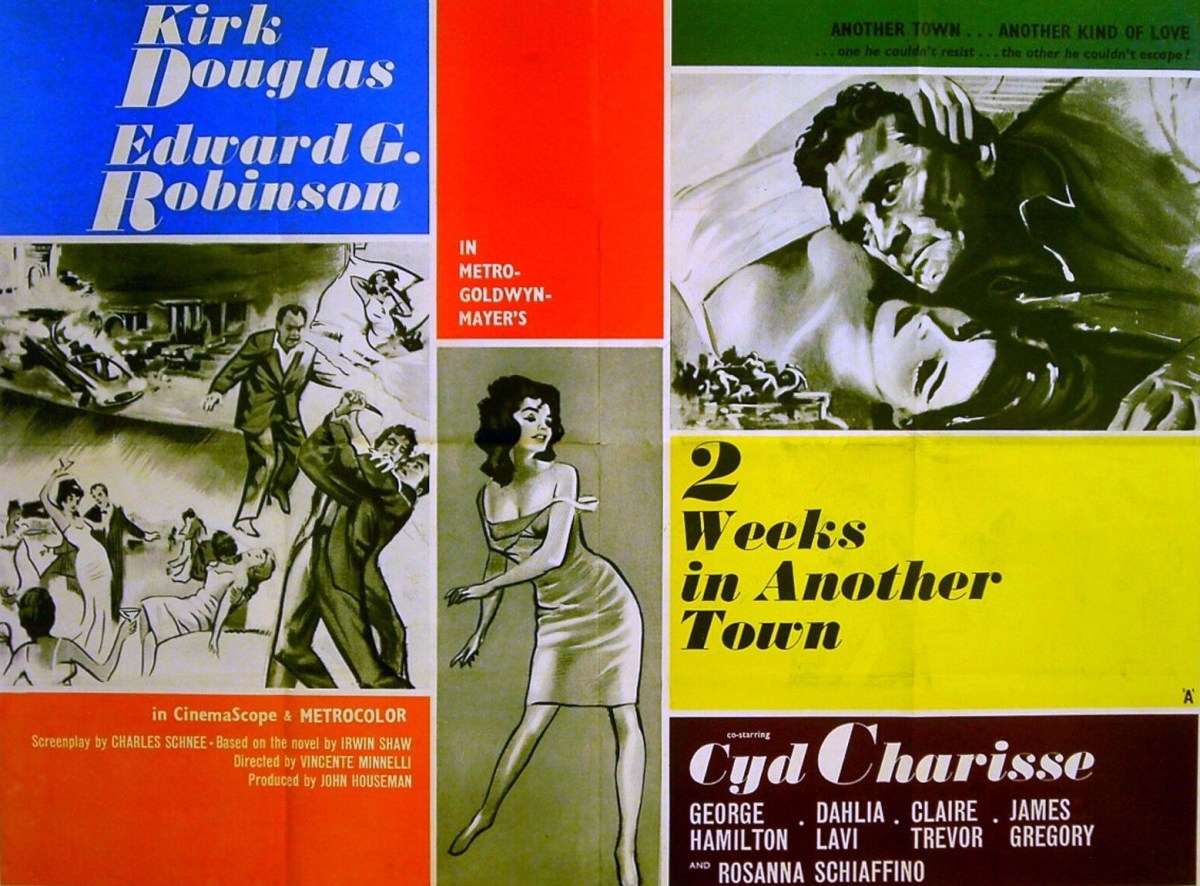
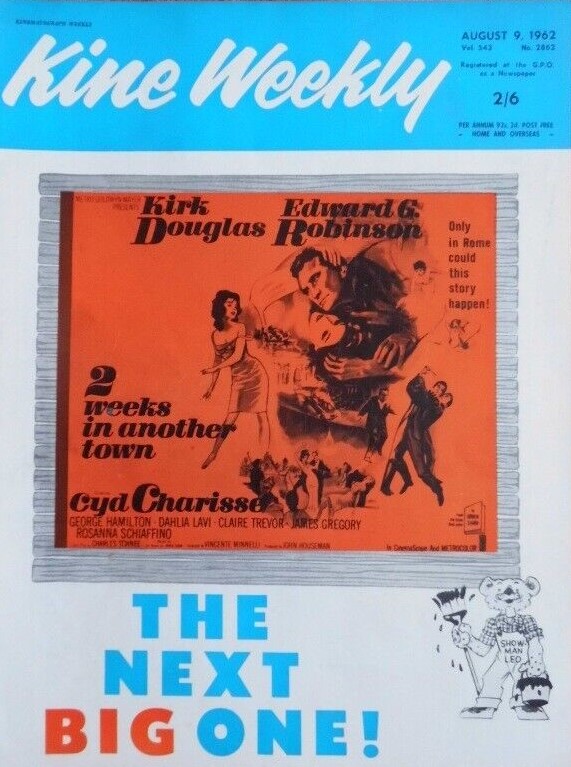
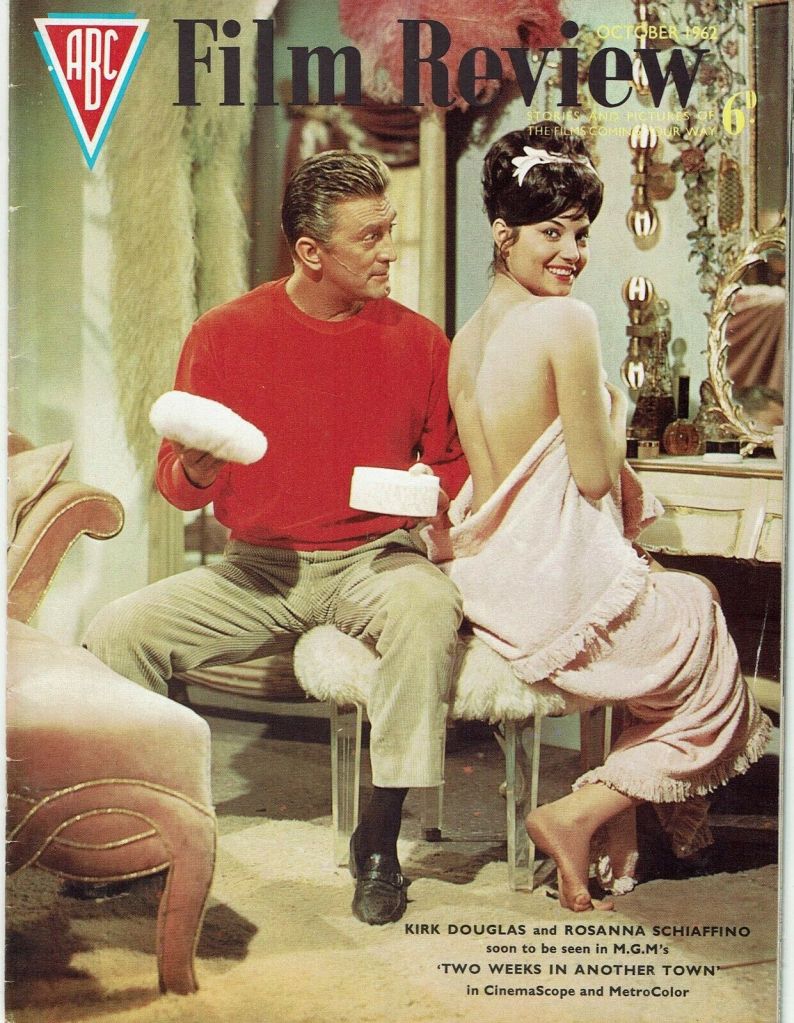
Behind the Scenes: “Two Weeks in Another Town” (1962)

Until a technological invention first used in Once a Thief (1965) it was impossible to shoot “day for night” without it appearing very obvious. So when director Vincente Minnelli aimed for as much verisimilitude as possible for the Rome-set drama it meant half the shoot took place at night. “Minnelli could sleep easily during the day,” recalled star Kirk Douglas (The Arrangement, 1969), “sometimes till six o’clock in the evening, but I couldn’t so there were three unpleasant weeks of night shooting and not much sleep.”

But the movie suffered, Douglas later complained, by studio interference at the editing stage. When the movie fell foul of the Production Code, change of MGM management vetoed the more salacious aspects of the movie – the worst aspects of “La Dolce Vita” including a sequence in a nightclub where guests watched an unseen sexual act. Fifteen minutes were cut including a scene that showed Cyd Charisse’s character in a more sympathetic light. In an ironic reflection of the film’s narrative, Minnelli played no part in the editing, not due to production deadlines as in the movie, but out of choice.

The actual producer John Houseman – producer of Douglas starrers The Bad and the Beautiful (1952) and Lust for Life (1956) though later best known as an actor in Rollerball (1975) etc –  backed out of any tussle with MGM head honcho Joseph Vogel. Douglas implored Vogel and editor Margaret Booth, to no avail. Consequently, in Douglas’s opinion, the film was “emasculated.” He argued MGM had turned an “adult” picture into a “family” film. Quite how this could be squared with marketing that promised a “shocking intimate view of Rome’s international film set” (see below) was not mentioned.

Following the commercial and artistic success of Spartacus (1960), Douglas was at the peak of his career, though his last three pictures had been flops. After nabbing an Oscar for Gigi (1959), Minnelli also enjoyed a career high, and although best known for musicals like Meet Me in St Louis (1944) and An American in Paris (1951) was equally adept at drama like The Bad and the Beautiful,  Lust for Life (1956) and Some Came Running (1958). But he, too, was running empty, his last three serious films – Home from the Hill (1960), All the Fine Young Cannibals (1961) and big-budget roadshow The Four Horsemen of the Apocalypse (1962) coming up short at the box office.

Douglas earned $500,000 and a percentage of the profits (though none were forthcoming – it made a loss of $3 million) and top-billing. Although co-star Edward G. Robinson (Seven Thieves, 1960) appeared above the title, Douglas refused to accord female lead Cyd Charisse (Maroc 7, 1967), on one-tenth of his salary, that concession.

Douglas recalled that he build up his acting skills through wrestling. A college wrestling champ, he barnstormed across the country in a carnival, playing the cocky person reputedly from the audience who challenged the giant resident wrestler. “My job was to make the audience think he was going to murder me,” Douglas told the Pressbook/Campaign Manual. “And the way to do this was by expressions on my face. To yell out in pain would seem cowardly. But I learned a hundred and one ways of showing it through use of my eyes and the muscles in my face.”

The actor escaped serious injury when lightning, preceding one of the worst thunderstorms in a  decade,  struck a 200-year-old clock on the top of the church in Santa Maria Square. Four huge iron numerals were torn off and crashed to the ground, one grazing Douglas’s head.

In fact, the movie’s authenticity owed much to being filmed on the streets of Rome rather than reconstructed on the studio lot. In particular, scenes utilizing the Via Veneto, two long blocks of sidewalk cafes where the movie industry socialized, created a realistic atmosphere, especially when a hundred or so of the extra employed were actually people who would naturally populate the location. So, for example, when the script called for an opera star among the extras, casting director Guidarino Guidi used Bostonian Ann English, an opera singer studying in Rome. Among those sitting in the background at café tables were a promising young painter, a poet and a librettist.

George Hamilton (Act One, 1963), who had worked in Home from the Hill and just finished Light in the Piazza (1962) also shot in Rome, reckoned he couldn’t have been more miscast given his role called for a “funky James-Dean type.” He got the role through the influence of Betty Spiegel, wife of producer Sam, and her friend Denise Gigante, the director’s current girlfriend (later wife). Hamilton drove around in a red Ferrari costing $18,000 (ten times that at today’s prices) and, as he put it, “Italians knew how to worship” Hollywood stars.

Hamilton reckoned part of the problem of the film was that Minnelli was so “besotted with Denise that he had lost his vision.” Jumping to the defence of Cyd Charisse against a tirade from journalist Oriana  Fallaci at the Venice Film Festival won Hamilton, unexpectedly, the cover of Paris-Match.

Daliah Lavi owed her career break to Douglas. As a nine-year-old in Hiffa, Israel, she struck up a friendship with the actor when he was filming The Juggler there in 1952. The actor and other stars attended her birthday party, Douglas presenting her with a ballet dress. Later a dancer and then an actress, this was her Hollywood debut. Erich von Stroheim Jr, making his movie acting debut, had his head shaved to make him appear more like his famed director father. Originally employed as an assistant director on the picture, Minnelli decided he would make a good Ravinski, the “fast-talking press agent.”

Chauvinism reared its ugly head, especially when women had to apologise for being on the receiving end. “What goes on in the minds of beautiful women when they get slapped for the cameras?” mused the editor of the Pressbook/Campaign Manual. Rossano Schiaffino’s response regarding being whacked on the behind by Douglas: “He hits hard so charmingly I didn’t mind standing up for a day of two.”

The actress proved tougher than many of her colleagues. She turned down the offer of a double for a scene in which she jumped into a lake. That might not have been such an undertaking had the sequence been shot in the hot Italian sunshine at the height of summer. But the MGM studio tank on Lot 3 was a different – and much colder – proposition. “She shrugged off her stunt with the remark that heated pools are unknown where she comes from.”

Irwin Shaw, author of the best-selling source novel, wasn’t too upset at the way the movie turned out. “An author who wants complete control of his work on the screen is in something of a cleft stick,” he observed. “He can either go into production himself, which is often neither possible nor desirable, or he can refuse to sell his work to the movies. Minor deviations in screen conception don’t send me reeling back a stricken man. I think I’m sufficiently realistic to know that even in the most enlightened films there must be some compromise if they are to be a success.  What does matter very strongly to me is that the theme of the novel…should come over on the screen.”

Music trivia: Kirk Douglas was the first big Hollywood star to perform “The Twist” on screen and the song “Don’t Blame Me” was reprised from The Bad and the Beautiful, sung here sung by Leslie Uggams and in the older film by Peggy King.

French designer Pierre Balmain created the dresses, allowing a marketing campaign to be built around those stores which supplied his clothes. TWA, which flew directly to Rome, was suggested to cinema owners as an ideal tie-in. Not only did New American Library issue a new movie tie-in paperback/soft cover but cinemas were encouraged to build a campaign around a director, many of whose films would be well-known to audiences. The marketeers also had material to tie in with stores retailing music, women’s sportswear, menswear, men’s sweaters, beauty and hair styling.

The 16-page A3 Pressbook/Campaign Manual offered a selection of advertisements and taglines. The key advert tagline ran “Another town…another kind of love…one he couldn’t resist…the other he couldn’t escape.” But there were alternatives: “Only in Rome could this story be filmed/Every town has women like Carlotta and Veronica and the kind of man they both want!/From Irwin Shaw’s great best seller.”

Or you could opt for: “Irwin Shaw’s shocking intimate view of Rome’s international film set. The world only sees the glamor. This is the drama behind it!.” Or: “Only in Rome could this story happen. Only in Rome could this story be filmed!”

SOURCES: Kirk Douglas, The Ragman’s Son (Simon and Schuster paperback, 2010) p342-344;  George Hamilton, Don’t Mind If I Do (JR Book hardback 2009)pp 155-159; Pressbook/ Campaign Manual, Two Weeks in Another Town (MGM).

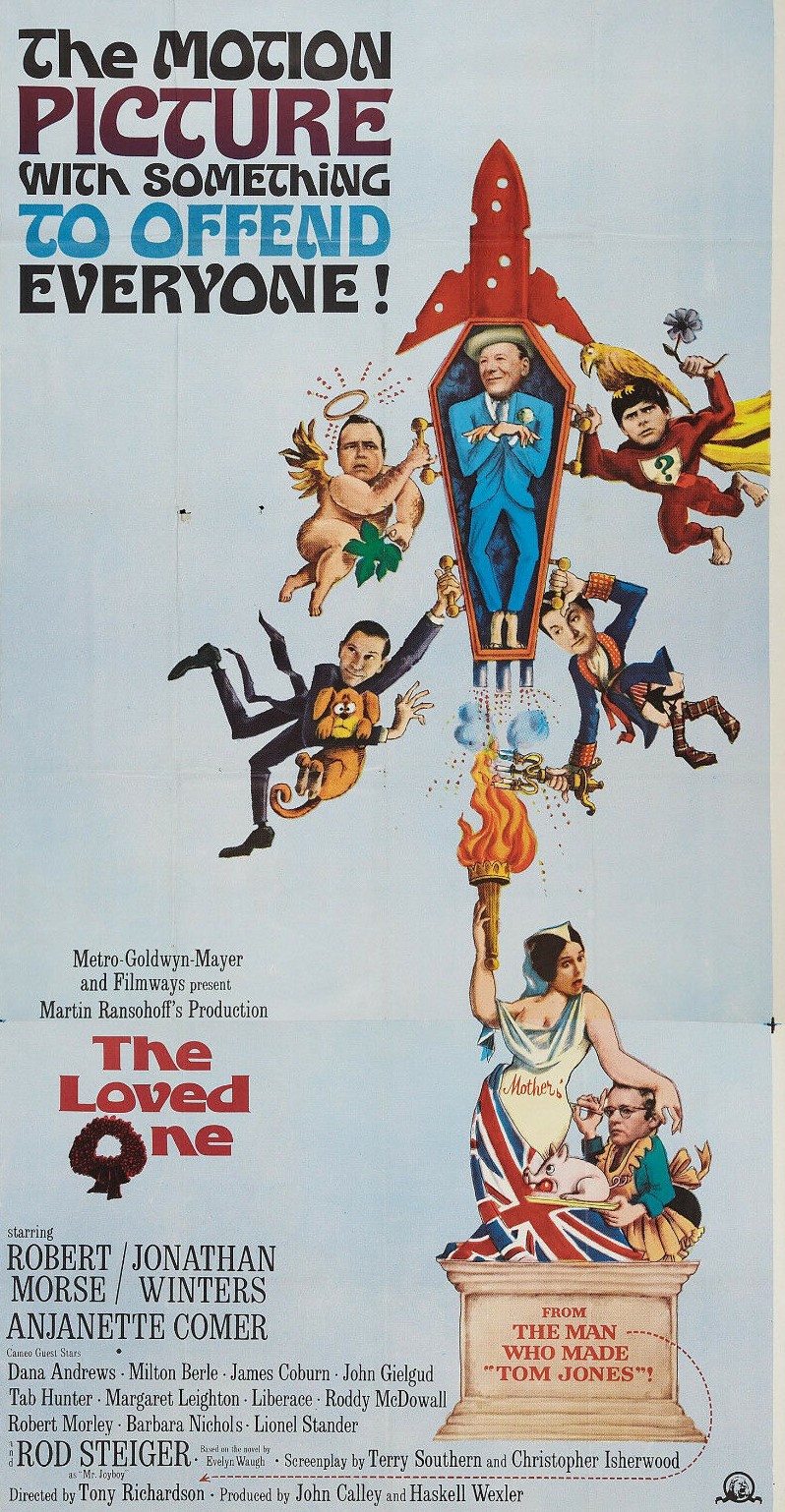
Behind the Scenes: Selling Death – The Pressbook for “The Loved One” (1965)

Yep, you hand the promotional department the problem of selling a movie about undertakers and see what they come up with. The tagline “the motion picture with someone to offend everyone” is unlikely to attract the unwary and leaves you only with an audience that enjoys seeing sacred cows slaughtered, which might minimize appeal. Coupled with a montage of outlandish scenes and characters, the main advert had its work cut out to attract anyone.

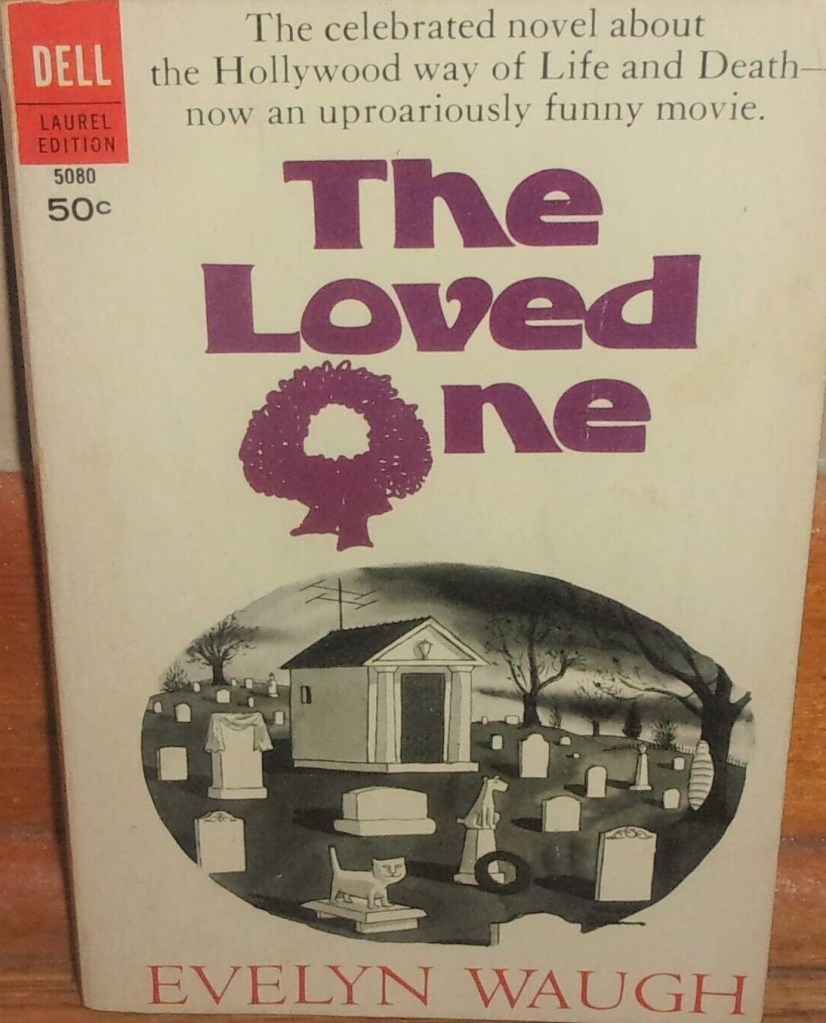
Just as well, then, the marketing department had some apparent plums up its sleeve. Even more than weddings, funerals are associated with flowers. So, top of “the ticket-selling ideas” was suggesting to cinema owners either to stick a wreath at the front door or get a florist to spell out the title in a lobby display.

If that didn’t work, go for broke and stick a tombstone (easily constructed from plywood or papier mache, apparently) in the lobby. (The Fall of the House of Usher had gone one better, promising a free casket to anyone who dropped ad of fright.) Better still, lay down grass on the pavement outside to achieve a lawn effect.

And if that doesn’t get the media buzzing, why not just hire a hearse. That could sit outside the theater or tour the locality with banners slung along the sides. If the local newspaper was willing, you could arrange to have the print delivered by hearse, photographer on hand to record proceedings.

“Since The Loved One spoofs the undertaking business, most morticians aren’t too happy with the picture. This can be twisted to advantage to get you a newspaper story,” proclaims the Pressbook. Basically, the notion is that undertakers will respond to a reporter nosing around and that somehow that will permit mention in the resulting article of the movie. Another idea is to invite undertakers to the opening night on the assumption that no one will turn up and that somehow that, too, will make a newspaper story.

A simpler alternative was just to hire a model and have her parade around town dressed in white like a mortician and passing out flowers.

Just in case nobody had noted the off-beat nature of the picture, cinema managers were encouraged to browbeat local journalists into spelling this out and putting the movie into the same bracket as Dr Strangelove (1964), What’s New, Pussycat? (1965) and, of course, Tom Jones (1963).

Oddly enough, the movie received a favourable press – or at least a word or two which could be culled from reviews to make it appear so. Thus, one advert was able to rustle up quotes from the New York TimesCue magazine, Herald TribuneHoliday magazine, Life and Saturday Review.

Basically, there was as little meat on the advertising bones as in the genuine narrative to the picture itself. There was only one tagline and all the adverts, covering three-quarters of the 12-page A3 Pressbook, were variations on the one ad.

Outside of the cameo appearances, the male and female leads were relative newcomers, both starring in Quick, Before It Melts (1964). Courtesy of his long-running role on Broadway hit How to Succeed in Business Without Really Trying, Morse was marginally the bigger marquee name.

For a comedy, it was a potentially lethal role for Morse. “There was one scene in which a toy rocket blew up in my face and another in which I was dragged 40 feet by an automobile. I came close to being asphyxiated after doing a 60-minute stint in an air-tight embalming room.”

“Fate has been kind to me so far,” averred Comer. “But it didn’t all happen overnight, you know. Actually, I don’t think the quickie successes mean very much. You can be belle of the ball one day and a has-been the next.

“When I decided to go into this business, I made up my mind about one thing. I wouldn’t go into it unprepared. I got the groundwork in workshop plays at the Pasadena Playhouse and I concentrated on acting to the exclusion of everything else. I never even got to see what Hollywood actually looked like.”

After the success of Tom Jones, director Tony Richardson was given carte blanche. He filmed in 21 locations including the California freeway (as yet unopened), pet cemeteries and Beverly Hills mansions (the ground floor of Dohney marble chateau) and never in the studio.  “I feel constricted working anywhere but in the real locales,” he told the Pressbook. “There are inconveniences in working outside a studio but I don’t mind them.”

His quest for realism extended to make-up. For example, he vetoed applying make-up to Jonathan Winters’ hand so that it matched his tanned face. Other attempts at verisimilitude saw lights taped to ceilings and sound equipment strapped to plumbing. Substitutes were found for equipment deemed too bulky or sensitive for location filming.

Future Warner Bros boss John Calley, here working as co-producer, explained some of the problems encountered. “Normally, when a piece of equipment is to be used or something needs to be constructed in Hollywood, it is only a matter of dialling the proper studio telephone extension. But under the Richardson plan every bit of equipment, every prop, every item of construction had to be individually contracted. There is no question that this is the most difficult way to make a picture, but it is the only way Richardson will work.”

Behind the Scenes: Selling that Old-Time Religion – The Pressbook for “Elmer Gantry” (1960)

The one element that every movie requires – advance publicity – was denied Elmer Gantry. Shooting took place on a closed set with all visitors carefully screened. Only six actors were given access to a complete screenplay while a general synopsis was denied distributors and cinema owners.

Over 30 years after publication of the source novel by Sinclair Lewis, its contents were considered so volatile and contentious that, rather than be pre-judged by the industry on expectations of what the movie may contain, director Richard Brooks took to issuing baffling statements such as describing Elmer Gantry as “The All-American Boy.”

Even the 12-page A3 Pressbook/Campaign Book, the prime source of marketing contact between studio and theater owner, was niggardly in the extreme. Narrative detail was limited to “the story of a spellbinding evangelist” rather anything approaching a synopsis.

Stuck with how to woo an audience in advance, United Artists fell back on a teaser campaign comprising six separate ads. The sequence was as follows: “Elmer Gantry Is Coming!” / “Sinners! Elmer Gantry Is Coming!” / “Sinners! Elmer Gantry Is Coming! starring Burt Lancaster”/ “Sinners! Elmer Gantry Is Coming! Starring Jean Simmons” / “Sinners! Elmer Gantry Is Coming! starring Burt Lancaster and Jean Simmons”. The last advert was coupled with a quote from the New York Times with the final salvo the same ad repeated but with a different quote from the New York Post.

The New York campaign – in those days a movie might take a few months to spread out from initial opening locale to other cities allowing promotional ideas that worked in one area to be publicized – relied on the first two teasers. But they went out in saturation – in railroad stations, subways, buses and race tracks with additional displays on poles, stilts and drums.

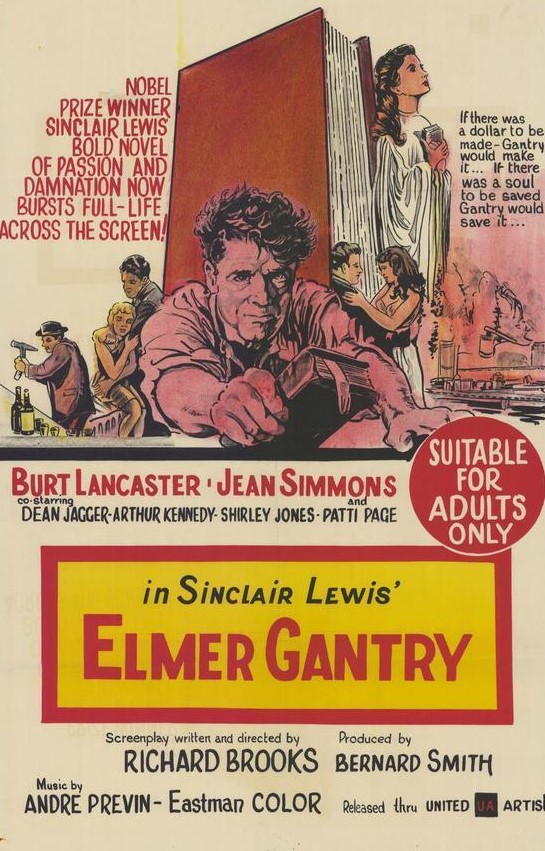
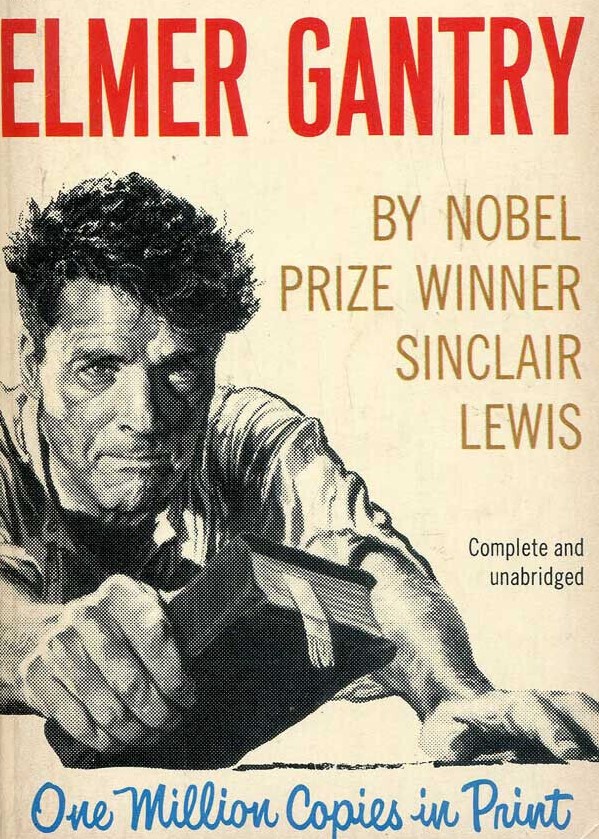
The major print advertising onslaught was led by two bold large-sized adverts intended to run facing each other on the same page. “Bless Him! Tens of thousands of believers shouted his praises!” was accompanied by the iconic illustration, Bible in hand, of Burt Lancaster. “Damn Him! Three women damned his soul” showed Lancaster grappling with Jean Simmons with Shirley Jones and Patti Paige in the background in more revealing clothing. But these two elements could also be fitted into the one ad, as shown above.

There were nearly a dozen full-size advertisements with a range of taglines. In all Lancaster is shown in the same pose with the Bible while Simmons is presented clutching a Bible and gazing heavenward. Shirley Jones appears in even skimpier outfits.

As was standard at the time, taglines could stand on their own or mix and match. Snippets for other ads were edited from this main ad: “Nobel Prize Winner Sinclair Lewis’ Bold Novel Of Passion And Damnation Bursts Full-Life Across The Screen! If there was a dollar to be made – Gantry would make it…If there was a soul to save -Gantry would save it…”

“Sinner! Elmer Gantry Wants You!” ran another ad backed up by “Are you ready, sinner? He wants you to know all about heaven…but not about his whiskey and his women!” Other adverts were fashioned from taglines like: “You’re all sinners…you’ll all burn in Hell! Tell ‘em Gantry…save ‘em from sin…lead ‘em to salvation…tell ‘em about everything…but not about your whiskey and your women!” Or included: “From the book that shook a nation with its sledgehammer theme…from a Nobel Prize-winning author…comes the raging story of a man who used the Holy Bible and broke every rule in it!”

Rarely have so many exclamation marks been employed in so short a space, but equally, rarely has a marketing team encapsulated so vividly a movie with a difficult subject matter, all tease and no substance.

Out-with the usual marketing routes, the marketing team were able to take advantage of various ancillary promotional opportunities. Dell organized a massive paperback book tie-in in thousands of bookstores and newsstands, Burt Lancaster dominating the front cover with Simmons and Jones pictured on the back. Music retailers also played their part, United Artists Records launching the Andre Previn soundtrack album while Mercury released an album of revival tuness sung by Patti Paige, who made her movie debut in the film. With record sales exceeding 35 million, Paige’s host of fan clubs were a natural target for contact and if there was none in the local vicinity cinema managers were encouraged to start one by the simple device of setting up “a giant postcard in the lobby” and inviting fans to attach their signatures.

Department stores were called upon to run 1920s Fashion Shows.

Anniversaries, so important today, helped out. It was 30 years since Sinclair Lewis was awarded the Nobel Prize, the first American author so recognized, and 1960 was the 75th anniversary of his birth. But the promoters also played upon the book’s initial controversy, hoping to re-ignite the debate as a promotional tool.

With the bulk of the Pressbook given over to advertising and promotional ideas, barely little more than a single page was devoted to the stars, but even then there was little of the usual soft-focus puff pieces. The kind of  journalistic nuggets that might help an editor fill a vacant space were limited. All we learned of Burt Lancaster, who had worked with Richard Brooks before on Brute Force (1947), was that – as if this was a mark of respect – he agreed to read the screenplay twice. Of Jean Simmons it was pointed out she had played an evangelist in Guys and Dolls (1955) but the Pressbook erroneously states that she played a nun in Black Narcissus (1947); in fact, she was a beggar girl. Arthur Kennedy is mentioned in relation to his Oscar nominations.

Shirley Jones was the most likely to attract column inches as a result of explaining how she made the transition from more demure roles in Oklahoma (1955) and April Love (1957). “It feels just fine – now,” she told the Pressbook interviewer. “At first, well, I really don’t wear much except what you see. A slip, these shoes with the green frills, and slinky black silk wrap-around that’s transparent.

“Usually, I walk into a movie set wearing my bustle and petticoats and some of the boys turn round as I go by and say, ‘Hiya, Shirl.’ But when I walked in dressed like this the fellows all just turned round and didn’t say anything. They never turned round like that before. Well, not really. It did take some getting used to after provoking the big brother reactions for so long.

“But I guess every girl dreams of being a conversation stopper some day. This is my chance. Of course, I am embarrassed sometimes…or maybe it’s inhibited.”

Brooks rewrote the script eight times before “he felt he had captured the essence” of Gantry. Most of the scenes were filmed on sound stages or adapted from an assortment of 1920s vintage streets from the backlots of other studios. The tabernacle was constructed out of an ice skating rink on a beach pier in Santa Monica.

Art director Edward Carerre spent $6,500 erecting and furnishing a genuine evangelist tent rented from Canvas Specialty. It was slightly trimmed to fit onto two combined sound stages on the Columbia lot. A total of 400 benches each measuring eight- or ten-feet were constructed by studio carpenters to provide seating for 1,000 – the tent accommodated another 2,000 standing. The stage required 500lb of imported sawdust and banners 30ft long were specially made to incorporate Biblical quotations. Where most movies required a maximum of 15-20 sets, Elmer Gantry boasted 62.

The climactic scene, conflagration in a tent, took five days to film. Soaking the set in kerosene would not supply the instant flash of flame the director demanded. So, instead, he turned to old film footage, including some frames from It Happened One Night (1934). “We’re burning film to make film,” quipped Brooks.

Behind the Scenes: The Old Double Bill Business – Part Two

British circuit ABC’s major rival, the Rank Organisation, effectively operated three chains. The main chain was known as the Odeon, but it also ran a subsidiary operating as Gaumont. Since you would often find an Odeon and a Gaumont in the same city or large town, it made sense that they were not in competition.

By and large, Rank put its biggest potential blockbusters on the Odeon circuit with lesser titles doing the rounds of the Gaumonts in what was termed rather confusingly as the “National Release”, with that chain also used to mop up box office excess should a film have done exceptionally well on the major circuit, John Wayne western The Commancheros (1961) and the second James Bond adventure From Russia with Love (1963) moving from one to the other in a short space of time. Rank was also a major player in the roadshow business, the Gaumont in Glasgow, for example, the venue for such long-runners as The Sound of Music (1965).

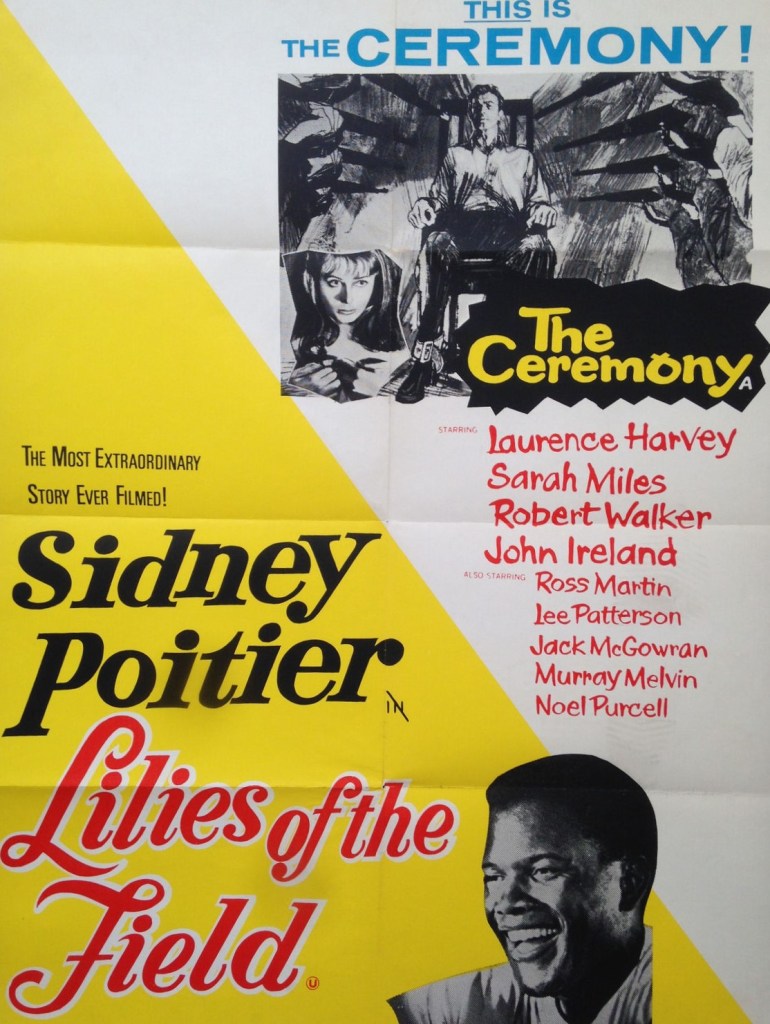
Clever presentation makes it look as though it’s up to the audience or the cinema to decide which is the main feature – technically, it was “The Ceremony.”

Perhaps because it felt obliged to feed movies into two streams rather than one, the Rank cinemas were less inclined at the start of the decade to go full tilt down the double bill route. You might have thought with so many cinemas to support that the obvious approach would be to limit the number of double bills made available.

In fact, the opposite was true. Perhaps more aware of the need to give the moviegoer value-for-money, Odeon offered far fewer single bills than rival ABC. Whereas ABC programmed in somewhere between 28 and 37 single bills every year during the 1960s, Odeon had less. Its peak was 21 in 1960. But that was followed by a dramatic tail off, the next highest year saw 15 single bills in 1967, quite a few of these being roadshows entering general release for the first time. For the entire decade Odeon averaged around 13 single bills a year.

In other words, while ABC in a busy year for double bills might get through a total of 76 films, Odeon’s output would be 90-100.

However, the kind of double bill you might see at an Odeon was, until later in the decade, an inferior product to what you would watch at an ABC cinema. Odeon was prone to stuffing its programs with filler material, genuine old-fashioned B-movies, often running little over an hour rather than the 90/100-minute picture audiences might expect from a genuine double bill.

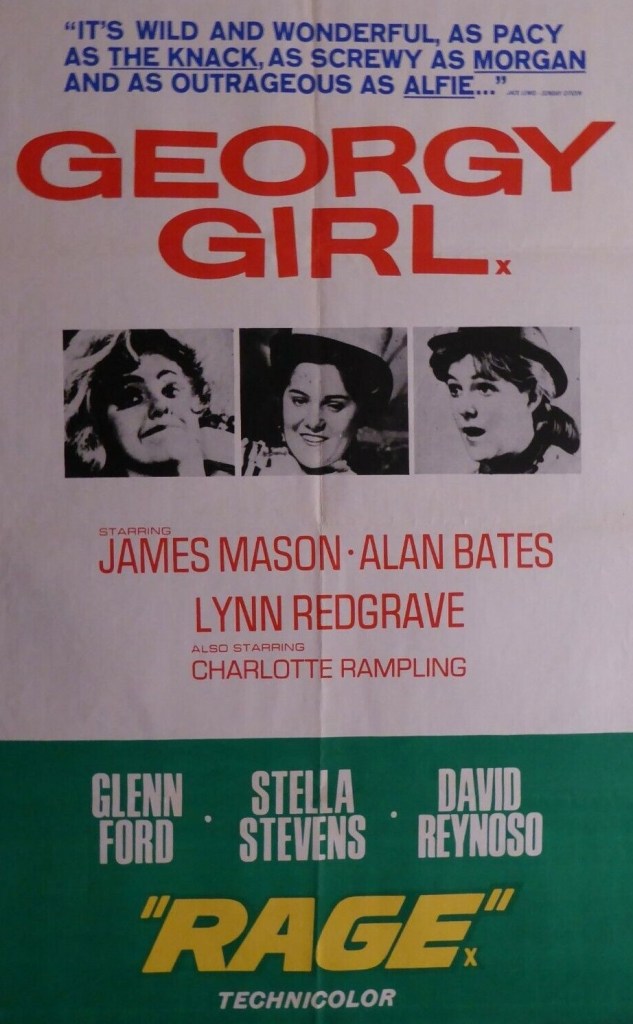
Suprised to see “Rage” getting such a wide release as support here. “Georgy Girl” was such a hit in first run it took an age to move into general release.

Whereas there was a decent chance that a movie on the lower part of a double bill shown on the ABC circuit would have a recognizable star, it was almost certain that you would never have heard of any of the stars in films carrying out the same role on the Odeon circuit.

For example, supporting Peter Sellers-Sophia Loren comedy The Millionairess (1960) was the undistinguished Squad Car (1960) starring Vici Raaf. The Magnificent Seven (1960) was accompanied by Police Dog Story (1961) starring James Brown. Womanhunt with Steve Peck was allocated to The Commancheros (1961) and The Deadly Duo with Craig Hill to Dr No (1962).

Alternatively, Odeon would dig into the vaults and team up one new feature with an oldie. So musical State Fair (1962) was stuck with The Desert Rats (1953) starring Richard Burton; Glenn Ford-Lee Remick thriller The Grip of Fear (aka Experiment in Terror, 1962) with Operation Mad Ball (1957) headlining Jack Lemmon; Stephen Boyd psychological thriller The Third Secret (1964) with Frank Sinatra revival Can-Can (1960).

Other times, the double bill was a pair of oldies, Billy Wilder courtroom drama Witness for the Prosecution (1957) teamed up with James Stewart western The Far Country (1954) or the start of the James Bond reissue onslaught beginning with From Russia with Love (1963)/Dr No (1962).  Sandra Dee comedy I’d Rather Be Rich (1964) initially on the lower half of a double bill with Send Me No Flowers (1964) was within a few months performing the same function for Gregory Peck amnesia thriller Mirage (1965).

And just like ABC, some of the double bills didn’t work out. Romantic comedy Two and Two Make Six (1962) starring George Chakiris and Janette Scott coupled with heist picture Strongroom (1962) failed to make it past the first few days. Billy Wilder’s Kiss Me, Stupid (1964) and The Sicilians (1964) was yanked off the screens after dire returns. In the case of the Madigan/Games double bill it was the latter that met with audience hostility.

So it took Odeon some time to hit its stride and pitch together the kind of double bill program that might attract a decent audience. Good examples would be: The Ceremony (1963) starring Laurence Harvey dualed with Sidney Poitier in Oscar-winning form in Lilies of the Field (1963); and Oscar fave Georgy Girl (1965) and rabies thriller Rage (1966) featuring Glenn Ford and Stella Stevens..

You might well attract customers for the remake double bill of Beau Geste (1966) and Madame X (1966); and French hit A Man and a Woman (1966) and Sailor from Gibralter (1967) with French star Jeanne Moreau.

I would have made time to see George Peppard-Dean Martin western Rough Night in Jericho (1967) with what was intended as a star-making turn from Robert Wagner in Banning (1967). The St Valentine’s Day Massacre (1967) and George C. Scott-Michael Sarrazin One Born Every Minute (aka The Flim-Flam Man, 1967) seemed an interesting program. And you wouldn’t go far wrong with spy thriller Danger Route (1967) and John Sturges western Hour of the Gun (1967).

I remember being highly entertained by a double bill of John Wayne as an oil wildcatter in The Hellfighters (1969) and Doug McClure and Jill St John in swashbuckler The King’s Pirate (1969). Thought went into programming together heist movie Duffy (1968) starring James Coburn and spy thriller Hammerhead (1968); fashion-set drama Joanna (1968) and Pretty Poison (1968); and George Segal war picture The Bridge at Remagen (1969) and Robert Mitchum western Young Billy Young (1969).

But sometimes you got the impression the Odeon circuit was hard put to find relevant product and was happy to stick out in the lower part of the double bill a movie that had been sitting on the shelf such as Ann-Margret small town drama Bus Riley’s Back in Town (1965) which went out as support to Rock Hudson and Claudie Cardinale in Blindfold (1966) or Jerry Lewis comedy Way, Way Out (1966) supporting Raquel Welch as Fathom (1967).

The 10th Victim (1965) took an age to be slotted in below The Night of the Big Heat (1967).  Claude Chabrol’s The Road to Corinth with Jean Seberg was two years old when packed off  with the second Bulldog Drummond adventure Some Girls Do (1969). British sex drama The Touchables (1968) waited a year before emerging in the wake of James Coburn-Lee Remick thriller Hard Contract (1969).

Sometimes, double bills revealed the hard truth about fading marquee pull. Glenn Ford films were often on the lower part of a double bill and so were offerings by Tony Curtis, James Garner, Anthony Perkins, Ann-Margret and Robert Mitchum.

By the end of the next decade, Odeon was still more reliant on double bills than ABC, though often these programmes were made up of reissues of Bond, Pink Panther, Three Musketeers, the Confessions series and Rocky/Network (both 1976) while the likes of early Stallone vehicle The Lord of Flatbush (1974), documentary Let The Good Times Roll (1973) and romance Jeremy (1973) were revived as supporting features.

Britain had some smaller circuits in operation but both Granada and Scottish outfit Caledonian Associated Cinemas tended to cherry-pick from either the Odeon or ABC releases.

SOURCE: Allen Eyles, Odeon Cinemas 2: From J. Arthur Rank to the Multiplex (CTA, 2005) p206-214, 219-220.

Behind the Scenes: “Barbieheimer” Recalls The Old Double Bill Business

You might be surprised to learn that by Hollywood standards the recent self-elective dualing of Barbie and Oppenheimer was a perfect double bill. Not because it resuscitated an old distribution ploy but that the two films would have been viewed in the 1960s as an ideal pairing. A program comprising two completely different pictures was seen as the best way to attract an audience.

You might also be under the misapprehension that until the dominance of the single-film program from the 1980s onwards an outing to the movies always involved seeing two movies. But that wasn’t the case at all and studios fought a hard battle against a trend, beginning in the United States in 1930s especially in cities like Chicago, of demanding a program comprising  two films rather than one.

Horror films were the most common to end up on a double bill and, in fact,
were often made with that purpose in mind.

But by the 1960s, except in their initial publicity-driven outings in the giant seating arenas in the likes of London, Paris, New York, Rome, Chicago etc, films that went out on subsequent release were often accompanied by a supporting feature well above the caliber of the B-pictures that had saturated the previous decades. In the 1940s and 1950s, for example, most double bills, while complying with the three-hour dictat for a reasonable night out, were rarely value-for-money, usually composed of a main feature and a  much inferior cheaper B-movie, often a series western or crime movie.

It was only in the 1960s, when B-film production all but vanished, that cinemas began to offer what you might call a decent value-for-money package. Though, if you looked beneath the lines, you might discover that one of the offerings was being offloaded after flopping in initial opening.

Not surprisingly, at the start of the 1960s, with movie production in terminal decline, the last thing studios wanted to do was to use up their scant supplies too soon. Double bills could also limit box office. Shown on its own, a single feature could generate four or five showings a day. Teamed with another movie, exposure was reduced to two, maybe three, complete programmes a day depending on venue and location. The supporting feature generally played for a fixed rental rather than a percentage, so income was further reduced.

U.S. chains tended to be regional rather than national so it’s hard to get an idea from them of the importance double bills played in the national consciousness. On the other hand, Britain boasted two national circuits, ABC and Odeon, and examination the programmes put out there give a better idea of the role double bills had in cinemas.

Considerable thought went into allocating partners, studios, rather than cinemas, responsible for the arriving at the ideal mix. Except for a horror pairing, appealing to a specific adult market, the perfect double bill was deliberately wide in its aim, attempting to scoop up business from different sectors of the population, perhaps on a sexist basis. For example, a drama targeting women might be paired with a western attracting men. This kind of thinking accounted for some of what you might consider oddities of programming.

On the UK’s ABC circuit, for example heist picture They Came To Rob Las Vegas (1969) went out as the main attraction with Sandy Dennis romantic drama Sweet November (1969); Angie Dickinson romance Lovers Must Learn (aka Rome Adventure, 1962) with violent Sam Peckinpah western The Deadly Companions (1961); Faye Dunaway-Rossano Brazzi tragic romance A Place for Lovers (1969) with Glenn Ford western Heaven with a Gun (1969); and the sixth iteration of The Man from U.N.C.L.E. series The Karate Killers (1967) with Alexander Mackendrick’s Californian beach comedy Don’t Make Waves (1967) starring Tony Curtis and Claudia Cardinale.

Other times, there was clearly an element of making the best of a bad job, how to otherwise explain thriller David McCallum in non-U.N.C.L.E. thriller The Heroin Gang (aka Sol Madrid, 1968) – the main attraction – being matched with David Niven-Deborah Kerr occult oddity Eye of the Devil, which had been sitting on the shelf for two years; Ann-Margret showcase The Swinger (1966) with Rock Hudson sci fi Seconds (1966) directed by John Frankenheimer; and French sex romp Benjamin (aka Diary of an Innocent Boy, 1968) with the violent prison-set Riot (1969) starring Jim Brown and Gene Hackman.

The only genre, outside of horror, that accommodated the double bill was comedy as seen through the teaming of Who’s Minding the Store (1963) starring Jerry Lewis and Jill St John and Who’s Been Sleeping in My Bed (1963) with Dean Martin; Jerry Lewis again in The Patsy (1964) with Robinson Crusoe on Mars (1964); and Tony Curtis starrer Drop Dead Darling (aka Arrivederci, Baby, 1966) with Warren Beatty and Leslie Caron in Promise Her Anything (1966).

Some Elvis Presley musicals were considered too lightweight to be released without a support –  It Happened at the World’s Fair (1963) was bracketed with swashbuckler Swordsman of Siena (1962) starring Stewart Granger; Kissin’ Cousins (1964) with Pat Boone comedy Never Put It in Writing (1964); Tickle Me (1965) with Soldier in the Rain (1963) – only given a full release two years after completion due to star Steve McQueen’s increasing popularity;  California Holiday (aka Spinout, 1966) with sword-and-sandal epic Hercules, Samson and Ulysses (1963); and Double Trouble (1967) with western Hondo and the Apaches (1967), a feature stitched together from two episodes of TV series Hondo. Others Elvis pictures were deemed quite capable of looking after themselves at the box office – Girls! Girls! Girls! (1962), Roustabout (1964), and Easy Come, Easy Go (1967), for example, released as single bills.

Some programs seemed terrific value for money, films that individually might struggle to find an audience, but together seemed a worthwhile visit. I would have been quite happy to line up for any of the following:  John Ford western Sergeant Rutledge (1960) plus A Tall Story with Anthony Perkins and Jane Fonda; Never Take Sweets (Candy) from a Stranger (1960) and Brigitte Bardot  crime drama Come Dance With Me (1959); France Nuyen in John Sturges’ A Girl Named Tamiko (1962) and Debbie Reynolds in My Six Loves (1963); and Rod Taylor and Jane Fonda in romance Sunday in New York (1963) plus Glenn Ford and Stella Stevens in comedy western Company of Cowards (aka Advance to the Rear, 1964).

For that matter I’d be easily tempted into a program comprising Rod Taylor as Young Cassidy (1965) and Glenn Ford-Henry Fonda modern western The Rounders (1965); Sidney Poitier in A Patch of Blue (1965) and Ann-Margret romantic comedy Made in Paris (1966); Robert Stack and Elke Sommer thriller The Peking Medallion (aka The Corrupt Ones, 1967) and Jane Fonda in comedy Bachelor Girl Apartment (aka Any Wednesday, 1966); and Rod Taylor as Chuka (1967) in the Gordon Douglas western and David Janssen in thriller The Warning Shot (1967).

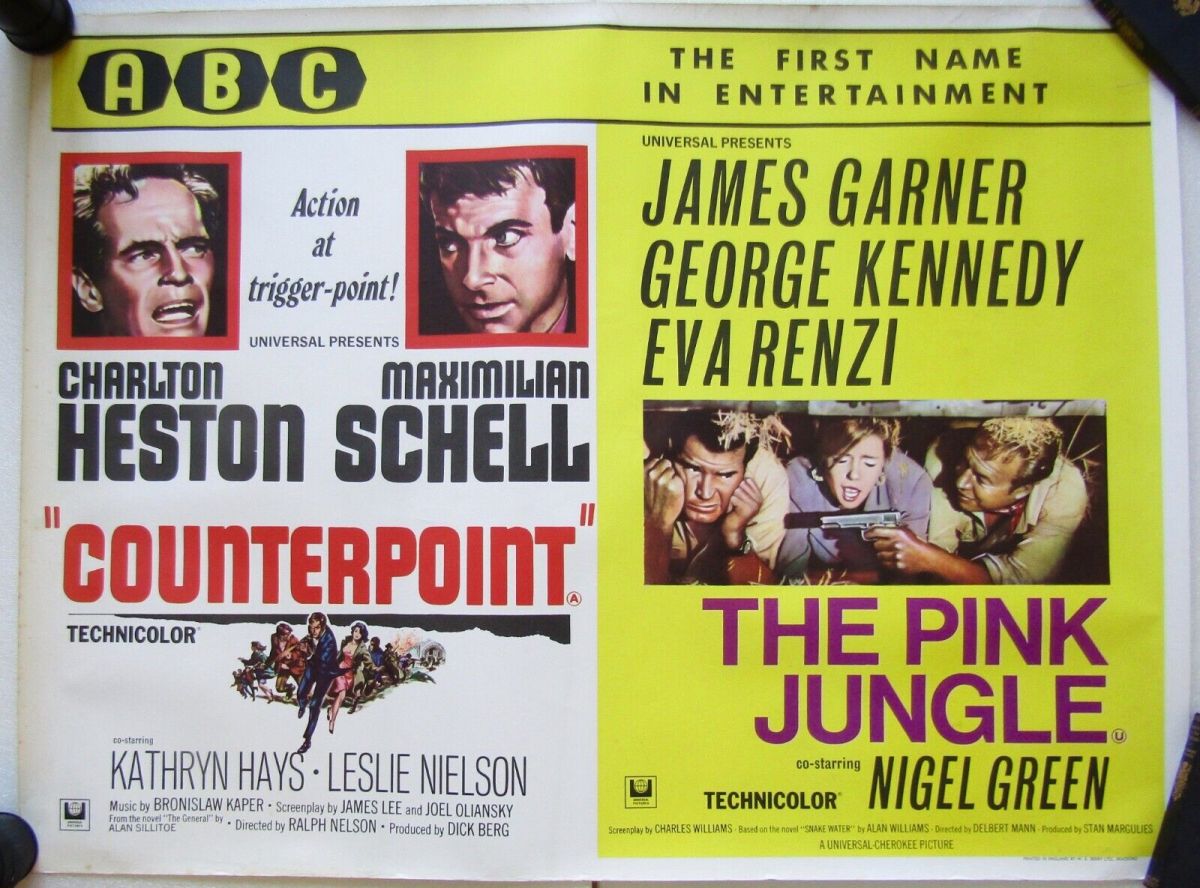
Count me in for the following combos: Charlton Heston in WW2 drama Counterpoint (1967) coupled with James Garner adventure The Pink Jungle (1968); George Segal hunting serial killer Rod Steiger in No Way to Treat a Lady (1968) and Sidney Poitier in The Slender Thread (1965) – receiving a full release somewhat late in the day on the back of the star’s recent box office; British home invasion thriller The Penthouse (1967) and heist masterclass Grand Slam (1967); and Burt Lancaster-Deborah Kerr drama The Gypsy Moths (1969) and James Garner as Raymond Chandler’s Marlowe (1969).

Imagining either The Wonders of Aladdin (1961) or Tarzan Goes to India (1962) as single bill fodder would be a stretch, a double bill the best solution. In any case, since Disney pushed all its product through the rival Odeon chain, ABC was short of family-friendly programs for the school holiday periods. Hence the coupling of Son of Spartacus (aka The Slave, 1962) starring Steve Reeves with Flipper (1964) or Tarzan’s Three Challenges (1963) with Flipper and the Pirates (aka Flipper’s New Adventure, 1964).

Equally, you might wonder what had gone so wrong with Kirk Douglas Korean War drama The Hook (1963) that it ended up on the lower end of a double bill with airline stewardess comedy Come Fly with Me (1963). And you might be surprised to discover which films weren’t rated strong enough box office to go out on their own. James Garner and Julie Andrews in cynical WW2 drama The Americanization of Emily (1964) required support from the first The Man from U.N.C.L.E. adventure To Trap a Spy (1964) (Equally odd given the series’ later fame that the latter was merely a support.)

Richard Burton and Elizabeth Taylor in The Sandpiper (1965) were given a helping hand by Miss Marple mystery Murder Ahoy! (1964). Sophia Loren as Lady L (1965) plus an all-star cast including Paul Newman required release assistance from Glenn Ford-Rita Hayward film noir The Money Trap (1965). Sizzling London box office and critical adoration didn’t save Antonioni’s Blow-Up (1966) from being paired with Sandra Dee comedy Doctor, You’ve Got To Be Kidding (1967). Charlton Heston western Will Penny (1968) was bundled up with Tarzan and the Great River (1967).

Nothing pointed to Doris Day’s fading box office prowess more than Where Were You When the Lights Went Out? (1968) being hooked up to Raquel Welch bikini caper The Biggest Bundle of Them All (1968). An Oscar nomination for Joanne Woodward in drama Rachel (aka Rachel, Rachel, 1968) wasn’t enough to see it home without the accompaniment of Tony Curtis period comedy The Chastity Belt (aka On the Way to the Crusades, 1967). Goodbye, Columbus might have been a huge hit in the USA and turned Ali McGraw into a star but as an unknown her debut feature went out with Peter Bogdanovich’s Targets (1968).

On the other hand, if a feature was considered too weak to play on its own, it might be withdrawn from the British ABC circuit before the week was over, a fate that befell Maureen O’Hara starrer Battle of the Villa Florita (1965), Jeffrey Hunter thriller Brainstorm (1965) and, unusually given its source, a bestseller by Arthur Hailey, Hotel (1966) starring Rod Taylor.

One of the ways to get round the circuit system that limited showing of a film generally to a single week was to double up two hits for a second tilt at the box office.

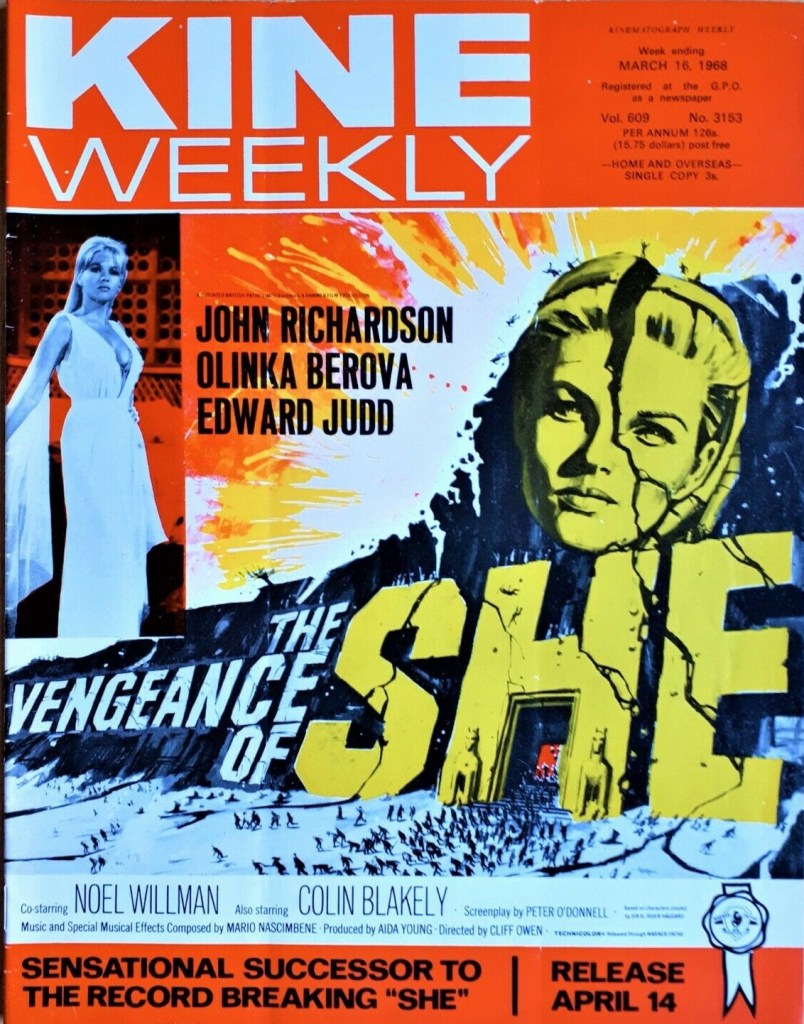
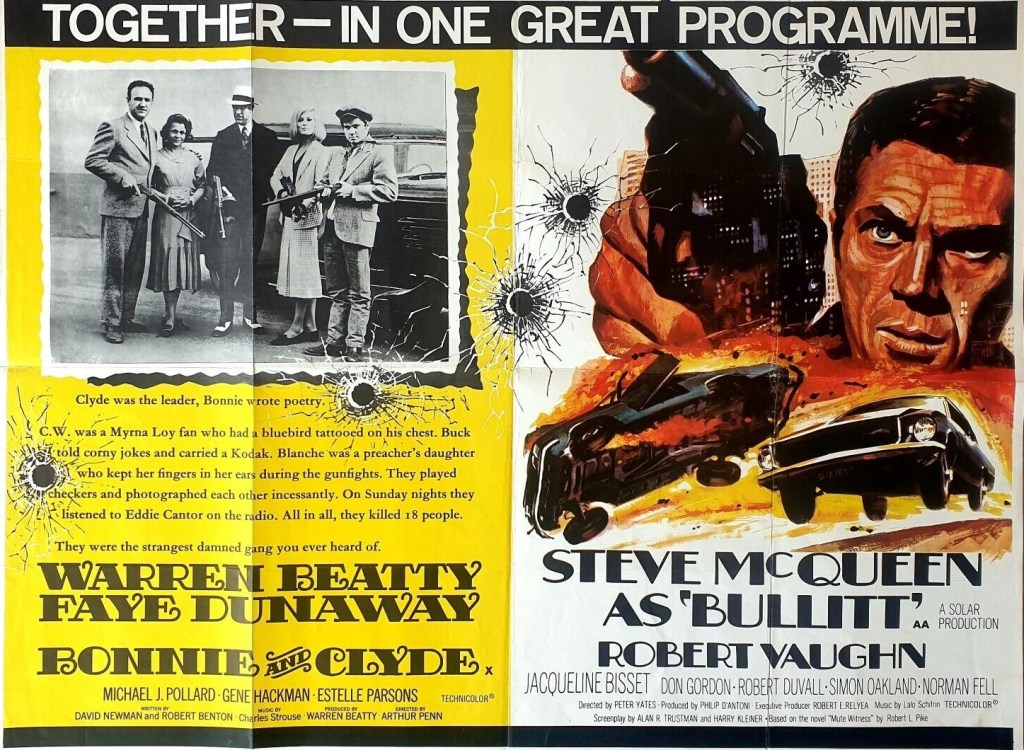
The advent of the reissue double bill made studios reassess what constituted a successful combo.  James Bond, Clint Eastwood, Pink Panther and cheesecake duos (One Million Years B.C., 1966,  starring Raquel Welch paired with She, 1965, headlining Ursula Andress), and speedy revivals of recent hits, such as Bonnie and Clyde (1967)/Bullitt (1968). showed that such programs could do just as well, if not better, by targeting a specific audiences as attempting to spread appeal.

The single-bill was in decline throughout the 1960s. On the ABC circuit in the U.K., for example, the number of single bills shown in an individual year peaked at 37 in 1963 before sharply falling to an average of 28 for the next six years. In other words, while ABC worked its way through a total of 67 movies in 1963, for the rest of the decade it was screening an average of 76 a year.

The following decade it was a different story as the circuit release system crumpled under the weight of long-runners like The Godfather (1972) and Jaws (1975) that sucked up so much juice in first run there was little left at the box office when they hit the suburban/small town circuit. The single bill was back on top by the end of 1970s – only eight double bills shown in 1979.

More typical of the 1970s double bill – two top stars in movies that hadn’t quite hit the box office mark Stateside so were bundled together as a more audience-friendly attraction.

(Of course, I’m ignoring here those independent cinemas – the Scala in London’s King’s Cross or the Prince Charles in Leicester Square – that became famous for making up their own double bills, many of which examples went into legend.)

Gradually, except for very occasional reissues, the double bill was consigned to history until the public this year, of its own accord (though perhaps driven by a clever social media campaign) changed its tune. I’m a perennial supporter of the do-it-yourself double bill. On my weekly jaunt to the cinema I see back-to-back two films of my own choosing. But I’m guessing that cinema buffs regularly make up their own double bills from their own collections or digging out what’s on offer from mainstream networks and the streamers. So I’m not as surprised as some that what appears a one-off phenomenon caught on so fast.

Note: I’d be interested to know if the double bills I’ve mentioned above were shown in the USA or the rest of the world for that matter.

SOURCE: Allen Eyles, ABC, The First Name in Entertainment (Cinema Theatre Association, 1993) p122-127.

Behind the Scenes: “The Stalking Moon” (1968)

By all that Hollywood held sacred, The Stalking Moon should never have got off the ground, at least not by National General Cinemas, the latest addition to the burgeoning mini-major roster. For National General, in keeping with the company name, had been set up to run theaters. And operating theaters and making movies ran counter to the Consent Decree of 1948 which had not only forced the major studios to jettison their chains of cinemas but also prevented them in the future from functioning in that manner.

As a legal device, the Consent Decree had more than done its job; it had almost brought the entire industry to its knees since studios could no longer rely on the substantial profits generated from exhibition to bolster their movie-making programs, causing the industry to fall into a decade-long downward spiral. Although revenues had recovered throughout the 1960s as a result of the promulgation of the roadshow, the Bond films and variety of other audience-winning efforts, the underlying effect of the Consent Decree, that of reducing studio output, still had a radical impact on theater owners.

Simply put, there were not enough movies to go round. A smaller number of movies corresponded to higher rentals, putting exhibitors under even more pressure to make a decent buck. In order to make the most of what was available, owners of first run houses, even outwith the standard lengthy contracts for roadshows, took to running ordinary movies for longer than before, resulting in meagre  pickings for theaters further down the food chain. So when National General proposed upending the principles of the Consent Decree, there were few in the industry determined to stand in their way.

National General Corporation owed its inception to the Consent Decree. It had been established in 1951 with the express purpose of taken over the running of the 550 theaters which Twentieth Century Fox was being forced to relinquish. That number of cinemas was considered too high and a court order cut the number in half six years later. By 1963, with earnings of $3.4 million, the organisation ran 217 theaters as well as having real estate holdings and a sideline in renting equipment for mobile concerts, by which time it had already instigated court proceedings in order to annul or bypass the Consent Decree.

It was not the first theater chain to aim to set aside the binding conditions of the Decree.  Howco, owning 60 theaters, began low-budget production in 1954. American Broadcasting-Paramount Theaters had made modest forays in this direction, primarily with program fillers of the sci-fi/horror variety, in the late 1950s, and regional theater owner McLendon Films entered the production arena with My Dog Buddy (1960). But these were viewed as minor aberrations and not considered to breach the stout defences of the Decree.

National General had bigger ambitions that could not be fulfilled without some alteration of the original Decree and in 1963 it went to court to seek a modification of the Decree ruling which, while safeguarding anti-trust measures, would nonetheless help arrest the rapid decline in production, which had seen output tumble from 408 features in 1942 to just 138 movies two decades later. As an “experiment”, the government permitted NGC a three-year window.

NGC’s new enterprise was to be called Carthay Center Productions and nine months later announced its first movie would be What Are Little Girls Made Of, a $2.5 million comedy produced by  the Bud Yorkin-Norman Lear Tandem shingle, and that it was in talks with Stanley Donen (Singing’ in the Rain, Charade). (The Girl in the Turquoise Bikini was also mooted, but never made.) A few months later, the infant outfit projected that it was on course to make four-six pictures a year with budgets in the $2 million-$4 million range, with Divorce-American Style now scheduled as its first offering.

The hopes of expectant exhibitors were kept alive throughout the entire three-year period granted by the government. A three-picture deal was made with director Fielder Cook who lined up prominent British playwright Harold Pinter to write Flight and Pursuit. Two years after receiving the governmental green light, none of these projects had come to fruition and to speed up production Carthay sought to take advantage of the British government’s Eady Levy (which subsidised film production in the UK) by making The Berlin Memorandum (later re-titled The Quiller Memorandum), based on the spy thriller by Adam Hall (aka Elleston Trevor, Flight of the Phoenix), on a $2.5 million budget as the first volley in a six-film 18-month production schedule.

The picture would be a joint production with British company Rank, which offered instant distribution in Britain. The other pictures covered in the announcement were: Divorce-American Style, What Are Little Girls Made Of and John Henry Goes to New York (all under the Tandem aegis); plus Flight and Pursuit and Careful, They’re Our Allies from Charles K. Peck Films. By 1966, Tandem’s Divorce-American Style starring Dick van Dyke and Debbie Reynolds had begun shooting as had The Quiller Memorandum, with George Segal and Alec Guinness as the marquee names, but without the involvement of Carthay. There was no great immediate interest in Divorce American Style from distributors and it sat on the shelf until June 1967 when it was distributed by Columbia. It was a surprise hit at the box office, ranking 17th on the annual chart with $5.1 million in rentals – above In Like Flint and just below the John Wayne pair El Dorado and The War Wagon.   

However, by 1966, NGC was in buoyant mood, underlining its ambitions by announcing a $10 million business-building loan. More importantly, at the beginning of the year it had signed up its first major star. Gregory Peck was to headline The Stalking Moon, with a $3.5 million budget and shooting to begin in spring 1967. There was even talk at this stage that it “may be a hard ticket picture;” there was little more prestigious for a new company than to enter the roadshow field.

Although this was, technically, the eighth movie –A Dream of Kings was the seventh – on the NGC roster (and had previously been announced as such when movie rights to the Theodore V. Olsen western had been acquired pre-publication in December 1965) it now, with Peck’s involvement, shot up the production ladder. Although screenwriter Wendell Mayes (Von Ryan’s Express, 1965) had been scheduled to act as producer, Peck’s production company Brentwood was also involved. The picture acquired further cachet with the announcement that George Stevens (Shane, 1953) was to direct as well as produce. 

There were now five co-producers: Stevens, Universal, Peck, NGP, and Mayes. In theory, at least, the arrival of heavyweights such as Peck and Stevens should have speeded up production. Instead, an endless series of delays/ postponements ensued. The April 3, 1967, start date fell by the wayside when Stevens dropped out. Although there was speculation that Stevens’ departure would lead to the movie being shelved, Universal remained on board, at least for the time being, as distributor. Meanwhile, NGP took over production duties and reunited Peck with To Kill a Mockingbird director Robert Mulligan and producer Alan J. Pakula. Before Stevens left, the start date had already been shifted to May 28 and when the dust on that had settled it was set for an October 15 start.

But that proved over-optimistic and when it began rolling on January 5, 1968, the budget had increased to $4 million. However, the movie still failed to meet other deadlines set for summer and autumn and did not finally roll until 1968.

By then, NGP was facing other difficulties. For a start, the battle to remain in the production business precipitated another round of legal and governmental negotiations. The original three-year waiver that had expired in 1966 had been extended by a further three years and although, by this point the second largest movie chain in the country, NGC had clearly failed to fill the production gap that it was set up specifically to do, but its position was bolstered by CBS television launching its Cinema Center movie production arm and ABC television its Cinerama vehicle. 

The Pacific Coast Theater circuit had taken over Cinerama in 1963. ABC had 418 theaters, the largest in the country, and set up Circle Films. In 1967 Cinerama Releasing Corporation was established to distribute the films of both Cinerama and ABC Circle and, in fact, had been, at least in terms of output, more prolific than NGC, releases comprising Custer of the West (1967), Hell in the Pacific (1968), Charly (1968), The Killing of Sister George (1968), They Shoot Horses, Don’t They (1969) and Krakatoa East of Java (1969). ABC Circle closed down in 1973 despite registering its biggest-ever hit Cabaret in 1972. In fact, most CRC releases were flops.

National General was so worried about another government waiver not being forthcoming that it was considering a merger with Warner Brothers as a means of safeguarding production. The Carthay name itself soon became defunct, the company reverting to National General Pictures (NGP) in order to identify, in the words of president Eugene V. Klein, “our picture making activities as a major part of our company program.” In addition, it had fallen far short of its production schedule. Instead of releasing movies at the rate of one per month throughout 1968, only six  films were ready for distribution – and none of them were actually made by NGC. Poor Cow, Twisted Nerve, and All Neat in Black Stockings were British; How Sweet It Is was made by Cinema Center; With Six You Get Eggroll by Doris Day’s production company; and A Quiet Place in the Country was Italian. And none boasted stars of the Gregory Peck caliber. By year end, the company’s entire production fortune was riding on The Stalking Moon.

By the beginning of 1969 Gregory Peck looked a spent force. He had not made a film in three years, a dangerous length of exile in fickle Hollywood. The commercial and artistic peaks of the early 1960s – The Guns of Navarone (1961) and How the West Was Won (1962) both topping the annual box office charts in addition to winning the Oscar for Best Actor, at the fifth attempt, with To Kill a Mockingbird (1962) – were long gone. None of his other pictures came close to matching these in either commercial or artistic terms: Captain Newman M.D. (1963) ranked 21st for the year, and Stanley Donen thriller Arabesque (1966) with Sophia Loren, 16th.

Most performed substantially below expectations. Cape Fear (1962), despite the involvement of Navarone director  J. Lee Thompson and co-star Robert Mitchum fell foul of the Production Code. The censors demanded the word “rape” be excised from the finished film and other changes made to the script. British censors demanded a total of 161 cuts, provoking co-star Polly Bergen to complain there was no point in her promoting the film in the UK since she was now hardly in it. The star was not perturbed. “An adult audience will understand the theme,” he said. The movie ranked 47th in the annual box office race. In Peck’s entire canon only Beloved Infidel had done worse.

Prestige offering Behold A Pale Horse (1964) directed by Fred Zinnemann (From Here To Eternity) and co-starring Anthony Quinn and Omar Sharif, proved an unexpected flop, 63rd for the year, while thriller Mirage (1965),  directed by veteran Edward Dymytryk, was 74th. With his commercial status in question, the actor shuttered his production company Brentwood, although in an image-conscious industry, he came up with a more respectable reason: “We are far better holding ourselves available for acting jobs, and then producing only when the right elements happen to be there.”

From 1964 onwards, he was more commonly associated with films that did not get made. That year, Cinerama announced with considerable fanfare that he was going to star in grand sci-fi project The Martian Chronicles, directed by Robert Mulligan,  adapted from the Ray Bradbury bestseller, with a $10 million budget. Also failing to get off the ground was The Night of the Short Knives, planned as a co-production with veteran Walter Wanger (Cleopatra, 1963). At one point Steve McQueen was mooted as a co-star until MGM’s rival production 2001: A Space Odyssey (1968) killed the idea stone dead.

In 1965 MGM signed Peck up, along with David Niven (another Navarone alumnus), James Stewart, James Coburn and George Segal for Ice Station Zebra, based on another Alistair MacLean thriller, with a screenplay by Paddy Chayefsky; but when the movie finally appeared several years later none of these names were involved. In 1965, he also lost out on They’re a Weird Mob when the rights which he had held since 1959 elapsed. Across the River and into the Trees, based on the Ernest Hemingway novel, with Virna Lisi did not get beyond the development stage.

It was hard to say what was worse, movies shelved before a foot of film was exposed, or pictures halted in mid-production, as was the case in 1966 when filming in Switzerland of The Bells of Hell Go Ting A Ling A Ling was suspended after five weeks due to unexpectedly harsh weather conditions in Europe. It was indicative of doubts about Peck’s commercial standing that the movie did not continue shooting, despite a budget outlay by this point of over $2 million, once the weather had cleared.

A total of 12 minutes were completed before filming ended. Peck played a British Army colonel charged in World War One with leading a team to ferry aircraft parts across Switzerland to Lake Constance and then reassemble them to bomb a Zeppelin base. Ian McKellen (Lord Of The Rings), making his movie debut, began to correct Peck’s American pronunciation of “lieutenant” only to be told by director David Miller that Peck could pronounce it any way he liked because “Britain was only five per cent of the world market.”

In 1967 it was the turn of After Navarone, The Mudskipper and Strangers on the Bridge with Alec Guinness to stall on the starting grid. Although the reissue in 1966 of The Guns of Navarone (1961) kept him in public view, during this period of enforced idleness Peck was more likely to be heard rather than seen, taking on narration duties for an ABC television documentary on Africa, and the John F. Kennedy documentary, although he enjoyed considerable publicity as president of the Academy of Motion Picture Arts and Sciences and as the inaugural chairman of the American Film Institute, taking up both roles in 1967.

Although Peck was still a big marquee name when initially signed up for The Stalking Moon, there remained a massive question mark, given nearly three years cinematic inactivity, over his ability to open a picture. In addition, the more obvious problem was whether a marketplace still existed for the Gregory Peck western given that, with the exception of How the West Was Won (1962), he had not been in the saddle since The Bravados and The Big Country in 1958, neither of which had turned a profit at the U.S. ticket wickets, and prior to those, The Gunfighter in 1950 another box office disappointment. He was hardly in the league of John Wayne or James Stewart, for whom the western was the default setting, both of whom had recently turned in strong commercial returns in the genre.

What the cast and crew for The Stalking Moon had in common was Oscars. Director Robert Mulligan had been nominated for an Oscar for To Kill a Mockingbird. A graduate of live television, he was comfortable in a variety of fields, comedy in The Rat Race (1960), romance in Come September (1961), and dramas like Love with the Proper Stranger (1963) and Inside Daisy Clover (1965).  Under his watch, Peck had won the Oscar for To Kill a Mockingbird, Natalie Wood had been Oscar nominated for Love with the Proper Stranger and Ruth Gordon for Inside Daisy Clover.

Producing partner Alan J. Pakula had also been nominated for To Kill a Mockingbird. The Stalking Moon was their seventh film together. Eva Marie Saint, who played Sarah Carver, the white woman on the run from her Apache husband, won an Oscar in her first movie role opposite Marlon Brando in Elia Kazan’s On the Waterfront (1954) after seven years in television. Over the following dozen years, she appeared in only 13 more pictures, but they were a diverse bunch including the female leads in Hitchcock’s North by Northwest (1959), Otto Preminger’s Exodus (1960), comedy The Russians Are Coming, The Russians Are Coming (1966) and John Frankenheimer’s epic Grand Prix (1966). 

Her apparent fragility concealed inner strength, although her deft comedic touch and passionate clinch with Cary Grant in North by Northwest, and her frantic reaction to the death of racing driver Yves Montand in Grand Prix belied her reputation for onscreen coolness. In the Oscar stakes, cinematographer Charles Lang (aka Charles Lang Jr.) eclipsed them all with one win for A Farewell to Arms (1934) and 15 further nominations including Some like It Hot (1959) and One Eyed Jacks (1961).

Although this represented a western debut for director, producer and leading actress, Lang had been the cinematographer for The Man from Laramie (1955), Gunfight at the O.K. Corral (1957), The Magnificent Seven (1960) and How the West Was Won. Sound editor Jack Solomon had been nominated in 1960 and editor Aaron Steel twice, in 1962 and 1965. Screenwriter Wendell Mayes had been nominated for Otto Preminger’s courtroom drama Anatomy of a Murder (1959) and Horton Foote, who worked on The Stalking Moon without receiving a credit, had won the Oscar for To Kill a Mockingbird.

However, the final screenplay credit went to Alvin Sargent, in television since 1957. Gambit (1966) had marked his movie debut, The Stalking Moon his second picture. Actor Robert Forster had made his debut in John Huston’s Reflections in a Golden Eye (1967) and followed up with the role of Nick Tana in The Stalking Moon. Forster had a keen idea of his abilities, telling Variety that he only took roles that “would not compromise me or my wife or my agent. I don’t know how an actor can agree to play a role that he doesn’t feel he can do something special with.” His principles led him to turning down a four-picture deal with Universal.

The Stalking Moon was the first and only picture for Noland Clay, who played Eva Marie Saint’s son, as it was for Nathaniel Narcisco in the role of her husband Salvaje. This was composer Fred Karlin’s third movie score after Up the Down Staircase (1967) and Yours, Mine and Ours (1968) and the music alternated between a lilting motif for the more idyllic sections and an urgent repetitive sound for the thrilling elements. Most of the picture was shot on location in Arizona (Wolf Hole, Wolf Hole Valley, Moccasin Mountains and the Pauite Wilderness Area), Nevada (Red Rock Canyon and Valley of Fire State Park) and Bavispe in Mexico with interiors at the Samuel Goldwyn Studios.

The Theodore V. Olsen book is quite different to the film. In the novel Sam Vatch (not Varner) has married Sarah without knowing that she has once been Salvaje’s woman. Sarah Carver has two children not one, the other being an ill younger brother. In the book, she talks lot. On the other hand, Sam Varner is looking for a home and, in any other kind of picture, her loquaciousness coupled with his need for domestic security, would have brought them together emotionally. In the Olsen version, it is Salvaje not Sarah who is the sole survivor of a massacre. But the film takes an entirely different approach.

In the movie version, instead of presenting the audience with a dialogue-heavy picture where emotional need is clearly stated, Mulligan is more interested in people who kept their feelings to themselves, who scarcely had a word to say, who lacked the dexterity to build up any lasting relationship. As much as the film is about the silences that can swamp individuals, it is also about characters watching each other for any sign of impending change, the kind that would normally be signaled by more vocal means. Such behavior is normally designated as brooding.

Varney broods on what he should do, whether to help the woman or not, and just how far should he help, and when will helping her intrude on his privacy. Sarah Carver broods on the inevitability of her capture and while that is temporarily postponed by the presence of Varney it does not prevent her watching him for any sign that his attitude to her will change in a positive or, more likely, negative fashion. It is a revolutionary western indeed where the main characters do not exchange a kiss. Here, they hardly exchange a look. The one time they do come together could scarcely be termed a hug, more a gentle enfolding in his chest, minus his big manly arms around her.

Reviews of The Stalking Moon were decidedly mixed, although initially it looked to have got off to a critical flyer. From the outset, NGC considered it a major Oscar contender, rather a risky proposition for a western, and one whose temerity was likely to inflame the critics since only five in the last 20 years had been nominated – How the West Was Won (1962), The Alamo (1960), Friendly Persuasion (1955), Shane (1953), and High Noon (1952).

The trades were divided: International Motion Picture Exhibitor called the movie “excellent” overall. Variety took the opposite view, complaining about the slow development and poor pacing, “clumsy plot structuring and dialog, limp Robert Mulligan direction” and “ineffective” stars, arriving at the conclusion that the movie was “109 numbing minutes.” Motion Picture Daily deemed it a “rewarding experience” and Film Daily called it “exceptionally fine.” Life declared it “transcends the externals of the western genre to become one of the great scare films of all time”; Playboy asserted it was “a tingle all the way,” and Parents Magazine termed it a “gripping melodrama.” “Western in character, universal in theme,” was the summation in The Showmen’s Servisection. But Roger Ebert complained the movie “doesn’t work as a thriller…and doesn’t hold together as a western, either” while Vincent Canby in the New York Times complained it was “pious” and “unimaginative.”

Strangely, nobody commented on the other link between Sarah Carver and her pursuer. In turning the heroine into the prey, in making the woman helpless, never knowing when the invisible hand would strike, Mulligan drew a clear parallel with the experience of the Indians, hunting down by the U.S. Cavalry, harried off their lands, for no reason that could be understood.

The Stalking Moon has not exactly been subject to critical reappraisal in the intervening years since its release, but French director Betrand Tavernier in 50 Years of American Cinema called it Mulligan’s masterpiece. Writing in the March/April issue of Film Comment in 2009, Kent Jones cast more light on what the director was trying to achieve, thus putting the movie in more perspective, and aligning it closer than anyone thought at the time to the period in which the movie was made. Jones believed that the western aptly reflected the bewilderment of the times when, according to Mulligan: “We were in the process of a nightmare that I didn’t understand. I mean the riots were going on, the campuses were being burnt, the ghettos were being burnt, the marches that were going on, people were getting killed. It just didn’t make any sense.”

Mulligan took a pessimistic view of the outcome. “It just didn’t work,” he opined, “and a lot of that may have had to do with the basic silence of the movie.” But what Mulligan actually means is that the movie did not connect sufficiently with either audience nor critics at the time. In fact, in my opinion, it is precisely because of the silences and the unwillingness of the director to tone down its emotional aspects and his refusal to play around with typical genre ploys that make The Stalking Moon, on second viewing today, such a rewarding experience. Reflecting on the movie’s connection to Vietnam and the late 1960s riots, Kent Jones summed up his experience of the movie thus: “Robert Mulligan was the only filmmaker to wade into such painfully vexing and frightfully bourgeois territory and come out with a truly great film.”

The release date for The Stalking Moon had already been set for its general release January in 1969, but, figuring it had a critical winner on its hands, NGC, having put winning an Oscar at the top of its promotional agenda, was faced with the problem of getting it out into a couple of theaters (one would have been enough, as long as it was in Los Angeles, according to the rules) in order to qualify for Academy Award consideration, and so it was deposited in a couple of first-run theaters (New York as well as Los Angeles, so that the New York market would not think it was being overlooked) just before Xmas 1968.

The film ranked 47th in the annual chart with $2.6 million in rentals – “no better than fair, considering its cost” grumbled Variety – above Once Upon a Time in the West, but below other rivals in the genre. It was reissued the following year as support for Universal’s Hellfighters (1968) and NGC’s The Cheyenne Social Club (1970). It received a warmer reception in Paris, where, for the 1968-1969 season,  it outgrossed Mackenna’s Gold (1969) and The Undefeated (1969) as well as Hang ‘Em High (1968) and Five Card Stud (1968), and did surprisingly well in Switzerland where its grosses were seen as indicative of a “box office upsurge.”

NOTE: This is an edited version of a chapter devoted to the film which appeared in my book The Gunslingers of ’69, Western Movies’ Greatest Year (McFarland, 2019.

SOURCES: Brian Hannan, The Gunslingers of ’69, Western Movies’ Greatest Year (McFarland, 2019); Brian Hannan, The Making of The Guns of Navarone (Baroliant Press, 2015);  Cook, David A.,  Lost Illusions: American Cinema in the Shadow of Watergate and Vietnam, 1970-1979. (University of California Press, 2000), 400; Kevin Hefferman, Ghouls, Gimmicks and Gold: Horror Films and the American Movie Business, (Duke University Press: 2004), 72; “See Three-Year OK for Nat’l General To Produce and Distribute Films under Trust Decree Modification,” Variety, June 19, 1963, 3; “National General Earnings Up 31%,” Variety, December 18, 1963, 11; “Peck for Cinerama,” Variety, February 19, 1964, 6; “National Circuit (217 Theaters) Readying to Produce Features,” Variety, March 4, 1964, 5; “Walter Wanger’s Return To Producer Activity,” Variety, April 19, 1964, 4; “Nat’l General Producing Features Shuns Hazards of Live Concerts,” Variety, Jun 30, 1964, 20; “Colony on Mars as U’s Top Costing Feature To Date,” Variety, Jul 22, 1964, 3; “Metro’s 27 Finished Features Give It Exceptionally Long Market Slotting,” Variety, Jun 16, 1965, 5; “Virna Lisi Signatured To Star in Germi’s New Pic But Sans Glamour,” Variety, July 7, 1965, 22; “Carthay (Nat’l General) in 3-Film Deal with Fielder Cook’s Eden Prods,” Variety, July 28, 1965, 3; “Aussie Film Cameras To Turn Again This Month After Lengthy Layoff,” Variety, October 13, 1965, 28; “1st Feature Rolls Under Eady Plan for Carthay (Nat’l General-Rank),” Variety, October 20, 1965, 7; “Circuit’s Prod’n Arm Acquires 8th Story with Olsen’s Stalking Moon,” Variety, December 8, 1965, 11; “NGC’s $10m Loan,” Variety, January 12, 1966, 21; “Greg Peck and His Corporate Shadow Comprise Nat’l General’s 3d Feature,” Variety, January 22, 1966, 5; “Wendell Mayes Hotel Then Stalking Moon,” Variety, Apr 13, 1966, 17; “Drop Carthay Center Tag for NGC Films,” Variety, May 25, 1966, 13; “Swiss Dewdrops O. O. The Bells of Hell,” Variety, August 10, 1966, 7; “Mirisch’s Bells Won’t Peal Till 1967,” Variety, August 24, 1966, 22;  “George Stevens to U for 3 Features,” Variety, November 16, 1966, 11;  “Peck in Africa,” Variety, January 25, 1967, 27; “16 of U’s 24 in ’67 Get Shooting Dates,” Variety, February 1, 1967, 28; “Inside Stuff – Pictures,” Variety, March 29, 1967, p21; “Nat’l Gen’l Prod, Again Party To Peck’s Moon Which U Will Release,” Variety, April 5, 1967, 15; “After Navarone,” Variety, April 19, 1967, 9; Advert, Years of Lightning, Day of Drums, Variety, April 19, 1967, 42; “Off-&-Ballyhooing at NGC,” Variety, November 27, 1967, 3; “Cinerama Rolls 1st Int’l Sales Meet In Link With London Bow of Custer,” Variety, November 8, 1967,  2; “Cinerama Revs Up,” Variety, December 6, 1967 18; “NG Not Up To Intended Pic Per Month Release Rate for ’68,” Variety, March 20, 1968, 214;  “National’s Chain: 263,” Variety, May 27, 1968, 7; Lee Beaupre, “Today’s Independent Actor,” Variety, Jul 17, 1968, 3; “NGC, WB-7 Merger Plans Unveiled; Industry Waiting For Details,” International Motion Picture Exhibitor, August 21, 1968, 5; Review, International Motion Picture Exhibitor, December 18, 1968, 6; Review, Variety, December 18, 1968, 26.“NGC Will Tailor Deal to Fit Merger with WB,” Variety, December 25, 1968, 3; Review, New York Times, January 23, 1969; Review, Chicago Sun Times, February 11, 1969; “NGC Pleas for Tenure in Its Film Production Calculations,” Variety, February 19, 1969, 15; Review, The Showmen’s Servisection, November 19, 1969, 2; “Year’s Surprise: Family Films Did Best,” Variety, January 7, 1970, 15; “Swiss Pix May Top ’68 Biz,” Variety, January 7, 1970, 112;  “Paris First Runs: Recent Months, ‘68-‘69 Estimate,” Variety, April 29, 1970, 76.


Behind the Scenes: “The Adventurers” (1969)

Lewis Gilbert was on a career high. After a string of flops – Loss of Innocence/The Greengage Summer (1961) and The 7th Dawn (1964) – he had bounced back with the critically-acclaimed and Oscar-nominated box office hit Alfie (1965), cementing his commercial standing with You Only Live Twice (1967).

Next up was Oliver!, the adaptation of the Lionel Bart musical. Gilbert had bought the rights to the songs after its debut in 1960 – from British singer Max Bygraves of all people who owned a music publishing company – but was prevented from filming it until it had completed its Broadway and London runs, as was standard with hit musicals. In the wake of Alfie he was prepping the musical, turning down the likes of Richard Burton and being forced to consider Julie Andrews and Dick Van Dyke for the leading roles. But he had also signed a very beneficial contract with Paramount chief Charles Bluhdorn.

Gilbert took it as read that he had Bluhdorn’s agreement to make Oliver! first. By now, he had co-written the script with Vernon Harris, was in the process of finalizing costumes, choreography, musical arrangements and sets, and was all set to make the movie “he had been born to direct.”

Bluhdorn had other ideas. He had taken over Harold Robbins’ big, brash bestseller The Adventurers from Joseph E. Levine who had bought the rights for $1 million in 1963. A script by John Michael Hayes (Nevada Smith, 1966) had been scrapped, but Bluhdorn had made little headway and with the studio under the cosh after investing too much in flops, was desperate for a safe pair of hands. Gilbert soon realised that in Hollywood a person’s word was not their bond. Bluhdorn knew all about contracts and had signed an unhelpful one himself, which set him a tight deadline to deliver a picture.  

Gilbert threw away the unwieldy screenplay written by Robbins and settled down with playwright Michael Hastings (The Nightcomers, 1971) to condense the equally unwieldy novel down to a two-hour running time. But once again Bluhdorn had other ideas. After Gilbert had begun pruning, Bluhdorn demanded a three-hour roadshow. Then he sprung another surprise. “Stars are out of date,” he announced, “We don’t need them.”

That was a blow to Gilbert who had envisioned Alain Delon (Once a Thief, 1965) for the leading role of a cold-hearted but suave playboy. The actor’s personal reputation for squiring many of the most beautiful women in France meant he was viewed by an audience as a man with abundant charm. And his films roles had proved he could easily pass for cold-hearted. So it was with reservations that Gilbert turned instead to unknown Bekim Fehmiu from Bosnia Herzegovina who had attracted critical plaudits for I Even Met Happy Gypsies (1967), winner of the Palme D’Or at Cannes.

Initially, production was going to be split between Paris and Colombia until the 1968 riots put the French capital out of commission. French actors like Louis Jourdan (Can-Can, 1960) already cast were dumped. Rome proved a good substitute, but the four main studios were already occupied, forcing the production to take whatever space remained available in all of them. Venice and New York City were also briefly used.

To speed up production, and switch the locales from France to Italy, Gilbert employed other writers, Clive Exton (10 Rillington Place, 1971) and Jack Russell (Friends, 1971), as well as Hastings, each working independently of the other, the whole being coordinated by Vernon Harris.

The cast mixed experience with newcomers. As well as Fehmiu, Gilbert recruited relative beginners Candice Bergen (The Magus, 1968) in her fifth film, Swede Thommy Bergrenn (Elvira Madigan, 1967)  making his Hollywood debut, Leigh Taylor-Young, only known at this point for her debut I Love You, Alice B. Toklas (1968) and Italian Delia Boccardo, leading lady in Inspector Clouseau (1968).

Heading up the veterans were double Oscar-winner Olivia De Havilland, Oscar-winner Ernest Borgnine, a supporting player in items like Ice Station Zebra (1968), and Italian Rossano Brazzi (Krakatoa, East of Java, 1968) who had fallen a long way down the credits since the heights of South Pacific (1958). As makeweights – essential for an “international all-star cast” – were Spaniard  Fernando Rey (Villa Rides, 1968), French singer Charles Aznavour and British character actor Alan Badel (Arabesque, 1966).

At the end of the Rome shoot, Gilbert declared himself “surprisingly optimistic.” Colombia killed that off. The only way to reach many remote locales was on horseback. Actors whose contracts dictated travel by luxury transport found their vehicles could not negotiate steep narrow pathways. Six thousand extras recruited from dozens of small villages had to get up at 3am to walk, in the absence of transport and roads, to a main location in a small town where catering for such numbers was in itself a major logistical exercise.

Accommodation for the stars was difficult to find. One location only had one hotel and that with only four rooms. Gilbert tore ligaments in his foot, making walking impossible. He directed all future outdoor scenes atop a horse like a “great old-time director in the days of silent films.”

The South American scenes, pivoting on blood-thirsty violence and revenge, were at odds with the ones filmed in Rome that showcased high society and seductive sex. The two halves were an uneasy mix at best. And the actor who was meant to bind them was not working out.  As the movie wore on, Gilbert realized Fehmiu was miscast. While Fehmiu could match Delon’s exploits with women, Brigitte Bardot reputedly among his conquests, he lacked the Frenchman’s easy manner on screen and never convinced as a romantic playboy.

“One thing you know in films,” said Gilbert, “is that you always end up with what you begin with. If you begin with a piece of s*** that’s what you’ll end with, doesn’t matter how you change things or what you try. The story couldn’t be told in under three-and-a-quarter hours…it had been deliberately structured for a certain type of audience” which didn’t really exist back then.

Paramount virtually committed publicity suicide by holding the press show on a Boeing 747. Even a Jumbo Jet could not present the movie on anything except a tiny screen which made nonsense of the movie’s 70mm credentials. While projected on one screen, it was only shown in 16mm, people at the back could hardly see it  and the sound was terrible. Gilbert considered it “the worst experience of my life.” Worse, few people had ever flown a 747 before so to quell nerves, the journalists were tanked up, which didn’t help their mood when they came to write scathing reviews.

After the press screening, it was heavily cut. And with roadshow on the way out, it received few 70mm bookings in the U.S. though that format was more welcomed in Europe. (In my local city of Glasgow, in Scotland, it ran for 10 weeks in roadshow presentation at the ABC Coliseum, a decent stint).

Oddly enough, it was relatively well-received by audiences. It pretty much made its money back which was a big achievement given the budget and certainly did not fall into the category of being a loser.

SOURCES: Lewis Gilbert, All My Flashbacks,(Reynolds and Hearn, 2010) p279-288, p295-304; “Interview with Lewis Gilbert,” British Entertainment History Project, August 13, 1996, Reel 13; Brian Hannan, Glasgow at the Pictures, 1960-1969, (Baroliant, due later this year).

Discover WordPress

A daily selection of the best content published on WordPress, collected for you by humans who love to read.

The Atavist Magazine

by Brian Hannan

WordPress.com News

The latest news on WordPress.com and the WordPress community.