I am a published author of books about film - over a dozen to my name, the latest being "When Women Ruled Hollywood." As the title of the blog suggests, this is a site devoted to movies of the 1960s but since I go to the movies twice a week - an old-fashioned double-bill of my own choosing - I might occasionally slip in a review of a contemporary picture.
For a film that staggered around trying to find a plot to justify its tale of moral ambiguity during World War Two the final third is surprisingly potent. Featuring two good Germans and a bunch of bad Yanks ostensibly it’s a straightforward story of a saboteur trying to prevent a German cargo ship captain from scuttling his ship should it come under attack from the British determined to lay their hands on its vital supplies of rubber.
Supposed German pacifist Robert Crain (Marlon Brando) – actually a coward – hiding out in India is blackmailed by British Col Statter (Trevor Howard) into posing as a high-ranking SS officer on the German ship in order to prevent it being sunk by Captain Mueller (Yul Brynner). After his last command ended in drunken disgrace, Mueller assumes Crain has been sent to keep an eye on him. So Crain spends an almighty time down in the engine room and various below-decks spots defusing the wiring that would cause the ship to blow up at the touch of a button by the captain.
Mueller’s second-in-command Kruse (Martin Benrath) is suspicious of the cosmopolitan art-loving Crain but it’s a renegade band of criminals, led by Donkeyman (Hans Christian Blech) forced into armed service, who rumble Crain. But he talks them into mutiny. The ship avoids detection by disguising itself as a neutral Swedish freighter. Mueller’s attitude to Crain changes when the latter prevents him hitting the self-destruct button as a British destroyer seems poised to attack, changing its mind at the last minute.
Meanwhile, a group of American prisoners, from a ship sunk by a Japanese U-boat, come on board, including Jewess Esther (Janet Margolin). Surprisingly, Mueller steps up to the plate, protecting her from his crew, providing her with a private berth and permitting her to eat in the officer’s mess. On board the submarine are Admiral Wendel (Oscar Beregi), who commissioned Mueller, and a German counter-intelligence officer and, surprised to find Crain on the cargo ship, challenge him. Crain calls their bluff, but when the Admiral leaves he plans to radio Berlin to check Crain’s credentials, information passed on to Crain, who now has a very short deadline to organise mutiny, take over the ship and sail it to safety.
To do that, the mutineers require the support of the prisoners, a task detailed to Esther, who can only achieve that mission by surrendering her body to the prisoners, in much the same way as she has done previously to the Gestapo.
Mueller goes to pieces on hearing that his beloved son, also a ship’s captain, has been given a medal for sinking his fifth enemy vessel – only this time it is a hospital ship. After Mueller drinks himself unconscious, and Kruse assumes command, Crain fails to enlist Mueller to the mutiny which then begins. The surprise ending is both brutal and poetic.
But despite almost capsizing under the weight of an unwieldy cargo of plot and double-plot, the picture finally makes its points, that in war, ambiguity reigns. Mueller, who hates the Nazis but stoutly defends his Fatherland, proves to have the highest moral standards, agreeing to help Esther when they reach their destination, and preventing further molestation of her while aboard. Crain, purportedly the good German, has no compunction about sending Esther to do his dirty work, knowing the risks a sole woman faces in a hold of desperate sex-starved men. The good Yanks turn into rapists at the slightest opportunity, every bit as heinous in their depredations as their enemy.
That the movie stays afloat for so long is largely down to the excellence of Marlon Brando (The Chase, 1966) and Yul Brynner (The Double Man, 1967). Brynner’s magisterial presence, chest out, legs apart, serves him well, and the ongoing duel with Brando is an acting treat, though Brynner has the best scene, the look of anguish on his face when he realises what his son has done. Brando, reprising the silky German accent of The Young Lions (1958), is very convincing as the dilettante pressed into service, negotiating his way round the recalcitrant Brynner, and living on his wits when faced with the criminals and then the Admiral. And while Janet Margolin (Nevada Smith, 1966) is little more than a symbol, she invests the role with terrifying humanity, a woman reduced to being a sex object, utter submission her only way to achieve temporary reprieve. Most of her best acting is just with the look on her face.
In his Hollywood debut Martin Benrath appears just a standard German until his mask slips and we realise how much he covets the captain’s uniform. Wally Cox (The Bedford Incident, 1965) is another compromised by immoral behaviour, the doctor who steals the ship’s supply of morphine. Hans Christian Blech (Battle of the Bulge, 1965) excellent as a vengeful mutineer. You might also spot William Redfield (Fantastic Voyage, 1966). Trevor Howard (Von Ryan’s Express) is only there at the outset.
Austrian director Bernhard Wicki (The Visit, 1964) does his best with a plot bursting at the seams, but the scenes of sabotage are well done, and he does recreate the claustrophobic atmosphere of a ship, and the final sequence is worth waiting for. Daniel Taradash (Castle Keep, 1969) wrote the screenplay.
Evil meets its match” would have been a good tagline for this neat B-picture, a slow burn that starts off as horror before swerving into a more straightforward thriller. A prequel to surprise hit Orphan (2009) and a perverse take on the origin theme so beloved of the MCU/DC movies, this begins in Estonia where Leena (Isabelle Fuhrman) is an inmate at a psychiatric institute.
At first it looks like the tale is heading in the direction of Leena’s relationship with new art therapist Anna (Gwendolyn Collins). But that is quickly stymied when Leena, having orchestrated an escape through her manipulative and seductive powers, knocks off Anna as well, pausing only long enough to harness the woman’s computer to find a lookalike missing girl, the American Esther Albright, she could pretend to be. The wealthy Albrights, mum Tricia (Julia Stiles), devastated artist husband Allen (Rossif Sutherland) and spoiled brat son Gunnar (Matthew Finlan) live in a huge mansion in Connecticut.
And at first again, we go down another rabbit hole, this time the question of whether Esther can maintain her disguise, coming up shy at times in the old memory department. A psychiatrist is initially a bit suspicious and there’s a cop, Inspector Donnan (Hiro Kanagawa) lingering in the background. But Esther bonds with Allen over their shared interest in painting and the husband believes he has unearthed a new shining talent.
We also go down a rat-hole, so to speak, when Esther befriends a rat (an unlikely inhabitant in such a deluxe property, but there you go) whose only purpose you guess right away is to die, poisoned in one way or another. You imagine the poisoner is going to be Esther just wanting to maintain her killing skills.
Not so. The poor old rat is killed by mistake by Tricia who is, it turns out, trying to rid herself of this imposter, a lass she knows only too well cannot be her missing daughter for one very unsavoury reason which I won’t divulge but certainly took me by surprise.
So then the film switches onto a completely different tack, and one that is far more satisfying than just a deranged maniac, as in most horror pictures, going round slaughtering everyone in sight. Donnan has re-entered the frame by this point, continuing his investigations to the point of sneakily snatching Esther’s fingerprints so he can try and do a match.
So now it’s game on and Esther is out- numbered, up against a pretty dangerous mother-and-son combo, with only the dim husband as ally. And no matter what clever stunts Esther dreams up to rid herself of this infernal duo and live happily ever after with the doting father, the equally tough Julia is quietly setting her own snares.
We were already expecting trouble the moment we set eyes on Esther, who, with her baby-faced features and size, that was a given, if ever there was a monster-in-disguise it was her. But beautiful socialite Tricia is a different story and so if there’s a “secret” this time round it’s to do with Tricia’s family, the pair involved maintaining an ongoing masquerade with the unwitting father.
Esther’s survival depends not so much on killing her way out of here but on winning over the father sufficiently should that, inevitably, if her plans work out, bereft of wife and son he will turn to her for consolation.
Isabelle Fuhrman (Orphan) is even better than she was before. Then she was a young actress playing a young maniac. Now she’s over a decade older and having to act more than a decade younger and that certainly takes some doing. But Julia Stiles (Hustlers, 2019) is the revelation, the cold-as-ice beauty, barely holding her family together after the previous tragedy, on the one hand welcoming Esther because it revitalizes her almost-dormant husband, on the other needing to exert considerable control otherwise their carefully constructed lives are going to explode. Although the surname is not new to me, the actor is, and Rossif Sutherland (The Middle Man, 2021) gives a touching performance as the grieving, brooding father finding himself, especially good in his scenes in his studio with Esther. In only his second picture Mathew Finlan (My Fake Boyfriend, 2022) isn’t given much scope as a spoilt brat son nor is Hiro Kanagawa, best known for the Star Trek: Discovery TV series.
Director William Brent Bell (The Boy, 2016) does a decent job, especially given he has to stradde the twin genres or horror and thriller with a nod in the direction of film noir. The scenes between Esther and Julia, where they realise they are adversaries, are especially well done. There are enough twists to keep the plot spiralling along and clever use of doubles to make you believe Fuhrman is a little girl.
Far from a great picture, but enough to be getting along with in the absence of a blockbuster. The hardier of the moviegoer species, people like me who pop along to their local cinema every week regardless and find something to watch, will be less picky about this kind of fare than those who get in for nothing or are sent a streamer due to their status as critics. Exhibitors have complained for over a century now that the best movies are never spread out over the year, but clustered into various time zones. Their livelihood, after all, depends on a constant string of winners. It’s a different story for cinemagoers. We just want to sit in the dark and see a film and as long as it’s reasonable enough we’re not going to complain.
In what should have been an indifferent week for moviegoing – given I had already seen Bullet Train, Nope, Top Gun: Maverick etc – I managed quite a nice triple bill on my weekly outing. This was the sandwich between the charmingly tolerable Fishermen’s Friends: One for All and documentary Girls Can’t Surf.
I’m sticking my neck out on this one – under-rated would be an understatement – and primarily because it’s the Duke’s most intriguing film of the decade and possibly ever. For a start we have John Wayne The Quitter (the hell you say!). Then he ducks out of the picture for a full quarter of an hour (he does what?). Fast forward a couple of years and this would have led the disaster cycle pack – a little tinkering with the structure and you would have all four principals fighting fires in South America in the middle of a revolution (beat that, The Towering Inferno.) But most enthralling of all this is a family drama masquerading as an action picture.
And it led me to thinking if True Grit (1969) had not landed on Wayne’s doorstep whether he would have continued down the dramatic rather than the action road for the tail end of his career. He had just collected his first million-dollar fee so in box office terms he was untouchable. And just for the record, the action scenes, especially given the absence of CGI, are terrific. Sure, the oil’s a little bit too thin to pass for real oil, but it does gets sloshed over all concerned, including the Duke, by the bucketload.
And it might be a shade on the episodic side, Chance Buckman (John Wayne) and compadres racing from one hellish event to another, but it’s wrapped around a tight dramatic core, Chance vs independent daughter Tish (Katharine Ross), Chance vs one-time sidekick and now Tish’s husband Greg (Jim Hutton), Chance vs. Tish’s mother Madelyn (Vera Miles) and Chance vs. all the dimwits on the board of the company he quit his own operation to join.
Chance is based on the real-life Red Adair, an oilman who had invented the extremely scientific but extremely dangerous method of putting out oil-well fires. When a gazillion gallons of oil spurting unchecked out of the ground catch fire you’ve got a helluva problem on your hands. A gazillion gallons of water ain’t going to cut it. The only solution is to cut off the oxygen supply long enough to cap the well. Red Adair’s technique: blast the oxygen out of the way. He’d attach drums filled with massive amounts of nitro-glycerine, roll them into the blaze on the end of cranes, hide behind nothing more resilient than hazard suits and shields made of corrugated iron, and detonate them. The resulting explosion did the trick.
The picture opens with this stunt, although after being accidentally injured, Chance is hospitalized, bringing estranged daughter and ex-wife into the dramatic frame. After a pretty frosty meet-cute, Tish and Greg hit it off and get married, forcing Tish to confront the fear that drove Chance and Madelyn apart, that, like the wife of a Formula One driver, she never knows if her husband will come back. This bothers the feisty Tish a lot less than the weary Madelyn. And she even ignores all protocol and rushes to her husband’s side, regardless of the danger.
Meanwhile, Chance decides not only has he had enough of dicing with danger but he can leave his company in the safe hands of Greg. His life now on a more mundane keel, Madelyn is attracted back. But of course it wouldn’t do for Chance to live out retirement with nothing more testy than board meetings so he comes back into the fray during a rebellion in Venezula and both women have to confront their true feelings.
The action, considering the lack of CGI, or the kind of budget available to The Towering Inferno, is first-class. This is the ideal movie reversal. Instead of running away from a fire, these characters race towards it. There are some hair-raising moments. At one blowout, gas is leaking from the ground, poisoning everyone in sight, Greg is trapped underwater. And should complacency sneak in, fire, being on the unpredictable side, is prone to sudden explosion.
John Wayne (The Undefeated, 1969) has always excelled at restrained emotion and here he gets both barrels. Having got rid of the over-protective wife he’s now saddled with a daughter he’s desperate to protect from the hell he put his wife through. He’s faultless here, given considerably more acting scope than normal and not, as in McLintock (1963), just able to tan a woman’s backside, presenting a more contemporary male, perhaps as puzzled by female behavior as any of his cowboys, but taking a more modern approach to resolving his feelings.
Katharine Ross (Tell Them Willie Boy Is Here, 1969) has her best role, not a mere appendage as in her other films of this period, but driving forward the action through her independence. Jim Hutton (Walk, Don’t Run, 1966) is growing on me. I’ve reversed my view of him as a lightweight. Vera Miles (The Man Who Shot Liberty Valance, 1962) does a pretty good job of playing older – she was not yet 40 – and essays a complicated character, more rounded than was often the case with the female lead in Wayne pictures. Veterans Jay C. Flippen (Firecreek, 1968) and Bruce Cabot (The Undefeated) head the support.
The perennially underrated Andrew V McLaglen (The Undefeated) does a pretty good job with the action, as you might expect, but is also savvy enough to let the dramatic scenes flow. Clair Huffaker (Rio Conchos, 1964) penned the screenplay.
Guilty pleasure personified, you might say, but I’d retort that this is a damn fine picture erroneously ignored – rating only two paragraphs in Scott Eyman’s 650-page biography of John Wayne for example – possibly because it appeared in between the critically-reviled The Green Berets (1968) and the critically-acclaimed True Grit.
No one would have invited journalist John Gregory Dunne to observe the inner workings of Twentieth Century Fox in 1967 had they know how badly the project was going to backfire. The studio was enjoying a commercial peak, The Sound of Music (1965) continuing to set records, the public turning out in droves for the critically-lambasted Valley of the Dolls (1967). Fattening up studio coffers were Von Ryan’s Express (1965), The Blue Max (1966) and spy franchise Our Man Flint (1966) and In Like Flint (1967). By the time Dunne’s book, The Studio, was published however, in 1969, the studio was in financial meltdown.
On a hubris high was studio chief Darryl F. Zanuck, who a few years before had saved Fox from bankruptcy. Dunne (later a screenwriter, most notably of A Star Is Born, 1976) had carte blanche to sit in on all sorts of meetings. The studio was going for broke with big-budget musicals, $18 million on Doctor Dolittle starring Rex Harrison (My Fair Lady, 1964) , $12 million for Star! with Julie Andrews (The Sound of Music), both actors considered bankers for their previous work in musicals. There was even $4.5 million allocated to The Boston Strangler which lacked any star commitment.
There were actually two Zanucks. Father Darryl and whizz-kid son Richard who was in charge of production and with whom Dunne had most of his dealings. Dunne observed first-hand how the younger Zanuck whittled down director Martin Ritt’s salary from $350,000 to $200,000 by threat of legal action.
Script problems had pushed back production on The Boston Strangler, a first attempt by English playwright Terence Rattigan (The VIPs, 1963) rejected and the project now in the hands of Edward Anhalt (Becket, 1964). And it lacked a star.
Robert Shaw was one possibility. He was being paid $300,000 for a picture that would never be made, The Nine Tiger Man, to be directed by George Cukor, deemed too expensive at $7.2 million. Zanuck could save money if Shaw accepted The Boston Strangler as an alternative. He didn’t. Or another, cheaper, project A Severed Head. He didn’t. Instead, Zanuck dumped A Severed Head (released by Columbia in 1971).
Christopher Plummer also walked away without doing any work. When Rex Harrison quit Doctor Dolittle, Plummer (The Sound of Music) signed up as his replacement for $300,000, Harrison said he hadn’t meant to quit. That wasn’t the only issue Harrison caused. He refused to pre-record his numbers and then mouth the lyrics to a playback. The Harrison, more expensive, method was to be recorded live. As if producer Arthur P. Jacobs (Planet of the Apes, 1968) hadn’t already been through the mill. Alan Jay Lerner (My Fair Lady) was contracted to do the music. But after 15 months: nada. Jacobs turned to Leslie Bricusse. The budget had risen by 50 per cent, from $12 million to $18 million.
It was hoped the 50-plus companies involving in licensing and contributing $12 million in overall marketing spend would bring in the public. Over 300 items would be sold on the back of the picture, resulting in 45,000 displays in retail stores. This was a picture you couldn’t miss. Expecting a soundtrack bonanza, the initial print run was set at half a million copies – bigger than that for The Sound of Music. Jacobs was perturbed to learn he would have to pay for window space – retailers paid with free copies.
Legendary producer Joe Pasternak was making his 100th movie The Sweet Ride. One of his concerns was that Jacqueline Bisset’s bikini didn’t look tight enough. “It looked baggy in the rushes,” complained Pasternak. Bisset countered, “It fits when it’s dry. It just got a terrible pounding when I was in the water.” She mentions the scene where it got such a pounding in fact that the sea whipped the top off. She reckons that crossing her arms to protect her modesty prevented her tugging the pants on tighter. Once that picture was finished so was Pasternak – he never made another picture.
Another legendary producer Pandro S. Berman was trying to interest English directors John Schlesinger or Lindsay Anderson in Justine (directed by George Cukor in 1969) and on that basis wanted to hire a writer Laurence Marcus (Petulia, 1968) to rewrite the existing Ivan Moffat script in order to entice them. Zanuck’s take: he expected a director to make script changes but couldn’t see the point of altering a script to suit a director you didn’t know would be interested. Nonetheless, Marcus got signed.
All the time agents and directors were pitching movies. Agent Phil Gersh pushed a comedy version of Candy – screenplay by English writing duo Keith Waterhouse and Willis Hall (it ends up minus the Englishmen at Cinerama Releasing). Veteran director Henry Koster’s idea for a musical was nixed. As was the original trailer for Tony Rome, Zanuck hating the voice-over.
On Deadfall (1968), the Michael Caine heist movie directed by Bryan Forbes, actress Giovanni Ralli was having trouble with her English and her contract prevented her being dubbed. It would mean the actress having to lip-synch in post-production. The solution – “tell her she’s got 500 loops and when she hears that maybe she’ll get discouraged and let someone else dub her.” The studio had come up with 14 alternative titles to The Magus (1968) including Seduced by Fate and The Goddess and the Demon.
Fred Zinnemann was priming a $10 million western about Custer. He thought he might save $3 million by shooting in Mexico. The picture was to have no big stars. The only actor who could pull it off was John Wayne and he hated Custer. So Zinnemann planned to go with big names in cameo roles and Toshiro Mifune as Crazy Horse. That picture, too, would be dumped.
Also in the wings, Hello, Dolly! which would get made and Tom Swift, which would be canned despite advance work on building his aeroship, which would not. Nor would another Berman project John Brown’s Body.
Apart from insights into the way movies are made, marketed and released, Dunne’s book captures the extraordinary Hollywood mix – cynicism and greed coupled with fervor and bone-headed optimism.
Not to take anything away from this fascinating documentary about the battle for gender parity in the surfing world, but it occurred to me how few movies exist that features female athletes, compared to the plethora focusing on males. The occasional Million Dollar Baby (2004) and I, Tonya (2017) are in stark contrast to the plethora of Rocky (and now Creed)movies, or all the American football and baseball pictures while Kevin Costner alone has managed a dozen varied sports movies and even the recent King Richard (2021), ostensibly about the Williams sisters, actually centered on the father.
And the reason I ask is that the lives of any of the champion surfers showcased here would have made a worthy biopic, their stories mostly about overcoming adversity, battling male prejudice and finally, though only in the last few years, winning equal pay with men. Just as King Richard was as much about brand management, so is Girls Can’t Surf, although it was only by accident that big business understood the commercial impact women surfers had on sales of board clothing.
And the other reason I ask is that compared even to the long ago likes of Big Wednesday (1978) and Endless Summer (1965) the actual surfing footage here is meagre and it got me to thinking how much better it would have been with a proper budget for filming the surfing action.
Anyway, back to the movie I actually saw rather than the one I can only imagine, this covers the growth of female surfing from being regarded as a mere appendage to the male version to the billion-dollar industry it has become, tracing the largely sexist obstacles thrown in the way of women. The biggest issue initially wasn’t prize money, but that the men hogged the best waves and the best beaches, women often allocated times where the waves would be dismal, and therefore could not show off their skills.
This isn’t a sport like tennis or soccer where muscle power gives men the edge. Here, everyone is battling the same ocean. It’s not as if women get to surf with smaller, easier waves – that’s the last thing they want. The ocean doesn’t take it any easier on the women. But the women, barely tolerated, found themselves not just squeezed out of a decent share of the prize money but, being ignored in terms of publicity and deemed unworthy of articles in the surfing magazines, lost out in the battle to raise the sponsorship required just to make a living.
Whenever recession hit the sport, the answer was always to reduce female prize money, cancel female events or attempt to drive them out of the sport altogether. There’s an entire roll-call of generation after generation of top surfers not just battling each other to become world champion (there’s a program of global events as in Formula One racing) but battling personal circumstances – Pauline Menczer was crippled by arthritis, Pam Burridge suffered from anorexia – and each other as well as endemic sexism and inappropriate male advances.
The men were the glamour pusses, and they preferred it if the women stayed in their cars and read Mills & Boon novels and watched them surf, or if they wanted to parade about it should be in bikinis for the beauty contests that appeared a constituent part of any event.
The story is told in large part by the participants, names that were unfamiliar to me, like Jodie Cooper, Frieda Zamba, Lisa Anderson, Wendy Botha, Layne Beachley and Stephanie Gilmore. But the terms they use are the same as competitive athletes the world over, the determination to win, sometimes win at all costs, and even with a world championship trophy to your name unable to attract sponsorship.
The film could easily be interpreted as all about the battle for parity. At the start female prize money was barely a tenth of the million-dollar prize fund allocated the men. But even when manufacturers recognised that females were selling product, female earnings were usually half that of men. Eventually, the women took action, effectively going on strike when offered the poorer time slots in competitions, and at some point, it’s not exactly clear when, forcing the organisers to create a more even playing field, taking competitions to places where there was no shortage of giant waves for both sexes. The men, encountering exactly the same waves as their female counterparts, were forced to admit that in some instances the women were actually better. A social media outcry spelled the end of unequal pay, although noticeably there was no back payment for the years of inequality.
So, a terrific film directed by Christopher Nelius (Storm Surfers: New Zealand, 2010) – and co-written with Julie-Anne Du Ruvo – with no shortage of potential candidates for an awesome biopic, the supposed glamor of the surfing world exposed as tawdry for the most part, a bunch of larger-than-life personalities, a dose of humor, and women riding waves you would be scared to cross in a boat never mind with just a board for company.
In some programming quirk I caught this at the cinema but apparently it’s available on DVD and it must be streaming somewhere. The small screen will no doubt diminish the action but won’t take away form the basic story.
Arthur Miller, author of arguably the greatest play of the 20th century, Death of a Salesman, had gone to Reno to get a divorce so he could marry Marilyn Monroe. While there, he befriended some cowboys who took him with them while they caught horses. He turned the experience into a short story The Mustangs, published in Esquire (October 1957 issue). It provided the basis for the screenplay The Misfits. While the character of Roslyn, played by Monroe, was based on another woman, Miller explained, “I had written it to make Marilyn feel good.”
In July 1958 he sent it off to director John Huston, not just on account of a body of work that included The Big Sleep (1946) and The Treasure of the Sierra Madre (1948), but because he had nursed Monroe through her debut on The Asphalt Jungle (1952) calming her nerves by telling her “if you’re not nervous you might as well give up.” Miller felt Huston would “present Marilyn with the bracing challenge, her fighting her problems through to a fine performance.”
Huston was enthusiastic – he saw the story as representative of a “dog-eat-horse-society” – and called the writer over to his house in Ireland where they spent two weeks putting the finishing touches to the screenplay, except for the last 15 minutes. Originally, it was a lengthy piece, almost an epic, production executives timing it at two hours 47 minutes, too unwieldy for a standard drama, so inevitably compromise would be required.
For tax reasons, Huston wanted to film in Mexico but relented and agreed to shooting it in Nevada. Talent agency MCA, which represented Huston, effectively put the film together as a package. Although Robert Mitchum was initial first choice, when he didn’t respond the screenplay went to Clark Gable, another MCA client, who accepted immediately. Eli Wallach was next on board. At this point, with only six films under his belt and better known for his work on Broadway, Wallach would not have expected to see his name above the title. But he was told that his name would be second to appear on the credits, after Gable.
But as the weeks went by and first Monroe then Montgomery Clift – both MCA clients – signed up his name slipped further down the credits. He consoled himself that his name would be “first position under the title” as that billing position was technically known. That proved an illusion. Thelma Ritter, apparently, boasted greater box office wattage so in the final credit rankings he placed fifth.
Although Monroe was viewed as the most mentally fragile, Clift and Gable also had issues to overcome. Due to the injuries suffered in a car crash and his well-known dependency on drugs, nobody would insure Clift but eventually an agreement was reached. Gable failed the medical, having gained 35lb while filming It Happened in Naples (1960) in Italy, ballooning his weight to 230lb. But two weeks later he was cleared.
The producer for such a heavyweight production was an industry lightweight. Frank E. Taylor’s main claim to fame was that he had been Miller’s publisher before he achieved fame as a playwright, working for the small company that published the author’s non-fiction work Situation Normal (1944) and the novel Focus (1945). Taylor had some Hollywood experience, but after four years employed there managed only one credit, John Sturges’ film noir Mystery Street (1950).
The original plan to start filming in September 1959 was scuppered by the incompletion of It Happened in Naples so it was shelved until the next spring. The next start date – March 3, 1960 – was an unexpected casualty of the Actors Strike which had delaying shooting on Monroe-starrer Let’s Make Love by five weeks. So when that film finished on July 1, there was little of a break for Monroe what with costume and wig fittings and test photographs before reporting on July 18, 1960, for what was expected to be a 50-day shoot, for The Misfits.
The budget was set at $3.5 million – a substantial amount for a black-and-white picture – with $1.6 million going to the principals. Clark Gable was down for $750,000, Marilyn Monroe and John Huston $300,000 apiece – although a generous profit participation scheme could see the actress earn as much as Gable – and Arthur Miller on $225,000. It was shot mainly on location in Nevada at Reno, Dayton and Pyramid Lake (a misnomer because it was all dried out) with a couple of weeks’ studio work at the end. Unusually, it was being filmed in chronological order to assist Monroe achieve her characterization.
Taylor had achieved a publicity coup by convincing famed photographic cooperative Magnum to cover the shoot in depth. Photographers of the calibre of Henri Cartier-Bresson, Inge Morath and Eve Arnold worked in teams of two, each for a 15-day stint. Bresson would say of Monroe’s ethereal beauty: “I was struck as by an apparition in a fairy tale.”
Before a foot of film was exposed, the movie was in crisis. The script had been refused approval by the Production Code, the self-censorship system to which all studios subscribed. Code head honcho Geoffrey Shurlock complained that “the illicit relationship involving Roslyn and Gay seems to lack effective compensating moral values…(with the) difficulty that your story readily accepts illicit sex rather than condemning it.”
While there was publicity value to be gained from a tussle with the Production Code, it would not sit well with the distributors. The lack of a rating would inhibit many cinemas from risking a booking, despite the box office appeal of the cast.
Everyone had known going into production that getting Monroe on the set at all never mind in a condition to work would be a considerable achievement. Aware of her inability to rise early, Huston had shifted the daily start time by an hour to 10am. Sometimes shooting was restricted to only a couple of hours per day and since she was in most scenes there was a limit to how much the director could shoot around her.
Among the cast nobody knew her better than Eli Wallach. He had met the actress several years before when she had popped backstage after his performance in Teahouse of the August Moon on Broadway. He recalled: “She looked nothing like the movie star I’d seen onscreen; she wore a simple dress and had short blond hair. She was pale, shy, and wore no lipstick.” They became friends and would go out dancing. He introduced her, gradually, to The Actors Studio where she met Lee Strasberg, husband to Paula who became her acting coach.
“By the time we began to work on The Misfits in 1960,” said Wallach, “she seemed to have become a different Marilyn than the one I had known in New York, and the action that happened off-screen during the making of the film seemed to rival what was happening onscreen.”
Even so, the early part of the shoot went well. Commented Wallach, “Her mood waned and she began to lose her self-confidence.” For one scene where she was to do nothing more difficult than cross the road, she kept stopping halfway through. She had forgotten her motivation. Huston advised, “Your motivation comes from your need to cross the street without getting hit by any of the cars.” The next take was perfect.
But the signs of trouble were there from the outset. The evening before her first scene a nervous Monroe nearly took an overdose of Nembutal. Her unpredictability meant that on some days she only managed an hour or two, other days nothing at all. On August 27 she collapsed and was sent to Westside Hospital in Los Angeles for treatment, where she could be weaned off her addiction to barbiturates under the care of her analyst, not returning until September 6. On September 12, 13 and 19, she was indisposed and didn’t turn up for work.
If this was a case of life imitating art – her marriage to Miller was falling apart – she seemed to react to some lines as if the words were intended for Marilyn and not the character she was playing. In one scene Gable says, “You’re the saddest girl I ever met. What makes you so sad?” Monroe burst into tears. Wallach surmised, “Marilyn seemed to feel that the camera could detect her innermost thoughts.” In another scene, where Monroe and Wallach dance she “seemed upset and unhappy.”
Apart from casting her in The Asphalt Jungle, Huston had “saved her from the casting couch” by prior to that film setting up a proper screen test for her opposite John Garfield, providing her with a calling card that would reduce the requirement for her to jump into bed with a producer to get a part. But even on The Asphalt Jungle, she seemed dependent on her acting coach, at this point Natasha Lytess. “At the end of a take,” recalled Huston, “Marilyn would look to her for approval. The coach would nod her head.”
Monroe was taking pills to go to sleep and pills to wake up in the morning. The doctor on location eventually refused to give her any more, but of course she found them elsewhere. After visiting her in hospital, Huston was convinced the worst was over. But her renewed effervescence didn’t last.
“Marilyn returned to her old ways as though she’d never had a break,” recollected Huston. “One Sunday afternoon I visited her in her suite to get an idea of what to expect in the week ahead. She greeted me euphorically – then went into a kind of trance. She was the worst I’d ever seen her. Her hair was a tangle; her hands and feet were grubby; she was wearing only a short nightgown which wasn’t any cleaner than the rest of her.”
Despite her personal problems, Monroe was an extremely skilled actress. Observed Huston, “She could be marvelously effective. She wasn’t acting – I mean she was not pretending to an emotion. It was the real thing. She would go deep down within herself and find it and bring it up into consciousness.”
Huston, not necessarily known for accommodating actors, turned on the charm, always agreeing to another take if Monroe or Paula Strasberg (paid $3,000 a week) asked for it. Although most people disparaged Paula’s presence on the set or, more correctly, Monroe’s dependence on her, Huston acknowledged that without her his job would have been more difficult and he called a halt to crewmen nicknaming her Black Bart after her choice of clothing, habitually a black sack dress and black hat. So integral was Strasberg to Monroe’s life that the actress later moved from a hotel room shared with her husband to Strasberg’s apartment.
When even Strasberg failed to control her client, her husband Lee, the inventor of the Method School of acting which had revolutionised American drama, was flown in from New York. He had a different take on the situation. The problem wasn’t with Monroe but Huston. The director’s – refusing to deal directly with Paula. Raged Lee: “I will not tolerate this treatment of her, she is an artist,” threatening remove his wife from the picture.
Miller saw it differently: “Coach (Strasberg) was a little crazy, she was an opportunist I thought and not competent to help.” However, there was a very real issue to be addressed. Monroe had never come to terms with her fame and could not cope with the pressure of being the screen character with whom the world was infatuated.
Monroe’s technique was very individual. “I don’t want to discuss the Method. I don’t believe I have the experience. I try to use Method to the best of my ability. It makes working more possible…The writer has done the words then it’s up to the actor…I can’t work unprepared, I’d shoot myself. I can’t memorize words by themselves. I have to memorize the feeling.”
Clark Gable was on a career high, at least in terms of remuneration, earning $750,000 a picture, on a par with John Wayne and William Holden, the highest-earning stars at the time. Gable had the privilege of being paired with some of the top female stars – But Not For Me (1959) with Carroll Baker, Doris Day in Teacher’s Pet (1958) and Sophia Loren on It Happened in Naples, the title a twist on his star-making picture It Happened One Night (1934), and more than holding his own against Burt Lancaster in war picture Run Silent, Run Deep (1958).
Despite his commercial appeal he held to a particular ethos when choosing a role. “If I hadn’t liked this story I wouldn’t have done it no matter how much money they offered me,” he said. “I have to like the story or I won’t do it…I never select a part for the part itself. I always look at the overall story first.” Of his character, Gable observed: “He’s the same man but the world has changed. Then he was noble. Now he is ignoble.”
The press was salivating over the prospect of The King falling for The Blonde Bombshell. But regardless of her physical attractions, Gable was put off the actress by her untidiness and her lack of personal hygiene. But he was not perturbed by her behavior. “I’m just unhappy about her problems, her fears, her personal life, but if I were to chastise or criticize her it would only deepen her despair,” he said. When, largely thanks to Monroe’s hospitalization, shooting continued past the original completion date he was compensated to the tune of an extra $48,000.
With the male actors, Gable had a tendency to get off on the wrong foot. Initially annoyed with Montgomery Clift for fluffing lines, they became good friends after trading insults. But it took John Huston to end an unexpected rift between Gable and Eli Wallach.
Prior to their first day working together, Eli Wallach was surprised to answer a knock on his hotel room door to find Gable’s assistant Bama Davis who asked him to read to the visitor the scene they would perform the next day. Somewhat puzzled by this behavior and worried this approach was indicative of the actor, Wallach did not speak to Gable when they first met. It fell to Huston to break the ice by handing both actors a shot of Jack Daniels.
Gable was more sensitive to his own performance than you might imagine. He asked Huston to reshoot the scene where he wakens up Monroe because he “didn’t think he showed the love that was necessary.” He refused a stunt double for the scene where Gable, Wallach and Clift try to throw the mustang. In the film the mare dragged Gable and Wallach around the lake floor. In reality, in long shot it was stunt double Tom Palen being dragged by an actual horse. For close-ups of Gable while there were no horses in sight, the star was still dragged at 35mph for 400ft behind a truck. It took 28 cuts of Gable for the stallion fight to be matched with second unit footage.
Gable was angry at the way the second unit treated Tom Palen. After the stuntman had already endured two injuries Gable drew the line on hearing that he was called upon to be smashed on the face by hooves.
Gable was immensely proud of his work. “I have two things to be proud of in my career – Gone with the Wind and this one.” He later amended that to, “This is the best thing I did in my life.”
John Huston and Reno, where the film crew were housed, were a match made in heaven. The director was an inveterate gambler. He lost $25,000 one night but won it back the next and some. Overall, he left with less than when he arrived.
But he had an artist’s instinct when it came to film. He was not one for giving much direction. Huston expected “actors to be themselves, he didn’t interfere very much with their interpretation.” He prided himself on telling an actor as little as possible. “When I have to step in, I feel defeated.”
But he knew what he wanted and how, technically, to get the best out of an actor. At first Wallach played his drunk scene with rage until Huston pointed out that drunks always try to pretend they’re sober. And Huston knew what he didn’t want. Which was unwanted advice from an actor. For one scene with Monroe, Wallach expected a close up and committed the cardinal error of pointing this out to the director. “Never,” growled Huston, “never tell a director where to set up the camera.”
For Montgomery Clift’s first scene where he is seen talking to his mother in a callbox, Huston wrapped it after the first take, ignoring Clift’s pleas for another shot. ‘You’ll never do it better,’ said Huston, ensuring he did not fall prey to Clift’s lack of self-confidence either.
Monroe seemed to instinctively understand – and approve of – Huston’s technique. “He watches for the reality of a situation and he leaves it alone and he waits until he needs more or less before he comes in.”
Monroe wasn’t the only one whose illness shut down the set. Shooting on October 3 was cancelled because Huston came down with a recurrence of bronchitis due to the alkali dust on the dry lake. He was missing again the following day.
But if the actors in general appreciated Huston’s technique, Arthur Miller did not. It was unusual for a screenwriter to be present during the entirety of a shoot. For all that he brought certain extra intensity to scenes he re-wrote and his improvisation resulted in at least one great scene – Monroe’s paddle-boarding was not originally in the script but incorporated after watching her play with the toy between takes – Miller was generally a pain in the butt.
With no experience of moviemaking he clearly regarded himself as something of an authority and failed to recognise the distinction between the production of a play – where the writer was top dog – and a movie, where he was not.
Miller complained to Huston and Taylor about the lack of atmosphere, calling for more long shots “to constantly remind us how isolated these people are.” He had the temerity to criticize Gable’s performance. For one scene he observed that the actor had not “shown sufficient expression in his eyes.” Gable patiently explained that actions had to be minimized because they would be magnified a hundred times on the screen. “He turned out to be right,” conceded Miller, “he had simply intensified an affectionate look that was undetectable a few feet away.”
“I learnt from John,” said Miller, “ that he would pack the lens with material and let the camera choose…he put a lot of elements in front of the camera and let it find its way. So there’s not a lot of cutting from one face to the other ion conversation.” (In fact, this was old-school filmmaking where characters were grouped together rather than filmed apart). But he complained vociferously about the director’s positioning of Monroe fifty yards from the camera for her “Murderers! Murderers!” scene.
Miller thought such distance would ensure she wouldn’t be heard. But when Miller saw the rushes he realised the director was right. Huston wanted to portray Monroe at this point “as if she were a voice lost in the wilderness.”
Miller also wanted one scene which fades to darkness. Huston had to explain the practicalities. “You can only have one light in any given scene. In plays you can dim the light through a scene but not in a motion picture. You’re asking for values that aren’t there.”
His presence certainly wasn’t doing his wife any good. It might have been better if he had been absent, since the marriage appeared to disintegrate under their noses. He was being prophetic when he said of her first scene: “I couldn’t help feeling her disappointment not only in her character’s marriage but in her own…I had sensed something withdrawn in her, not merely in the character she was playing.”
He was prone to rewriting, in part with what he believed were better ideas, but also to emphasize developments he perceived in the characters as their screen personalities unfolded. By October 6 Gable had enough of the constant script changes and refused to film anything that had been written after September 20. Luckily, he relented and agreed to shoot the much-revised final scene. But even Miller received his come-uppance on a personal level. One day on location miles into the desert, Huston came upon a stranded Miller, abandoned by Monroe and her entourage.
Four-time Oscar nominee Montgomery Clift had an extraordinary success rate in pictures. Up till now he had appeared in only thirteen pictures but at least half were gems – Red River (1948), A Place in the Sun (1951), I Confess (1953), From Here to Eternity (1953), Raintree County (1957), The Young Lions (1958) and Suddenly, Last Summer (1959). But a bad car accident in 1956 exacerbated his drug and sexuality issues and he was considered an unexploded grenade. “He’s the only person I know who’s in worse shape than me,” said Monroe.
In fact, perhaps encumbered with helping nurse Monroe, he was able to put his own problems to one side. Apart from the early tiff with Gable, his most difficult point was when he received rope burns during his part in the mustang chase. He had forgotten to put on gloves at the start of the scene and he couldn’t suddenly appear with them on when he had to haul on the rope.
The longest scene lasting all of five minutes. The longest Huston had ever shot and one of the longest ever committed to camera was shot “day for night,” the effect achieved by a red lens opening and using red and green filters. The shooting area was covered by a black tarpaulin to kill the direct rays of the sun. Big 10k lights were hauled in to give the effect of moonlight on Monroe and Clift. Second unit director Tom Shaw was on standby with insect spray to keep insects off the actors.
But the long stretches of dialog defeated the actors and finally to save film on wasted takes Huston sent them off to rehearse by themselves. After several takes they completed the scene without missing a line. But there had been a problem with Clift’s bandage so the scene required reshooting. First Clift fluffed a line, then Monroe, then Huston interrupted, objecting to the camera position, “that’s a most unflattering angle.” After Clift fluffed a line once again, it was done.
For another scene at the lake also shot “day for night,” the cowboys did not actually build a camp fire, that was artificial, lit underground using gas, while trees and bushes were planted for the occasion.
If you ever wondered how movie crews get the bashes in bashed cars, the answer is they put them there. Monroe’s new Cadillac was battered by sledgehammers to represent a vehicle dented by admirers wanting to attract Monroe’s character’s attention by bumping into her.
It wasn’t just Monroe who caused problems. Two forest fires on August 20 saw Reno covered in black smoke with 200 firemen attending the blazes. Within a day the fire had consumed 35,000 acres and caused $200 million in damages and cut the power lines to Reno. However, the crew reacted by bringing a lighting truck and generator from Dayton.
On October 24, the crew was shipped back to Hollywood for scenes and footage requiring back projection. Landscape scenes of Pyramid Lake, for example, were screened behind the aeroplane and for scenes taking place in cars. Huston had commissioned 360-degree stereopticon shots of the lake so that single head shots could be used with rear projection.
Among the reshoots was the dance sequence at the Stix house “to show more joy and abandon” and the scene on the truck bed between Gable and Monroe in which Miller had complained “there was a lack of interaction between the two players.”
The scene where Gable was trampled by the horse was reshot with artificial hooves. Buckets of actual alkali from the lake were spread on a wooden platform, the artificial legs in the end manipulated by Huston. The last scene shot was a retake of Gable and Monroe in the station wagon. “For the first and last time on the picture,” observed journalist James Goode, “Huston didn’t ask for another take.”
Final scene was shot on November 4 – 40 days behind schedule and $500,00 over budget. One week later, Miller and Monroe announced their separation. Twelve days after shooting ended Clark Gable was dead.
Although the general impression given was that Taylor was a competent producer, in fact he saw his role in a different light. “I have this absurd Machiavellian function…the screenplay here has been a vindictive instrument which Arthur and John are using to attack each other.” He noted: “All the energy is going downhill when it should be going up,” adding, “the writer is blaming the director and the director is blaming the writer.”
Taylor was enthusiastic about the completed film. He told his Max Youngstein of United Artists, “It’s like an express train. It has a pace, a speed you don’t see in the screenplay itself. The script will get an Academy Award and Clark…this is a major-size hero we have on our hands.” But Youngstein was disappointed, concerned it lacked the Huston touch.
In post-production the Production Code situation was exacerbated by the fact that the completed film could, conceivably, contain a scene where Marilyn Monroe showed her right breast. This appeared to have come about by accident.
Nudity was certainly not in the script as no mainstream studio at that time would greenlight a film showing naked breasts. For the bedroom scene on September 21, as Monroe rises from the bed to put on her bathrobe, nine takes in all were filmed. In Take 7 she revealed her right breast. That was the one originally printed.
There were arguments that the nude scene should be included at least for the overseas market where censorship was seen to be less onerous. But Frank Taylor argued that Take 7 should be included for the domestic market. Since the movie was on course anyway to be denied the Seal of Approval from the Production Code there seemed little to lose by including the nudity.
Although Arthur Miller was undecided, Marilyn Monroe was happy enough. “Gradually, they’ll let down censorship” and she suggested that nudity was one way of pulling viewers away from television. Max Youngstein of United Artists was enthusiastic. It was Huston who nixed it, commenting, dryly, “I have always known girls have breasts.” And finally Taylor gave ground after realising that the film would be forever remembered as the one where Monroe revealed a breast rather than for its artistic merit.
The distribution approach was risky. Usually, at that time, big films went out slowly, launched in one or two cinemas in the major cities, and held over there for weeks at a time until ready to slip down the food chain. Instead, UA planned to make available 1,000 prints simultaneously, a distribution technique known then as “saturation” – what today we would term “wide release.” But that was traditionally reserved for low-budget offerings of the here-today-gone-tomorrow variety where the movie had vanished before bad word of mouth could spread. UA had precedent for taking this route. It had used saturation for The Magnificent Seven (1960). But that had been a flop. In the end The Misfits did decent enough business, though not at the level you would have expected from the cast.
In writing this article I delved deeply into the James Goode book, which I can highly recommend, on the making of the film, especially as he goes in for the kind of detail normally excluded from “making-of” books.
For example, he provides a complete breakdown of costs. Apart from the $1.6 million already mentioned, other costs include $200,000 for production, $85,000 for sets, $45,000 for lighting, $39,000 for sound, $150,000 for transportation, $32,000 for negative film (200,000 feet at 0.454 cents a foot), and $25,000 for positive prints. There was $750 per week to rent the generator, $225 per week for the small camera dolly, $400 per week for the motorized camera crane, $200 per week for folding chairs and $200 per month for Monroe’s trailer.
Hiring Boots the stunt horse cost $150 a week against a 10-week guarantee. There was a $10,000 bill to build the rodeo ground, $500 to rent the saloon, $15,000 went on renting the Stix house and $1,000 for use of the lake. The production paid for 17,570 lunches at $2.75 a head. There was $6,000 for hotel accommodation and $2,000 for the Dodge truck used in the lake scenes.
As many as 1,500 extras were called up and paid immediately. Stunt doubles, whether on contract or salary, were paid a base sum plus a bonus according to how much work they did on a given day. Sometimes the media was given a daily meal allowance, but other times not, the same being true for accommodation.
The final cost of the picture was $3.995 million. I found that a fascinating figure. Sure, it was nearly $500,000 over budget. But the film shot for 90 days instead of 50. In other words, shooting the extra 40 days cost proportionately little. Yes, Clark Gable accounted for another $48,000 in overtime but did this really mean that contracts were so tight that it effectively ensured that everyone, once signed up, could not leave until the movie was finished and not receive compensation on a pro-rate basis?
SOURCES: James Goode, The Story of The Misfits (Bobbs Merrill, 1963); Arthur Miller, Timebends, A Life (Grove Press, 1987); Eli Wallach, The Good, the Bad and Me (Houghton Mifflin Harcourt, 2005); David Bret, Clark Gable, Tormented Star (JR Books, 2010); Arthur Miller, Serge Toubiana, The Misfits (Phaidon, 1963); John Huston, An Open Book (Macmillan, 1981); Arthur Miller, “Monroe Miller Magnificent Misfits,” Washington Post, December 13, 1987.
A knockout. Stone cold five-star gold label classic. It’s rare for a non-western to turn into one of the greatest westerns of all time. Forget The Wild Bunch (1969) and Once Upon a time in the West (1969) and every other paean to the dying of the Old West. This is all you need. A true insight into just what is left for the cowboy once civilization and modernization have run their course.
What’s perhaps most astonishing is that three major Hollywood stars plus a top director and one of the three greatest American playwrights of all time combined to make an indie. There’s no high drama of the kind Hollywood usually requires, no love dashed, no death or murder, nothing dramatic enough to be called narratively gripping. Made today, it would be the kind of picture that would traipse from film festival to film festival, hoping for a break at Sundance. The cast would be no-namers unless a star, fed-up with actioners, wanted to gain some artistic credibility.
This is as misleading a tag line as you could get. Admittedly, selling the movie’s core sadness in the early 1960s would have been tough.
By some freak of Hollywood magic this was greenlit. There’s plenty good dialog but nothing that’s going to make it into the Classic Line Hall of Fame and there’s only a handful of finely wrought scenes. So beyond the astonishing mustang sequence, what reverberated was the acting, with each big star producing a scene of the highest quality, for pure emotional impact possibly unsurpassed in their entire careers.
The story itself is pretty slim. Roslyn (Marilyn Monroe) in Reno to get a divorce hooks up with washed-up cowboy Gay (Clark Gable) and grieving car mechanic Guido (Eli Wallach). They repair to Guido’s cabin in the country, unfinished after his pregnant wife died because he didn’t have a spare tire. They are joined by hard-drinking man-hungry Isabelle (Thelma Ritter). Roslyn shacks up here with Gay, brightening up the place with decorative ideas and planting vegetables.
At the rodeo they stake drunken Perce (Montgomery Clift), a tough guy with mother issues, self-destructing one rodeo at a time. At various times the trio nurse and console each other, but mostly they get drunk. The three men take Roslyn along to show off their cowboy skills, catching wild mustangs. This is less old-fashioned than you might imagine. It’s more like tracking down the great white shark in Jaws (1975), a primeval battle between man and beast. Man has the advantage of being able to use Guido’s biplane to drive the horses down to Gay and Guido waiting with lassoes.
And tires.
What are the tires for you might well ask? Well, they fulfil the same function as the barrels in Jaws, to weight down the animals so they are easier to track, perhaps exhausting them so much they might just topple over and die. So the odds are not exactly even.
The guys are further disadvantaged by Roslyn’s presence. When she learns of the horses’ fate – not as you might expect to become working horses on a ranch like current television series Yellowstone – she is horrified. The critters will end up as pet food. So much for the Wild West.
This is an absolutely fantastic sequence and I’m surprised it doesn’t turn up on critical lists at all as one of the great western segments of all time. It says more about the end of the West than all the violence of The Wild Bunch or operatic fervour of Once Upon a Time in the West. And it’s a companion piece to The Old Man and the Sea, man, for all his endeavors, ending up with virtually nothing.
There’s a few twists and turns to this sequence so I won’t spoil it for you except to say it is one of the very few sections in movies where character plays out in action.
And this isn’t even Gable’s greatest scene. The moment when, drunken out of his skull already, he bleats in the street about his kids carries awesome power. What he’s saying doesn’t even make a great deal of sense, which is the beauty of it, because what drunk ever makes sense, most of the time he’s effectively addressing the demons inside.
Clift has a horrifically comic scene. His brain is as washed away as his body. He wakes out of a drunken stupor and can’t remember why he has a huge bandage round his head and proceeds to unravel it, again with a monologue that reveals his inner catatonic state.
Monroe is mute in her best scene. She just stares in horror at the mustang incident unfolding. And she has another terrific scene, probably the most ordinary thing she ever did in her screen career, battering a ping-pong.
The title is actually a rodeo term apparently for, unsurprisingly, a horse that was too small or weak to work. I would have preferred something less obvious because it’s quite clear from the outset all the characters are misfits.
This is probably the closest Monroe got to playing a character who reflected her inner turmoil. Roslyn’s beauty brightens up lives but mostly she is depressed, thinking that even when you win you lose, too fragile to cope with reality, and inclined to need consoled as much as she is willing to nurse the others. Gay is a superb creation, who despises men who earn “wages,” that is have a regular job and lose their freedom. Even if freedom means no female companionship and being reduced to catching horses for the few bucks they will bring in from pet food manufacturers, he would rather do that. Perce is just so battered by life he hasn’t a clue what he’s doing. The self-serving Guido whines.
Put all these characters together and they still live in world of their own, and although they occasionally cross the border into another’s existence by and large it is without understanding.
Without John Huston’s empathetic direction it would be unbearably sad, but with virtually nothing in the way of real plot he draws us inexorably in to their small lives. Given its budget and the box office potential of the stars, it was a flop on release. Now it’s a masterpiece.
However tragic or premature, few Hollywood stars could have gone out at the top with a picture of this quality as did Gable and Monroe. Possibly as a result of his exertions on the film, Gable died a few days after shooting completed, Monroe eighteen months later, but what a final legacy.
If audiences rallied to the sight of Raquel Welch wearing nothing more than a fur bikini for the entirety of One Million Years B.C. (1966) and a skin-tight suit in Fantastic Voyage (1966) Twentieth Century Fox must have reasoned they would surely return in droves were the star to spend most of Fathom in a succession of brightly-colored bikinis.
Given such a premise who would care that a sky-diving expert was named after a nautical measurement? Or that Fathom (Raquel Welch) came nowhere near the height indicated by her name? Or that the character as described in the source material (a novel by Scottish screenwriter Larry Forester) had a distinctly harder edge; murder, sex and drugs among her proclivities.
With Our Man Flint (1966), the studio had successfully gatecrashed the burgeoning spy genre and spotted a gap in the market for a female of the species, hoping to turn Modesty Blaise (1966) starring Monica Vitti and Fathom into money-spinning series. The Fathom project was handed to Batman, The Movie (1966) co-conspirators, director Leslie H. Martinson and screenwriter Lorenzo Semple Jr. (Flash Gordon, 1980).
Female independence was hard-won in the 1960s and there were few jobs where a woman was automatically at the top of the tree. Burglary was one option for the independent entrepreneur (see The Golden Claws of the Cat Girl) and sport was another.
Welch plays an innocent bystander recruited for her top-notch sky-diving skills (her aptitude demonstrated in the opening sequences) to help Colonel Campbell (Ronald Fraser) of British intelligence recover the “Fire Dragon,” a trigger that could explode a nuclear bomb. Her sky-diving skills are required to land in the courtyard of playboy Peter Merriwether (Anthony Franciosa).
That turns out to be baloney, of course, a MacGuffin to point her in the direction of a valuable Chinese heirloom. And then it’s case of double-cross, triple-cross and whatever cross comes next.
There’s an intriguing mystery at the heart of this picture and a couple of top-class hair-raising moments. In one she is trapped in a bull ring and stunt double Donna Garrett had a few very definite close calls trying to avoid the maddened beast. In another she is stalked at sea by a circling motor boat while being peppered with harpoons. There is also an airplane duel and a ton of great aerial work. A couple of comic sequences are well wrung – Campbell pins his business card to one of the prongs of a pitchfork being brandished with menace by Fathom while Peter delivers a classic line: “The only game I ever lost was spin the bottle and that was on purpose.”
You could probably determine something about national character from the color of costume different countries chose to show Raquel Welch in.
The biggest problem is that the film veers too far away from the source material which posited the heroine as a much tougher character, one who can despatch bad guys with aplomb. Instead, Fathom is presented almost as an innocent, bundled from one situation to another, never taking charge until the very end. Minus karate kicks or a decent left hook, she is left to evade her predators by less dramatic means. She has a decent line in repartee and by no means lets the show down. However, the idea, no matter how satisfactory to fans of the actress, that Fathom has to swap bikinis every few minutes or failing that don some other curve-clinging item, gets in the way of the story – and her character. Into the eccentric mix also come a millionaire (Clive Revill) and a bartender (Tom Adams).
There’s no doubt Welch had single-handedly revived the relatively harmless pin-up business (not for her overt nudity of the Playboy/Penthouse variety) and had a massive following in Europe where she often plied her trade (the Italian-made Shoot Loud, Louder…I Don’t Understand in 1966 and the British Bedazzled in 1967) but she was clearly desperate for more meaty roles. Those finally came her way with Bandolero (1968) and 100 Rifles (1969) and Fathom feels like a lost opportunity to provide her with that harder edge.
She’s not helped by the odd tone. As I mentioned she gets into plenty of scrapes and proves her mettle with her diving skills. In the hands of a better director and with a few tweaks here and there it could have been a whole lot better and perhaps launched a spy series instead of languishing at the foot of the studio’s box office charts for that year.
Anthony Franciosa (Rio Conchos, 1964) , still a rising star after a decade in the business, who receives top billing, doesn’t appear for the first twenty minutes. And then he behaves like a walking advert for dentistry, as though his teeth can challenge Welch’s curves. And some of the supporting cast look like they’ve signed up for a completely different movie. Richard Briers (A Home of Your Own, 1965) – Ronald Fraser’s intelligence sidekick – looks like a goggle-eyed fan next to Ms Welch while Clive Revill (The Double Man, 1967) thinks it’s a joke to play a Russian as a joke. Ronald Fraser (Sebastian, 1968) provides decent support.
But it is certainly entertaining enough and you are unlikely to get bored.
Book into Film: A Girl Called Fathom by Larry Forrester (1967)
The blurb gives the game away. The British paperback published by Pan went: “She was blonde. She was beautiful, she was six foot tall. She’d killed the man who had dragged her to the lowest depths of addiction and lust.” The American Fawcett Gold Medal paperback was more succinct: “lady by birth, tramp by occupation and murderess by design.”
If any of that rings a bell, it was not from the film Fathom (1967) starring Raquel Welch which chose to ignore her background and her venomous skillset. The novel opens with the heroine killing a man in cold blood. He had promised her a film career but turned her into a call girl and heroin addict. Her father, now dead, was in the British secret service. Once she has committed her first murder, she is immediately kidnapped by a secret organization (C.E.L.T.S. – Counter Espionage Long-Term Security) and trained to become an even more ruthless government-sanctioned killing machine.
Larry Forrester was a Scottish television scriptwriter who had worked on a stack of British series such as Whirligig (1953), Ivanhoe (1958) and No Hiding Place (1960-1964) before publishing his first novel A Girl Called Fathom. His sole screenplay was Tora! Tora! Tora! (1970) after which he concentrated on U.S. television including episodes of Fantasy Island (1980-1983) and Hart to Hart (1983-1984).
A Girl Called Fathom is split into two. Comprising roughly two-fifths of the book, the first section concentrates on her brutal training and on getting her off drugs. There’s a fair amount of sexual intrigue not to mention sex. But also a lover’s betrayal. For the final part of her training she is abandoned in the middle of nowhere in scorching heat and barely makes it home. “She had passed over a great divide. She was empty, hard – dehumanized. Alone. She would always be alone.” And then she is forced to kill again.
As was common with this kind of book in the 1960s, it was fast-moving and globe-trotting with plenty of realistic detail to offset the preposterous plot. For the remainder of the book, which shifts location to Europe, Fathom is up against an organization called W.A.R. (World of Asian Revolution) which aims to destabilize the existing world order. Her arch enemy is an American-born Soviet agent (and whip and knife expert) Jo Soon (who turns up in the film Fathom in slightly different form as Jo-May). Fathom’s team must protect French elder statesman Paul-Auguste Valmier whose playboy son Damon (who fantasizes about burning people alive), a friend from her past, is her main contact.
The book is peopled by interesting and occasionally outrageous characters – for example Tin (shades of Iron Man), who has hardly a human bone left in his body; the far-from-harmless Aunt Elspeth; and a sadistic colleague who loves her but dare not let his emotions out lest he loose on her his love of pain. The central plot is driven by a mass of twists and turns, heroine endangerment, fights with knife and gun and fist, traitors (naturally) and the clever idea of killing off the leaders of the free world with a bomb hidden in the coffin of a man worthy of a state funeral being held in Paris.
At the end she is counting the human cost of victory and sees herself as one of the walking wounded, a reject, driven from the herd. The film was apparently based on an unpublished sequel so it’s conceivable that the plot concerning the Chinese heirloom was pulled from that in its entirety. But even so the film’s heroine was neutered, not a patch on the ruthless killer with a sordid past outlined in A Girl Called Fathom.
Unassuming but undeniably charming British World War Two comedy denied U.S. release until four years later when a savvy distributor jumped on the James Bond bandwagon. Primarily of interest these days for the opportunity to see a pre-Bond Sean Connery (Dr No, 1962) in action its merit chiefly lies in ploughing the same furrow, though with a great deal less pomposity and self-consciousness, as the later The Americanization of Emily (1964), of the coward backing into heroism.
Horace Pope (Alfred Lynch) is a scam merchant who only dodges prison by enlisting. Assigned to the RAF he teams up with Pedlar Pascoe (Sean Connery) and they embark on a series of schemes designed to keep them as far away from the front line as possible. It’s hardly an equal partnership, Pope dreams up the fiddles while Pascoe just falls in with them. It’s not dumb and dumber but a collaboration that goes no further back in the annals of movies than brain and brawn.
Needless to say, the movie lacks the the damsels in bikinis which were a prerequisite of the Bond pictures. Sean Connery takes top billing Stateside where he was originally behind Lynch.
It’s certainly a cynical number, reflecting the boredom experienced by many of the Armed Forces backroom staff, the administrators whose inefficiency turns them into easy dupes, and the determination of soldiers to take advantage of every opportunity to bend the rules. It takes the unusual position of presenting the ordinary soldier as smart and every officer as a numbskull, an approach that would only have been possible 15 years after the war ended and in marked contrast to the determined heroism of other British war films – such intrepid stiff-upper-lip behavior a hallmark of the British version of the genre.
First stop is to run an operation issuing leave passes – for a price – and the sheer effrontery exhibited by Pope is a joy to behold. Next up is selling stolen meat on the black market.
While Pedlar is the wide-eyed camp follower, and more likely to forever sit on the sidelines, cheerful but shy, and only a few pratfalls away from being a bumbling idiot, they do make a good team. Being sent to France is more of a heaven-sent opportunity to increase their bankrolls than a hazardous wartime mission as Pope sells rations to the French. Eventually, of course, their various scams are rumbled and they are forced into battle.
The only thing better than one pre-Bond Connery picture is two.
The movie switches a bit more deftly into serious mode than the aforementioned The Americanization of Emily mostly because these are actual soldiers trained to be soldiers rather than an officer who landed a cushy number and whose main effort is to avoid combat. War is presented as horrific rather than comedy and it must have been the same experience for an ordinary soldier at the time, after months of inactivity suddenly thrust into the cauldron.
The picture moves at a brisk pace and is continually amusing if not particularly laugh-out-loud. You’ve probably seen most of the set-ups before but they are reinvented with an appealing freshness and briskness As a bonus there’s reams of British character actors and comedians – plus token American Alan King (who would appear in Connery starrer The Anderson Tapes, 1971) – along the way. The term “snafu” in case you’re interested, has a similar meaning to the “fubar” of Saving Private Ryan (1998).
Alfred Lynch (The Hill, 1965) doesn’t milk the Cockney patter overmuch and he’s got a greater international screen appeal than the likes of the more English Sid James (Carry On films) or Norman Wisdom. Think a shiftier Sgt Bilko, if the Phil Silvers creation could be any more untrustworthy.
Connery’s performance is well worth a watch as a prelude to what was to come once his roles were tailor-made. He is an effortless scene-stealer, gifted in expressing emotion through his eyes, and although verbally Lynch dominates it’s difficult to take your eyes off Connery.
The roll-call of character actors includes Cecil Parker (A Study in Terror, 1965), Stanley Holloway (My Fair Lady, 1964), John Le Mesurier (The Moon-Spinners, 1964), Graham Stark (The Wrong Box, 1966) and Victor Maddern (The Lost Continent, 1968).
Cyril Frankel (The Trygon Factor, 1966) comfortably cobbles this together from a screenplay by Harold Buchman (The Lawyer, 1970, and who had ironically enough penned the picture Snafu in 1945) based on the novel Stop at a Winner by R.F. Delderfield.
When the box office supremacy of the Bond pictures was underscored by the reissue of the Dr No/From Russia with Love double bill in 1965, distributors, as had been their wont, racked the vaults for anything featuring Connery that could be re-sold to a willing public.
While there is a readily available DVD, this turns up on a regular basis, in Britain at least, on television.
Sexual adventuress takes trip to the country with disastrous results. Best described as an early British venture in the giallo mold it lacks some of the style of that genre but is notable for the debut of Spanish cult director Jose Ramon Larraz (Vampyres, 1974). Perhaps as interesting is that it details a nascent killer warming to his task and climaxes in a nihilistic ending. Scoring so high on the sex/nudity quotient in the U.S., it was considered an out-and-out exploitationer.
Wealthy older woman Sarah (Pia Andersson) brings home model Tulia (Vivian Neves) for her protégé Theo (Karl Lanchbury), a budding photographer. Sarah’s proclivities are apparent from the start, preferring young women though young men will also suffice, a switch in the normal power play of the era (and now for that matter) of rich old men chasing younger women.
Tulia is no innocent, lured or straying into the big dark house, and she’s game for anything, happily participating in a game of strip poker that ends in sex with Theo. However (and striking a contemporary note), he is unable to perform – for reasons that might be similar linked to young people today who suffer from the same condition due to over-exposure to porn – and in Theo’s case because he prefers watching.
Quite how far he is willing to go to achieve his kicks is shown in a scene where he drives Tulia to the woods where she is almost raped by his friend Tom so that Theo can photograph the act. Quite how far Tulia is willing to go is indicated by the fact that, while upset at this incident, she doesn’t run a mile and instead continues to enjoy games of seduction, this time with Sarah, with Theo at first limiting his participating to recording the action but later taking part in a menage a trois.
Meanwhile, a Scotland Yard Detective Inspector (Barry Craine) interrogates businessman Mr. Field (Edwin Brown), sugar daddy to missing Irishwoman Rhonda (Johanna Heger), and Field takes it upon himself to pay Theo a visit. Quite how he knows of Theo’s involvement with Rhonda is unclear but he doesn’t accept the explanation that the girl has gone home and hangs around to do a bit of spying. Not such a good idea, because he pays the penalty.
Although it’s a pleasant detached cottage and far from an old dark house, Tulia takes it upon herself to take a look at Theo’s studio where she finds various items of female clothing and photos of an unsavoury nature. A flashback reveals the death of Rhonda, seduced by Tom, then, following the arrival of Theo and his trusty camera, raped by a tramp. But it’s not Theo who kills her. It’s Tom, and largely by accident.
So what’s being set up really is how far beyond his normal games Theo will go, with Tulia providing the test case.
A chunk of the tension comes from having no idea what’s going on beyond Sarah indulging Theo. She appears ignorant of the depth of his perversion. And with Tulia being so complicit initially in the sex it appears to be going down a different route to the slasher pictures like Scream and more in keeping with the giallo which had yet to get into its stride. Tulia is a modern girl for the times, certainly not sexually repressed, which was refreshing, and being a model comfortable with her body. But she would not have been expecting something like this.
Karl Lanchbury (What’s Good for the Goose, 1969) looked like he was perfecting the creepy persona that would carry him through a few more Larraz pictures. Vivian Neves was a model, famous two years later for featuring in the first nude advertisement in The Times, but also a glamour model with pictorials in Penthouse and The Sun, and known as “The Body” a quarter of a century before that title was appropriated by Elle Macpherson, and later set up her own modelling agency. Pia Andersson only made this one picture.
Given he was dealing with so much inexperience and was himself a debutant, Larraz does a pretty good job. He would go on to make another 25 films mostly in the exploitation vein.
I came across this on YouTube while looking for the Otto Preminger film noir Whirlpool (1950). The version I saw is taken from a very ropey VHS with time codes but there’s a better print on the channel under the title of Perversion Flash.
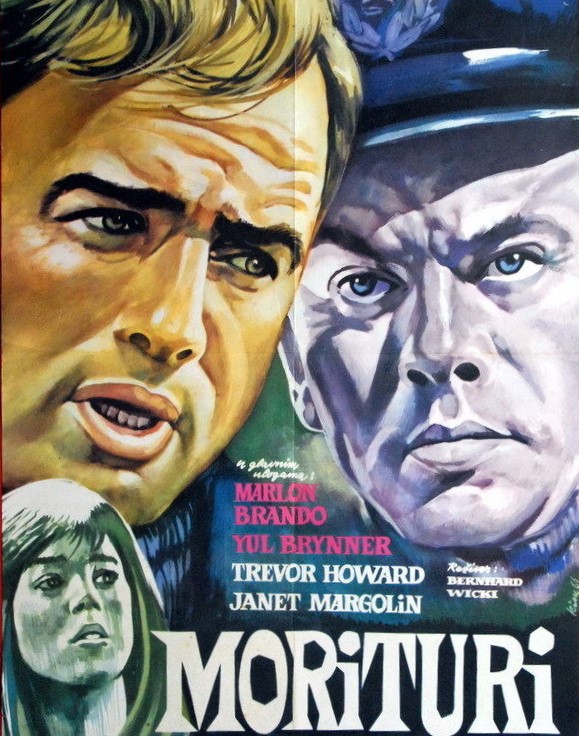
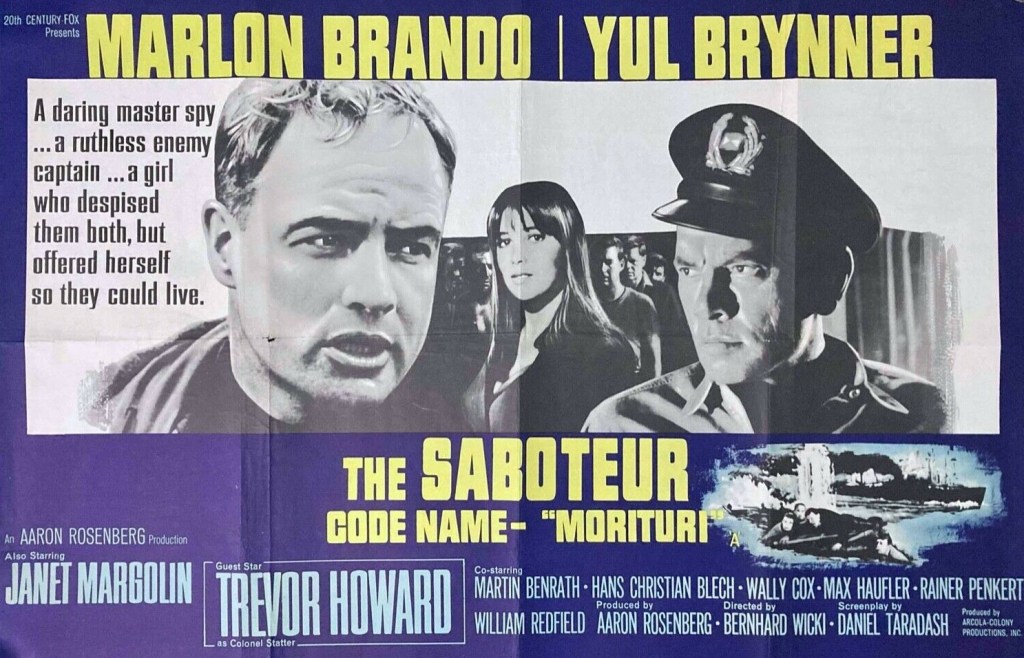
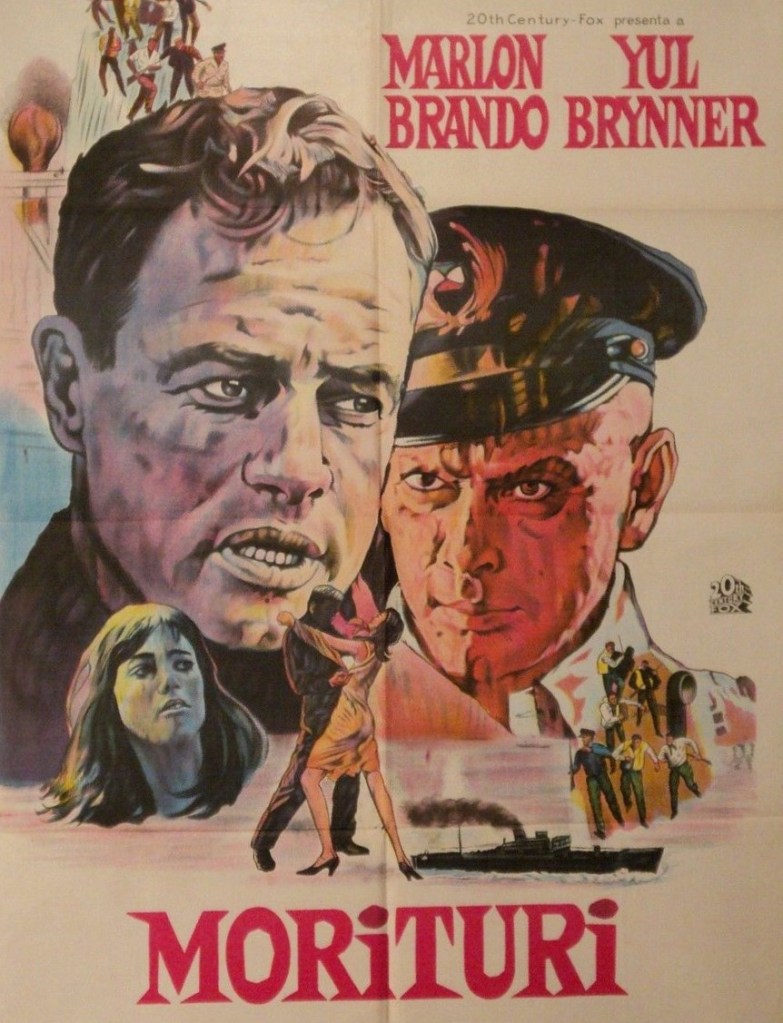


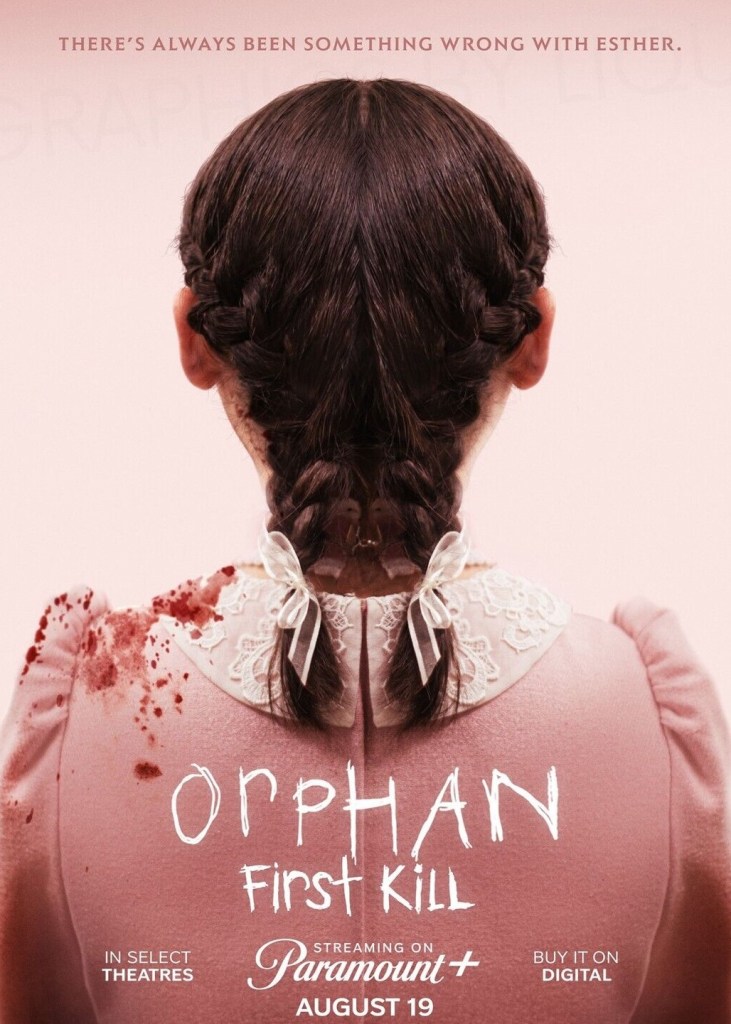

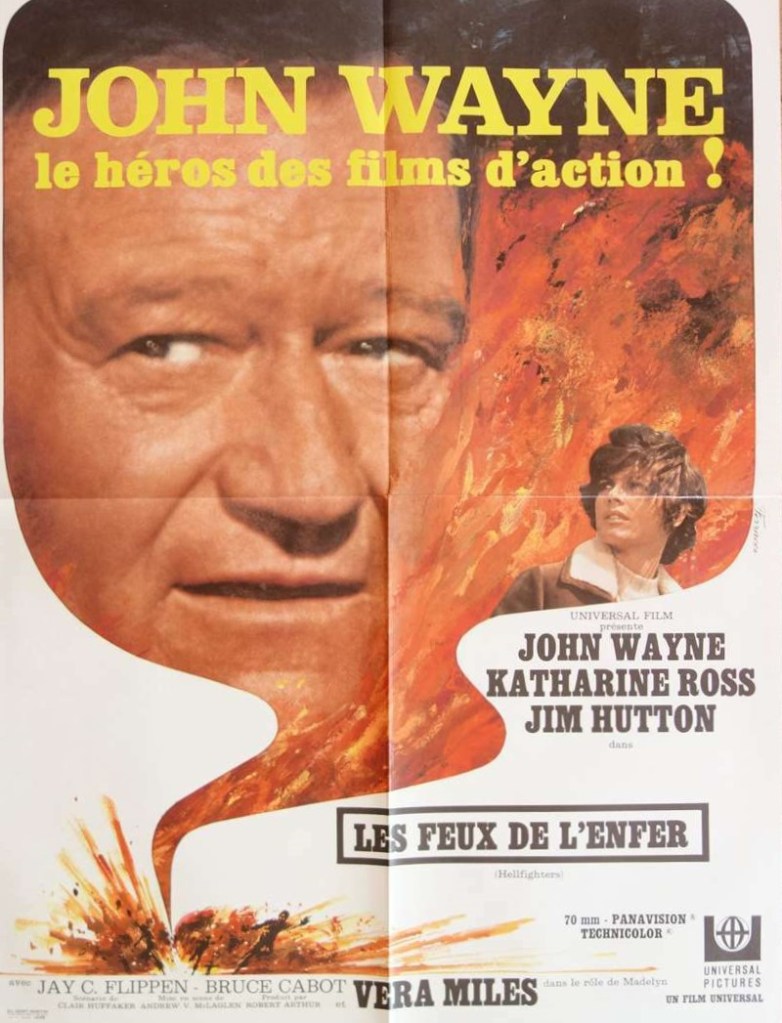
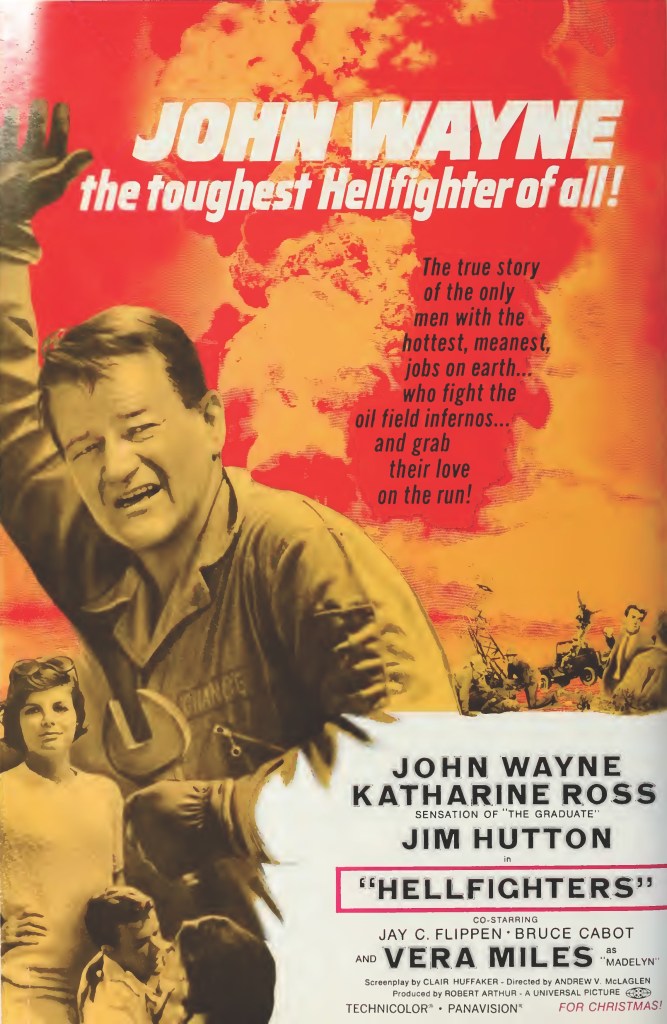

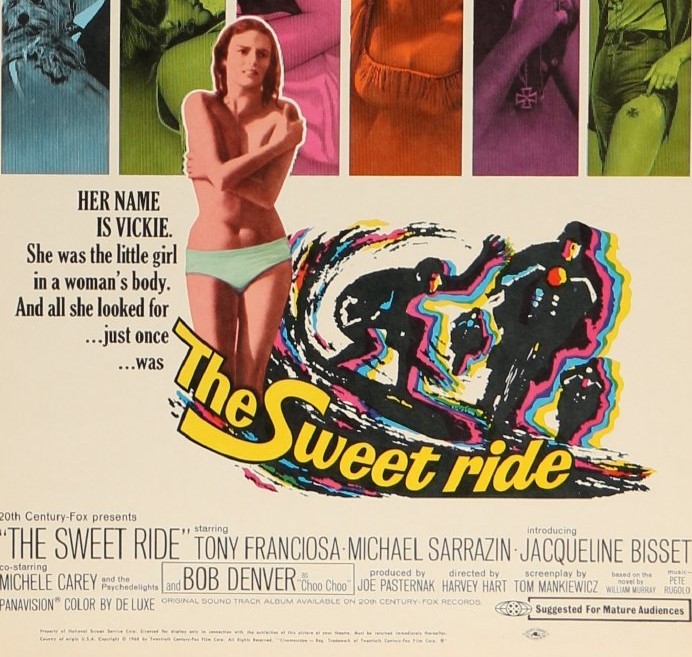
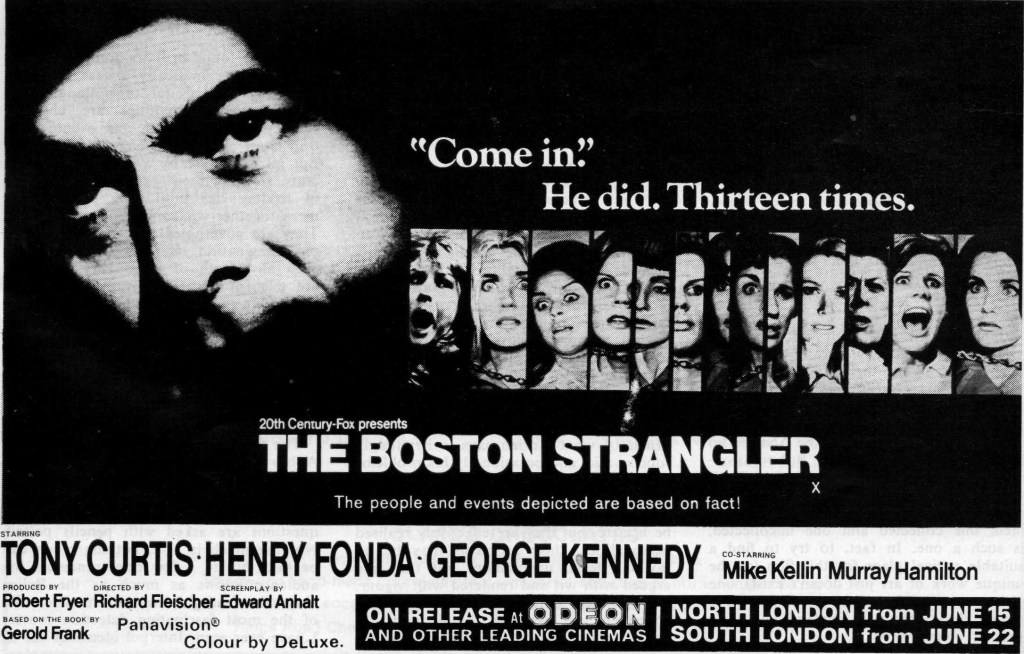
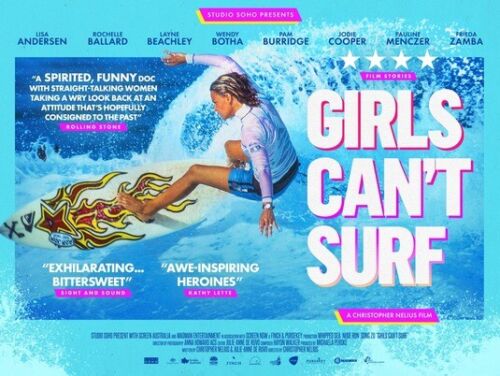
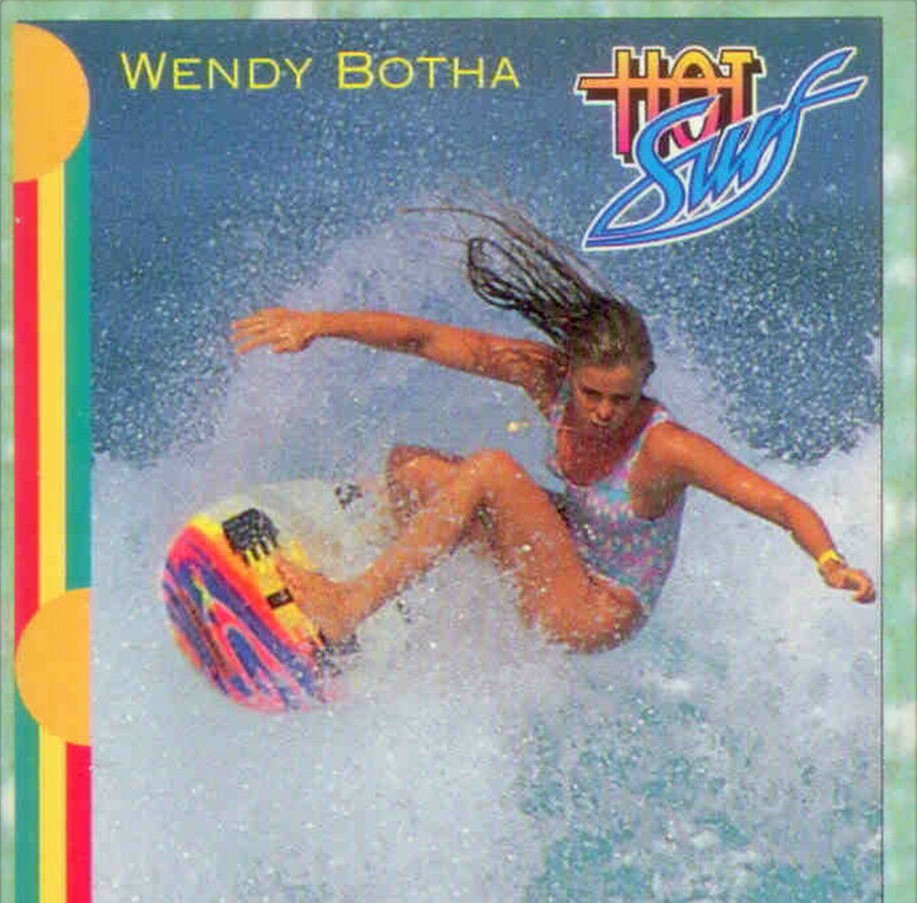
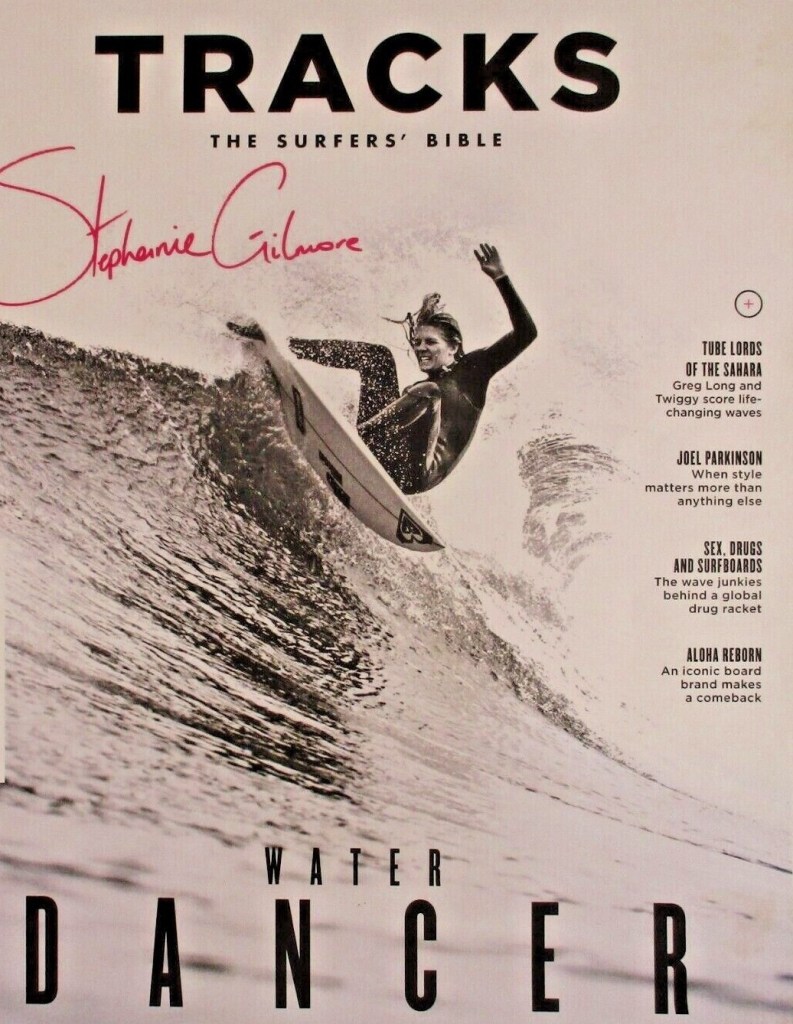
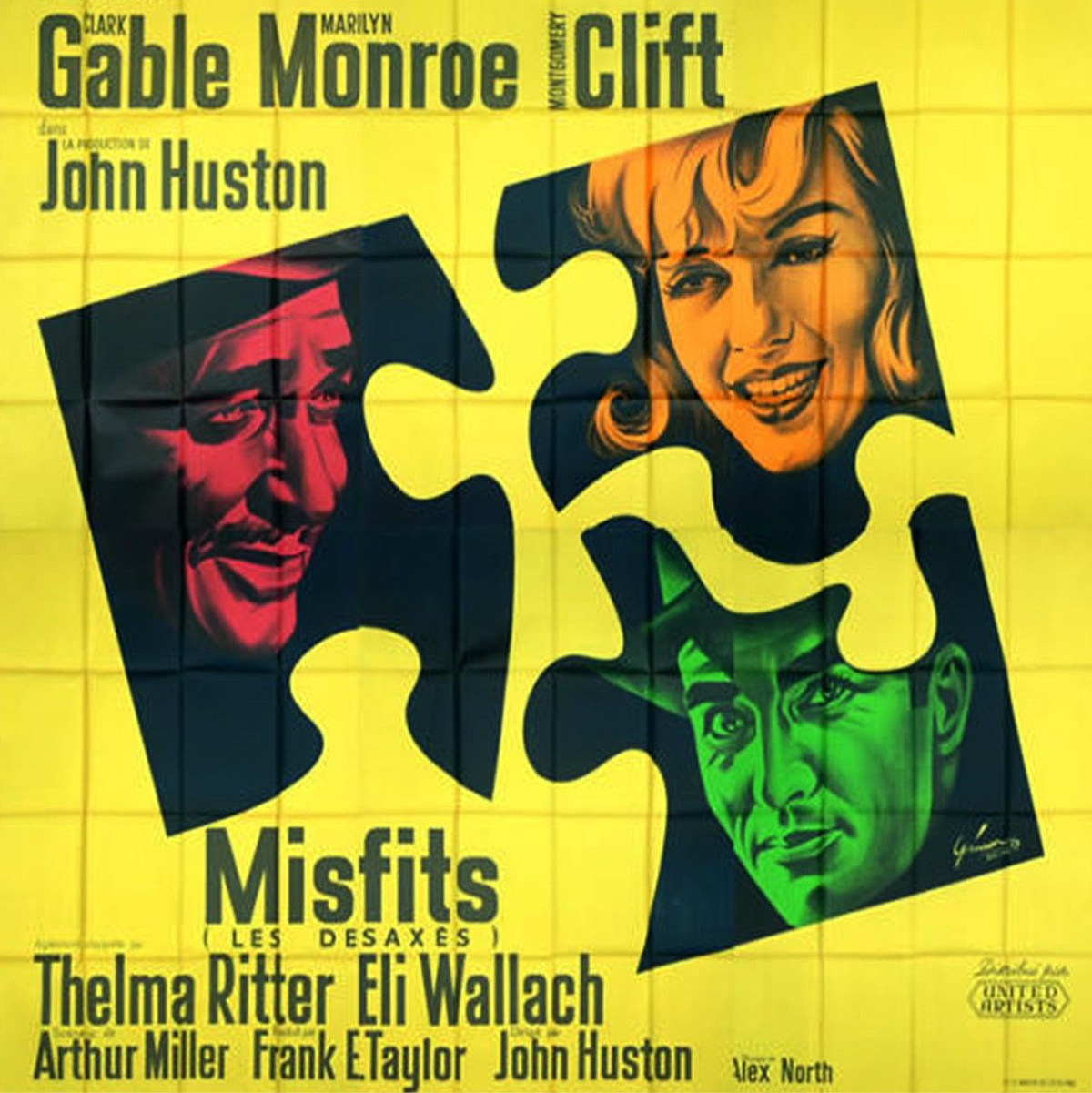
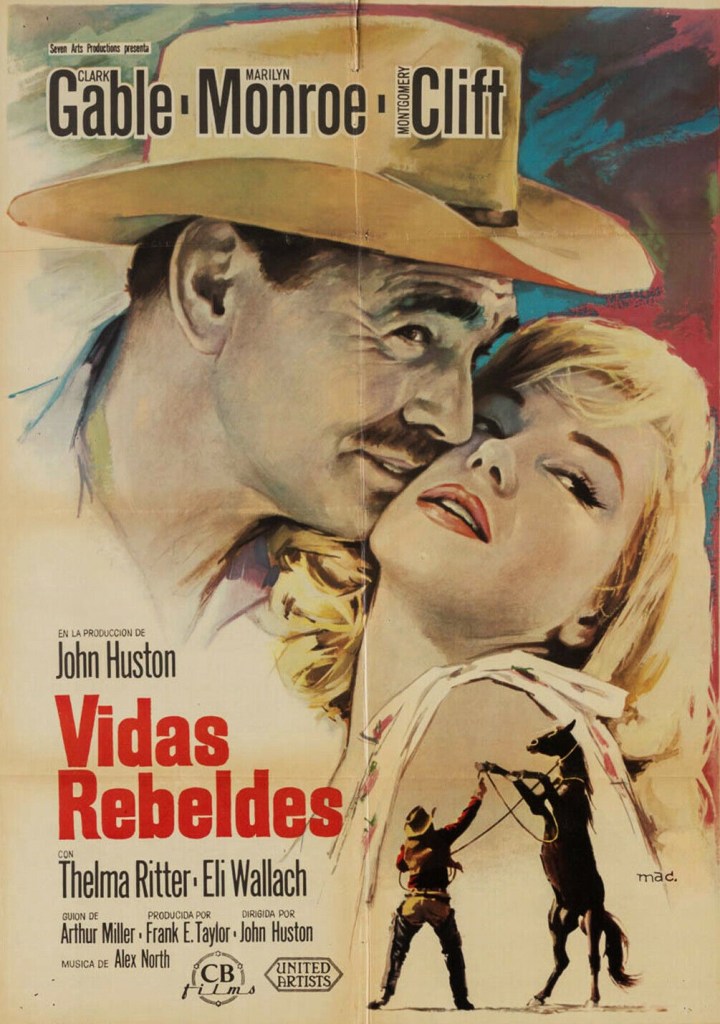
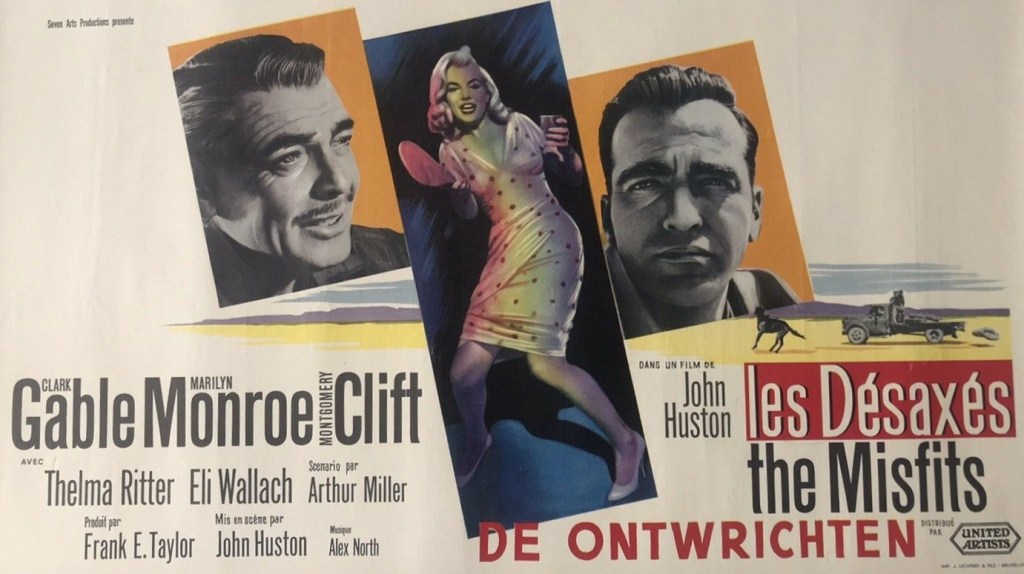
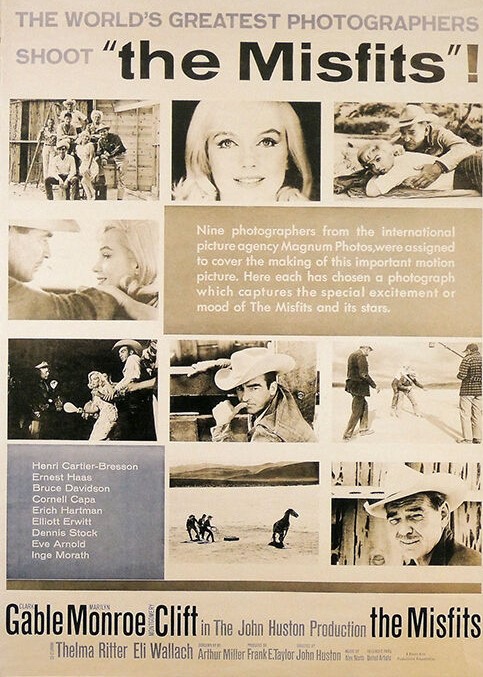


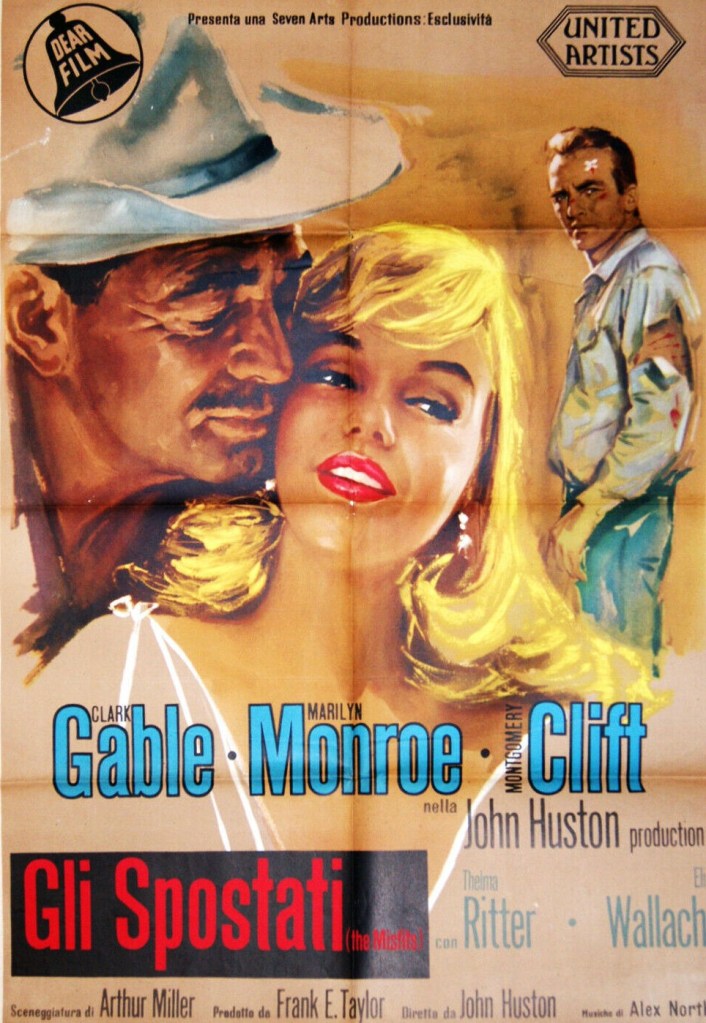
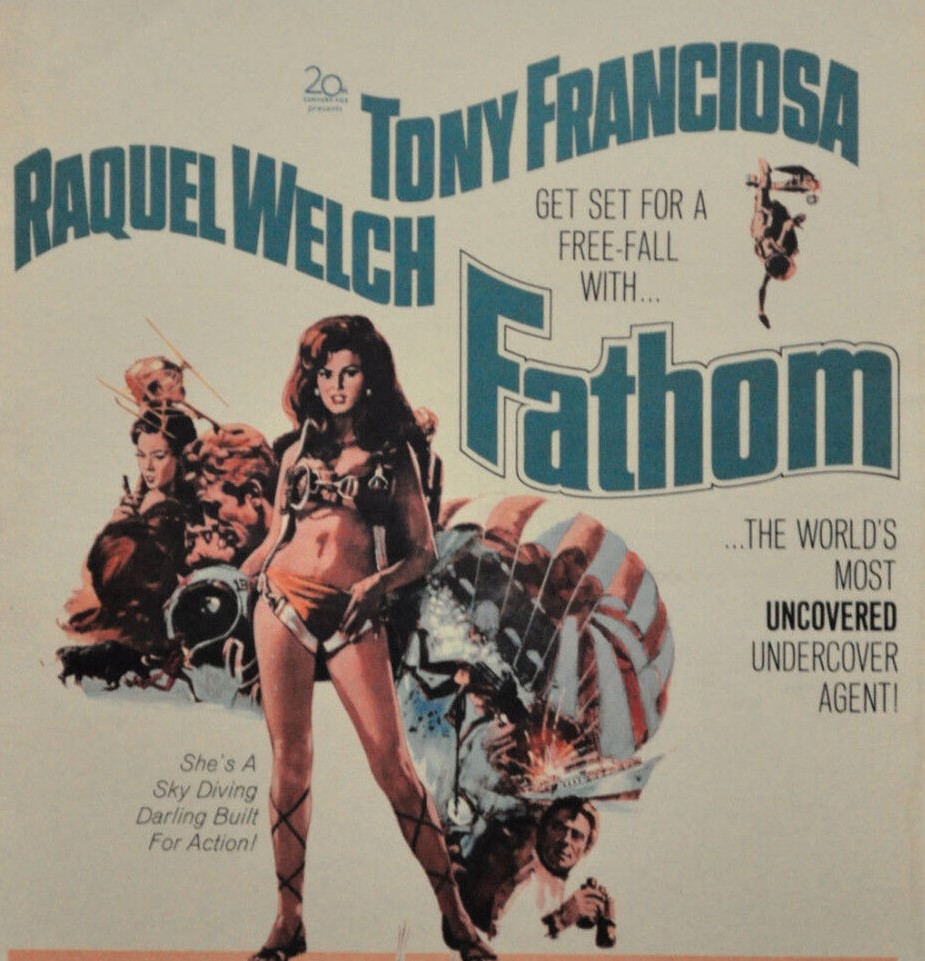

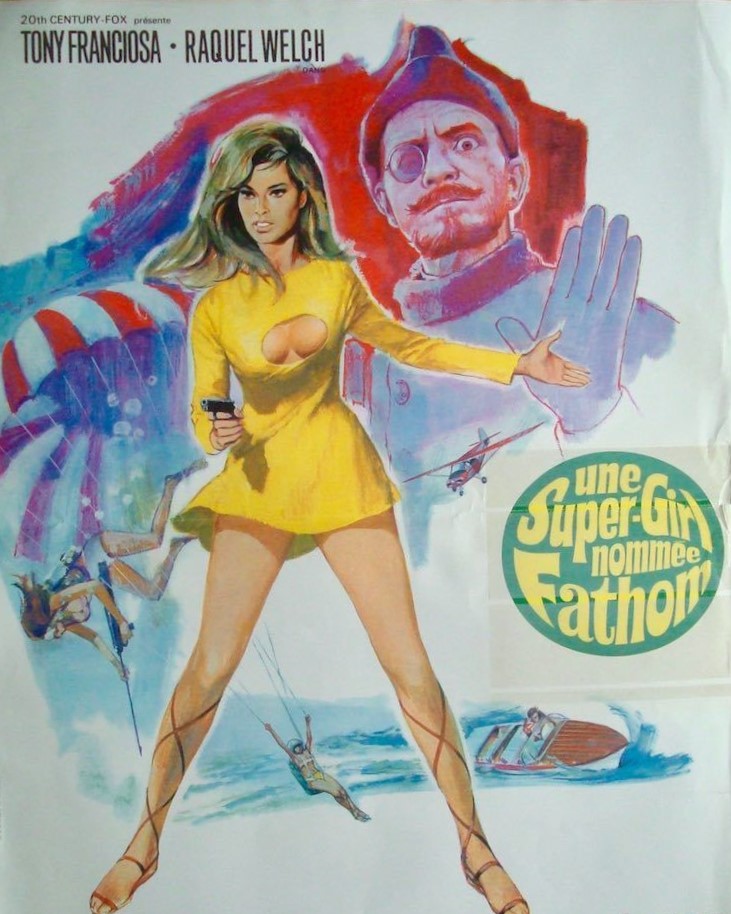
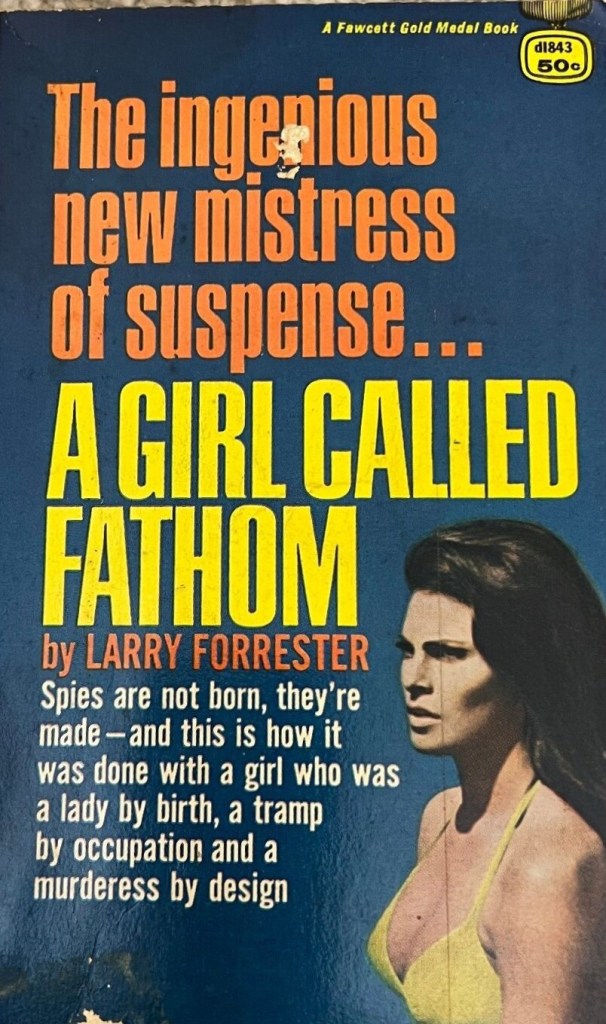
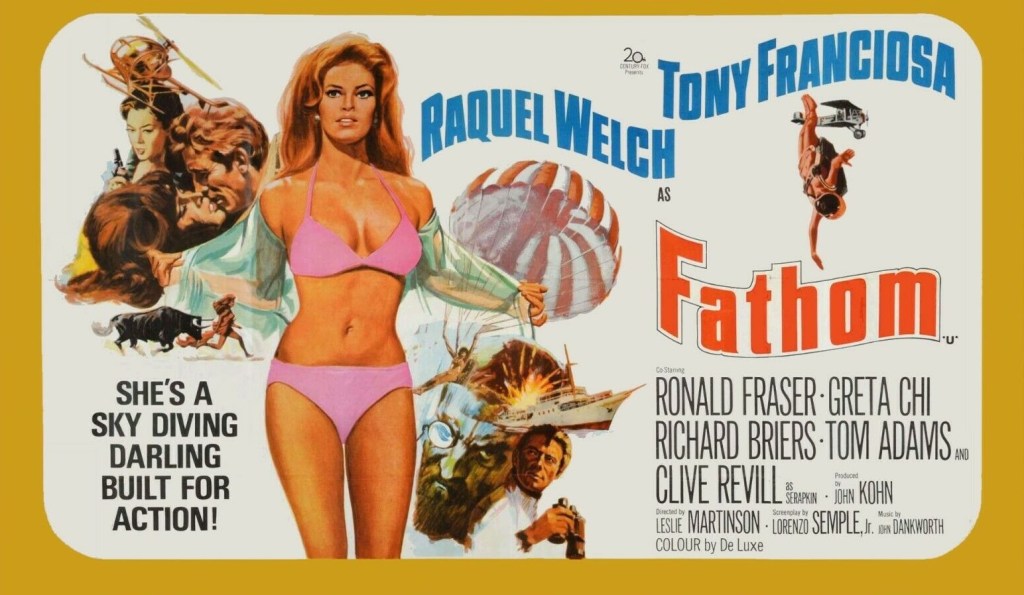
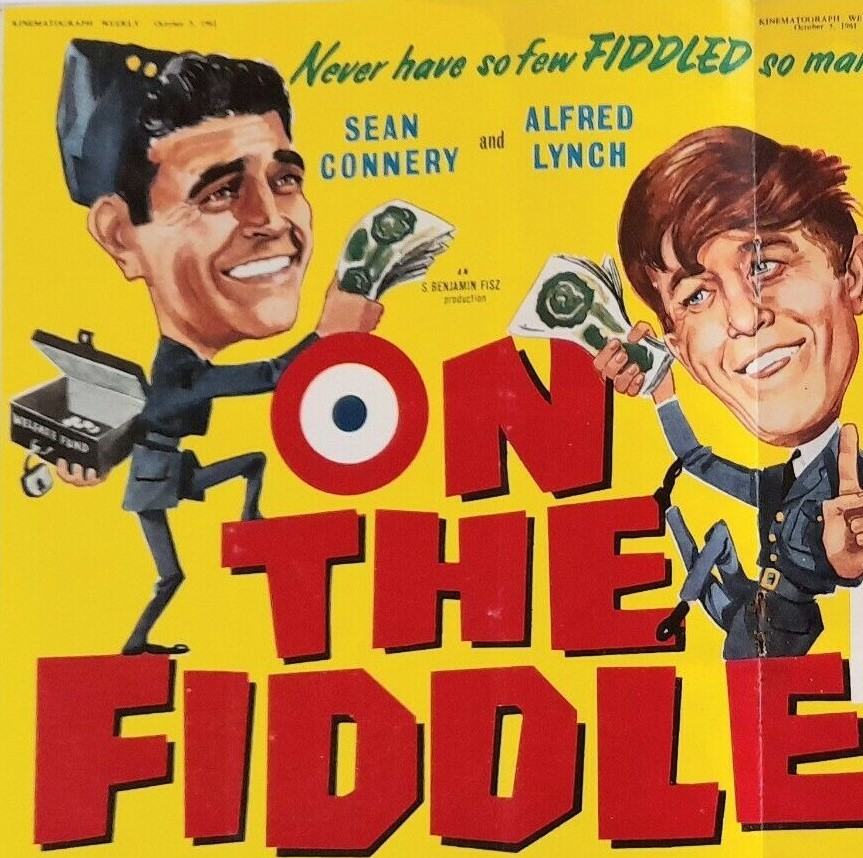
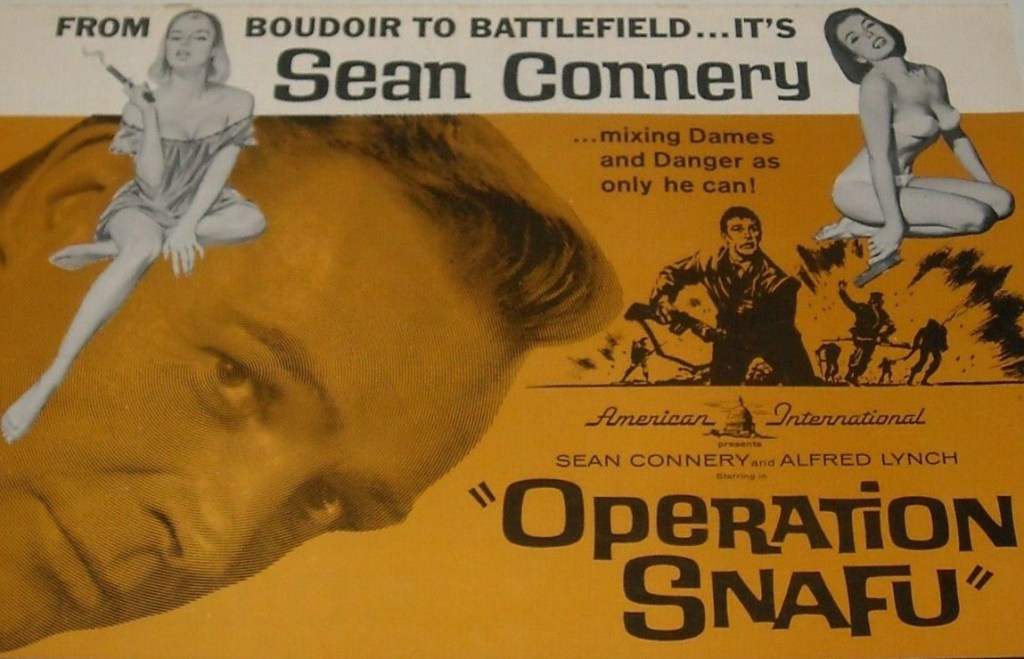

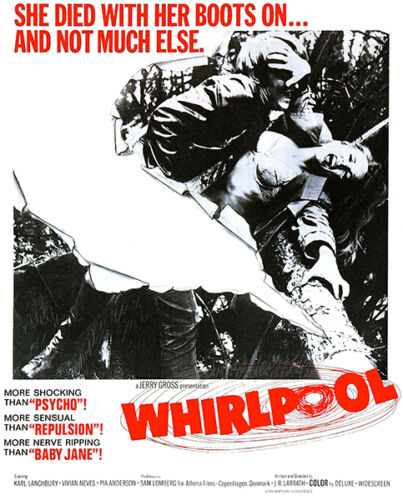


 The Magnificent 60s