United Artists had reinvented the sequel business, shifting it away from the low-burn low-budget Tarzan adventure or Gene Autry western or any inexpensive picture movie capable of maintaining a series character, to bigger-budgeted numbers like James Bond (four sequels so far), The Magnificent Seven (two), The Beatles (four) and The Pink Panther (two). Even Hawaii (1966) spawned The Hawaiians (1970). So when the company hit commercial and critical gold – five Oscars including Best Picture and Best Actor – with In the Heat of the Night (1967) it seemed too good an opportunity to miss not to try for a repeat.
You might have expected UA to continue with the pairing of Sidney Poitier and Oscar-winner Rod Steiger and locate a sequel again in the Deep South. Instead, Steiger was junked and the Poitier character Virgil Tibbs relocated from his Philadelphia hometown to the more snazzy environs of San Francisco, recently popularized by such items as Bullitt (1968).
But minus the racism element what you’re left with is pretty much a standard detective tale with domestic issues thrown in. Tibbs isn’t the kind of cop we’ve come to expect, sinking into alcoholic oblivion or having thrown away a marriage. Instead, and this would strike a contemporary chord, he’s struggling with fatherhood. His son comes off best in arguments and at one point Tibbs resorts to giving the child a few slaps. That looks initially as if emotions will quickly heal and the repentant dad quickly administers a comforting hug, but any bonding is blown apart when the resentful boy complains, as if this represents betrayal, that his father made him cry.
Tibbs is also the old-fashioned kind of male who believes the only way to teach his son not to fall into bad ways like smoking and drinking is to force him to puff on a big cigar and knock back a stiff one until the child throws up.
But Tibbs does do a diligent enough job of detection, evidence relating to the murder of a high-priced sex worker hinging upon whether the killer had long fingernails. The most obvious suspect is street preacher Rev Logan Sharpe (Martin Landau), who visited the prostitute in his capacity as spiritual adviser and who’s heading up a campaign to clean up the streets. But his alibi holds up.
Next in line is building owner Woody Garfield (Ed Asner), exposed, to the shame of wife Marge (Norma Crane) as being a client of the prostitute, and then a janitor of low intelligence called Mealie (Juano Hernandez) and pimp Weedon (Anthony Zerbe), the kind of hood who enjoys taunting cops.
While Tibbs doesn’t indulge in the blatant maverick approach to the job of the earlier Madigan (1968) or the later Dirty Harry (1971) he’s not above putting the squeeze on witnesses.
Rather foolishly, but perhaps feeling this has now become de rigeur, there’s a car chase which hardly compares to Bullitt. In fact, we’re stuck in an automobile rather too often but these only result in desultory conversations between Tibbs and his sidekick. While in some respects it’s refreshing that Tibbs isn’t subject to any racism, and the picture doesn’t head down the blaxploitation route, the result lacks edge.
Tibbs’ reactions to his child bring him down sharply from the ivory tower of sainthood from the previous picture, and the family stuff, while building up his character, doesn’t make up for what the story lacks.
Gordon Douglas, who had previously excelled in this genre via Tony Rome (1967), The Detective (1968) and Lady in Cement (1968), found out the hard way that Frank Sinatra was more appealing as an investigator and cop than Sidney Poitier and, without steaminess or wise-cracking to fall back on, the sequel quietly runs out of steam.
Screenplay by Alan Trustman (The Thomas Crown Affair, 1968) and James Webb (Alfred the Great, 1969) from the bestseller by John Ball. Not a patch on the original
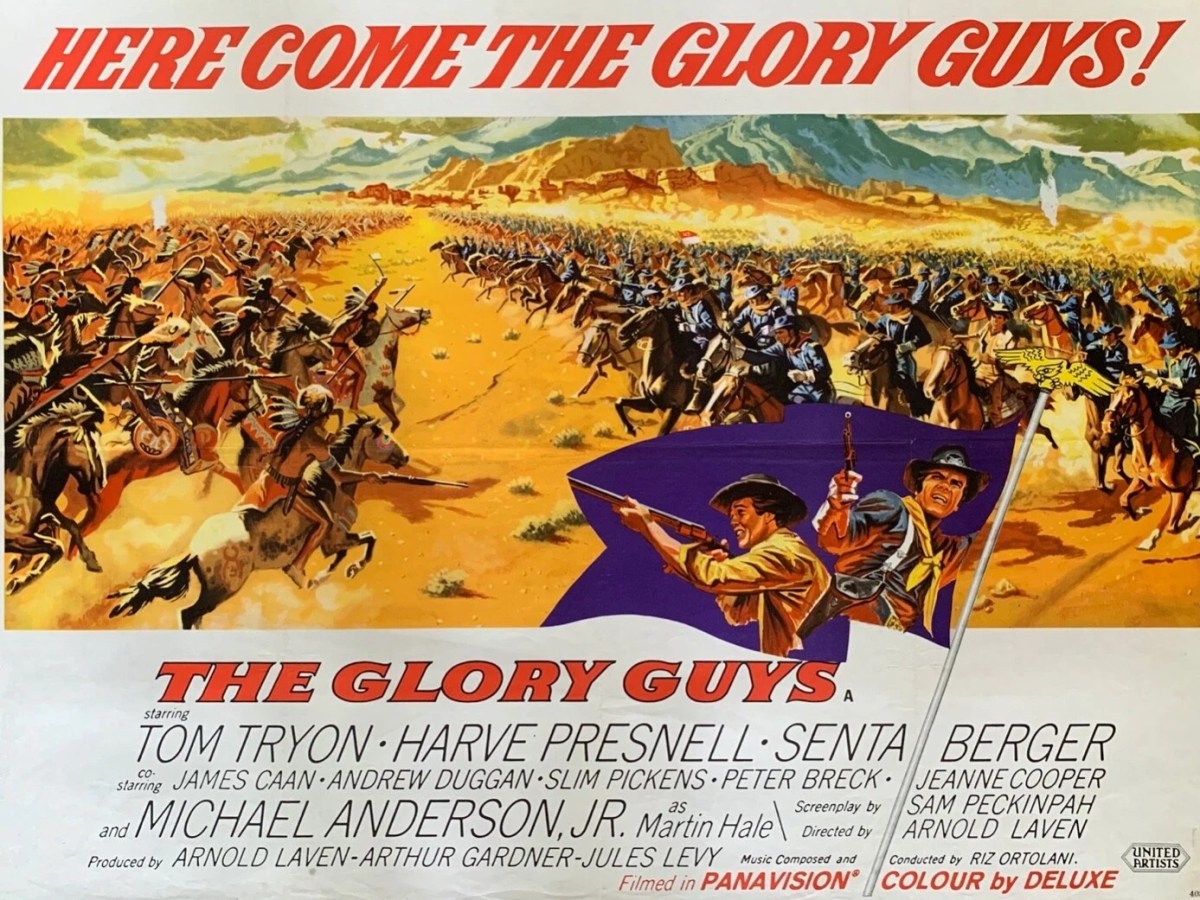
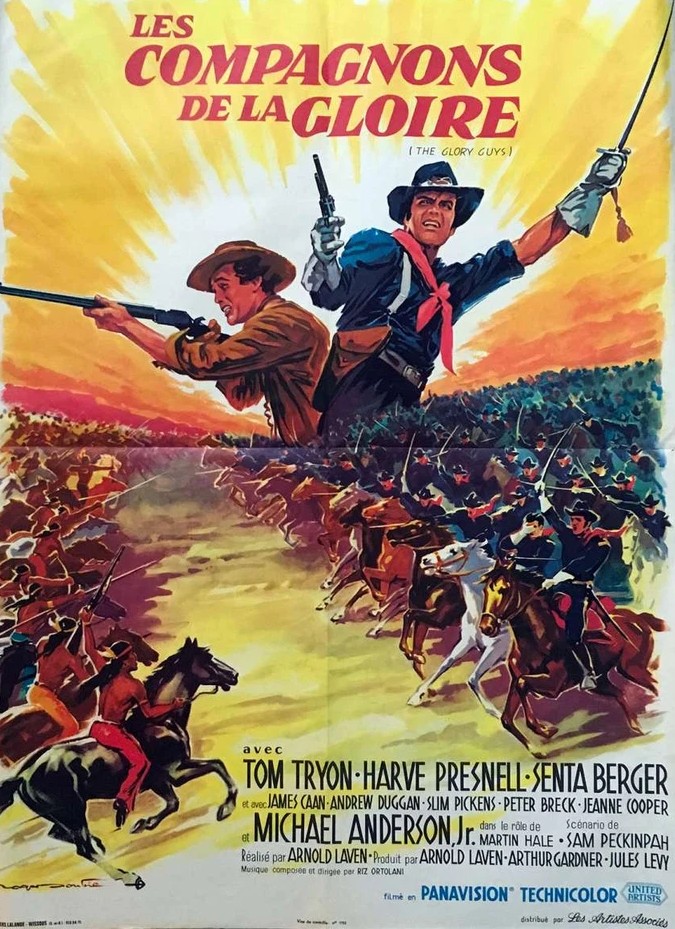
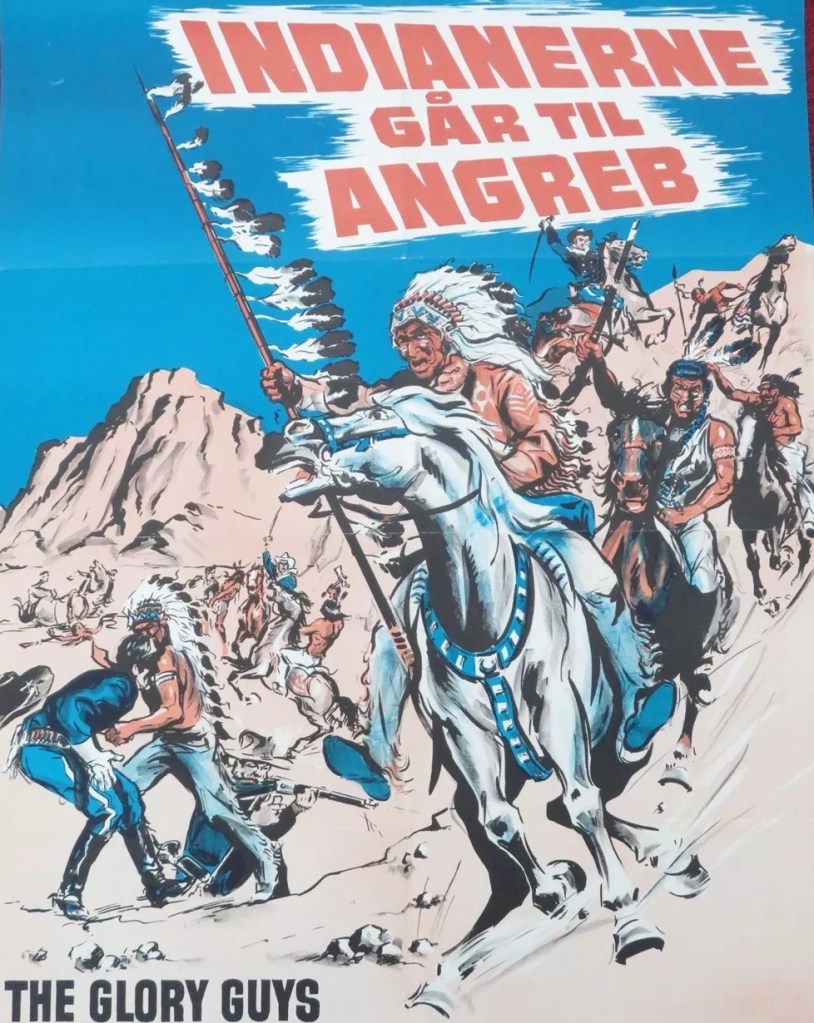
The dismissive verdict of Sam Peckinpah (he wrote the script) is the main reason this remains unfairly underrated. This came out the same year as that director’s over-rated Major Dundee and covers some of the same themes – the training of raw recruits and the woman requiring a protector.
But this is the first cavalry picture I’ve seen where training covers more than recruits falling off their horses, picking fights with each other and getting drunk and into scrapes. The main task of Capt Harrod (Tom Tryon), apart from teaching them to shoot, is to ensure they ride in formation and are ready to take part in action. There’s a brilliant scene where Harrod fakes an Indian attack where they are all in a flash knocked off their horses. And another superb scene where, having achieved an almost impossible goal in double-quick time, Harrod leads them in a ride-past in front of General McCabe (Andrew Duggan) and they ride in about ten rows six abreast, keeping time and distance. When the soldiers dismount during combat, how they arrange for the horses to get out of the way but not run off is also revealed. The scene of the whole detachment leaving the fort is also breathtaking. They are lined up in columns, five or six abreast, and you begin to see, for really the first time, how the U.S. Army operates as a trained unit.
But that’s just the cream of a very finely worked crop. Harrod and McCabe are at odds because the captain’s previous company of raw recruits was virtually wiped out in a previous engagement when the general used them as bait. McCabe is the “glory guy” of the title, everyone else is just trying to keep alive. The only certainty of going into battle, Harrod reminds his men, is that they have a fair chance of not returning home.
Widow Lou Woddard (Senta Berger) pops up to wreak romantic havoc. She owns a gunsmith business, and responsible for driving up sales, so not quite the vulnerable woman. What’s most at stake is her standing in town, her honor if you like, and she can’t be seen to be playing the field. While hardly promiscuous, she has two men on the go, Harrod, who seems disinclined to take the romance beyond a fling, and Army scout Sol Rogers (Harve Pressnell) who is off earning the chunk of money it will take for them to settle down elsewhere.
She doesn’t let on they are rivals and when they discover this it triggers an all-out slugging match – you almost wince with the power of the blows. This ain’t a brawl but a last man standing punch-up where literally they trade blows, one at a time. And she keeps dithering between the two. She reckons Sol isn’t the settling down kind while Harrod’s not keen on commitment. So any time she’s spurned by Harrod she flaunts Rogers.
If she gets her come-uppance, it’s not from either of the men. Attempting to trade barbs with McCabe’s snippy wife Rachael (Jeanne Cooper) she is publicly humiliated. And there’s a terrific scene as the calvary is set to leave the fort and the physical distance between Lou standing on the sidelines with the wives waving husbands goodbye and Harrod on horseback stretches into an emotional chasm simply from the way director Arnold Laven lines up his camera.
The action is clearly based on the Battle of the Little Big Horn. McCabe, instructed to form one half of a pincer movement, races his men ahead to beat his rival general into battle. True to form, he uses Harrod’s men as decoys, theoretically sent out to protect his flank, in reality to draw out the enemy, permitting the general to attack their unguarded rear.
The battle scene is just superb, hordes of cavalry charging towards the enemy, then turning tail when facing superior forces, dismounting to take up positions, then retreating again to the rocks, pursued but managing, mostly, to survive. The scene where Harrod comes across McCabe’s wiped-out army is like the beginning of Zulu (1964). (In fact, it’s worth bearing in mind that Little Big Horn and Isandlwana took place just three years apart and had there been instant global communication in those days the combined events would have sent shockwaves throughout the world.)
It is an excellent script regardless of how Peckinpah felt about the outcome. But it is also a very good western with sufficient changes rendered to the genre’s standard tropes. The compulsory saloon brawl is elevated by an ongoing comic element of Trooper Dugan (James Caan) being constantly defeated in his determination to smash a bottle over someone’s head.
Senta Berger completists should enjoy this far more than her performance in Major Dundee. She essays a more complete realistic character, not quite grasping, but not far short, and in chasing a dream coming close to heartbreak. Tom Tryon (The Cardinal, 1963) is better than I expected and hoofer Harve Pressnell (Paint Your Wagon, 1969) is a revelation. James Caan (El Dorado, 1967), playing a “miserable whining sugar”, is awful, a terrible Irish accent sinking all his attempts at scene stealing
Arnold Laven might have felt hard-done-by in regard to Peckinpah, given the director, in his capacity as producer, had dreamed up The Rifleman television series on which Peckinpah made his name. While this isn’t quite in the same league as Rough Night in Jericho (1967) but better than Sam Whiskey (1969) it deserves reappraisal. Had it featured bigger stars in the two male principal roles it would have attracted more attention at the outset instead of demanding it now.
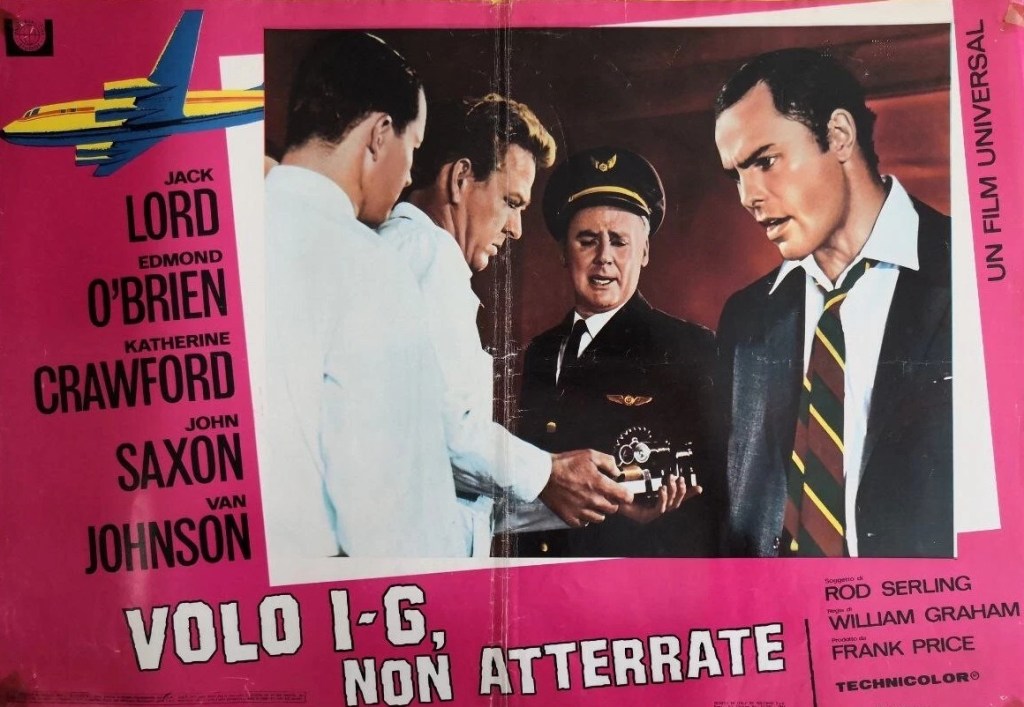
Early entry to the hijack subgenre – this one pivoting on the bomb-on-a-plane. Could almost deem it a template for what to do and not do in this particular field. Airport (1970) was the most obvious beneficiary although Speed (1994) could be reckoned to be something of a homage. And though “what if” was largely the preserve of sci fi, this posed very scary questions for audiences only beginning to enjoy the benefits of cheaper international travel. A quartet of excellent twists and three examples of men under pressure heat up the concept.
Unusually, the writer was the main selling point, Rod Serling (Seven Days inMay, 1964) being more famous than most screenwriters thanks to The Twilight Zone (1959-1964) scaring the pants off viewers in ways that nobody thought television would dare to do.
Propped up by an interesting cast – Jack Lord (The Name of the Game Is Kill!, 1968), former major league movie star Van Johnson (Wives and Lovers, 1963), Edmond O’Brien (Rio Conchos, 1964), John Saxon (The Appaloosa, 1966), Ed Asner (The Satan Bug, 1965) and Michael Sarrazin (They Shoot Horses, Don’t They, 1969).
Unusual in that the two main characters lose it and the movie is probably the first to touch upon PTSD in Vietnam. While Special Agent Frank Thompson (Jack Lord), leading the task force on the ground, appears to be in complete control, in fact he’s hidden the fact that his wife is on the hijacked plane. That’s only revealed in the final climactic twist, so you have to cast your mind back over the movie and reassess Jack Lord’s apparently unflappable performance.
The anonymous hijacker (Edmond O’Brien) is a pretty cunning individual. He’s set a bomb to explode on the plane’s descent and removed the easy option of making a speedy landing by forcing the jet to remain above a certain height otherwise an altitude-sensitive trigger will blow the passengers to kingdom come. He demands a $100,000 ransom which the airline is only too willing to pay.
Meanwhile, Capt Anderson (Van Johnson), who had appeared the insouciant handsome epitome of the airline pilot of the kind you saw in advertisements, is sweating profusely under the pressure as the cabin crew begin to search for the bomb. The passengers are not quite as terrified as you’d expect, most sitting in their seats, and i’ts left to celebrity George Ducette (John Saxon) to kick up a ruckus until put in his place by an anonymous army corporal (Michael Sarrazin) who has a distinct aversion to bombs and so far has sat rigid in his seat.
The hijacker keeps everyone on their toes by constantly moving from phone to phone. There’s a hiccup when the delivery van carrying the ransom has an accident and the cash is obliterated. By this point the hijacker, in a bar, is getting drunk and his iron control is tested by the news. The plane, meanwhile, is running out of fuel and Capt Anderson has long run out of patience.
Turns out the bomber isn’t the evil genius you expect. He’s been cast aside by the American dream, his considerable talents overlooked, and he wants everyone to know that he’s worth more. Unfortunately, he doesn’t get his moment in the sun, either literally having made off with the money, or by having his face splashed over the front pages of newspapers.
When he dies of a heart attack, the plane still circling and fuel levels dangerously low and now unable to locate the bomb, that’s a heck of a fabulous twist. But what Rod Serling takes away with one hand, he gives with the other, and the pilot soon works out that if he lands at a high altitude airfield he’ll prevent the bomb exploding.
Safely on the ground, we come to the third twist. The hijacker had deposited the bomb in Capt Anderson’s flight bag, carelessly left lying around at the airport. The final twist is the revelation that Thompson’s wife was on board.
What had every opportunity of becoming a run-of-the-mill thriller, especially since we are light on passenger drama (no pregnant women about to give birth, no kids or nuns to claw at our sentiments), segues into something more interesting as it delves into the cracking up of the hijacker and intimation that soldiers returning from Vietnam do not feel like heroes.
Edmond O’Brien is the pick, but Van Johnson possibly the most courageous in filleting his screen persona. You wouldn’t have predicted Michael Sarrazin’s later success from this performance, nor that Jack Lord would hit a home run in television’s Hawaii Five-O (1968-1980).
Ably directed by William Graham (Waterhole #3, 1967) and although, technically, all he has to do is point the picture in the direction of the twists, he brings more by allowing Edmond O’Brien to humanize his character.
I saw this as the supporting feature to Carry On Doctor and as a youngster never came out of a cinema more scared. Originally it was a made-for-television number though yanked after only one screening after airlines, not surprisingly, objected, so, as with many hard-to-find pictures it entered the cult zone in the USA.
As YouTube is often the curator of cult you can find it there.
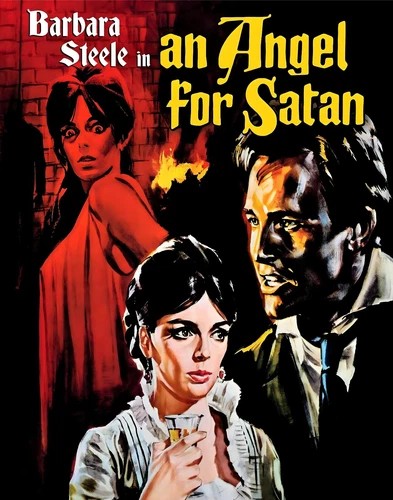
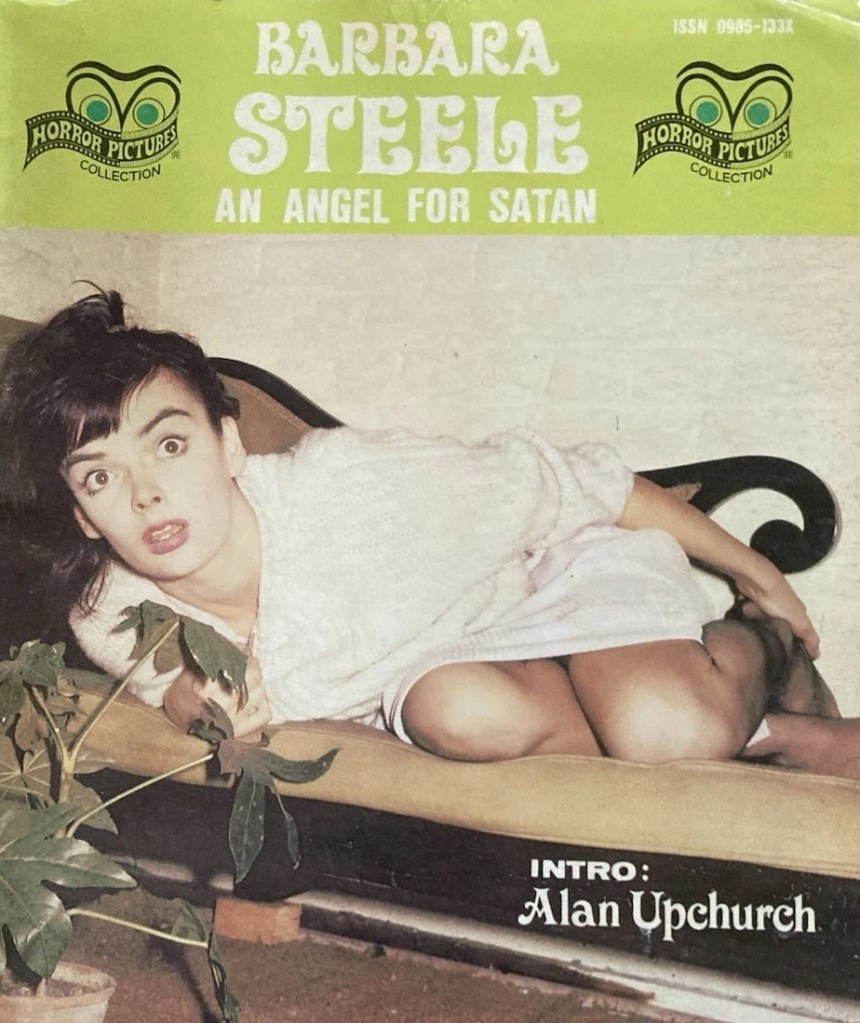
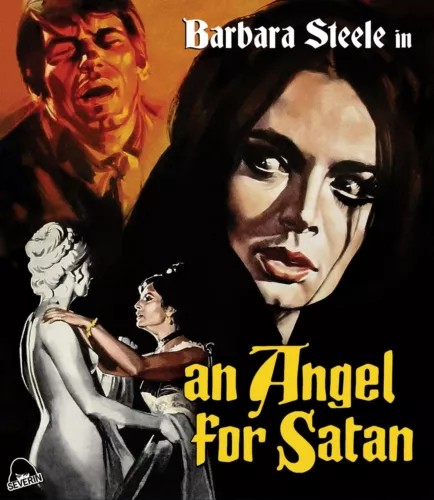
Scream Queen Barbara Steele (The Crimson Cult / Cult of the Crimson Altar, 1968) is the big attraction in this heady brew of witchcraft, ancient curse, hypnotism and plain ordinary seduction, with an ingenious double twist. And elegantly mounted, crisply photographed as if a Hollywood picture of the 1940s.
After a drought lowers the water level, a 200-year-old statue of the beautiful Countess Melena is recovered from the seabed. The locals fear it carries a curse. Artist Roberto (Anthony Steffen), hired to restore the artwork, arrives only days before the young countess Harriet (Barbara Steele) returns to claim her inheritance. With some clever sleight-of-hand, veteran Italian director Camillo Mastrocinque (Crypt of the Vampire, 1964) misleads the audience into thinking this is all about secret love affairs, Harriet’s uncle the Count (Claudio Gora) in an illicit relationship with housekeeper Ilda (Marina Berti), maid Rita (Ursula Davis) tempting timid schoolteacher Dario (Vassilli Karis), nascent love between Harriet and Roberto hitting a stumbling block and various shades of unshackled lust from woodcutter Vittorio (Aldo Berti) and village strong man Carlo (Mario Brega).
But pretty quickly, the picture takes a different turn. Turns out it’s not Melena who’s the problem – but her jealous ugly cousin Belinda who threw the statue into the water in the first place. Whatever the cause, there’s an outbreak of malevolence, mostly emanating from Harriet.
She strips naked for Carlo then savagely beats him for daring to stare at the nude body. She seduces Dario, looks like she’s making a play for Rita, goads Roberto and tells him she likes violence and has Carlo in her thrall.
In short order a female villager is raped and murdered, another barely escaping a similar fate, the schoolteacher commits suicide, several villagers are axed to death, the strong man sets fire to his cottage, killing wife and seven children, and the woodcutter is speared by pitchforks.
You can tell this is a classier number because the violence is minus any gore and there’s little attempt at deliberate shock, more of a slow burn as Harriet torments those around her. Roberto is permitted small touches of investigation, and there’s a clever special effect of a painting appearing to talk.
The traditional horror elements – lightning, slamming windows, storms – are primarily employed to nudge Harriet and Roberto together; it just so happens that she is scared of lightning and he’s the person most conveniently placed to comfort her. There’s a hint of the narcissism found in Hammer’s later lesbian horror pictures, and only the censor or the director’s discretion prevents more full-blown nudity as a prelude to seduction of both male and female. Harriet’s a dab hand at inveigling males to be in the wrong place at the wrong time invariably with her clothes in disarray to lend substance to her claims of being attacked.
While, as regular readers will know, I’m generally in favour of the climactic twist – the more the merrier – here I’m not so sure this was the road to go down. As Roberto already knows that the curse applies to wicked cousin Belinda rather than Melena, it would have been enough for him to declare this and find a way of removing it, most likely adopting the simple solution of chucking the statue back in the sea, which is what the villagers have been demanding all along.
It’s quite clear that much of the rape and killing is down to hypnotism by Harriet, but once we discover she’s being hypnotized by the Count, in one fell swoop what had been an intriguing horror story transforms into a more run-of-the-mill crime tale since if Harriett is committed to an asylum then he can continue to rule the roost.
But he’s in the thrall of Ilda who turns out to be the ancestor of Belinda. So not quite the satisfactory ending unless the criminal element had been introduced earlier on.
I doubt if Barbara Steele fans will care as the actress is very much in her element and, although in the end a victim, for the bulk of the picture she is in total – and seductive – command. Nobody’s going to compete with her and sensibly nobody tries. Anthony Steffen didn’t need any help with his career because had had already headed down the spaghetti western route.
Classically directed – excellent composition and camera movement – from a script by Mastrocinque and Giuseppe Mangione (Anzio / Battle for Anzio, 1968) from a novel by Antonio Fogazarro.
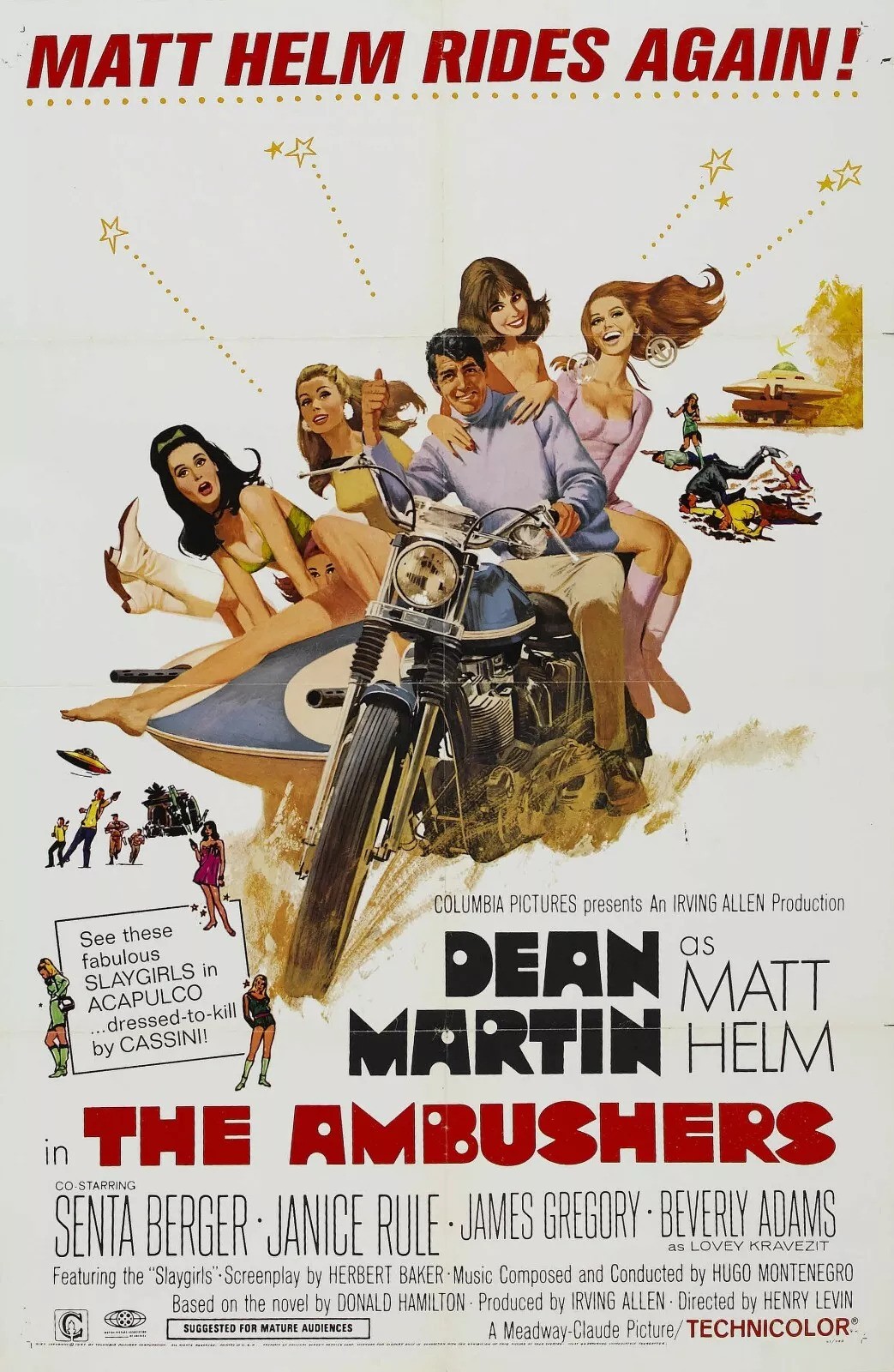
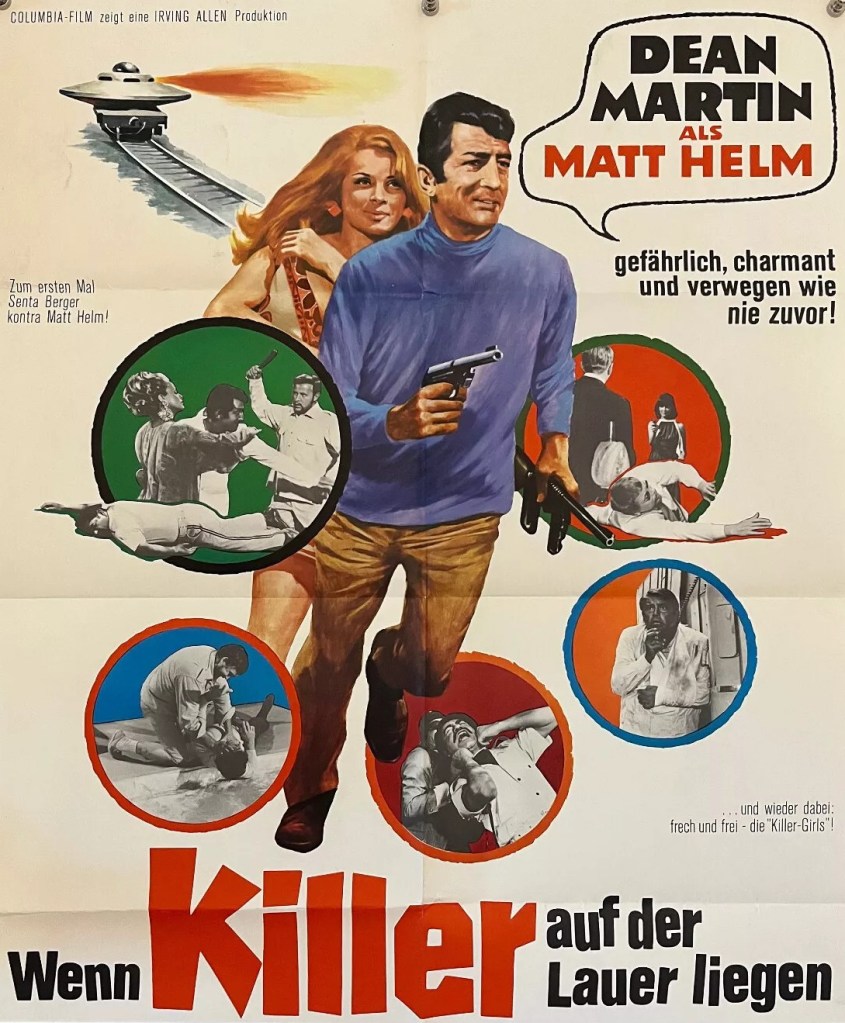
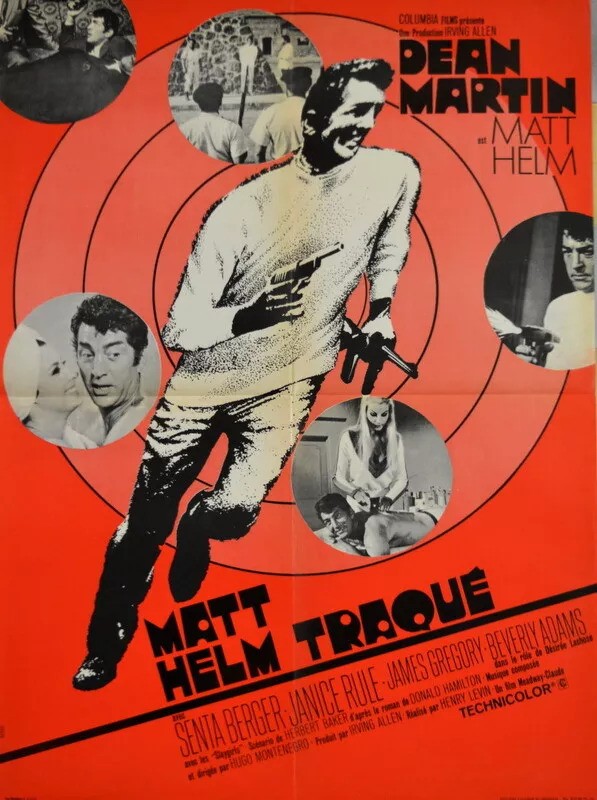
Don’t get too hung up on the supposed rampant sexism in this third iteration the Matt Helm series. These women – bikini-clad or not – are weaponized to the hilt rather than our hero Matt Helm (Dean Martin) who has to make do with a gun disguised as a camera. In fact, he makes pretty good use of the gadget created for the females – the one that melts metal, designed to get rid of the clasp on men’s belts, forcing their trousers to fall down, which, as any student of farce knows, is the easiest way to disable the male.
There’s also a weapon triggered from a bra and a sedative concealed inside lipstick so that males seduced into intimacy will soon be snookered. And it’s also a woman, secret agent Sheila (Janice Rule), who’s impervious to the electromagnetic waves which kill off the opposite gender. Of course, to be fair, it’s not Matt Helm we see sinuously dancing around a playboy mansion in Acapulco the way the women do, although for Francesca (Senta Berger) that appears a clever method of entering the enemy’s lair. Who’s going to question another sexy dancing queen? And the bad guy has one of those devices that make the zips on female attire unzip. (James Bond purloined that one.) But it’s Matt who has the ideal rescue weapon, the levitation gun.
If you’re looking for a more male-oriented theme, how about beer? At various points Matt Helm is literally swimming in the stuff. I wouldn’t have been at all surprised had the plot concerned beer manufacturer Ortega (Albert Salmi) planning world domination through poisoning the global supply of beer or arming his beer gals with bullet-spraying bras. Even though this is largely a spoof, more so than the first in the series, it’s not that much of a spoof and Ortega has more serious intent. Using lasers, he’s hijacked the U.S. Government’s secret flying saucer and plans to sell it to the highest bidder.
Sheila, the pilot, also hijacked, has gone off piste after her experience, and is thrown together with Matt Helm as husband-and-wife, a role they previously played on another mission, to hunt down the villain and recover the missing spaceship. Francesca is also after same, and happy to seduce, trick or sedate Matt in order to achieve that end. Despite believing (from the previous encounter) that she is still Matt’s wife, Stella, despite an instant blow-up tent being laid on, takes a while to understand her duties include getting hot’n’heavy even if she’s less comfortable in the bikini department. Eventually, Matt and Sheila team up with Francesca. Turns out she works for supervillain Big O but is first to find the flying saucer.
More than the earlier entries in the series, this one relies on a series of unlikely events. The switcheroos when the lights in the train go out. But the firing squad sequence is hilarious. The in-jokes about Dean Martin’s recording rivals continue, but the bevy of bikini girls disappear from view pretty much after the opening section.
Janice Rule (Alvarez Kelly, 1966) is generally seen as a class above the previous female leads in the series but that would only be if you ignored Ann-Margret’s performance in Once a Thief (1965), the Stella Stevens of Rage (1966), the Senta Berger of The Quiller Memorandum (1966) and especially the stunning playing of Daliah Lavi in The Demon (1964). Dean Martin was on the cusp of much finer work in Rough Night in Jericho (1967) and Firecreek (1968) so this might just have been a warm-up.
Directed by Henry Levin (Genghis Khan) from a screenplay by Herbert Baker based on the Donald Hamilton novel.
Doesn’t take it itself seriously, which is just as well.
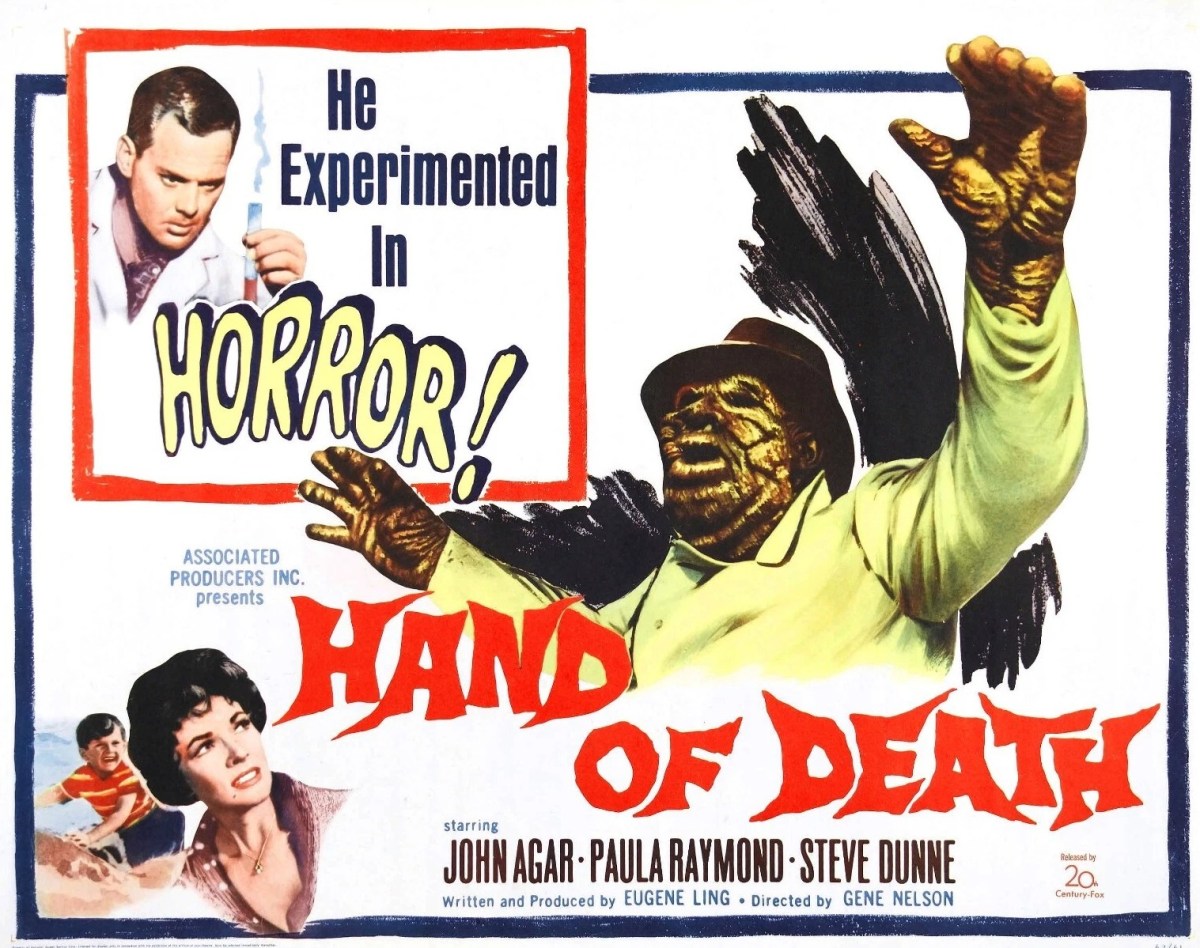
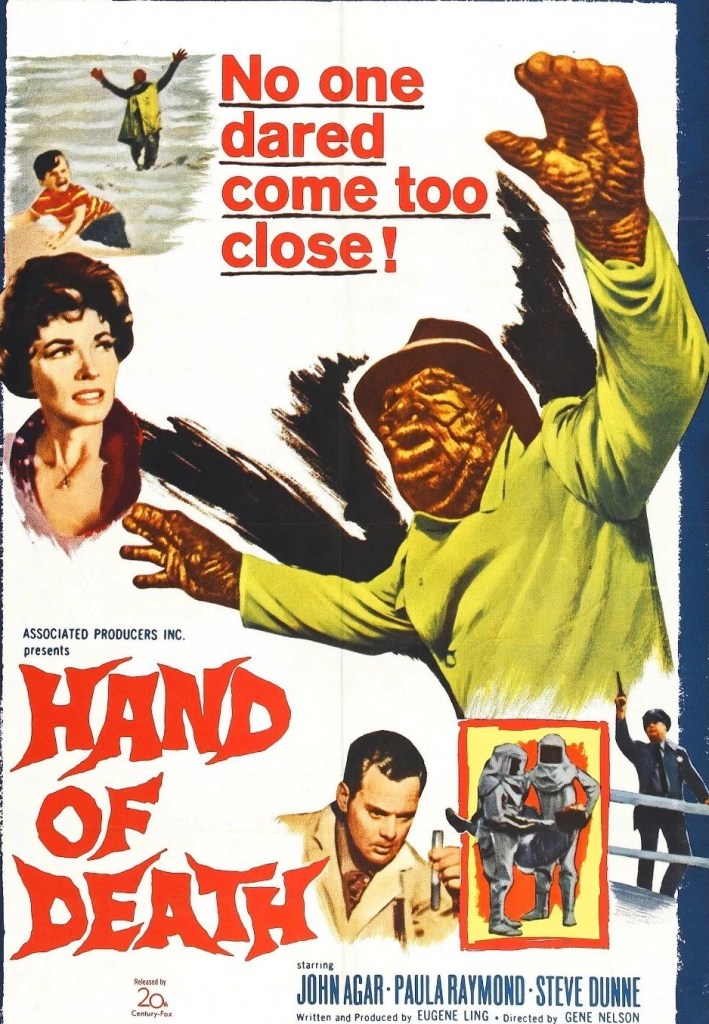
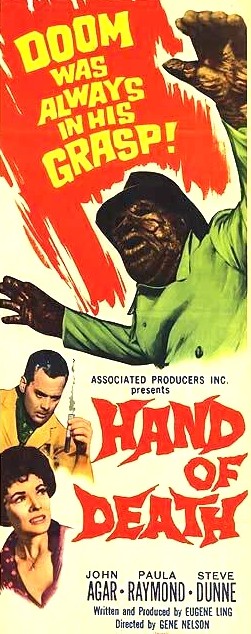
Unless you go by the name of Dr Jekyll, you don’t want to become a guinea pig for your own scientific experiments. Niftily done, memorable opening and finale, minimum expenditure on special effects ensures the shock value is limited until it counts as our hero/villain goes on accidental rampage.
In an echo of Village of the Damned (1960), a mailman, drawing up in front of some gates, falls to the ground. The camera pulls back revealing some senseless sheep. Two guys in Hazchem suits rush out of a building which turns out to be a laboratory. It’s not even a top secret lab although it’s buried in the desert. Dr Alex Marsh (John Agar) is supposed to be engaged on harmless experiments on cacti. Instead, he’s stumbled upon a nerve gas with military potential.
Our mailman and the sheep aren’t dead only unconscious so, through happenstance, Marsh has successfully conducted both animal and human tests, such results an improvement on what went before when the subjects died.
Marsh can’t wait to tell boss Dr Ramsay (Roy Gordon) and his girlfriend Carol (Paula Raymond) the good news. All scientists are mad scientists given the right circumstances. So Marsh has gone from anodyne to dangerous. In Army hands, the nerve gas can not only immobilize the enemy but when they wake up they are under hypnotic influence and will do what the victors tell them thus nullifying the risk of rebellion.
James Bond villains would be queuing at his door. Leaving Ramsay to drum up financial support from legitimate sources, Marsh returns to the lab to further develop the prototype, except too much leaks out and he’s not as immune to its effects as he originally believed. And beyond being cursed by a nightmare, it doesn’t look, initially, as if Marsh is in danger. Just everyone else. Touch him and you’re fried.
While he doesn’t mean to kill anyone, nonetheless heading for the morgue are a colleague and a gas pump attendant. He hides out in Ramsay’s house where serums are concocted to cure him. They fail. Marsh moves from not wanting to hurt anybody to threatening violence. And it’s soon clear he’s not at all immune. Contemporary audiences might enjoy the transformation as he turns into a cross between Hulk and The Thing from The Fantastic Four, with the addition of the kind of raincoat for which Columbo later expressed a preference and Frank Sinatra’s hat.
And you might be giggling at the look except that strange things begin to happen. You pity him. He’s not some monster lurching around terrorizing the populace. He’s lurching all right but in the kind of bent-over fashion where you think he’s going to topple over any minute. He turns up at Carol’s beach house but so do the cops. He heads towards the water but when he turns back at Carol’s call the police interpret that as threat and shoot him dead.
There are some other nice touches, reaction shots from the supporting cast, some sparkling bit parts, a small child who is within seconds of touching him out of curiosity, and an incentive for his other colleague Tom (Stephen Dunne) to win over Carol should he fail to come up with the serum.
John Agar (The St Valentine’s Day Massacre, 1967) was never going to get within a mile of an Oscar but his playing of the monster triggers pity. Paula Raymond (The Flight That Disappeared, 1961) adds some depth to a thankless role.
Directed by Gene Nelson (Kissin’ Cousins, 1964) from a screenplay by producer Eugene Ling in his final work.
I came at this with one big advantage. I hadn’t seen the poster so I had no idea what the monster looked like. Which is just as well because otherwise I might have not bothered.
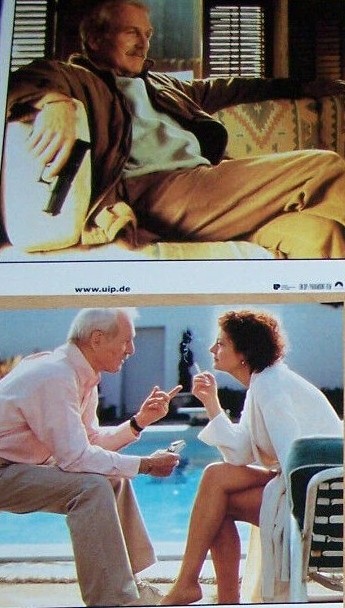
Thirty years later Paul Newman returns to the private eye genre – and finds the well dry. It’s a Hollywood trope that big stars after decades of employing every artifice in the business decide for artistic reasons to fess up and play their age. But the “tired old man” syndrome here is as much a bust as the story and the characters. Susan Sarandon couldn’t have “femme fatale” written on her face in any bigger letters and only the dumbest viewer would not guess from the outset that she had something to do with the mysterious disappearance of her first husband. It’s no surprise that this is so devoid of anything memorable that it is remembered mostly these days for Oscar-winning Reese Witherspoon getting her kit off.
Worse, despite being second-billed, Gene Hackman hardly appears, no more than topping and tailing the picture. We also have a voice-over that’s not replete with wit but is used to fill us in on bits of the narrative that are either opaque or not obvious enough. And it falls back on the Raymond Chandler gimmick of a man bursting into a room with a gun when the narrative starts to slacken. Except the story here is so slack it’s almost immobile. And there’s just a terrible ongoing joke that everyone thinks (apparently) that Paul Newman has had his pecker shot off, which would explain his general curmudgeonly attitude.
Ex-cop private eye Harry Ross (Paul Newman) is down in Mexico to find the missing daughter Mel Ames (Reese Witherspoon) of old buddy Jack on an illegal sexscapade (she’s a minor) with Jeff (Liev Schreiber). In the process of apprehending her he drops his gun (yep, that’s how good he is at this job) and she picks it up and shoots him. Flash forward a couple of years and Harry’s retired and living in a grace-and-favor apartment supplied by a grateful Jack who is dying of cancer. Harry agrees to come out of retirement to deliver a package for Jack, which obviously contains cash for a blackmail pay-out. Come delivery time, Harry stumbles upon the corpse of another ex-cop, Lester (M. Emmet Walsh), who has continued the search for the missing husband of Jack’s current wife Catherine (Susan Sarandon), a former actress not averse to taking her clothes off onscreen.
Into the equation comes cynical cop Capt Egan (John Spencer) and Verna (Stockard Channing), another old buddy and possibly one-time girlfriend (it’s not clear). Meanwhile, Harry falls for the charms of Catherine since only the dumbest of dumb cops can’t recognize a femme fatale when she falls into his lap. Unfortunately, Jack chooses that moment to have a heart attack and quickly works out from the giveaway of Catherine racing to the rescue wearing Harry’s shirt that he’s been cuckolded.
The trail doesn’t exactly lead to another old buddy, Raymond (James Garner), but he gets involved and another red alert flashes on the screen when we learn that Jack owns a million-dollar house (multi-million dollar equivalent these days) that even in his financially-straitened condition he refuses to sell for the obvious reason – as it takes forever for the audience to discover – that the corpse of the missing husband is buried in the grounds.
Jeff, who’s done a four-year stretch for his sojourn in Mexico with Mel, has worked this out and in conjunction with parole officer Gloria (Margo Martindale) is putting the squeeze on Jack. But he’s pretty miffed with Harry and knocks him out. But he’s also as dumb as the rest of the gang and is hiding out in the unsold million-dollar house. So he’s not hard to track down. And not just by Harry but also by the aforementioned character who bursts through a door with a gun when the narrative goes slack.
So, shucks, eventually we learn what we knew from the outset, that Catherine had her first husband bumped off so she could marry Jack and he was complicit. You might not have worked out that Raymond was somehow involved but what the heck there needs to be some twist in the turgid tale.
Naturally, Harry, being a retired cop and private eye now resigned to the vagaries of life, isn’t particularly concerned with putting away Catherine and in any case, as luck would have it, turns out Verna is still sweet on him so they can walk away into the sunset.
Crikey! And this from triple Oscar-winning writer-director Robert Benton (Bonnie and Clyde, 1967 and Kramer vs Kramer 1979). If it’s intended as a parody of the genre, there ain’t much in the way of laffs and if it’s not then, sorry, that’s the way it’s turned out.
Sure it’s world-weary and all that, and Harry is a sad divorced ex-alcoholic who’s very down on his luck, and while there is some brittle dialog it’s not enough to make up for the sludge of the narrative trek.
Yep, Paul Newman (Harper, 1966) comes across as old and Gene Hackman (The Gypsy Moths, 1969) comes across as old and James Garner (Buddwing, 1966) comes across as old but is that it? Honestly? Worse, Oscar-winning Susan Sarandon comes up short in the femme fatale department. You wouldn’t figure Reese Witherspoon either as a superstar in the making. In fact, the droll Margo Martindale steals the show.
This pretty much put the tin lid on the career of Paul Newman as a top-billed star – and it’s worth pointing out that both Sean Connery and Clint Eastwood in that marquee regard went on longer – as it did on the directing career of Robert Benton.
Only in Hollywood could you come off three straight flops and be offered for your next picture your biggest-ever salary. But producer Elliott Kastner in his attempt to break into the big time was following the game plan of United Artists when they had set out the previous decade to woo the biggest stars with big deals – and the same format that Cannon followed two decades later to sign up the likes of Sylvester Stallone.
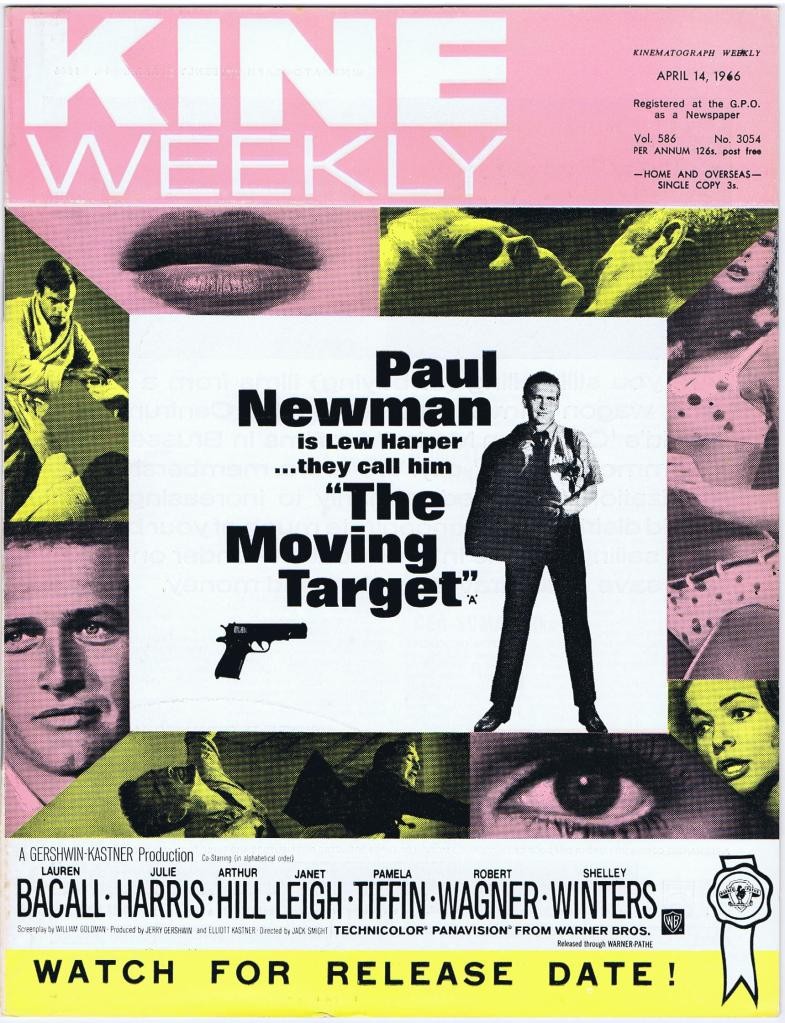
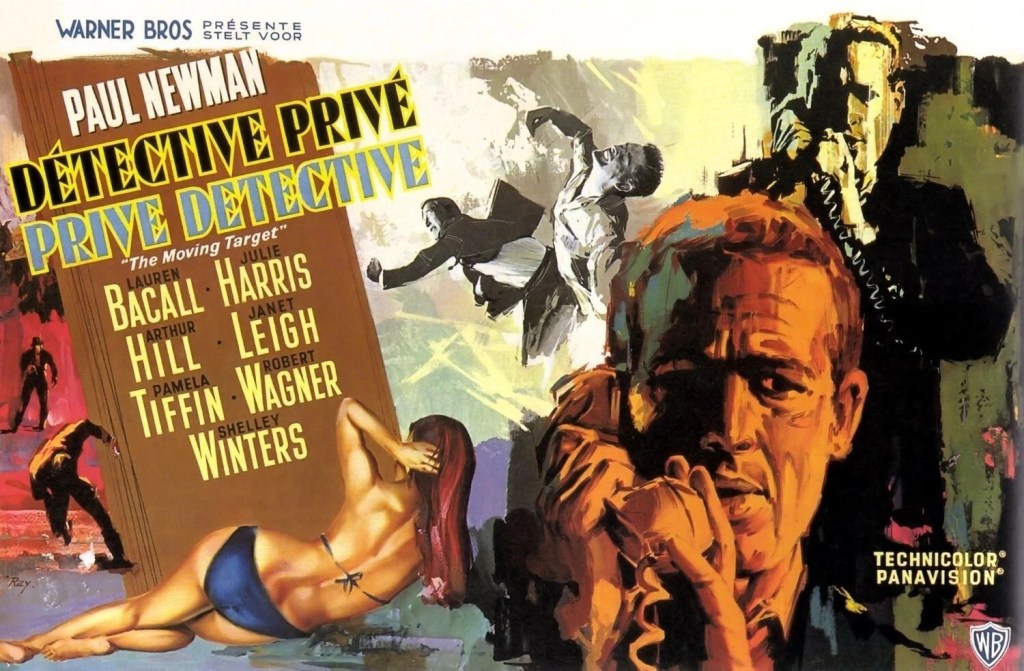
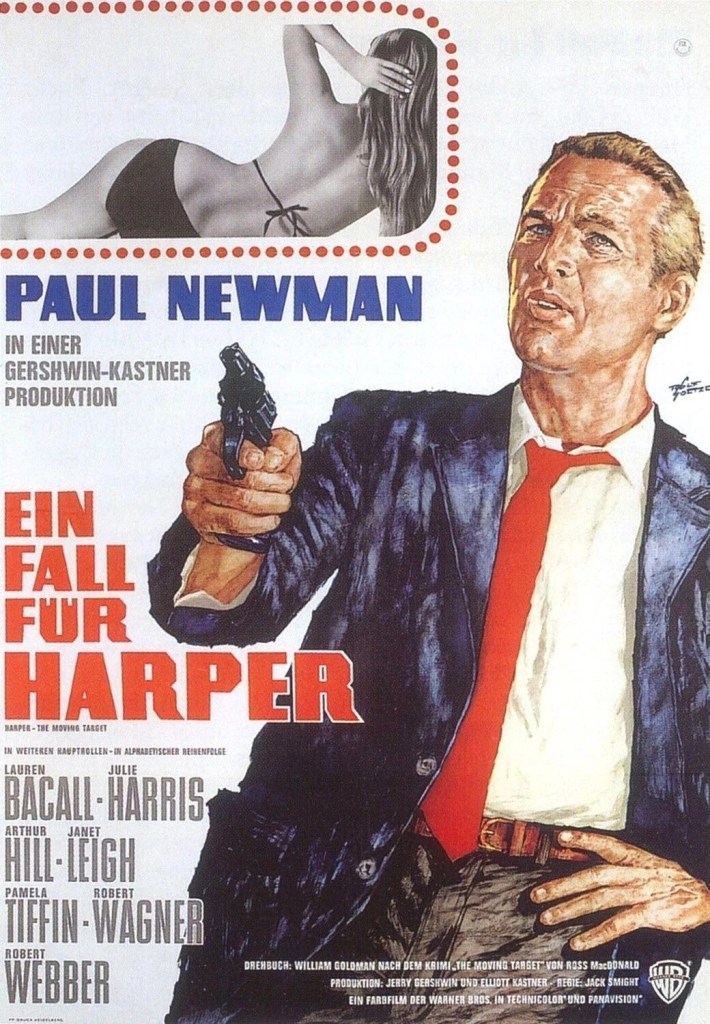
Paul Newman received $750,000 – matching the fees of John Wayne – plus 10% of the profits for his role in Archer. The original title was the surname of the private eye in Ross MacDonald’s The Moving Target. The novel’s title was in play for some time before being superseded by Harper (though it remained The Moving Target in the UK) on the basis that characters whose name began with “H” – namely Hud (1963)and The Hustler (1961) – had done well for the actor in the past.
Harper was the first project in a five-picture deal between Elliott Kastner (along with producing partner Jerry Gershwin) and Warner Brothers. This was to be followed by heist thriller Kaleidoscope (1966) starring Warren Beatty, Peter Sellers comedy The Bobo (1966), drama Sweet November (1969) and Harper sequel The Chill, reprising Newman.
The actor had thrown away the box office cachet he had achieved earlier in the decade with such pictures as Exodus (1960), The Hustler (1961) and Hud (1963) on a trio of losers – What a Way to Go (1964), western The Outrage (1965) and Lady L (1965). But that didn’t deter former talent agent Kastner.
Although Kastner only had one picture to his name, Bus Riley’s Back in Town (1965), top-billing Ann-Margret, it wasn’t for lack of trying. He had first made a splash in 1962 when he and screenwriter Abby Mann bought William Faulkner’s Light in August for $150,000. But that failed to get past the starting gate, as did The Crows of Edwina Hill based on the novel by Allan Bosworth, The Children of Sanchez to be directed by Vittorio De Sica, Honeybear, I Love You to star Warren Beatty – an original screenplay by Charles Eastman (Little Fauss and Big Halsy, 1970) – and an adaptation of William Goldman’s bestseller Boys and Girls Together.
When Kastner set up in business with Jerry Gershwin in 1965, he had ten projects on the go, having spent $538,000 buying the rights to three plays and five novels plus commissioning two original screenplays.
It was amazing that the movie was made at Warner Brothers because several years earlier studio and star had a major falling-out, the actor suing to be released from his long-term contract, eventually buying his way out for a considerable sum.
As Kastner couldn’t afford the rights to any of the books published by his idols Raymond Chandler or Dashiel Hammett he plumped for the “lesser known” Ross MacDonald “who had the same rhythm.” Since MacDonald’s agent Harold Swanson didn’t want to sell the rights to the character, Kastner agreed to switch the name from Archer to Harper. And as Kastner “couldn’t afford a real screenwriter,” he hired William Goldman, who had authored three books the producer admired. He paid Goldman $80,000 to write “a movie with balls” based on the first novel in the Lew Archer series, requiring some updating since it was published in 1949.
Private eyes were now the preserve of television, which was rife with them, so it was going against the grain to try to reinvent the genre. Frank Sinatra, coming off the hit Von Ryan’s Express (1965), expressed interest in the project.
“I always knew that if you wanted to get money for a big studio picture you needed Gregory Peck, Burt Lancaster or Paul Newman,” Kastner wrote in his memoirs. He decided Newman was the best choice and travelled to Scarborough, a holiday resort on the north east coast of England, where Newman was shooting Lady L with Sophia Loren. “With no proper sleep or proper food,” Kastner found out the movie’s location and “wasted no time going up to Newman’s trailer and knocking on the door.” He had never met Newman, so was “a bit scared.” For a moment it looked like he was going to get the brush-off, but when he mentioned the actor playing a private eye that caught Newman’s attention. He read the script in a day and agreed to do it.
Newman’s agents Freddie Fields, David Begelman and John Foreman (who, all, coincidentally, later became producers) were unhappy that Kastner had, to all intents and purposes, gone behind their back. However, Newman had confirmed he wanted to make the picture so all that was left for his agents was to negotiate the fee and points. Being agents, and wanting a share of anything else that was going, they recommended another client, Elliott Silverstein, hot after Cat Ballou (1965) as director. Silverstein apparently loved the script although Kastner discovered that Newman had once turned Silverstein down for a job.
Over dinner with Newman and the director in London, Kastner found out Silverstein actually hated the script. He badmouthed the screenplay. “All he wanted to do was spit in Paul Newman’s face.” Next day, Kastner had to pick Newman up from the proverbial floor and regain his trust. The actor was partly mollified by the fact that Kastner had signed up a stronger-than-usual supporting cast in the likes of Julie Harris and Lauren Bacall. “To his everlasting credit, he agreed.”
Now Kastner had to find a studio to back the project. Which he reckoned would not be hard. “If you had Gregory Peck or Paul Newman all you needed was the Burbank telephone directory to make the deal. Despite the “disastrous” end of Newman’s relationship with Warner Brothers, Kastner found no opposition from studio chief Jack Warner, whom he knew from his agent days. “He kinda liked me, so I went to see him first.” Prior to the meeting, he had sent screenplay, book, budget, cross plot and schedule. Ben Kamelson took the meeting with Jack Warner and Elliott Kastner. “He (Jack) was overly friendly and warm and kept on telling Kamelson that I was his boy and that he was so happy to have Paul Newman back on the lot.”
His attitude changed at the mention of Kastner’s fee – $500,000 and half share of the profits. “He went apoplectic. The going rate for producers at WB was $35,000, even a top producer like Sam Spiegel would not, in Jack’s eyes, merit more than $125,000.”
It was a deal buster. But just as Warner was about to kick him out of the office, Kastner rallied. He told the head honcho, “I paid for the acquisition of the book. I paid the writer for the screenplay. I paid for all the expenses back and forth to Europe, twice with a director as well. You say you are happy with the screenplay – it reminds you of The Maltese Falcon. You are sanguine about the overall budget, so why do you begrudge what you are paying to me since I never asked for a dime in the high risk area of development and not only that I capture a genuine movie star. Now listen to me I am gonna go across the hill to Fox and you know what Zanuck’s gonna do? He is gonna lock the door and not let me out until I sign the agreement. I came to you first because I like you so much.”
Warner quickly reconsidered and greenlit the picture.
For director, Kastner went for Jack Smight, “a knowledgeable mechanic and a skilful director” who liked the script. The star asked for changes to the script, including swapping the character’s original beat-up Ford for a snazzy Porsche. Newman “simply shouldered the script and rammed it home” assisted by the fact that he “didn’t have to do a lot of work” since in real-life he resembled the character. Despite her proven acting qualities, there was no doubt that the name of Lauren Bacall in the cast, who had made her name on The Big Sleep (1946) opposite Humphrey Bogart whom she later married, helped generate awareness.
The movie was budgeted at $3 million including Newman’s fee and $500,000 for the producer.
It wasn’t all plain sailing. WB Head of Production Walter Macqueit objected to using Conrad Hall as director of photography on the grounds of his inexperience with color. Kastner held his ground. The bulk of the rest of the crew came from the Warner lot. Kastner worked with Smight on the “meticulous casting.”
The movie was filmed entirely in Los Angeles with exteriors in Burbank and interiors at the WB studio. During production, Kastner was also planning his next move, which was to quit Hollywood and set up a production shingle in London with Jerry Gershwin.
The only niggle at the end of a very successful project was that after Kastner introduced William Goldman to Paul Newman when the writer came up with a spec script for Butch Cassidy and the Sundance Kid (1969) he didn’t pass it on to the producer who had given him his big break.
Paul Newman quickly dropped out of the sequel and the project shifted from Warner Brothers to the newly-formed Commonwealth United with Sam Peckinpah set to direct. But The Chill, a more recent book in the series, published in 1964, never came together though later Newman signed up for The Drowning Pool, the second in the Archer series
SOURCES: Elliott Kastner’s Unpublished Memoirs, courtesy of Dillon Kastner; Daniel O’Brien, Paul Newman, (Faber and Faber, 2004), p115-118; “Kastner-Mann Shoot Faulkner’s August,” Variety, May 2, 1962, p5; “Elliott Kastner on Honeybear,” Variety, January 23, 1963, p4; “Elliott Kastner Will Helm Crows,” Variety, May 1, 1963, p21; “WB Partner and Star of Goldman Tale, Variety, March 31, 1965, p7; “Radical Kastner-Gershwin Policy,” Variety, May 19, 1965, p19; “Gershwin-Kastner,” Variety, November 30, 1966, p11; Gershwin-Kastner Set Chill of CU,” Variety, October 15, 1969, p7.
Inventive screenplay by William Goldman (Masquerade, 1965), the ideal combination of witty lines and others that strike to the heart, and Paul Newman’s most naturalistic performance, and a family at each other’s throats, create a genuine addition to the private eye genre. Punch-ups are limited, generally the sleuth comes out worse, his skull an easy target apparently for any villain wanting to give him a good biff.
Most people remember the celebrated credit sequence. But, in fact, most people do not. They remember that this is a guy who will reuse old coffee grinds, which is as good a character definition as you’re going to get. But the opening sequence says much more – he sleeps in a pull-out couch, he falls asleep with the television on, dunking his face in ice suggests a hangover, and – the killer – he sleeps in his office. You won’t forget the ending either, the freeze frame, as fed-up Harper (Paul Newman) just gives up on the stupidity of mankind. And just before that there’s a delicious moment when crippled mother Elaine Sampson (Lauren Bacall) trills to the daughter she loathes Miranda (Pamela Tiffin) in a voice that would denote happiness but is anything but, “I’ve got some news for you,” as she looks forward to informing the child that the father she adores and that Elaine equally loathes is dead.
Not surprisingly, Harper’s on the verge of divorce from wife Susan (Janet Leigh), but he still hankers after being a knight in shining armor, those few days every year when he puts the world to rights rather than chasing down errant husbands in seedy hotel rooms.
The tale is a tad convoluted, involving initially tracking down Elaine’s estranged missing millionaire husband that turns into kidnapping and then murder with a side order of a fake cult headed by Claude (Strother Martin) that’s a front for an illegal immigrant operation, and going through the gears, character-wise, with malicious wife, an extremely flirtatious Miranda who gets her come-uppance when she tangles with Harper, faded alcoholic star Fay Estabrook (Shelley Winters) and junkie Betty (Julie Harris) sometime lover of lothario pilot Allan Taggert (Robert Wagner).
Two distinctive thugs Dwight Troy (Robert Webber) – Fay’s husband – and Puddler (Roy Jenson) offset the dumbest of dumb cops led by Sheriff Spanner (Harold Gould) and lovesick attorney Albert Graves (Arthur Hill), Harper’s longtime buddy, who pines for Miranda.
Torture comes in two guises – the junkie gets the treatment from Dwight and Harper is put through the wringer listening to the endless whining of Fay as he tries to pump her for information. Harper avoids beatings and takes beatings and various characters bounce through doors with a gun – both Taggert and Graves save Harper from being shot.
Harper’s got a slick way about him, but mostly his charm is used to weasel information. He hasn’t got enough of it left to work on his wife.
When Harper’s not racing his sports car along twisting mountain roads, the action shifts to a cult temple, the docks and an abandoned oil tanker. Even when Harper works out who’s in on the kidnapping, it turns out he’s now got a murder to solve since someone’s bumped off the kidnappee.
Despite the endless complications, this whizzes along, helped enormously by Paul Newman’s (Cool Hand Luke, 1967) winning characterization. He’s brought a new trick to his acting arsenal, mastering a method of not listening to a conversation by tilting his head away from the speaker, and there’s a number of novel gestures. The scene where he rejects Miranda is a cracker. Tough guy running short of a soft center, he makes a very believable human being. And he’s got his work cut out because Lauren Bacall (Shock Treatment, 1964) is on scene-stealing duties. As is Pamela Tiffin (The Pleasure Seekers, 1964) though she can hardly match the older woman for arch delivery.
It’s a top-notch cast all the way down. Fans of Strother Martin (Cool Hand Luke) will enjoy his fake healer, Arthur Hill (Moment to Moment, 1966) is engaging, Robert Wagner (Banning, 1967) adds another notch to his rising star bow while Robert Webber (Don’t Make Waves, 1967) emanates menace with his “old stick” routine. Shelley Winters (The Scalphunters, 1968) is a great lush, Julie Harris (The Split, 1968) a junkie trying to pretend she’s not and Janet Leigh (Psycho, 1960), having kicked her husband out, still hoping he might come back in more acceptable form.
Jack Smight (The Third Day, 1965) directs with some zap. This should have had everyone singing the praises of crime writer Ross MacDonald, who in inventing the character (Lew Archer in the original) had inherited the Raymond Chandler mantle, but instead they came away whistling Dixie for screenwriter William Goldman.
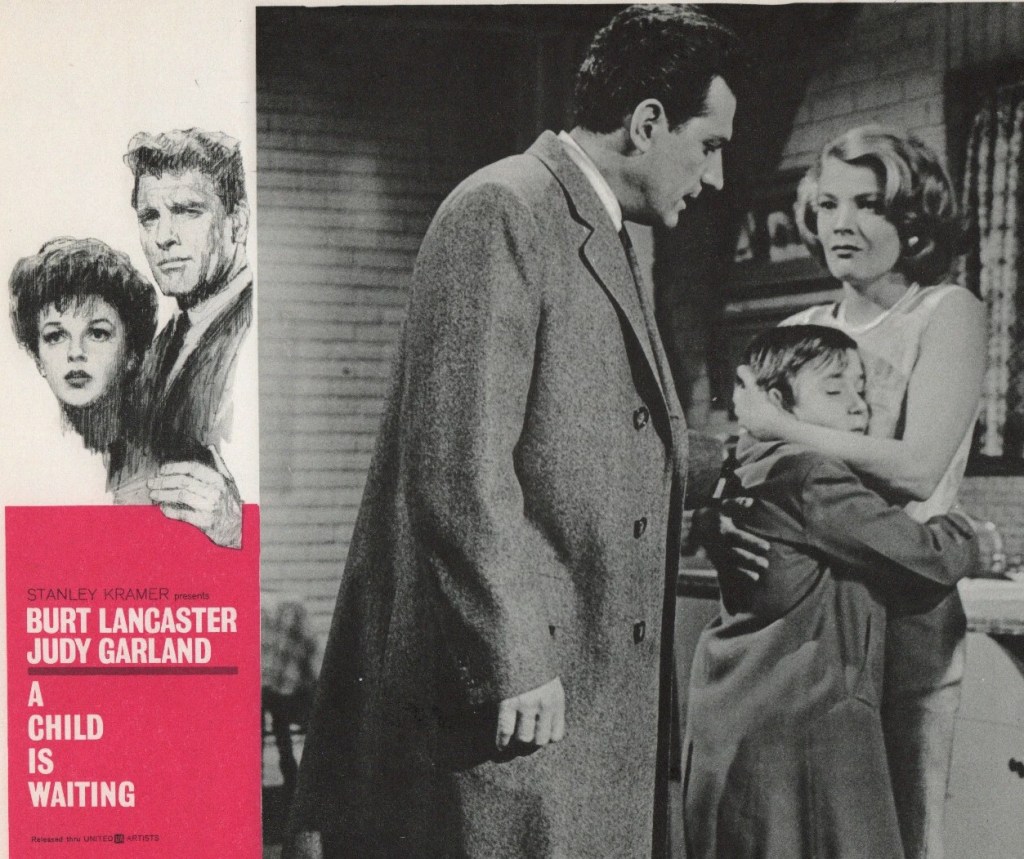
This proved the impossible sell. And Judy Garland was no help. The star was well past her best and if she wasn’t singing it was difficult to attract audience interest. So beyond her name above the title, United Artists did very ittle to use her presence as a distinct marketing tool.
Just like I Thank a Fool the previous year, the subject matter of A Child is Waiting did not lend itself to cross promotion. That did not prevent marketeers doing their level best. However, it was a rather bold suggestion to assume banks would be a natural port of call even under the guise that every child was waiting for their parents to start a savings account to see them through college.
The title seemed to incite temporary madness in the marketing department. How about this for a tie-in approach to a toy department? “A child is waiting for the most exciting game ever devised – Monopoly.”
Groups most likely to respond were identified as psychiatrists, teachers and PTA members but cinemas were warned to avoid giving the “impression that the film is a clinical or documentary one.”
By far the easiest avenue for promotion was a book tie-in. Popular Library had issued a paperback novelization by Abby Mann of his original screenplay with stars Burt Lancaster and Judy Garland on the cover and at the very least that would receive window displays in bookstores and on the carousels of drugstores.
Also limited were the number of taglines on a poster. In those days a movie could be advertised with as many as a dozen different taglines appealing to different market sectors. United Artists stuck to three main taglines with two subsidiary ones. Sometimes both subsidiaries were on the same poster, other times only one.
“Burt Lancaster and Judy Garland ignite a motion picture that gives so much…goes so far…looks so deep into the feelings of man and woman.” This alternated with “Burt Lancaster and Judy Garland take an untouched theme – and make it touching and unforgettable” and “Only Burt Lancaster and Judy Garland could take this untold story…and make your heart tell it over and over again.”
The subsidiary taglines ran to: “If this were flesh of your flesh – would you hold it close…Protect it…Love it…Or would you turn your back and run” and “A child can be so many things, warmth…love…laughter…and sometimes a child can be heartbreak!”
Mainly what marketeers were asking of Lancaster and Garland was a miracle, as if their names alone could drag audiences into theaters.
Even though the Pressbook was relatively small – eight pages A3 – two-thirds of the space was allocated to repeating the adverts, just in different sizes.
The section normally aimed at getting editors to carry snippets of news about the movie provided scant material. There was little to catch the journalistic eye, nothing new about either of the stars, just a rehash of careers. Usually, cinema managers would scour this section looking for a titbit to offer to a reporter, an unusual hobby, something odd that occurred during filming, details about the location or an element that went wrong during shooting.
If you were relying on this Pressbook to fuel demand from exhibitors, you would be sorely disappointed.











 The Magnificent 60s