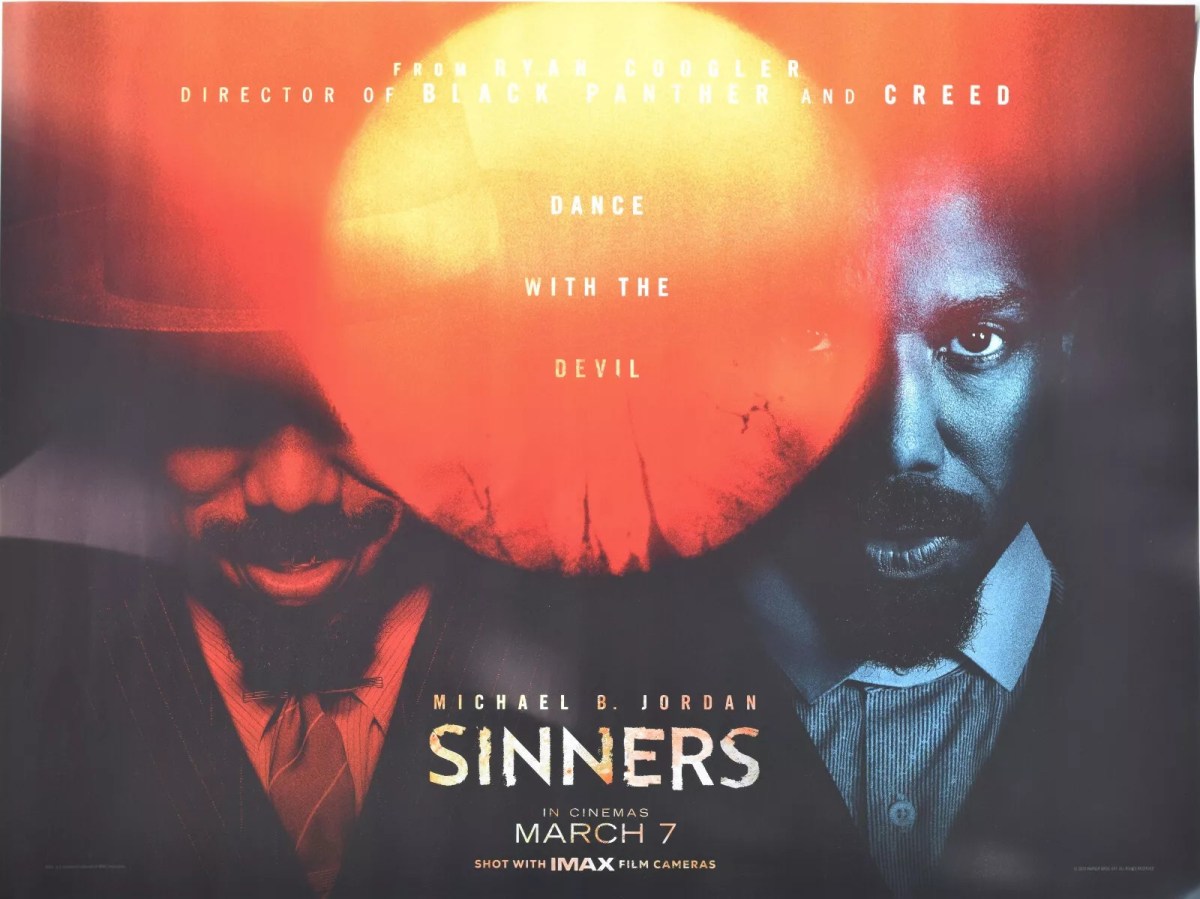
Sinners (2025) ***** – Seen (Twice) at the Cinema

A great movie is more than the sum of its parts. There’s something indefinable, something as they used to say “in the ether”, or “hits the zeitgeist” or, more aptly “hits the spot” because the area in question can never be defined, yet somehow we know it’s there. A writer from several generations past came up with “only connect.” And that’s a pretty food summation. Audiences are not really interested in movies that connect with critics – we’ve been served up too much dross too often to trust critics, Anora (2024) a recent case in point. When movies scarcely drop any percentage of revenue at the box office in the second weekend it’s not because of a ramped-up advertising budget, but because movies have hit the spot, connected with audiences, acquired that elusive word-of-mouth quality. For sure, this is going to be an Oscar contender, which probably means all the fun will be knocked, as its supporters get all preachy on us about its importance as a social document.

But a great movie comes from nowhere and sets up its own tent, creates its world, its own logic. There were gangster pictures before The Godfather (1972), westerns before The Searchers (1956) or Once Upon a Time in the West (1969) and sci fi before Avatar (2009) but what such pictures owe to their genres is derivative in a minor key. And so it here, Sinners takes the vampire movie and tosses it every which way but loose.
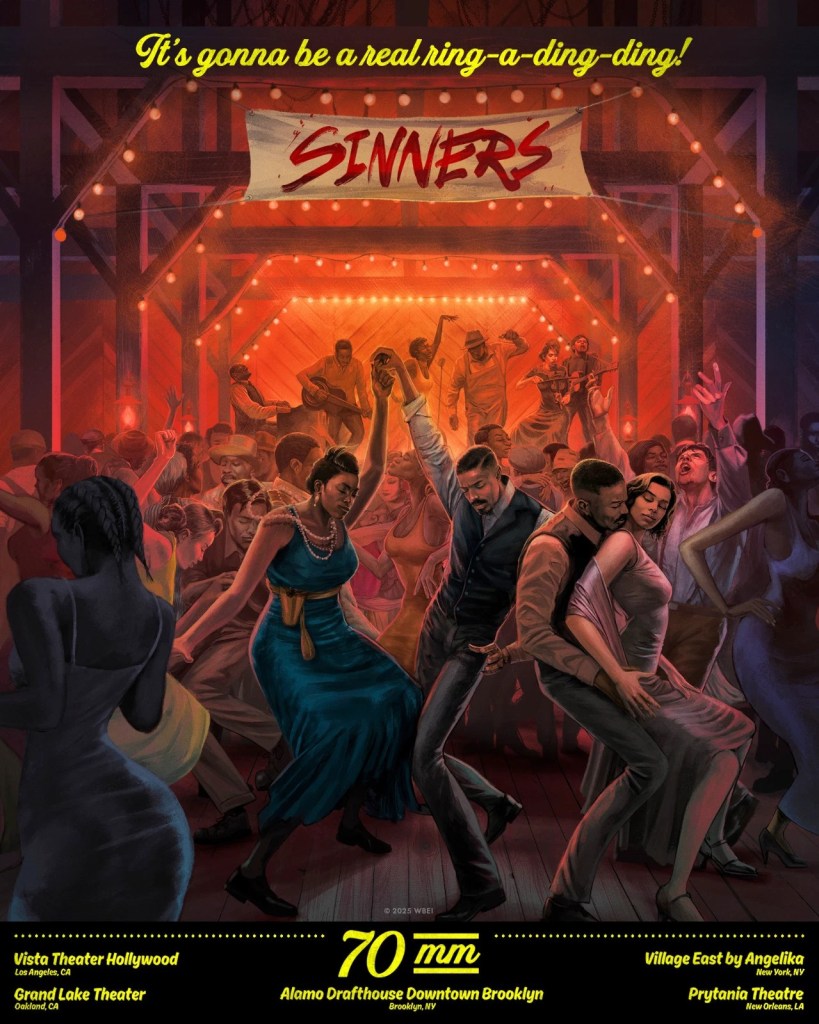
You got the blues, the most appealing vampires you’ll ever come across (and not in the svelte style of another game-changer, The Hunger, 1983), the need for community, the duping of the poor through religion, music than can summon up Heaven and Hell, raw sexuality, belonging, mothers, orphans, genius, cotton, a world where African Americans who fought for their country discovered their country didn’t want to fight for them, where the white man is going to take your money and then, for sport, kill you, and the plaintive despair of never feeling the warmth of the sun again as long as you live – which is forever. And connections – there’s myriad connections that will hit home.

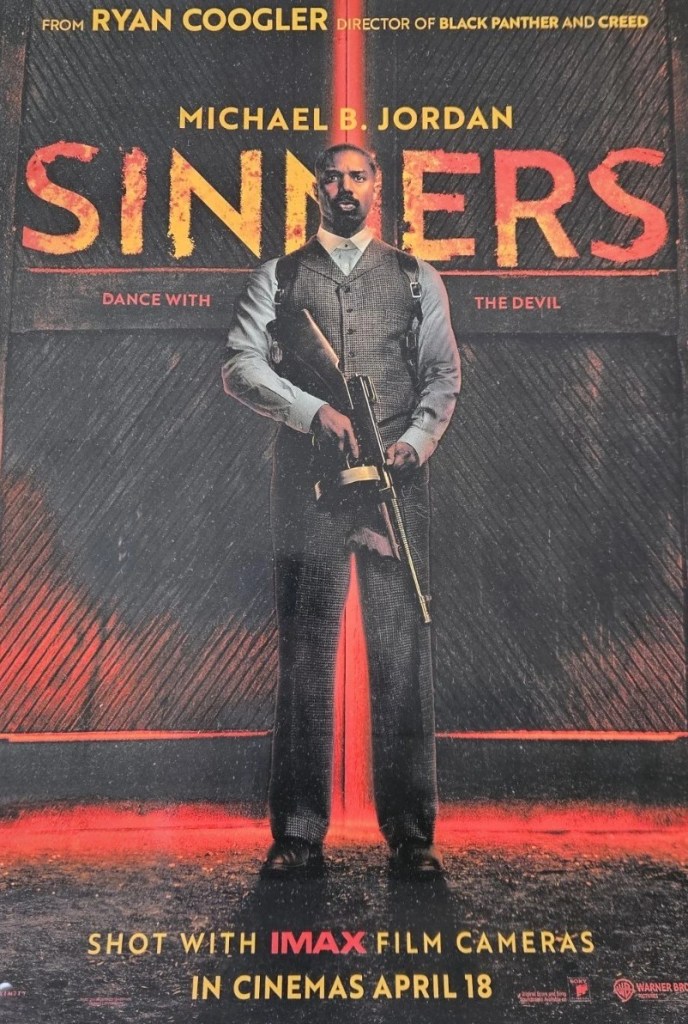
In fact, you might not be aware you’re watching a vampire movie for roughly the first half. You might imagine this is more akin to The Godfather Part II (1974) with gangsters trying to go straight. First World War veterans identical twins Smoke and Stack – I have to confess right till the credits I didn’t realize these were both played by Michael B. Jordan (Creed, 2015) – descend on a small southern town intending to make an honest buck from a dance hall, convinced they have acquired the necessary business acumen. The motley bunch enrolled in this endeavor include neophyte bluesman Sammie (Miles Caton), veteran alcoholic bluesman (Delroy Lindo), singer Pearline (Jayme Lawson), storekeepers Grace (Li Jun Li) and Bo (Yao), bouncer Cornbread (Omar Miller), Smoke’s estranged wife Annie (Wunmi Musaki), who has knowledge of the occult, and Stack’s ex-girlfriend Mary (Hailee Steinfeld). Coming a-calling is Irish immigrant Remmick (Jack O’Connell) recruiting new members for his vampire flock.
The movie doesn’t take flight so much in the unwinding of intertwined lives, or with the rocking action, as with two dance sequences that transcend anything you’ve seen before in the cinema, the first conjuring up music of the past, present and future, the second a routine by the vampires. Trying to save himself from vampires, Sammie begins reciting the Lord’s Prayer only to hear the sacred words echoed by the undead. A guitar is buried in Remmick’s head. And there’s a fascinating coda, if you wait through the credits.

Michael B. Jordan is the obvious pick, striding across both characterizations with immense aplomb (the Oscars will be calling) but Miles Caton in his debut, Delroy Lindo (Point Break, 2025), Hailee Stainfield (The Marvels, 2023), and especially the seductive blood-lusting Jack O’Connell (Ferrari, 2023).

Writer-director Ryan Coogler came of age with Creed and the Black Panther duo but this takes him into the stratosphere, a genuine original talent, not just with something to say but the visual smarts to match. He could have harked on a lot more. Too many worthy pictures have turned virtue-signaling into an art form, but one boring beyond belief. Coogler is much more subtle, he slips in his points.  

But all the subtlety in the world wouldn’t count for a hill of beans if he couldn’t tell a story in way that connected big-time with the audience who wanted to tell their friends to go-see.
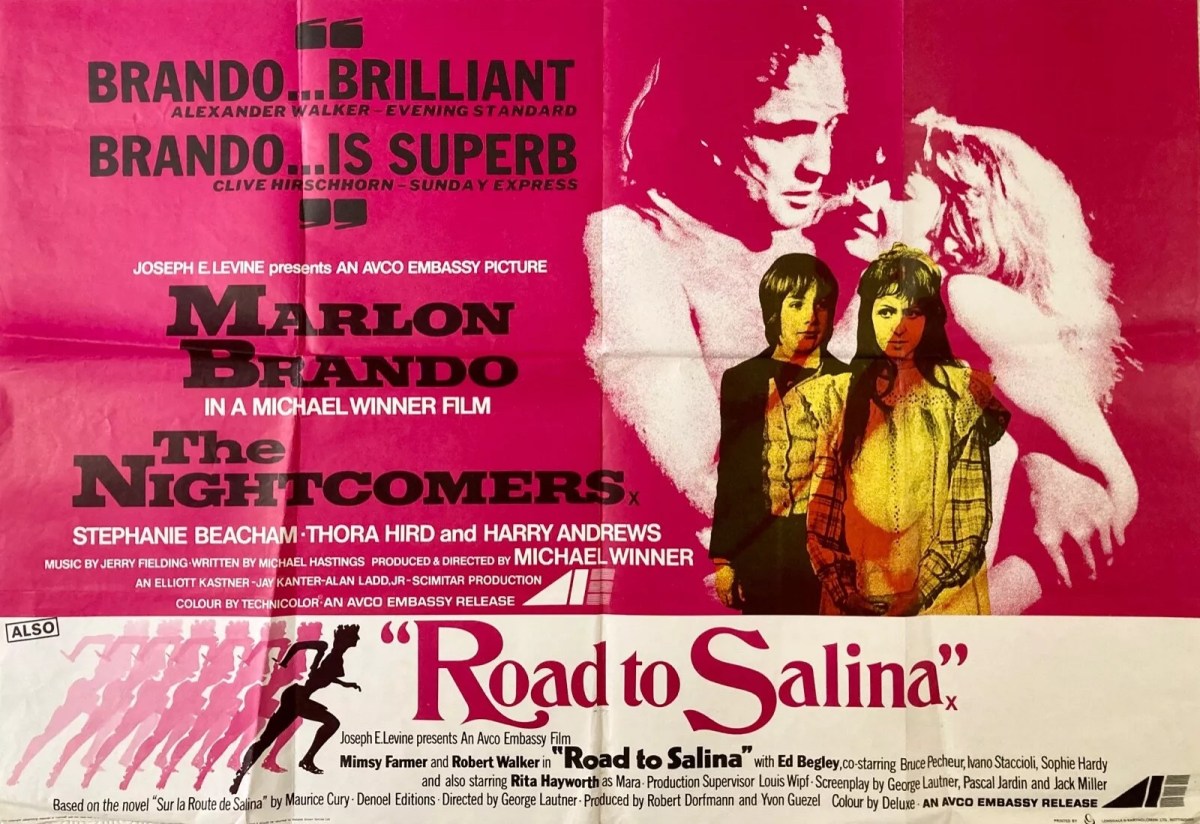
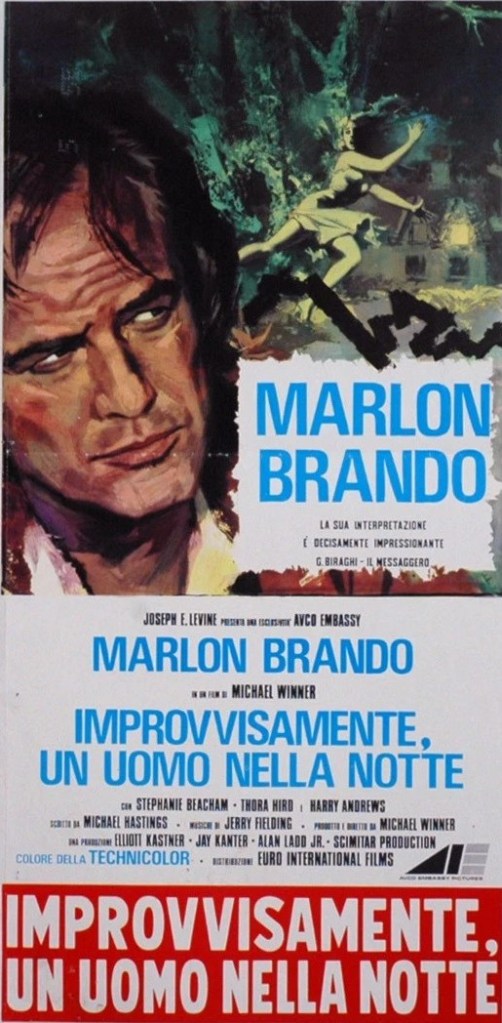
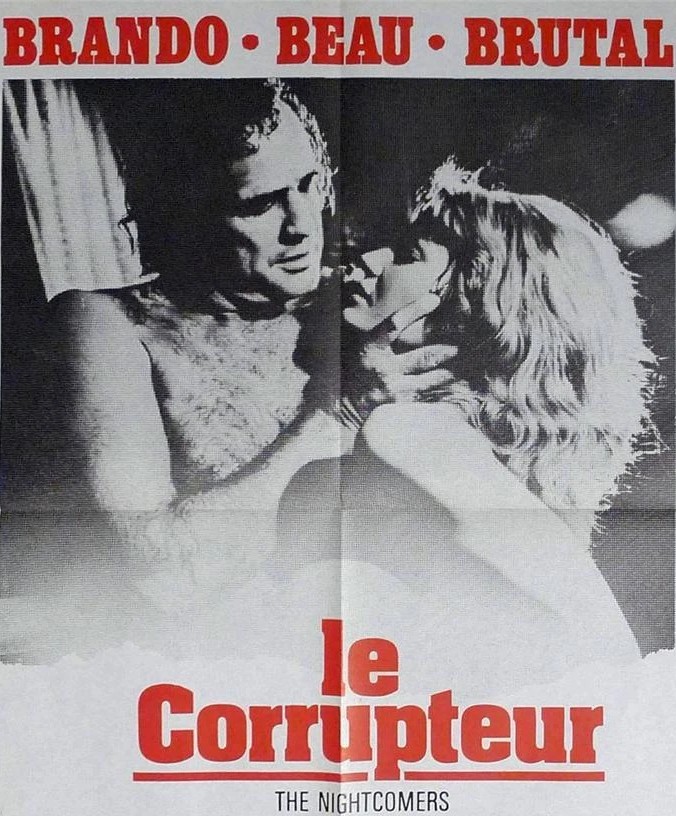
The Nightcomers (1972) ****

Originally dismissed as meretricious trash, contemporary re-evaluation reveals it as uncommonly prophetic. You can start with the feral children, abandoned by their guardian, lack of parenting allowing space for pernicious ideas to foment. Or with the pornography correlative, the young, posited as unruly voyeurs, conditioned by the internet into believing that violent sex is the norm. Or with the influencer seeding notions that demolish the accepted Establishment views. Or impressionable children creating a distorted world view based on their interpretation of adult behavior.

Audiences and critics back in the day were taken in by the most cunning Maguffin of all, that this was some kind of more realistic Downton Abbey/Upstairs, Downstairs power struggle  played out among the servants against the background of a sadistic/masochistic affair. Lives can be ruined on a whim. A letter to the absent landlord can destroy a career. Remember from Downton Abbey the importance in the servant hierarchy of the role of the owner’s valet. To be summarily demoted from that lofty position to gardener, forced to tug your forelock in gratitude at not being cast out, and you can see where power lies.

Instead, consider this a slow-burn, deliberately understated drama where, against the style of the usual horror picture, the score (by Jerry Fielding) offers no clues, a virtually anonymous piece to lull you into thinking this is a pastoral setting where genuine evil, as opposed to acts of mean inconsideration, can flourish.

Watching it entirely from the perspective of the children, ignoring the appeal of the top-billed Marlon Brando engaging in licentious and disturbing sex with the governess Miss Jessel (Stephanie Beacham) he has groomed, and a completely different movie emerges. It reveals more than any other study of children unexpectedly grown violent how vulnerable young minds are to suggestion and that in the absence of adult intervention how easy it is for them to devise a fantasy whose fabric is drawn from their misinterpretation of the real world.

My guess is that back in the day the attempts by teenage Miles (Christopher Ellis) and younger sister Flora (Verna Harvey) to copy the bondage scenes and violent sex witnessed by the voyeuristic boy would have had the audience in stitches rather than reeling in shock. There would have been very little in the audience experience beyond teenage gangs to suggest that young children could be guilty of such depravity – this is long before the murder of Jamie Bulger in England or the mass shootings by teenagers in America. So laughter would be the natural response.

But times are different now. We know that children existing outwith genuine adult supervision are prone to suggestion and acting on impulse. Miles and Flora have been taught by gardener Quint (Marlon Brando) to ignore traditional views of Heaven and Hell, to imagine that torture of small creatures is acceptable, and that love is hate, and that only in death can true lovers be united. Miles has been taught to shoot with a bow-and-arrow by Quint and there’s more than a touch of irony in how quickly the young fellow masters this skill that leads to a grisly climax.

While the adults largely ignore the children, the children are not ignoring the adults. They are in thrall to what they see and hear and make up their own minds about how to put the world to rights. Had the children been adults driven by loneliness and abandonment to such acts, they would viewed simply as evil monsters. But here they are demonstrably not evil, just misguided, and by the very people who should be guiding them. Quint takes inherent joy in corrupting the young, it’s the simplest type of revenge he can enact against his master, filling the heads of the next generation of overseers with information that runs counter to the accepted.

The British censor left largely untouched the rape scenes in The Straw Dogs and A Clockwork Orange out the same year. He was much tougher on this, excising the bondage sequences, as if such prurience would diminish the impact. Certainly, that did the trick at the box office for audiences, denied shock content, ignored it.

If all this isn’t enough to trigger reconsideration of the picture, then the grooming of the governess (Stephanie Beacham), her submission to male control, will strike a contemporary chord. Despite the respectability of her position, she is revealed as eminently vulnerable, born out of wedlock, witnessing how tough life was at home without a protective male figure, not just prone to accepting Quint’s brutality but conditioned herself to wait in a more romantic setting for the gentler lover of her imagination who never arrives. While the housekeeper (Thora Hird) comes over as any powerless functionary exerting what little power she has.

Marlon Brando (The Chase, 1966) is especially good and the scene where he blackens his teeth to amuse the children might have been a dress rehearsal for the sequence in The Godfather where, unintentionally, he frightens the child. Except for Dracula A.D. 1972 (1972) in Italian crime tale Mafia Junction (1973), rising star Stephanie Beacham’s star failed to significantly rise, and she never again enjoyed such an important, and difficult, screen role, especially in those scenes where she attempts to exert control.

Written by Michael Hastings (The Adventurers, 1970).  

It might be a contradiction in terms to suggest that much-maligned British director Michael Winner (Hannibal Brooks, 1969) ever came close to producing what you might term a masterpiece, but within his own portfolio this is surely the chief contender.  

You can catch in on Talking Pictures for free.

Well worth a look.

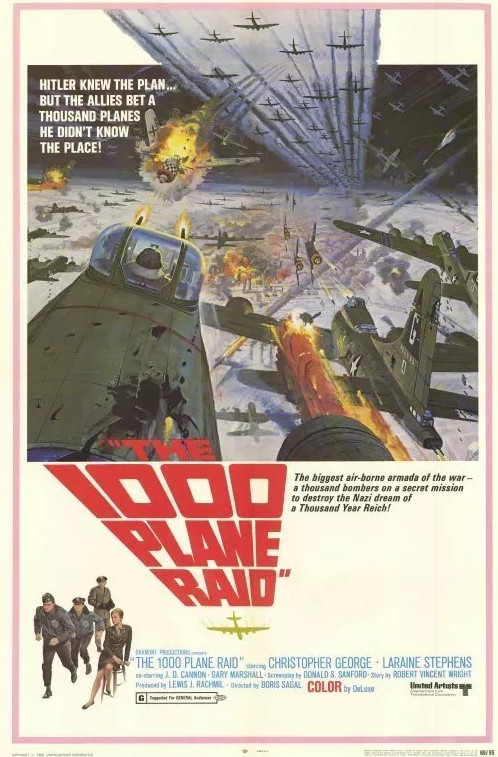
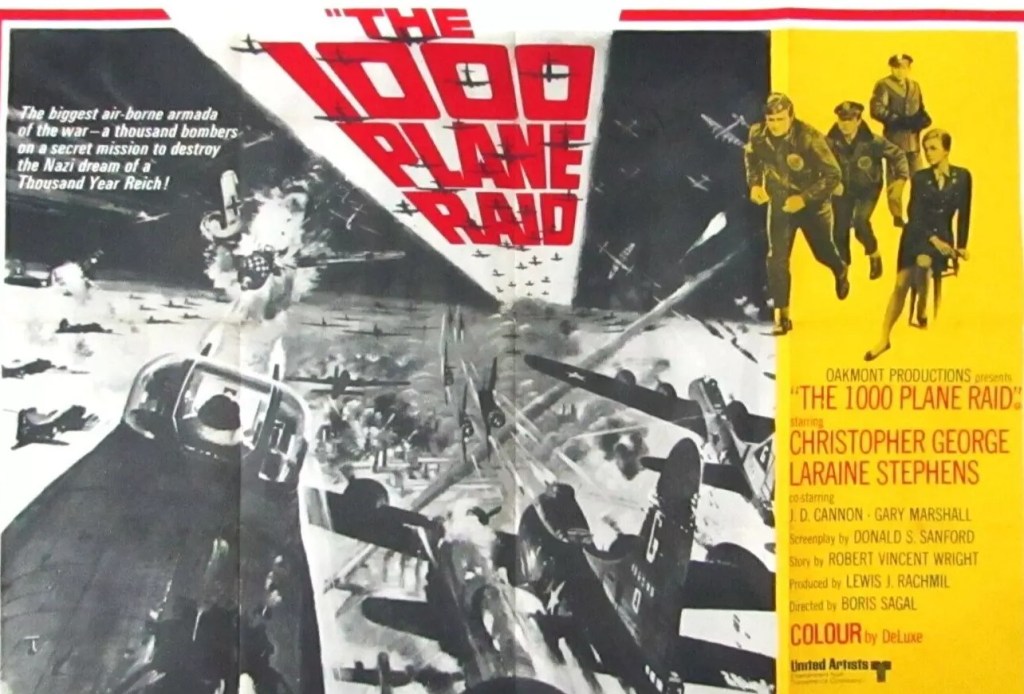
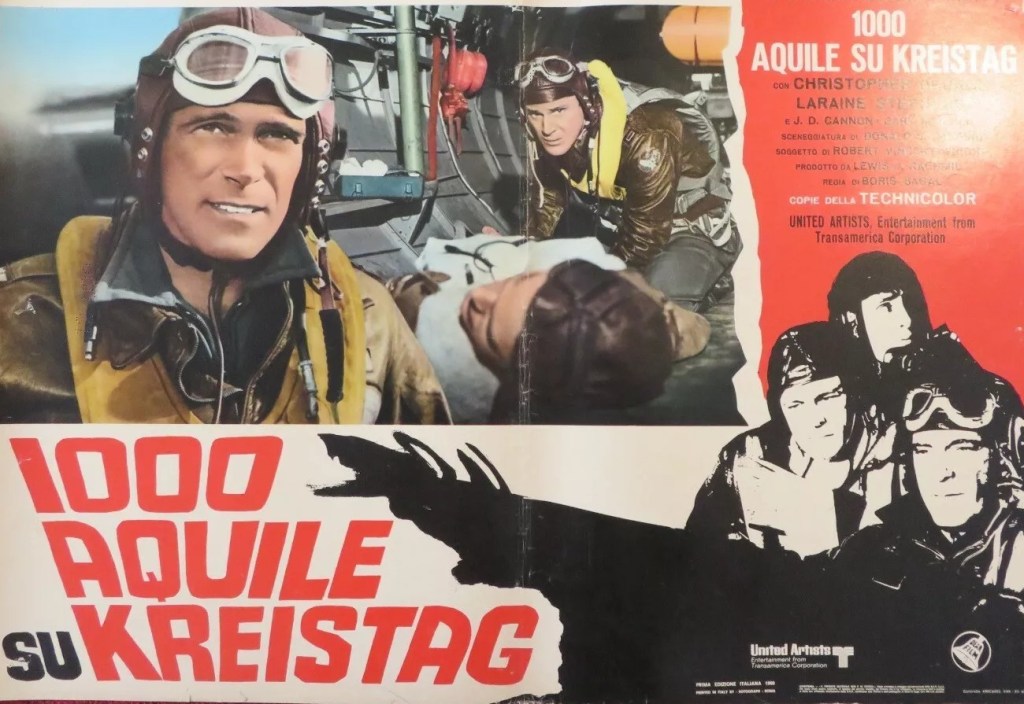
The Thousand Plane Raid (1969) ***

Let’s be honest. Like 633 Squadron (1964) and perhaps even, despite its all-star cast, Battle of Britain (1969), many in the audience will only be there for the hardware, the chance to see the flying battle buses that took the Allies to victory in World War Two. There’s not going to be much of a story anyway – rivalry between commanders, tension on the ground, a romance beginning or breaking apart, a stash of info dumps. That can hardly compare to the grace of the big birds in the air, usually a mixture of stock footage and new work with refurbished old planes.

This one has even re-purposed – perhaps stolen would be a better word – a mission from earlier in the war which was planned and carried out by the RAF so that it could be planned and in part carried out by the Yanks. Still, it was the Yanks putting up the money so I guess they can change history whenever they like.

U.S. Air Force Col Brandon (Christopher George), leading an American bomber group stationed in England, has worked out that while night-time missions result in fewer casualties they are increasingly failing to get the job done, only one on five bombs hitting the designated target. He reckons a gigantic air attack in daylight is the only way to succeed. His boss General Palmer (J.D. Cannon) grants him the chance to pitch his idea to the assembled RAF high command. Despite the risks, they agree and then need to come up with about million gallons of fuel and about a million-and-half tons of bombs, and requisition 30 airfields for the bombers and the same number for the fighter support.

Various elements make life tougher for Brandon. The mission chosen is much further afield than he originally imagined, the deadline is brought forward, his crew is unprepared and needs toughened up, plus his romance with WAC Lt Gabby Ames (Laraine Stephens) has hit a sticky patch and he’s having to deal with a cocky RAF fighter pilot Wing Commander Howard (Gary Marshal) who’s been seconded to the operation. To annoy Brandon further Howard befriends disgraced American pilot Lt Archer (Ben Murphy) who’s been accused of cowardice.

Before we can get to the big event, Brandon also undergoes a crisis of confidence and it’s as much as he can do to pull himself together in time. The screenwriter has arranged for the three main characters to end up in the one plane, allowing Archer to prove himself in battle and Howard to manage some heroics.

The sight of a huge array of WW2 planes in the air without the help of CGI still takes the breath away. Even though the final action pales in comparison with 633 Squadron or Battle of Britain it’s visually powerful enough to see us through.

By the end of the 1960s, B-pictures cost a lot more, but that didn’t necessarily result in better performances. Christopher George (El Dorado, 1966), signed up to a five-picture deal by United Artists, isn’t the breakout star. In fact there isn’t one, neither Laraine Stephens (40 Guns to Apache Pass, 1967) nor Gary Marshal (Camelot, 1967), in his second and final movie, making much of an impression. However, the picture was more notable for members of the supporting cast including J.D. Cannon (Krakatoa: East of Java, 1968), Ben Murphy (Alias Smith and Jones TV series, 1971-193), Bo Hopkins (The Wild Bunch, 1969), future director Henry Jaglom (A Safe Place, 1971) and Tim McIntyre (The Sterile Cuckoo, 1969).

One who certainly made the step up was director Boris Sagal (Made in Paris, 1966); in a couple of years he would be helming cult number The Omega Man (1971). Written by Donald S. Sanford (Midway, 1976).

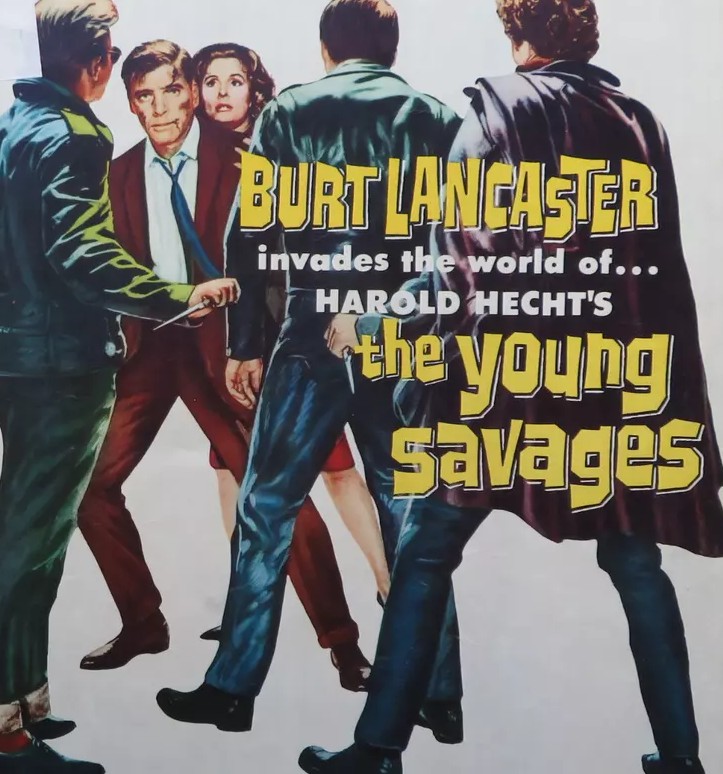
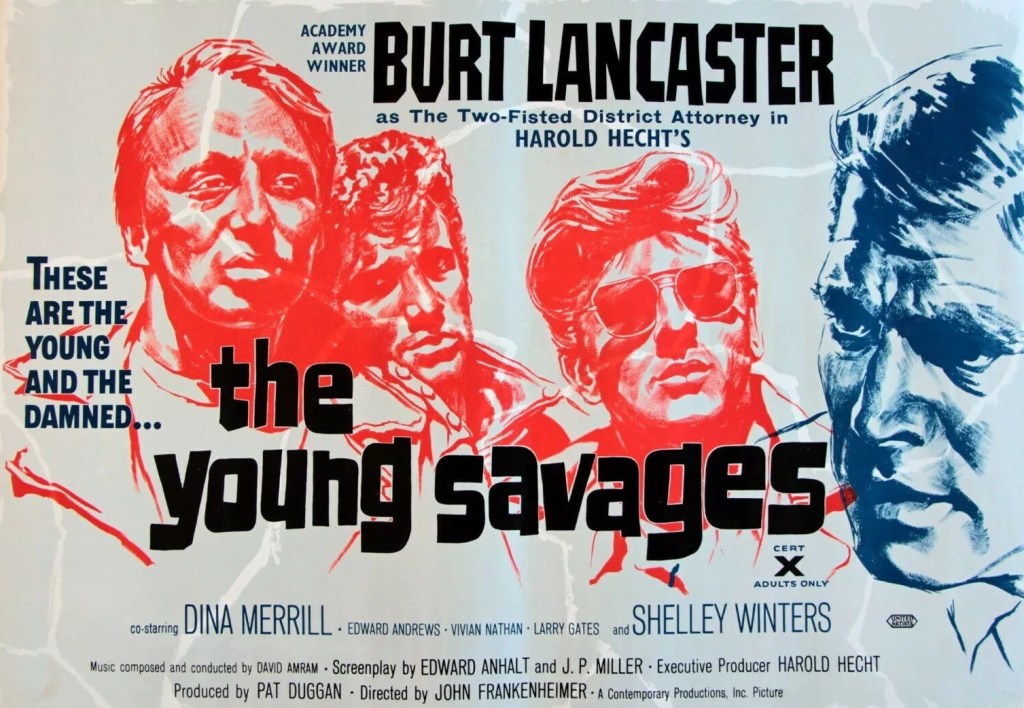
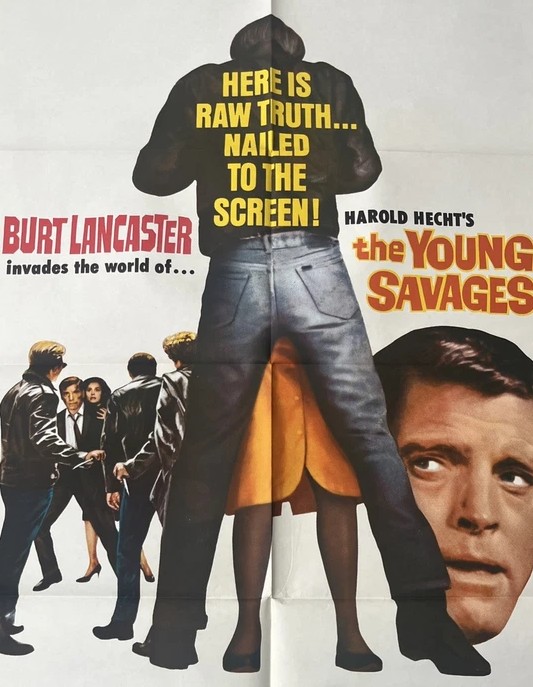
The Young Savages (1961) ****

You have to put out of your mind any thoughts about West Side Story, released the same year and also dealing with teenage gangs in New York. But whereas the musical tapped into Shakespeare and tugged at audience heartstrings with a tragic love story, The Young Savages is what used to be called an “issue picture,” a realistic portrayal of a growing problem in society.

Rather than the sullen relatively harmless rebels of Rebel without a Cause (1955) or this decade’s Easy Rider (1969), the question of youth disenfranchisement and the growth of a culture, here majoring in violence, at an opposite extreme to social norms, was beginning to take hold. Where earlier immigrants emerging from New York housing hellholes had tended to graduate to straightforward crime, which occasionally spilled over into the main street, now youths were engaging in turf wars, knives rather than machine guns the weapon of choice, which took place in full view of a terrified population.

Oddly enough the movie opens with the same motif as West Side Story, the feet of a gang, but rather than expressing their frustration through dancing, these feet, belonging to three members of the Italian-American Thunderbirds mob, are marching through the streets of New York, brushing aside passersby, knocking over toy prams, on their way to kill a member of the rival Puerto Rican Horseman gang.

When arrested, they claim self-defense. The only flaw in that argument is the victim Roberto Escalante (Jose Perez) is blind.  Naturally, there is a public outcry and calls for the death penalty. Prosecutor Hank Bell (Burt Lancaster), who had grown up in the same streets as the gangs but managed to make a life for himself outside its confines, is hellbent on extracting the maximum punishment. Bell was born Bellini but changed his name to hide his background, make it easier for him to serenade Vassar graduates and advance his career.

That leads to complications, and it’s hard to say which is the more compelling. His more liberal wife Karin (Dina Merrill), the Vassar item, is appalled. District attorney Dan Cole (Edward Andrews), who fancies his chances as a politician, faces public backlash if he doesn’t take tough action. And Hank had a romantic fling in the past with the mother Mary DiPace (Shelley Winters) of one of the accused.   

But Hank hasn’t quite thrown off the shackles of his upbringing, and though currently an upstanding member of society, he finds his principles taking a battering when he is himself attacked and discovers just how easy it is to resort to violence. Karin, too, finds her liberal attitude shot to pieces when she is also attacked.

Even without personal involvement of the husband and wife in being forced to face up individually to the violence pervading the city, the focus is on the exploration of how such violence becomes endemic in those parts of society left behind in the pursuit of the Great American Dream.

There’s plenty issues to deal with: poverty for a start, lack of ethnic tolerance, hatred of one immigrant group to another, politicians making capital out of the situation, parents powerless to prevent their children growing up as hoodlums, youngsters seeking identity and respect from joining a gang, and the growth of the gangs themselves as a social dynamic.

As you might expect, there are no easy answers. In fact, there are no answers at all. A movie like this can only lift the stone without being able to effect what’s happening underneath. But in some respects, that’s the aim of the issue picture, an early type of virtue-signaling. None of the issues raised have gone away, more likely they’ve just got worse.

But that’s not to downplay the film’s impact. There’s an inherent honesty here in the decision of debutant director John Frankenheimer (The Manchurian Candidate, 1962) not to take sides.    

Burt Lancaster (The Swimmer, 1969) delivers another excellent performance. Dina Merill (Butterfield 8, 1960) thrives in a solid role and Shelley Winters (A House Is Not a Home, 1964) is effective. Watch out for the debut also of Telly Savalas (The Assassination Bureau, 1969).  Written by Edward Anhalt (Becket, 1964) and J.P. Miller (Days of Wine and Roses, 1962) from the bestseller by Evan Hunter, who had explored similar youth issues in The Blackboard Jungle filmed in 1955.

Still powerful stuff.

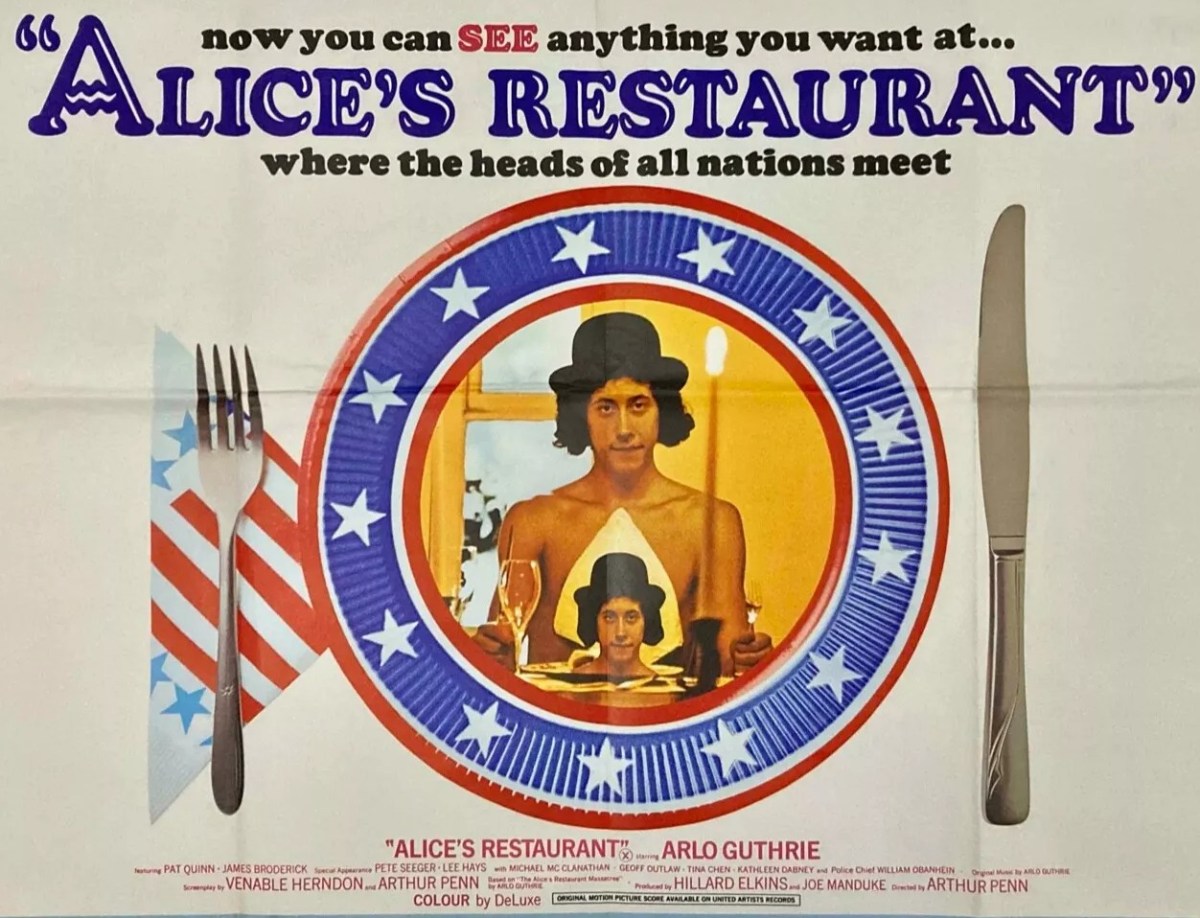
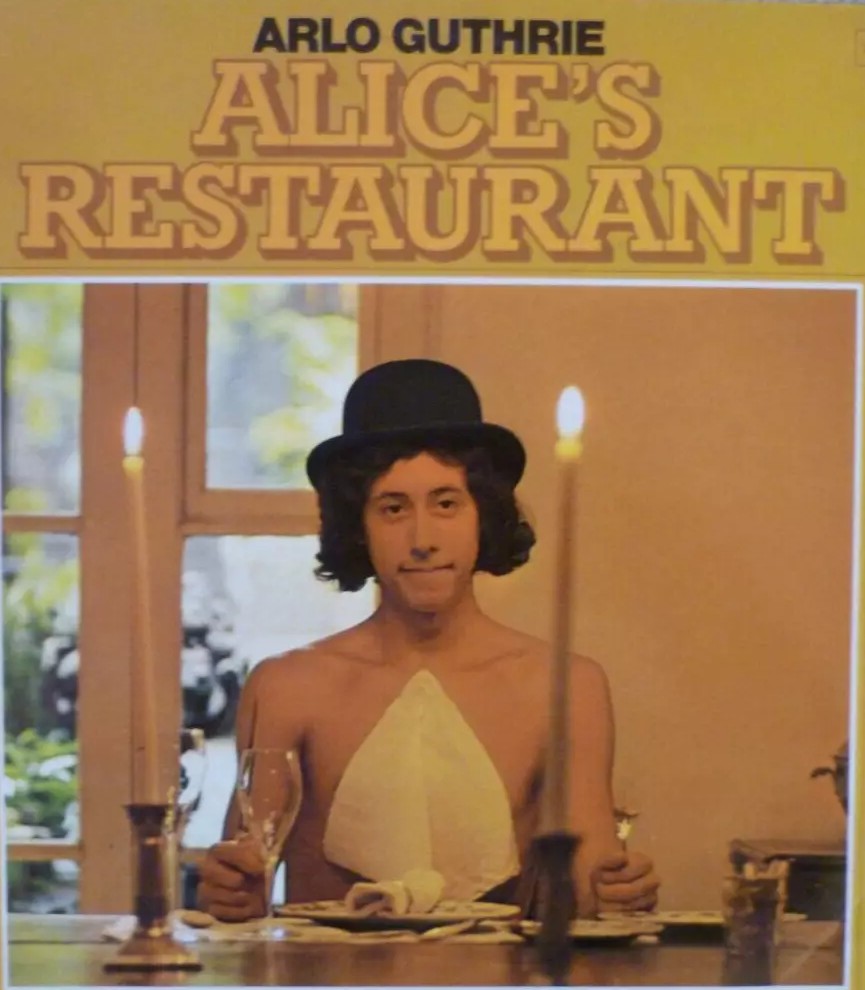
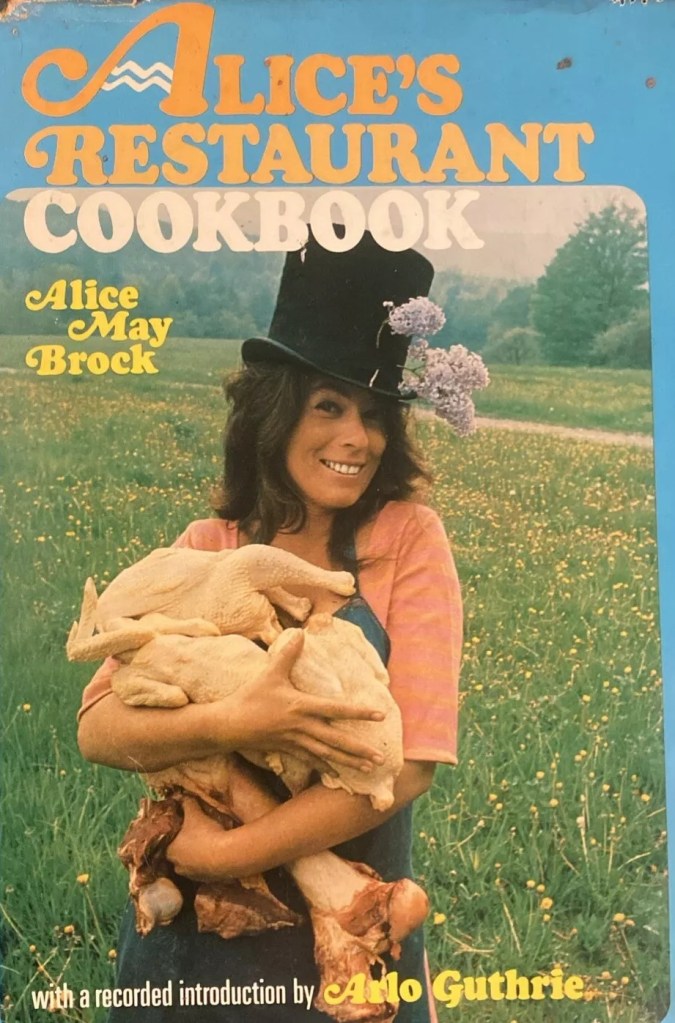
Alice’s Restaurant (1969) **

It might have been better if I’d come to this in a hazy glow of nostalgia. But I’d skipped this back in the day and although I’m a big fan of Arthur Penn I was never sparked to seek this out on VHS/DVD. So I’m coming to it for the first time. And I’m sorry to say it just feels like an indulgent mess.

It’s hard enough getting novelists to hack about their sacred texts sufficiently to turn them into workable screenplays, never mind putting the author center stage and not only have him narrate his tale but act it out. And when you discover that he’s not much of an actor, you’re not left with much but almost a documentary with drama coming from outside, from the forces of authority trying to shape the rebellious young to fit the pre-existing mold.

Album cover.

I have to confess I was never a big fan of folk music, excepting Bob Dylan I guess and you can argue he was only a folkie at the outset of his career. I was only vaguely aware of Woody Guthrie and don’t remember in the late 1960s his son ever touching the public consciousness overseas. So this might simply be one of those American movies that didn’t travel, like comedy or most musicals which had trouble matching up with foreign appreciation of those genres which tended to be nationalistic.

The narrative drive is Arlo Guthrie (Arlo Guthrie) dodging the draft. This was a right-of-passage especially for all young creatives, who would tend to be the most openly rebellious, but equally for a whole generation of young men who didn’t want to get themselves killed in a war they saw as senseless and who had gone off the idea of war altogether.

In Britain national conscription had ended in the late 1950s but there were no tales of people trying to dodge the draft. Elvis Presley had done his duty in America but Cassius Clay (later Muhammed Ali) did not – and was stripped of his World Championship. But away from all these high-profile cases, youngsters could avoid the draft by enrolling in colleges or universities, or pretending to have homosexual tendences, or shooting themselves (literally) in the foot, or claiming, as Guthrie did, that he had inherited a genetic illness – his father was dying of Hodgkins Disease – and when that doesn’t work acting mad, which doesn’t either.

What does get Arlo off national service is his involvement in a bizarre incident which made headlines at the time when he was arrested for littering and fined. When he reiterates his lack of objection to littering to the draft board, he is deemed unfit and is let off, as satirical a comment on the war between youth and authority as much as on the Vietnam conflict.

There was a real Alice and there was a real restaurant and there was an unusual tie-in.

There’s a story in here somewhere but it’s so ramshackle that, at the remove of over half a century, it doesn’t even appeal to those who worship the alternative lifestyle. After being chucked out of college, he heads off to join friends Alice (Pat Quinn) and Ray Brock (James Broderick) who have taken over a deconsecrated church in Massachusetts with Alice planning to set up nearby her eponymous restaurant, and not entirely for philanthropic reasons, Arlo composing a jingle to pull in customers.

Alice, disgruntled with lack of attention from Ray, begins an affair with Shelly (Michael McClanathan), an artist and ex-heroin addict, and every now and then Arlo returns to New York to visit his father Woody in hospital (Arlo is nowhere to be seen in A Complete Unknown). There’s a motocross race, and Shelly later dies in a motorbike crash. Woody dies too and Alice and Ray get married in a hippie-style wedding.

But most of this seems viewed even then through a time capsule as if Penn is assiduously recording a counter culture. The commercial success of this film and Easy Rider the same year triggered a cycle of youth-oriented movies that put Hollywood into an even deeper financial hole  

Sorry, folks, this just didn’t click. Maybe I was expecting too much. But the desultory narrative and the lack of any real acting made me switch off. While it has some of the offbeat vibe of Arthur Penn’s Mickey One (1965), it lacked that film’s compelling drive. Written by the director and Venable Herndon in his debut based on the Arlo Guthrie book.

Major disappointment

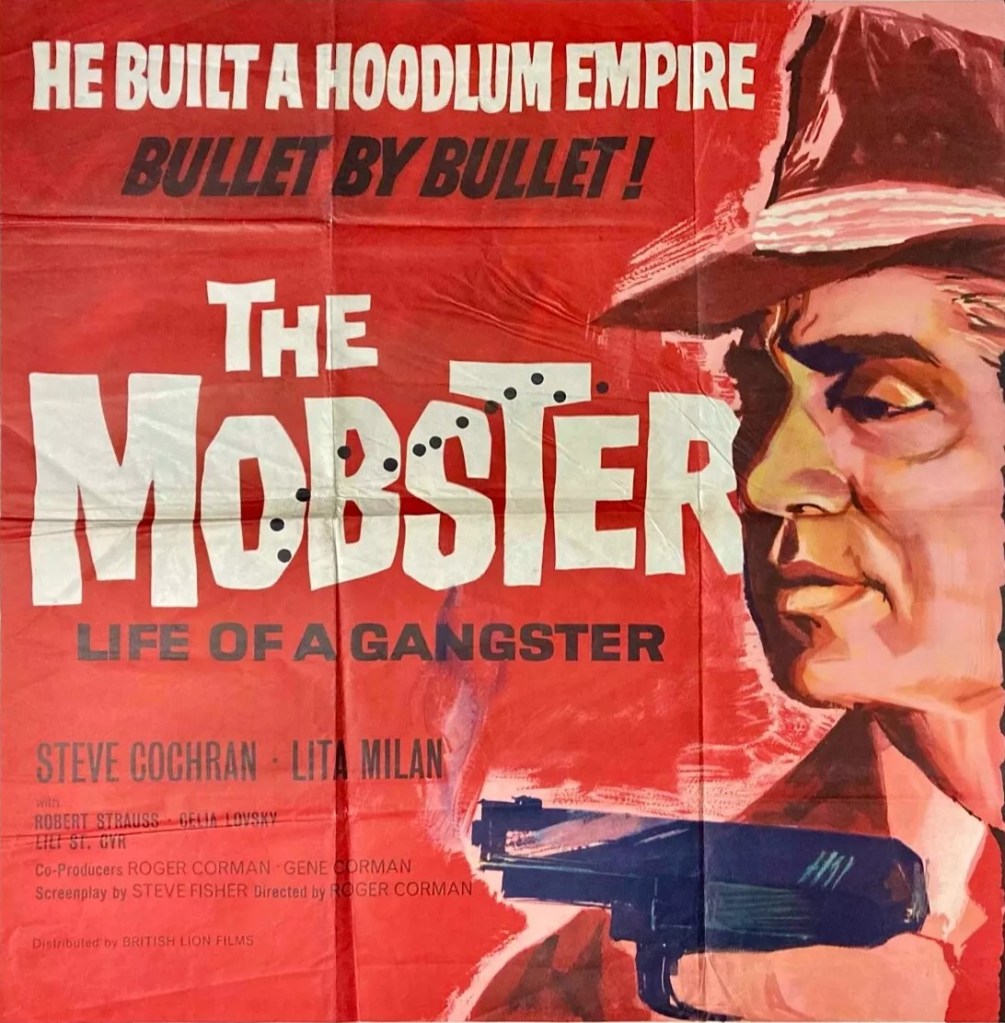
Tell Me in the Sunlight (1967) ****

Had this emanated from France or Italy or arrived bearing an arthouse imprimatur it might well have gained some critical traction. Not just because it is as far from the screen persona of star Steve Cochran (Mozambique, 1964) as you could get, but since this is largely a tale of loneliness and with some quite imaginative touches.

In a cramped apartment so small there’s nowhere to sit and eat Julie (Shary Marshall) sets out a picnic on the floor for merchant seaman Dave (Steve Cochran), the fare modest in the extreme, nothing more than heated-up soup from a tin. There’s an unlikely trigger point – a light switch that doesn’t work. In anticipation of Dave’s return, she not only bakes a “Welcome Home” cake but has painted on the walls an idyllic scene of the house she expects the couple to occupy.

But there’s a central issue. They’re both itinerants, Dave due to his job, and presumably not having an ounce of the settling-down bug, and Julie because she drifts from man to man, primarily out of necessity. She’s an exotic dancer and although she initially denies it – and he has to pretend to believe her in order to grease the wheels of incipient romance – she accepts financial favor from customers to the nightclub. In fact, she has a current boyfriend, Paul (Harry Franklin), a distinguished-looking doctor, an older man much fussed over by the club management due to the amount he spends.

The meet-cute’s been done before – they are both at the scene of an accident involving a young boy. They stroll away together. Their conversation is not intense, and the only way we realize that he has struck a spark is when she returns to her night-time gig sand is fined for arriving late. He watches her striptease act, and waits for her and they do some more strolling before returning to her flat, where she rustles up the picnic but before affairs can take a sexual turn she falls asleep in his arms.

More in keeping with the Steve Cochran screen persona.

This is very desultory stuff, no nudity or even obvious sex, and in the context of Hollywood output scarcely qualifying as a romantic drama, but place it in the European arthouse sphere and it proves much more rewarding from the very fact that nothing is overplayed. Little is even outwardly stated. Without a word suggesting this, both realize this is a chance to change random lives.

While there’s no commitment either side, when he leaves for a temporary job on another ship, he asks her to see him off on his midnight flight. That would mean her skipping a shift and to do so would risk being fired. At the last minute, she turns up. When she leaves as his plane is announced as imminently departing, he follows her for one last fleeting kiss and spots her outside in the arms of another man.

Unaware of this, she decorates her apartment in the manner described. He returns in a bad mood, gets drunk and on appearing at her apartment notices someone else must have fixed the light switch, tosses money on the floor and they make love as a financial transaction.

In the morning while she is distraught, he remains furious, scoffing at her painting on the wall and the cake. She explains that while the man at the airport was indeed her former lover Paul, he was only there in the capacity of a friend, who had driven her out, the only way she had of skipping out of the club and returning before being spotted and fined or dismissed. In any case she has been fired because the rejected Paul has abandoned the club and his absence has reduced the nightly take. And she paid for the light switch to be fixed.

Theoretically, in the hope of a happy ending, they reconcile. But a future together seems unlikely after the events of the previous night, which showed both in their true character, he as a paying customer, she as a paid sex worker. Neither show capacity for change, certainly not to find the kind of work that might bring marital stability.

Loneliness is the theme, how to cover up the cracks in fragile lives. In his job, women are non-existent, the only time he will meet one is on shore leave, and if he’s not shelling out for sex, he’s trying to pick up a vulnerable woman as is shown in the opening scene. As much as she needs extra dough to buffer her existence, she also needs someone to hold her at night.

This should have received some recognition at the time. Steve Cochran’s directorial debut was not accorded the same interest as other actors who had turned to direction such as Frank Sinatra (None but the Brave, 1965), Laurence Harvey (The Ceremony, 1963) or John Wayne (The Alamo, 1960).  As an actor Cochran wasn’t on the critical radar, his tough guy roles hardly on a par with those of Humphrey Bogart or Richard Widmark who found greater fame.

However, the biggest obstacle to critical recognition was that Cochran died before they movie could be released and it took another two years before it hit movie screens by which time he was long forgotten.

Not only is the direction tone perfect but so is Cochran’s acting. Although strictly a B-movie actress, Shary Marshall (The Street Is My Beat, 1966) is very effective.

An unsentimental realistic drama that doesn’t fall into the traps of either into exploitation or melodrama

This is one of those forgotten pictures that is well worth a look.

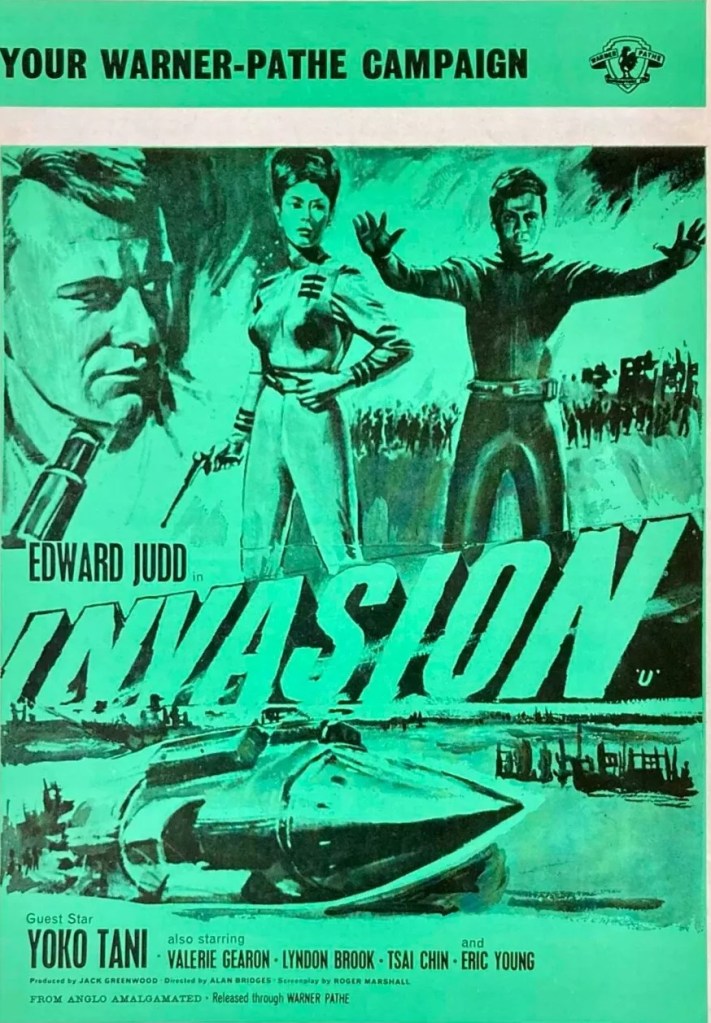
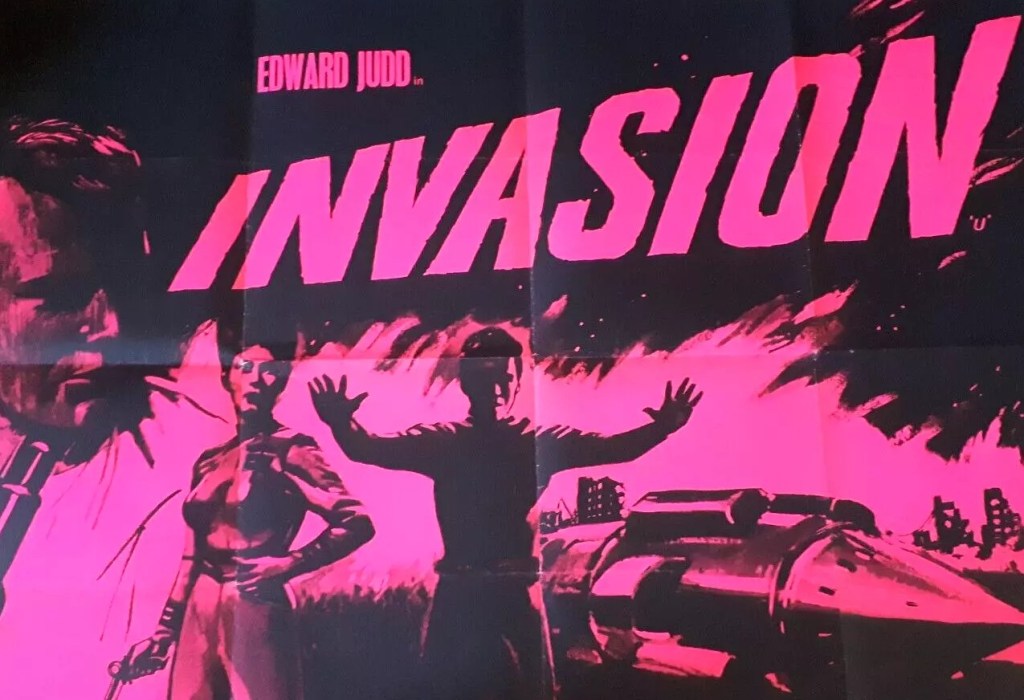
Invasion (1966) ****

Style is just about the only weapon in the directorial armory to mitigate against lack of budget. Or you can rely on a narrative twist. But in sci fi you’re inevitably going to come a cropper in this era and on a low budget when it comes to the special effects.

As director Alan Bridges would later prove in bigger budgeted efforts like The Hireling (1973) and Out of Season (1975) he was a genius at building atmosphere. Here, he also makes very effective use on the long shot. Not in the usual dramatic fashion of depicting a vista, but in building tension.

There’s a fabulous sequence which is superbly done given the budget. There’s a car crash. We see a window exploding. Next shot shows a man dead and bloodied sprawling over the hood. The car has crashed about a hundred yards away from a hospital where the main character Mike (Edward Judd) is standing outside. Instead of cutting to his face to register the shock, the camera stays where it is just to the side of the car so we can see the corpse and in the background watch Mike’s reaction. But he doesn’t race towards the camera. He moves in puzzled fashion, glancing around, even taking a step backward.

So where another director would in effect have speeded things up – crash, onlooker reaction – Bridges slows it all down. That’s the real purpose of the long shot. To waste vital seconds. To slow everything down.

There’s a reason why Mike is so slow on the uptake. Because there’s nothing for the car to crash into. There’s not a tree or a wall to get in the way of the moving car. This is the moment Mike works out there’s a force field surrounding the hospital, generated by the strange patient inside, who needs protection from his pursuers.

Sure Bridges uses long shot for budgetary reasons, to have all his characters in the same space without having to spend money on close-ups, but most of the time it’s for atmosphere and effect. There’s another great long shot of seated hospital patient Blackburn (Anthony Sharp) viewed from the other end of a long corridor. He’s in shock not just because he’s knocked down a pedestrian in unseasonal fog during the night but because he was with his mistress at the time and there is bound to be consequence.

And perhaps because his lover urged him not to stop, so that will change the dynamics of their relationship. And perhaps because the person he knocked done is so strange, walking around in some kind of plastic uniform in the middle of the road as if he didn’t know where he was going.

We’ve had decades now for movie makers to find ways of indicating the imminent arrival of aliens, and usually they’re able to call on bigger budgets and scenes of television reports to do so, witness Independence Day (1996) or Arrival (2106) and even have the luxury of delaying such action until they can introduce some of the characters.

Here, Bridges manages that in minimalist fashion. And without delay. Soldiers manning a radar station notice the radar misses a beat, on the road Blackburn’s vehicle inexplicably and momentarily stalls while in motion, in the hospital an iron lung inexplicably stops pumping oxygen into the inert patient for a moment. We don’t realize it until some time later but that’s the sign of arrival.

In the hospital the foreigner (Eric Young) is found to have a metal plate in his head. He appears surprised that women do as they’re told. The building begins to become unbearably hot. When the stranger awakens, we discover he is, in fact, an alien, from a distant planet, strayed from his course. He was escorting two female prisoners.

And sure enough every now and then we get a glimpse of the female pair outside in close-fitting uniforms. Phone lines are down. The rising heat threatens the chances of survival of the hospital’s 300 patients. Hospital chief Carter (Lyndon Brook), going for help, is the one who dies in the car crash.

Very snippy doctor Claire (Valerie Gearon), severe haircut indicating a no-nonsense personality, interrogates the alien and gets far more out of him than Mike or Carter. Meanwhile, Mike works out that the force field is less effective with water, so he escapes via the sewer, finds the alien’s power pack and returns so the alien can leave and find his spaceship, though by now they know he is an escaped convict not an officer of alien law.

And this is the kind of picture when a fellow undertaking superhuman activity, like crawling along a sewer and hauling himself out the other end, doesn’t do this in the blithe fashion of a hero. He is exhausted, staggering, completely wrung out.

Oddly enough, the special effects, given the budget, stand up. The alien takes off in his rocket but another alien craft shoots him down.

Despite the storyline with the feminist angle and the twist of alien being bad guy and not good guy, there’s not enough here sci fi-wise for it even to get an honorable mention in the list of great low-budget sci fi movies.

The fact that it deserves any mention at all – and it fully deserves one – is down to the direction. There’s a throbbing score by Bernard Ebbinghouse (Prudence and the Pill, 1968) that helps maintain tension. And the hospital staff, mostly called upon to sweat and be at the end of their tether, come over as very human, Edward Judd (First Men in the Moon, 1964) and Valerie Gearon (Nine Hours to Rama, 1963), especially. Roger Marshall (Theatre of Death, 1967) wrote the screenplay.

But Alan Bridges is the star.

Minor gem.

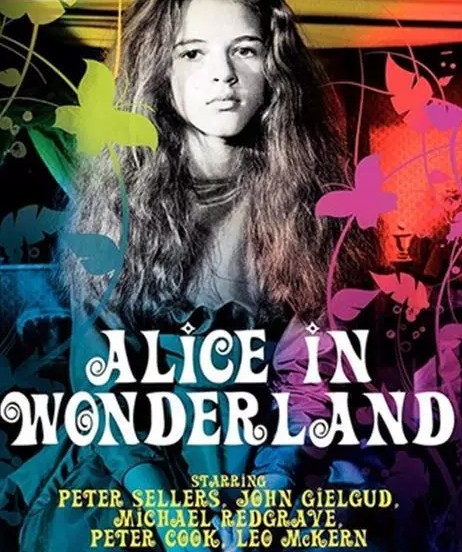
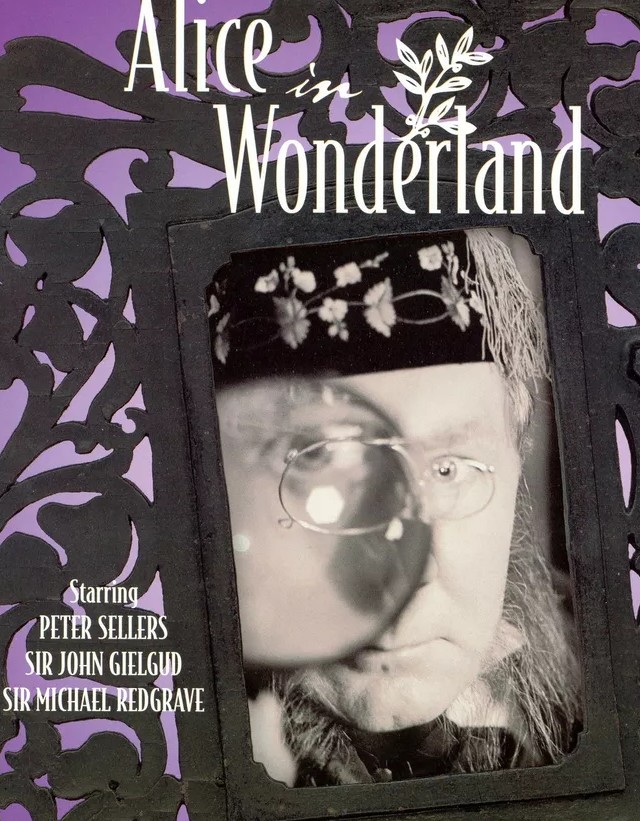
Alice in Wonderland (1966) **

Young bucks wanting to make a bigger splash are apt to rampage through sacred texts and treat unwary audiences to avant-garde notions. Thus, Jonathan Miller (Take a Girl Like You, 1970), in his debut, set aside all expectations and in fairness purists had decried Walt Disney’s 1951 telling of the Lewis Carroll classic. In truth audiences weren’t so in love with the Disney version either, an unusually low hitter for the company, and one that only really found its niche when reissued to catch a whiff of the stoned hippies who had drooled over 2001: A Space Odyssey (1968).

This 1966 reimagining might have been buried in the vaults after its initial showing except that Jonathan Miller went on to become something of a British institution, renowned directed of opera and stage plays, writer and presenter of a number of highly-regarded television projects and a regular on the talk show circuit. That his career had begun in sensational fashion, one of the hands on the tiller of the satirical Beyond the Fringe stage show (a hit in the West End and Broadway) and television program, meant that when he decided to spread his wings into the movies, no expense was spared.

Big stars flocked. What other neophyte could attract stars of the caliber of Peter Sellers (The Pink Panther, 1964), John Gielgud (Khartoum, 1966), Michael Redgrave (Goodbye, Mr. Chips, 1969), Leo McKern (Bunny Lake Is Missing, 1965), Peter Cook (The Wrong Box, 1966) and playwright Alan Bennett (The Madness of King George, 1994)? All admittedly in small parts but that was the nature of the all-star enterprise.

And that would have been fine if they had all been employed to supply the voices. Or if audiences had the fun of trying to determine who was who when hidden under the ton of make-up required to turn them into White Rabbits or Mock Turtles or Caterpillars or Lobsters cutting a quadrille.

But Miller had determined that not only was the Disney version short of the mark but for too long readers had missed the entire point of the Lewis Carroll book. He decided the point of the story wasn’t humor at all, nor a succinct exploration of the pitfalls of language, but about a young girl adrift in a adult world of confusion. So that was bye-bye to the cuteness.

He even broke a cardinal role. Alice doesn’t fall down a rabbit hole. The whole thing is a dream.

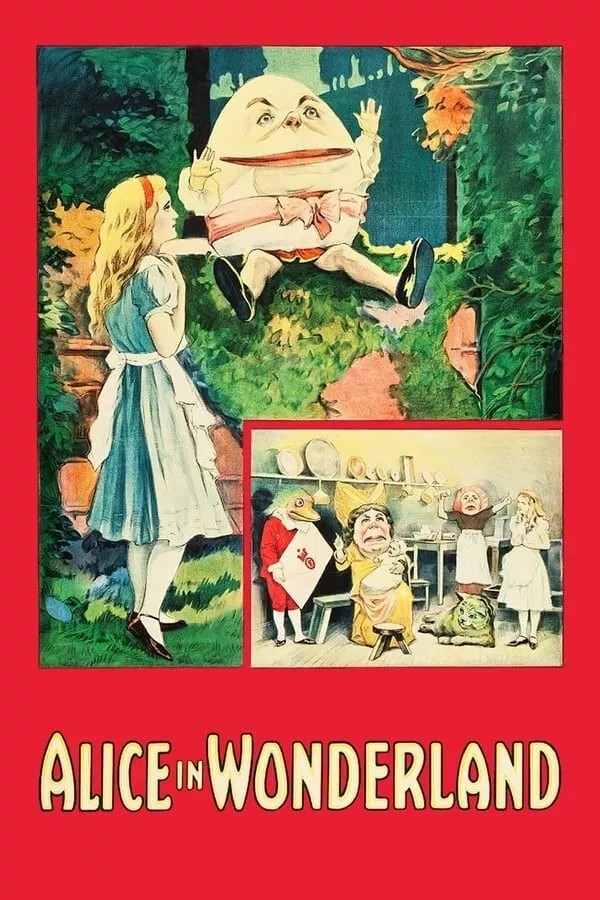
They’ve been adapting the book since the early days of cinema. This poster dates from 1915.

So you need to listen carefully to find out, with the lack of make-up, which actor is playing which fantasy character. And this isn’t set in any fantasy world either, certainly far removed from the famous illustrations that accompanied the book. It takes place in Victorian times which, yes, reflects the era in which the book was written, but, no, seems an extremely odd decision to give what is still fantasy some kind of realism.

It’s as if the director didn’t really have the courage of his convictions. That said, if he was catering to the arthouse mob, it’s got that kind of cinematic sensibility, with voice-over and unusual compositions.

Just to help you out, let me tell you that Peter Sellers plays the King of Hearts, John Gielgud the Mock Turtle, Michael Redgrave the Caterpillar, Alan Bennett the Mouse, Finlay Currie the Dodo, Leo McKern the Duchess and Peter Cook the Mad Hatter. The part of Alice went to 13-year-old Anne-Marie Mallik who never made another movie.

While it retains enough of the original to be recognizably based on the book – with all the catchphrases, “off with their heads” etc – the locale is just totally at odds with the story. And while it’s a tonic to hear the mellifluous tones of John Gielgud uttering the author’s immortal words, it would have been better just to hear his voice.

My guess is this is only still available because Miller made such a name for himself. You can catch it on Talking Pictures.

Curiosity or mess, it’s hard to decide.

https://www.facebook.com/TalkingPicturesTV/videos/easter-on-tptv/654499693946106

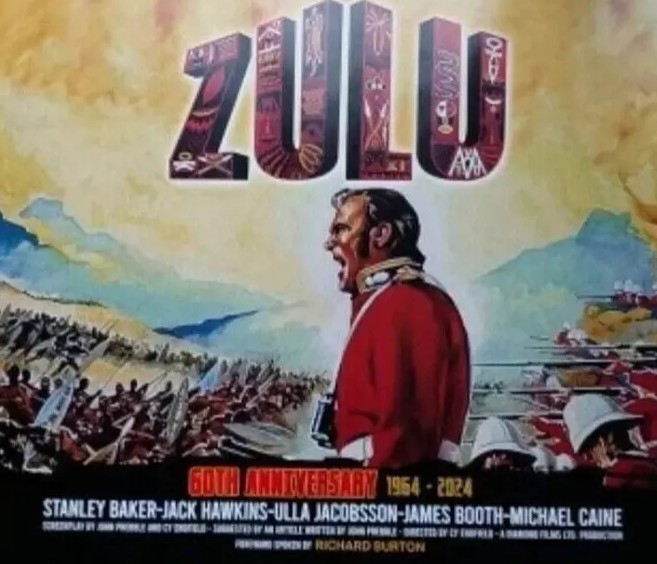
Behind the Scenes: How “Zulu” (1964) Flopped in the USA

With all the (deserved) appreciation of Zulu, it’s hard to imagine it was a massive flop in the United States. Independent producer Joe Levine planned a double whammy for summer 1964 – The Carpetbaggers, an adaptation of the sizzling Harold Robbins bestseller, and Zulu. He even arranged for Zulu to follow The Carpetbaggers into the prestigious Palace first run cinema in New York. Spending big, Levine whipped up a huge marketing campaign for Zulu, which had notched up record grosses in the UK. There was a double-page spread in Variety in January 6 and again in February 10. One million promotional badges were distributed. A featurette “Great Battles in Film” was sent to 100 television stations.

Levine had a great line for the media. “I haven’t had time to read the script but I liked the title.” Subsequently, he told reporters he had read the script on a Friday and bought it the following Monday.

It had opened at the end of January at the Plaza in London’s West End and reports of its record-breaking $26,000 opening were expected to generate high hopes among U.S. cinema owners. Like The Carpetbaggers, it was distributed by Paramount. By April it had earned a record $638,000 in London alone, including $155,000 in a nine-week run at the Plaza.

Levine had form in finding success from the most unlikely projects. He had launched the low-budget Italian-made Hercules (1958) on the American public. Audiences weren’t quite unsuspecting given the fortune he had spent on promotion. It was money well spent and quickly went into profit. So the prospect of selling a British film about a battle nobody had ever heard of and, except for Jack Hawkins in a supporting role, starring unfamiliar names, did not faze Levine.

But the two films could not have been further apart. Where The Carpetbaggers stormed to $862,000 from 25 theatres in the New York area, Zulu could only manage $190,000 from 30 in Los Angeles. Zulu scored well in first run in Detroit – an $18,000 opening at the 2996-seater Palms, a second week of $16,000 and running two more weeks. There was a “smash” $15,000 in the 606-seater Loop in Chicago first run for starters and another three weeks but then it was quickly consigned to drive-ins. It registered $16,000 at the 1909-seat Pilgrim in Boston, $10,000 in openers in Cincinnati, $6,000 in Portland and $7,500 in Buffalo. It held well in Providence at the 2200-seat Majestic, first week of $7,000, second week of $5,000.

But there was only $8,000 from nine houses in Denver and $80,000 from 13 in Kansas City. Failure to find a niche was not for want of trying. In successive weeks in Los Angeles, it was supported by Nicholas Ray epic 55 Days At Peking, comedy Ensign Pulver, and Viking adventure The Long Ships.

To salvage something, Levine send it out, within a couple of months of initial release, as the support film to Italian-made Yesterday, Today and Tomorrow starring Italian sexpot Sophia Loren, possibly one of the strangest movie programs of all time.

In the annual box office rankings, The Carpetbaggers placed second. To get into the Variety annual chart, you needed to make more than $1m in rentals (the amount the studio received after the cinema had taken its cut). Seventy-eight movies managed this. Zulu was not one of them. 

But even the poorest box-office performer has an afterlife. So in 1965 Zulu was pushed out again anywhere that would have it. That meant it supported some odd, not to say ugly, bedfellows – exploitationer Taboos of the World in Kansas City, The Three Stooges in The Outlaws Is Coming in Phoenix, B-western Stage To Thunder Rock in Long Beach, How to Stuff a Wild Bikini in Des Moines and Rhino in Abilene. They liked it in Long Beach where it supported both Circus World and That Man from Rio. It was the second feature to None but the Brave in Provo, Utah, and to two more successful Joe E. Levine movies, Yesterday, Today and Tomorrow in Ironwood, Michigan, and Marriage, Italian Style in Corpus Christi, Texas. Triple bills being a staple of drive-ins, it was seen with Viva Las Vegas and Beach Party in Tucson.   

But it was not just support meat. Almost a year after its release, it topped the bill in Helena, Montana, with Robert Mitchum in Man in the Middle as support. In Chester it was the main attraction with Homicidal in support. In Weimar, Texas, it was supported by Tarzan the Magnificent and in Bridgeport by First Men on the Moon. At the Cecil theater in Mason City, Iowa, it played on its own, as it did in Colorado Springs where it was advertised as “in the great tradition of Beau Geste” (supply your own exclamation marks.)

But it was not done yet. Exhibitors in San Mateo had a soft spot for Zulu in 1966. It played there seven times, as support to The Great Race, Marlon Brando western Appaloosa, Fantastic Voyage (in two theaters), What’s Up Tiger Lily?,  The Leather Boys and Lawrence of Arabia. Abilene brought it back twice, for a re-match with Rhino and then in a double bill with Kimberley Jim starring singer Jim Reeves when it was promoted as “a true story of the Zulu tribe.” Fremont cinemas also ran in twice – with Return of the Seven and Fantastic Voyage. In Troy and Bennington it rode shotgun with Elvis in Harum Scarum. In Charleston it supported Arabesque, in Winona The Second Best Secret Agent  and in Long Beach What Did You Do in the War, Daddy?

The highlight of 1967 had to be a double bill with The Daleks (Dr Who and the Daleks) in Delaware, or perhaps the teaming with Batman in Cumberland, Maryland, or El Cid in Ottawa. Zulu returned twice to Fremont to support Africa Addio and John Sturges’ Hour of the Gun. In Modesto it played with Where The Spies Are. In Long Beach it was put on at a pop concert where the headline act was Organized Confusion (anybody remember them?). These three years of repeated showings hardly counted as a proper reissue, but it did cast an interesting light on what may – or may not – have turned into something of a cult film. In Britain, where it was a smash hit, it was reissued on the ABC circuit in 1967 and 1972. While it was largely unwelcome in the U.S., worldwide was a different story, bringing in $9 million in grosses.

SOURCES: 1964:  Variety – U.S. box office figures: June 24, July 1, July 8, July 15, July 22, July 29, august 5, September 2, October 6. Information about other bookings comes from local newspapers.

Behind the Scenes: Selling “Zulu” (1964) – The Pressbook

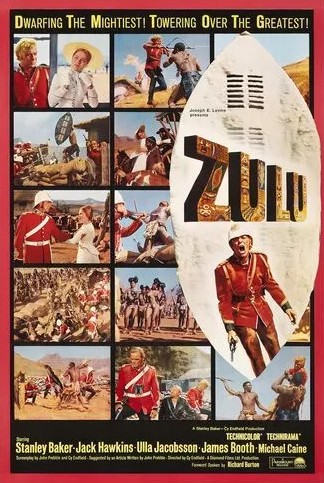
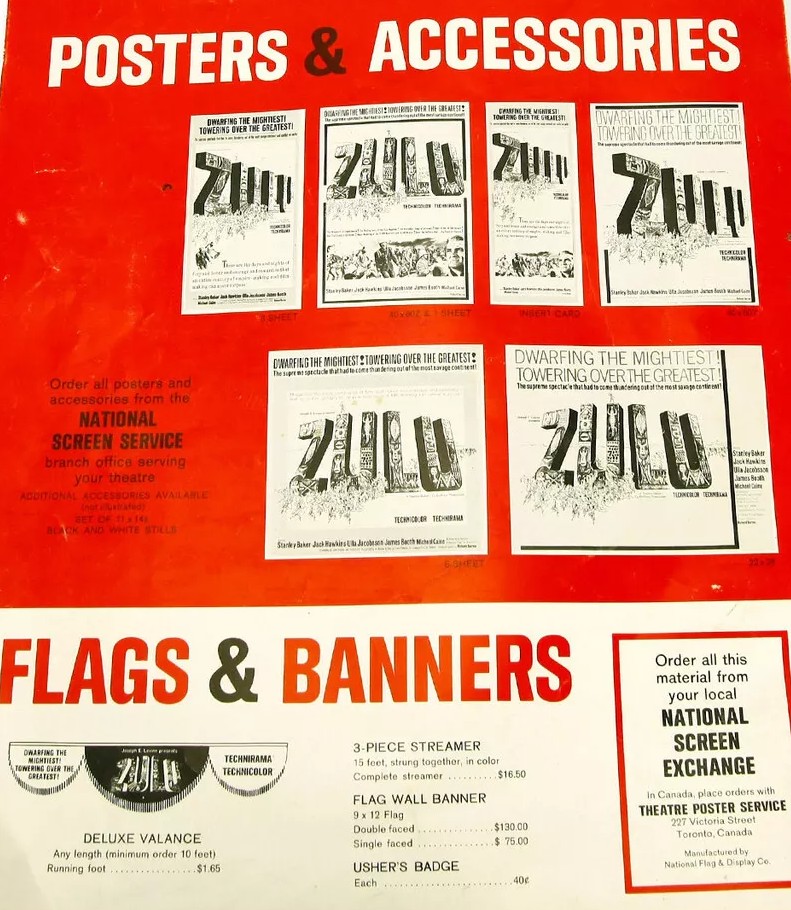
“Dwarfing the Mightiest! Towering over the Greatest!” wasn’t just the movie’s tagline. It could have easily been used to describe the Pressbook. This folded out into a colossal 40 inches wide  by 20 inches high, one of the biggest pressbooks ever produced.

The marketing team produced an impressive list of ideas. Cinema managers were urged to get war correspondents and war heroes involved and to blow up photos of the Victoria Cross. Hanging on the name of the star was a “Baker’s Dozen” competition, inviting people to list the thirteen movies featuring Stanley Baker. Quite how they thought a promotion involving banks would go down is anybody’s guess. Especially as this was the notion: “Zulus are allowed as many wives as they want, provided they can afford to pay for them. The price ranges between six and twenty head of cattle per wife. For an interesting tie-in, get local banks to display money and other barter materials. Give them a montage of still from the picture to display.” Culturally tone-deaf doesn’t cut it.

To attract children there was a coloring-in competition and a school study guide. The movie was available in 70mm Super Technirama so there was a special advertisement linked in to that for cinema going down that route.

Other taglines included: “The supreme spectacle that had to come thundering out of the most thrilling continent!” and “These are the days and nights of fury and honor and courage and cowardice that an entire century of empire-making and film-making can never surpass!”

And in case hyperbole wasn’t enough, one of the ads spelled out the exciting details. “The Massacre of Isandlwana! The Mating Song of the Zulu Maidens! The Incredible Siege of Ishiwane! Night of the 40,000 Spears! Days That Saved a Continent! Mass Wedding of 2,000 Warriors and 2,000 Virgins! Amid the Battle’s Heat…the Flash of Passion!”

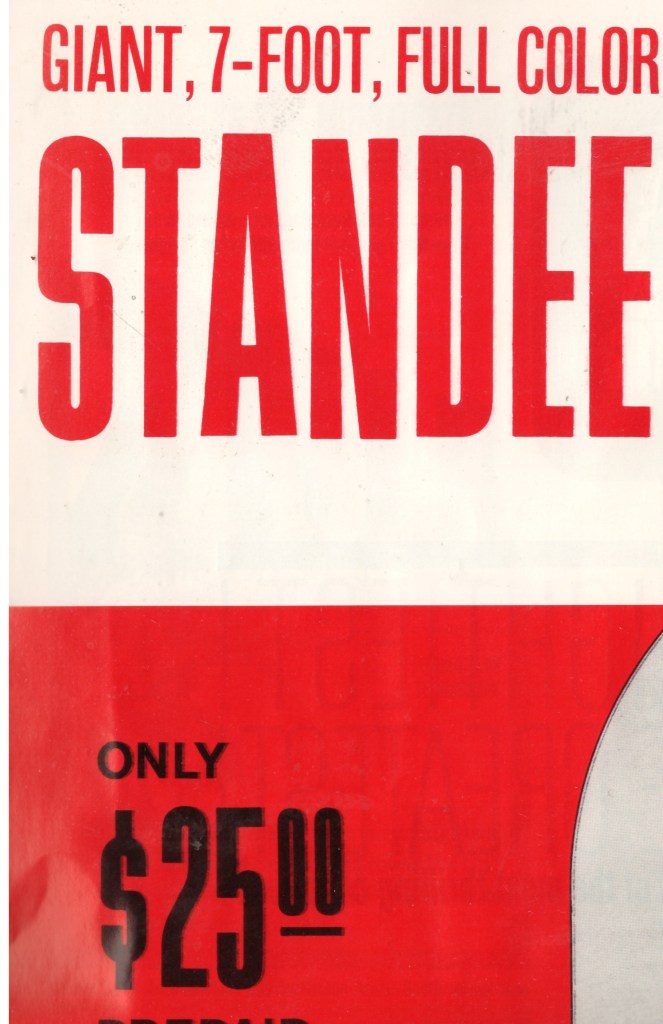
There was a seven-foot high standee and a three-foot 3D illuminated standee.

To help sell the picture to local journalists, little articles were planted that could hook an editor’s interest. For example, when director Cy Endfield glimpsed some soldiers firing their rifles left-handed, he stopped filming, because British soldiers were required to shoot right-handed. The film was shot in the shadows of the Darkensberg Mountains. The river which flowed past Rorke’s Drift was slower than it had been at the time of the battle so the course was altered and dammed to increase the flow. Out of sight of the cameras but essential to filming were the modern villages constructed to house cast and crew, stores, catering and compounds for horses and oxen.

The cast were on set at 6.30am for make-up. The Zulus spent more time in make-up than the British soldiers, as the costume department ensured every aspect of their outfits was historically correct. A total of 100lb of small colored beads was crafted by made by local women for the maidens to wear. A primitive method of making necklaces, strung together with animal sinew and rolled by hand, was employed incorporating a further 100lb of wild syringa seeds which were dyed.

The warrior loincloths of softened animal skins were made the traditional way using stones aqnd animal fat. Shields were also made from animal skin. The teeth of tigers and baboons formed their necklaces. They kept snuff in a small gourd worn round the waist. The purpose of a porcupine quill tucked into their hair was to extract thorns after a long march.

Three cameras were utilized to shoot the blaze that burned down the hospital. “Undress rehearsal” was the name given to the marriage ritual scenes of bare-breasted women.

Though Michael Caine was being touted for stardom, as far as the Pressbook was concerned he was relegated to section below Jack Hawkins, James Booth and Ulla Jacobsen who had smaller parts. The movie was a notable change for Jack Hawkins, who saw action in World War Two. Instead of playing his usual hero, he was a weakling and drunk. It was the second English-language film for Swede Jacobsen after Love Is a Ball / All This and Money Too (1963).

Discover WordPress

A daily selection of the best content published on WordPress, collected for you by humans who love to read.

The Atavist Magazine

by Brian Hannan

WordPress.com News

The latest news on WordPress.com and the WordPress community.