
Hollywood had outlawed the deification of villainy after the gangster gold rush of the 1930s and, before Coppola and Scorsese popped up with self-serving operatic epics, the consensus was that thugs were scum, no matter how well organised or how deep the corruption went. There had been a blast of gangster biopics in the late 1950s/early 1960s, many of them covered on these pages, but, outside of the equally thuggish Clint Eastwood cops, you would have to wait until Serpico (1973) and The Untouchables (1987) before Hollywood decided the cop was actually the hero after all.
I’m guessing Scorsese and Coppola had seen this particular picture which presented an entirely different picture of the Mafia, including its historic importance in America, but decided the bad guys were just more interesting than the good guys and that some kind of mythical Mafia presented better cinematic opportunity. Now this is just as much a low-budget number as the bulk of the gangster pictures of this particular short-lived era so don’t go looking for any late cycle film noir or the kind of classy mise-en-scene or big stars that comes with the later bigger budgets.
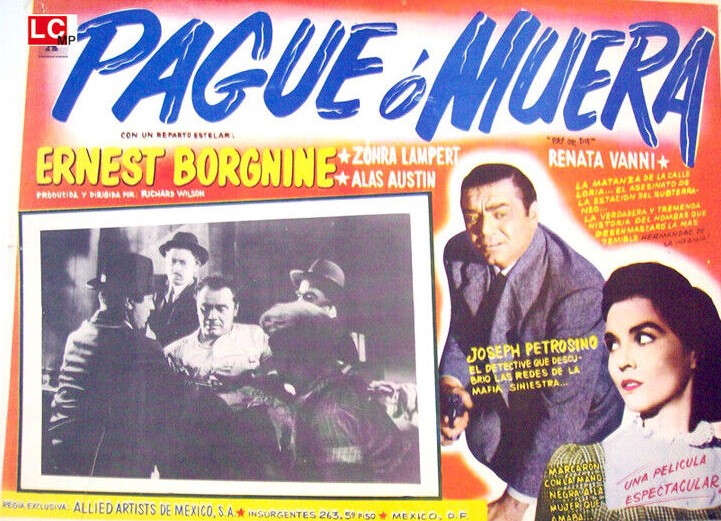
But this is so spot-on, with incredible depth, that it deserves a good bit more attention than the eight critical reviews on imdb and the measly 30 per cent rating on Rotten Tomatoes. In fact, you could point to several scenes where you could imagine Coppola and Scorsese took inspiration, and there are some quite astonishing scenes of brutality, not blood-drenched or lingered-over as was the style in the 1970s but incredibly powerful precisely because they are rendered in such lean fashion.
This is based on the true story of an Italian who took on the Mafia in New York. Only it wasn’t called the Mafia then. If you remember the Robert De Niro section in The Godfather Part II (1974) you’ll recall that the gangster he rubbed out belonged to The Black Hand. That’s what they were called at the turn of the twentieth century in New York and since prohibition didn’t exist they didn’t become bootleg millionaires and then dabble in drugs. Their main businesses were extortion and kidnapping.
Italians in Italy didn’t trust cops for historical reasons. When anyone wanted to keep the populace in line they used the cops as muscle. That was the root reason for the growth of the Cosa Nostra. So when Italians emigrated they were equally inclined not to call the cops when someone put pressure on their businesses or demanded a ransom for a stolen child. And one of the reasons nobody called the cops was because not a single cop in New York spoke Italian. Joe Petrosino (Ernest Borgnine) was the first Italian on the New York police force. He made lieutenant but lack of education prevented him climbing any higher.

But let’s get back to the blistering opening. You’ll be familiar with such openings from Coppola/Scorsese, the religious procession, candles, hymns, music from traditional instruments, priests, robes aplenty. But this one has a difference. They string two kids between the rooftops. Not string them up, string them along ropes attached to their backs and dress up the sweet girls as angels so that they can hover over the procession and utter words of importance as its climax. The kids don’t look terrified, they look delighted to be chosen.
But hood Lupo (Barry Russo) has a different idea of how the ceremony should end. He slices through the rope. Down crash the kids, legs, backs broken, barely surviving the fall. But they survive enough for that calamity to be all that’s required for one parent to cough up the dough demanded by The Black Hand, despite Petrosino’s entreaty to stand fast against the crooks.
Lupo’s next victim is the baker Saulino (Bruno Della Santino). And when he refuses to pay the thugs bang him up in his own pizza oven, threatening to burn him alive. Petrosino has that Sean Connery Chicago style of dealing with villains and back in the day liberals weren’t going to get in his way and he knows it’s not just a battle of wills but a power struggle. So he batters in Lupo’s door, batters him round the head, drags him down the stairs, pausing only to punch him again so the neighbors can get a good look, carry him on his back outside and dump him in a trash can.
Doesn’t entirely go to plan because a crooked Italian lawyer gets Lupo out and he takes revenge on Saulino by kidnapping his daughter Adelina (Zohra Lampert), cutting off chunks of her hair, ripping half her clothes off, and locking her in a cupboard. When Petrosino finds her she’s got the imprint of a black hand on what remains of her white dress.
Eventually, the police agree with Petrosino’s notion that the only way to beat the thugs is to set up an elite squad composed entirely of Italians, recruited from outside the city, to set out in plain clothes and mix with the local community, getting jobs as barbers and baker assistants, for example, so that they can witness the protection racket at first hand.
Meanwhile, the shy Petrosino has fallen for Adelina, though he has a younger, better educated rival, Johnny (Alan Austin), and in any case the more successful he is in his anti-gangster campaign the more at risk his life (and that of a potential wife) would be. The more successful the squad becomes the more the leaders of the Italian community agitate for it to be run by someone better educated, not a guy who has failed the Captain’s Exams seven times.
Although this is delivered in pretty much documentary style, there are some sensational set pieces. Apart from the falling angels, before thugs chuck Saulino in his own oven they dress him in pizza ingredients, raw eggs, flour, the works, the kind of humiliation a Scorsese gangster would endorse. When Adelina and Petrosino do get it together, every wedding present has to be soaked free of its wrapping first in the bath to ensure parcels don’t contain a bomb.
There’s a tremendous explosion of a car. A thug is captured in a barber’s chair by a cut-throat razor. And in the most horrific scene kids are killed (think The Untouchables) when they get in the way of bomb set to the timing of a big clock, the kind you used to see outside stores that acted as advertising devices.
Most of these sequences would have been delivered with more panache, blood, slow-motion and other gizmos had this picture been made a decade later. But, as I said, they pack a hell of a punch for being stripped of all cinematic artifice.
Within all this there’s time to explain the background of immigrants, the virulent racism they face, the institutional reasons for cling to old ways, the corruption and vote-grabbing politics, and there’s some lovely stuff in the bakery, Adelina not just carrying wood for the pizza ovens on her back but undertaking some of the more skilled baking. And the hunt for the child bomber turns into top-class detective work, down to identifying a wagon by horseshoe and then finding out which merchant was missing a wagon.
There’s some brilliant dialogue. At one point opera superstar Mario Caruso’s life is under threat, his is the car blown to pieces. But outside of his fancy car and voice he holds little attraction for the ladies. When he tries to pick up a beautiful girl by promising to sing for him, she retorts, “promise not to stop singing.” When Petrosino turns down Adelina it’s first on the grounds of danger and then age. “I’m older than you,” he argues. Her answer is to kiss him. “How old do you feel now?”
Ernest Borgnine (Go Naked in the World, 1961) hasn’t had a part this good since Marty (1955) and he’s in his element, two-fisted with criminals, his persuasive powers with his superiors far outranking his exam marks, and entirely believable as a diffident romantic. Zohra Lampert (A Fine Madness, 1966) delivers a winning turn. You might spot John Marley (The Godfather, 1972). Most of the cast appear authentic Italian.
So you get a riveting drama, fascinating backstory, a romance that could have been the main story all on its own, a bit of detection and a terrible twist at the climax.
Taken on its own terms and given the budget limitations director Richard Wilson (the equally under-rated Invitation to a Gunfighter, 1964) presents a multi-layered masterpiece. Richard Collins (Maya, 1967) and veteran Bertram Millhauser (Tokyo Joe, 1949), in his final movie, collaborated on the screenplay.
Minor gem crying out for reassessment.
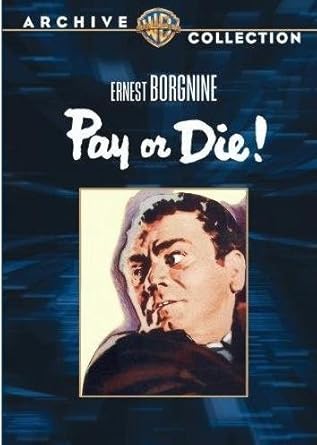


 The Magnificent 60s
Cool artwork, but better get that E onto Clint Eastwood before he reads this!
LikeLiked by 1 person
He’s been gunning for me for some time.
LikeLiked by 1 person