Behind the Scenes: Raquel Welch, Unknown Actress, 1964-September 1966, Gets The “Big Build-Up”

As demonstrated in Madison Avenue (1961), the “big build-up” was code for inflicting on an unsuspecting public an unlikely candidate for acclaim. Of course, for decades, Hollywood hacks had been bombarding fan magazines, weeklies, glossy monthlies and dailies with beefcake and cheesecake photos of promising new talent. But the hook was that these actors were shortly appearing, albeit in a bit part, in a few months’ time in a forthcoming movie.

Modelling was another device to attract the attention necessary to generate a screen career. Sometimes, these (predominantly female) models would be making their first throw of the dice, hoping that some producer in an idle moment might catch a glimpse. Or, they could be women who made a living from selling such snaps to such media.

But, usually, it was one thing or the other: gratis photos handed out by grateful studio marketing teams or photos that an editor paid for in the hope they would increase circulation (in the days when there was no such thing as a giveaway magazine). La Welch appears to have fallen into the latter category.

But it was a heck of a long-term build-up given that with the exception of the virtually unseen Swingin’ Summer (1965), in which she has a bit part, Raquel Welch did not appear in a movie until September 1966. By that point, modelling a skintight number in Fantastic Voyage  – it was December before that iconic fur bikini in One Million Years B.C. set male hearts pumping – it seems that magazine editors the world over were prone to giving her space in the years prior covering 1964-1966 when she was effectively an unknown.

Esquire splash.

Which would go some way to explaining why by the time her first movies hit the screen she was already a familiar face (and body, it has to be said) to many (and not exclusively male) in the audience. The promotional push was supplied by Twentieth Century Fox which had signed her to a five-picture contract, making her, perhaps in their own words, one of the most sought-after actresses in Hollywood.

But deals with studios for new talent were ten a penny, no guarantee the studio would keep its side of the bargain, nor that the contract would run to term, nor that the actress would be handed anything but bit parts. Still, it probably cost relatively little to start pumping out promotional photos with “new rising talent” as the lure. Magazines seemed happy to accept on face value that she was a rising star even though there was no proof that she had the talent to match.

Life magazine proved something of a stepping stone. She was featured in a bikini in its Oct 2, 1964, issue. But you could just as easily have caught her in a leopard-skin dress draped across a cocktail stool, one of several cheesecake pictures taken to promote the starlet.  Parade magazine, in Britain, something of a lower-grade male magazine, far removed from the likes of the glossier Playboy, was among the first to take the bait, in December 1964 (see above) handing the young potential star its front cover. (Her surname was misspelled as Welsh – and her Christian name was misspelled as Rachel when she featured again in March 13, 1965.)
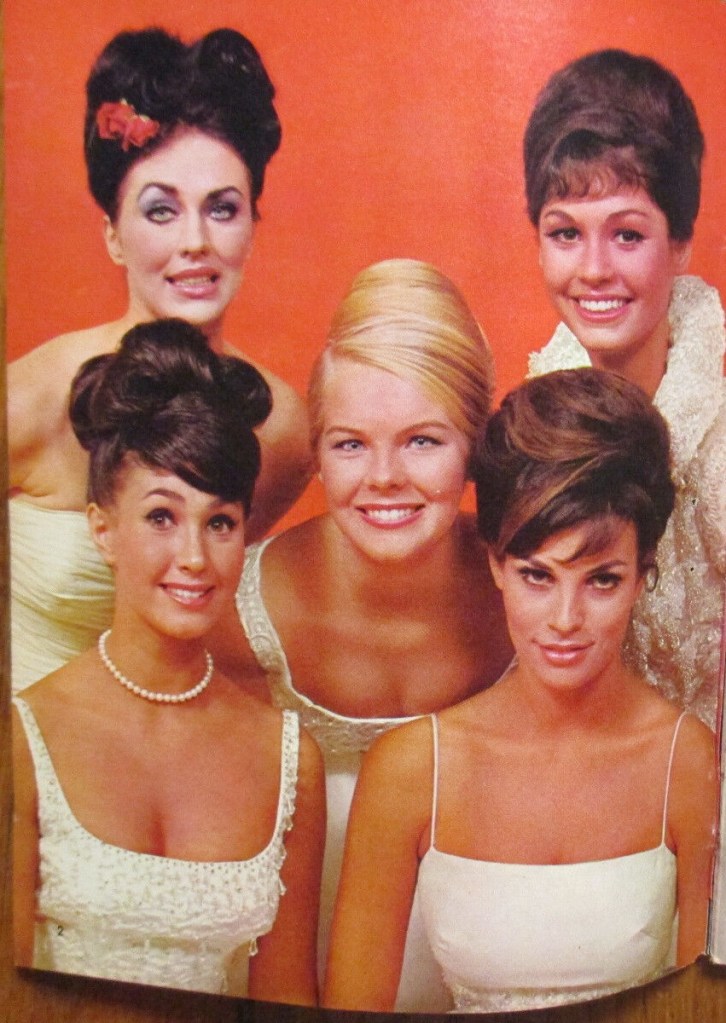
Five of the 10 chosen Deb Stars of Tomorrow. See if you can spot our gal.

But the real boost came at the end of December 1964. That month she was one of ten potential female stars featured in the Dec 27 issue of New York Journal-American under the title “TV’s Magic Wand Taps Girls As Stars of Tomorrow.” She had been chosen to appear on ABC TV’s “Debs Stars of 1965” programme. This show claimed an 85 per cent success rate in picking potential stars, with Kim Novak, Tuesday Weld and Yvette Mimieux among previous winners.*

In April 1965, the distinctly more upmarket – and not male-appealing – McCalls in the U.S. came calling, but that front cover dispensed with the sexy look, presenting her wearing spectacles. By September 1965, the Fox marketeers had been hard at work and won for her – a full year before Fantastic Voyage opened – the front cover and an inside spread in the British edition of movie fan magazine Photoplay. The next month brought another iconic photograph, the “nude” spread in U.S. upmarket monthly Esquire, accompanied by a full-page interview that treated her as the next big thing, again on the word of Fox, nobody having as yet seen so much as an inch of the footage of the sci-fi picture.
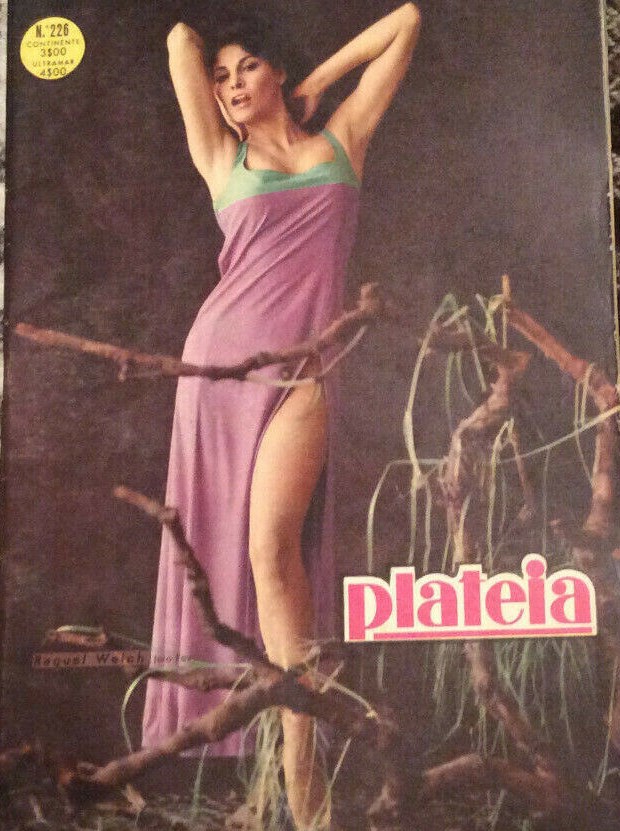
The same month in trademark bikini she was on the front cover of U.S. Camera and Travel magazine (surname again misspelled), photographed by Don Ornitz and described as “a rising young actress with many screen and TV credits to her name” without specifying that in fact these were mostly uncredited or in bit parts. Also during 1965 she featured in Turkish magazine SES and Portuguese magazine Plateia.

But there was also the grind. She advertised Wate-On slimming in Screen Stories in 1965,  was the cover model for True Love in September 1965 while for Midnight magazine – and surely this was a story dreamed up by a publicity hound – her front cover picture was accompanied by the heading “Adultery Can Save Your Marriage” and inside she was quoted as saying “A Wife Should Let Her Husband Cheat.”

The big build-up went into overdrive in 1966. She modelled bikinis in two more front covers in Parade (all name errors corrected) in January and July. Australians preferred a more demure – or at least non-bikini – look. In Australian Post (June front cover) she was photographed wearing a “dress of ten thousand beads” from her unnamed next picture (neither Fantastic Voyage nor One Million Years B.C. obviously). There was a slinky pink number for the Australian edition of Photoplay (August, front cover and full-page photo inside) and a quote “I think its important for a girl to exploit her physical attractions – but with restraint.”

She also graced Hungarian magazine Filmvilag and Showtime, both in August. Perhaps the most prescient feature ran in Woman’s Mirror in April 1966. For once she was not granted the cover, but featured on a two-page spread inside under the heading “A Star Nobody Has Seen But Everybody Is Looking For.”

Most of her figure was hidden on the front cover of Pageant (July). SES had something of a scoop in its April edition with some behind-the-scenes photos of Welch in her fur bikini for One Million Years B.C. and she made the cover of German magazine Bunte (June).

Exactly how busy and successful Welch – and her promoters – had been could be gauged from the photo that appeared in the Aug 26, 1966, issue of Life, in which she was pictured in front of a wall of over 40 of front covers she had adorned in the previous two years. Pictorial proof that she was in demand and that magazine editors, long before the public had the chance to witness her screen performance, could recognize a certain kind of charisma. (She was featured in Life again in Dec 1966, in a bikini, but seen sideways, bent over and with her hair in pigtails – and on the cover of its Spanish edition on Nov 21.)

And there was another kind of accolade coming her way in Britain. She was chosen as the first cover model for the first issue of men’s magazine Mayfair in August 1966, the same month as she was positioned in the same prominent spot on Adam, another men’s magazine, and in the more sedate British magazine Weekend, in which she was promoting Fantastic Voyage.  

But she would soon be forever associated with the fur bikini, posters of which were soon plastered over the walls of teenage boys. The fur bikini more than anything else broke the mold in the presentation of a new star, and luckily for Welch, the ground work had been done courtesy of the long-range big build-up.

*The other nine Deb Stars of Tomorrow were Barbara Parkins (Valley of the Dolls, 1967), Mary Ann Mobley (Istanbul Express, 1968),  Margaret Mason (no movies but some television), Wendy Stuart (couple of bit parts), Beverley Washburn (Pit Stop, 1969), Tracy McHale (nothing), Laurie Sibbald ( a few television episodes), Janet Landgard (The Swimmer, 1968) and Donna Loren (a few television episodes). No prizes for guessing who won that particular Deb Star competition.
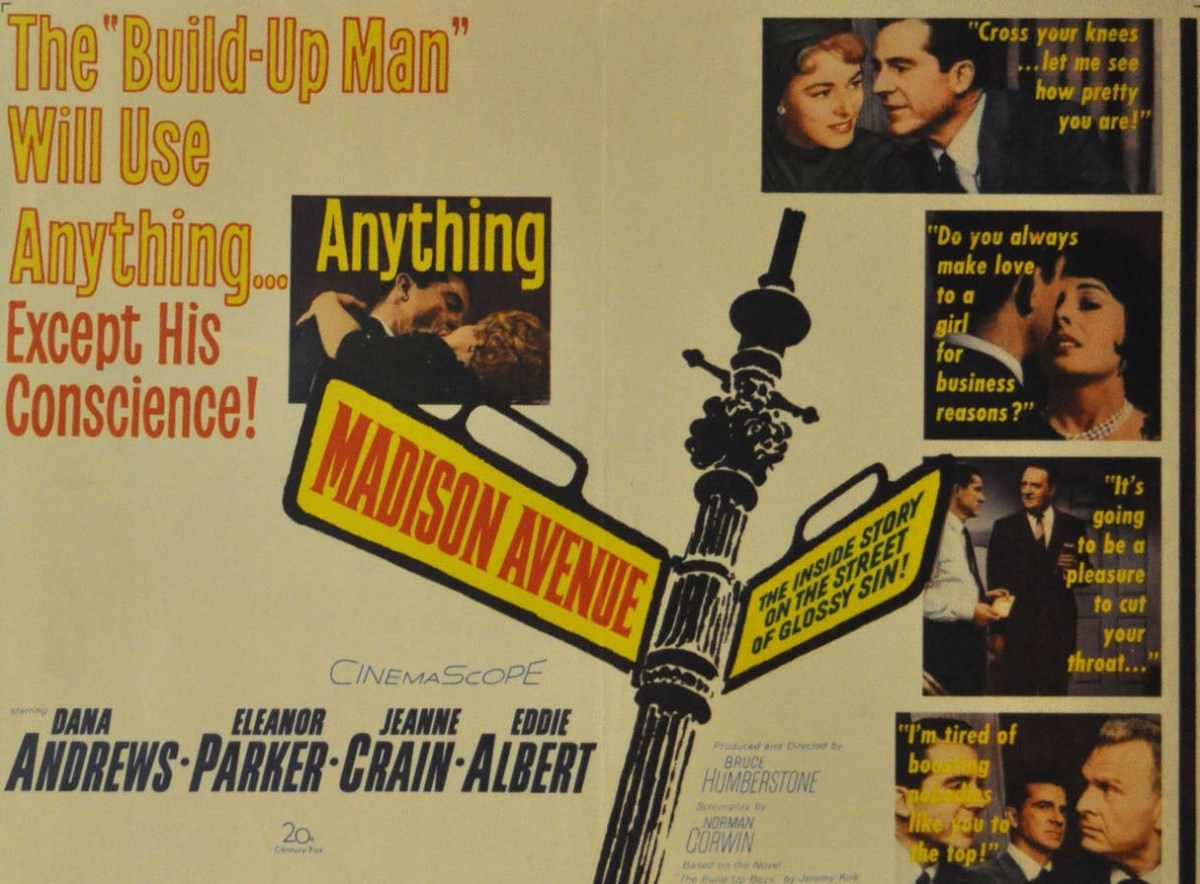
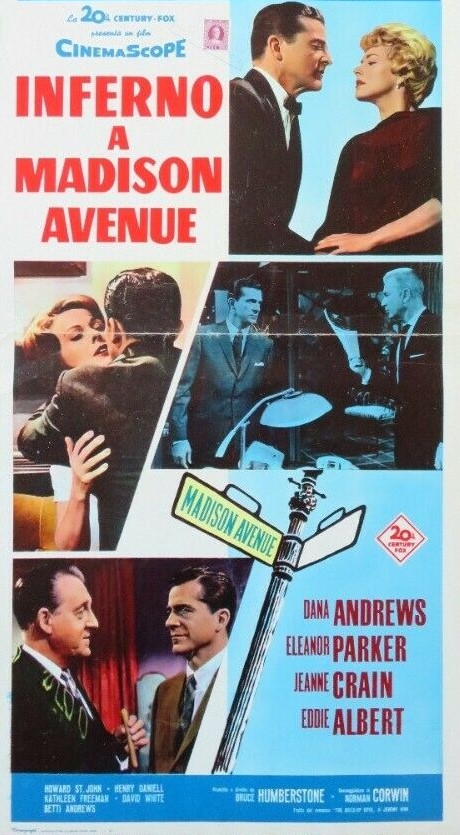
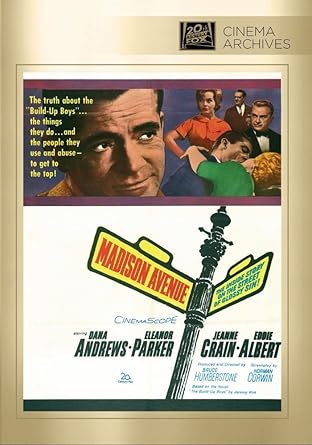
Madison Avenue (1961) ***

Surprisingly effective feminist angle. Unusual for the suave salesman to get his come-uppance from two vulnerable women, but that’s the case here, in an expose of the “build-up” (what we’d call “hype” these days) techniques of the public relations business, an area of advertising generally considered one step below the Mad Men of popular television. Fancy bars and cocktail dresses put in an appearance but, mostly, this deals with the grittier end.

This was pretty much the end of the mainstream Hollywood career for Dana Andrews. Still best-known for Laura (1944) and The Best Years of Our Lives (1946) and for some key film noir titles, this was his last major top-billed role. He wouldn’t make another movie for four years and anyone coming to him in this decade would associate him with supporting roles in the likes of The Satan Bug (1965) and Battle of the Bulge (1965).

So this is, possibly unexpectedly, a performance to savor, for he is hardly the hero, more the kind of character who might turn up in a contemporary movie, with questionable motives to go along with his decided charm (look no further than Leonardo DiCaprio in Killers of the Flower Moon). Though hardly murderous, he is ruthless and doesn’t care who he brings down in achieving his objectives.

After losing his job for purportedly (an accusation unproven but going with the territory) trying to steal the major client, Associated Dairies, of his boss, J.D. (Howard St John), top executive Clint (Dana Andrews) plans to get his revenge in rather sneaky fashion, by turning round its poorly-performing subsidiary Cloverleaf. He targets the dowdy owner, Anne Tremain (Eleanor Parker), of its failing advertising firm, promising her client a big editorial splash in a big newspaper courtesy of journalist girlfriend Peggy (Jeanne Crain).

Anne’s the first beneficiary of his PR skills, reinventing her as a glamorous, power-dressing, more confident advocate of the persuasion industry. He inveigles himself into her arms, at the expense of Peggy. He aids the idiotic owner of Cloverleaf, Harvey (Eddie Albert), who spends all his time in the office playing with model airplanes. (From today’s perspective, he’s something of a savant, predicting these machines – think drones – could one day form part of the delivery contingent.)  

To show just how damn clever he is, Clint “builds up” Harvey into the kind of self-made-man that has politicians purring, and brings Clint back into the winners circle. Unfortunately, the only way to get right in is through deviousness, a bit of back-stabbing here and there, dropping anyone who’s outlived their usefulness. But he’s not as clever as he thinks, lacks the business acumen of Anne, who’s denied him a share of her growing business, and therefore any real power base.

The women take unkindly to being used, Anne now the one doing the tossing-aside. For her revenge, Peggy writes an article that digs the dirt on him. Neither of these women would fall into the femme fatale category, though once all glammed-up Anne could pass for one had she required violence rather than business dexterity to exact her revenge.

Though both, unusually for the times, hold top positions in their businesses – Peggy’s a high-flying journalist working the Washington beat – they are presented initially as easy meat for a man capable of exploiting their vulnerabilities. Clint keeps Peggy on the back foot by failing to turn up for dates or presenting Anne as a rival for his affections.

This is an era where, purportedly, all women wanted was a ring on their finger, and to hang with being landed with an unsuitable man. But both Anne and Peggy upend that stereotype, seeing through the creature who’s come calling. In a western, audiences would have the satisfaction of seeing this kind of despicable character being shot. Here, they get to see him cringe, and be humiliated by women who have come to their senses. Albeit there’s a “happy” ending, that only occurs after some begging by the predator.

It suffers from too many long sequences, and by its determination to go down the satire route in exposing the seamier side of the public relations business. But there are some classic moments, such as when Harvey, tumbling through a prepared speech, has to suddenly wing it and finds his real voice.

But watching Anne get the measure of Clint and seeing him brought to heel by both women suggests the kind of ahead-of-its-time come-uppance that sets this up as an early feminist venture.

Eleanor Parker (The Sound of Music, 1965) and Jeanne Craine (Queen of the Nile, 1961) are both superb as women coming to their senses and this is a quite superb last top-billed hurrah from Dana Andrews. This was also the final outing for director H. Bruce Humberstone (Desert Song, 1953). Former newspaperman Norman Corwin (The Story of Ruth, 1960) and Richard P. Powell (Follow That Dream, 1962) based the screenplay on the best seller by Jeremy Kirk.

Resonates on the feminist front.

Remake Double Bill – The Three Musketeers: Milady, or Part Deux if you prefer (2023) *** / Godzilla Minus One (2023) ***

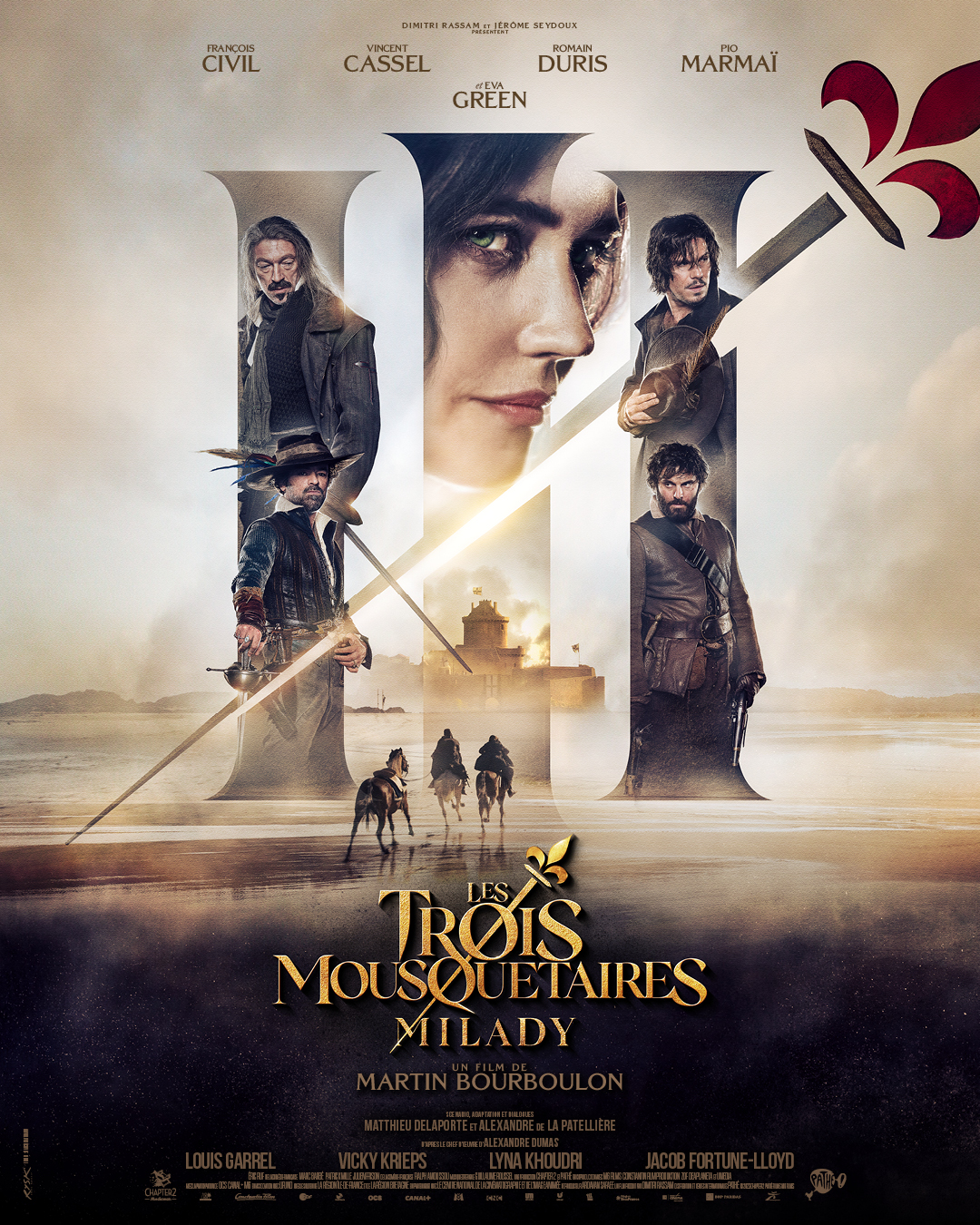
The Three Musketeers

Cherchez la femme, as they say in French. Here, because everyone is doubling up (or doubling down, I never get that right, and it is of course a sequel), the narrative has our heroes (and these being four musketeers if you include D’Artagnan and not three) chasing all over France in pursuit of two women.

If you recall from episode one (and it doesn’t matter if you don’t because this starts with a neat re-cap), D’Artagnan’s (Francois Civil) girlfriend Constance (Lyna Khoudri) has been abducted after overhearing details of a plot to kill King Louis XIII (Louis Garrel), so he’s trying to find her. Meanwhile, everyone’s after Milady (Eva Green), the double-crosser’s double-crosser. In fact, to complicate matters, the movie begins with her being rescued by D’Artagnan.

As it turns out, that’s one of the easiest complications because unless you’ve got a PhD in French history, you won’t have a clue what’s going on, what with imminent English invasion, traitors inside the palace, eternal bad guy Cardinal Richelieu (Eric Ruf) and the French laying siege to their own port of La Rochelle. I’m guessing, because it’s not exactly plain, that the background is Catholic vs Protestant enmity.

I’d forgotten of course that our heroes are called musketeers for a reason and it’s not because they are swashbucklers, though they are pretty nifty with the sword, but the name indicates a certain dexterity with muskets. So, there’s rather a lot more guns being fired and buckles being swashed.

The 1932 version.

And you could be forgiven for thinking this is some kind of riposte to Downton Abbey because everywhere our heroes go there is sure to be some fabulous chateau or castle and all kinds of pomp and circumstance. It’s a tad overladen with characters and not all stand out enough. D’Artagnan doesn’t quite command the screen and of other trio it’s lusty Porthos (Pio Marmai) who steals the show, always ready with a chat-up line or falling down unconscious from alcoholic intake.

Milady is by the far the most interesting character, tying all the males in knots, escaping every type of peril, dodging the hangman’s noose and an inferno and setting up Part III with a clever climax. Although the period wasn’t rife with feminism, she is the poster girl, not just adept with any weapon (including teeth), but detailing what it’s like to be eternally molested by men.

Constance, on the other hand, is as dumb as they come. The scene that allows D’Artagnan to wallow in pathos, you can’t help howling with laughter because the stupid girl has brought on herself a pitiless fate.

Sets quite a pace, but sometimes it’s hard to keep up with the politics and who is romancing who, and why someone who has been helpful in the past now has to be bumped off.

I hope this has earned its big budget back in France because I doubt if it will do well anywhere else.

Feels like director Martin Bourboulon (Eiffel, 2021) has bitten off more than anybody can chew.

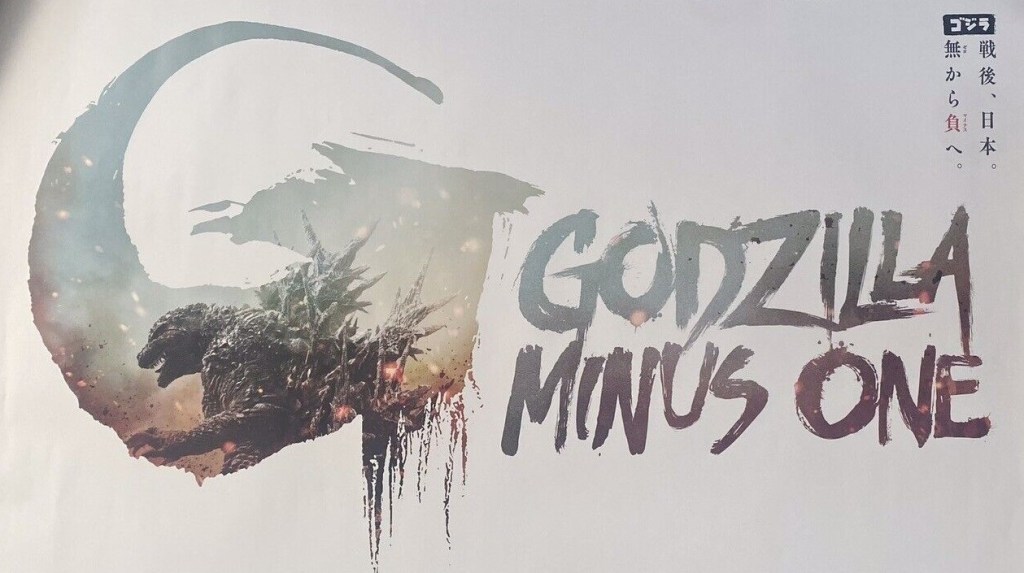
Godzilla Minus One

Not just a remake but, as it turns out, a prequel. It’s nipped in early, ahead of the next vehicle in the recycle business Kong vs Godzilla due out next year.

In this Japanese version, made by Toho Studios which was responsible for the 1954 original, the timeline is 1945-1947. It kicks off at the end of World War Two with cowardly Japanese kamikaze pilot Skikishima (Ryonusuke Kamiki) unable to pull the trigger as the monster emerges from the depths. Fast forward to U.S. nuclear tests on the Bikini Atholl, and the creature now mutates with devastating impact on the mainland.

By this point, Skikishima has acquired an orphaned baby and takes on a job on a minesweeper (his trigger finger now put to good use) destroying the thousands of mines left behind after the war so he’s in the front line when the monster re-emerges with an atomic heat-ray in its arsenal, never find those stomping feet and destructive tail.

There’s some clever scientific ruses to destroy Godzilla involving Freon tanks (whatever they are) and some jiggery-pokery to lower the water’s buoyancy (what now?) but basically as you might expect it’s mostly our favorite monster decimating cities and taking on every warship and airplane that the country can throw at it.

It’s pretty good fun but you might find it hard to sympathize with a kamikaze pilot.

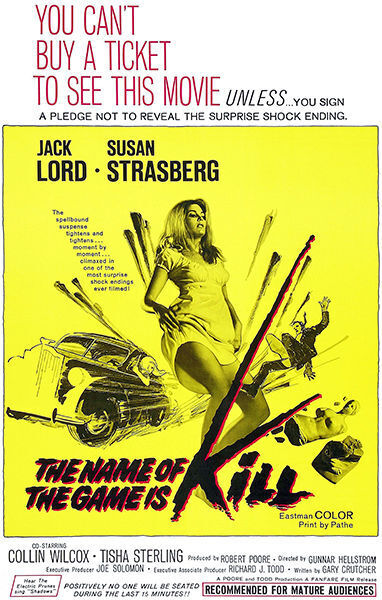
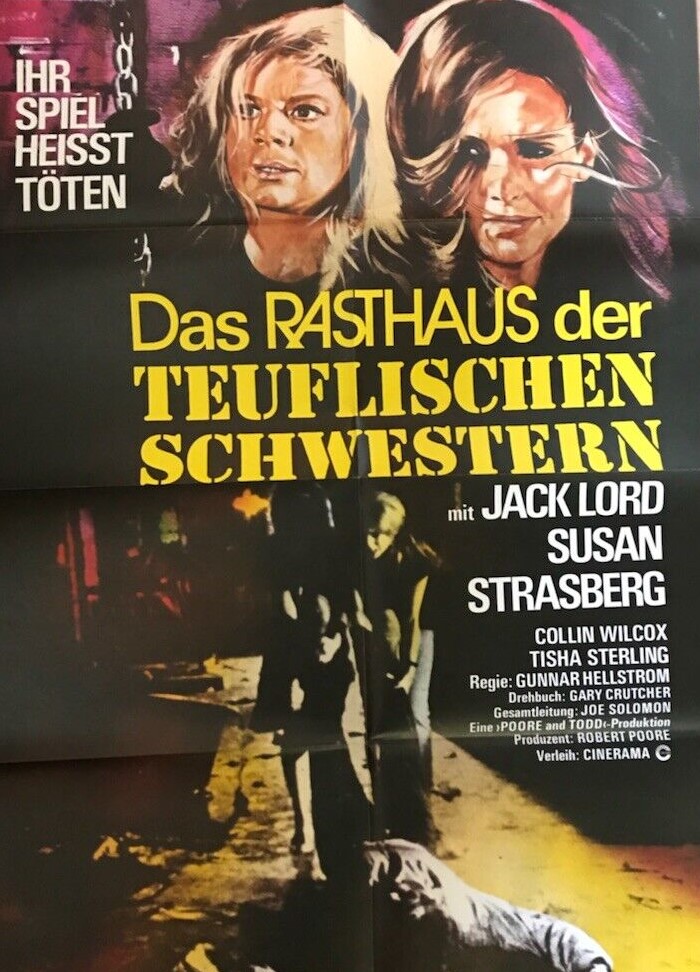
The Name of the Game Is Kill (1968) ***

Surprisingly effective thriller headlined by Jack Lord (Dr No, 1962) and providing Susan Strasberg (The Sisters, 1969) with a more complex role than hitherto.

Hungarian drifter Symcha (Jack Lord) hitches a lift in the desert with Mickey (Susan Strasberg), one of three sisters living with their mother (T.C.Jones) and running a filling station in a backwater. And before you can say Bates Motel, it’s clear not all is right. Youngest sister Nan (Tisha Sterling) keeps a rattler and a tarantula as pets and has the awkward personality trait of tending to set cats on fire.

Oldest sister Diz (Collin Wilcox Patton) eyes up the visitor for herself, even though Mickey is clearly hell-bent on him and is short in the fiancé department, her last boyfriend mysteriously disappearing. There’s more than a hint of the later The Beguiled (1970) in that each of the girls, Nan the most blatant, Diz the most persistent, shows keen sexual interest in the visitor.

And there’s some mystery, too, about the dead father. Everyone has a different tale to offer: he was murdered and incinerated by the mother; he committed suicide; he was run over by Nan. It’s this take-your-pick element that throws Symcha, though, admittedly, his brain might be addled after surviving a hit-and-run. Three days in a coma and all he has to show for it is a plaster on his head. He would need to be dumb, or just lusting after Mickey, to return to the house after that.

He makes no bones about being incapable of love, after witnessing friends and family slaughtered after the Hungarian Revolution of 1956. He “wants” her, but doesn’t commit to love. Mickey, in the manner of such romantics, reckons he’ll soon fall into a swoon over her. “Don’t let your past ruin our future,” she opines, in one of several good lines in the picture. “You have a sick mind,” Mickey tells Diz. “No,” she retorts, “I have a sick sister.” The bulk  of the good lines are the family taking verbal chunks out of each other so tension is kept high.

Mostly, Symcha’s job is to act like an involuntarily detective, getting close enough to each of the women to let them spill their secrets, though he’s less adept at working out what’s the truth. Is Mickey a “cheap lay” or virginal? Did Julio, the aforementioned fiancé, disappear once he realized what he was letting himself in for, or was he done away with?

And Symcha’s even less adept at looking after himself. There’s a kind of clever gender switch here. It’s usually the girl who’s foolish enough to return to the haunted house, or who doesn’t recognize danger, or who lets love (in this case, lust) get in the way of rational decision.

Family here is the disturbing element. Anyone attempting to break it up – by heading for San Francisco for example with one of them – is viewed as a threat.

You’ll probably guess the ending from two unnecessary giveaways at the beginning and a flaw in the make-up department, but, in fact, though the poster pleads with you not to give away the ending, it doesn’t say which ending it’s referring to. For this ends with a bang, three twists in quick succession. And don’t be tempted to switch off before the final freeze-frame (I always did wonder where Butch Cassidy and the Sundance Kid, 1969, got that idea).

Swedish director Gunnar Hellstrom (Just Once More, 1962) cleverly plays with expectations. He has you thinking, from the way Symcha makes his intentions clear, and from his wandering eye, that he’s the predator descending on a bunch of vulnerable women. He’s got that strong masculine air. He’s soft-voiced, too, and that carries a greater aura of confidence (ask Clint Eastwood) than a loud-mouth more physically-dominant specimen. But it soon becomes clear he might have stumbled into a web.

Jack Lord is more impressive than I expected and if he hadn’t gone straight from this into a dozen years of Hawaii Five-O (1968-1980) he might have blossomed into a decent male lead in the movies. Susan Strasberg gets to run up an entire scale of acting notes, showing that she is far more accomplished and deserved more than just supporting roles.

But everyone gets their moment in the sun. Tisha Sterling (Coogan’s Bluff, 1968) is good, a mixture of  temptation personified and dangerous instinct. Collin Wilcox Paxton (The Baby Maker, 1970) as the dominant sister sometimes overacts to express that character trait, but that’s not to the movie’s detriment as sometimes it is a bit too low-key. Screenwriter Gary Crutcher (The House of Zodiac, 1969) ran with the rattler notion in Stanley (1972).

Would have been more suspenseful minus the early give-aways.

Damn good for a B-picture.

Catch it on Amazon Prime.

https://amzn.to/3uNCxdo

The Annual Xmas Puff

It’s become something of a Xmas tradition that I puff up the books I have written in the hope you will stick them in your (or someone else’s) Xmas stocking. I’ve authored over a dozen publications – from “Behind the Scenes” books (known as “Making of” titles in the publishing business) and compilations of my daily reviews to histories of aspects of the Hollywood business machine, as well as those concentrating on my favorite era (the 1960s in case you can’t guess), and a few relating to my home-town of Paisley in Scotland.

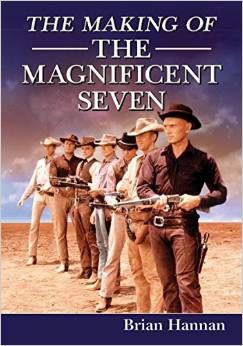
The most popular has been, without doubt, The Making of the Magnificent Seven. Telling the “Behind the Scenes” tale of how one of the most popular westerns ever made wasn’t so initially popular (it flopped in the U.S.). Given the various problems it needed to overcome – loss of three directors, umpteen screenwriters involved, Actor’s Strike. Writer’s Strike, censorship by the Mexican government, the threat of severe editing – it was a wonder it ever saw the light of day.

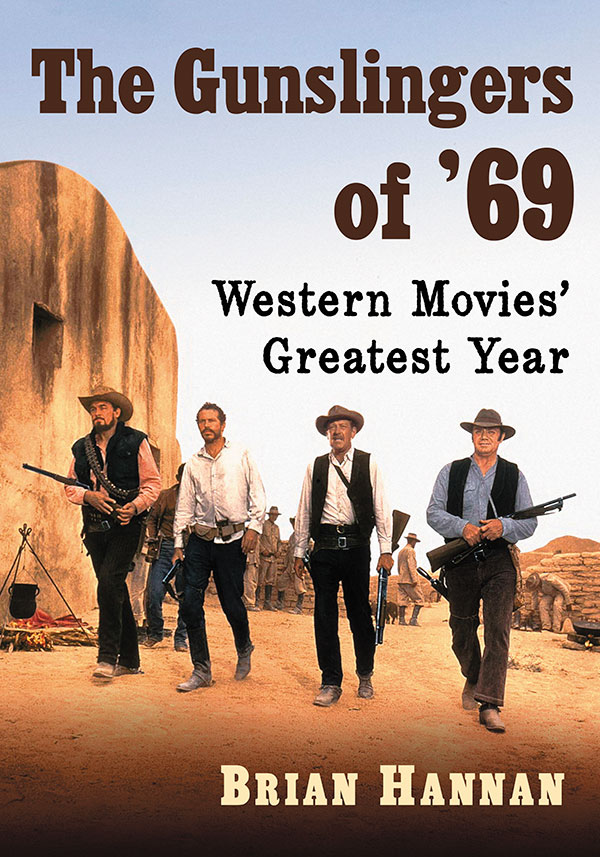
If you’re keen on this line of Hollywood history you might also be interested in a couple of other “Behind the Scenes” volumes – The Making of The Guns of Navarone (Revised Edition) and The Making of Lawrence of Arabia. For that matter, there is ample “behind the scenes” material in two other books: The Magnificent 60s – looking at the top 100 movies of the decade and which could be retitled “how the decade was born” – and The  Gunslingers of ’69 which examines the western in a pivotal year that saw the release of The Wild Bunch, True Grit, Once Upon a Time in the West and Butch Cassidy and the Sundance Kid.

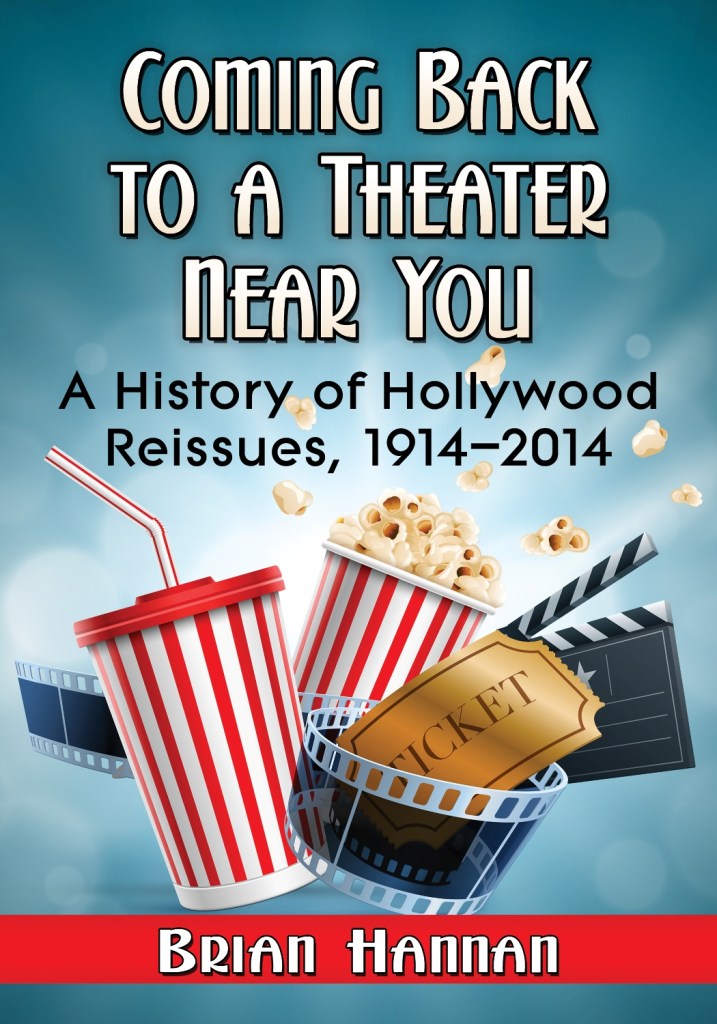
I’ve possibly had an unusual writing career in that one idea has usually led to another. While researching The Magnificent Seven, two aspects of that film fascinated me. The first, as mentioned above, is that it was a flop but that it became very successful as a reissue. So that sent me looking at the whole issue of reissue/revival. That took me way back to the Silent Era. And given no one else has written so extensively on the subject I guess I can fairly claim to be the leading expert. The result was my biggest book – 250,000 words including Notes – Coming Back to a Theater Near You, A History of Hollywood Reissues 1914-2014.

The Magnificent Seven was also given an unusual kind of release – what was called a “saturation” release with about 750 prints racing from state to state in a staggered release around the country. Eyebrows were raised because that was the way dodgy films were distributed, exploitation and horror films, whipped out of cinemas before word of mouth could kill them off. Because prints already had another pre-designated destination, The Magnificent Seven, no matter how well it played, could not be retained at any cinema, so word-of-mouth was killed stone dead.

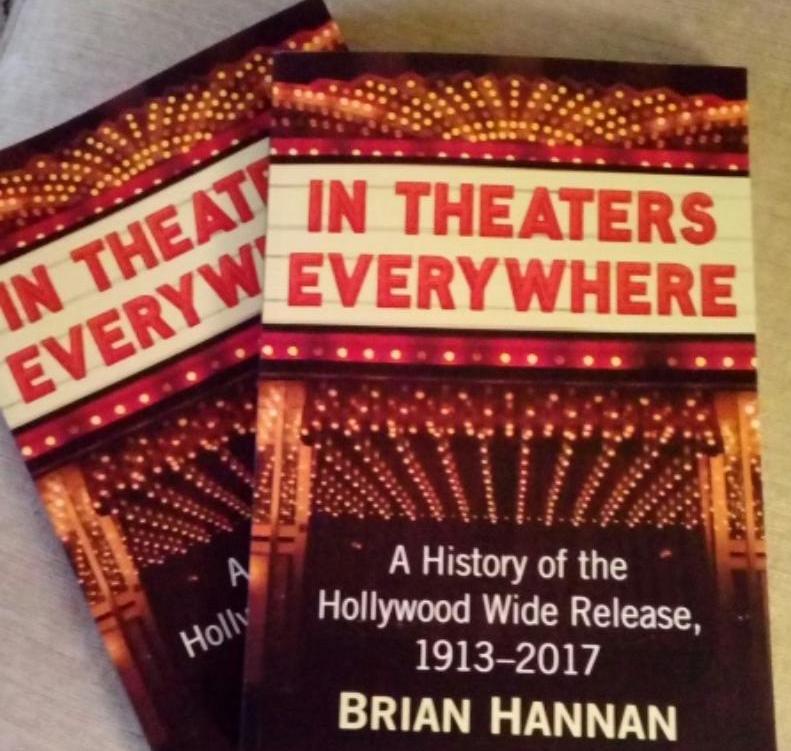
But when I did a bit of digging I discovered that the wide release had been in sporadic use since the Silent Era and I told that story in In Theaters Everywhere: A History of the Hollywood Wide Release 1913-2017.

Oddly enough, doing the research for both those books led me to my most unusual enterprise. When you go so far back in time doing research, and digging through the daily and weekly issues week-by-week of the Hollywood trade papers as was my wont, you tend to turn up other interesting facts. One of these was a report that in 1935 Mae West was the highest-paid actor (male or female).

Like everyone else I had assumed that female stars were underpaid compared to their male counterparts. But in digging deeper I came across another article that showed in the Silent Era that Mary Pickford, at the height of her box office powers, substantially out-earned a Charlie Chaplin at the height of his box office powers.

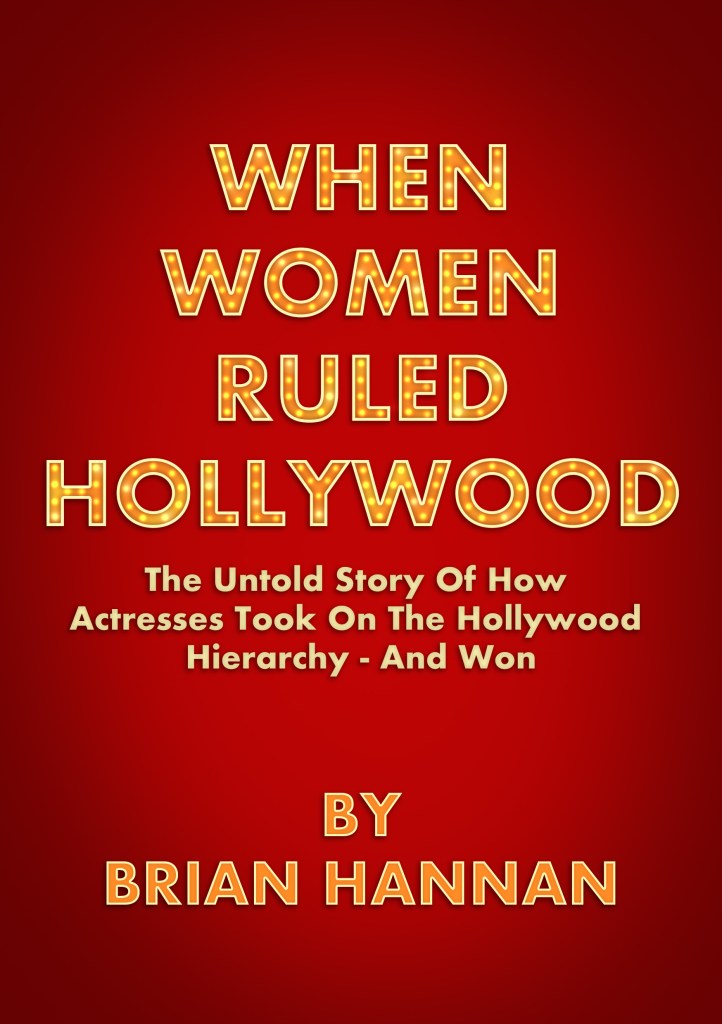
The result of that was  When Women Ruled Hollywood – between 1910 and 1948 the top female stars often out-earned the top male stars – which examines the so-called gender pay divide.  

Another movie-related hobby led me to a separate string of books. I have a collection of Pressbooks/Campaign Manuals dating from the 1950s. As well as providing, literally, cinemas with adverts in various sizes for a forthcoming movie, these publications (anything from double-sided A5 to 32-page full-color A3) came up with dozens of publicity wheezes. I got to wondering how many of these clever ideas a cinema manager put into practice. So I went down to the museum in Paisley, where I was living, and starting looking through five years’ worth (1950-1954) of the local newspaper the Paisley Daily Express.

In those days, local newspapers in Britian had adverts on the front page not news stories. And the biggest advert here was a block advert listing what was showing every day at the town’s eight cinemas. I didn’t find any examples at all of cinema managers using the ideas suggested in the Pressbooks but I did, as a matter of course, write down what was showing every day at every cinema. So at the end of the process I had five years’ worth of interesting data.

What to do? What else but turn the material into a book, relating the movie-going patterns of this town, what movies and stars were most popular, distribution patterns, B-movies, serials and reissues. That turned into Paisley at the Pictures 1950 (and there have been two sequels so far).

But since I’m not from Paisley, and as ever, in order to write this book, I started digging backwards into the town’s history of cinemas, I discovered that a horrific disaster had occurred in a cinema in 1929 where over 70 children attending a matinee perished. That became The Glen Cinema Disaster.

As a result of researching The Magnificent 60s book I came across so many interesting movies that didn’t fit into the remit, which was to analyze the 100 most popular films of the decade. In fact, I soon became aware, that thanks to academics, I had quite a distorted view of the 1960s cinema. And that nobody had really done any consistent work on popular rather than Oscar- or arthouse-worthy movies. And also, except for critics writing for monthly magazines, newspapers only allocated few hundred words to cover an entire week’s output. So most movies really only got potted reviews of less than 100 words. So I thought I would dig.

The initial result was this blog. But after receiving so many requests to make the material more easily available for consumption, I have started to turn the reviews and “Behind the Scenes” articles into books. Ambitious though this seems, I’m aiming to put into book form, one way or another, reviews on 1,000 films from the decade – and at the standard length I use for the blog, not reduced into capsule reviews like you get in so many other compendiums.

I’m going to have two types of books, splitting the actual reviews into one series of volumes (I’ve reached Volume Two so far) and the Behind the Scenes into another. Eventually, all will be available on both print and e-book formats.

So everything I’ve written is available on Amazon. I’m assuming the link below will take you to my Amazon page (you might find some items cheaper on Ebay) but if not then just put my name into Amazon and my page should pop up.

Even if you’re disinclined to purchase any books, you could do me a good favor by passing on details of my Blog to other interested parties. Currently, I’m approaching 90,000 views a year and I need 100,000 to be welcomed into the holy grail of Rotten Tomatoes.

https://amzn.to/3TjQXfI

Behind the Scenes: Coming Soon(er) or Later or Not At All

My discovery that Hayley Mills’ career could have taken an entirely different turn had either Deep Freeze Girls or When I Grow Rich entered production in 1965/1966 and therefore prevented the star returning to Britain for The Family Way (1966) – and, as it transpired, love and marriage – made me look again at the huge volume of movies that were either never made at the time initially announced or never made at all.

I’d covered a couple of classic examples previously, 40 Days of Musa Dagh for example taking nearly half a century from initial proposal to some kind of fruition. And, of course, the financial collapse of studios at the end of the 1960s put an end to the prospects of such big budget movies as Man’s Fate, to be directed by Fred Zinnemann.

But sometimes as many as half the movies announced by a studio or independent for their forthcoming schedule never made it to the big screen. Others such as This Property Is Condemned (1966), initially to star Elizabeth Taylor and directed by John Huston, still got over the line but with new players, Natalie Wood as star and Robert Mulligan in the hot seat. On the other hand, of the quartet of movies – Lie Down in Darkness, Guardians, Grass Lovers, and Linda – that producer William Frye (The Trouble with Angels) thought would make his name, none were made.

Everyone knows moviemaking is a dicey business, but you don’t realize just how tricky it is unless you count up just how many pictures, often trumpeted with big stars signed up, just don’t make it to the cinema screen. Not that Hollywood was unwilling to gamble. Studios snapped up anything – novel, Broadway play – that appeared a decent prospect.

In the early 1960s talent agency Famous Artists earned for its clients a grand total of $850,000 (equivalent to $8.5 million now) for a disparate bunch of properties. King Rat by James Clavell went for $160,000 plus a percentage and was made in double quick time. As was Lilith by J.R. Salamaca, costing $100,000, and Sylvia ($20,000 purchase price) by E.V. Cunningham (aka Howard Fast). Ken Kesey’s One Flew Over the Cuckoo’s Nest went for $85,000 to Kirk Douglas’s Bryna outfit, which explained why, a decade later, it ended up being produced by his son, Michael.

But Broadway play The Perfect Set-Up by Jack Sher, sold to Hollywood for $400,000 and with Angie Dickinson signed up for the lead, was never made. You might recall George Peppard in a TV movie Guilty or Innocent: The Sam Sheppard Murder Case (1975) but that wasn’t based on The Sheppard Murder Case by Paul Holmes that someone shelled out $25,000 for in 1962.

Director Paul Wendkos had planned to follow up Gidget Goes to Rome (1963) with Native Stone, an architectural drama in the vein of The Fountainhead based on the Edwin Gilbert book that cost him $10,000 but that hit the buffers. Two novels by thriller writer John D. MacDonald, hot after Cape Fear (1962) – the aforementioned Linda costing $15,000 and A Child Is Crying $5,000 – were not made either. Nor, out of this batch, were Indian Paint by Glenn Balch or Fish Story by Robert Carson.

Even as powerful a producer as Ross Hunter (Midnight Lace, 1960), couldn’t get onto the starting grid The Public Eye as a vehicle for Julie Andrews, Laurence Olivier and director Mike Nichols (it would have been his movie debut) – when made in 1972 starring Mia Farrow and Topol it was under the aegis of Hal Wallis. Hunter also spent $350,000 on Dark Angel to star Rock Hudson but that fell at the first hurdle as did Broadway play A Very Rich Woman to star Katharine Hepburn.

Tony Curtis was down for a remake of Casablanca (1942) called The Fifth Coin and relocated in Hong Kong and to co-star Nancy Kwan. Shooting on the Seven Arts production had a start date: November 15, 1965. But never went in front of the cameras. Kwan was particularly unlucky. The aforementioned Deep Freeze Girls also had a budget ($1.5 million) and a start date (October 1965) but it didn’t get off the ground either.

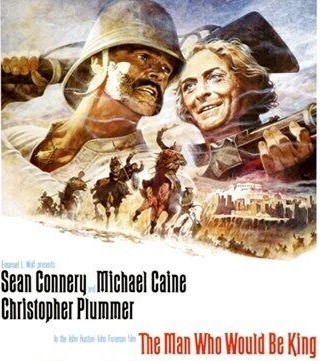
And of course Seven Arts had become enmeshed in the long-running John Huston saga of The Man Who Would Be King. This version, to star Richard Burton, had been set a $4 million budget and was due to start in April 1966. No go. At least The Owl and the Pussycat, budgeted then at $1.6 million and due to start on Dec 1965, was worth waiting five years for – when it was eventually filmed, though by Rastar not Seven Arts, it starred Barbra Streisand and George Segal.

In 1964 Columbia had 77 movies on the stocks. Richard Brooks was setting up Catch 22, Peter Sellers was being lined up for the musical Oliver!, and Carl Foreman was prepping Young Churchill. All these projects dropped off the roster, only to pop back up several years later with different stars (Ron Moody in Oliver!) or directors (Mike Nichols for Catch 22) or even studios (Paramount for Catch 22).

But others were simply shunted aside. Whatever happened to The Gay Place to team James Garner and Jean Seberg? Or The Fabulous Showman to be directed by Blake Edwards? Or another long-running saga, Andersonville with Stanley Kramer at the helm? Or Stephen Boyd as Richard the Lionheart? Even though The Ipcress File (1965) proved a big hit the same author’s Horse Under Water stalled at the starting gate, as did Robert Rossen’s Cocoa Beach and Ann-Margret in Strange Story.

When Robert Evans ushered in a new era at Paramount he placed his faith in writers. He doubled production and had over 40 writers working on projects. Some had little or no experience of movies but were big literary names. John Fowles, the adaptation of whose The Magus (1968) was an expensive flop, was hired to write Dr Cook’s Garden, but it was never made. Edna O’Brien had Three into Two Won’t Go on the stocks at Universal so she was set to write Homo Faber. Another casualty.

Oscar-winning screenwriter Edward Anhalt (Becket, 1964) was to make his directorial debut with We Only Kill Each Other. It didn’t happen. Nobody had ever managed to film Thomas Wolfe’s epic novel Look, Homeward Angel, so Paramount took a tilt at that without success. Escape from Colditz went into cold storage and an adaptation of Harold Robbins bestseller 79 Park Avenue ended up as a television mini series in 1977 and at a rival company, Universal.

It’s still standard operating procedure for Hollywood to snap up any big bestseller or Broadway hit without ever knowing whether it will ever see the light of day but willing to take the risk.

SOURCES: “Famous Artists,” Variety, August 8, 1962, p5; “Sanford and Frye of TV To Make Theatrical Films,” Box Office, January 7, 1963, p10; “Col-Frye TV Pact,” Box Office, August 19, 1963, p10; “Columbia Policy,” Variety, May 6, 1964, p13; “Seven Arts Pix Multiply,” Variety, March 31, 1965, p4;  “Ross Hunter’s Crowded Future,” Variety, May 12, 1965, p7; “Bob Evans Pays Chip Service To Writer As Star,” Variety, May 1, 1968, p19.

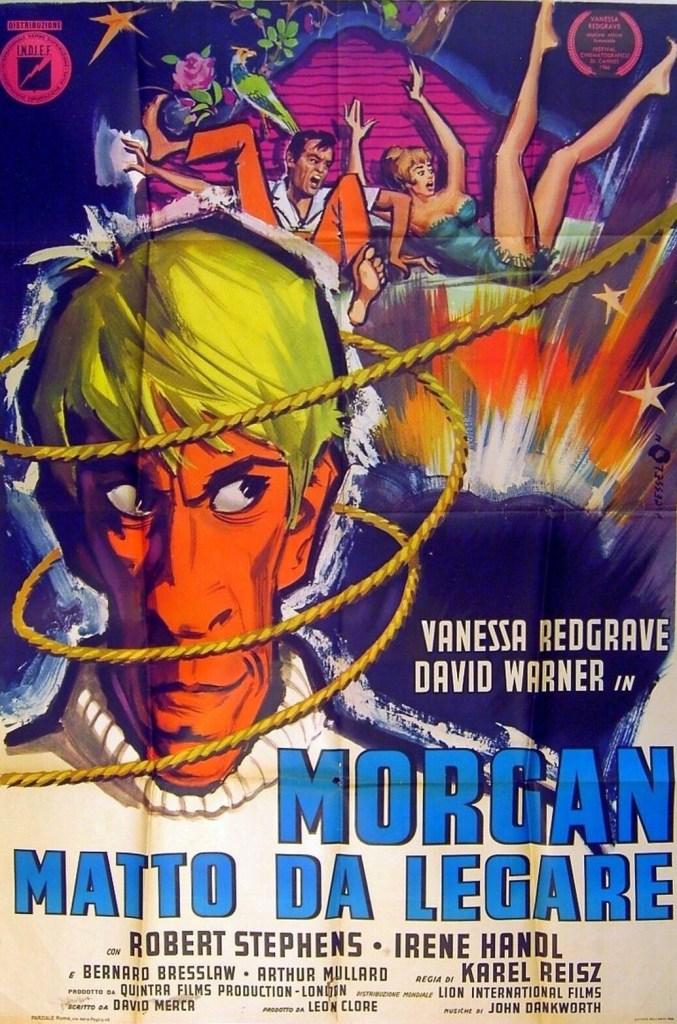
Morgan! / Morgan, A Suitable Case for Treatment (1966) ***

While Hollywood was capable of dealing with mental illness head-on in pictures like Frank Perry’s David and Lisa (1962), Sam Fuller’s Shock Corridor (1963) and Robert Rossen’s Lilith (1964), the British were more inclined to take an alternative approach. The titular characters of Billy Liar (1963) and this film dealt with awkward reality by creating a fantasy world.  

Morgan (David Warner in his first starring role), is a failed artist and virulent communist who cannot come to terms with being divorced by rich Leonie (Vanessa Redgrave) who is planning to marry businessman Napier (Robert Stephens). Morgan forces his way back into his wife’s house and attempts to win her back with nothing stronger than whimsicality and when that fails resorts to kidnap.

And it is clear that she shares his fancy for furry animals, responding to his chest-pounding gorilla impression with tiny pats of her own chest. For a slim guy, Morgan makes a believable stab at a gorilla, shoulders hunched up under his jacket, chest stuck out. And he has an animal’s sense of smell – detecting his rival’s hair oil. 

The tone of the film is surreal. Had David Attenborough been a big name then you could have cited him as one of director Karel Reisz’s influences, such was his predilection for inserting wildlife into the proceedings, not just primates but giraffes, a hippo, a peacock and a variety of other creatures. Some are comments on Morgan’s state of mind but after a while it becomes monotonous. The film is clearly intentionally all over the place, the class struggle also taking central stage, but it’s hard work for the viewer. If you had stuck in some psychedelia, the fantasy would have made as much sense as The Trip (1967).

Having said that, towards the end of the picture there is an extraordinary image – possibly stolen from the opening of La Dolce Vita – of Morgan in a straitjacket hanging from a crane. Had that been the film’s starting point, it might have dealt more demonstrably with the subject matter.  The whimsy is all very well but the focus on external animals does little to illuminate Morgan’s internal struggle and mental descent.

At this stage of his career, David Warner (Perfect Friday, 1970) exhibited a core instability, although later he was adept at ruthless villains. You could argue he is too charming for the role.

Vanessa Redgrave (Blow-Up, 1966), in her second film and her first starring role, steals the picture, winning her first Oscar nomination (in the same year as sister Lynn for Georgy Girl). She is made of gossamer. Still attracted to a man she knows will only bring her pain, she is far from your normal leading lady. There is a touch of the Audrey Hepburn in her ethereality but she portrays a completely genuine soul, not a manufactured screen personality. Robert Stephens (The Prime of Miss Jean Brodie, 1969) adds a welcome hard core to the frivolity.

But Karel Reisz (Saturday Night and Sunday Morning, 1960) misses the spot. Distinguished British playwright David Mercer adapted his own BBC television work from 1962.

Could have done with taking a step back from the material and offered a more objective assessment.

https://amzn.to/3GIA5HL

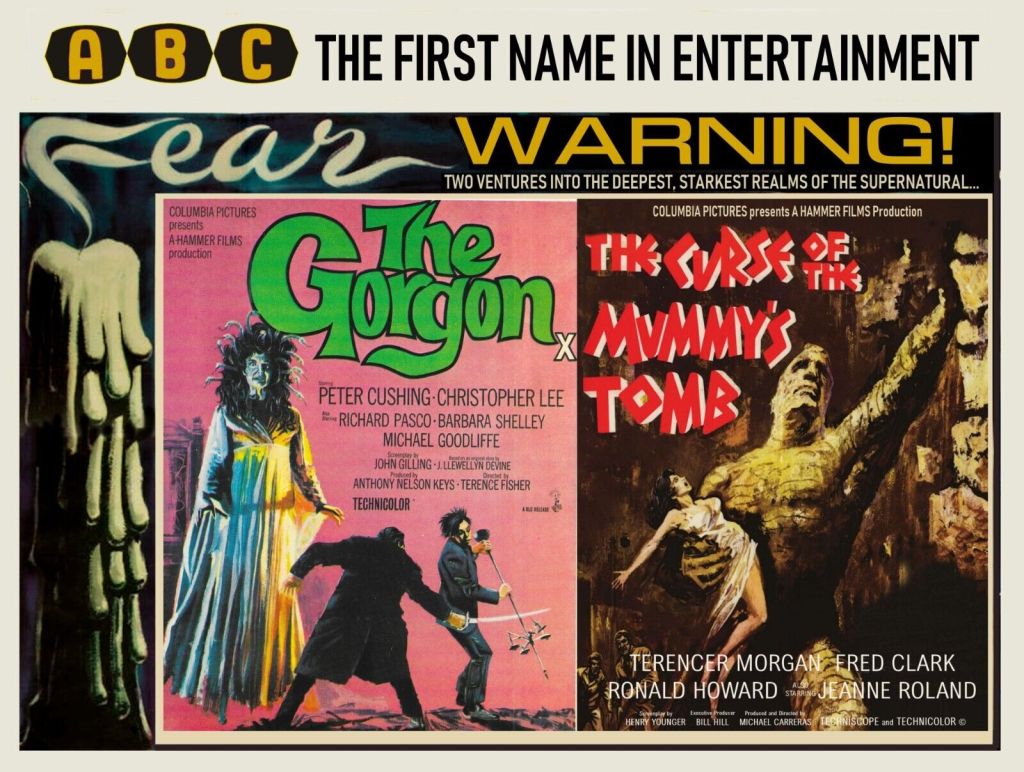
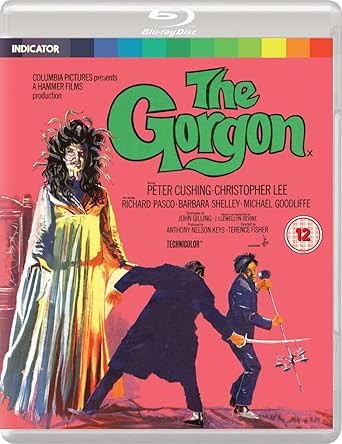
The Gorgon (1964) ***

This impressive Hammer conspiracy-of-silence slow-burner, more thriller than horror, features the triumvirate of Christopher Lee (The Devil Ship Pirates, 1964), Peter Cushing (The Sword of Sherwood Forest, 1960) and Barbara Steele (Dracula, Prince of Darkness, 1966) in untypical roles. Lee and Cushing, of course, had locked horns before, namely in Hammer’s reimagining of the classic Dracula, with the former the charismatic fiend and the latter his nemesis.

Dr Namaroff (Peter Cushing) is a  doctor in an unnamed European turn-of-the-twentieth-century police state who knows more than he is letting on about seven inexplicable deaths in five years and the possibility of a 2,000-year-old myth coming to life and taking on a human form. And with quite a human side, jealous when his assistant Carla (Barbara Shelley) falls for a younger man, Paul (Richard Pascoe). Professor Karl Meister (Christopher Lee) appears late in the day to investigate.

Director Terence Fisher, who had shepherded the studio’s Dracula, Frankenstein, the Mummy and Dr Jekyll franchises through the starting gate, builds up the atmosphere with full moons, haunting voices, fog, sudden sounds, drifting leaves and an abandoned castle forever in shadow. The camera is often a weapon of stealth. Shock is kept to a minimum, fleeting ghostly apparitions and a finger falling off a corpse. Given the limitations of special effects in this era, that was a smart move.

Far better to concentrate on fear of impending doom, a man knowing he is turning to stone, a woman living in terror of being taken over by the phantom. The title gives away the story somewhat – even if you didn’t know the Gorgon was a mythical monster with a headful of snakes and the ability to turn people to stone, that is soon explained. 

Death remains the trigger for action, the suicide of an artist after he has apparently murdered his pregnant girlfriend bringing his father onto the scene and then his brother accompanied by Lee. But all investigation hits a wall of silence after Inspector Kanof (Patrick Troughton) refuses to instigate detection.

The Hammer double bill was a common feature in British cinemas. It also meant Hammer didn’t need to share box office receipts with another company.

At the heart of all the relationships is betrayal. The artist leading his girlfriend on, Namaroff willing to endanger Carla, whom he professes to love, rather than revealing the truth. Even Carla spies on the brother, with whom she is falling in love, in order to gather information for Namaroff. 

Forgive the pun, but Shelley steals the picture. An amnesiac, a victim and finally the lure, she remains enigmatic, a whisper of a woman. It is a haunting portrayal far removed from Hammer’s traditional cleavage queens. This is a very human character who nonetheless must stand guard over herself. Shelleye, here a gentle beauty, initially introduced as merely the love interest, becomes central to the story but without sucking up all the available horror oxygen by over-acting.   

Cushing embroiders his character with little touches, smoking a cigarette in a holder, for example, but Shelley’s character, her distrust of herself, shows in every move she makes.

You would need a heart of stone to be unmoved.

https://amzn.to/41dZqD3

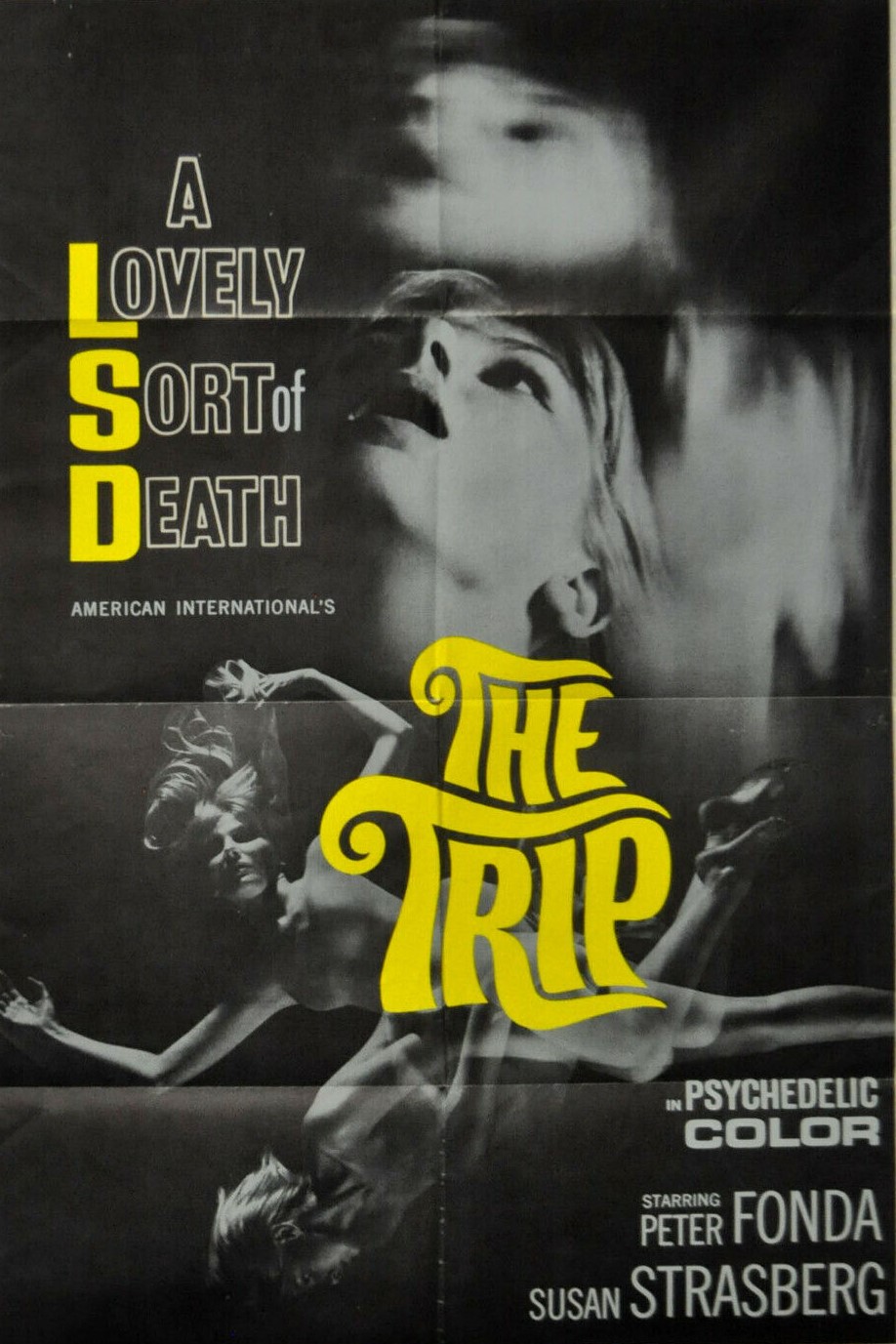
The Trip (1967) ***

Give any neophyte (word of the week!) independent film director a camera and a small budget ($100,000 in this case) and they might well have come up with something like this. Has the feel of being an advert for promoters of LSD who felt they had to play fair and show the potential downside. Meanwhile, they can jam in an absolute phantasmagoria of imagery and sit back and wait for Stanley Kubrick to rip off some of their ideas and give the whole head-spinning malarkey some credence for the conclusion of 2001: A Space Odyssey.

If there’s a story, it’s as thin as they come. Commercials director Paul (Peter Fonda), trying to understand himself better, and why, for example, wife Sally (Susan Strasberg) has left him for another man, enlists the help of self-help guru John (Bruce) to guide him through an LSD trip. The notion that there are drug guides comes as a surprise to me, and this feels like the kind of the warning you get on the side of cigarette packets, although quite what guidance anyone can expect while under the influence is anybody’s guess. If you’re high as a kite, it’s unlikely you’re on an even enough keel to do what you’re told.

Anyway, off we go. And lo and behold, before you can utter the words “groovy” or even “psychedelic,” suddenly the screen is invaded with all sorts of images, coming so quick and fast that even the ones that might makes sense – i.e. indicating paranoia – get little time to settle before the next appear. Some of the images look like they’re offcuts from an AIP horror picture, haunted houses, medieval backdrops, torture, people being mummified or hanged or drowned or all three (maybe all at once).

And from there it’s an easy step into being dazzled by headlights or climbing a cliff or running through a desert or being chased by masked men on horseback and hearing high-pitched giggling. Some of the images, while dreamlike, remain realistic, such as topless body-painted go-go dancers. And the oddest image of a woman in curlers eating a chicken leg in a laundromat feels easily like something out of a bizarre dream when in fact it isn’t.

Some stuff you might expect. Items like an orange are experienced with more intensity. And Paul is disembodied when he observes people making love. Sometimes you’re looking through a kaleidoscope, other times it’s with grim clarity. Strobe lights, hallucination, add to the dreamy expressionistic quality. Not sure the movie had much to say except drugs can be fun – or not. But, inevitably, the imagery, instead of assisting with characterization, gets in its way.

Looks strange to see so many hippies with short hair. Peter Fonda, Dennis Hopper and Jack Nicholson (here only in his capacity as the screenwriter) would come together with greater effect in Easy Rider (1969). This resembles nothing more than an audition for the later film but directed by someone (Hopper) with a bit more sense, adding a proper narrative and cutting the tripping down to the minimum.

Roger Corman (The Secret Invasion, 1964) directed but Susan Strasberg (The Sisters, 1969), Bruce Dern (Castle Keep, 1969)  and Dennis Hopper have such small parts they are almost only there to add marquee value. Not quite the ode to counter culture envisaged.

Shows how difficult it is to film the unfilmable.

https://amzn.to/3Rz1mCW

Behind the Scenes: “The Trouble with Angels” (1966)

Miracle this was made at all with so many neophyte producers involved. First up were Kenn Donellen and Jacqueline Babbin. No Hollywood experience. He was the television rep for Ford Motors, she worked for David Susskind’s talent agency. But like everyone else in the business in the early 1960s, when major studios were on the point of collapse, they thought they could do better. Especially after they nabbed the property, Life with Mother Superior by Jane Trahey, from under the noses of Disney and Universal.

The pair picked it up pre-publication, three months before it was launched by Farrar Strauss in September 1962 after serialization in McCall’s magazine and turned into a speedy bestseller. They got preference because they struck the kind of deal with the author that only newcomers desperate to get into the business would make. As well as paying a hefty fee upfront they guaranteed the author a percentage, plus, unheard-of for a first-time writer, a “say-so on production.” That clause alone would have alarmed any other studio.

Donellen and Babbin were prepared to put up half the $750,000 budget if the remainder was met by a major studio or independent. Production was scheduled for Spring 1963.

Not surprisingly, it suffered from lack of partners. Briefly, it shifted to the bulging portfolio of Ross Hunter. He envisaged an all-star cast older cast in the style of Disney’s Pollyanna (1960): Barbara Stanwyck (The Night Walker, 1964), Loretta Young (whose last movie It Happens Every Thursday was in 1953) and Jane Wyman (Pollyanna) as nuns, which removed the onus from youngsters Patty Duke (The Miracle Worker, 1962) and Mary Badham (To Kill a Mockingbird, 1962). Interestingly, his production of The Chalk Garden (1964) with Hayley Mills was so successful in its New York run it earned back its negative cost.

But that didn’t float Universal’s boat and Columbia stepped in in 1964, handing the production to another neophyte, William Frye. He belonged to a new breed of producers who had cut their teeth in television as writers before moving into overseeing small-screen programs, and attempting the jump to features. Frye had been more successful than most. He had a production deal with Columbia.

But initial attempts to film Guardians from the novel by Helen Tucker, Grass Lovers, thriller Linda by John D. MacDonald and Lie Down in Darkness by William Styron to be directed by John Frankenheimer came to nothing. In the end, Columbia handed him Mother Superior, as the movie was now known.

But this was his first production and either through naiveté, ambition or publicity-seeking genius, Frye had the sensational idea of fielding a million-dollar offer to Greta Garbo to play Mother Superior, in what would have been the comeback to end all comebacks, given she had not made a movie in three decades. That would have made a heck of a dent in a movie budgeted at $2 million. Needless to say, the offer was declined. Eventually, he settled on four-time Oscar nominee Rosalind Russell, for whom this was also something of a comeback, her first picture since Gypsy (1962).

Hayley Mills had parted company with Walt Disney after a run of six films that had turned her into the biggest child star (admittedly, a small pool) in the world. But she was trying to break out from that persona. She was 19 and couldn’t keep playing kids forever. In an attempt to spread her wings, she and her father, actor John Mills (Tunes of Glory, 1960) set up production outfit The Company of Six along with fellow actors Richard Attenborough, Herbert Lom and Curt Jurgens and writer-director Bryan Forbes.

And she faced another dilemma. Her Disney pictures were big box office, but other movies made out-with that brand were less successful. In some respects, this was an ideal halfway house. In this picture she wasn’t saddled with being a tomboy and there was no romance and she was able to infuse the role with more emotional maturity while still developing her comedy chops.

It wasn’t her only choice. She was set for Deep Freeze Girls along with Nancy Kwan and Sue Lyon for Seven Arts. Production was scheduled to begin in October 1965, following on from The Trouble with Angels, but it never got off the ground.

As importantly, Mills fitted the new Columbia talent development strategy. The studio had signed up seven young stars but aimed to have 40-50 on board within a year, partly as a way to reduce costs and partly as a method of courting the younger audience. So, you couldn’t have a better poster girl for that particular scheme than Hayley Mills.

By this point, Ida Lupino, once a big movie star (High Sierra, 1940) and an accomplished director after a string of B-film thrillers in the early 1950s such as Outrage (1950) – one of the first X-certificate films in Britain – and The Bigamist (1953), was now a television gun for hire, reduced to directing episodes of Bewitched, The Twilight Zone, Dr Kildare and The Fugitive. But she had worked for Frye in television when he was in charge of the General Electric Theater and Thriller series Still, it was a brave move to hire a director, never mind a female director, who had been out of the movies for 13 years.

In Hollywood, Lupino was now in a majority of one, the only female director working in the mainstream. Up till then, in the whole of the decade, only two other women had found a directing gig and that was in the independent sector, Shirley Clarke with The Connection (1961) and Joleen Compton with Stranded (1965), though that had been shot in Greece. Although Variety ran a front-page splash in 1964 entitled “Women Directors Multiply,” the situation overseas was little better. Belgian Agnes Varda (Cleo from 5 to 7, 1962), Swede Mai Zetterling (Loving Couples, 1964) and Lina Wertmuller (Lizards, 1963) were the only examples the trade magazine could find.

It was Lupino’s decision to limit the use of color, mainlining on “stark black and white and charcoal grey.” When color did appear it was in a “sudden splash” such as a swimming pool or a green meadow or the red of the marching band outfits. “The possibilities of color are fantastic,” opined Lupino.

Columbia was on such a production spree, 77 pictures on its slate, space so tight on its sound stages, that some scenes on The Trouble with Angels were farmed out to Goldwyn Studios. Most of the train scenes were shot at the Santa Fe depot, though the opening train sequence took place at Merion train station in Pennsylvania.

The movie title was changed to The Trouble with Angels due to a surfeit of movies about nuns. Of course, nuns had periodically hit pay dirt at the box office. Look to Heaven Knows Mr Allison (1958) and The Nun’s Story (1959). But their box office had hardly prepared anyone for The Sound of Music (1965). And coming up on the outside was The Singing Nun (1966) starring Debbie Reynolds, though a foreign effort La Religieuse (1965) had been banned in France.

Lupino’s picture and The Singing Nun were soon on collision course, vying to become the Easter 1966 attraction at the prestigious Radio City Music Hall in New York (the largest auditorium in the country with over 6,000 seats). The Trouble with Angels lost out and settled for the first run Victoria and the arthouse Beekman (not such an unusual mix as, due to a dearth of screens thanks to roadshow long-runners, arthouses were often drafted in to make up the numbers).

William Frye planned to team up again with Mills and The Trouble with Angels screenwriter Blanche Hanalis for When I Grow Rich, a $3 million romantic drama to be filmed in Turkey for Columbia, but that fell through and after falling in love with her director Roy Boulting on The Family Way (1966), Mills career headed in another direction.  

The Trouble with Angels was so successful it spawned a sequel, Where Angels Go Trouble Follows! (1968). Mills spurned an offer to reprise her role. Rosalind Russell returned, her young nemesis played by Stella Stevens (Sol Madrid/The Heroin Gang, 1968).

SOURCES: “Young Producers Not Arty At All,” Variety, June 20, 1962, p4; “Frye Buys Grass Lovers,” Variety, September 12, 1962, p11; “Sanford and Frye of TV To Make Theatrical Films,” Box Office, January 7, 1963, p10; “Col-Frye TV Pact,” Box Office, August 19, 1963, p10; “Women Directors Multiply,” Variety, March 11, 1964, p1; “Columbia Policy,” Variety, May 6, 1964, p13; “Ida Lupino To Direct Col’s Mother Superior,” Variety, February 10, 1965, p15; “Seven Arts Pix Multiply,” Variety, March 31, 1965, p4;  “Form Company of Six,” Variety, April 21, 1965, p28; “Ross Hunter’s Crowded Future,” Variety, May 12, 1965, p7; “Production Spills Over,” Variety, September 15, 1965, p22; “One Nun or Another for Music Hall,” Variety, January 12, 1966, p17; Robert B. Frederick, “Sister Act,” Variety, April 20, 1966, p22; “Istanbul Rides Location Boom,” Variety, May 4, 1966, p150.

Discover WordPress

A daily selection of the best content published on WordPress, collected for you by humans who love to read.

The Atavist Magazine

by Brian Hannan

WordPress.com News

The latest news on WordPress.com and the WordPress community.