The Money Trap (1965) ****

Film noir morality play. Highly under-rated, especially unfair since all four principals put in excellent performances, plus a nifty screenplay, and generally erratic director Burt Kennedy on very solid cinematic ground, even if he has a predilection for showing legs, and not just of the female variety.

Film noir is at its best when the plot is simple, usually good guy inveigled into taking a wrong turn through avarice, revenge or a femme fatale. This takes an unusual route. Idealistic cop Joe (Glenn Ford) worries beautiful wealthy spendthrift wife Lisa (Elke Sommer) will abandon him for a richer guy since her allowance has dried up.

Assuming she is already making her play, Joe has a one-night stand with old flame Rosalie (Rita Hayworth), a lush married to a murdered burglar. His partner Pete (Ricardo Montalban), envious of his buddy’s wealth, blackmails him into robbing the safe of Mafia doctor Van Tilden (Joseph Cotten) who, in self-defence, killed the burglar. Meanwhile, as contrast,  the pair are investigating the murder of a sex worker trying to earn extra money to shore up her husband’s miserable income.  

While it’s got all the requisite of film noir, atmospheric use of light given it’s shot in black-and-white, that unusual footage of legs, and feet, especially when Rosalie is followed by Tilden’s thug Matthews (Tom Reese), cunning villain, the unexpected twist, neither of the femmes it transpires is much of a fatale, greater backbone than you might expect.

But mostly, it focuses on decision and consequence. Will Joe accept he could lose his wife, will Lisa make the jump into a lower standard of living in order to hold onto her husband, or will Joe distrust that his wife can change and find a way to bring the loot he thinks will keep her satisfied? Lack of trust all round proves their undoing.

There’s the usual, silent, heist, though quite where Joe and Pete acquired their safecracking skills is never discussed. It is the perfect robbery, a dodgy doctor unlikely to call in the cops, especially as they might get suspicious as to just why he is such a common burglary target. Except it’s not. For what’s in the safe is too hot for any cop and Van Tilden, more streetwise than the police, is always one step ahead. Instead of it being the greedy Lisa who could ruin their otherwise stable and loving marriage, it’s Joe.
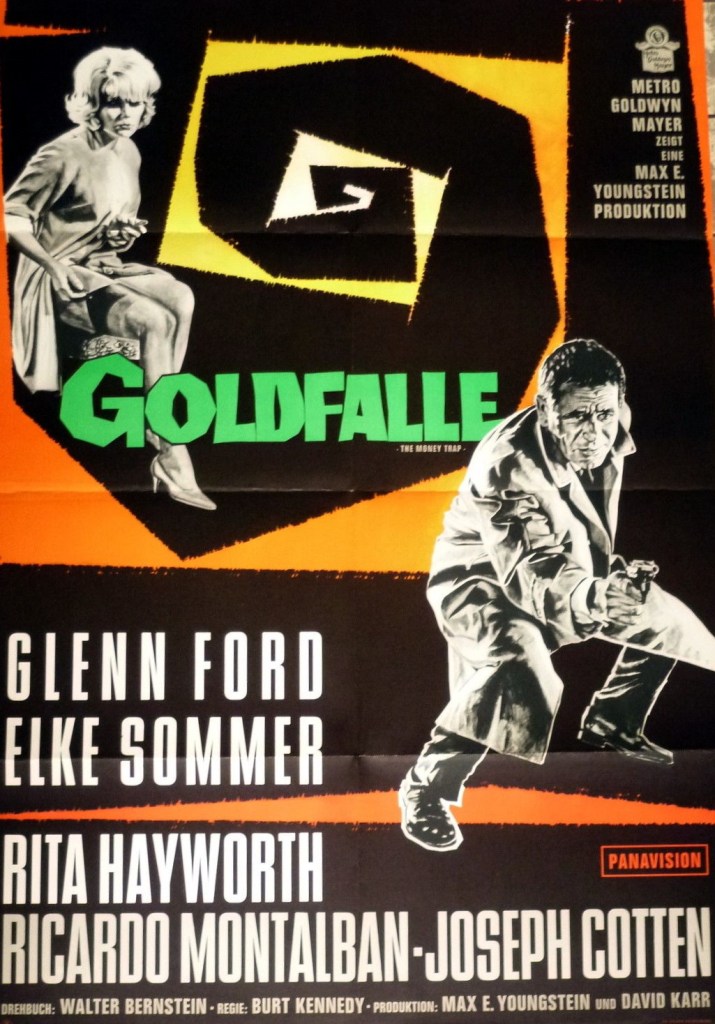
There are a handful of clever twists, not least that Joe’s dalliance with Rosalie signs her death warrant, but I won’t give those away. It’s too tightly told to spoil it. That’s part of the beauty here, it’s a neat 90 minutes, short and to the point, temptation and consequence.

If ever there was an actor under-rated during this decade it’s Glenn Ford (Rage, 1966). He was hardly ever cast in a big-budget picture except as part of an “all-star cast”, and mostly, given the extravagances elsewhere, in A-pictures whose budgets in reality turned them into B-pictures, and he ended the decade in a rut of westerns, all as under-rated as him. But he brought a tremendous intensity to every role, equally believable as romantic hero and potential heel, and in action, as here, he moves with lethal speed. He had a unusual gift as an actor – you always knew he was thinking. And was very likely to be saying one thing and thinking or meaning another.

Here he acts his socks off. You wonder just what has he got to live in such a fancy house with a rich gorgeous damsel and it doesn’t take long to find out his attraction to him, that right stuff that would rarely come an heiress’s way, more likely to trundle her way through endless marriages and affairs seeking a stability that wealth does not bring.

Elke Sommer (They Came To Rob Las Vegas, 1968) is a revelation, mostly because the script builds her a proper character, loving wife temporarily distracted by potential loss of wealth, but knowing enough about her husband to recognise she’s be better off with him than without him.

Rita Hayworth (The Happy Thieves, 1961) makes the most of her last meaningful role, not lit to shimmering glory by a black-and-white camera, but while shown at her blowsy physical worst redeemed by mental strength. Ricardo Montalban (Cheyenne Autumn, 1964) , usually relegated to a supporting role, provides not only the narrative impetus, but his character twists and turns throughout. Joseph Cotten (Petulia, 1968) has cold blood running through his veins.

This is early-promise Burt Kennedy (Dirty Dingus Magee, 1970) and with a tight script by Walter Bernstein (Fail Safe, 1964) delivers a surprisingly effective very late period film noir.

Terrific acting, by twisty plot held in check by realistic consequence.

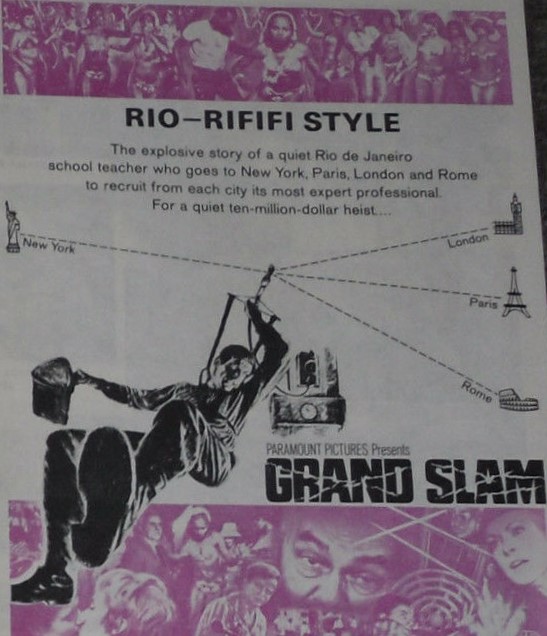
Grand Slam (1967) *****

Stone cold classic. An absolutely riveting watch from start to twist-ridden finish. The best heist picture I have ever seen. Although throwing an occasional nod to acclaimed predecessors Rififi (1955) and Topkapi (1964), in my opinion this majestic opus tops both. And for one simple reason. There is no grandstanding, neither from director nor actors.

Although director Giuliano Montaldo (Machine Gun McCain, 1969) tosses in a few Hitchockian moments, these are never long-drawn-out in the manner of the master, because there’s never any let-up in the suspense and therefore to do otherwise would be to indulge himself.  If there is boldness it’s in the muted tone. The marquee names – Edward G. Robinson (The Biggest Bundle of Them All, 1968), Janet Leigh (The Manchurian Candidate, 1962) and Adolfo Celi (Danger: Diabolik, 1968) – are all low-key, non-intrusive.

The title “Carnival of Thieves” had already been used for another heist movie
-” The Caper of the Golden Bulls.”

The bulk of the Rio-set action is carried out against the background of the annual carnival by what appear to be a bunch of unknown supporting stars who seem honor-bound to make no attempt, except as befits character, to steal the limelight, so we are not faced with a Reservoir Dogs (1992) or The Usual Suspects (1995) where everyone is jockeying for position, expecting stardom to beckon.

Fabulous plot is matched by terrific telling, information cleverly withheld until the last moment so that it is a constant railroad of surprise. For example, a church tower plays a critical part in abseiling into the robbery locale, but what we don’t know until it suddenly rings is that there’s a massive bell that, if otherwise there had not been a carnival going on below, might have caused a few to glance up at an inopportune moment. Nor are we shown its clock until the moment when we realize the thieves are running behind schedule.

The memorable stand-alone moments are reserved for the opening. The first shot is of a cherubic choir singing farewell to their retiring schoolmaster Professor Anders (Edward G. Robinson). The next short sequence has him in New York examining in a shop window a display of expensive cigarette lighters (those, it takes us time to realize, also play a crucial role). Then he arrives at a stunning mansion where he passes through what appears to be an upmarket crowd, dinner jackets and cocktail gowns, watching a classical musical concert. You imagine the woman on stage is an opera singer. As Anders is being shown into another room she starts peeling off her clothes to the classical music.

Anders has come to meet childhood buddy Milford (Adolfo Celi), now a big-time gangster, to ask for help in recruiting a team of four experts to carry out the audacious theft of $10 million in diamonds. You might gaze in astonishment as I did at Milford’s superb filing system, a huge alphabetical bank covering every known area of criminal expertise.

Once the crew are selected Anders bows out and we don’t see him again till the end. You keep on expecting a star of Edward G. Robinson’s caliber to turn up again, but that’s part of the clever ongoing bait-and-switch. The team, recruited from European capitals, comprises English safecracker Gregg (George Rigaud), German muscle Erich (Klaus Kinski), meek Italian electronics whizz Agostino (Riccardo Cucciolla) and French playboy Jean-Paul (Robert Hoffman).

Playboy? What the? Who on earth hires a playboy for a multi-million-dollar heist? Well, his area of expertise is seduction. And the plan requires the secretary, Mary Ann (Janet Leigh), to the vault’s general manager to fall into his arms because she possesses a vital key. As per the norm, there’s a bunch of stuff that doesn’t go according to plan, most notably a newly-installed sound detection device in the vault that requires ingenious invention to beat. But what also doesn’t go according to plan is the seduction.

This is one of the cleverest devices I’ve witnessed for ratcheting up suspense, especially since time is so critical. This should be a slam-dunk for the impossibly handsome Jean-Paul, who has beauties hanging off his arm. Especially as Mary Ann is something of a plain Jane, eyes concealed behind thick spectacles, wearing unflattering clothes, a cold fish with a snippy demeanor, rebuffing his every approach. When finally Jean-Paul succeeds and manages to access her purse wherein lies the key, he finds two key-rings. Having successfully managed to filch the key, three times he is foiled getting it safely to his confederate.

Twist upon twist, oh you haven’t seen the half of it. The usual falling out among thieves is restricted to tough guy Erich instinctively taking against the lightweight playboy and there’s an unexpectedly tender scene of the mild Agostino attracting the attention of a young Brazilian Setuaka (Jussara), so poor she is reduced to squatting on an empty yacht, lack of mutual language scarcely hindering prospective romance.

A couple of times the audience reacts to unspoken tension, at one point the crew think Mary Ann has spotted them from her office window, another time you think she has made the connection between the lighters. And there’s just a stunning scene at the end when Jean-Paul leaves Mary Ann and alone in her apartment she switches off the lights. And the subsequent shock on her face as she realizes she is the patsy. And one scene where the rolling of eyes conveys enormity of reaction.

Silly me, I’ve spent so much time going on about the incidentals I’ve given almost nothing away about the heist. Just as well, I guess. The robbery is timed to take 30 minutes and that’s the screen time allocated, so you follow the team minute-by-minute inch-by-inch as their elaborately complex scheme unfolds.

The confidence of the director in dispensing with dialog and during the heist with music speaks volumes about the quality of the production.

But could you imagine either of the Oceans pictures minus stars Frank Sinatra, Dean Martin, Sammy Davis Jr, George Clooney and Brad Pitt. That’s effectively what Montaldo has set out to do here. The major stars don’t dominate. It’s left up to the workers to carry the movie and in sticking to their characters rather than showboating it all turns out splendidly.

Edward G. Robinson is at his quiet best, completely lacking in the intensity you might anticipate, the calmest criminal mastermind if all time. Janet Leigh is just superb – and I can see where her daughter Jamie Lee Curtis – gets that austere prim look from. Theoretically, Klaus Kinski (Five Golden Dragons, 1967) is the pick of the supporting cast, mainly because eventually he gets to be the Klaus Kinski we all expect, but my money is on Riccardo Cucciolla (Sacco and Vanzetti, 1971) as the unobtrusive lovelorn genius and Argentinian George Rigaud (Guns of the Magnificent Seven, 1969) for his spot-on depiction of a cool upper-class Englishman. It took eight writers to put together the screenplay and you can see why, every detail, every nuance of character, finely wrought.

In all the time I’ve been writing this Blog I have never enjoyed such an unexpectedly  enjoyable experience.

This is one film you just can’t afford to miss.

Baby, The Rain Must Fall (1965) ***

Nothing to live on but dreams and, in those days, no social media to bail them out. Spare sad lives in Small Town U.S.A. told with an occasional grand guignol touch. Look elsewhere for the laconic loner of Steve McQueen legend, to, for example, The Cincinnati Kid, out the same year.

This has the feel of a vanity project, the actor’s Solar outfit taking a production credit, as if the star felt he wouldn’t properly be recognized as an actor unless he had a ton of lines to chew through. And he might be right to feel aggrieved, wildly contrasting roles from Daniel Day-Lewis in movies that opened the same day in New York two decades later had critics reaching for the superlatives. 

By my reckoning, this was the last year, save for occasional outliers like In Cold Blood  (1967), when studios accepted the hi-falutin’ notion that filming in black-and-white added artistic luster regardless of the damage it might do to a picture’s commercial prospects. The mono approach is taken to extremes from time to time, the contrast so sharp it might have emanated from the Ingmar Bergman school of cinematography. And given the desultory lives picked over, this might have fared better with subtitles, the kind of foreign picture that arthouse audiences fawned over.

Prison parolee Henry (Steve McQueen), entitlement hormone running amok, has got it into his head that if only he had the funds to reach Hollywood or Nashville (either would do) his singing and song-writing talent would be recognised. This puts wife Georgette (Lee Remick), newly arrived with small daughter, in the position of going out to work to keep the family, altering her domestic situation from independent single mother to wife in thrall to waster husband.

She’s supposedly no dupe either, rejecting the kindness of strangers, as if aware it usually comes with strings attached. It’s a given that any time a child enters a romantic equation you can be sure the narrative will turn on parenthood and responsibility. And that’s pretty much all the story there is.

You can guess from the outset that while Henry’s singing might set a few female hearts zinging, it’s not likely to win him a contract. So the question is, really, whether Henry can settle down and not be so swift to resort to his knife when confronted with a messy situation.

It’s marred by a couple of truly terrible scenes, a poorly-choreographed fight and a really odd sequence that has Henry declaiming with his back to a tableau of motley characters with the contrast at its sharpest. And in what looks like nothing more than an old haunted house.

It’s well-meaning enough and for the most part McQueen dispenses with the tough-guy attitude, but he doesn’t really offer enough in its place. It’s the kind of role that could easily have been delivered as effectively by any number of actors with nothing approaching his star quality. And that’s a shame because he really is trying – though it’s the trying that gets in the way, you keep on waiting for the real Steve McQueen to turn up.

If director Robert Mulligan (Up the Down Staircase, 1967) hadn’t been so determined to paint it in downbeat arthouse tones, the actor might have felt free enough to come up with a genuinely original turn. Though I accept it’s a bit unfair to complain about McQueen attempting something different, there’s no real excuse for him creating the worst singer ever to hit the screen.  

You might also note, by the way that whereas McQueen takes pole position on the poster, in the screen credits Lee Remick (Days of Wine and Roses, 1962) is top-billed. Remick is better than McQueen because she has a deeper well of emotions and wider range of characterizations to choose from. You never feel she is acting to save her career or hope that Oscar voters might nod in her direction.  

The movie makes more sense once you understand it really belongs to the 1950s –  the Horton Foote (To Kill a Mockingbird, 1962) Broadway play on which it is based was staged in 1954. The movie fatally switches focus from Georgette to Henry before working out which actor was likely to best convey the happiness drought on which the work depends. There’s more than enough sadness to go round but it just seems solidified from the outset. No great harm – that may well be the truth of it – but it prevents the movie taking off, stuck as it is in recycling Henry’s weary past. Don Murray (The Viking Queen, 1967) makes a good fist of a widowed sheriff.

Worth a look to see McQueen tackling something different. You decide whether he succeeds or fails.

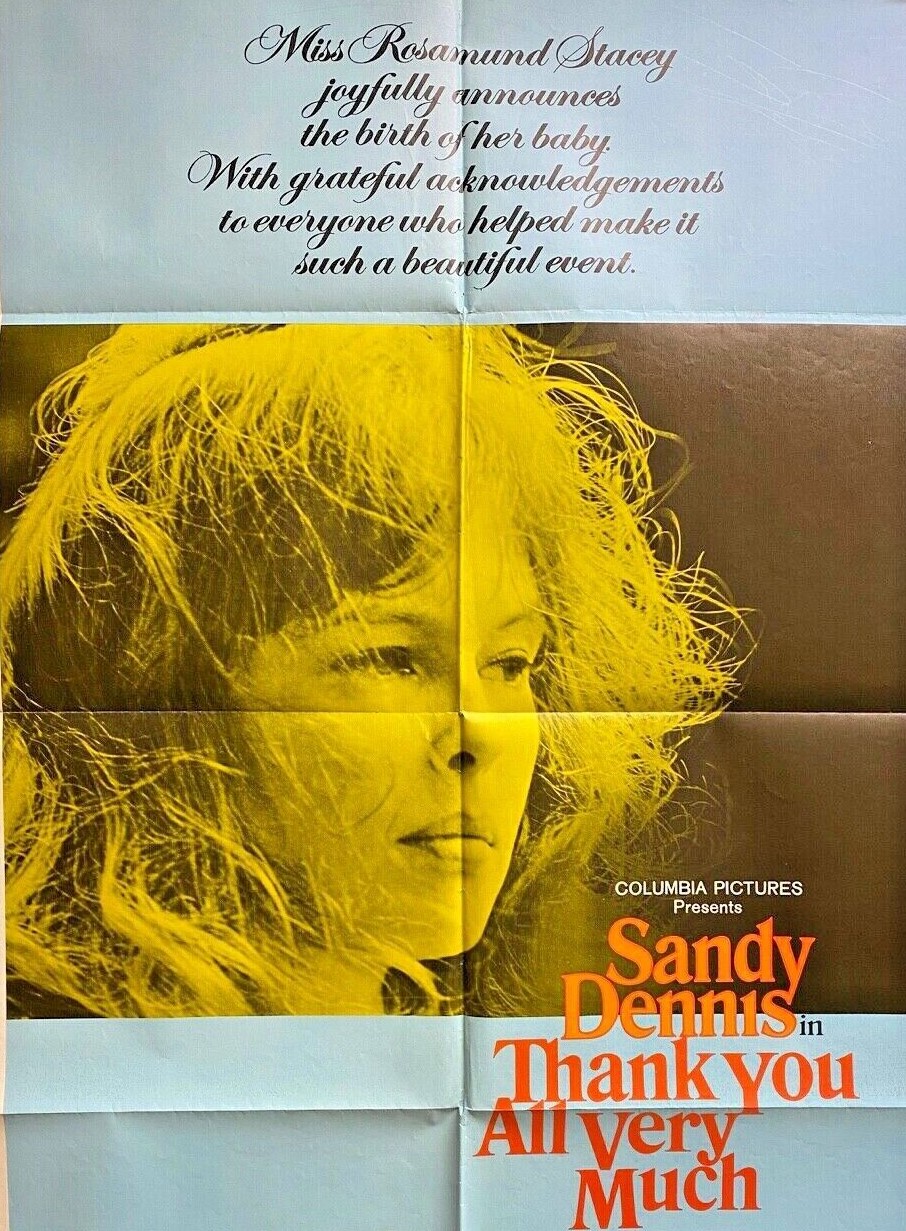
Thank You All Very Much / A Touch of Love (1969) ***

The combination of Amicus and pregnancy might lead audiences to expect a monster baby of It’s Alive (1974) dimensions. Nor would you associate the studio, which made its name in horror pictures where women were either victims or sex objects, with feminism. But producer Milton Subotsky plays it straight, the only concession to the Margaret Drabble source novel is to change the title, from the obvious The Millstone to the more ironic Thank You All Very Much (in the U.S.) and A Touch of Love (in the U.K.).

It doesn’t go down the single mum kitchen sink route either, abandoned female struggling in poverty and desperate for a man. In fact, except in one instance, dependable men are in short supply. Though, it has to be said, female support isn’t much better.

Now there’s counter-programming. A “woman’s picture” supported
by low-budget actioner aimed at men.

Pregnant after a one-night stand with television personality George (Ian McKellen), post graduate student Rosamund (Sandy Dennis), after toying with home-made efforts at abortion, decides to have her baby. Luckily, she can afford it, living in a splendid apartment in what looks like South Kensington rather than a bedsit in a more squalid area of London. Her parents are more remote, tending towards the upper rather than the middle classes, the type who park their offspring in boarding school to minimize a child’s impact on their busy social lives.

Sandy Dennis (Up the Down Staircase, 1967) has quite a trick in her screen persona. She is generally initially presented as weak, whiny, vulnerable, trademark quavering voice helping this along, a potential victim until her inner steel exerts itself and you realize she is not the person you think she is. Almost an actorly version of the Christopher Nolan trope of letting you believe a character is one type of person until he/she turns out to be another.

There isn’t too much of the mother being tormented out of her skull by a baby screaming its head off – or as in Nolan’s latest opus Oppenheimer, a mother unable to cope handing the child over to someone else to look after – but she is very much alone, unable to reveal to the father his part in the pregnancy, despite having another one-night stand with him. So mostly it’s her coping with the system, suffering in silence in the traditional British manner endless bureaucracy, sitting in a long queue in a waiting room, and being beset by the very people you might expect to be more sympathetic.

Supporting feature given more prominence here.

But the nurses seem very much cut from the same pragmatic cloth as her parents. Prior to birth, one nurse informs her that it’s selfish not to give the child up for adoption. When the baby is convalescing in hospital after a heart operation, matron (Rachel Kempson), a graduate from the Nurse Ratchet school of health care, consistently refuses to let the mother see the baby as it’s apparently against hospital rules until in the best scene in the movie, and the one that achieves the Dennis trick, she literally screams the place down.

That nurses on a maternity ward full of little more than I would imagine at times screaming children are so disturbed by the prospect of an adult rebelling against the stiff upper lip conventions of British society says a great deal about the kind of uniformity and subservience expected of the public by those in charge of any large organization. None of the Angry Young Men of earlier in the decade would dream of such a simple solution to a problem.

Eventually, being allowed to sit by her child’s bedside until late into the night permits Rosamund to complete her thesis and win her PhD. She’s not quite as hard-nosed about George as she likes to imagine but since he’s not sufficiently taken with her child to allow it to disrupt a projected trip abroad, she realizes what had been plainly obvious to the audience that she is better off without men – or at least this particular, ineffective, individual – for the time being.

So most of the film is about Rosamund learning to enjoy her independence, able to achieve her goals without male assistance, and that’s generally done by action rather than dialogue or monologue, some heated debate or major crisis. Excepting the incident with Nurse Ratchet, it’s just about coping, and awareness that maternity need not cramp ambition.

Her arty friends (and parents for that matter) are all too keen on having a good time – the males mostly trying to bed her – to lend much support. Some like Lydia (Eleanor Bron) have a warped view of life.

In his movie debut Waris Hussein (The Possession of Joel Delaney, 1972) takes the striking narrative route of not allowing the picture to become tangled up with romantic complication, keeping it squarely focused on feminism, succeeding on your own terms, not reliant on men, embracing both motherhood and career. Margaret Drabble wrote the screenplay.

Sandy Dennis (Up the Down Staircase, 1967) delivers another telling performance, one of the few actresses permitted to be center stage in a non-romantic narrative, because this is the kind of role she can easily pull off. She manages a convincing British accent without falling prey to too much Britishness.

Minus the tell-tale diction that marked his later career, Ian McKellen (Alfred the Great, 1969) has an effective debut as the charming though selfish lover. Eleanor Bron (Two for the Road, 1967) is the pick of the supporting cast as the soft-hearted best friend who is too pragmatic by half. Others popping up include John Standing (Walk, Don’t Run, 1966), Margaret Tyzack (2001: A Space Odyssey, 1968), Maurice Denham (Midas Run, 1969) with Rachel Kempson (The Charge of the Light Brigade, 1968).

Unfussy direction matched with another brilliant turn by Sandy Dennis makes this a must-watch.

Boeing Boeing (1965) ***

Farce is particularly difficult to pull off on screen. What is so effective on stage where the audience has full view of doors opening and characters appearing/disappearing and can often view, like a pantomime, circumstance changing ahead of the characters, grinds to a halt when the camera has to cut between various characters.

A speeded-up Tony Curtis (The Boston Strangler, 1968) doesn’t help though lack of his usual zaniness provides Jerry Lewis (The Nutty Professor, 1963) with the opportunity to present a more grounded character. To some extent, there’s little director John Rich (Wives and Lovers, 1963) needs to do than to keep the ample supply of balls rolling.

The movie displays its sexist credentials – listing the measurements of the female stars – not just in posters such as the one above but also in the film’s credit.

Though it sticks to the normal formula of girls falling out of the woodwork at inappropriate times, the Parisian set-up is a beaut. Journalist Bernard (Tony Curtis) has three girls on the go, all airline stewardesses, all believing themselves to be his fiancée, and by dint of assiduous study of flight schedules ensures that their paths never cross. His acidic housekeeper Bertha (Thelma Ritter) keeps the love machine well-oiled by switched around framed photos are changed and relocating underwear to suit the next imminent arrival.

Things go awry when American airline Boeing introduces a faster model, meaning that his lovers return sooner than anticipated. Stakes are raised when reporter rival Robert (Jerry Lewis) queers his pitch. So mostly it’s Bernard trying vainly to keep all his balls in the air without being rumbled while Robert attempts to sabotage the operation.

There’s not much more to it than that, the girls’ consternation at finding another woman in the apartment, Bernard gamely finding excuses for their presence.

Nor is it as risqué sex-wise as you might expect. The period didn’t allow for the hostess trio to actually be engaging in hanky-panky with Bernard. They are all allocated separate bedrooms so it will seem to a modern audience that all his frantic energy is wasted, though the initial stage audiences would accept the bedroom shenanigans as long as conventions were respected. Amorality goes only as far as keeping three girls on a string rather than actually taking them all to bed.

Of course it builds up into a riotous outcome but the farce remains forced.

Tony Curtis mugs his way through the entire thing, face twisted a  million ways, eyeballs rolling so much you think they are going to bounce clear of the sockets, and delivering dialog so fast he can hardly get to the end of one thought before another has interjected. Jerry Lewis is better value as the straight man, not relying on the physical comedy of previous roles, nor any obvious mugging, and creating a sly believable character intent on getting revenge.

Suzanna Leigh (The Pleasure Girls, 1965) is the pick of the hostesses but that’s not saying much since each has tumbled straight out of the cliché barrel. Dany Saval (Moon Pilot, 1962) flies the French flag while Christine Schmidtmer (Ship of Fools, 1965) is the dominating German.  

The biggest joke is on producer Hal Wallis (The Sons of Katie Elder, 1965). A past expert at choosing properties, he purchased the rights to the successful stage play by Marc Camoletti when  it was enjoying a hugely successful run in London’s West End. But when the production transferred to Broadway it was a resounding flop, leaving the movie with none of the usual hit play hype to build upon.

With only A Girl Named Tamiko (1963) in his portfolio as evidence of his familiarity with comedy (and that gentle in nature), Edward Anhalt (The Sins of Rachel Cade, 1961) was an odd choice for the screenplay except that he had recently adapted for Wallis hit Broadway play Becket (1964). (As a footnote, you might be interested to know that Mark Rylance won a Tony for playing Robert in a Broadway revival.)

Lightweight matinee material, but worth it for Jerry Lewis playing against type.

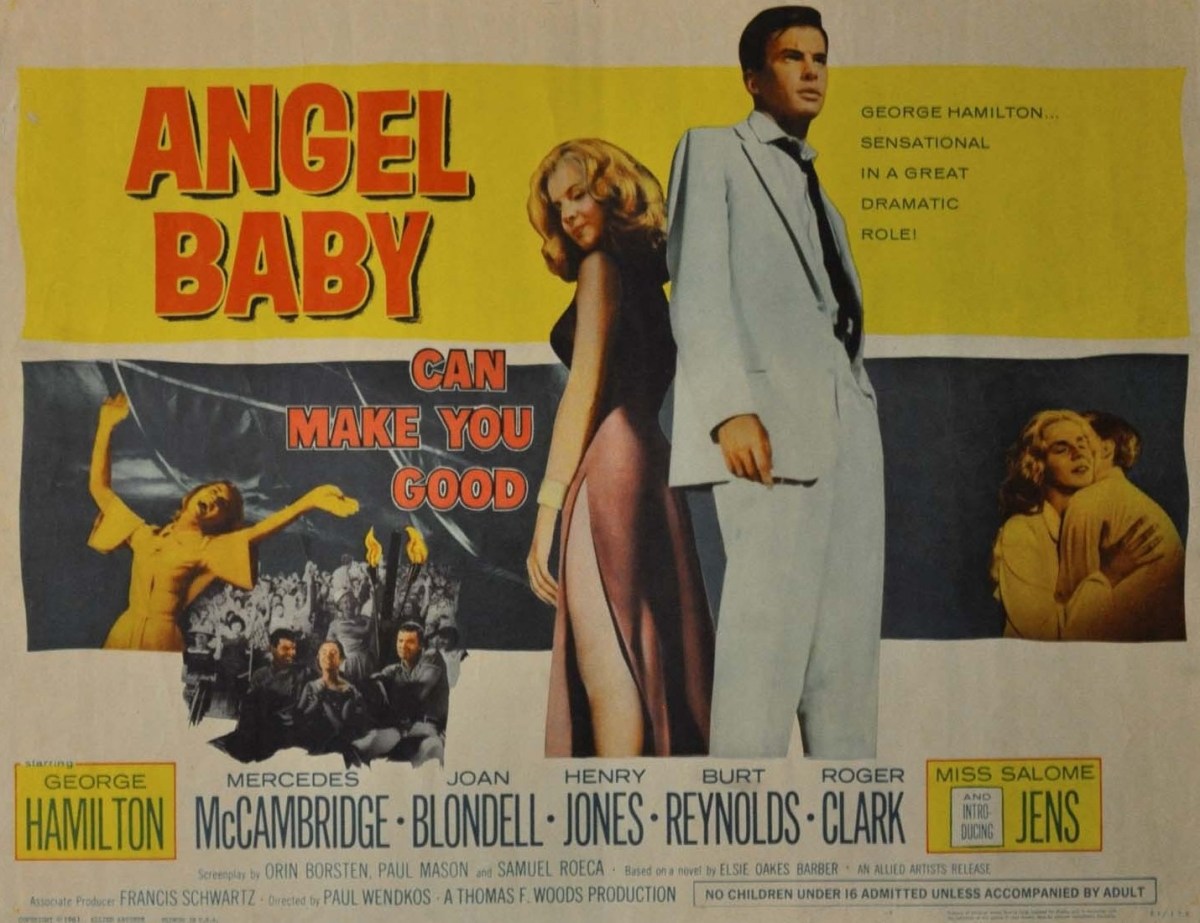
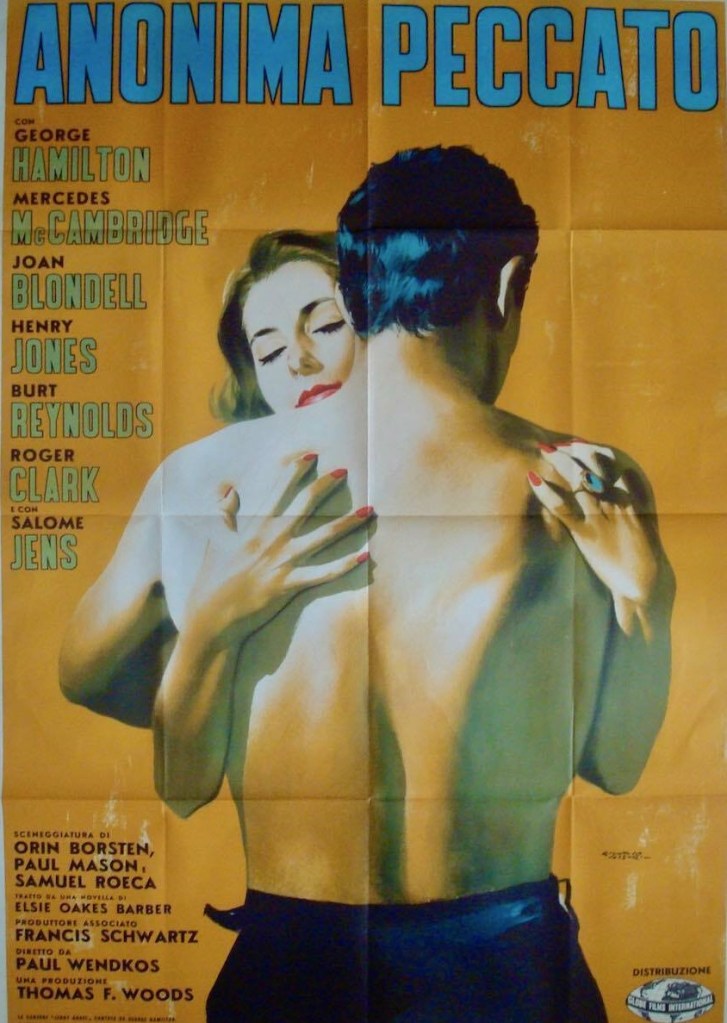
Angel Baby (1961) ***

Stunning cast – George Hamilton, Burt Reynolds, Mercedes McCambridge, Joan Blondell – in low-rent version of that ode to evangelism Elmer Gantry (1960) but here focusing on misplaced zeal and corruptible innocence. Strikes a contemporary note with “MeToo” reversal – elder woman grooming a choir boy – and fake news, how else to describe public gullibility for the so-called miracles that were the stock-in-trade of the revivalist business.

Would have been an interesting addition to the portfolio of the erratic director Hubert Cornfield (Pressure Point, 1962 a high, but Night of the Following Day, 1969, a low) except he took ill and passed the reins to Paul Wendkos (Guns of The Magnificent Seven, 1969).

Takes an interesting narrative slant, the three original principals bowing out after a strong start, leaving the way free for the titular character to come unstuck in the sleazy world of religious make-believe before they all turn up again for a rip-roaring finale.

Young charismatic preacher Paul (George Hamilton) is at odds with his dominating older wife Sarah (Mercedes McCambridge). She is all hellfire-and-brimstone while he wants to preach about love. They are in an “unholy marriage,” he plucked from the choir as a teenager and molded by her, her invocations to prayer always accompanied by sex, and once Jenny Angel (Salome Jens), a mute he heals and with an unwelcome boyfriend Hoke (Burt Reynolds), appears on the scene he begins to question his sexual and religious grooming.

Recognizing a love rival, Sarah bribes ambitious couple, resident alcoholics Mollie (Joan Blondell) and Ben (Henry Jones), to take her on and they, in turn, trade her to Sam (Roger Clark) who turns her unfulfilled potential as a preacher into box office dynamite by capitalizing first on her beauty, low-cut gowns emphasizing her physical attributes, and then by fake healings, not realizing, in his greed, that a preacher who can make reputedly make the blind see is asking for trouble.

Having seen the error of his way, Paul chases after Angel, Sarah chases after Paul and Hoke just happens to be in vicinity to ensure it all ends in colossal disaster, though with an unusual twist ending.  

But it’s surprisingly good in an old-fashioned way. The depiction of the corrupt evangelists and, more importantly, the spiritual and actual poverty of the congregations, desperately looking for salvation, occasionally blaming God for their woes, and hoping sheer blind faith will see them through, is well done, even if Paul’s preaching sails close to the unsavory, with rather lewd accompaniments.

Jenny’s conviction in the face of initial failure that she can bring solace to the people is also believable. All innocence, no idea she is being duped, she simply perseveres, undaunted at  the scale of her task, faced with dozens of critically-ill expecting cure.

Sam’s real scam is selling some kind of miracle potion that Jenny has apparently endorsed, the phone ringing off the hook with customers wishing to buy it once the preacher’s fame spreads. He, too, despite apparently God-fearing ways, is partial to liquor.

Given Jenny never doubts her vocation, you’d expect an innocence-sized hole at the center of the drama, but that’s filled up by the growing conflict between Paul and Sarah and a very humorous section dealing with the idiotic Mollie and Ben, especially in an inspired drunken scene.

It could easily have been a more cynical take on the dumb audience, so easily taken in, but instead, they are presented as individuals at the end of their tether with nowhere else to go but the Almighty in the hope that the burden of living terrible lives will be eased. How easily they are manipulated is no surprise.

George Hamilton (A Time for Killing, 1967) is unrecognizable, not just in the acting which at times has the charming creepiness of Anthony Perkins, but because, since this is made in black-and-white, he is devoid of his usual inches-thick tan. I was reminded a lot of Carrie (1976) in that Piper Laurie’s portrayal of the obsessed mother appeared modelled on that of Mercedes McCambridge (99 Women, 1969) as the scary wife and in Sissy Spacek’s imperturbability as she strides through the chaos she has caused that was a throwback to the gait of Salome Jens (Seconds, 1966) as she walks unharmed away from the wreck of her work.

Except for her physical presence, Jens isn’t given sufficient contemplation to make her stand out, and to some extent is just an object of other people’s satisfaction, but is at her best when clearly puzzled that, believing herself touched by God, her initial ministry fails to take off.  

Burt Reynolds (Fade In, 1968) makes the kind of debut that would have gone unnoticed had he not a decade later transmogrified into a superstar. Hollywood Golden Age star Joan Blondell (Model Wife, 1941) has a sparkling turn as the blowsy alcoholic who invents Jenny’s stage name of Angel Baby.

Paul Wendkos makes the whole thing work by concentrating on two-character scenes,  limited movement creating intensity, that works equally well for conflict and humor, while deftly managing the crowd scenes and pulling off the unexpected ending. Took considerable effort to knock Elsie Oakes Barber’s novel into shape, three screenwriters, neophytes in the main, involved – Orin Borstein in his debut and only screenplay, Paul Mason, no other screenplay credit until The Ladies Club (1986) and Samuel Roeca (Fluffy, 1965).

An interesting watch, not just for the cast, but as a reminder that it’s never too difficult to dupe a willing audience.

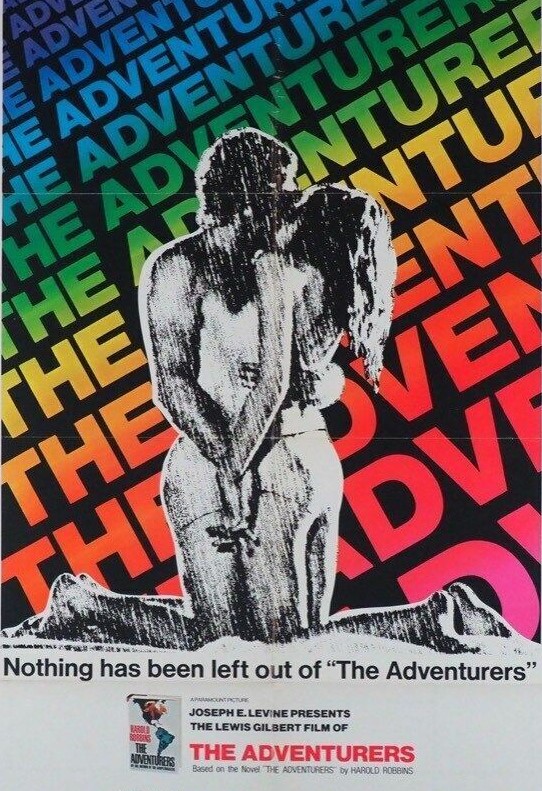
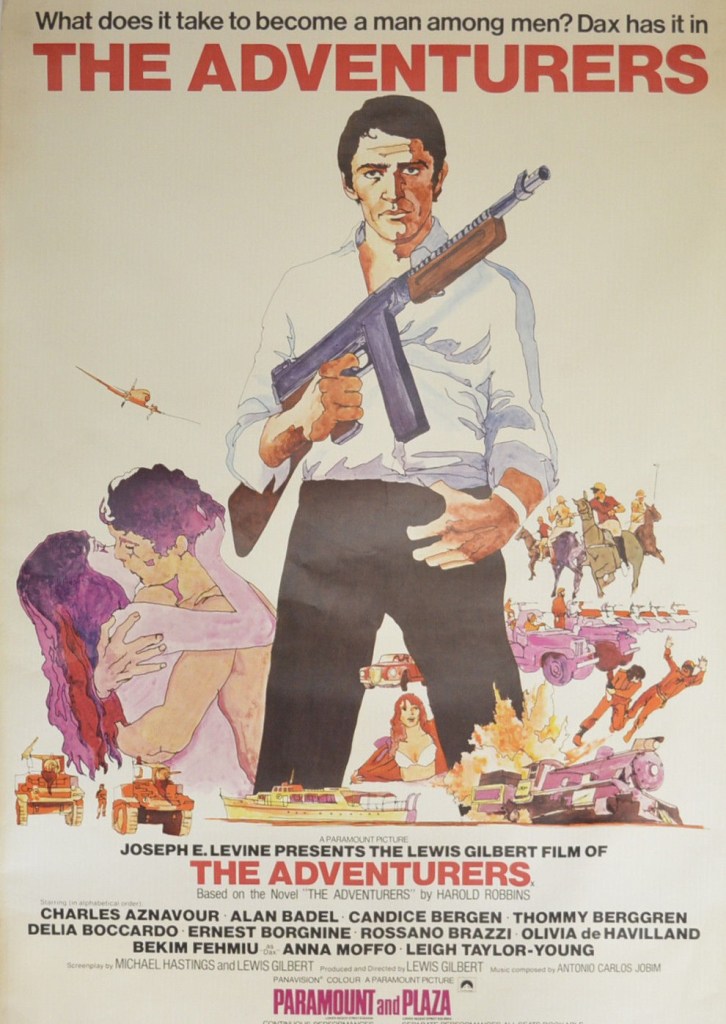
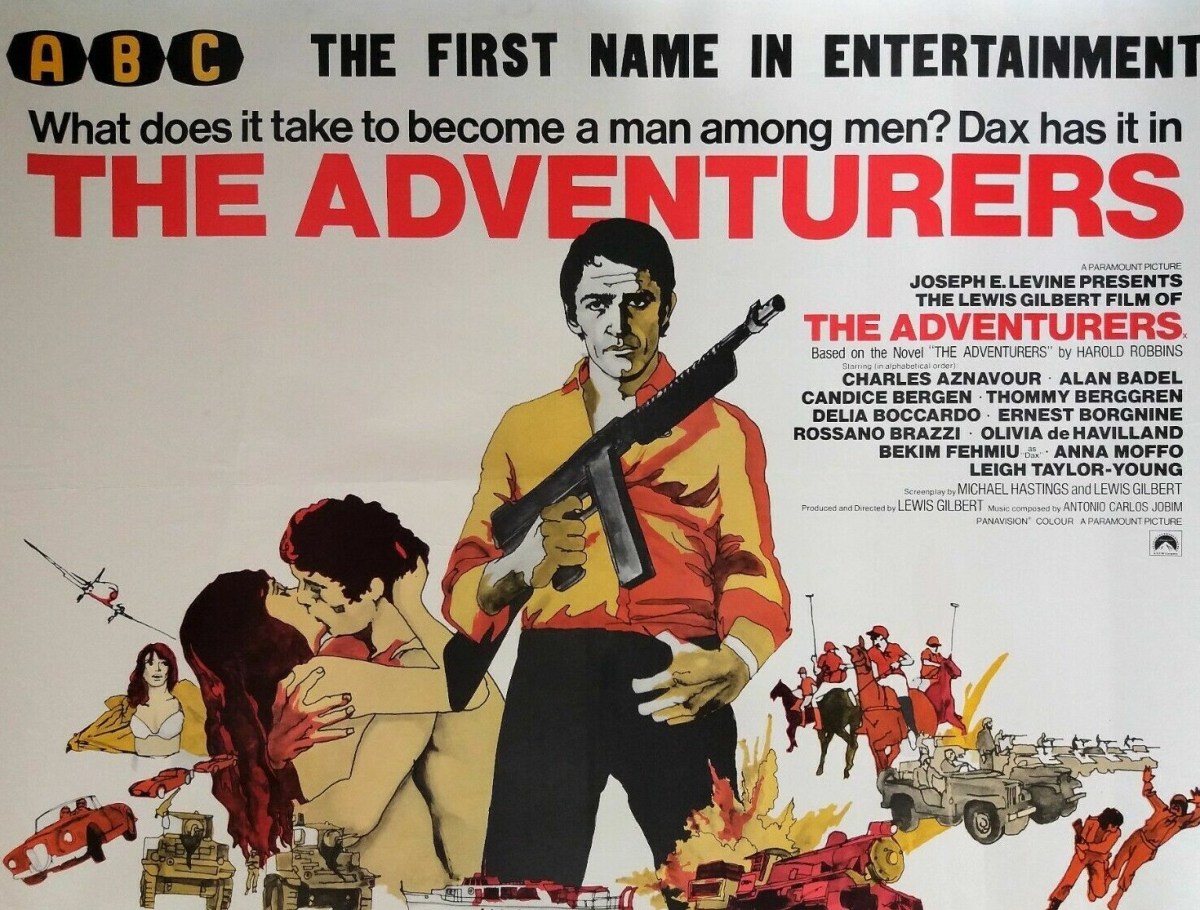
Behind the Scenes: “The Adventurers” (1969)

Lewis Gilbert was on a career high. After a string of flops – Loss of Innocence/The Greengage Summer (1961) and The 7th Dawn (1964) – he had bounced back with the critically-acclaimed and Oscar-nominated box office hit Alfie (1965), cementing his commercial standing with You Only Live Twice (1967).

Next up was Oliver!, the adaptation of the Lionel Bart musical. Gilbert had bought the rights to the songs after its debut in 1960 – from British singer Max Bygraves of all people who owned a music publishing company – but was prevented from filming it until it had completed its Broadway and London runs, as was standard with hit musicals. In the wake of Alfie he was prepping the musical, turning down the likes of Richard Burton and being forced to consider Julie Andrews and Dick Van Dyke for the leading roles. But he had also signed a very beneficial contract with Paramount chief Charles Bluhdorn.

Gilbert took it as read that he had Bluhdorn’s agreement to make Oliver! first. By now, he had co-written the script with Vernon Harris, was in the process of finalizing costumes, choreography, musical arrangements and sets, and was all set to make the movie “he had been born to direct.”

Bluhdorn had other ideas. He had taken over Harold Robbins’ big, brash bestseller The Adventurers from Joseph E. Levine who had bought the rights for $1 million in 1963. A script by John Michael Hayes (Nevada Smith, 1966) had been scrapped, but Bluhdorn had made little headway and with the studio under the cosh after investing too much in flops, was desperate for a safe pair of hands. Gilbert soon realised that in Hollywood a person’s word was not their bond. Bluhdorn knew all about contracts and had signed an unhelpful one himself, which set him a tight deadline to deliver a picture.  

Gilbert threw away the unwieldy screenplay written by Robbins and settled down with playwright Michael Hastings (The Nightcomers, 1971) to condense the equally unwieldy novel down to a two-hour running time. But once again Bluhdorn had other ideas. After Gilbert had begun pruning, Bluhdorn demanded a three-hour roadshow. Then he sprung another surprise. “Stars are out of date,” he announced, “We don’t need them.”

That was a blow to Gilbert who had envisioned Alain Delon (Once a Thief, 1965) for the leading role of a cold-hearted but suave playboy. The actor’s personal reputation for squiring many of the most beautiful women in France meant he was viewed by an audience as a man with abundant charm. And his films roles had proved he could easily pass for cold-hearted. So it was with reservations that Gilbert turned instead to unknown Bekim Fehmiu from Bosnia Herzegovina who had attracted critical plaudits for I Even Met Happy Gypsies (1967), winner of the Palme D’Or at Cannes.

Initially, production was going to be split between Paris and Colombia until the 1968 riots put the French capital out of commission. French actors like Louis Jourdan (Can-Can, 1960) already cast were dumped. Rome proved a good substitute, but the four main studios were already occupied, forcing the production to take whatever space remained available in all of them. Venice and New York City were also briefly used.

To speed up production, and switch the locales from France to Italy, Gilbert employed other writers, Clive Exton (10 Rillington Place, 1971) and Jack Russell (Friends, 1971), as well as Hastings, each working independently of the other, the whole being coordinated by Vernon Harris.

The cast mixed experience with newcomers. As well as Fehmiu, Gilbert recruited relative beginners Candice Bergen (The Magus, 1968) in her fifth film, Swede Thommy Bergrenn (Elvira Madigan, 1967)  making his Hollywood debut, Leigh Taylor-Young, only known at this point for her debut I Love You, Alice B. Toklas (1968) and Italian Delia Boccardo, leading lady in Inspector Clouseau (1968).

Heading up the veterans were double Oscar-winner Olivia De Havilland, Oscar-winner Ernest Borgnine, a supporting player in items like Ice Station Zebra (1968), and Italian Rossano Brazzi (Krakatoa, East of Java, 1968) who had fallen a long way down the credits since the heights of South Pacific (1958). As makeweights – essential for an “international all-star cast” – were Spaniard  Fernando Rey (Villa Rides, 1968), French singer Charles Aznavour and British character actor Alan Badel (Arabesque, 1966).

At the end of the Rome shoot, Gilbert declared himself “surprisingly optimistic.” Colombia killed that off. The only way to reach many remote locales was on horseback. Actors whose contracts dictated travel by luxury transport found their vehicles could not negotiate steep narrow pathways. Six thousand extras recruited from dozens of small villages had to get up at 3am to walk, in the absence of transport and roads, to a main location in a small town where catering for such numbers was in itself a major logistical exercise.

Accommodation for the stars was difficult to find. One location only had one hotel and that with only four rooms. Gilbert tore ligaments in his foot, making walking impossible. He directed all future outdoor scenes atop a horse like a “great old-time director in the days of silent films.”

The South American scenes, pivoting on blood-thirsty violence and revenge, were at odds with the ones filmed in Rome that showcased high society and seductive sex. The two halves were an uneasy mix at best. And the actor who was meant to bind them was not working out.  As the movie wore on, Gilbert realized Fehmiu was miscast. While Fehmiu could match Delon’s exploits with women, Brigitte Bardot reputedly among his conquests, he lacked the Frenchman’s easy manner on screen and never convinced as a romantic playboy.

“One thing you know in films,” said Gilbert, “is that you always end up with what you begin with. If you begin with a piece of s*** that’s what you’ll end with, doesn’t matter how you change things or what you try. The story couldn’t be told in under three-and-a-quarter hours…it had been deliberately structured for a certain type of audience” which didn’t really exist back then.

Paramount virtually committed publicity suicide by holding the press show on a Boeing 747. Even a Jumbo Jet could not present the movie on anything except a tiny screen which made nonsense of the movie’s 70mm credentials. While projected on one screen, it was only shown in 16mm, people at the back could hardly see it  and the sound was terrible. Gilbert considered it “the worst experience of my life.” Worse, few people had ever flown a 747 before so to quell nerves, the journalists were tanked up, which didn’t help their mood when they came to write scathing reviews.

After the press screening, it was heavily cut. And with roadshow on the way out, it received few 70mm bookings in the U.S. though that format was more welcomed in Europe. (In my local city of Glasgow, in Scotland, it ran for 10 weeks in roadshow presentation at the ABC Coliseum, a decent stint).

Oddly enough, it was relatively well-received by audiences. It pretty much made its money back which was a big achievement given the budget and certainly did not fall into the category of being a loser.

SOURCES: Lewis Gilbert, All My Flashbacks,(Reynolds and Hearn, 2010) p279-288, p295-304; “Interview with Lewis Gilbert,” British Entertainment History Project, August 13, 1996, Reel 13; Brian Hannan, Glasgow at the Pictures, 1960-1969, (Baroliant, due later this year).

The Adventurers (1970) ***

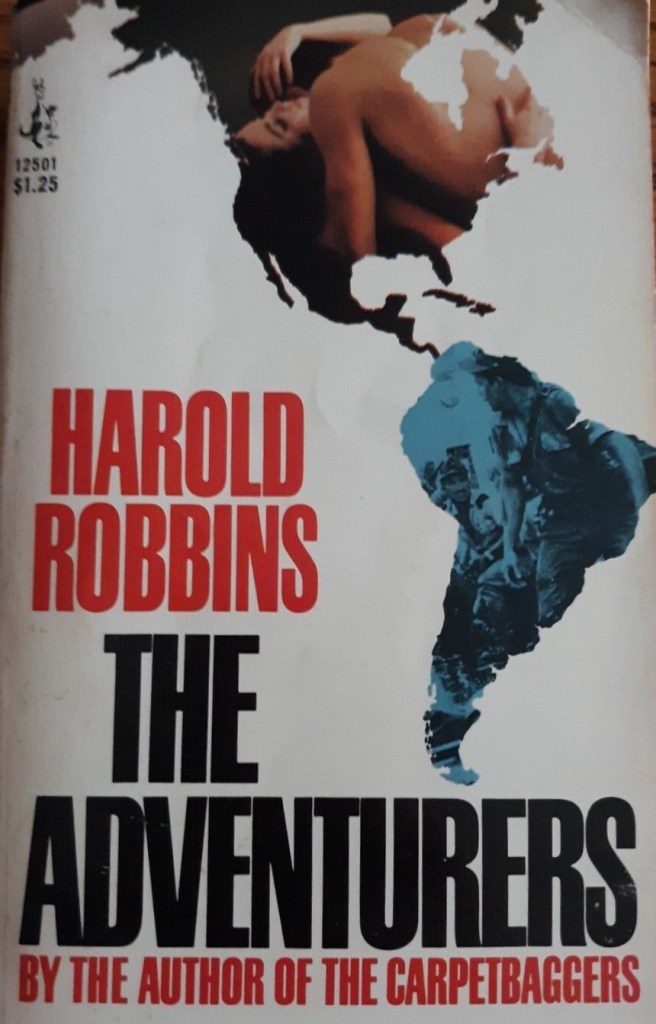
Class A Trash. Adaptation of Harold Robbins (Nevada Smith, 1966) bestseller goes straight to the top of the heap in the So-Bad- It’s-Good category. Only Alan Badel (Arabesque, 1966) as a double-dealing revolutionary comes out of this with any honors.

The likes of Candice Bergen (Soldier Blue, 1970), Rossano Brazzi (Rome Adventure/Lovers Must Learn, 1962), double Oscar-winner Olivia de Havilland (Hush, Hush, Sweet Charlotte, 1964), Leigh Taylor-Young (The Big Bounce, 1969)  and Ernest Borgnine (The Wild Bunch, 1969) must have wondered how they were talked into this.

And director Lewis Gilbert (Loss of Innocence/The Greengage Summer, 1961) must have wondered how he talked himself into recruiting unknown Yugoslavian Bekim Fehmiu (The Deserter/The Devil’s Backbone, 1970), nobody’s idea of a suave lothario,  for the lead.

One of the taglines was “Nothing has been left out” and that’s to the movie’s detriment because it’s overloaded with sex, violence, more sex, more violence, in among a narrative that races from South American revolution (in the fictional  country of Corteguay) through the European jet set, fashion, polo, fast cars, orgies, and back again with revenge always high on the agenda. At close on three hours, it piles melodrama on top of melodrama with characters who infuriatingly fail to come to life.

Sensitivity is hardly going to be in order for Dax (Bekin Fehmiu) who, as a child after watching his family slaughtered and mother raped, makes his bones as a one-man firing squad, machine-gunning down the murderers. From there it’s a hop-skip-and-jump to life as the son of ambassador Jaime (Fernando Rey) in Rome where he belongs to an indulgent aristocracy who play polo, race cars along hairpin bends, swap girlfriends and, given the opportunity, make love at midnight beside the swimming pool.

His fortunes take a turn for the worse when his father backs the wrong horse, the rebel El Condor (Jorge Martinez de Hoyos)  in Corteguay, and is killed by the dictator Rojo (Alan Badel). In between an affair with childhood sweetheart Amparo (Leigh Taylor Young), life as a gigolo and cynical marriage to millionairess Sue Ann (Candice Bergen), Dax takes up the rebel cause, initially foolish enough to fall for Rojo’s promises which results in the death of El Condor, and then to join the rebels.

But mostly it’s blood, sex, betrayal and revenge. Anyone Dax befriends is liable to face a death sentence. He only has to look at a woman and they are stripping off. It’s a heady mess. It might have worked if the audience could rustle up some sympathy for Dax, especially as he was entitled to feel vulnerable after his childhood experiences. But he just comes across as arrogant and the film-makers as even more arrogant in assuming that because women fall at his feet that must mean he had bucketloads of charm rather than that was what it said in the script. He’s fine as the thug but not convincing as a lover.

Excepting Badel, the best performances  in a male-centric sexist movie come from women, those left in Dax’s wake, particularly Candice Bergen as the lovelorn wife and Olivia De Havilland as the wealthy older woman who funds his lifestyle, aware that at any moment he will leave her for a younger, richer, model. Lewis Gilbert is at his best when he lets female emotion take over, not necessarily wordy intense scenes, because Bergen and De Havilland can accomplish a great deal in a look.

The rest of it looks like someone has thrown millions at a B-picture and positioned every character so that they have nowhere else to go but the cliché.

By this point, Hollywood had played canny with Harold Robbins, toning down the writer’s worst excesses and employing name directors to turn dire material into solid entertainment. Edward Dmytryk (Mirage, 1965) had worked wonders with The Carpetbaggers (1964),  whose inherent salaciousness was held in check by the censor and made believable by characters played by George Peppard (Pendulum, 1969), Alan Ladd (Shane, 1953) and Caroll Baker (Station Six Sahara, 1963). Bette Davis and Susan Hayward contrived to turn Where Love Has Gone (1964) into a decent drama. Even Stiletto (1969), in low-budget fashion, managed to toe the line between action and drama.

But here it feels as if all Harold Robbins hell has been let loose. Rather than reining in the writer, it’s as if exploitation was the only perspective. Blame Lewis Gilbert, director,  and along with Michael Hastings (The Nightcomers, 1971) in his movie debut, also the screenwriter for the end result.

On the other hand, if you can leave your critical faculties at the door, you might well enjoy how utterly bad a glossy picture can be.

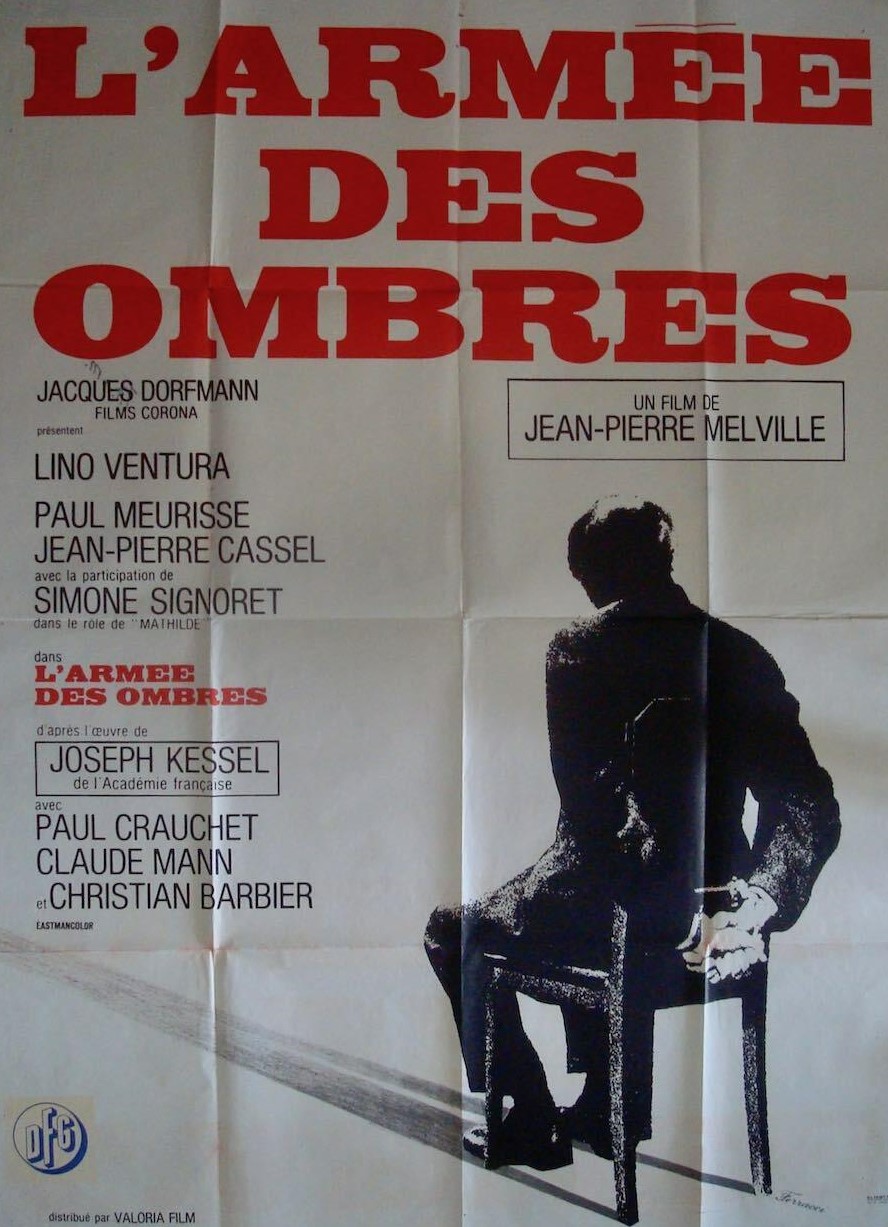
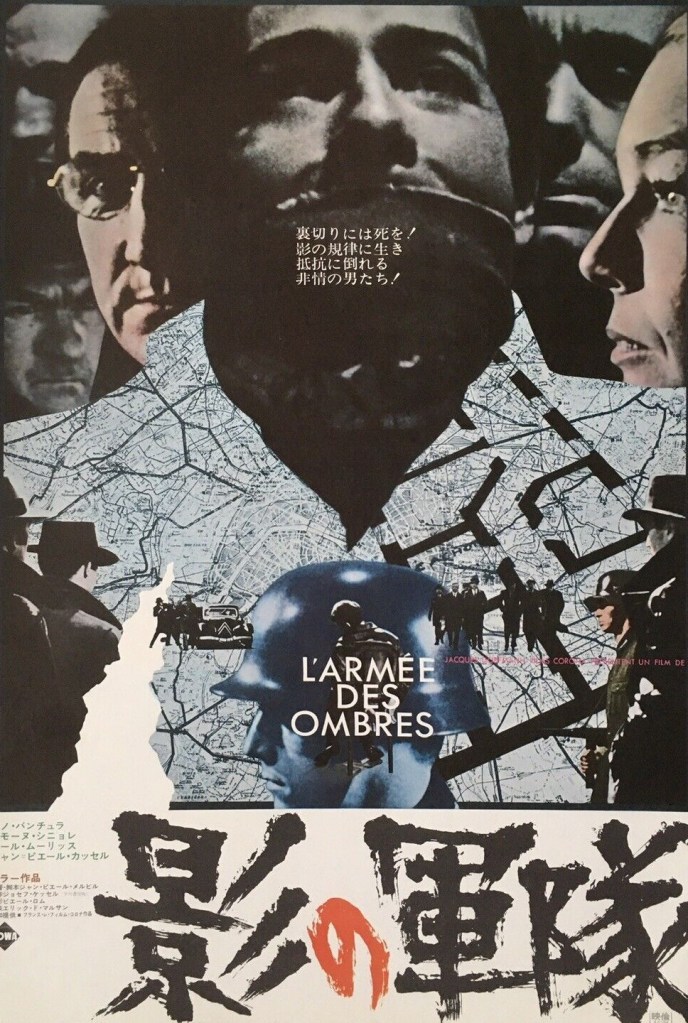
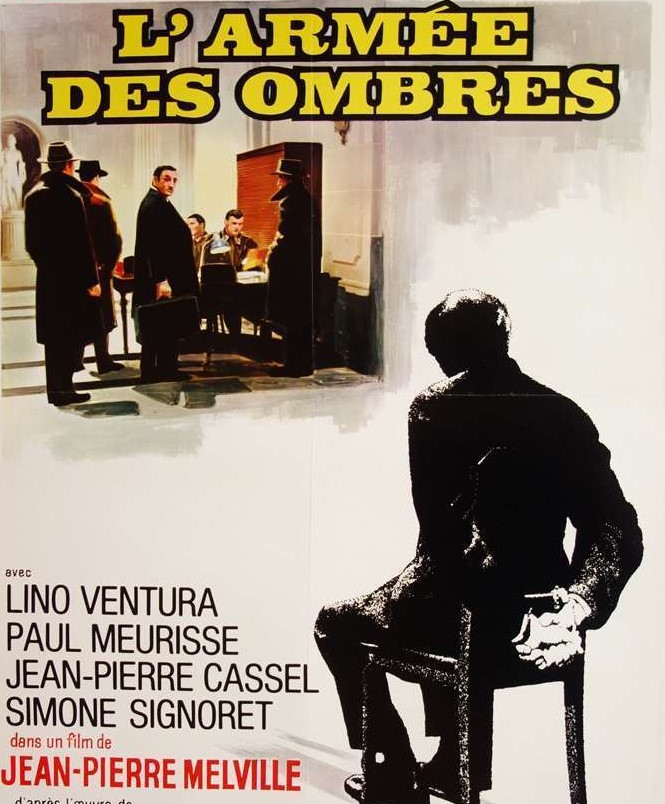
Army of Shadows/ Les Armees des Ombres (1969) ****

The antidote to the gung-ho World War Two picture. Scarcely any action and certainly none of the French Resistance swagger of The Train (1964) or the popular uprising of Is Paris Burning? (1965). Instead, sombre realism as Resistance leader Gerbier (Lino Ventura) dodges capture in a country pitted with collaborators. Nor is the underground portrayed in heroic fashion, their methods of revenge every bit as pitiless as the occupying forces.

Told in documentary style and based on the real-life exploits of characters taking the battle to the enemy, it’s backroom stuff, Gerbier organising his Resistance cell, meeting with other leaders. But his life is fraught with tension, as he attempts to dodge capture, with little success, it has to be said.

The film opens with Gerbier in captivity, an internment camp, where he is betrayed by an informer. While being transported to Paris, he escapes. His first action, revenge. With three colleagues, in an ordinary Marseille house where use of a gun will give them away, they strangle to death an informer. It’s not pretty.

Some join up for the risk like Jardie (Jean-Pierre Cassel), others maintain a more orderly, outwardly uninvolved, almost philosophic, lifestyle, like his older brother Luc (Paul Meurisse) who turns out to be the “Big Boss” of the Resistance, prominent enough to be transported by submarine to London to meet French leader-in-exile De Gaulle.   

Little of what they organise works out. Betrayal a constant, not just from collaborators, but from a fellow member who could be compromised by having a vulnerable child or parent. When one of the Marseille stranglers, Felix (Paul Crauchet) is captured, and likely to crack under torture, Mathilde (Simone Signoret), Gerbier’s assistant, comes up with a daring plan involving Jardie giving himself up so he will be imprisoned with Felix and, at the pessimistic end of expectations, can provide him with a cyanide pill, while the most optimistic outcome is three members disguised as Germans infiltrating the jail and sneaking him away.

The plan fails and Gerbier is subsequently arrested, imprisoned, his execution only denied by a daring rescue attempt – the only kind of typical war picture action. But then Mathilde becomes a liability and is executed.

It’s a cold-blooded kind of film and depicts with far greater realism the endeavors – failure outweighing success  of an underground operation during the Occupation. They don’t have the training for the job and their effectiveness is always open to question. Although British and American films might be filled with characters volunteering for dangerous missions, those are activities in isolation, not a commitment to a lifestyle that most likely would end in torture and death, endanger family and friends and leave you living in a sewer of suspicion. This presents an unvarnished truth. Not only are you expecting at any moment the Germans will pounce, there is a constant dread that the Resistance will be undone by their own actions, a plan too ambitious, someone cracking up, firing squad the most likely result. There’s nary a sniff of glory.

The big budget roadshow – The Longest Day (1962), Battle of the Bulge (1965), The Battle of Britain (1969) et al – while covering in some aspects the dangers of war were for the most part fist-pumping patriotic achievements, not this sneaking around, undercover stuff where missions were low-key, and the protagonists rarely in charge of their own destinies.

As far as French critics were concerned, the release timing was off, the film arriving in the wake of the 1968 riots and with De Gaulle in political trouble due to the Algerian situation. So it flopped with critics and audiences alike, and although it found a receptive audience in the U.K. in the late 1970s, it was denied release in the U.S. until 2006, by which point politics could not cloud opinion, and it earned rave reviews.

Lino Ventura (The Sicilian Clan, 1969) on top form is run close by Simone Signoret (The Deadly Affair, 1967). Jean-Pierre Cassell (Is Paris Burning?) comes closest to comic book heroics but even that is eventually reined in.

Everyone is helped by a screenplay by Joseph Kessel (The Night of the Generals, 1967), himself a member of the Resistance,  that is light on melodrama and overwrought dialog and concentrates on getting done the job in hand, no matter how unsavory. Equally notable is the lack of grandstanding, of glorious finish, of the Hollywood convention of redemption.

Director Jean-Pierre Melville (Le Samourai, 1967) , also a Resistance fighter and with a hand in the screenplay, brings to bear film noir sensibilities and the cold-bloodedness that informed a previous oeuvre tending towards gangster pictures.

A very bold undertaking of the most dour kind that deserves appreciation.

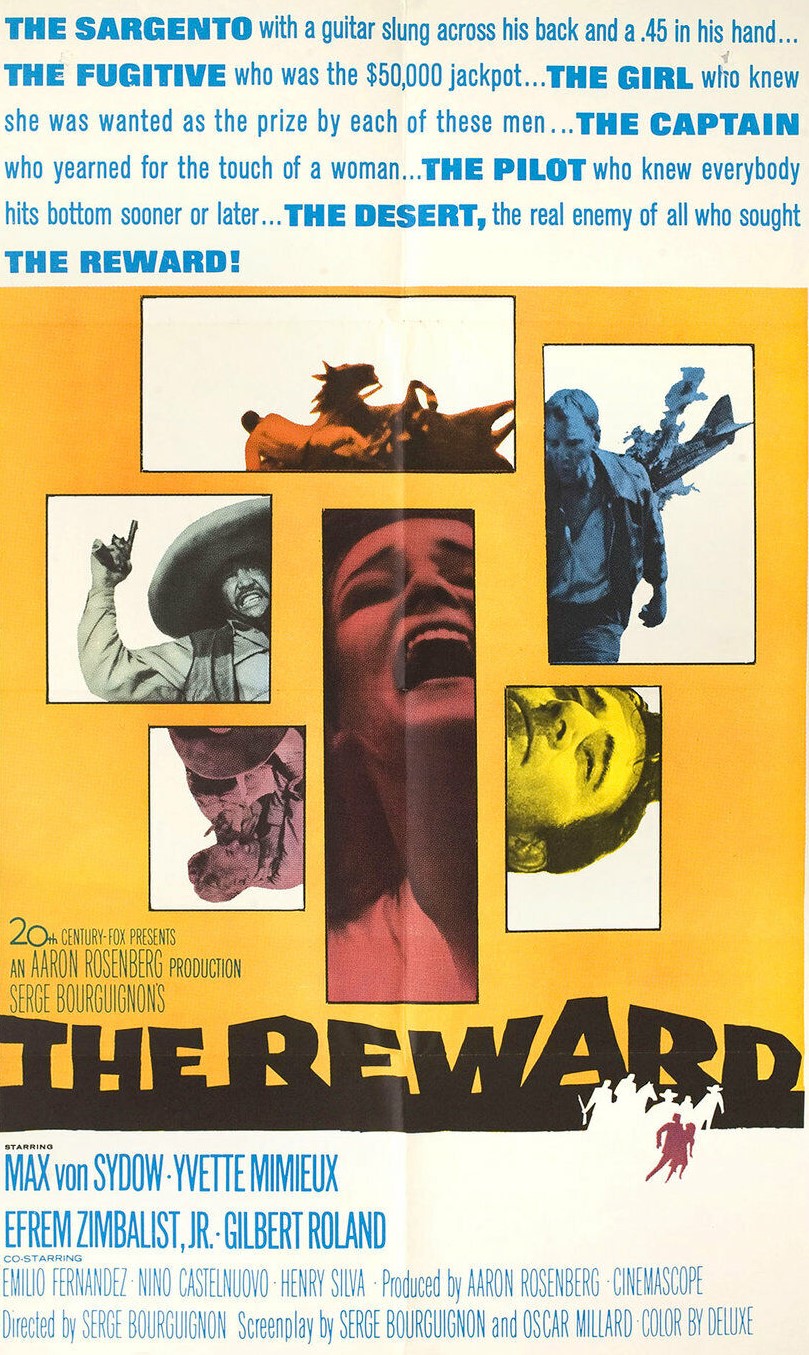
The Reward (1965) ***

Max von Sydow’s Hollywood career might have gone in a different direction had this brooding modern western remake of The Treasure of the Sierra Madre (1948) taken off. Instead of a screen persona as a heavily-accented somewhat awkward foreigner, he would have been viewed as a lean adventurer in the laconic Steve McQueen mold.

There’s no actual gold here, American airline pilot Scott Swenson (Max von Sydow) and his impromptu gang chasing into the Mexican desert human prey worth $50,000. Frank Bryant (Efrem Zimbalist Jr) is wanted for kidnapping and killing his own child. His virtually monosyllabic girlfriend Sylvia (Yvette Mimieux) is viewed as a bonus, clearly rape in the mind of some of his pursuers.

In normal circumstances, Swenson would spend his time dusting crops but he is being held for inadvertently destroying a water tower that will cost $20,000 to repair. But when he spots old buddy Bryant drive into town, he turns bounty hunter, cutting local English-speaking sheriff Capt Carbajal (Gilbert Roland), an exile in this remote town, in on the deal to repay the debt. The rest of the posse, led by his guitar-playing deputy Sgt Lopez (Emilio Fernandez) are initially misled as regards reward. So,when they do find out, greed will out.

When the escapees run out of road, they take to horses, but are located pretty quickly by the posse, also on horseback. Finding them was easy compared to getting them back. In fact, the posse seems to return via a different route that takes them through an abandoned town complete with church bell that Lopez makes ring through the simple device of battering it with his head.

It’s that kind of movie, filled with odd scenes that reflect character. In one episode, at the start of the chase and in a truck, a flat tyre is caused by one dumb occupant chucking his beer bottle in front, rather than to the side, of the vehicle. Flute-playing Joaquin (Henry Silva) tames a wild horse which, when he’s not around, has a bit of a rebellious streak, apt to lead the other mounts astray.

But it’s realistic, too. There’s not enough food to go round and even that seems limited to tortilla. There’s no reason to tie up the prisoners because there’s no escape in the desert hell. But although Swenson has betrayed an old friend in order to get himself out of a hole, there’s none of the guilty dialog you might expect and Sylvia turns out to be more cynical, not intent on building romance out of a brief fling in Acapulco, and only too aware of what captivity might mean. As is pointed out, the reward will be paid out for a decapitated head as much as a complete living person.

Rather than being devastated at killing his son, Bryant wants sympathy. It was an accident. Blame the police for starting a shoot-out that ended with the child dying in the crossfire. Blame his wife for taking the child away in the first place.

Nobody comes out of this well, except Sylvia whose good deed might result in rape, but whose motives you would also question, given she is harboring a child killer, an action not excused as would be the norm by being rapturously in love with him. She is resigned to her fate rather than flirting  with the gang as a way of avoiding it.

So it’s tension all the way, Lopez working on the principle that the fewer claimants of the reward the better. But it’s not just lack of water that’s the most dangerous element in this perilous landscape, but lack of horses. Water isn’t in dramatically short supply anyway not when you can count on the occasional thunderstorm, which, unfortunately, makes Sylvia a more attractive reward when she is soaked to the skin.

The body count, as you might expect, mounts as Lopez takes control, his boss, coming down with a fever, growing weaker by the day.

But it’s not as noir as you might imagine. Mostly, it’s just characters trudging through the desert, enlivened by some flute- and guitar-playing, heading into a doom of their own making. There’s very little in the way of heated dialog and there’s a very bold decision to dispense with subtitles – only the sheriff and Swenson are bilingual, helping them devise a  conspiracy to keep the reward to themselves  – but it’s easy enough to work out what’s going on with the Spanish-speaking Mexicans and it does explain why Sylvia says so little.

If you managed to get hold of The Picasso Summer (1969) – reviewed earlier in the Blog – this is for you since it has the same director Serge Bourguignon whose style is elliptical to say the least. But cutting down on expository consequence is spot-on. We don’t need characters bewailing their fate to know the potential outcome. Circumstance makes menace implicit rather than explicit.

The actors are good enough not to be laden down with overwrought dialog. This is certainly presents a refreshing aspect of Max von Sydow (The Quiller Memorandum, 1966). Yvette Mimieux (The Picasso Summer) is mostly a bewildered fragile beauty. Emilio Fernandez (The Wild Bunch, 1969) would be at his scene-stealing best except he has to contend with Henry Silva (Secret Invasion, 1964) in one of his few heroic parts. Veteran Gilbert Roland (Cheyenne Autumn, 1964), who made his name as The Cisco Kid, is the surprise turn, authority sapped as illness takes hold.

If you want a peek at a curiosity, it might as well be this one.

Discover WordPress

A daily selection of the best content published on WordPress, collected for you by humans who love to read.

The Atavist Magazine

by Brian Hannan

WordPress.com News

The latest news on WordPress.com and the WordPress community.