
Cleverly calibrated chuckle-worthy comedy of manners. Far more enjoyable than the basic material might suggest, especially as you will easily guess where it all ends. Anchored by redemptive performances, after disappointing turns in The Eye of the Devil / 13 (1966), by Deborah Kerr and David Niven, playing a middle-aged upper-class childless couple whose marriage survives on civility alone, and a sparkling showing by Judy Geeson (Here We Go Round the Mulberry Bush, 1967).
It’s surprising what a fresh look at cliché can achieve. On the face of it, American director Fielder Cook (How to Save a Marriage and Ruin Your Life, 1968) is the last person to be tackling the upper classes, especially as there’s scarcely a hint of satire. It’s wonderfully pitched, no sexist jokes, no farce, no tourist or Swinging London, and avoids the temptation of aiming for the lowest common denominator (Carry On Up the Pill for example). But authority is constantly confounded, pomposity pricked, and, astonishingly for a movie about relationships in Britain – the home of the kitchen sink drama – in the late Sixties, everyone ends up happier ever after.
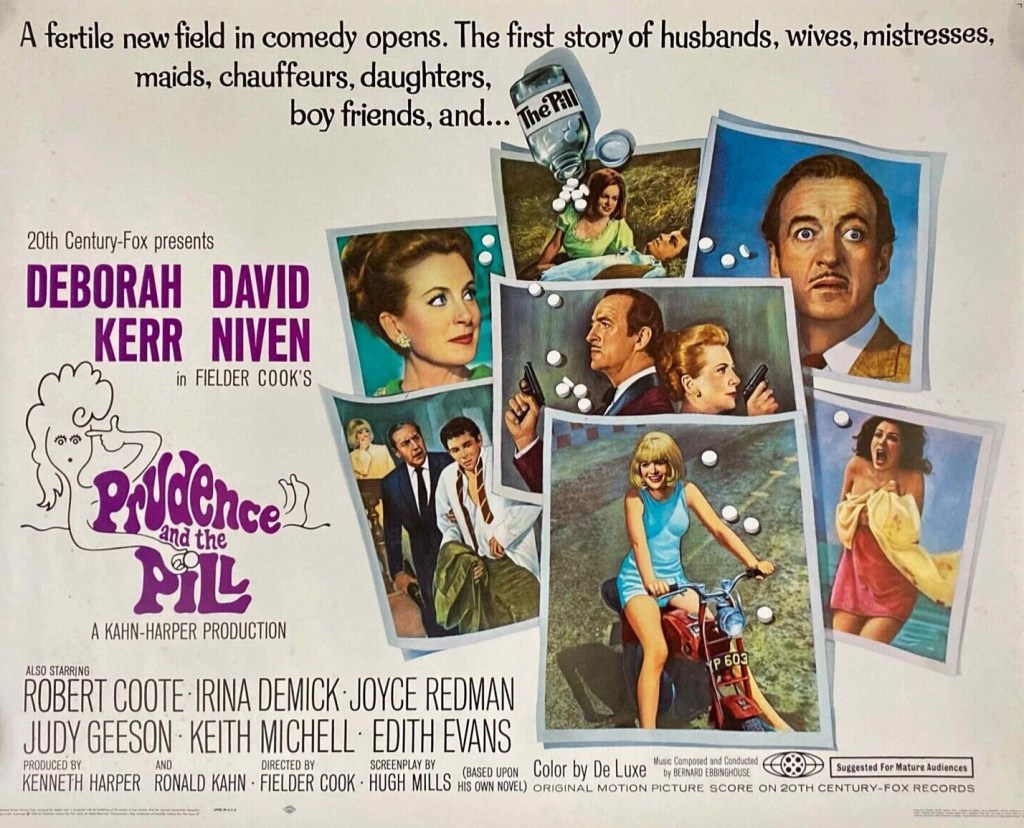
The titular drug in question, in case that term is no longer in common usage, is the contraceptive pill, here sold under the generic name of Thelon. The biggest shocks here might well be that mothers and fathers in middle-age still have sex. Although that is balanced by a contemporary vibe of having children late in life.
So the fun begins when Henry (Robert Cooote) and Grace (Joyce Redman) discover bubbly daughter Geraldine (Judy Geeson) in bed with Tony (David Dundas). Cue howls of anger from staid parents, who divide up the ticking-off, the mother tasked with warning daughter about the dangers of pregnancy – and with it the specter of single motherhood, a high society no-no – the father to whip the young rascal.
The mother is only mollified – though still affronted at such blatant expression of sexuality – when she discovers her daughter is on the Pill. But shocked to discover Geraldine has been pilfering her own supply. Father is taken aback to discover the lover is not only heir to a fortune but has already proposed.
Unlike most movies of the era, where sexuality remained a dirty word, and most illicit romances were conducted in secrecy and ended up in disaster, the vivacious Geraldine could be the poster girl for sex. She is delighted to have lost her virginity, and to expand her sex education, and stands up against her mother’s old-fashioned views.
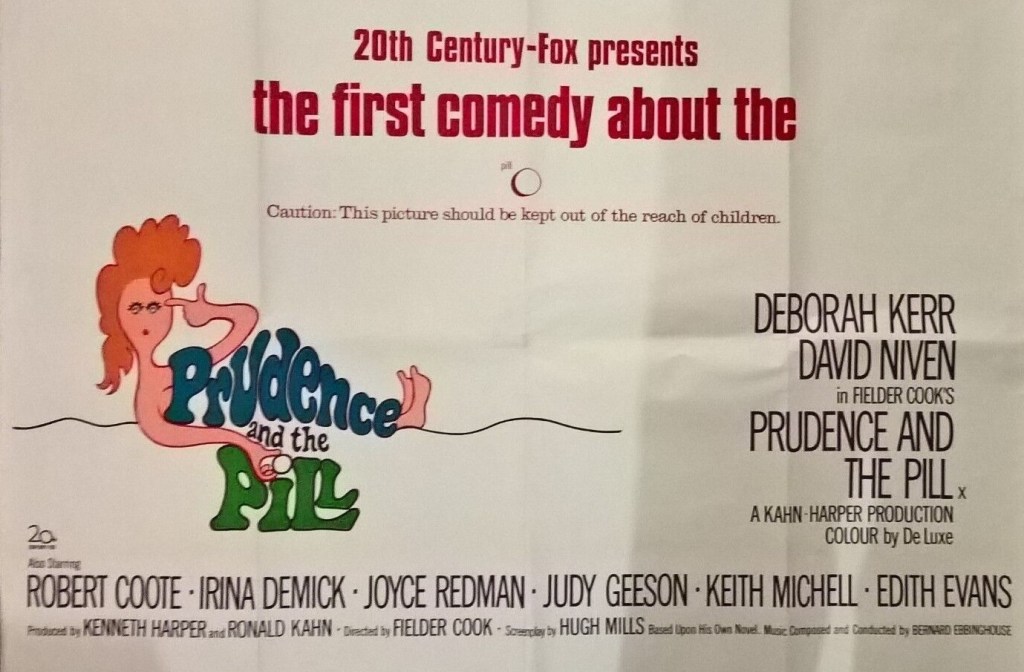
However, the replacement of mother’s Pill with aspirin presents a dilemma. Robert and Grace are also enthusiastic lovers and the absence of contraception for so long points towards the possibility of a very embarrassing pregnancy.
Meanwhile, Henry’s brother, bored company chairman Gerald (David Niven), who lives in a mansion with servants and swans around in a chauffeur-driven Rolls-Royce, discovers, to his horror, that his wife Prudence (Deborah Kerr) has been taking the Pill, denying him his much-cherished desire to have children. So he swaps it for a vitamin pill. Unknown to him, his young maid Rose (Vickery Turner), warming to the amorous attentions of the chauffeur Ted (Hugh Armstrong), has taken a leaf out of Geraldine’s book and snaffled her mistress’s Pill.
You can see where this is headed. But there’s a complication. Assuming (as a man would) that their lack of children was due to his wife’s infertility, Gerald could have had children by his younger mistress Elizabeth (Irina Demick). But he refuses to seek a divorce (the scandal, don’t you know) and Elizabeth views him as a poor candidate for marriage (would he not just have another mistress) and fatherhood.
Prudence, it soon transpires, also has a lover, Dr Huart (Keith Michell). Equally resistant to divorce, for societal reasons and to prevent her husband marrying his mistress, Prudence soon warms to the thought of having a child, but abhors the prospect of having Gerald as its father.
In the best Hitchcock fashion, the audience is privy to information denied the characters who fluster around in their incompetence.
It should never work. The story is so obvious and, from a narrative perspective – given unplanned pregnancy does not lead to dark deeds, humiliation and abandonment – weak. That it is pretty much a triumph owes as much to the direction (witty use of musical cues, for example) as a script that feasts on reversals. The acting is first-class all round. David Niven and Deborah Kerr, in their final pairing, atone for the under- and over-acting, respectively, of Eye of the Devil. Judy Geeson is a standout as a marvellously gleeful liberated young woman. Edith Evans (The Chalk Garden, 1964) pops up for a delightful cameo.
Pure joy.

 The Magnificent 60s
I think I also have a book in me about David Niven sex comedies; Vampira and The Statue also spring to mind….
LikeLiked by 1 person
He could always slyly send himself up. I was surprised what good fun this was.
LikeLiked by 1 person