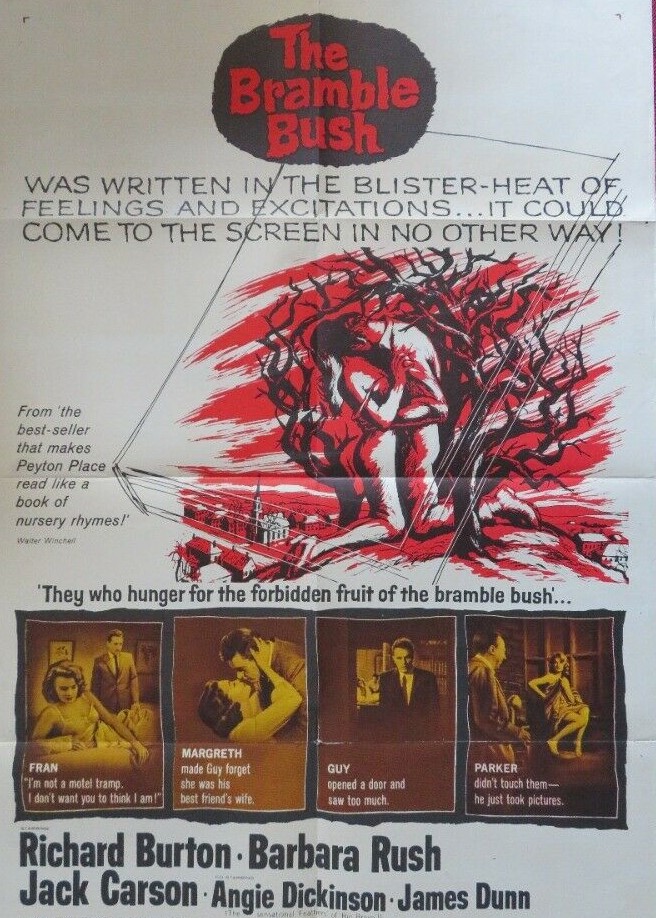
The secrecy business was working overtime in small-town America according to the Peyton Place template. And that wouldn’t be so bad here except returning big city doctor Guy (Richard Burton) has a few of his own in the locker but more importantly the unfolding of so many secrets detracts from the time available for the main dramatic premise which is an absolute corker.
We might as well account straight-off with the secret Guy drags around behind him like a two-ton weight thus explaining his general surliness, tight-lipped demeanor and occasional flashes of temper. As a twelve-year-old he told his father he had caught his mother in bed lover with Stew (James Dunn) which prompted his dad to chuck himself off a cliff.
The other big secret, dealt with fairly promptly, is that local nurse Fran (Angie Dickinson), who held a torch for Guy, now makes do with district attorney Bert (Jack Carson), that clandestine affair coming to light not so much in flagrante but in full beam when the illicit couple require treatment following a fire in a hotel bedroom.
The unravelling of both secrets impacts on Guy’s emotional state. The fire leads to Fran admitting her feelings to Guy, happy to have him use her for sex if love is not possible, “I love you so much I have no shame,” she proclaims, to no avail, but the hotel business also makes her fall prey to blackmail by local newshound Parker (Henry Jones), a budding amateur photographer of the unsavoury kind. Recounting his personal tragedy results in a Guy having a one-night stand with the married wannabe artist Margaret McFie (Barbara Rush).
But here’s the brilliant twist. Margaret’s husband Larry (Tom Drake) wants her to end up with Guy – but after his death. Larry, Guy’s best friend from childhood, is dying, the doctor scuttling back to a town that harbours too many bad memories in order to act as his personal physician. Larry’s never going to recover, he has the incurable illness Hodgkin’s Disease. His dying wish is that Guy marry Margaret.
Margaret is revolted by the idea, “I don’t want to be beautiful for anyone but Larry,” but unable to cope with his with illness is living on a cocktail of drink and drugs. And although Guy, who distrusts any woman, is similarly ill-inclined, Margaret becomes dependent on his medical ability, treating both husband and wife. Larry turns out to have another crazy idea – he wants Guy to kill him, medically speaking of course, some extra, illegal, doses of morphine would do the trick.
This incredible bucket list provides Guy with a huge dilemma, never mind what to do with Fran throwing herself at him and having to put up with the hypocritical Bert, and Stew, now the town drunk, begging for forgiveness, and Larry’s father Sam (Carl Benton Reid), who, for reasons unspecified, hates the doctor.
There’s more twists to come, just in case you thought you had everything worked out. But you can see the problem over-complication creates. The euthanasia-please-have-sex-with-my-beautiful wife combination would have set the movie up nicely from the get-go. Guy wouldn’t need to have a deep secret to find himself in very deep waters. How he would react to either or both outcomes, how Margaret would equally react to the possibility of ending her husband’s suffering in a quick and painless manner, would be more than enough to provide the dynamic the picture required. The movie then pivots on Guy being charged with murder.
It’s certainly interesting enough but Guy is too buttoned-down to incur sympathy and his revelation, devastating though it is, doesn’t suddenly make him an instantly more attractive screen character. In fact, it’s Fran who elicits the greater sympathy, the woman bedding someone who views her only as a sex object, yet willing to become a sex object for someone she does love if that’s all she can have. Eventually, the two key issues are put in the spotlight, which certainly puts a spark in the picture. But the poster promises a passion that just doesn’t exist.
Richard Burton (The Spy Who Came in from the Cold, 1965) plays this character in a lower register than his screen persona, the sonorous voice toned down, and although the look of someone who doesn’t want to be back rings true the performance lacks variety and there are only occasional glimpses of the fiery actor. Barbara Rush (Robin and the 7 Hoods, 1964) has her own legitimate reasons for being dispassionate and the vibrant character her husband married never really gets an airing. Angie Dickinson (Jessica, 1962) comes across as a more human character with, in emotional terms, a greater flaw, and a more tragic figure, even though there is nothing life-or-death about her circumstances. Two veterans are showcased: Jack Carson (Mildred Pierce, 1945) and James Dunn (Bad Girl, 1931).
Television director Daniel Petrie (A Raisin in the Sun, 1961) was making his movie debut. The screenwriting team of Milton Sperling and Philip Yordan (Battle of the Bulge, 1965) drew on the bestselling novel by Charles Mergendahl.
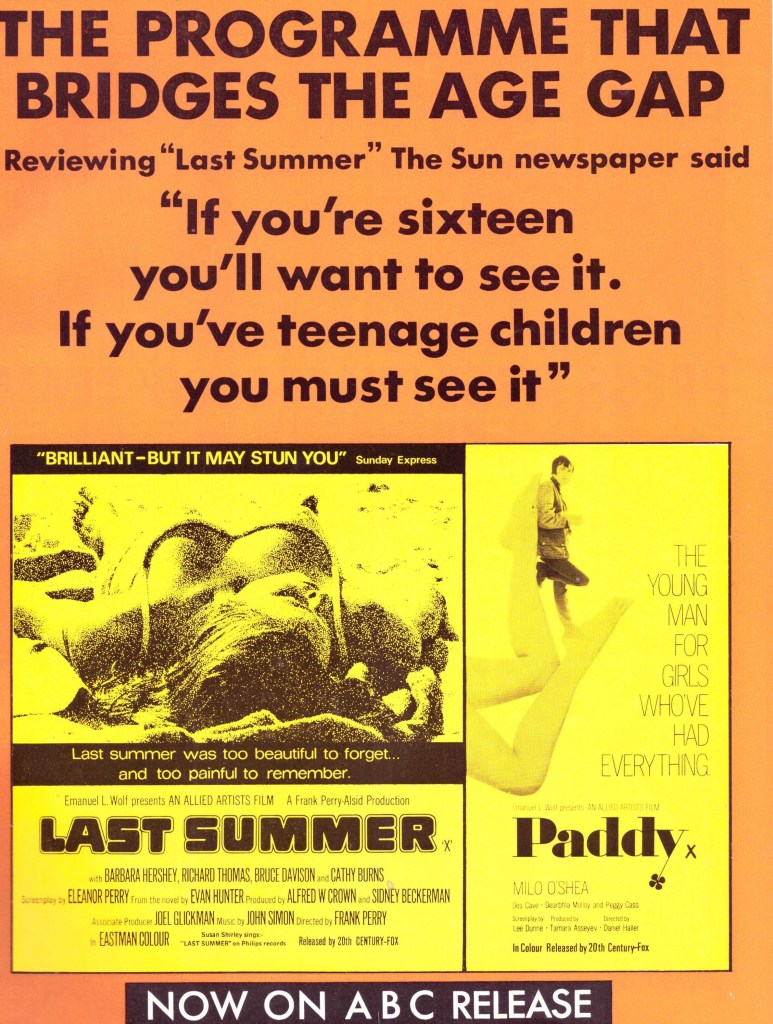
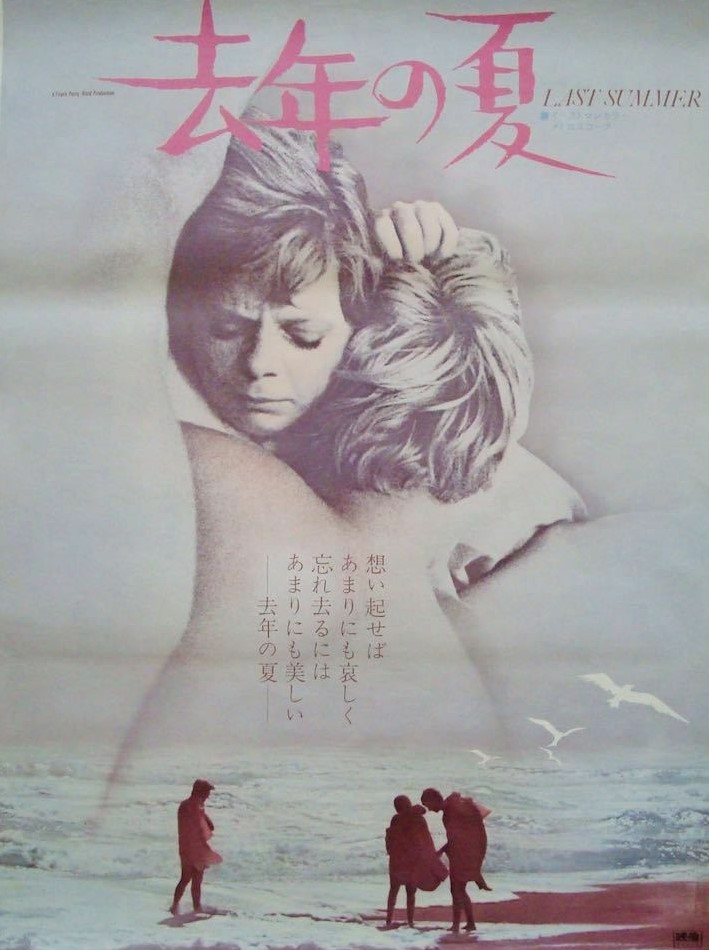
Given the severity of the crime involved, you leave Frank Perry’s coming-of-age-drama wondering what happened to the four principals. Did the aggressive three young demi-gods of a golden age go on to pursue similar acts of cruelty? While one of them might show remorse, or at least suffer from guilt, of the other two I have my doubts. They would find ways to blame the injured party. And what about the victim? Would she have the courage to report the crime, or suffer in shame for decades.
It’s odd how time changes entirely the shape of a movie. In its day this was seen as a bold exposition of frank adventure by teenagers seeking their first experiences of growing up and experimenting with sex and drugs (pilfered from a parental stash). Although there is little focus on dysfunctionality, both Sandy (Barbara Hershey) and Rhoda (Cathy Burns) are missing a parent, the former’s father running off with another woman, the latter’s mother drowned by stupid misadventure. Both have been abused, unable to prevent the wandering hands of males. All are vulnerable, if only by youth.
Of the boys, Dan (Bruce Davison) is the more confident, Peter (Richard Thomas), while easily swayed, the gentler of the two. Dan merely seeks his first taste of sex, Peter the more likely to need love as well. Sandy is sexually precocious, somewhat on the exhibitionist side, peeling off her bikini top with apparently at times no idea of the effect it will have on the boys, at other times clearly uncomfortable with the notion that the guys might have nothing else on their minds but staring at her breasts. But she is the one who wants to continue watching a gay couple cavorting on the beach while Dan is embarrassed. Sometimes the frank sexuality is rite-of-passage stuff, other times it is distinctly creepy. In the cinema both men grope her breasts. She claims to have been excited by the experience, but you can’t help thinking at least one of the men should have shown restraint, not treating her as if she was some kind of sex toy.
The movie begins on a clearer note. The guys come across Sandy nursing a wounded gull and perhaps entranced by her good looks help her remove a hook from the bird’s throat, provide convalescence and eventually help the bird recover the confidence to fly again. It’s a cosy trio, but edgy, too, Sandy allowing them considerable latitude. But, of course, the guys do the same to her. When she bludgeons the bird to death because it bit her (“the ungrateful bastard”), the pair, initially shocked, are not shocked enough to reject her, afflicted by unassailable male logic, the kind that drove film noir, that maintained a beautiful woman could not have a black heart.
Separated from the other two, Peter displays a gentler side, teaching the shy Rhoda to swim, kissing her in far more considerate fashion than the boys treat Sandy. But, effectively, she is a pet, and it’s only a matter of time before the unsavory aspect of Sandy’s character breaks out. After setting Rhoda up on a date, the trio do everything they can to spoil it, angry at the poor girl for not getting the “joke.”
Worse is to follow. Date-rape we’d call it today. Retreating to the cool forest, Sandy taunts Rhoda by removing her bikini top. When the horrified Rhoda refuses to do the same, Sandy attacks her, holding her down along with Peter while Dan rapes her. That’s where the film ends, no consequences, no repercussion. Back in the day it was a shock ending, an act of violence to mar an otherwise relatively innocent summer. After the deed is done, the camera pulls back into an aerial shot to observe the guilty trio walking back to the beach, but without drawing conclusion or offering moral judgement. It’s hard to know what to make of the ending. These days, of course, we’d be appalled. But back then it didn’t appear to appall, certainly not drawing the outrage that accompanied similar scenes in The Straw Dogs (1971) or A Clockwork Orange (1971) perhaps because the perpetrators were so attractive and it was, after all, a coming-of-age picture, as if such things could be expected.
Roger Ebert, writing in the Chicago Sun-Times, for example, judged that the conclusion “is not really important to the greatness of the movie.” Andrew Sarris of Village Voice noted that “Perry retreats from the carnal carnage” to end with a shot that “prefers symbolic evocation to psychological exploration.” In other words adolescence is fraught with risk and Rhoda is just collateral damage.
Certainly the acting is uniformly excellent for such inexperienced actors, coping with many changes in dramatic focus, from early exhilaration through growing pains to violence. Barbara Hershey (Heaven with a Gun, 1969) would go on to become a major star. Amazing to realise that Bruce Davison (Willard, 1971) and Cathy Burns, Oscar-nominated for her role, were making their movie debuts and for Hershey and Richard Thomas (Winning, 1969) their sophomore outings.
Director Frank Perry (The Swimmer, 1968) had a special affinity with the young as he had proved with David and Lisa (1962) and at times the whole affair had an improvised free-wheeling style. Eleanor Perry (David and Lisa) wrote the screenplay based on the novel by Evan Hunter (The Birds, 1963).
This is very hard to find, it turns out, so Ebay might be your best bet.
My thanks to one of my readers, Mike, for digging up this story of the disappearance of Catherine Burns from the movie business.
Cult fans assemble. Sci fi crime thriller with for the time a fair sprinkling of nudity, and channelling psychedelic turns like Barbarella (1968) and Danger: Diabolik (1968) and one step up from the ultra-confident gals of Deadlier than the Male (1967) and Some Girls Do (1969). It would have helped if there was a decent plot, and not just a barrage of double-crossing halfway in, but you can’t have everything and director Jess Franco seems to believe that the presence of a tribe of women decked out in red capes, white knee-length boots and not necessarily much in between, goes some way to compensate.
Crook Jeff Sutton (Richard Stapley) holes up in Rio with $10 million in stolen cash, unaware that his presence has already been noted by gang boss Masius (George Sanders) and local ultra-feminist Sununda (Shirley Eaton). After hooking up with manicurist Lesley (Maria Rohm), Sutton is set upon by Masius’ henchmen but escapes in a plane to Femina, “the capital city of the world of women,” a female fortress along the lines of the Bulldog Drummond pictures.
Turns out Sununda is partial to men with piles of cash, kidnapping and torturing them until they hand it over. So she can’t believe her luck when millionaire Jeff walks into her lair. Except Jeff is a bit of a fibber, having made up the story about the ten million, and instead landing at Femina in order to rescue Ulla (Marta Reves).
The plot only really kicks in when he escapes. Masius agrees to help Jeff in return for the pretend-thief helping him hijack Sununda’s vault of gold. In reality, Masius is using Jeff as bait, to tempt Sununda down from the clouds, and then turn him over in exchange for just half her gold. And so it’s back to Femina for all concerned.
There’s no real pretence at the kind of sci-fi that enthralled Barbarella audiences and none of the slick campness of Danger:Diabolik, and most of the ideas seem still-born and occasionally contradictory – in order to enslave men women must first be taught how to be irresistible to them – torture is accomplished either by whispering or kissing, and the ray-guns employed looked like cast-offs from the 1950s, but the regiment of women, with spies infiltrating everywhere, led by the ruthless Sununda, have the makings of a warrior nation.
The movie has far better luck with Masius, a splendidly-drawn character who doodles on restaurant tablecloths, enjoys reading Popeye comic books, and – a bit of drawback for a man in his profession – can’t stand the sight of blood. While his sidekicks are mostly incompetent, they do drive around in hearses that resemble pagodas or dress in unnecessary masks and while his girlfriends appear docile they are in fact spies. And there’s a spot of waterboarding in case you ever wondered where the American secret services got the idea.
The source material was from Sax Rohmer but Sununda lacks the inherent obvious evil of the author’s more successful Fu Manchu series, Shirley Eaton no match for Christopher Lee, the most recent Fu Manchu, nor Richard Shapley on a par with Fu Manchu nemesis Nayland Smith, regardless of whether played by Nigel Green (The Face of Fu Manchu, 1965), Douglas Wilmer (The Brides of Fu Manchu, 1966) or Richard Greene (The Blood of Fu Manchu, 1968, and The Castle of Fu Manchu, 1969).
And anyone attracted to the picture by director Jess (Jesus) Franco is going to be disappointed by the lack of sleaziness he exhibited in pictures like Succubus (1968), 99 Women (1969) and Marquis De Sade’s Justine (1969) and there’s not enough style, though abundant campness, to make up. It’s hard to say quite why it did not have a harder edge, perhaps producer Harry Alan Towers, responsible for 99 Women, felt it should err in the softer direction of Fu Manchu than the overt sex-and-violence of the nascent women-in-prison genre.
Franco and Towers (24 Hours to Kill, 1965, and Bang! Bang! You’re Dead!, 1966) had collaborated on The Blood of Fu Manchu and The Castle of Fu Manchu as well as Venus in Furs (1969) and Marquis De Sade’s Justine so presumably knew how far they could go and decided that here it was better to rein in Franco’s tendencies. Whether a tougher-edged approach would have made much of a difference given the indifferent playing – neither Shirley Eaton (The Scorpio Letters, 1967) nor Richard Stapley (Two Guns and a Coward, 1968) bring much to the leading roles and George Sanders (Warning Shot, 1967) is not in it enough to save it. Maria Rohm, Franco’s wife, appeared in many of his films.
Towers appeared on surer ground in the likes of 24 Hours to Kill (1965), Bang! Bang! You’re Dead! (1966) and Five Golden Dragons (1967) when he could draw on a more interesting cast, better stories and more colourful locations. This was a sequel to The Million Eyes of Sumuru (1967) again with Shirley Eaton and plum role for Klaus kinski.
Despite the film’s potential, the director and George Sanders it does not fit into the so-bad-it’s-good category nor has enough going for it to be labelled a true cult film. But I could be wrong in both those assumptions.
My formative years in terms of movies coincided with the rise of the critic and the auteur theory, promoted by Andrew Sarris, which valued directors far higher than actors, dramatically changing the existing status quo. Critics like Sarris developed their own pantheon of artists who could be considered great and routinely ridiculed those actors or directors who did not come up to the mark or whose works occasionally fell short of the lofty standards thus set.
Critics liked nothing better than to hail a new unknown talent – and be the first to do so – and regularly found fault with films that had big budgets. In short, they set out to pulverize popularity. In a separate endeavor academics found a new way of looking at films, deciphering in movies particular previously unforeseen aspects, epitomized by Peter Wollen’s seminal Signs and Meaning in the Cinema (1969). If ever a small picture turned into a big hit it was always, it was claimed, down to the efforts of critics who championed the movie. More importantly, critics were a law unto themselves. Movies the public loved were often the very ones that critics and academics disdained. As a consequence, the universal question on critical lips was how could the public be so foolish and why were they so gullible?
That meant I was often a puzzle to myself. How could I enjoy a picture that apparently lacked critical merit? Or had no redeemable features according to those who knew best? It was a paradox that I have enjoyed to this day. I am not talking here of films “so bad they are good,” a category invented to accommodate a particular guilty pleasure such as the Ed Wood portfolio, or of films deemed “camp classics” like Valley of the Dolls (1968).
In fact, Valley of the Dolls is a good place to start in the critic vs. public divide. Here was a film based on a novel the literary critics of the period derided (although more recently its merits have been reassessed from a feminist perspective) and turned into a big-budget film with an Oscar-nominated director that the film critics of the period also vilified. The book was a bestseller and movie a huge hit. Public and critics were at an impasse. Were the public misconceived or, worse, duped, into devouring book and movie?
When I wrote my book on the making of The Magnificent Seven (1960 version) I discovered that that movie had not been generally well received either by the critics or the public but that it had turned into the most popular western of all time, courtesy of endless repeats on television and a considerable number of reissues, where other movies in the genre termed classics fell far short of such universal appeal and adoration – except as far as critics and academics were concerned.
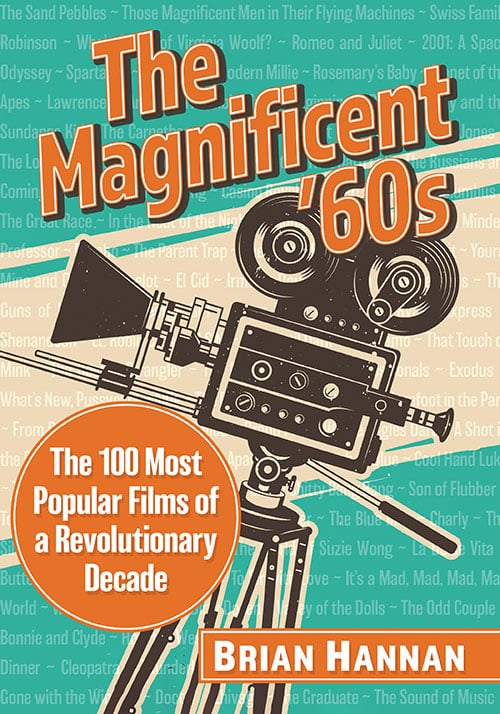
So when I came to look at the best films of the 1960s – a period of which I am inordinately fond – I decided I would in a sense ask the public. After all, box office is nothing more than a public thumbs up or thumbs down. My concept would mean cutting out the middle man.
I would go going straight to the public vote, determining popularity from box office receipts. We are not talking here about people who watched a movie for free on television years after it first came out and saw a version reduced in size, scale and sound and which in some cases had been trimmed for censorship reasons or to fit in with the advertisements. Instead, I am referring to this decade’s moviegoers willing to slap down their hard-earned bucks, take time out of their schedule, their effort maybe involving hiring babysitters or shelling out for transportation and parking and whatever.
In a sense there is something supremely egalitarian in that approach in that the people who pay to see movies are the ones whose box office dollar ends up funding new pictures and without whom there would be neither popular not unpopular films. So this assessment of the Top 100 Movies of the 1960s is based purely on the public’s response to a given film through the simple act of paying to go and see it. That act turns into the movie’s box office and that underpins this book.
This was the decade of legend. It spawned many of the greatest films ever made. Studios made more money than ever before, movie budgets ballooned and stars received record sums. As the auteur theory grew in influence, directors were feted. Businesswise, it bridged the old studio system where high numbers of movies were cranked out every year and the new approach where production was reduced in the expectation of creating the equivalent of today’s “tentpoles.”
Films made on a scope not conceived since Gone with the Wind (1939) became routine, arriving in theaters nearly every month, some so spectacularly successful they set the template for the future blockbuster. New genres such as the spy picture, driven by the James Bond phenomenon, came out of nowhere. Other moribund genres, previously restricted to low-budget or B-picture status, such as horror and sci-fi, reached new heights thanks to bigger budgets and top-name directors.
While every genre thrived, the decade will be remembered particularly for musicals like The Sound of Music (1965) and historical epics like Lawrence of Arabia (1962) and an explosion of British movies. It was also the era of “the little films that could,” low-budget pictures such as Lilies of the Field (1963) and Charly (1968) whose success far exceeded expectation. This epoch of dramatic change saw the industry embrace different attitudes to sexuality, violence and racism, adopt alternative release strategies and reassess movies’ ancillary value.
A new generation of stars emerged. Steve McQueen, Paul Newman, Sidney Poitier, Jane Fonda, Barbra Streisand, Sean Connery, Peter O’Toole, Natalie Wood, Faye Dunaway, Peter Sellers, Clint Eastwood, Julie Christie, Dustin Hoffman, Warren Beatty, Michael Caine, Raquel Welch, Omar Sharif and Lee Marvin formed the new elite. But that was not at the expense of existing stars. The post-war and 1950s generation retained – and in some instances expanded – their appeal.
Into that category fell Elizabeth Taylor, Burt Lancaster, Audrey Hepburn, Doris Day, Richard Burton, Sophia Loren, Rock Hudson, Tony Curtis, Charlton Heston and Frank Sinatra. And although Gary Cooper and Clark Gable died early in the decade, studios still counted on the box office prowess of pre-war contemporaries like John Wayne, Bette Davis, James Stewart, Joan Crawford, Spencer Tracy, James Stewart, Henry Fonda, and Katharine Hepburn and until his retirement in 1966 Cary Grant.
However, the “star system” had vanished and studios no longer invested millions annually on training new talent. Although in the 1950s Yul Brynner, Audrey Hepburn, Tony Curtis and Rock Hudson had graduated from smaller-scale new talent programs, by the 1960s they were largely defunct although occasional attempts were made to revive the concept. Occasionally, television might throw up a new prospect – a Steve McQueen or James Garner – but most new stars, as far as the public was concerned, came from nowhere. One minute you had never heard of them, the next they were everywhere, Sean Connery and Clint Eastwood in particular falling into this category. Where the previous system had relied on steady grooming, now stars were born in an instant. One picture was all it took.
Behind the camera was a parallel situation. The old-stagers like John Ford, Howard Hawks, Henry Hathaway, Fred Zinnemann, Billy Wilder, William Wyler, David Lean and Carol Reed were joined by post-war debutants such as Robert Aldrich, Robert Wise, Stanley Kramer and Stanley Kubrick.
The newer crop graduating from television included John Frankenheimer, Robert Mulligan, Sam Peckinpah, George Roy Hill, Franklin J. Schaffner, Sidney Lumet, Arthur Penn, Norman Jewison and Sydney Pollack. They were augmented by the British New Wave of Karel Reisz, Tony Richardson, John Schlesinger and Lindsay Anderson and by later additions like Peter Yates.
European directors welcomed into the Hollywood mainstream included Michelangelo Antonioni (Blow Up, 1966) and Roman Polanski (Rosemary’s Baby, 1968) while foreign-made pictures like Federico Fellini’s La Dolce Vita (1960) and Costa-Gavras’s Z (1969) made massive inroads into the box office and helped create a different artistic sensibility. While French New Wave films were mostly confined to arthouses, many of their techniques in storytelling and especially editing were embraced by Hollywood directors.
Studios began the decade in financial turmoil, MGM and Twentieth Century Fox on the verge of bankruptcy, production decimated and attendances in terminal decline. As had occurred at the start of the 1950s, studios gambled on a bigger throw of the dice, this time with 70mm big-budget roadshow, movies that paid little heed to budget strictures. The roadshow aimed to woo audiences away from the encroaching maw of television, to give big-screen lovers something that small-screen producers could not match, and at the same time reinvigorate the moviegoing experience.
First run big city theaters already generated far greater revenues than cinemas further down the food chain and now studios intended increasing the box office take further by hiking prices. Big city center cinemas would offer an experience unparalleled in the modern cinemagoing age. Roadshows were shown in the separate program format so you could not just slip in and out to suit yourself. And the movie started with a fanfare, an overture that could last up to ten minutes, giving you time to take your seat, and there was an intermission to let you stretch your legs, use the facilities or refuel.
The whole experience, what with souvenir programs on sale and babysitters to be hired, and maybe cocktails or dinner beforehand, was an event. And movies had never been events of any regularity. The prior moviegoing ethos was that it was a habitual part of your life. You popped into your neighborhood theater as you might go bowling or visit a bar. There was nothing fancy about it. It was just what everybody did. Or had done – until television became the way you spent your evenings, staring at a tiny box in the corner which lacked widescreen or color or 3D or any of the other gimmicks that for a time in the 1950s stopped the decline in theater attendance.
This book defines this decade in an entirely new way, not with reference to the critics, but as viewed by the public. Although you may find many critical faves here, you will find as many films that defined the public/critical divide.
Sherlock Holmes vs Sherlock Holmes was the initial tantalizing casting prospect. Basil Rathbone, the most venerated actor to don the distinctive deerstalker, and Peter Cushing, just signed up by the BBC for a new 16-episode series, the former signed to play the villain, the latter his nemesis in a film that started out with the title of The Death’s-head Vampire, the first film by a new production shingle Tigon Films.
While Tigon was new, with a distinctive logo, its driving force was well-known British producer Tony Tenser who with partner Mike Klinger had initially specialized in exploitation pictures with titles such as Naked as God Intended (1961) and London in the Raw (1964). The pair split after the artistic and commercial success of Roman Polanski’s Cul de Sac, Tenser initially setting up under his own name for Mini-Weekend/Tomcat (1966), mining the exploitation vein as before, and The Sorcerers (1967) a new venture into the horror market. Expanding the business with fresh capital and new partners, Tigon was born.
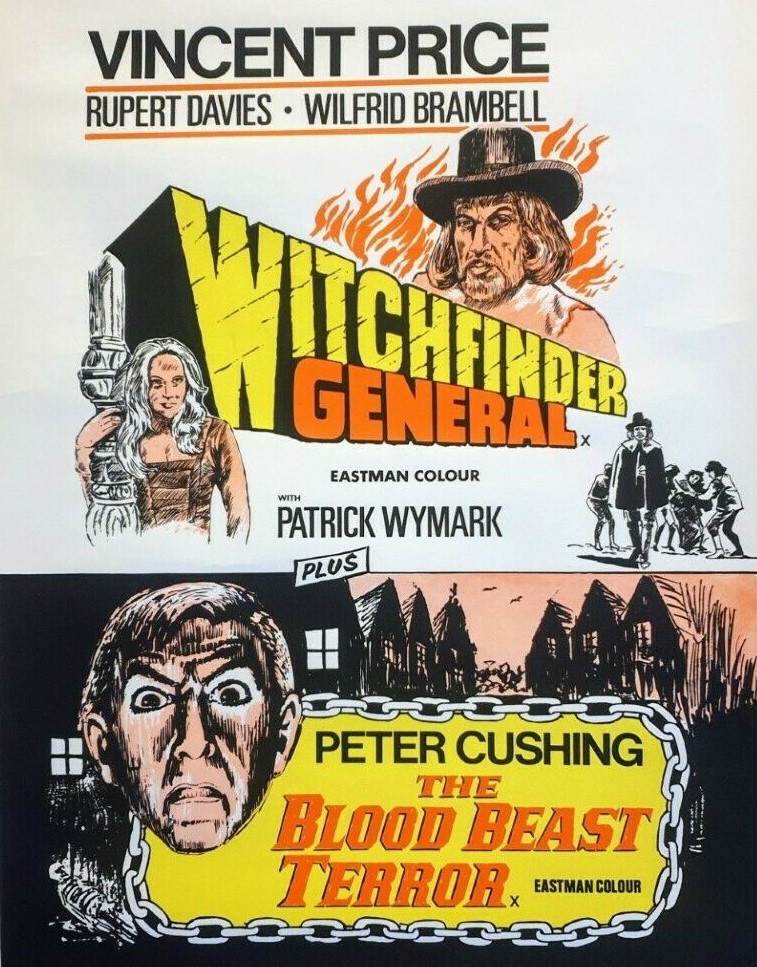
Supporting feature to “Witchfinder General” on ABC circuit release in Britain.
Explaining the new departure, Tenser said, “Films needs to be inexpensive. They need to sell, they need to appeal to an international audience, and one subject that always finds a market is horror.” Horror budgets were low, the genre did not require big stars, and the films had a surprisingly long shelf life.
First movie on the new company’s agenda was not The Death’s-head Vampire. Instead, Tenser had hooked Raquel Welch for a ghost story The Devil’s Discord to be produced by her husband Patrick Curtis, who had performed a similar task on The Sorcerers, and star Peter Cushing (The Skull, 1965). When that fell through, he held onto Cushing for a proposed Horror of Frankenstein and when that also bit the dust turned to him for The Death’s-head Vampire on a budget of just £40,000 (about $100,000). Offered the choice of playing villain Dr. Mallinger or Detective Inspector Quennell, the actor plumped for the “goodie,” Basil Rathbone lined up for the other role. The concept of older man/younger woman with action concentrated on an isolated house and the surrounding countryside was a horror trope.
Vernon Sewell (Strictly for the Birds, 1964), entering his third decade as a director, had worked with Cushing on Some May Live (1965) and was primarily known for low-budget and B-movies, and more importantly from Tenser’s perspective, sticking to a budget without any artistic pretensions or improvisation. He didn’t waste time on anything that would not be captured by the lens. He was calm on set, “nothing fazed him.” Cushing was a kindred spirit, never complaining, except famously, on this picture, when he told Sewell it was the “worst picture” he had ever made. The pair, however, had a very good working relationship to the extent that Sewell never offered Cushing any advice on the role –“he didn’t need my input.”
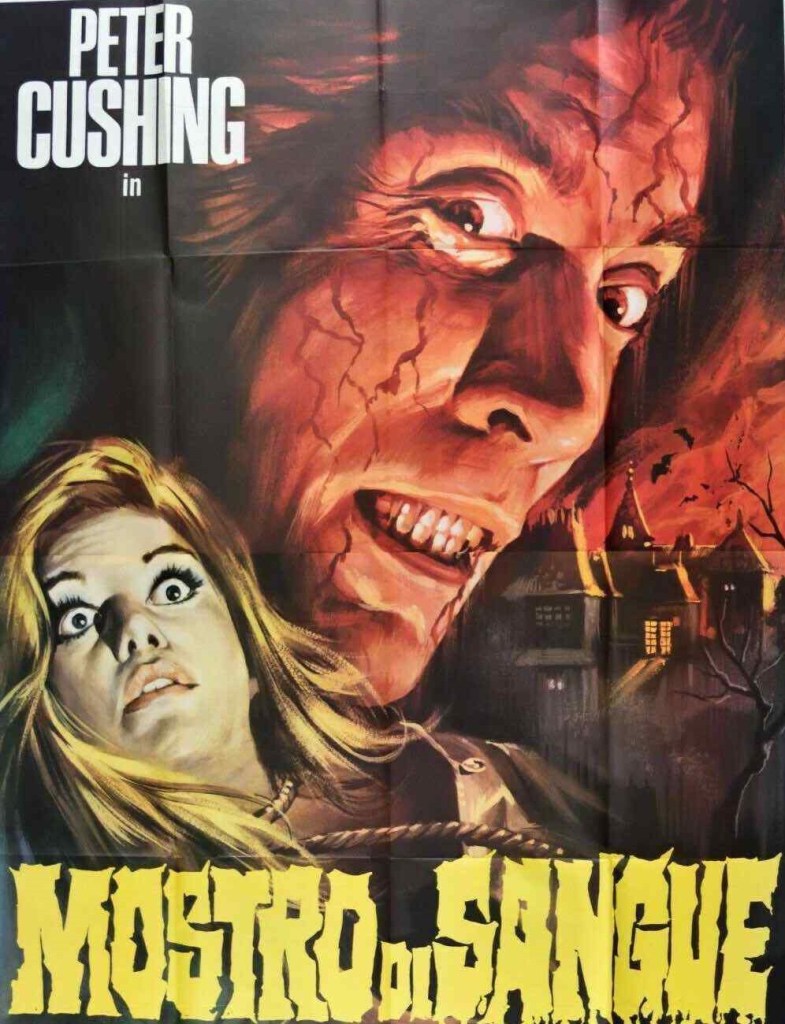
The Sherlock Holmes connection is promoted in this poster.
Just over two weeks before the August 1967 start date, Basil Rathbone died of a heart attack. Robert Flemyng, the last-minute replacement, was Cushing’s opposite, complaining all the time. The cast was rounded out by 32-year-old Doctor Who star Wanda Ventham (mother of actor Benedict Cumberbatch) and 18-year-old Vanessa Howard whose career highpoint thus far had been a duet with Cliff Richard for a television presentation of Aladdin (1967).
Interiors were shot at Goldhawk Studios, a converted three-story building in London’s Shepherd’s Bush, with exteriors at Grims Dyke, the former home of W.S. Gilbert, in north-west London. The 19th century manor house had lain empty since 1963.
Roger Dickens, who had cut his teeth on Thunderbirds Are Go! (1966) and worked on 2001: A Space Odyssey (1968) and would be later lionized for the mini-beast bursting out of John Hurt’s stomach in Alien (1979) was responsible for creating the monster. The model for the giant larvae was a much simpler task than creating a believable female giant insect. He took a mold of Ventham’s face, giving the features a repellant slant, using costume jewelry for the eyes, adding a furry cap and two-foot long antennae, a representation that would only really work if you scarcely saw the creature. For art designer Wilfred Woods his woods set turned into a disaster when the trees wilted and lost their leaves.
Opinions differ as to whether Tenser interfered with production. He saw his role during the film process to ensure that the project followed the script. “Sometimes you can put something in a film which will hinder the selling, sometimes you need to put something in which will help the selling.”
Comedian Roy Hudd, playing the morgue attendant, thought the script so awful he was delighted to work with Cushing on improvements.
When John Ford’s boast that he never shot an extra foot of film in order to prevent a producer turning in a different film has resulted in many a masterpiece, the same did not hold true for Sewell. Sticking so close to the script, not filming anything that was not absolutely necessary meant that the movie was too short. Editor Howard Lanning commented: “I put in everything that was available. Even with expanding the lecture scene and the amateur dramatics as long as possible, to the detriment of pace, the picture clocked in at just 81 minutes, not the length expected of a main feature.
To ensure the movie came in at the required length, Tenser added the African sequence at the beginning (an extra five minutes) and re-shot the morgue material (two more minutes), encouraging Cushing and Hudd to improvise. The final product was over-budget and a week late. The version shown to the censor was 87 minutes though the official running time was a minute longer.
Tenser now deemed the working title as insufficient, preferring “something catchy and something that told people what you were selling.” His first stab at a new title was Blood Beasts from Hell. But in the final analysis it was altered to The Blood Beast Terror. Hoping to sell it to a circuit as a main feature it was originally shown in a double bill with Castle of the Living Dead, but despite the supposedly attractive title, audiences were not interested. To cut his losses, the film was repackaged as the support to another Tigon production Witchfinder General (1967) which meant Tenser would not have to share receipts with another distributor.
The Blood Beast Terror did not prove so sellable overseas either. It was shelved in France until 1971, although, sold for a flat fee, it did well in South America. A.I.P. who had U.S. distribution rights to Witchfinder General – title altered to The Conqueror Worm – had no interest in The Blood Beast Terror but it was picked up by Pacemaker Pictures who were also in title-changing mood and released it in summer 1969 as Vampire Beast Craves Blood on a double bill with Curse of the Blood Ghouls (1964).
Tenser’s predictions of long shelf life were correct. In Britain, the movie was reissued on a late night double bill with The Secret of Blood Island (1961), and then was revived with The Devil’s Hand (1961) before being re-teamed with Witchfinder General on a Sunday’s-only screening. Although none of these would be circuit releases in the sense of a nationwide day-and-date opening, they were nonetheless likely to get reasonable bookings to fit specific engagement profiles. In the States where there was endless demand for horror triple- and quadruple bills and all-nighters, The Blood Beast Terror received ongoing bookings.
SOURCES: John Hamilton, “The Making of the The Blood Beast Terror,” Little Shoppe of Horror, Issue No 43, p67-91; John Hamilton, “Regretting Nothing: John Sewell, Little Shoppe of Horror, Issue No 43, p92-98.
As the title suggests there’s a vampiric element, and there’s not a great deal unusual in that, Hammer having successfully revived interest in bloodsuckers. What is unusual, however, and a couple of years before that studio’s The Vampire Lovers (1970) is the idea of female empowerment. Previously, the sole purpose of a damsel in a horror picture was to lay bare a convenient bosom for a passing thirsty creature, or, have their clothing disarrayed and let out a scream when a monster pounced.
The twist here is that the vampire is a woman, Clare (Wanda Ventham), and men who are the victims except on the occasions when her father Dr Mallinger (Robert Flemyng) hypnotizes young women in order to give the creature a blood transplant. The beast exists as a creature and then morphs into Clare. For a time it looks as if Clare is merely possessed, but in reality appears much more as if she is enjoying being the beast, abandoning the enforced respectability of the times, luring men into the forest to have her rapacious way with them, the men naturally thinking they are in for a romantic tryst rather than being targeted by a predator.
Continuing the theme of misleading the audience, this poster cleverly suggests that it’s a man who is the beast and the woman who are the victims.
There’s a wonderful scene that gives an insight into her mindset. Her friends put on a little play. Her role is the monster, a part she seizes with relish.
It’s one of those films you have to work out backward. In standard horror fashion it leaves the twist till close to the end and it would have been far more interesting if we had discovered at the outset that Clare was the beast, leading the men for the most part a merry dance, outwitting Inspector Quennell (Peter Cushing) and her adoring father Dr. Mallinger (Robert Flemyng).
The inspector, faced with a growing pile of corpses drained of blood, is baffled throughout, no Sherlock Holmes clever deductions here, and it naturally would not occur to any of the males, beyond Dr Mallinger who is in on the secret, to imagine a woman capable of not just committing such crimes but of exerting such power over a man. The story glosses over the genetics, it’s a version of Frankenstein obviously, but the background to it is missing, and I can see why. There has to be some mystery.
Hitchcock could not have done a better job of misleading the audience. For a start the story is told entirely through the male perspective. And it’s set up as a murder mystery, Quennell our lead as he dances from one corpse to the other, helped along in his information accumulation by lugubrious mortuary attendant (Roy Hudd), who is, ironically, as hungry as the beast, but for normal food rather than blood, always seen devouring something. Mallinger is not a mad professor either, but a distinguished one, celebrated in his field, giving lectures and attracting proteges like Britewell (William Wilde).
Initial British release double bill cleverly bringing together Peter Cushing and Christopher Lee – though in separate pictures.
Although his daughter acts as laboratory assistant, Mallinger is hardly aware that his daughter is sizing up every male visitor as a potential victim.
The posters give away that the creature is a giant moth, and by and large the special effects (no CGI available of course) pull this off, the creature usually just glimpsed or seen from the distance, and the possibility that Mallinger is aware of what he is harbouring apparent when he enters a cellar wearing a leather hood and carrying a whip.
Tony Tenser’s production company Tygon has acquired cult status, in part for having the temerity to take on British horror giant Hammer at the height of its powers in the 1960s, and in part from the distinction of its output, making such films as The Sorcerers (1967) with Boris Karloff, Peter Cushing as Witchfinder General (1968) and Karloff, Christopher Lee and Barbara Steele in The Crimson Cult/The Curse of the Crimson Altar (1968). Tenser ploughed a different furrow to Hammer at a time when that studio was also expanding into bigger-budgeted movies such as One Million Years B.C. (1966).
Capably not to say cleverly director by veteran Vernon Sewell (The Crimson Cult) it is miles ahead of its time and generally delivers the goods. Peter Cushing (The Skull, 1965) is excellent as usual, Robert Flemyng (The Deadly Affair, 1967) proves a more interesting scientist than usual, steering clear of any craziness.
Wanda Ventham in her first leading role provides a fascinating character study, but you have to work backwards as I said, to realize just how good she is, the way she has, for Victorian times, her father under her thumb, and the seductive glances she casts at men, not to mention the ease with which she assists her father in his diabolical experiments without him realizing why she is so enamored. Female monsters had evolved from creatures before – in Cat People (1942), Snake Woman (1961) and Hammer’s The Reptile (1966) – but this was a more rapacious example of the species. Vanessa Howard (Some Girls Do, 1969) has a small role and you can spot Scottish character actor Glynn Edwards (Zulu, 1963) and television comedian Roy Hudd in his movie debut.
Screenwriter Peter Bryan (The Brides of Dracula, 1960), something of an expert in the horror field, turns the whole genre on its head with the gender politics examined here.
Frank Sinatra in cruise control reprises his Tony Rome (1967) private eye in a hugely enjoyable and vastly under-rated murder mystery with man mountain Dan Blocker of Bonanza fame and femme fatale Raquel Welch of pin-up fame. One of the actor’s greatest characterizations, albeit with little in it for the Oscar mob, this is one of the coolest gumshoes to hit the screen. Exhibiting none of the self-consciousness of latter-day Philip Marlowes or Sam Spades, Sinatra embellishes the character with more “business” than ever before, larding his dialogue with quips while he talks his way out of sticky situations and, as a big star, happy to be picked up by Blocker and dumped on a work surface. Can’t see Newman, Redford, McQueen, and Eastwood et al putting up with that kind of treatment.
Tony Rome is almost as much of a bum as he is a detective, betting on anything possible, wasting his time on fruitless quests for sunken treasure, lazing around in his yacht until in one of his deep sea forays comes across the naked titular damsel. Reporting the murder sees Rome co-opted by cop Lt. Santini (Richard Conte) to ID the woman. Sent to the apartment shared by Sandra Lomax and Maria Bareto in search for a potential client, Rome encounters Waldo (Dan Blocker) who hires him to find Lomax.
The British release paired an action picture with a sex comedy, the idea being to catch different types of audiences rather than putting two action films or two comedies together which would later become the prevailing exhibition wisdom. Although the two films had in common a star in bikini. Note that the double bill went on general release at the same time as the two pictures were, separately, playing at London’s West End.
That takes Rome to Jilly’s go-go club where his conversation with dancer Maria (Lainie Kazan) is rudely interrupted by owner Danny Yale (Frank Raiter). Next stop is a swimming pool and who should emerge in a wet bikini than millionairess Kit Forrest (Raquel Welch) whose party Sandra attended. But a) she’s an alcoholic with memory issues and b) objects to snoopers so calls in neighbor and former hood Al Mungar (Martin Gabel) who sends Rome packing. When Maria is bumped off, Waldo is the prime suspect.
So we are enveloped in an interesting plot that soon involves blackmail and robbery and a suspect list that extends to Mungar and son Paul (Steve Peck) who has the hots for Kit, Yale and muscular boyfriend Seymour, and of course Waldo (whose reason for finding Sandra is revenge) and Kit. Despite the seeming light touch, inheritance is a theme, and the tale is character-driven, relationships complex, locales somewhat off-beat, a crap game in a mortuary, a nude painter’s studio, strip clubs, massage parlors and go-go dancing establishments abound, but with none of the moralizing that came with the territory. A racetrack is almost prosaic by comparison.
For most of the picture Santini and Rome have an antagonistic relationship until we find out, in a lovely scene, that Rome was the cop’s ex-partner, that the grumpy cop has a loving home life and that Rome is greeted with delight as “Uncle Tony” by Santini’s son. Rome is also very well acquainted with film noir and knows that a woman who appears too good to be true is in fact too good to be true so he’s sensible enough to steer clear of seduction (the bane of any film noir character’s life) unless he’s just pretending in order to glean information.
Raquel Welch is more sedate in this poster.
It’s a classic detective story, one lead following another, naturally a few contretemps along the way, some deception, and the laid-back Rome proves not as relaxed as you might expect, possessing a handy right hook and a neat uppercut. Interesting subsidiary characters include Al’s neglected wife, a bumptious beach attendant and a whining nude model.
Director Gordon Douglas – who handled Sinatra in Robin and the Seven Hoods (1964), Tony Rome and The Detective (1968) – brings out the best in the actor, keeps the action zipping along despite multiple complications and prefers a quip to a momentous speech.
Sinatra is just so at ease he oozes screen charisma. His shamus is no slick unraveller of truth, but a steady digger, accumulating information. You might think any tentative relationship with Kit stretches the age angle a tad but bear in mind at this stage Sinatra was married to Mia Farrow, 30 years his junior. Raquel Welch (The Biggest Bundle of Them All, 1968) is surprisingly good as a vulnerable mixed-up wealthy alcoholic and, except in her opening scene, manages to steer clear of a bikini for most of the picture.
Richard Conte (Hotel, 1966) is as dependable as ever but Martin Gabel (Divorce American Style, 1967) steals the supporting show as an apoplectic racketeer trying to go straight. You might like to know Lainie Kazan (Dayton’s Devils, 1968) is still working, The Amityville Murders (2018) and Tango Shalom (2021) among her recent output. It’s a shame Dan Blocker did not live long enough (he died in 1972) to build on his idiosyncratic performance.
The lively screenplay was written by Marvin H. Albert (A Twist of Sand, 1968) and Jack Guss (Daniel Boone: Frontier Trail Rider, 1966) based on Albert’s novel. Mention, too, for the jaunty theme tune by Hugo Montenegro (The Undefeated, 1969). You’ll find yourself humming it for days on end, it pops up often enough.
Into the catchphrase hall of fame must go Blocker’s exhortation “Stay loose” just before he unleashes mayhem. And while we’re about it, what is it about the quality of actor or status of a star that permits hoodlum Al’s peeved “I tried to go clean and you dragged me down” to be ignored while a couple of decades later a similar line from The Godfather Part III (1990) uttered by Al Pacino is hailed as a classic. You know the one I mean: “Just when I thought I was out, they pulled me back in.” Steven Spielberg is another who should have watched this picture for tips on how to deal with marauding sharks – Rome’s solution: kick them on the snout. By the way did Blocker fall out with imdb? Despite third billing, he’s not listed at all in the main credits and when you scroll down to the extended credits, he’s at the very bottom. Jeez!
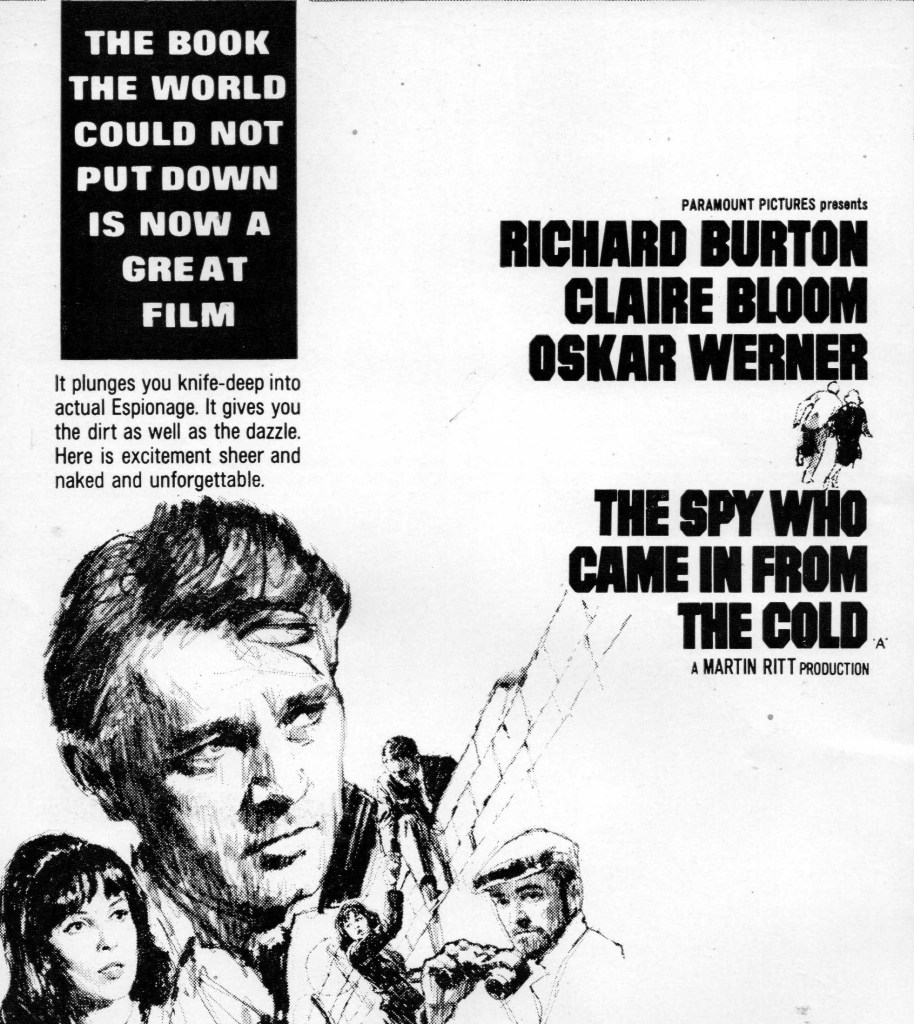
Shooting might have been less stressful and cheaper if director Martin Ritt had stuck to his initial schedule but when the shoot start-date was pushed back from late fall 1964 to January 1965 he lost original star Burt Lancaster (planning to play the original Englishman as a Canadian). At relatively short notice, Richard Burton stepped in, but for an eye-watering fee of $750,000, at that time the biggest salary paid in Hollywood. (Due to Ritt’s involvement there had been rumors Paul Newman would star.) And although Burton pushed for his wife Elizabeth Taylor for the small role of Nan, he was overruled on the issue of cost, and that audience expectations would be unfairly raised.
It didn’t matter, though, if Ritt refused to cast Elizabeth Taylor. He got her anyway, and her vast entourage, generally happy to remain out of the way but occasionally arriving on location in the middle of Dublin in her white Rolls-Royce sending fans into convulsions. There were two schools of thought as to which woman caused more disruption: the jealous wife exerting 24-hour surveillance on a husband with a wandering eye or one of his previous lovers, Claire Bloom, who was playing Nan. (The name changed from Liz in the book.)
“It was not a happy picture and the central reason fort that was: Claire Bloom,” averred Burton’s biographer Melvyn Bragg. “The real problem was not from Bloom but from Elizabeth Taylor’s jealousy,” claimed Sam Kastner. That Burton incurred Bloom’s wrath was not without doubt. But it wasn’t the first time. Prior to Taylor, but while he was married to Sybil, Burton and Bloom had been lovers.
Burton was “not prepared for Bloom and found it very difficult to handle.” The pair had met on a touring production of The Lady’s Not for Burning in the 1940s but their romance remained unconsummated. A few years later in the early 1950s the affair began in earnest and continued on and off for five years. When both were cast in Look Back in Anger (1959), Bloom expected them to pick up where they had left off. But that notion was dashed when Burton appeared, still married, on the arm of Susan Strasberg (Sisters, 1969).
The other elephant in the room was, of course, Burton’s alcohol intake. A very heavy drinker, verging on the alcoholic, his hand had begun to tremor until he received liquid sustenance. If Burton had an equally boisterous co-star as in Peter O’Toole in Becket (1964) or a very indulgent director as with John Huston in The Sandpiper (1965), his drinking would not attract comment. But “Martin Ritt did not approve of Burton’s heavy drinking and Burton resented that.”
Never mind Burton’s issues with ex-lover and wife, he was having difficulty delivering the performance Ritt demanded. The director wanted a stripped-down character, minus the oratory which had made the actor famous, the acting so flattened as to “make him anonymous.” Author John le Carre would have preferred James Mason or Trevor Howard for the “embattled” personas they presented, and which would have fit more into the director’s perception of the character. “For Burton this time there would be no strong sex, no oratory, no action, no charm.” The director wanted that Burton intensity, but coiled, not sprung. As the production wore on, director and star were barely speaking. “Ritt had come to despise Burton whom he saw as a spoiled and self-indulgent actor who had dissipated his talent.”
The initial screenwriter Guy Trosper made changes that seemed out of kilter with the book, for instance sending Leamas to psychiatric hospital rather than jail for punching the grocer. When he became ill he was replaced by Paul Dehn who did not veer so far from the book. Le Carre was brought in at the last minute at Burton’s insistence to do rewrites. But that merely added to the existing aggravation. While waiting for nightfall to shoot the escape sequence, Le Carre was obliged to keep the actor company, trying to consume most the available whisky so that Burton did not go on set drunk. While little of Le Carre’s rewrites found their way into the finished product, he did provide a new scene for Fiedler (Oskar Werner).
Ritt had a revolutionary picture in mind, not just filming in black-and-white to downplay the glamor of the espionage business as evidenced by James Bond, but to employ “a point of view that’s never been found before.” He was not a believer in the end justifying the means nor of depicting the enemy as rabid. “Most of the time,” he explained, “you have actors playing Communists as if they’d just switched over from playing Nazis in World War Two pictures…the Communists in this picture are people and one of them at least …is an honest, ethical man.”
While the decision to film in black-and-white was a creative decision, intended to give the film a realistic edge, he knew it would not necessarily go down so well with the end user, the exhibitor. “The needs of creative people and the needs of exhibitors are completely different. Exhibitors want pictures and creators want to express themselves and those two factors don’t always satisfy each other.” Although the movie was Oscar-nominated and critically well-received and did well in key city first-run, it was condemned by exhibitors in small towns, one of whom discouraged others from booking it and complained that the black-and-white aspect made the film impossible to view on old projectors.
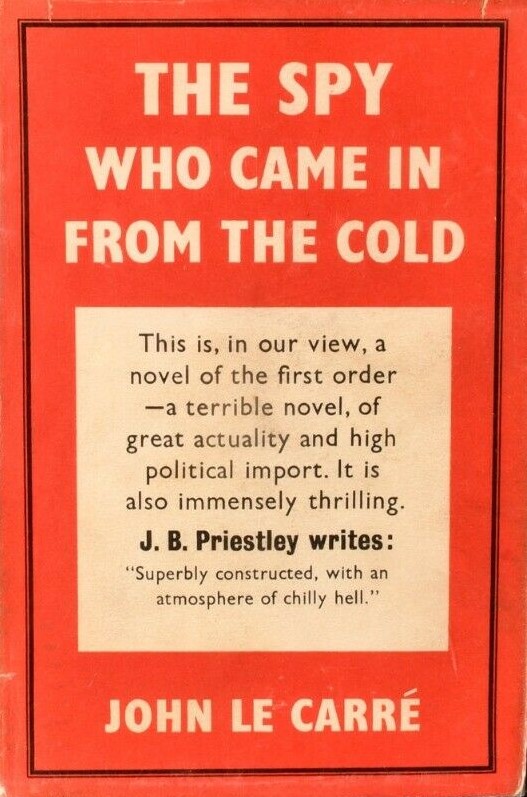
Author John le Carre was an unknown, two previous books published to no great sales. But The Spy Who Came in from the Cold proved a phenomenon. Debuting in the number spot in February 1964, the book spent 35 weeks topping the hardback bestseller chart. It ended up the hardback number one title in the U.S. during 1964, a quarter of a million copies sold, winner of the Edgar Award for Best Mystery, initial paperback order topping two million copies, five million books in print by the time the film appeared. So it seemed all the more astonishing that the movie rights had been snapped up for a mere $21,000 (with escalating clauses based on sales that took it up to $38,000). Martin Ritt claimed glory for that astute purchase, making a bid to a hard-up author when the book was in galley form. “When I bought it nobody else was running to buy it,” claimed Ritt. But it turned out the real star was Kay Selby, a Paramount story editor, who had dug it out of a pile of novels submitted. Le Carre did not make the same mistake again, movie rights for his next book The Looking GlassWar were sold for $400,000 and the paperback rights for the same
When the film had still been a relatively low-budget production, Paramount planned to film exteriors in London and interiors in Hollywood. But Ritt wanted “to capture the full brunt of the winter atmosphere for dramatic emphasis” and there was very little Hollywood could bring to the party to recreate an actual bleak British weather.
The bulk of the film was shot in Ireland at the defunct Ardmore studios in Bray – Ritt rented them from the Official Receiver, the first production there since November 1963 – and on location in Dublin, the historic Cornmarket standing in for Checkpoint Charlie while with the addition of breezeblock, barbed wire and an iron ladder, Dublin Square was transformed into the Berlin Wall, though some scenes set in East Berlin were shot in the London Docklands.
However, shooting kicked off in London, at Shepperton studios on January 9, 1965, before switching for two months to Ardmore, wrapping up there a week early, heading for location filming in Amsterdam (briefly) and 9-10 days in Garmisch (Germany) before returning to Shepperton in April. Ritt brought the picture in under budget.
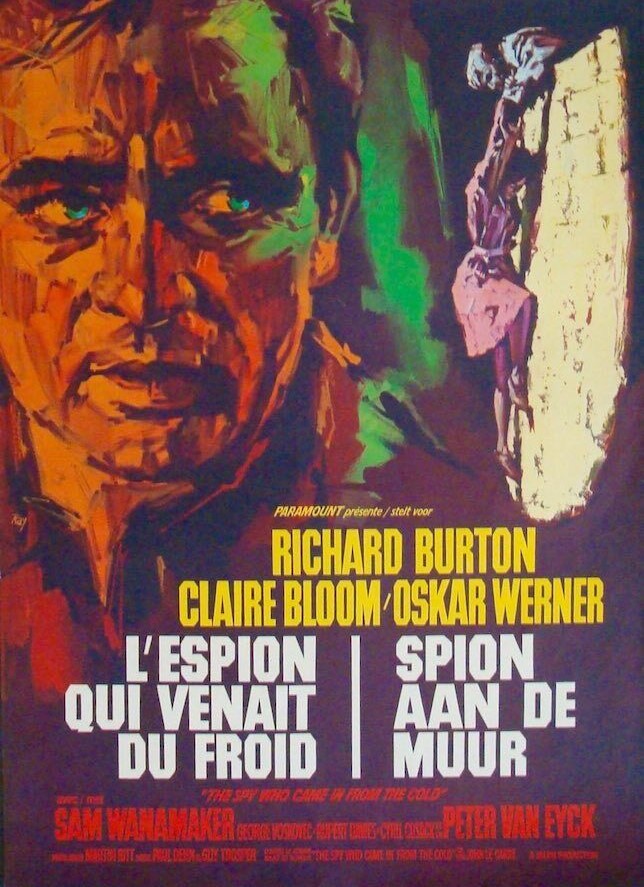
Paramount launched a teaser campaign in November 1965 New York – the idea stolen by United Artists for A Fistful of Dollars the following year – with a 1,000-strong two-sheet poster campaign in the city’s subway, promoting the film but missing out the opening date and the cinemas it would play, that information supplied closer to the launch which took place over the lucrative Xmas period in 1965, coincidentally just in time to qualify for Oscar consideration.
And also in time to face a spy box office tsunami called Thunderball and the roadshow epic Doctor Zhivago among the 20-plus movies launched for the festive season. In fact, the Bond films had triggered a resurgence of spy pictures. As the Ritt picture got underway, others on the starting grid include “The Matt Helm Project,” The Ipcress File, James Garner in Welcome Mr. Beddoes (A Man Could Get Killed) and Masquerade starring Cliff Robertson. In addition the potential line-up also included female spy Christy O’Hare, Aaron Rosenberg’s Smashmaster and Strangers on a Bridge; the first two were never made, the last one taking over half a century to hit the screen as Steven Spielberg’s Bridge of Spies.
Burton was Oscar-nominated, but in the year when Thunderball (1965), Torn Curtain (1966), The Silencers (1966) and Our Man Flint (1966) all featured in the top ten films of 1966, The Spy Who Came in from the Cold did not prove a counter-programming smash, sitting at 32nd in the annual chart with $3.1 million in rentals. Although the movie was critically well-received and did well in key city first-run, it was a bust in smaller towns. Don Stott of the Calvert Drive-In in Prince Frederick, Md, complained “it was one of the lousiest pictures I’ve ever had my displeasure to exhibit and lose my shirt on…the print was so dark…it was barely visible.” Added Arthur K. Dame of the Scenic Theater in Pittsfield, N.H., “it comfirms the fact that we are not going to do well with spy films.”
SOURCES: Adam Sisman, John Le Carre, The Biography (Bloomsbury, 2013) p258, 266, 273, 277-280; The Richard Burton Diaries (Yale University Press, 2012), p79-80; Melvyn Bragg, Rich: The Life of Richard Burton, (Hodder and Stoughton, 2012) p200-203; Sam Kashner, Furious Love (Harper Perennial, 2019) p120-131; “Burt Lancaster Plans More Pix Of His Own,” Variety, January 1, 1964, p27; “Bestseller at $20,000,” Variety, March 25, 1964, p15; “Broadway,” Box Office, April 20, 1964, pE5; “Director Martin Ritt: Big Dig Is Scripts You Can Sell to Producers,” Variety, May 13, 1964, p13; “Six for Paramount in Alien Locales,” Variety, July 15, 1964, p18’“Richard Burton Receives Role in Spy by Martin Ritt,” Box Office, August 24, 1964, pW1; “Voices in the Diplomatic Pouch,” Variety, December, 9, 1964, p7; “Ritt Starts Spy Who Came in from the Cold in London,” Box Office, January 18, 1965, pE5; “Spy Success Sires Speedy Sequel, Le Carre Learning Loot Lesson,” Variety, February 17, 1965, p3; “Martin Ritt May Wind Berlin Wall Episodes on Spy This Month,” Variety, February 24, 1965, p28; “Paperbacks Up their Covers and Advance $,” Variety, March 3, 1965, p1; “Burton Winds Irish Shooting Spy Film,” Variety, April 14, 1965, p20; Maxwell Sweeney, “Harassed Irish Studio Revives,” Variety, May 12, 1965, p54; “Kay Selby’s Coup,” Variety, August 11, 1965, p3; “Subway Posters First Step in Promoting The Spy,” Box Office, November 29, 1965, pA2; “Review,” Box Office, December 20, 1965, 1965, pA11; “Three Paramount Pix To Open in N.Y. Dec 23,” Box Office, December 20, 1965, pE16; “Martin Ritt Is Promoting His Spy for Paramount,” Box Office, December 20, 1965, pE12; “Espionage Shown in Its Dirty Clothes,” Variety, December 22, 1965, p4; “The Exhibitor Has His Say,” Box Office, June 13, 1966, pA4 and October 10, 1966, pB4; Big Rentals of 1966,” Variety, January 4, 1967, p8.
The perfect riposte to the James Bond phenomenon. By comparison, a kitchen sink spy drama that challenges the glamorous version of espionage promoted by 007. Had the film been made as soon as the source novel by John Le Carre hit the bestseller charts in 1963 it might have stopped the Bond bandwagon, which didn’t really kick off until Goldfinger (1964), in its tracks. Realistic to the point of cynicism, the innocent are sacrificed in a ruthless chess battle for espionage supremacy.
Alec Leamas (Richard Burton) infiltrates the East German counter-espionage system after purportedly becoming a defector. His intention, however, is to stitch up Mundt (Peter van Eyck), the head of the East German unit, so that he is overthrown. Mundt has been causing too much grief to the British spy network in East Germany, the film opening with Leamas at the Berlin Wall watching an escaping agent being shot trying to pass through Checkpoint Charlie. At the behest of Control (Cyril Cusack), the head of the British spy organization, Leamas pretends to quit the outfit, and playing the embittered card, ends up in prison for assault, on release being surreptitiously recruited by the East Germans as a potential defector.
Initially, the British appear almost too gentlemanly for the vicious spy game, Control almost apologizing (over endless cups of tea) about having to take such ruthless steps. Leamas has a tale he hopes will incriminate Mundt largely through the envy of his subordinate Fiedler (Oskar Werner). But once Leamas falls into the enemy’s hands, the game does not go according to plan. After initial gentle interrogation by Fiedler, the arrival of Mundt causes Leamas to be arrested and then tried for treason. Along the way, Leamas’s naïve girlfriend Nancy (Claire Bloom) is implicated and Leamas realizes he is a patsy, forced into quite a different role, that tests his beliefs.
The British, portrayed in Bond films and every other spy film up till then, as being on the side of the angels, are revealed as being just as heinous as the enemy. All through his defection Leamas is able to snigger at the abominable way the Communist superiors treat their underlings, simple demonstrations of power intended to humiliate at every opportunity, but it is soon apparent that the British are every bit as heartless. There is a very telling scene when Leamas realizes he may well be walking into a trap when his face appears on the front pages of a British newspaper. The look in Leamas’s eyes suggests he knows he has been betrayed.
If you remember Le Carre’s most famous creation George Smiley (Rupert Davies) as a humble man from the Tinker, Tailor, Soldier, Spy (1979) television series, you will be surprised to discover what depths the man will sink to here.
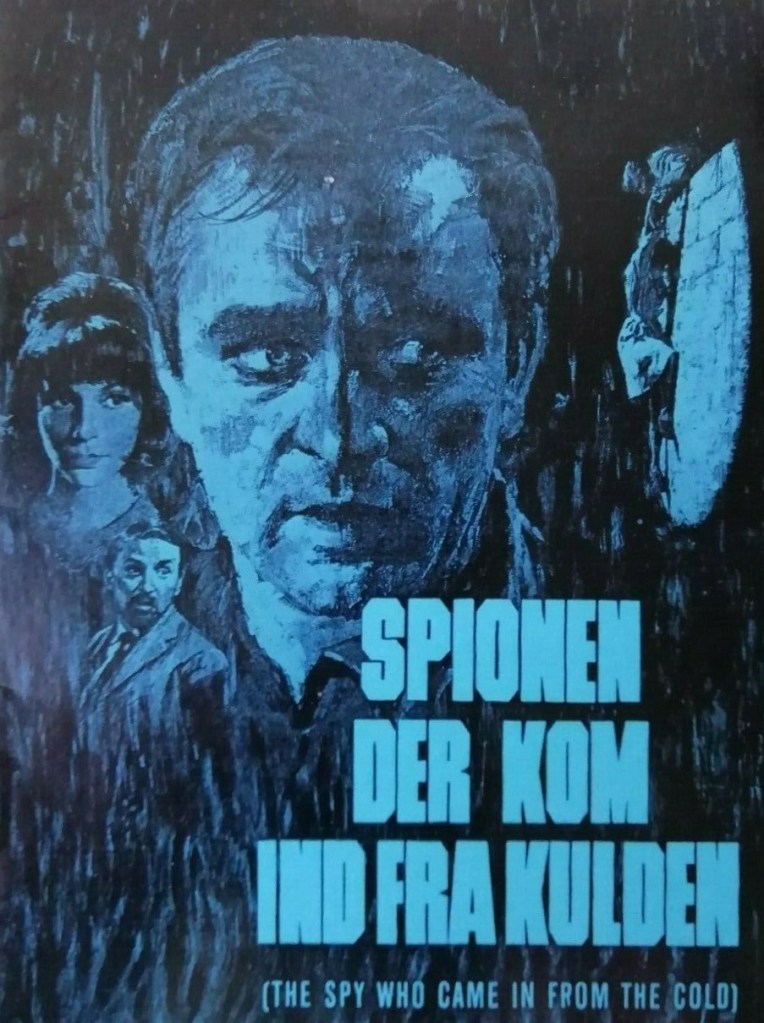
Oscar-nominated American director Martin Ritt (Hud, 1963) filmed this in black-and-white – even the advertising material was in mono – to remove all sense of glamour. There are no gadgets or girls in bikinis. This is the down-and-dirty version of espionage. And while the British top brass clearly regarded any staff lost as collateral damage, Leamas had a more human, more emotional, response.
Richard Burton (Where Eagles Dare, 1968) is superb, received a well-deserved Oscar nomination (his fourth), as a character destroyed by “minor human error” in a world where humanity is the last thing on anyone’s mind. Oskar Werner (Interlude, 1968) presents his character is such a way that he comes across as anything but a villain, even his costume has a little bit of the beatnik about it, and he treats his captive with courtesy. Peter van Eyck (Station Six Sahara, 1963) is a more standard German villain, complete with blond hair. Claire Bloom (Three into Two Won’t Go, 1969) has a small but pivotal role as a sweet librarian.
And there’s strength in depth in the supporting cast beginning with Cyril Cusack (Fahrenheit 451, 1966) in a deftly underplayed part. Sam Wanamaker (Warning Shot, 1967) and Michael Hordern (Khartoum, 1966) are among those routinely humiliated by their paymasters. Also watch out for Rupert Davies (television’s Maigret), Bernard Lee, moonlighting from James Bond duties, Beatrix Lehmann (Psyche ’59) and Robert Hardy (All Creatures Great and Small series 1978-1990).
Also taking time off from Bond duties was screenwriter Paul Dehn (Goldfinger, 1964) who adapted the novel with the help of Guy Trosper (Birdman of Alcatraz, 1962).
Paramount boldly opened around the same time as Thunderball in December 1965 and although the fourth Bond proved a box office tsunami, the Martin Ritt picture survived the onslaught and did pretty well.
The Spy Who Came in from the Cold was the number U.S. hardback bestseller of 1964, according to the Publishers Weekly annual chart. That year You Only live Twice by Ian Fleming came eighth, the first time a Bond had appeared in the annual top ten. The following year Le Carre’s The Looking Glass War took the number four spot while The Man with the Golden Gun was seventh. It was the beginning of a mini-boom in spy novels among hardback buyers, and although neither Le Carre nor Fleming featured again during the decade Helen MacInnes placed fifth in 1966 with The Double Image and third with The Salzburg Connection in 1968 while Leon Uris’ Topaz was fourth in 1967.
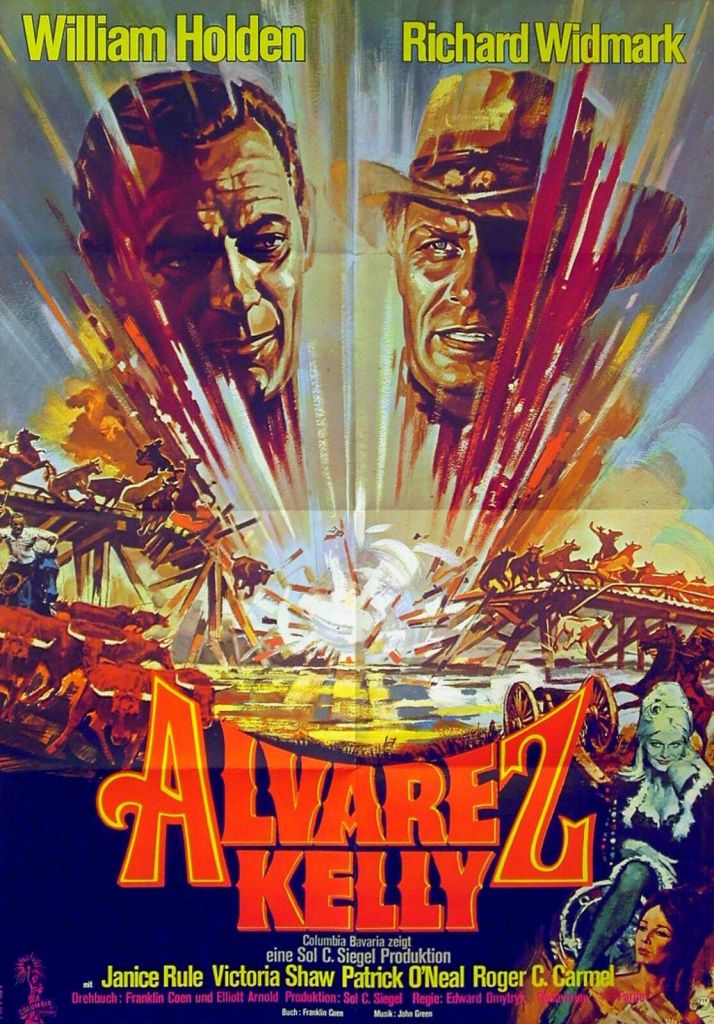
True stories do not always make good films. It says a lot about stardom that Oscar-winner William Holden virtually single-handedly redeems Edward Dmytryk’s Civil War western. And this was at a time when the actor’s career was in freefall, not having had a hit since The World of Suzie Wong (1960). Although his good looks personified him as a matinee idol, many of his best performances came when he was playing against type, as a shady character, such as in this instance
The essential narrative is that Holden has driven a couple thousand head of cattle from Mexico to deliver to Union troops. Holden plays an “Irish senor” (as defined in the title song) whose Mexican origins provide an excuse to consider the United States an enemy, positioning him as a neutral in the conflict, allowing him to justify his profiteering. Confederate colonel Richard Widmark plans to steal the herd. Had Holden been a patriot the story would have knuckled down to him trying to thwart such plans, but since he’s a free agent with no allegiance except to himself the film has to take another route. So this involves Holden being captured by Widmark in a bid to turn the Confederate soldiers into cowboys capable of driving the stolen herd.
That would set the film down a fairly standard narrative route of training raw recruits such as Holden would follow in The Devil’s Brigade (1968). But this film evades such a simple format. All we ever learn about the intricacies of handling cattle is that you need a hat and have to be able to sing. Instead, this is a more thoughtful picture about honor versus self-interest, about the human casualties of war. Unlike most westerns it’s not about shoot-outs and fairly obvious good guys and bad guys. In the main it’s a drama about conflicting interests and often how good guys will do bad things in the name their beliefs.
The film doesn’t take sides. Do we root for the Union soldiers fighting to free slaves or the romantic version of the Confederacy? Do we root for the immoral selfish Holden because he’s had a finger shot off as a way of bringing him to heel or do our sympathies lie with the upstanding one-eyed Widmark who has given so much for his cause?
Dmytryk whose career encompassed The Caine Mutiny (1954) and The Young Lions (1958) was on an opposite career trajectory to Holden after box office hits The Carpetbaggers (1964) and Gregory Peck thriller Mirage (1965). Between them, Holden and Dmytryk just about save what was a misconceived project, an original screenplay by Franklin Coen (The Train, 1964). That it was based on a true story did not make it any better an idea.
Holden is excellent, easing into the world-weary character he would project more fully in The Wild Bunch (1969). And I like his delivery, the pauses between words as if they are occurring to him for the first time rather than rattling them off as is the way of so many stars. Janice Rule (The Chase, 1966) is good as the errant girlfriend who feels let down by Widmark’s honor – and who is open to seduction by Holden – and has her own ideas about what she deserves from the war. Although it’s tempting to say we’ve seen this craggy Widmark (The Secret Ways, 1961) characterization too many times before, here he adds a further emotional layer as a man who eventually faces up to the personal sacrifices he has been forced to make.
A man convinced he is doing the right thing versus a guy who couldn’t care less about principle turns out to be an interesting concept though perhaps weighed in favor of the latter by the casting.
Had Widmark played the profiteer I doubt if we would have had such a balanced notion of right and wrong. Holden has the screen charm to get away with playing complicated characters, sometimes (The Counterfeit Traitor, for example) eventually tuning heroic. The idea that, in westerns, it’s not all black-and-white, and that bad guys could provide a moral core would be central to the genre a few years later when Butch Cassidy and the Sundance Kid (1969) and The Wild Bunch (1969) made heroes of outlaws and the lawman in True Grit (1969) sailed close to the wind.
Action fans will be amply rewarded by the ending as Holden attempts to outwit Widmark.
CATCH-UP: William Holden films reviewed so far are The Counterfeit Traitor (1962), The 7th Dawn (1964) and The Devil’s Brigade (1968); Richard Widmark films featured so far are The Secret Ways (1961) – the Blog’s top-ranked film according to our readers – The Long Ships (1964), Flight from Ashiya (1964) and The Way West (1967).














 The Magnificent 60s